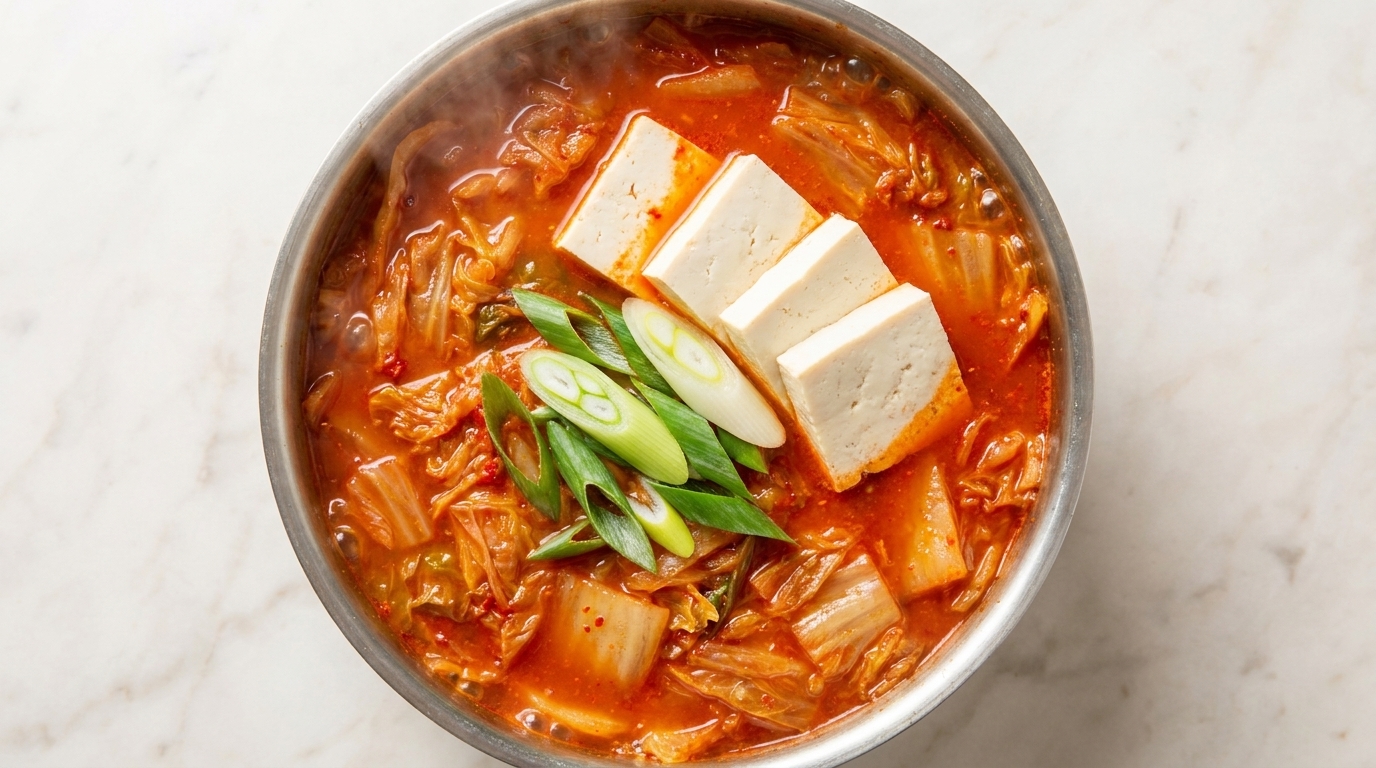
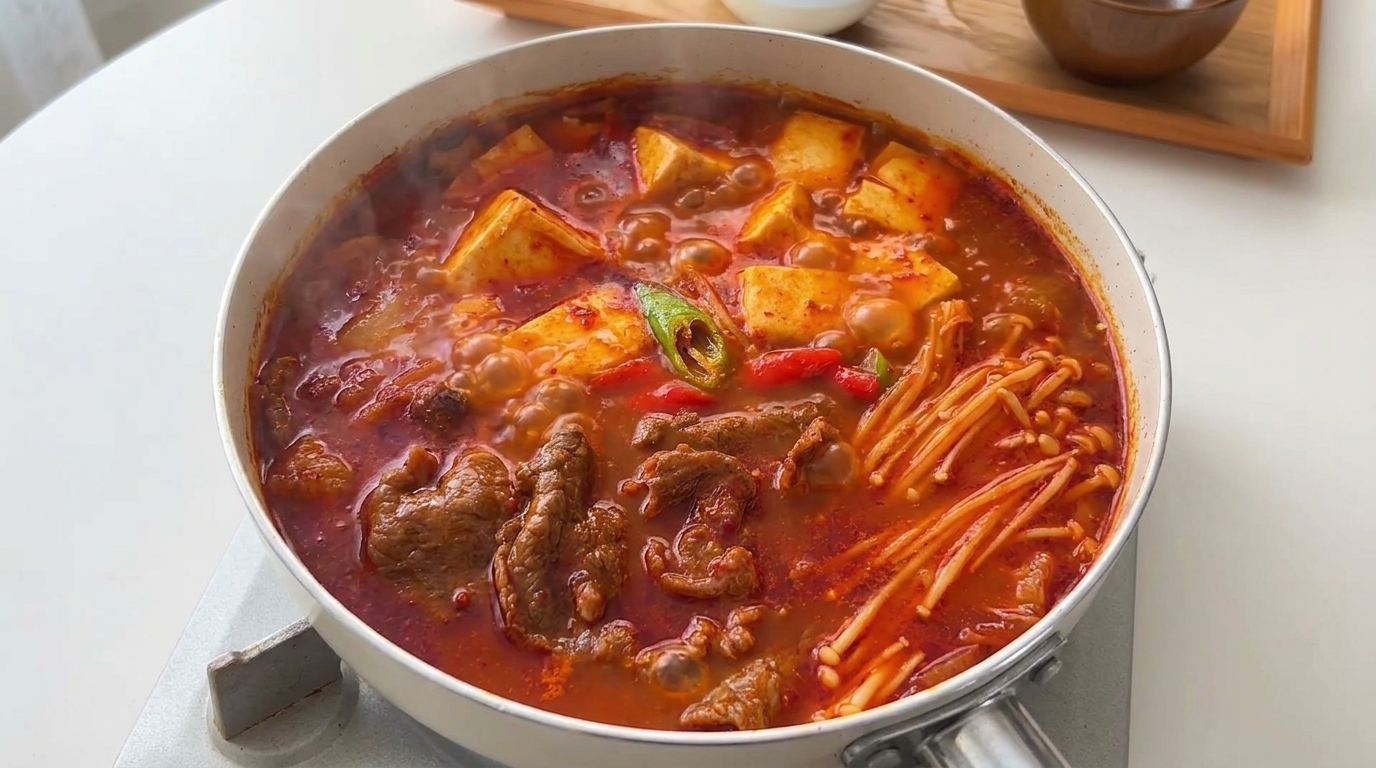
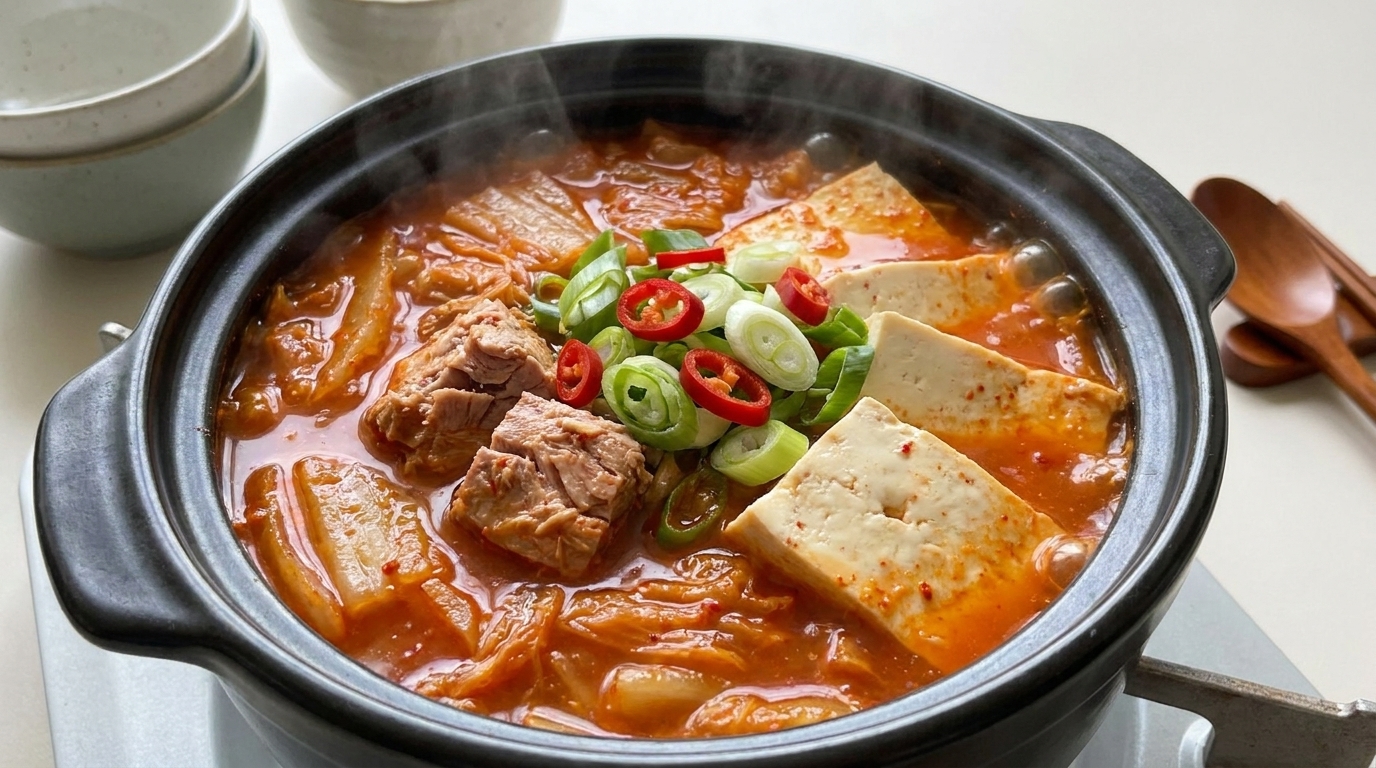
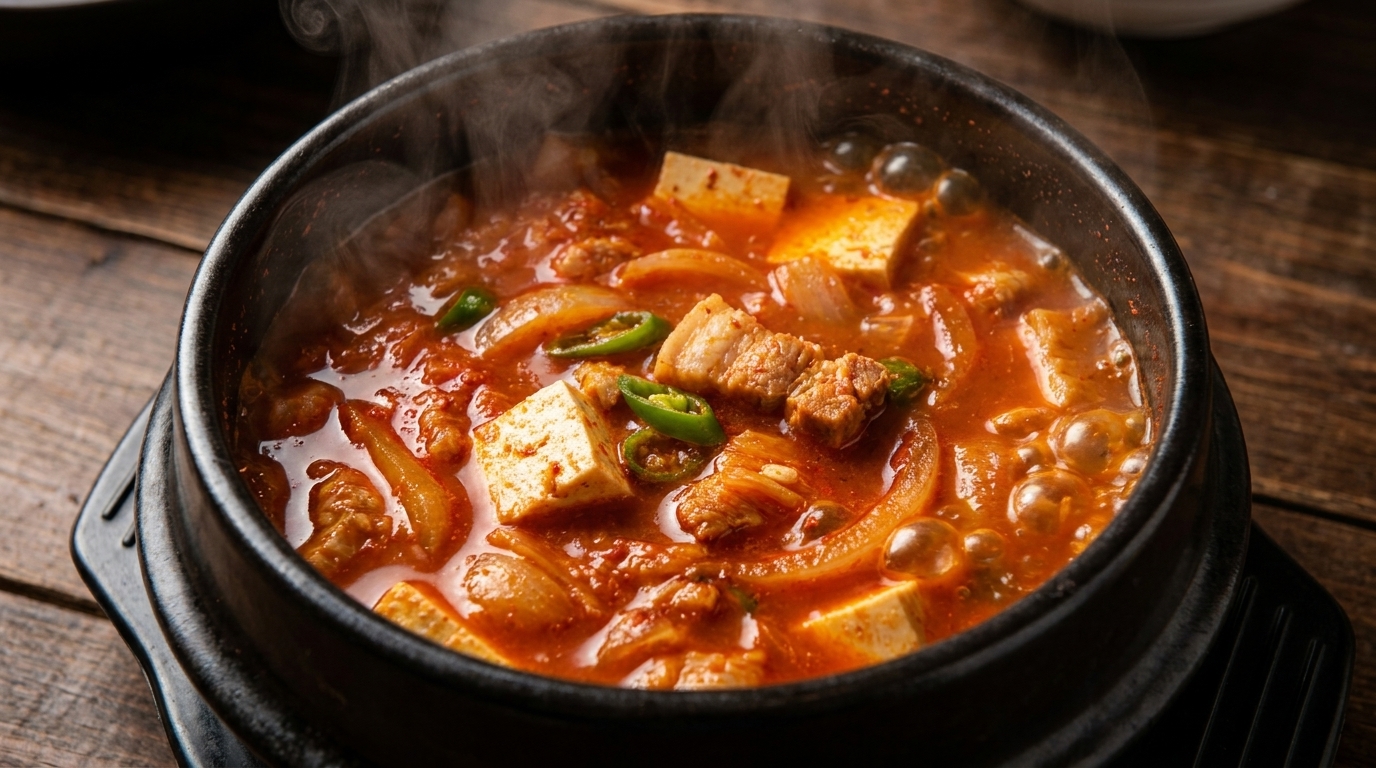
Authentic Korean Pork Belly Kimchi Soup (Kimchi-jjigae)
Experience the ultimate comfort food with this authentic Korean pork belly kimchi soup. Rich, tangy, and deeply savory, it's ready in just 30 minutes.
Kimchi-jjigae is a quintessential Korean comfort dish, a staple in households across Seoul. The secret to its profound depth lies in the interplay between rich, fatty pork belly and the sharp tang of fully fermented kimchi. Using the reserved kimchi juice and starchy rice washing water transforms the base into a vibrant, hearty broth that warms the soul.
Ingredients
- 300 g pork belly
- 2 cups fully fermented kimchi, chopped
- 14 cup kimchi juice
- 1 block soft white tofu
- 12 white onion
- 3 cloves garlic, minced
- 1-2 green chilies, sliced
- 1 tbsp coarse Korean chili powder (gochugaru)
- 1 tbsp fine Korean chili powder (gochugaru)
- 1 tbsp fish sauce
- 1 tbsp light soy sauce
- 1 tsp sugar
- 2 cups rice washing water (second wash)
- 1 tbsp gochujang (Korean hot pepper paste)
- 1 tsp cooking oil
- to taste green onions, for garnish
Instructions
- 1Select the pork belly

Begin with a high-quality block of fresh pork belly. Look for a cut that features distinct, alternating layers of fat and lean meat. The fat will be rendered down later to naturally grease the pan and infuse the soup with a rich, savory depth.
Tip: Pork belly with a good balance of meat and fat works best. Too lean, and the soup will lack richness; too fatty, and it may become greasy. - 2Slice the pork belly

Slice the pork belly into uniform pieces, roughly the thickness of a coin. Slicing it to this specific thickness ensures that the fat renders quickly and evenly in the hot pan while keeping the lean meat tender during the braising process.
Tip: Partially freezing the pork belly for about 15 to 20 minutes before cutting makes it much firmer and easier to slice uniformly. - 3Prepare the aromatics
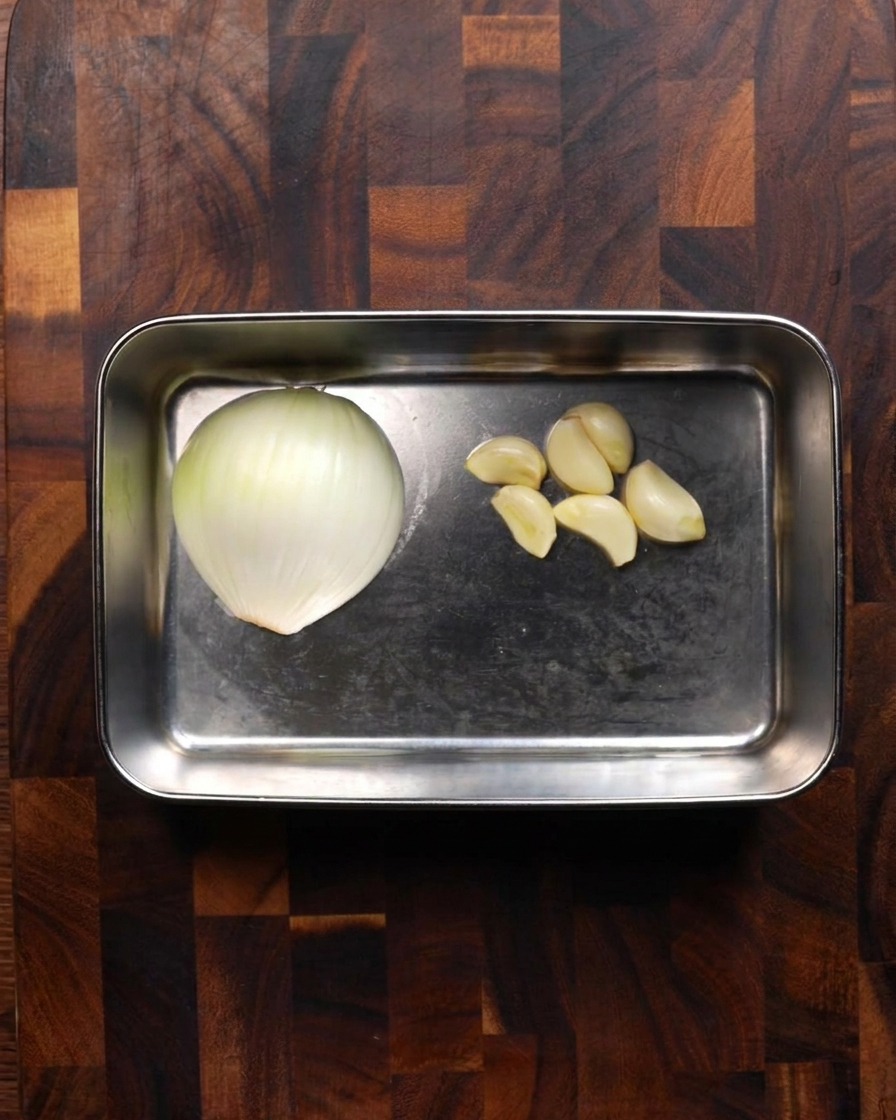
Gather and prepare your base aromatics. Peel several cloves of garlic and cut a white onion in half. These ingredients are essential for building the fundamental aroma and sweetness that will balance the sourness of the fermented kimchi.
Tip: You can leave the garlic whole to infuse the broth slowly, or mince it later for a more pungent, direct flavor. - 4Slice the fresh chili

Slice fresh green chilies diagonally into thin pieces. The chilies provide a vibrant, fresh heat that cuts through the richness of the pork belly. Adjust the amount of chili according to your personal spice tolerance.
Tip: If you want the pepper flavor without too much burning heat, you can slice the chili open and scrape out the seeds before chopping. - 5Chop the fermented kimchi
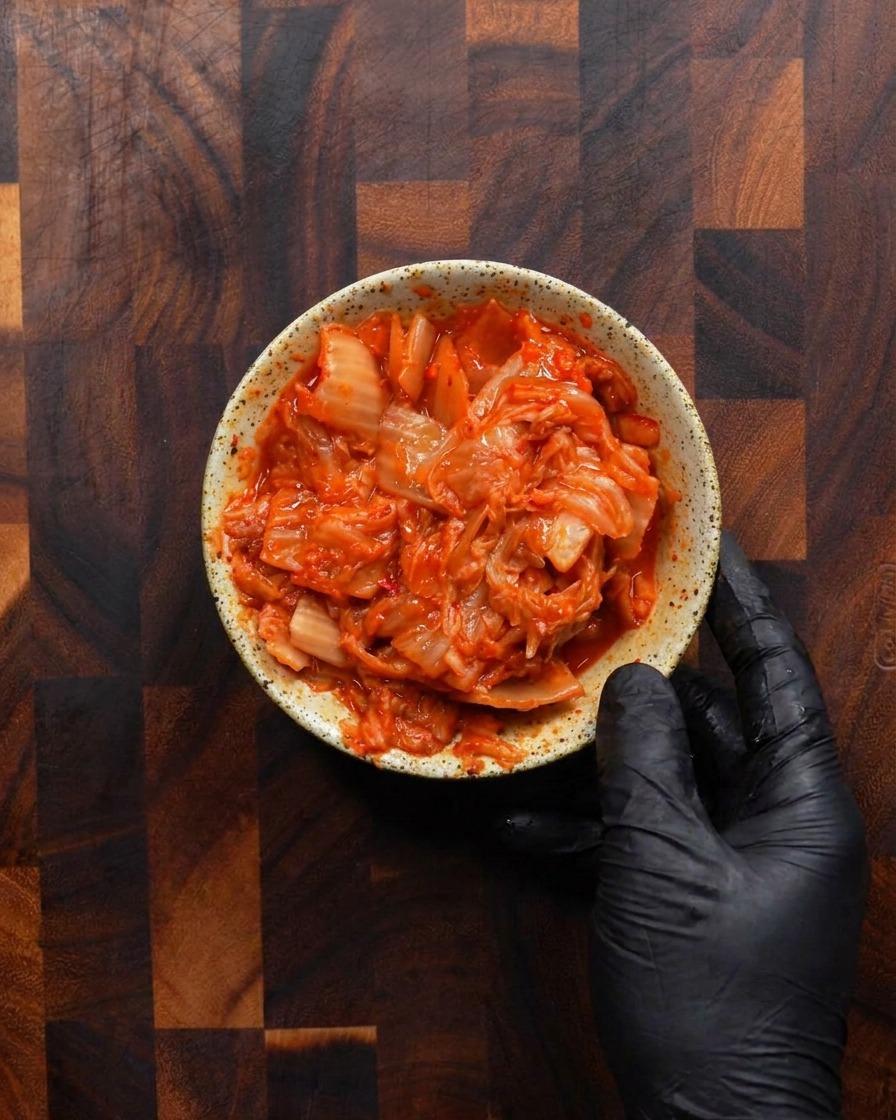
Prepare your kimchi by chopping it into bite-sized pieces. For an authentic and deeply flavorful soup, it is crucial to use fully fermented, sour kimchi. Freshly made kimchi lacks the necessary acidity and will not yield the signature tangy flavor of this dish.
Tip: If your kimchi isnt quite sour enough, you can add a tiny splash of white vinegar to the soup as it simmers to mimic the fermentation. - 6Reserve the kimchi juice
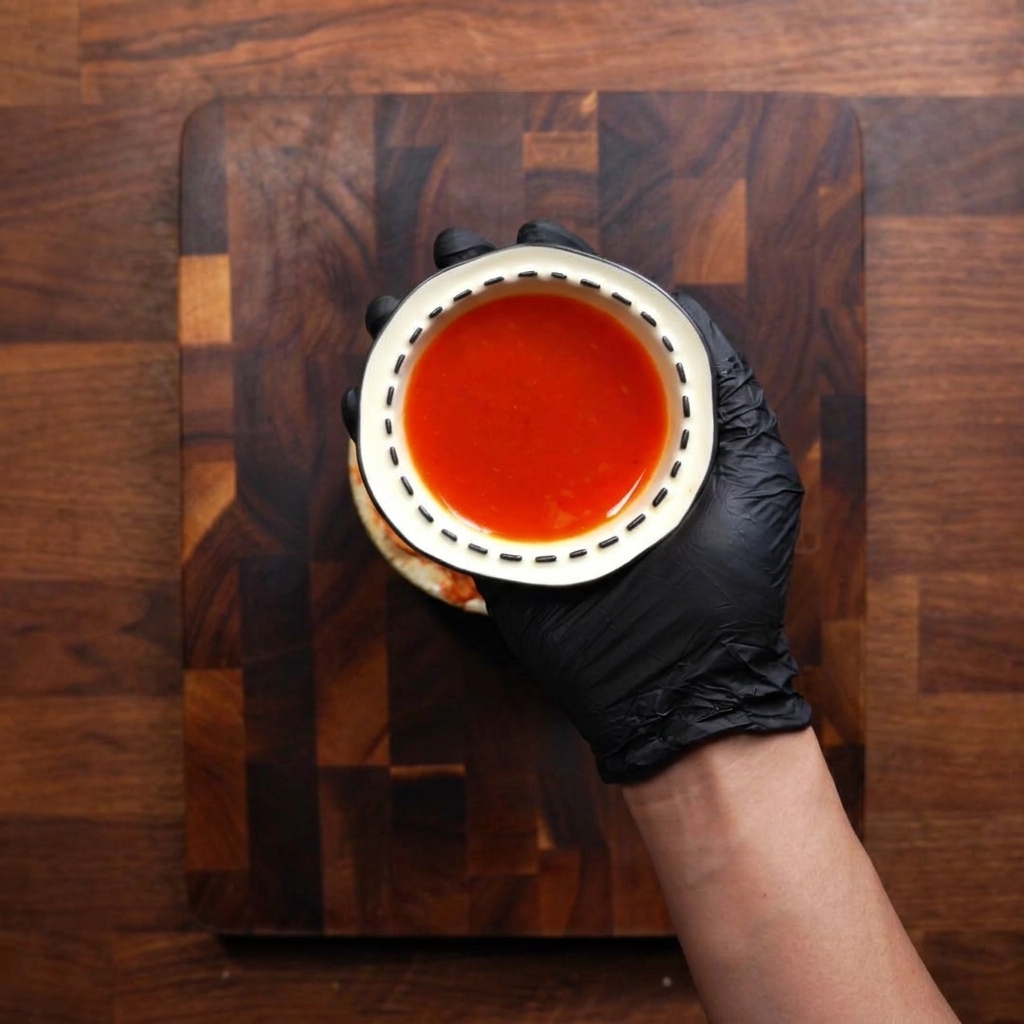
Never discard the liquid at the bottom of your kimchi container! Reserve the bright red kimchi juice, as it is the secret ingredient for a concentrated, flavor-packed broth. It adds intense umami, acidity, and a beautiful vibrant color to the soup.
Tip: Press down firmly on the remaining cabbage in your kimchi jar to squeeze out every last drop of this valuable liquid. - 7Prepare the tofu
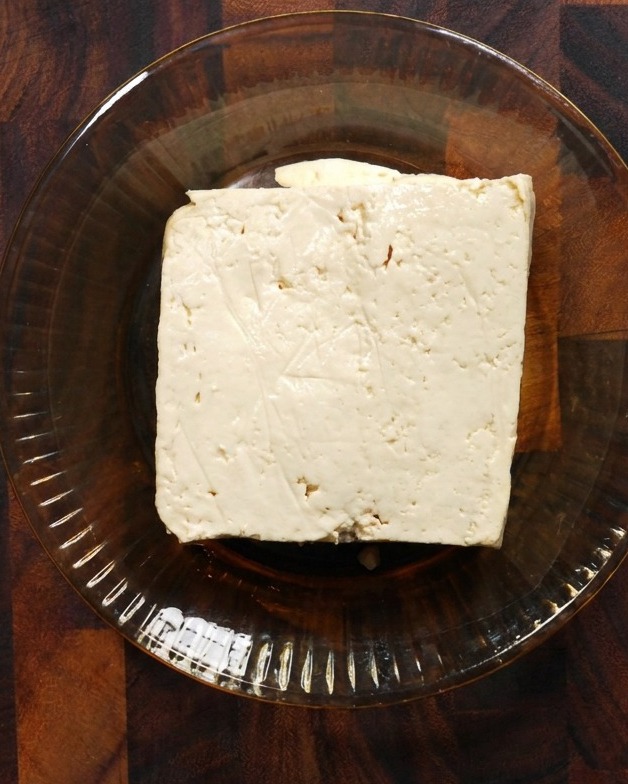
Place a whole block of soft white tofu into a bowl. This will be cut into thick, bite-sized cubes for the stew. Tofu acts as a sponge, soaking up the rich, tangy, and spicy flavors of the kimchi broth during the simmering process.
Tip: Choose soft or silken tofu for a smooth, melt-in-your-mouth texture that contrasts nicely with the chewy pork belly. - 8Mix the chili flakes
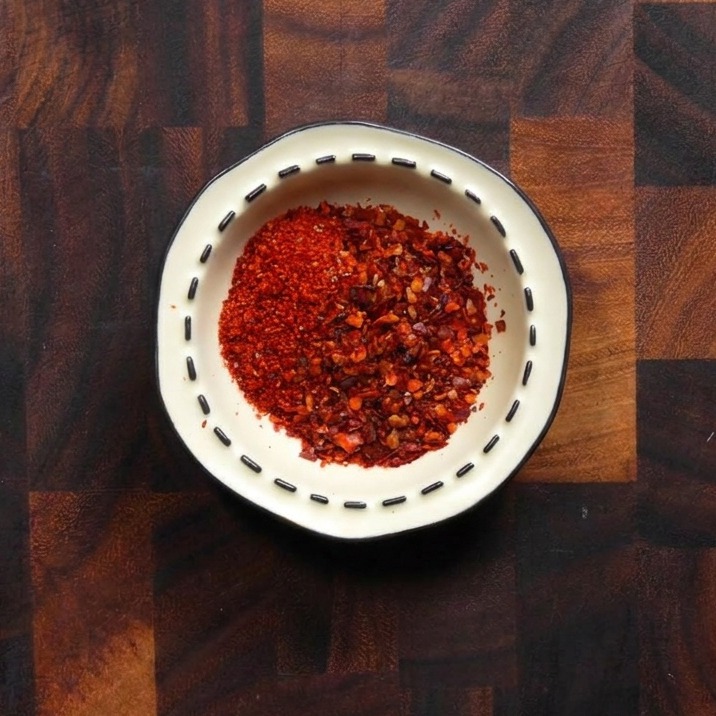
Measure out the Korean chili powder (gochugaru) into a small bowl. For the best flavor profile, use a combination of both coarse and fine chili flakes. This provides a vibrant red color and a balanced, authentic heat to the soup base.
Tip: Adjust the ratio of coarse to fine chili powder based on your desired level of spiciness. - 9Prepare the liquid seasonings
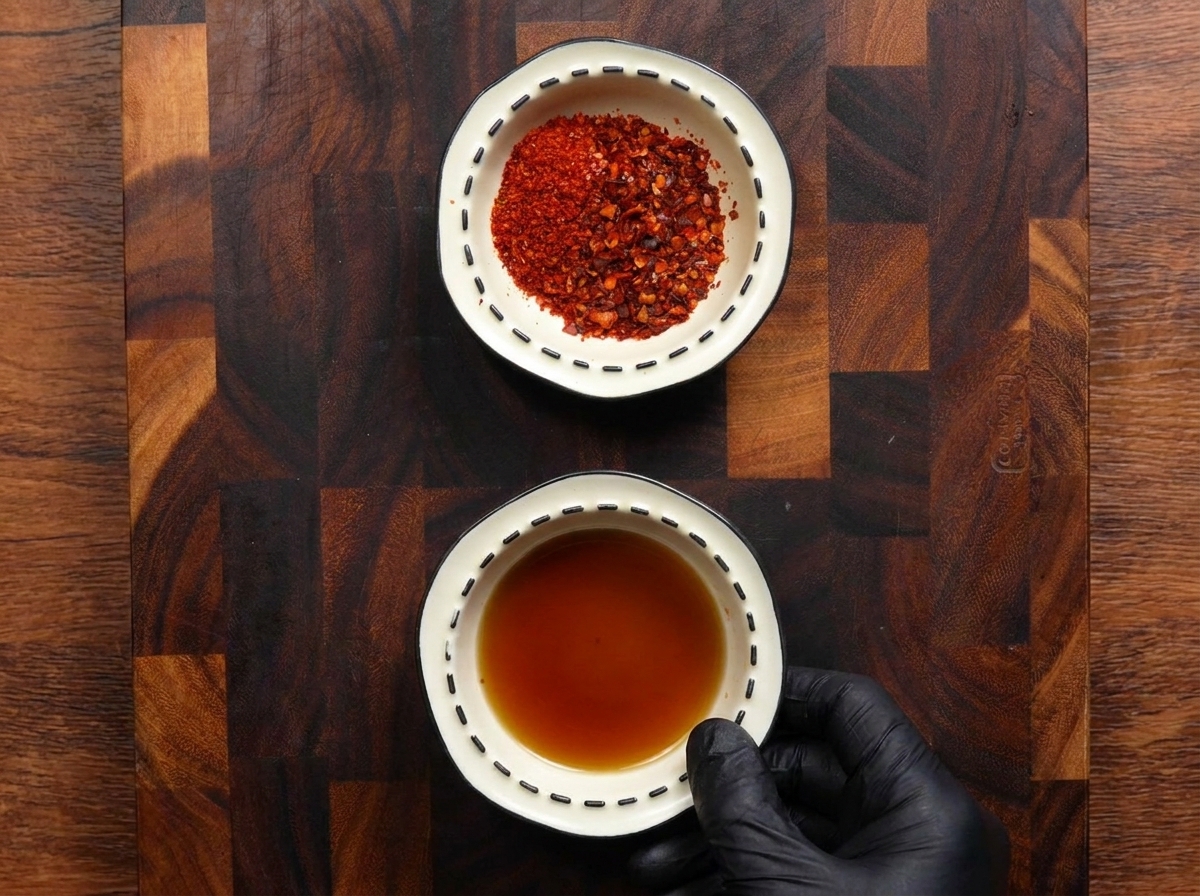
Combine the fish sauce and light soy sauce in a small dish. Having these flavor bases ready will ensure a smooth and quick cooking process when it is time to build the broth later on.
Tip: Using both fish sauce and soy sauce provides a complex savory depth that pairs perfectly with fermented vegetables. - 10Portion the hot pepper paste
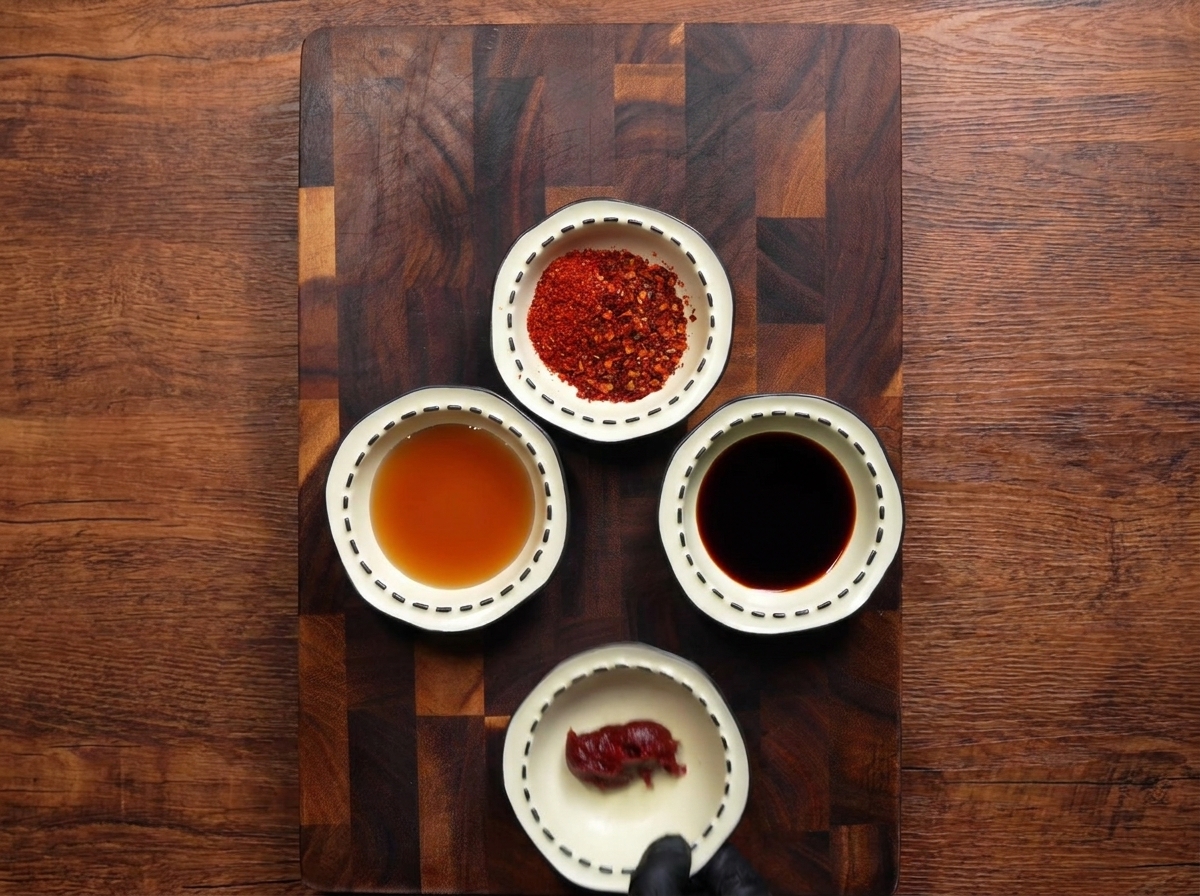
Scoop out a spoonful of thick Korean hot pepper paste to add an extra layer of savory heat and sweetness. Keeping this measured and ready helps prevent burning the other ingredients while searching for jars during cooking.
Tip: While gochujang is slightly controversial in traditional recipes it is highly recommended if you prefer a thicker and more robust soup base. - 11Heat the cooking pot

Place a heavy-bottomed pot over medium-high heat and add just a trace amount of cooking oil. You only need a very thin layer to coat the bottom, as the pork belly will release its own abundant natural fat as it renders down.
Tip: A traditional Korean stone pot (tt뚝baegi) or a thick clay pot is ideal for kimchi stew, as it retains heat exceptionally well and keeps the soup boiling hot at the table. - 12Fry and render the pork belly
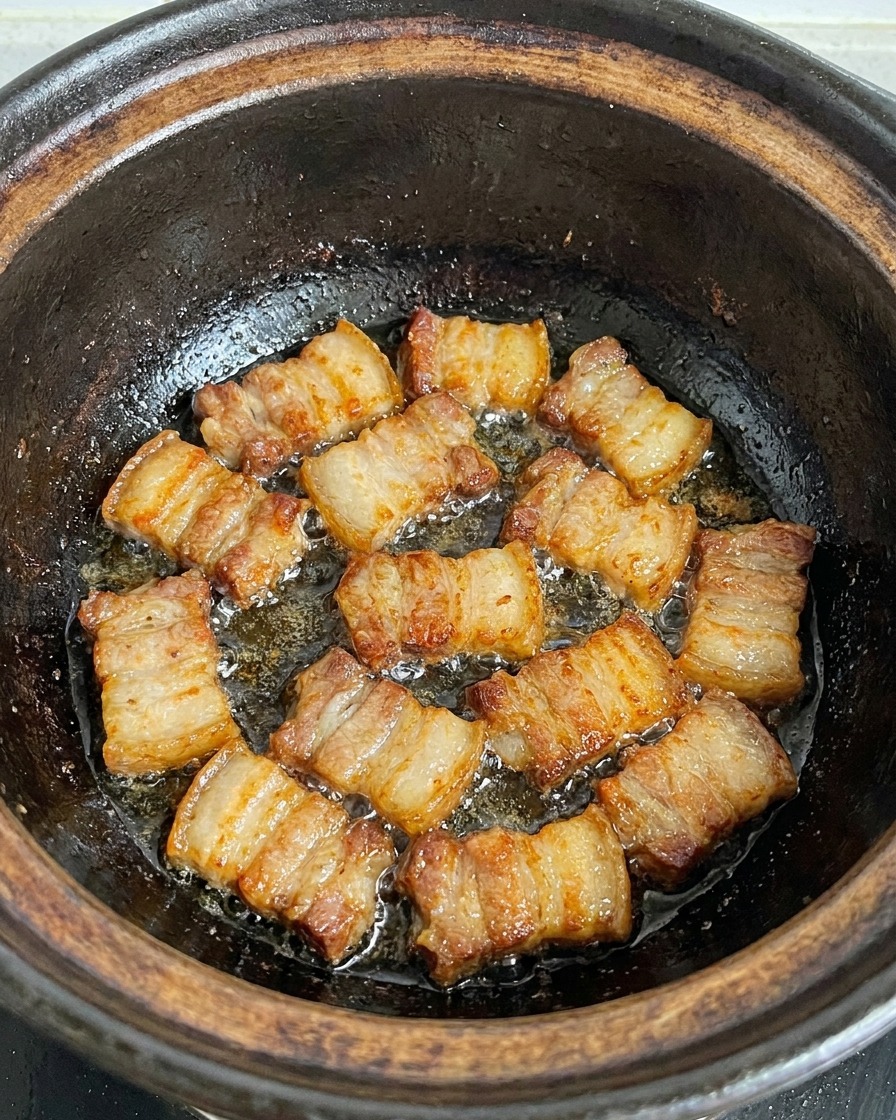
Add the sliced pork belly to the hot pot. Fry the meat thoroughly until the excess fat is fully rendered out and the edges develop a beautiful, crispy golden-brown char. This vital step prevents the final soup from feeling too greasy and creates a deeply savory foundation.
Tip: Take your time rendering the fat; the slightly crispy pork pieces and the resulting oil are the secret to an incredibly flavorful kimchi stew. - 13Add the Kimchi
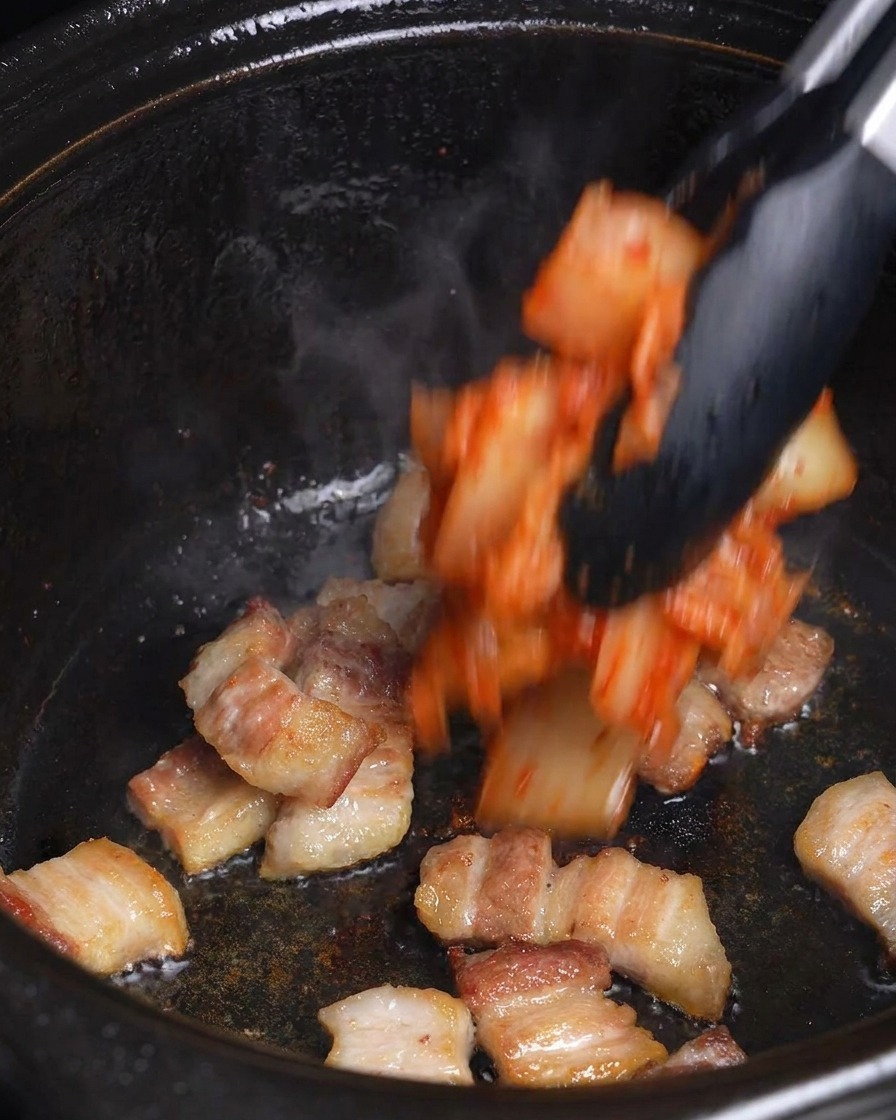
Once the pork belly has rendered its fat and is nicely browned, add the fully fermented chopped red kimchi to the pot. Stir-fry the kimchi with the pork belly until the excess moisture evaporates and the soup base is almost dry, allowing the flavors to meld perfectly.
Tip: Using fully fermented, sour kimchi is crucial for this authentic stew as it provides the deep, signature flavor. - 14Season with Chili and Sugar
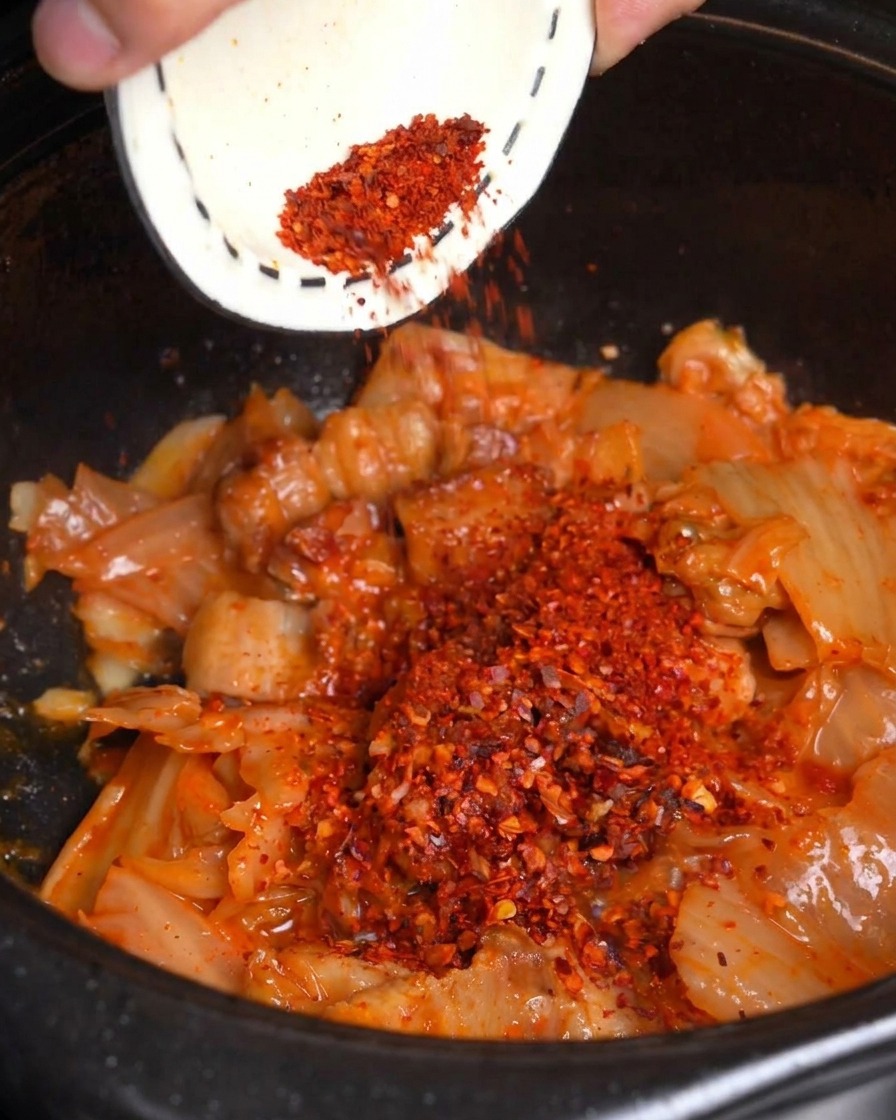
Sprinkle the red chili powder over the pork and kimchi mixture to build the stews heat and vibrant color. Add a little sugar to balance the strong acidity of the fermented kimchi, and continue to stir-fry so the seasoning coats all the ingredients evenly.
Tip: Using a combination of coarse and fine chili powders will yield the best color and texture for your stew. - 15Add Sliced Onions
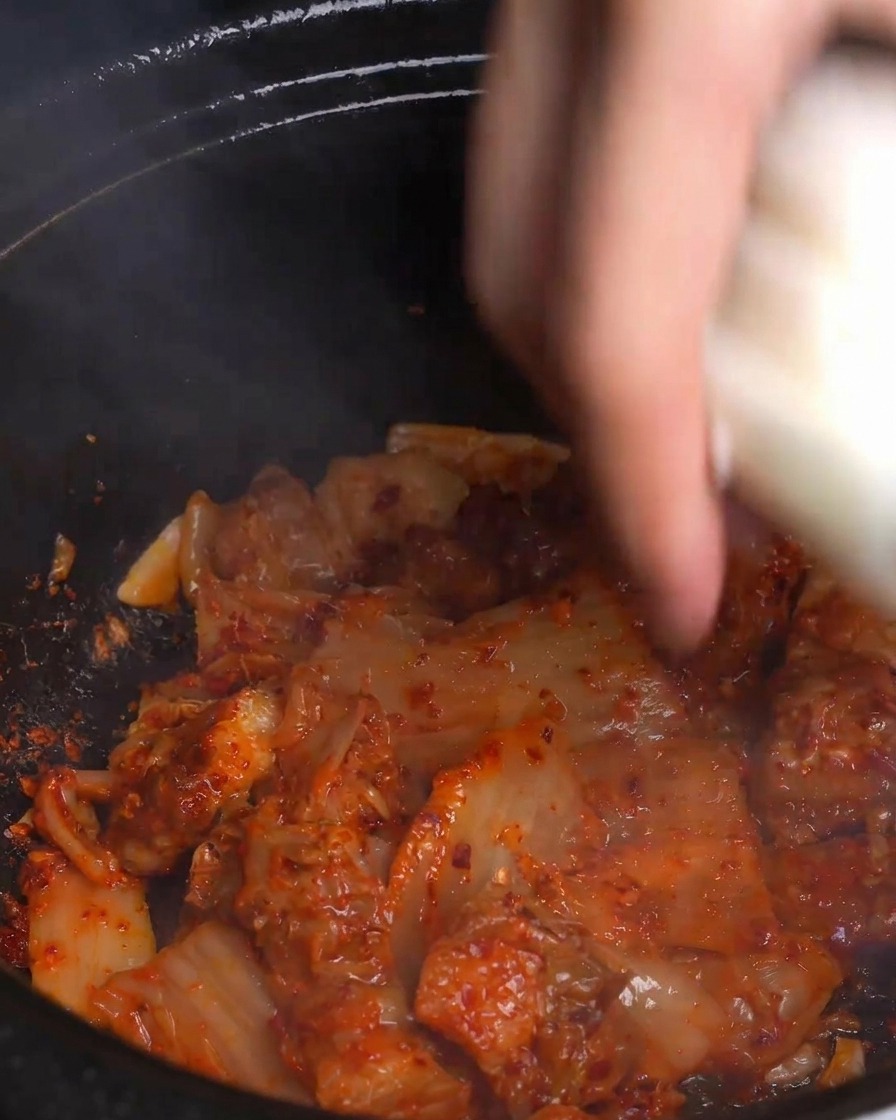
Once the kimchi and pork belly are well-coated with the chili powder and sugar, toss in the sliced white onions. Stir-fry the mixture continuously until the onions soften slightly and release their fragrant aroma into the pot.
Tip: Allowing the onions to sweat in the seasoned pork fat will add a natural sweetness that beautifully balances the sharp acidity of the fermented kimchi. - 16Pour in the rice water
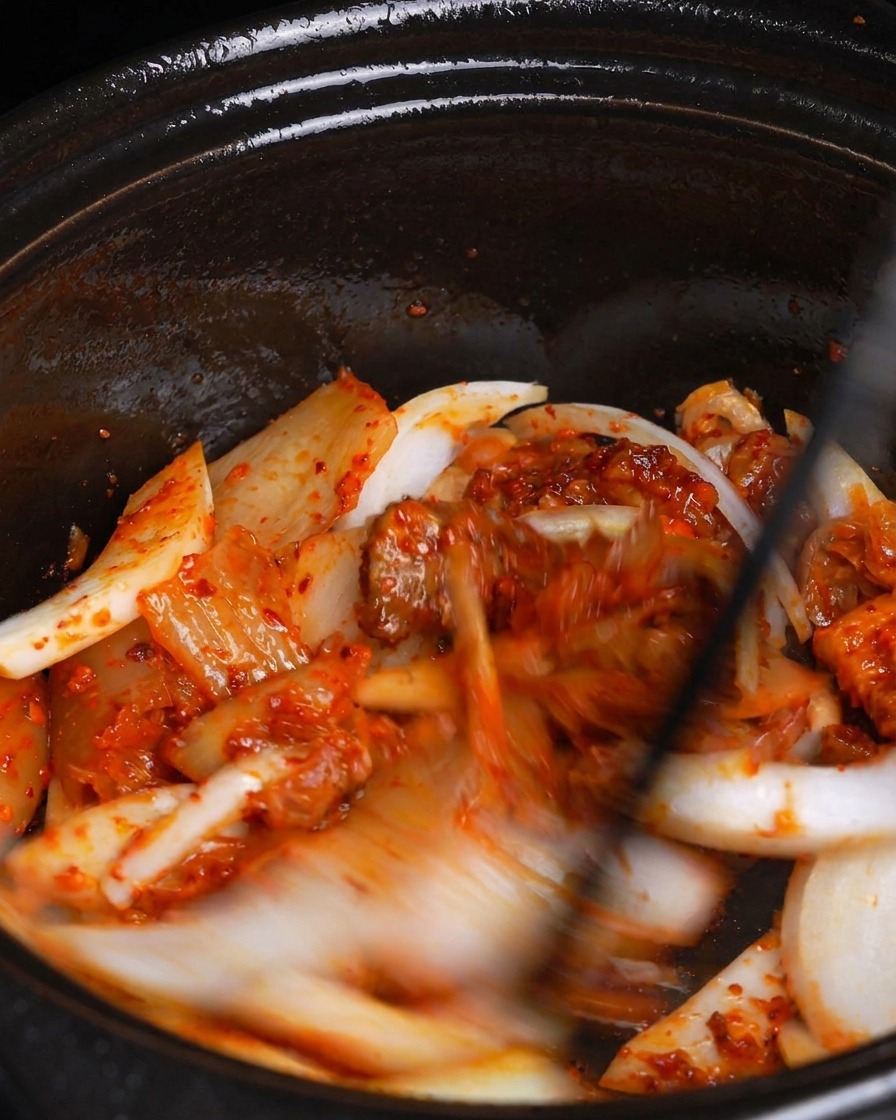
Pour the cloudy rice washing water from a glass measuring cup into the pot. The natural starches in the rice water help to slightly thicken the soup and emulsify the rich pork fat with the spicy broth.
Tip: Always use the second or third wash of the rice as the first wash may contain dust or impurities. - 17Add the Liquid Seasonings
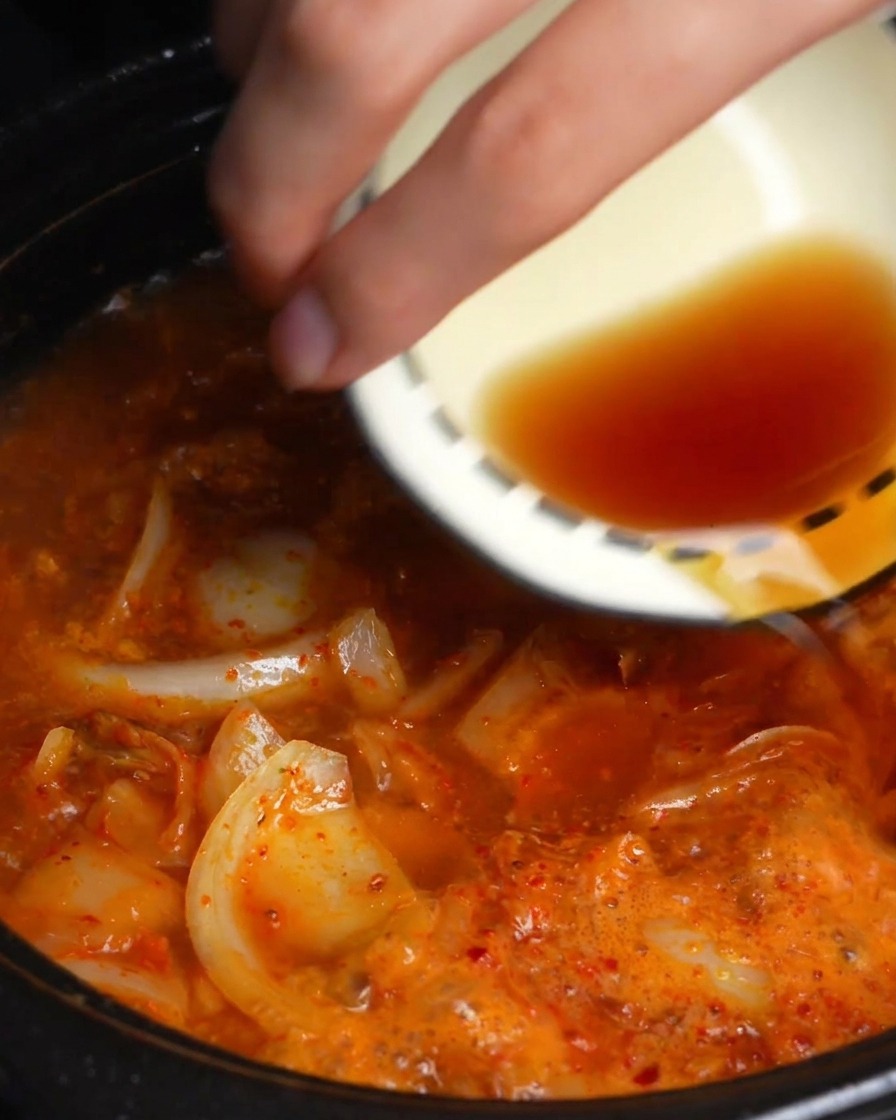
Once the rice water has been added and begins to simmer, pour in the light soy sauce and fish sauce to season the broth. This combination introduces a deep, savory umami flavor that complements the sour and spicy notes of the kimchi.
Tip: If you have some leftover kimchi juice, add it into the broth now along with the sauces for an extra punch of flavor. - 18Add the kimchi juice
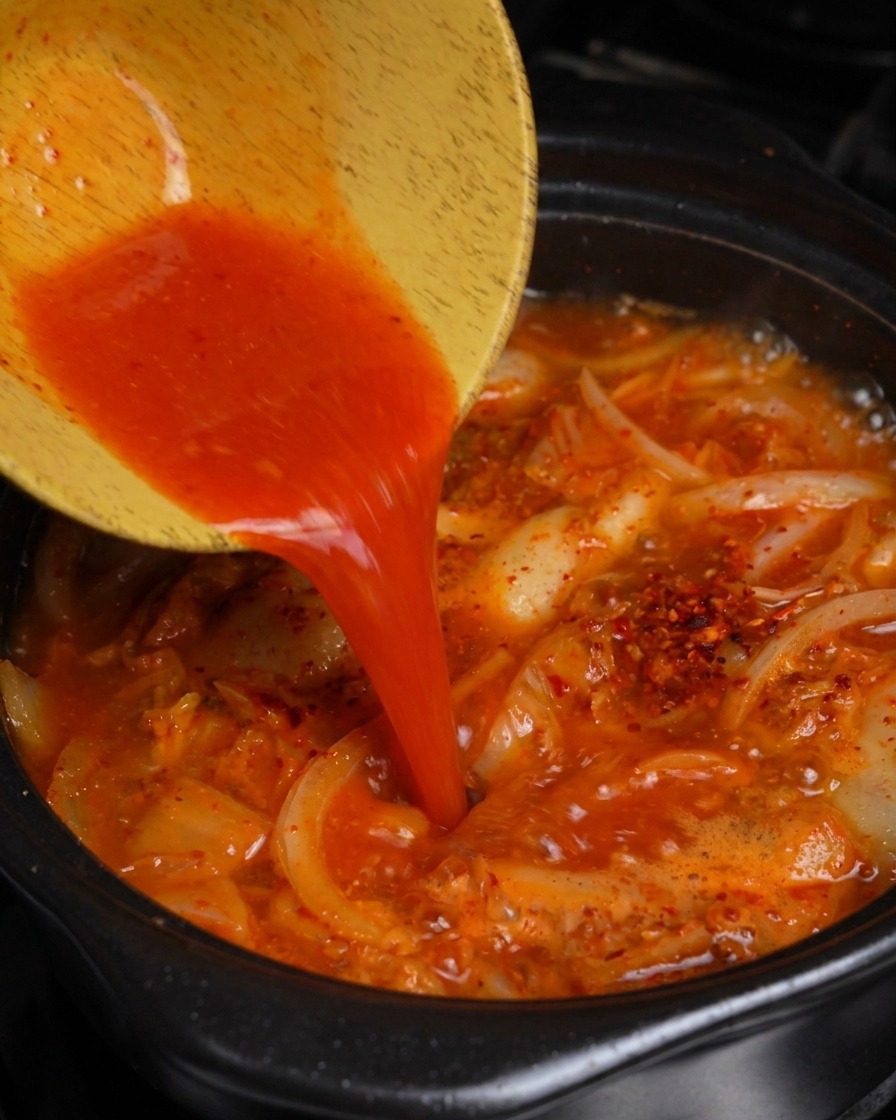
Pour the reserved bright red kimchi juice directly into the pot. The fully fermented juice acts as the vital flavor base of the dish, delivering a complex, tangy depth and a vibrant appetizing color to the soup.
Tip: If your kimchi isnt quite sour enough, adding a tiny splash of white vinegar can help mimic the fully fermented flavor profile. - 19Season the broth
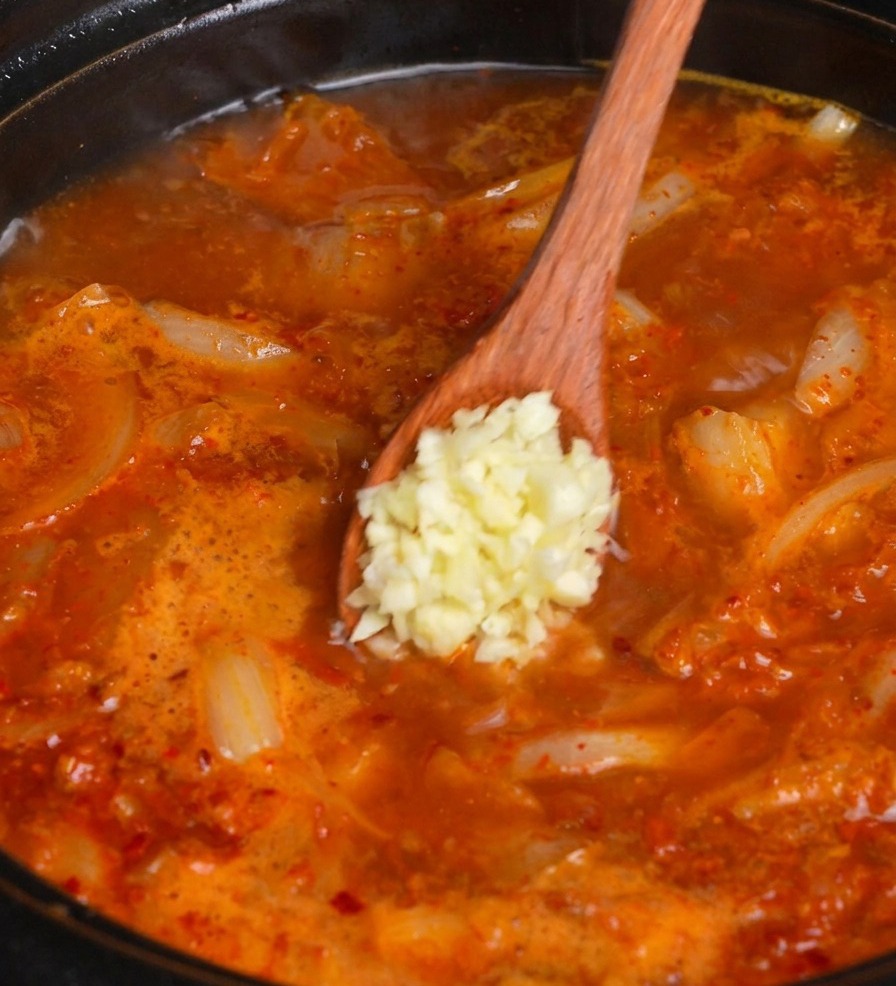
Stir the minced garlic into the bubbling liquid using a wooden spoon. If you are using the optional Korean hot pepper paste, add it now as well. Mix thoroughly to ensure the seasonings completely dissolve and evenly distribute their robust flavors.
Tip: Adjust the amount of hot pepper paste depending on your preferred spice level and desired broth thickness. - 20Add the tofu
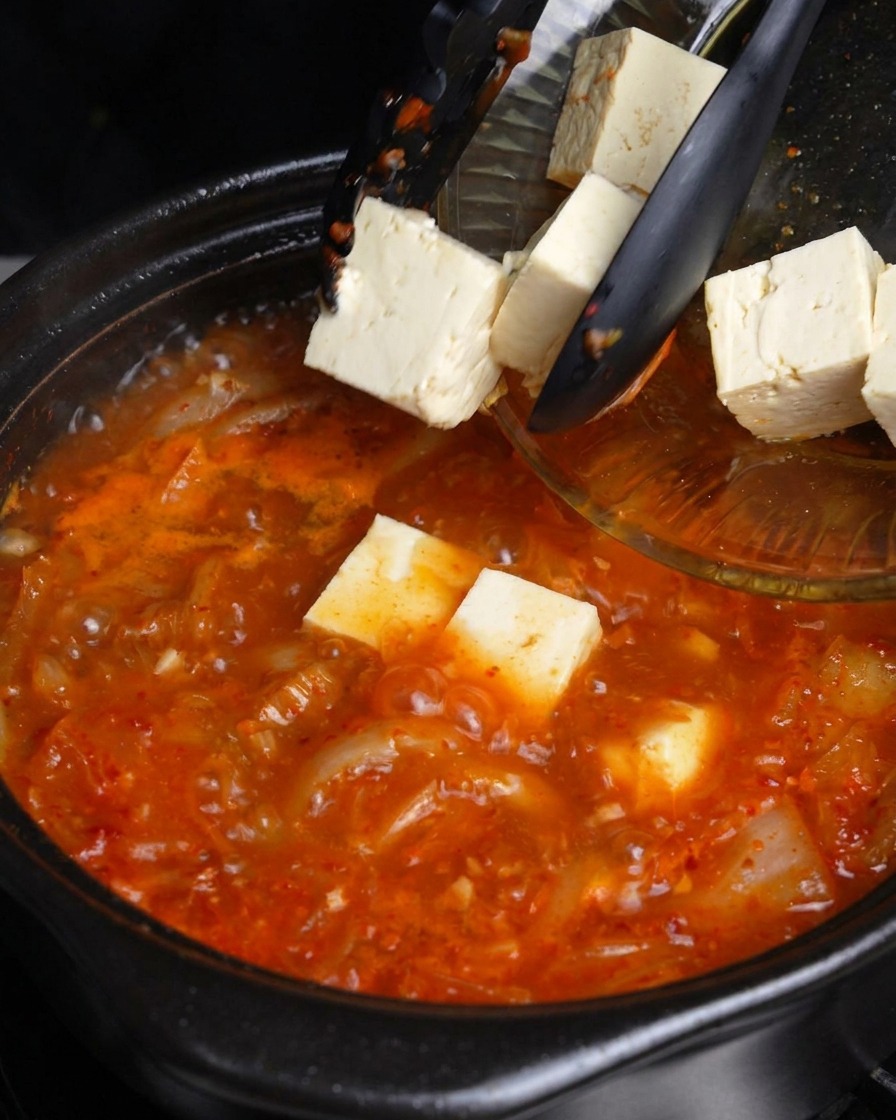
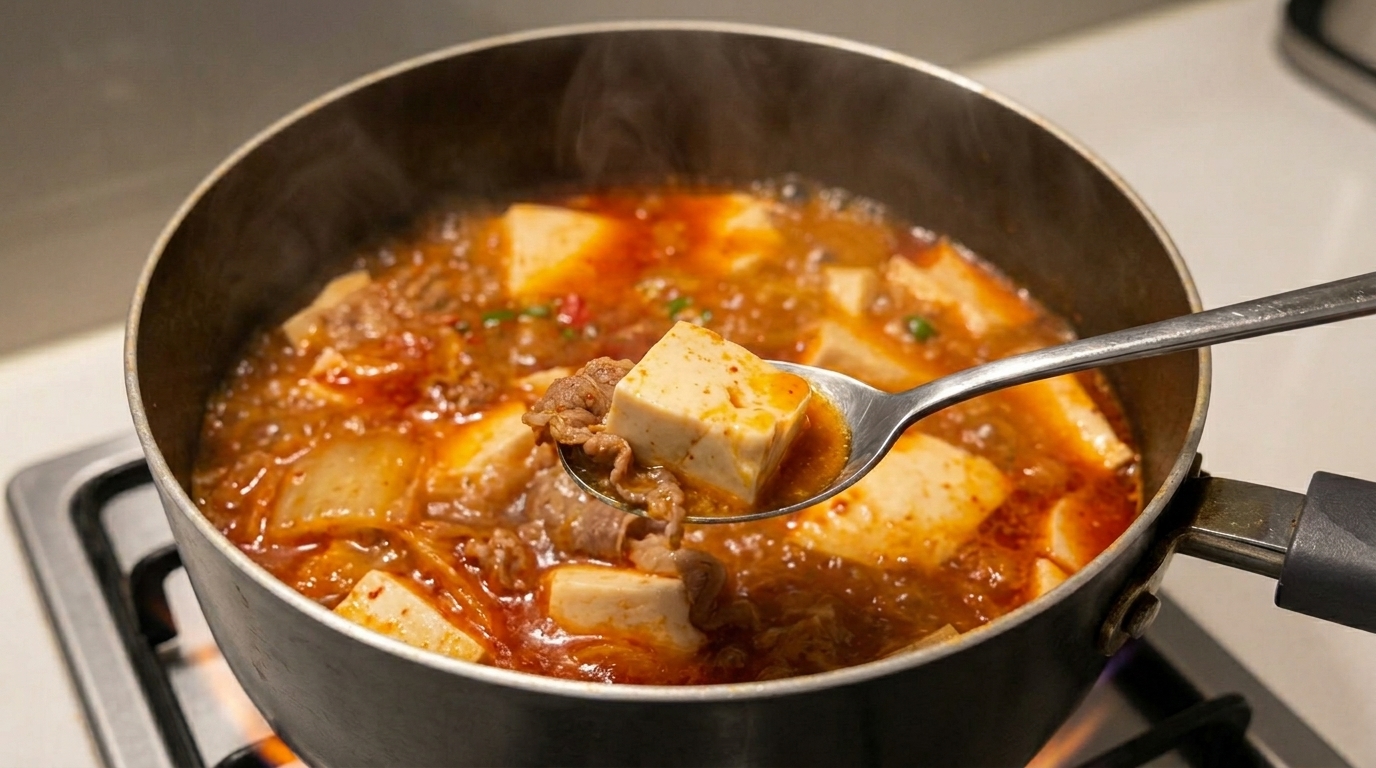
Gently slide the cubed tofu into the boiling soup. Be careful not to break the fragile pieces as you submerge them. As the tofu cooks, it will soak up the spicy, complex broth, becoming tender and deeply flavorful.
Tip: Soft or medium-firm tofu works best for this hearty stew, providing a silky contrast to the texture of the pork belly and cabbage. - 21Simmer to combine flavors
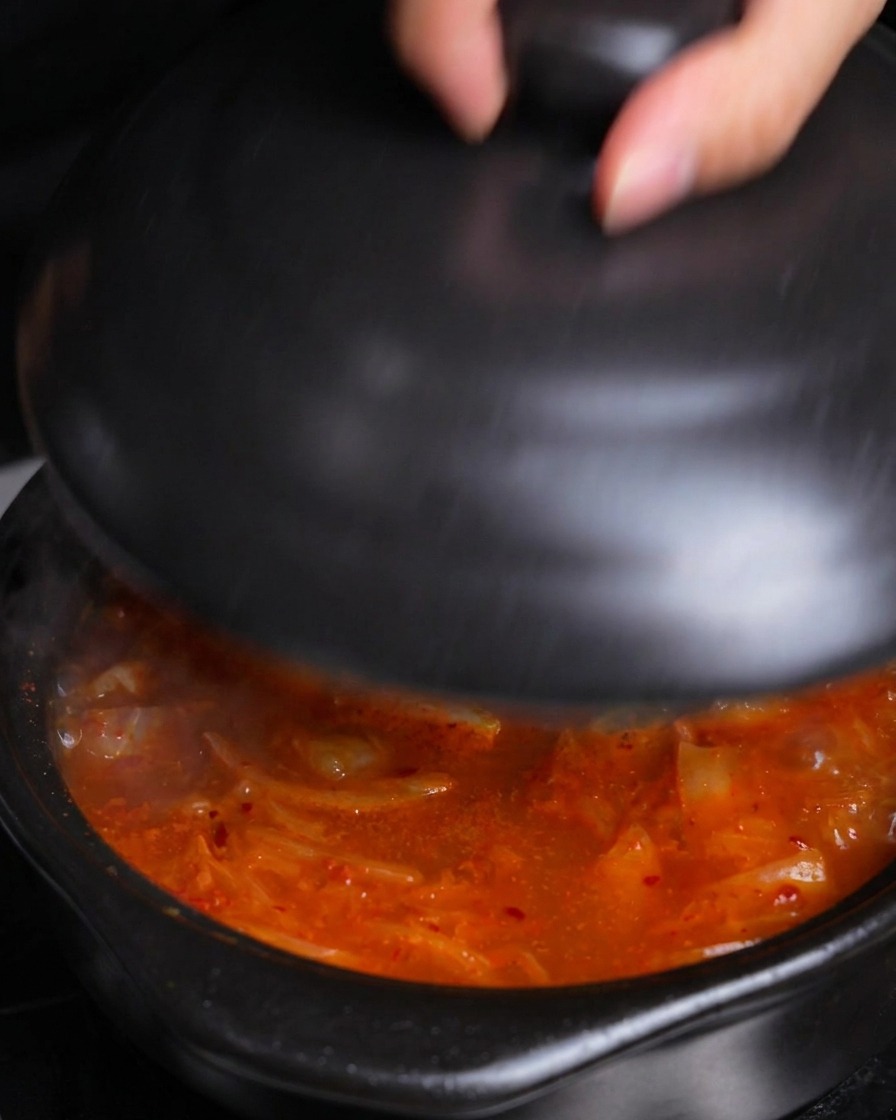
Place the lid on the pot, lower the heat, and allow the soup to gently simmer for about 15 minutes. This slow, covered cooking process ensures the ingredients fully release their essences and the rich flavors meld together perfectly.
Tip: Avoid a vigorous rolling boil after adding the tofu, as rough bubbling can cause the delicate pieces to break apart.