Authentic Korean Kimchi Stew (Kimchi Jjigae)
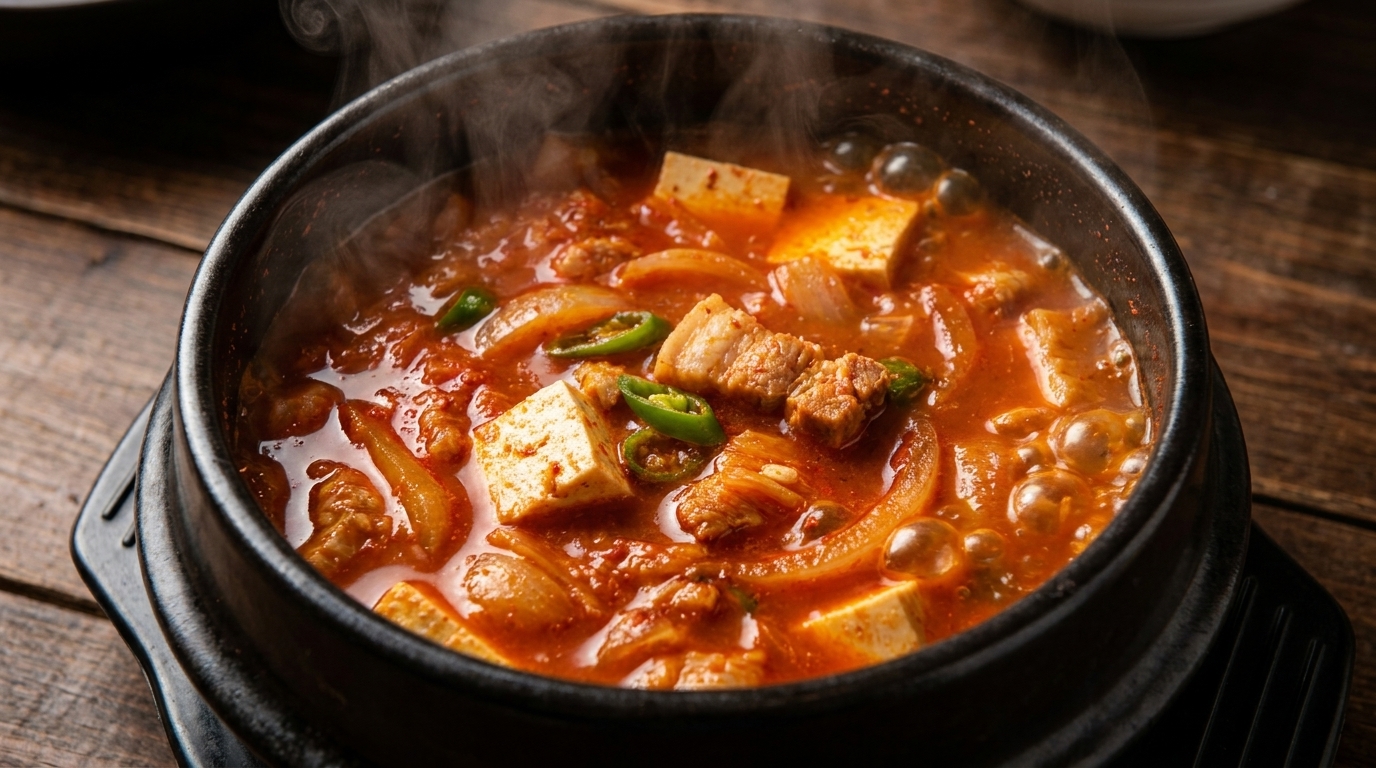
Master restaurant-quality Korean Kimchi Stew at home. Featuring rich pork belly, well-fermented kimchi, and a savory, spicy broth.
Kimchi Jjigae is a cornerstone of Korean comfort food, cherished for its deeply savory, tangy, and spicy profile. The secret to its iconic restaurant-quality flavor lies in using well-fermented, sour kimchi and rendering pork fat to create a rich base. A touch of soybean paste and kimchi juice elevates the umami, making this bubbling stew an unforgettable, soul-warming dish.
Ingredients
- 1 tbsp cooking oil
- 200 g sliced pork belly
- 300 g well-fermented old kimchi
- 1 tbsp dry red chili powder
- 400 ml water
- 3 tbsp kimchi juice
- 0.5 whole red onion
- 1 whole large green onion
- 1 tbsp minced garlic
- 1 block white tofu
- 0.5 tbsp thick dark soybean paste (doenjang)
- 1 tbsp light soy sauce
- 5 ml Tabasco or hot pepper sauce (optional)
- to taste fish sauce or salt
Instructions
- 1Heat oil in the pan
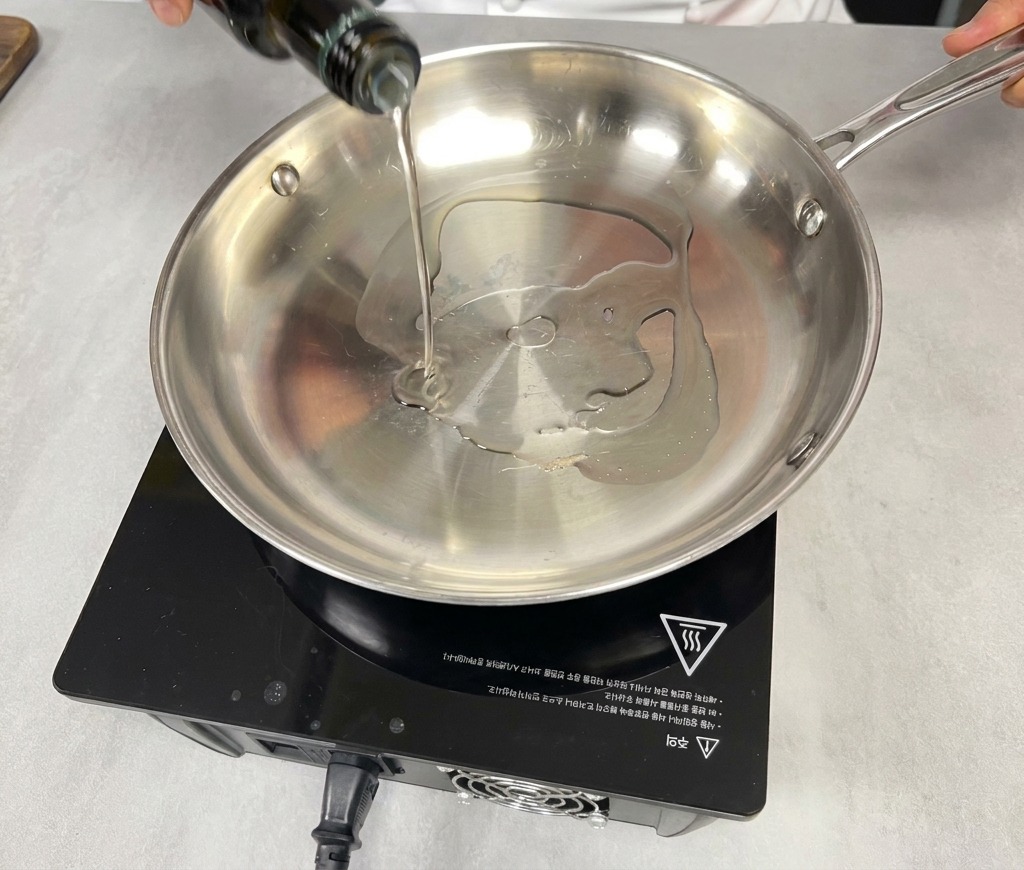
Place a stainless steel pan on the stove over medium heat and pour in a small amount of cooking oil. This oil will help start the frying process for the pork belly, allowing its natural fat to render out effectively.
Tip: Frying the pork belly in a little oil first helps release its natural fat, creating a much richer flavor profile for the stew base. - 2Fry the pork belly
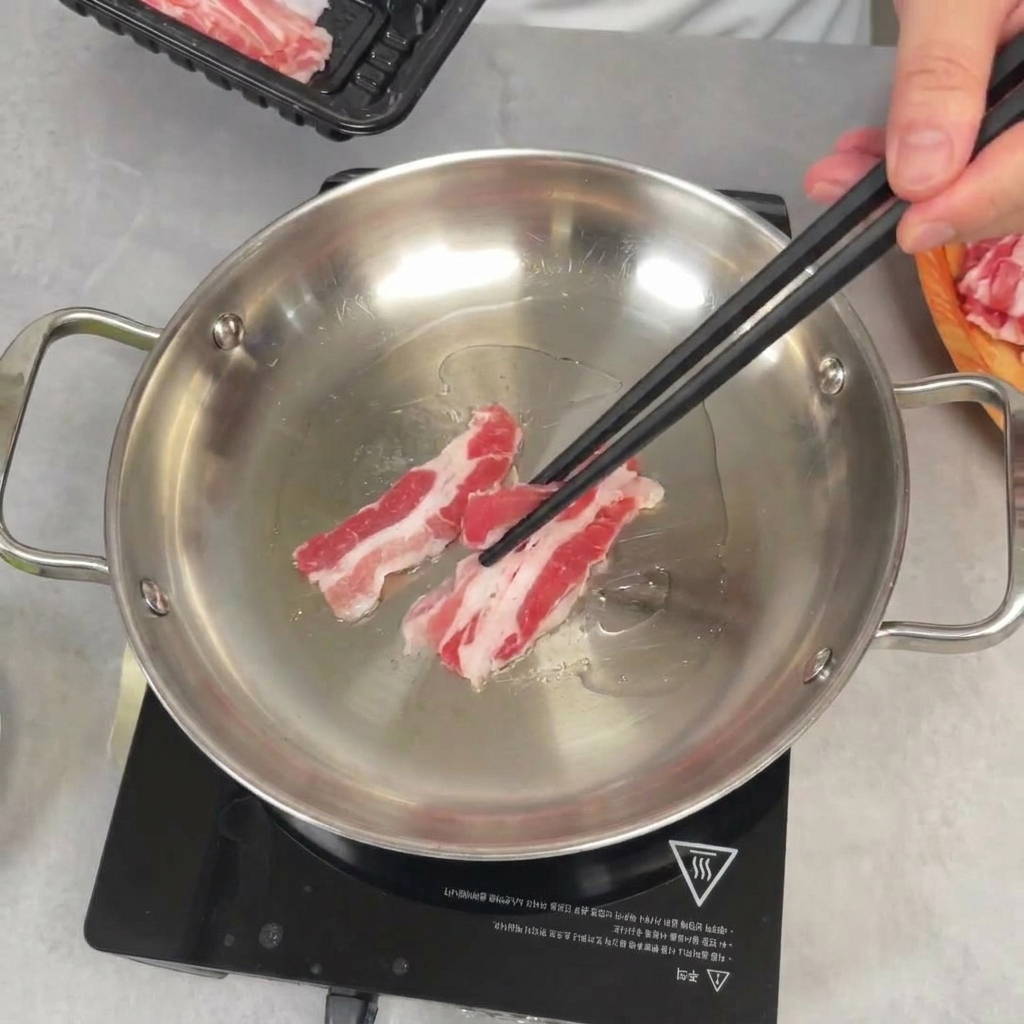
Place the sliced pork belly into the oiled pan over medium heat. Frying the pork first brings out the rich pork fat, which serves as a flavorful base for the stew and makes the entire dish taste significantly better.
Tip: Using pork belly with a good amount of fat is essential for achieving that authentic restaurant flavor. - 3Brown the pork
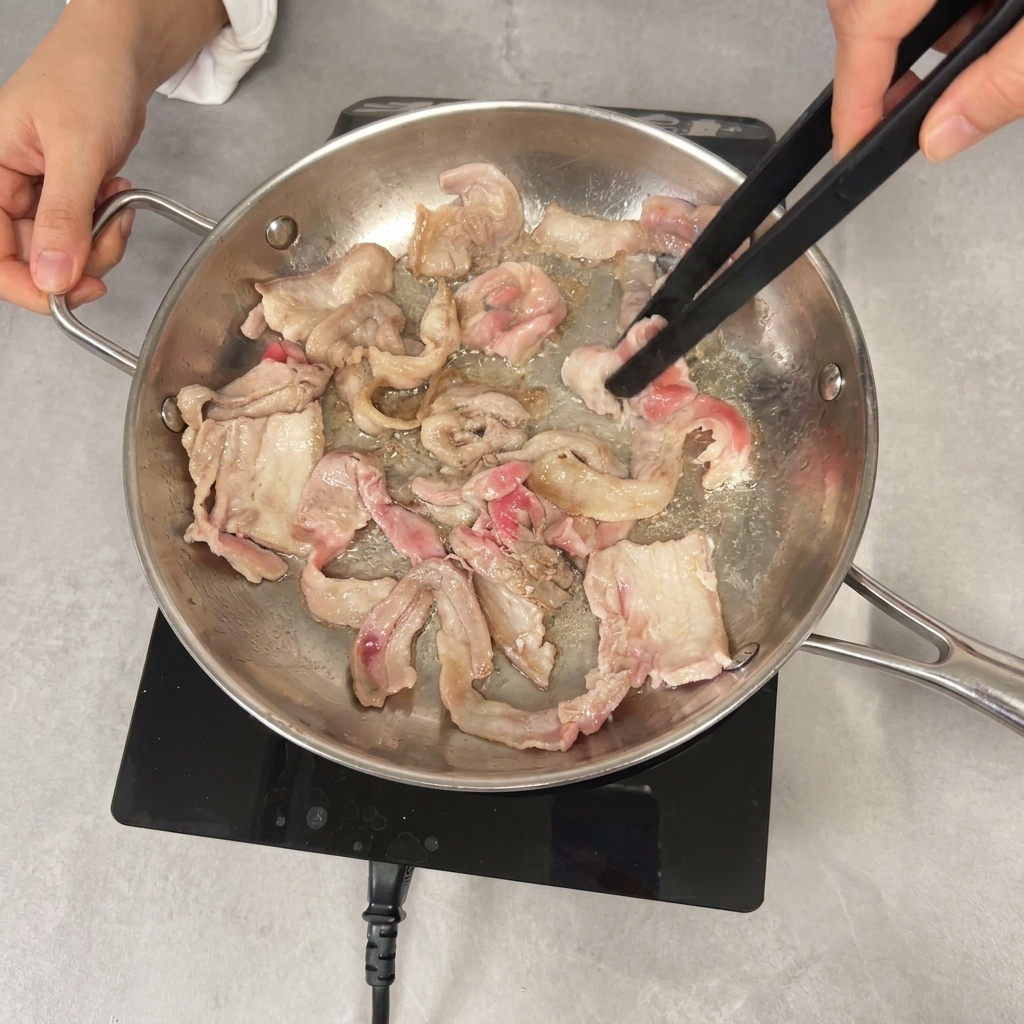
Stir-fry the pork belly slices continuously until they lose their raw color and the surface begins to brown. Ensure the meat is almost fully cooked at this stage so the fat renders properly.
Tip: Take your time rendering the fat; this builds the depth of flavor required for a great Kimchi stew. - 4Add the fermented kimchi
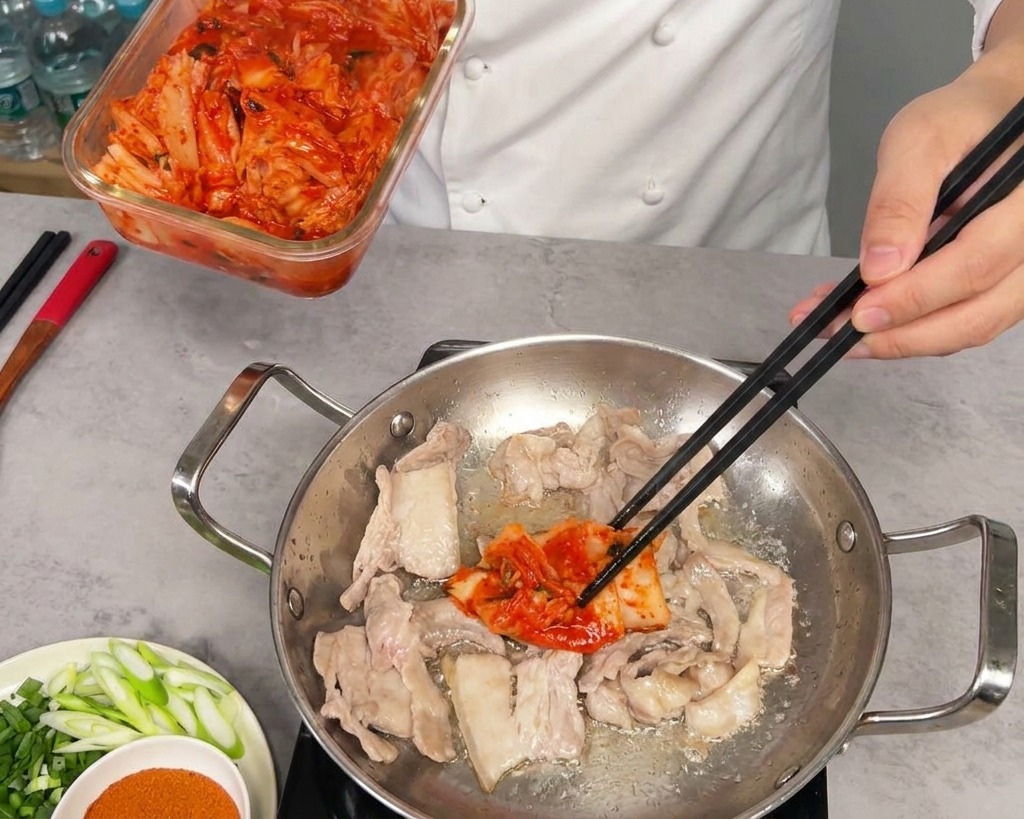
Once the pork is almost cooked, add the chopped old kimchi into the pan and stir-fry them together. The pork fat will coat the kimchi, mellowing its acidity. Uncooked kimchi is opaque, but it will turn translucent as it cooks down.
Tip: For the best stew, use well-fermented, sour kimchi. If your kimchi isnt sour enough, you can add a little Tabasco sauce later. - 5Stir in the chili powder
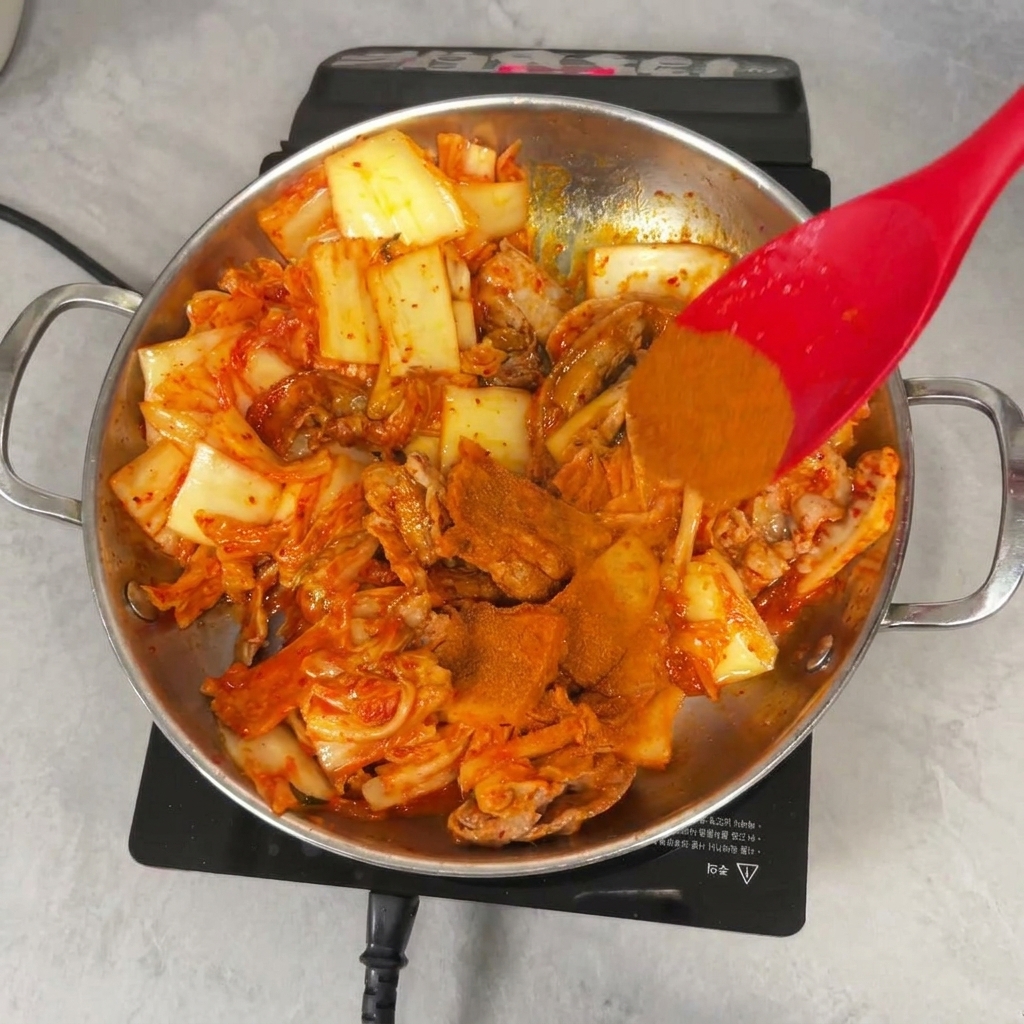
Once the kimchi turns translucent, add a spoonful of dry red chili powder to the pan. Stir-fry the mixture over medium-low heat to release the spices vibrant color and flavor, ensuring the chili incorporates beautifully into the pork fat.
Tip: Keep the heat medium-low when stir-frying the chili powder to prevent it from burning and turning bitter. - 6Mix thoroughly
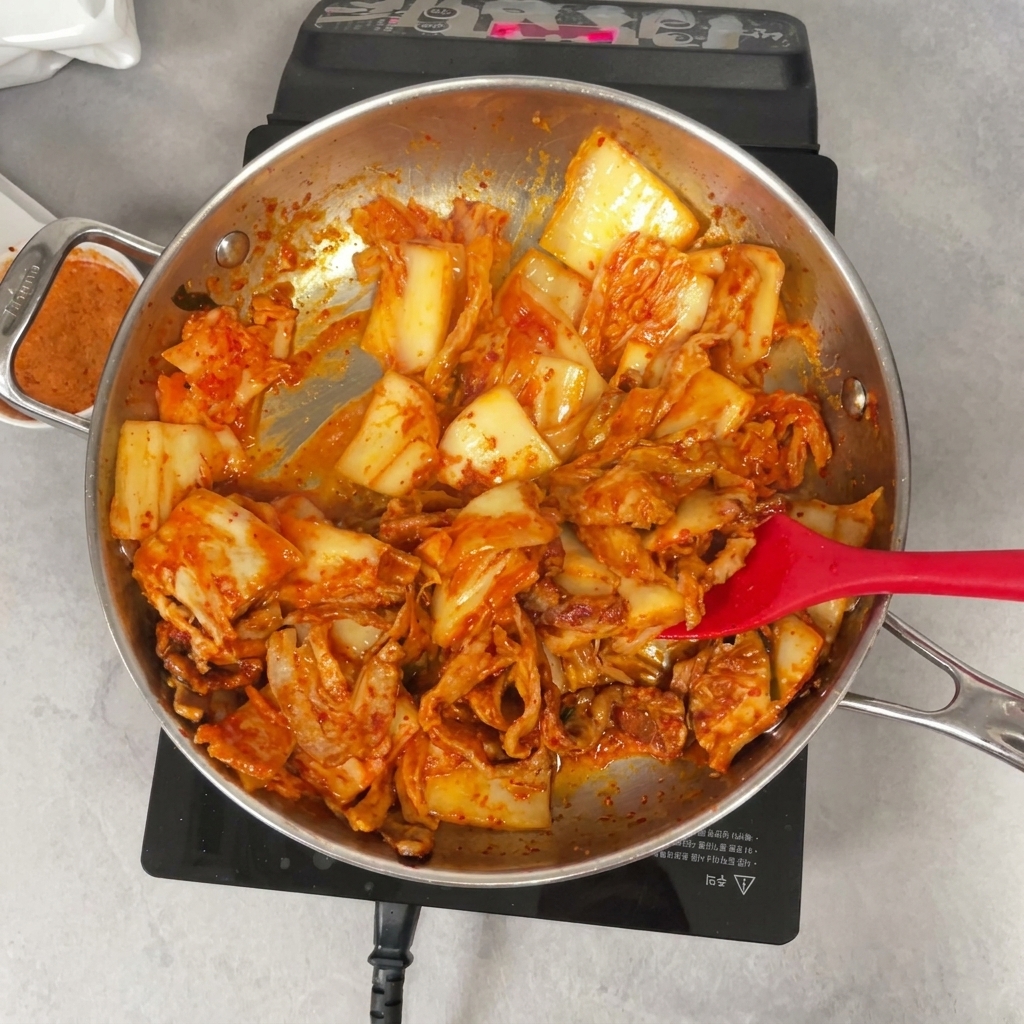
Toss the ingredients gently until the red chili powder evenly coats the pork and kimchi. The rendered pork fat will carry the spice, creating a vibrant red base for the upcoming broth.
Tip: Keep everything moving constantly in the pan to prevent the chili powder from sticking to the bottom and scorching. - 7Form the stew broth
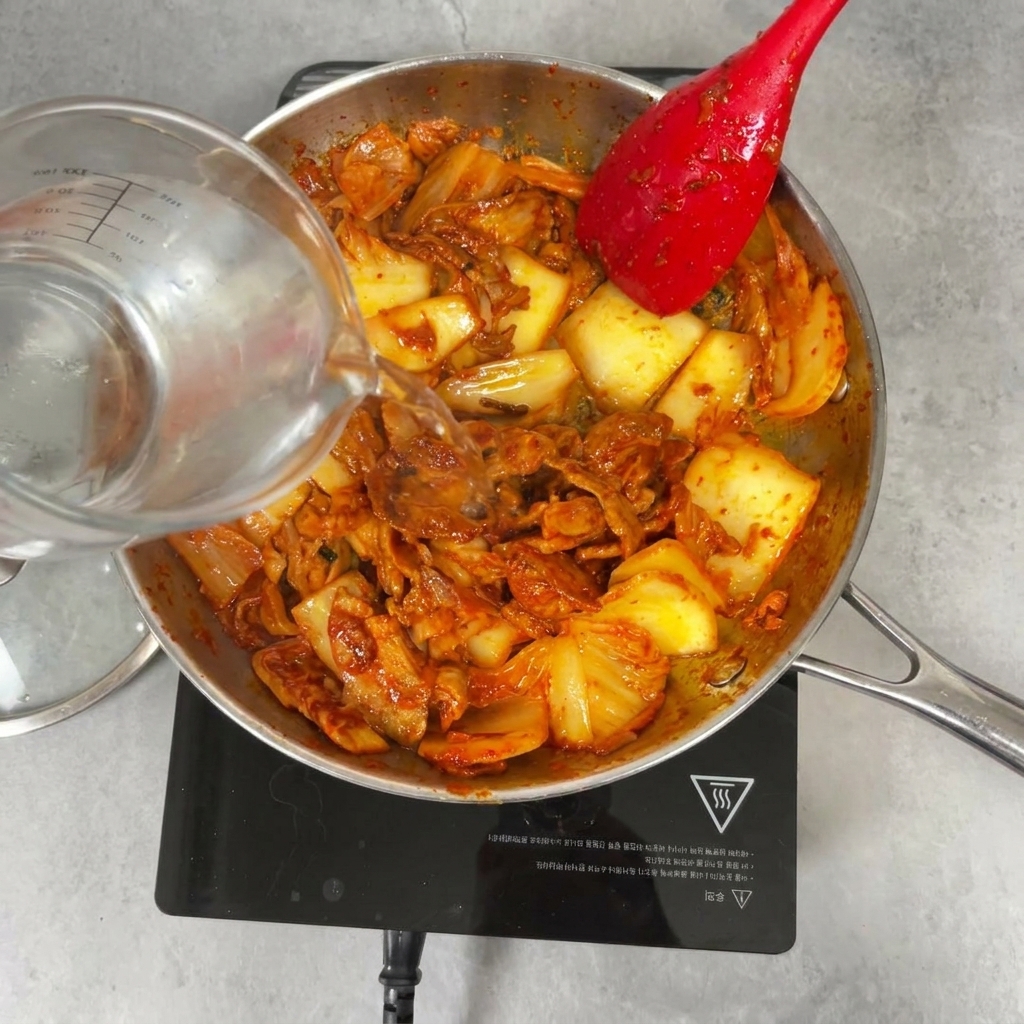
Pour clear water into the pan over the stir-fried kimchi and pork until it reaches about four-fifths of the pots capacity. This water will mingle with the rendered pork fat and spices to create the rich, deeply flavored foundational broth for your stew.
Tip: For an even more authentic and deeper flavor profile, you can substitute the plain water with a light anchovy or kelp stock. - 8Add the kimchi juice
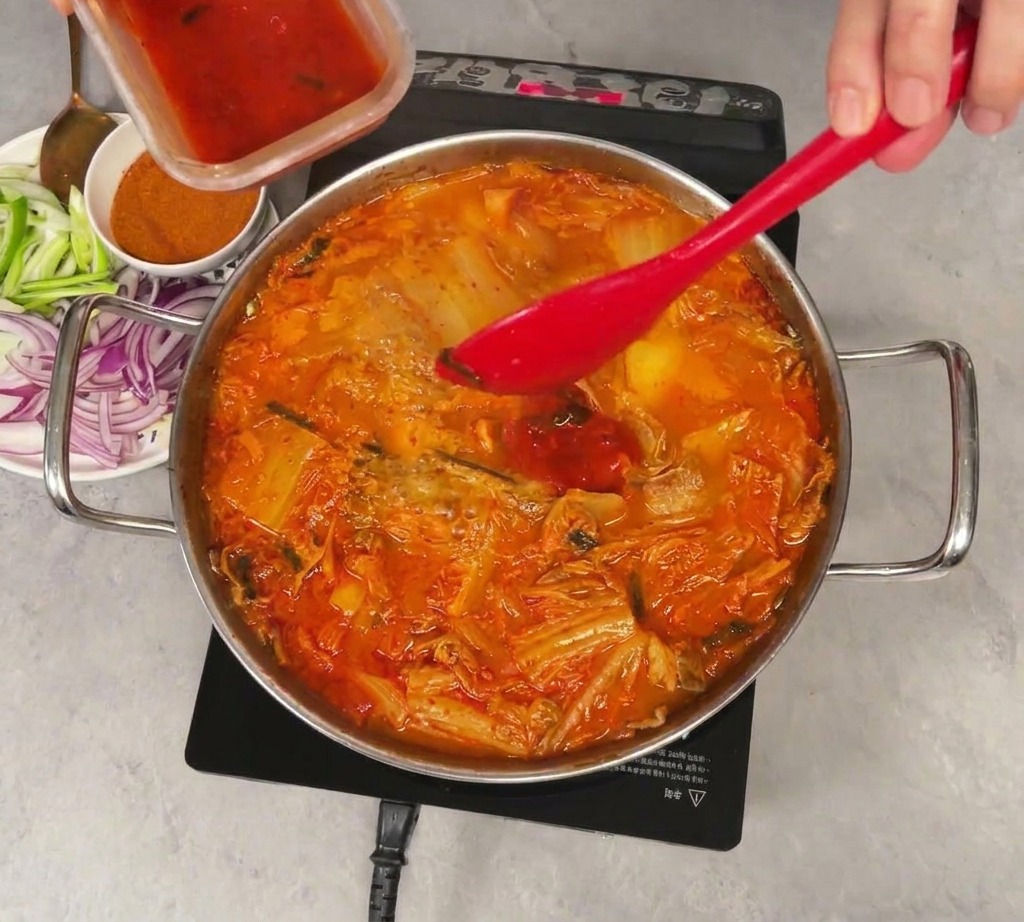
Once the stew has been simmering and the ingredients have softened, pour in a few spoonfuls of kimchi juice. This step is crucial for enhancing the depth of the broth and infusing it with a signature fermented tang.
Tip: Always save the leftover liquid from your kimchi jar! It is packed with concentrated flavor and is perfect for adjusting the sourness of your stews. - 9Add the fresh onions
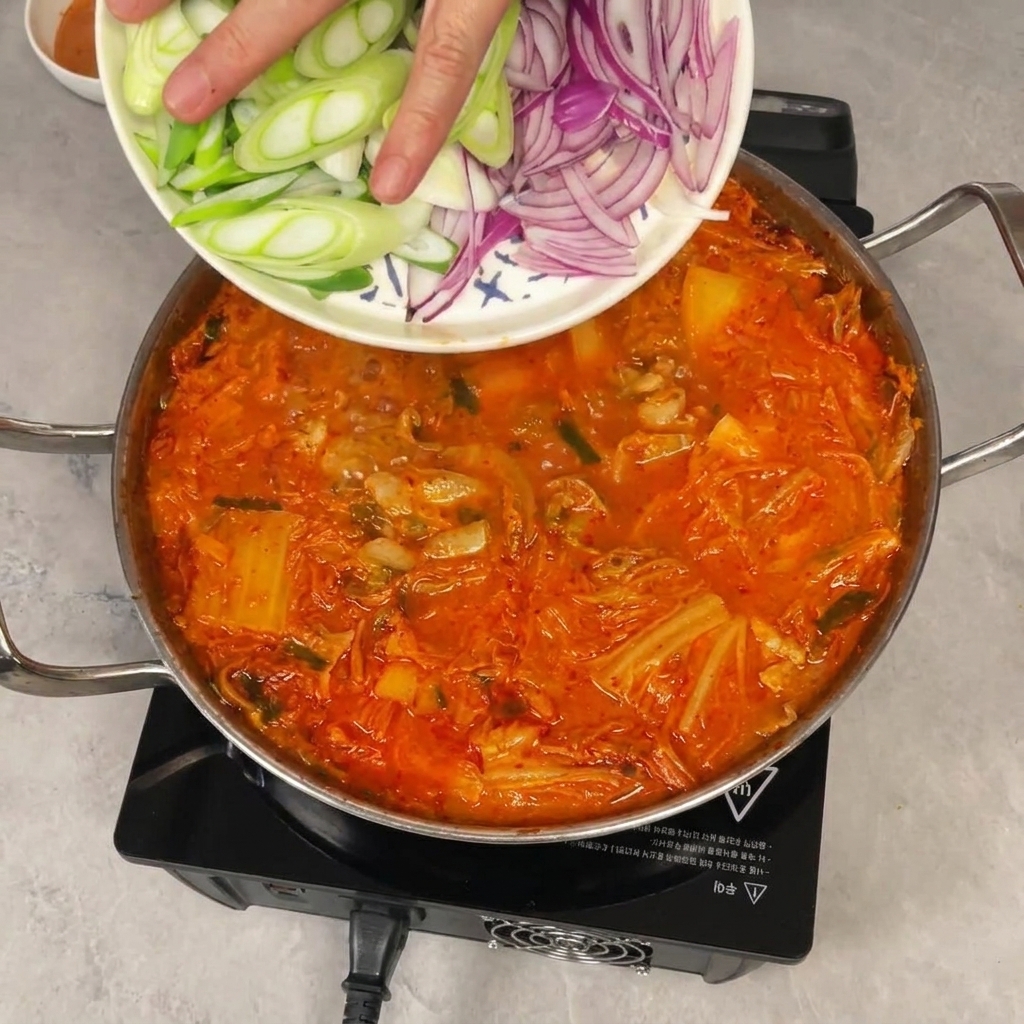
Slide the sliced green onions and red onions directly into the bubbling stew. As they simmer, the natural sweetness from these aromatics will gently balance the sharp acidity of the fermented kimchi, eliminating the need for added sugar.
Tip: Reserve a small handful of the sliced green onions to use as a vibrant, fresh garnish right before serving. - 10Stir in minced garlic
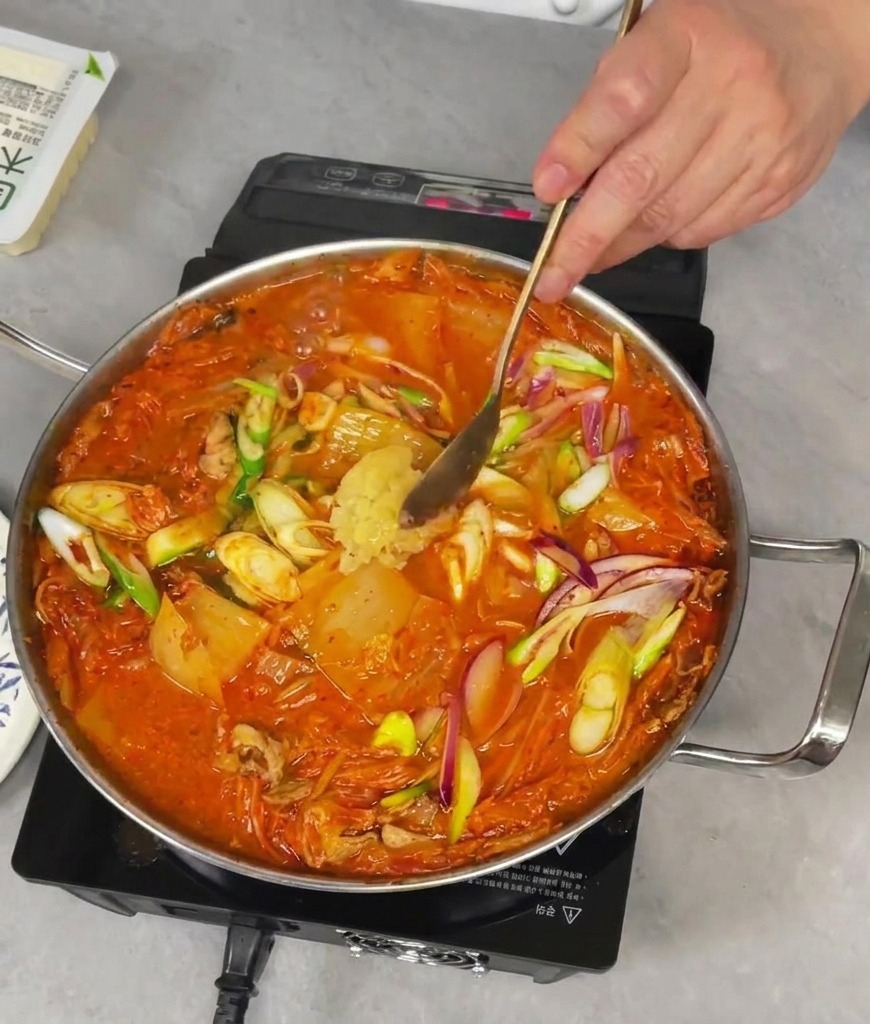
Add a generous spoonful of minced garlic to the simmering broth. Garlic is an essential aromatic in Korean cooking that deeply enriches the savory profile of the stew, cutting through the richness of the pork fat.
Tip: Adding garlic later in the cooking process, rather than frying it at the beginning, preserves its pungent aroma and fresh flavor. - 11Add the tofu
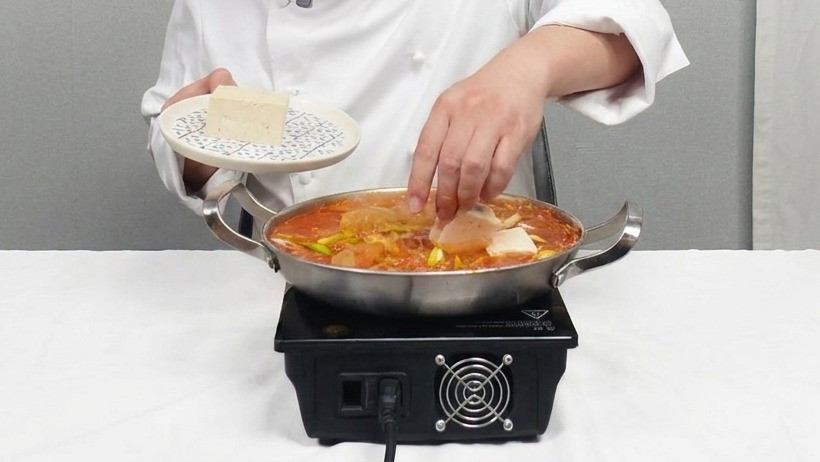
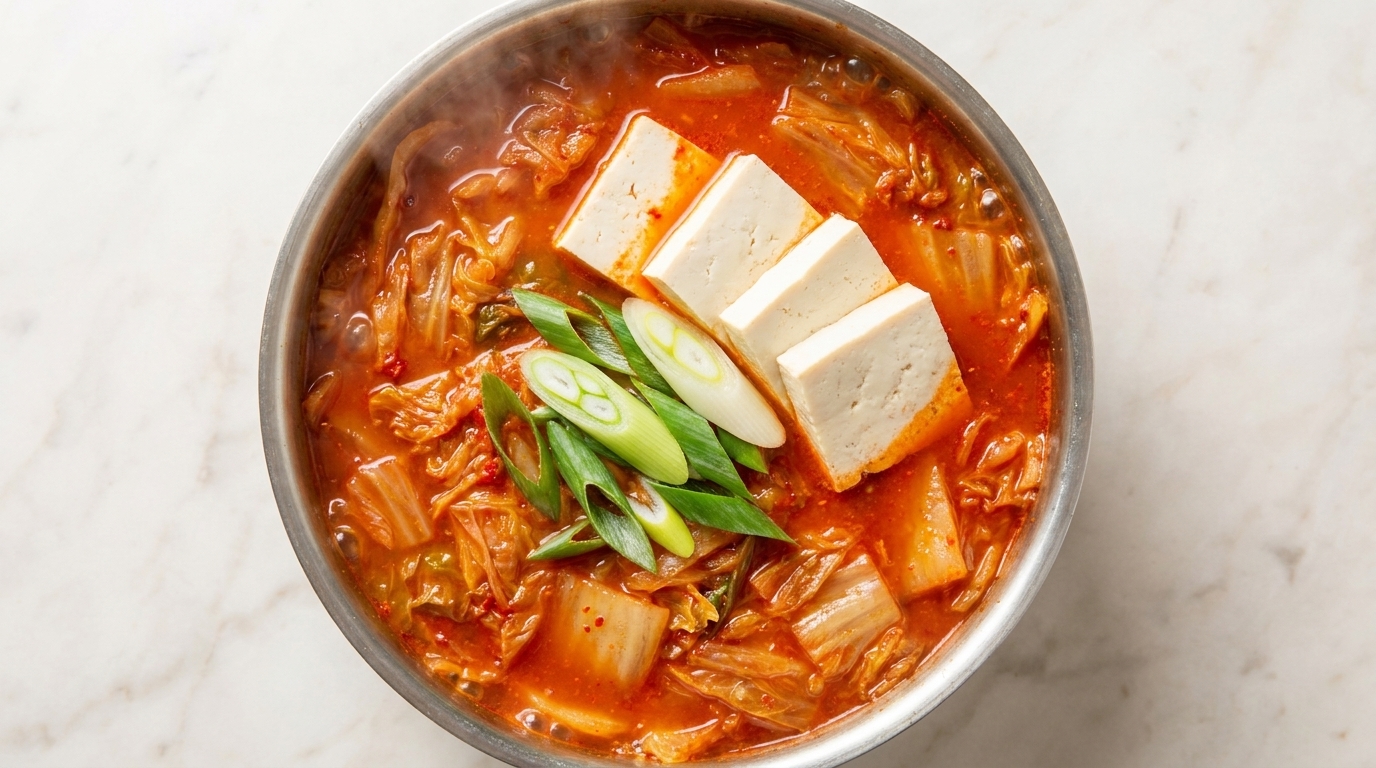
Once the stew has simmered and developed its flavor, carefully place the sliced white tofu into the broth. Tofu adds a soft texture that contrasts perfectly with the rich, tangy soup and absorbs the savory pork broth beautifully.
Tip: Adding the tofu late in the cooking process prevents it from breaking apart while the stew vigorously boils. - 12Adjust the sourness
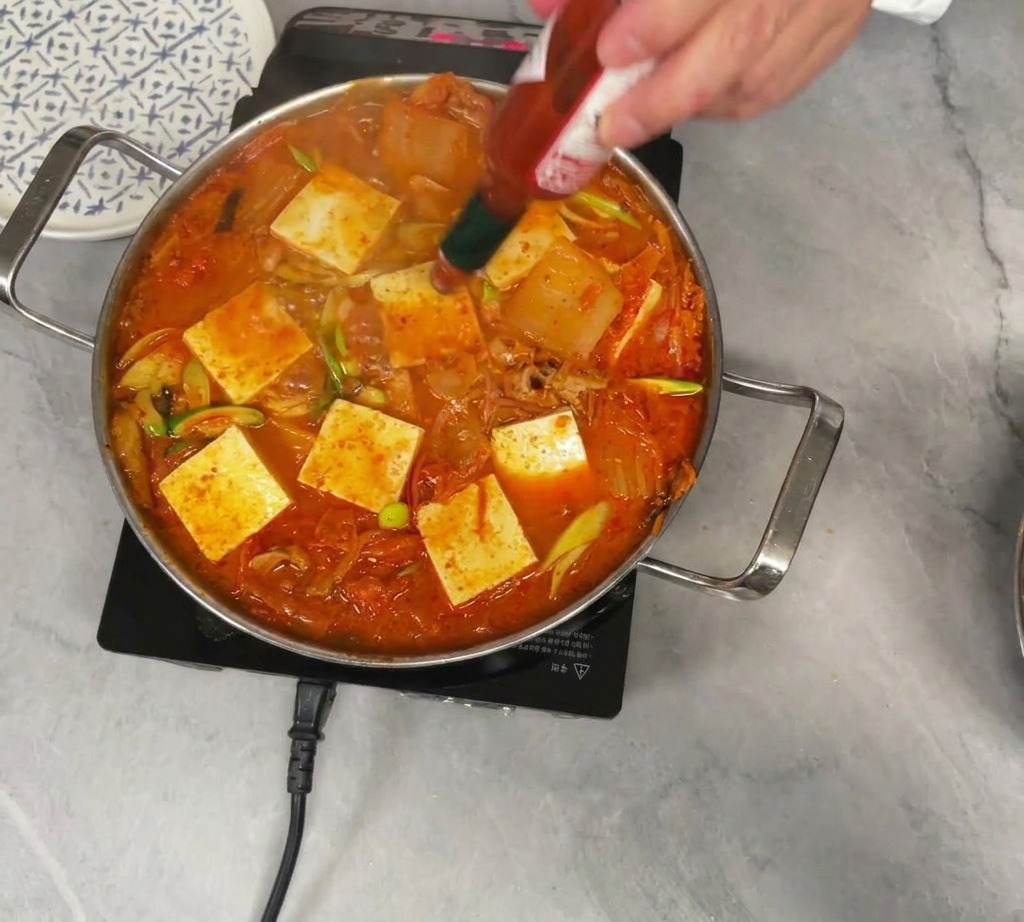
If you dont have well-aged, sour kimchi on hand, here is a chefs secret: dash a little hot pepper sauce, like Tabasco, directly into the bubbling broth. It perfectly mimics the tang and spicy kick of deeply fermented kimchi.
Tip: Taste the broth before adding the hot sauce, as different brands of kimchi naturally vary in their level of acidity and heat. - 13Stir in soybean paste
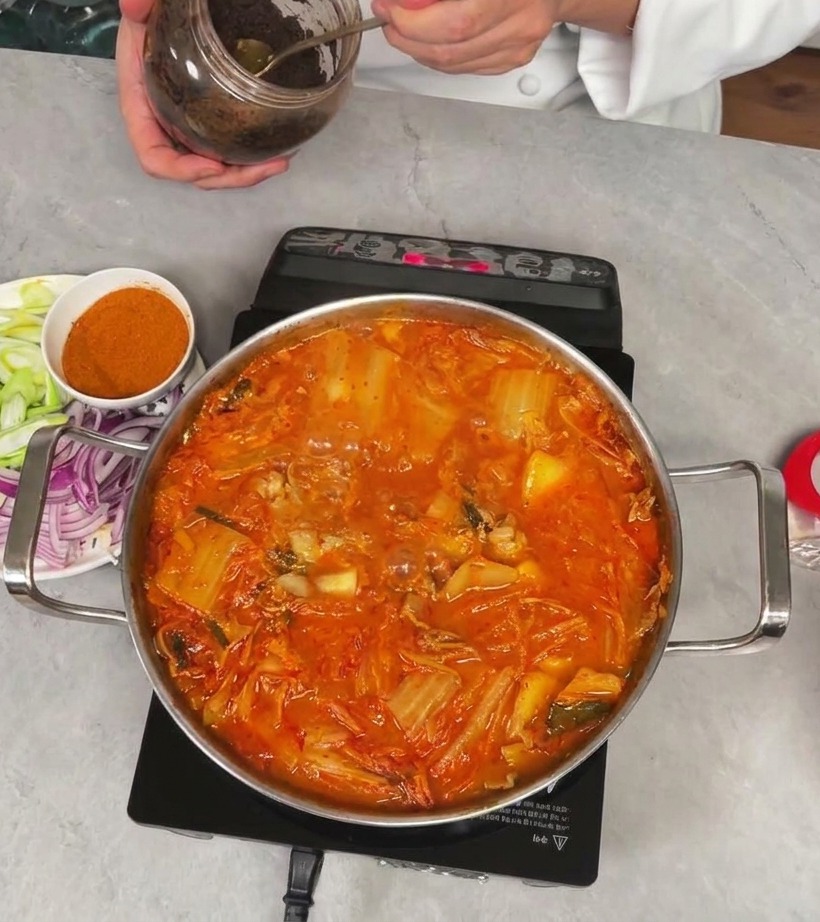
For a deeper, more complex flavor profile, add half a spoonful of thick dark soybean paste into the stew. This secret ingredient enhances the umami notes and perfectly balances the sourness of the fermented kimchi.
Tip: Dissolve the soybean paste well so it distributes evenly throughout the broth without leaving clumps. - 14Dissolve and simmer
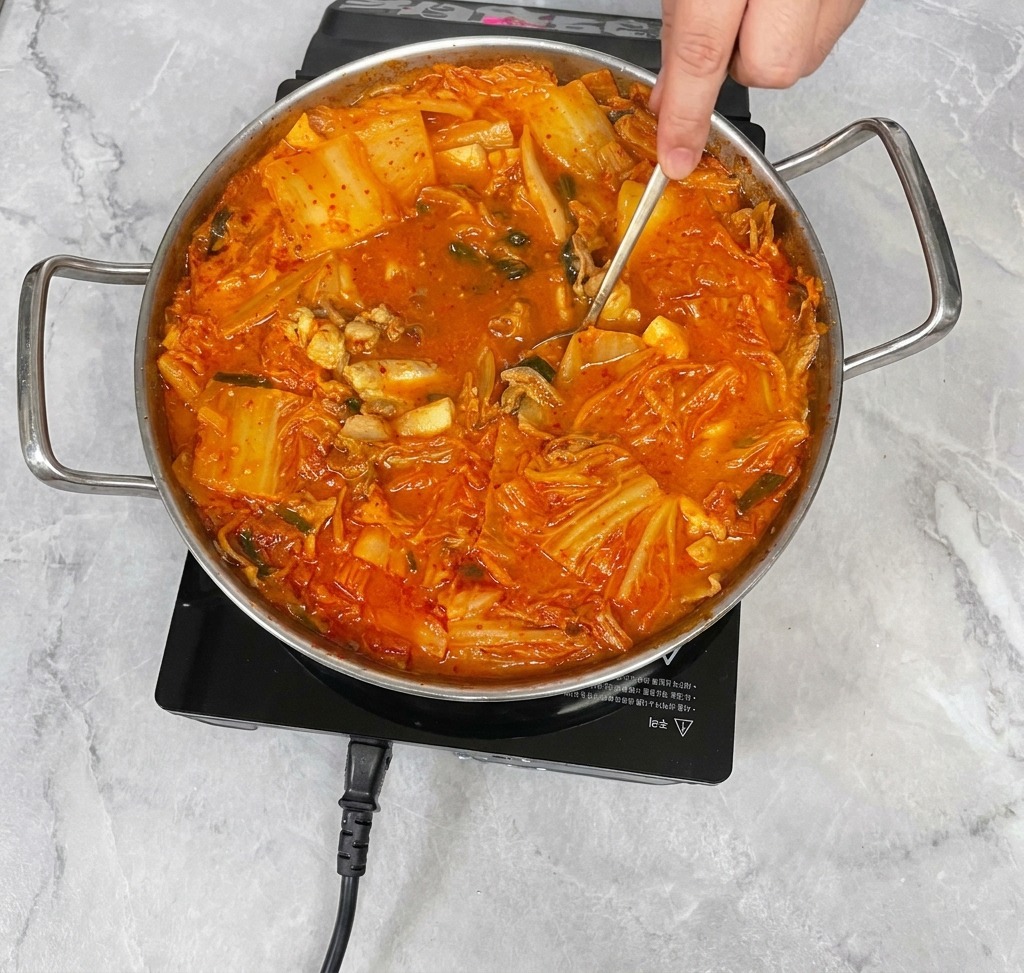
Gently stir the broth with a spoon to ensure the soybean paste and other seasonings are fully dissolved. Allow the stew to simmer for a few more minutes so all the savory and tangy flavors meld perfectly.
Tip: Stir gently around the edges and between the tofu slices to keep them intact. - 15Season with soy sauce
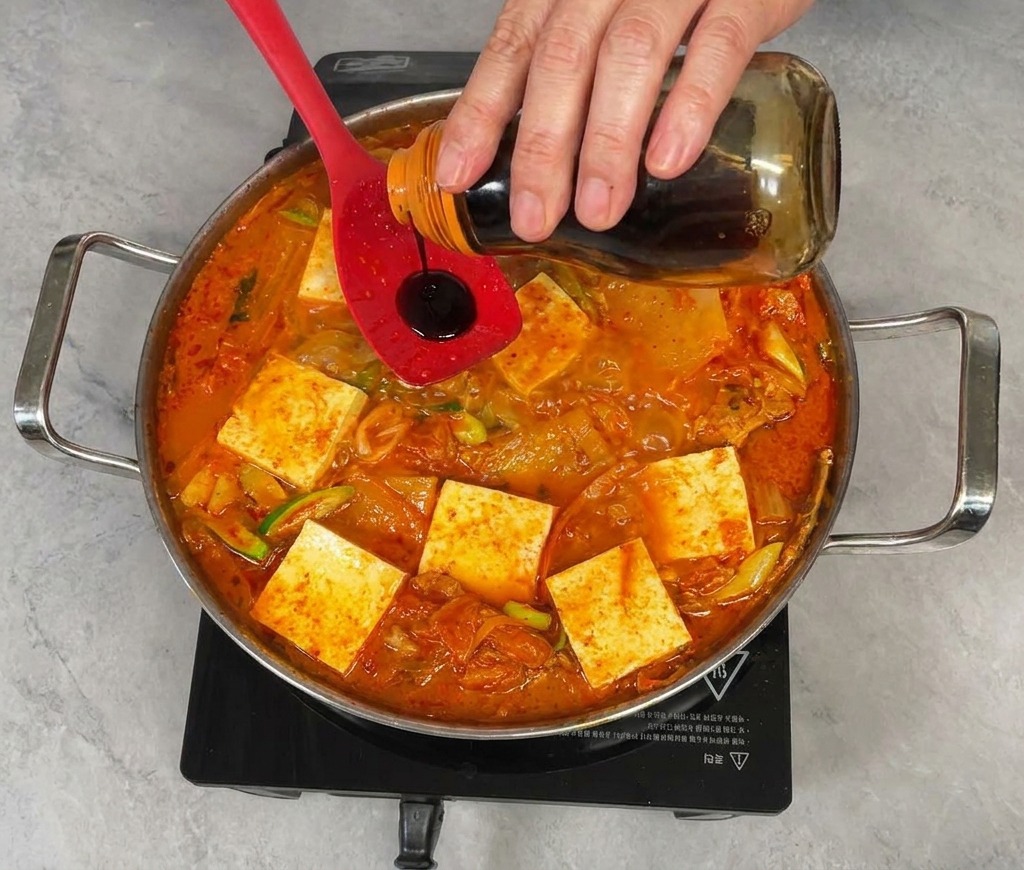
To finish the dish, pour a spoonful of light soy sauce into the pot to season the stew and boost its umami. Stir well and taste the broth; if it requires more saltiness, adjust with a little fish sauce or regular salt.
Tip: Adding soy sauce near the end of the cooking process preserves its delicate aroma and helps balance the overall saltiness of the other ingredients.