Spicy Korean Kimchi Beef Tofu Soup
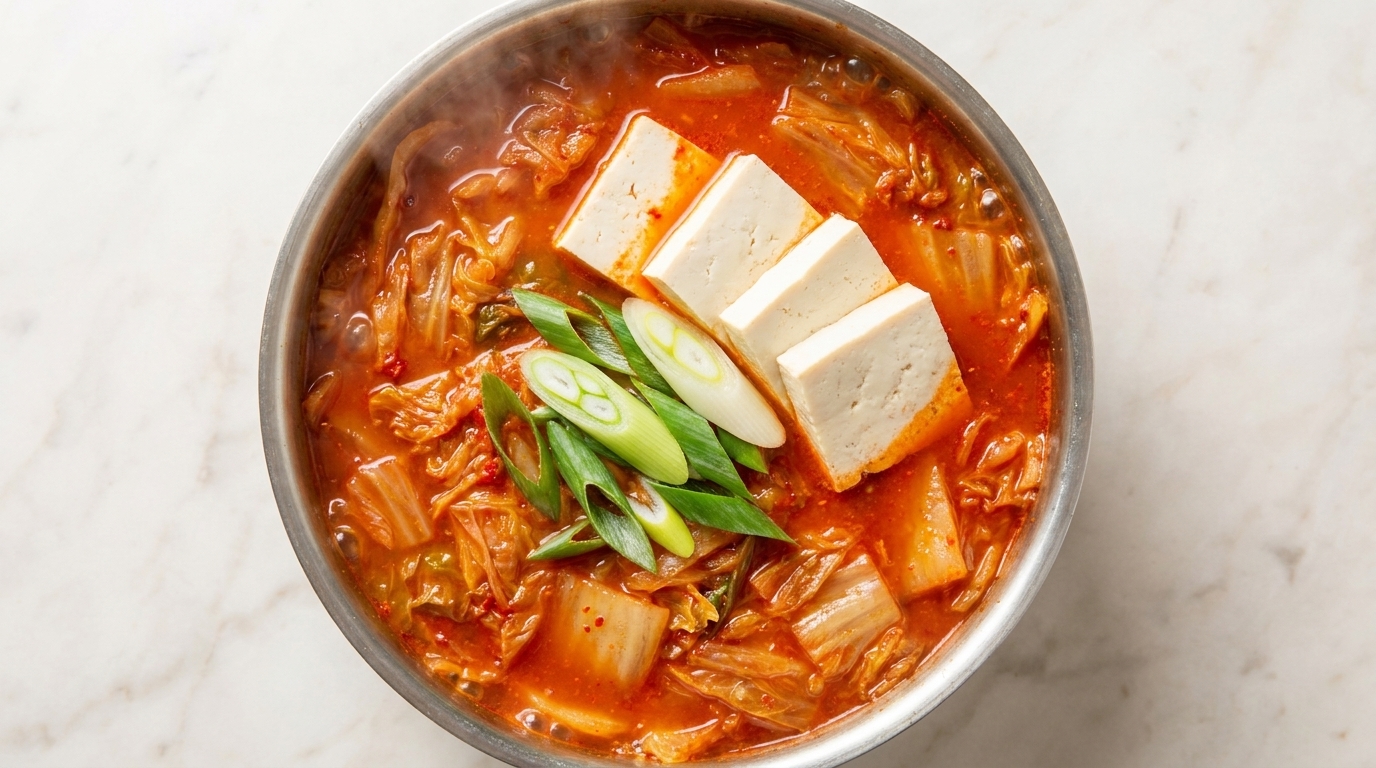
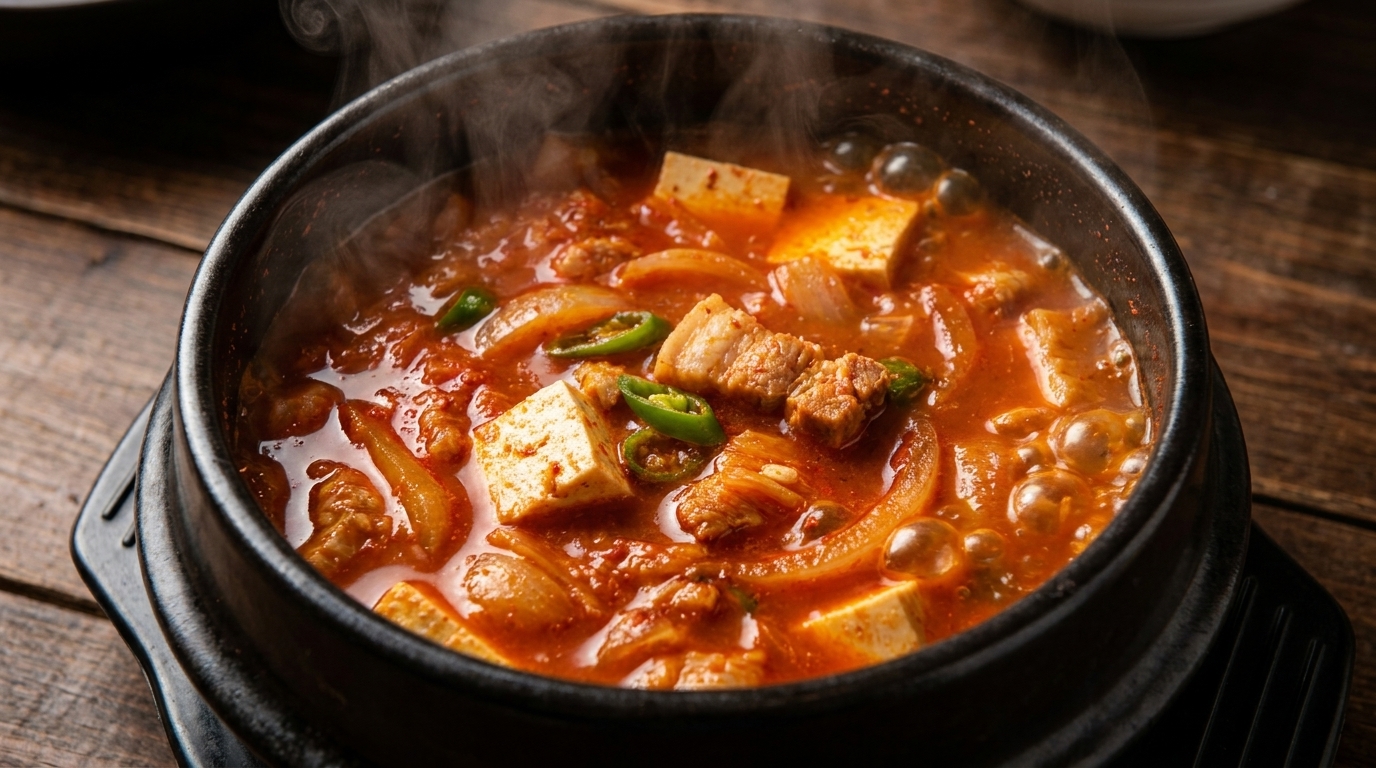
Warm up with this comforting Korean Kimchi Beef Tofu Soup. Tender marinated beef, silken tofu, and enoki mushrooms simmer in a deeply savory, fiery gochujang broth.
A staple of Korean comfort food, this hearty stew balances the tangy complexity of fermented kimchi with the rich umami of beef and gochujang. Thinly sliced marinated beef cooks directly in the bubbling broth, keeping it melt-in-your-mouth tender while infusing the soup with a deeply savory flavor. Its a quick, fiery meal that comes together perfectly alongside a warm bowl of steamed rice.
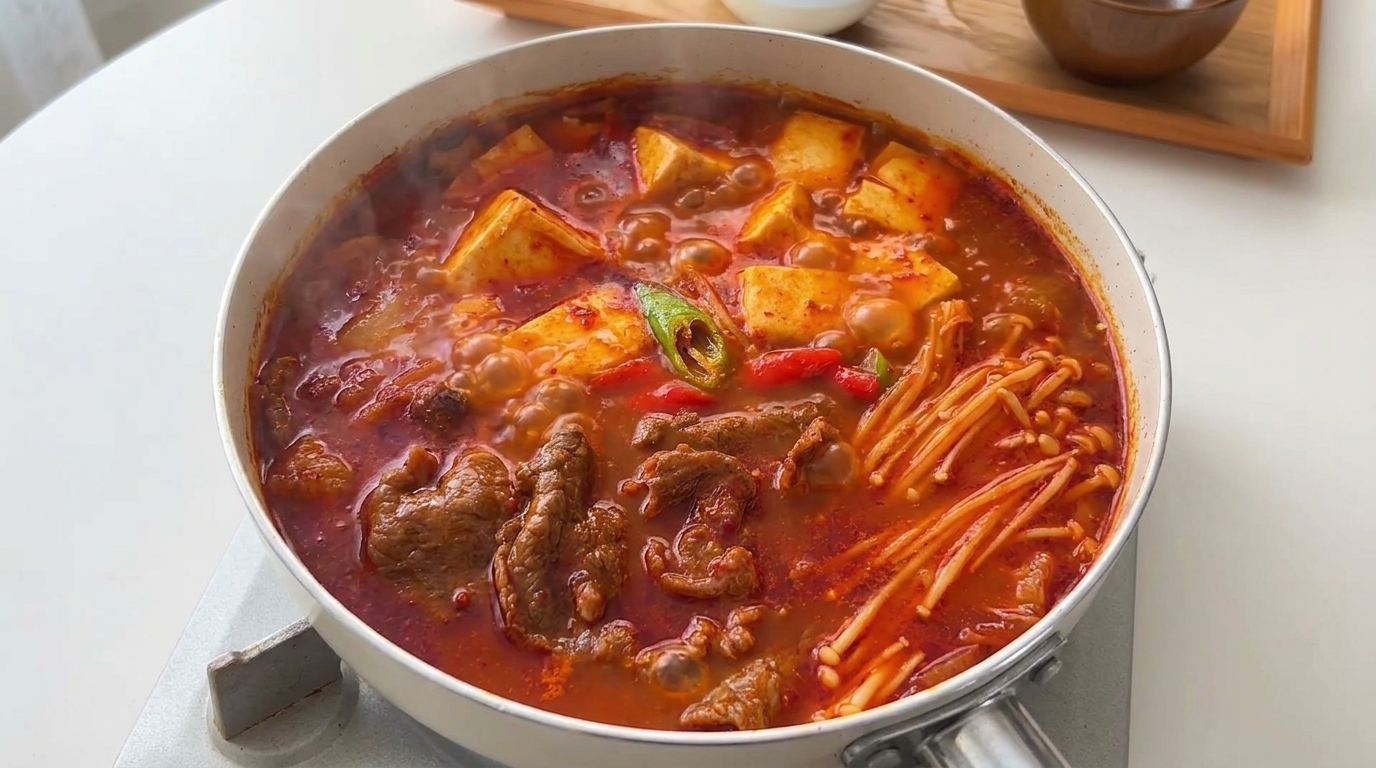
Ingredients
- 200 g beef (thinly sliced)
- 2 tbsp soy sauce (divided)
- 1 tbsp oyster sauce
- 1 tbsp cornstarch
- 1 tbsp cooking oil
- 1 tbsp sugar
- 1 tbsp Korean chili powder (gochugaru)
- 1 tbsp Korean chili paste (gochujang)
- 12 cup red onions (sliced)
- 1 cup fermented kimchi (chopped)
- 2 cups water or unsalted stock
- 1 bundle enoki mushrooms
- 1 block soft or silken tofu
- to garnish green and red chili peppers (sliced)
Instructions
- 1Slice the beef
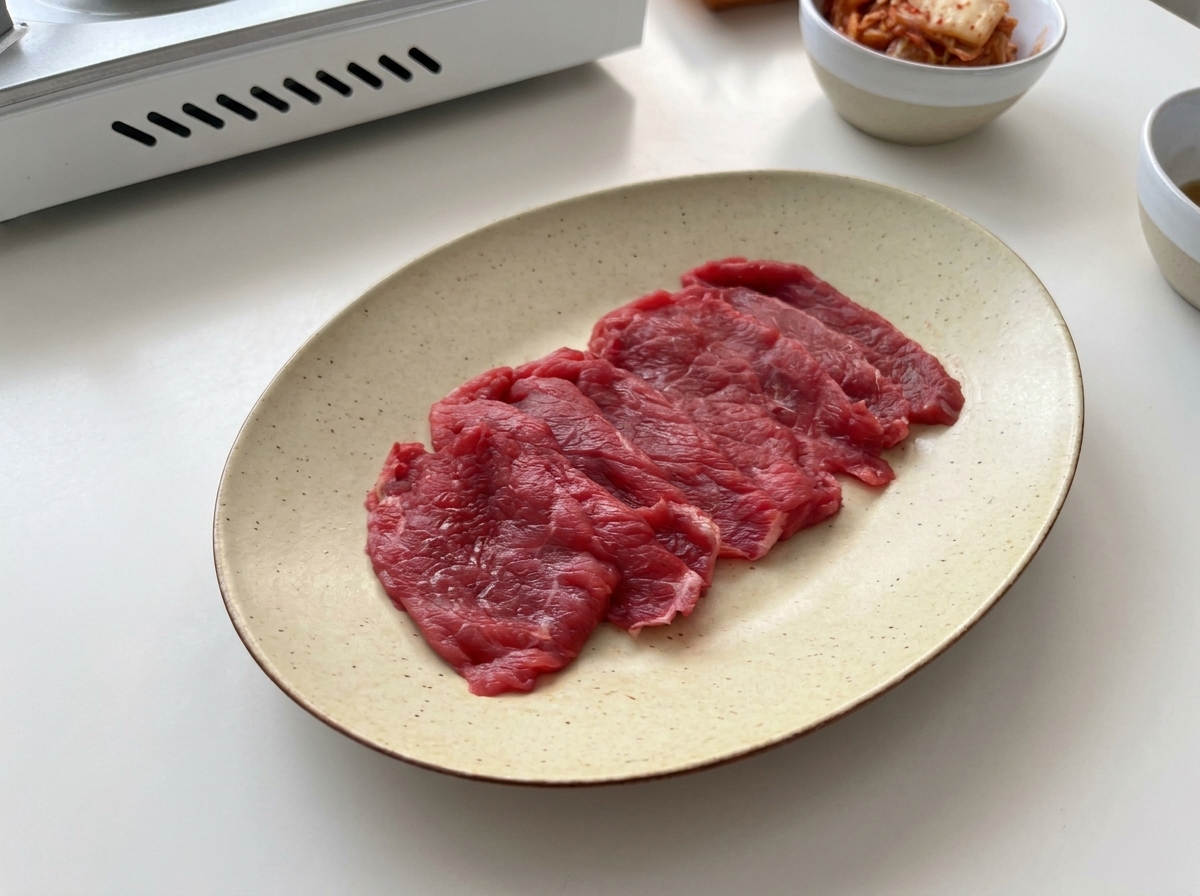
Start by slicing the beef thinly against the grain. Lay the fresh slices out evenly on a plate, preparing them to absorb the flavors of the marinade.
Tip: Slicing the meat thinly ensures a more tender and delicate texture when it cooks quickly in the hot stew. - 2Add the marinade base
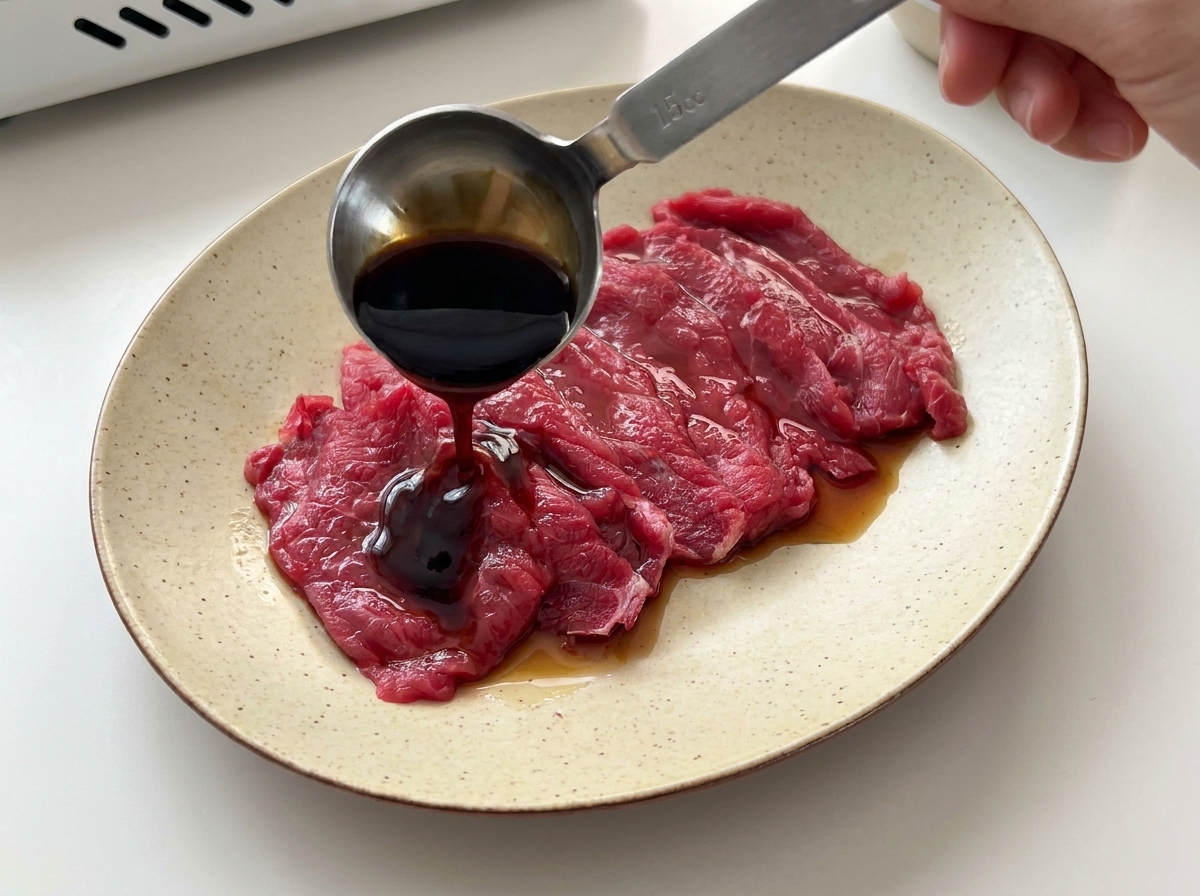
Measure out one spoonful of soy sauce and one spoonful of oyster sauce. Pour the savory sauces directly over the raw beef slices to build the base flavor profile.
Tip: Oyster sauce adds a rich umami depth and a glossy finish that coats the beef beautifully. - 3Mix with cornstarch
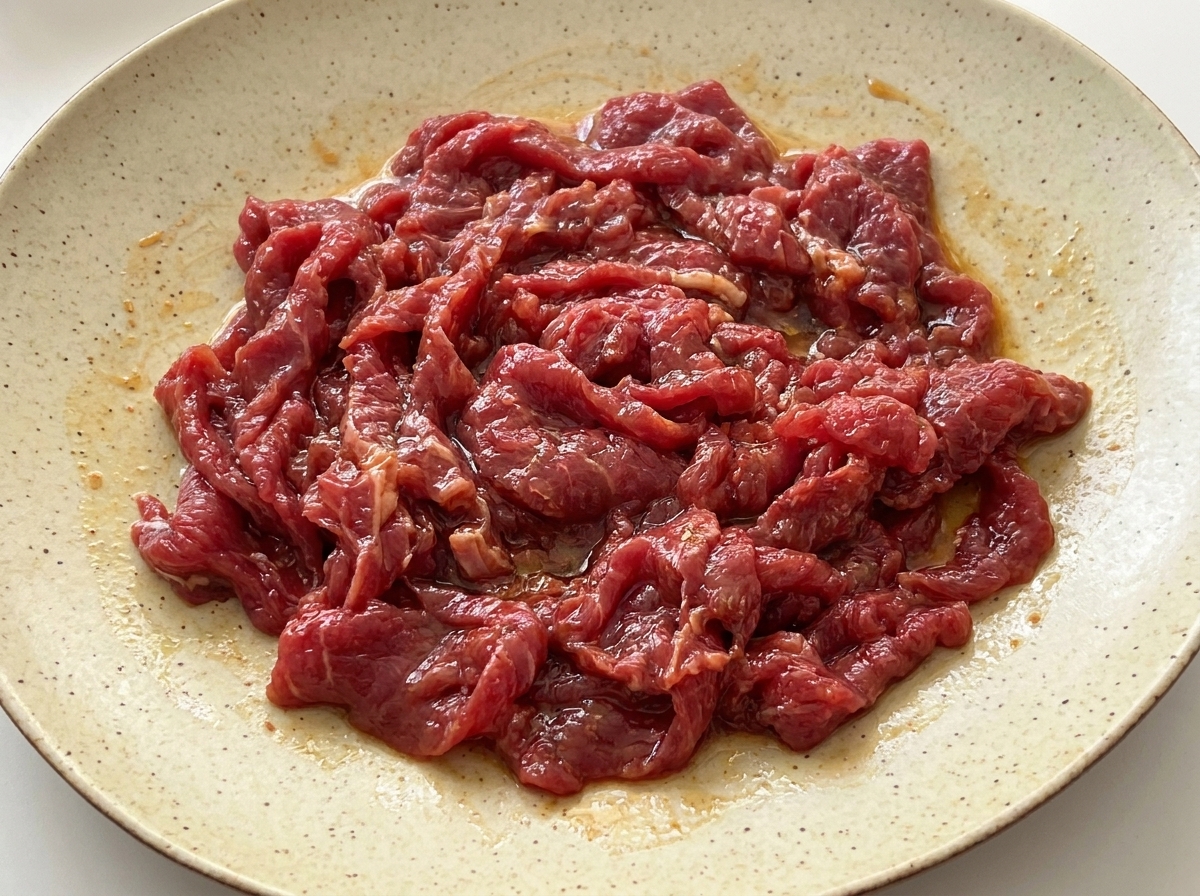
Add one spoonful of starch to the beef, then mix everything thoroughly. Ensure every slice is evenly coated with the soy sauce, oyster sauce, and starch mixture.
Tip: Cornstarch acts as a tenderizer and creates a protective coating that keeps the beef juicy and soft during cooking. - 4Seal with oil and rest
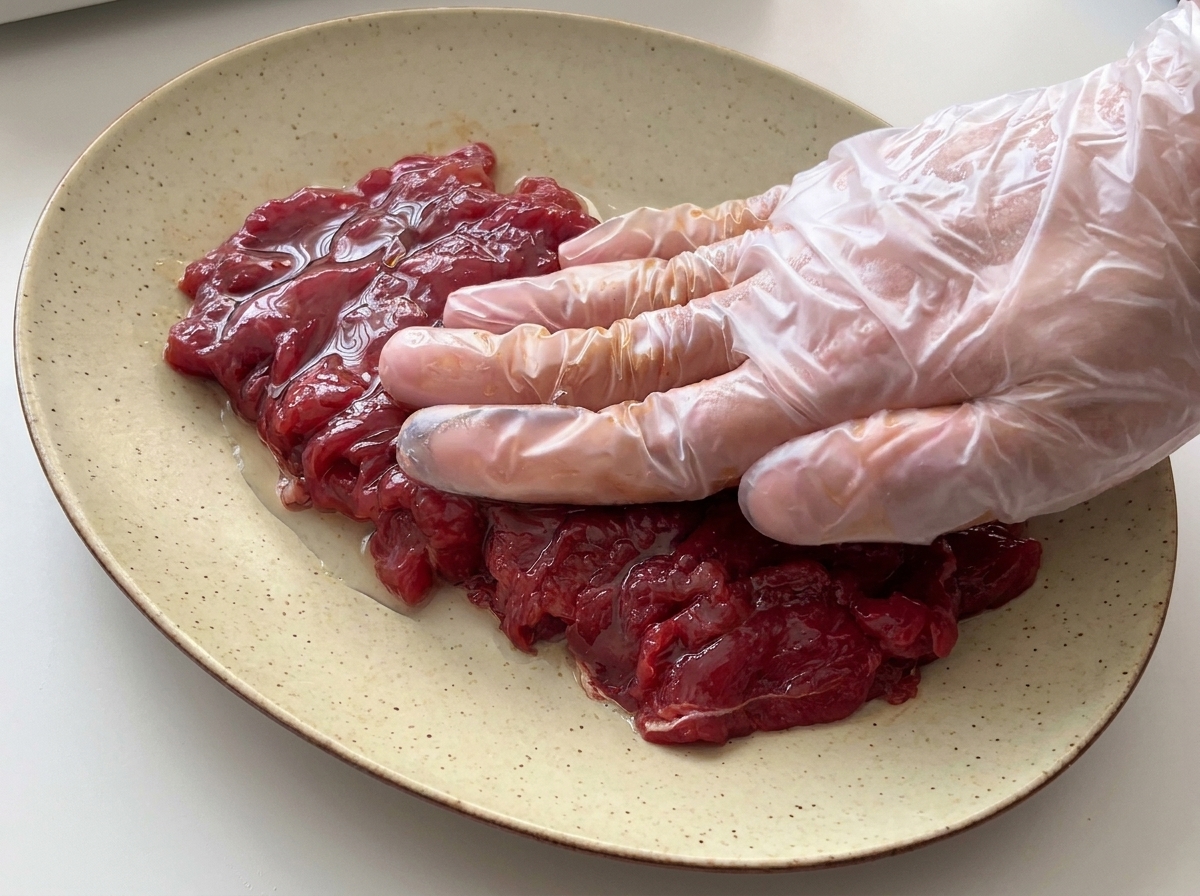
Drizzle a little bit of cooking oil over the marinated beef and use your hands to press it flat onto the plate. Let the meat rest and marinate for 20 minutes.
Tip: Adding a thin layer of oil seals in the moisture and prevents the beef slices from sticking together when added to the pan later. - 5Start the stew sauce

In a separate small white bowl, begin preparing the base sauce for the stew. Combine one spoonful of soy sauce with one spoonful of sugar to balance the savory and sweet notes.
Tip: A touch of sugar is essential to balance the acidic tang of the kimchi and the sharp heat of the chili elements. - 6Add the chili elements
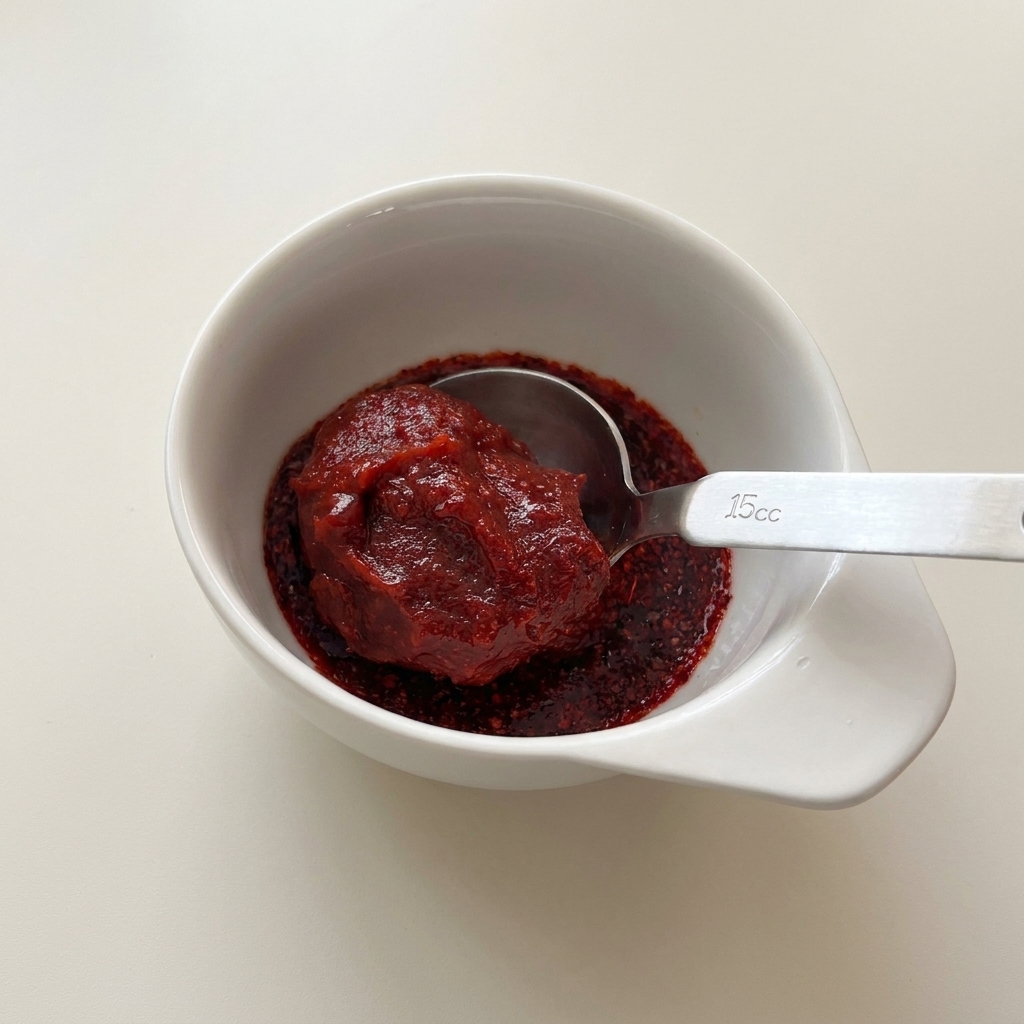
Add one spoonful of chili powder and one spoonful of Korean chili paste (gochujang) into the bowl containing your soy sauce and sugar.
Tip: Korean chili paste provides a deep, complex heat and thickens the stew slightly. Adjust the amount depending on your spice tolerance. - 7Stir in the water
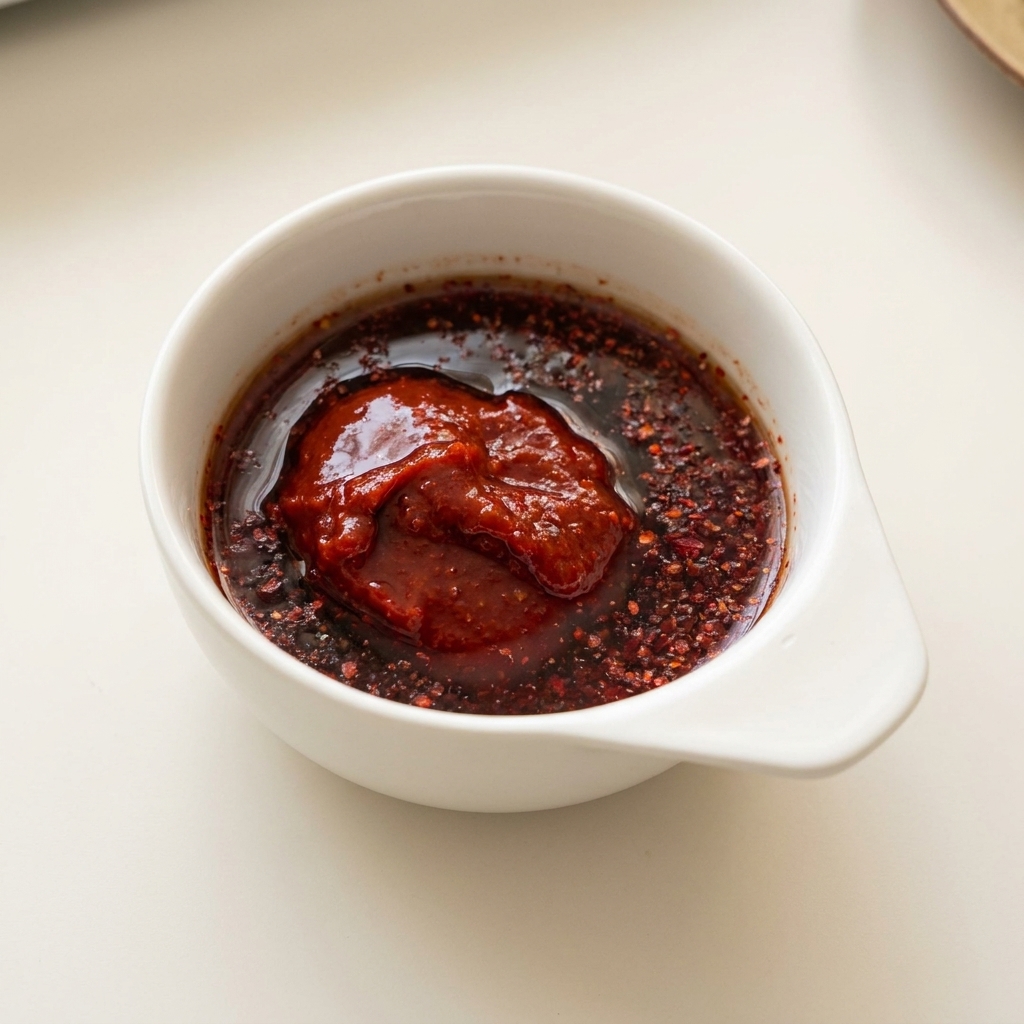
Pour half a bowl of water into the concentrated spice mixture. This will help dissolve the thick pastes and create a smooth, pourable liquid seasoning base for your broth.
Tip: You can use beef or anchovy broth instead of water here if you prefer a more robust umami flavor. - 8Stir the sauce evenly
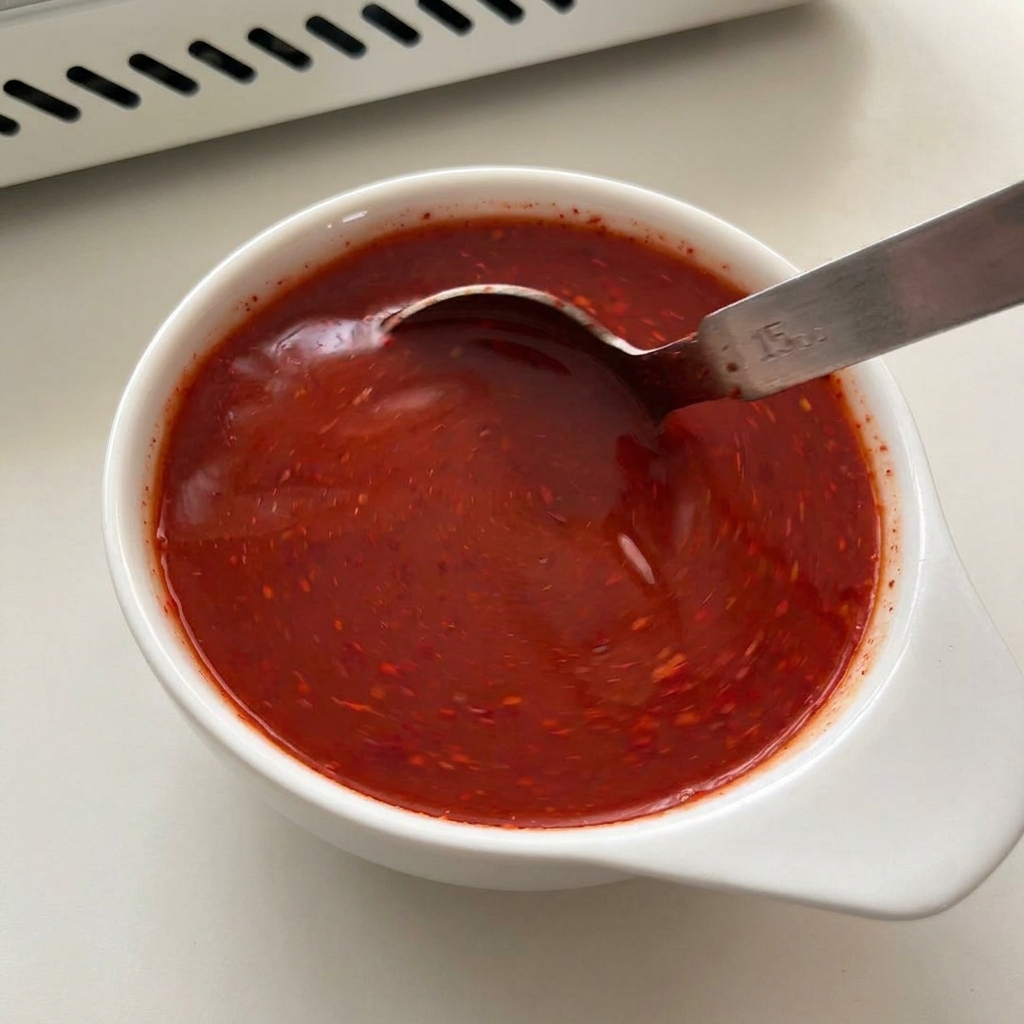
Using a spoon, stir the ingredients together until the chili paste and sugar are completely dissolved. The mixture should turn into a smooth, bright red sauce.
Tip: Make sure no thick clumps of chili paste remain so it blends seamlessly into the broth. - 9Sauté the red onions

Heat a drizzle of cooking oil in a pan over medium heat. Add the sliced red onions and sauté them until they soften and become fragrant.
Tip: Sautéing the onions first releases their natural sweetness, which helps balance the heat of the chili sauce. - 10Add the kimchi
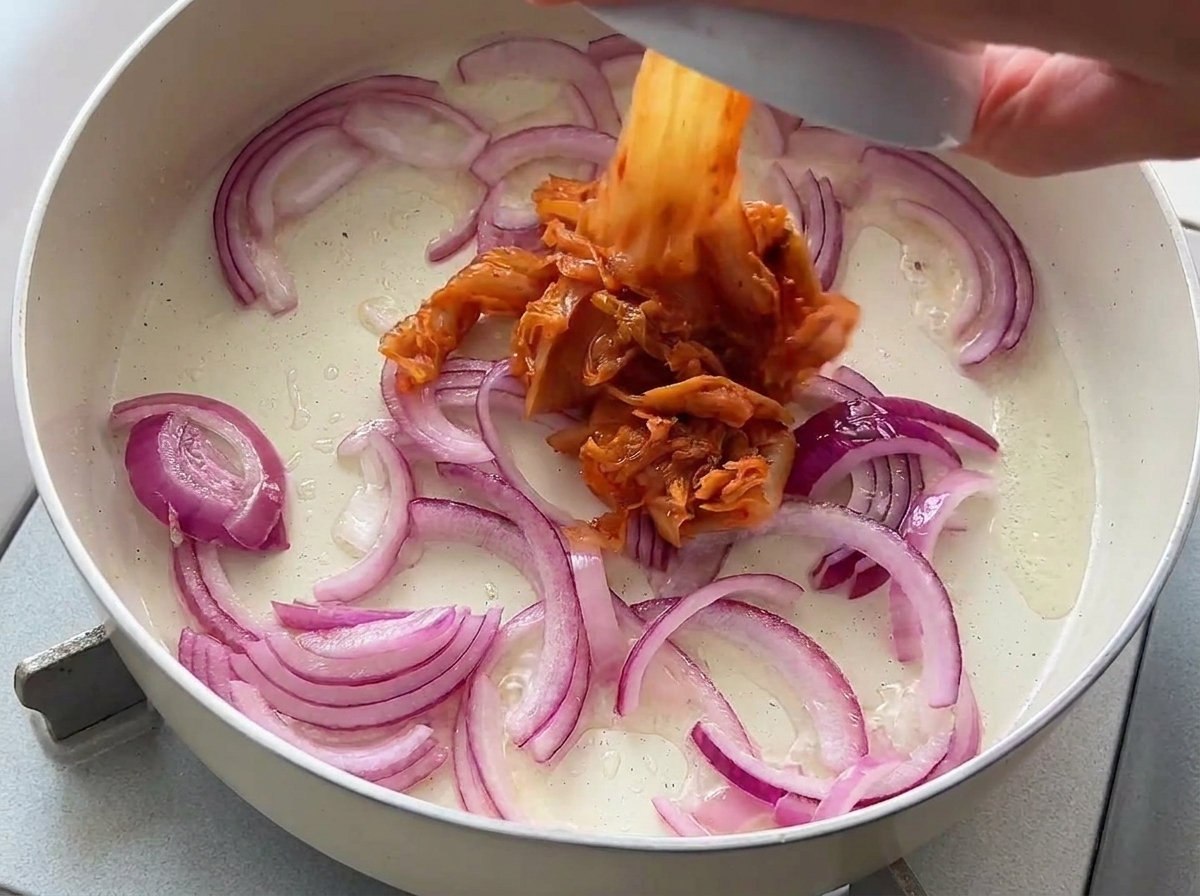
Once the onions are fragrant, add the chopped kimchi directly into the pan. Stir-fry the mixture to release the deep, savory flavors of the fermented cabbage.
Tip: Using well-fermented, sour kimchi is ideal as it provides a richer, more robust flavor for the soup. - 11Pour in the prepared sauce
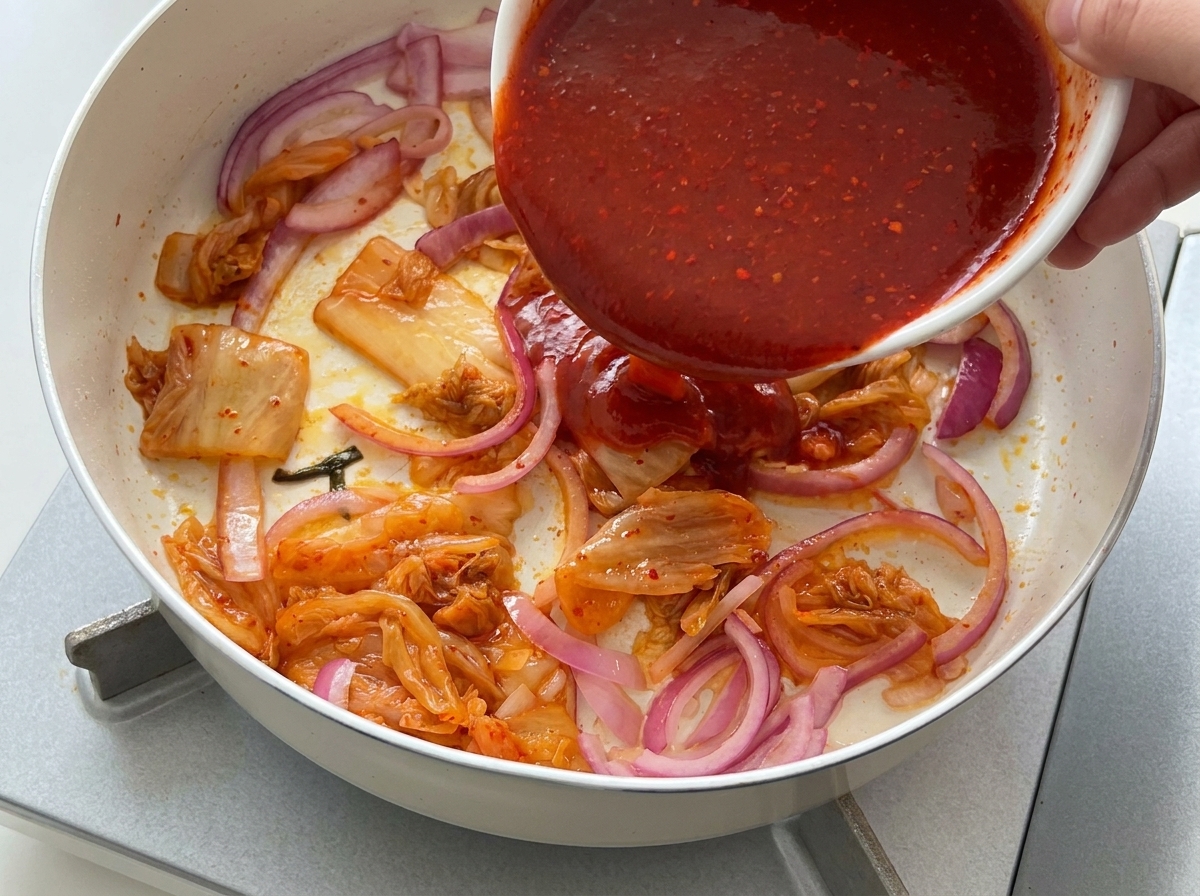
Pour the evenly mixed red chili sauce over the sautéed onions and kimchi. Stir well so the vegetables are fully coated in the flavorful, spicy paste.
Tip: Allowing the kimchi and onions to cook in the sauce for a minute deepens the overall color and taste of the dish. - 12Add water for the broth
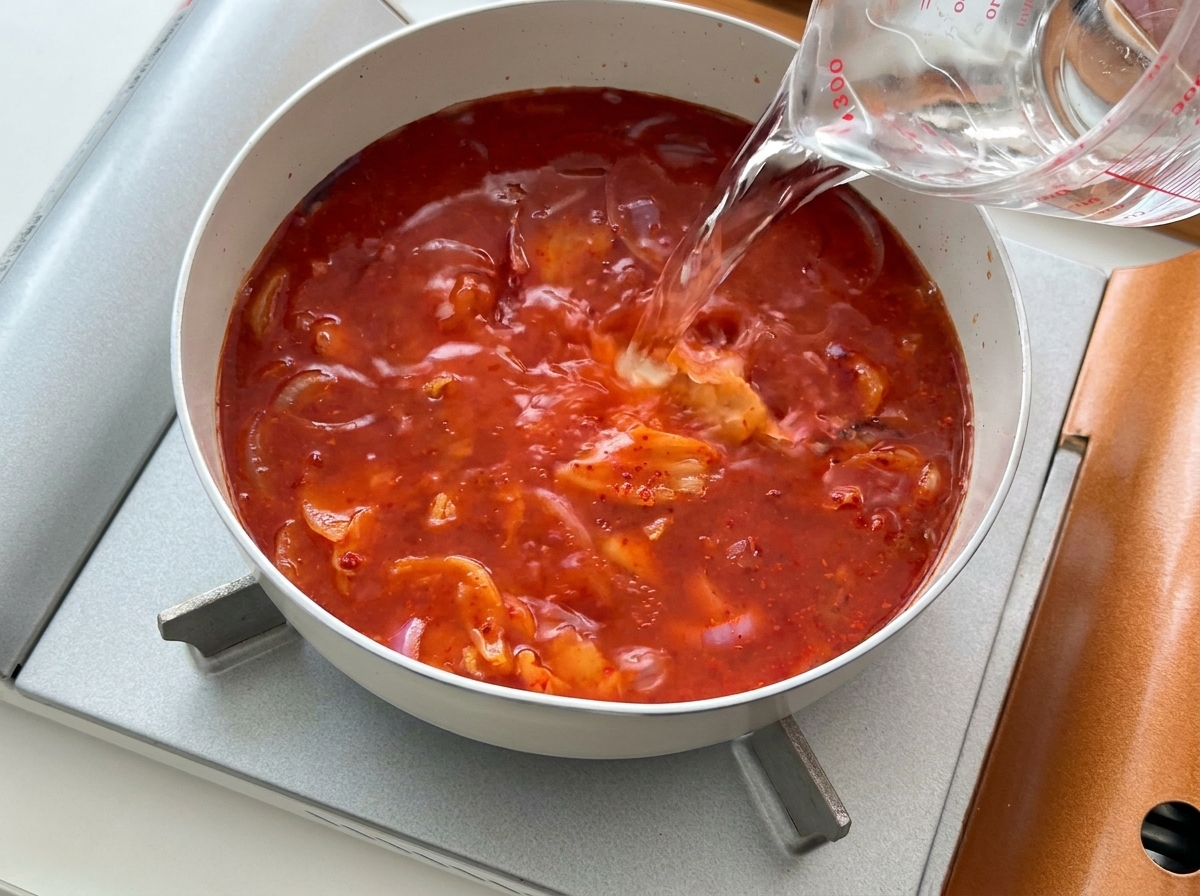
Pour clear water into the pan to create the soup base. Stir gently to combine the water with the spicy vegetables and sauce, then bring the mixture to a boil.
Tip: If you have some available, substitute the water with beef or anchovy stock for an even richer flavor profile. - 13Boil the soup base
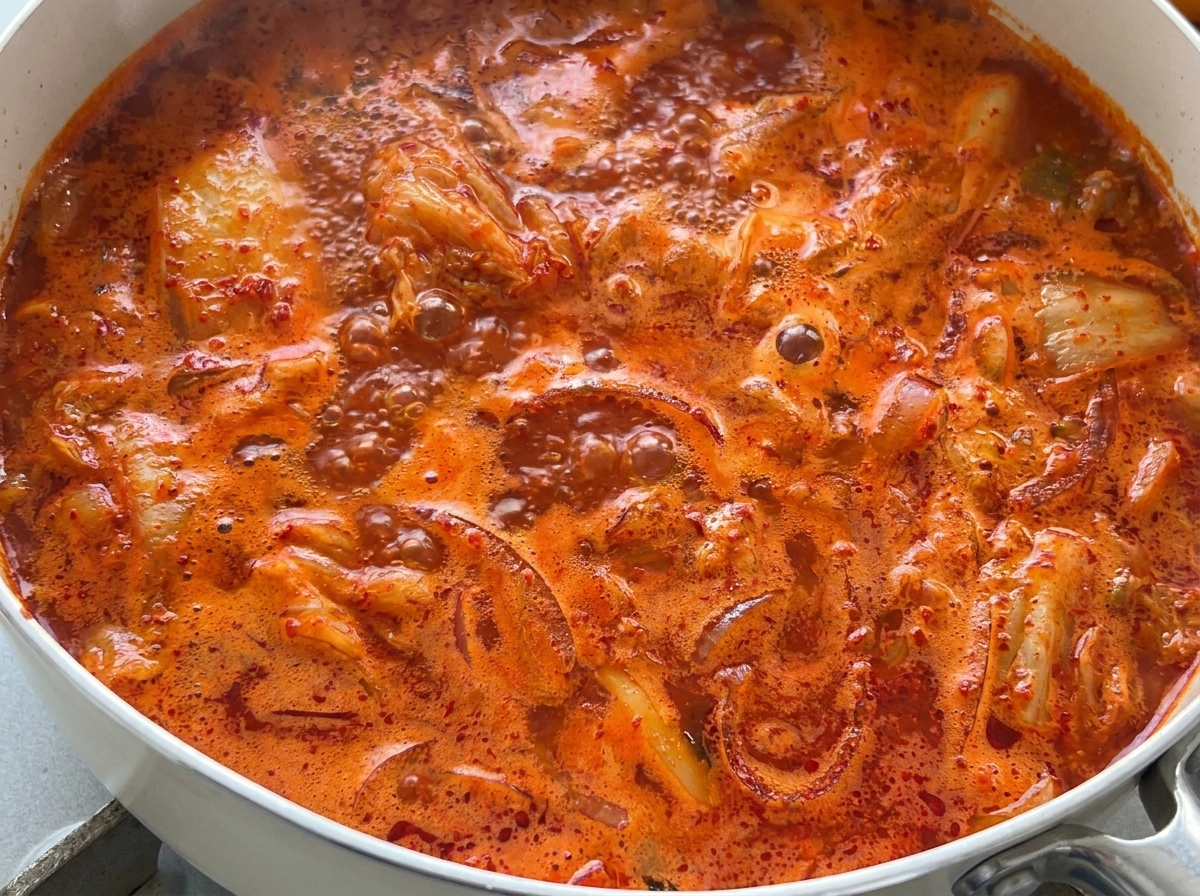
Bring the seasoned kimchi and sauce mixture to a vigorous boil. Let the broth bubble to meld the flavors and create a rich, spicy base for the rest of the ingredients.
Tip: Allowing the soup base to boil fully before adding the more delicate ingredients ensures they cook quickly without turning mushy. - 14Add the enoki mushrooms
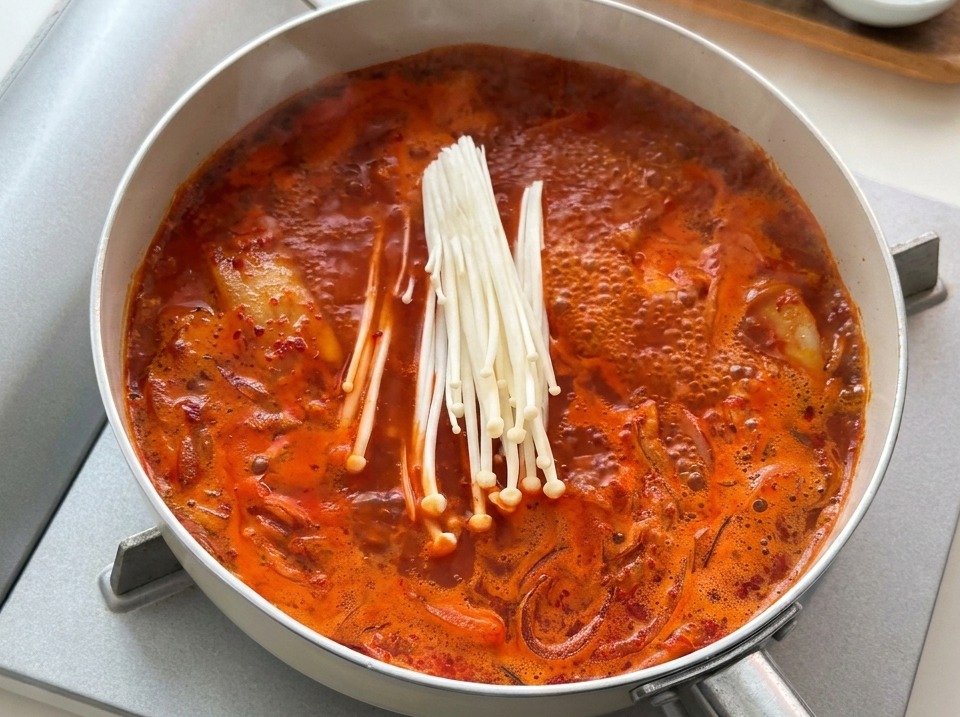
Place a bundle of fresh enoki mushrooms directly into the center of the boiling stew. They cook very fast and will soak up the savory, spicy broth.
Tip: Trim the woody bottoms off the enoki mushrooms and gently separate the strands before adding them to the pot. - 15Add the soft tofu
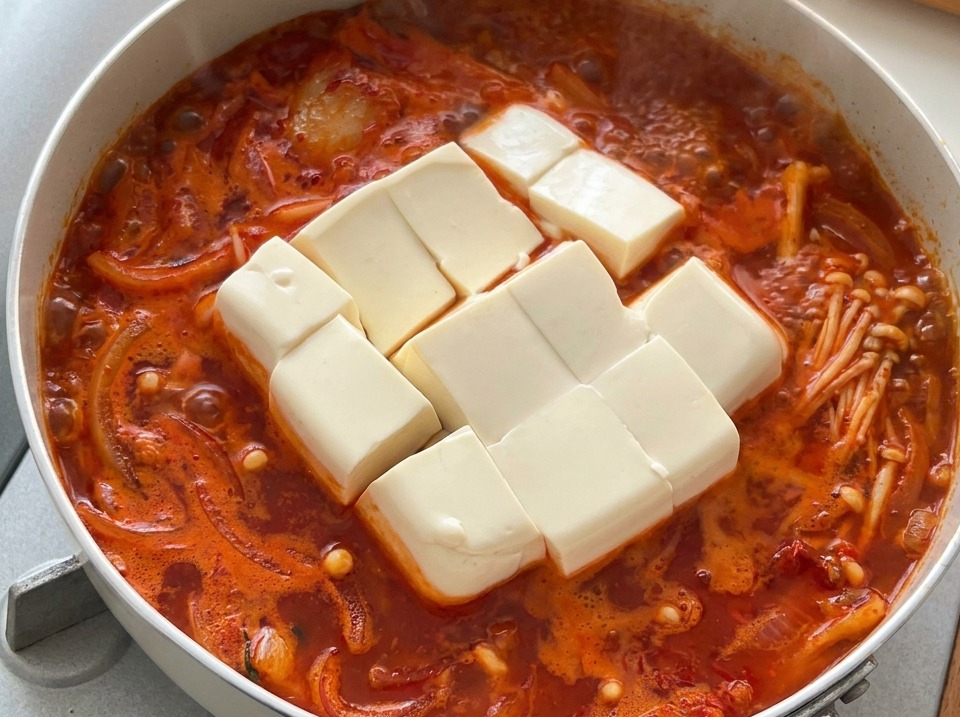
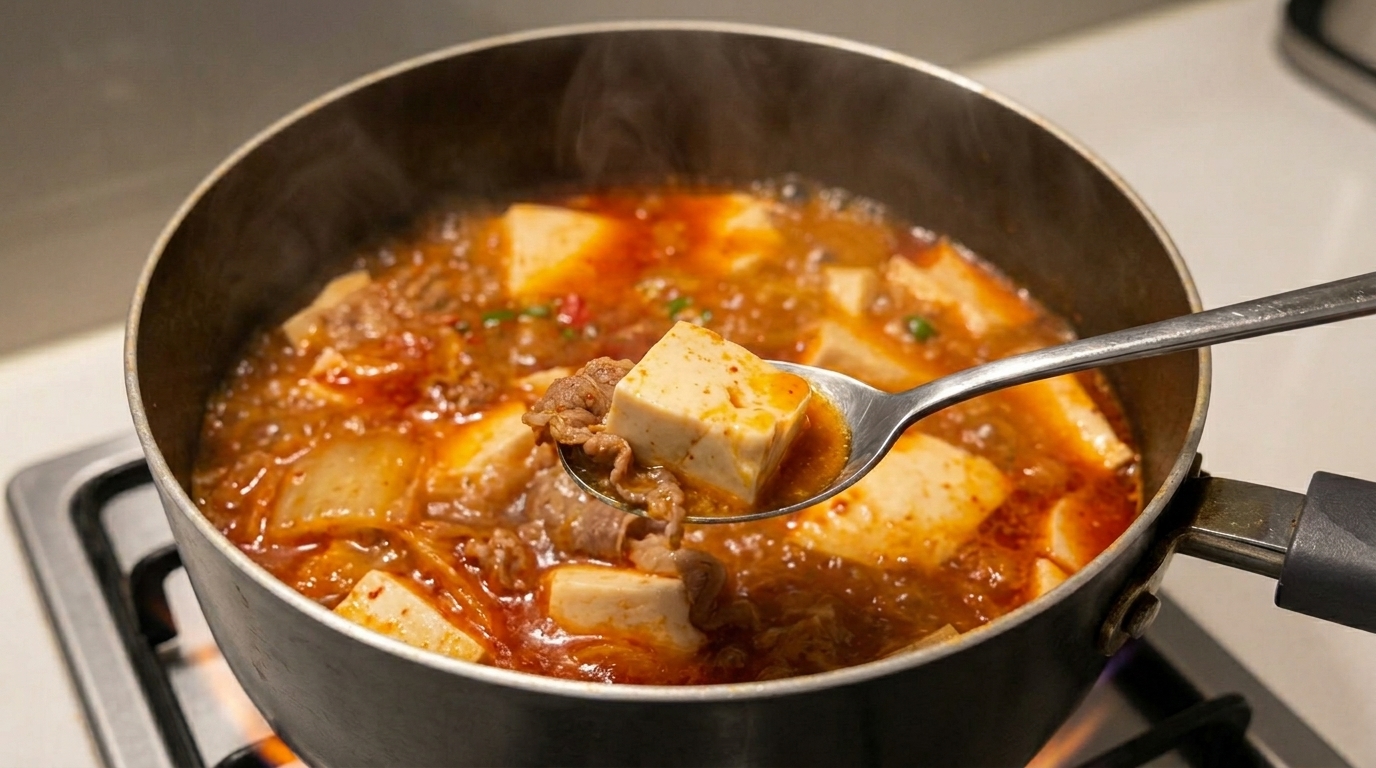
Carefully arrange the cubes of soft tofu into the bubbling stew alongside the mushrooms. Let the soup simmer for about two minutes so the tofu warms completely through.
Tip: Use a gentle hand or a wide spatula when handling soft tofu to prevent it from crumbling in the hot liquid. - 16Cook the marinated beef
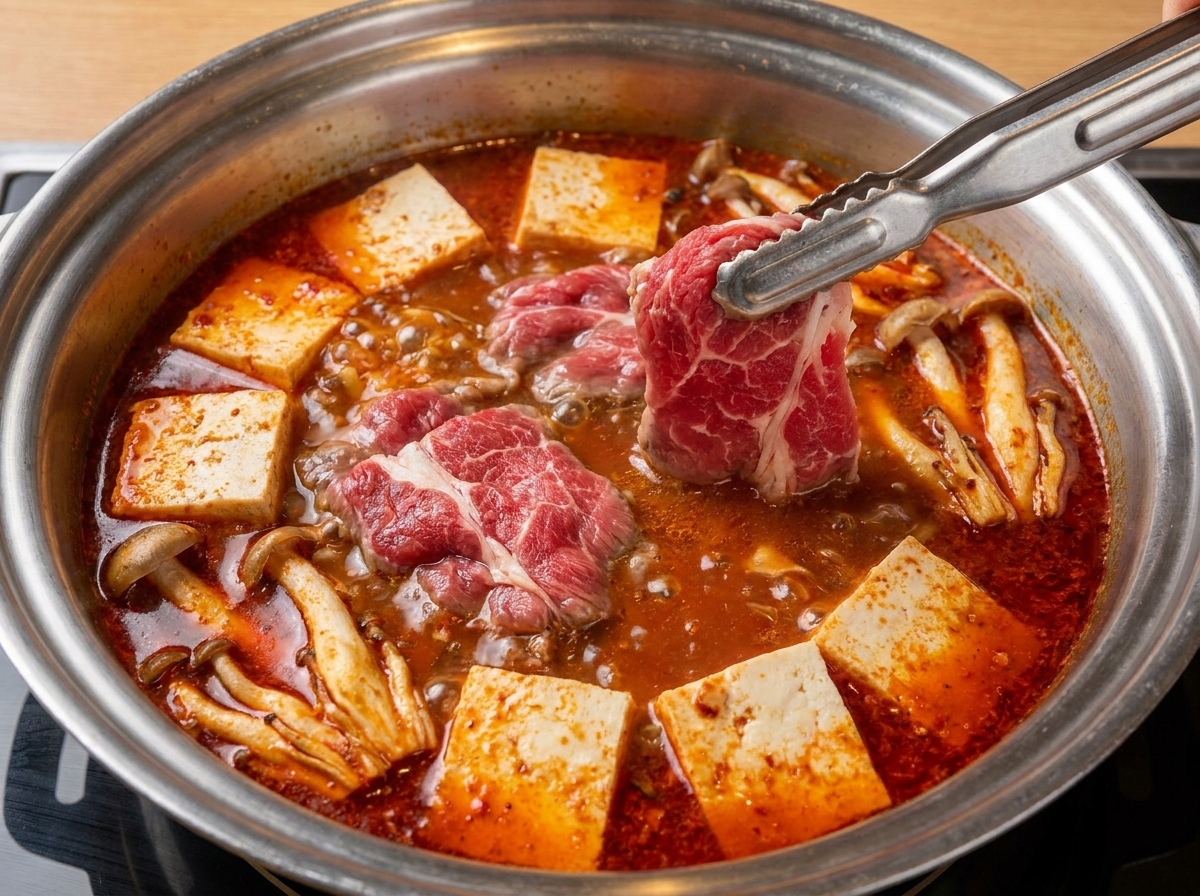
Using tongs, gently submerge the thinly sliced, marinated beef into the hot stew. Since the meat is sliced so thinly, it will cook through rapidly.
Tip: Do not overcook the beef. It only takes a few moments in the boiling broth to become tender, at which point the dish is ready to be garnished and served.