Refreshing Korean Lettuce Water Kimchi (Sangchu Mul-Kimchi)
Transform everyday lettuce into a refreshing, sleep-inducing Korean water kimchi. This cool, mildly spicy fermented broth features vibrant aromatics and an earthy dried chili base.
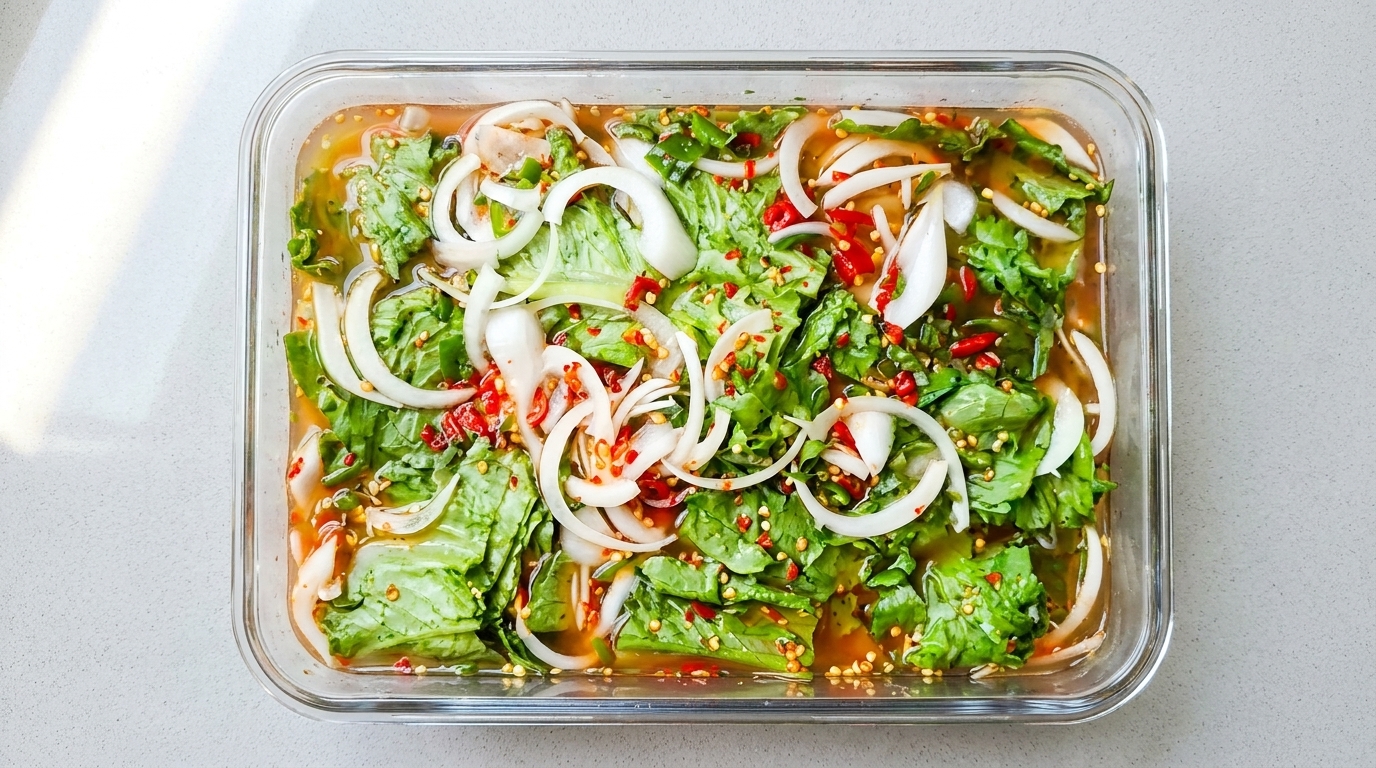
Water kimchi (mul-kimchi) is a beloved staple in Korean cuisine, prized for its refreshing, cooling properties and slightly tangy fermented broth. This unique variation uses fresh lettuce instead of traditional radish or cabbage, yielding a crisp, deeply hydrating side dish. The secret to its vibrant color and superior flavor lies in blending soaked whole dried chilies rather than relying on stale ground powder.
Ingredients
- 500 g green lettuce
- 1.5 white onions, divided
- 3 whole fresh green chilies
- 4 whole fresh red chilies
- 13 whole dried red chilies
- 1 piece dried kelp (kombu)
- 2 tbsp barley
- 4 l water, divided
- 3 tbsp sand lance extract (or fish sauce)
- 1.25 ml artificial sweetener (like New Sugarsaccharin)
- to taste minced garlic
- to taste sea salt
Instructions
- 1Tear the lettuce
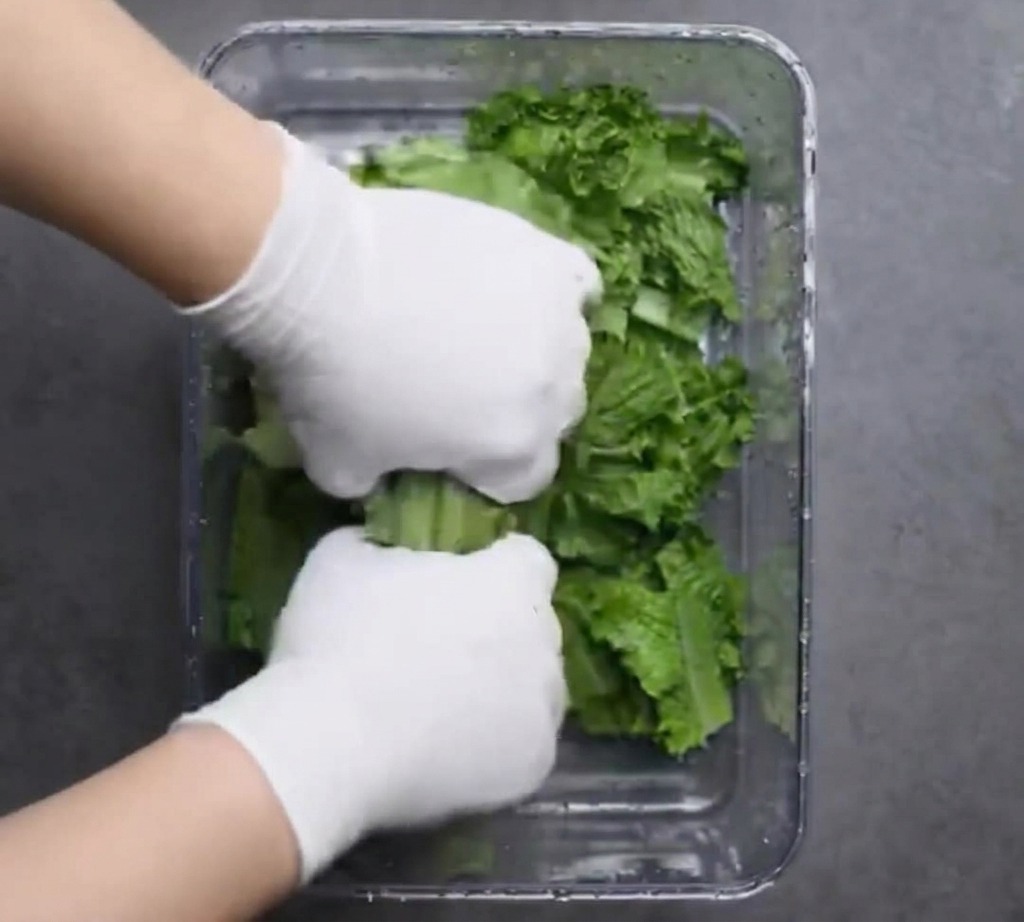
Take the washed and drained lettuce leaves and gently tear them by hand into three equal pieces. Place the torn lettuce directly into a spacious, clear rectangular container where the water kimchi will be stored.
Tip: Tearing the lettuce by hand rather than cutting it with a knife helps prevent the edges from oxidizing and browning, keeping the leaves crisp. - 2Slice the onion
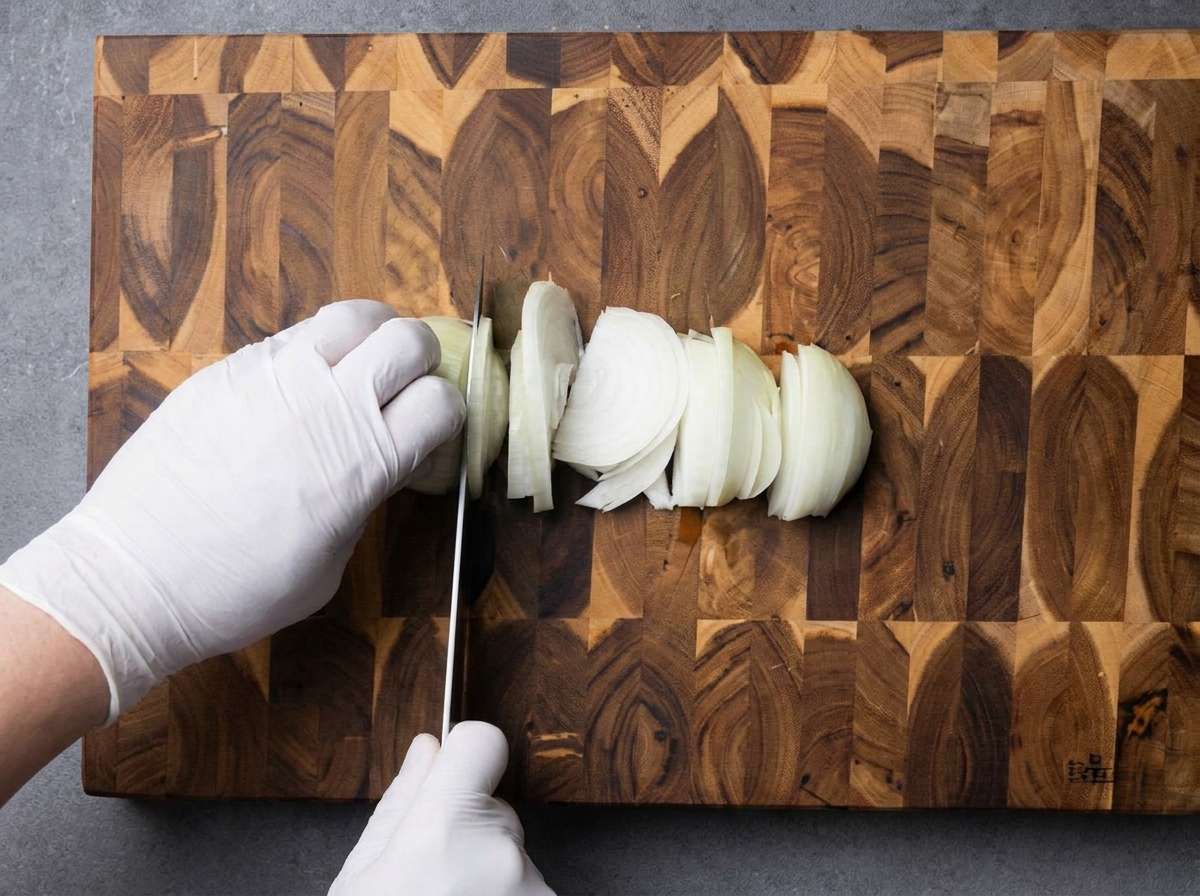
Peel and halve a raw white onion, then use a sharp knife to slice it into thin, even strips. The sliced onion will add a gentle sweetness and crisp texture to the kimchi.
Tip: Keep the slices uniform in thickness so they pickle evenly in the kimchi broth. - 3Chop the green chilies
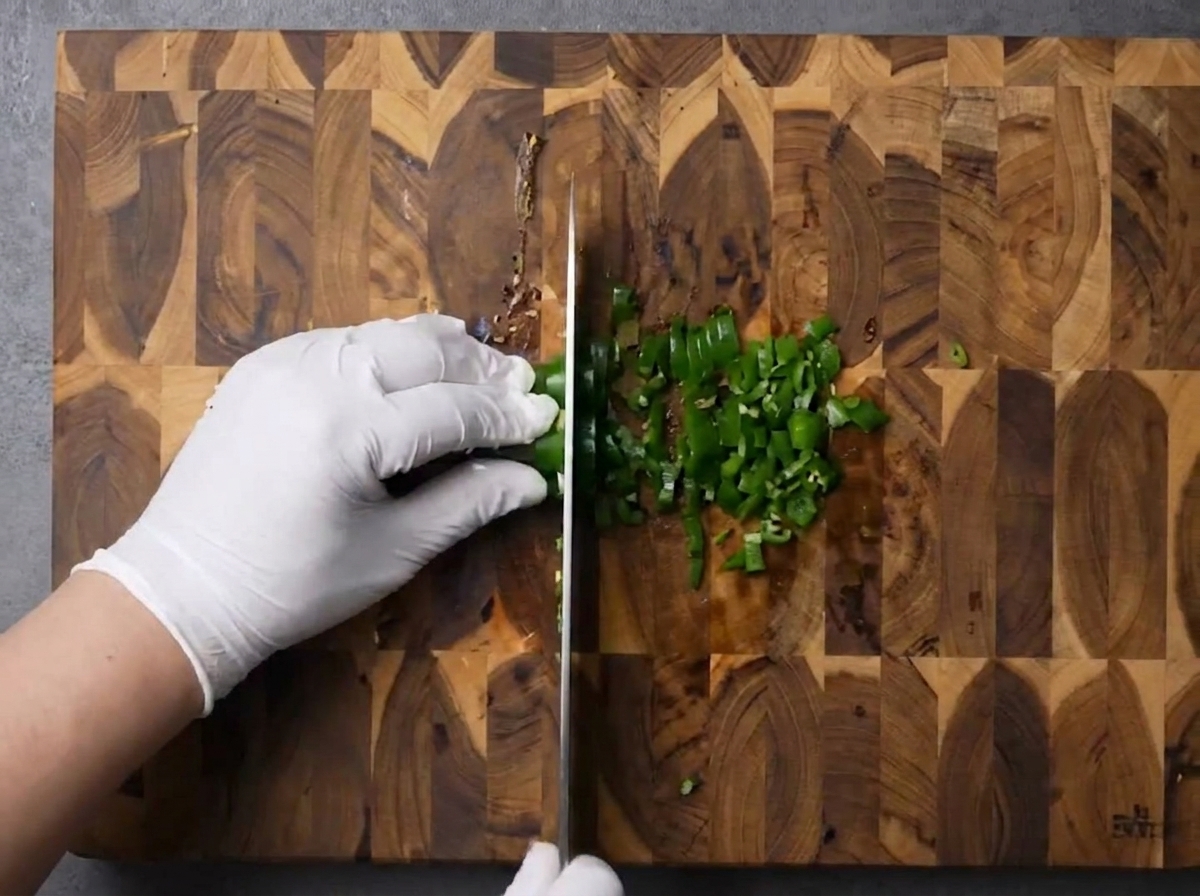
Take three fresh green chilies and chop them finely on a cutting board. These chilies will provide a bright, fresh heat to balance the subtle, mild flavors of the lettuce.
Tip: If you prefer a milder water kimchi, you can remove the seeds and membranes from the chilies before chopping. - 4Chop the fresh red chilies
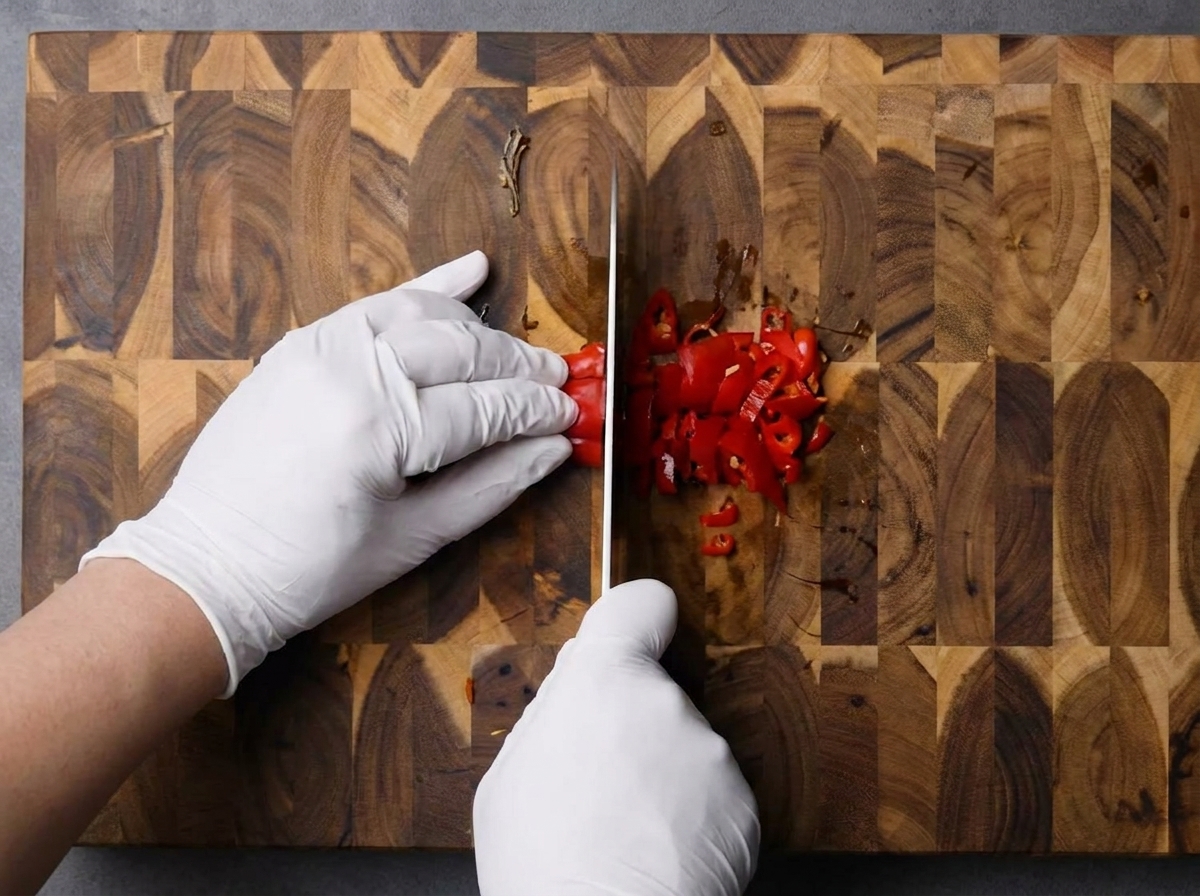
Place the fresh red chilies on a wooden cutting board and finely chop them. These chilies will be added directly to the broth later to provide bursts of vibrant color and a pleasant, fresh heat to the water kimchi.
Tip: Wear gloves when chopping chilies to prevent any lingering capsaicin from burning your hands or eyes. - 5Soak the dried chilies
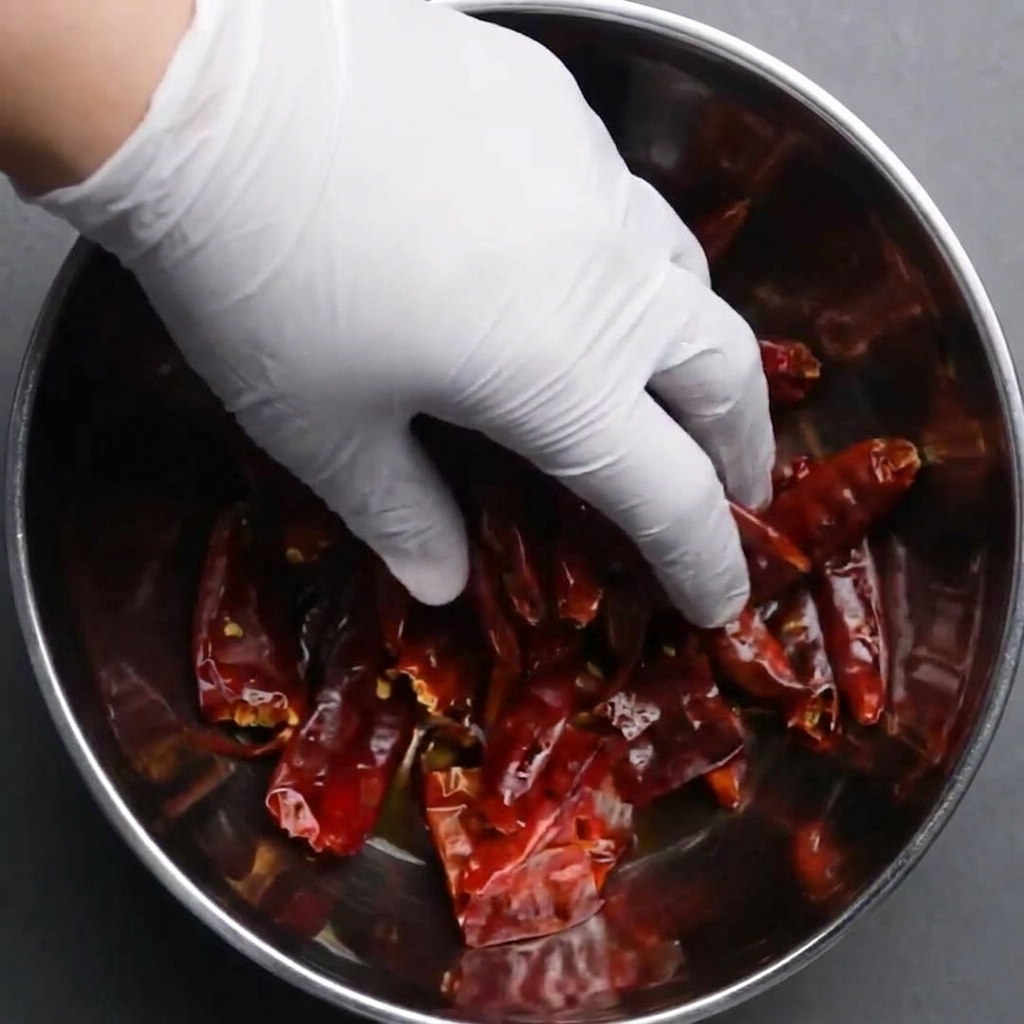
Place thirteen whole dried red chilies into a bowl of water and press them down to soak. Using freshly soaked and blended dried chilies instead of pre-ground chili powder yields a much brighter flavor and fantastic aroma.
Tip: Make sure all the chilies are fully submerged so they soften completely before you blend them into the broth base. - 6Make the kelp broth
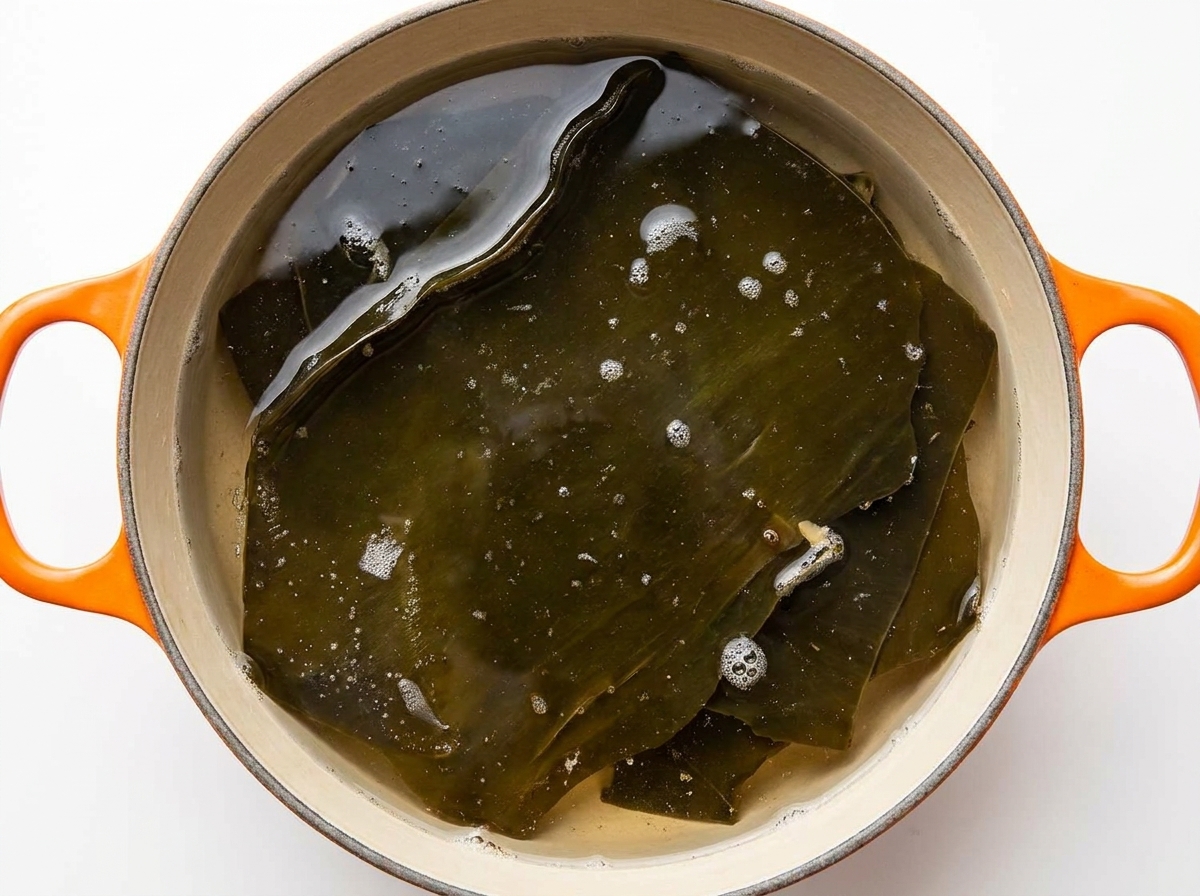
In a pot, bring one liter of water to a boil with a palm-sized piece of dried kelp. Let it boil for about 5 minutes to extract a savory umami base, then remove and discard the kelp so the broth doesnt become bitter.
Tip: Do not boil the kelp for longer than 5 minutes, as it can release a slimy texture and bitter flavor into the water. - 7Prepare the barley porridge
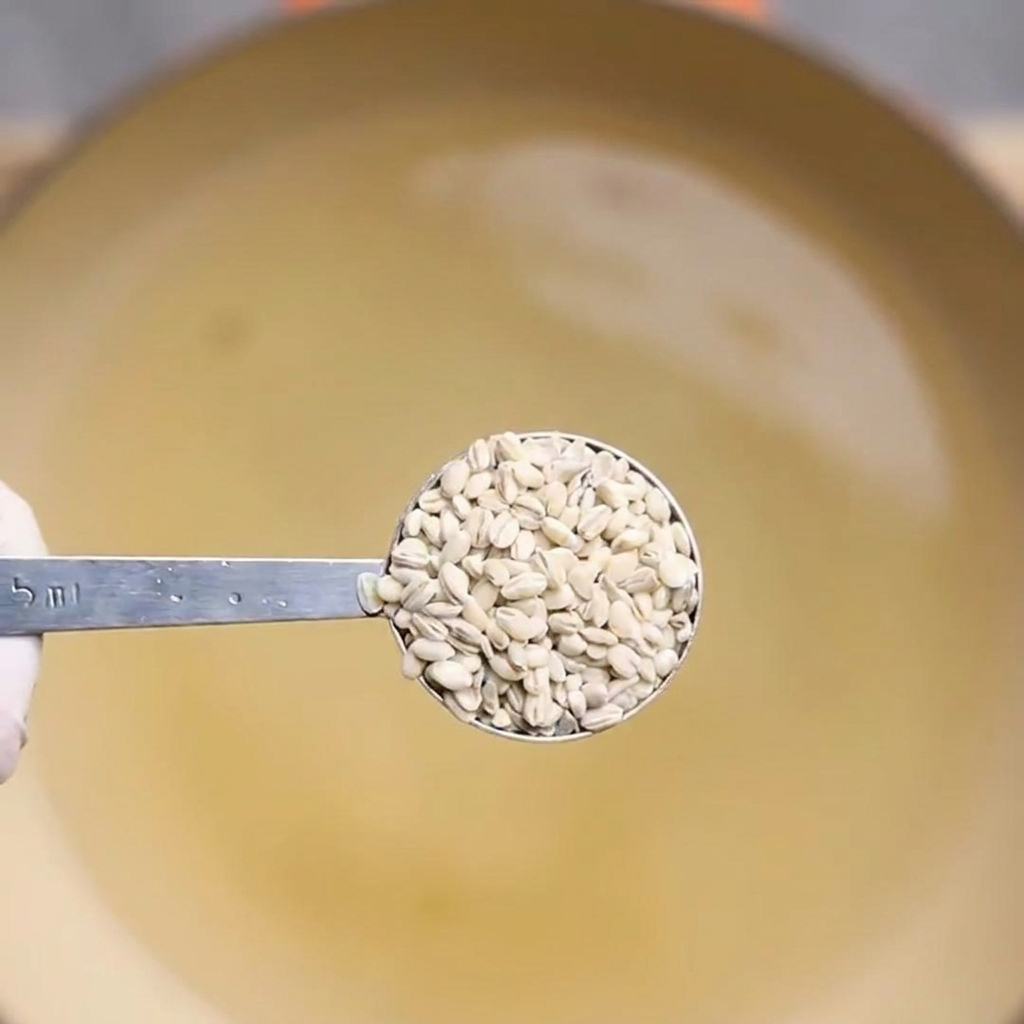
Boil two tablespoons of barley in water for 20 minutes until fully cooked and softened. This barley porridge will act as a natural thickener and provide the necessary starches to help ferment the water kimchi.
Tip: Barley adds a subtle sweetness and body to the broth, which is essential for proper fermentation in water kimchi. - 8Blend the chili base
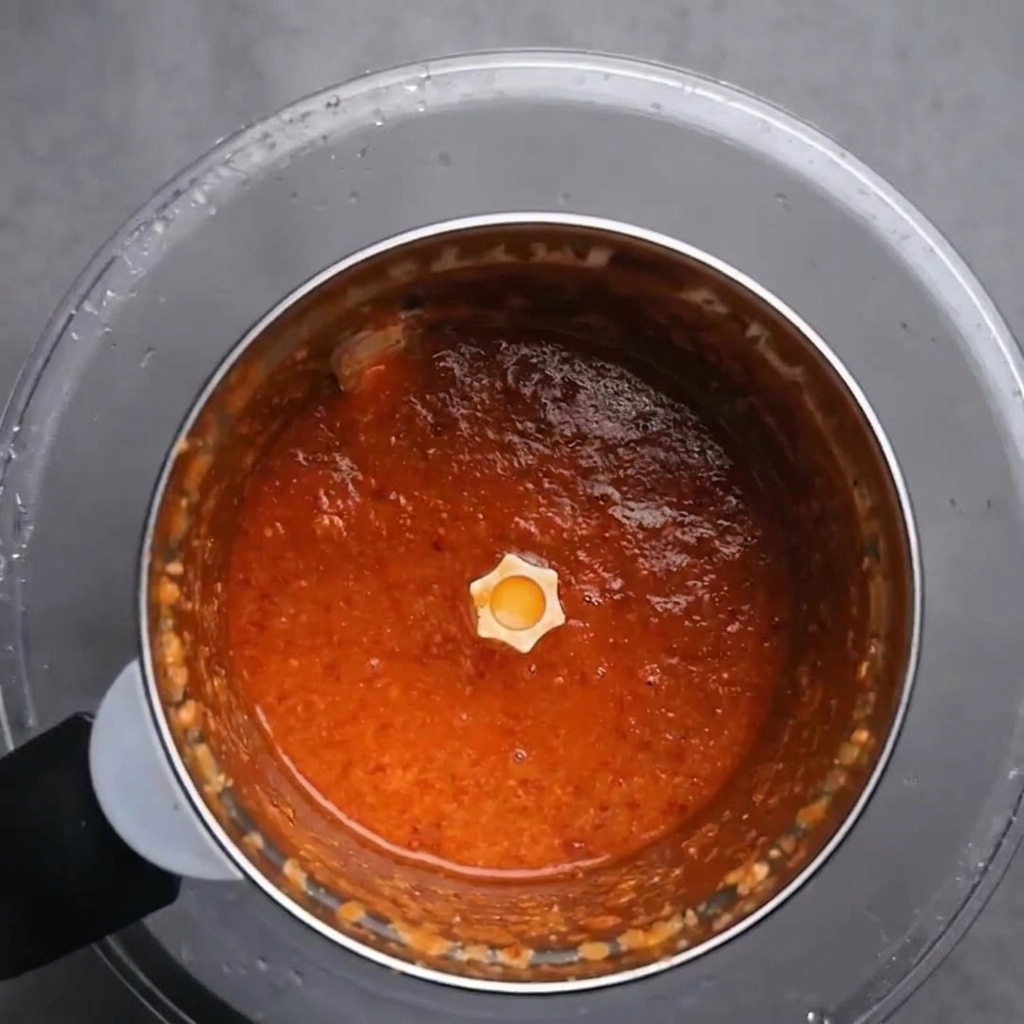
Transfer the prepared barley porridge into a blender along with half an onion and the soaked dried red chilies. Blend everything together until it forms a perfectly smooth, vibrant red paste.
Tip: Ensure the soaked chilies are blended thoroughly so the resulting broth has a pleasant, smooth texture without harsh flakes. - 9Mix the kimchi broth base
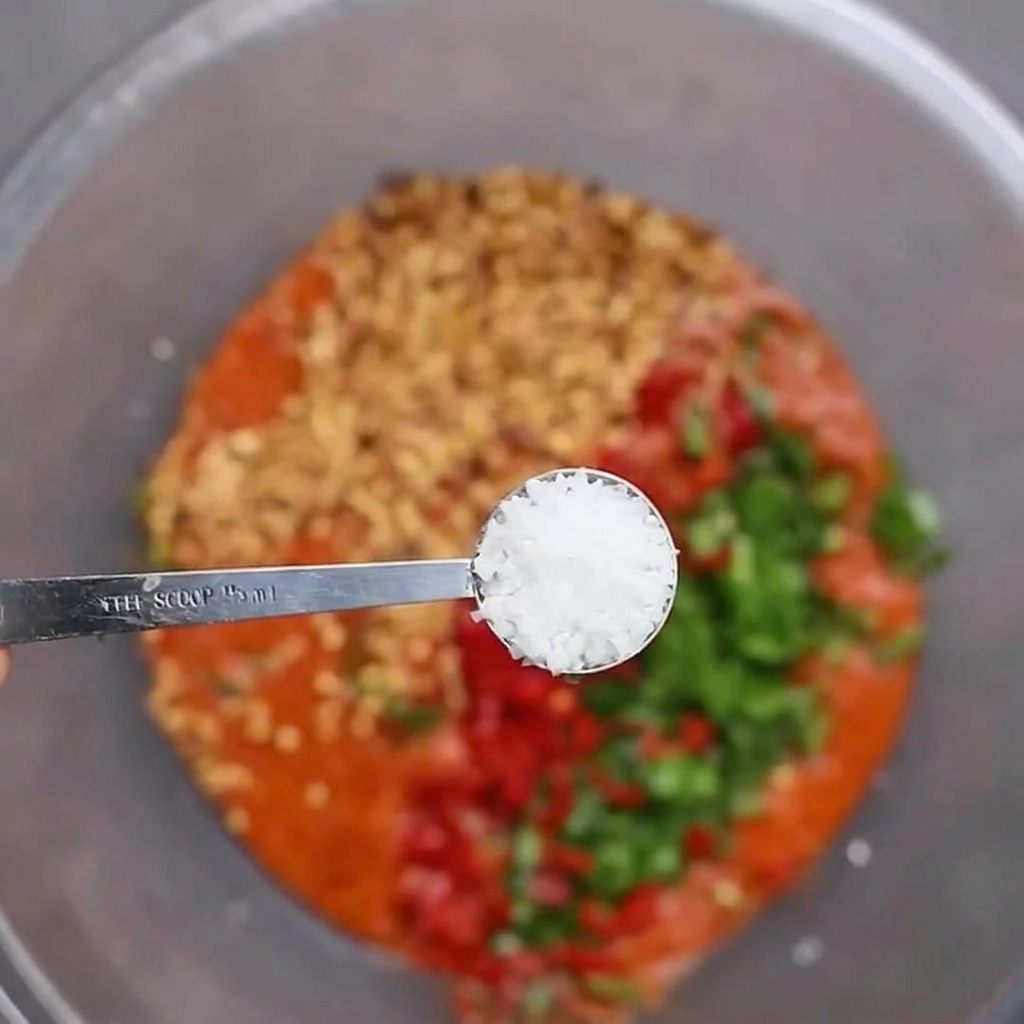
Transfer the blended chili paste into a large mixing bowl. Add the chopped green and red chilies, minced garlic, sea salt, three tablespoons of sand lance extract, and three liters of water. Stir everything thoroughly to combine the seasonings into a well-balanced, flavorful broth.
Tip: Sand lance extract provides a deep umami flavor typical of authentic Korean kimchi, but you can substitute it with fish sauce if needed. - 10Add onions to the lettuce
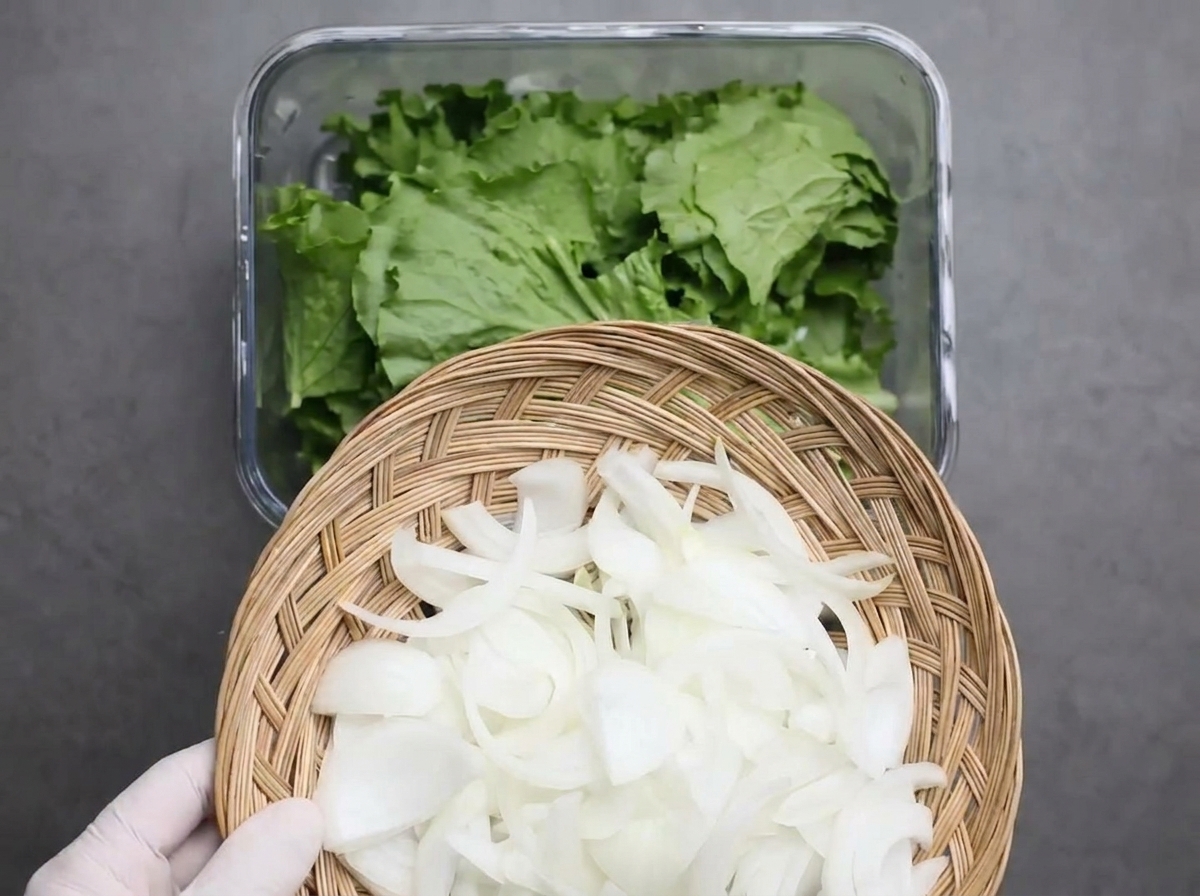
Evenly layer the sliced white onions directly on top of the torn lettuce inside your large storage container.
Tip: Make sure your container is large enough to hold all the vegetables and the three liters of broth you will add later. - 11Combine the broth and vegetables
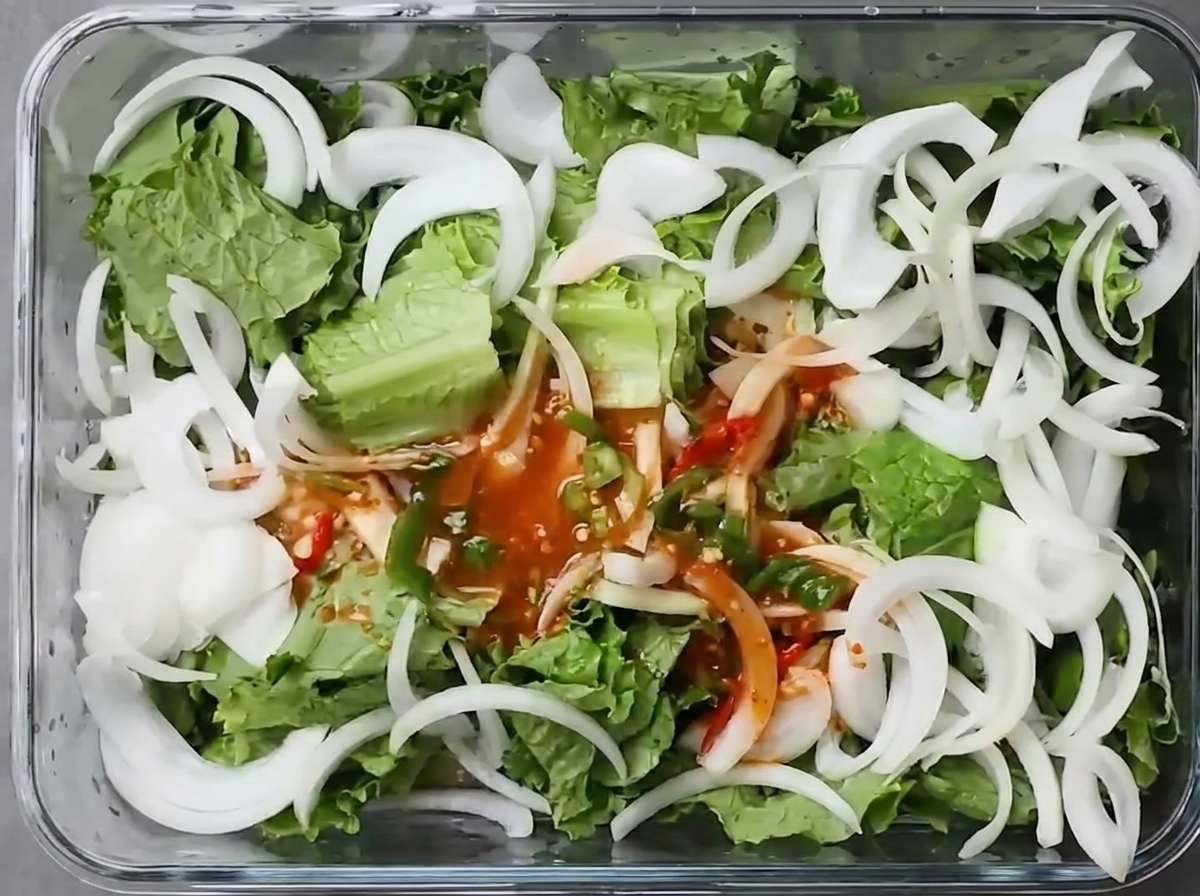
Carefully pour the prepared red chili and barley broth over the vegetables, ensuring the liquid and chopped chilies are evenly distributed across the container.
Tip: Glass or food-safe plastic containers are ideal for storing water kimchi, as they do not absorb odors or react with the mildly acidic brine. - 12Dissolve the sweetener
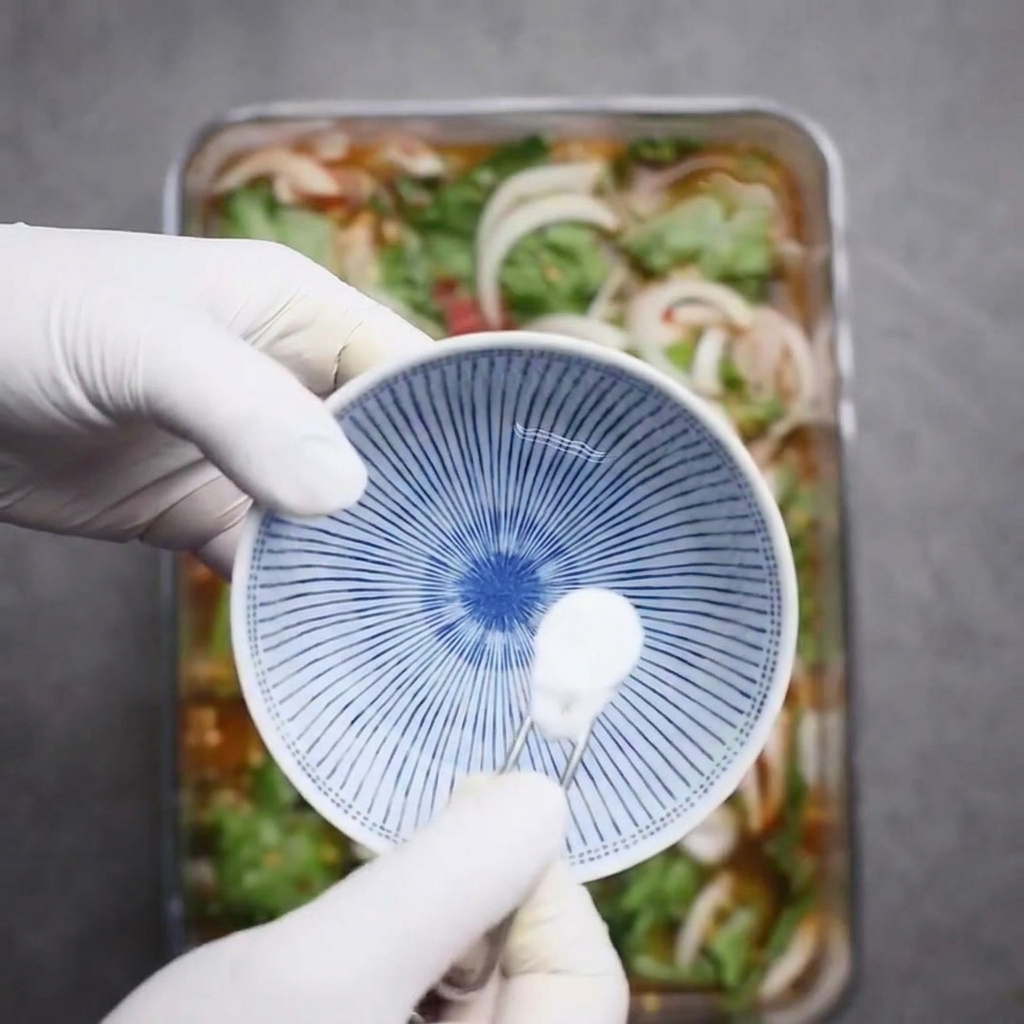
Place the artificial sweetener into a small bowl of water and stir until it is completely dissolved. Pour this sweetener mixture into the kimchi container to balance the flavors. Using an artificial sweetener instead of sugar prevents the kimchi broth from thickening during the fermentation process.
Tip: Do not skip dissolving the sweetener first; adding powder directly to the large container can result in uneven distribution.