Spicy Kimchi Fatty Beef Soup
Soft Tofu
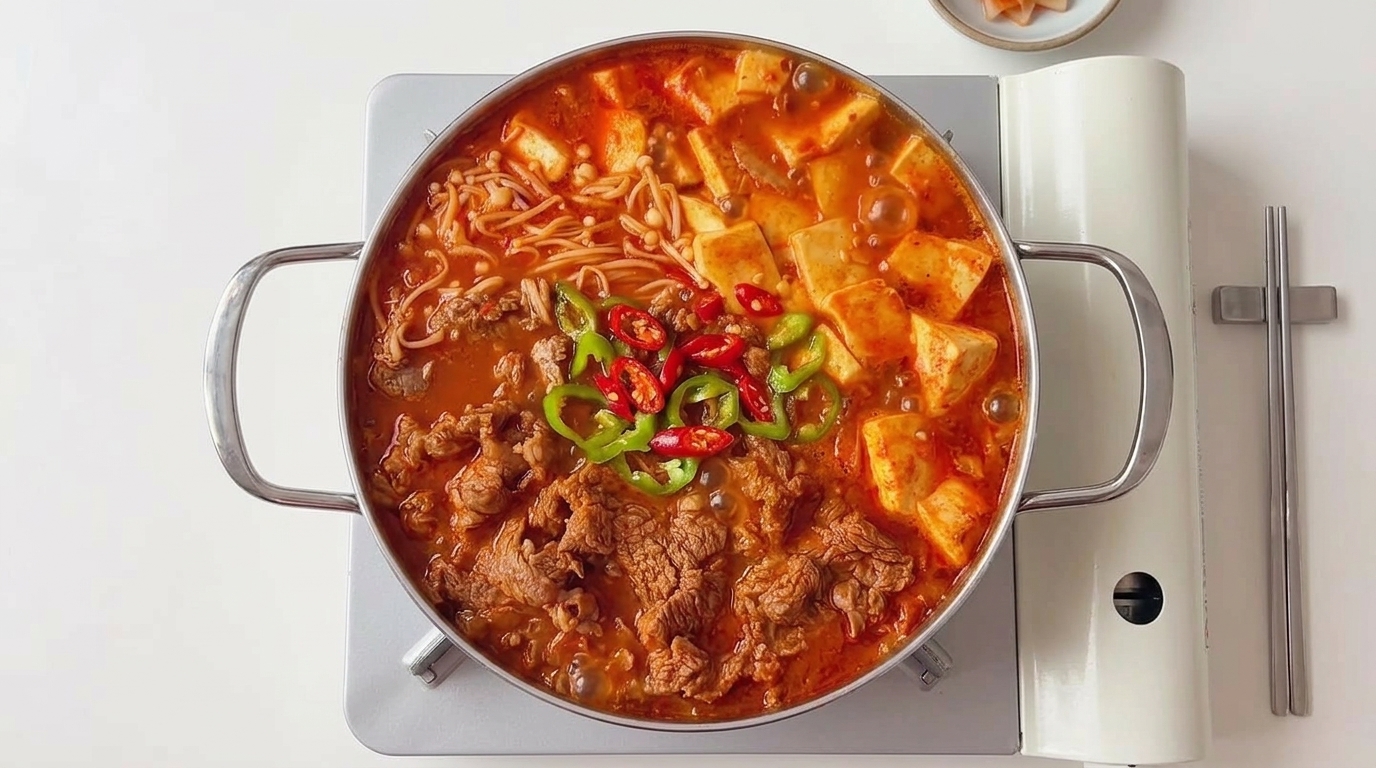
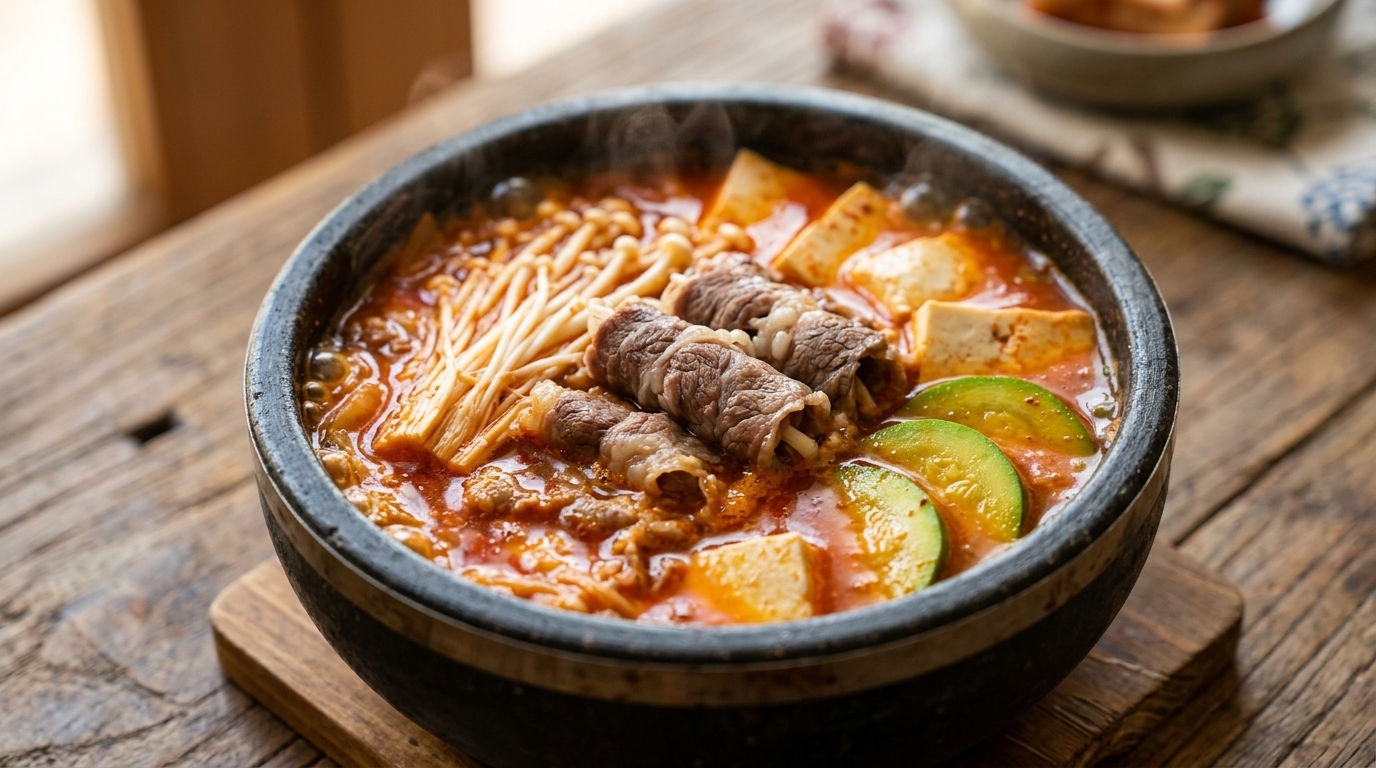
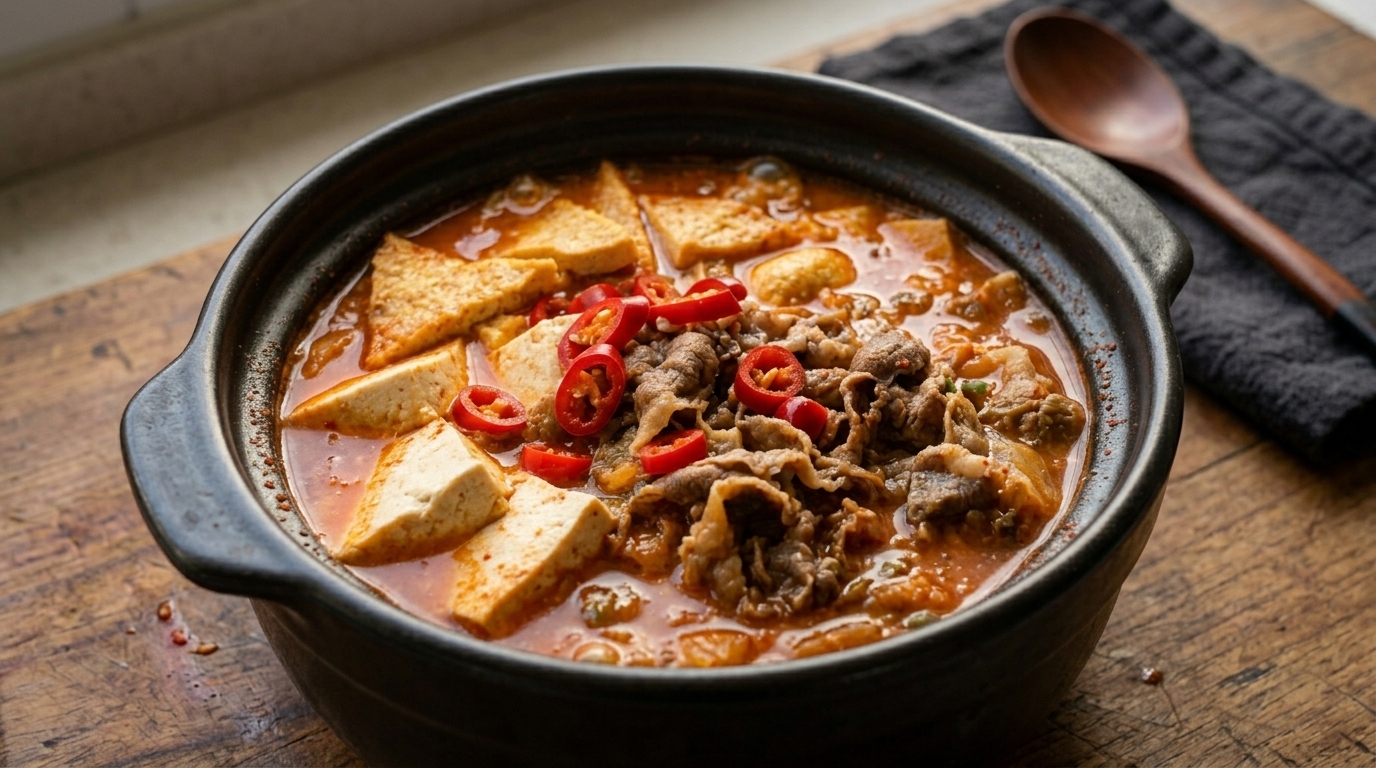
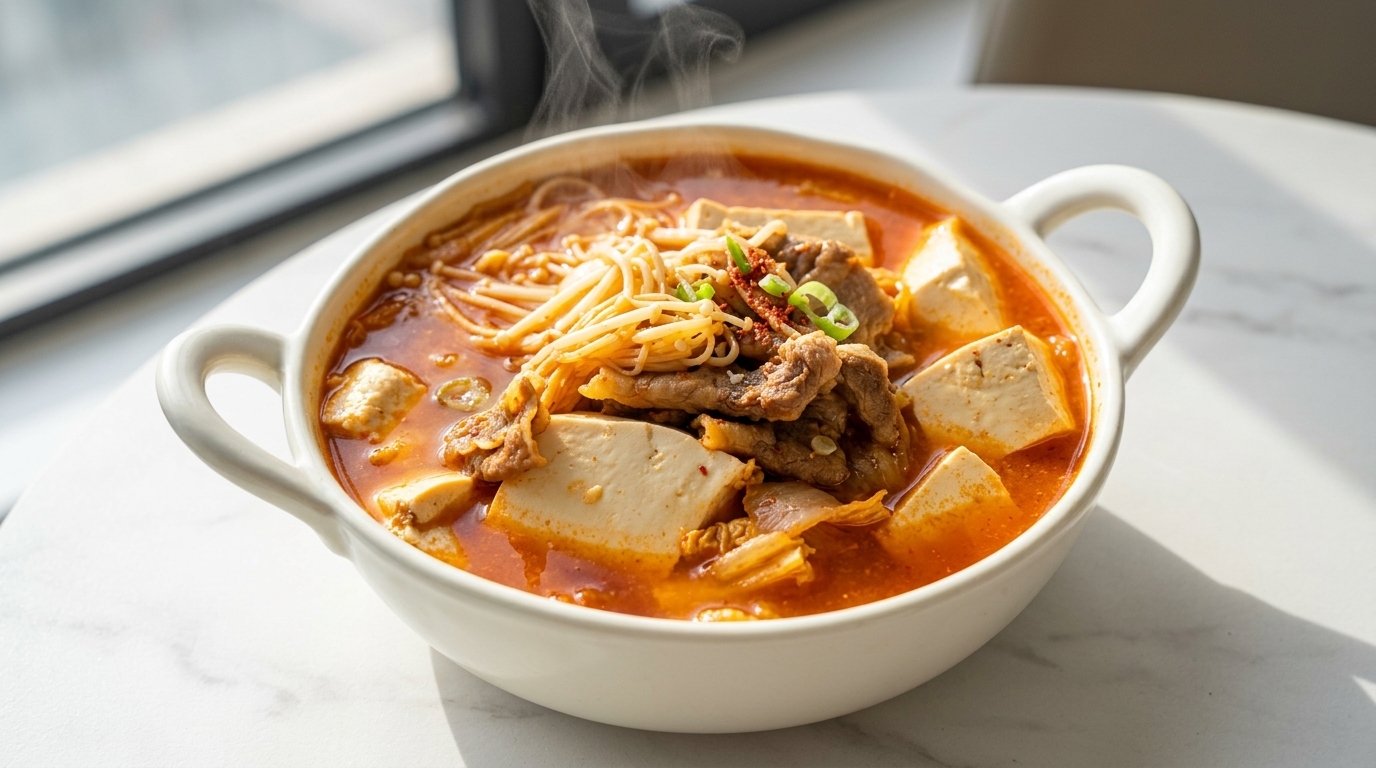
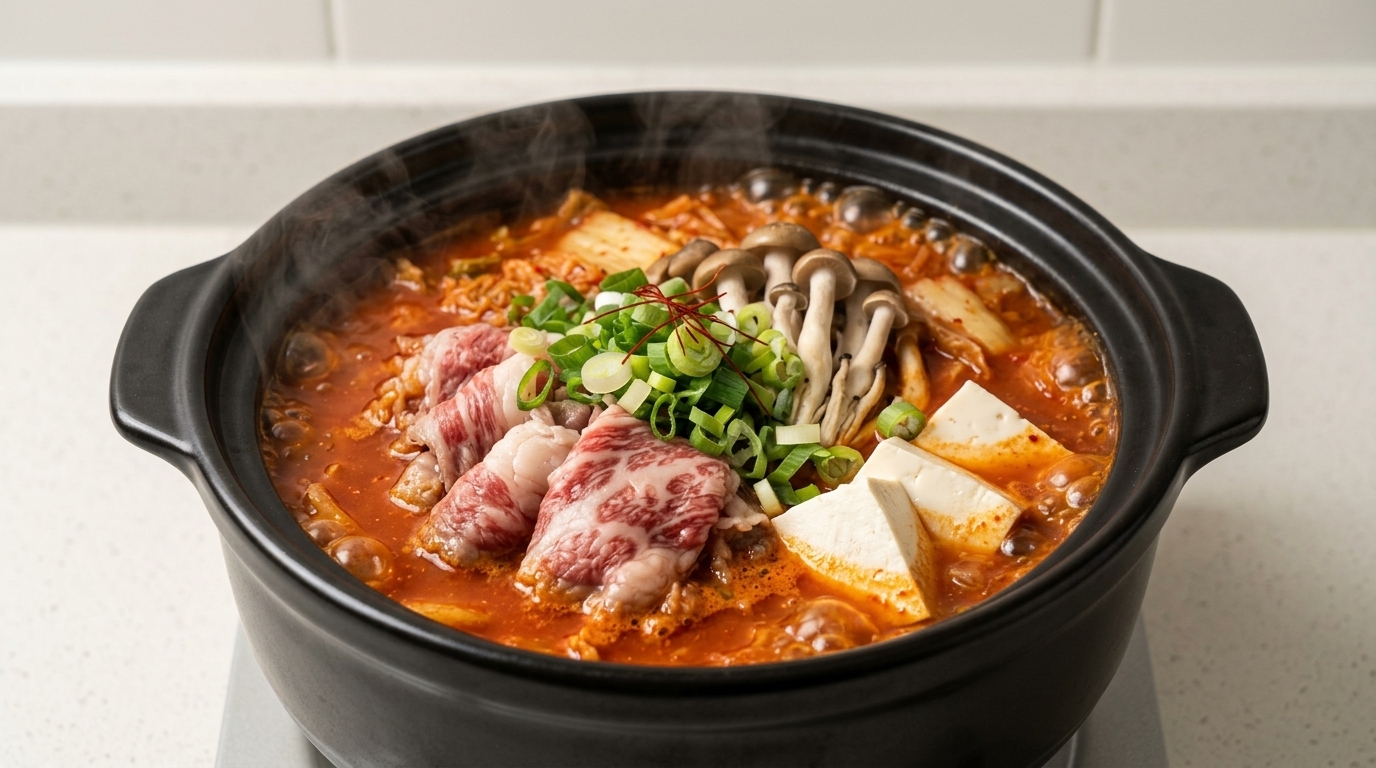
A comforting, deeply savory Korean kimchi stew featuring tender, marbled fatty beef rolls, soft tofu, and shimeji mushrooms simmering in a rich, fiery broth.
Kimchi soup, or Kimchi Jjigae, is a quintessential comfort food in Korean households, beloved for its complex interplay of sour, spicy, and savory flavors. While traditionally made with pork, incorporating thinly sliced fatty beef adds a rich, buttery depth that beautifully mellows the sharp acidity of well-fermented kimchi. It is a hearty, nourishing dish best enjoyed bubbling hot straight from the stove.
Ingredients
- 300 g fatty beef rolls
- 1.5 cups chopped fermented kimchi
- 1 tbsp Korean perilla oil
- 1 tbsp salad oil
- 3 cups water
- 2 tsp fish sauce
- 2 tbsp Korean chili paste (gochujang)
- 2 tbsp light soy sauce
- 150 g shimeji mushrooms
- 1 block soft tofu
- 1 tbsp minced garlic
- 2 stalks green scallions
Instructions
- 1Blanch the beef rolls
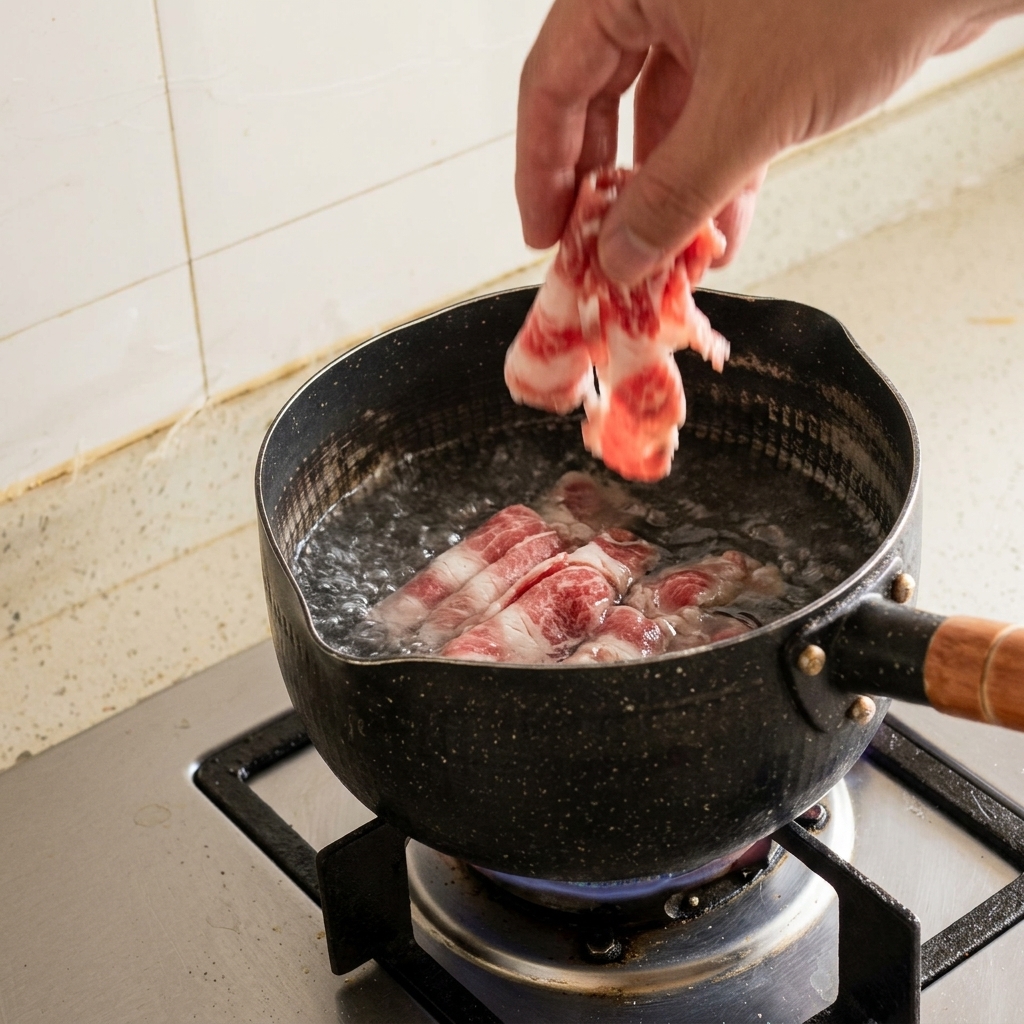
Once the water in the black pot comes to a boil, carefully add the fatty beef rolls. Blanching the meat briefly helps remove any impurities and excess grease, ensuring a cleaner and clearer soup base.
Tip: Do not overcook the beef during this step; you just want to quickly blanch it until it changes color, as it will be added back to the soup later. - 2Strain and set beef aside
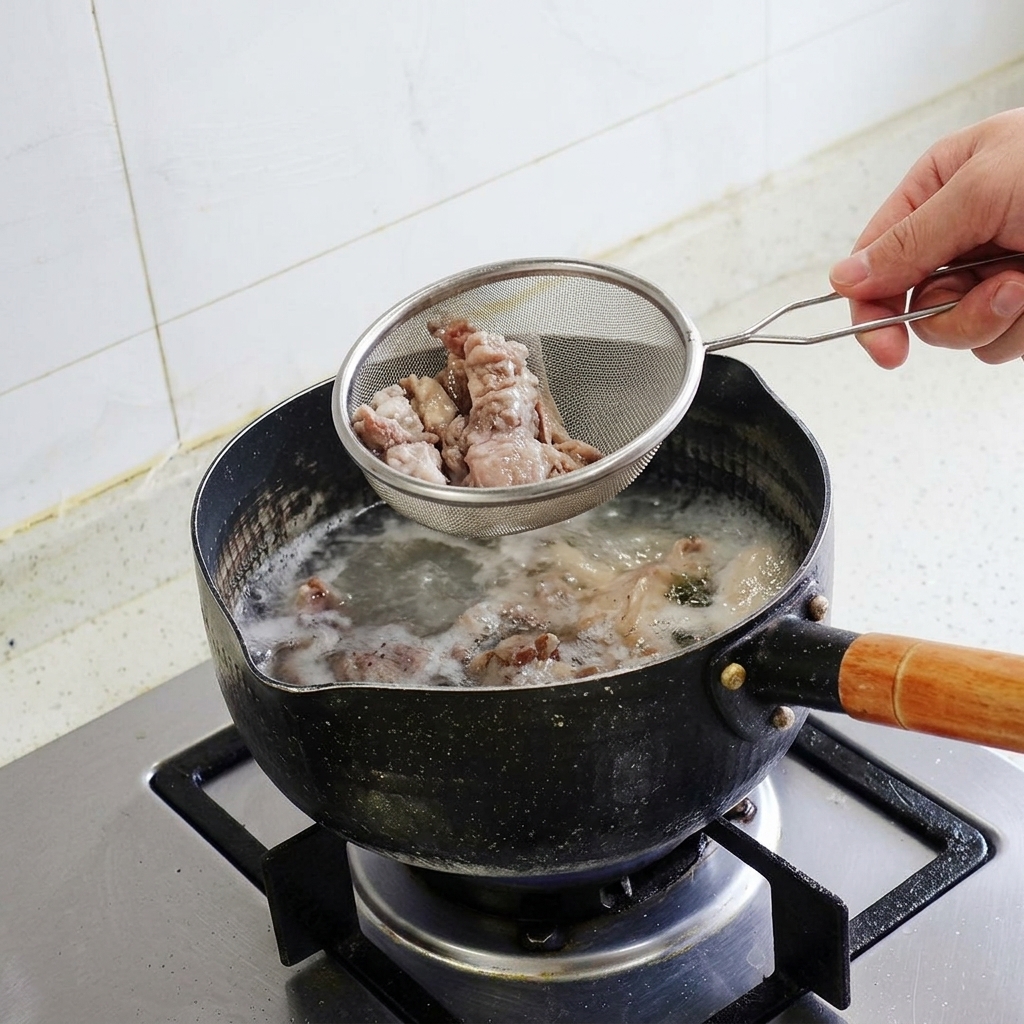
Use a mesh strainer to scoop the blanched beef rolls out of the boiling water. Drain them well and set them aside on a plate for later use.
Tip: Rinsing the blanched beef under warm water can help remove any remaining scum or foam clinging to the meat. - 3Heat the oils
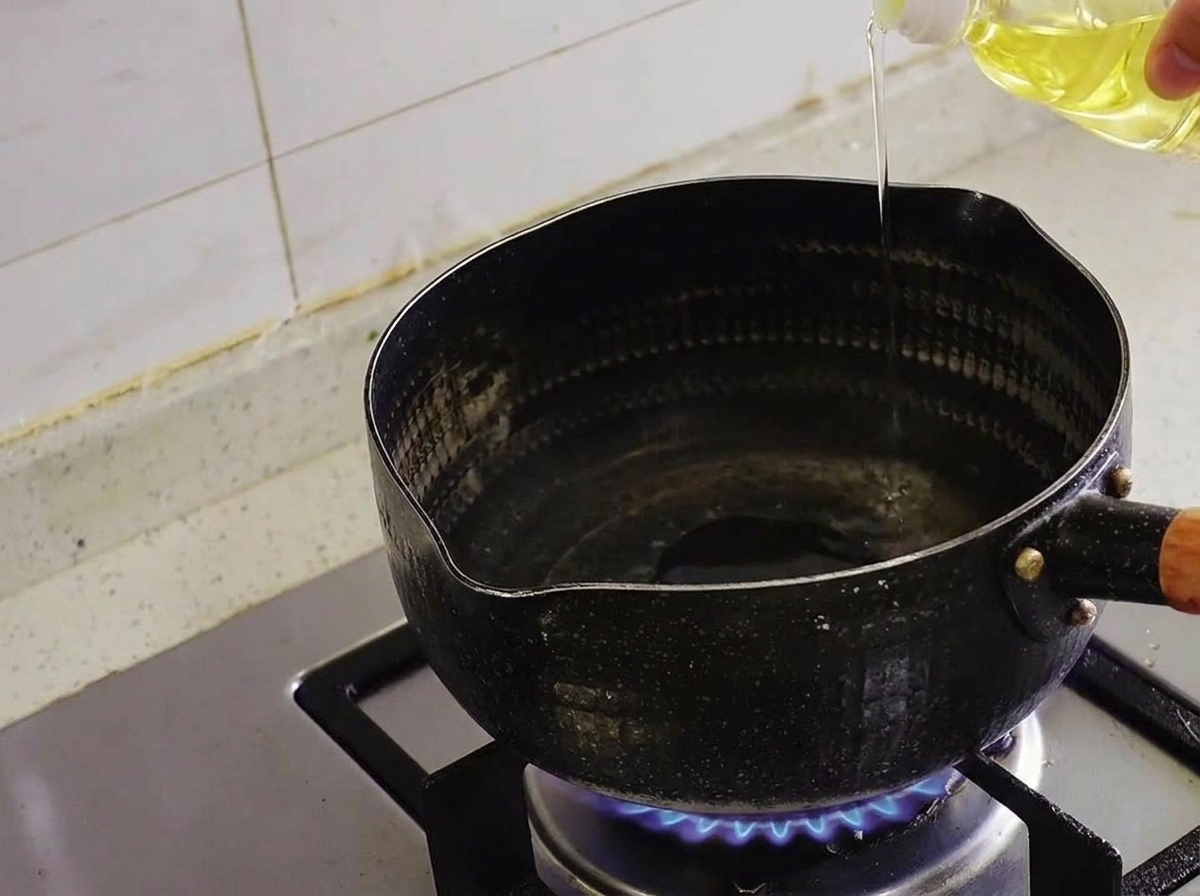
Pour a small amount of salad oil and Korean perilla oil into the emptied black pot over medium heat. The perilla oil adds a distinct, nutty aroma that serves as a flavorful foundation for the soup.
Tip: Perilla oil has a lower smoke point than regular salad oil, so keep the heat at medium to prevent it from burning. - 4Add the kimchi
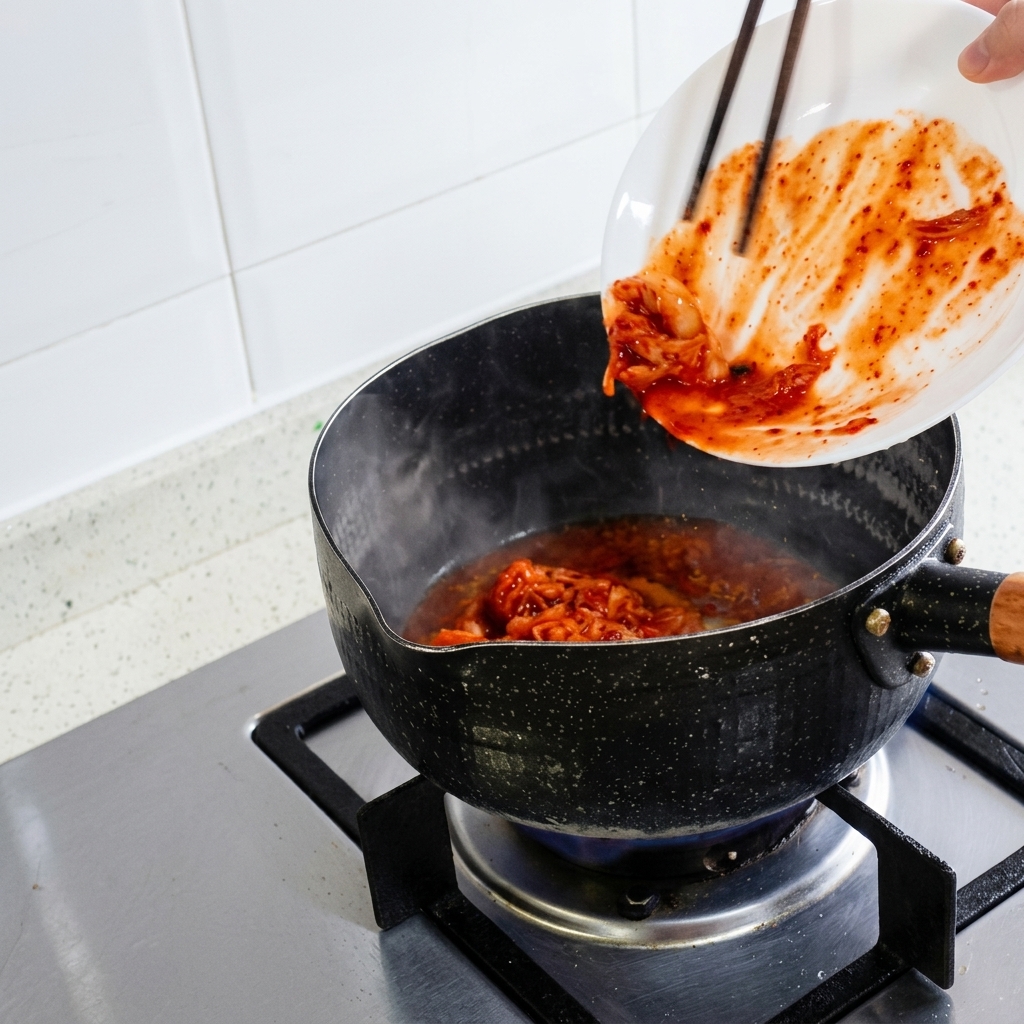
Slide the chopped kimchi from the plate into the pot with the heated oil. Make sure to include any juices from the plate to maximize the flavor.
Tip: Using well-fermented, sour kimchi will yield a much deeper and more authentic flavor for your kimchi soup. - 5Stir-fry the kimchi
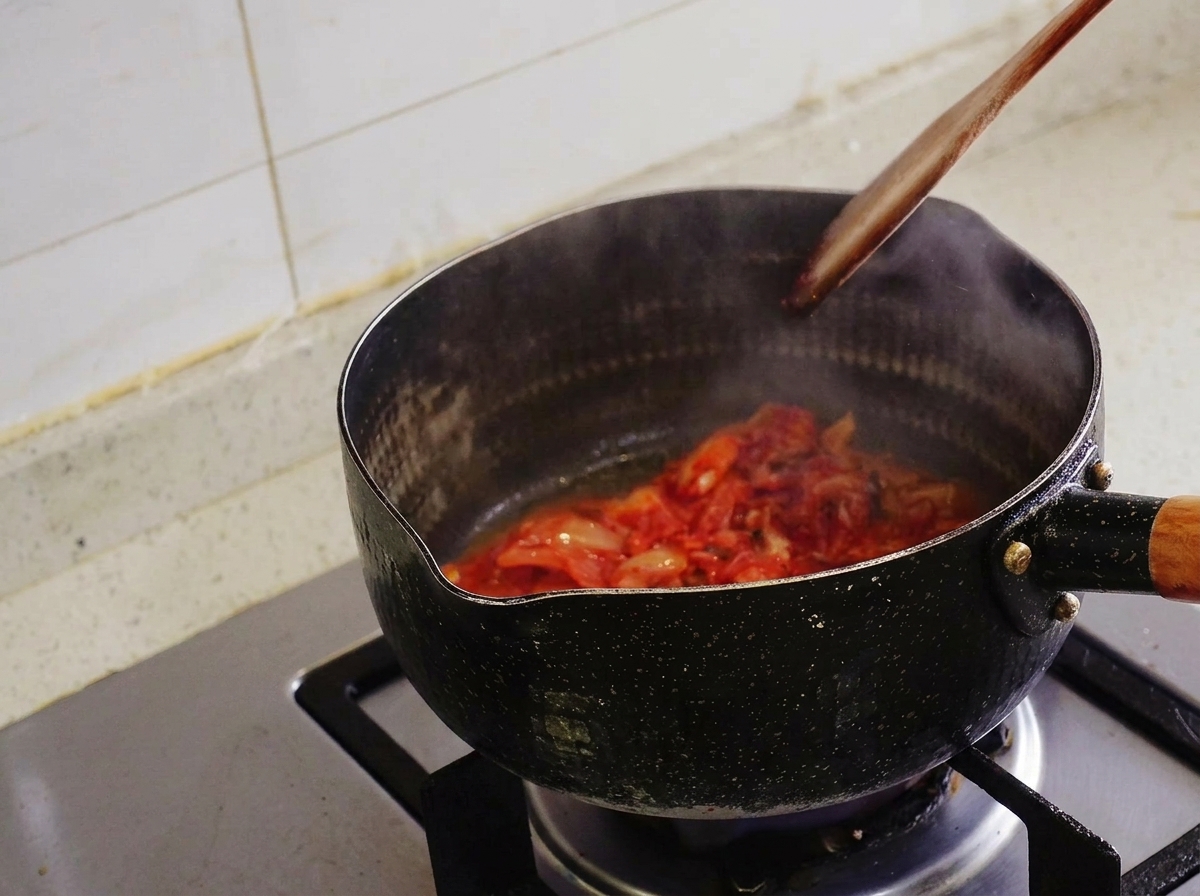
Use a wooden spatula to stir-fry the kimchi in the pot until it becomes aromatic. Stir-frying the kimchi in perilla oil softens its texture and intensifies its savory, tangy flavor notes.
Tip: Stir-fry for about 2 to 3 minutes until the kimchi looks slightly translucent around the edges. - 6Pour in water
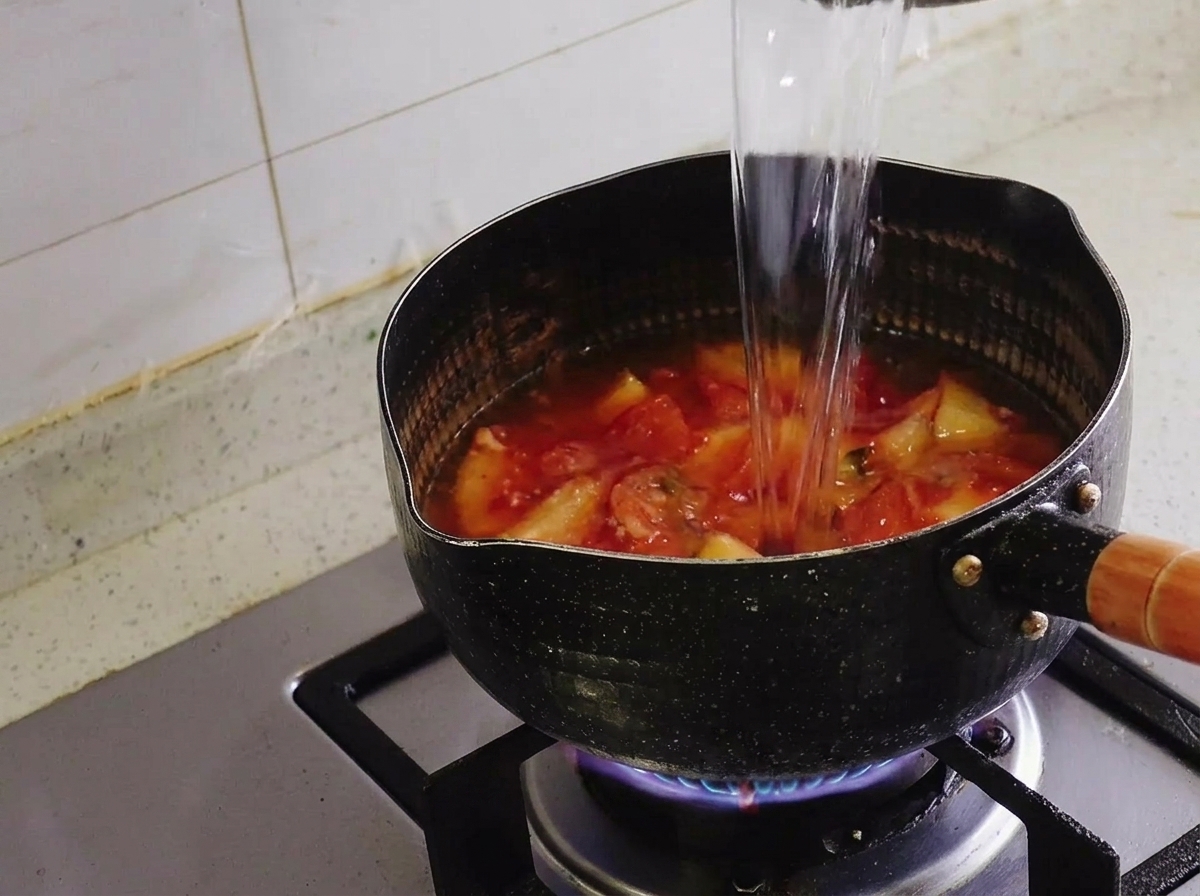
Pour an appropriate amount of water into the pot directly over the stir-fried kimchi to create the soup base. Bring the mixture to a simmer.
Tip: If you want an even richer broth, you can substitute the water with rice water or a light anchovy-kelp stock. - 7Season with fish sauce
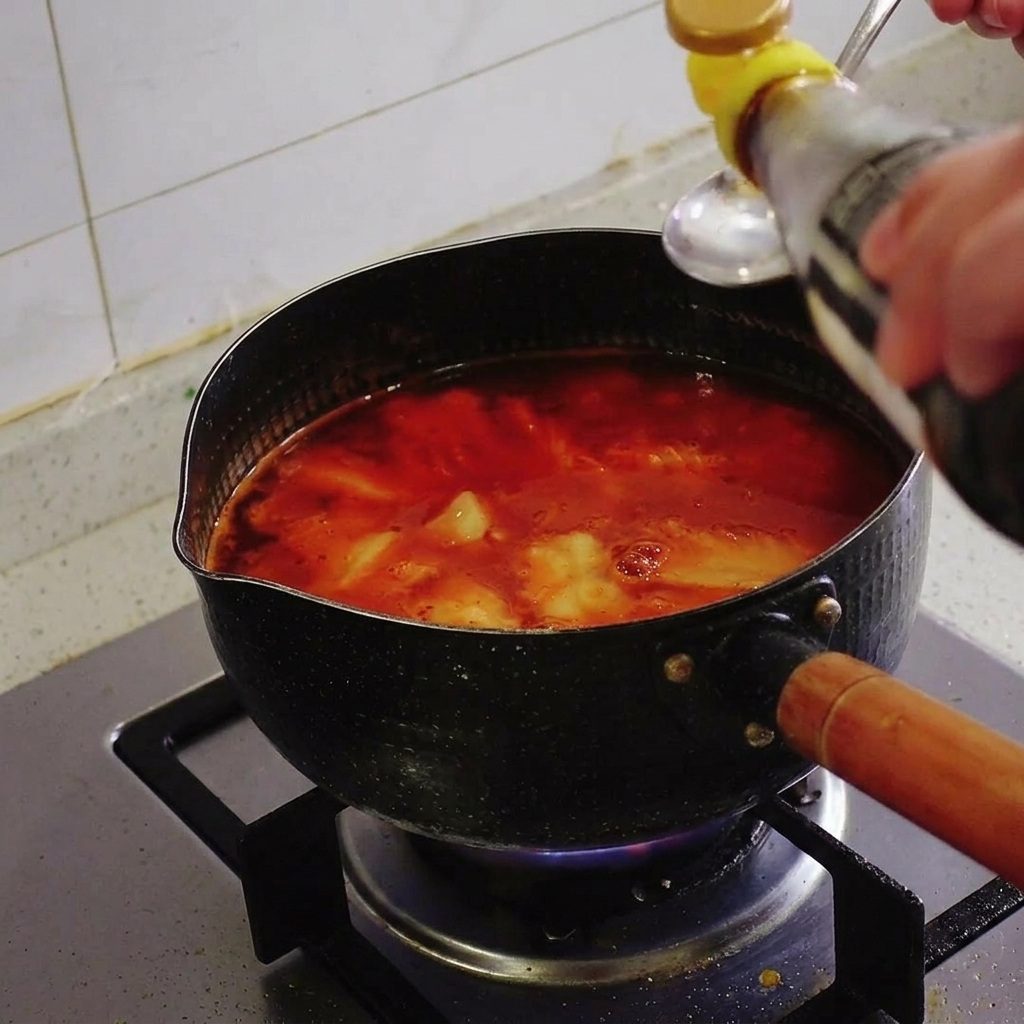
Pour two small spoonfuls of fish sauce into the simmering kimchi soup base. This adds a deep, savory umami layer to the broth, beautifully balancing the heat from the chili paste and the acidity of the kimchi.
Tip: Adjust the amount of fish sauce to your personal preference, keeping in mind that the kimchi and chili paste already contribute saltiness to the dish. - 8Add Korean chili paste
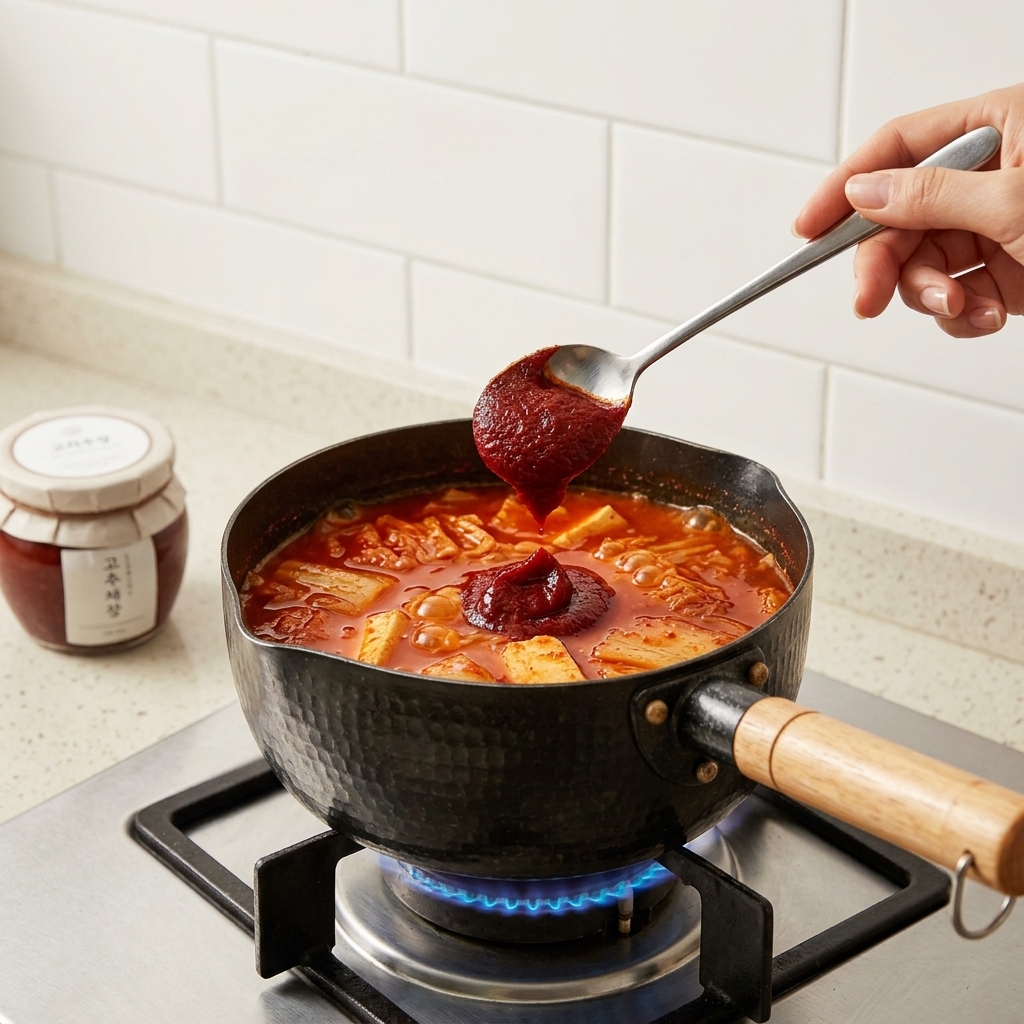
Add two large spoonfuls of Korean chili paste into the pot and stir it thoroughly into the broth. The paste serves as the flavor backbone of the soup, imparting a deep savory richness and signature vibrant red color.
Tip: Adjust the amount of chili paste based on your heat tolerance; you can add an extra spoonful if you prefer it extra spicy. - 9Season with light soy sauce
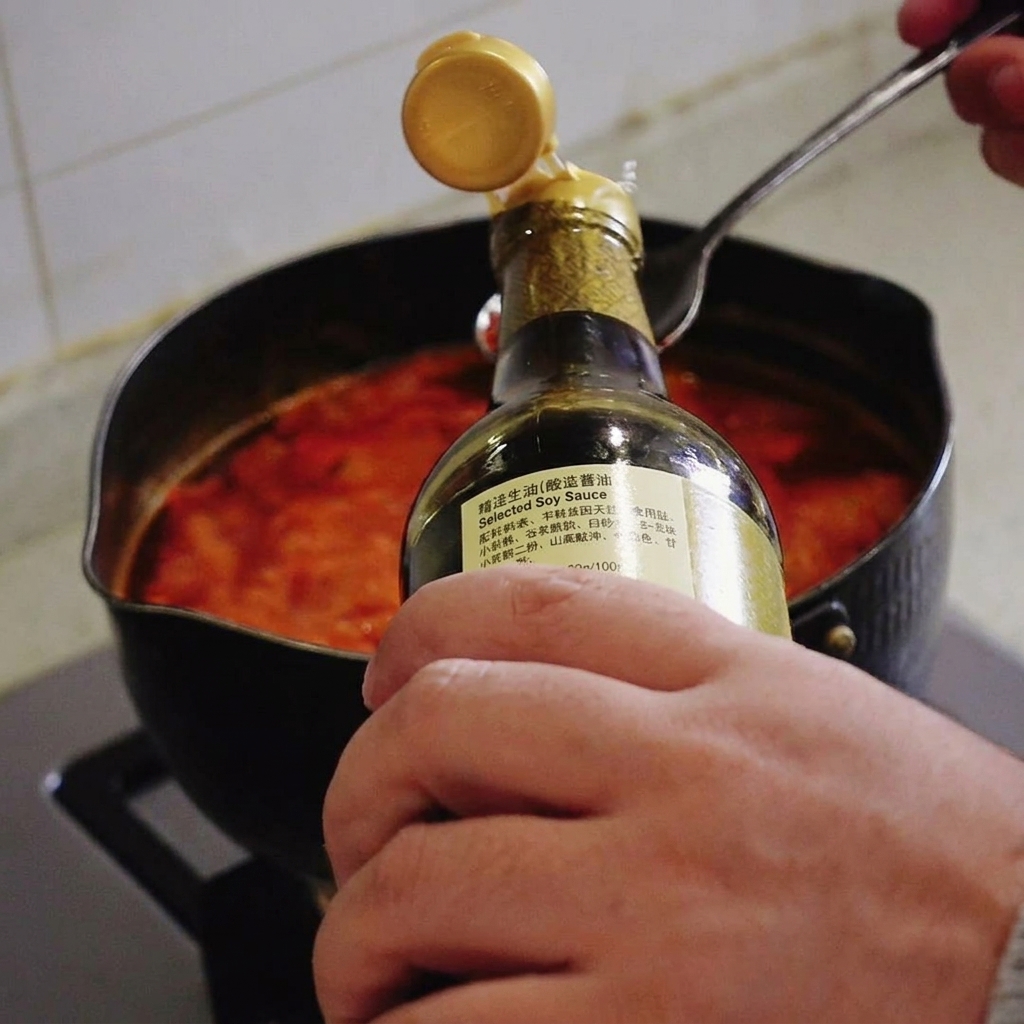
Measure and pour two large spoonfuls of light soy sauce into the pot. Stir well to integrate the seasoning into the simmering broth, enhancing the deep umami flavor of the soup base.
Tip: Pouring the soy sauce into a spoon first prevents accidental over-pouring and helps maintain accurate measurements. - 10Add shimeji mushrooms
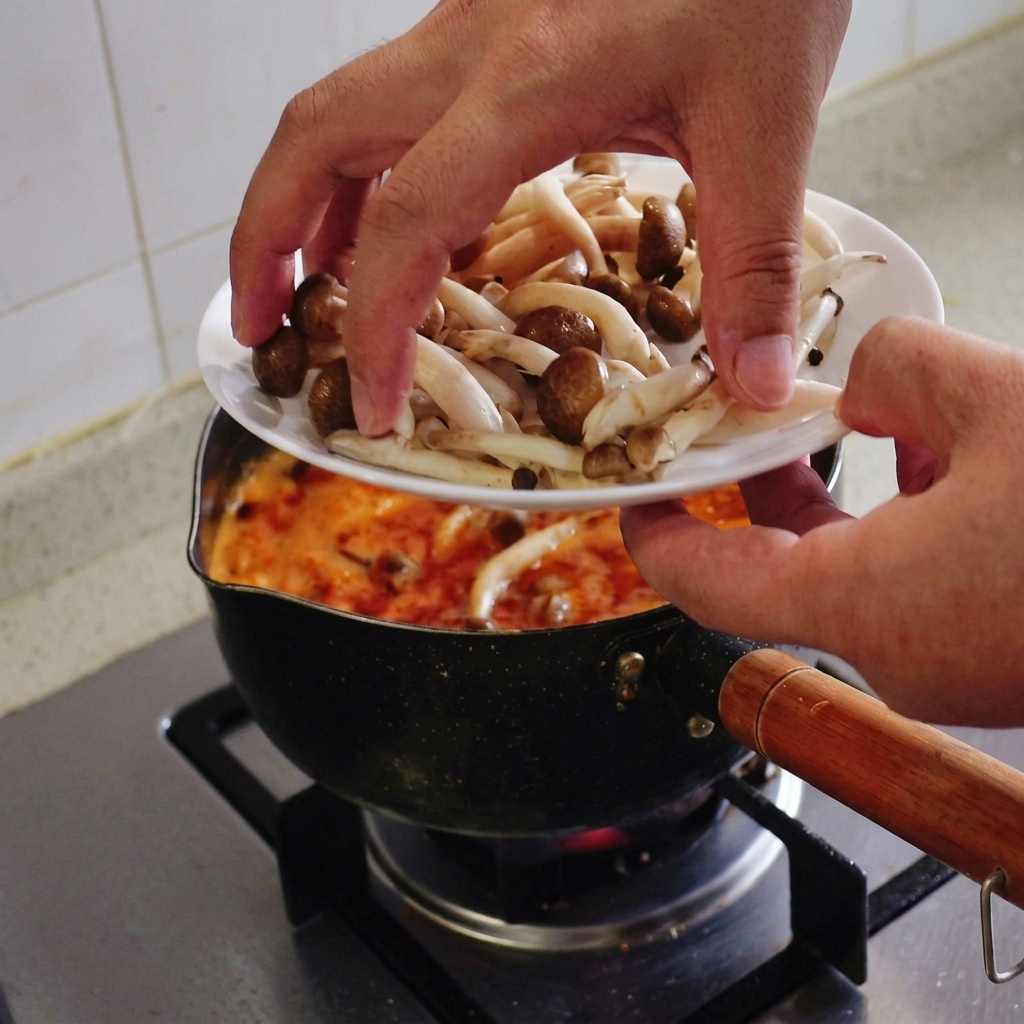
Carefully slide the fresh shimeji mushrooms from the plate into the bubbling red soup. Make sure they are fully submerged so they can cook evenly and absorb the savory broth.
Tip: If shimeji mushrooms are unavailable, enoki mushrooms or button mushrooms make excellent substitutes. - 11Add soft tofu
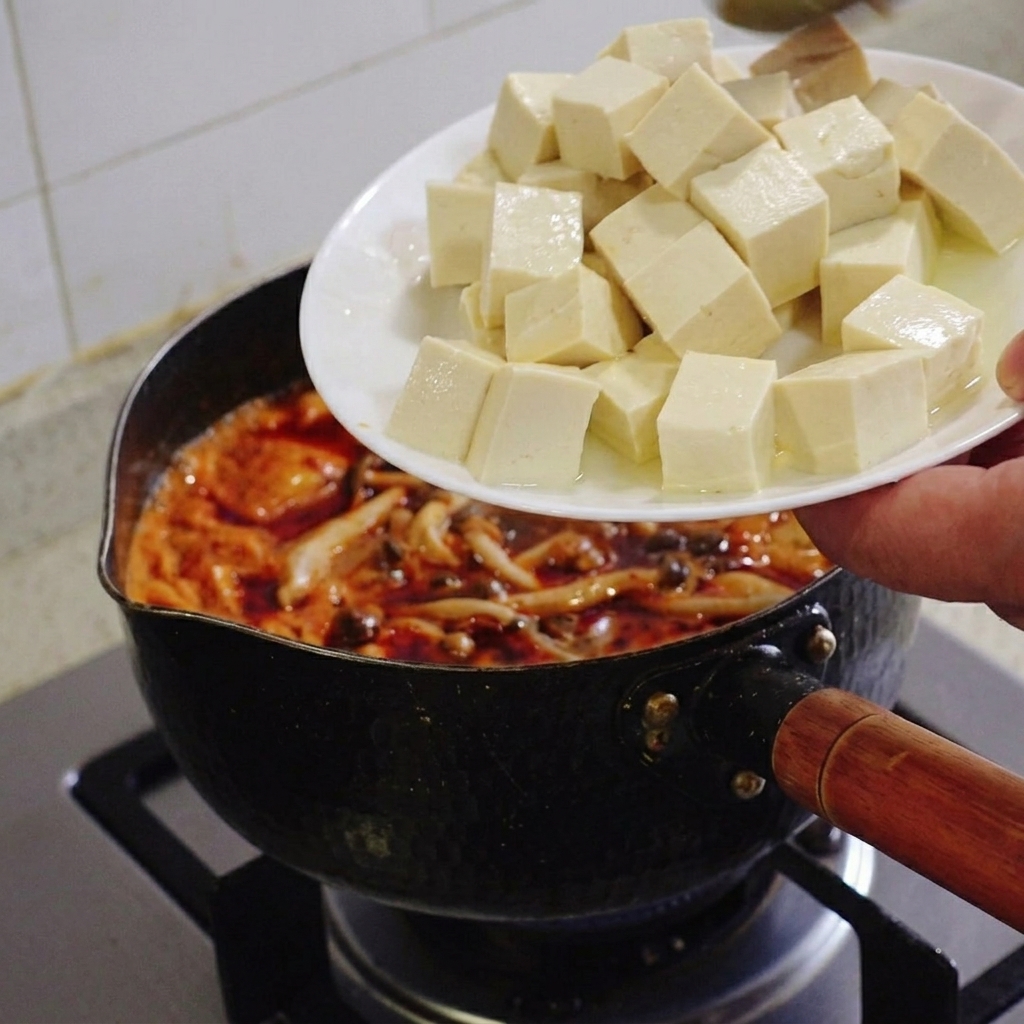
Gently slide the pre-cut cubes of soft white tofu from the plate into the stew. Distribute them evenly throughout the pot so they can warm through and absorb the rich flavors.
Tip: Handle the soft tofu carefully to keep the cubes from breaking apart, and avoid stirring too vigorously once they are in the pot. - 12Incorporate minced garlic
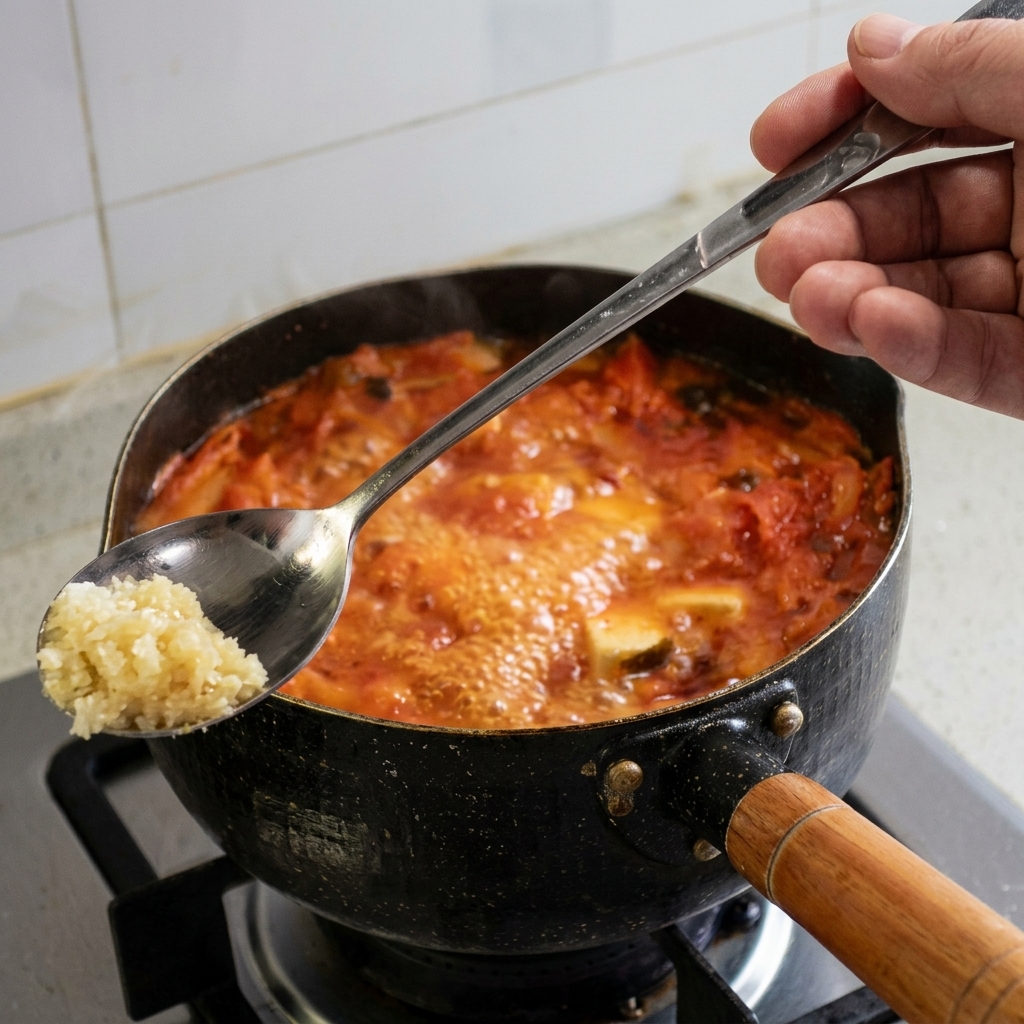
Add a spoonful of minced garlic paste to the simmering soup towards the end of cooking. Stir gently to distribute the garlic, allowing its sharp aromatic flavor to infuse the broth right before completion.
Tip: Adding garlic near the end of the cooking process preserves its punchy aroma and keeps the flavor distinct. - 13Return the beef to the pot
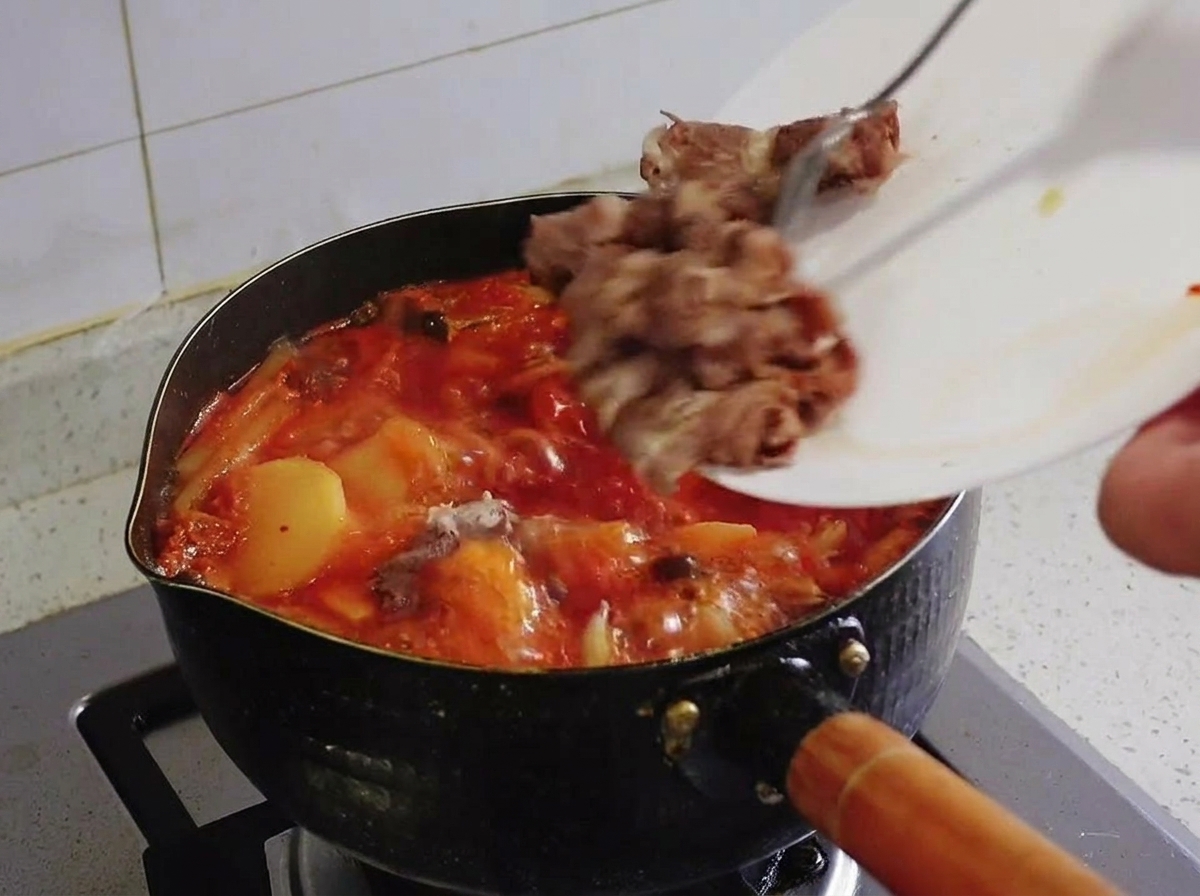
Carefully slide the previously blanched fatty beef rolls back into the bubbling soup mixture. Gently stir them into the broth so they can absorb the rich, spicy flavors of the stew.
Tip: Since the beef rolls are already blanched, they only need to simmer briefly to heat through and blend flavors without becoming overcooked and tough. - 14Garnish with green scallions
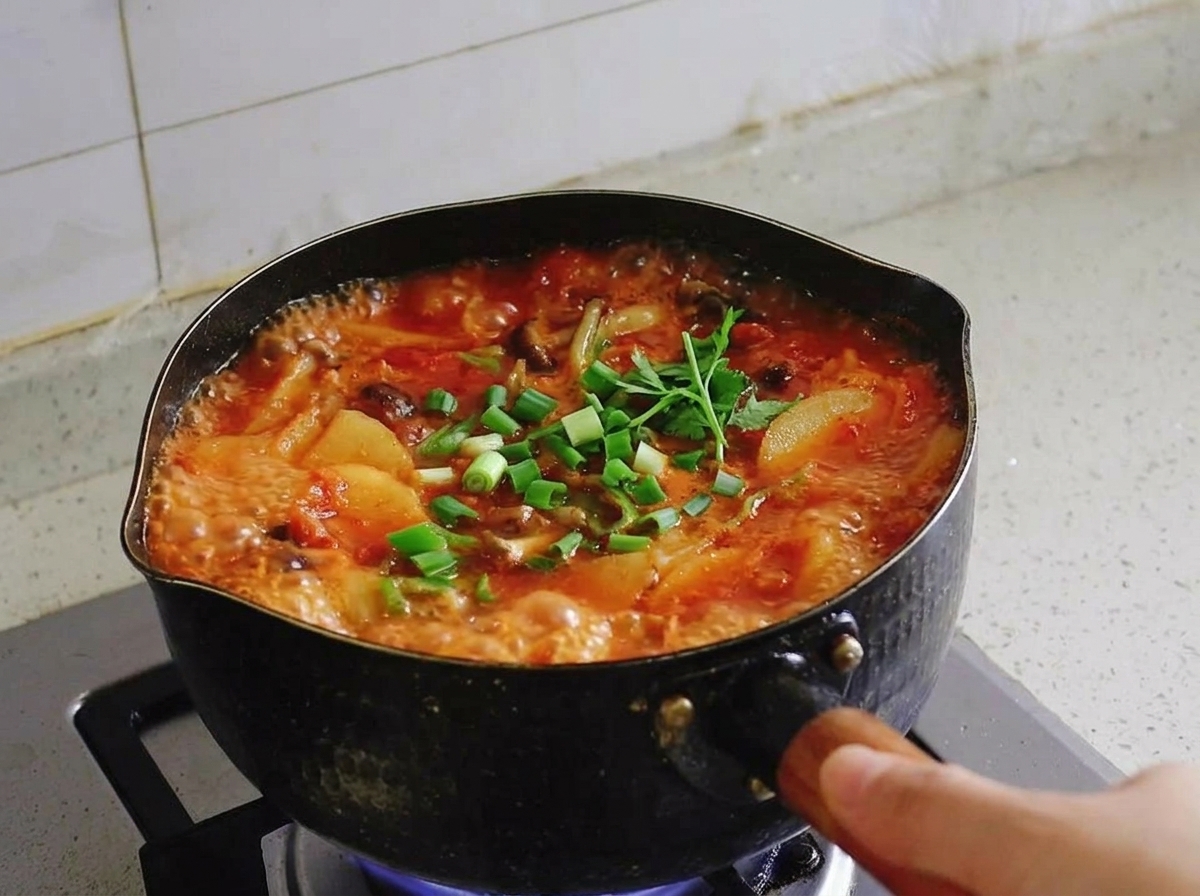
Scatter fresh chopped green scallions across the top of the boiling kimchi soup right before turning off the heat. This provides a vibrant pop of color and a crisp, fresh contrast to the rich broth.
Tip: Serve the soup immediately while piping hot, ideally alongside a bowl of warm steamed rice for a complete meal.