Authentic Japanese Miso Ramen
Homemade Chashu
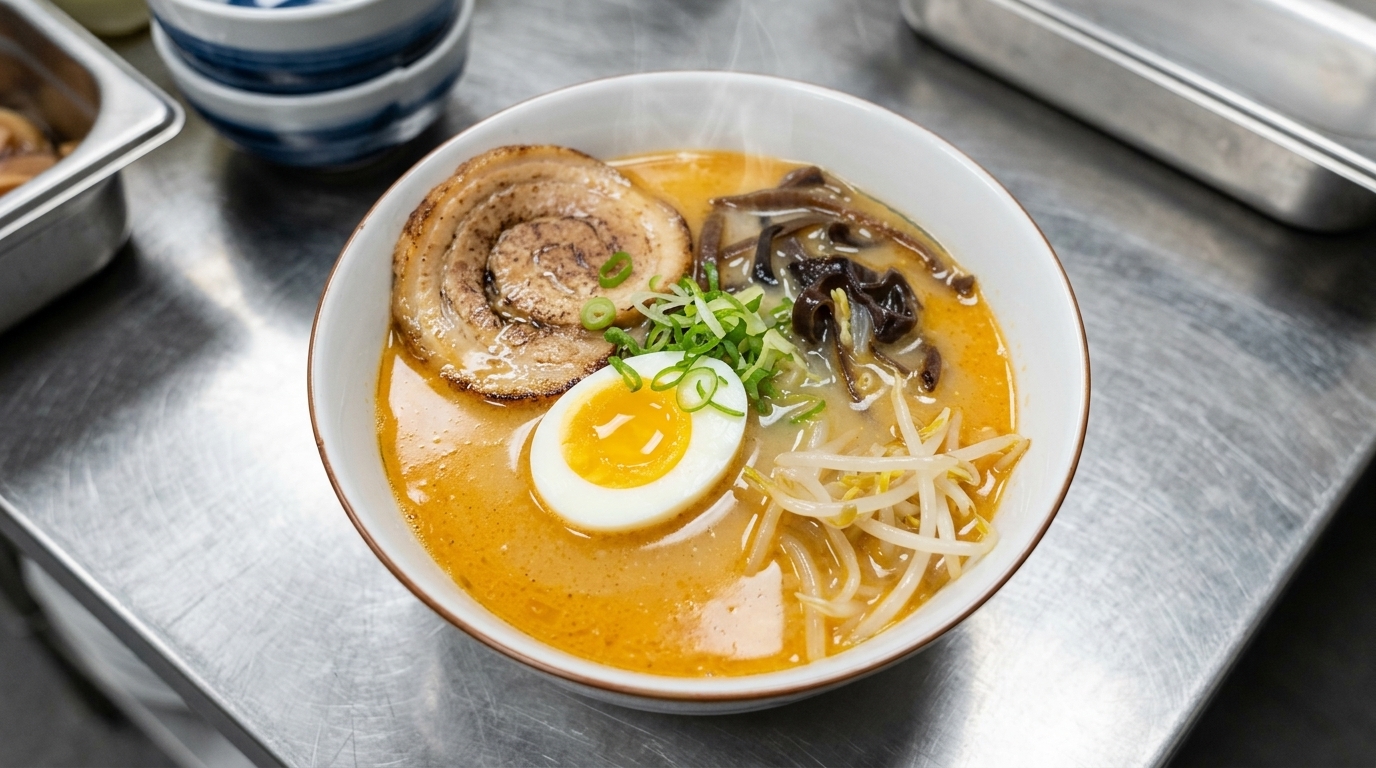
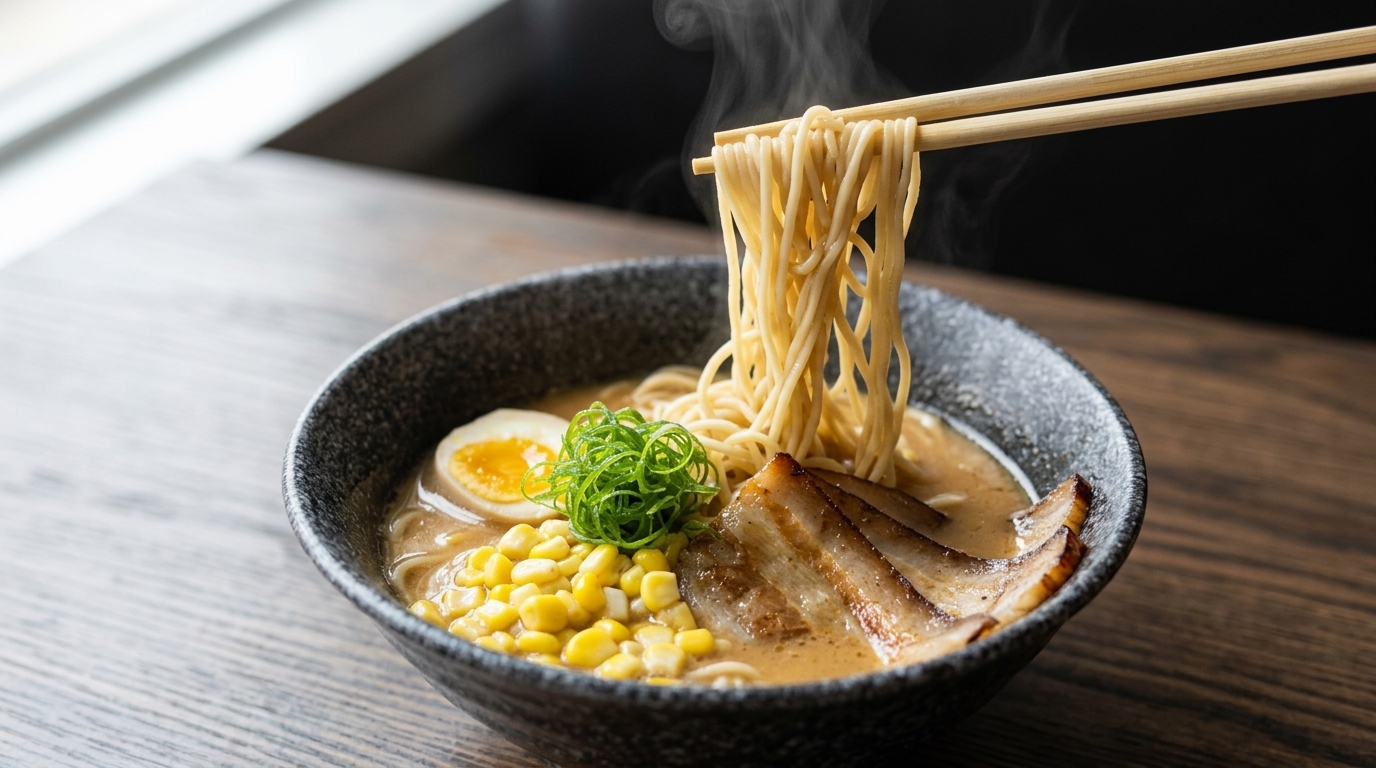
Experience the soul of Sapporo with this rich Miso Ramen featuring a silky umami packed broth, melt in your mouth rolled Chashu pork, and classic sweet corn topping.
Miso ramen originated in Hokkaido and is beloved for its hearty, robust flavor profile designed to warm the soul. The key to its success lies in the tare—a complex fermented soybean paste base—and the patient braising of the pork belly. This version delivers a creamy, opaque broth that perfectly clings to every strand of noodle.
Ingredients
- 1 kg pork belly (skin removed)
- 500 ml quality pork or chicken bone broth
- 1 tbsp miso paste
- 2 portions fresh ramen noodles
- 2 ajitama (marinated soft-boiled eggs)
- 50 g sweet corn kernels
- 12 white leek or green onion
- 2 sheets nori seaweed
- to taste cooking oil
- to taste kitchen twine (for tying)
Instructions
- 1Divide the pork belly
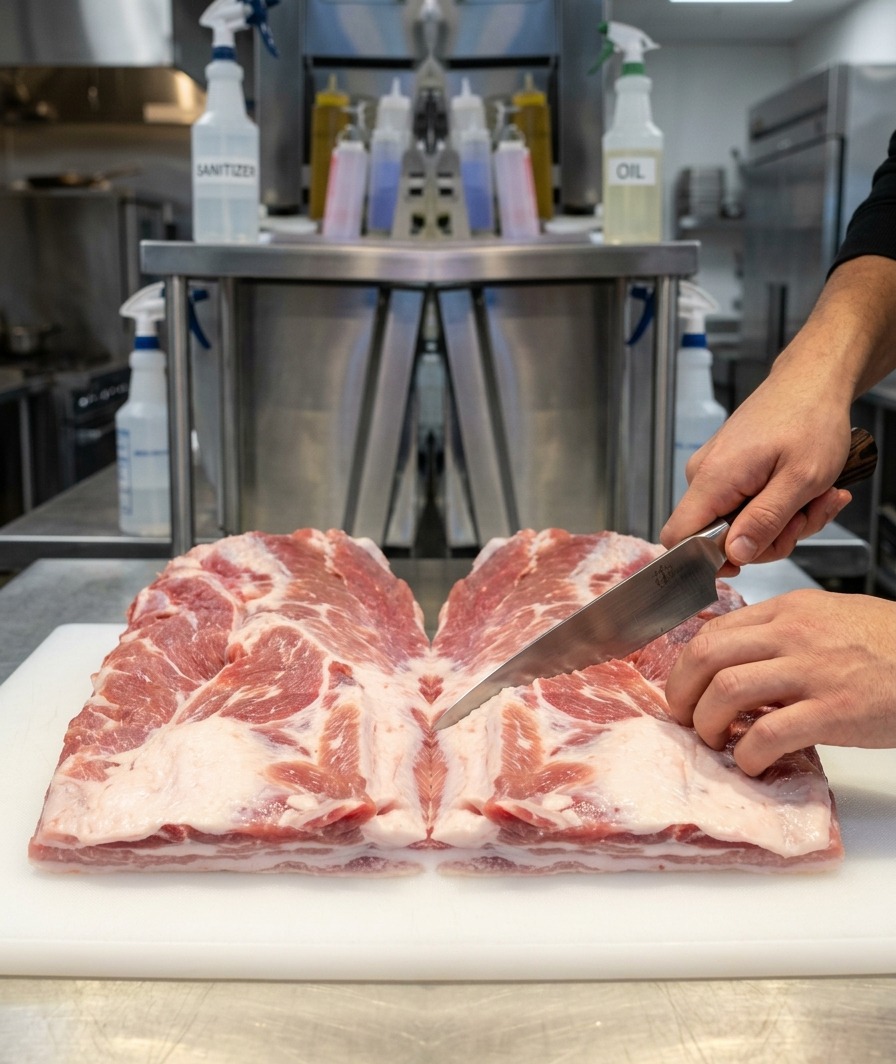
Place a large slab of fresh pork belly on a clean cutting board. Using a sharp chef knife, carefully cut the meat in half to create manageable portions for rolling. Ensure the cuts are even to help the meat cook consistently later.
Tip: If the pork is slightly chilled, it will be much easier to cut precisely without the fat sliding around. - 2Roll the pork belly
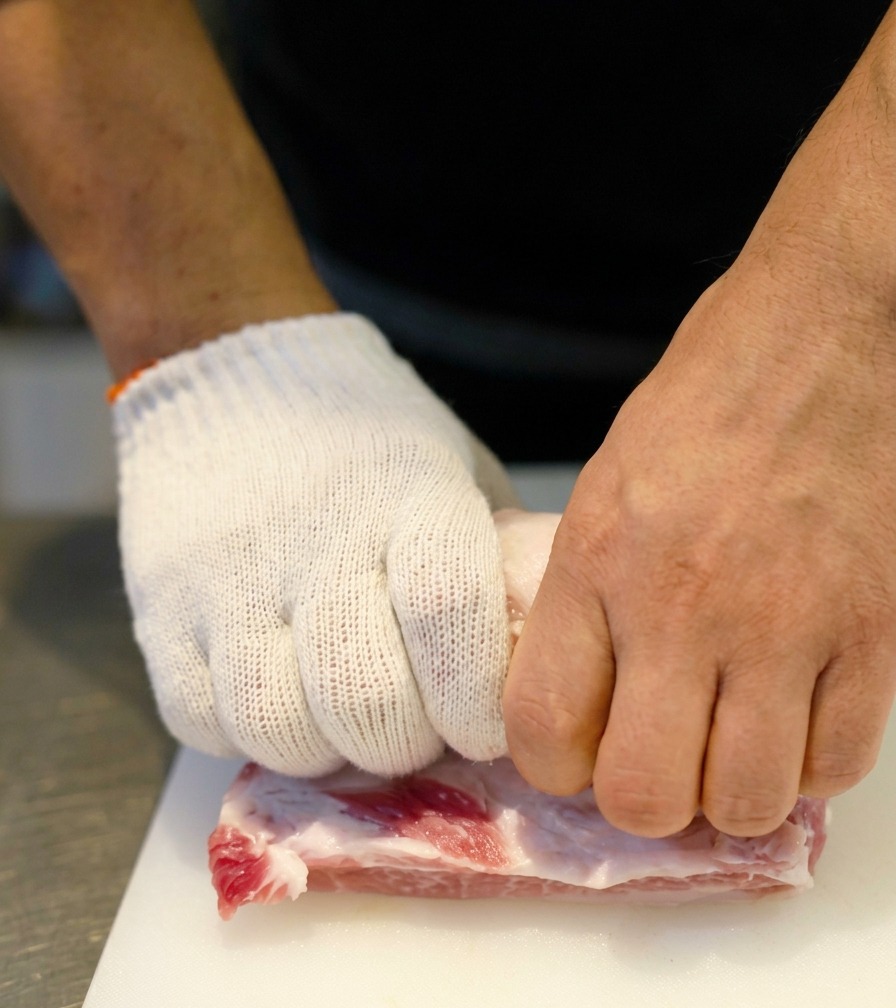
With the skin side removed, roll the pork belly tightly into a uniform cylinder. Applying firm, even pressure with both hands ensures there are no air gaps inside, which helps the Chashu maintain its shape and moisture during the long simmering process.
Tip: Roll as tightly as possible; a loose roll can fall apart or result in unevenly cooked meat. - 3Secure with twine
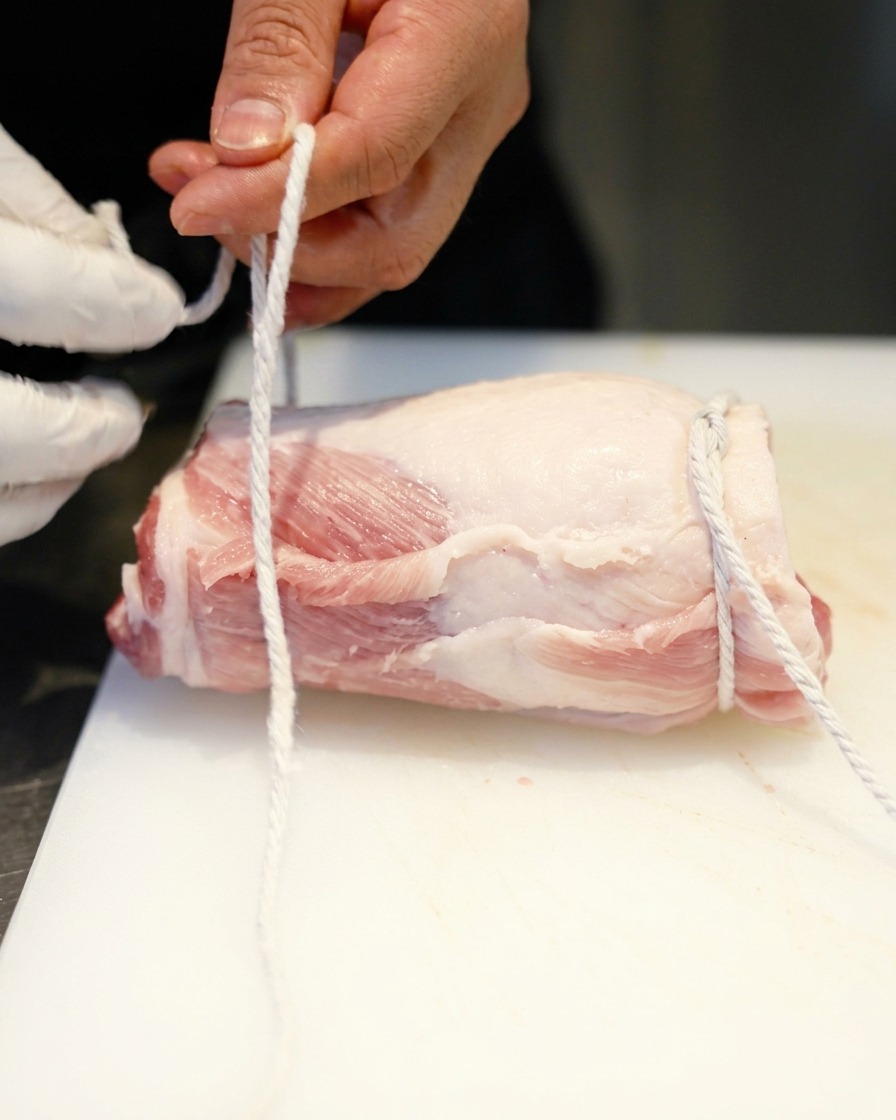
Use white kitchen twine to tie the rolled pork belly securely. Space the loops evenly along the length of the roll to hold the cylindrical shape firmly. This traditional Japanese technique ensures the Chashu remains intact during searing and braising.
Tip: Leave a bit of space between the twine and the meat as it will expand slightly when cooking, but keep the knots tight. - 4Heat the cooking oil
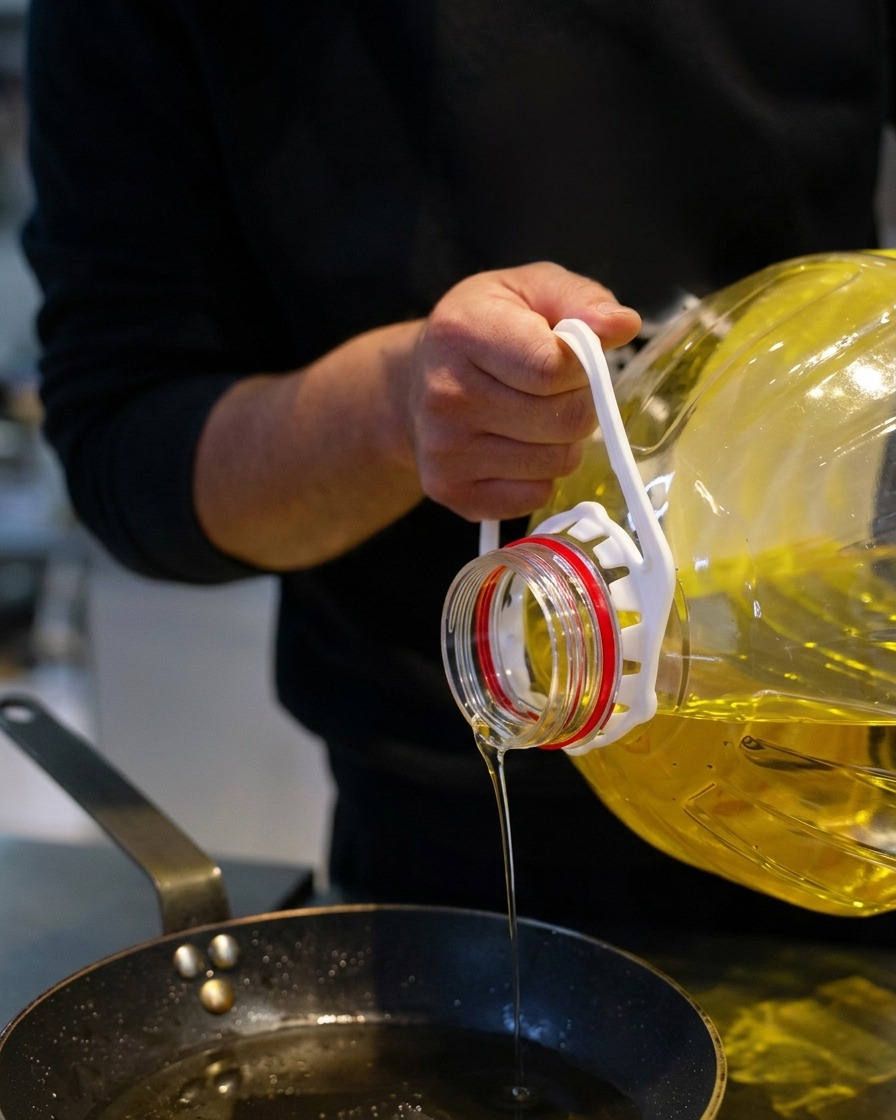
Pour a generous amount of high-smoke-point cooking oil into a skillet or frying pan. Heat the oil over medium-high heat until it begins to shimmer. This preparation is essential for achieving a deep, flavorful sear on the exterior of the pork.
Tip: Use a neutral oil like vegetable or canola oil so it doesnt overpower the delicate miso flavors of the final ramen. - 5Sear the pork roll
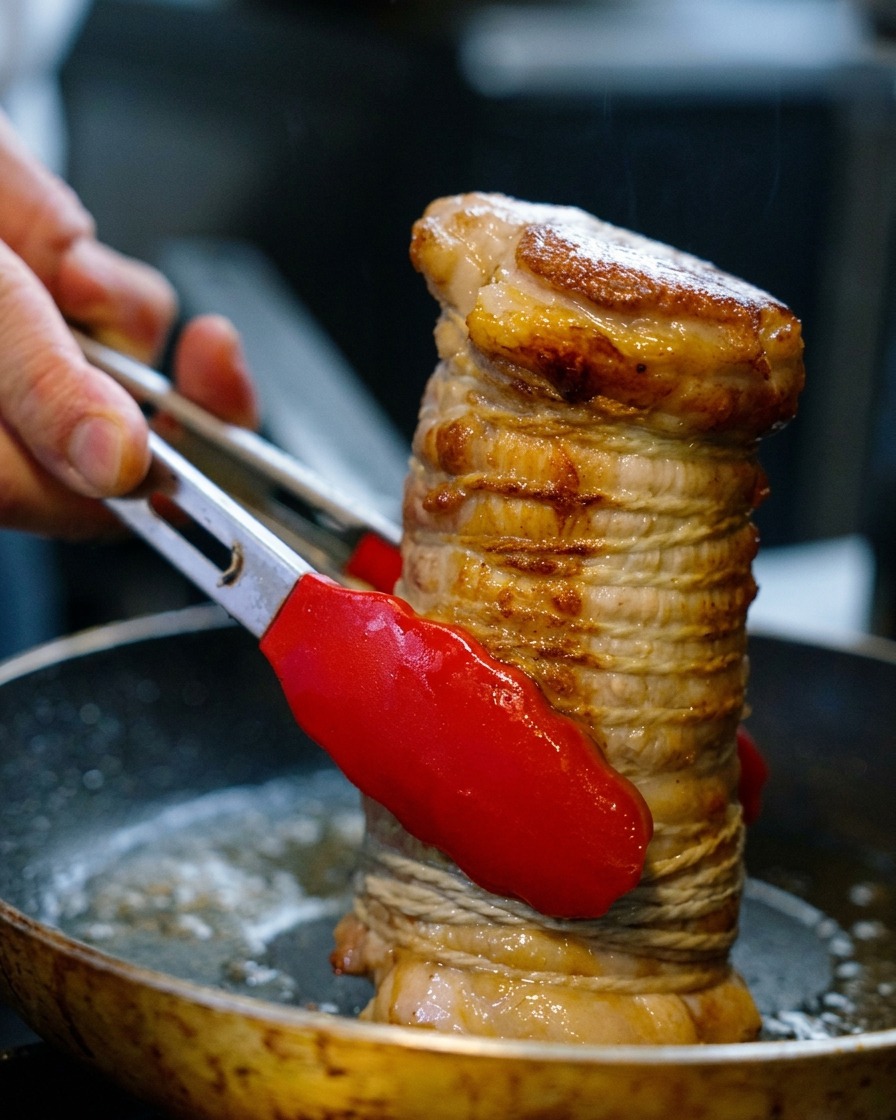
Carefully place the tied pork roll into the hot oil. Use tongs to rotate the meat frequently, searing all sides until the entire surface is deeply browned and caramelized. This step locks in the juices and creates a rich, savory crust.
Tip: Dont rush this step; the Maillard reaction from searing provides much of the golden flavor mentioned in the recipe. - 6Braise the Chashu
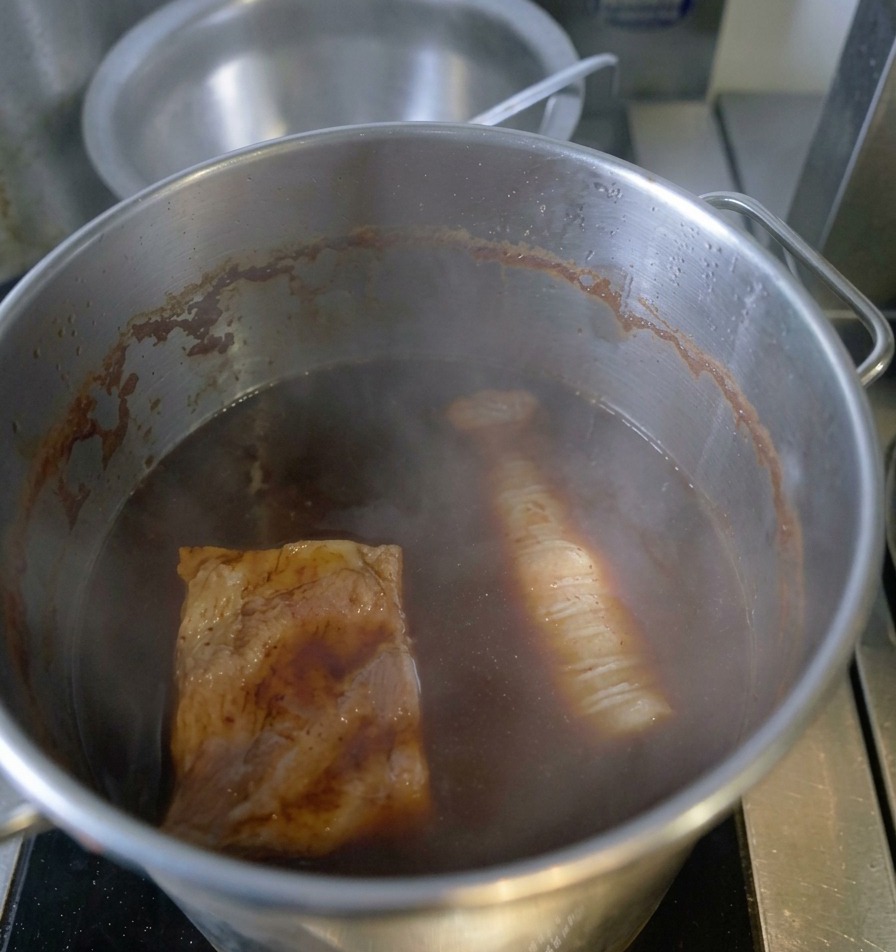
Submerge the seared pork into a large pot filled with the secret Chashu braising liquid. Simmer the meat over low heat for approximately 50 minutes. This slow-cooking process allows the meat to absorb the dark, savory flavors while becoming incredibly tender.
Tip: Ensure the liquid completely covers the meat. If it doesnt, rotate the pork every 15 minutes to ensure even color and flavor absorption. - 7Simmer the Chashu
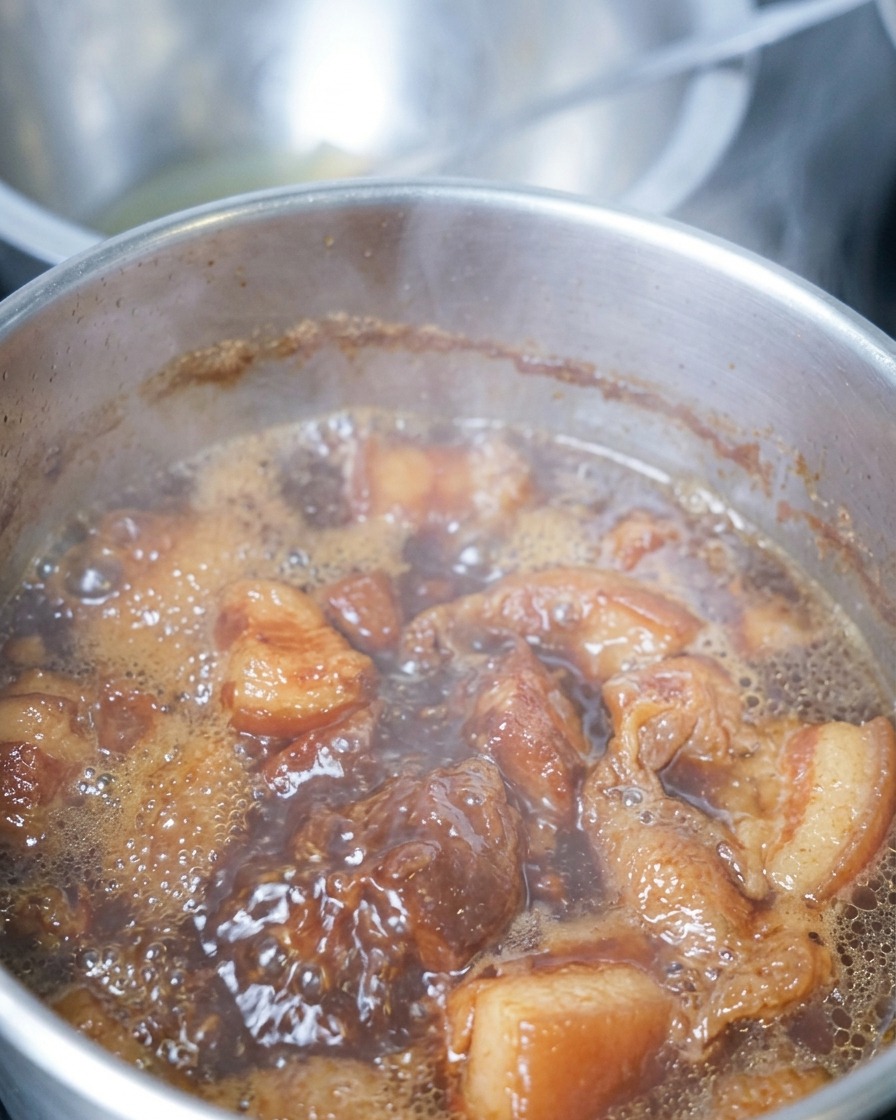
Maintain a gentle simmer over low heat. Boiling too vigorously can agitate the fat and make the pork belly tough; a slow braise ensures a melt-in-your-mouth texture.
Tip: Look for very small bubbles breaking the surface to maintain the ideal temperature. - 8Slice the Chashu
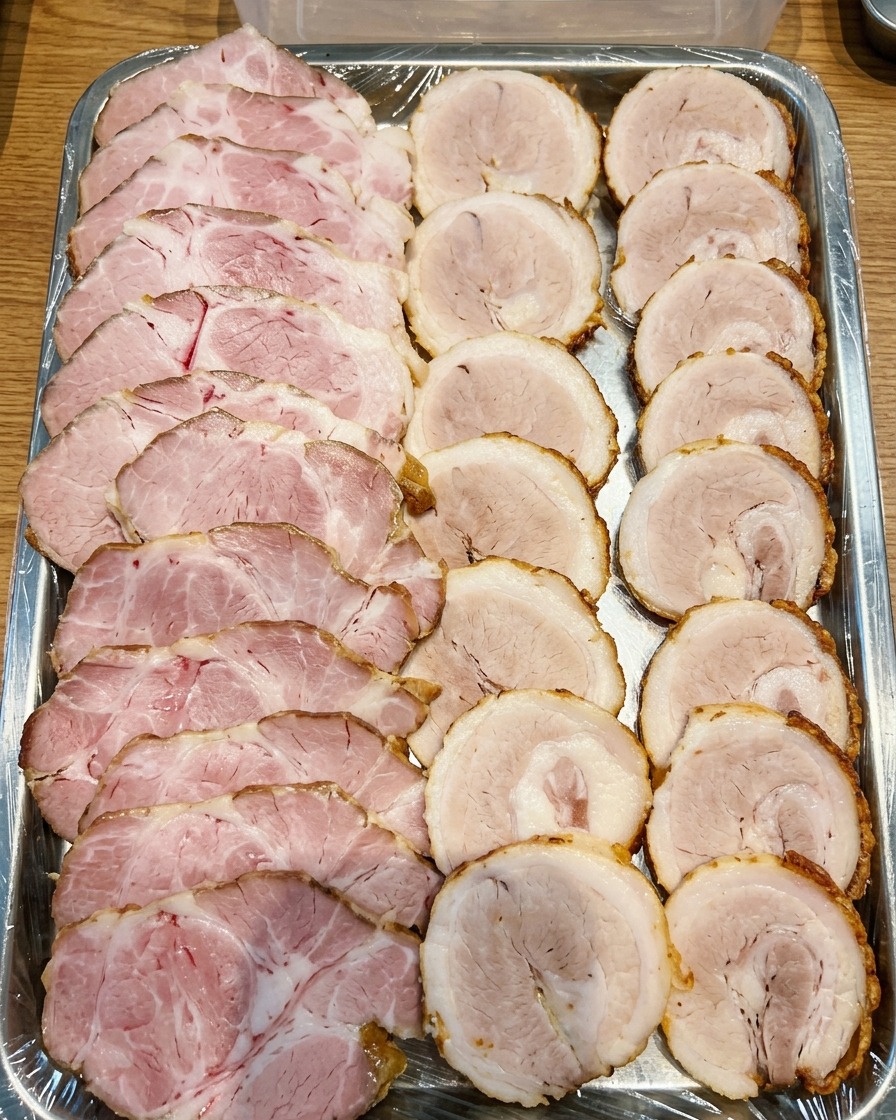
Once the braised pork belly has cooked, remove it from the liquid and allow it to cool completely. This resting period helps the meat firm up. Using a sharp knife, carefully slice the rolled pork into even, thin circular pieces, ready to be layered onto the hot ramen.
Tip: Chilling the chashu in the refrigerator for a few hours before slicing makes it much easier to get clean, even cuts without the meat falling apart. - 9Add the Miso Paste
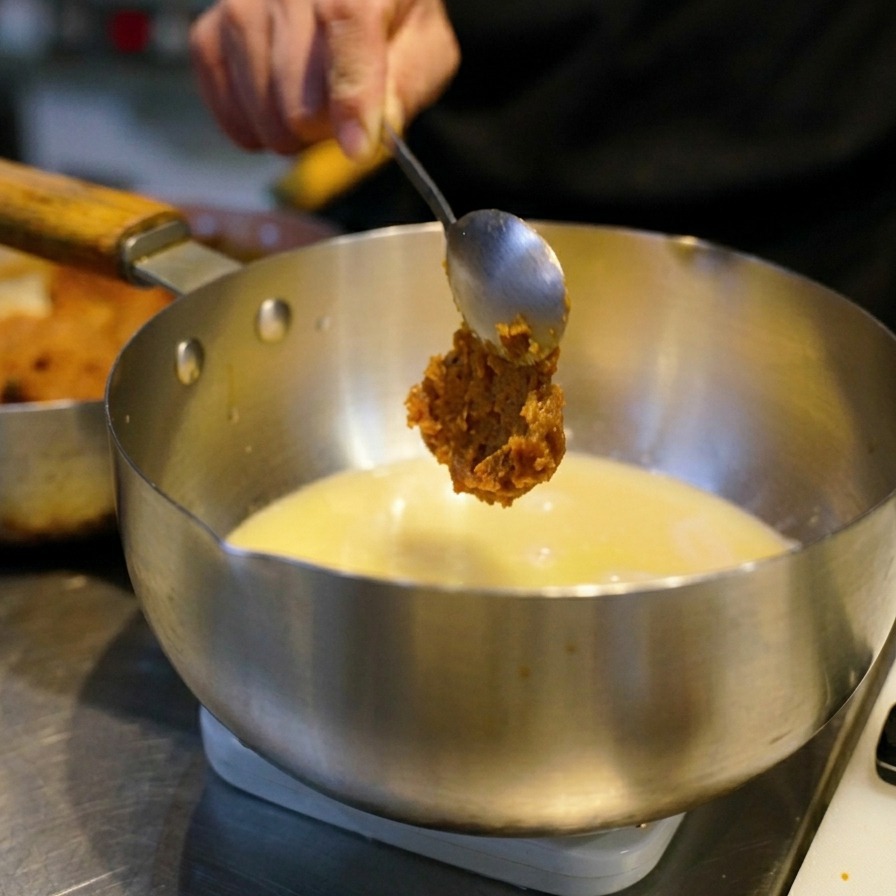
Heat about 500ml of your high-quality base broth in a saucepan. Scoop a generous spoonful of your homemade or premium miso paste and lower it into the hot broth. This rich, reddish-brown miso is the soul of the dish, providing the deep umami flavor characteristic of authentic miso ramen.
Tip: To prevent clumps, you can dissolve the miso paste in a small ladle of hot broth before mixing it into the main pot. - 10Incorporate the Miso
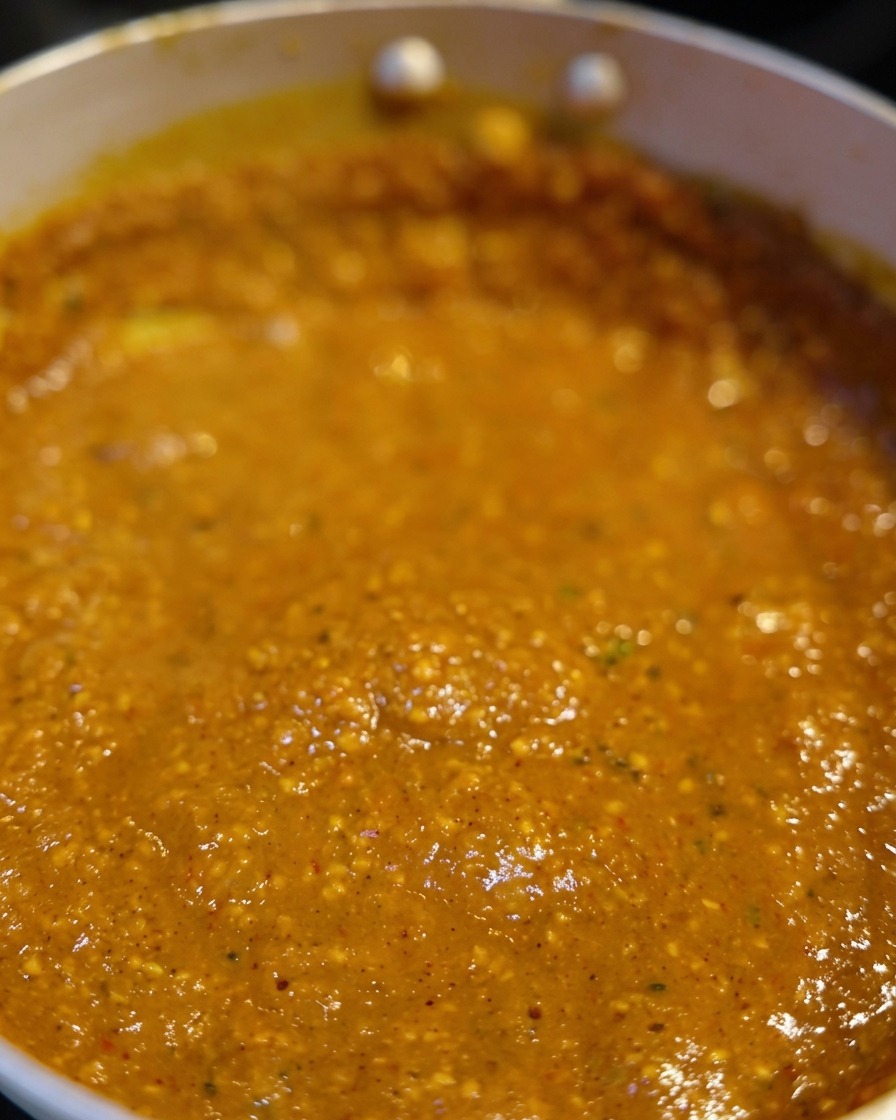
Gently stir the miso paste into the broth until it is fully dissolved. Allow the seasoned soup to come to a gentle boil, ensuring all the flavors meld together into a thick, aromatic, and silky smooth ramen broth.
Tip: Do not aggressively boil the broth for too long after adding the miso, as extreme heat can diminish the delicate aromas and nutritional benefits of the fermented paste. - 11Pour the Broth
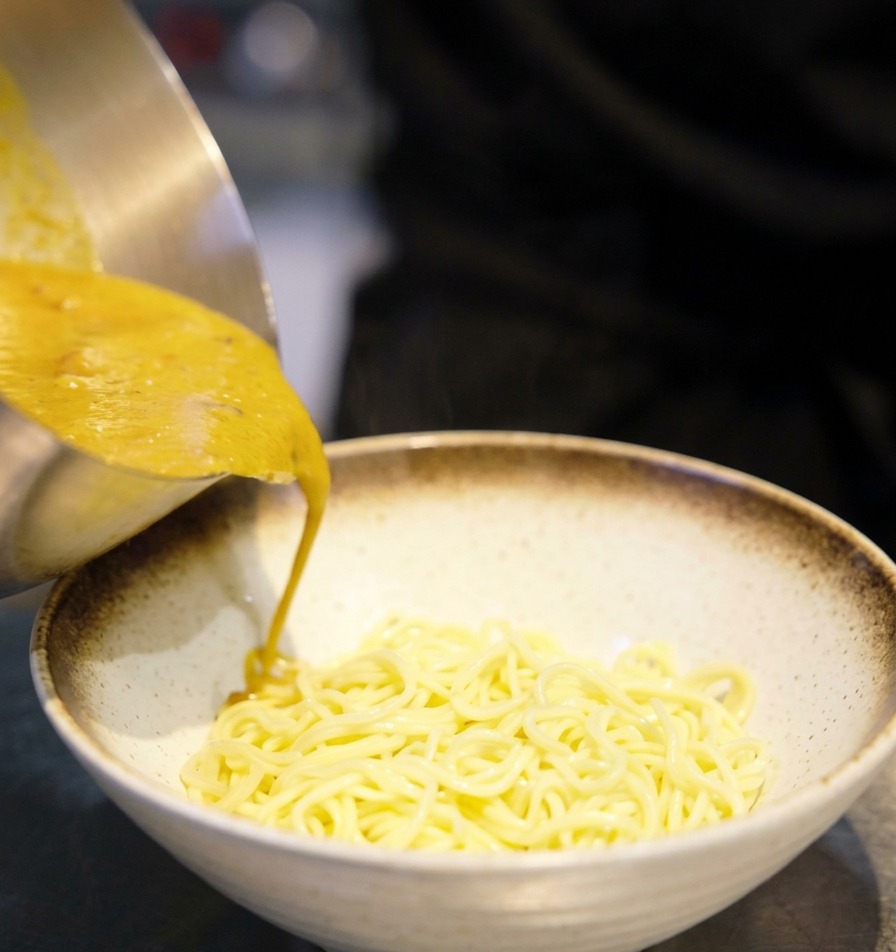
Place your freshly cooked and drained ramen noodles into a serving bowl. Carefully pour the boiling hot miso broth directly over the noodles, ensuring they are completely submerged and can soak up the rich, savory liquid.
Tip: Warm your serving bowl beforehand with a little hot water (then empty it) so your ramen stays piping hot for longer. - 12Garnish and Serve
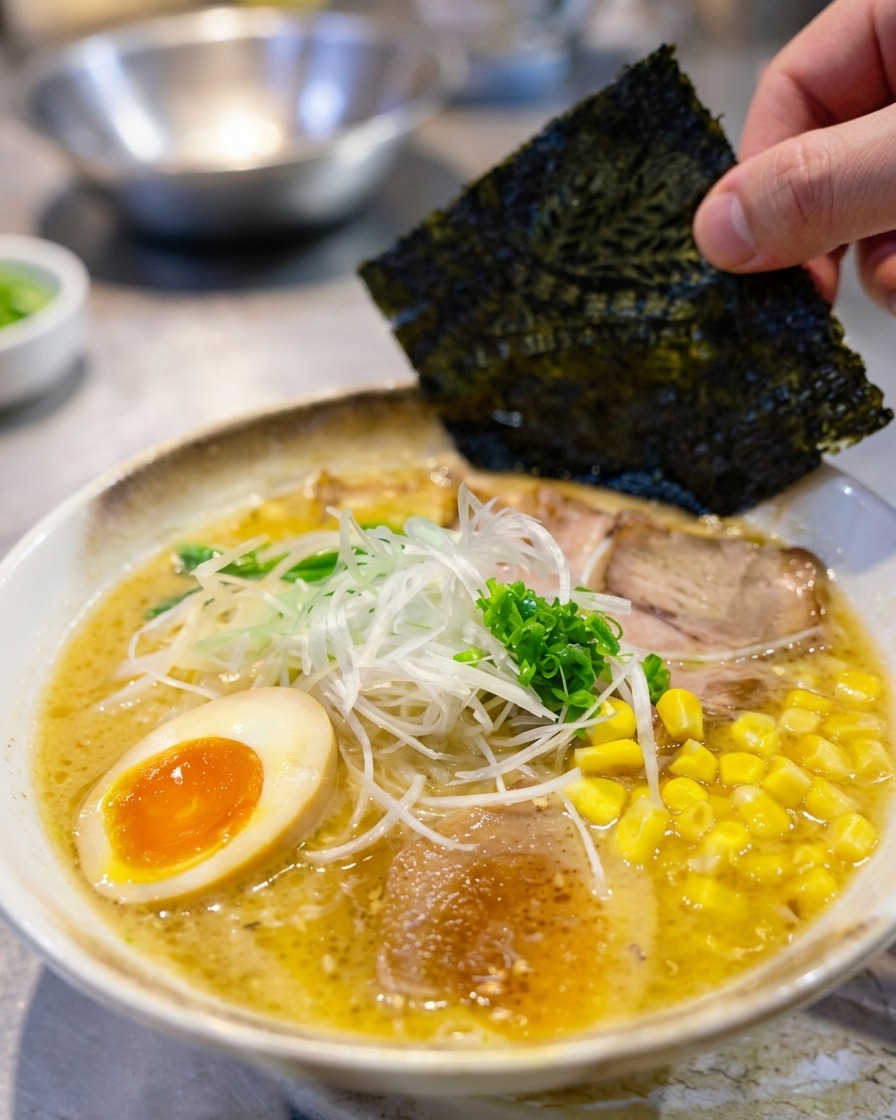
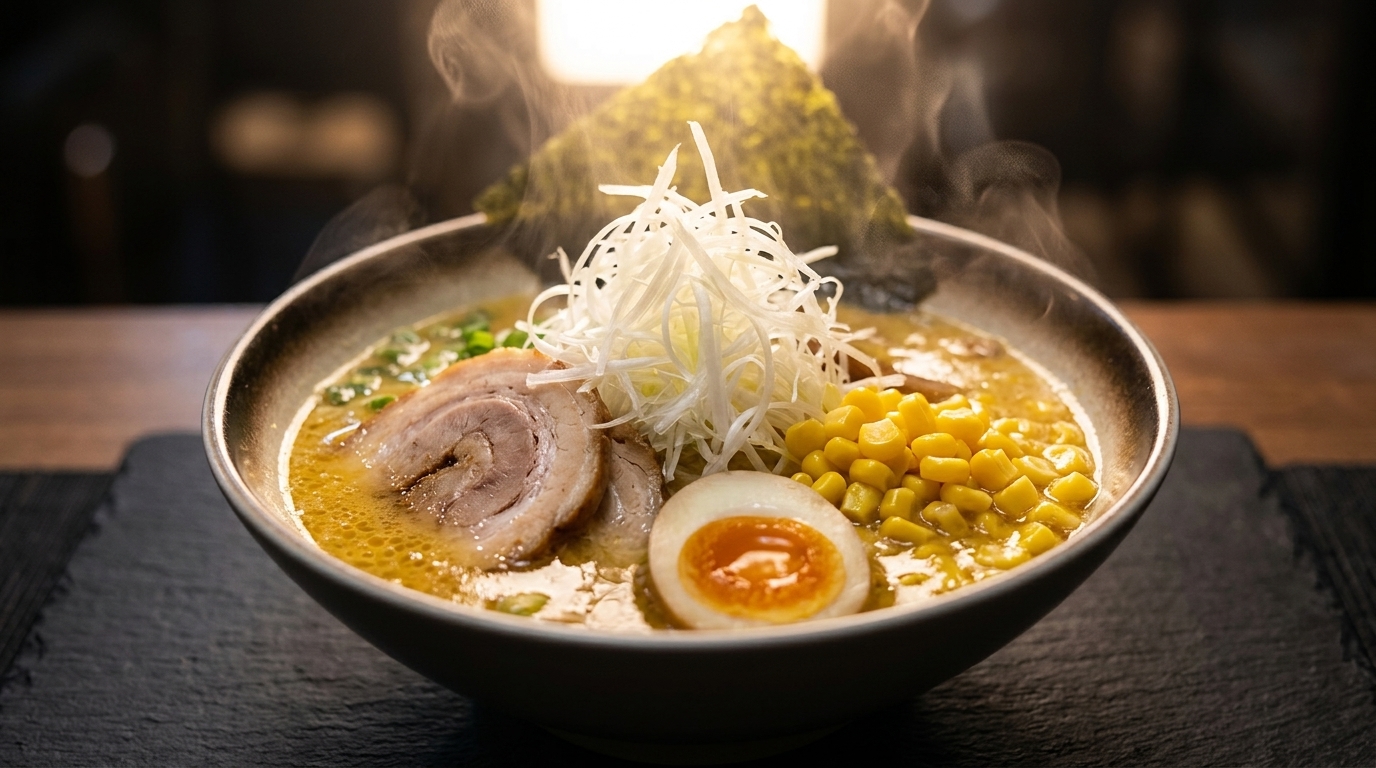
Top the steaming bowl of noodles and broth with your prepared garnishes. Carefully arrange the sliced chashu, sweet corn kernels, a halved soft-boiled marinated egg, and fresh green onions on top. Finish with a crisp sheet of nori seaweed, and serve immediately while piping hot.
Tip: Presentation is key in Japanese ramen! Arrange the toppings in small, distinct sections around the edge of the bowl so every ingredient is visible.