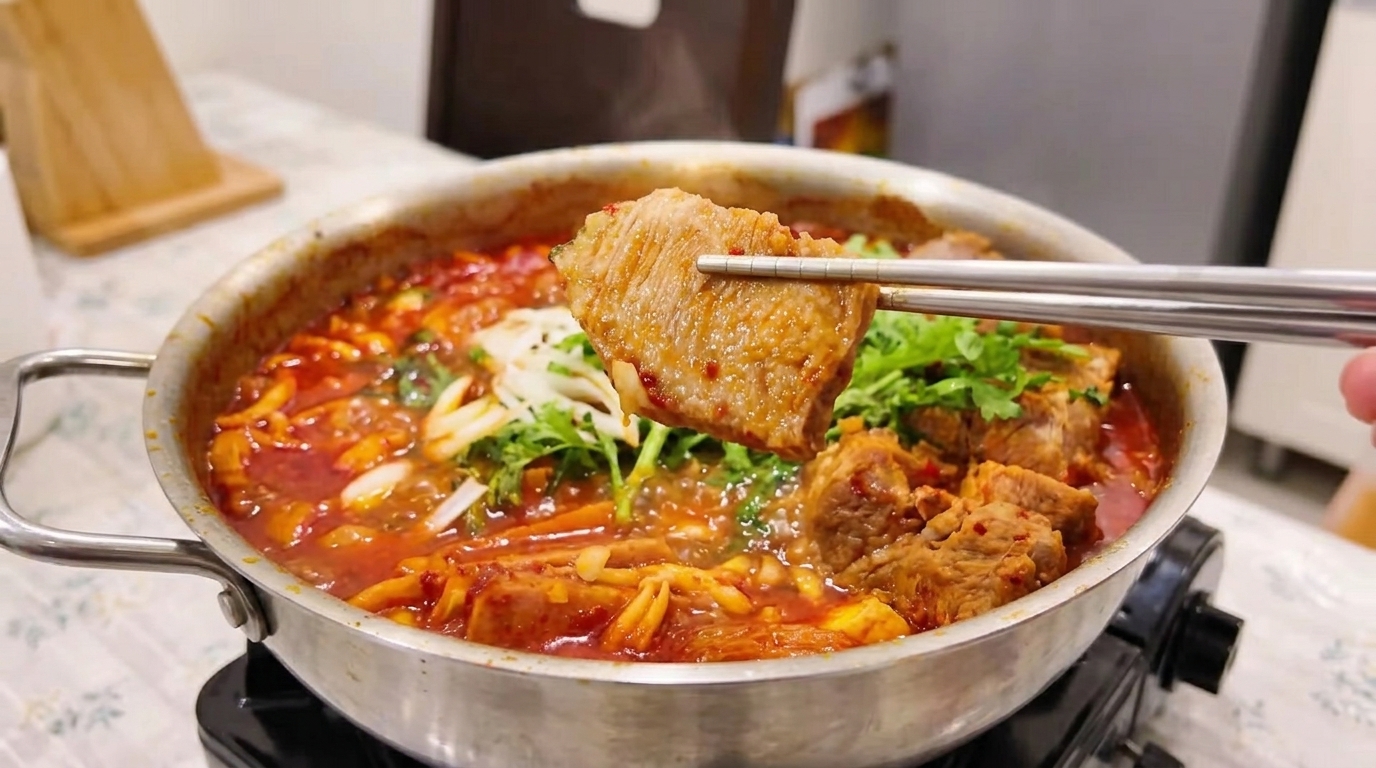
Traditional Korean Kimchi Pork Hot Pot (Kimchi Jjigae)
A comforting, sweet, spicy, and sour kimchi pork hot pot simmered with tender pork, soft tofu, luncheon meat, and rich Korean chili seasonings for the ultimate cold-weather meal.
Kimchi hot pot is the ultimate comfort food for rainy days, rooted in the traditional Korean love for deeply fermented flavors. By slow-cooking pork with aromatics and aged kimchi, the broth develops a complex balance of warmth, umami, and distinct tanginess that satisfies any craving.
Ingredients
- 500 g pork
- 1 bunch scallions
- 1 pc ginger
- 1 pc onion
- 1 tbsp Sichuan peppercorns
- 1 tbsp soybean paste
- 300 g fermented spicy kimchi
- 1 tbsp Korean spicy hot sauce
- 1 tbsp chili powder
- 1 tbsp chili flakes
- 1 tbsp beef powder
- 4 tbsp light soy sauce
- 1 tbsp minced garlic
- 200 g luncheon meat
- 1 block soft tofu
- 1 tsp white sugar
- 1 tbsp oyster sauce
- 150 g mushrooms
- to taste fresh greens
Instructions
- 1Place Pork and Aromatics in Pan
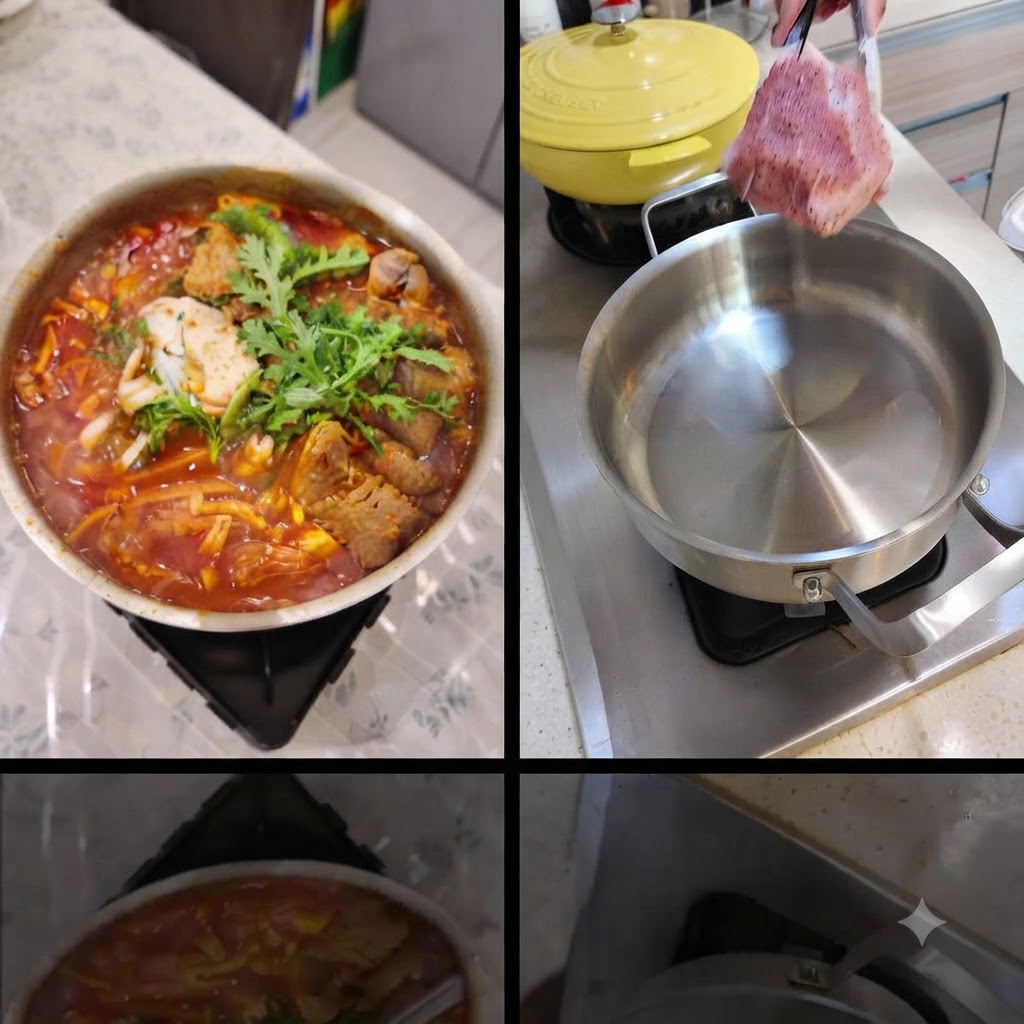
Take the pork pieces and place them into a stainless steel pan. Add slices of fresh ginger and fresh green scallions to build the foundation of the broth base.
Tip: Adding aromatics right at the start helps neutralize any gaminess in the pork as it heats up. - 2Add Water and Seasonings
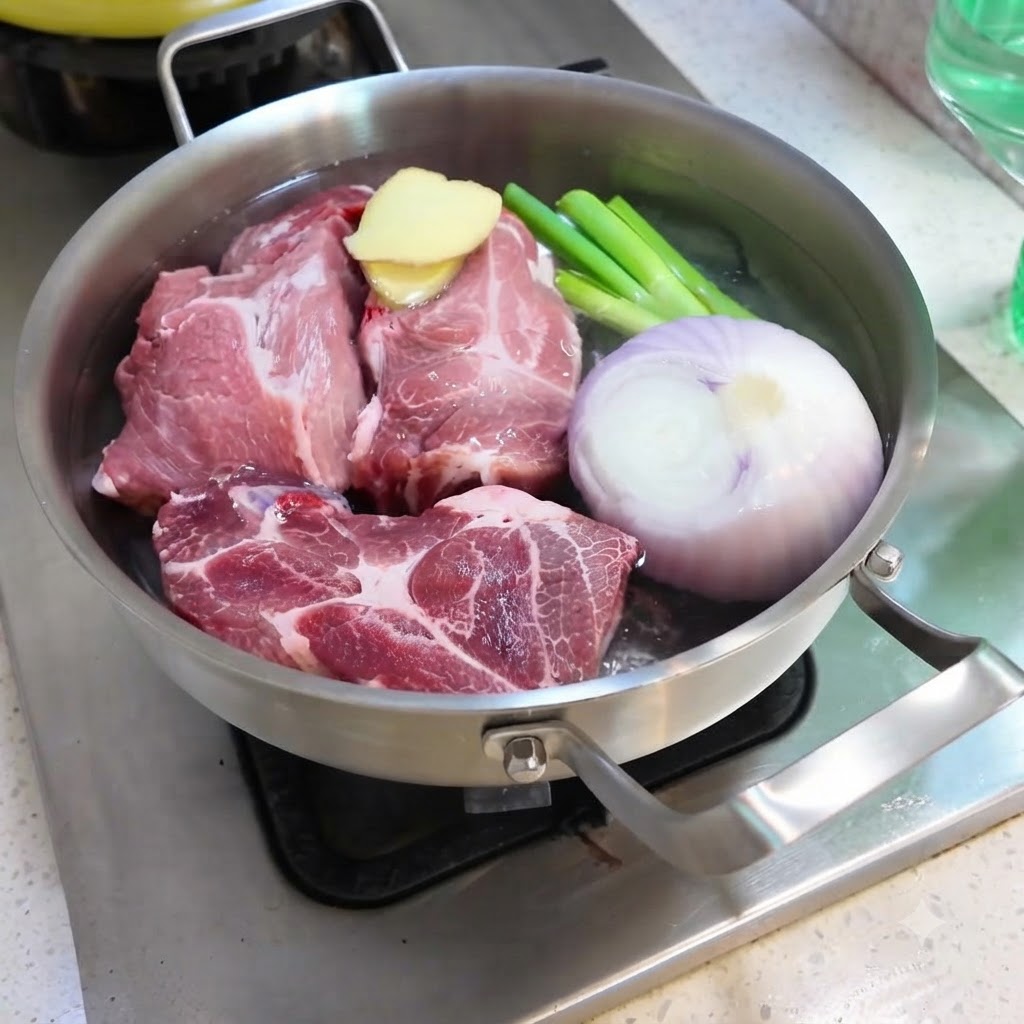
Pour water directly into the pan containing the pork, onions, ginger, scallions, Sichuan peppercorns, and soybean paste to create the rich soup base.
Tip: Ensure the water level completely submerges the meat and aromatics for an even extraction of flavors. - 3Add Fermented Kimchi
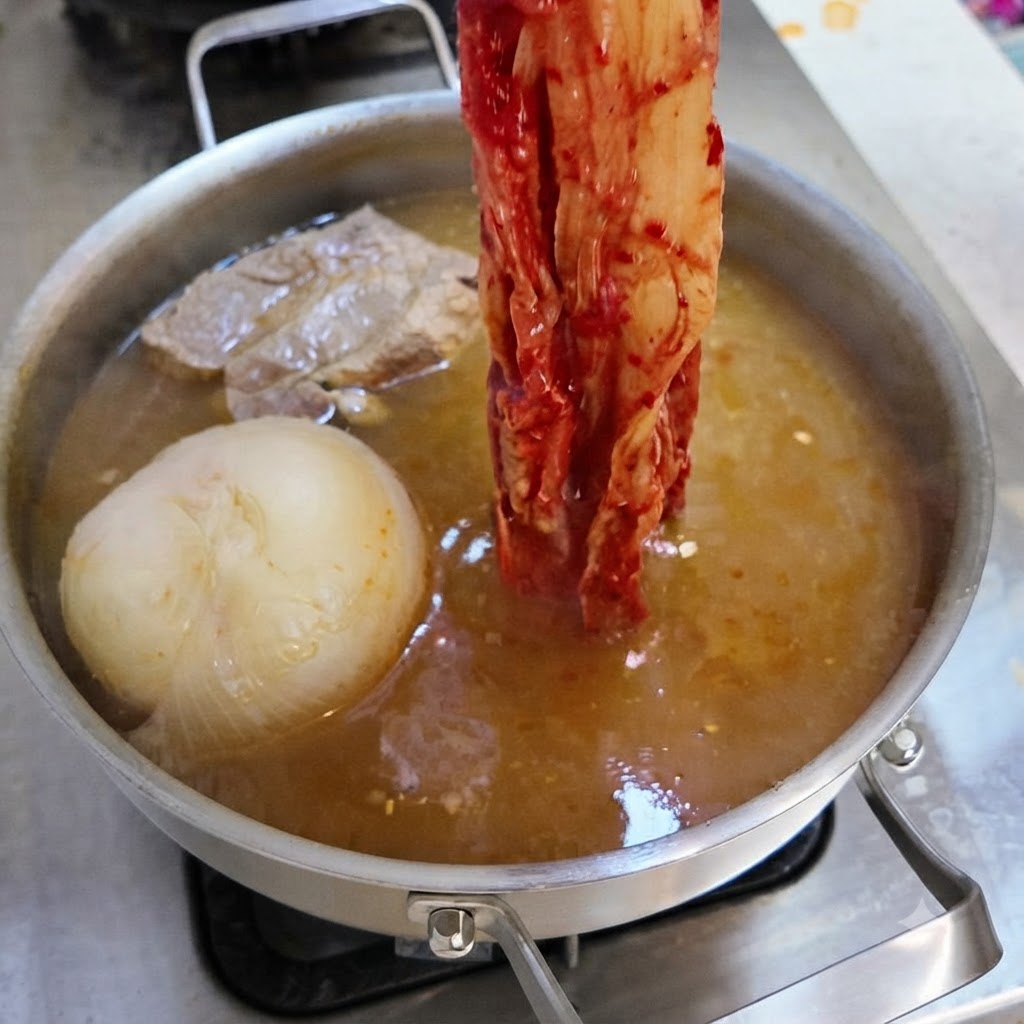
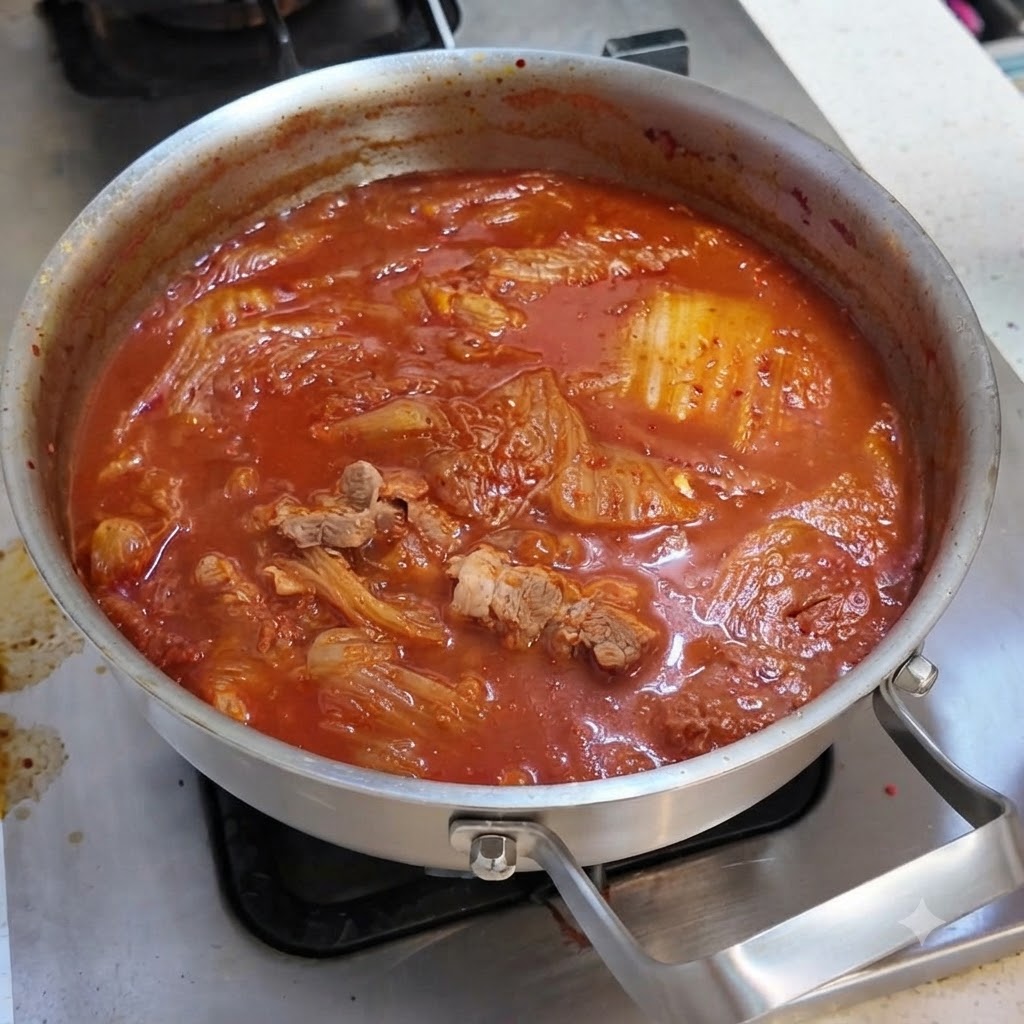
Introduce the whole fermented spicy kimchi into the simmering broth. Using well-fermented kimchi brings a deep, pleasant sourness to the hot pot base.
Tip: If your kimchi is heavily aged, it provides a stronger and more authentic sour flavor profile. - 4Season the Broth
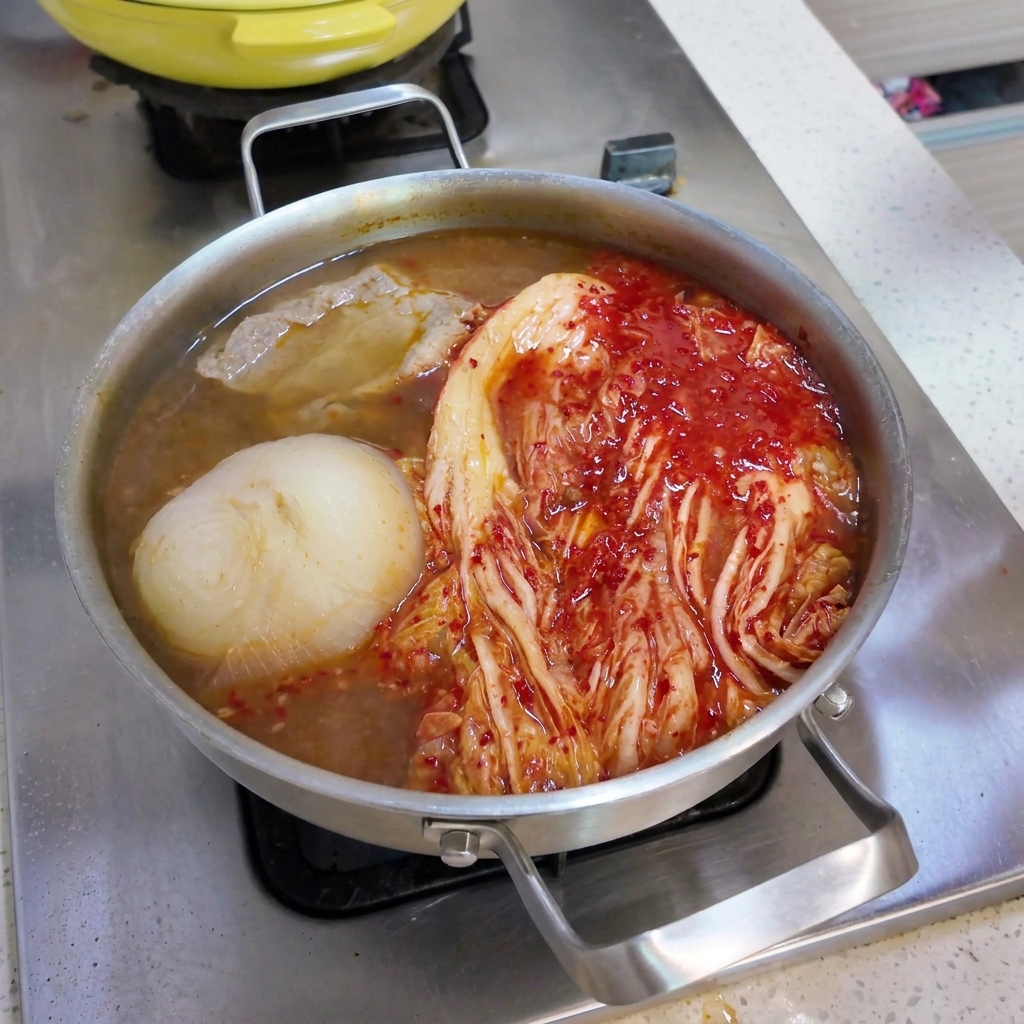
Add the chili seasoning set consisting of Korean spicy hot sauce, chili powder, chili flakes, beef powder, light soy sauce, and minced garlic into the pot to build layers of spice and umami.
Tip: Adjust the chili flakes and powder according to your preferred heat tolerance level. - 5Slice the Cooked Pork
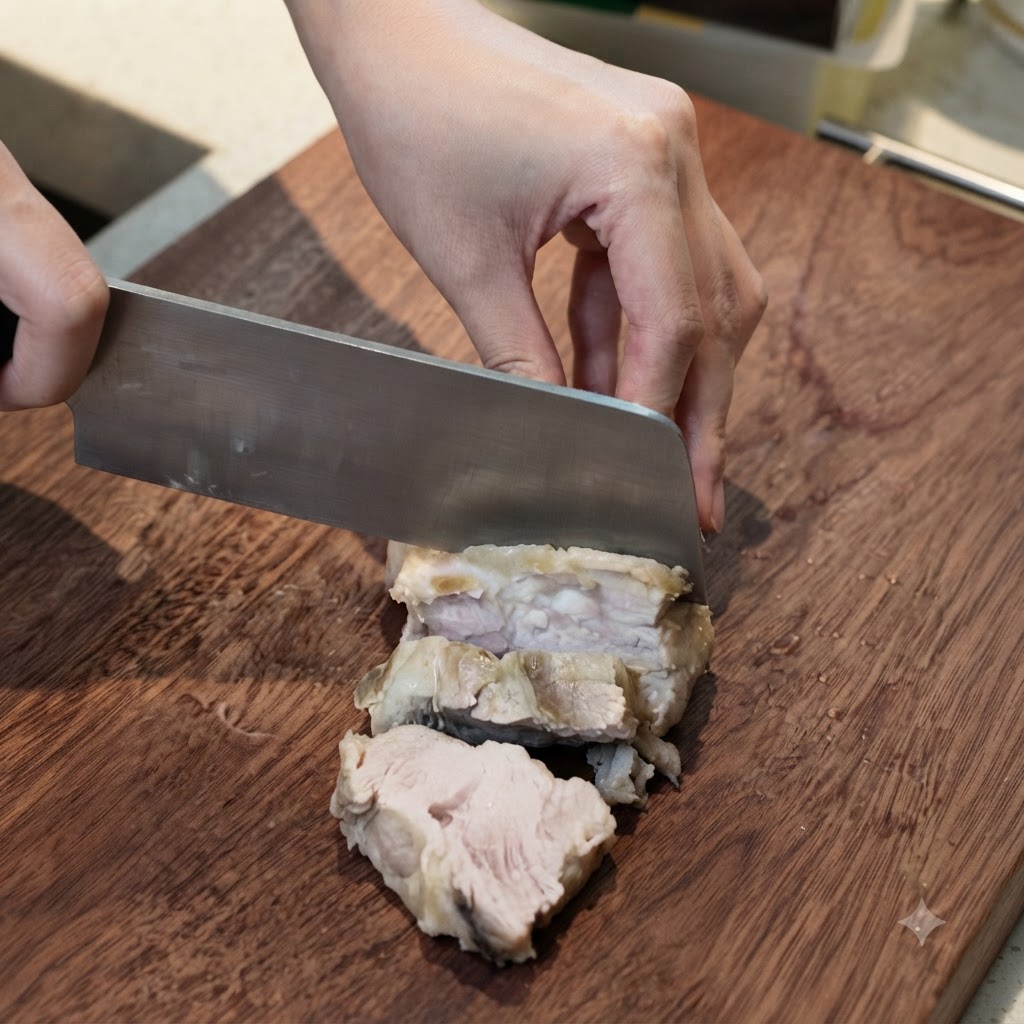
Remove the pre-cooked pork from the broth once tender, place it onto a wooden cutting board, and use a kitchen knife to slice it evenly for the hot pot side dishes.
Tip: Letting the meat rest briefly before cutting helps it hold its shape and texture. - 6Slice Luncheon Meat and Soft Tofu
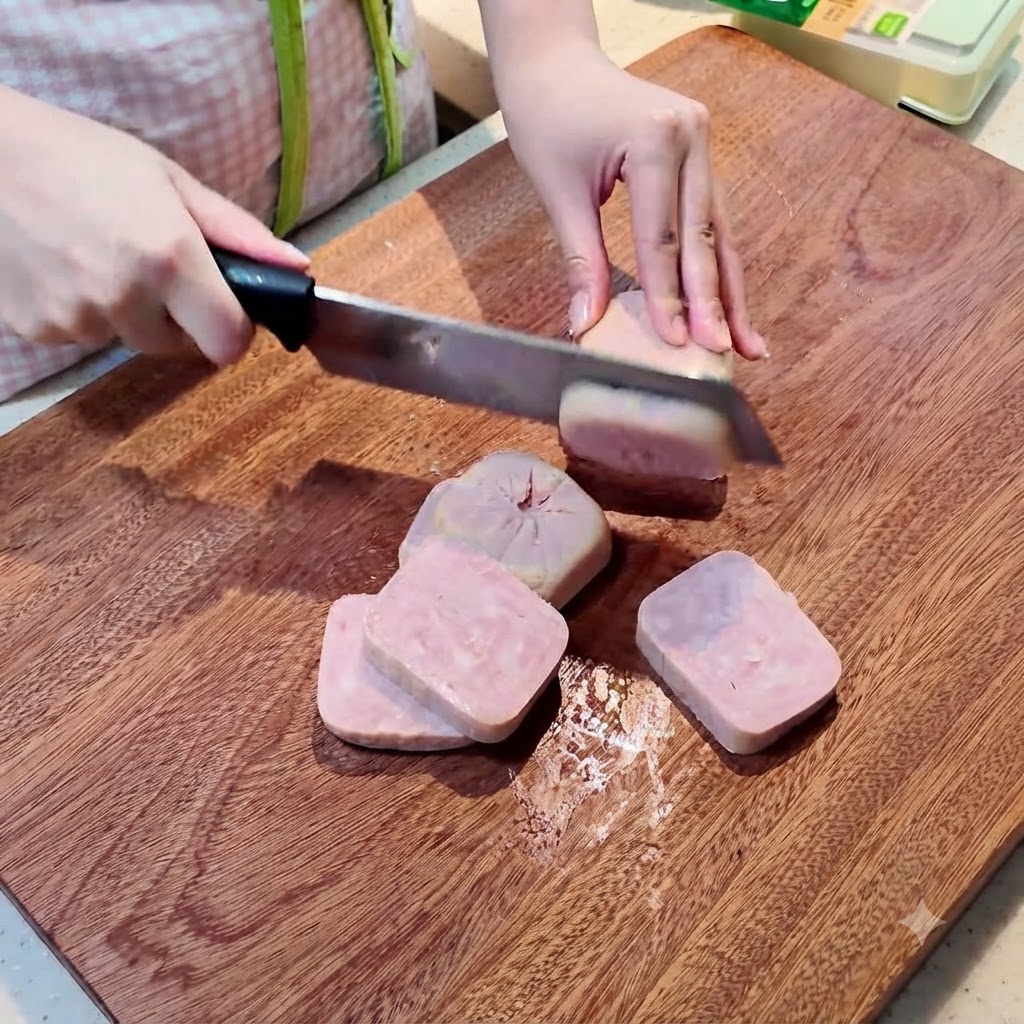
Prepare additional hot pot ingredients by slicing blocks of luncheon meat and soft tofu into uniform pieces on the wooden cutting board.
Tip: Cut the soft tofu gently to prevent it from breaking apart before it goes into the soup. - 7Cut the spicy cabbage
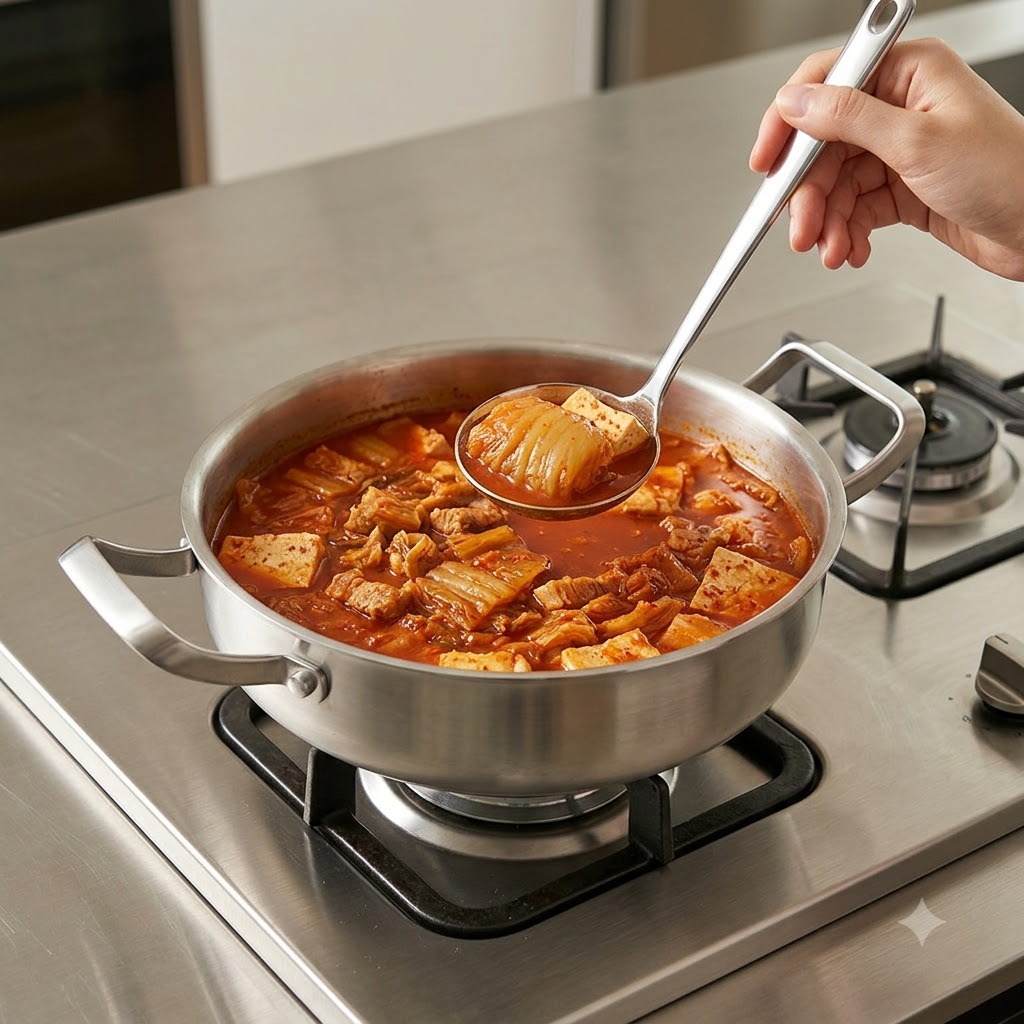
Take the fermented spicy cabbage out of the pot and use kitchen scissors to cut it into smaller, manageable sections directly inside the hot pot. Freezing the cabbage overnight beforehand can enhance the tenderness of its texture, though freshly cut works well too.
Tip: If you prefer an exceptionally soft texture, freeze the spicy cabbage overnight before adding it to the broth. - 8Add side dishes to the broth
Add a touch of white sugar and oyster sauce to balance the flavors in the bubbling red broth, then carefully arrange the prepared slices of cooked pork, luncheon meat, and soft tofu into the pot.
Tip: Add sugar and oyster sauce to mellow out the sharp acidity of the kimchi and deepen the overall flavor profile. - 9Add mushrooms and final greens
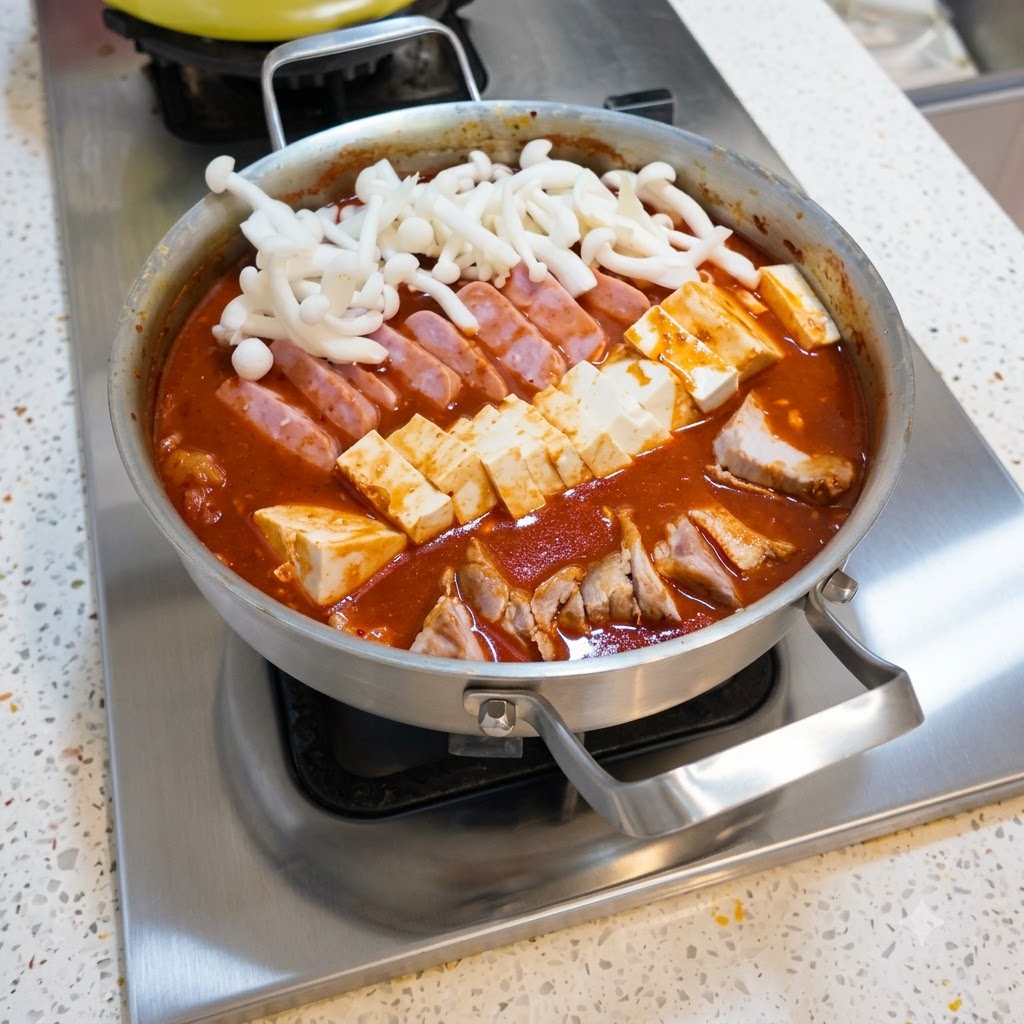
Top the arranged ingredients in the hot pot with a generous portion of white mushrooms. Cook on high heat for 5 minutes until everything is thoroughly heated through, then garnish with fresh greens and scallion flowers before serving.
Tip: Cook on high heat for the final 5 minutes so the mushrooms absorb the rich, spicy broth flavors quickly.