Traditional Tanindon (Japanese Pork
Egg Rice Bowl)
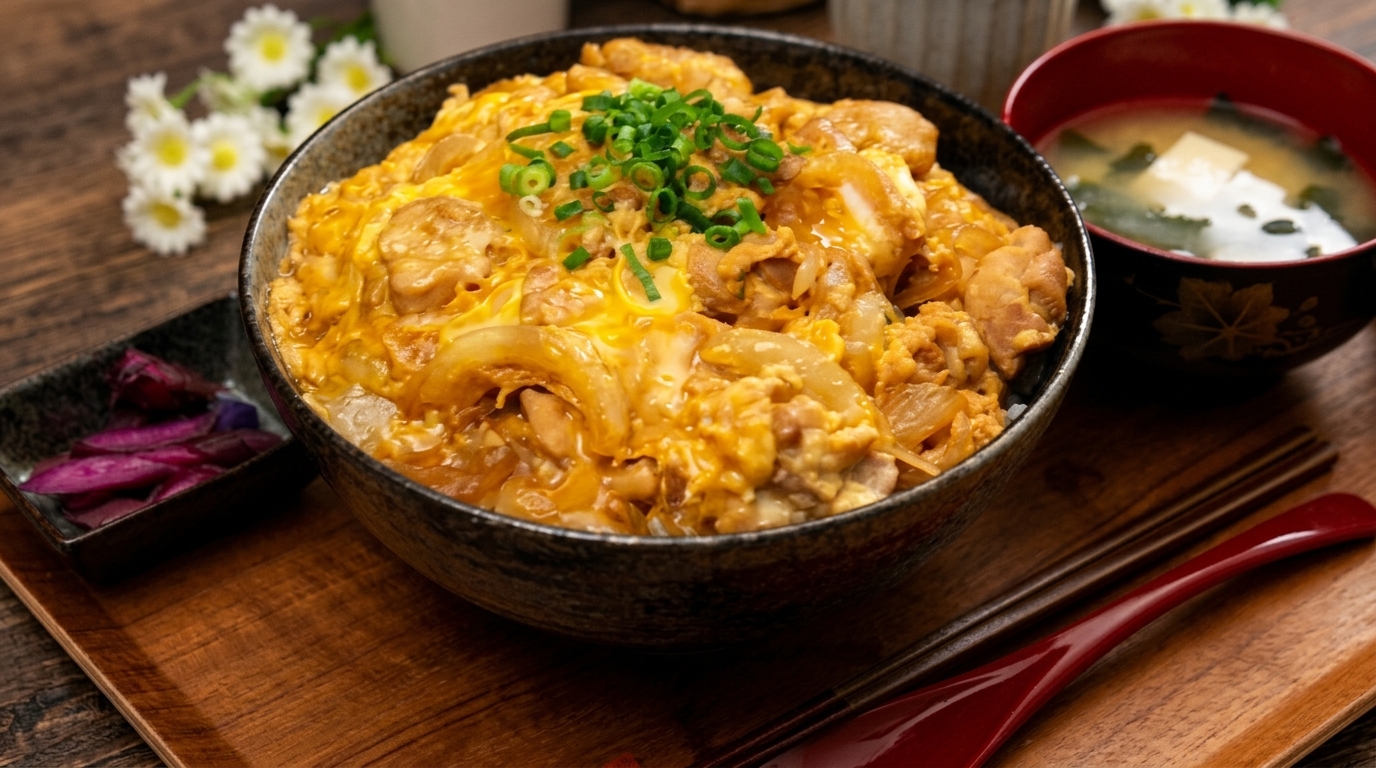
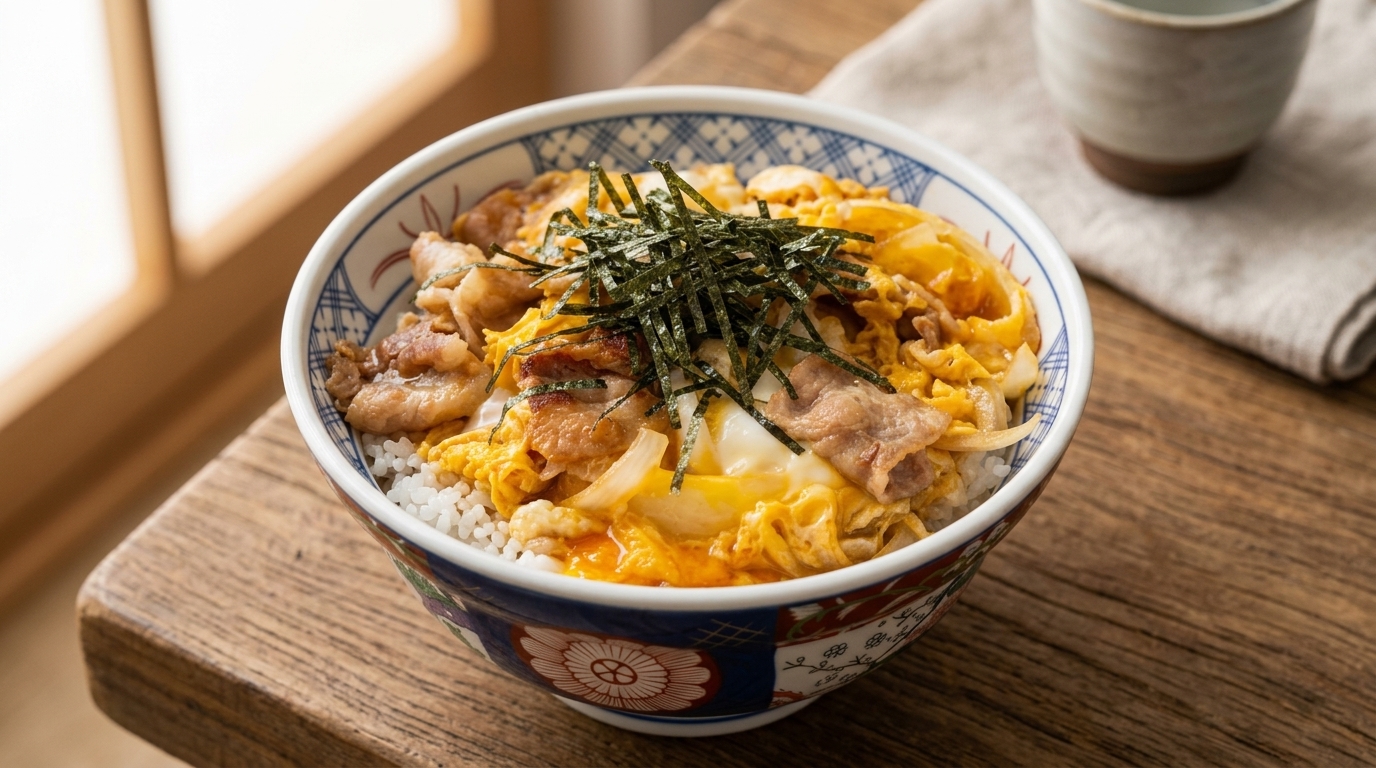
Experience the comforting flavors of Tanindon—a savory Japanese rice bowl featuring tender pork belly, sweet onions, and soft-set eggs simmered in dashi.
Tanindon is a beloved variation of the classic Oyakodon, trading chicken for rich, succulent pork. Simmered in a sweet and savory sauce of soy, mirin, and sake, the ingredients are bound together by gently steamed eggs. Its the perfect way to recreate the authentic taste of a Japanese restaurant right in your own kitchen.
Ingredients
- 200 g pork belly
- 3 eggs
- 12 white onion
- 100 ml water
- 2 tbsp soy sauce
- 2 tbsp mirin
- 2 tbsp sake
- 1 tbsp sugar
- 1 pinch dashi powder
- 2 servings cooked white rice
- to garnish shredded nori seaweed
Instructions
- 1Slice the pork belly
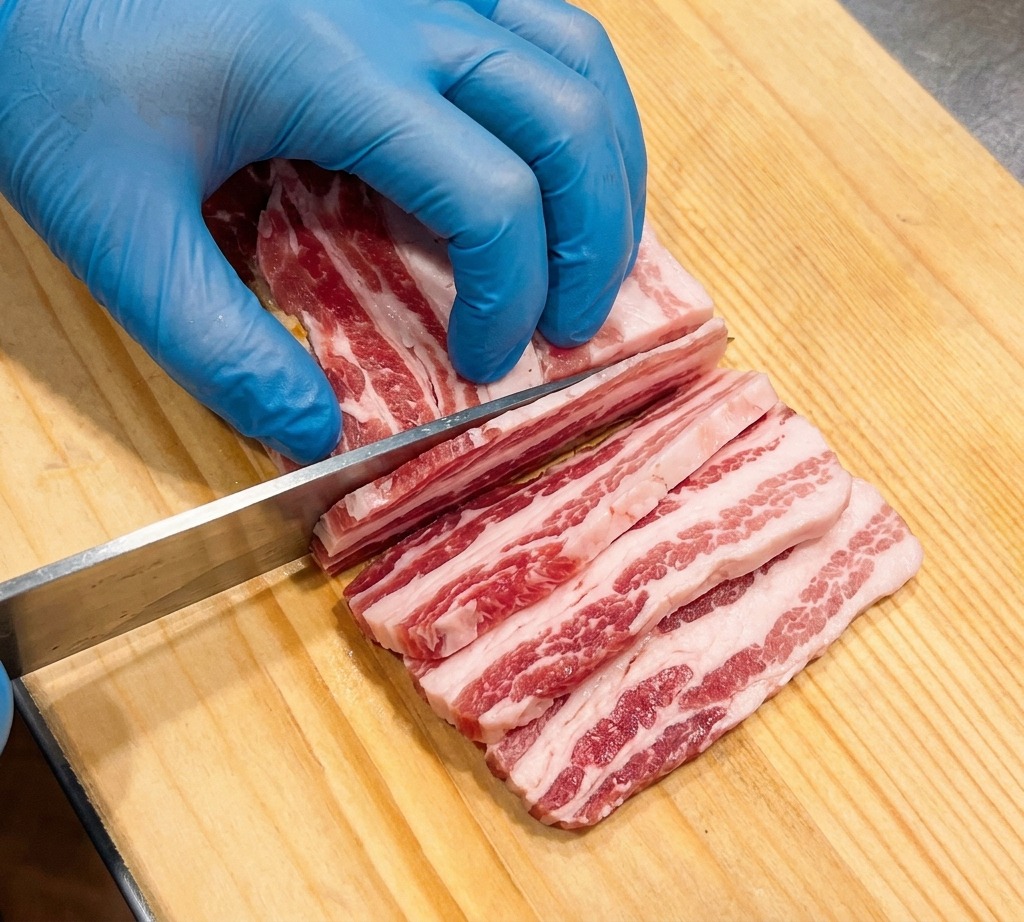
Place the raw pork belly on a clean wooden cutting board and slice it into small, bite-sized pieces. Cutting the meat into uniform strips ensures that it cooks evenly and integrates well with the onions and eggs later in the process.
Tip: If the pork is too slippery to cut, place it in the freezer for about 20–30 minutes to firm it up before slicing. - 2Beat the eggs
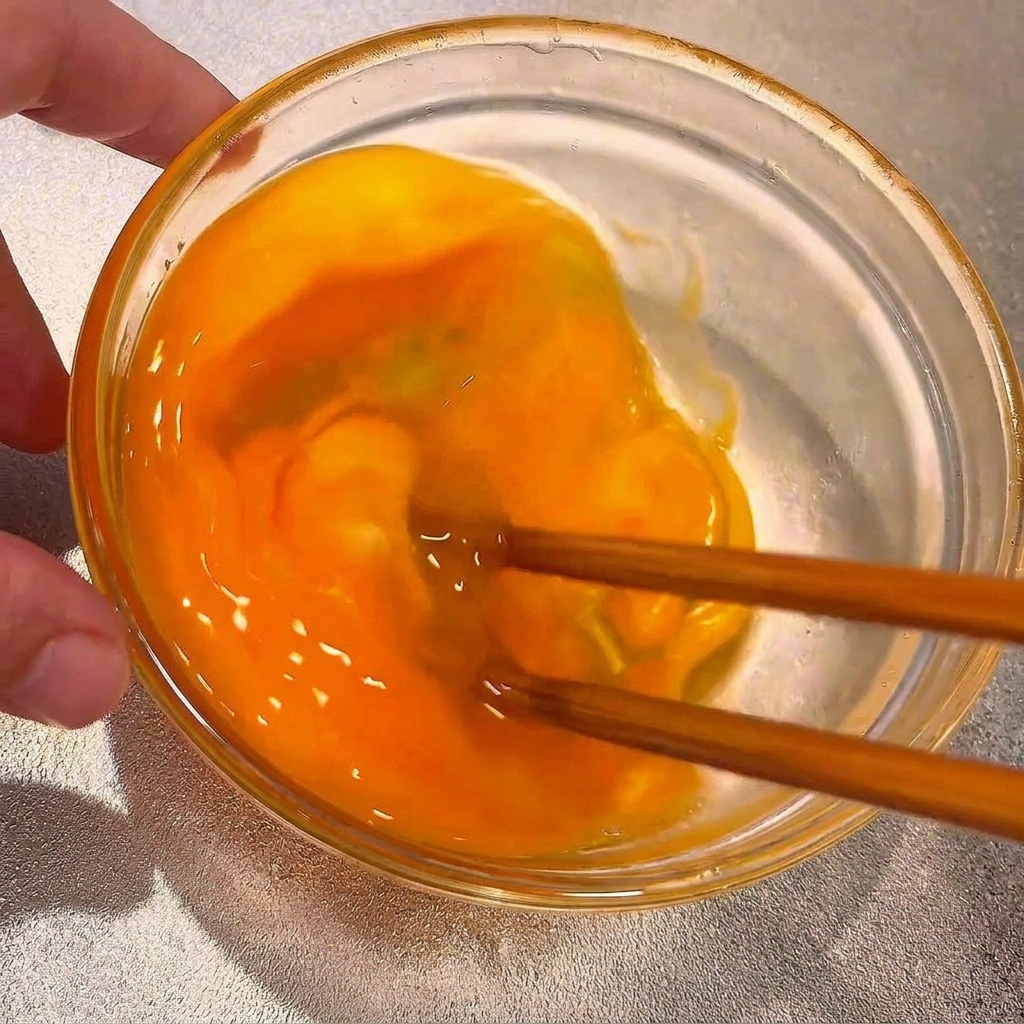
Crack three eggs into a small glass bowl and use chopsticks to lightly beat them. Aim for a coarse mix where the yolks and whites are combined but still show some streaks, as this provides a better texture when the eggs are steamed.
Tip: Do not over-mix the eggs; leaving some separation between the whites and yolks creates the fluffy, marble-like appearance typical of restaurant-style Tanindon. - 3Prep the onions
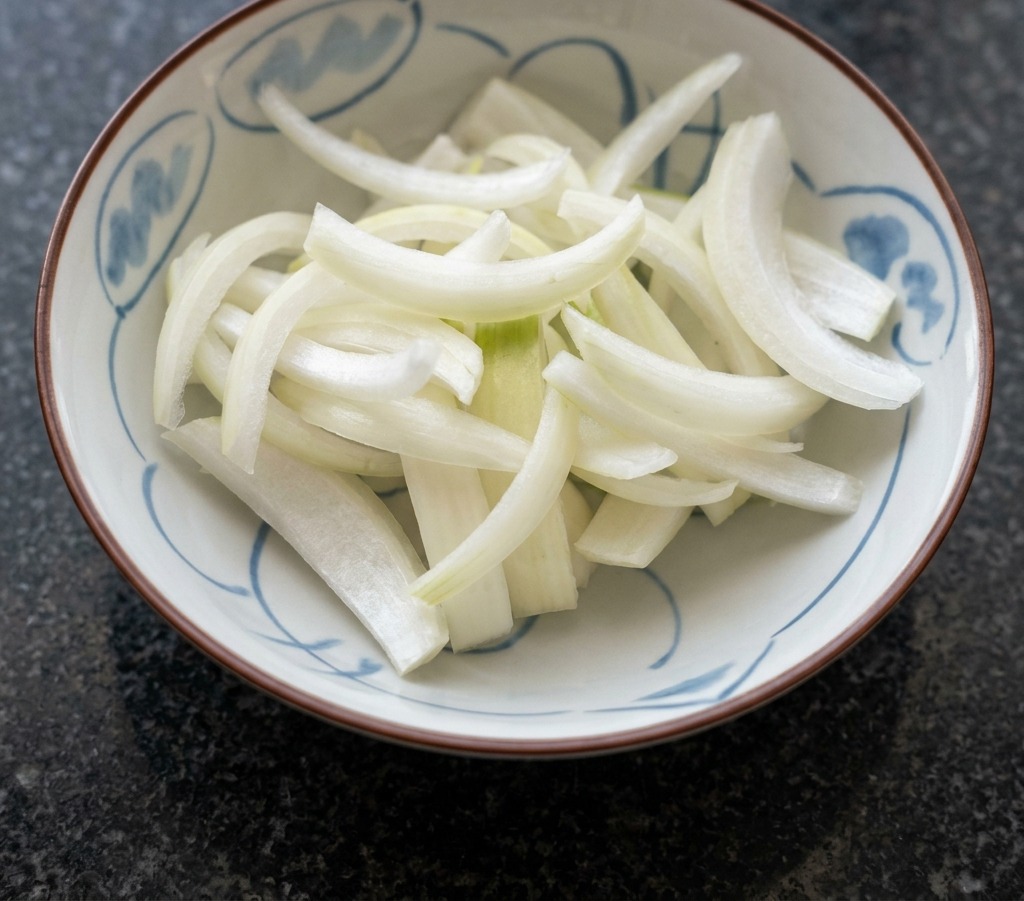
Peel a white onion and cut it into thin, uniform slices. These onions will be simmered in the sauce to provide a sweet, aromatic base that perfectly complements the savory pork belly.
Tip: Slice the onion with the grain (from root to stem) to help the pieces maintain their shape and texture during simmering. - 4Prepare the simmering sauce
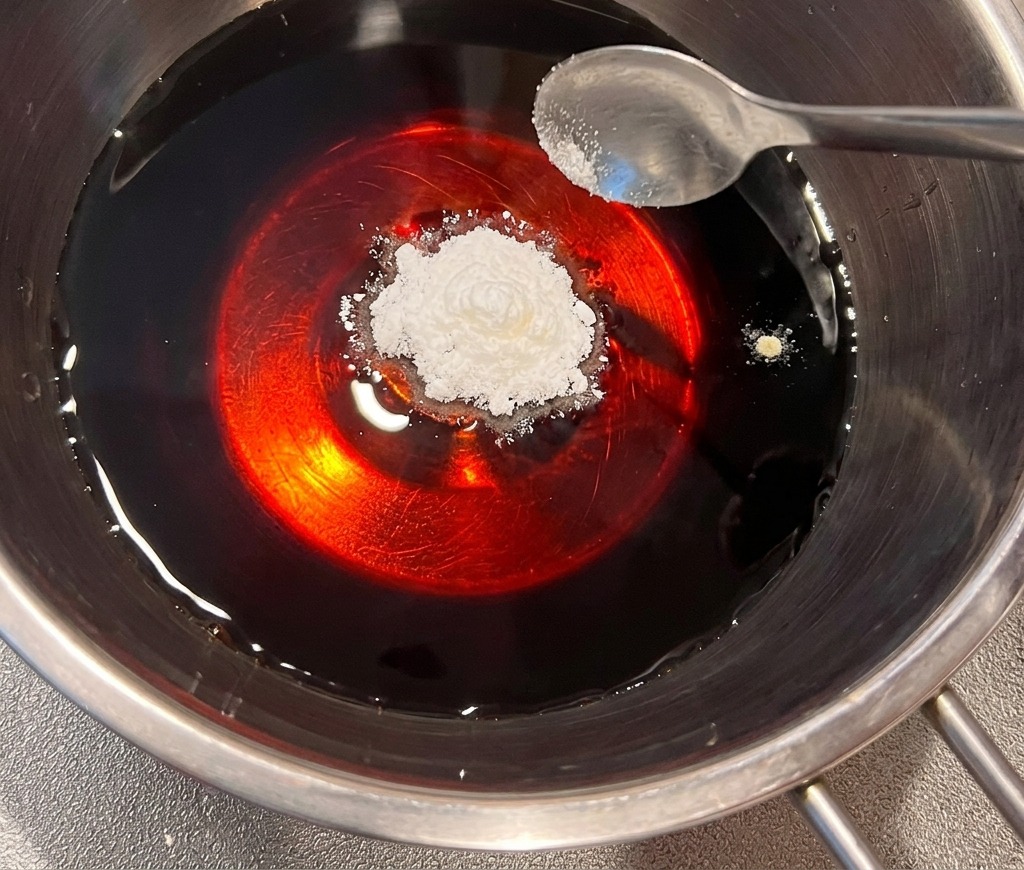
In a small pot or bowl, combine water, soy sauce, mirin, sake, and sugar. Add a pinch of dashi powder to the liquid and stir well until the dry ingredients are fully dissolved, creating a rich and balanced simmering base.
Tip: You can adjust the ratio of soy sauce and sugar at this stage to make the dish saltier or sweeter based on your preference. - 5Fry the pork belly
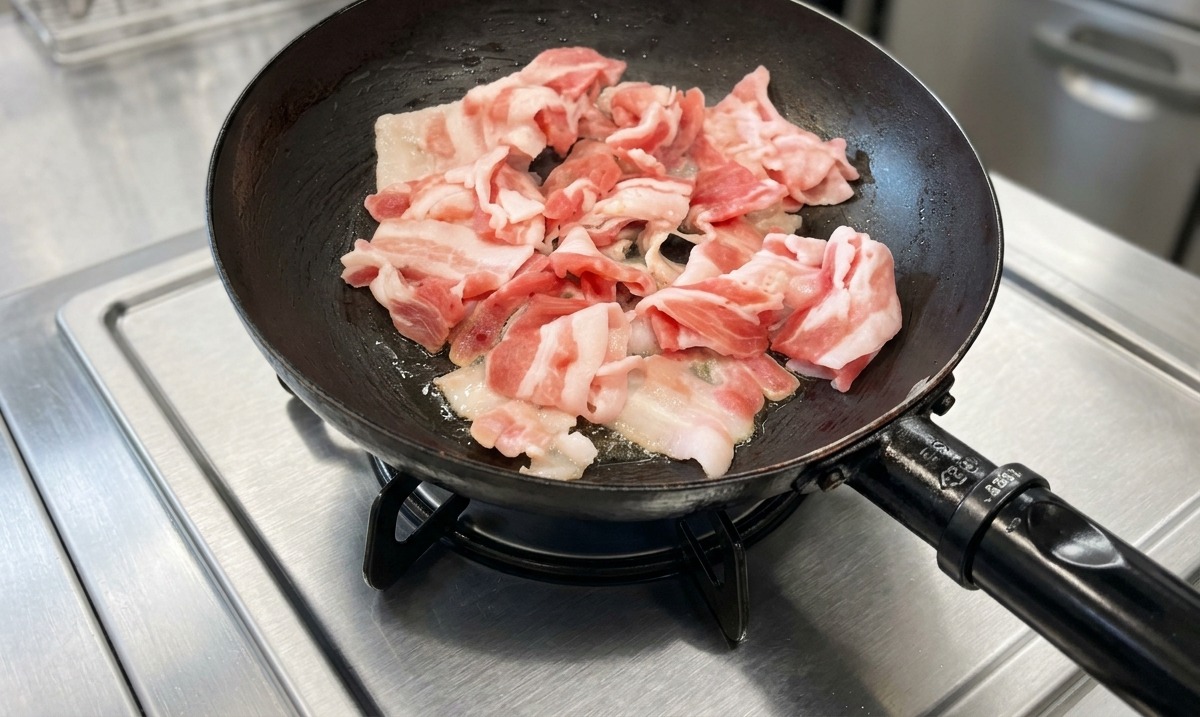
Heat a flat pan over medium heat and add the pork belly slices. Fry the meat, stirring occasionally, until the pieces are fully cooked through and the edges begin to turn a light golden-brown color.
Tip: Allow the pork belly to render its own fat in the pan; this fat will add significant flavor to the onions and sauce in the next steps. - 6Simmer with onions and sauce
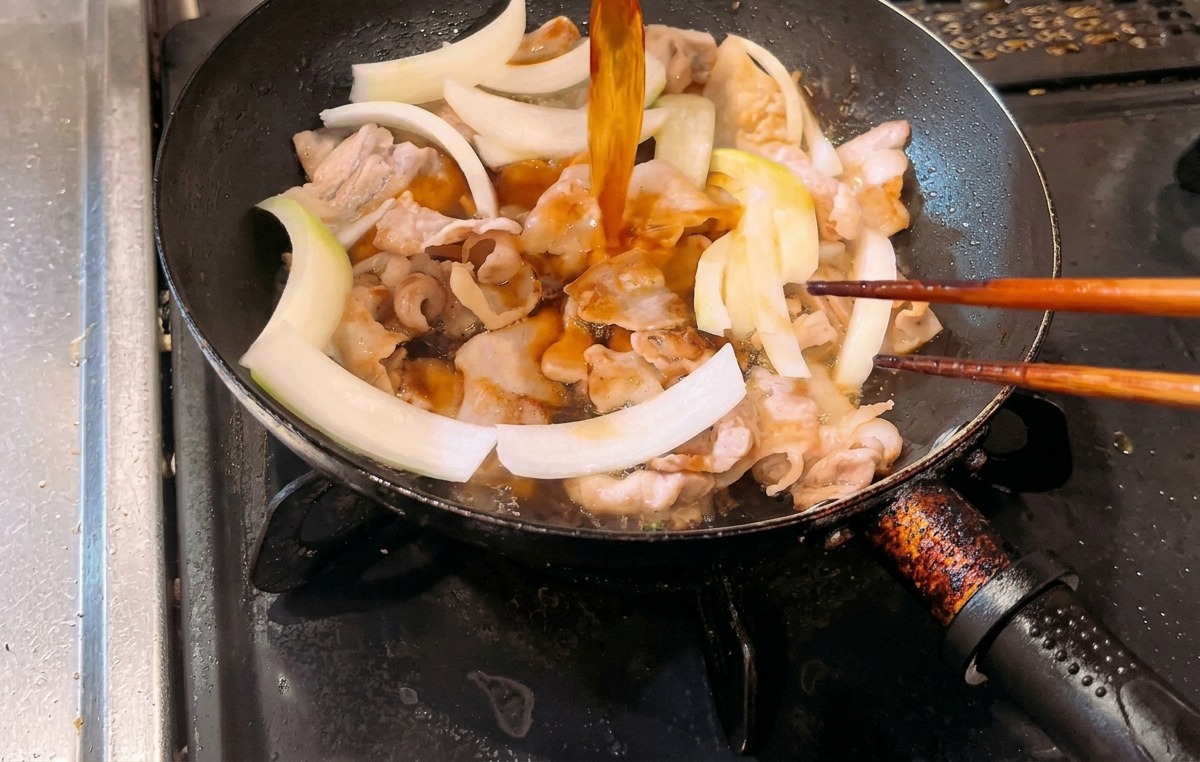
Add the sliced onions to the pan with the fried pork. Pour the prepared simmering sauce over the ingredients and bring the liquid to a gentle boil. Let it simmer for about two minutes so the meat and onions can absorb the savory flavors.
Tip: Spread the onions out evenly in the pan to ensure they soften at the same rate while simmering in the sauce. - 7Add the first layer of egg
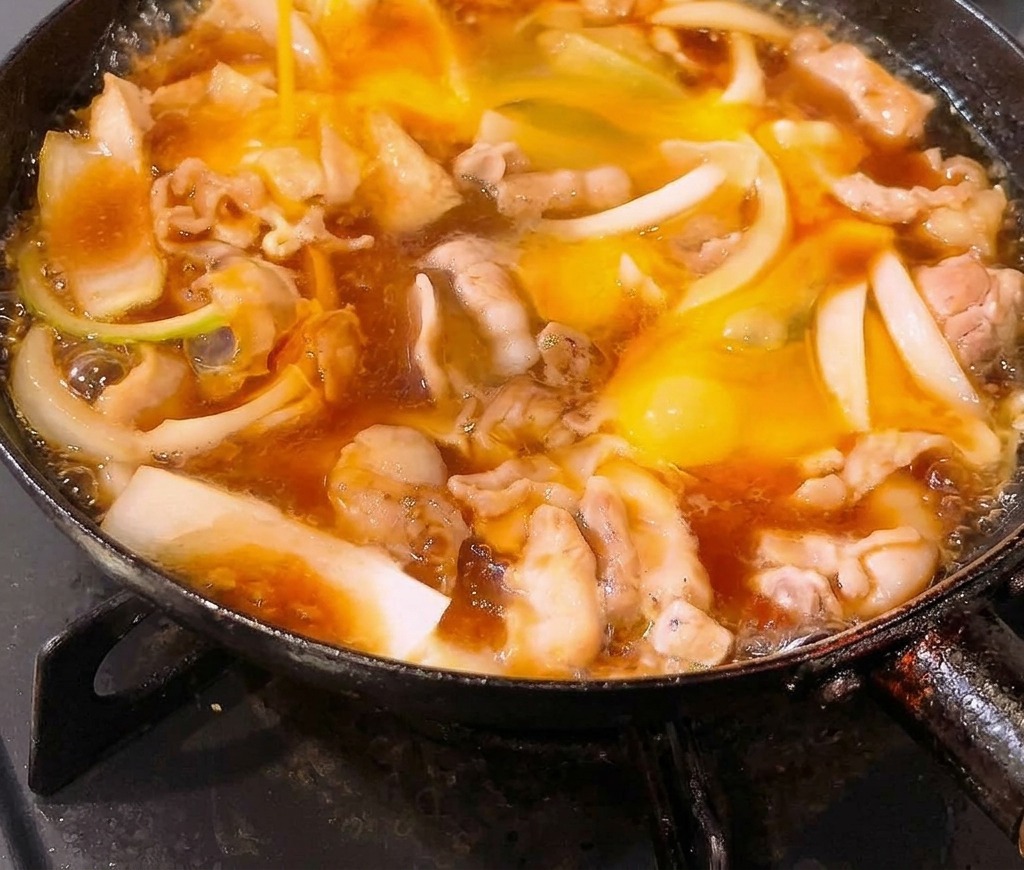
Once the pork belly and onions have simmered in the savory sauce, pour half of the beaten egg mixture into the pan. Try to distribute the egg evenly across the surface. This first layer will cook through and form a stable, flavored base for the dish.
Tip: Pour the egg in a steady circular motion starting from the center and moving outwards to ensure even coverage across the pan. - 8Steam with an Otoshibuta
Place a specialized cooking paper lid, known as an otoshibuta, over the pan. Simmer on medium heat for one minute. This allows the eggs to steam gently while the pork belly fully absorbs the savory flavors of the dashi broth.
Tip: A paper drop lid, or otoshibuta, helps keep the ingredients submerged in the sauce while allowing steam to escape, resulting in a more flavorful and evenly cooked dish. - 9Pour in the remaining egg
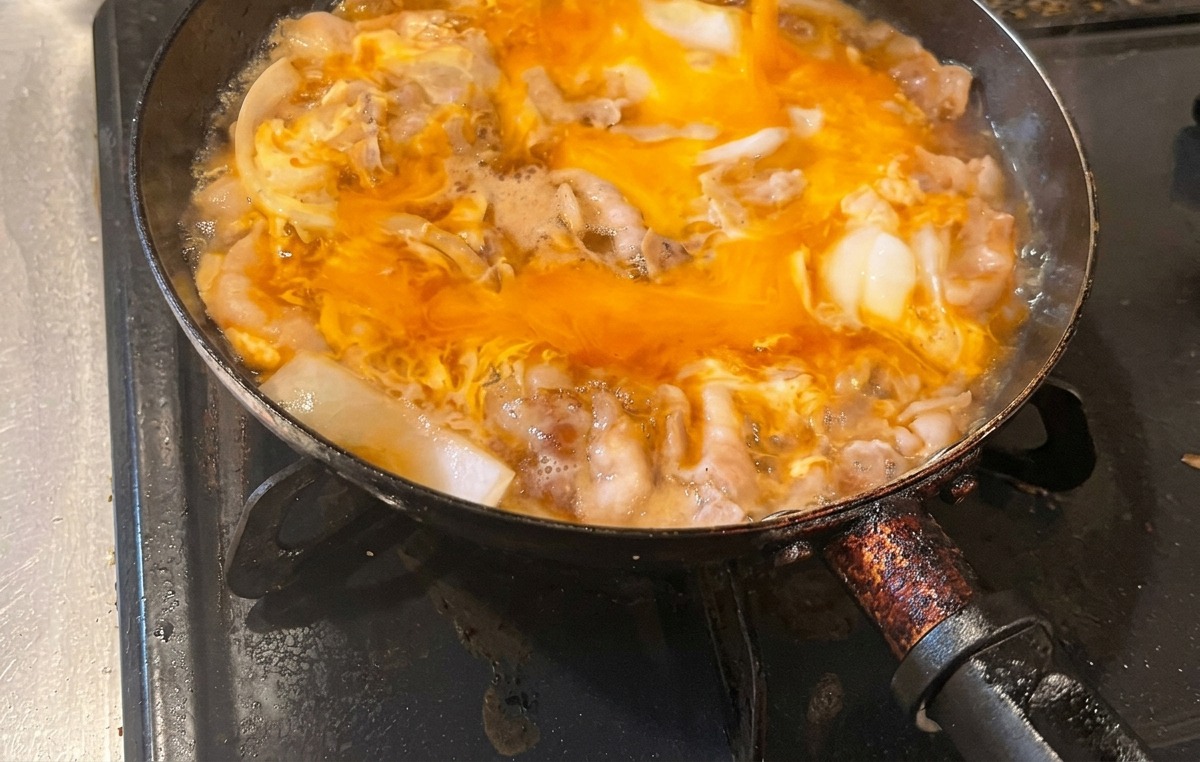
After steaming the first layer for about a minute, pour the remaining beaten egg mixture over the top. This two-step process ensures that the Tanindon has a variety of textures, ranging from fully set egg at the bottom to a soft, creamy layer on top.
Tip: Dont over-beat the eggs before pouring; seeing distinct streaks of yellow and white creates a more authentic, professional look. - 10Final simmer until set
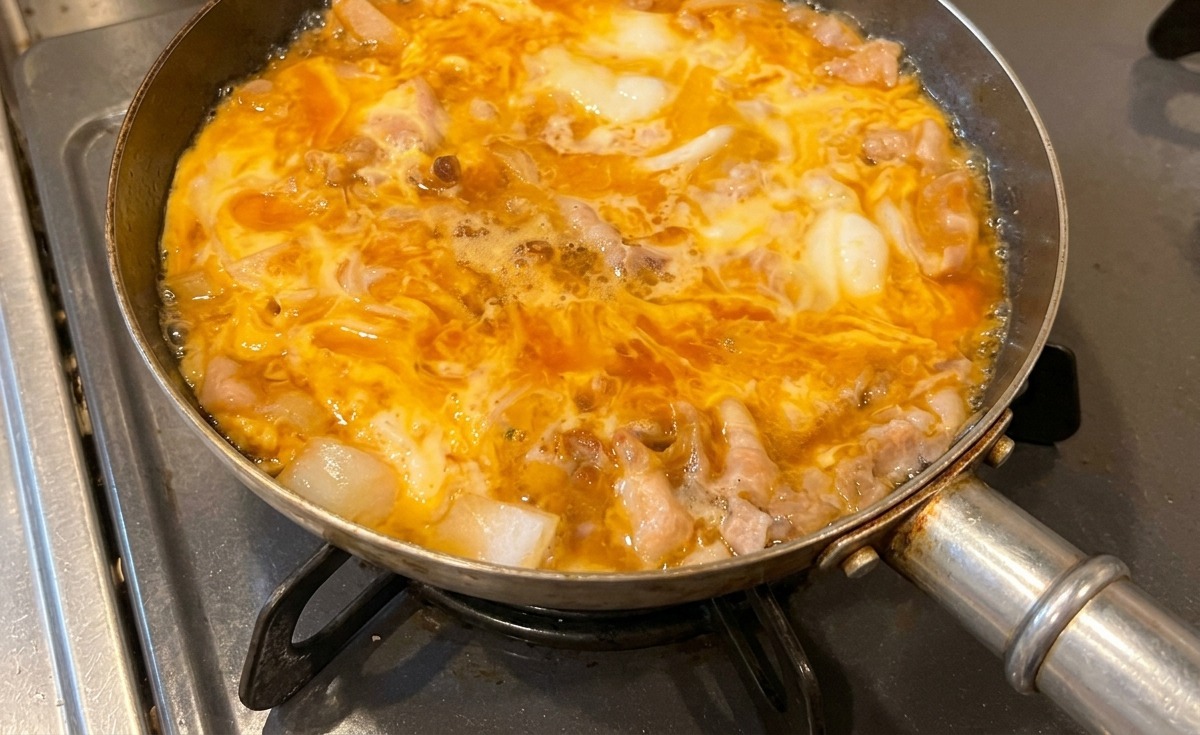
Cover the pan once more and let it simmer for another minute over medium heat. The goal is for the second layer of egg to become soft and opaque while remaining tender and moist. This creates a succulent topping for your rice bowl.
Tip: If you prefer your eggs slightly runny, turn off the heat as soon as the whites turn opaque but the yolks still appear wet.