68% Hydration Modern Neapolitan Pizza
Truffle and Foie Gras Sauce
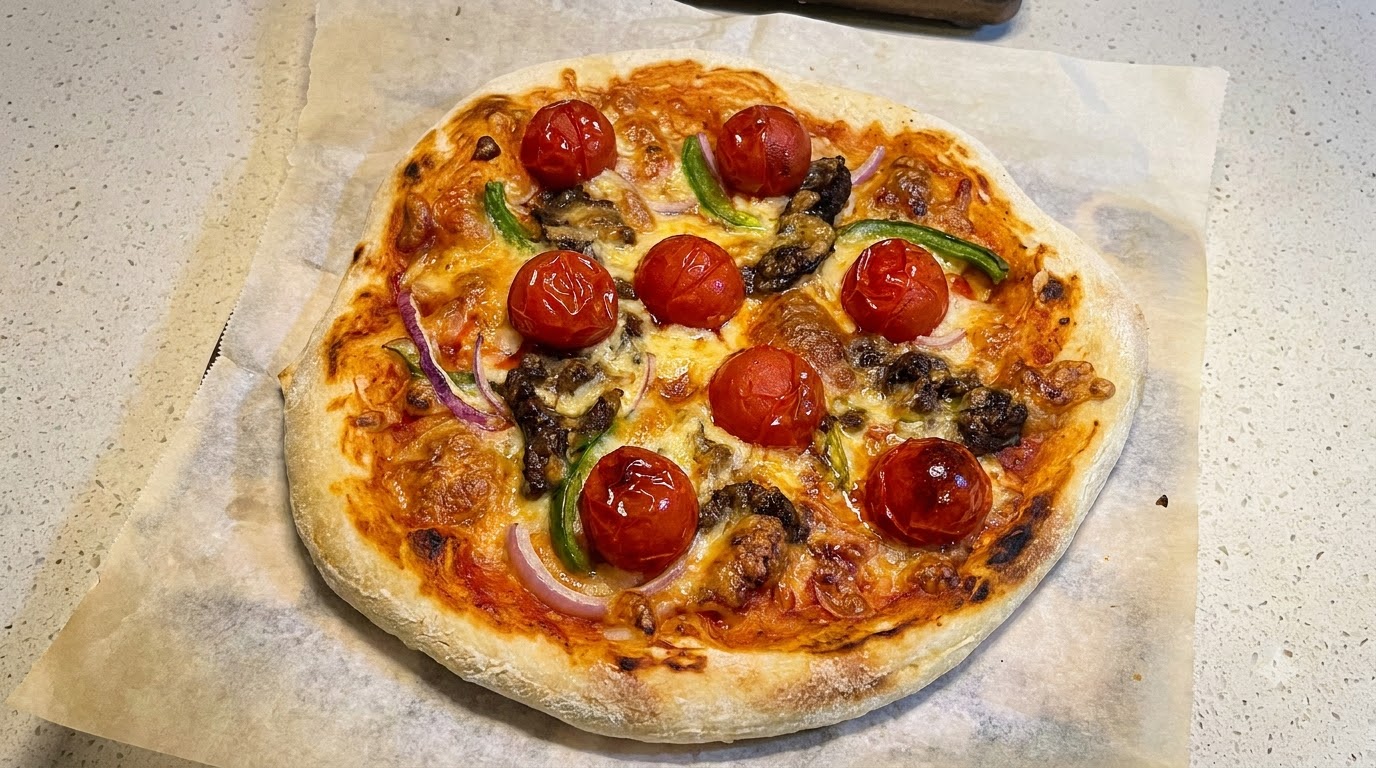
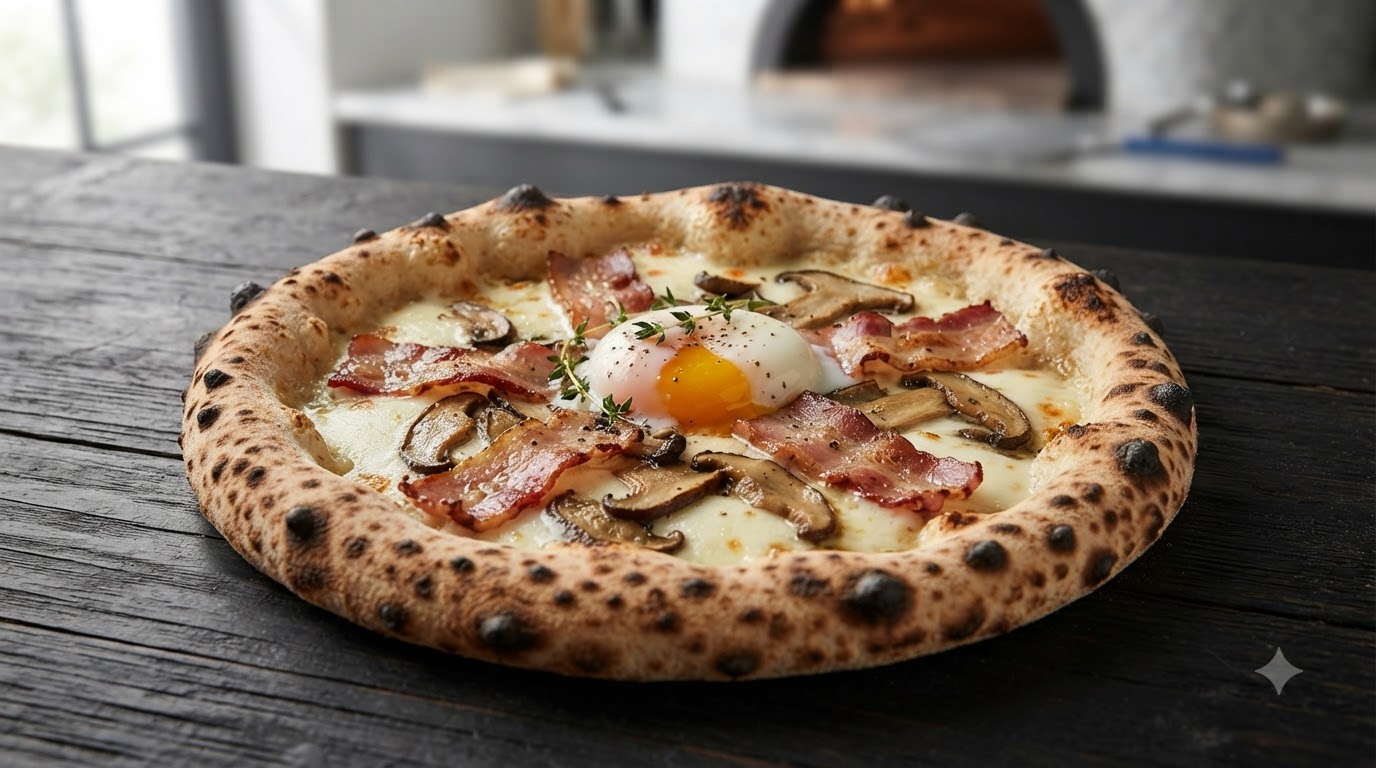
A masterclass in modern Neapolitan pizza featuring a 68% hydration poolish dough, topped with a luxurious black truffle foie gras sauce, thick-cut bacon, porcini mushrooms, and a soft-boiled egg.
Modern Neapolitan pizza pushes traditional boundaries by incorporating advanced dough hydration techniques and gourmet toppings. Utilizing a 48-hour cold fermentation poolish method yields an extraordinarily light, airy, leopard-spotted crust with exceptional digestibility. Paired with rich truffle and foie gras sauce and earthy mushrooms, this artisanal creation balances classic Neapolitan texture with avant-garde flavor profiles.
Ingredients
- 5600 g Caputo 00 flour
- 32 g dry yeast
- 128 g salt
- 3040 g water
- 4800 g poolish
- to taste black truffle foie gras sauce
- to taste French thick-cut bacon
- to taste mozzarella cheese
- to taste porcini mushrooms
- 1 soft-boiled egg
- to taste Parmesan cheese
- to taste chives
Instructions
- 1Add Caputo 00 flour
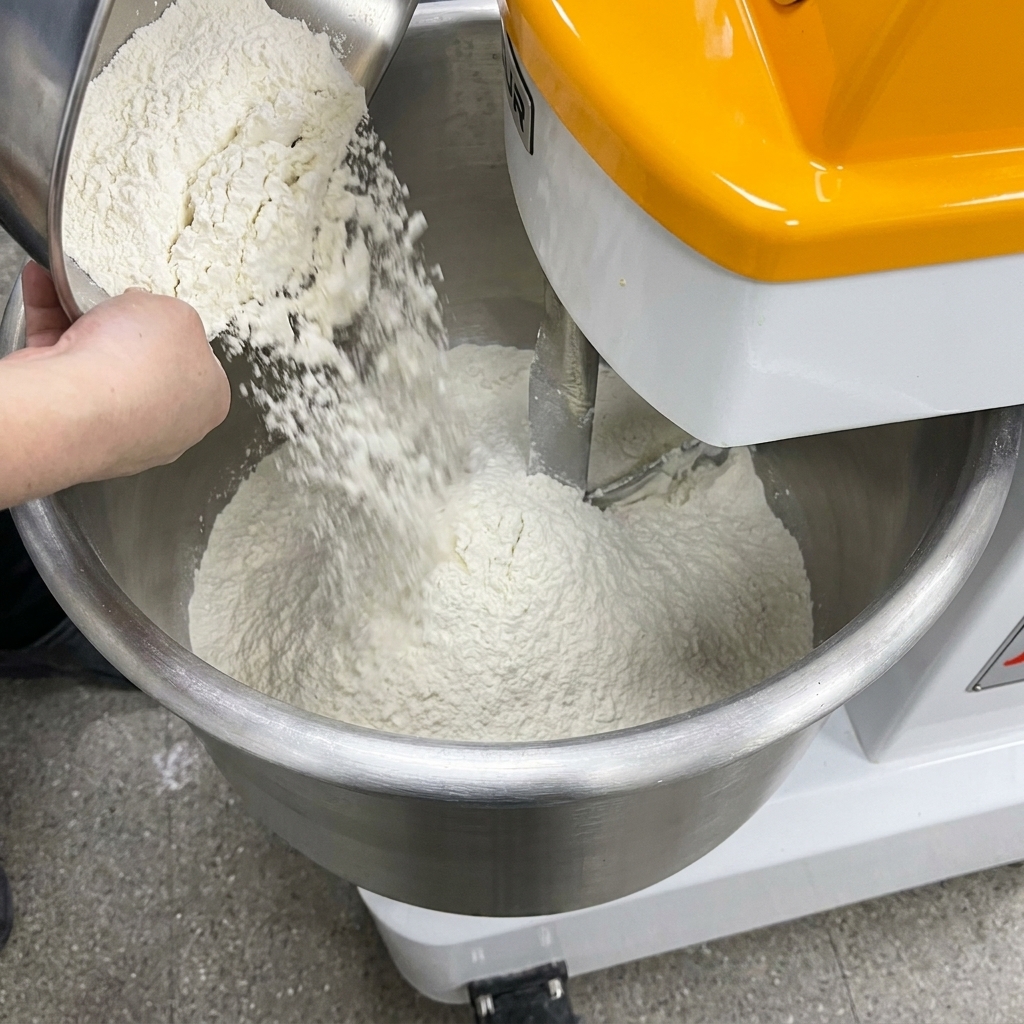
Add the Caputo 00 flour into the clean and dry dough mixer bowl as the foundation for the high-hydration Neapolitan pizza dough.
Tip: Ensure the mixer bowl is clean and dry before adding the flour. - 2Pour ice water and yeast
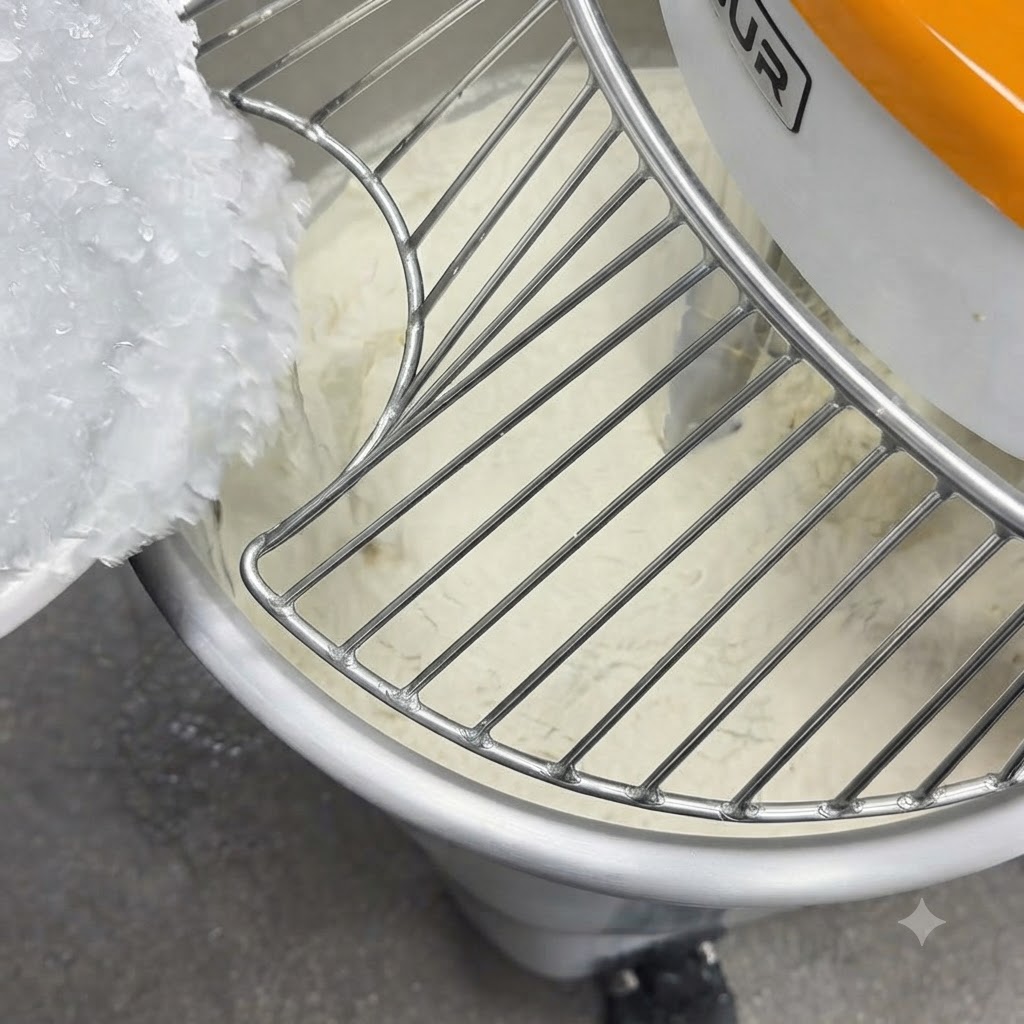
Add the dry yeast to the flour and mix evenly, then pour in two-thirds of the measured ice water and mix until the ice completely melts to control dough temperature.
Tip: Using ice water helps control the dough temperature during the mixing process. - 3Incorporate the poolish
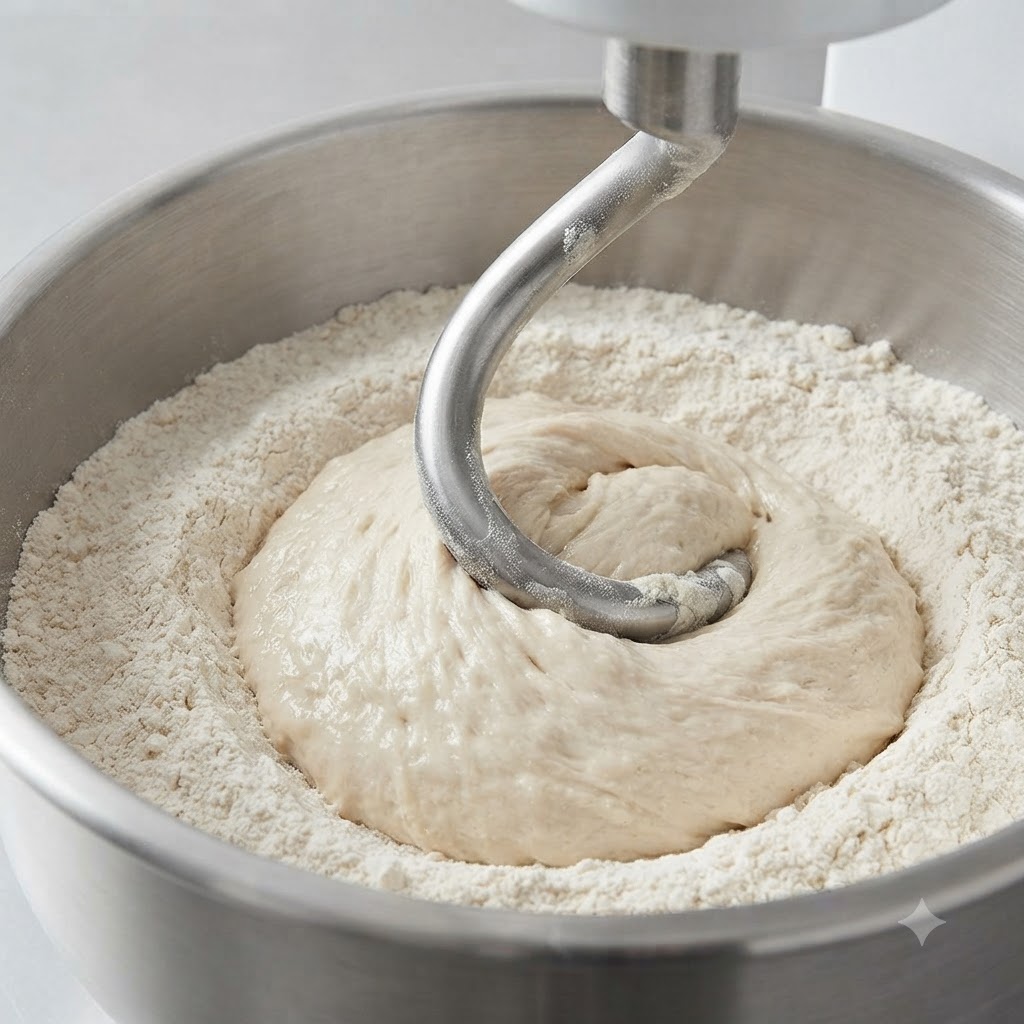
Add the prepared poolish into the mixer bowl and run the machine at low speed to form a unified dough base.
Tip: The poolish adds complex flavor and better elasticity to the Neapolitan pizza crust. - 4Add remaining water
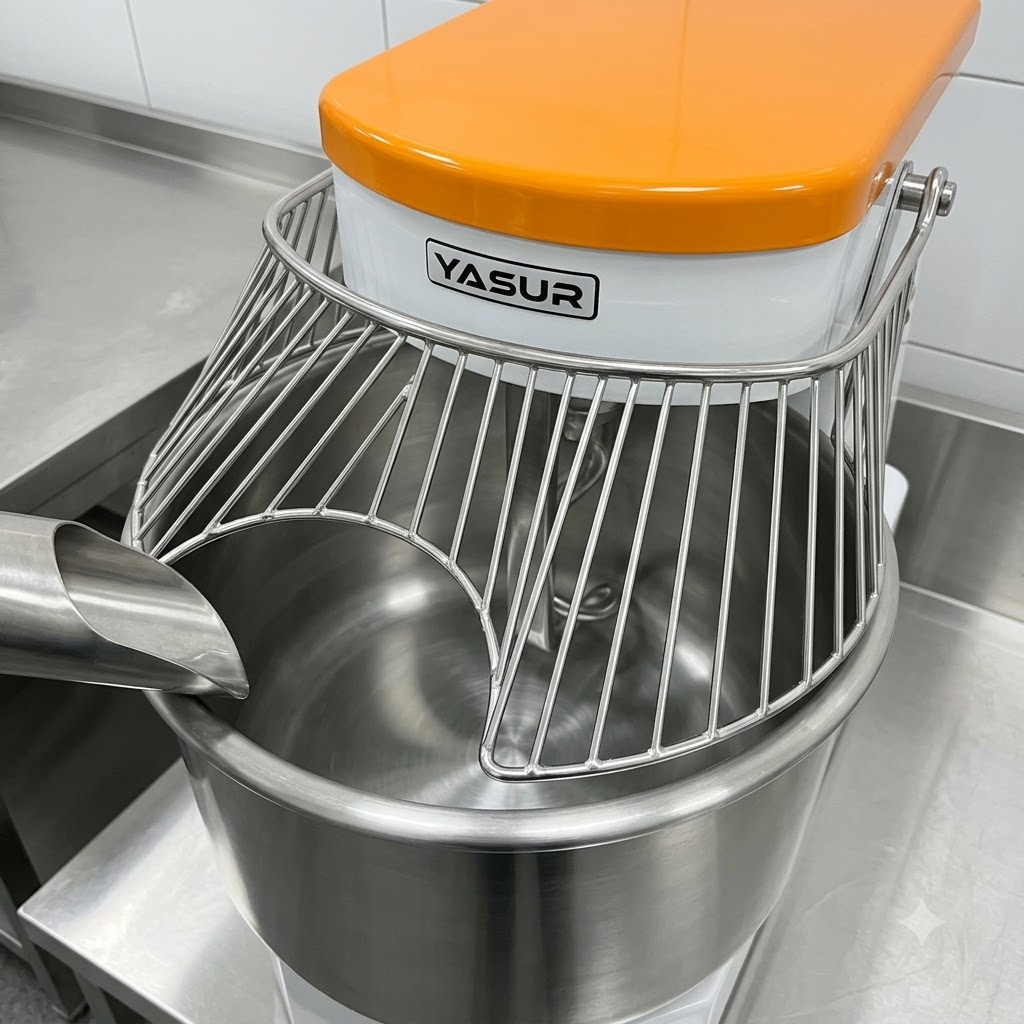
Slowly pour in the remaining water while the mixer continues to run, ensuring gradual absorption without overstraining the developing gluten network.
Tip: Gradual water addition ensures proper hydration without breaking the developing gluten network. - 5Add salt and finish mixing
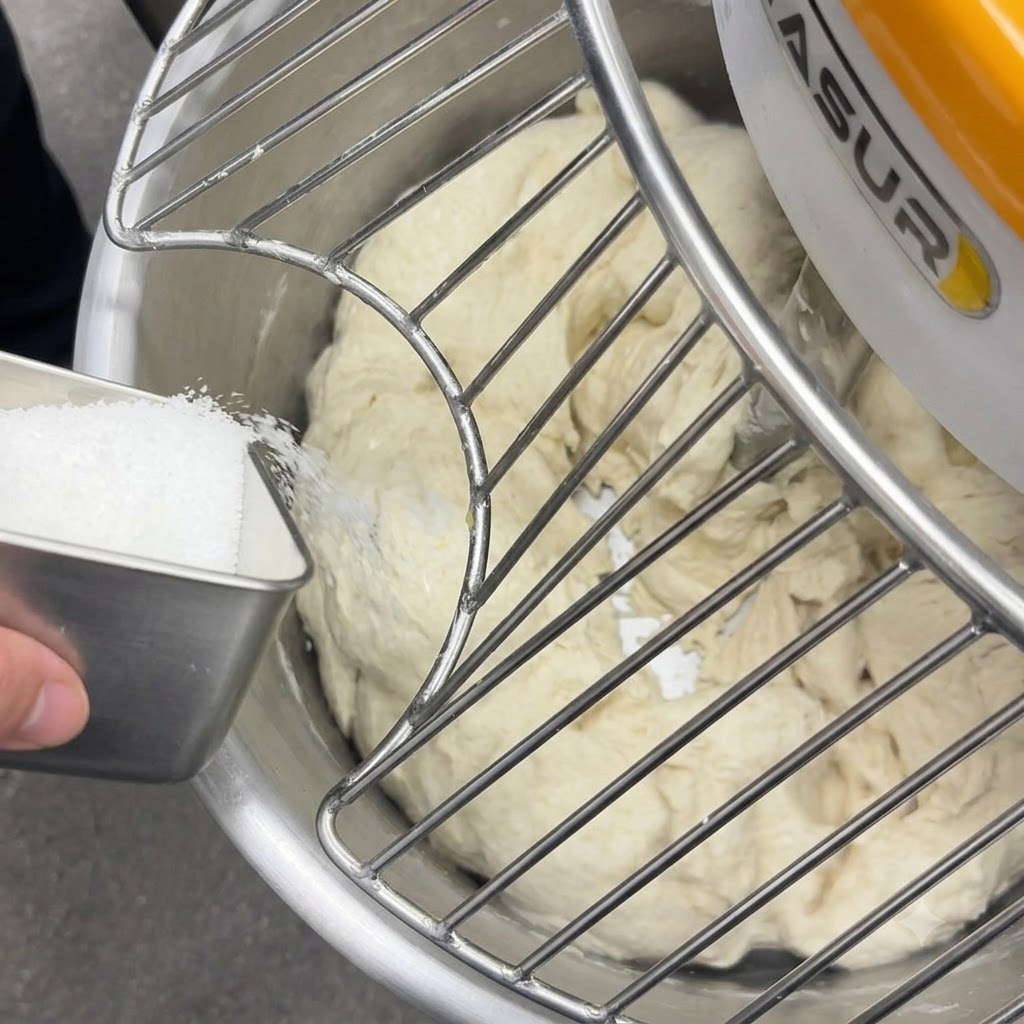
Add the salt into the mixer bowl while mixing, then increase to high speed and incorporate the final bit of ice water until reaching 90 percent gluten development.
Tip: Add salt after the initial water has been absorbed for optimal gluten development. - 6Perform the windowpane test
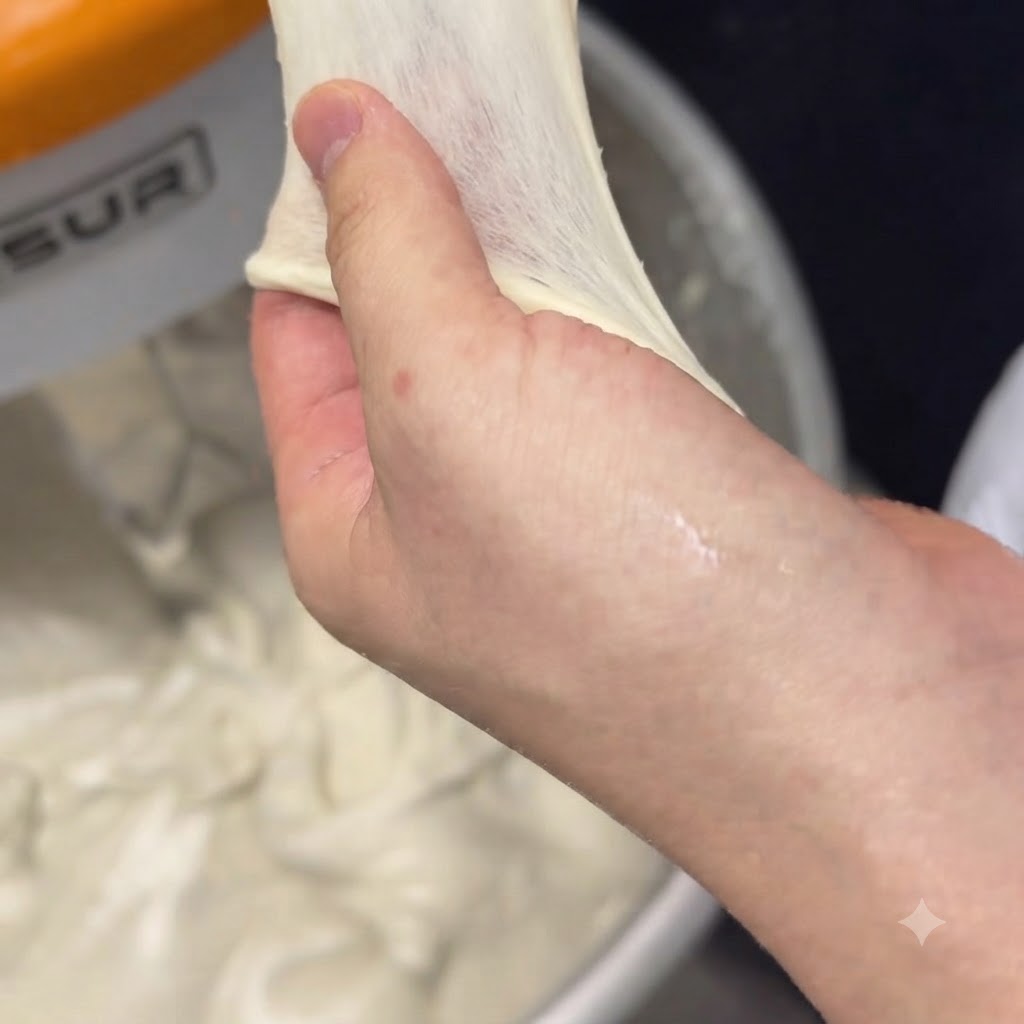
Take a sample of the dough and gently stretch it between your fingers to verify that it achieves great extensibility and passes the windowpane test.
Tip: A successful windowpane test confirms the dough is smooth, elastic, and ready for fermentation. - 7Round the dough into a smooth ball
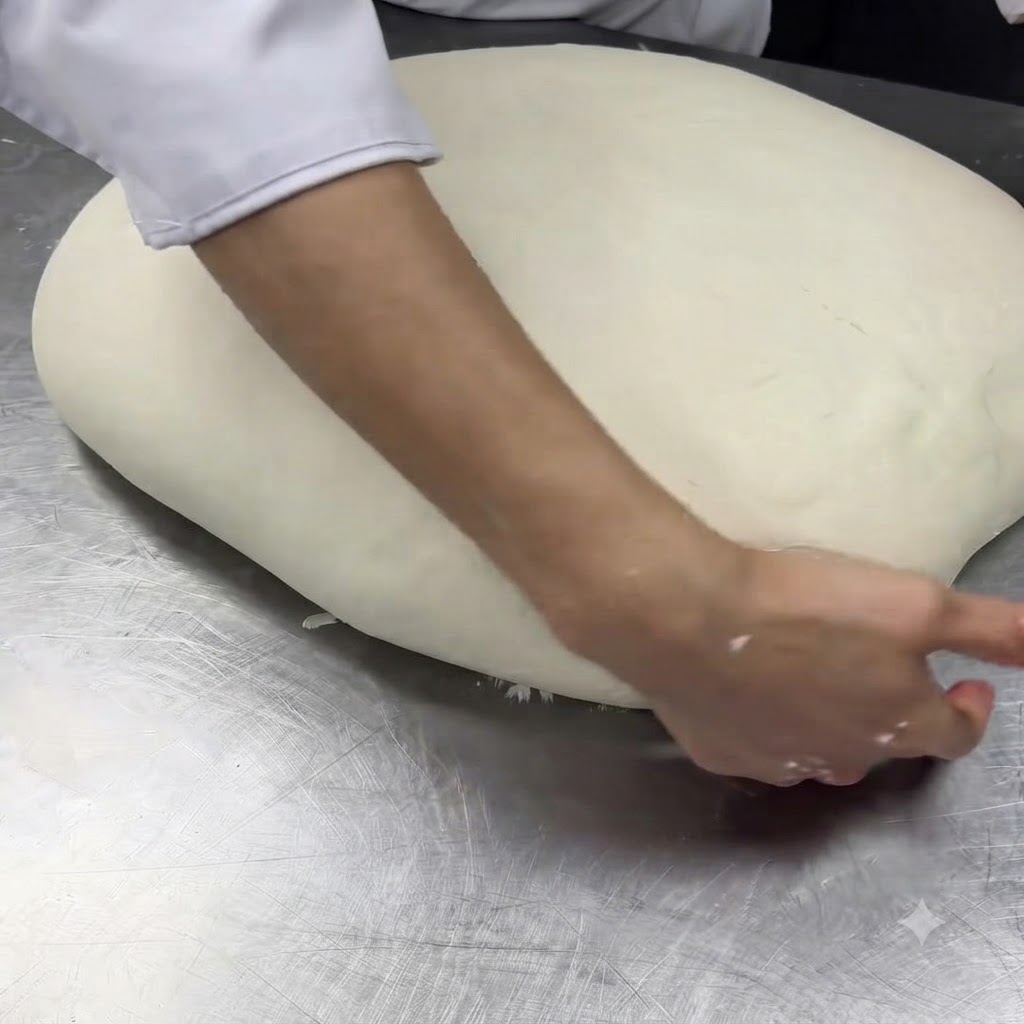
Shape the dough into a smooth, taut ball on the work surface, brush lightly with olive oil, cover with plastic wrap, and let it rest.
Tip: Ensure the surface of the dough ball is taut to help retain gas during fermentation. - 8Portion the dough
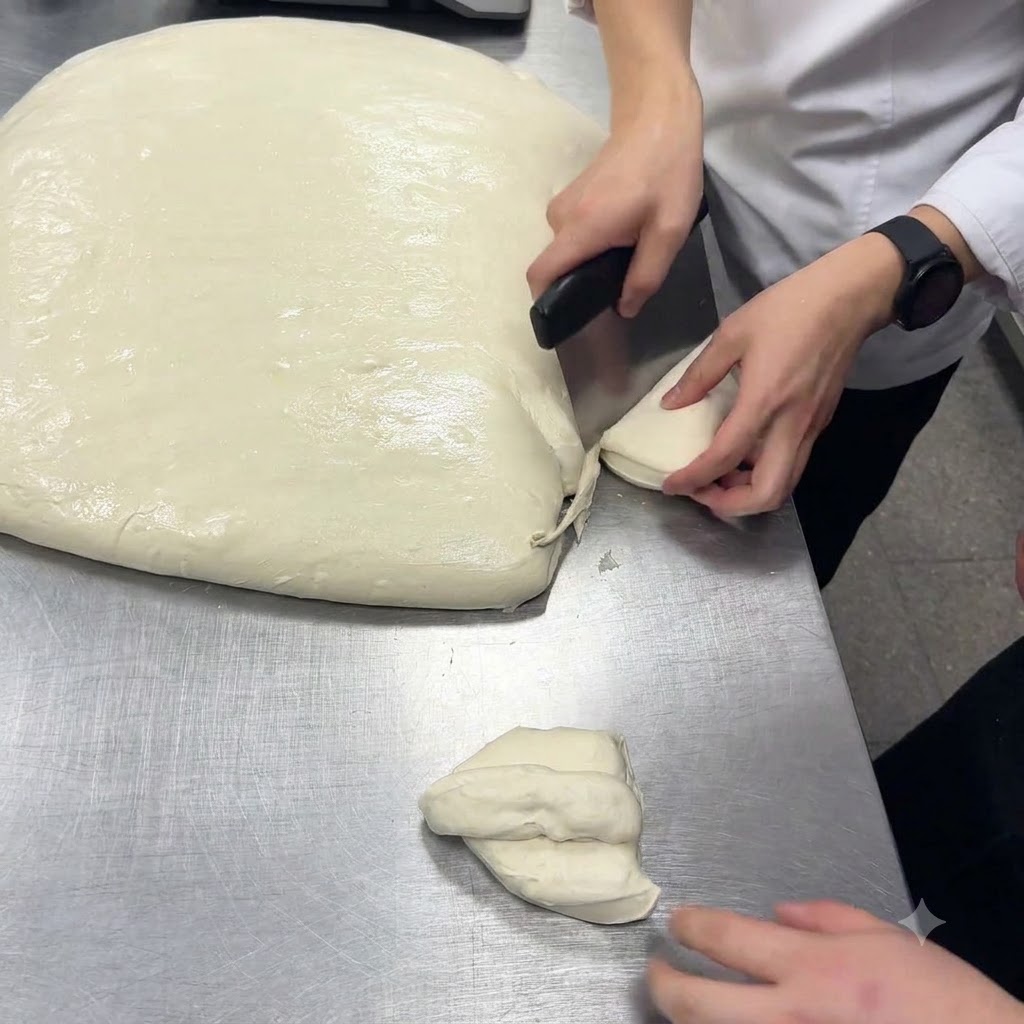
Degas the rested dough gently, spray the surface with a little water, and portion it equally using a bench scraper.
Tip: Make clean cuts with the scraper to avoid tearing the gluten structure of the dough. - 9Store dough balls for fermentation
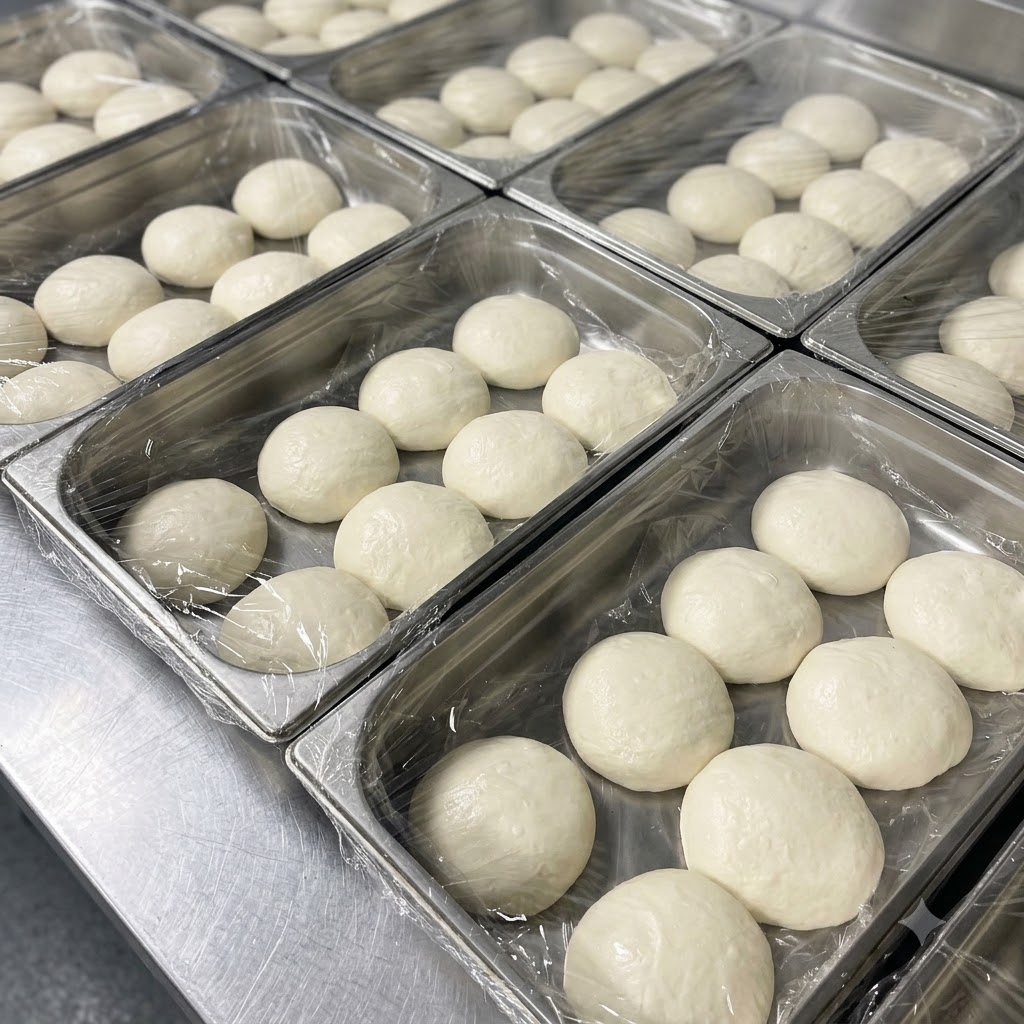
Arrange the portioned dough balls in containers, allow them to expand to 1.5 times their size, and transfer them to the refrigerator for a 48-hour cold fermentation.
Tip: Spray a light mist of water or brush lightly to maintain moisture before sealing with plastic wrap.