Classic American Slow-Roasted Pulled Pork Burger
Tender, slow-roasted pork shoulder tossed in rich BBQ sauce and topped with crisp coleslaw. A sweet, savory, and classic American crowd-pleaser.
Every family has a slightly different way of making pulled pork, but this recipe features a deeply flavorful homemade dry rub with toasted coriander, cumin, and mustard powder. Slow roasted until it reaches pull apart perfection, the meat is tossed in barbecue sauce and served on butter toasted buns. It is a staple of American comfort food that is perfect for weekend gatherings, children parties, or meal prep.
Ingredients
- 4.2 lbs pork shoulder (pork butt)
- 1.5 tsp coriander seeds
- 1.5 tsp cumin seeds
- 1.5 tsp black peppercorns
- 3 tsp sea salt
- 1.5 tsp mustard powder
- 1.5 tsp chili powder
- 3 tbsp brown sugar
- 10-12 hamburger buns
- to taste butter
- to taste barbecue sauce
- to taste coleslaw
Instructions
- 1Toast the whole spices
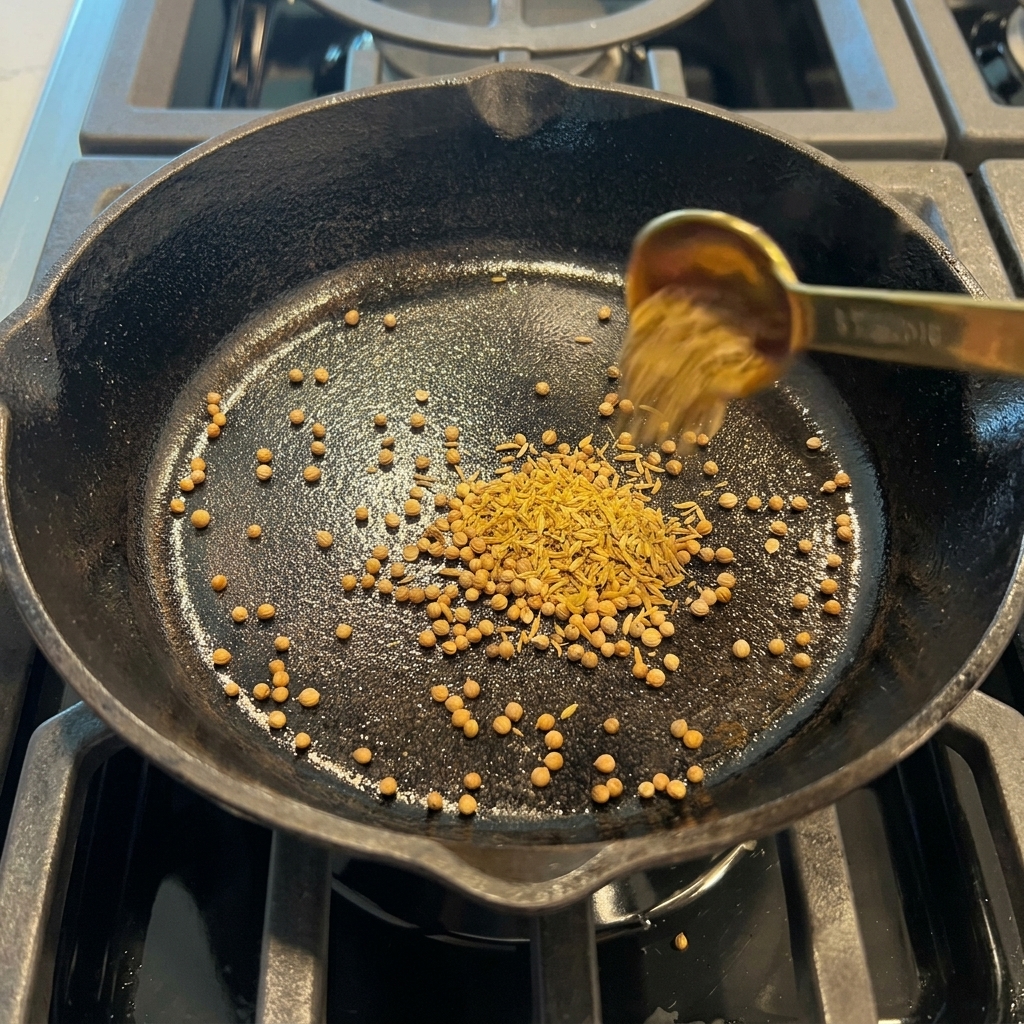
Add 1.5 teaspoons each of coriander seeds, cumin seeds, and black peppercorns to a dry cast iron skillet over medium heat. Stir the seeds constantly until they become fragrant and slightly darker in color. Toasting whole spices before grinding releases their essential oils and significantly deepens the flavor of the dry rub.
Tip: Avoid walking away from the pan because whole spices can burn quickly and introduce a bitter taste to the dish. - 2Grind the spices to a powder
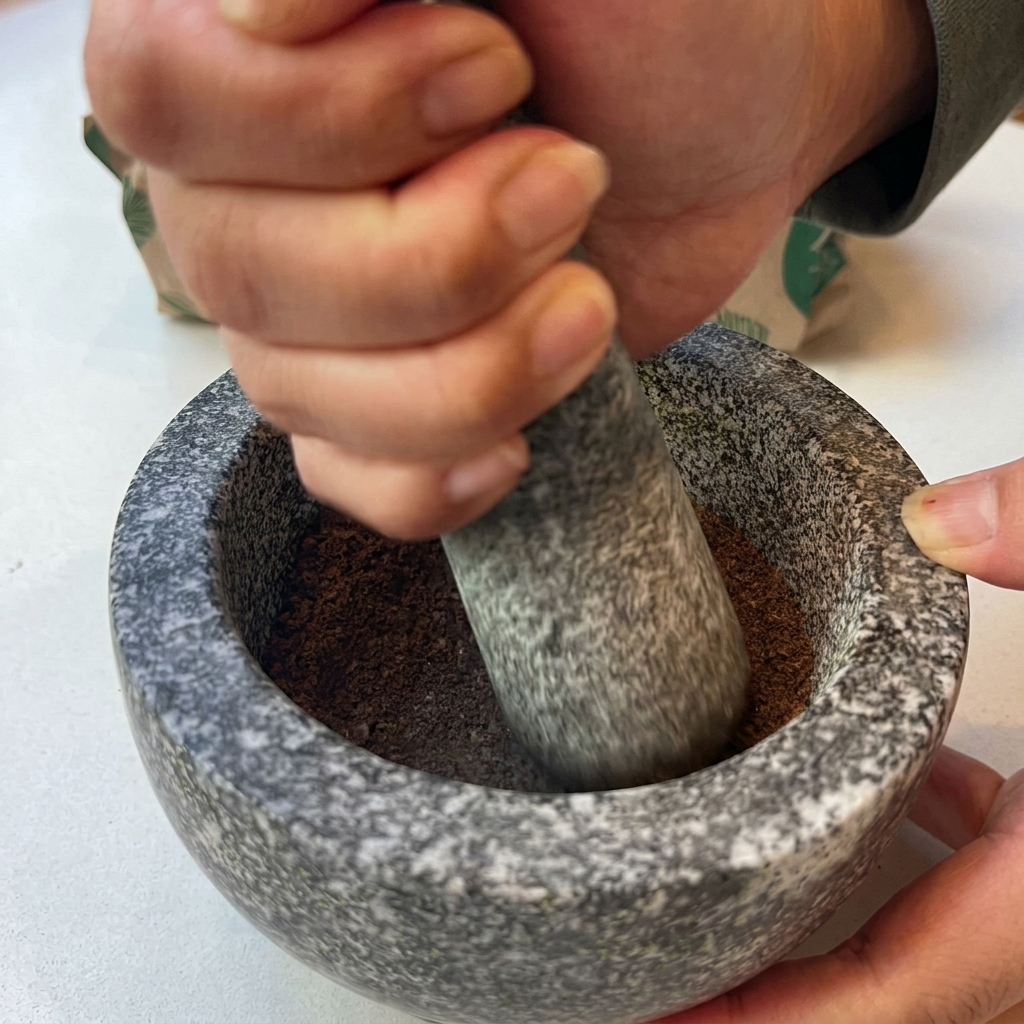
Transfer the freshly toasted spices into a stone mortar and pestle. Grind them vigorously until they reach a fine, even powder. Freshly ground spices offer a much more vibrant and complex aroma compared to pre-packaged ground versions, providing the best foundation for the pulled pork seasoning.
Tip: Grind in a circular motion while applying firm pressure to break down the harder peppercorns and seeds efficiently. - 3Mix the dry rub
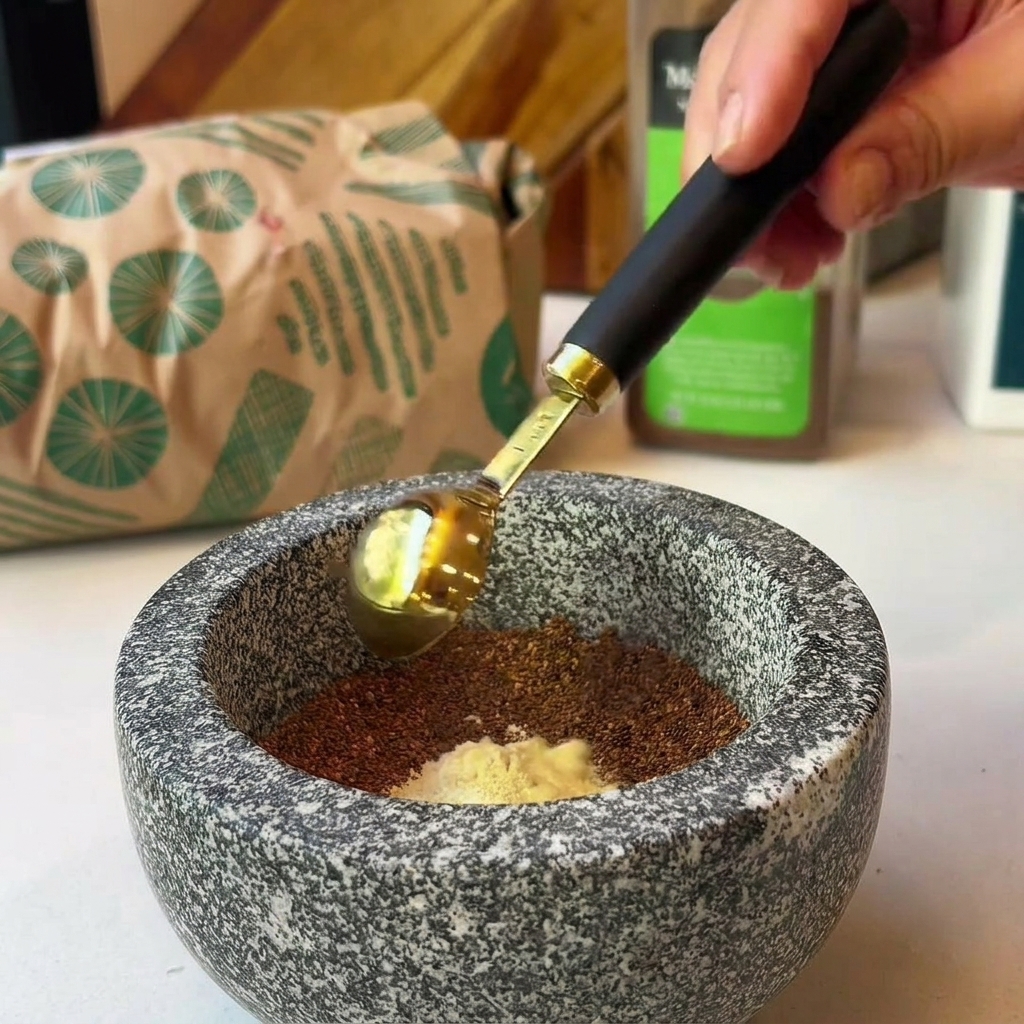
Add 3 teaspoons of sea salt, 1.5 teaspoons of mustard powder, 1.5 teaspoons of chili powder, and 3 tablespoons of brown sugar to the ground spices in the mortar. Stir everything together until the mixture is uniform in color and texture. This blend creates a perfect balance of savory, spicy, and sweet notes.
Tip: If the brown sugar has any hard lumps, break them up with the pestle to ensure the seasoning distributes evenly over the meat. - 4Season the pork shoulder
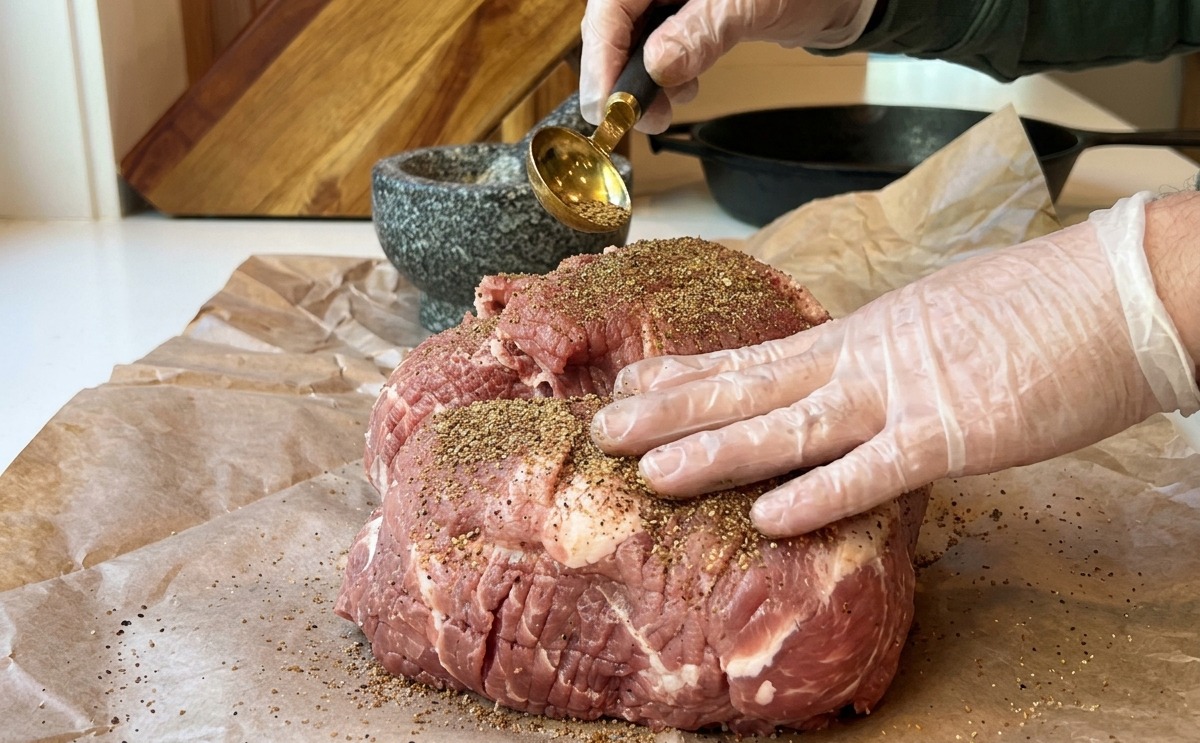
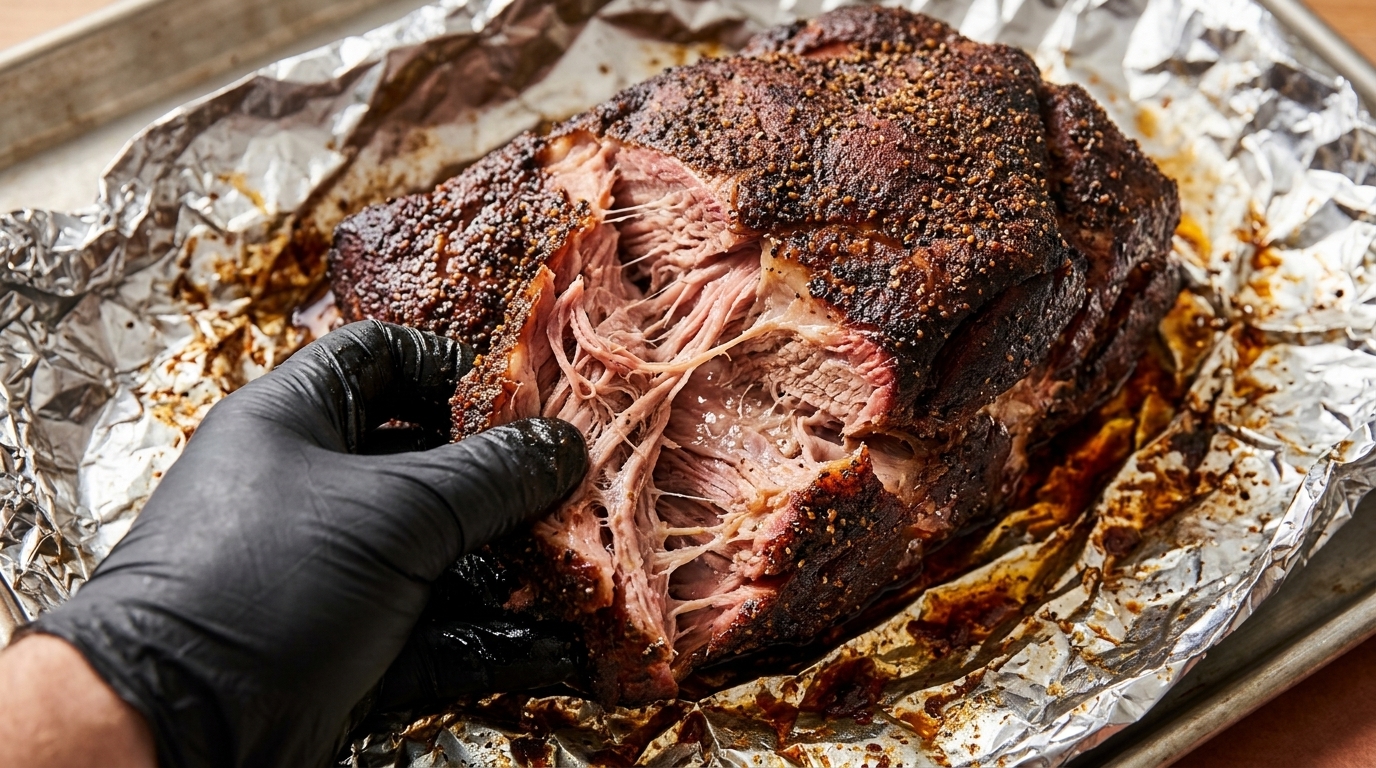
Generously apply the prepared spice rub to a large cut of raw pork shoulder weighing approximately 4.2 pounds. Use your hands to rub the mixture thoroughly into every side and corner of the meat. This ensures a flavorful crust, known as bark, forms all over the pork as it slow roasts in the oven.
Tip: Wear disposable gloves to keep your hands clean and to help rub the spices firmly into the meat surface. - 5Slow-roast the pork
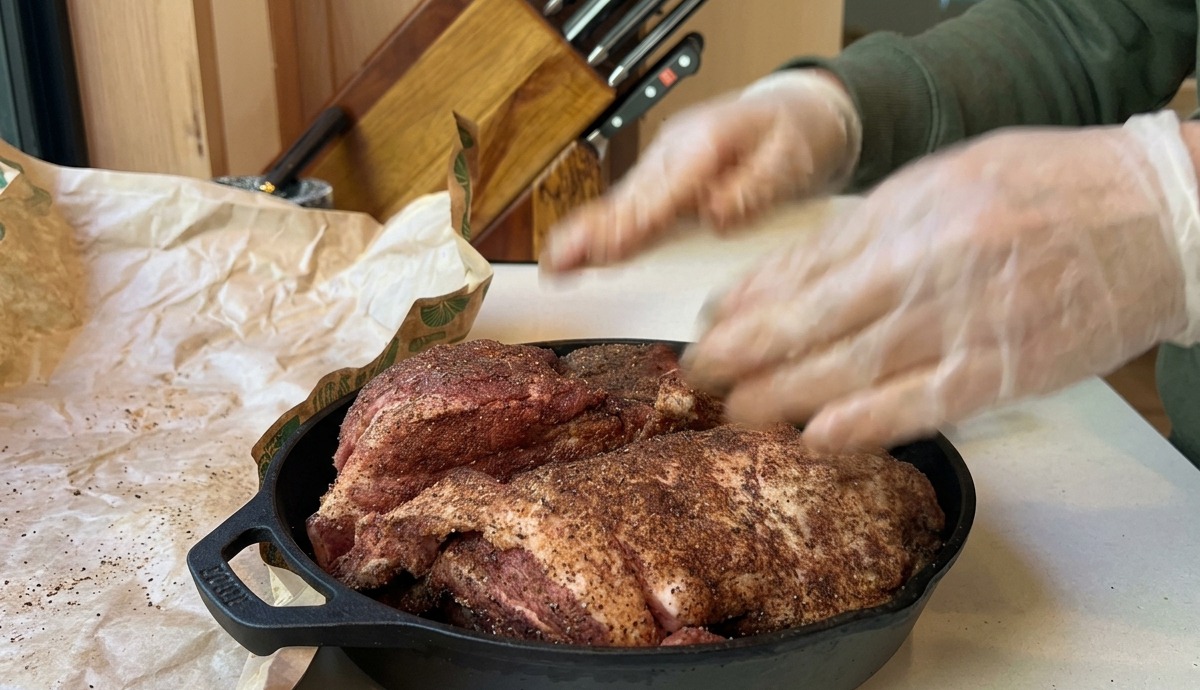
Place the fully seasoned pork shoulder into a heavy cast iron pan. Preheat your oven to 300°F and bake the pork for 4 to 5 hours. Cooking at a low temperature over several hours allows the connective tissues to break down, resulting in meat that is incredibly tender and easy to shred.
Tip: The pork is done when it reaches an internal temperature of 205°F; use a meat thermometer to check for perfect doneness. - 6Save the pan juices
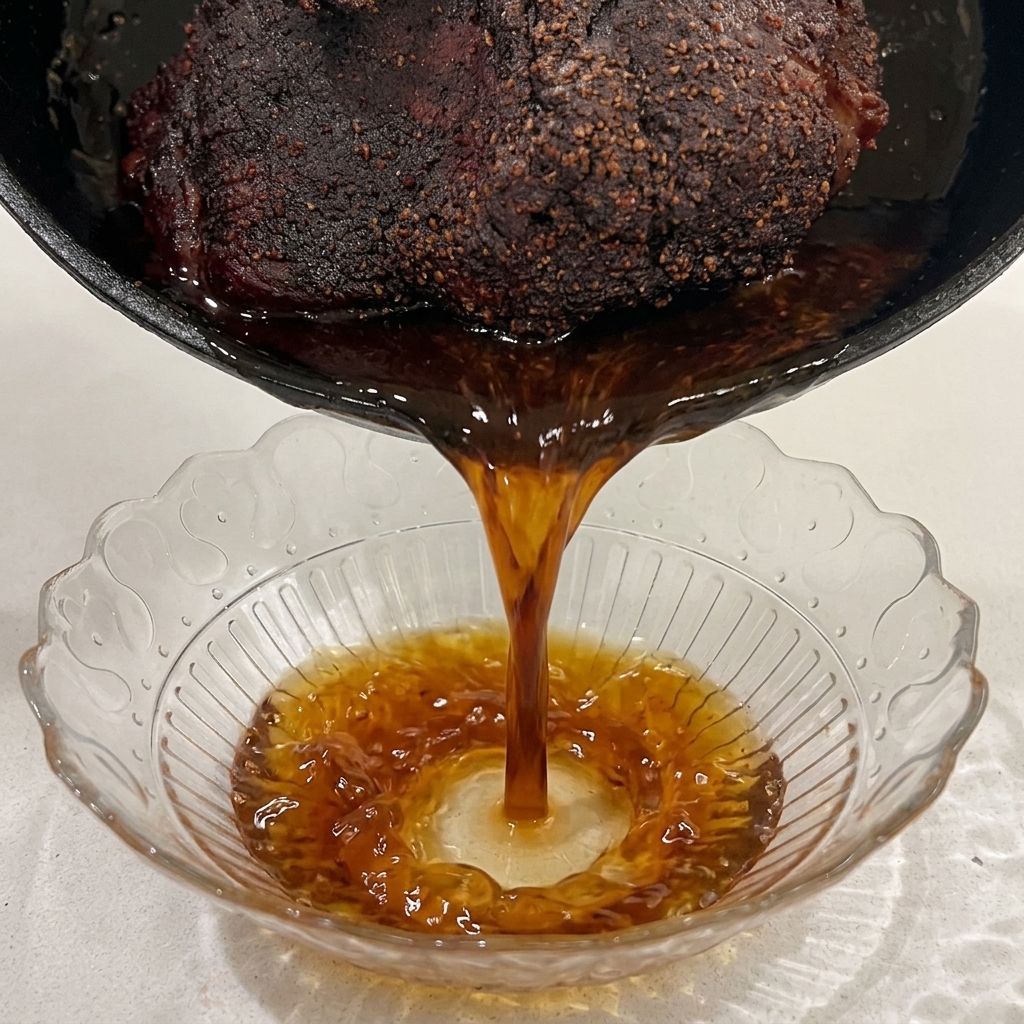
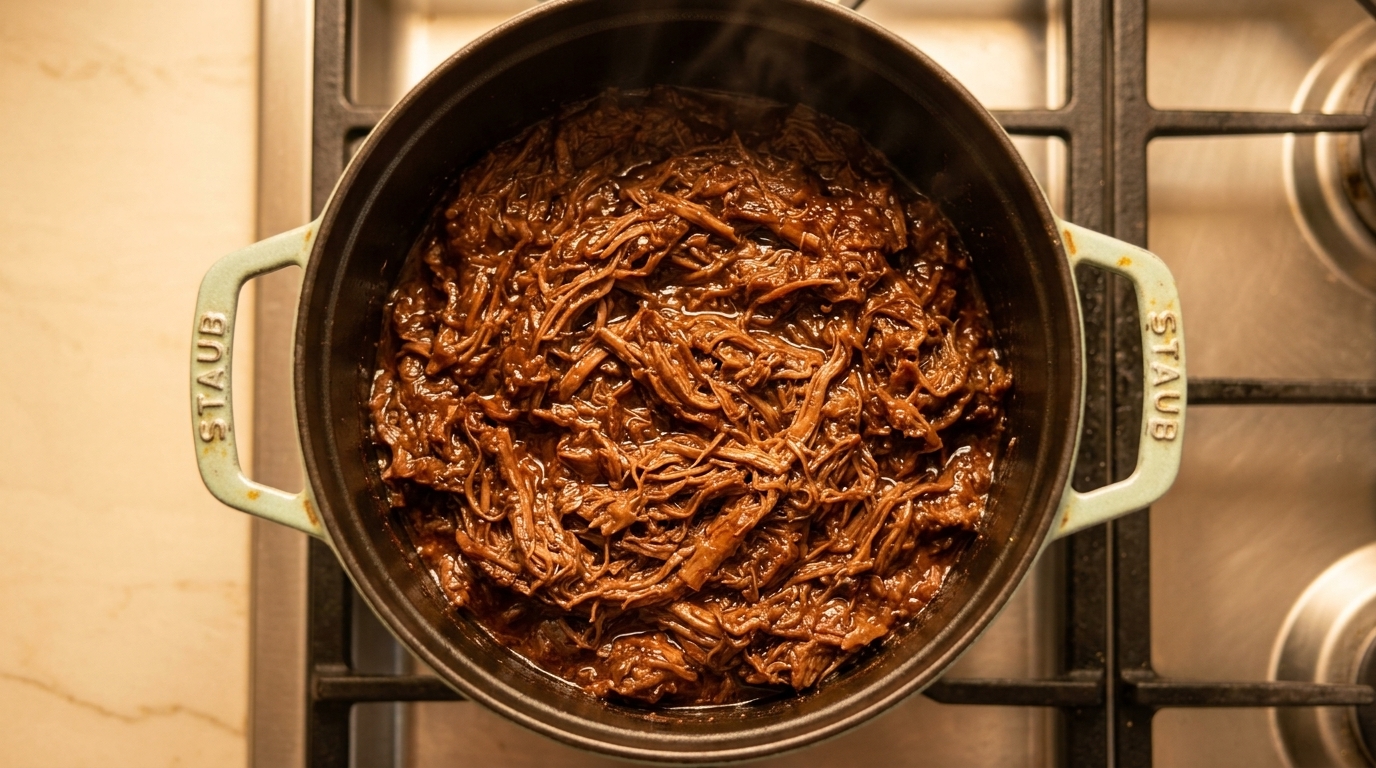
After baking, carefully pour the dark juices from the bottom of the pan into a clear glass bowl. Allow the liquid to sit briefly so the fat rises to the top, then skim it off. These concentrated juices are packed with flavor and should be saved to re-moisten the meat after it has been shredded.
Tip: Pouring the juices through a fine-mesh strainer can help remove any small charred bits of spice for a cleaner liquid. - 7Shred the cooked pork
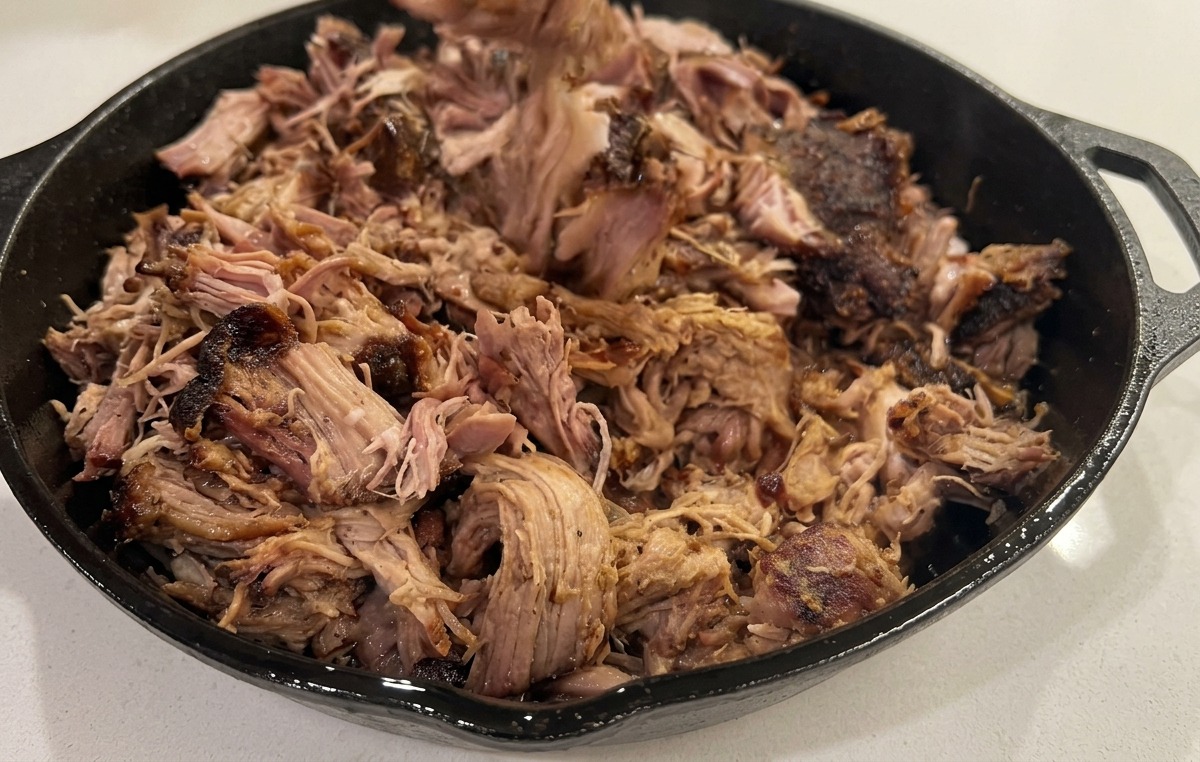
Once the pork has finished baking, carefully shred the meat into small pieces using two forks. It is important to do this while the pork is still hot, as it will be much easier to pull apart than when it cools down and tightens.
Tip: Shred the meat directly in the pan to retain all the flavorful cooking juices and fats. - 8Add barbecue sauce
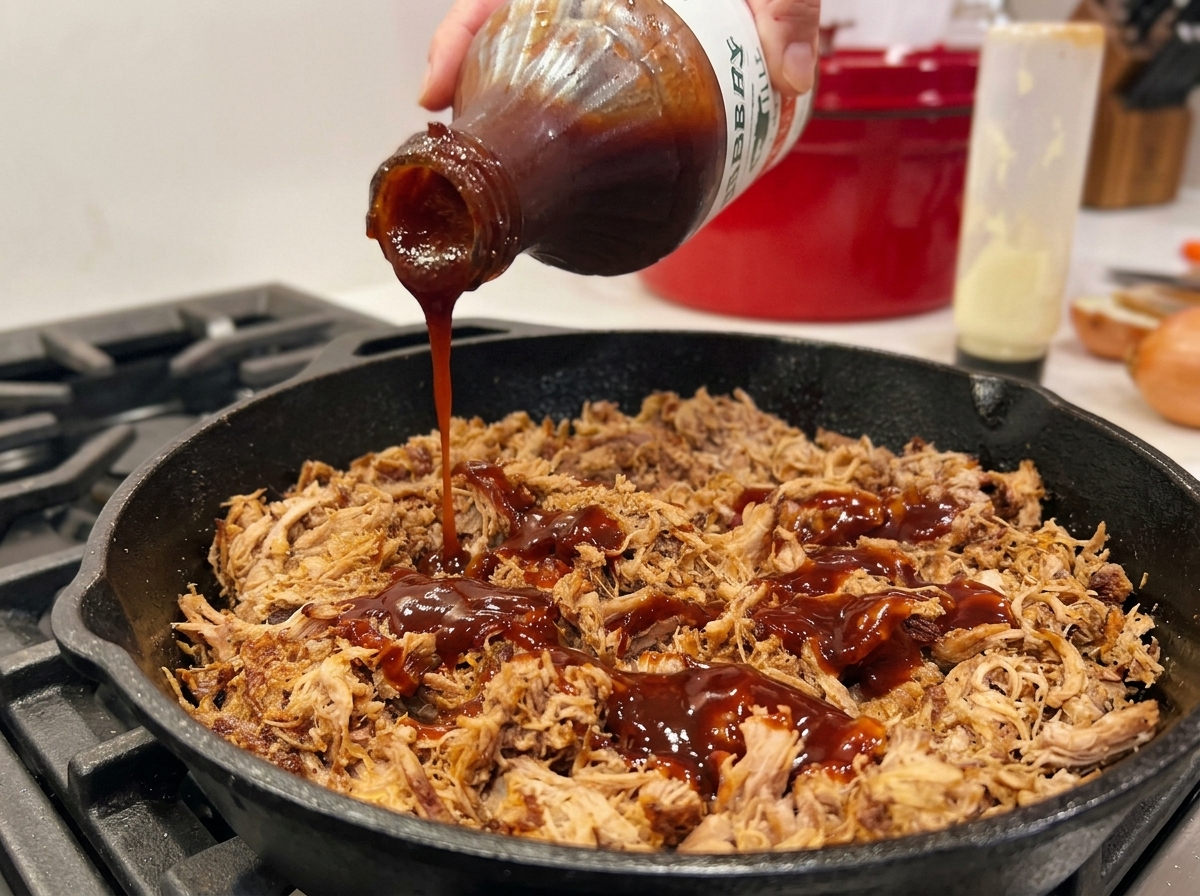
Pour your favorite barbecue sauce generously over the shredded pork. Toss the meat well to ensure every piece is evenly coated with the rich and tangy sauce, following the classic American style of serving pulled pork.
Tip: Start with a little sauce and add more to taste, depending on how wet or sweet you prefer your pulled pork. - 9Prepare and toast the buns

Take the hamburger buns and spread a layer of butter on the cut sides of both halves. Place them on a baking sheet and toast them in a 350°F oven for about 5 minutes until golden brown and slightly crispy. Alternatively, you can toast them in a pan on the stove.
Tip: Toasting the buns creates a barrier that prevents them from getting soggy when you add the saucy meat. - 10Assemble the sandwich
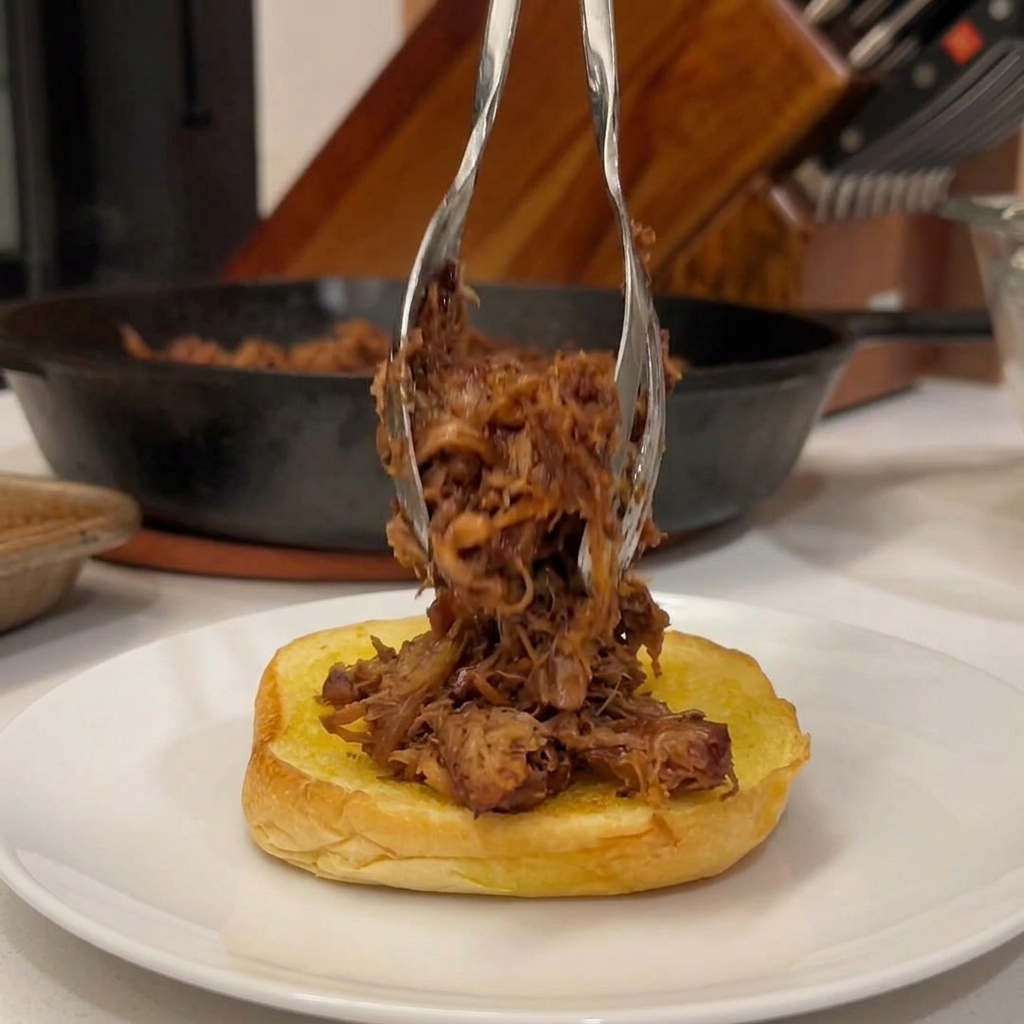
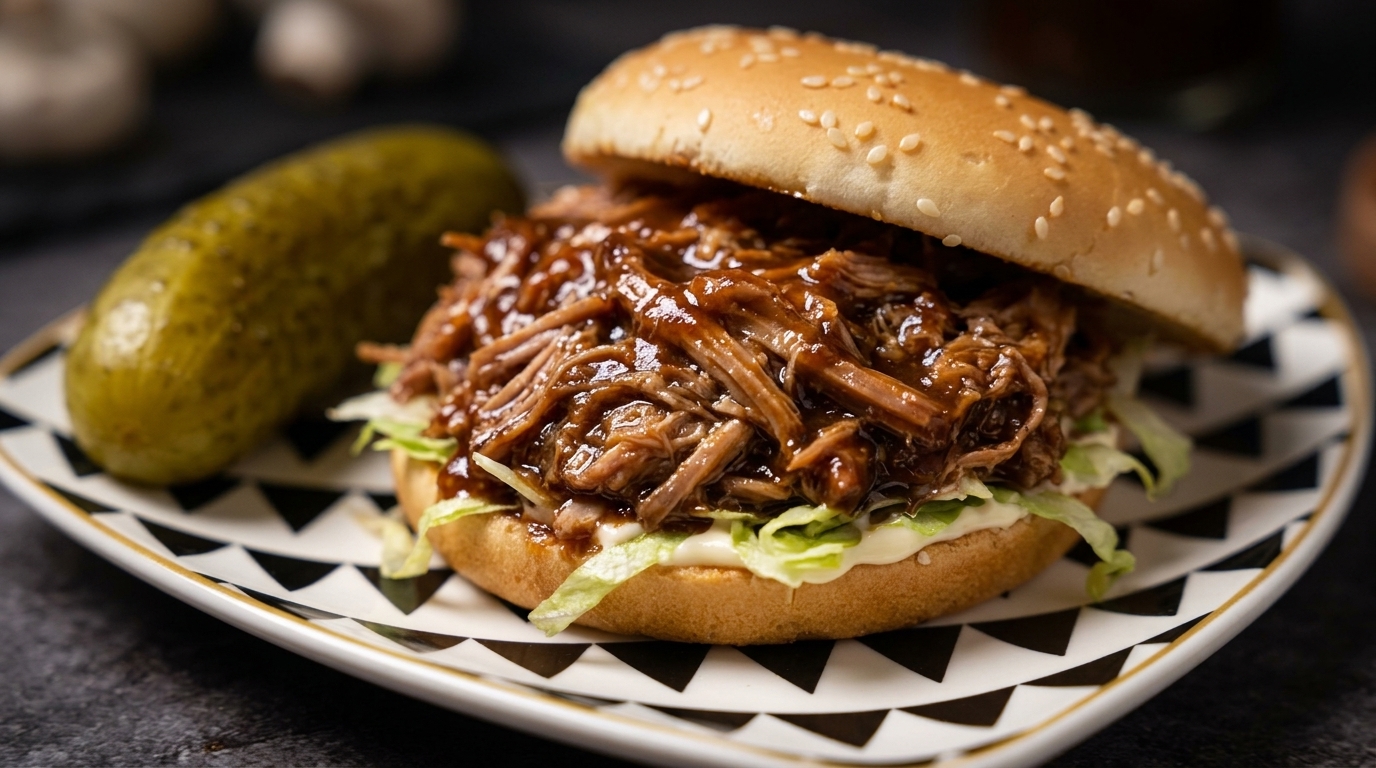
Using a pair of tongs, grab a generous handful of the warm, saucy pulled pork and pile it high onto the bottom half of a toasted hamburger bun. Make sure to get a good mix of the tender meat and caramelized bits.
Tip: For a fun twist, you can also serve the pulled pork over rice or in a baked potato. - 11Top with coleslaw
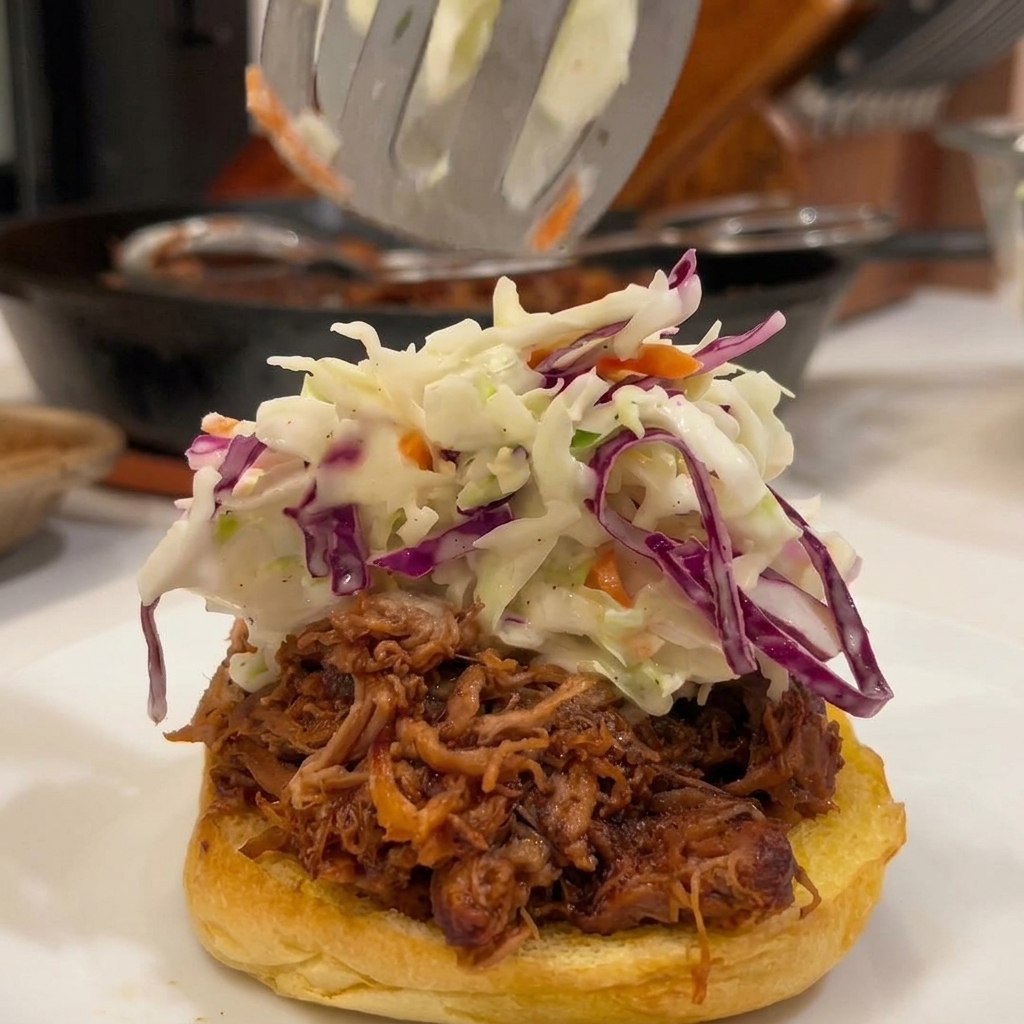
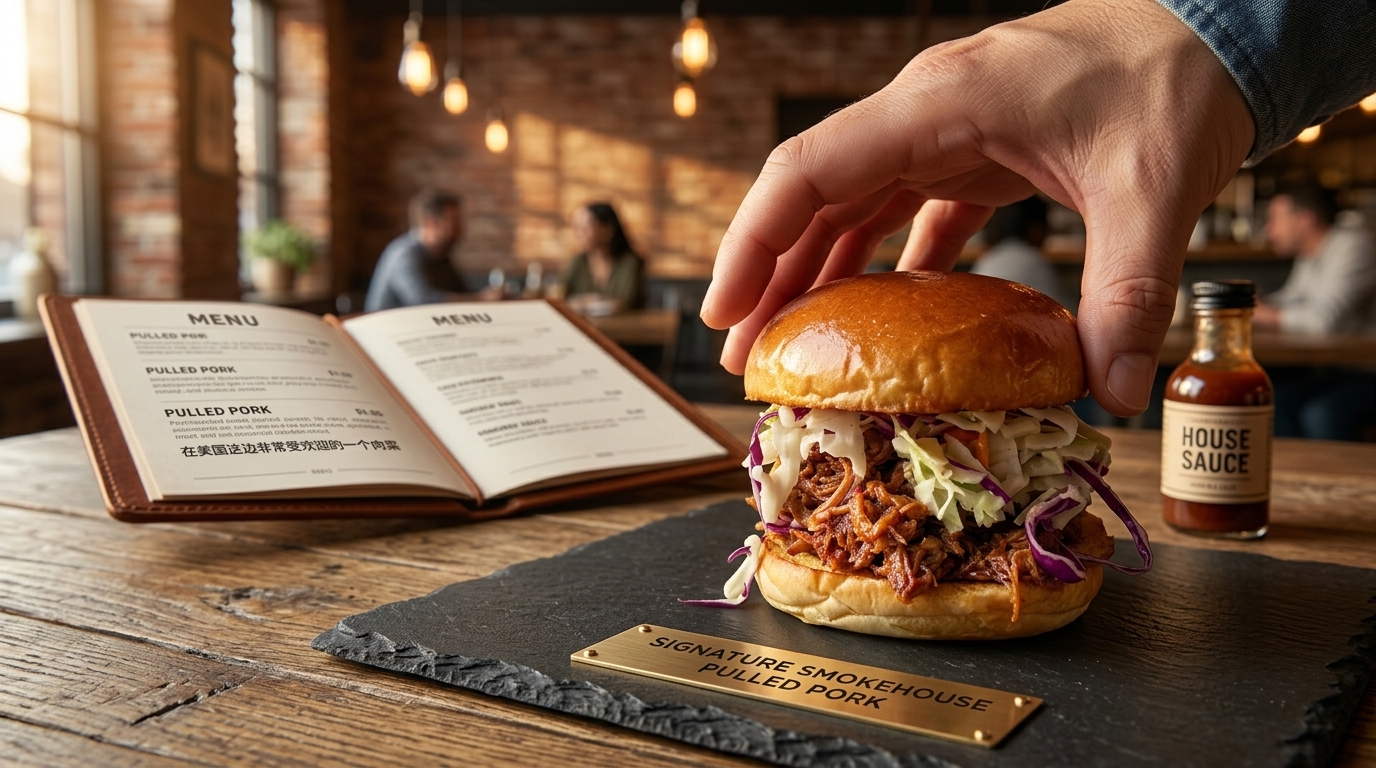
Finish assembling the sandwich by adding a scoop of fresh, crisp coleslaw directly on top of the warm pulled pork. The crunch and acidity of the coleslaw provide a perfect contrast to the rich, sweet, and savory meat. Serve immediately with pickles or extra salad on the side.
Tip: Using a slotted spoon for the coleslaw helps drain excess liquid, keeping the sandwich bun from becoming soggy.