Chicken Shio Ramen
Low-Temperature Chashu
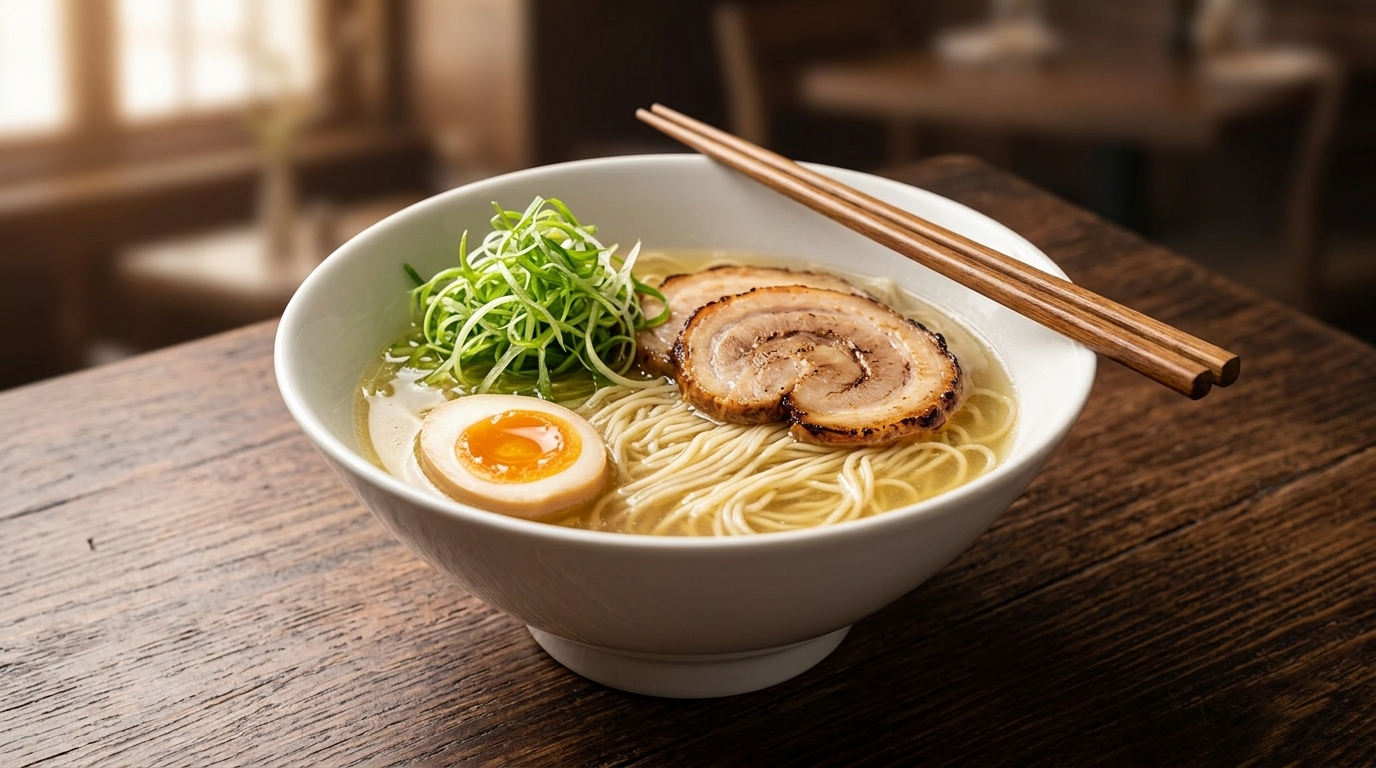
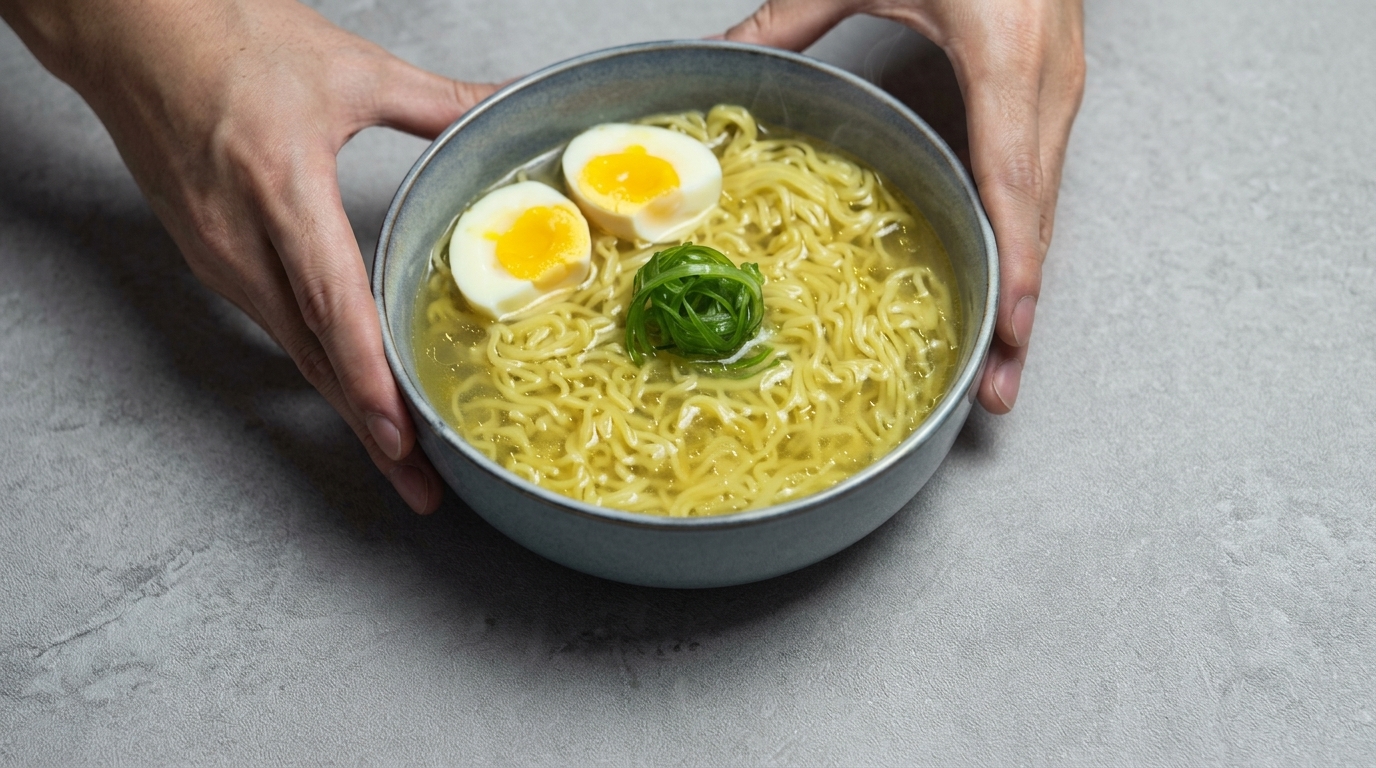
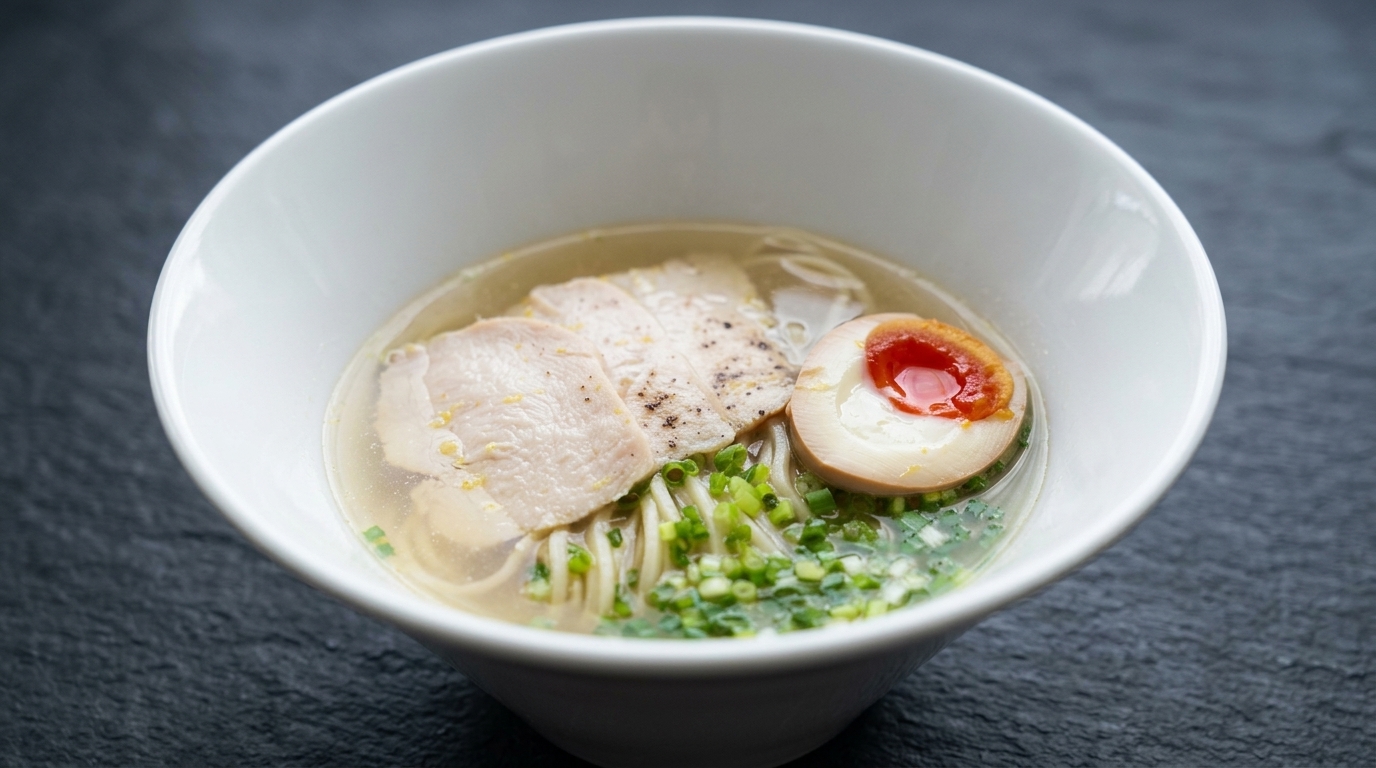
A masterclass in clarity, this Shio ramen pairs a golden amber chicken broth with tender low-temperature chashu and a perfect jammy lava egg.
Shio ramen is the oldest and most delicate of the four major ramen styles, celebrated for a transparent broth that highlights the quality of the base ingredients. This version uses a low-temperature cooking method for the chicken chashu to ensure maximum tenderness, contrasting beautifully with the bright, salty umami of the tare.
Ingredients
- 2 portions fresh ramen noodles
- 1 kg chicken carcass and parts
- 200 g chicken breast
- 2 marinated soft-boiled eggs
- 2 carrots
- 4 tbsp salt-based ramen tare
- optional chopped green onions
Instructions
- 1Boil the ramen noodles
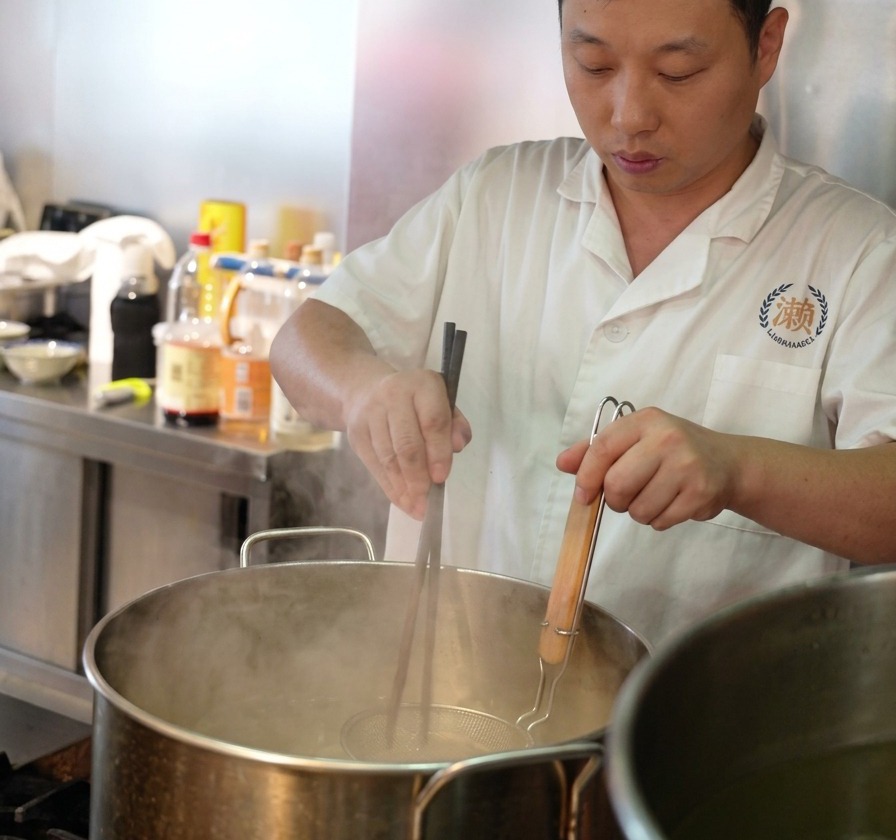
Place the prepared ramen noodles into a mesh strainer submerged in a large pot of rapidly boiling water. Stir the noodles gently with long chopsticks as they cook to ensure they heat evenly and do not stick together or to the bottom of the pot.
Tip: Cook the noodles until there is no white core remaining to achieve the perfect chewy texture. - 2Maintain water temperature
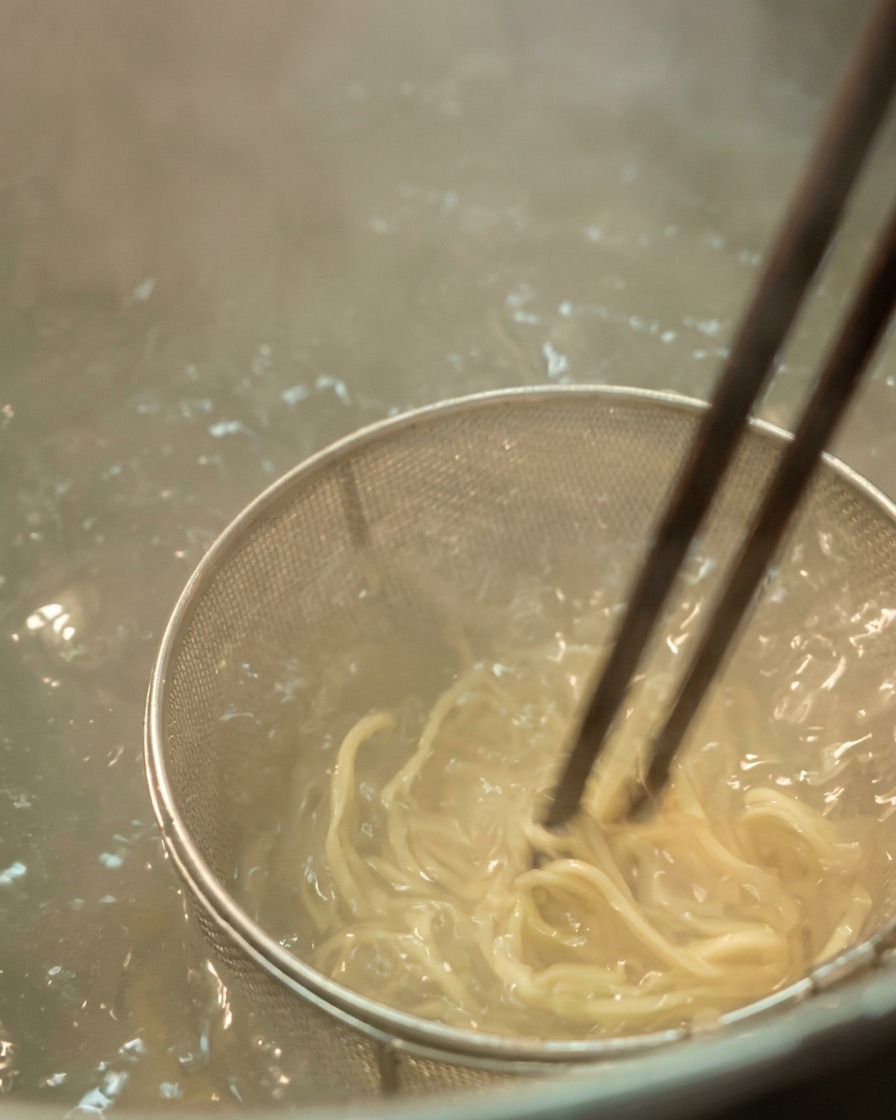
Ensure the water remains at a rolling boil throughout the noodle cooking process. This consistency prevents the noodles from becoming gummy and helps them maintain their shape as they cook to the desired texture.
Tip: Keep the heat high enough so that adding the cold noodles does not stop the water from boiling for more than a few seconds. - 3Prepare the chicken broth
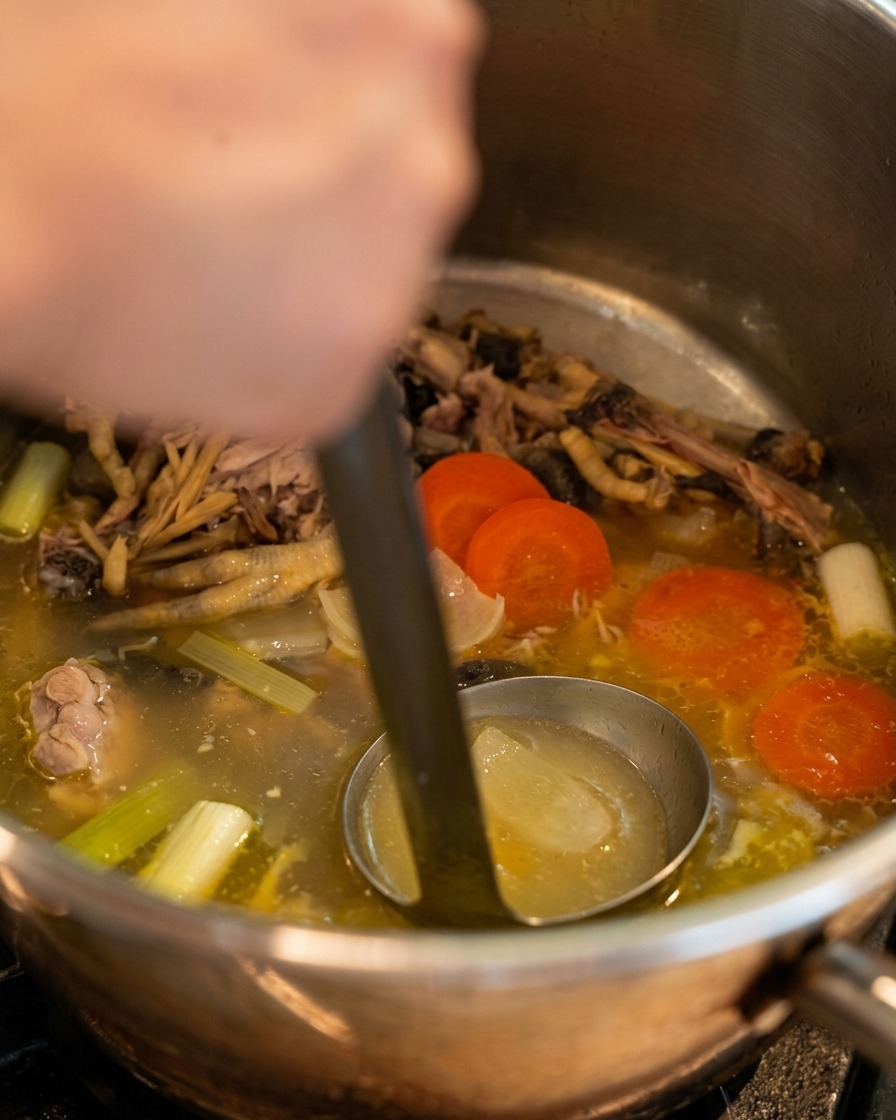
Carefully ladle out the clear, golden chicken broth from the main stockpot. The broth has been slowly simmered with chicken pieces, fresh carrots, and aromatics to extract maximum flavor and clarity without becoming greasy.
Tip: Avoid stirring the stockpot vigorously while simmering to keep the broth as clear and pure as amber. - 4Heat the broth
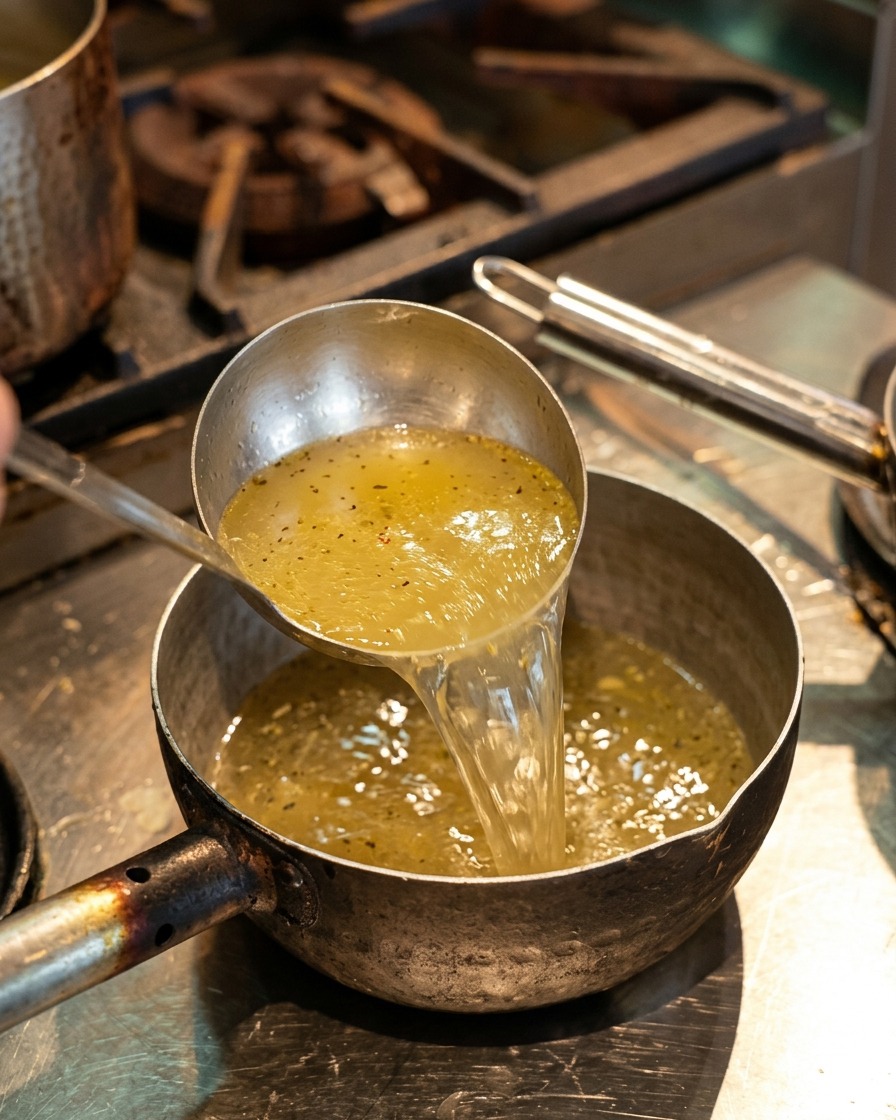
Transfer the required amount of clear chicken broth into a smaller saucepan. Heat it individually over the stove until piping hot, ensuring each bowl of ramen is served at the optimal temperature.
Tip: Heating portions individually prevents the main stockpot from reducing too quickly or becoming cloudy over time. - 5Add the salt tare
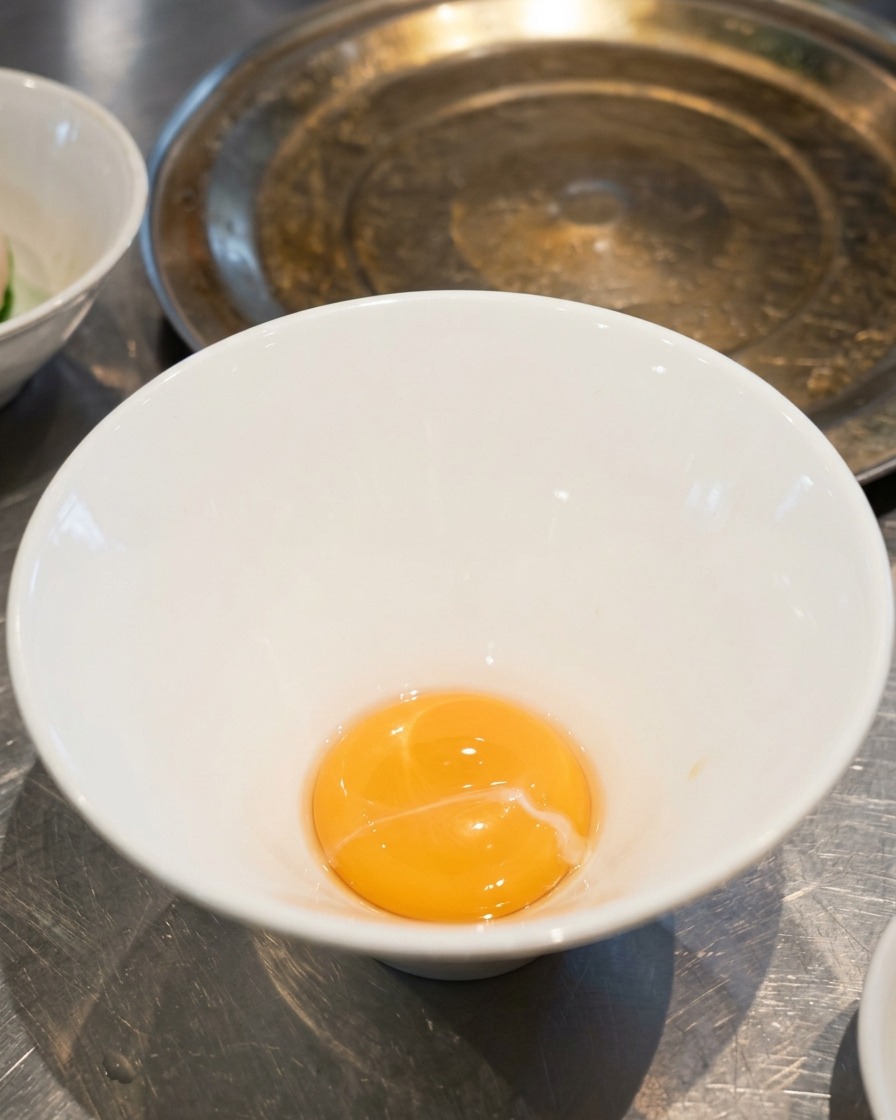
In a pre-warmed serving bowl, add two spoonfuls of the concentrated salt-based tare sauce. This golden liquid acts as the primary seasoning for the dish, providing the essential umami and savory notes for the clear shio broth.
Tip: Pre-warming your serving bowl prevents the hot broth from cooling down too rapidly when poured. - 6Pour the hot soup base
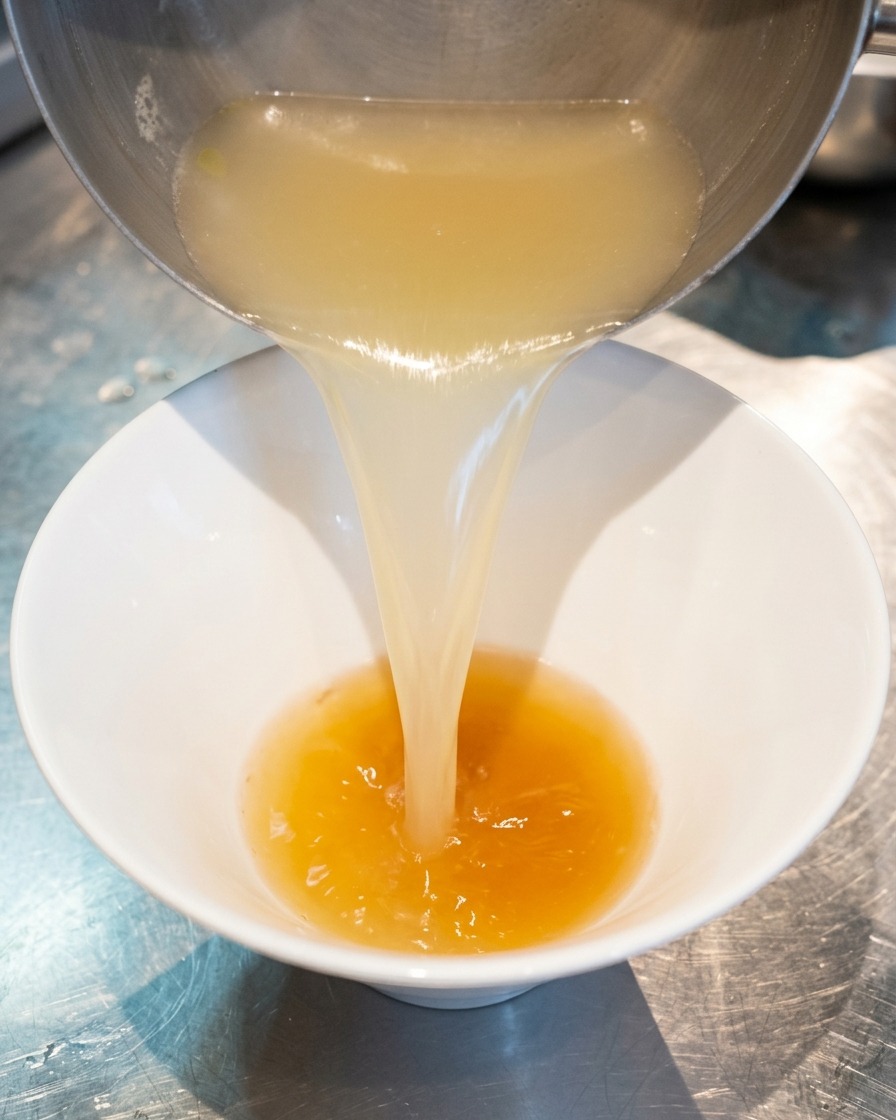
Pour the heated clear chicken broth directly into the serving bowl over the salt tare. The hot liquid will immediately dissolve and mix with the tare, creating a fragrant, light, and perfectly balanced shio ramen soup base.
Tip: Pour the broth gently to avoid splashing, allowing it to mix seamlessly with the tare at the bottom. - 7Drain the noodles
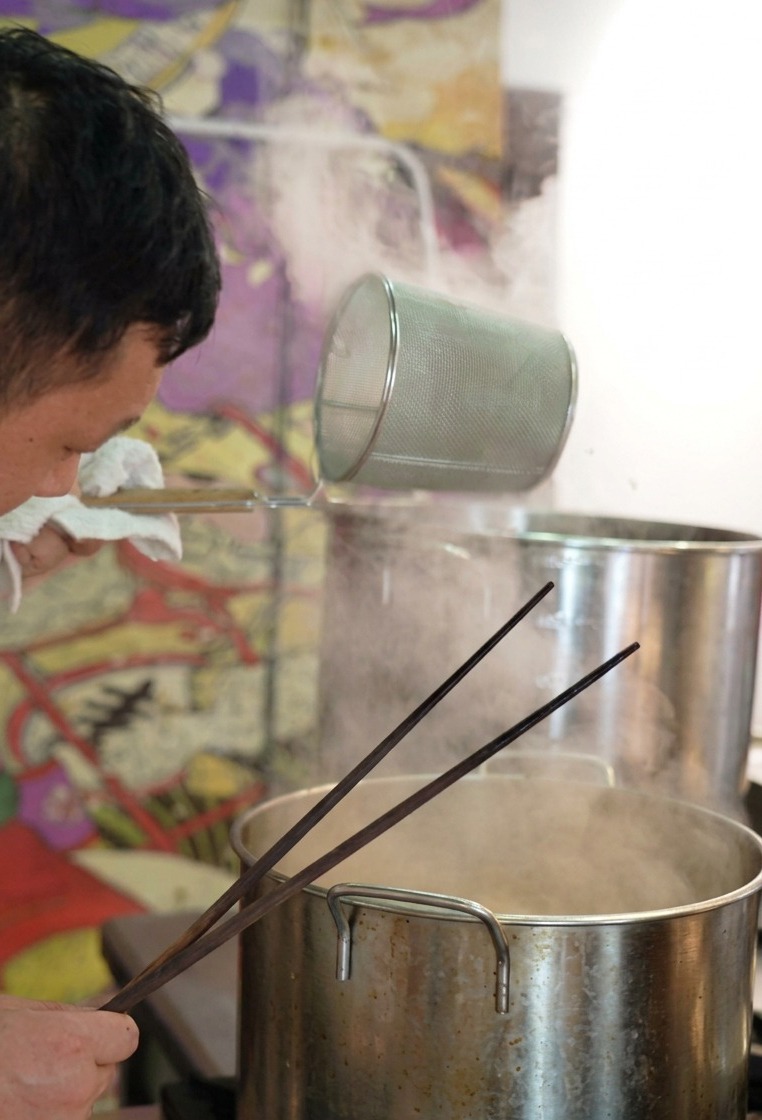
Once the ramen noodles are cooked through and no longer have a hard white core, lift the strainer from the boiling water. Vigorously shake the strainer up and down several times to remove all excess water, ensuring the starch doesnt dilute the clarity or flavor of your chicken broth.
Tip: A firm, sharp snap of the wrist while shaking helps eject water trapped between the noodle strands more effectively. - 8Arrange noodles in the bowl
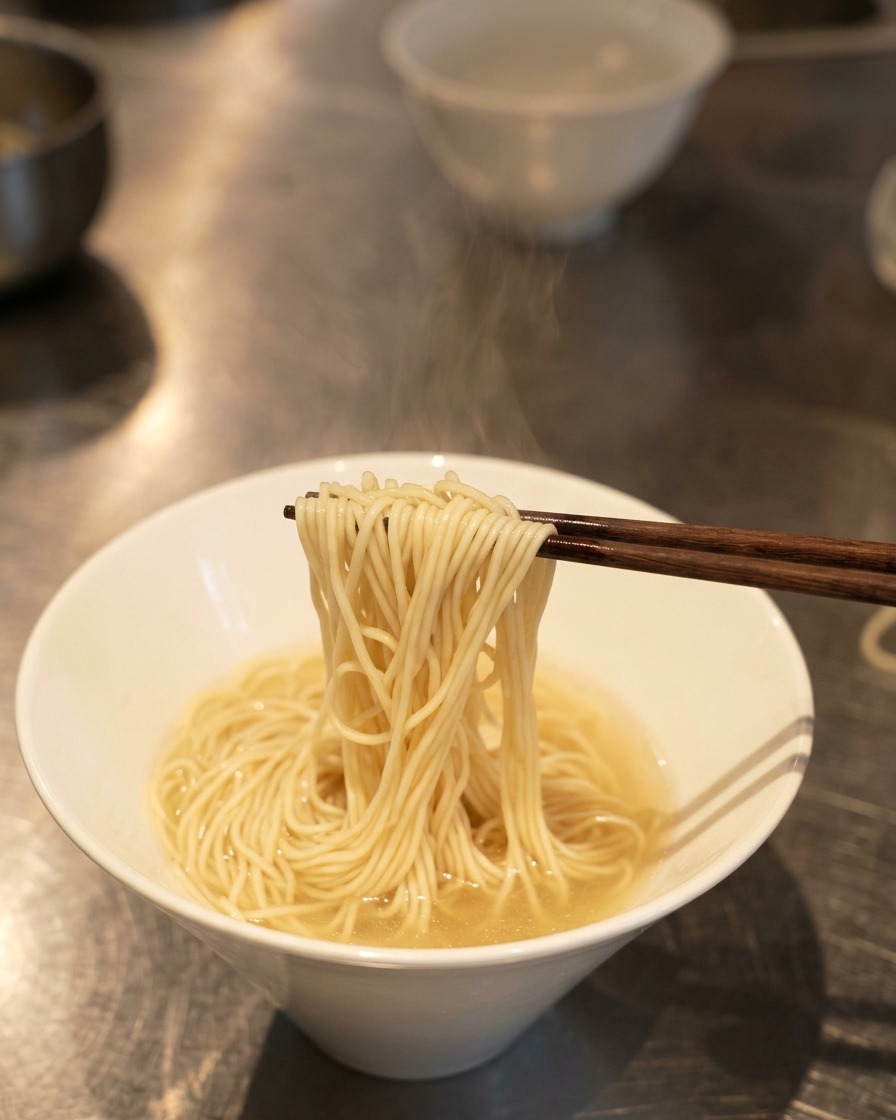
After transferring the drained noodles to the pre-warmed bowl containing the soup base, use your chopsticks to lift and fold the noodles. Neatly aligning the strands creates a professional presentation and ensures the noodles are well-coated with the fragrant broth.
Tip: Work quickly while the noodles are hot to prevent them from clumping together before you finish the arrangement. - 9Slice the chicken chashu
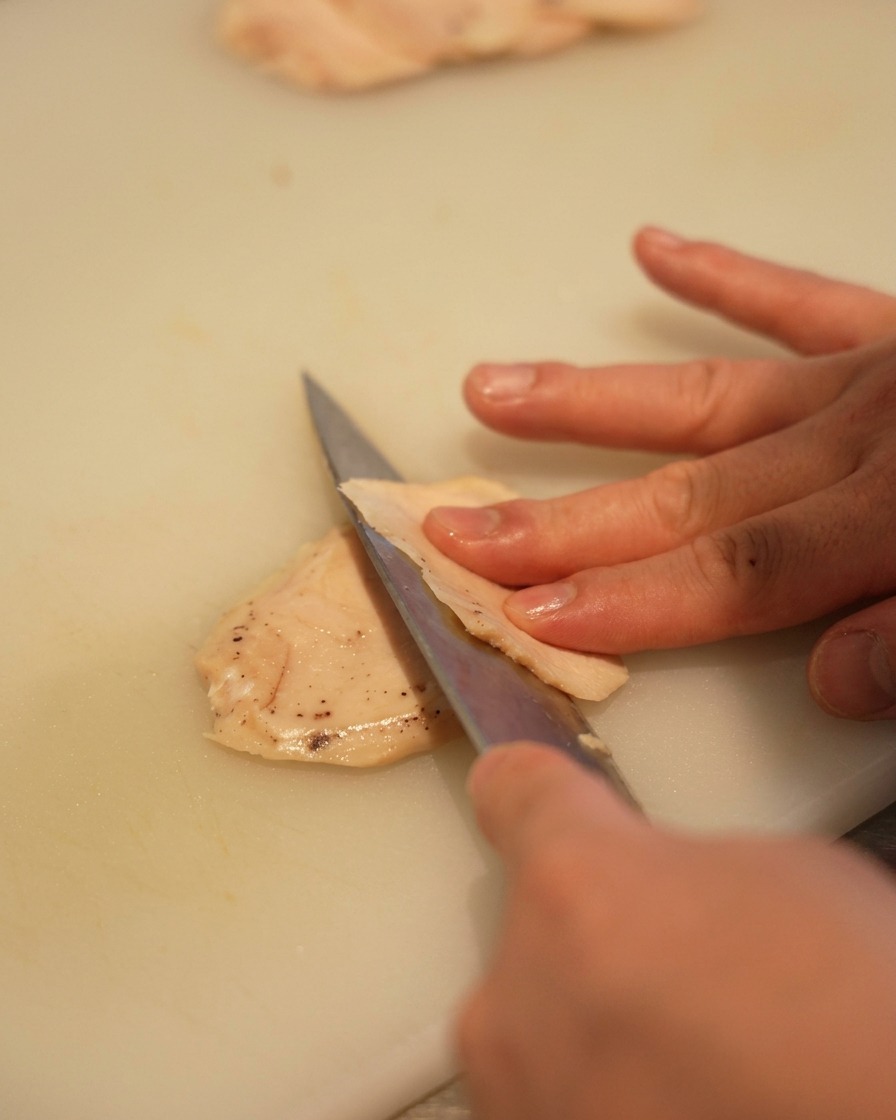
Place the low-temperature cooked chicken breast on a clean cutting board. Using a sharp knife, carefully slice the tender chicken into thin, uniform pieces. This chashu style preparation keeps the meat incredibly moist and delicate.
Tip: Chilling the chicken slightly before slicing can help you achieve thinner, cleaner cuts without tearing the meat. - 10Garnish with chicken chashu
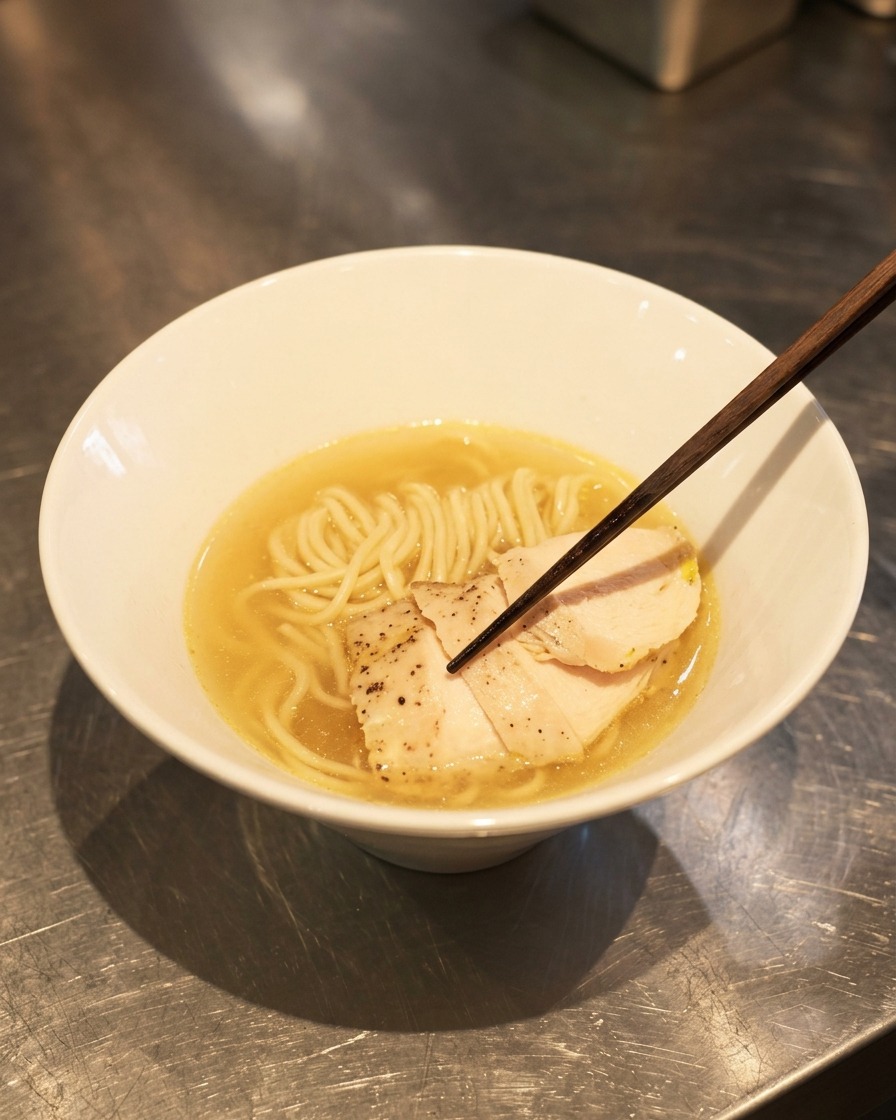
Using chopsticks, take the thin slices of chicken and arrange them elegantly on top of the arranged noodles. The pale color of the chicken complements the clear Shio broth, adding a lean and healthy protein element to the dish.
Tip: Fan the slices out slightly so they rest on the surface of the noodles rather than sinking into the broth. - 11Add the soft-boiled egg
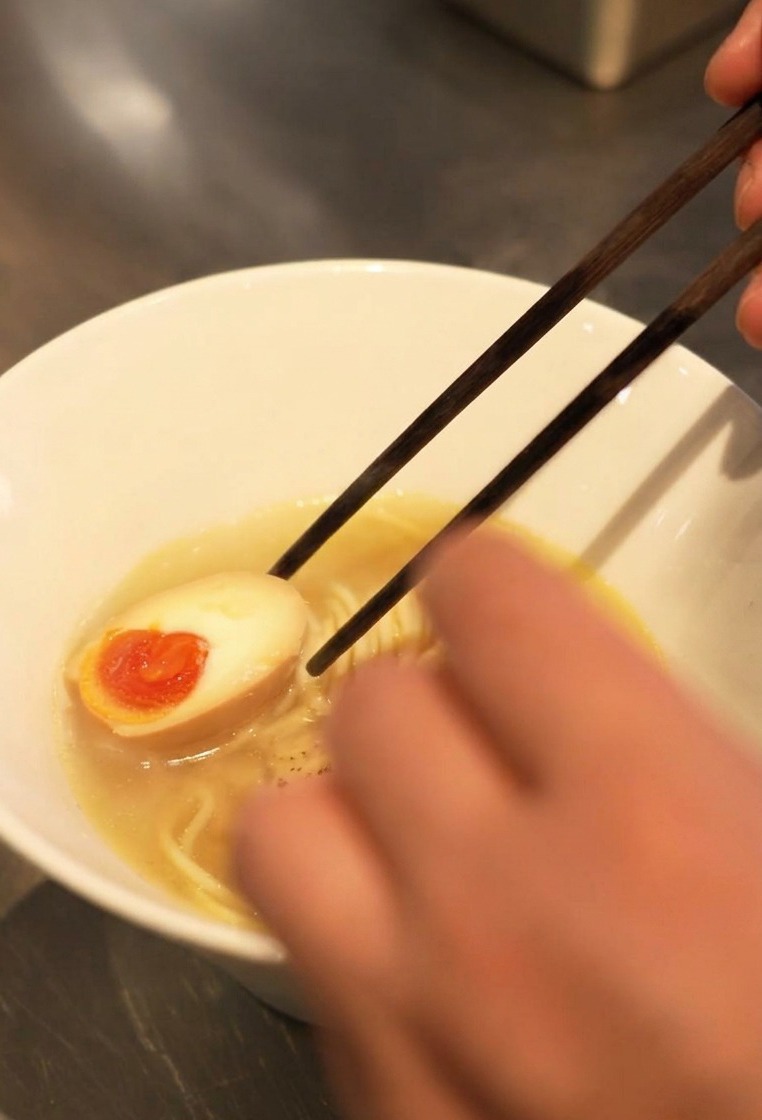
Carefully place half of a soft-boiled marinated lava egg onto the noodles. The creamy, jammy yolk will slowly enrich the clear broth as you eat, providing a luxurious texture and deep umami flavor that complements the light salt-based soup.
Tip: To get a perfect liquid center, boil room-temperature eggs for exactly 6 minutes and 30 seconds before immediately shocking them in an ice bath. - 12Garnish with green onions
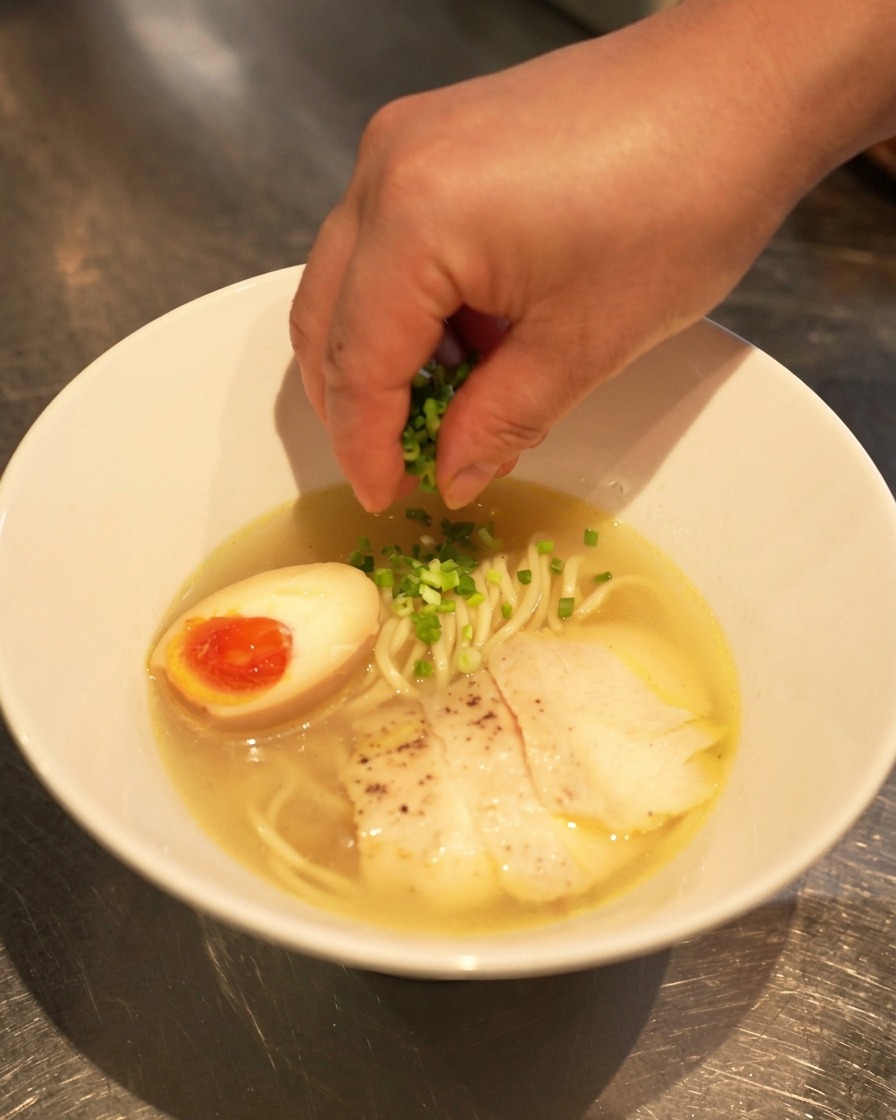
Finish the dish by carefully sprinkling finely chopped fresh green onions over the center of the assembled ramen bowl. This final touch not only enhances the presentation but also adds a bright, aromatic freshness that balances the rich chicken broth.
Tip: Add the green onions right before serving so they retain their crisp texture and vibrant flavor.