Quick Homemade Shio Ramen (Salt-Flavored Ramen)
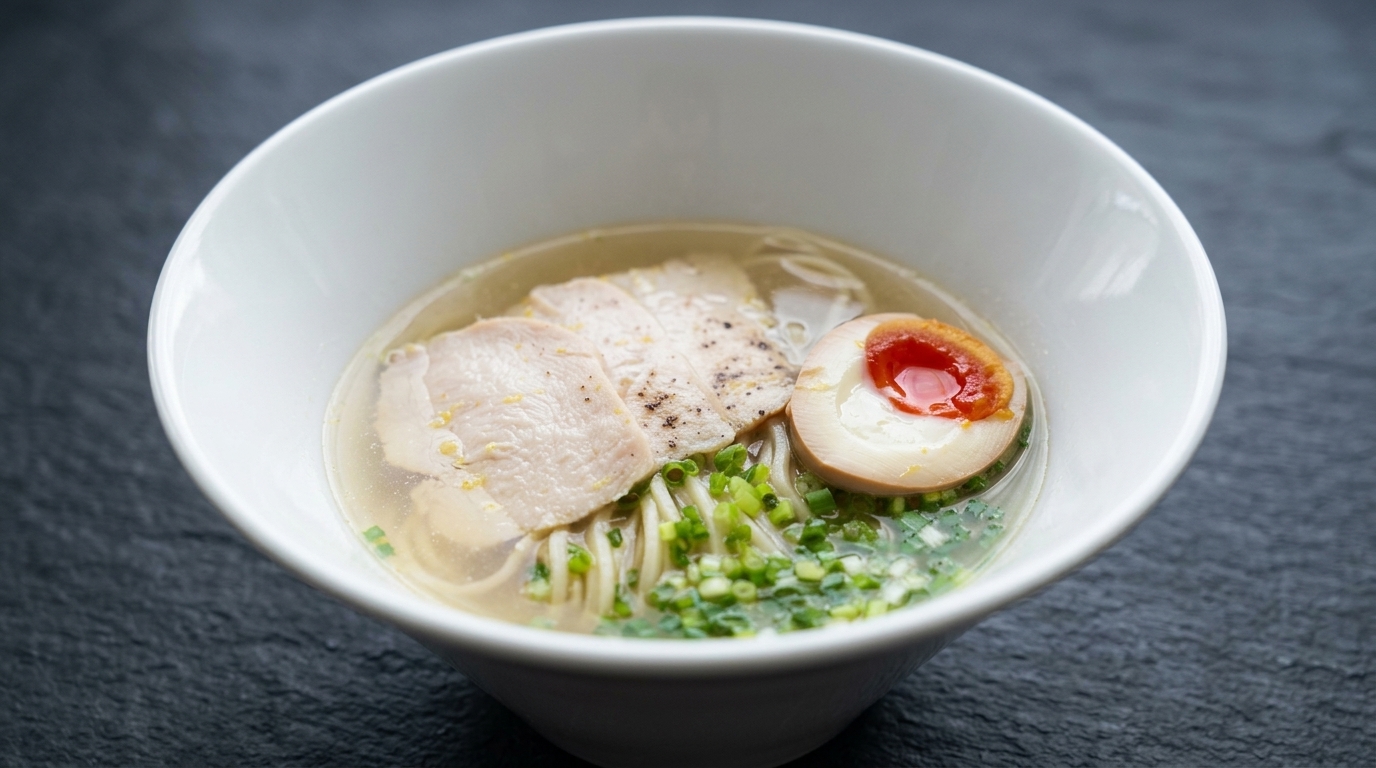
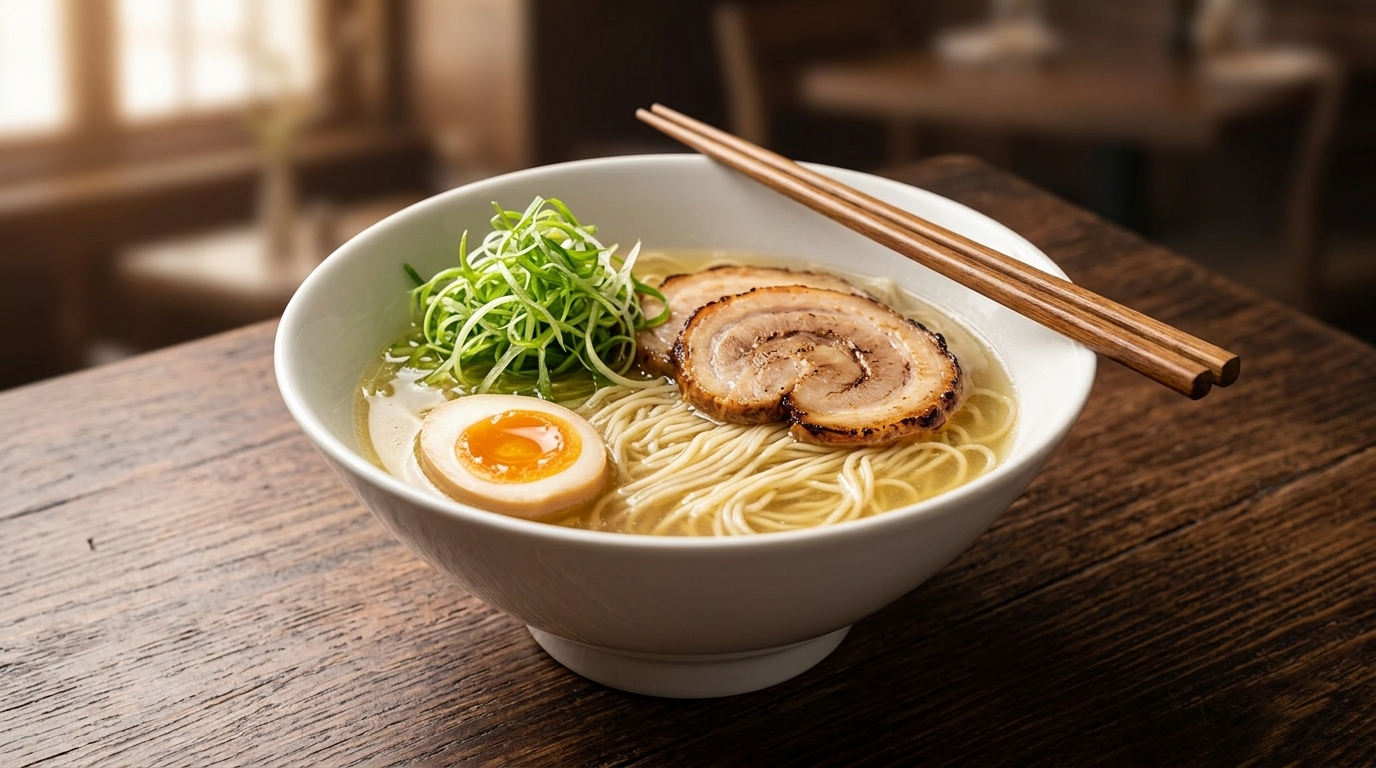
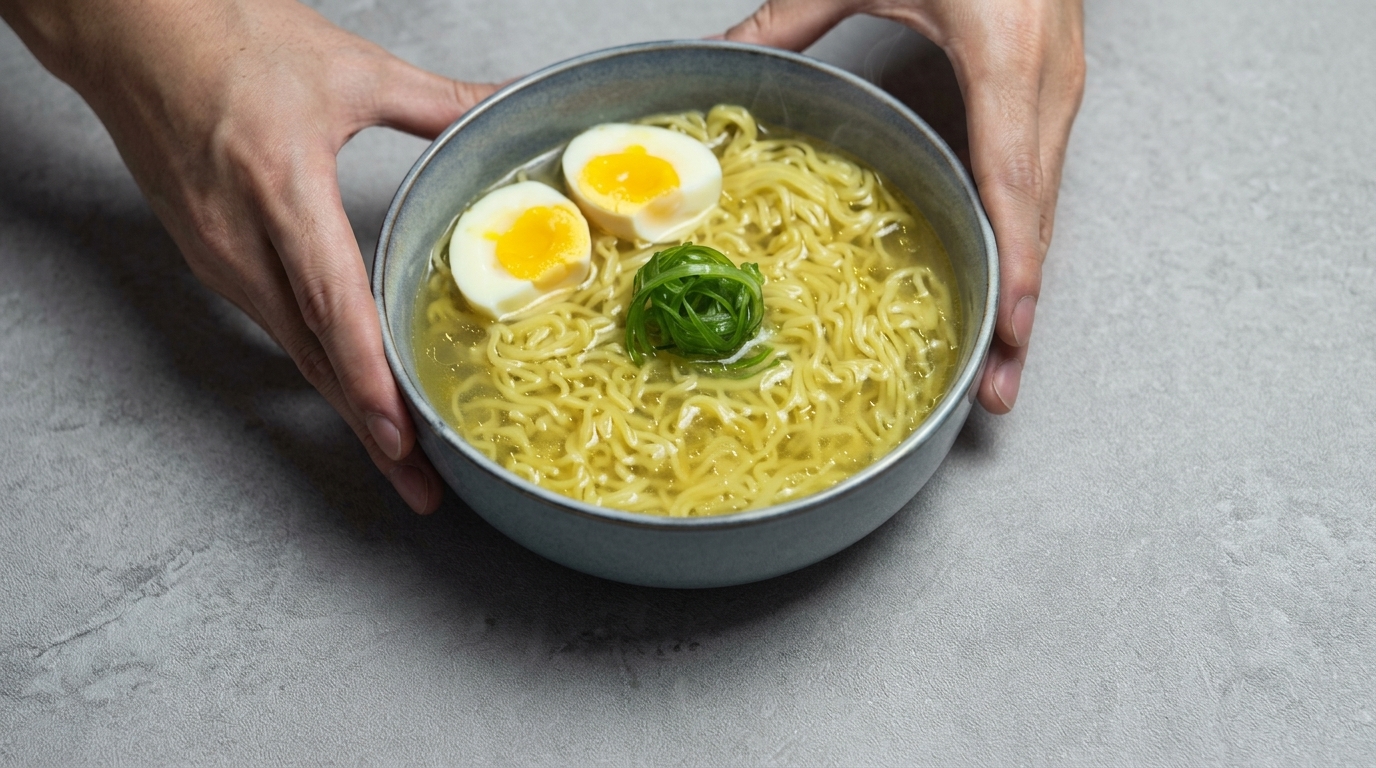
A light and savory Shio Ramen featuring a clear golden chicken broth, springy noodles, and jammy soft-boiled eggs, ready in under 15 minutes.
Shio, or salt, is the oldest of the four main ramen styles, known for its clear, delicate broth that emphasizes the quality of the ingredients. Unlike richer tonkotsu, Shio ramen offers a clean and refreshing profile that highlights the natural sweetness of the chicken stock. It is a staple of Hakodate but remains a favorite across Japan for its elegant simplicity.
Ingredients
- 300 ml chicken stock
- 200 ml water
- 100 g fresh ramen noodles
- 1 tbsp sesame oil
- 1 tsp chicken powder
- 0.5 tsp salt
- 1 soft-boiled egg
- to taste shredded green onions
Instructions
- 1Add the chicken stock
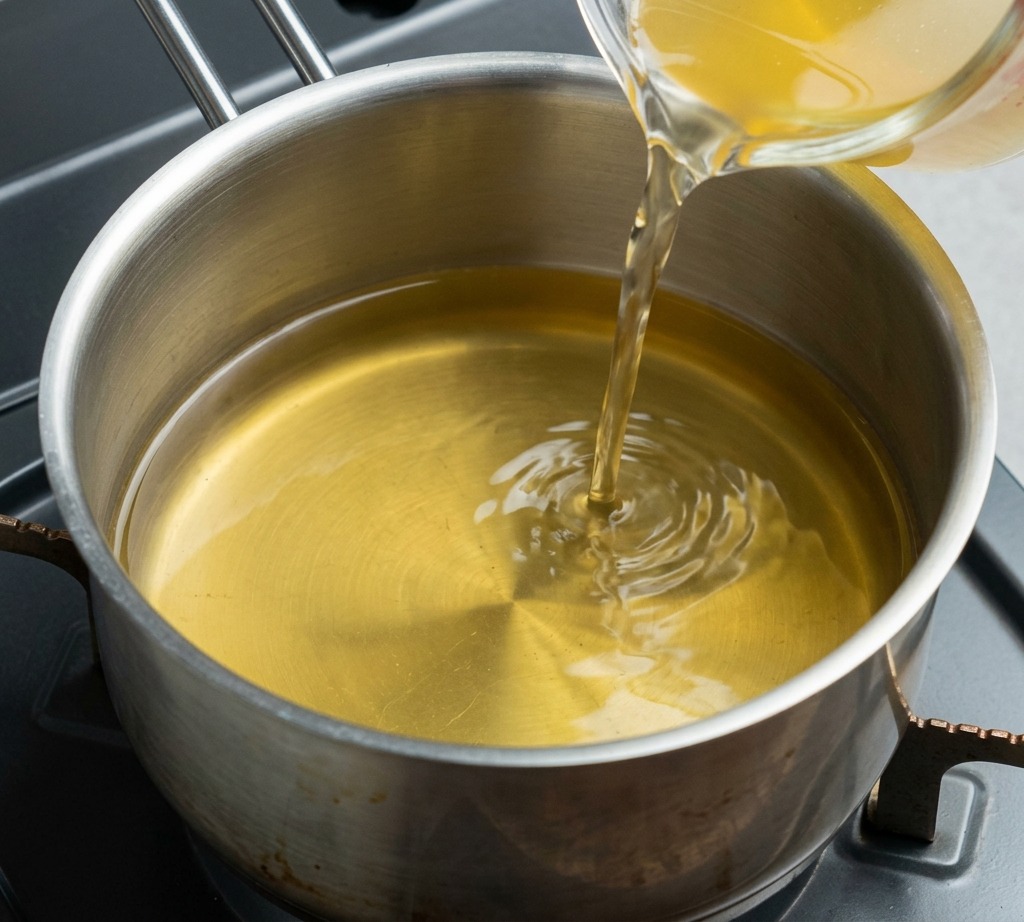
Start by pouring 300ml of high-quality chicken stock into a small stainless steel pot. The quality of your stock serves as the foundational flavor for this Shio Ramen, providing the essential savory depth.
Tip: If you are using store-bought stock, choose a low-sodium variety so you can precisely control the saltiness with the seasonings later. - 2Dilute the broth base
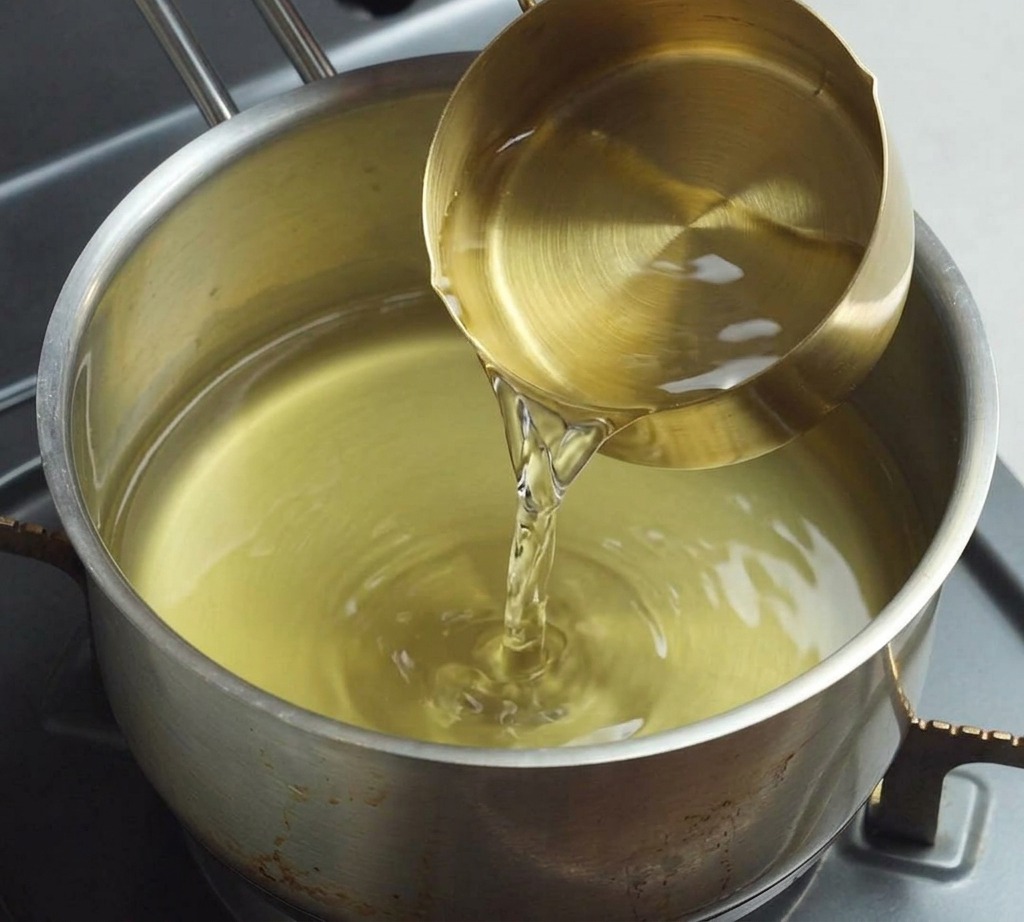
Add 200ml of water into the pot with the chicken stock. This dilution ensures the broth is not overly concentrated, allowing the delicate salt and sesame seasonings to shine through in the final bowl.
Tip: Filtered water is recommended to maintain the cleanest possible flavor for your soup base. - 3Bring broth to a boil
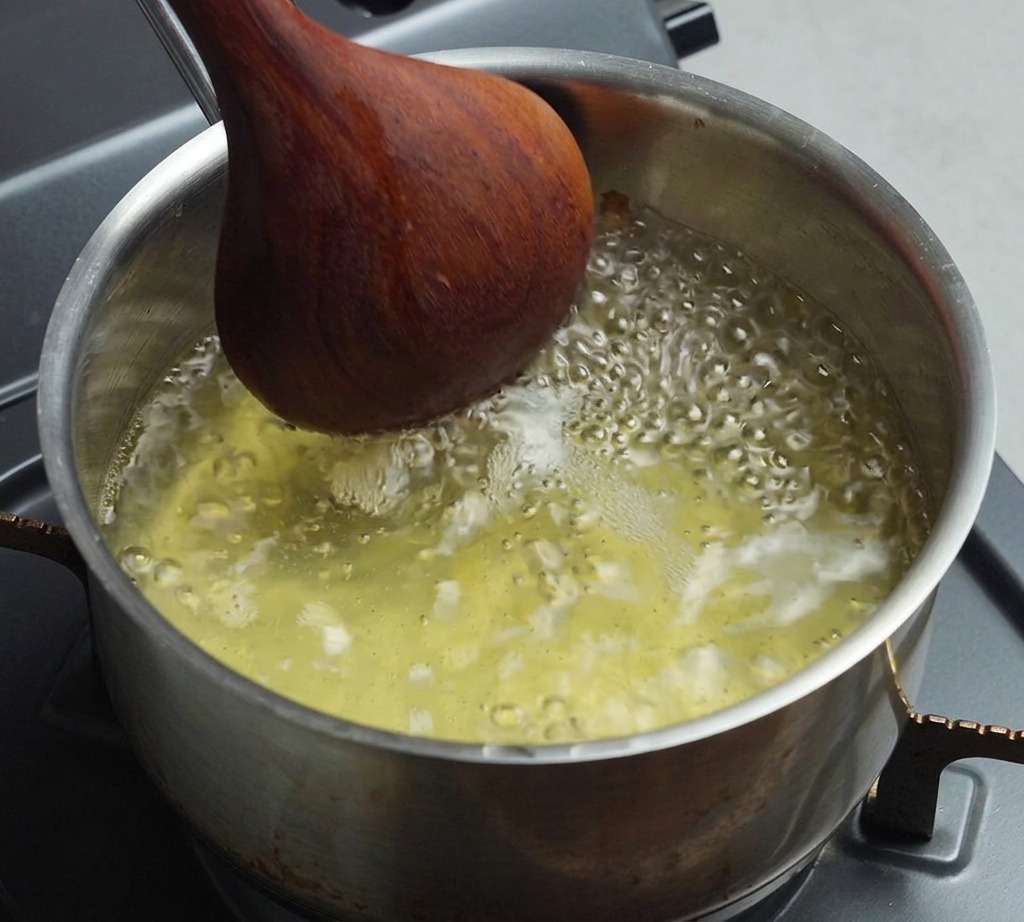
Place the pot over medium heat and bring the liquid to a steady boil. Give it a gentle stir with a wooden spoon to ensure the stock and water are perfectly integrated and heating evenly.
Tip: Stirring prevents any sediment from settling and helps distribute the heat uniformly throughout the liquid. - 4Add noodles to boiling water
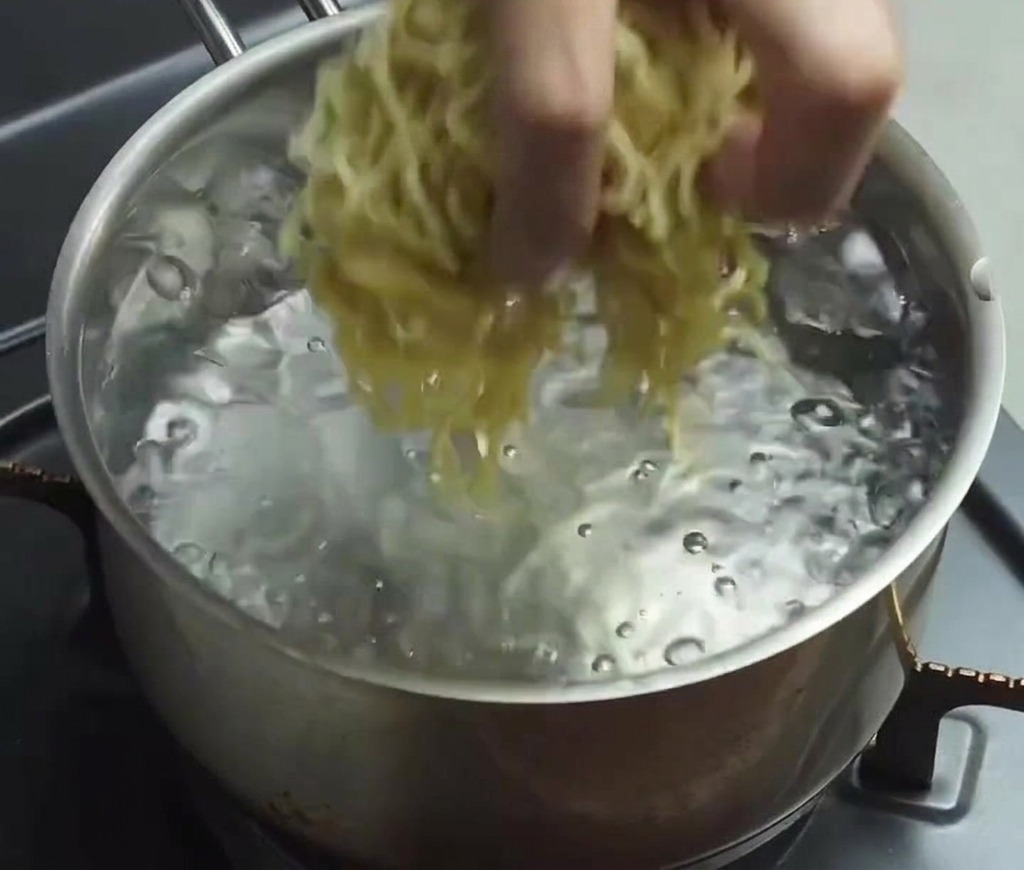
In a separate pot of rapidly boiling water, carefully drop in 100g of fresh ramen noodles. Ensure the water is at a rolling boil before adding the noodles to prevent them from becoming gummy or sticking together.
Tip: Gently shake the noodle bundle as you release it into the water to help the strands separate immediately. - 5Stir the cooking noodles
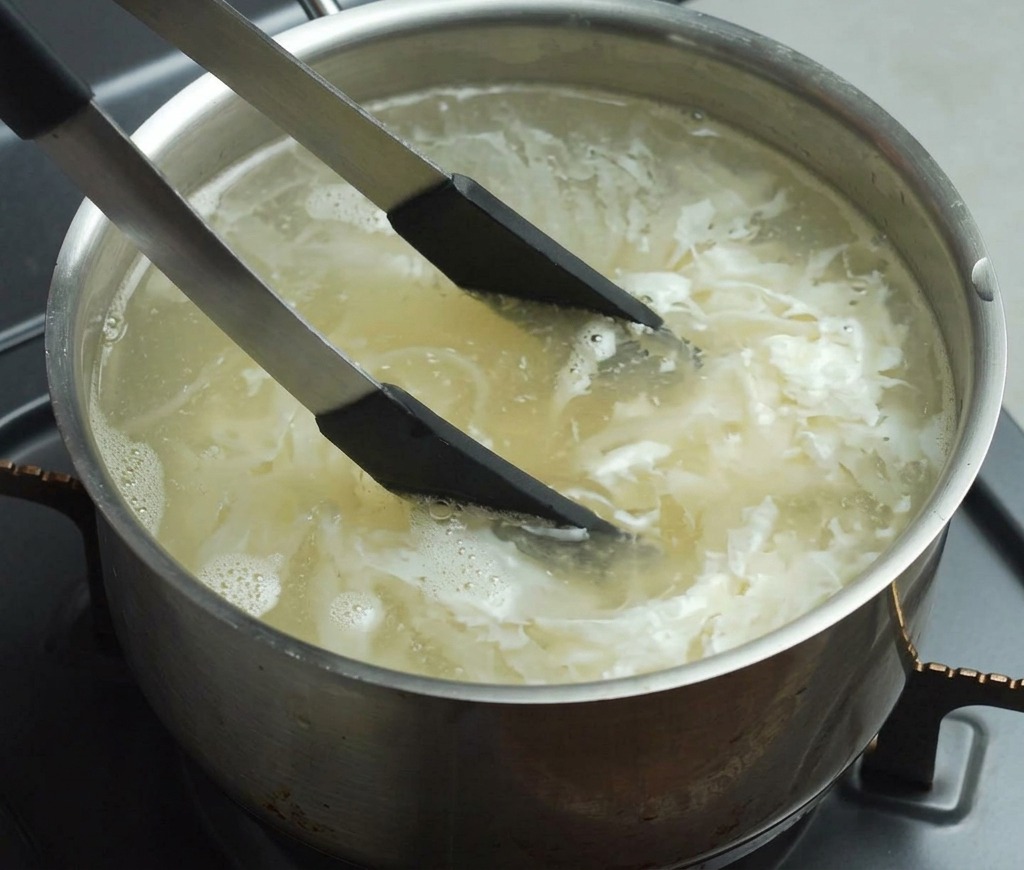
Use a pair of tongs to gently stir the noodles as they boil. This keeps them moving and ensures every strand cooks evenly. Fresh ramen noodles cook very quickly and usually require only 60 to 80 seconds.
Tip: Do not overcook the noodles as they should still have a firm texture because they will continue to soften once placed in the hot broth. - 6Drain the noodles thoroughly
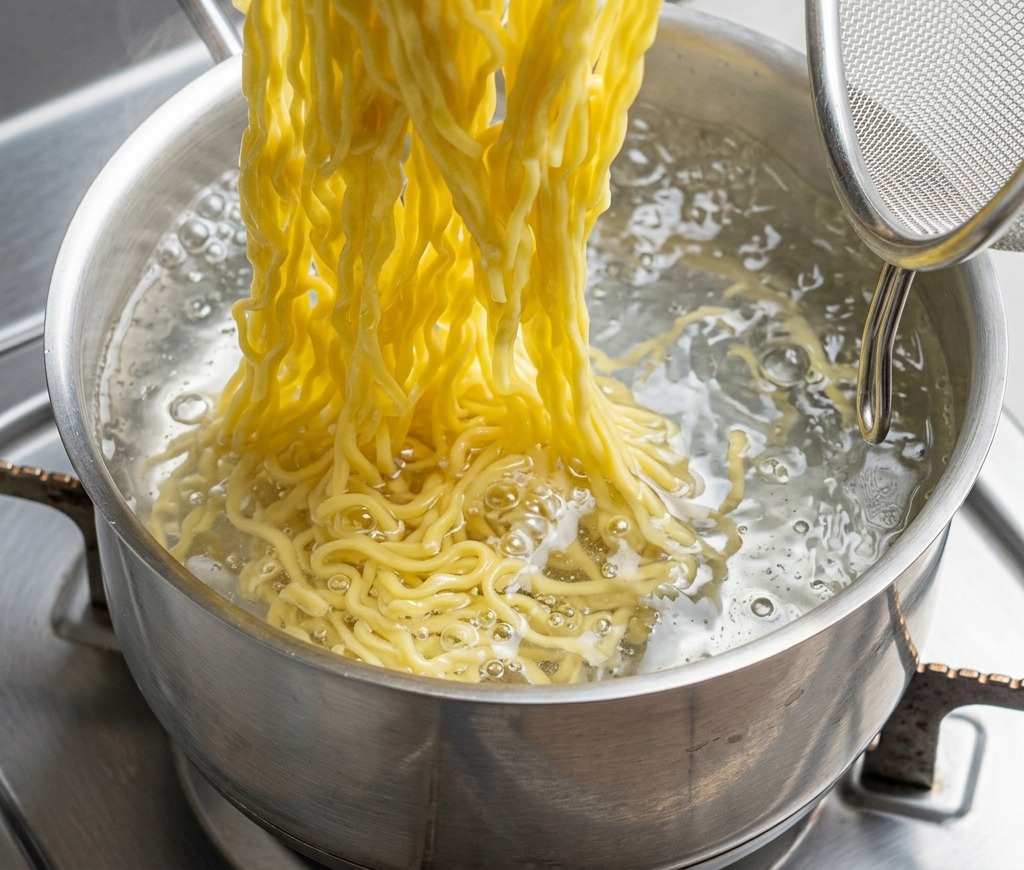
Once the cooking time is complete, lift the noodles out of the water using a mesh strainer. Use tongs to gather all the strands and shake the strainer well to remove any excess water.
Tip: Draining the water effectively is crucial to prevent diluting the concentrated seasoning in your serving bowl. - 7Remove excess starch
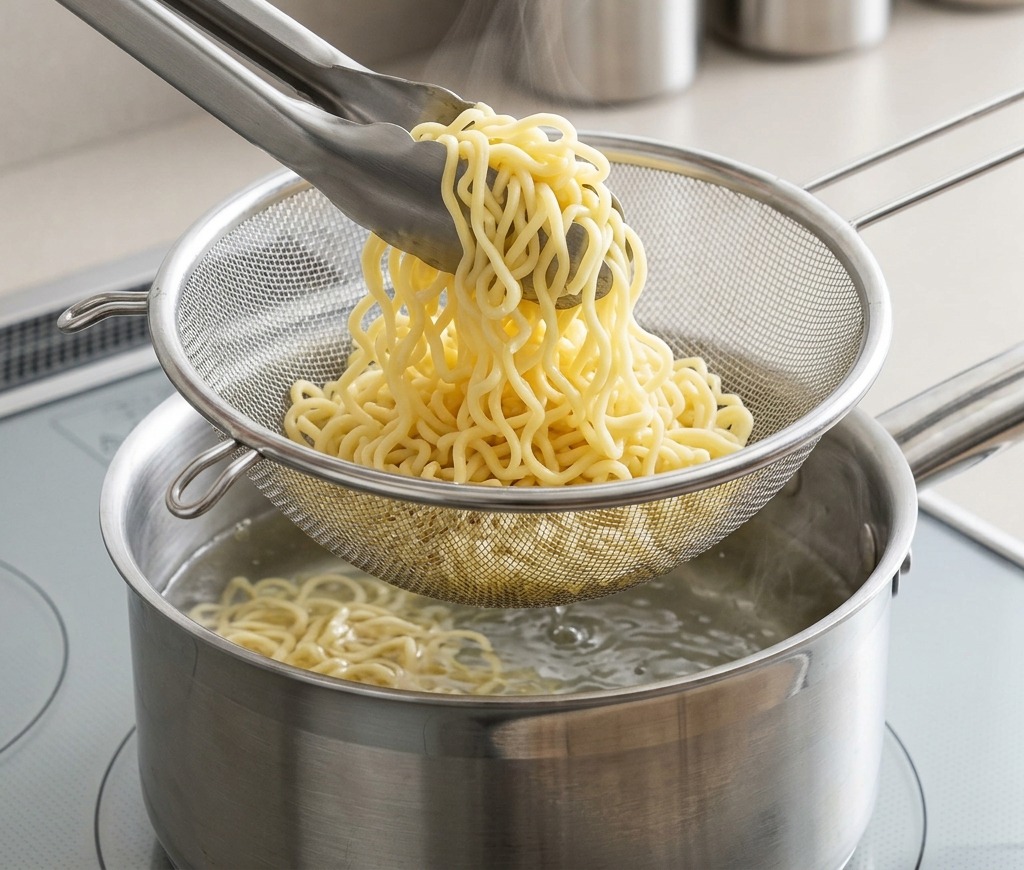
Give the mesh strainer several firm shakes to ensure every drop of cooking water is removed. This prevents extra starch from making your clear soup cloudy or thick.
Tip: Properly drying the noodles ensures the seasoned broth retains its full savory strength. - 8Start with sesame oil
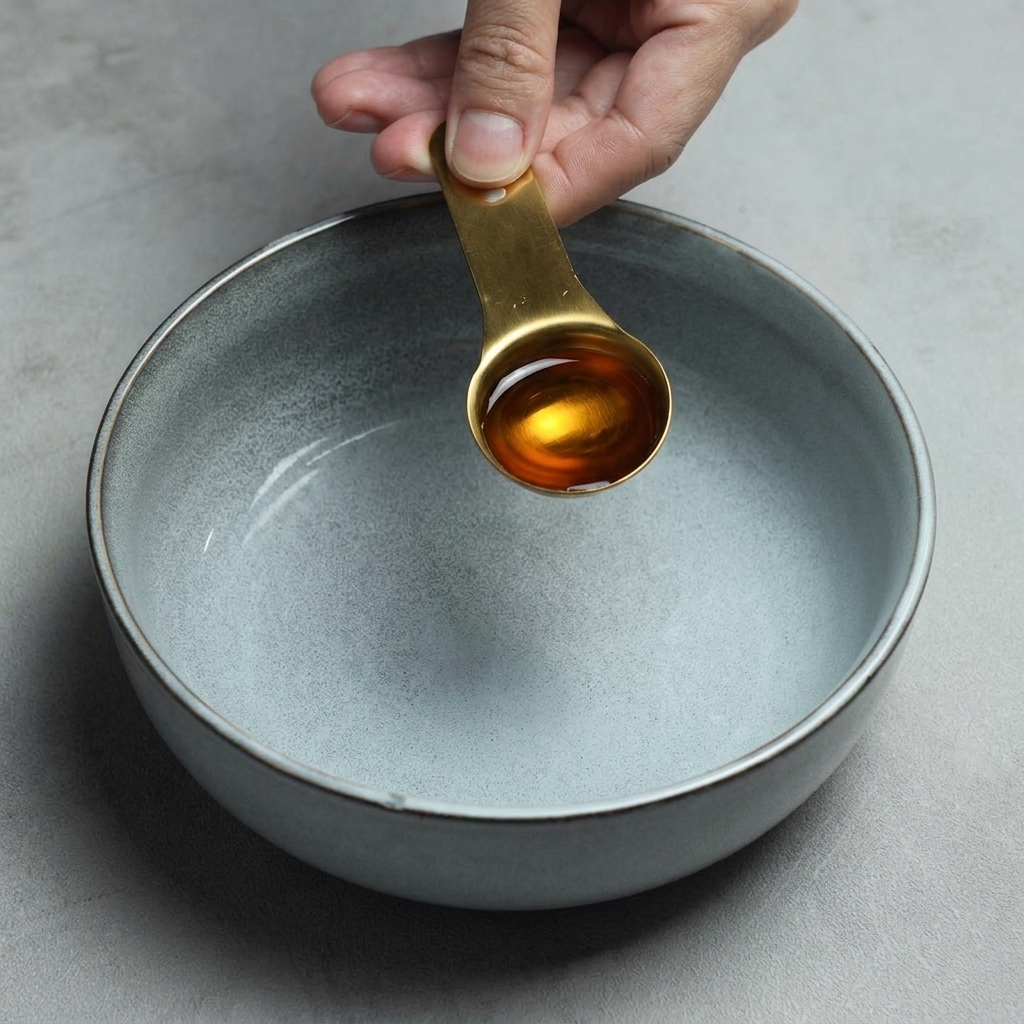
Begin assembling your seasoning base by adding 1 tablespoon of sesame oil into the bottom of a blue-gray serving bowl. The oil provides a rich, nutty foundation and a beautiful aromatic sheen to the finished ramen.
Tip: Use toasted sesame oil for a deeper, more intense aroma and flavor profile. - 9Incorporate chicken powder
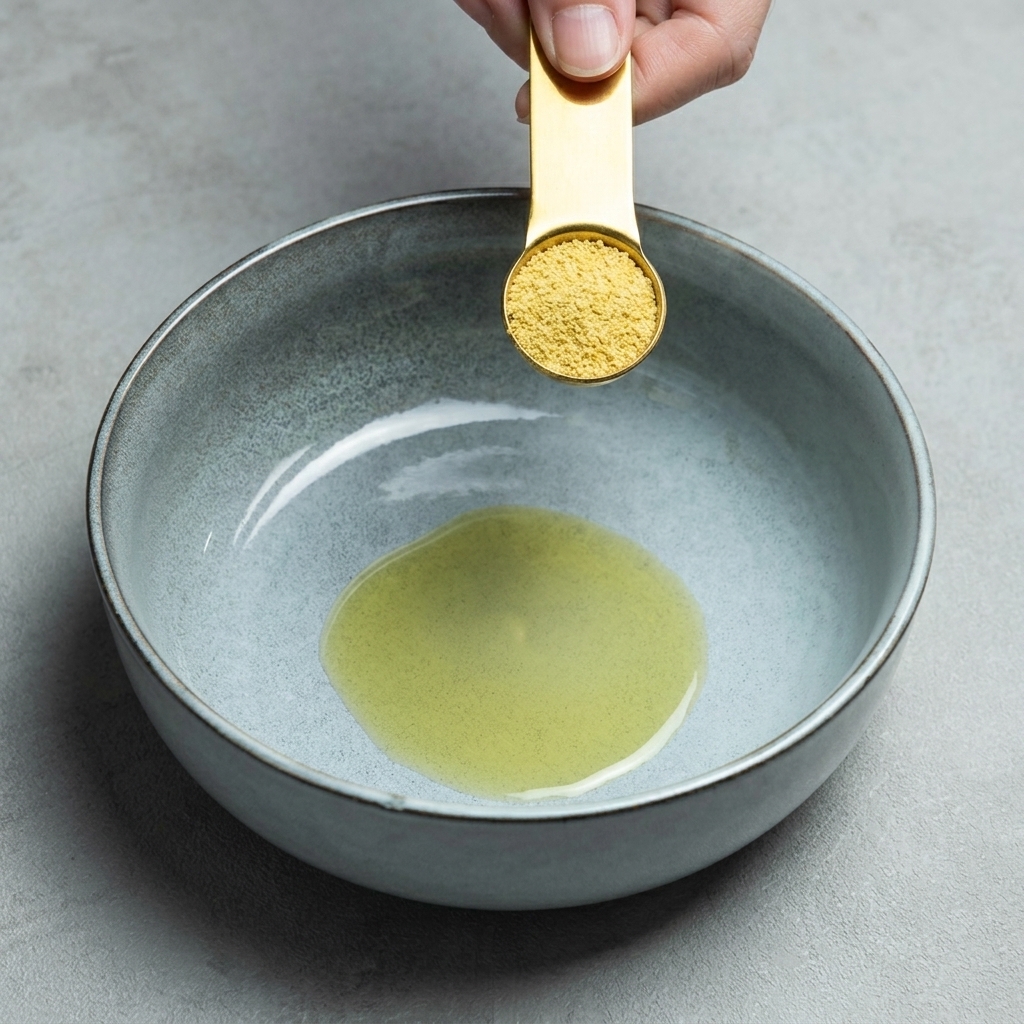
Add 1 teaspoon of chicken powder seasoning directly into the bowl with the sesame oil. This concentrated seasoning acts as the primary flavor agent, mimicking a long-simmered dashi or tare base for a quick meal.
Tip: Since chicken powder brands vary in salinity, taste the broth after mixing; you may need to adjust the salt amount accordingly. - 10Add salt for the savory base
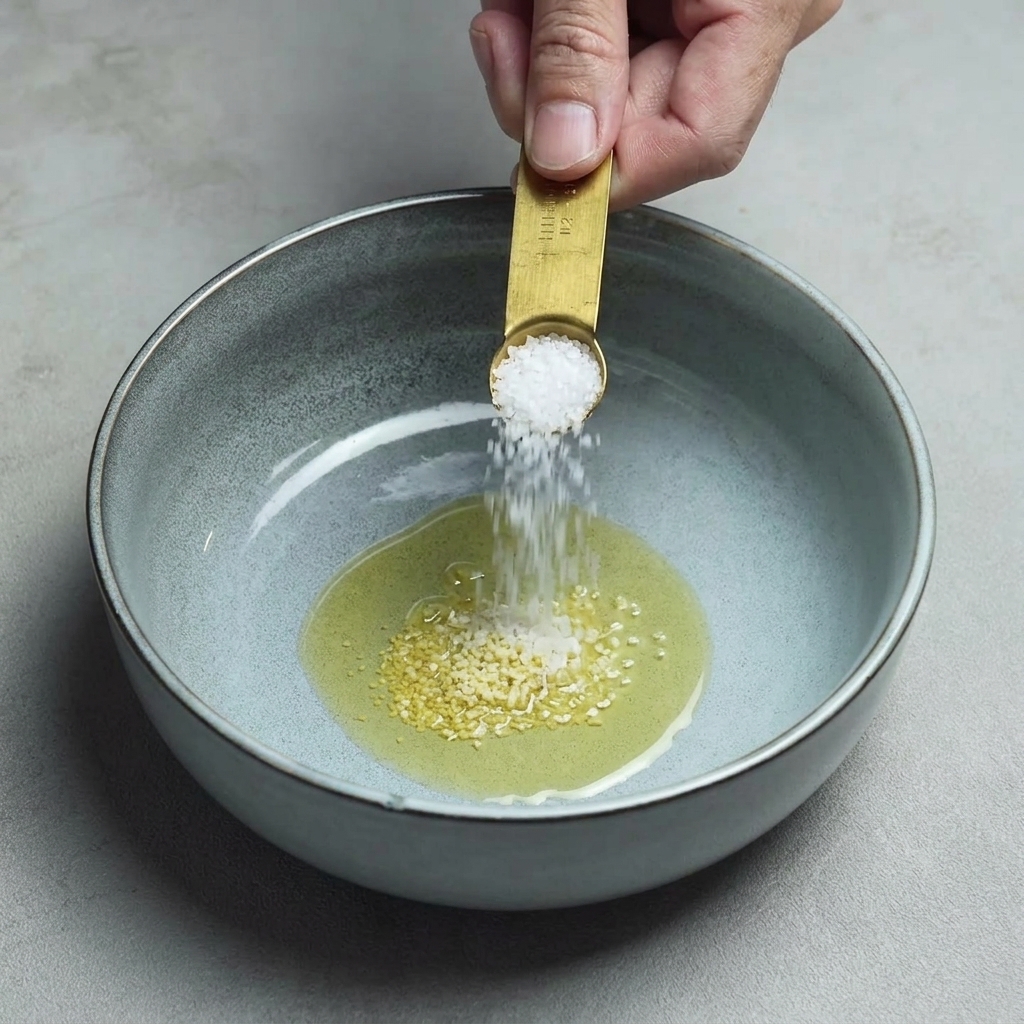
Add half a teaspoon of salt to the bowl with the other seasonings. As this is a salt-based ramen, the salt is critical for highlighting the savory notes of the chicken stock.
Tip: If you are using a low-sodium chicken stock, you may want to increase the salt slightly to taste. - 11Pour in the hot broth
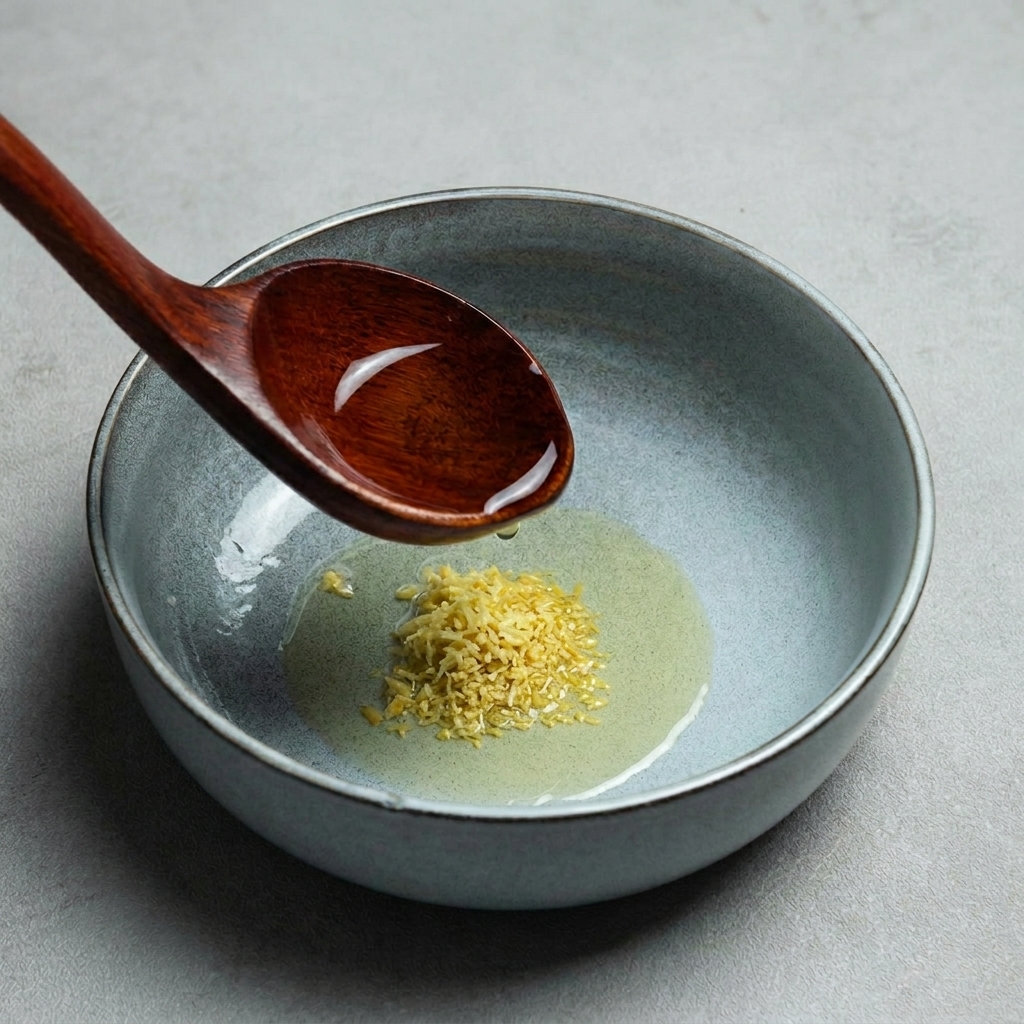
Take the hot mixture of chicken stock and water that was brought to a boil and pour it carefully into the seasoned bowl. The heat from the broth will immediately begin to dissolve the salt and chicken powder.
Tip: Pouring the broth onto the oil helps bloom the sesame aroma, filling the kitchen with a delicious scent. - 12Stir the soup base
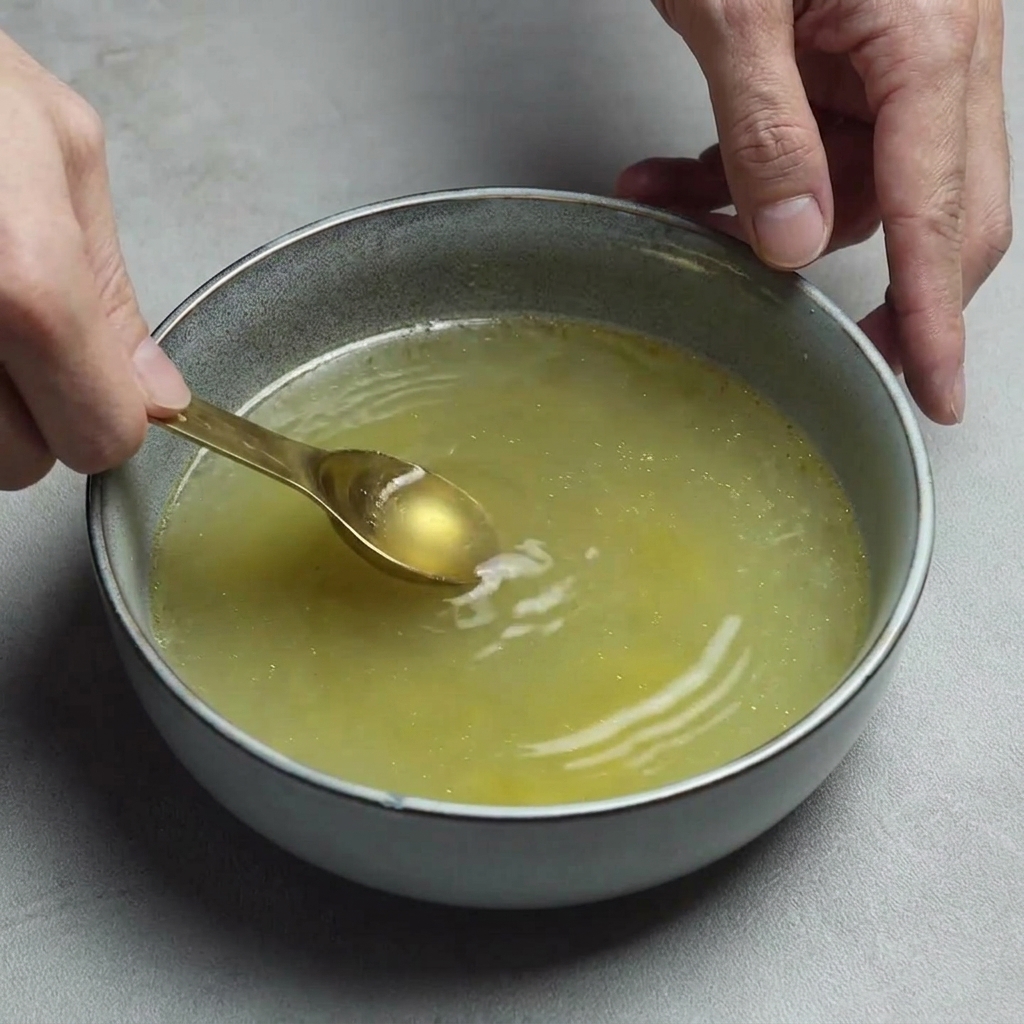
Use a spoon to stir the hot broth thoroughly. Ensure that the chicken powder and salt at the bottom of the bowl are completely dissolved and well-integrated with the sesame oil and broth.
Tip: Be sure to scrape the bottom of the bowl with your spoon to ensure no granules of chicken powder remain undissolved. - 13Combine noodles and broth
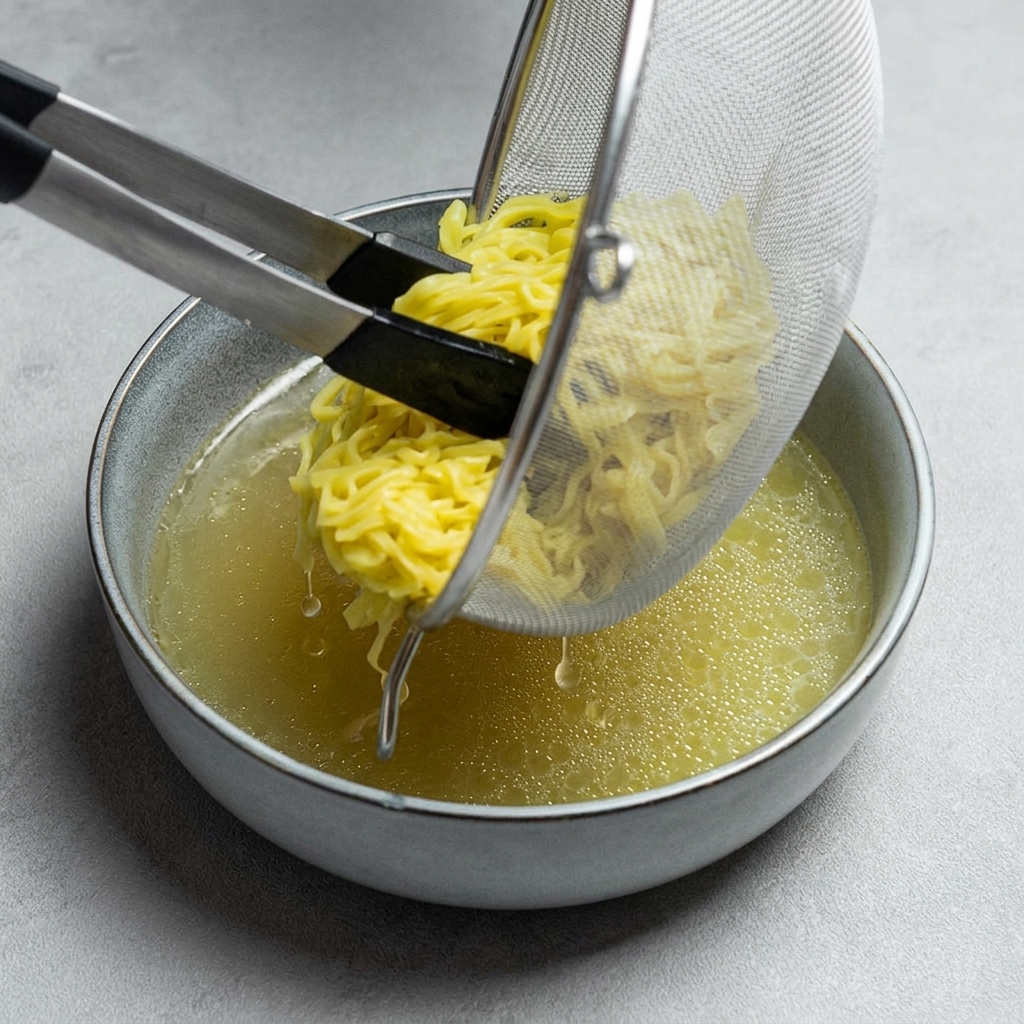
Carefully lower the well-drained ramen noodles into the seasoned broth bowl. Use tongs or chopsticks to gently loosen the noodles so they sit evenly in the soup, ensuring they are fully submerged and coated with the savory stock and sesame oil.
Tip: Work quickly once the noodles are drained to prevent them from sticking together or becoming overcooked from their own residual heat. - 14Garnish with green onions
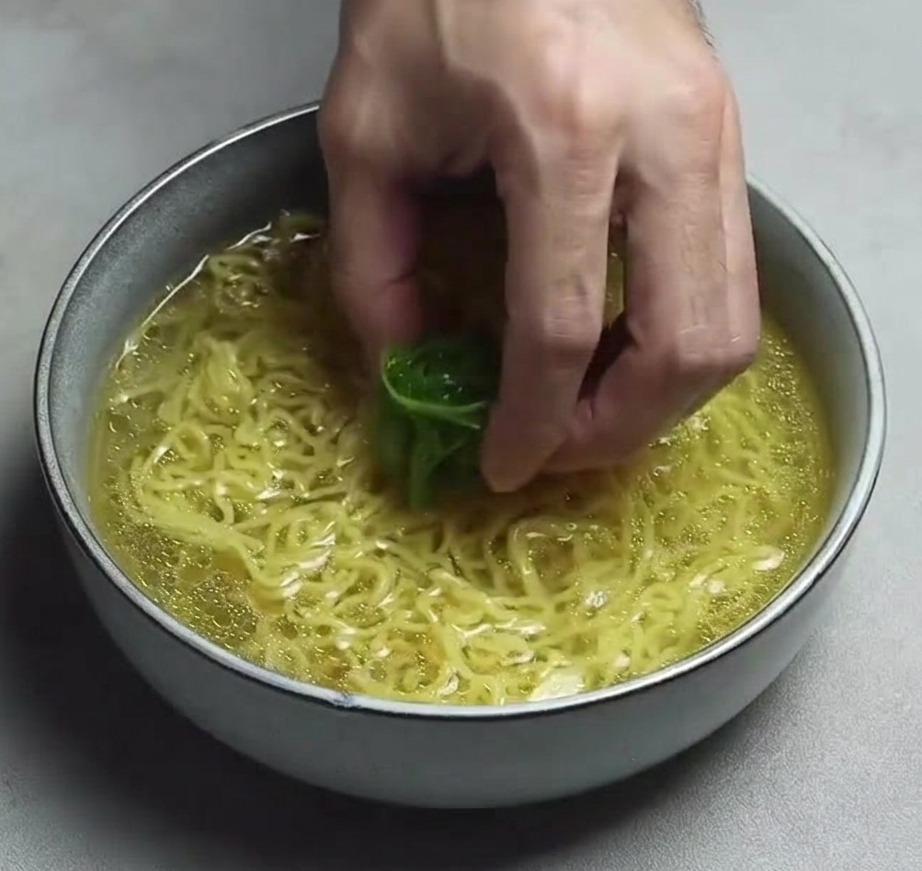
Place a fresh mound of finely shredded green onions right in the center of the bowl on top of the noodles. This classic garnish provides a sharp, fresh bite that cuts through the savory richness of the chicken broth and sesame oil.
Tip: For professional-looking garnish, soak your onion shreds in ice water for 5 minutes; they will curl up and stay crisp. - 15Finish with soft-boiled eggs
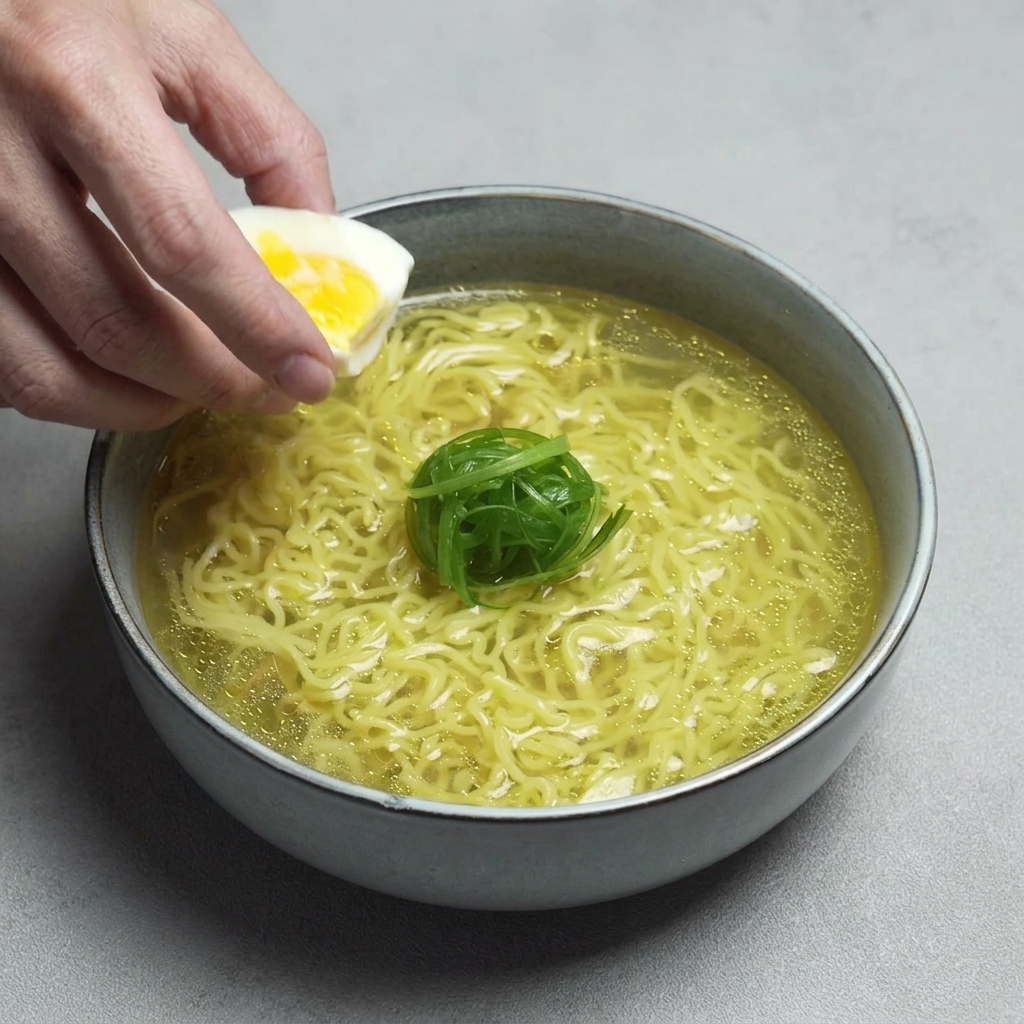
Carefully lay the two halves of a jammy, soft-boiled egg onto the noodles next to the green onion garnish. The rich yolk adds a luxurious, creamy texture that perfectly complements the salty, clear broth.
Tip: Angle the egg halves slightly upward to showcase the bright orange yolks for a professional presentation.