Quick Korean Spicy Seafood Ramen (Jjamppong Style)
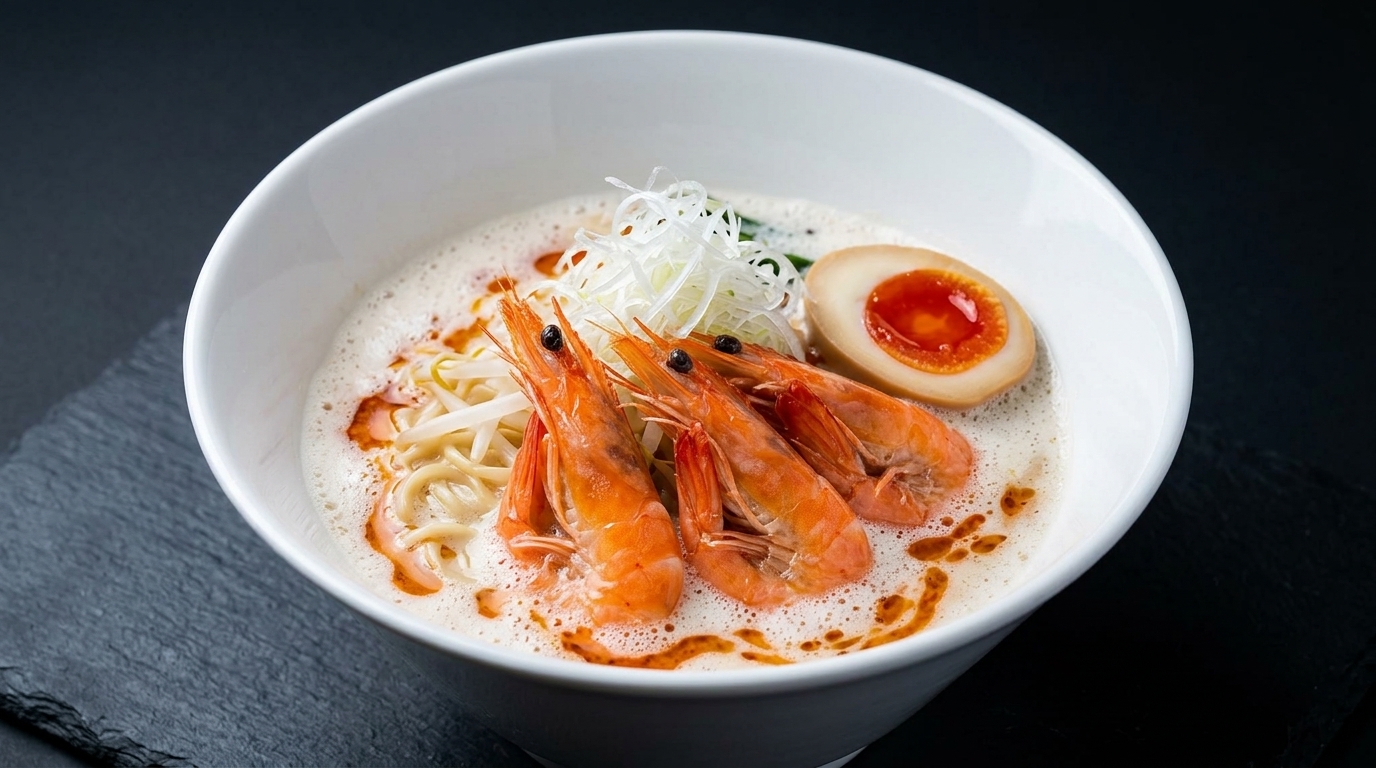
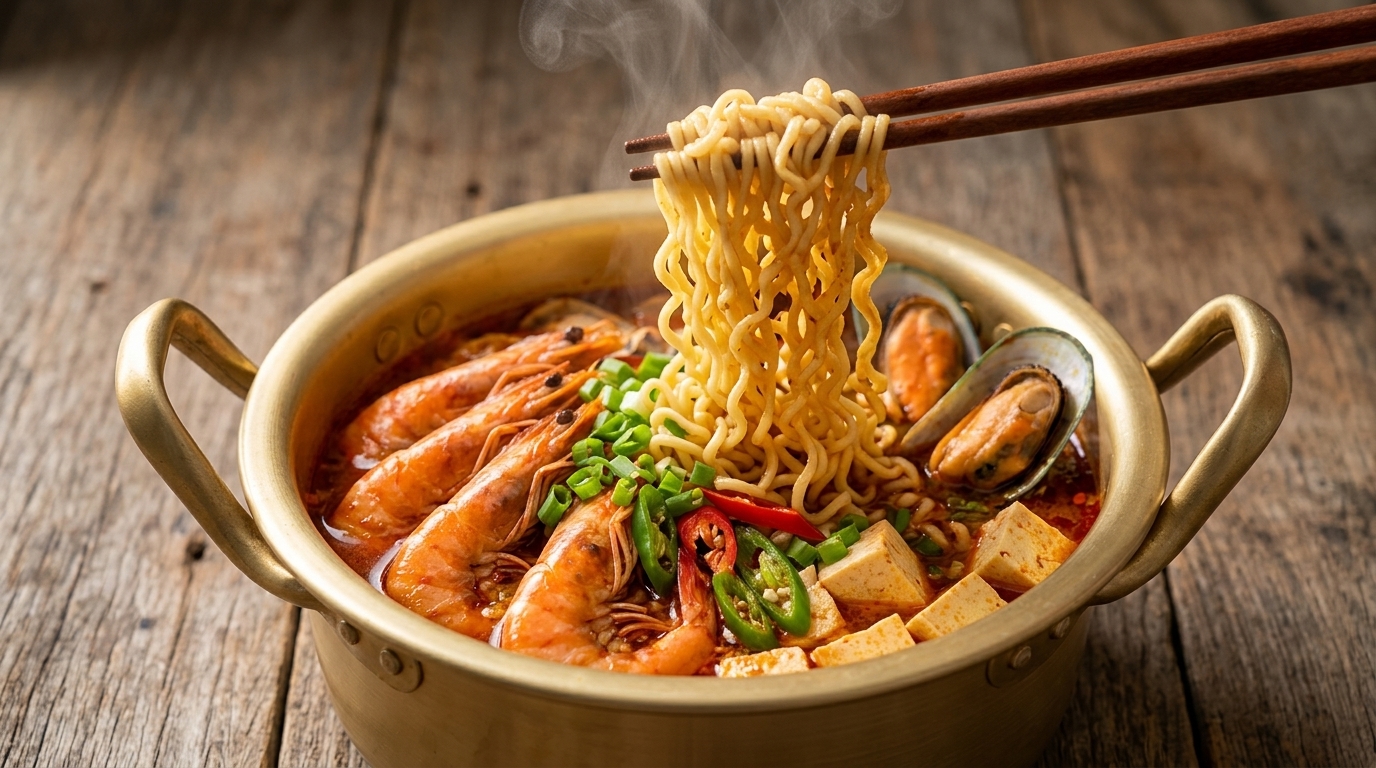
A restaurant-quality seafood ramen made in minutes. This spicy, umami-rich bowl features a pork and bibimbap sauce base loaded with fresh prawns and silky tofu.
This dish is a clever fusion of Jjamppong (Korean-Chinese spicy seafood soup) and convenient instant ramen. By building a flavor base with ground pork and sesame oil, you create a rich, smoky broth that tastes like it simmered for hours. It is the ultimate comfort meal for seafood lovers who want a gourmet result with minimal effort.
Ingredients
- 1 tbsp peanut oil
- 1 tsp sesame oil
- 20 g scallions
- 6 g minced garlic
- 80 g ground pork
- 20 g white onion
- 70 g Korean bibimbap sauce
- 500 ml water
- 1 pack Korean instant noodles
- 50 g soft tofu
- 2 g salt
- optional shiitake mushrooms
- optional enoki mushrooms
- optional fresh shrimp
- optional mussels
- to taste green and red chili peppers
Instructions
- 1Heat the cooking oils
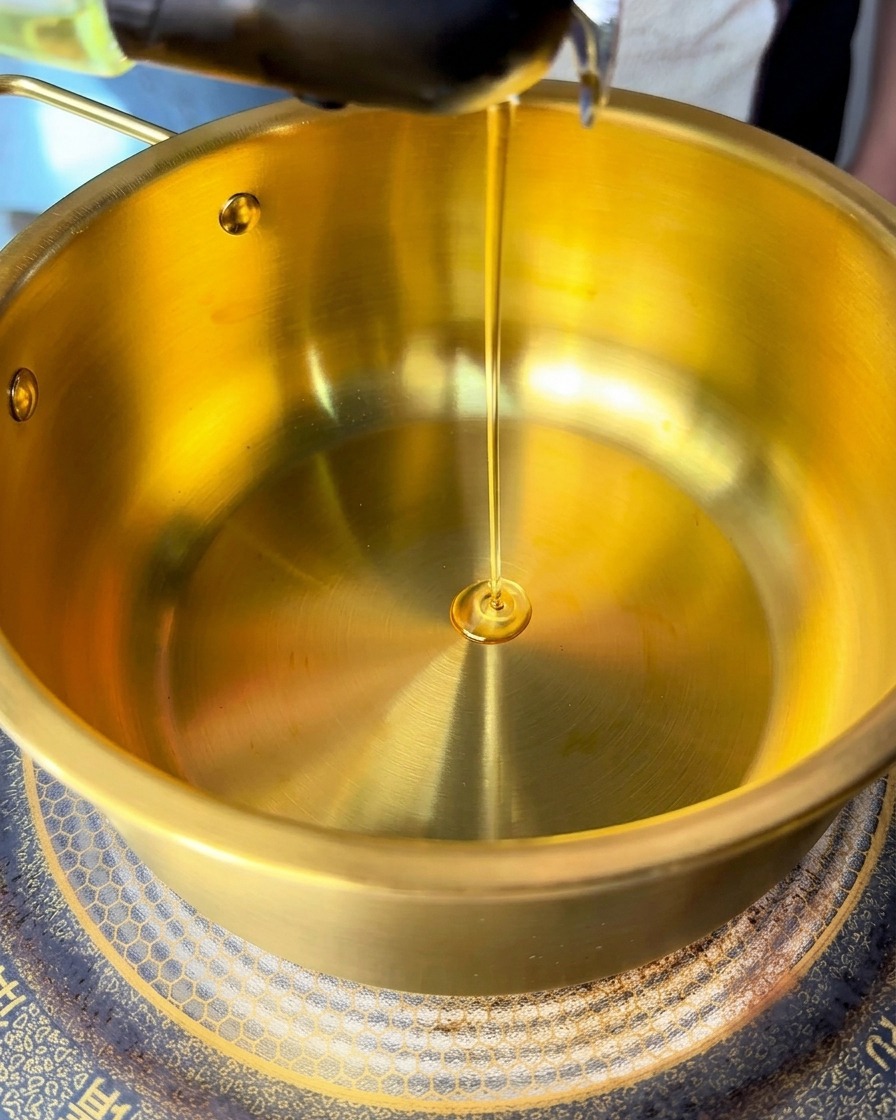
Place a golden pot over medium heat and pour in a small amount of peanut oil followed by sesame oil. Combining these oils provides a high smoke point with the distinct nutty aroma needed for a flavorful base.
Tip: Do not let the sesame oil smoke because the flavor becomes bitter if overheated. Just get it shimmering before adding aromatics. - 2Monitor oil temperature

Adjust the induction stove to medium heat and watch for the oils to begin shimmering. This ensures the base is hot enough to sear the aromatics without burning the delicate sesame oil.
Tip: Add the sliced scallions and garlic immediately once you see the oil move in waves across the bottom of the pot. - 3Sauté the aromatics
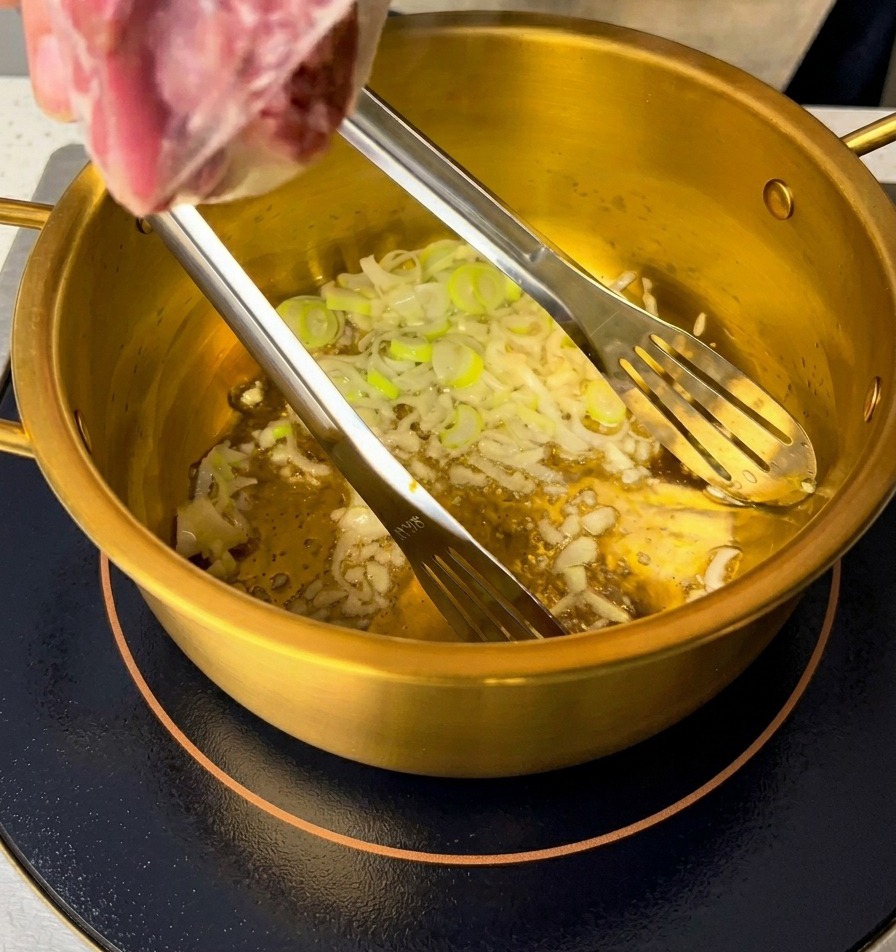
Add 20 grams of sliced scallions and 6 grams of minced garlic to the hot oil. Stir-fry them briefly until they become fragrant and slightly translucent, being careful not to burn the garlic.
Tip: Keep the aromatics moving constantly with tongs or a spatula to ensure even cooking and to prevent the garlic from turning bitter. - 4Add pork and onions
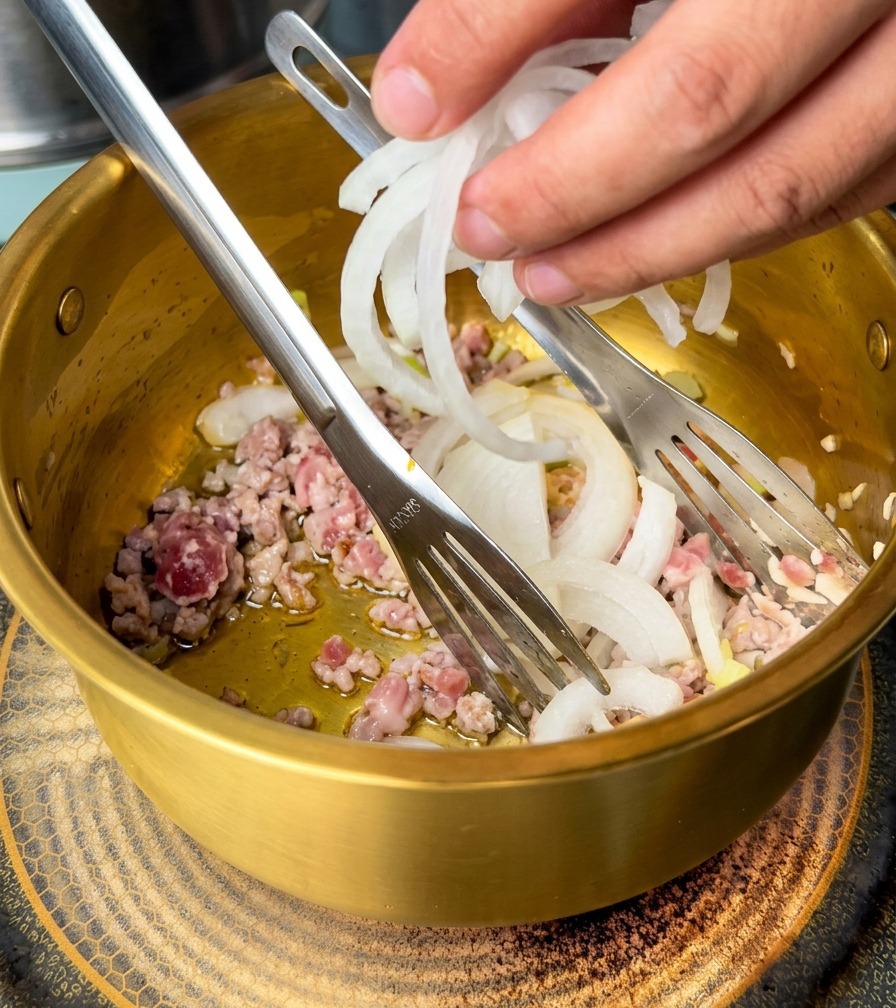
Once the aromatics are fragrant, add 80 grams of ground pork to the pot. Stir-fry the meat until it is no longer pink, then toss in 20 grams of sliced white onions. Continue to cook until the onions begin to soften and the pork is well-browned.
Tip: Break up the ground pork thoroughly while cooking to ensure it integrates well into the broth later. - 5Add Korean bibimbap sauce
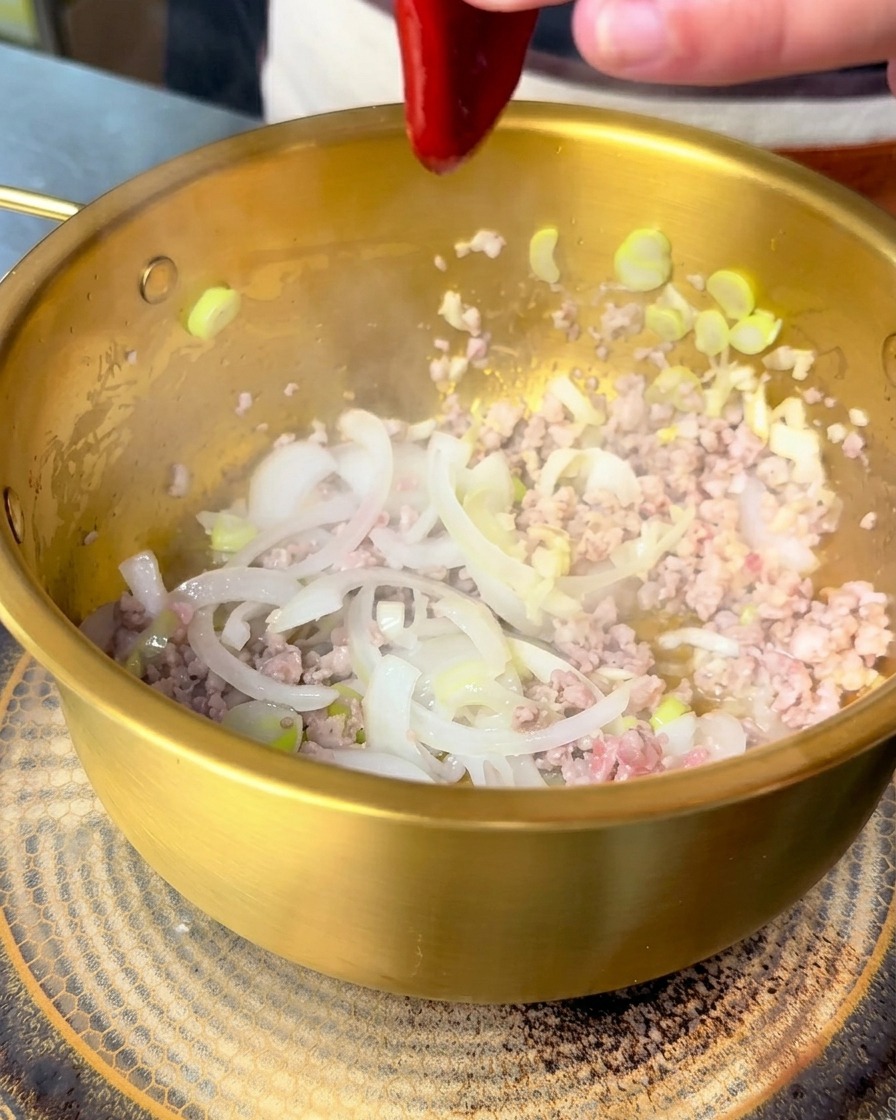
Squeeze 70 grams of Korean bibimbap sauce into the pot with the sautéed pork and onions. Stir the mixture well to ensure the sauce is fully integrated, creating a rich and spicy base for the ramen broth.
Tip: You can adjust the amount of bibimbap sauce depending on your personal preference for spice and saltiness. - 6Deglaze and add water
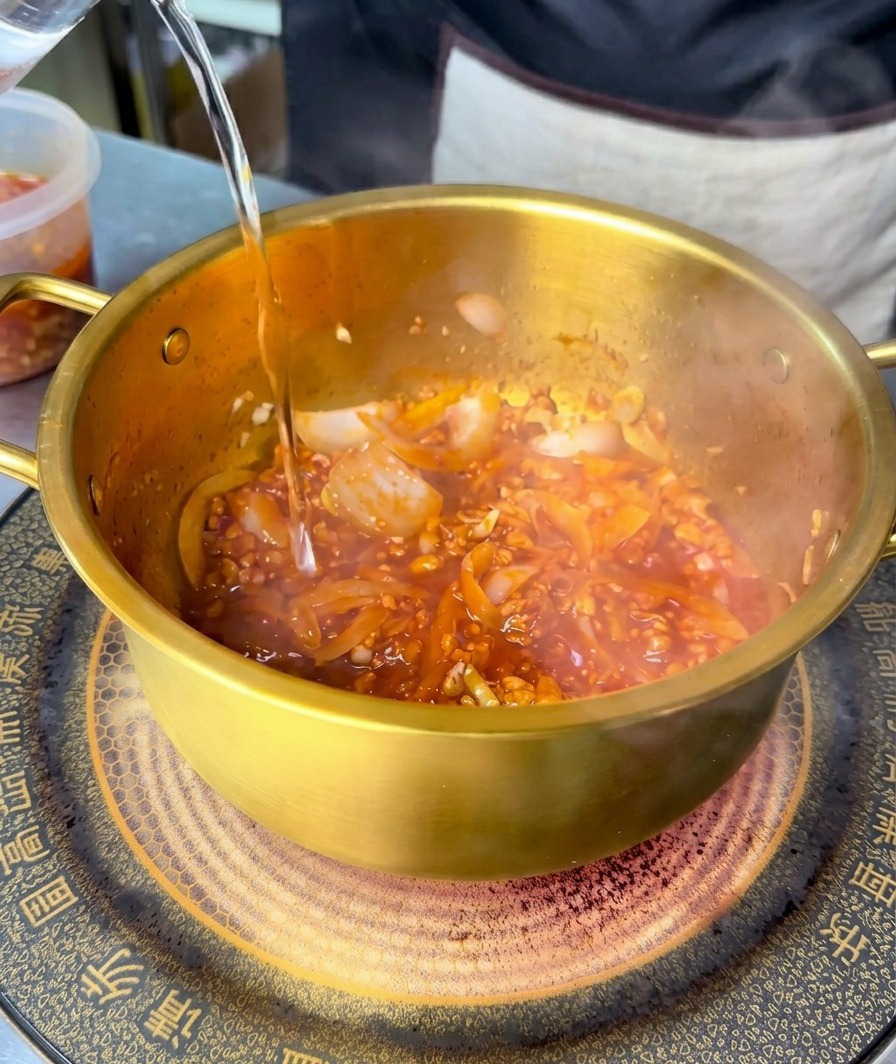
After stirring in the Korean bibimbap sauce and ensuring all ingredients are well-coated, pour in 500 milliliters of fresh water. Stir the bottom of the pot to incorporate all the caramelized bits into the liquid, creating a flavorful broth base.
Tip: Using room temperature or warm water helps bring the pot to a boil faster, saving time during this quick recipe. - 7Add the instant noodles
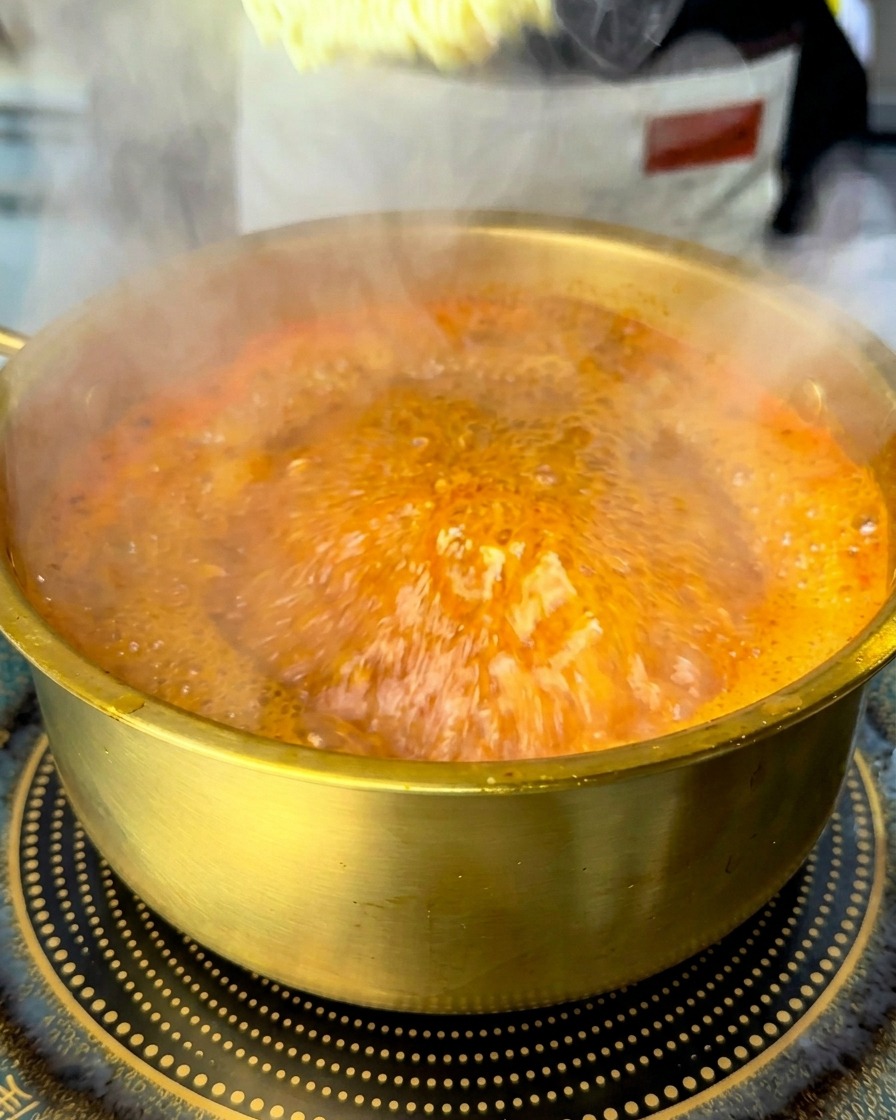
Once the spicy broth reaches a vigorous boil, add one pack of your favorite Korean instant noodles. Gently press down on the noodles to help them submerge and begin softening in the liquid.
Tip: Avoid breaking the noodle block if you want long, satisfying strands to slurp later. - 8Incorporate fresh mushrooms
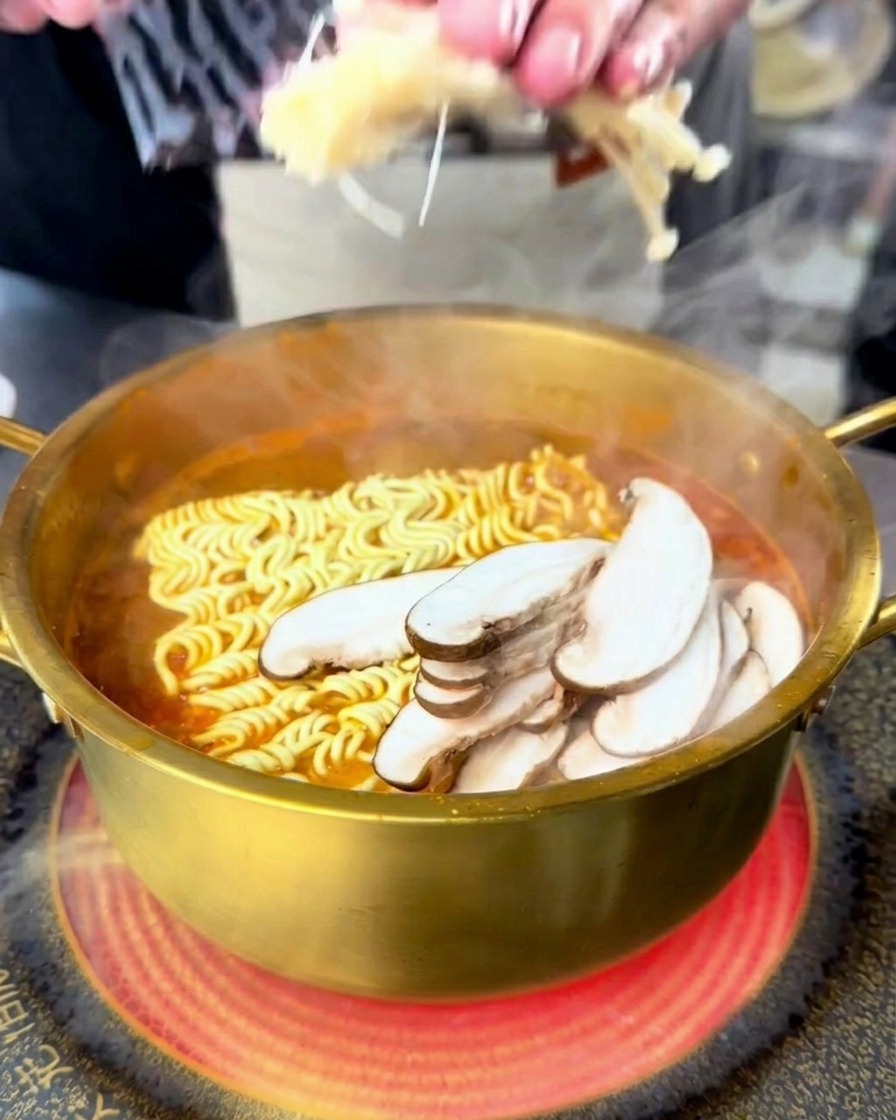
Add the sliced shiitake mushrooms and a bundle of enoki mushrooms into the pot. Arrange them on top of the noodles so they can steam and cook in the boiling broth, adding savory umami notes to the dish.
Tip: Trim the tough ends off the enoki mushrooms and separate the strands slightly for more even cooking. - 9Add fresh seafood
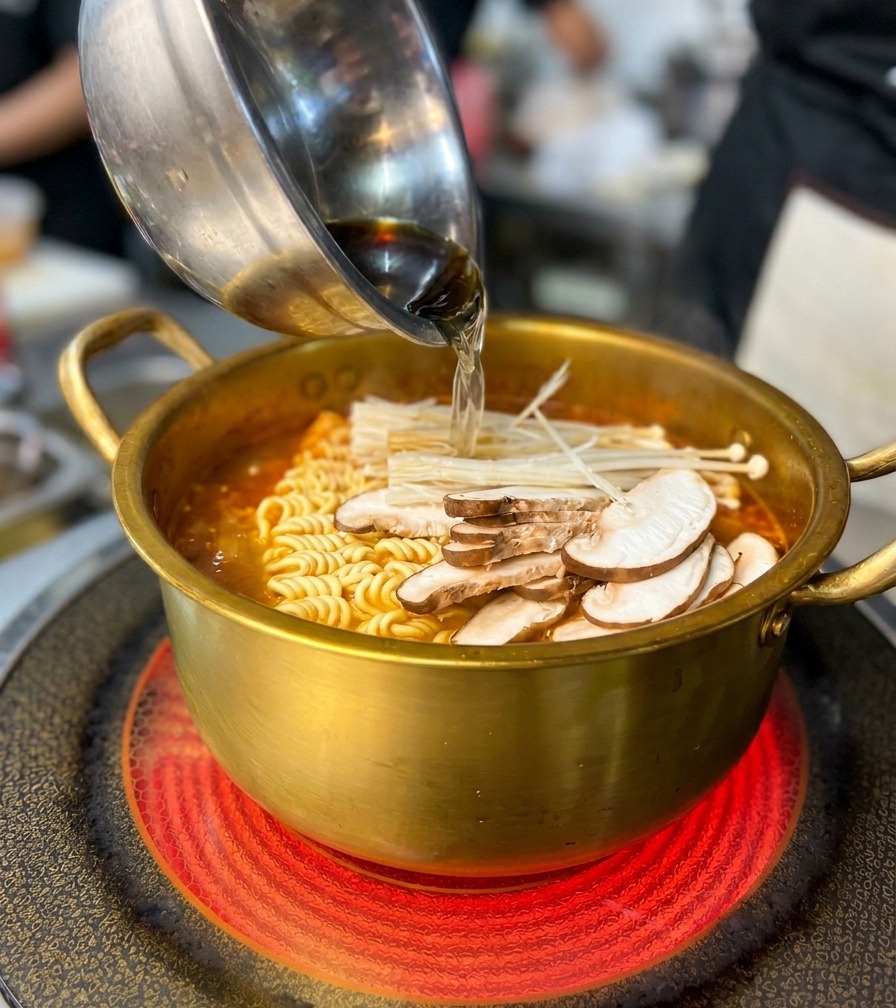
Once the noodles are submerged, add the fresh shrimp and mussels. The seafood will cook very quickly in the boiling broth, releasing its natural juices and creating a deep oceanic flavor in the soup.
Tip: If using frozen seafood, ensure it is fully thawed and patted dry to avoid watering down your spicy broth. - 10Finalize with tofu and chili
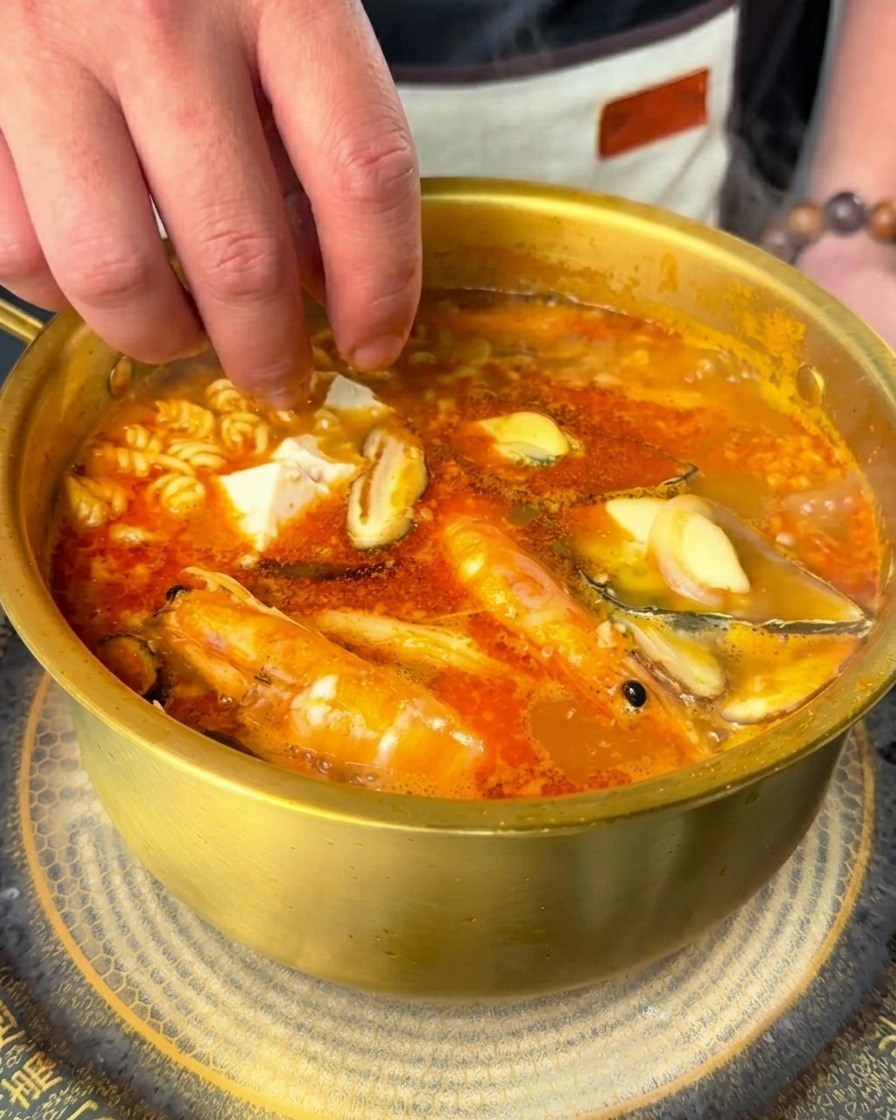
Gently add 50 grams of soft tofu cubes and 2 grams of salt into the simmering pot. Add the sliced green and red chili peppers for extra heat and color. Use a light touch when stirring to keep the tofu cubes intact while they heat through.
Tip: Soft or silken tofu provides the best texture for this dish similar to a traditional Korean soft tofu stew.