Creamy Shrimp
Chicken White Broth Ramen (Ebi Tori Paitan)
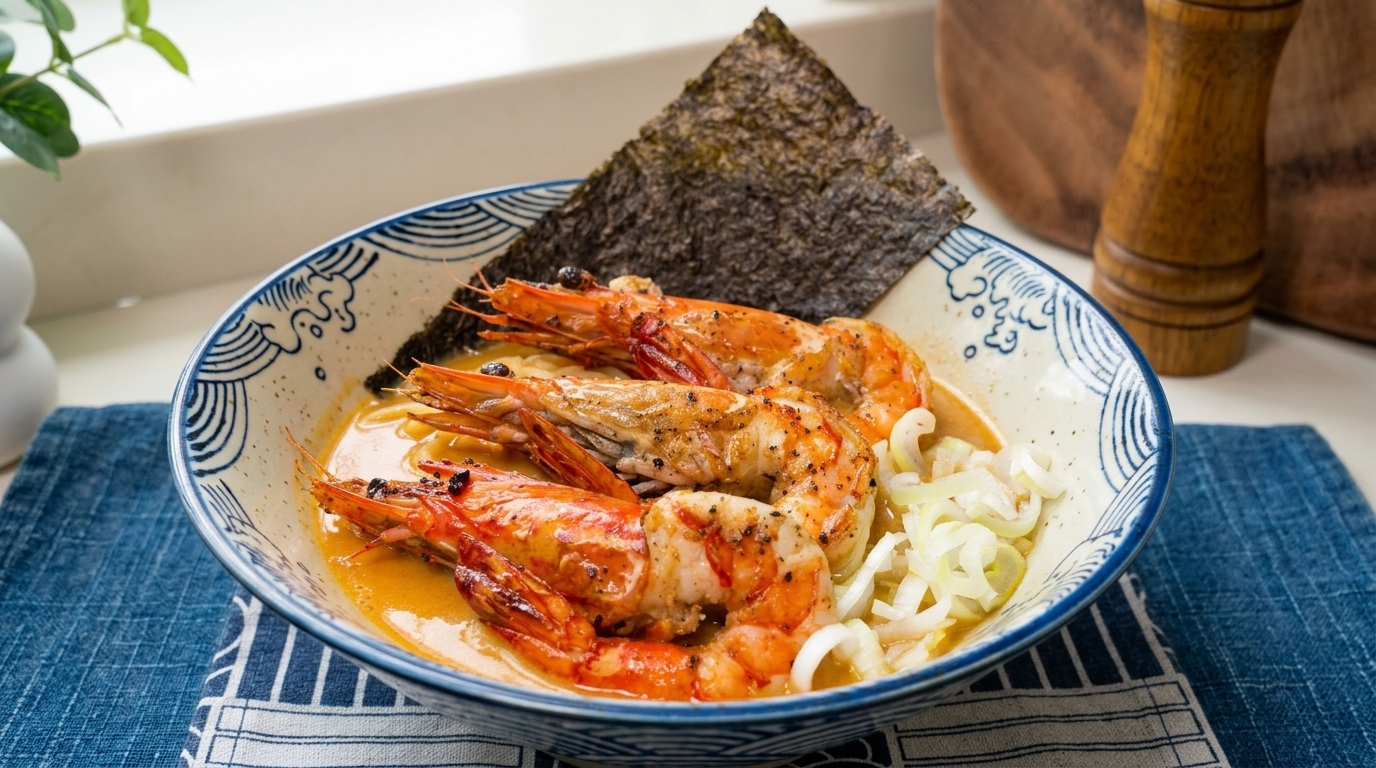
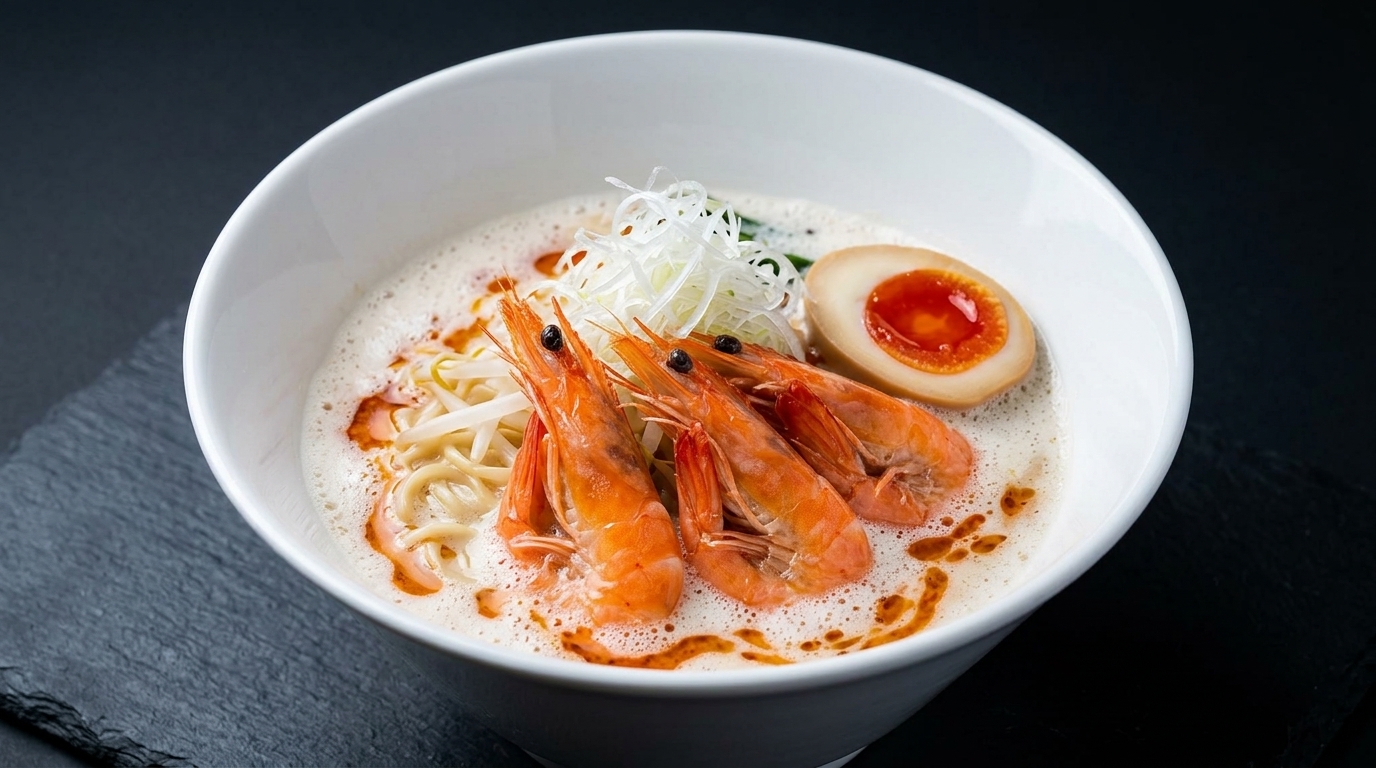
A luxurious seafood twist on Tori Paitan—velvety, frothed chicken broth infused with aromatic shrimp oil and topped with succulent whole shrimps.
This dish is a masterclass in texture and seafood aromatics. By emulsifying rich chicken paitan broth with concentrated shrimp oil using a hand blender, you create a cappuccino-like foam that traps the scent of the sea. It is a modern ramen technique that ensures every bite is as light as it is intensely savory, bridging the gap between traditional poultry stocks and coastal seafood flavors.
Ingredients
- 200 g ramen noodles
- 500 ml chicken white broth (tori paitan)
- 30 ml shrimp oil
- 20 ml shio tare (salt-based seasoning liquid)
- 3 large whole shrimps
- 12 marinated soft-boiled egg (ajitama)
- 50 g fresh bean sprouts
- 10 g white scallions, finely shredded
- optional spinach or wood ear mushrooms
Instructions
- 1Blanch the ramen noodles
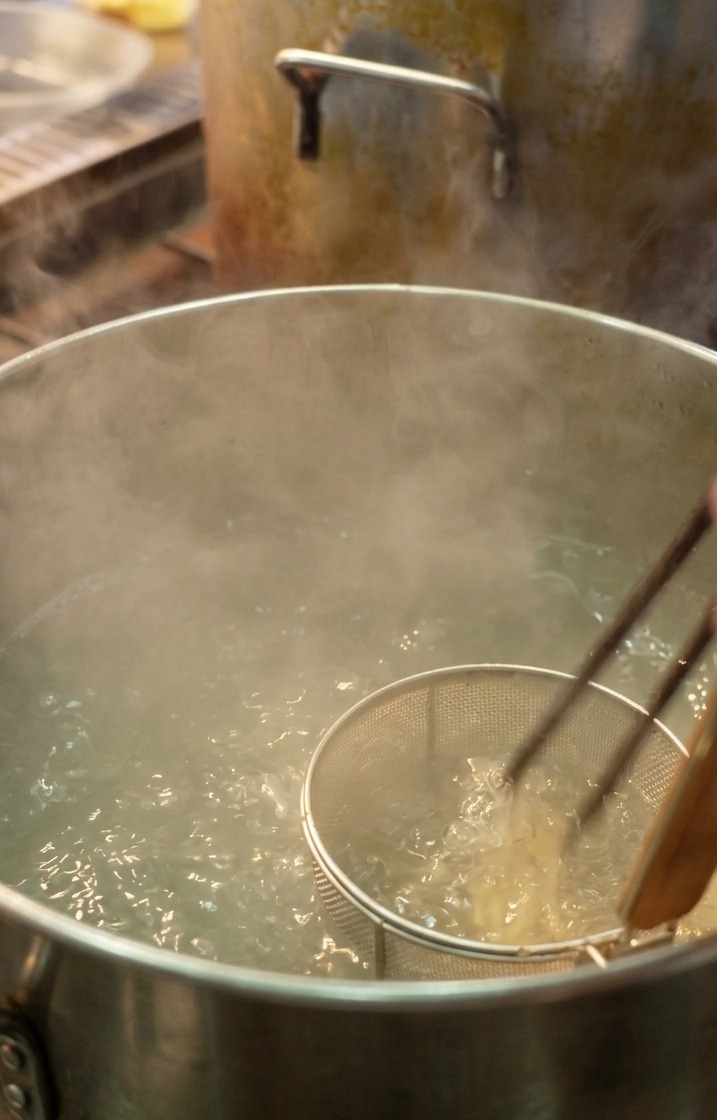
Begin by blanching the ramen noodles in a large pot of boiling water. Use a noodle strainer to submerge them completely, stirring occasionally to ensure they cook evenly. Once they reach the desired texture, lift the strainer and shake off any excess water before plating.
Tip: Keep the water at a rolling boil throughout the process to prevent the noodles from becoming gummy. - 2Transfer the chicken broth
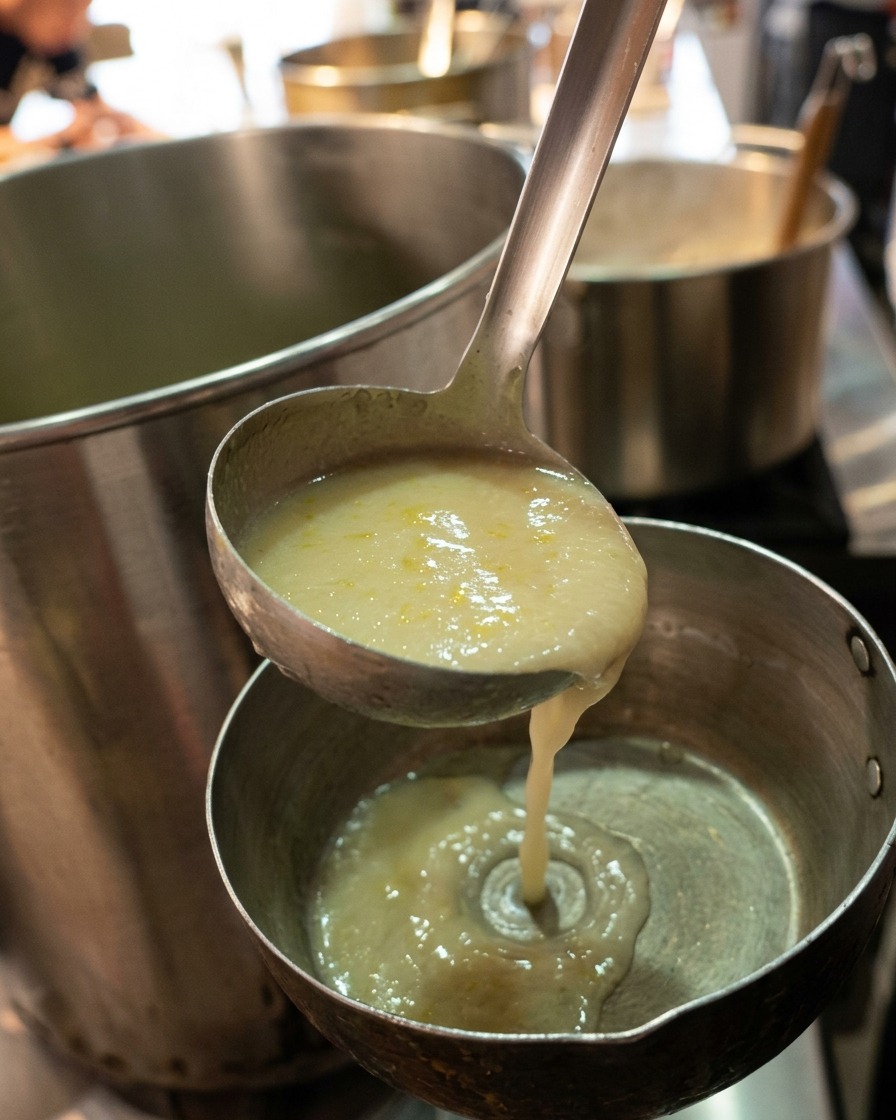
Ladle out the pre-prepared creamy chicken white broth from the main stockpot into a smaller sauce pot for individual reheating. This rich, yellow broth serves as the savory foundation for the ramen soup base.
Tip: Ladle from the middle of the pot to get the most consistent distribution of fat and liquid. - 3Infuse with shrimp oil
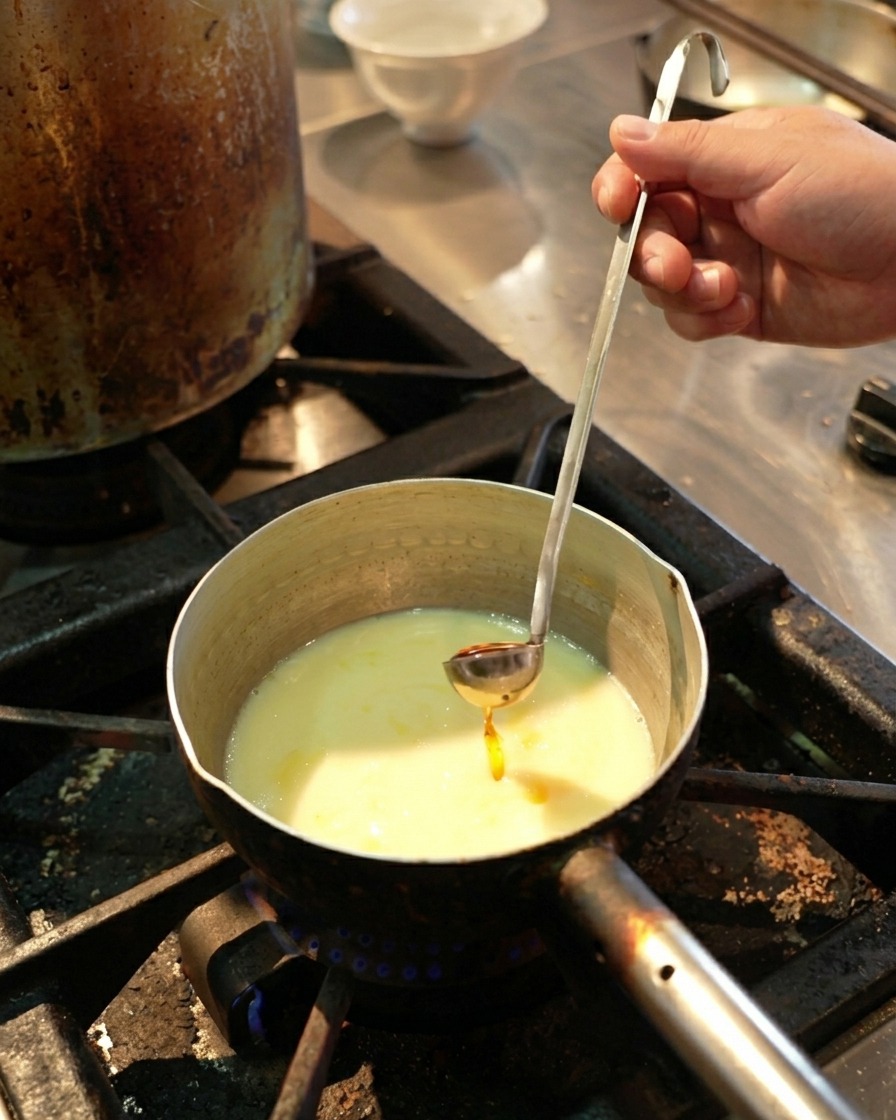
As the chicken broth begins to simmer, drizzle in a spoonful of bright orange shrimp oil. This concentrated oil carries the essence of the shrimp, adding a vibrant color and a deep, aromatic seafood layer to the broth.
Tip: Avoid skipping the shrimp oil because this ingredient transforms the chicken stock into a complex and layered soup. - 4Add the seasoning base
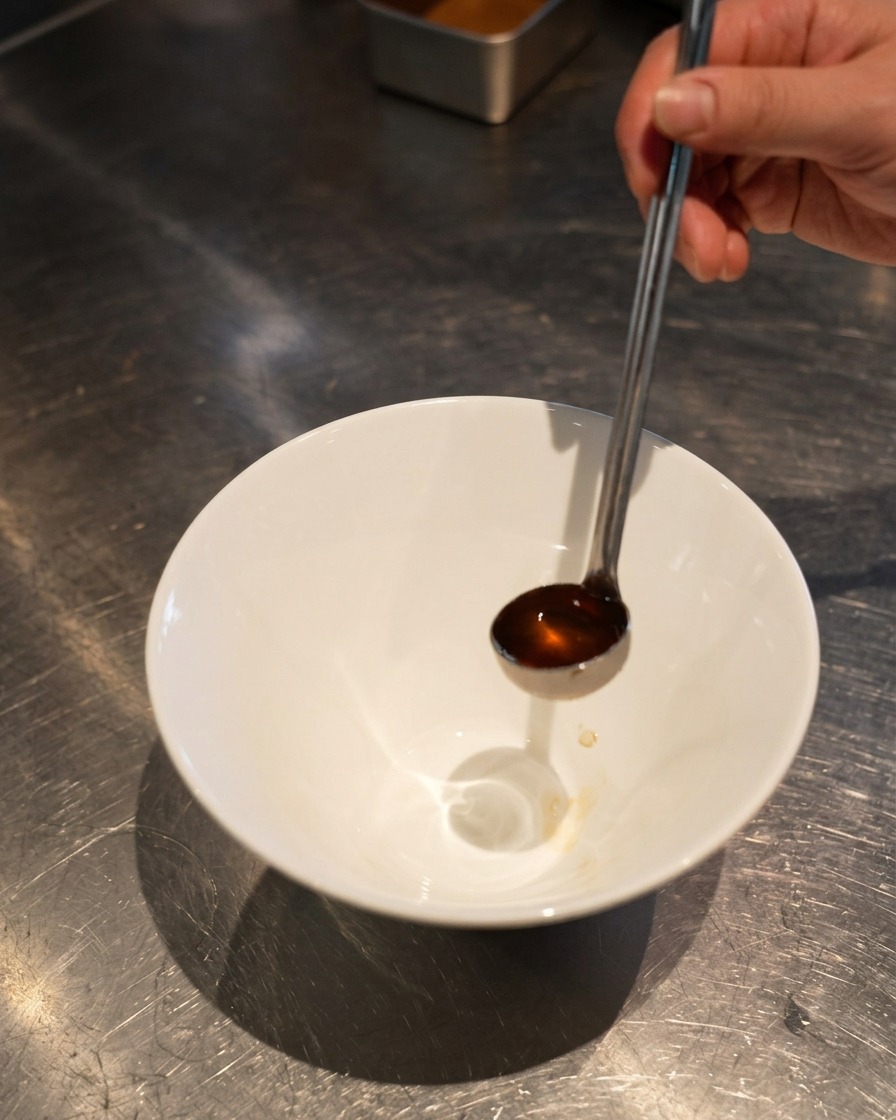
Prepare the serving bowl by pouring a measured amount of dark salt-based seasoning (shio tare) into the bottom. This concentrated tare provides the necessary saltiness and umami profile that will be activated once the hot broth is added.
Tip: Warm the bowl slightly before adding the tare to help maintain the final soups temperature. - 5Froth the broth base
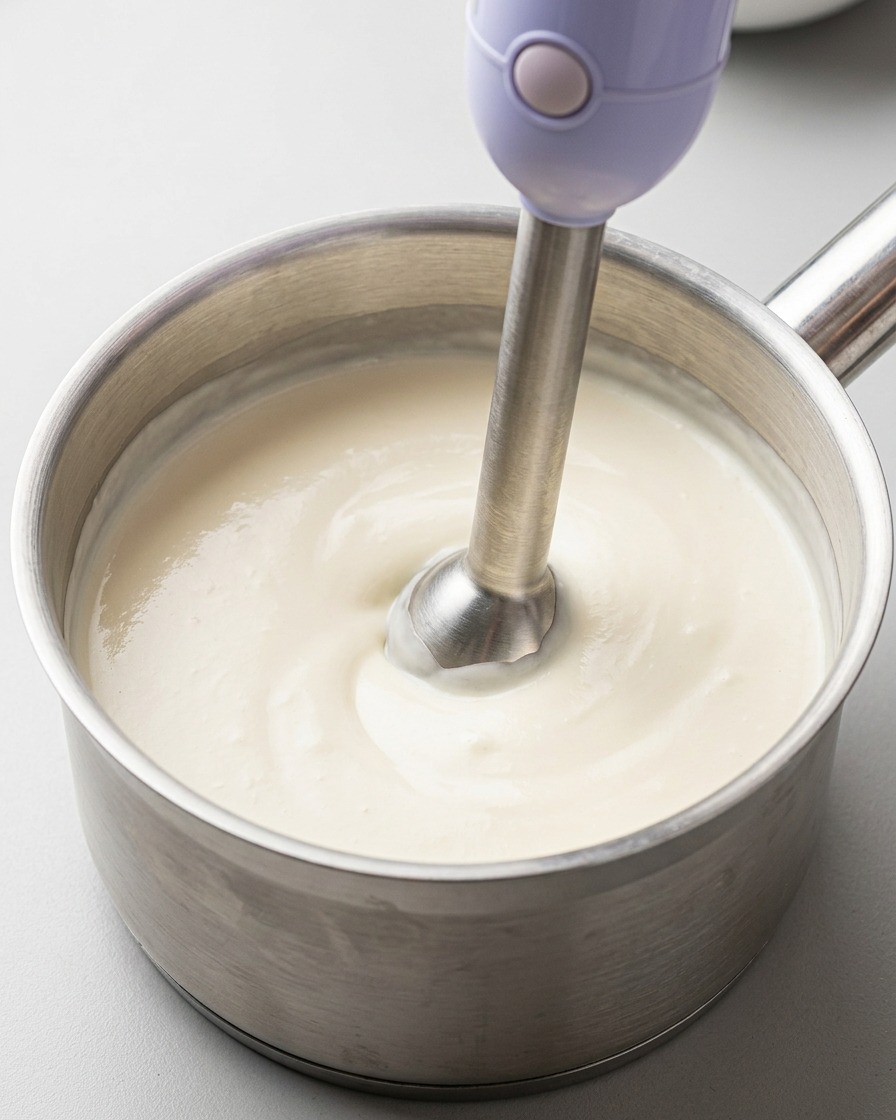
Insert a hand immersion blender into the heated soup and whisk it thoroughly. This high-speed blending emulsifies the shrimp oil and chicken fats, creating a light, milky white foam and a velvety texture that better coats each strand of ramen.
Tip: Keep the blender head submerged to avoid splashing and to create the finest micro-foam possible. - 6Combine with seasoning
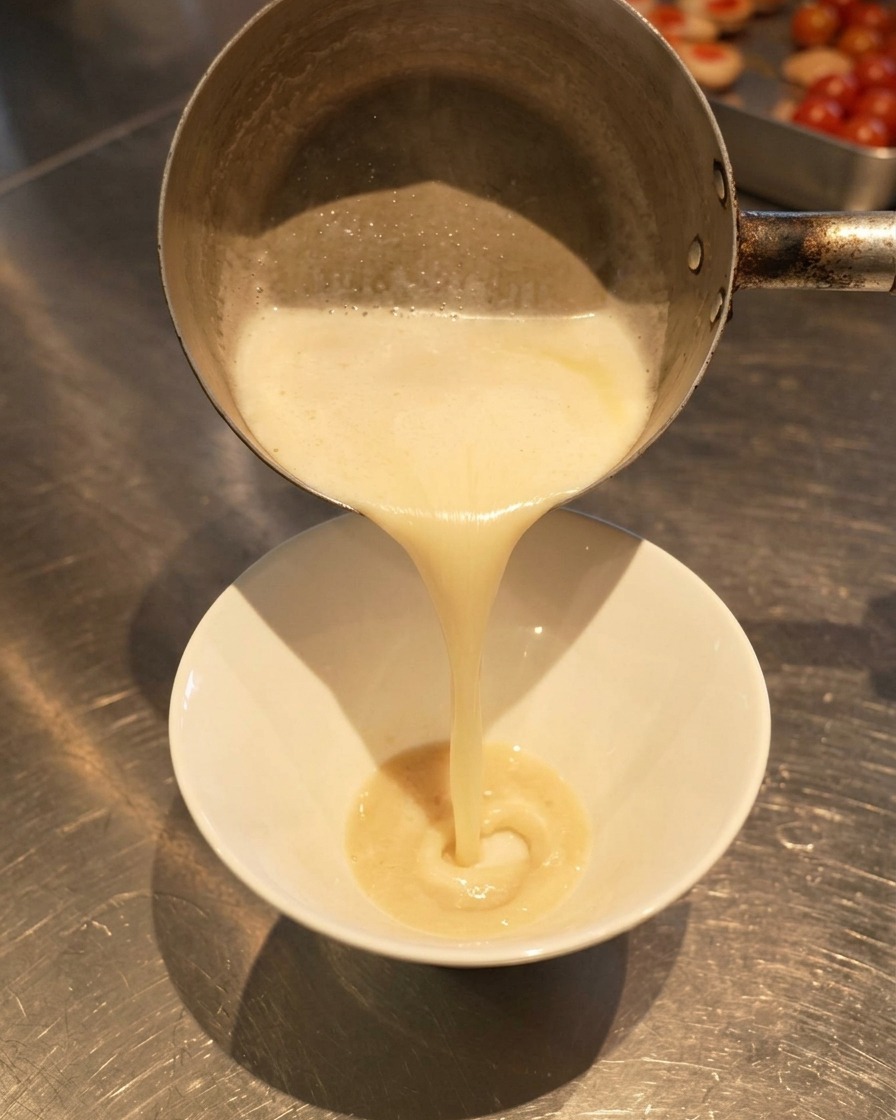
Carefully pour the frothed, milky white broth into the ramen bowl directly over the salt seasoning. The impact of the hot broth will naturally incorporate the tare, creating a perfectly balanced and aerated soup base ready for the noodles.
Tip: Pour gently to maintain the foam on the surface of the soup for a better presentation. - 7Add the noodles to the broth
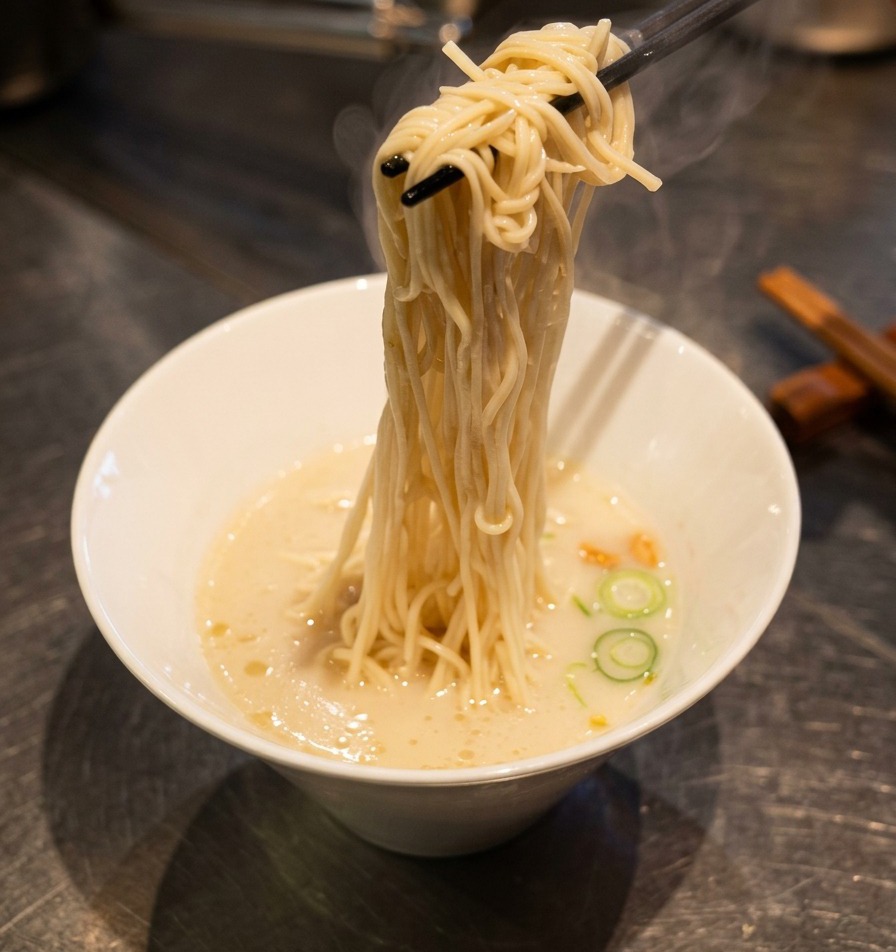
Carefully place the cooked and well-drained ramen noodles into the bowl containing the frothed milky broth. Use chopsticks to gently lift and fold the noodles, ensuring they are evenly distributed and sit just right within the soup base for a beautiful presentation.
Tip: Shaking the strainer thoroughly before adding noodles prevents excess water from diluting the rich flavor of the broth. - 8Top with bean sprouts
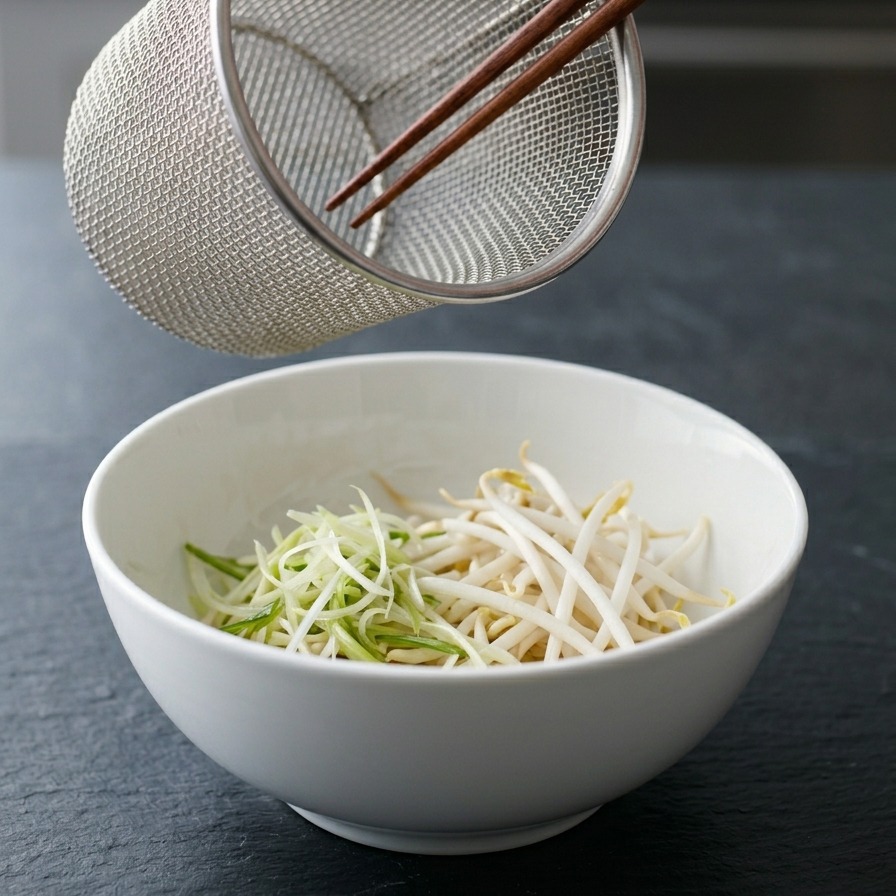
Place a handful of fresh bean sprouts directly on top of the ramen noodles. These provide a crisp texture and a refreshing contrast to the richness of the shrimp-infused broth. You can also add other greens like spinach or wood ear mushrooms at this stage for extra color.
Tip: Briefly blanching the sprouts can take the raw edge off if you prefer a softer crunch, though fresh adds better texture here. - 9Boil the fresh shrimps
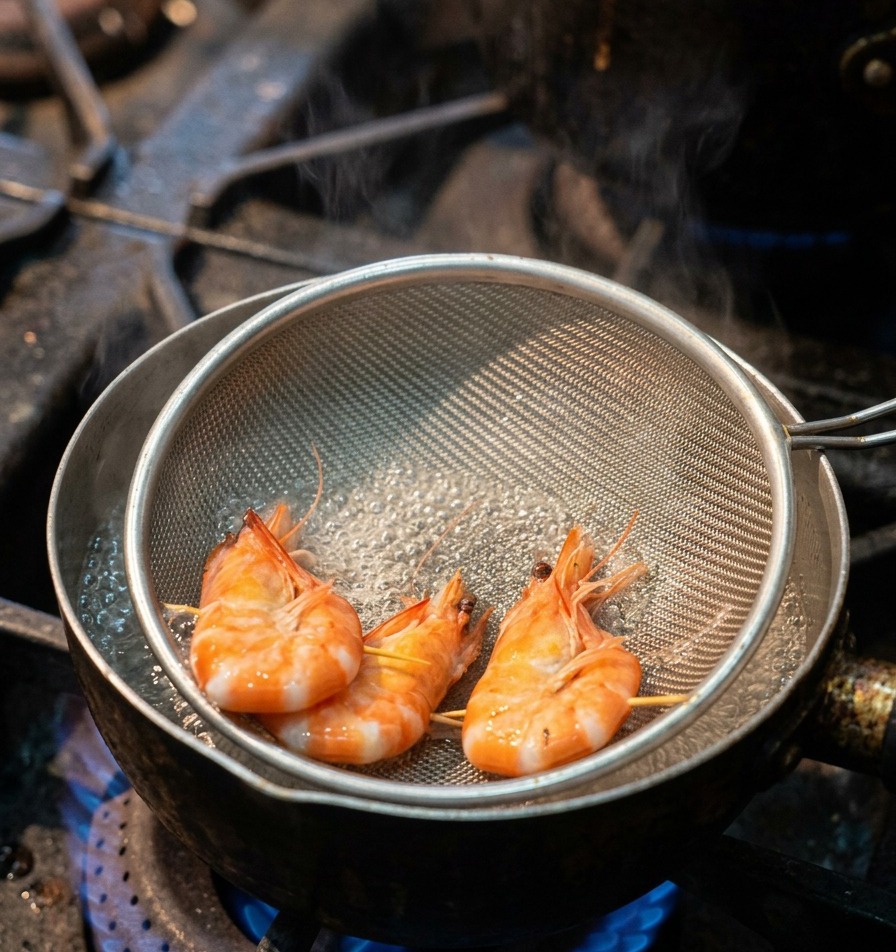
Place three whole fresh shrimps into a strainer basket and submerge them into a pot of boiling water. Cook them for approximately two minutes until they turn a bright orange-pink color and the meat becomes opaque and firm.
Tip: Avoid overcooking the shrimp because two minutes is usually perfect for keeping the meat tender and juicy rather than rubbery. - 10Shock the shrimps in cold water
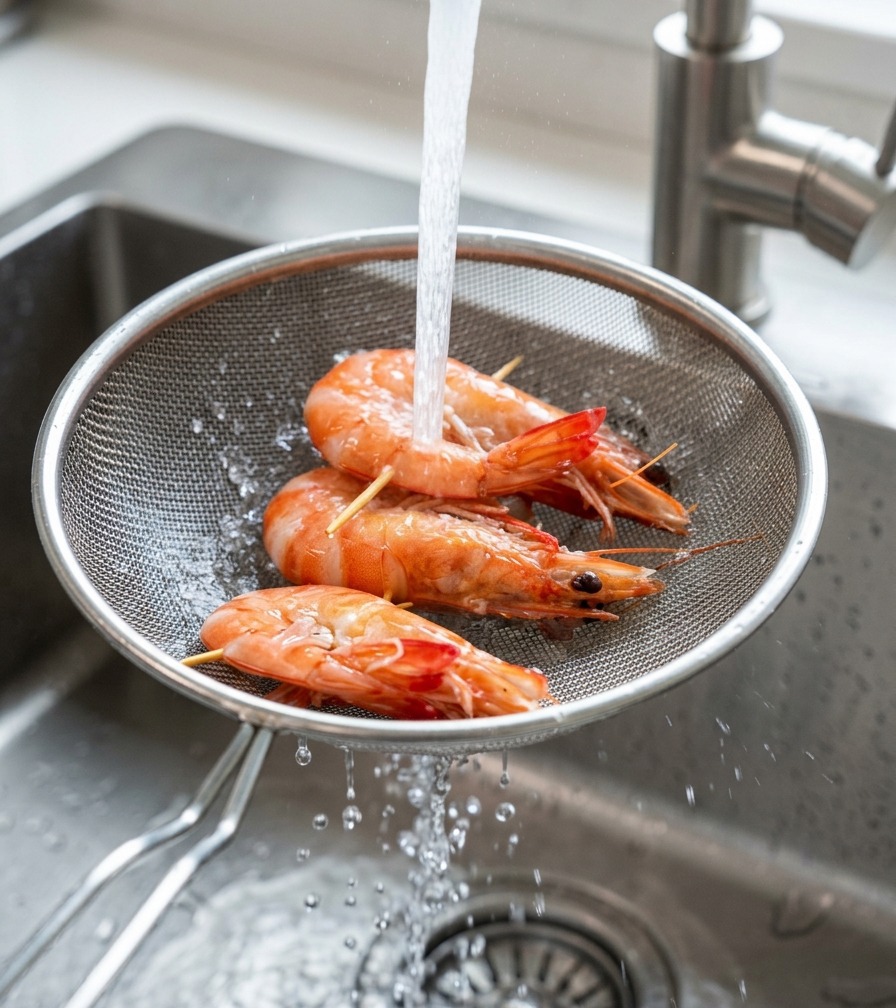
Immediately after boiling, move the shrimps in the strainer to the sink and rinse them under cold running tap water. This shocks the shrimp, stopping the cooking process instantly to maintain a firm, elastic texture.
Tip: Cooling them quickly helps the meat stay snappy and prevents the shrimp from becoming tough due to residual heat. - 11Arrange the shrimp topping
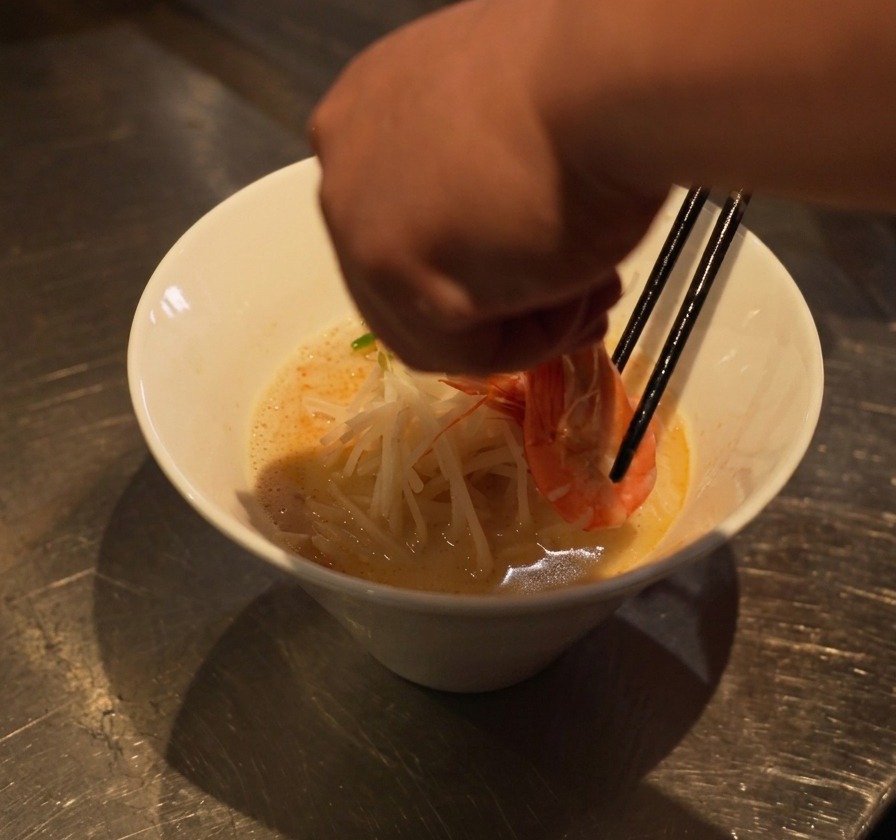
Carefully arrange the cooked shrimps on top of the noodles and bean sprouts in the bowl. Position them neatly to create an appetizing visual center for the dish, highlighting the freshness of the seafood.
Tip: Place the shrimps with the curves facing the same direction for a more professional, restaurant-style plating. - 12Garnish with shredded scallions
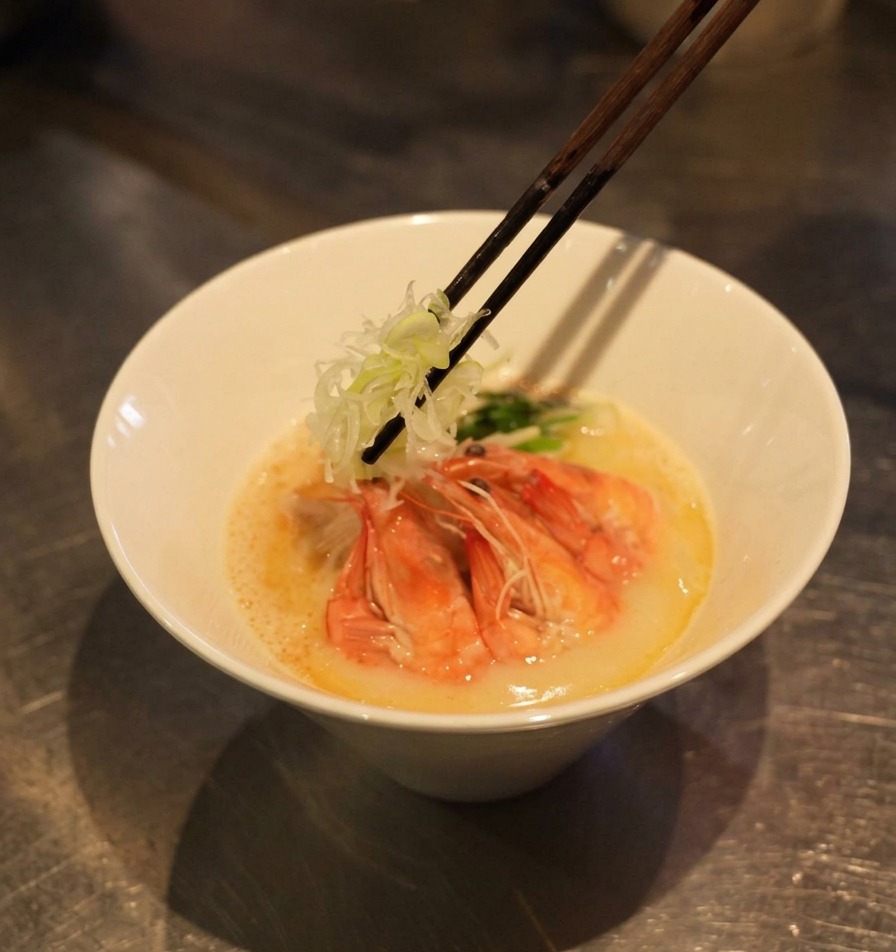
Finish the plating by adding a generous pile of finely shredded white scallions on top of the shrimps. The sharp, fresh aroma of the scallions cuts through the creamy broth and enhances the overall fragrance of the shrimp ramen.
Tip: Soaking shredded scallions in ice water for a few minutes makes them curl up and removes any harsh bitterness. - 13Add the soft-boiled egg
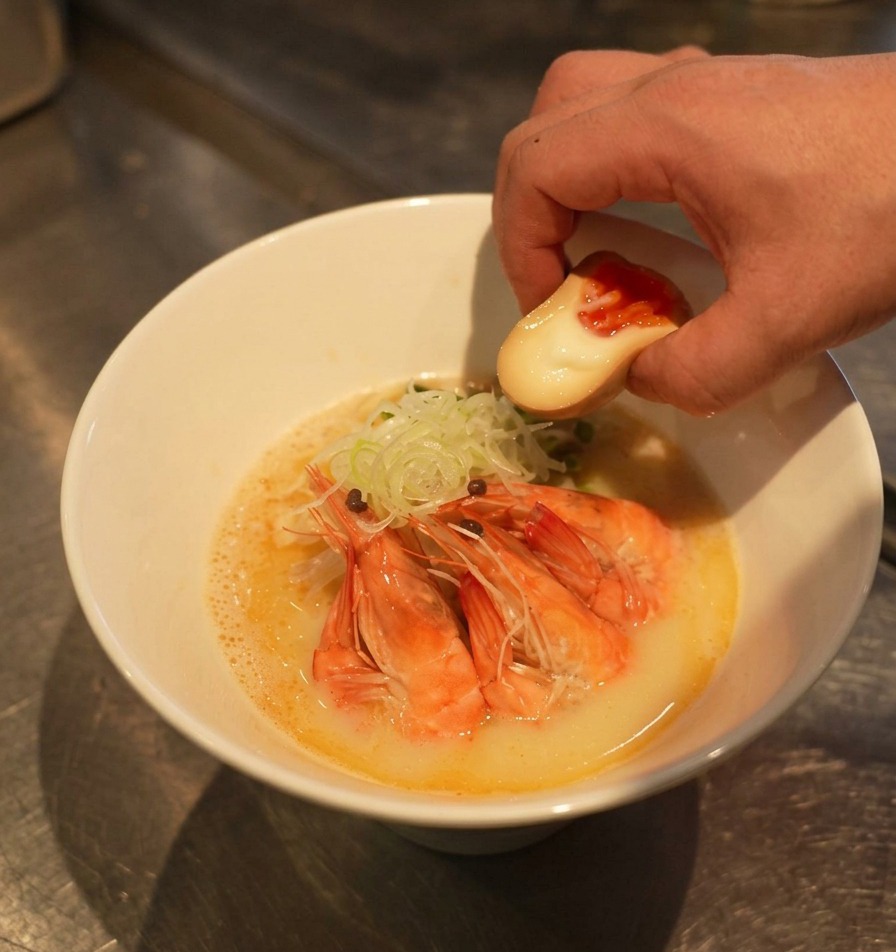
Carefully place half of a marinated soft-boiled egg into the bowl, nestling it beside the cooked shrimps. The rich, jammy yolk provides a creamy contrast to the savory seafood broth, adding both visual appeal and a deep layer of flavor to the dish.
Tip: For the best flavor use seasoned eggs that have been marinated in a soy and mirin mixture for several hours to ensure the yolks are flavorful. - 14Finish with aromatic oil
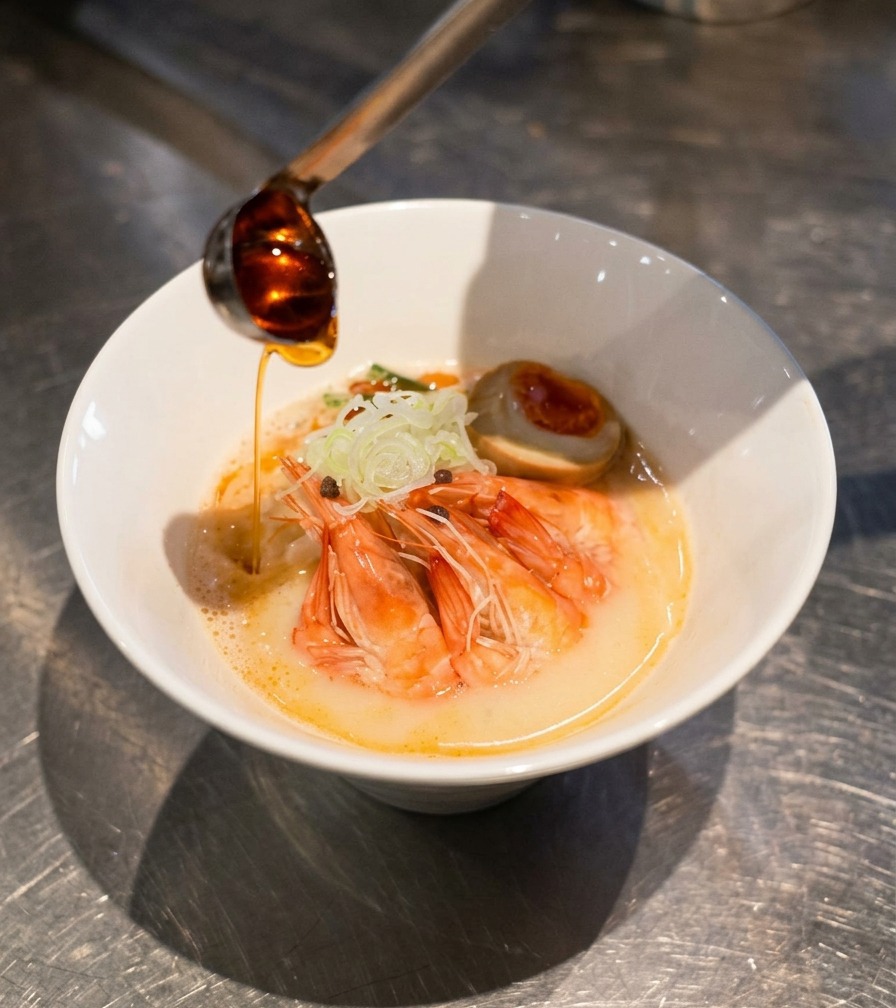
Complete the dish by drizzling a final spoonful of aromatic reddish shrimp oil over the top. This finishing touch provides an immediate fragrant hit when served and creates beautiful orange droplets on the surface of the white foam.
Tip: Include this final drizzle as the shrimp oil is the key to achieving the signature rich aroma that defines this style of ramen.