Easy Homemade Clam Shio Ramen
Seared Duck
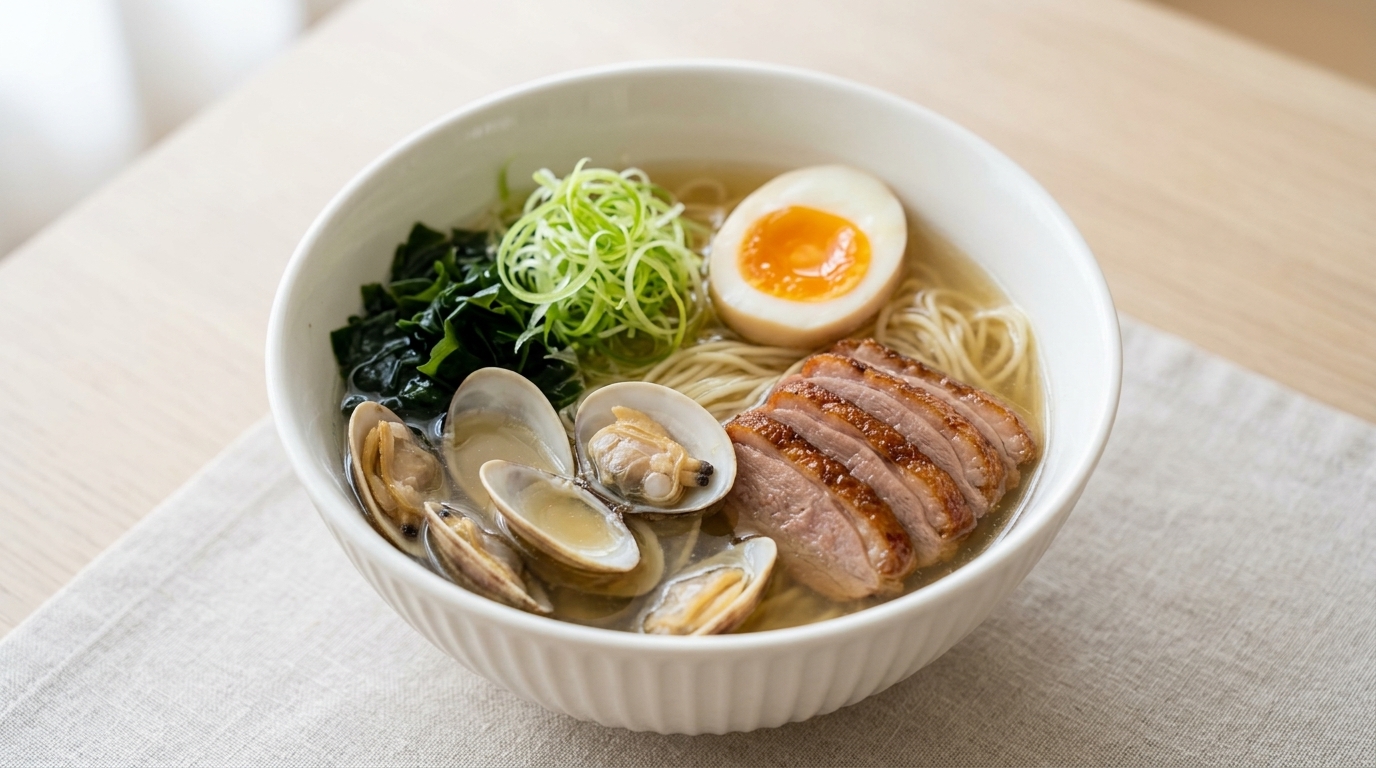
A refined yet accessible Shio ramen featuring a double-umami broth of fresh manila clams and rendered duck fat, finished with silky noodles and a jammy egg.
Shio, or salt-based ramen, is the oldest and most delicate of the main ramen styles. This version elevates the traditional clear broth by combining the briny sweetness of manila clams with the rich, savory depth of seared duck. It is a sophisticated bowl that celebrates clean flavors and high-quality ingredients, perfect for a special weeknight meal.
Ingredients
- 1 whole duck leg (with bone)
- 250 g fresh manila clams (cleaned)
- 1 bundle fresh ramen noodles
- 1 white leek
- 2 cloves garlic
- 30 ml sake
- 500 ml water
- 1 packet Japanese seafood dashi powder
- 1 tsp Japanese soy sauce
- 1 tbsp dried wakame seaweed
- 1 soft-boiled egg
- to taste black pepper
- optional fish cakes
Instructions
- 1Prep the aromatics
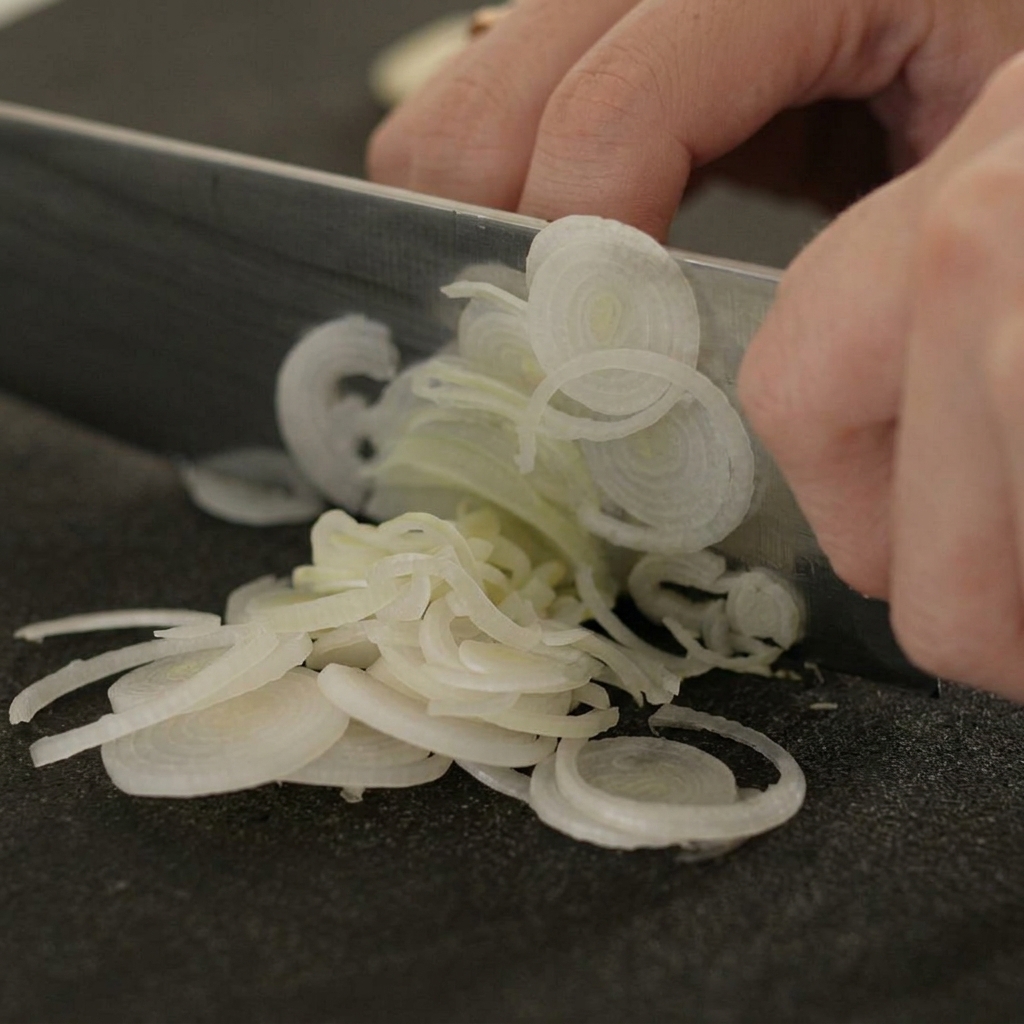
Begin by thinly slicing a white leek on a clean cutting board. These fine rings will soften quickly in the pan, releasing a sweet and mild onion flavor that forms the foundation of the ramen aromatic base.
Tip: Use only the white and light green parts of the leek for a more delicate flavor and better texture in the final broth. - 2Slice the garlic
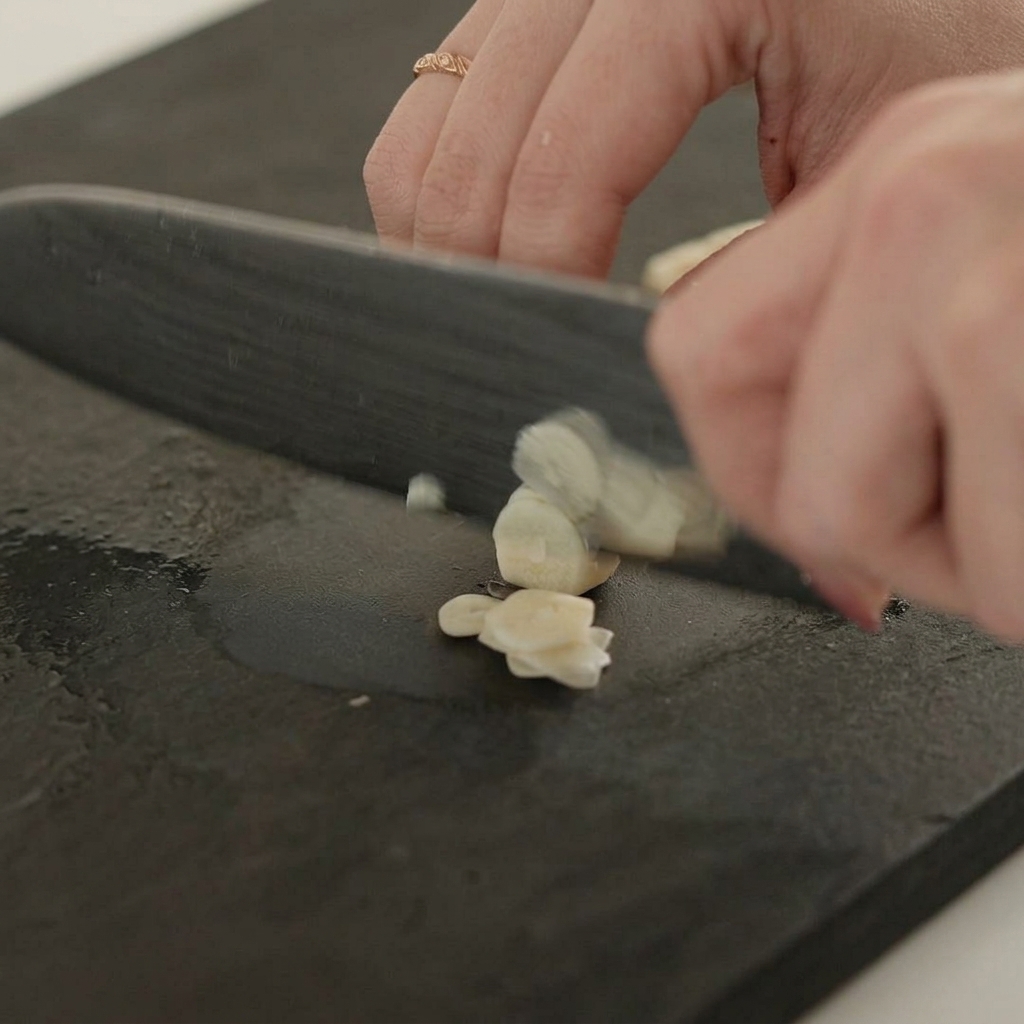
Carefully slice the garlic cloves into thin, uniform pieces. Slicing rather than mincing allows the garlic to infuse the oil and duck fat with flavor without burning too quickly during the searing process.
Tip: If the garlic has a green germ in the center, remove it before slicing to avoid any bitter notes in your soup. - 3Sear the duck
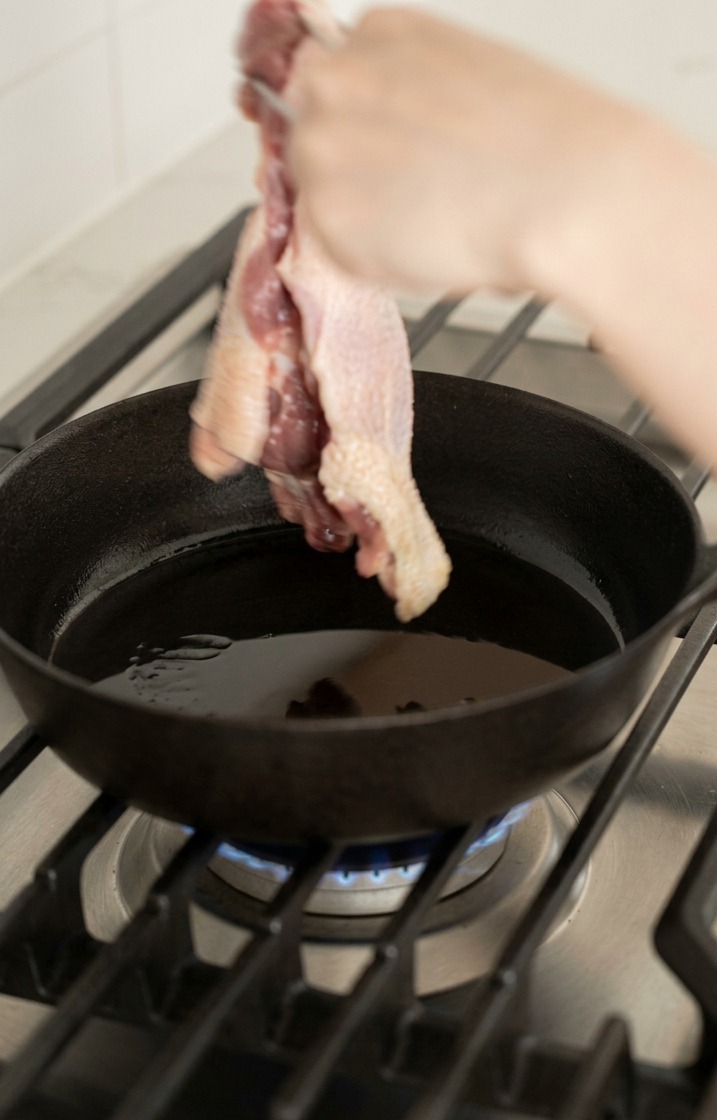
Heat a small amount of oil in a cast iron skillet over medium high heat. Carefully place the raw duck leg and bone into the pan skin side down. Sear until the skin is golden brown and rendered which provides a rich base for your ramen broth.
Tip: If you do not have duck then chicken thighs with the skin on are an excellent substitute that will still provide great flavor. - 4Sauté the aromatics
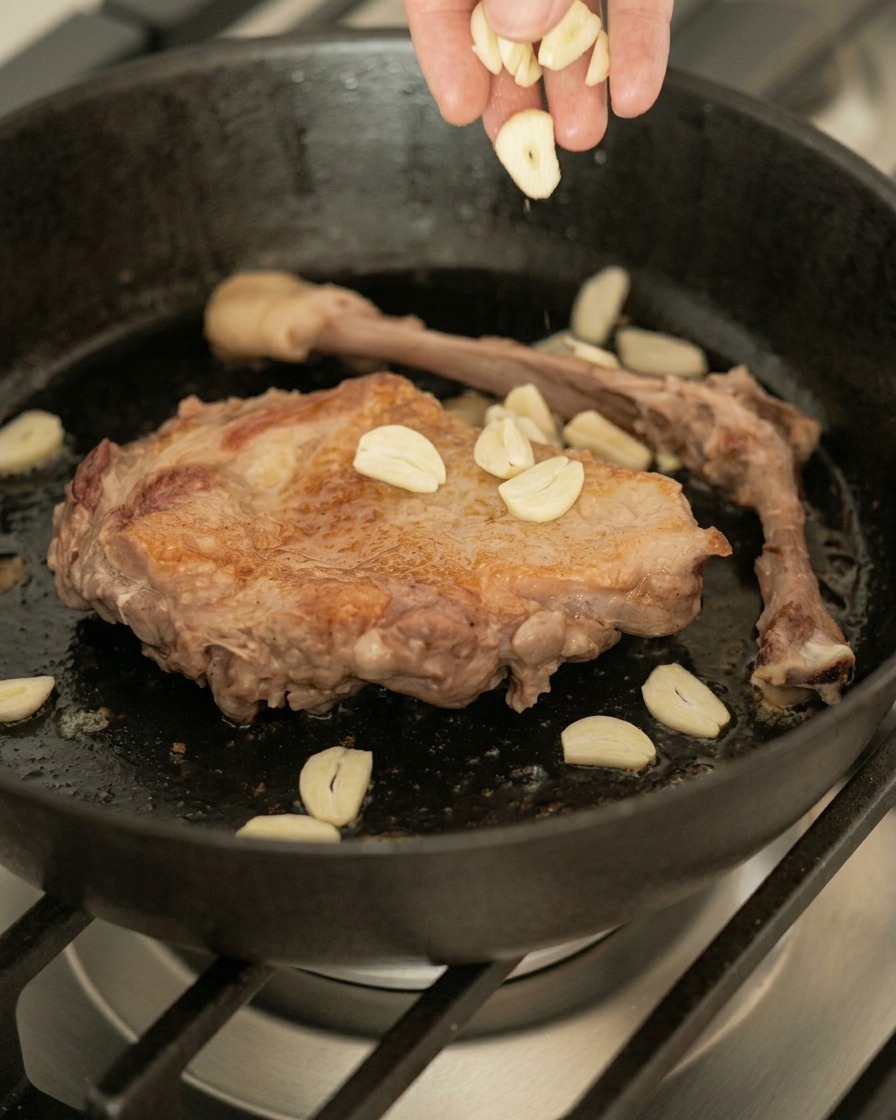
Once the duck has developed a nice brown crust, toss the sliced garlic and leeks directly into the pan. Stir them into the rendered duck fat so they become fragrant and lightly golden, absorbing the meaty essence.
Tip: Keep the heat at medium-high to ensure the aromatics sauté and soften without turning dark brown or bitter. - 5Deglaze with sake
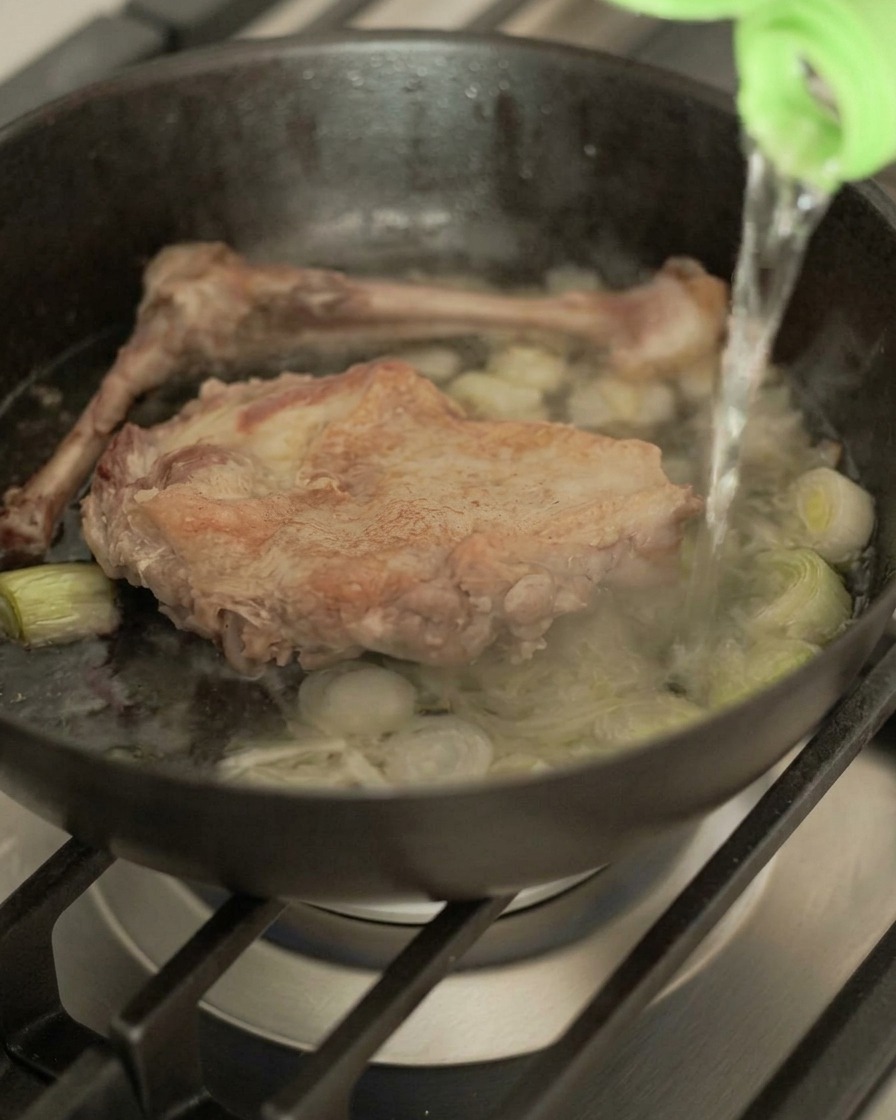
Pour a splash of sake into the hot skillet. The liquid will bubble and steam, lifting the flavorful browned bits (the fond) from the bottom of the pan. This step adds a subtle sweetness and complexity to the ramen base.
Tip: Let the sake boil for a minute to allow the alcohol to evaporate, leaving behind only the concentrated rice wine flavor. - 6Add the clams
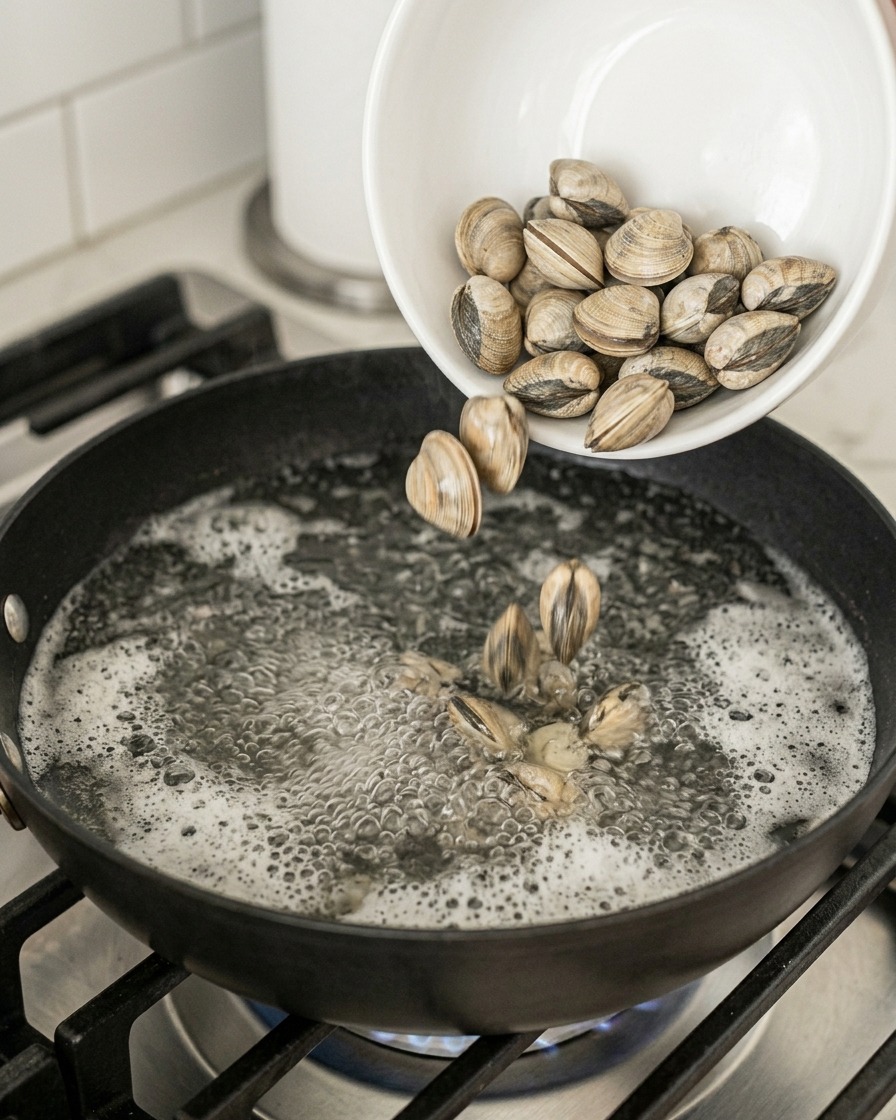
Carefully add the fresh, cleaned clams into the simmering liquid. Cover the pan immediately to trap the steam, which will cook the clams gently until they pop open and release their natural salty juices into the broth.
Tip: Discard any clams that do not open after a few minutes of steaming, as they may not be fresh. - 7Remove the cooked clams
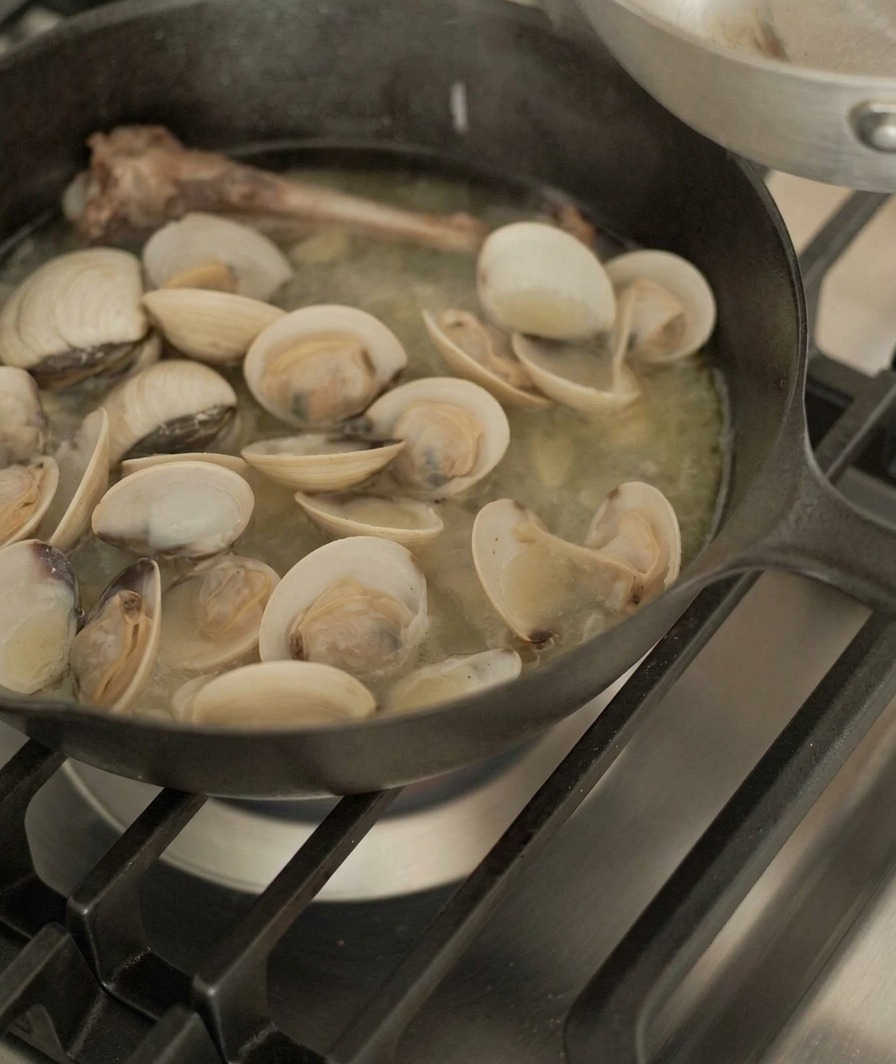
Once the clams have fully opened, use tongs to carefully transfer them from the skillet into a separate bowl. This prevents the clams from becoming overcooked and tough while you prepare the rest of the soup. Retain the flavorful cooking liquid and the duck bone in the pan, as they form the essential base for your broth.
Tip: If any clams remain tightly closed after several minutes of steaming, discard them as they are likely spoiled. - 8Build the broth base
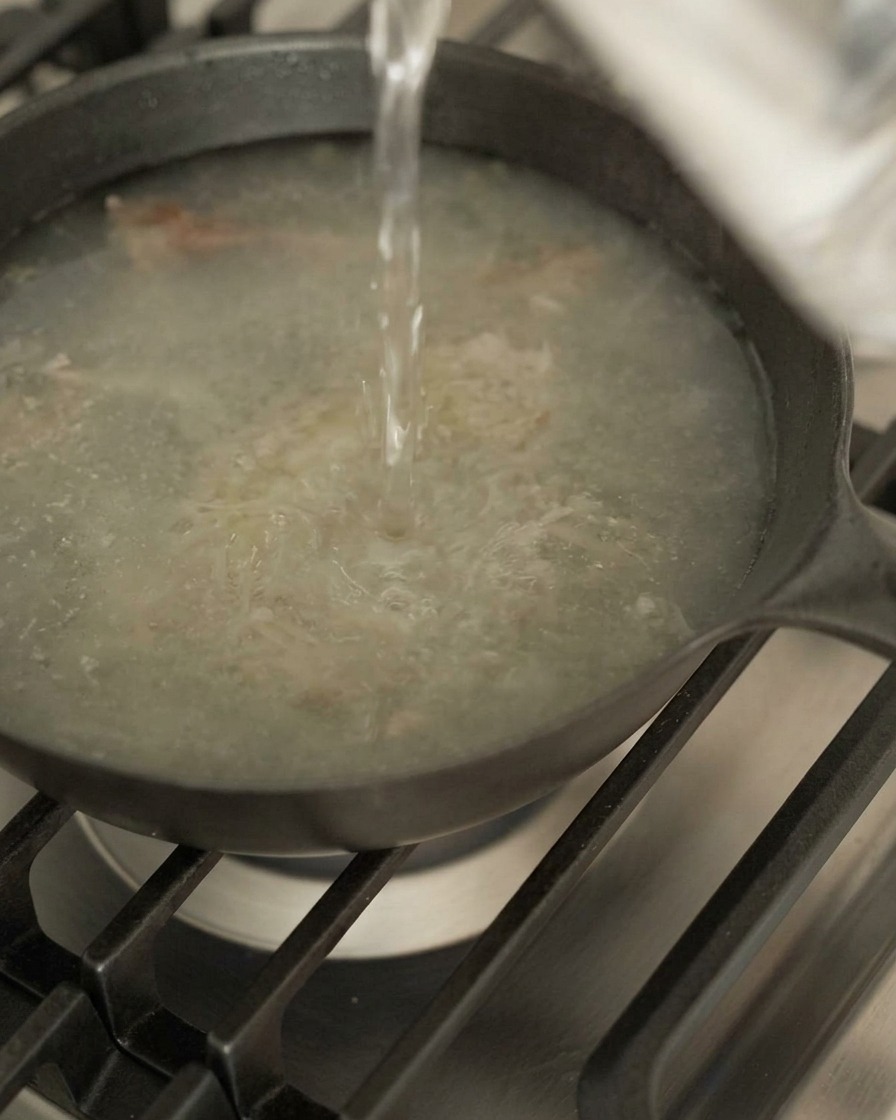
After removing the duck leg to rest, pour fresh water into the skillet. This allows you to deglaze the pan and incorporate all the savory browned bits and aromatic juices left behind from the searing process.
Tip: Scrape the bottom of the pan as you add the water to ensure all the concentrated flavor is lifted into the liquid. - 9Season with seafood dashi
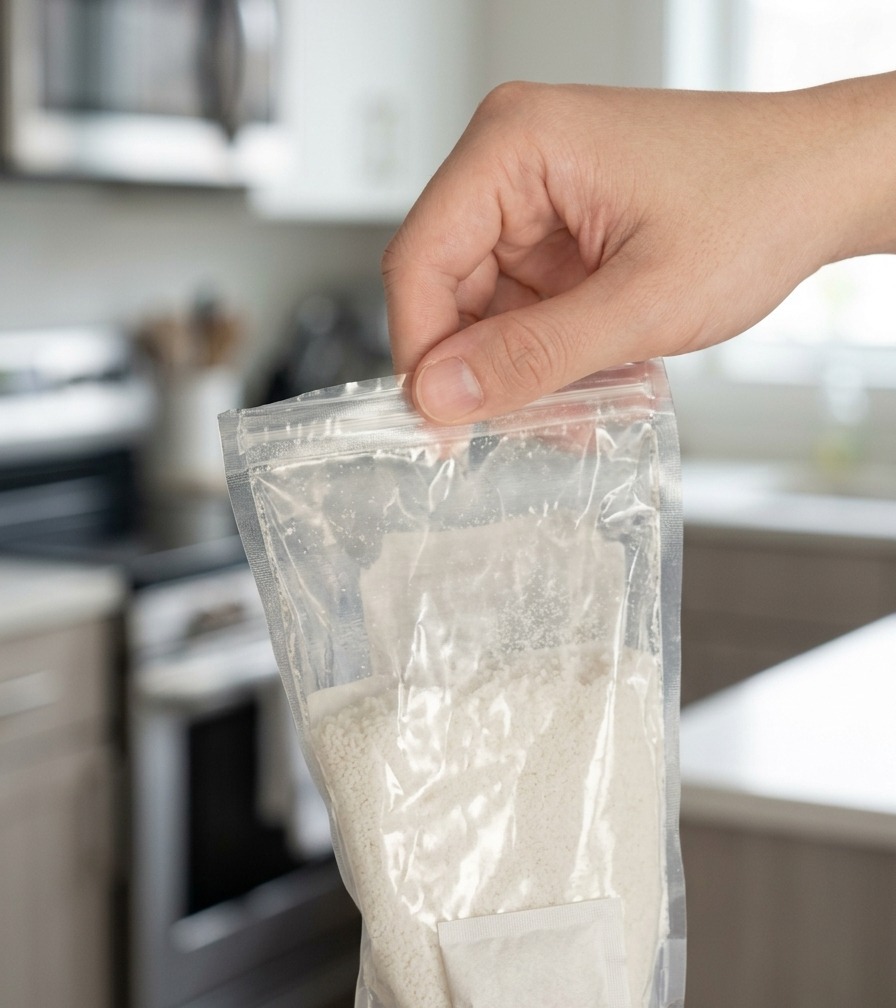
Add a packet of Japanese seafood seasoning or dashi powder to the simmering water. This provides the essential umami and Shio salt character that defines this specific style of clam ramen.
Tip: If using a powder packet, ensure it is fully dissolved before adding other seasonings to gauge the saltiness accurately. - 10Balance with soy sauce
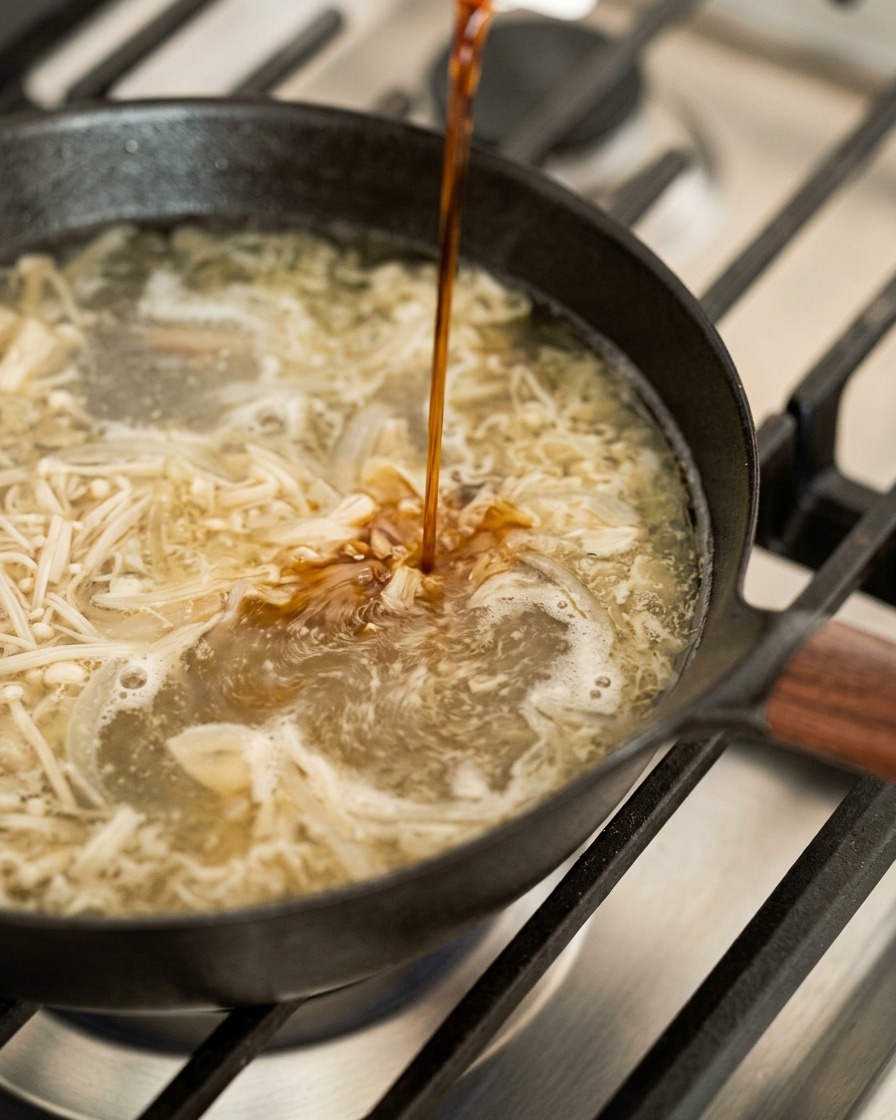
Add a small stream of Japanese soy sauce to the simmering base. While this is a Shio salt based ramen, the soy sauce provides a necessary layer of depth, a hint of sweetness, and gives the clear broth a beautiful golden translucency.
Tip: Use a high-quality Japanese soy sauce for a more refined and less aggressive salty flavor compared to standard varieties. - 11Cook the ramen noodles
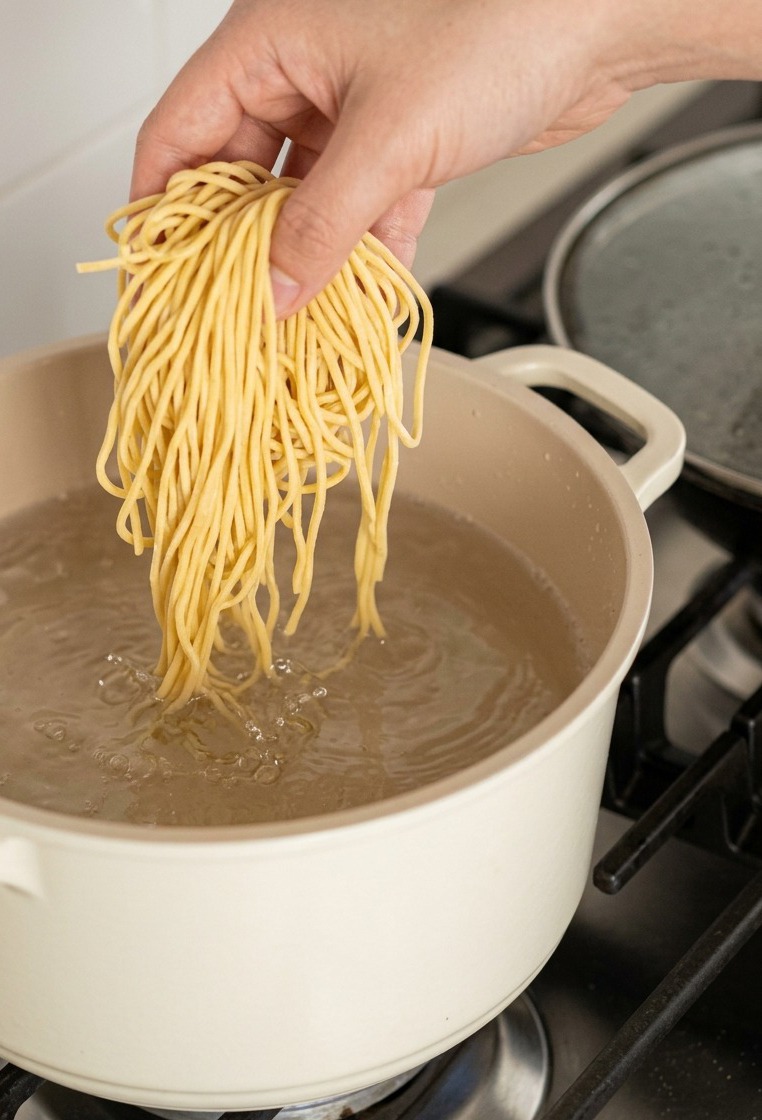
In a separate large pot, bring water to a vigorous boil. Carefully drop in your bundle of fresh ramen noodles. Cook them according to the package instructions, usually only for a few minutes until they are al dente.
Tip: Always use a separate pot for the noodles rather than boiling them in your broth to prevent the starch from clouding the clear soup. - 12Add seaweed to the broth
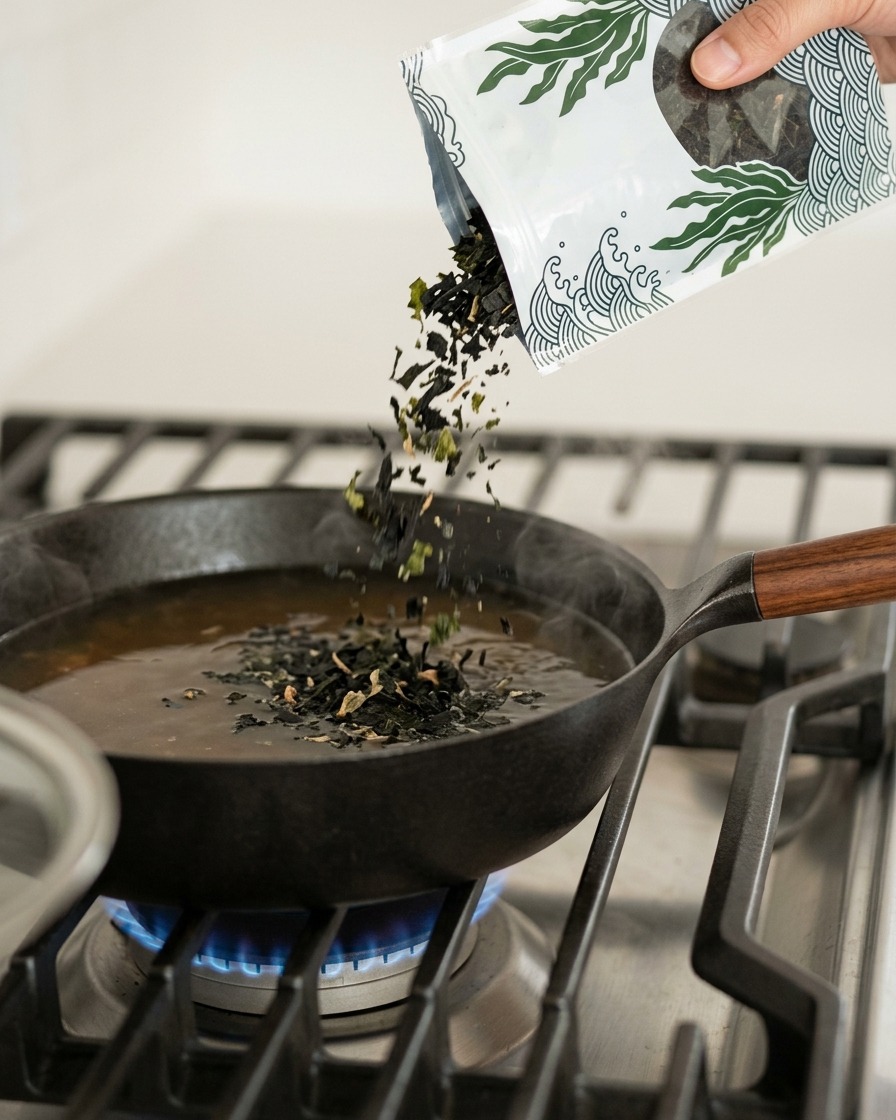
Pour the dried seaweed flakes directly into the simmering broth in your skillet. The seaweed will rehydrate almost instantly, infusing the soup with a deep, umami-rich ocean flavor that perfectly complements the clam and duck base.
Tip: Use high-quality dried wakame or shredded nori for the best texture and authentic Japanese flavor. - 13Drain and transfer the noodles
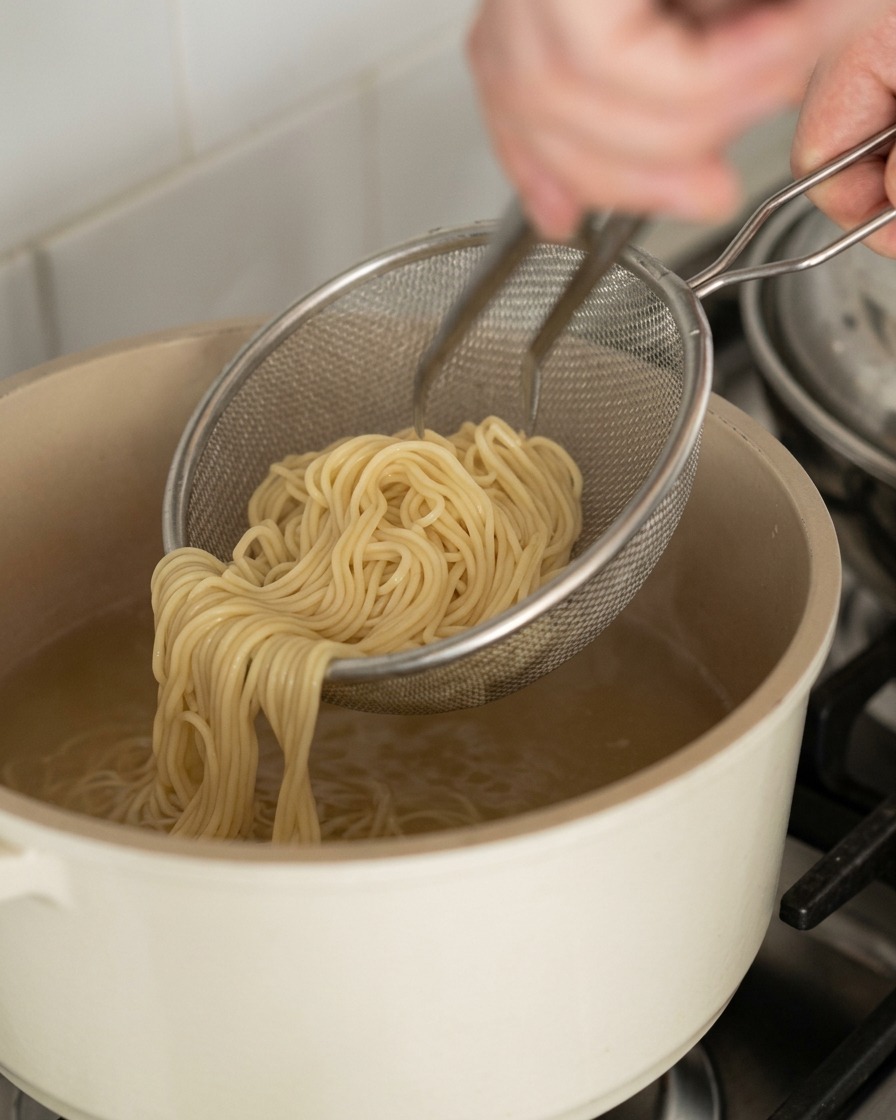
Lift the ramen noodles from the boiling water using a mesh strainer. Shake the strainer well to remove all excess water before transferring the hot noodles into your serving bowl. Proper draining is crucial to ensure the concentrated savory broth is not diluted.
Tip: Cook the noodles just until al dente or firm to the bite as they will continue to soften slightly once the hot broth is added. - 14Slice the seared duck
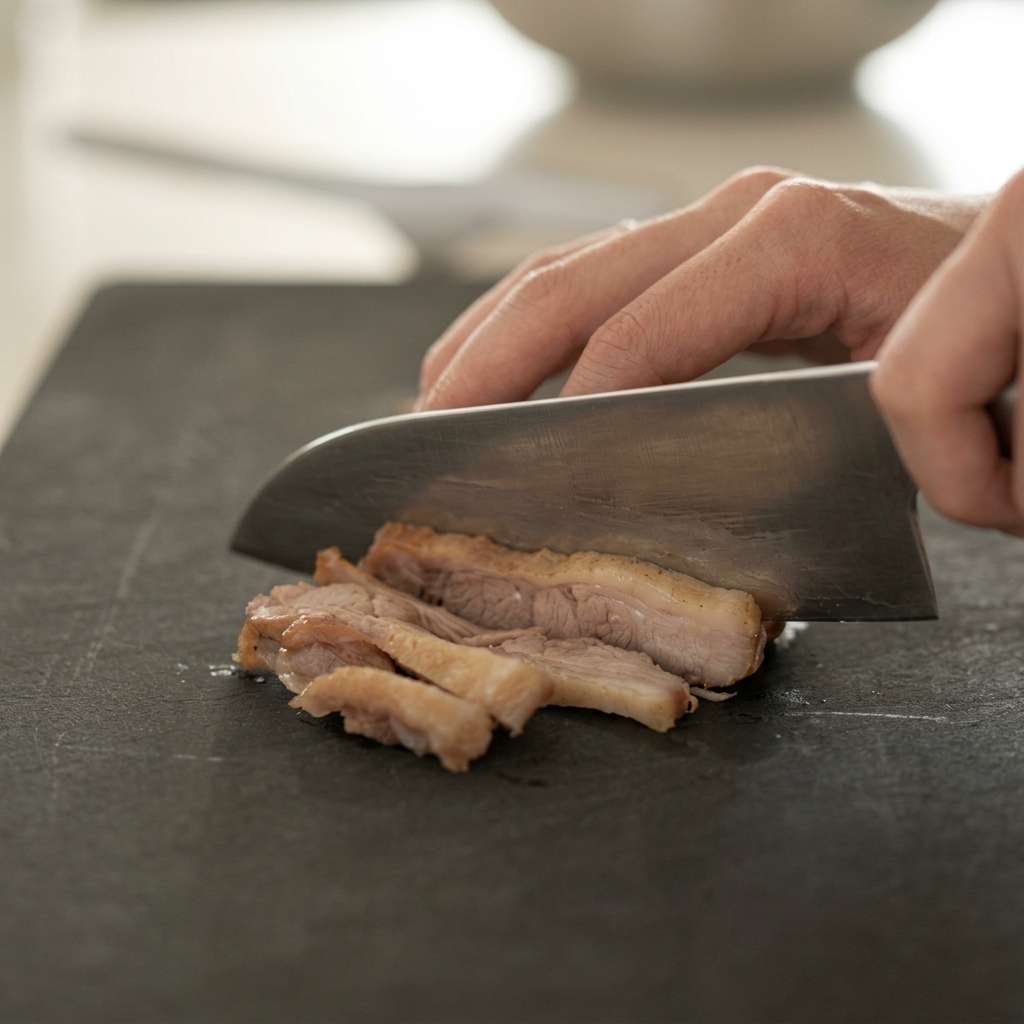
Place the rested duck meat on a clean cutting board and use a sharp knife to slice it into thin even strips. Cutting against the grain ensures that the meat remains tender and easy to enjoy with chopsticks alongside the noodles.
Tip: Letting the meat rest for at least 5 minutes before slicing allows the juices to redistribute keeping the duck moist. - 15Begin assembly with duck
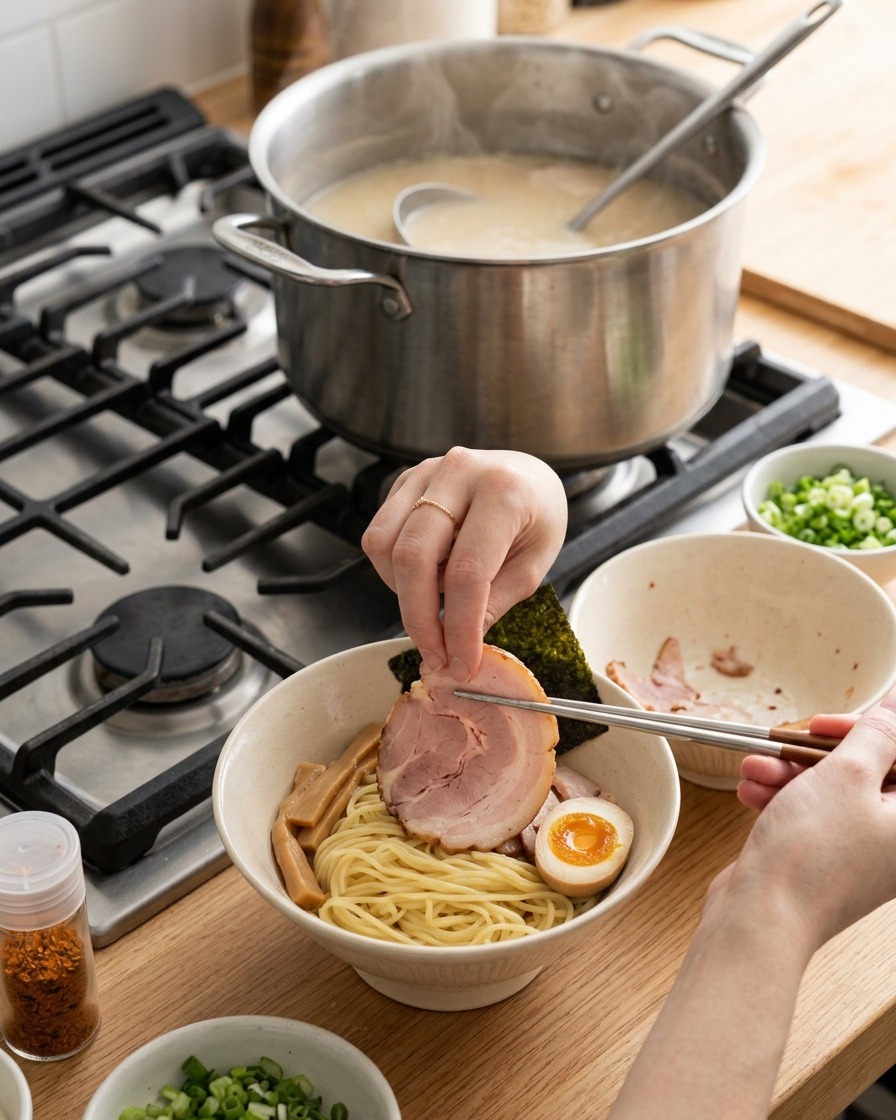
Lay the thin slices of rested duck meat onto the bed of noodles. Position them neatly to one side to leave room for the seafood and garnishes ensuring a professional presentation that showcases the rendered crispy skin.
Tip: Arrange the toppings in distinct sections around the bowl so that every bite offers a different combination of textures. - 16Assemble and serve
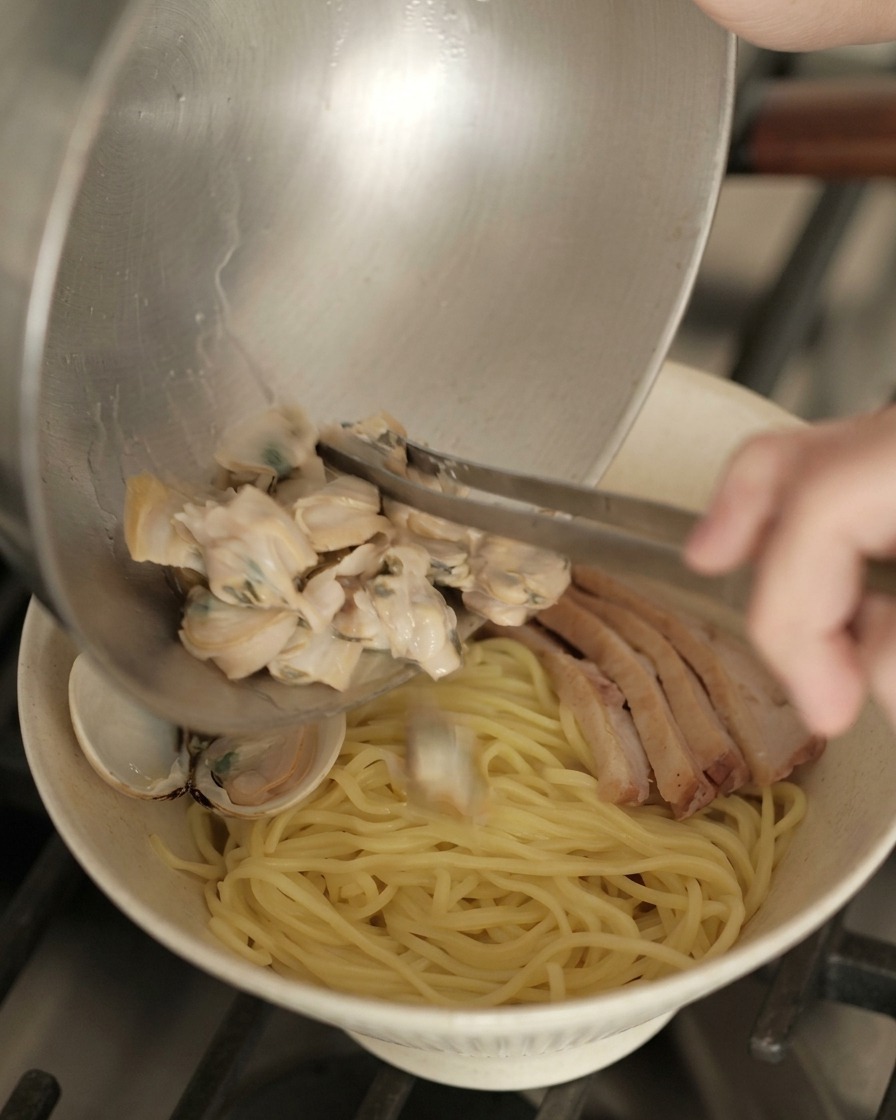
Arrange the cooked clams and sliced duck over the noodles. Add the halved soft-boiled egg, pour the hot savory broth into the bowl, and finish with a sprinkle of fresh leeks and a crack of black pepper.
Tip: Pour the broth slowly down the side of the bowl to avoid disturbing the neat arrangement of your toppings.