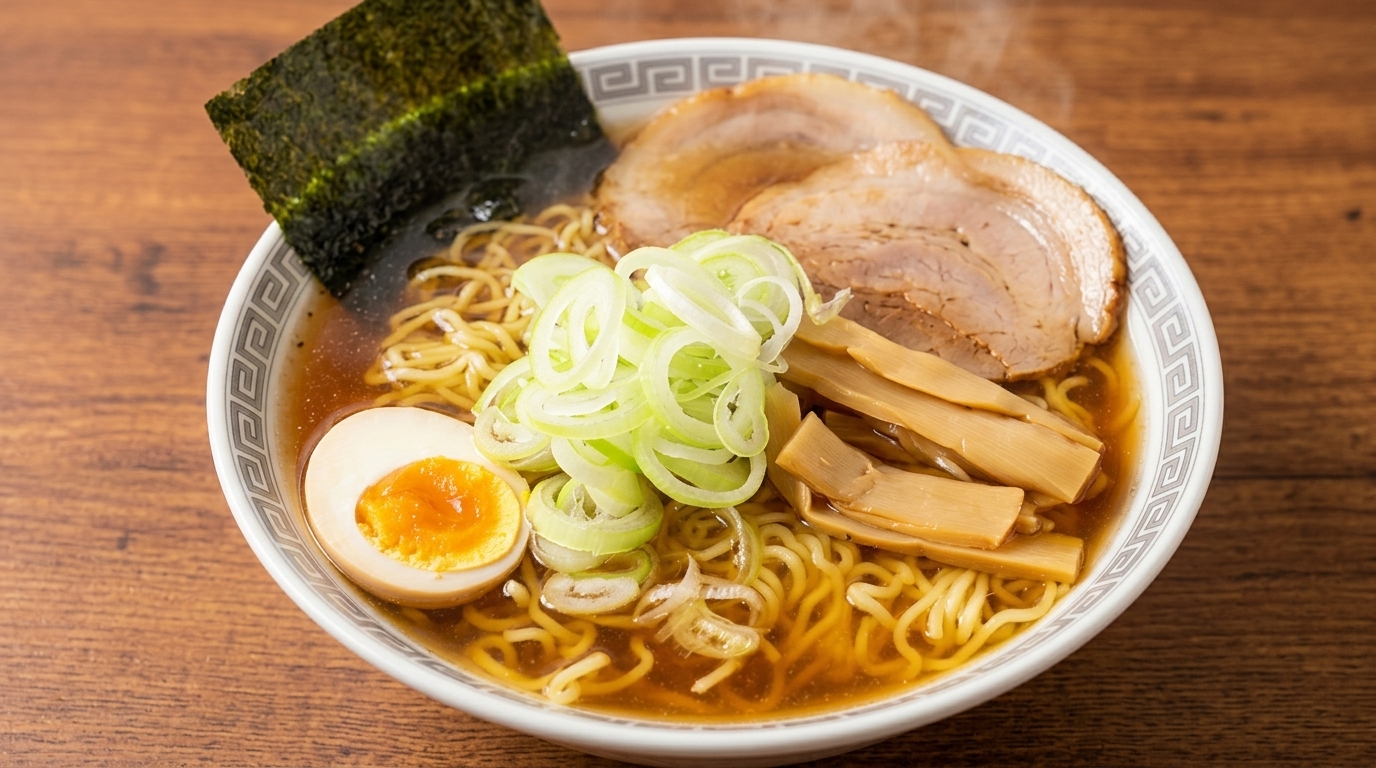
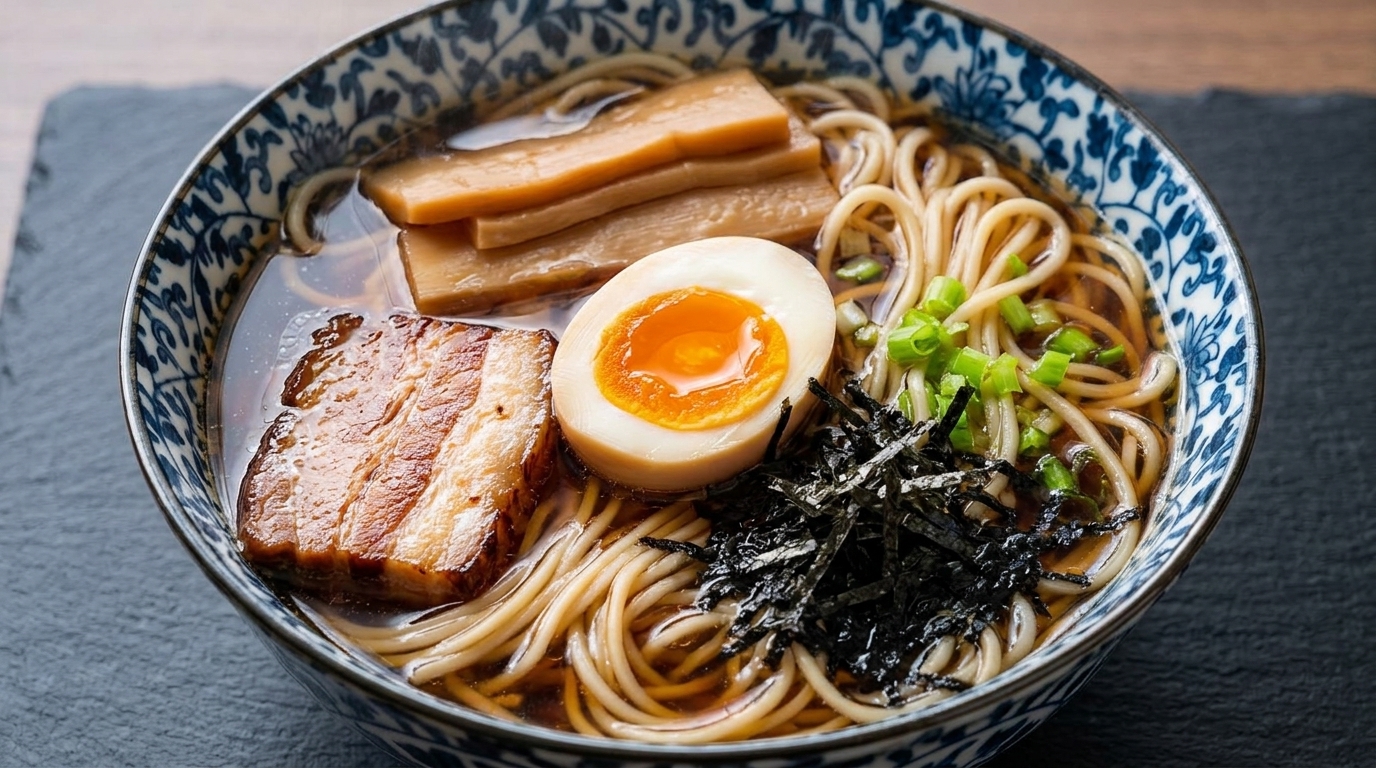
Authentic Japanese Shoyu Ramen
Experience the bold flavors of authentic Japanese Shoyu Ramen. This recipe features a deeply savory soy sauce broth infused with caramelized garlic, scallions, and bonito flakes.
Shoyu ramen holds a foundational place in Japanese culinary culture, celebrated for its clear, soy-based broth and complex umami profile. By slowly extracting aromatic oils from garlic and scallions in a cold pan before introducing the soy and bonito, this recipe builds a profoundly rich foundation. The result is a bold, dominating soy sauce flavor that perfectly coats every strand of the chewy noodles.
Ingredients
- 2 tbsp cooking oil
- 3 cloves garlic, crushed
- 2 stalks scallions, roughly chopped
- 1 handful bonito flakes (katsuobushi)
- 4 cups water
- 1 tbsp powdered chicken soup seasoning
- 4 tbsp soy sauce (shoyu)
- 1 tsp MSG
- 2 portions fresh ramen noodles
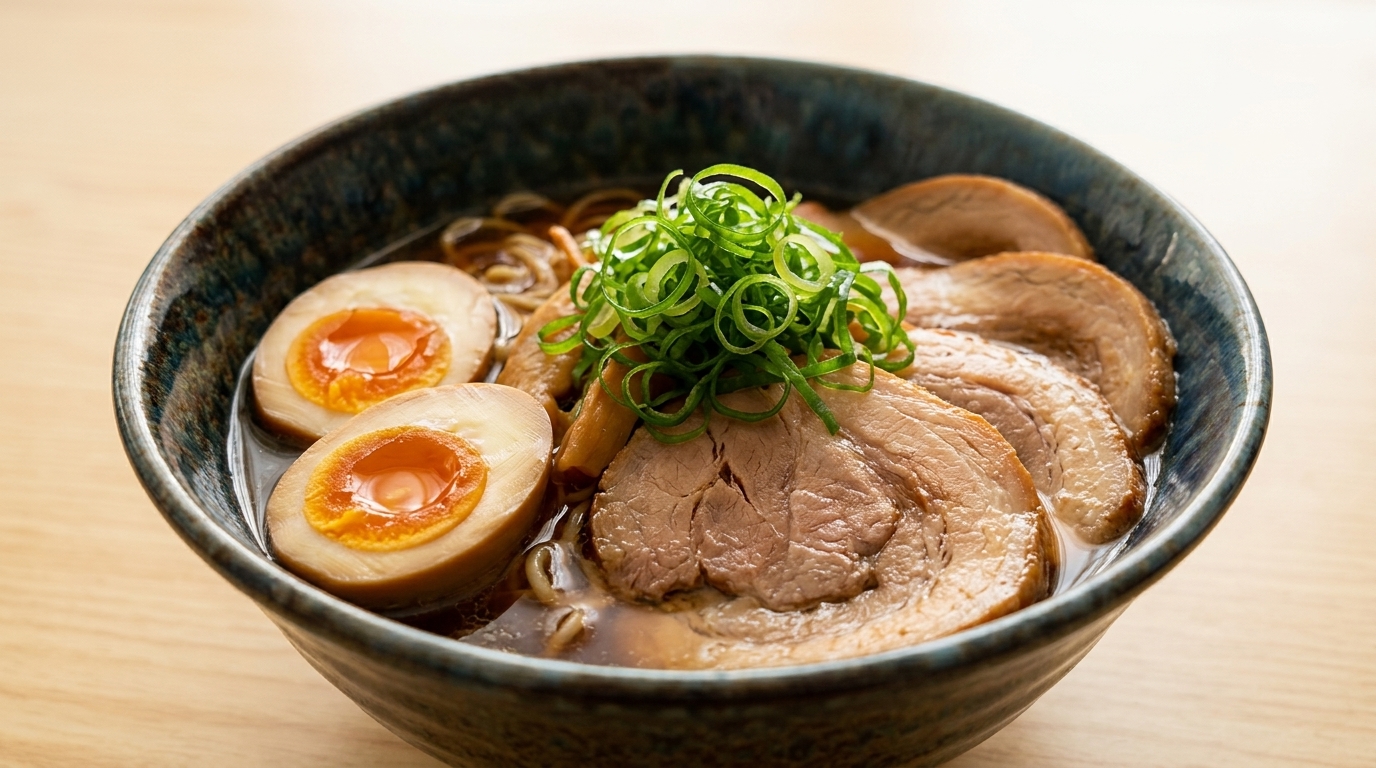
- 4 slices chashu (roasted pork belly), optional
- 2 ajitsuke tamago (marinated soft-boiled eggs), optional
- to taste menma (bamboo shoots), optional
- to taste fresh scallions, finely sliced, optional
Instructions
- 1Add Aromatics to Cold Oil
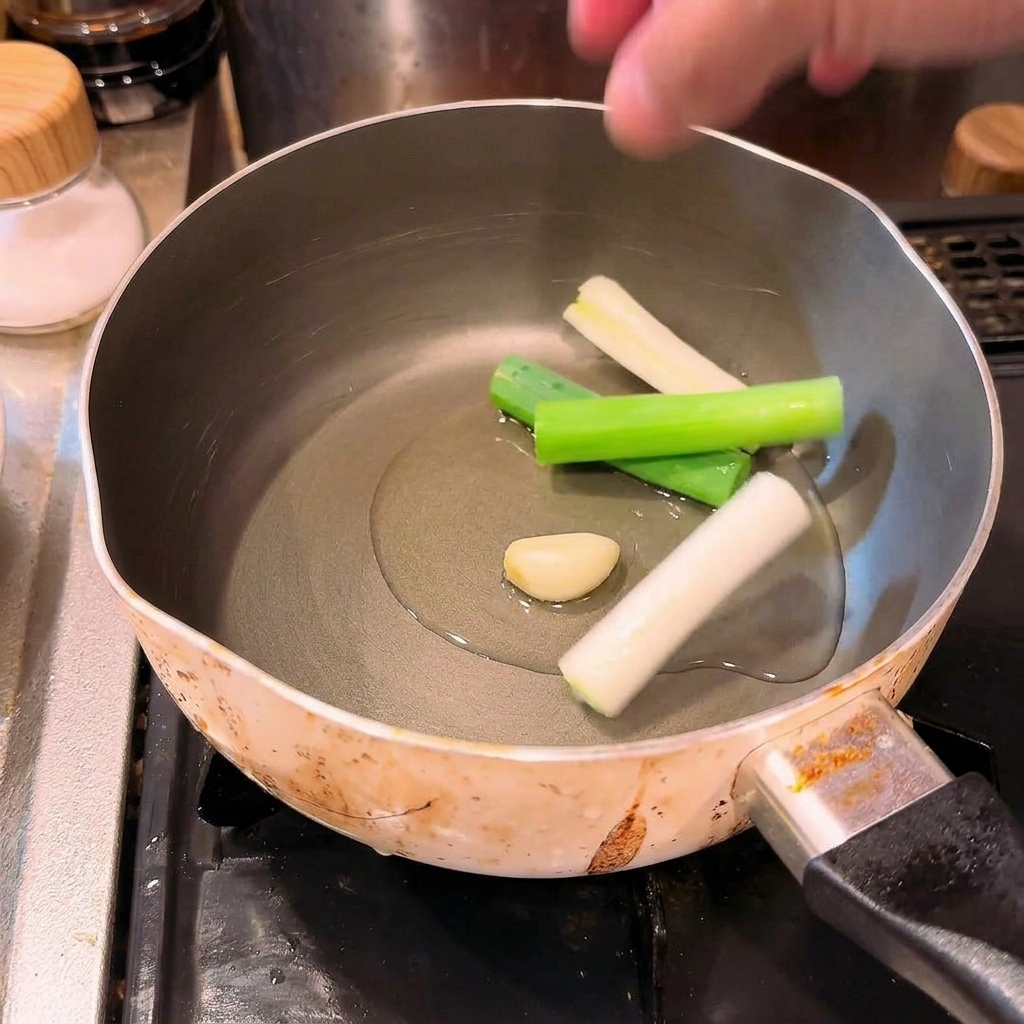
Place the chopped scallions and garlic into a cold pot containing cold cooking oil. Starting with cold oil and gradually heating it allows the aromatic oils to slowly release and infuse deeply into the base without burning the ingredients.
Tip: Always start with cold oil for this step to slowly draw out the flavors; dropping garlic and scallions into hot oil will burn them and make the broth bitter. - 2Add the Bonito Flakes
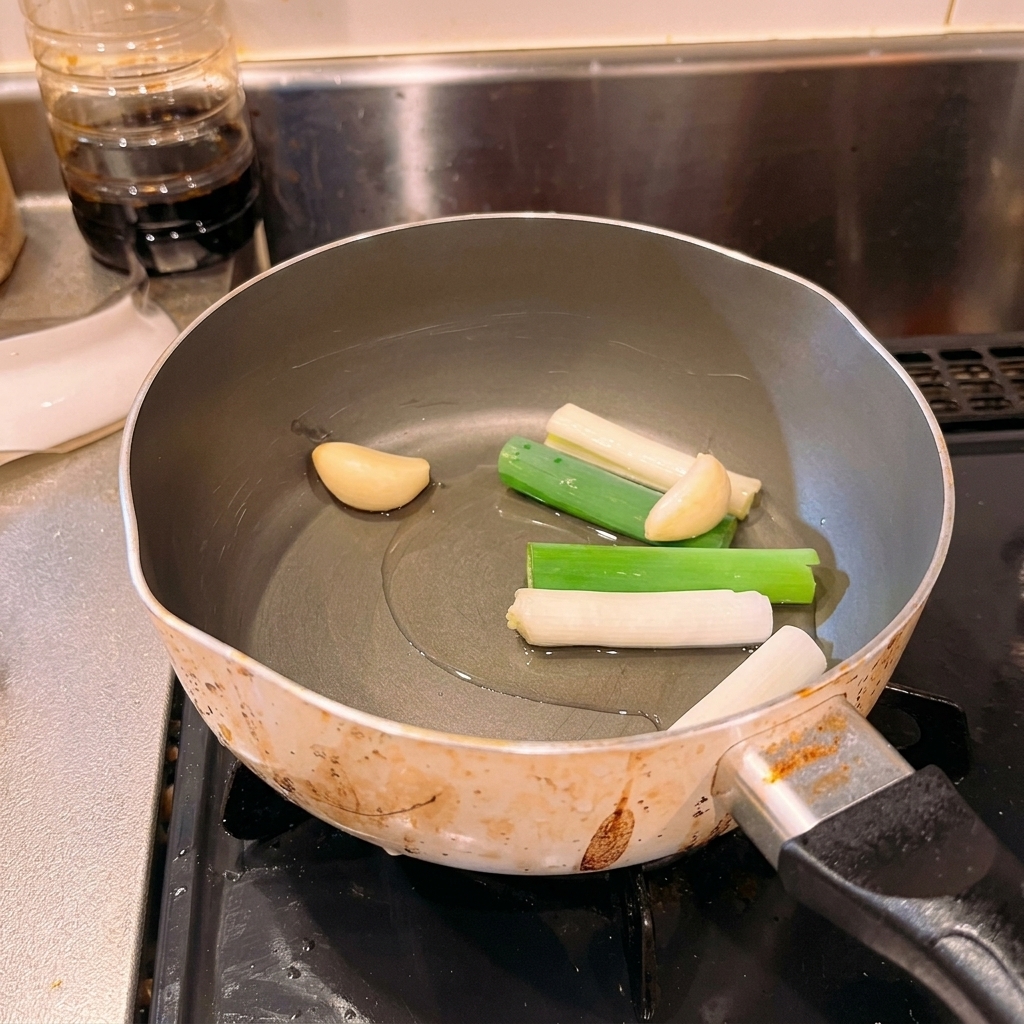
Before turning on the heat, add a handful of bonito flakes into the pot with the cold oil, garlic, and scallions. Incorporating the bonito flakes early allows their rich, smoky seafood umami to deeply infuse into the aromatic oil base as it slowly heats up.
Tip: Bonito flakes can burn easily at high temperatures, which is why starting them in cold oil alongside the other aromatics is crucial for a balanced, unburnt flavor profile. - 3Stir-fry the aromatics
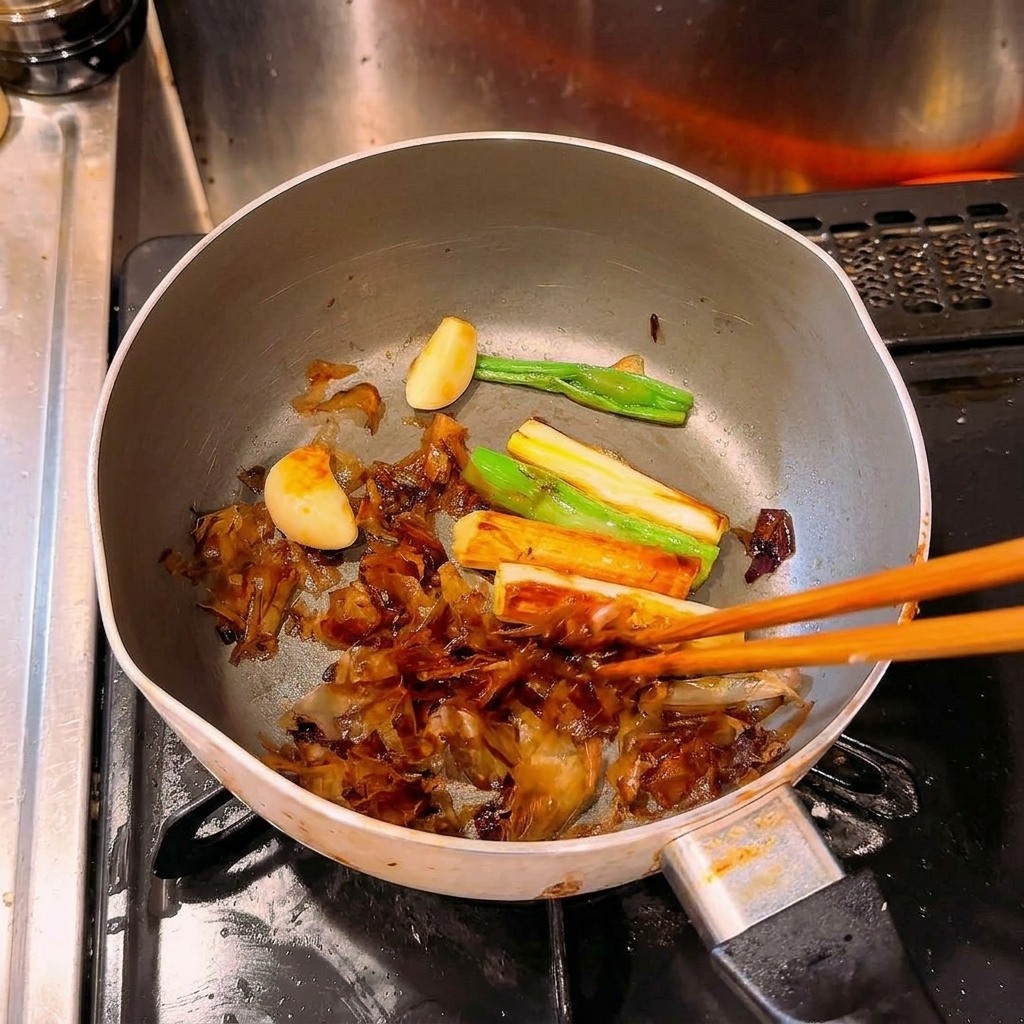
Turn the heat to low and use chopsticks to continuously stir the scallions, garlic, and bonito flakes as they fry. Continue stirring until the ingredients change color and develop a rich, dark brown caramelization. This is the flavor foundation for your broth.
Tip: Keep the heat low and be patient. Stir constantly to prevent the bonito flakes and garlic from catching and burning on the bottom of the pot. - 4Add water for the broth
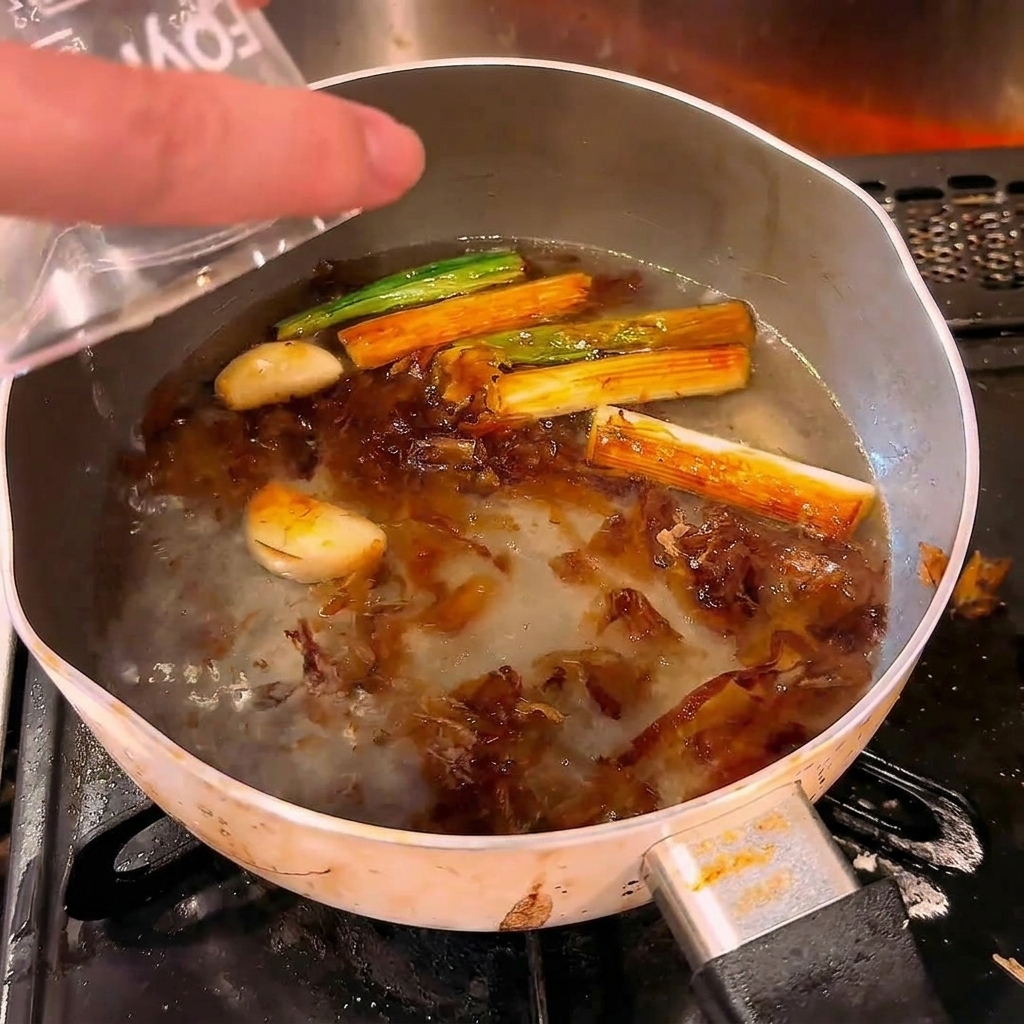
Once the aromatics have developed a deep roasted color, carefully pour water into the pot. The water will stop the frying process instantly, deglaze the pot, and mix with the infused aromatic oil to form the base of your rich ramen broth.
Tip: Pour the water in carefully to avoid hot oil splatters when it hits the pan. - 5Season the broth
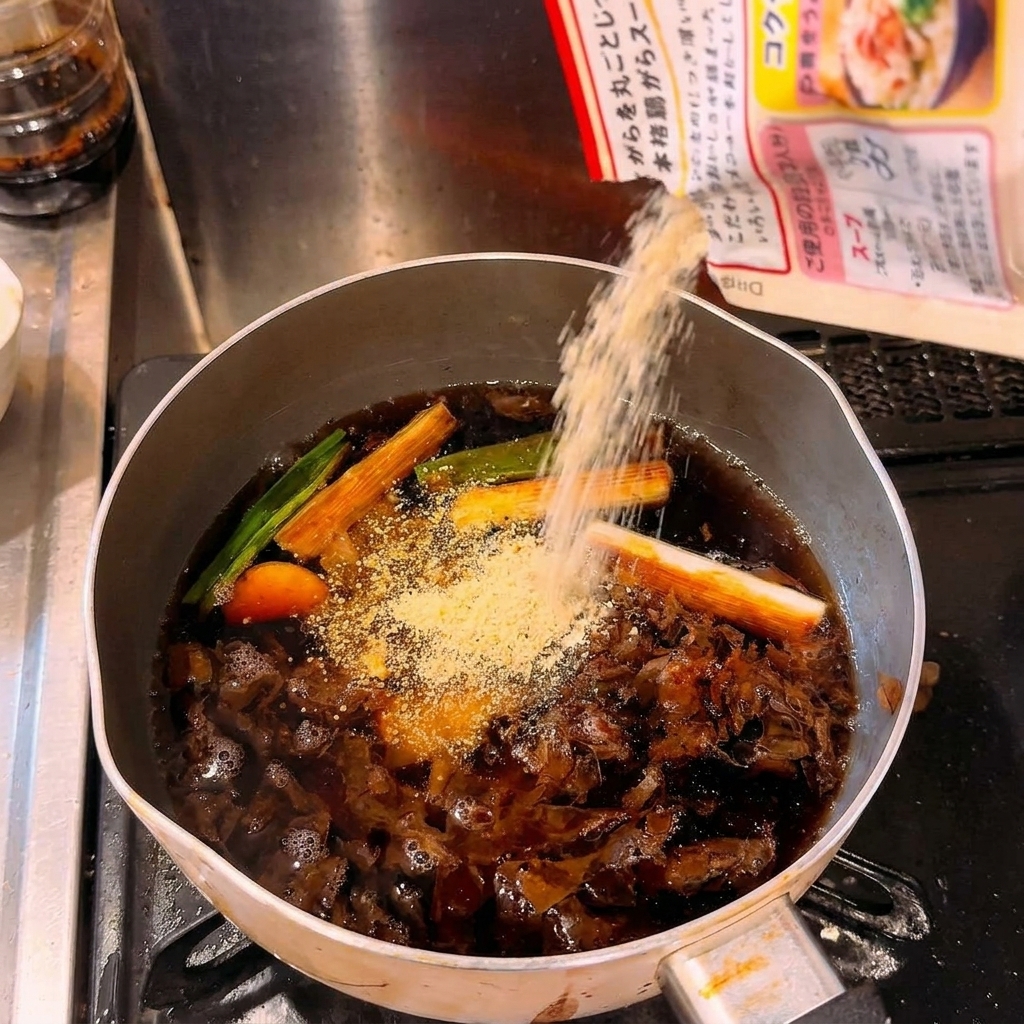
Bring the liquid to a gentle boil, then add the powdered chicken soup seasoning alongside your other liquid seasonings like soy sauce. This adds crucial umami and savory depth, balancing the smoky and aromatic notes of the fried garlic and scallions.
Tip: If you are adding MSG, wait to sprinkle it in right before taking the pot off the heat to maximize its flavor-enhancing effect. - 6Simmer and stir
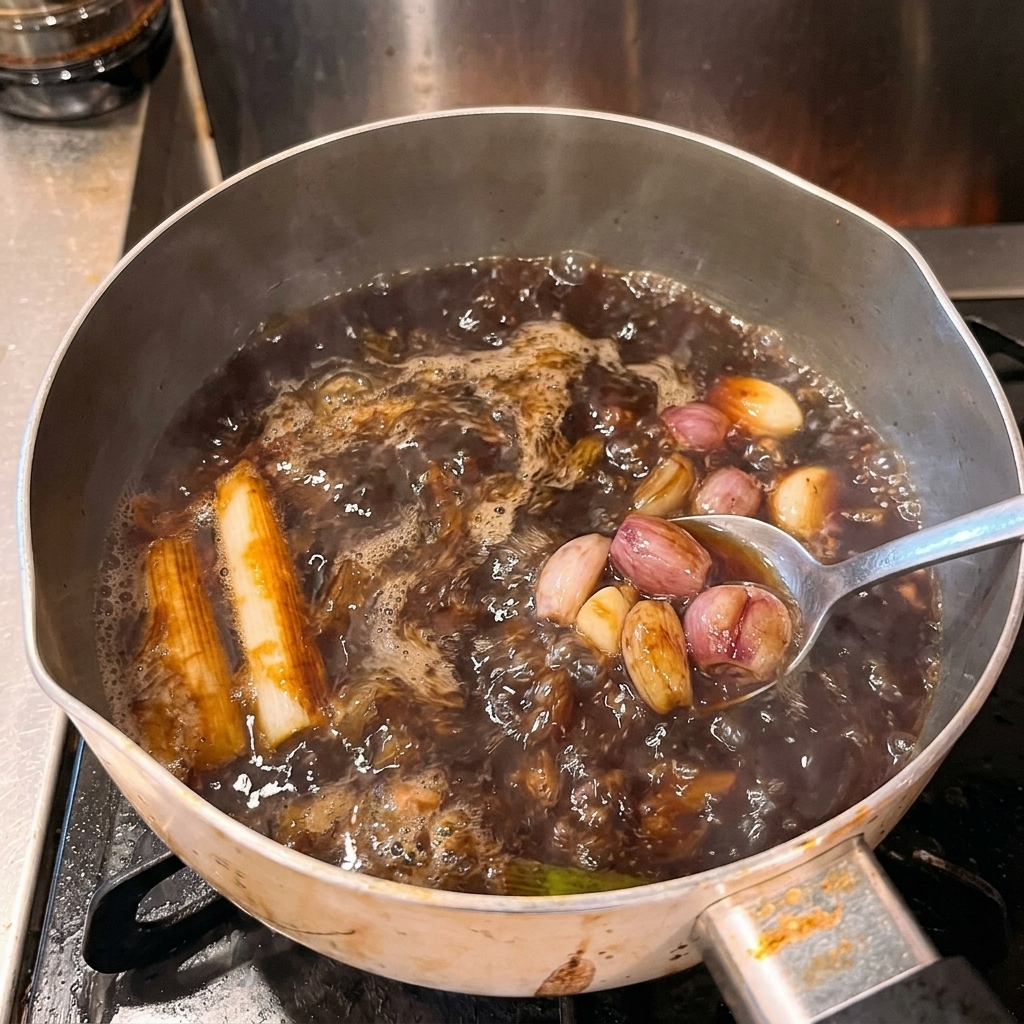
Allow the broth to boil vigorously while stirring with a spoon to ensure all the powdered seasonings are completely dissolved. This short, rolling boil extracts the final layers of flavor from the garlic and scallions before the broth is strained and served.
Tip: Boil just long enough to unify the flavors; boiling for too long can cloud the broth and introduce bitterness. - 7Strain the broth
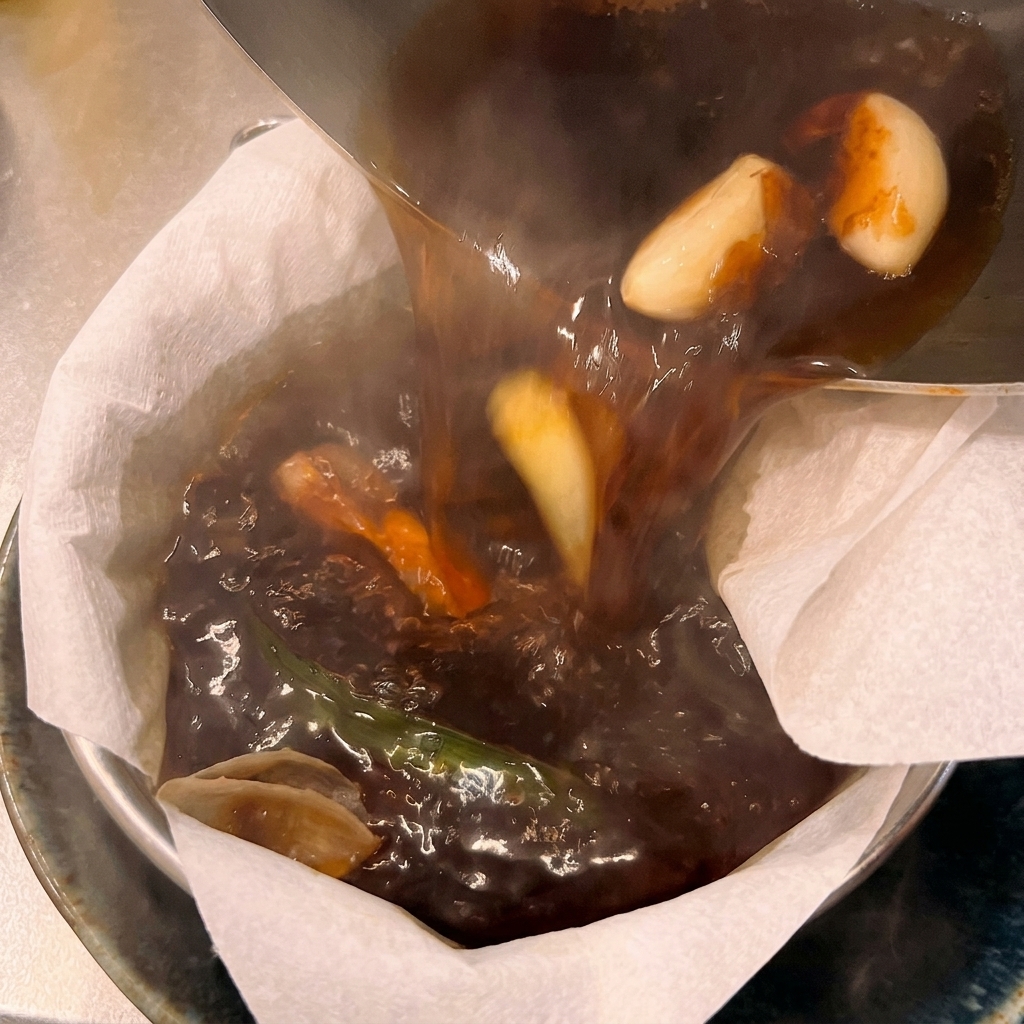
Carefully pour the hot, seasoned broth through a paper filter set directly over your serving bowl. This step catches all the fried aromatics, like the garlic and scallions, leaving you with a clean, smooth, and deeply flavorful shoyu soup base.
Tip: If you dont have a specialized paper filter, a fine-mesh sieve lined with a clean paper towel works perfectly as an alternative. - 8Boil the ramen noodles
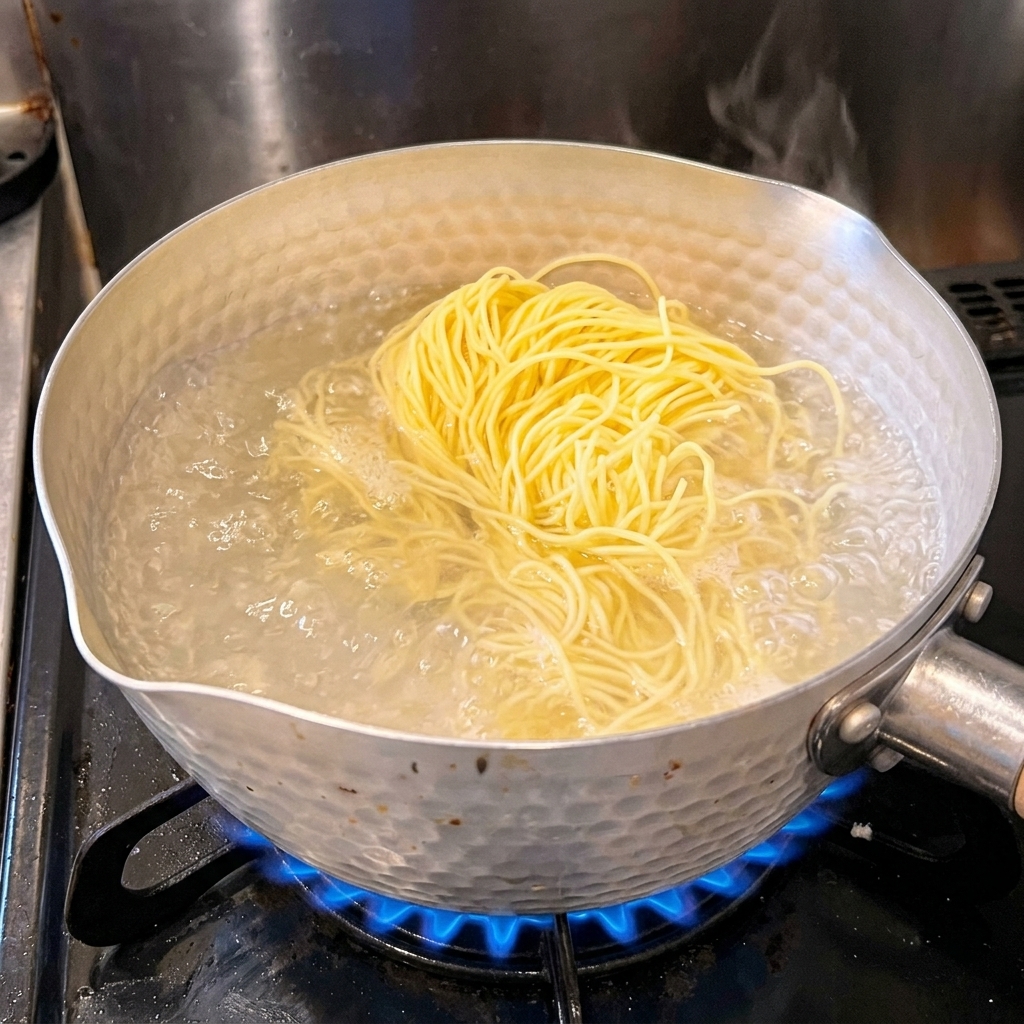
Bring a separate pot of fresh water to a rolling boil. Carefully drop your bundle of fresh yellow ramen noodles into the water. Ensure you use a generous amount of water so the noodles have room to move and cook evenly without drastically dropping the water temperature.
Tip: Always cook your noodles in a separate pot of plain water—never directly in your ramen broth—to prevent the released starches from muddying your carefully crafted soup. - 9Stir and cook the noodles
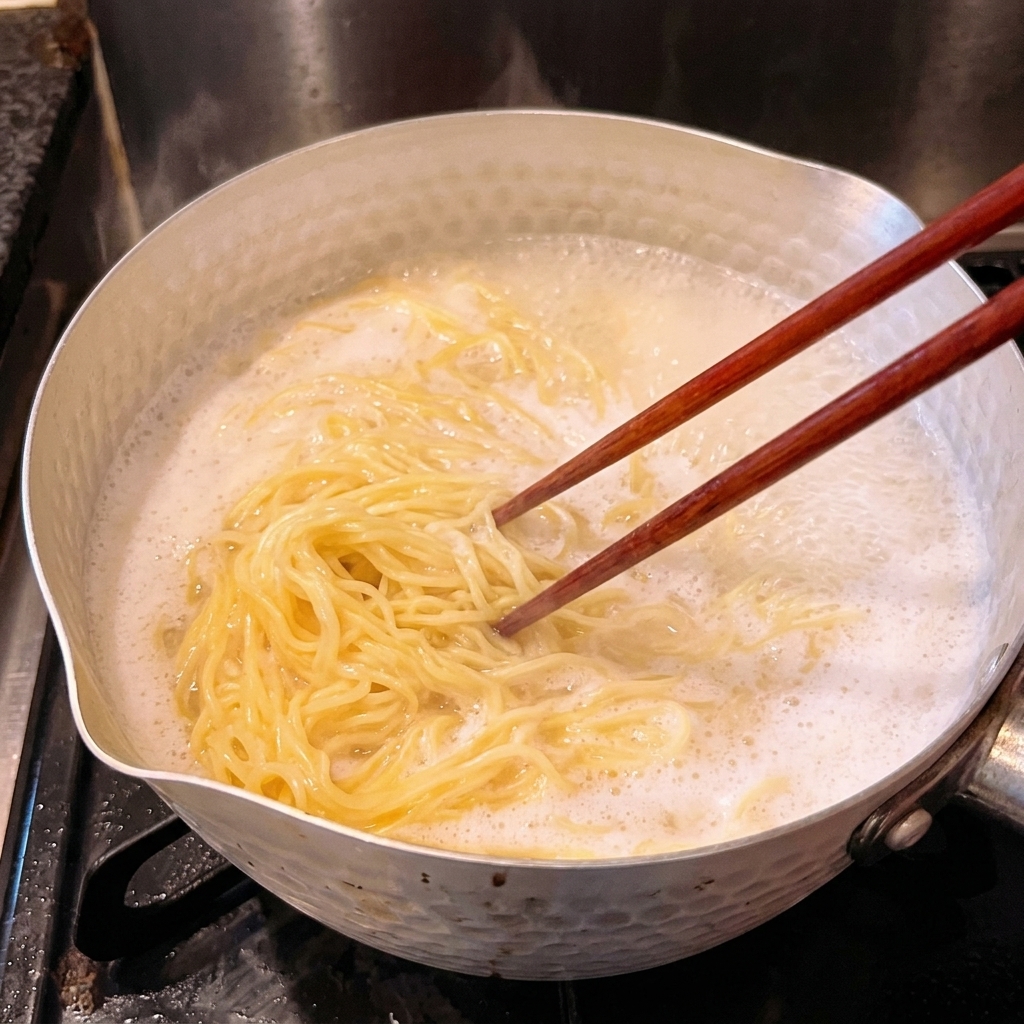
As the noodles cook in the rapidly boiling water, use wooden chopsticks to gently stir and tease them apart. This prevents the strands from clumping together and ensures they cook evenly to a perfect, chewy texture.
Tip: Fresh ramen noodles cook very quickly, often in just 1 to 2 minutes. Stay close and test a strand frequently to avoid overcooking them into a mushy texture.