Quick & Authentic Japanese Soy Sauce Ramen (Shoyu Ramen)
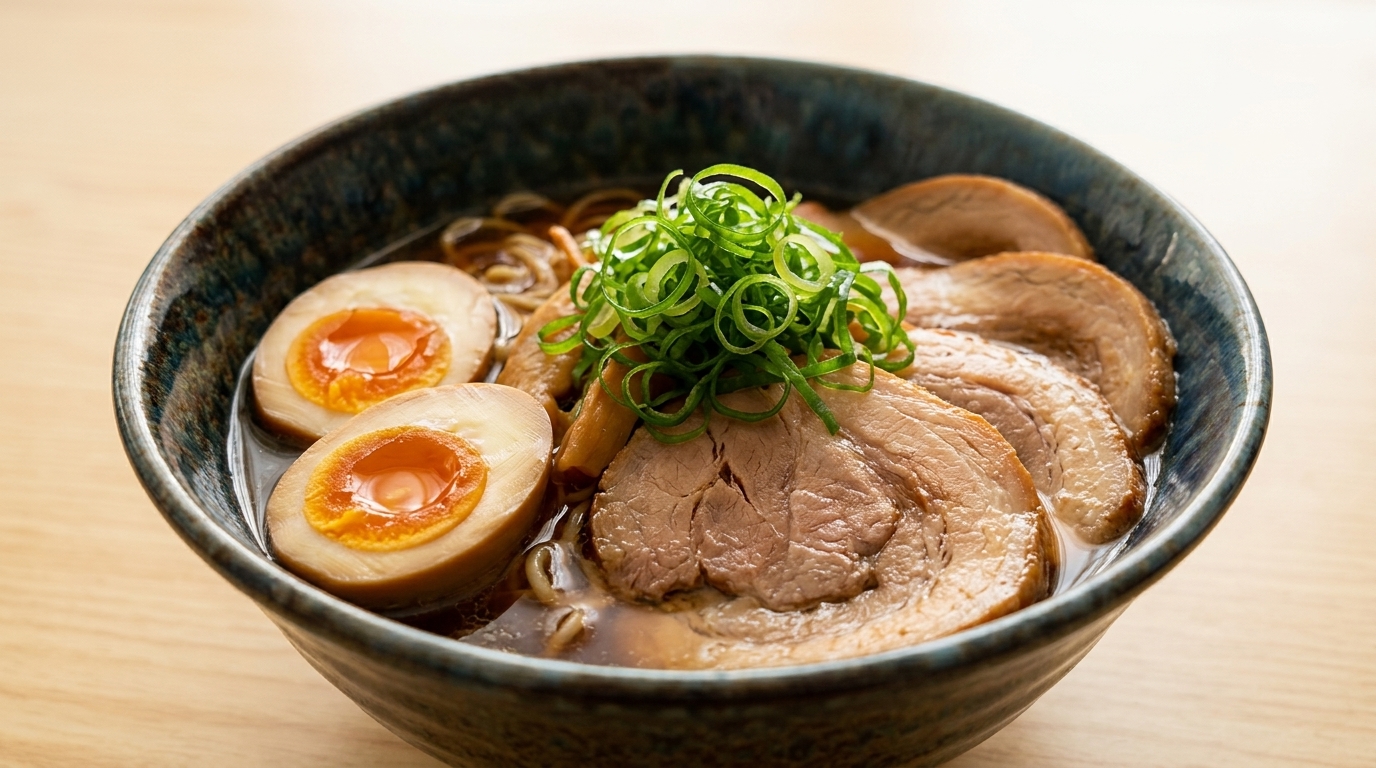
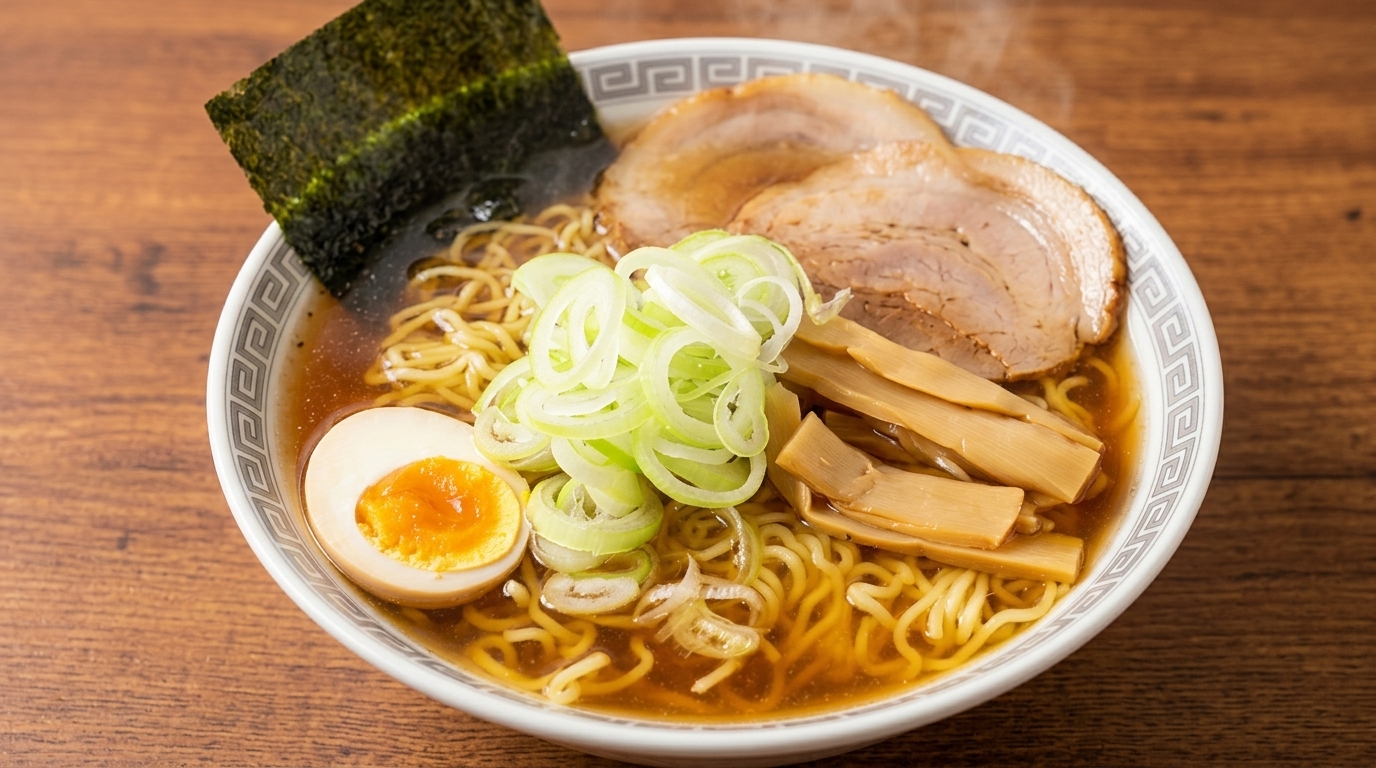
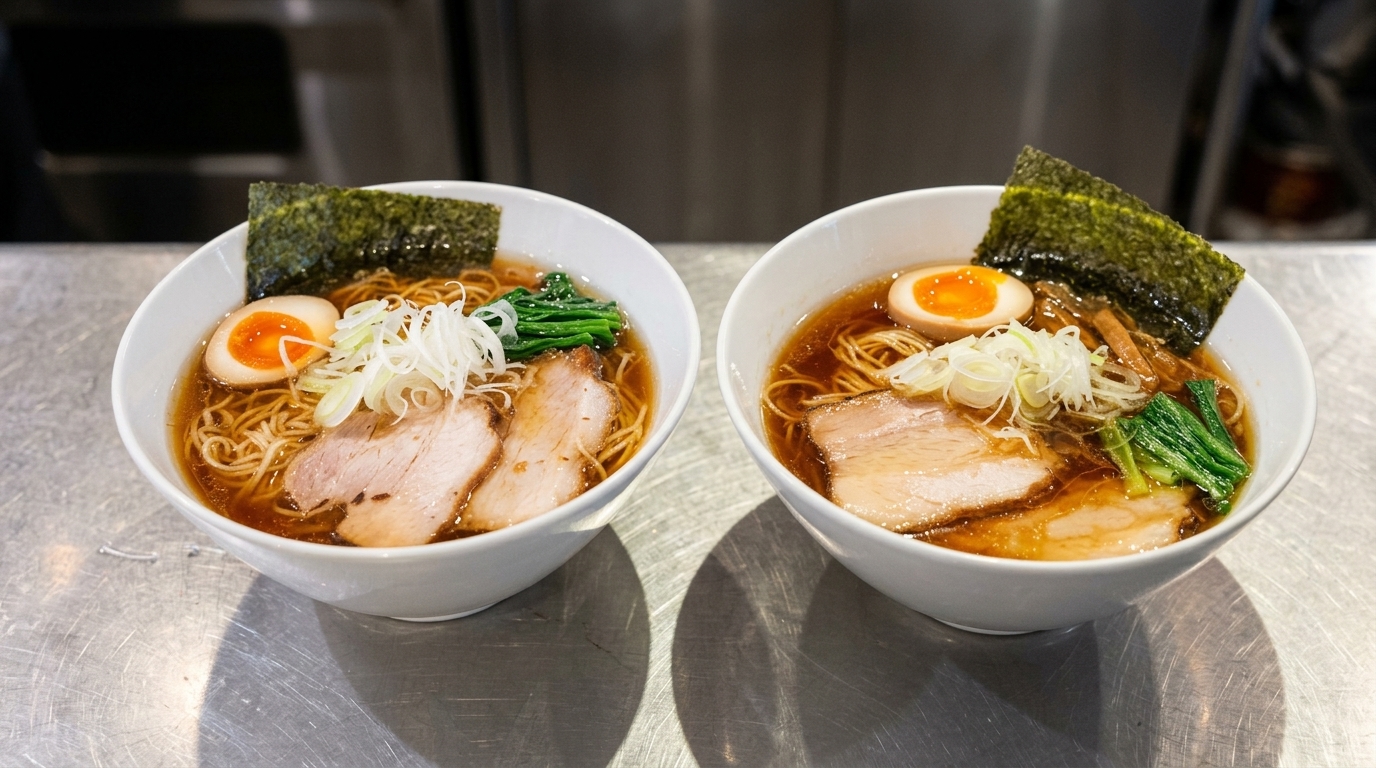
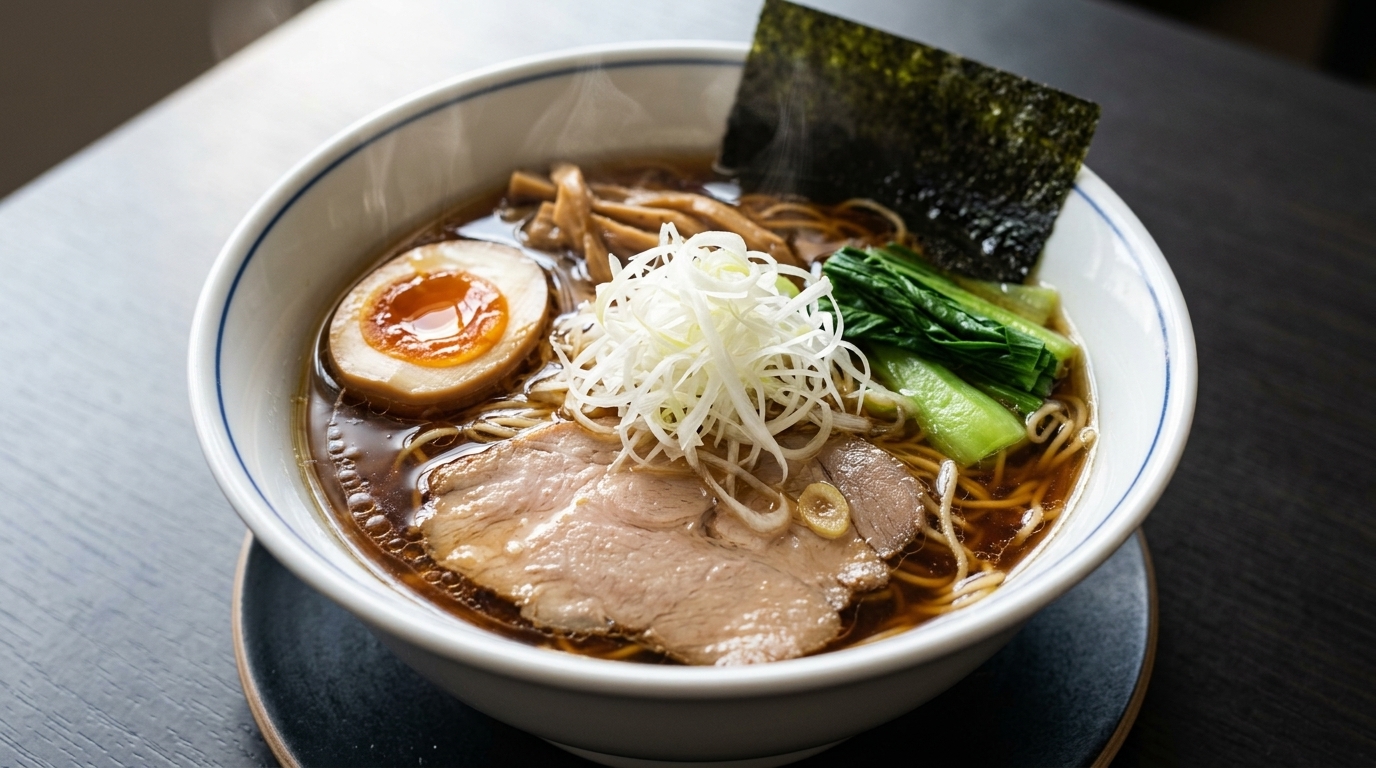
Enjoy a comforting bowl of Japanese Shoyu Ramen at home in minutes. This recipe features a rich soy-based broth, chewy noodles, and classic toppings like tender char siu and a soft-boiled egg.
Shoyu (soy sauce) ramen is one of Japans most beloved noodle soup styles, characterized by its clear, brown broth and deeply savory flavor profile. While traditional ramen shops simmer their master broths for hours or even days, using a high-quality soup base concentrate allows you to recreate that authentic umami experience in your own kitchen almost instantly. It is the perfect canvas for your favorite toppings.
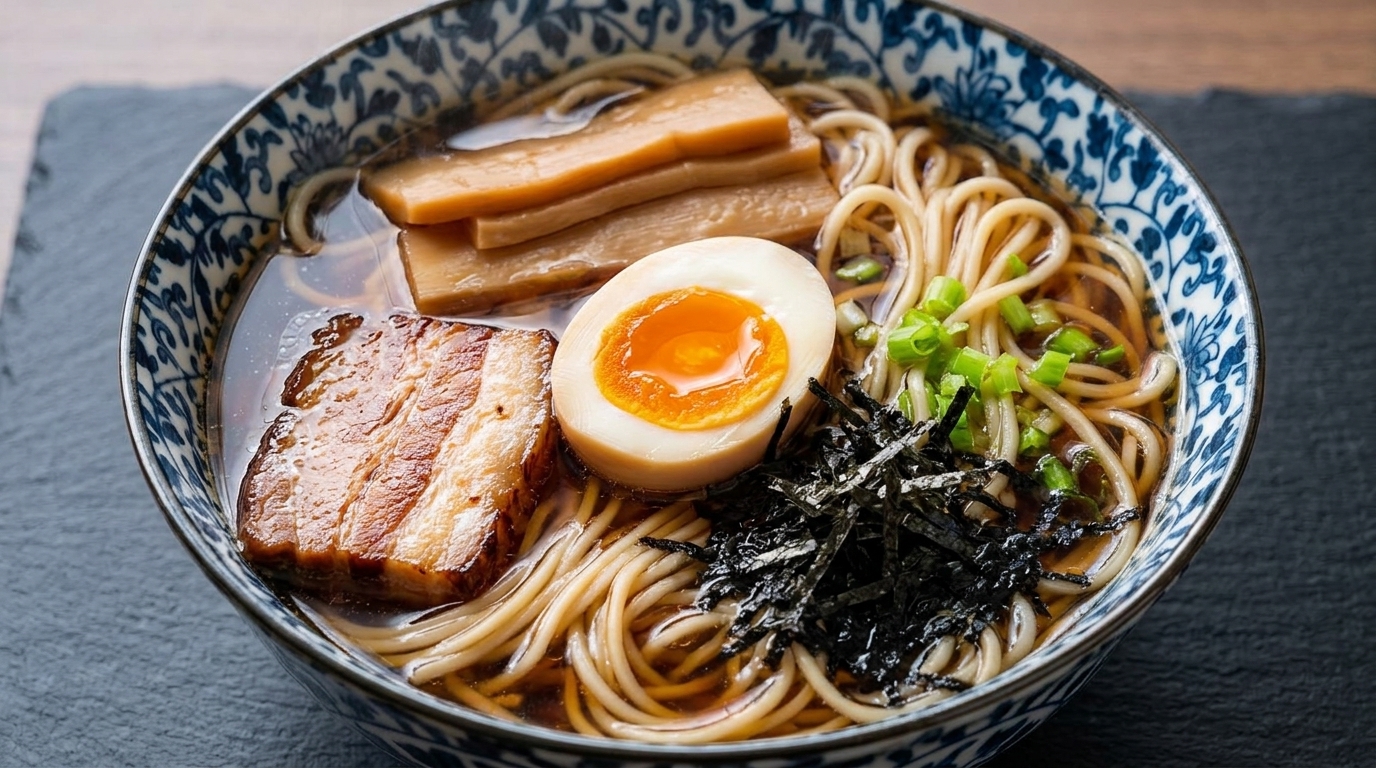
Ingredients
- 1 bundle dry ramen noodles
- 1 packet soy sauce ramen soup base
- 360 g boiling water (for broth)
- 12 soft-boiled egg
- 1 slice char siu pork
- 1 tbsp sliced bamboo shoots (menma)
- 1 tbsp chopped green onions
- to taste shredded nori seaweed
Instructions
- 1Boil the water

Pour cold water into a metal pot and place it on the stove. Bring the water to a rapid rolling boil so it is fully heated and ready for cooking the ramen noodles.
Tip: Using a generous amount of water ensures the temperature wont drop too much when you add the noodles, allowing them to cook evenly. - 2Add noodles to boiling water
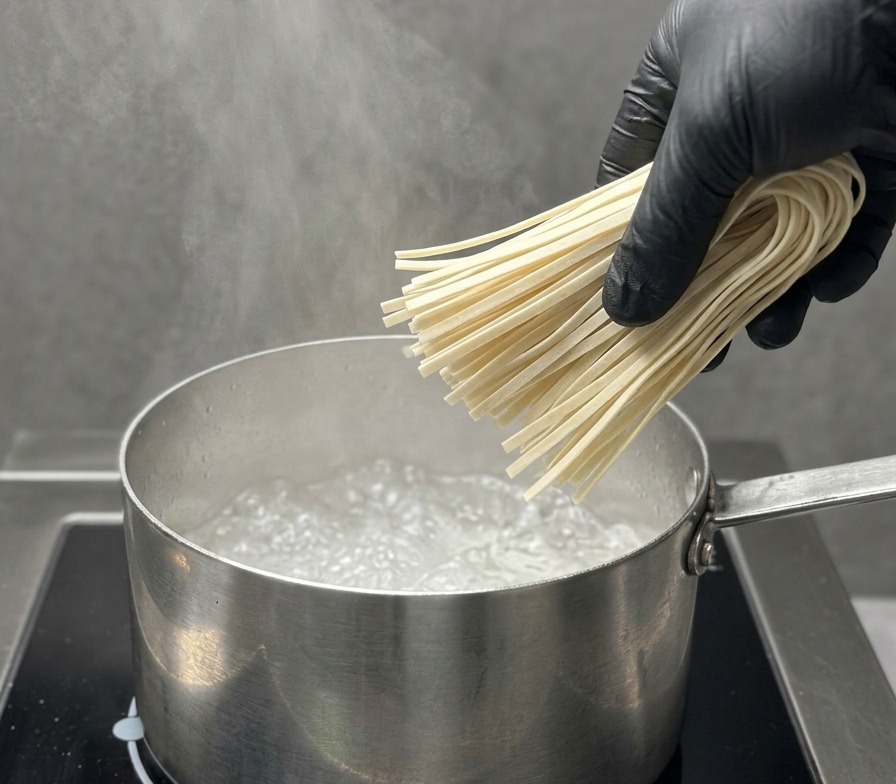
Once the water is at a vigorous rolling boil, carefully lower the bundle of dry ramen noodles into the pot to begin cooking.
Tip: Gently stir the noodles a few seconds after dropping them in to ensure they separate and cook evenly in the boiling water. - 3Cook the noodles
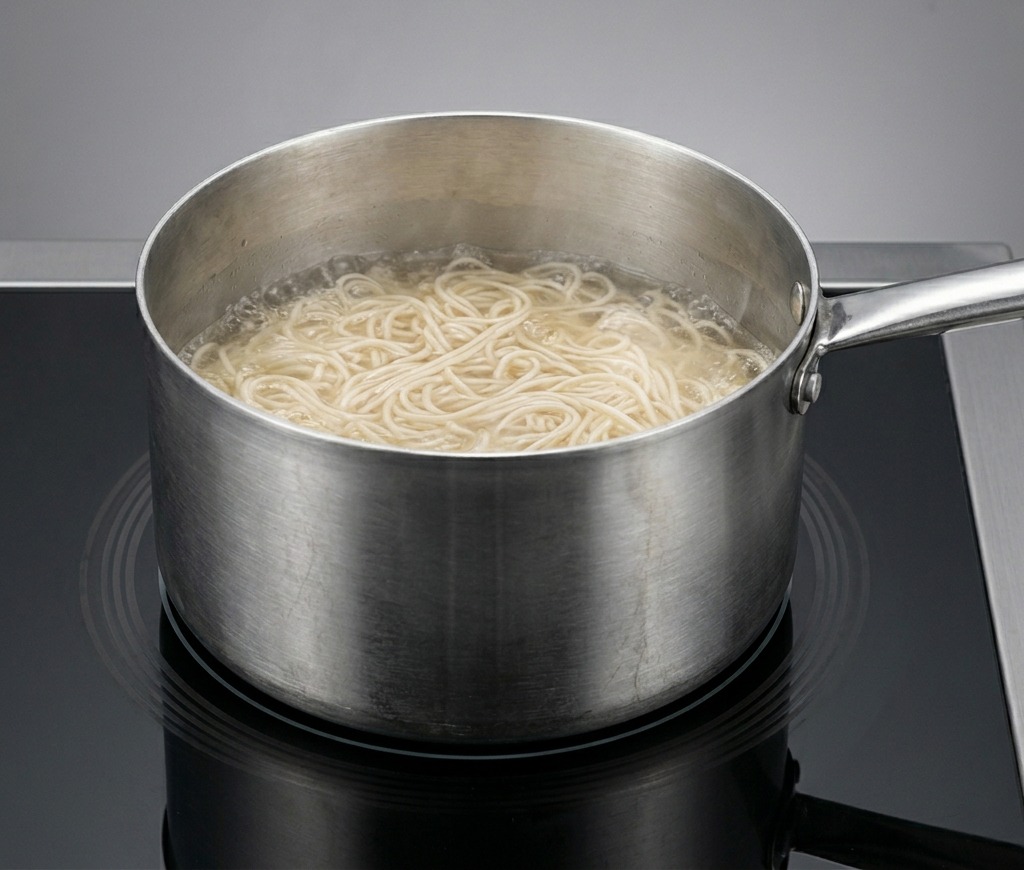
Allow the noodles to cook for exactly one minute and thirty seconds. Stir them gently with chopsticks to ensure they separate and cook evenly.
Tip: Keep a close eye on the pot; if the water threatens to bubble over, lower the heat slightly rather than adding cold water to keep the cooking continuous. - 4Prepare the soup base
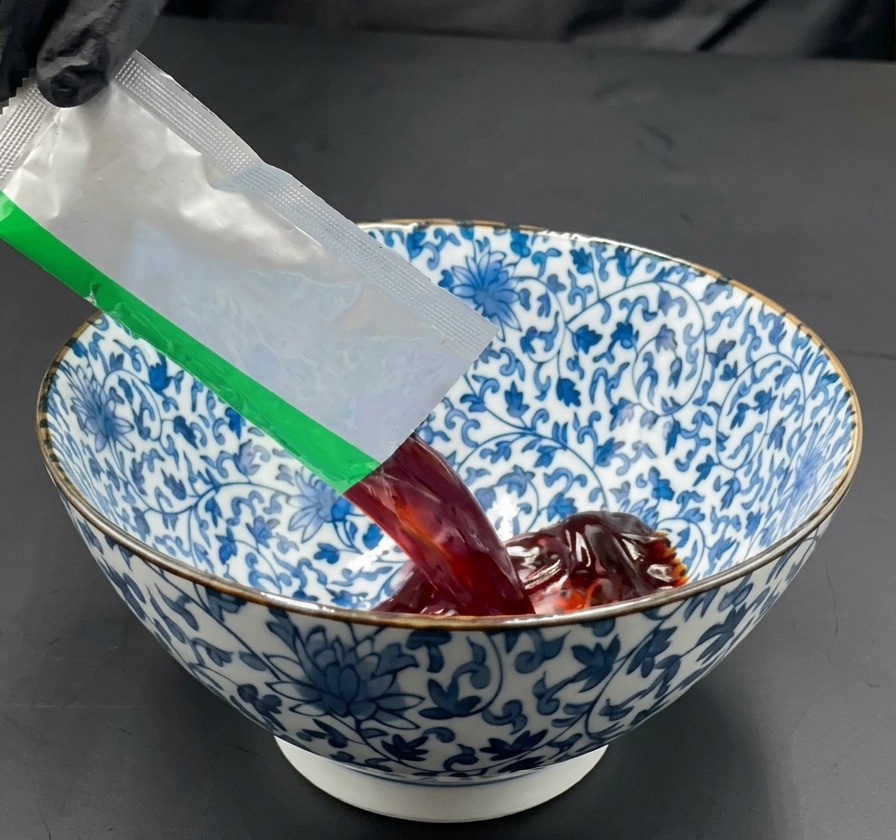
While the noodles are cooking, open your packet of soy sauce ramen soup base and squeeze the dark, concentrated liquid directly into your serving bowl.
Tip: Warming your serving bowl beforehand with a splash of hot water (and pouring it out) will help keep your ramen piping hot for much longer. - 5Mix the ramen broth
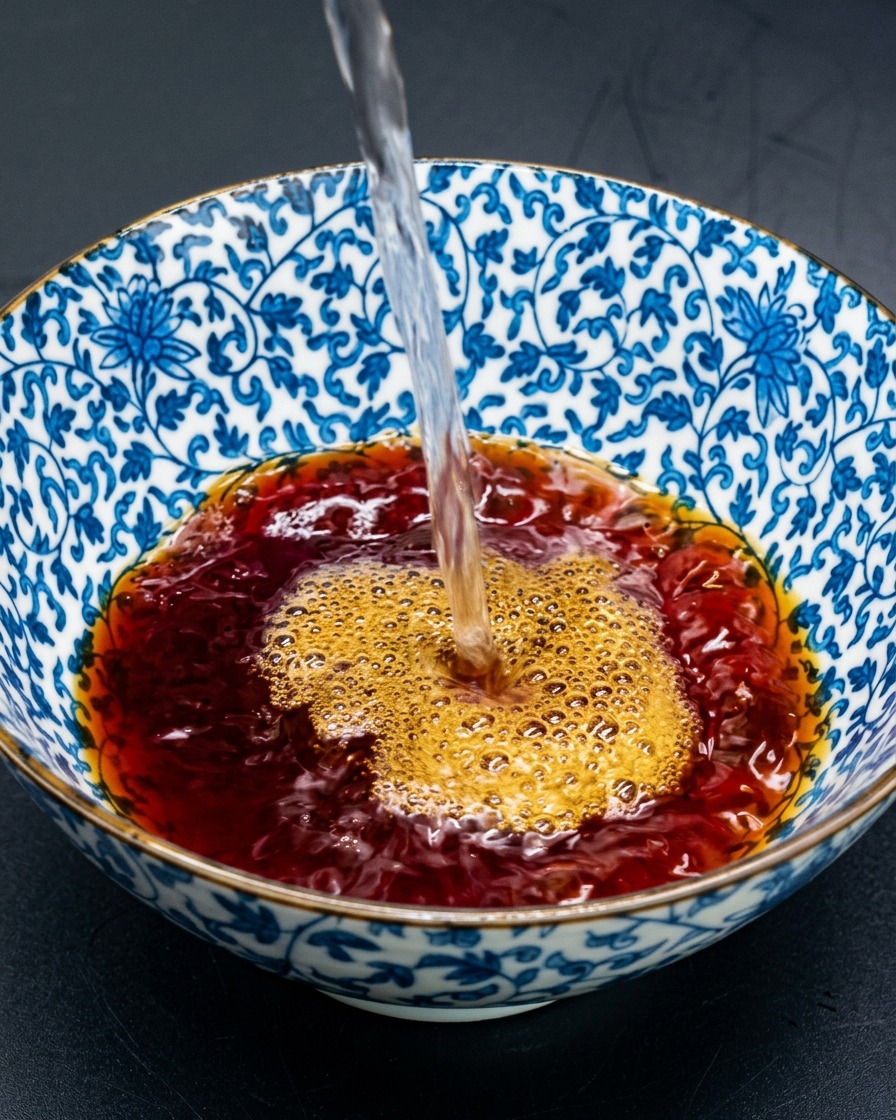
Pour exactly 360 grams of hot, boiling water directly into the bowl with the soup base. The hot water will instantly mix with the concentrate to create a rich, aromatic soy sauce broth.
Tip: Measure the water accurately to ensure the broth is perfectly balanced—neither too salty nor too diluted. - 6Add noodles to the broth
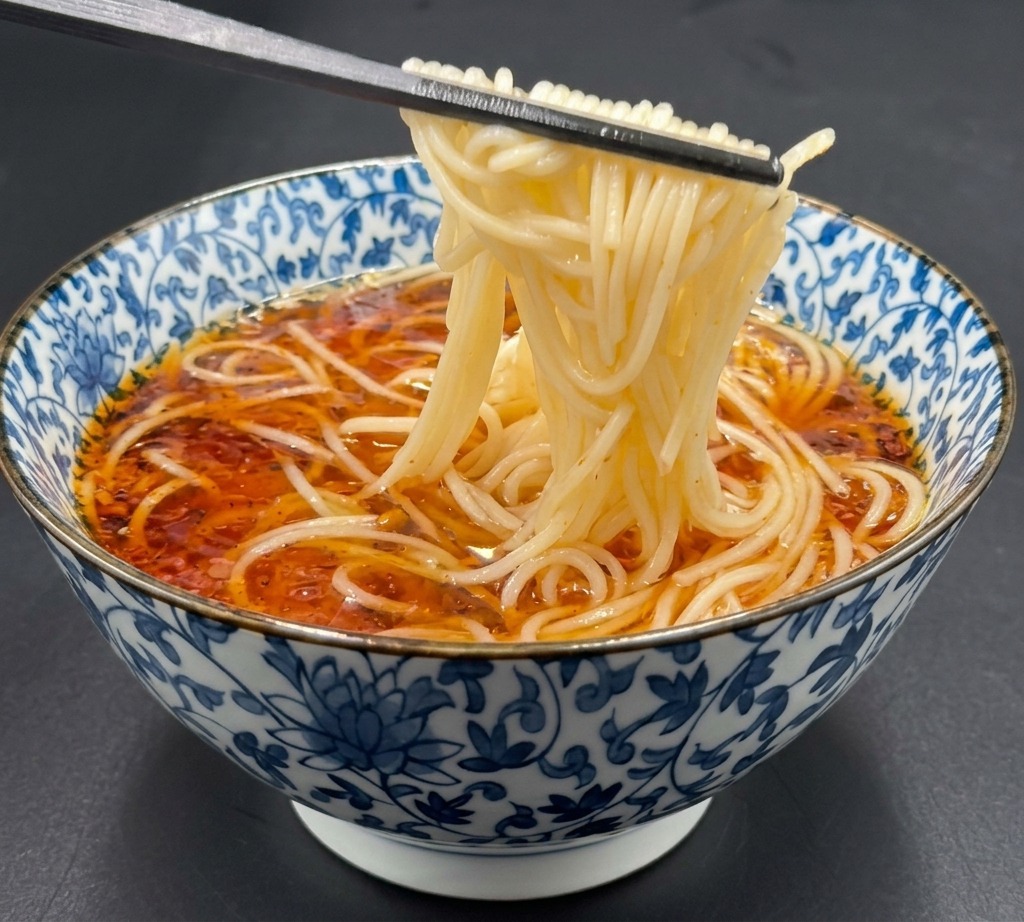
When the noodles have finished cooking, lift them out of the pot using chopsticks or a mesh strainer. Drain the excess water well, then gently place the hot noodles directly into the prepared broth.
Tip: Fold the noodles neatly as you place them into the bowl for a beautiful, restaurant-quality presentation. - 7Add the soft-boiled egg
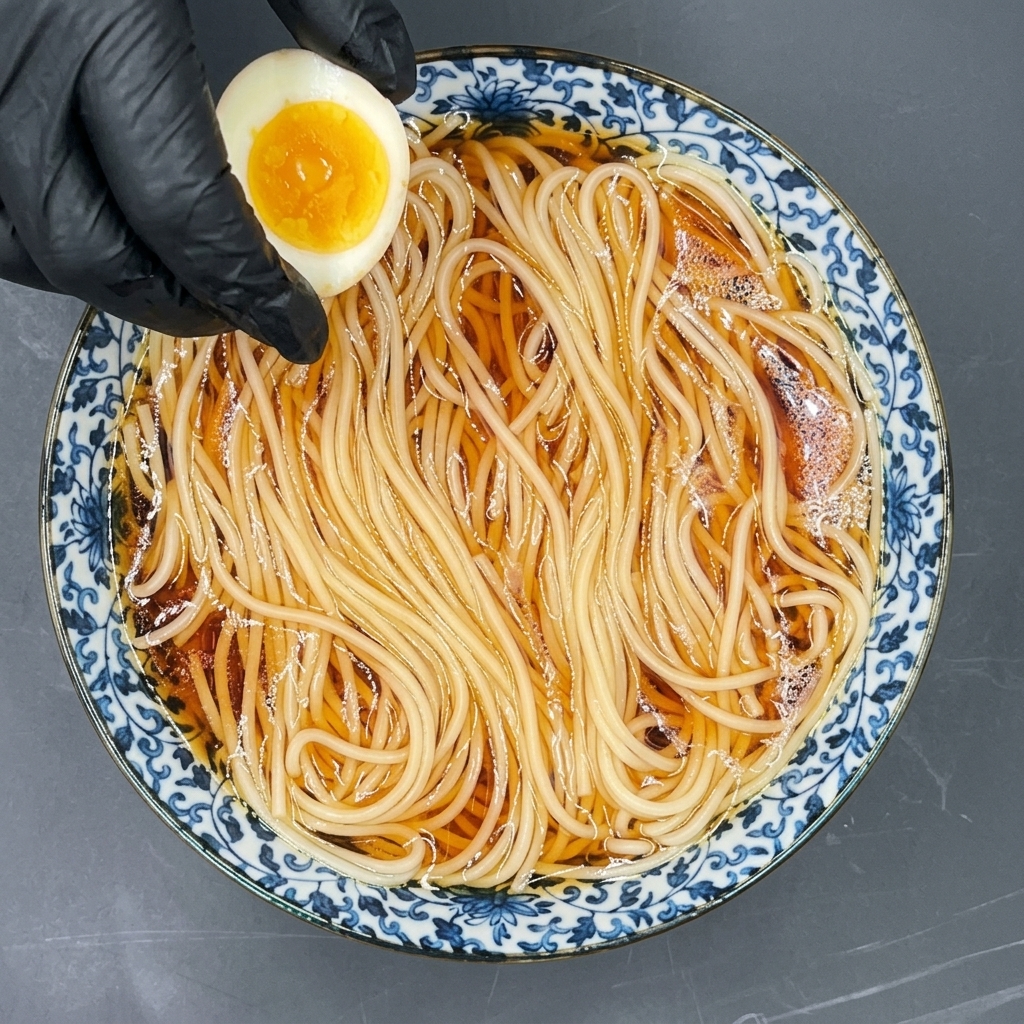
Carefully place half of a soft-boiled egg onto the cooked noodles in the broth. The creamy, slightly runny yolk adds a rich and comforting texture that beautifully complements the savory soy sauce soup base.
Tip: To achieve a clean cut through the soft yolk, use a sharp, thin knife or a piece of fishing wire. - 8Top with bamboo shoots
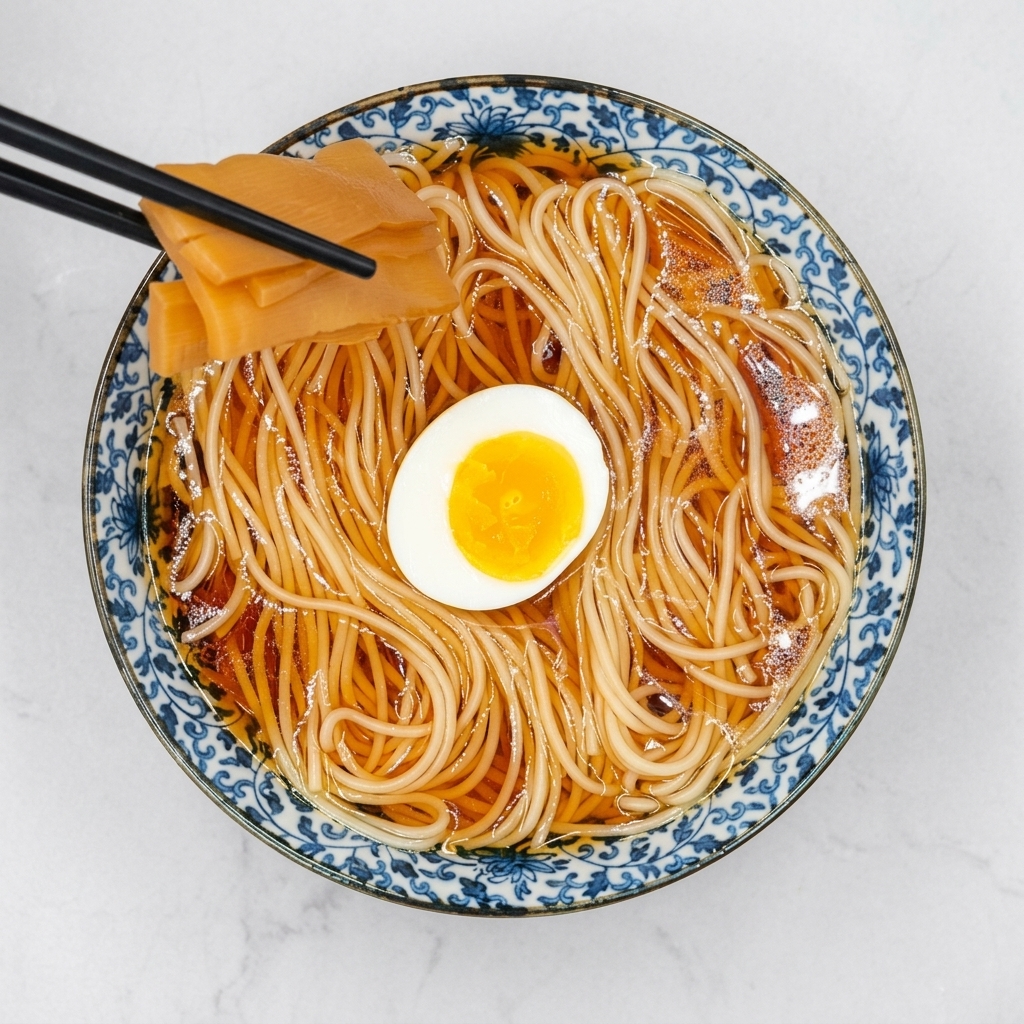
Using chopsticks, arrange the sliced bamboo shoots (menma) neatly in the bowl alongside the egg. The bamboo shoots introduce a satisfying crunch and a subtle earthy sweetness that contrasts well with the tender noodles.
Tip: You can lightly toss the bamboo shoots in a few drops of sesame oil before plating for an extra layer of aroma. - 9Add the char siu pork
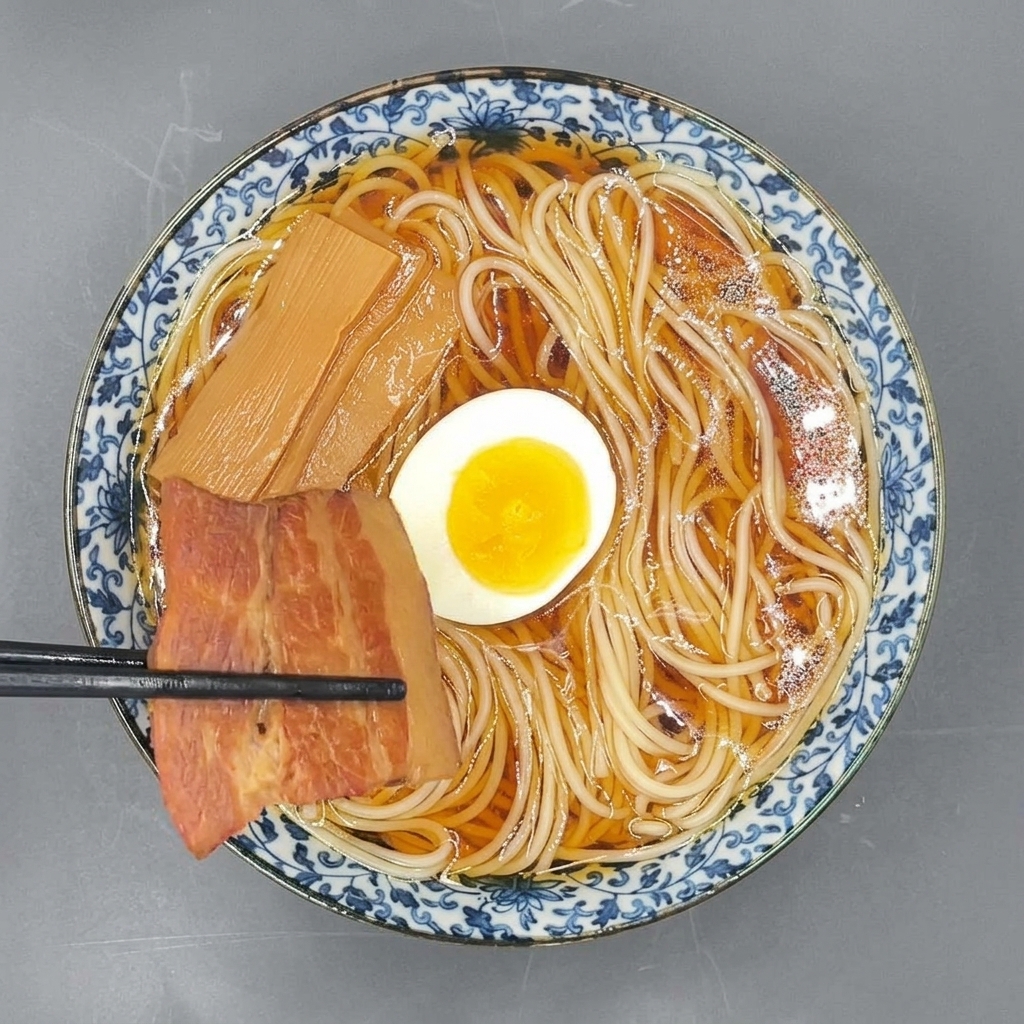
Gently lay a thick slice of tender char siu pork onto the noodles, placing it neatly next to the bamboo shoots and egg. As it rests in the hot broth, the fat will slightly melt, releasing savory juices into the soup.
Tip: Briefly heating the char siu slice with a culinary blowtorch or in a hot pan before adding it to the bowl will enhance its charred flavor and aroma. - 10Garnish and serve
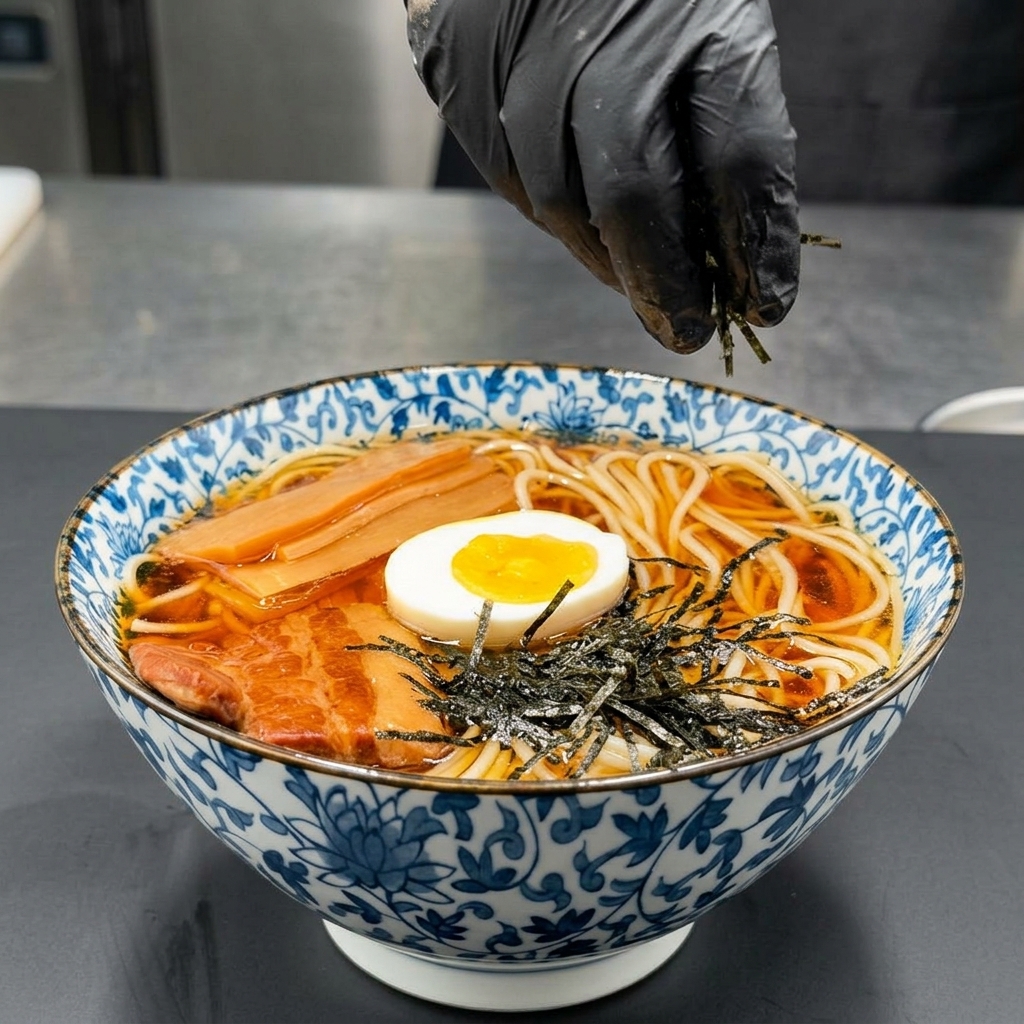
Finish the dish by generously sprinkling shredded nori (seaweed) over the assembled bowl, along with chopped green onions. The nori adds a delicate umami flavor of the sea, while the green onions provide a fresh, crisp contrast to the rich broth.
Tip: Always add the nori at the very last moment right before serving so it retains its crispy texture and doesnt become fully soggy in the broth.