Classic Philly Cheesesteak
Caramelized Onions
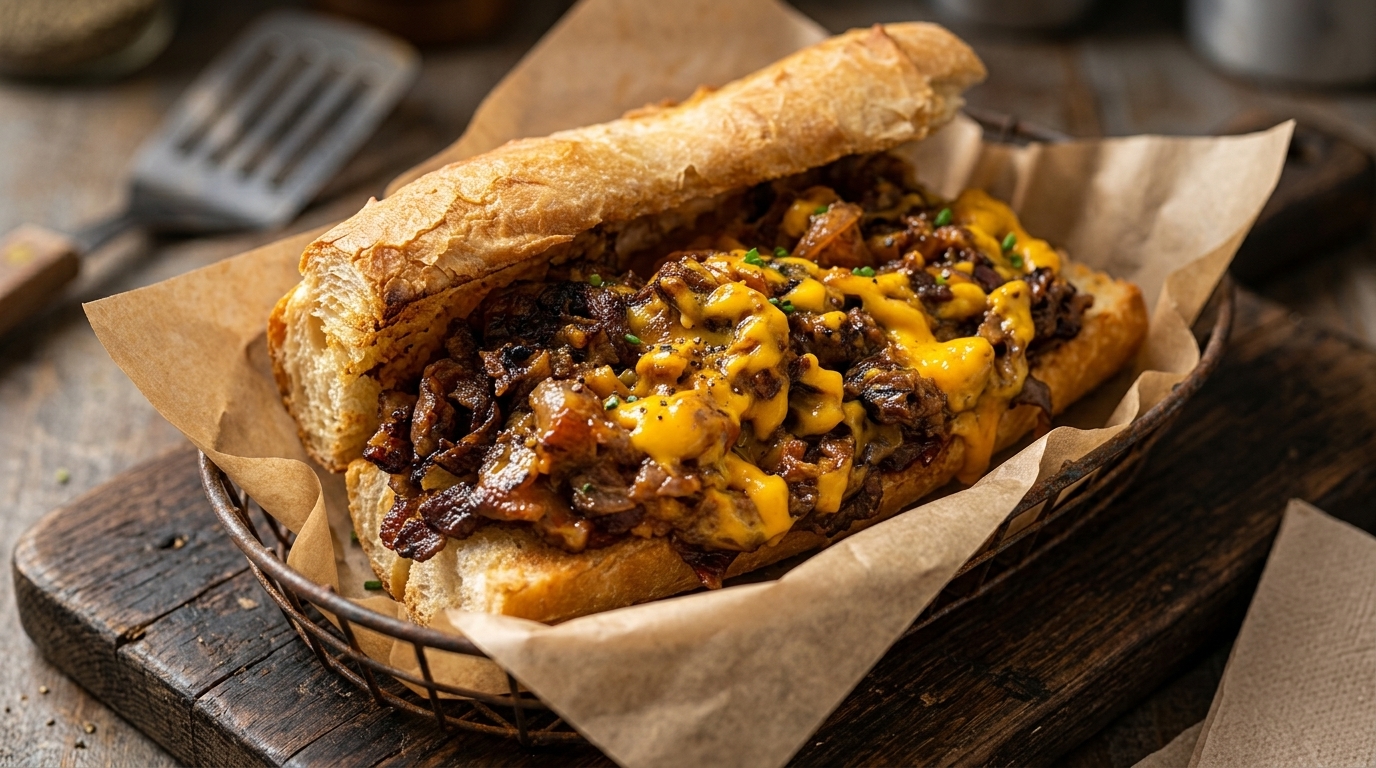
Master the legendary Philadelphia sandwich with paper-thin ribeye, sweet caramelized onions, and a gooey blend of melted cheeses on a perfectly toasted baguette.
The Philly cheesesteak is a triumph of simple, high-quality ingredients working in harmony. Born on the streets of Philadelphia, this sandwich relies on the intense sear of thinly sliced ribeye and the patience required to draw deep sweetness from onions. Its a soul-satisfying balance of salty, savory, and creamy textures.
Ingredients
- 500 g ribeye steak (well-marbled)
- 2 large white onions
- 4 slices provolone cheese
- 100 g shredded sharp cheddar
- 1 large crusty baguette
- 2 tbsp unsalted butter (melted)
- 2 tbsp high-heat cooking oil
- to taste kosher salt
- to taste freshly cracked black pepper
Instructions
- 1Pat the beef dry
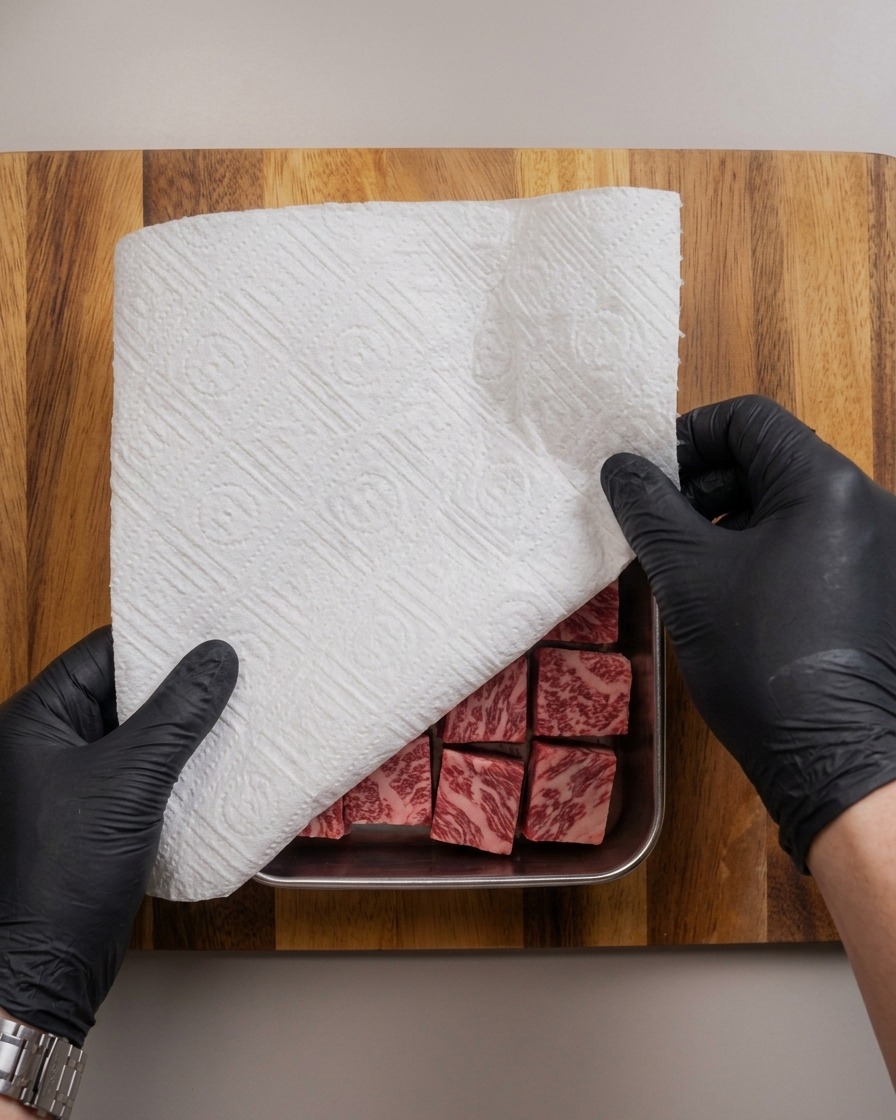
Place the raw meat into a small metal tray and gently pat it with a paper towel. Removing excess surface moisture ensures the beef will sear properly when it hits the hot skillet rather than steaming.
Tip: Drying the meat is essential for achieving a good crust. Always use a clean paper towel to absorb as much moisture as possible. - 2Slice the ribeye
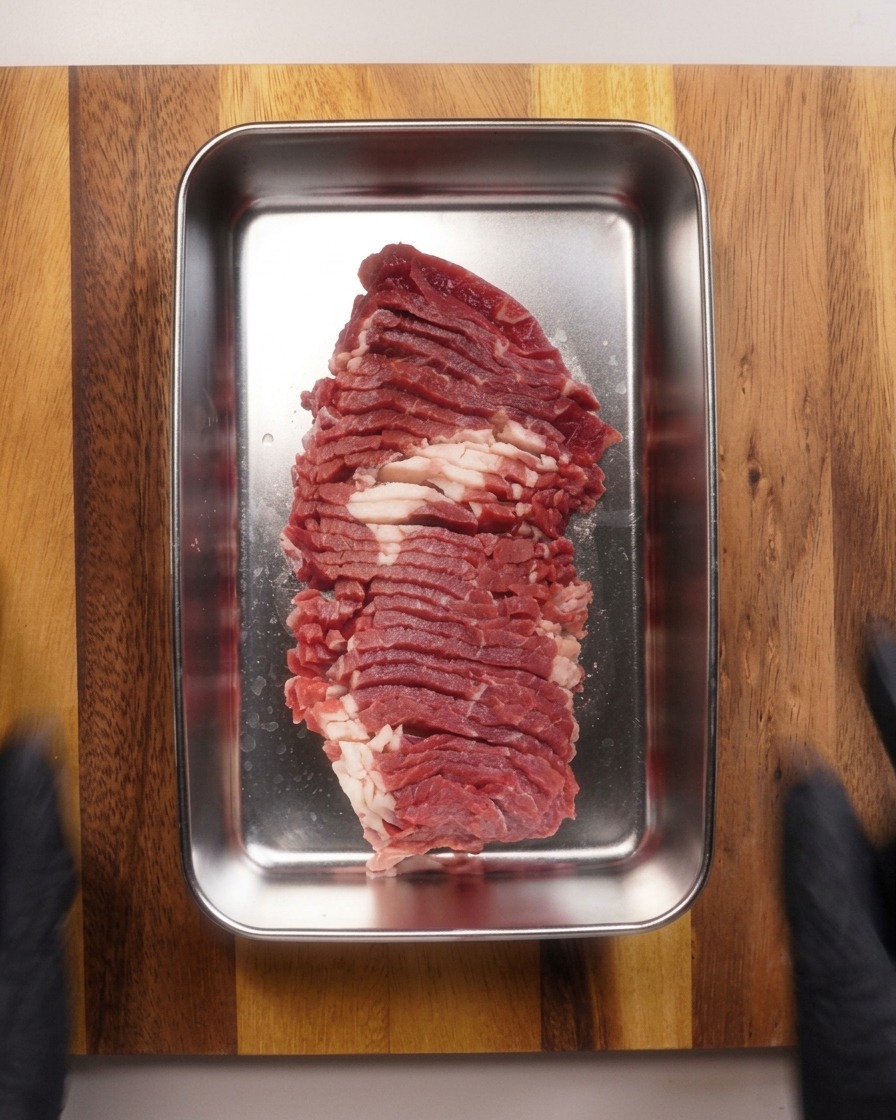
Take the well-marbled ribeye steak and cut it into the thinnest slices possible. Layering these ultra-thin slices allows the meat to cook incredibly fast and stay beautifully tender inside the sandwich.
Tip: If slicing by hand, place the steak in the freezer for about 30 minutes beforehand. The firmer texture makes it much easier to cut thinly. - 3Prepare the onions
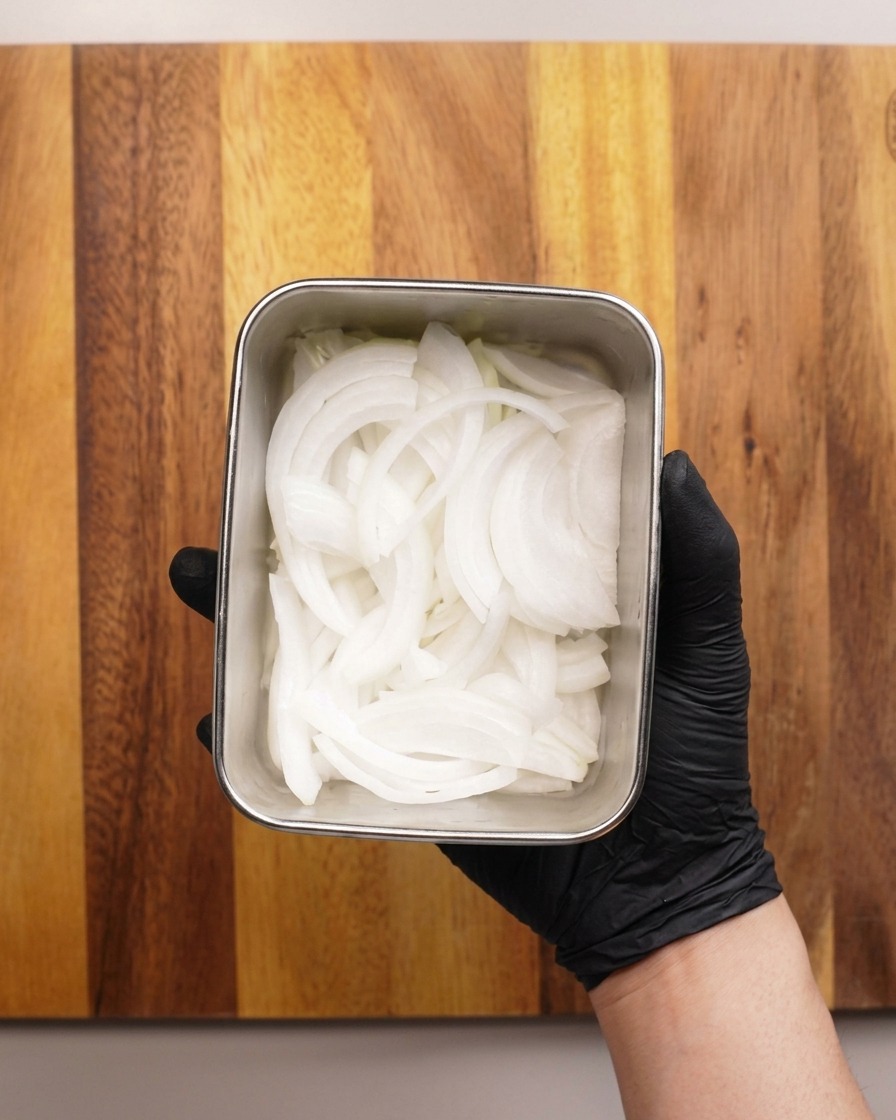
Peel and thinly slice the white onions into uniform strips. These onions act as the foundational flavor for the sandwich, providing a rich, sweet, and savory bite once caramelized in the pan.
Tip: Keep the slices consistent in size so they soften and caramelize at the exact same rate while cooking. - 4Select your cheese
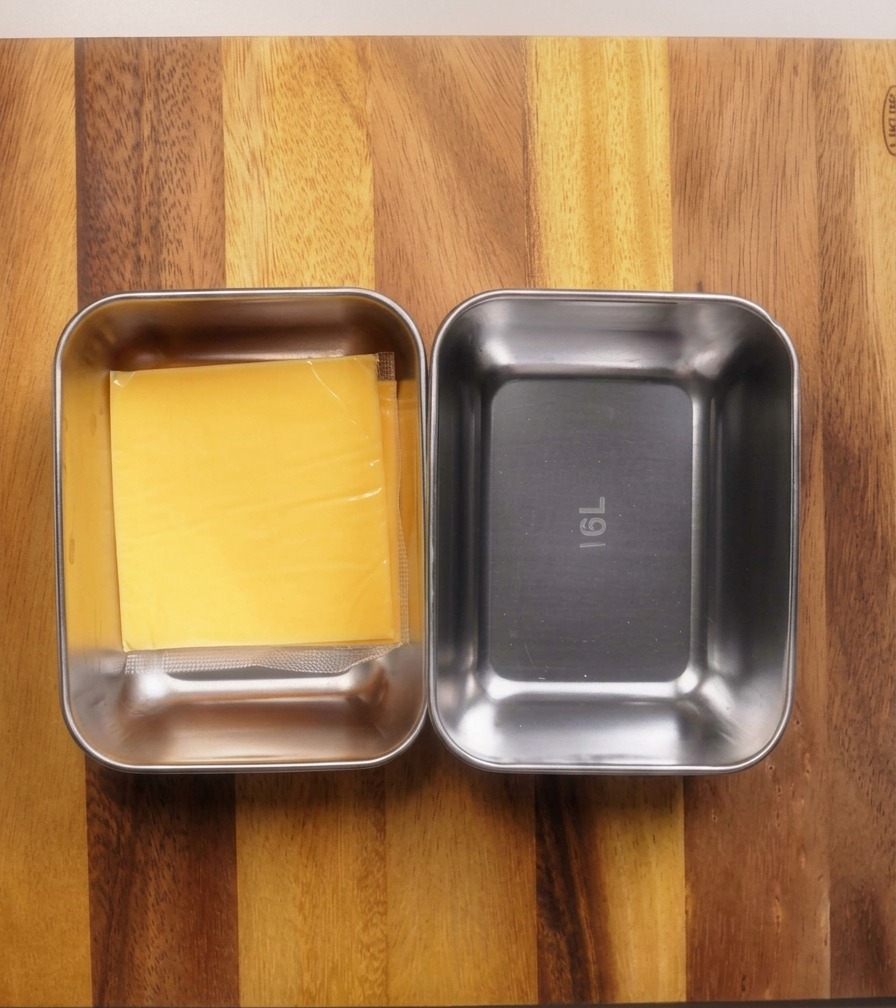
Choose your cheese combination to bring the sandwich together. Provolone is a classic choice for its meltability and mild flavor, but a mix of sharp yellow cheddar and creamy white shredded cheese creates a rich, crowd-pleasing profile that complements the beef perfectly.
Tip: For the best melt, ensure your cheese is at room temperature before adding it to the hot pan later on. - 5Heat the skillet
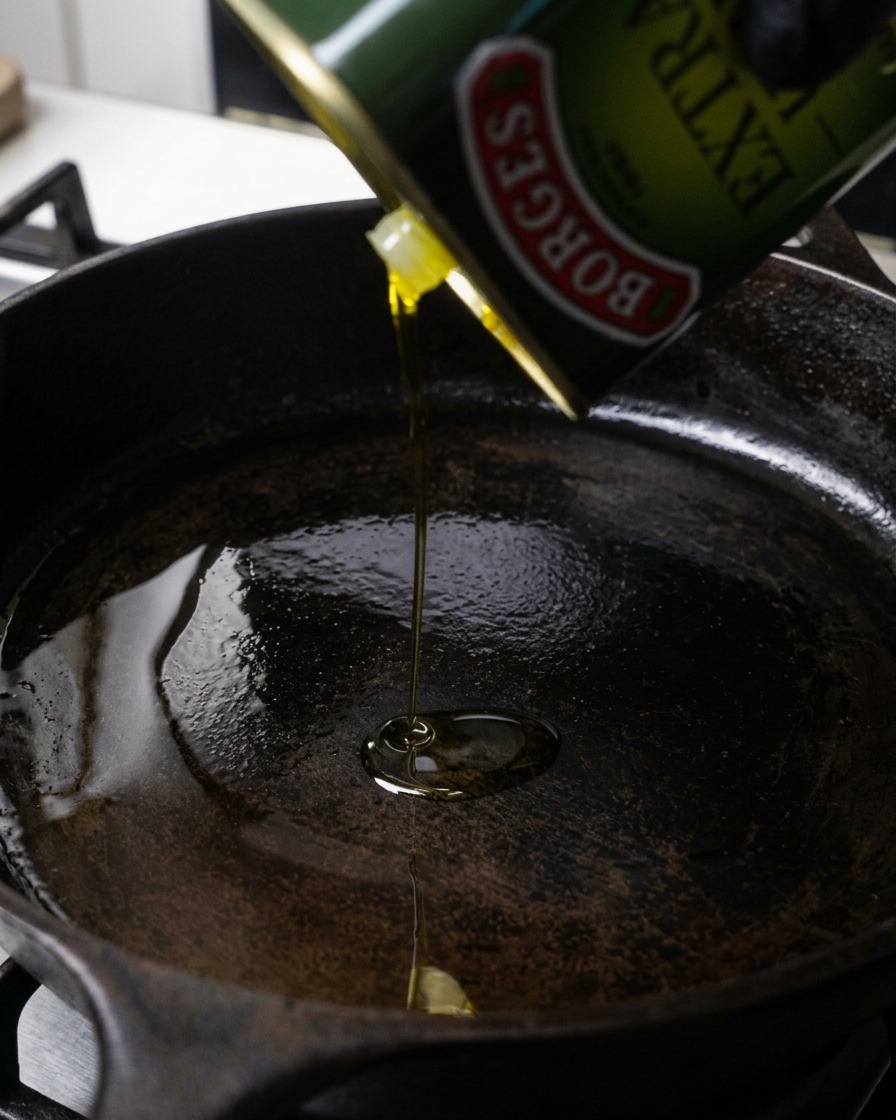
Place a heavy cast-iron skillet over the stove and let it heat up evenly. Once the pan is hot, pour in a splash of cooking oil to coat the bottom surface in preparation for frying the onions.
Tip: Using a cast-iron skillet is highly recommended as it maintains an even, high heat that perfectly sears the ingredients. - 6Caramelize the onions
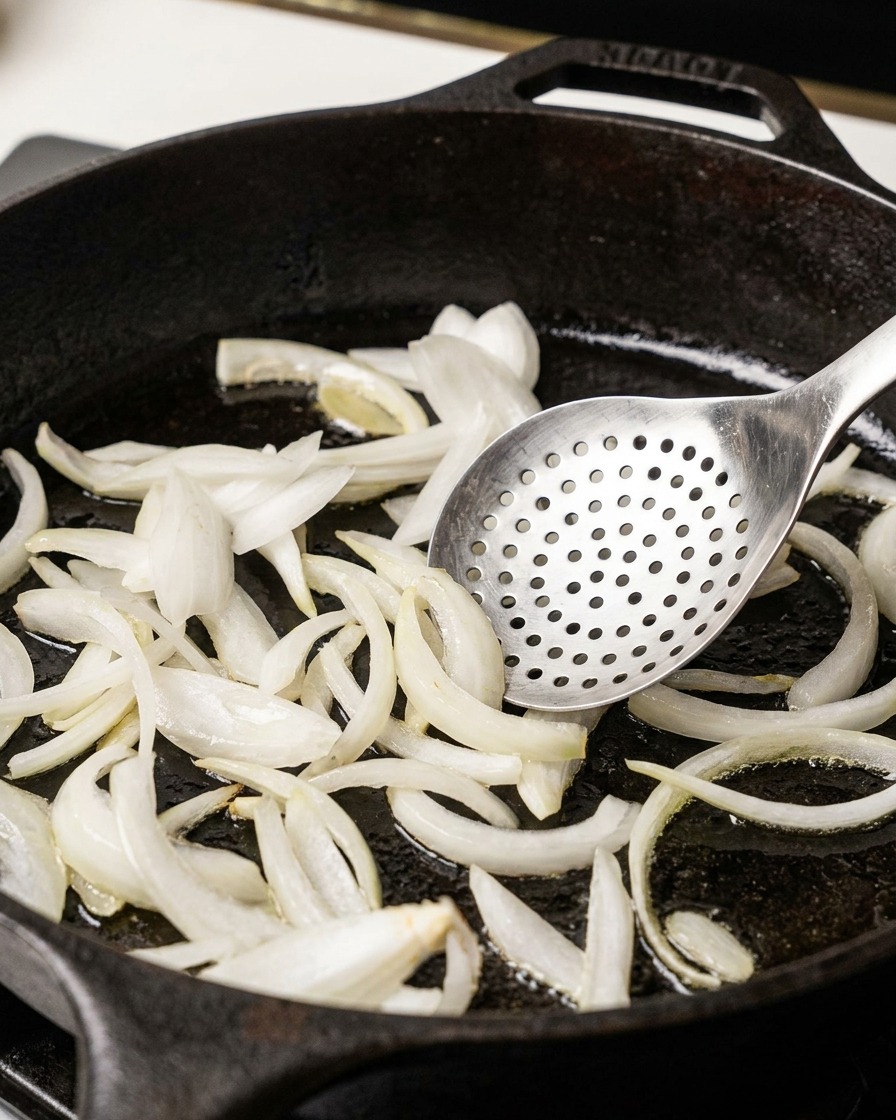
Add the sliced white onions into the hot, oiled skillet. Stir-fry them continuously over the heat until they soften and develop a beautiful caramel color, then push them to the side of the pan.
Tip: Dont rush this process; taking the time to properly caramelize the onions unlocks a deep, natural sweetness. - 7Develop Deep Flavor
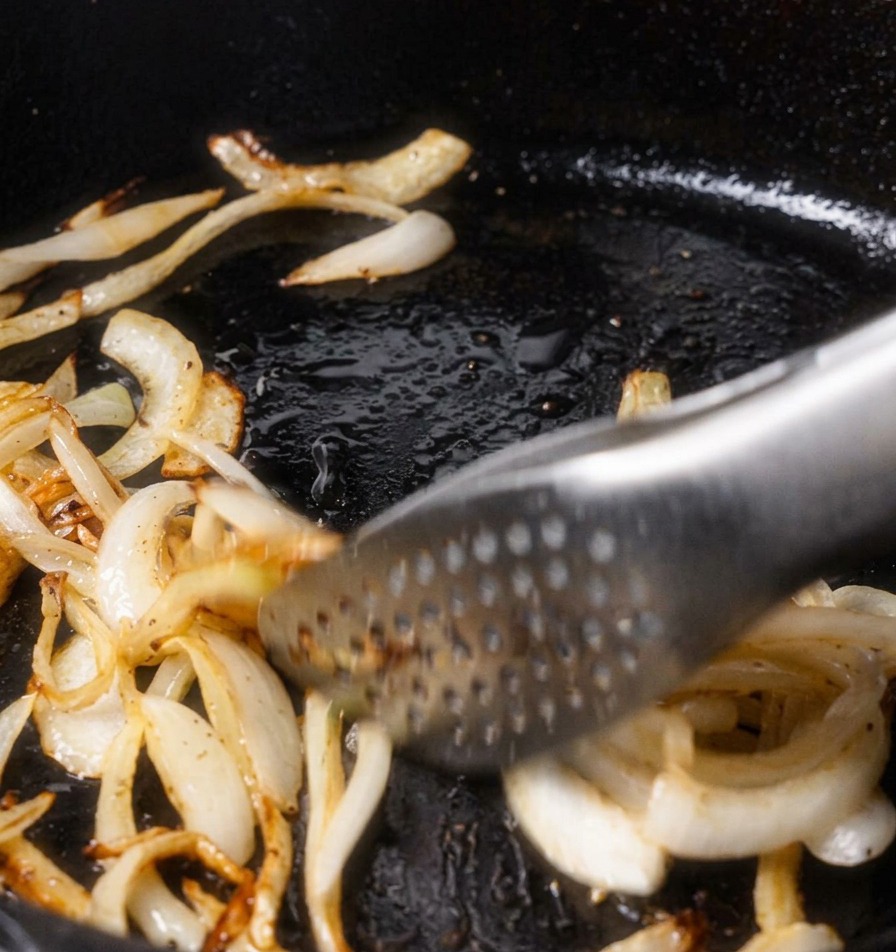
Continue to stir-fry the onions over medium heat. You want them to reach a rich, golden-brown hue which signifies full caramelization. This provides the essential sweetness that cuts through the salty beef.
Tip: Patience is key here; low and slow heat is the secret to drawing out the natural sugars in the onions without burning them. - 8Sear the sliced beef
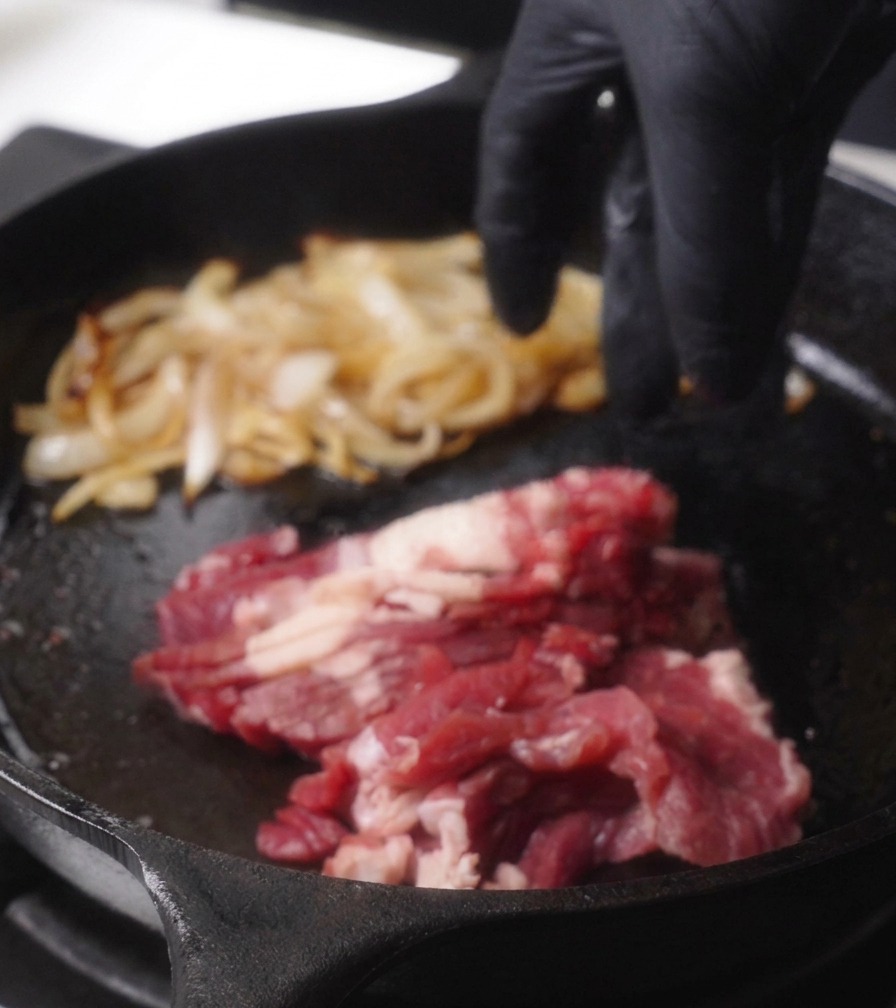
Turn up the heat and place the ultra-thin slices of raw ribeye onto the empty side of the hot skillet. Let the meat sit for a moment to develop a nice crust before moving it. The high heat of the cast iron ensures a quick sear that locks in the juices.
Tip: Using partially frozen steak makes it much easier to achieve those paper-thin slices necessary for a tender sandwich bite. - 9Brown the meat
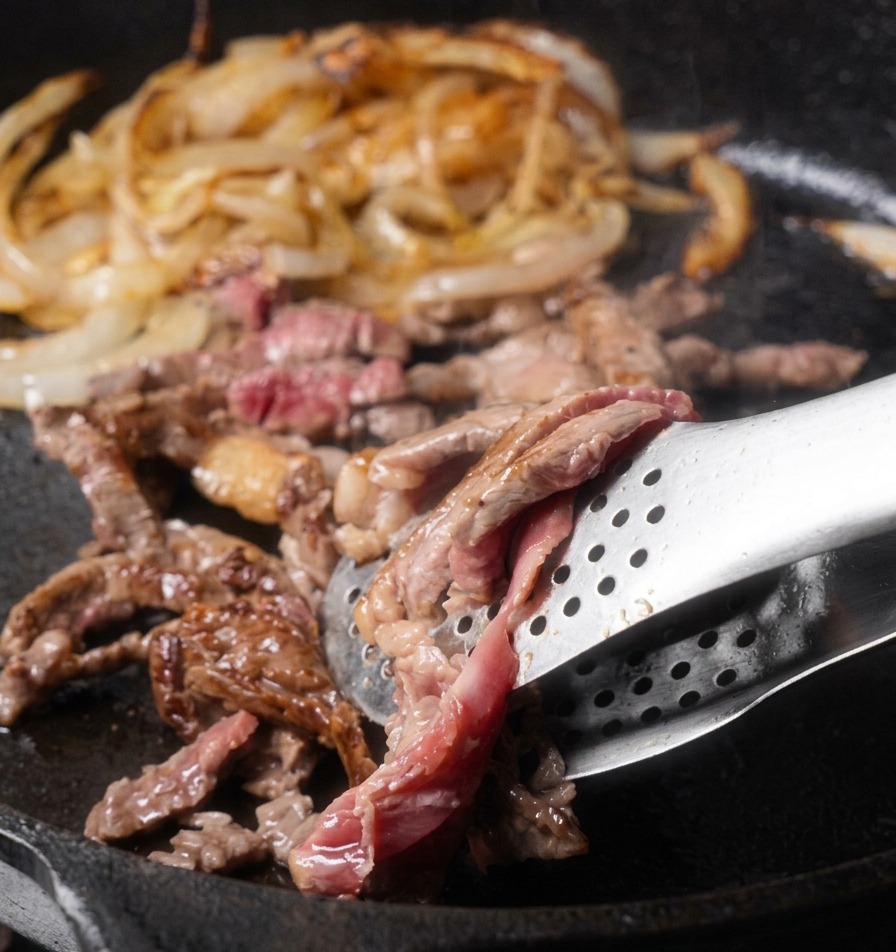
Continue cooking the beef until the edges are slightly charred and the color has shifted from red to a rich brown. Use your tongs to flip and separate the slices so every piece makes contact with the hot surface of the pan for maximum flavor development.
Tip: Dont overcrowd the pan; if cooking a large portion, sear the meat in batches to prevent it from steaming in its own juices. - 10Season the filling
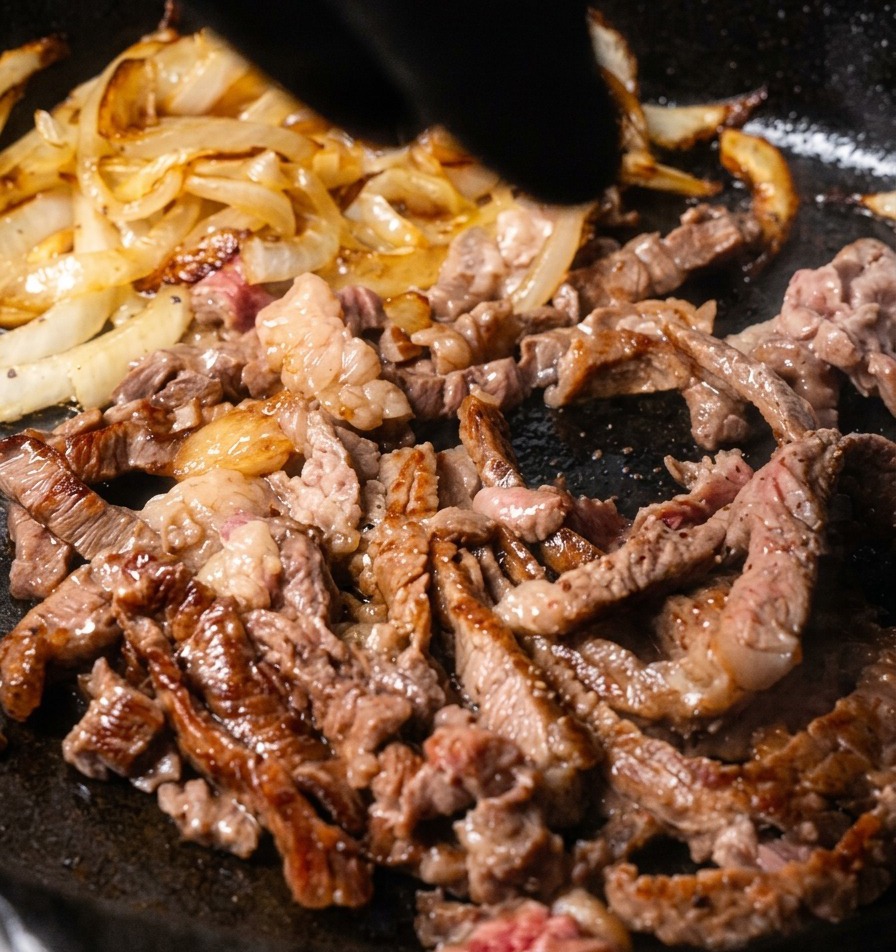
While the beef is still searing, season generously with freshly ground black pepper and a pinch of salt. Keeping the seasoning simple allows the natural, rich flavor of the well-marbled ribeye and the sweetness of the onions to remain the stars of the dish.
Tip: Always use freshly cracked pepper rather than pre-ground for a much more vibrant, aromatic punch. - 11Combine the flavors
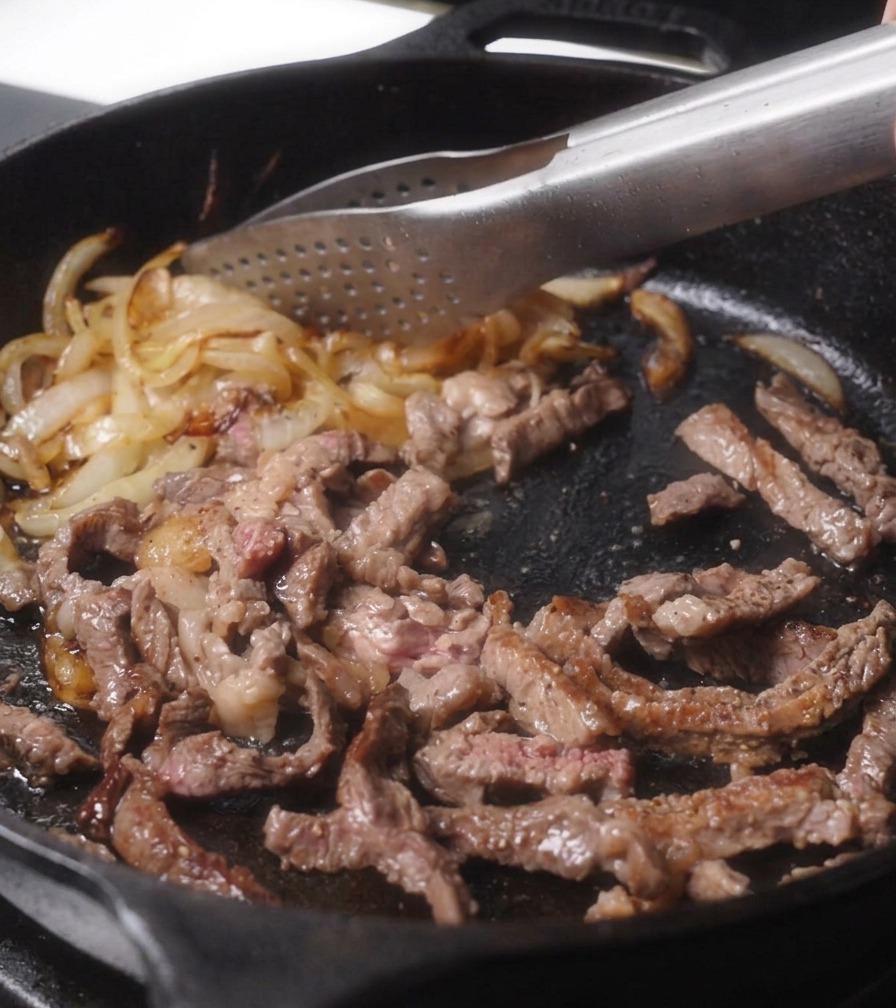
Use your tongs to toss the browned beef strips and the caramelized onions together. Mixing them at this stage allows the savory meat juices to coat the onions, blending the aromas and ensuring every bite of your sandwich has a balanced ratio of ingredients.
Tip: Scrape up any browned bits (fond) from the bottom of the pan as you mix; thats where the concentrated flavor lives. - 12Add the Cheese
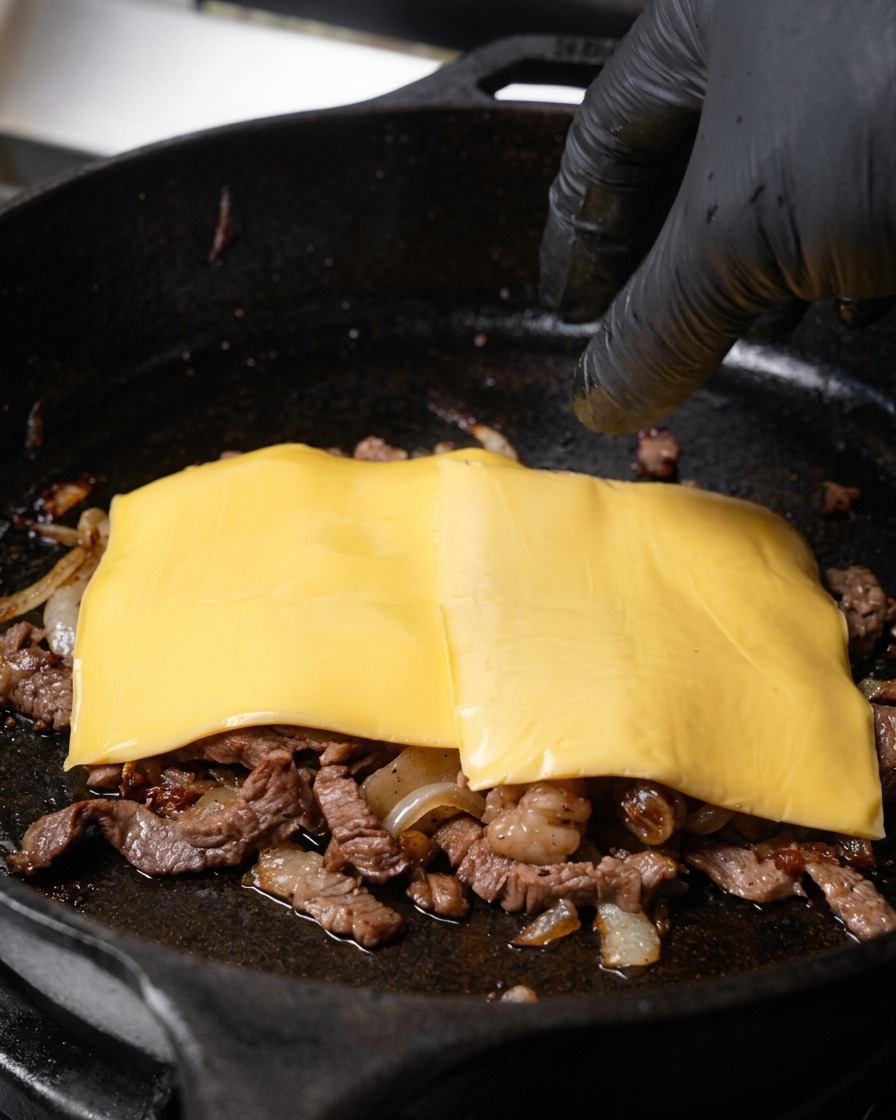
Layer square slices of your chosen cheese directly over the hot, cooked beef and caramelized onions in the cast-iron skillet. The residual heat from the meat will immediately start to soften the cheese.
Tip: For the best melt, ensure the meat and onions are gathered closely together so the cheese slices cover them completely, trapping the heat underneath. - 13Cover to Melt
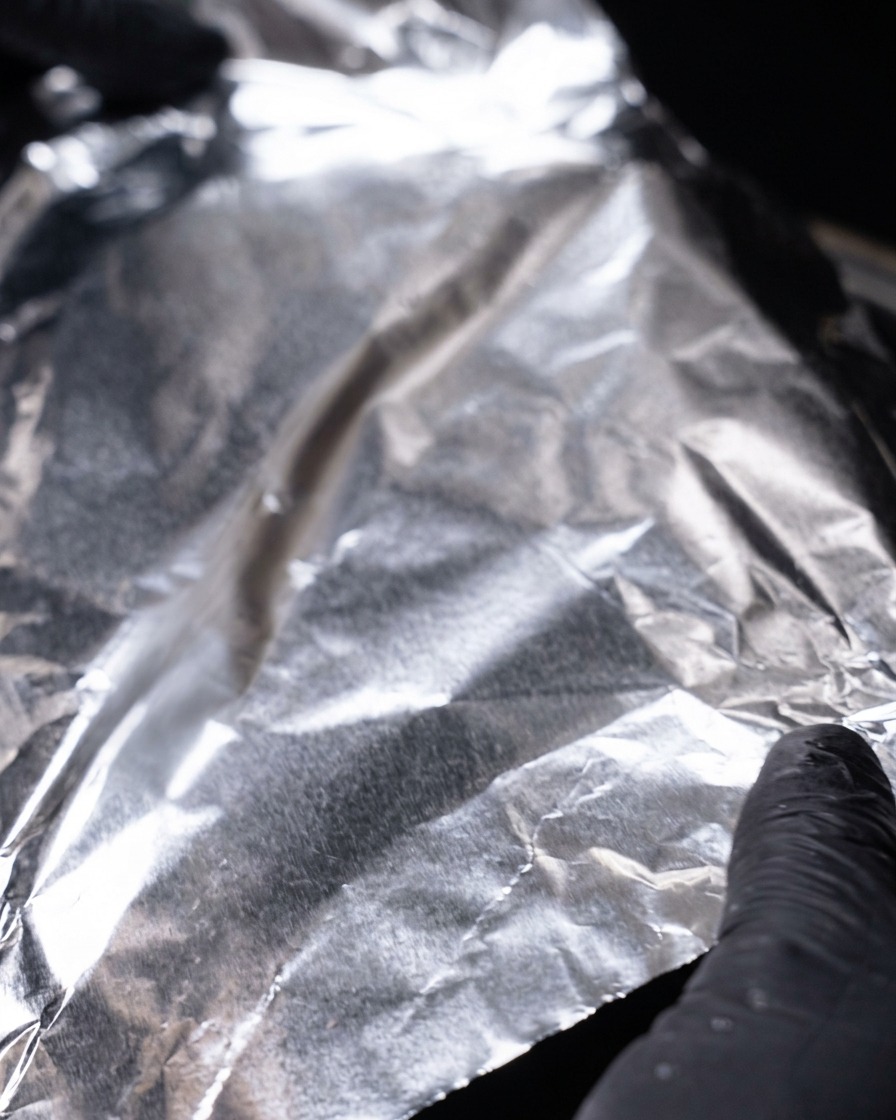
Place a sheet of aluminum foil completely over the skillet to trap the steam and heat. This acts as a makeshift lid and ensures the cheese melts rapidly into a perfectly gooey texture that coats the beef.
Tip: If you have a large domed pot lid that fits your skillet, you can use that instead of aluminum foil for an equally effective melt. - 14Prep the Baguette
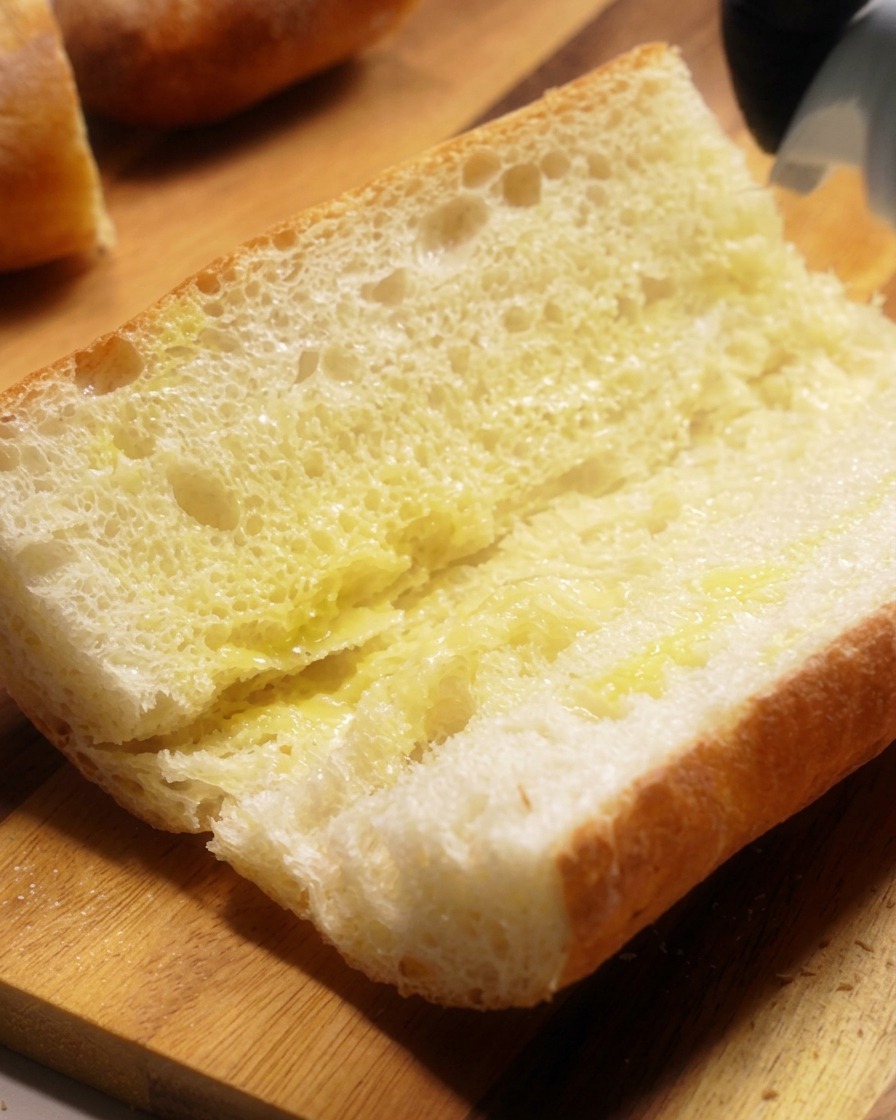
Split the baguette horizontally. Brush the interior with melted butter or oil. This not only adds flavor but creates a toasted crust that prevents the meat juices from making the bread soggy.
Tip: Choose a bread that is sturdy and crusty on the outside but soft inside; this ensures it can perfectly hold the hot meat filling without getting soggy from the juices. - 15Toast the Bread
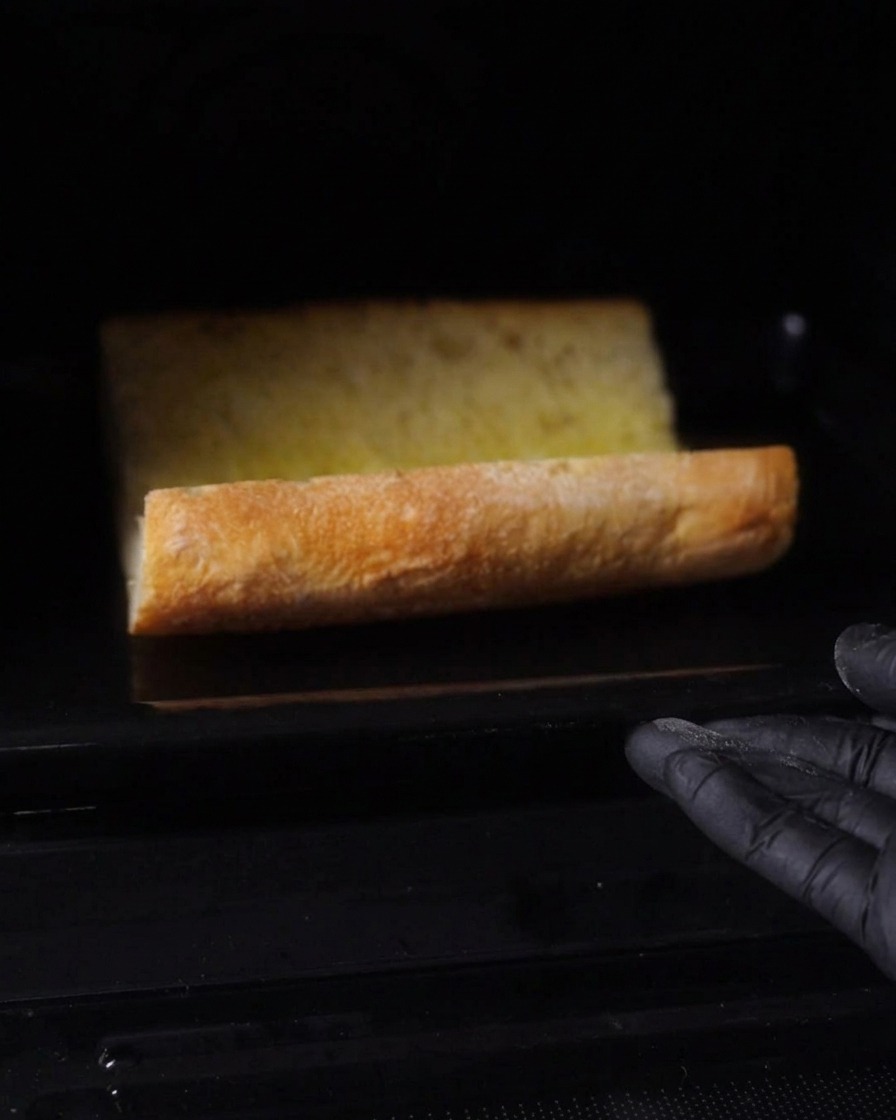
Place the split and buttered bread in the oven for a quick bake. Toasting the bread ensures the surface becomes appropriately crispy while keeping the inside soft, creating a sturdy base that wont get soggy from the rich meat juices.
Tip: Keep a very close eye on the bread while it bakes; the buttered surface can go from perfectly golden to burnt in just a matter of seconds. - 16Assemble and Serve
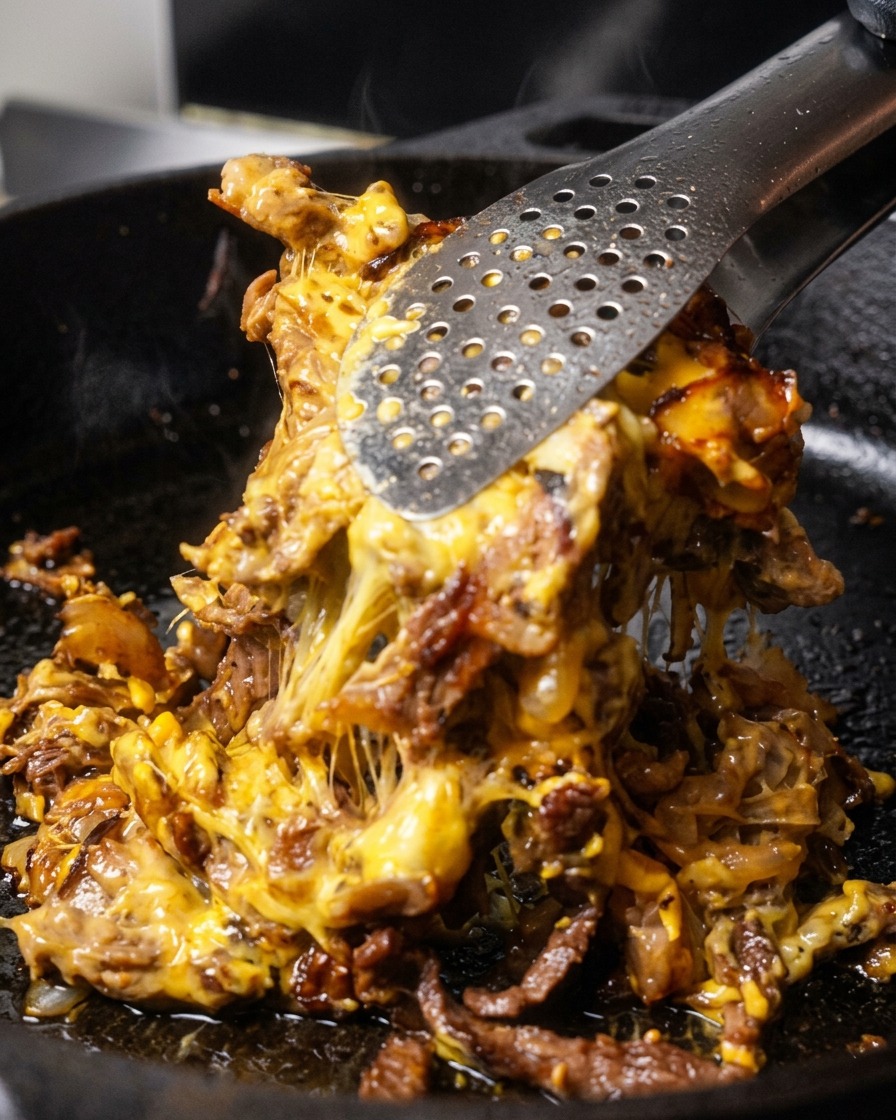
Using tongs, scoop a generous portion of the cheesy beef and onion mixture directly into your toasted baguette. Press the sides of the bread together to lock in the heat and let the flavors meld for a moment before serving.
Tip: Try to scoop all the way from the bottom of the pan to lift out the entire cheesy section in one piece, avoiding breaking the cheese pull.