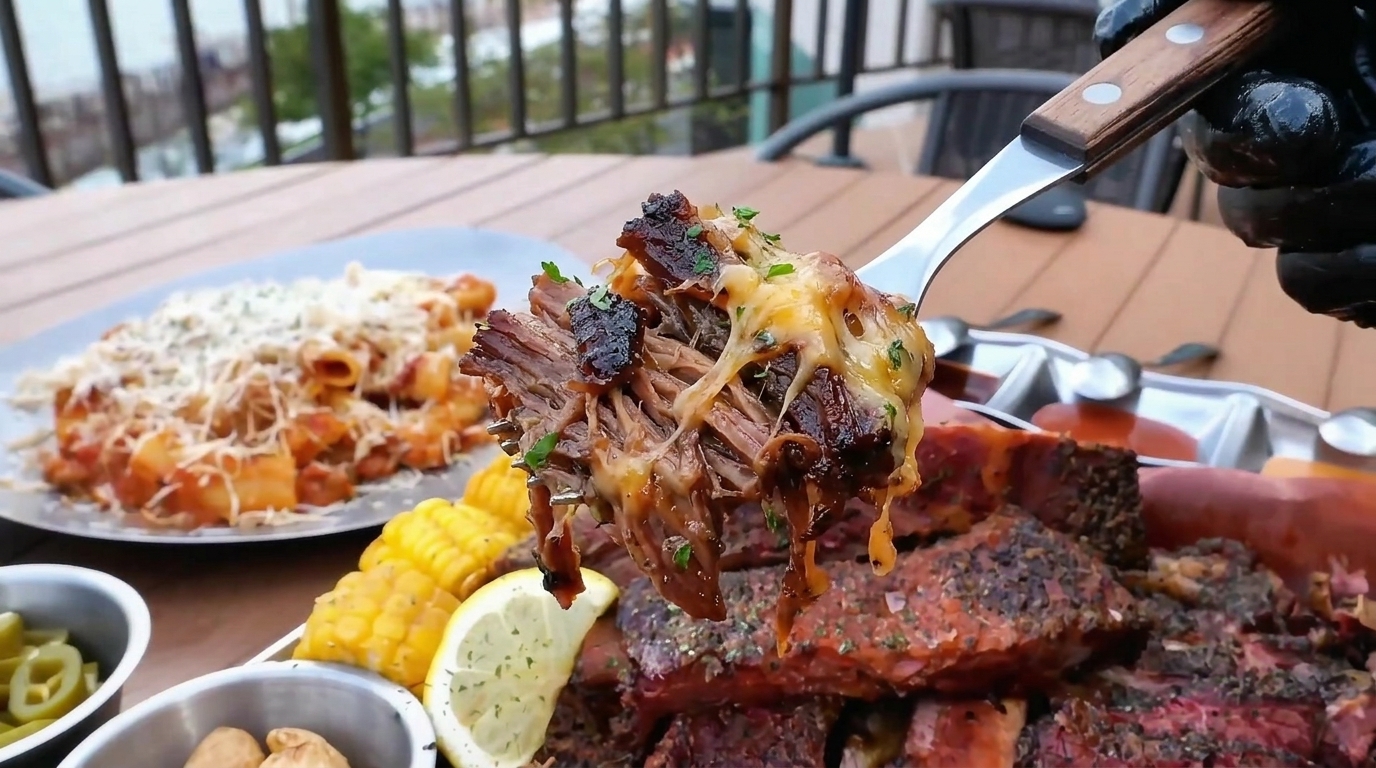
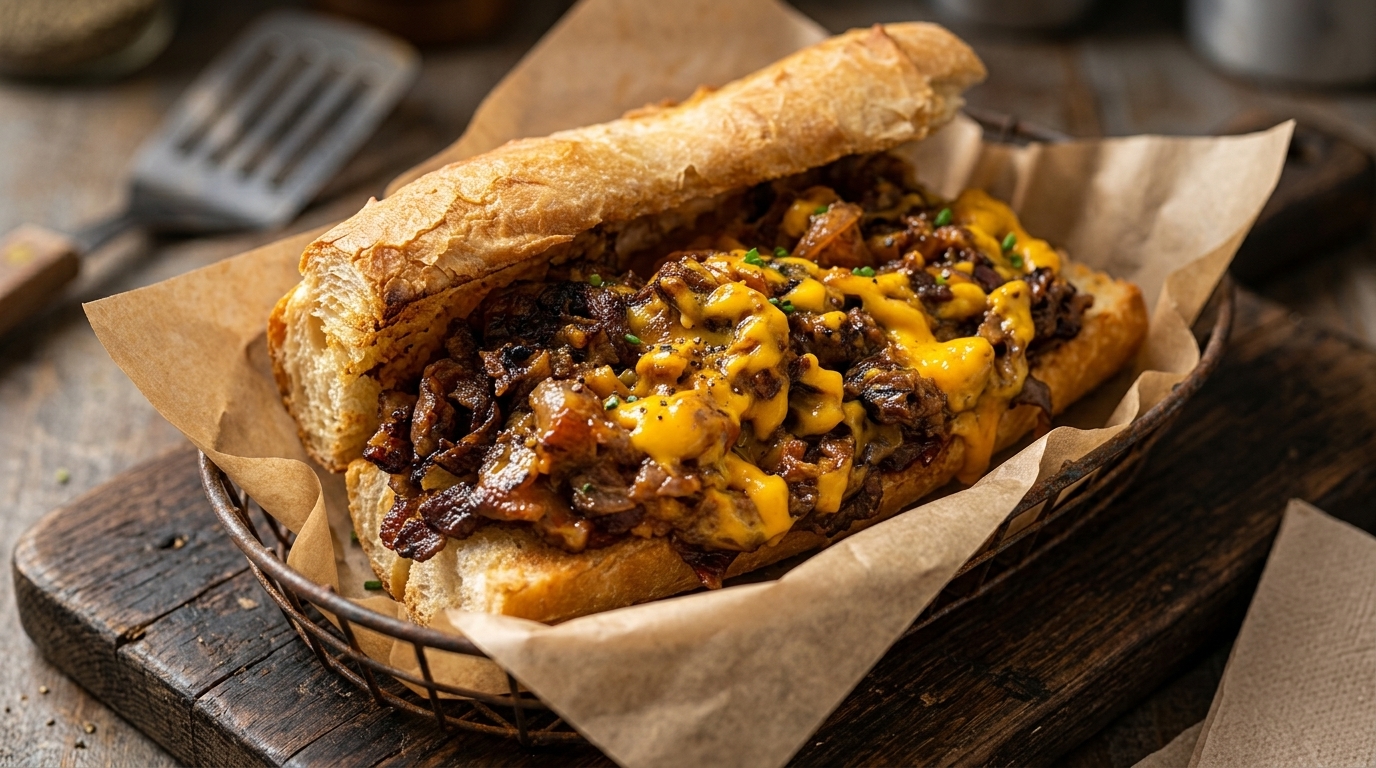
Ultimate Texas BBQ Brisket & Beef Ribs
Experience the pinnacle of American barbecue with this melt-in-your-mouth Texas brisket and thick-cut beef ribs, slow-smoked over oak and bathed in a tangy apple cider marinade.
Texas barbecue is an art form that relies on the mastery of time, fire, and wood. At the heart of this tradition are the slow smoked brisket and beef ribs, transforming tough cuts of premium Angus beef into incredibly tender masterpieces. Using a low and slow method with oak and beechwood, this recipe builds a crusty, caramelized bark that locks in a storm of flavors, delivering a savory, smoky bite with a perfect natural smoke ring.
Ingredients
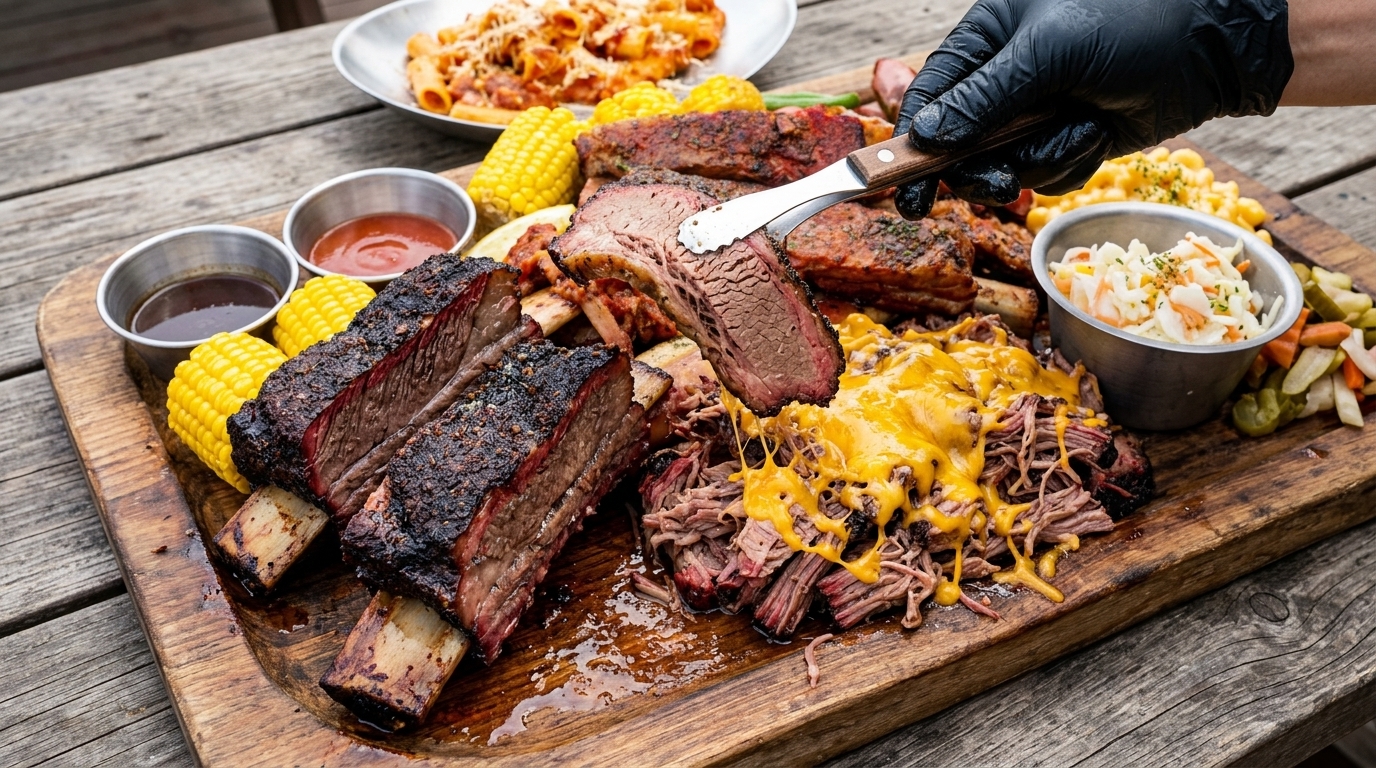
- 1 whole Angus beef brisket (packer cut)
- 1 large rack thick-cut beef ribs
- as needed oak and beechwood logs
- 2 cups apple cider vinegar
- 1 cup apple or fruit juice
- 12 cup Texas-style BBQ dry rub
- 2 whole heads roasted soft garlic
- 1 bunch fresh parsley, chopped
- to taste yellow seasoning powder or extra rub
- optional melted yellow cheese (for serving)
Instructions
- 1Trim the brisket
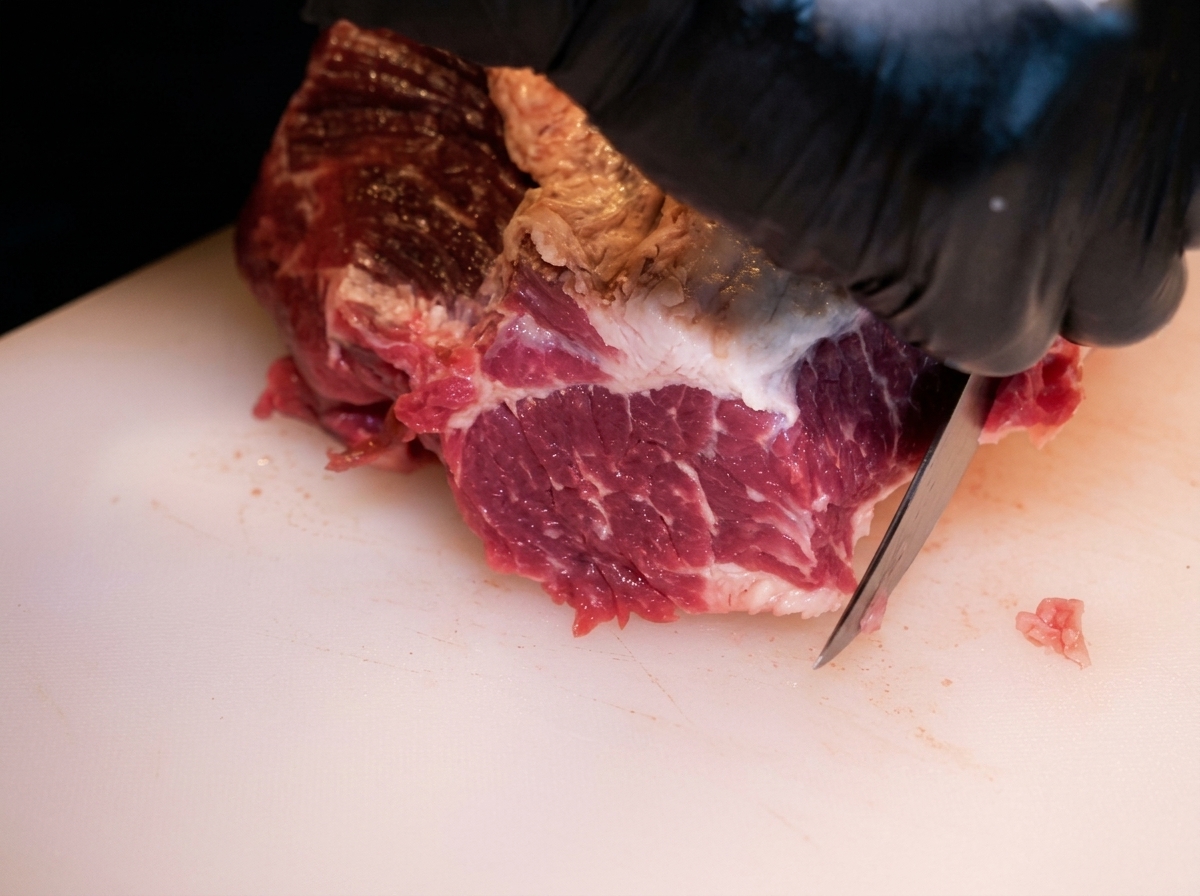
Begin by preparing the raw beef brisket. Carefully trim away any excess fat using a sharp knife on a clean cutting board. Leaving a uniform layer of fat ensures the meat stays moist during the long smoking process without becoming overly greasy.
Tip: Do not trim all the fat off; leaving about a quarter inch fat cap helps protect the meat and renders down to add immense flavor. - 2Ignite the wood
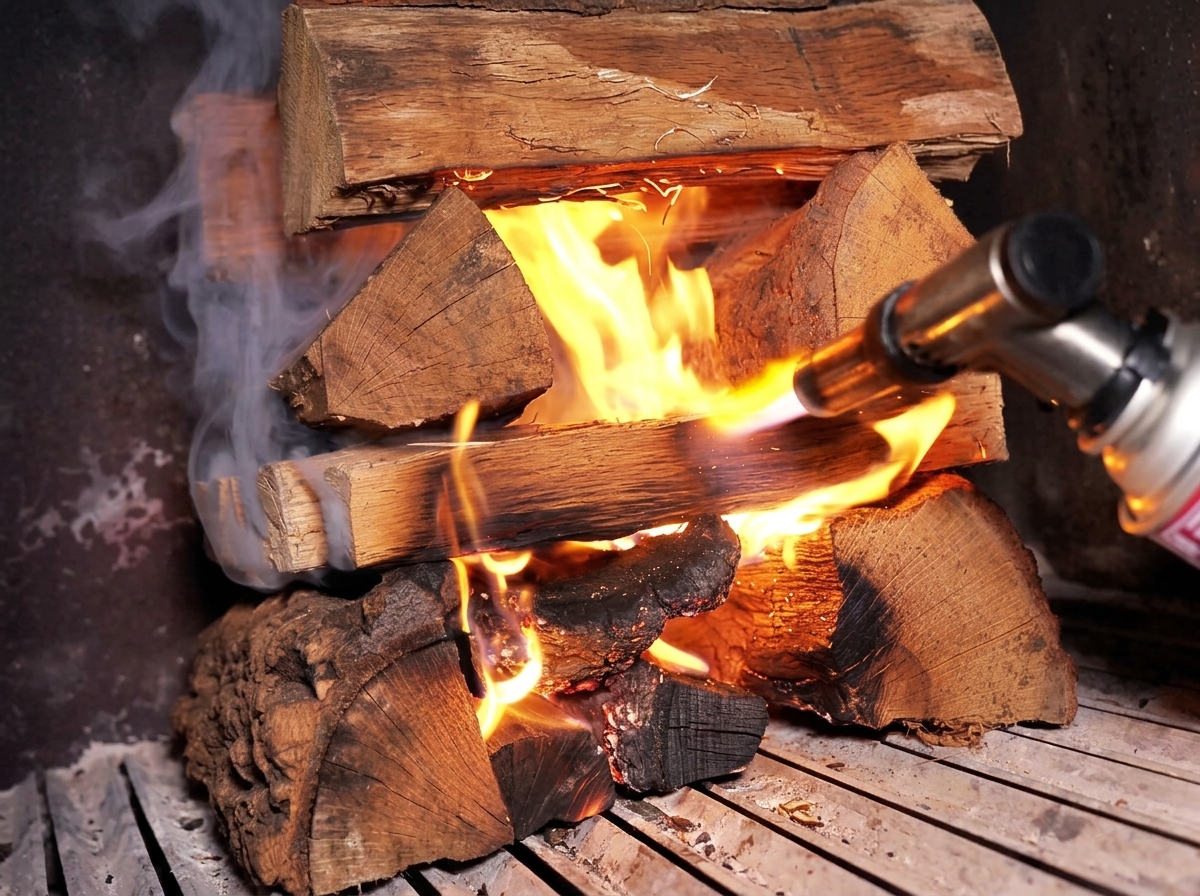
Prepare the smoker by stacking premium oak and beechwood logs in the firebox. Use a blowtorch to ignite the wood, ensuring a steady and clean burn. The quality of the fire will dictate the flavor of the smoke, which is essential for authentic Texas barbecue.
Tip: Allow the wood to burn down to hot coals before adding the meat. You want thin, blue smoke rather than thick, white smoke. - 3Load the smoker
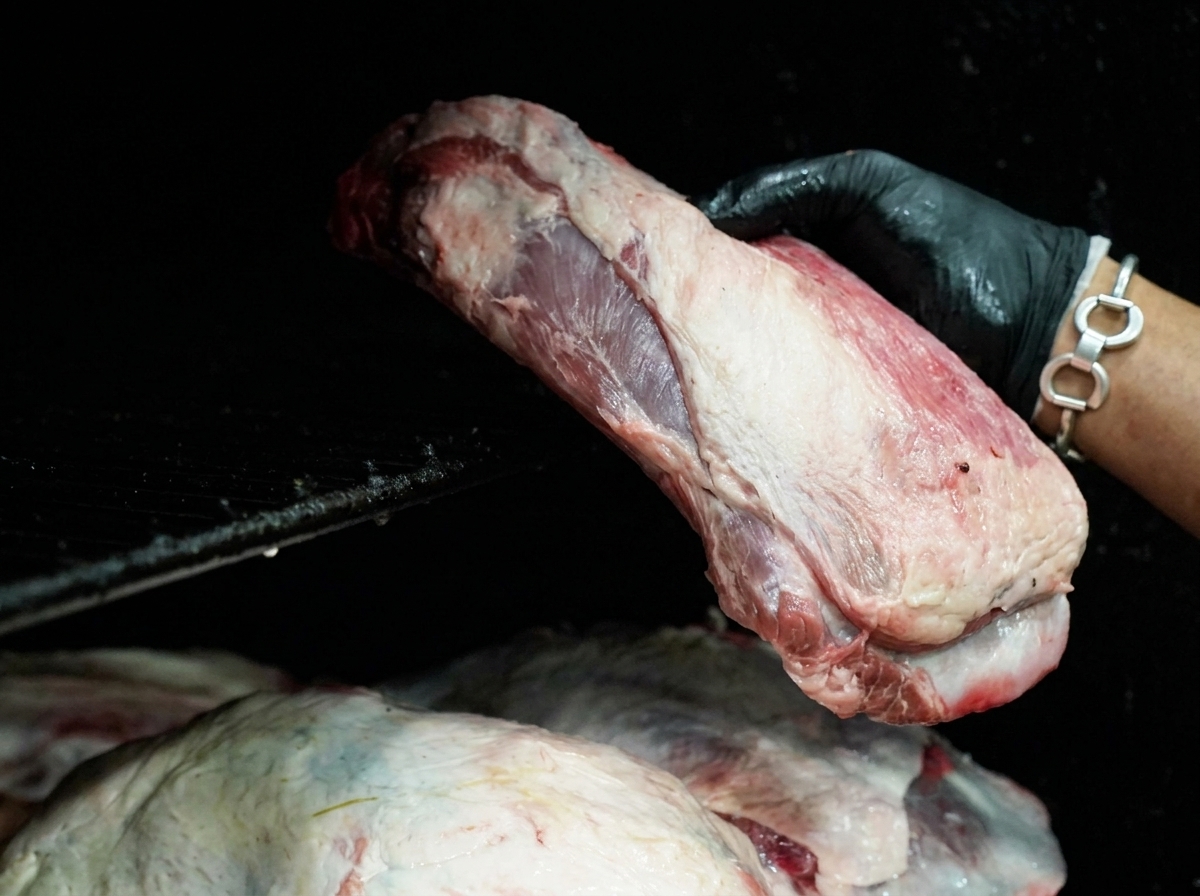
Once the smoker has reached the ideal low temperature, carefully place the prepared raw beef onto the grates. Close the doors to begin the slow smoking process. The meat will spend hours absorbing the aromatic smoke from the wood fire.
Tip: Position the thicker parts of the meat closer to the heat source for more even cooking. - 4Check the bark
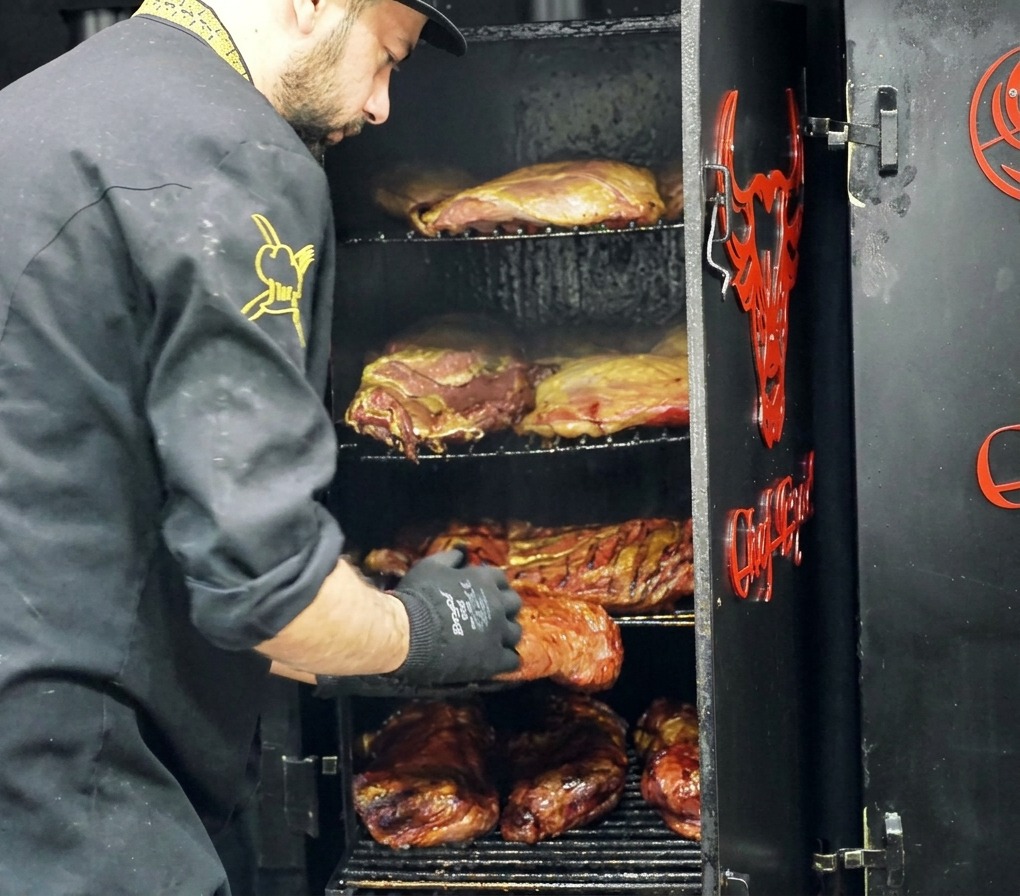
After several hours in the smoker, check the beef for color. The exterior should have developed a dark, crusty bark from the smoke and spices. Once the desired color is reached, remove the meat from the smoker to prepare it for the next stage.
Tip: The bark is crucial for flavor and texture; make sure its firmly set before moving to the wrapping stage. - 5Bathe the beef in marinade
Place the smoked beef into a large container filled with a specialized marinade of apple cider vinegar, fruit juices, and spices. This acidic bath acts as a natural tenderizer, breaking down tough muscle fibers and infusing the meat with a bright, fruity tang before the final cook.
Tip: The acidity is key here; it helps balance the heavy fats of the Angus beef and ensures the final texture is melt-in-your-mouth tender. - 6Pour the Marinade
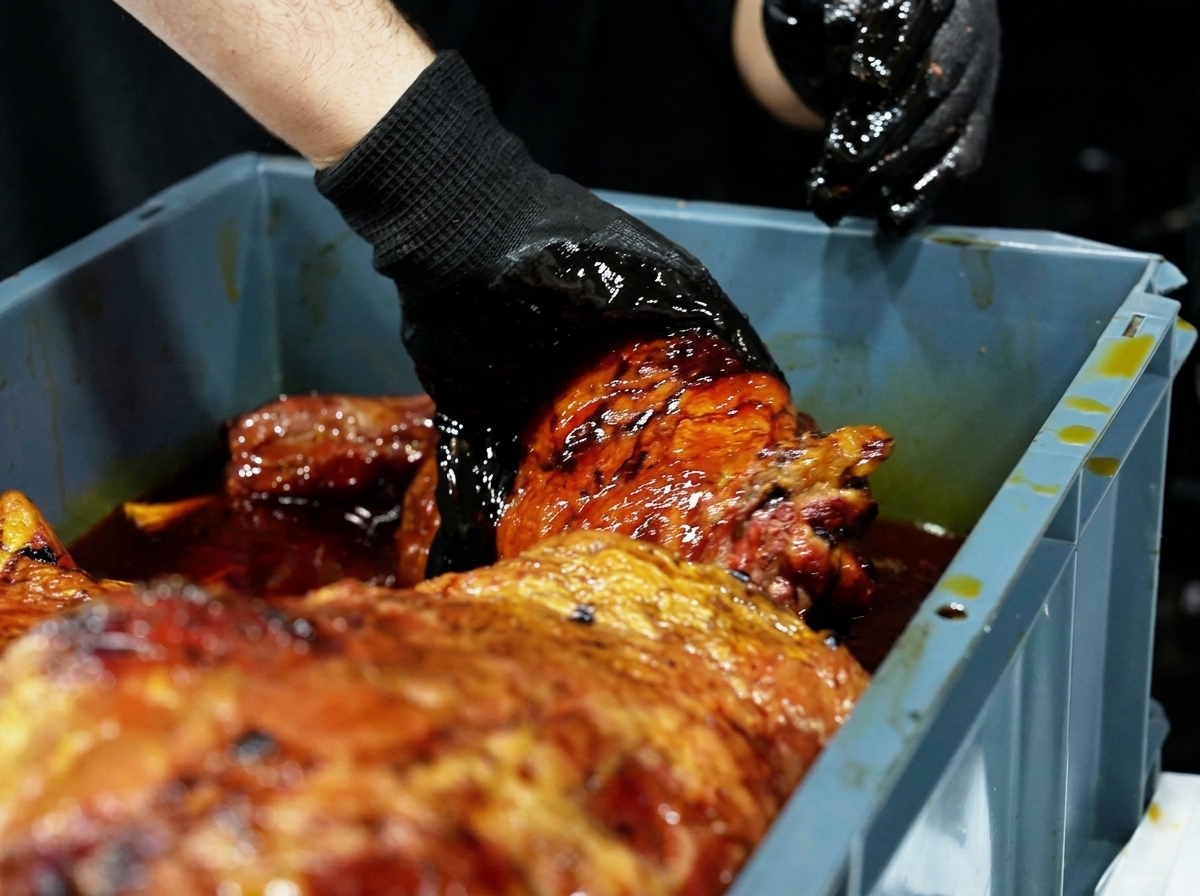
Pour the remaining dark liquid marinade generously over the smoked beef pieces inside the tub. Ensuring the meat is fully coated in this apple cider vinegar and fruit juice mixture is essential for keeping it moist and providing a tangy balance to the rich fat.
Tip: Ensure the liquid is warm so it doesnt shock the hot meat and stop the cooking process. - 7The Texas Crutch
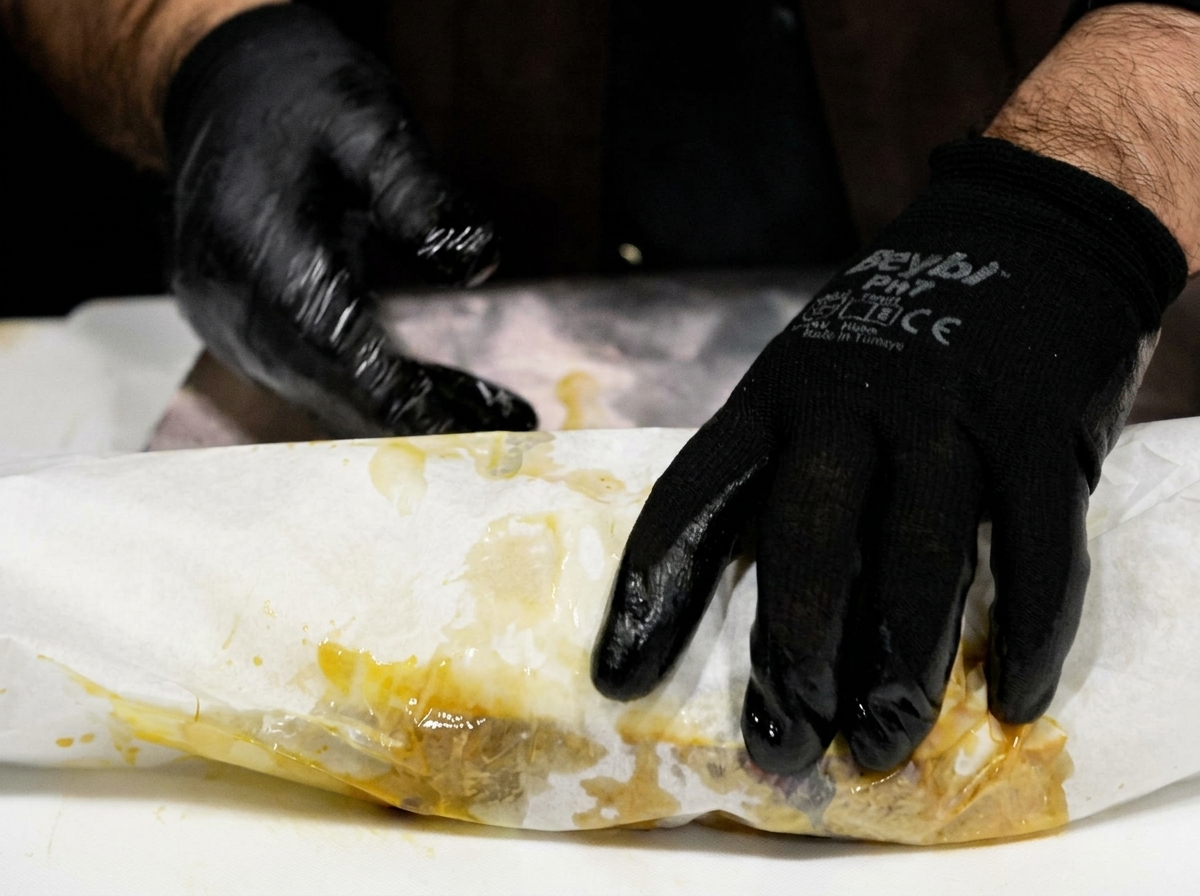
Take the marinated beef and wrap it tightly in specialized white butcher paper followed by a layer of aluminum foil. This technique, known as the Texas Crutch, traps moisture and heat, essentially creating a miniature pressure cooker environment for the meat.
Tip: Make sure the wrap is as tight as possible to prevent steam from escaping, which is vital for achieving that signature tenderness. - 8Return to the smoker
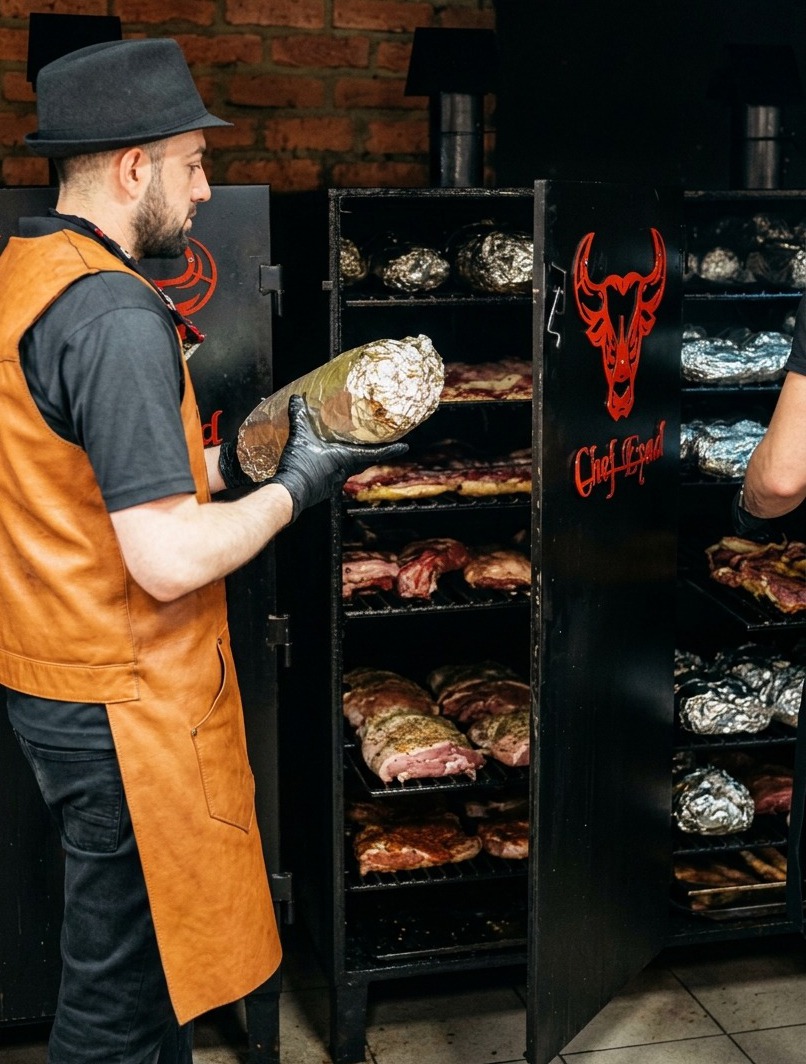
Place the foil-wrapped bundles back onto the racks of the heavy iron smoker. Continue the low-temperature cooking process for several more hours, allowing the trapped heat to finish breaking down the connective tissues within the beef.
Tip: Maintain a steady, low heat during this stage; patience is the most important ingredient in Texas-style barbecue. - 9Unwrap the brisket
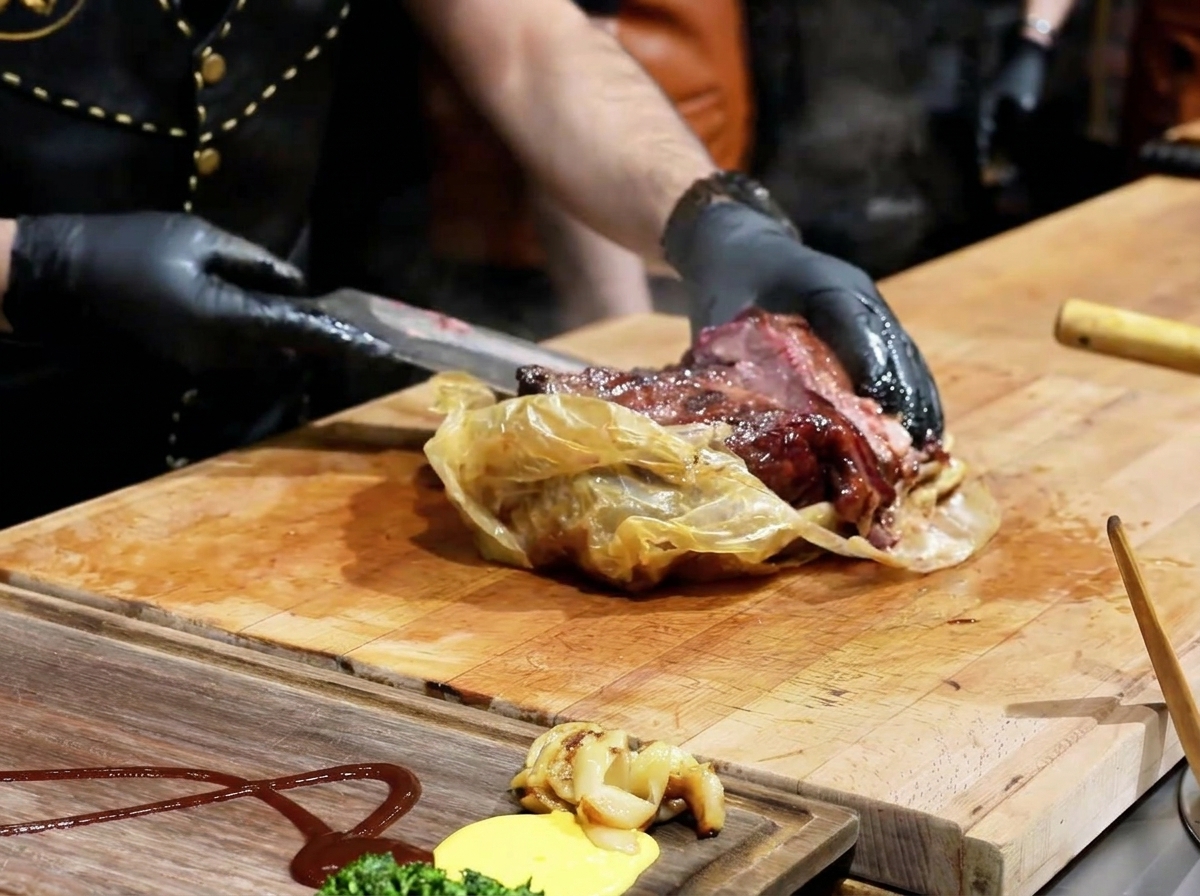
Carefully remove the brisket from its protective wrapping and place it onto a sturdy wooden cutting board. The meat should be incredibly tender and aromatic, releasing a rich scent of beef fat and wood smoke.
Tip: Be careful when opening the wrap, as hot steam will escape immediately. - 10Season and prep for shredding
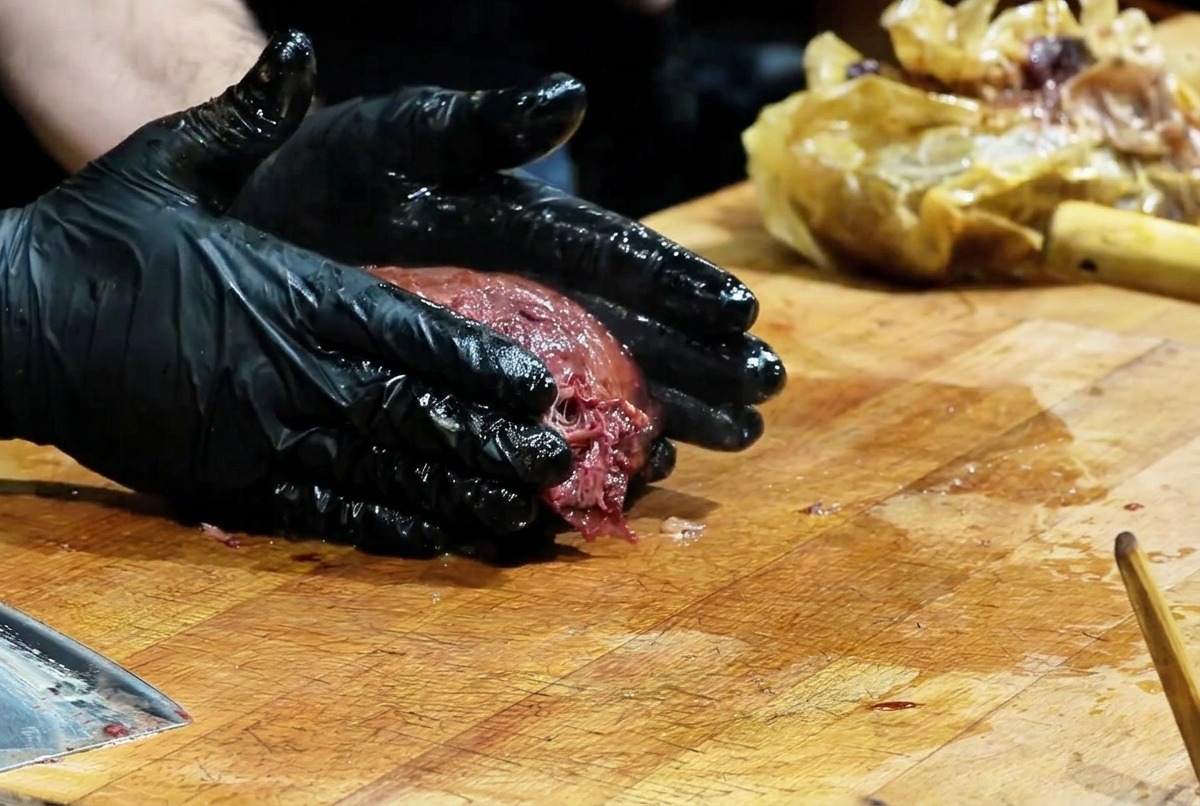
Place the roasted soft garlic cloves and fresh parsley onto the surface of the smoked brisket. Using firm pressure with both hands, press down gently on the meat to begin breaking it apart. This initial technique kneads the creamy garlic and seasonings directly into the tender muscle fibers for a rich integrated flavor.
Tip: Apply steady even pressure with your palms to allow the meat to open naturally without over mashing the texture. - 11Apply Final Seasoning
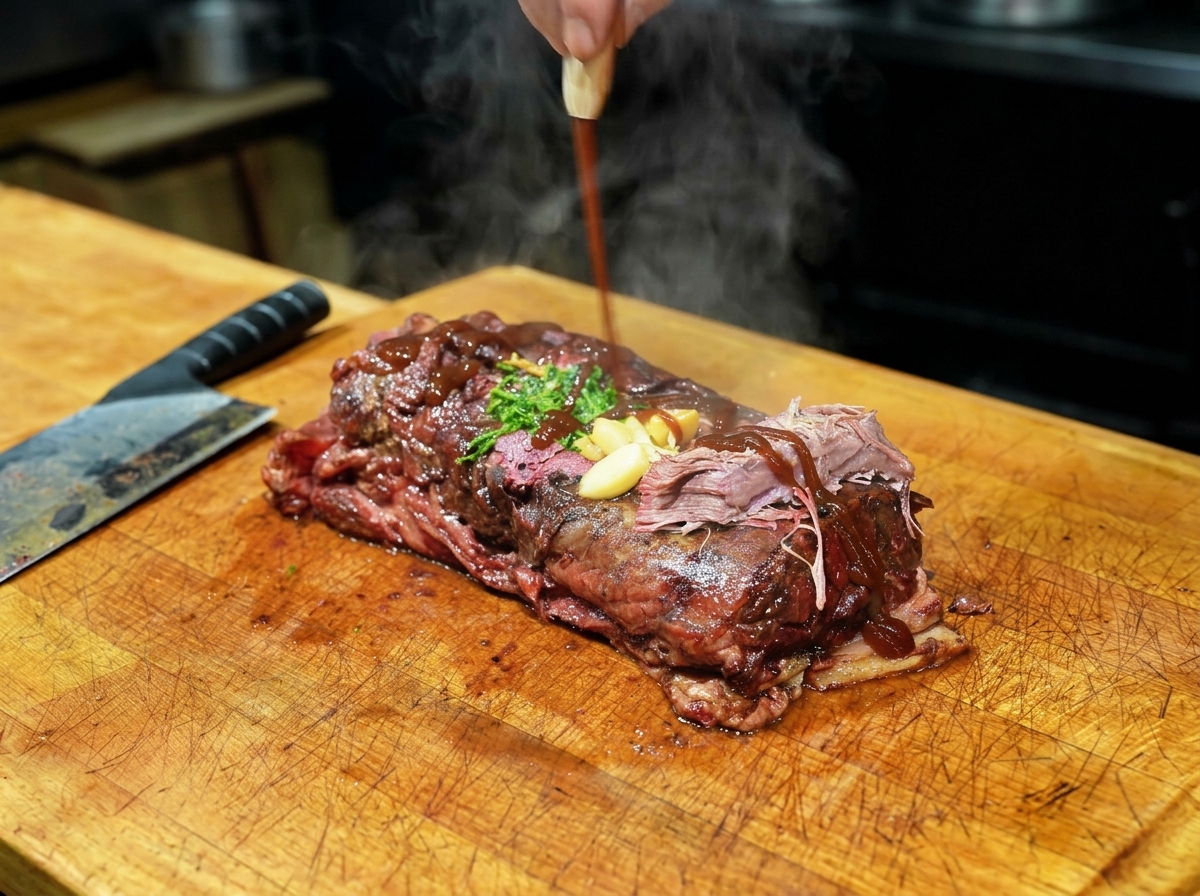
Generously sprinkle your preferred dry yellow seasoning powder or extra BBQ rub over the opened meat. This late stage addition adheres to the newly exposed juices, adding a final punch of flavor before the brisket is completely broken down.
Tip: Using a mustard based or savory dry rub at this stage provides a beautiful color contrast and an extra layer of savory flavor. - 12Smash and Shred the Brisket
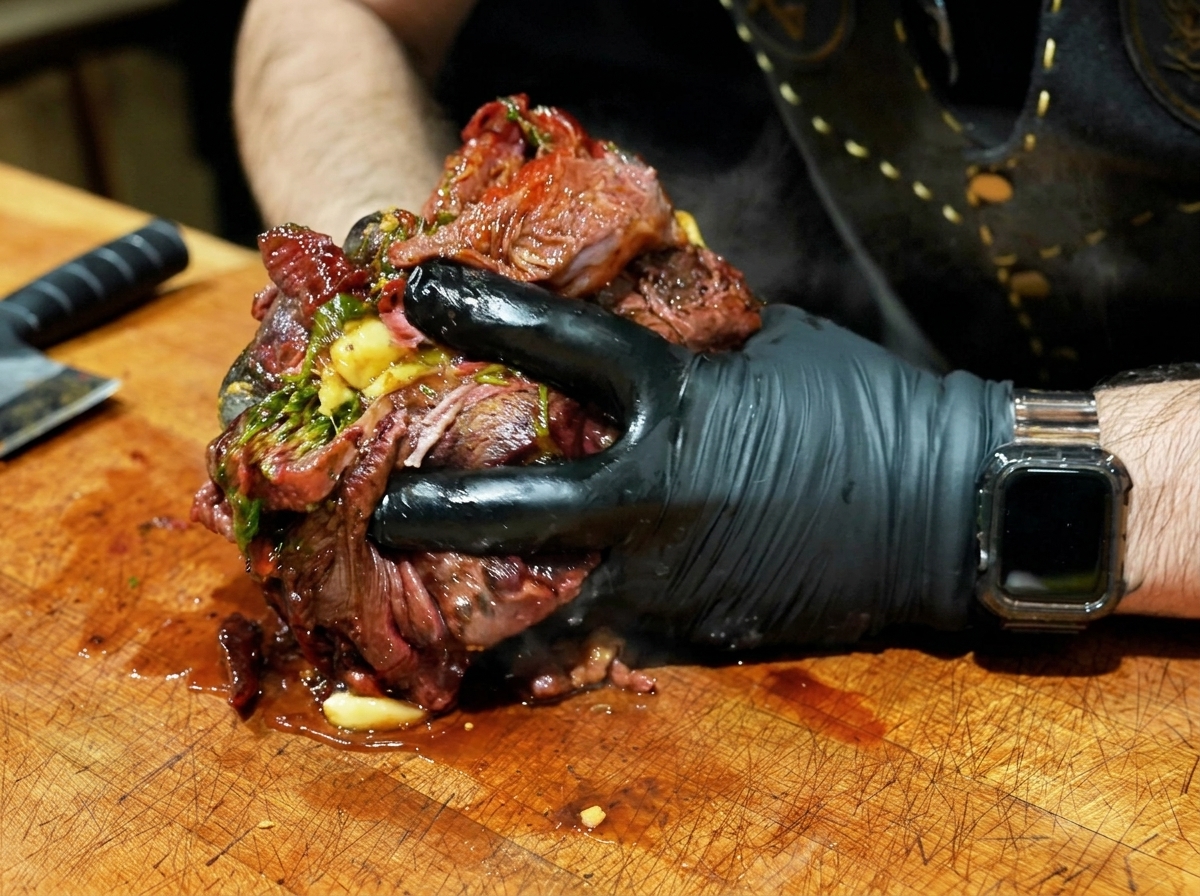
Using gloved hands, firmly press down on the smoked brisket to fully smash and shred the meat. The incredibly tender muscle fibers will fall apart instantly, perfectly incorporating the creamy mashed garlic, herbs, and extra seasoning throughout the beef.
Tip: This highly tender smashed texture is a signature of authentic Texas BBQ brisket that has been cooked low and slow for hours. - 13Prepare the Beef Ribs
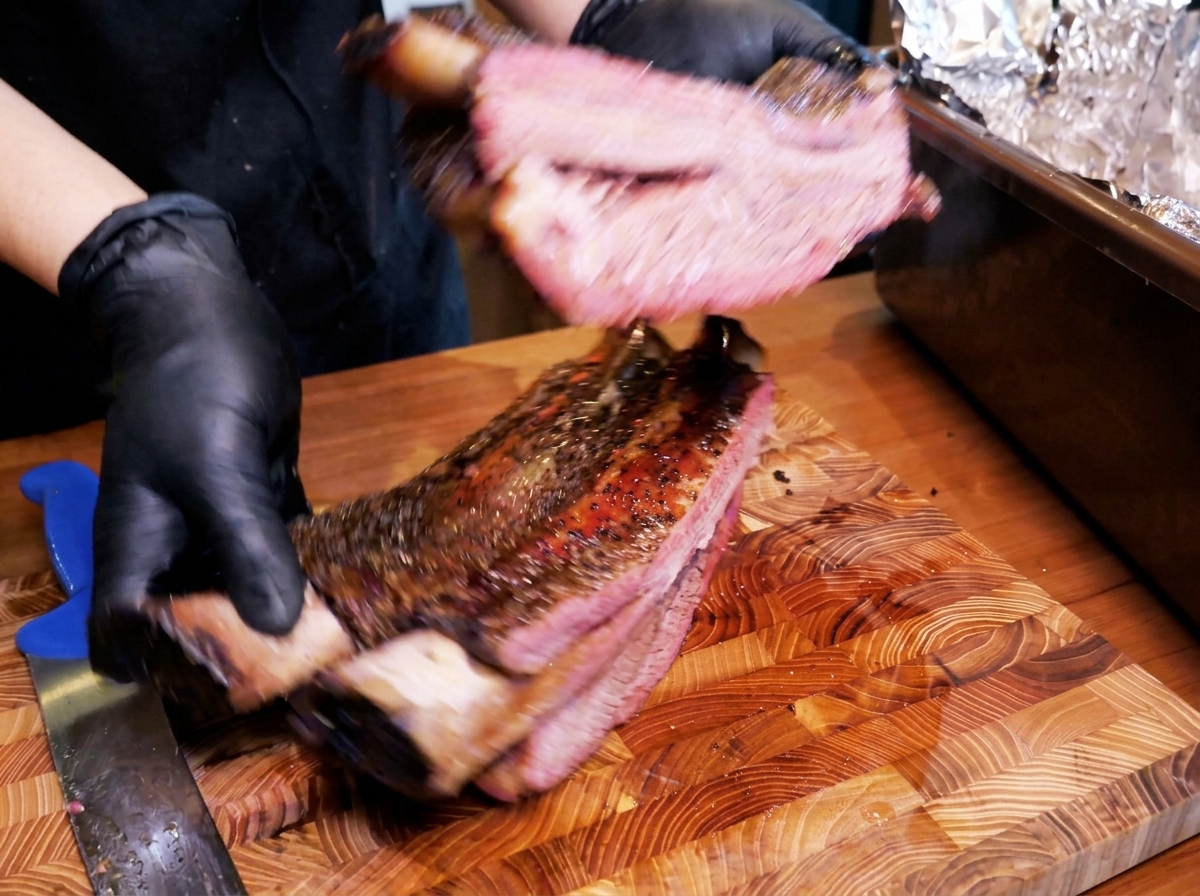
Carefully lift and prepare the large rack of slow-smoked beef ribs. Notice the intensely dark, crusty bark on the outside and the tender, juicy pink interior created by the hours of low-temperature wood smoking.
Tip: The dark bark is not burnt; it is a highly flavorful crust formed by the rub, rendered fat, and wood smoke. - 14Slice and Serve the Ribs
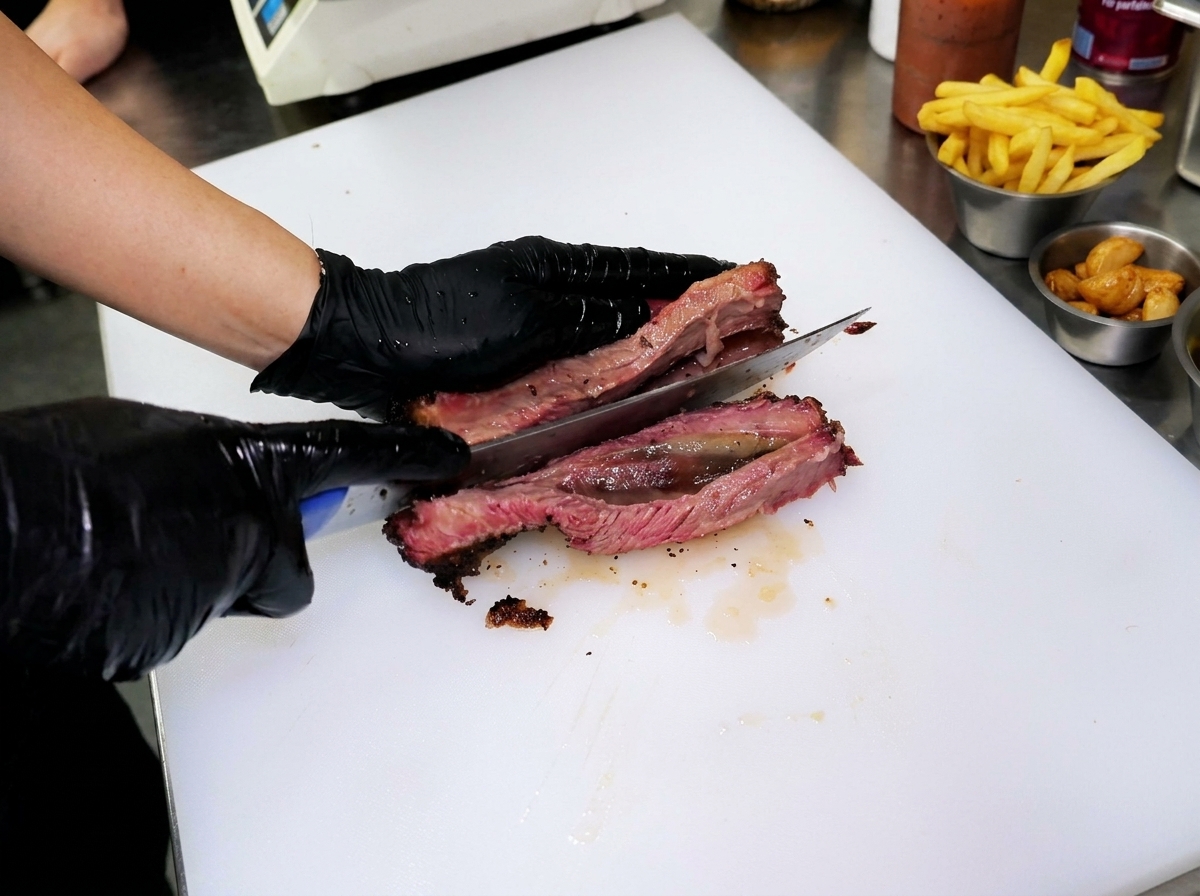
Using a sharp carving knife, slice cleanly through the thick beef rib meat. The long cooking time ensures the meat is so tender it slices as easily as tofu, releasing an irresistible aroma of fruitwood smoke and sweet rendered fat.
Tip: Cut thick, even slices to preserve the juices and maintain the beautiful contrast between the smoke ring and the bark.