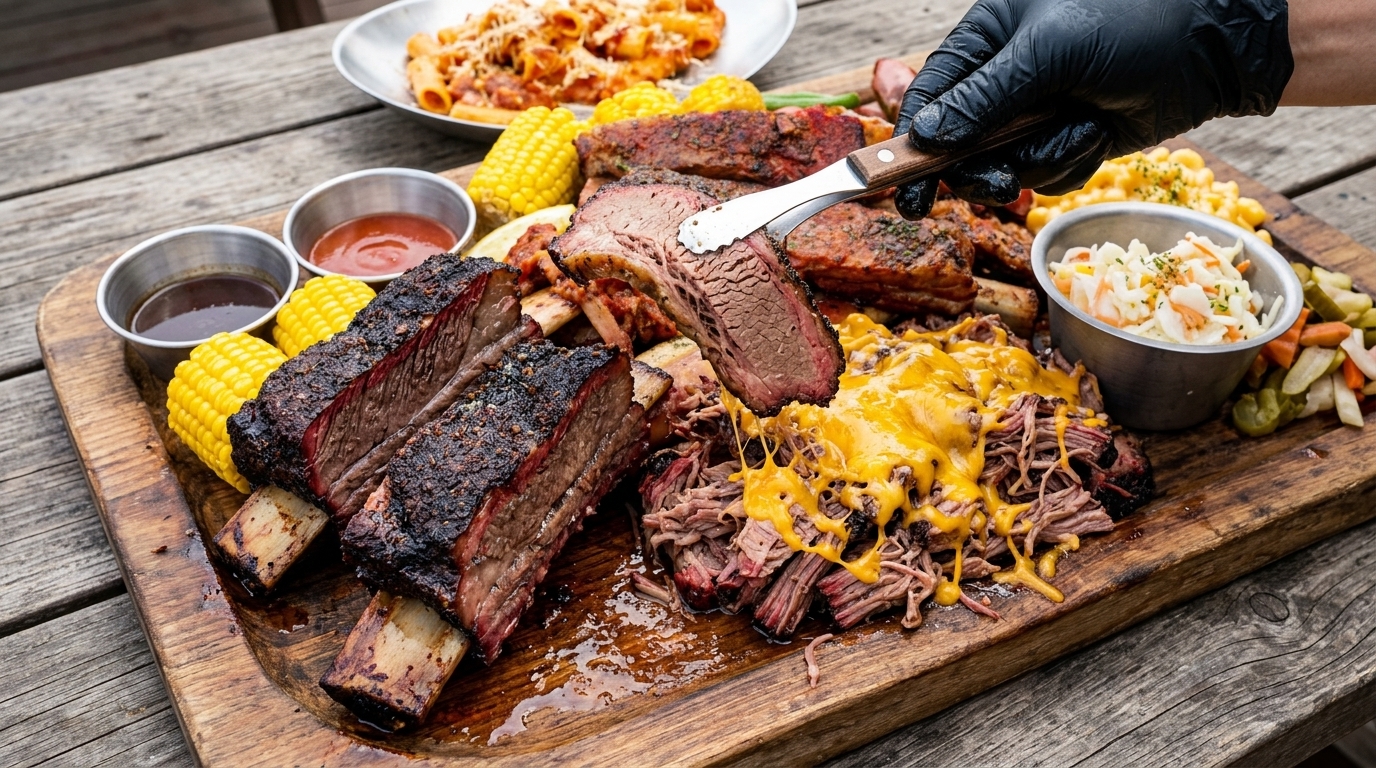
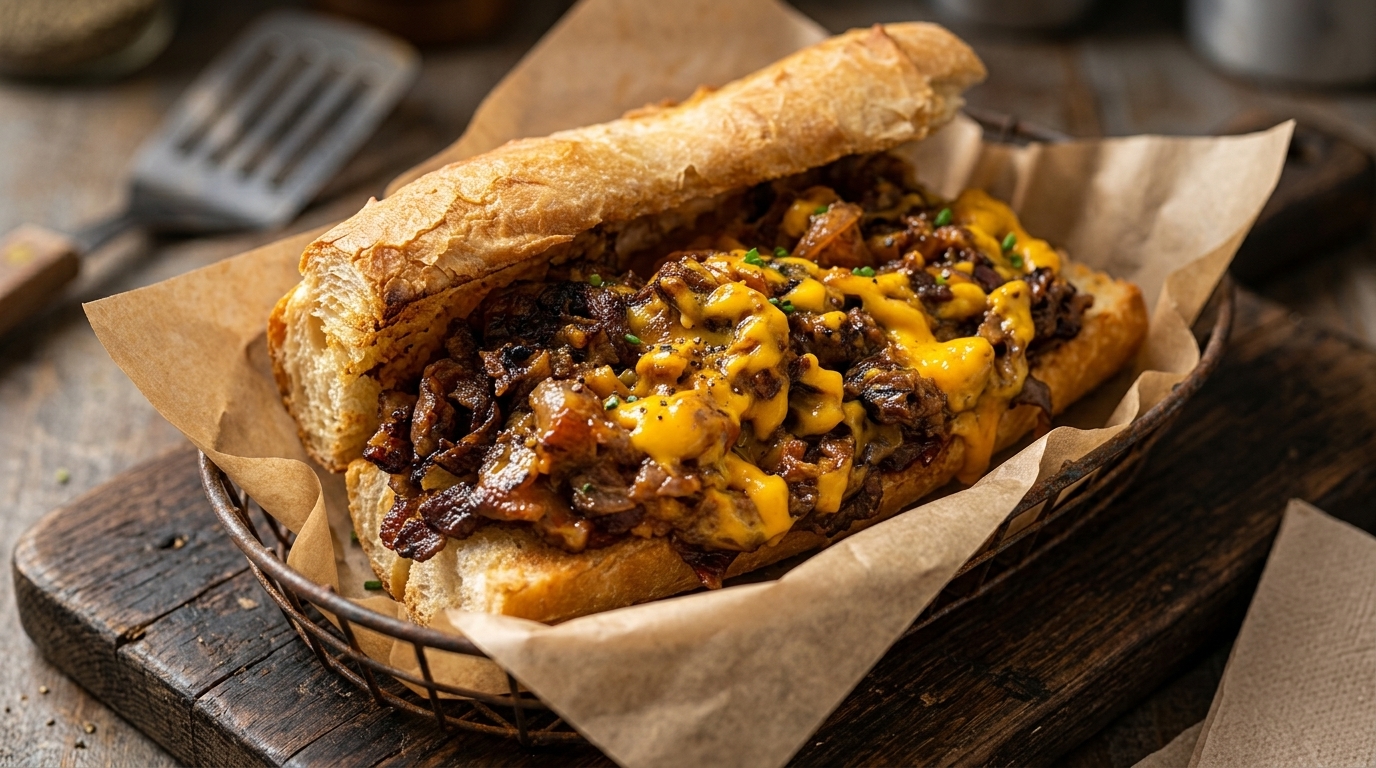
Texas-Style Slow-Smoked Pulled Beef
Garlic and Cheese
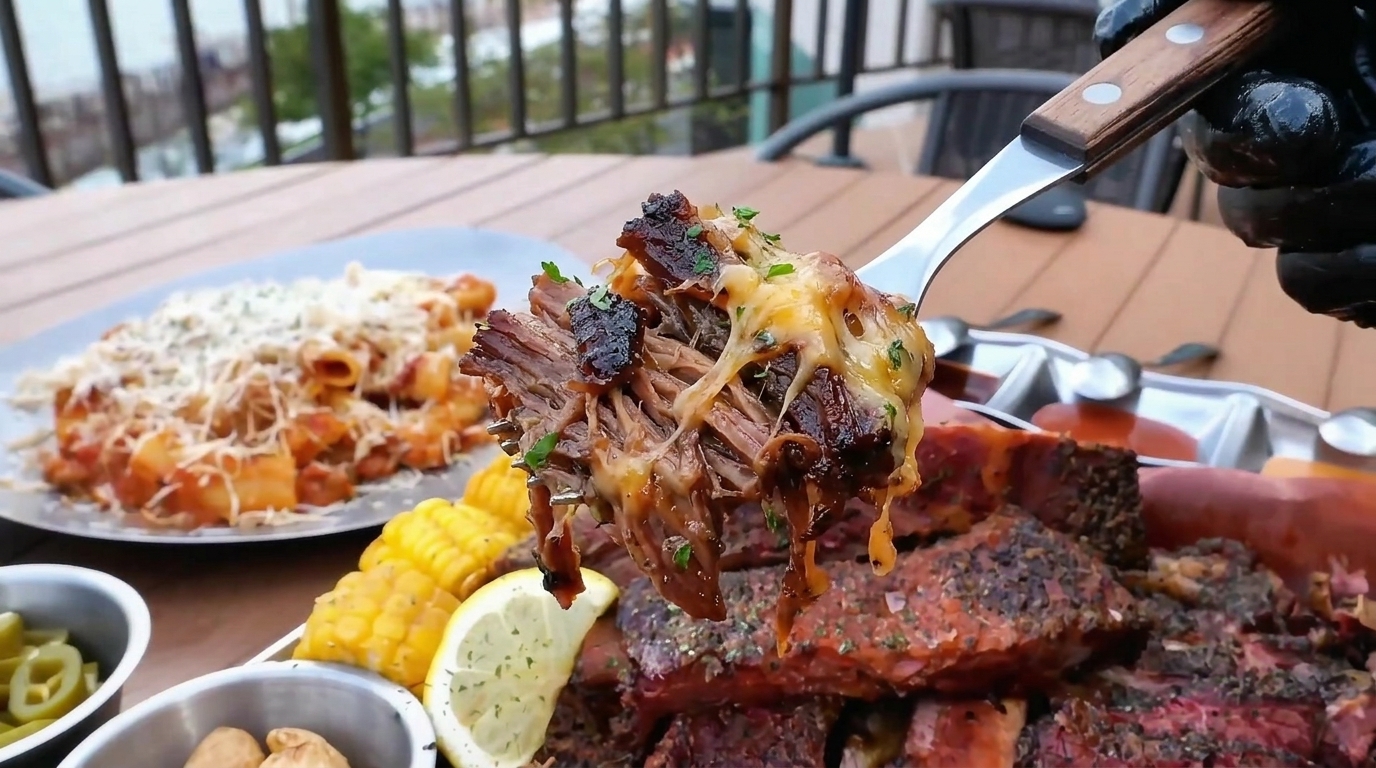
Experience the ultimate Texas-style slow-smoked pulled beef, bursting with savory juices. Smoked over oak and beech, then finished with melted cheese, soft garlic, and fresh parsley for a melt-in-your-mouth bite.
This recipe channels the soul of authentic Texas barbecue, where patience and wood smoke do the heavy lifting. Unlike heavily marinated meats, this method relies on a long, slow smoke over oak and beech wood to build a dark, caramelized bark. The magic happens when the hot smoked beef is submerged in a fruit juice and wine marinade, wrapped tightly in foil, and pushed to fall-apart tenderness.
Ingredients
- 2.5 kg whole beef brisket or beef ribs
- to taste coarse salt and black pepper
- 2 cups fruit juice (apple or cherry)
- 1 cup red wine
- 1 cup melted yellow cheese
- 1 head steamed soft garlic cloves
- 12 cup fresh parsley paste
- as needed oak and beech wood logs for smoking
Instructions
- 1Prepare the firebox
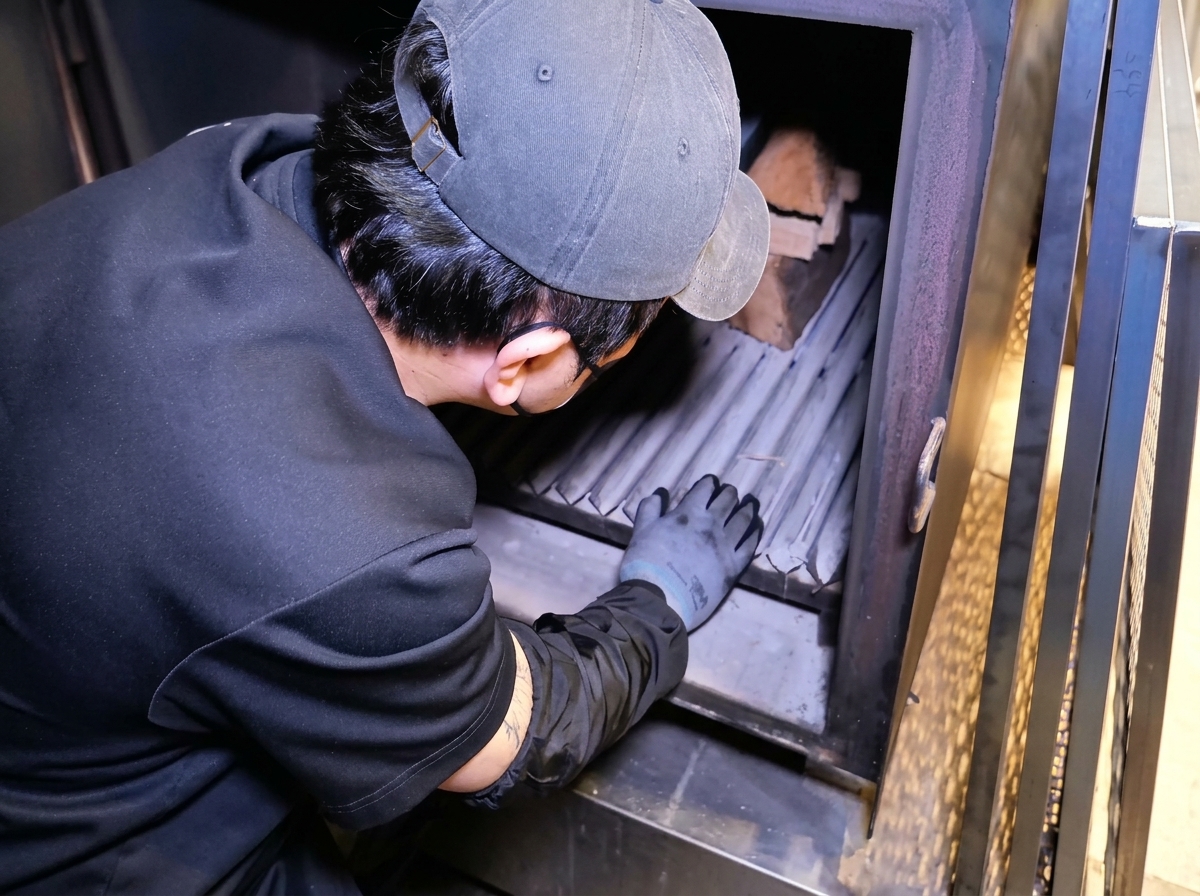
Before the cooking begins, prepare the smoker. Open the firebox of the black iron smoker and carefully arrange layers of oak and beech wood inside. Lighting this wood creates the slow-burning, smoky fire necessary for the authentic barbecue flavor.
Tip: Using dense hardwoods like oak and beech ensures a long, consistent burn with a clean smoke flavor. - 2Trim the raw beef
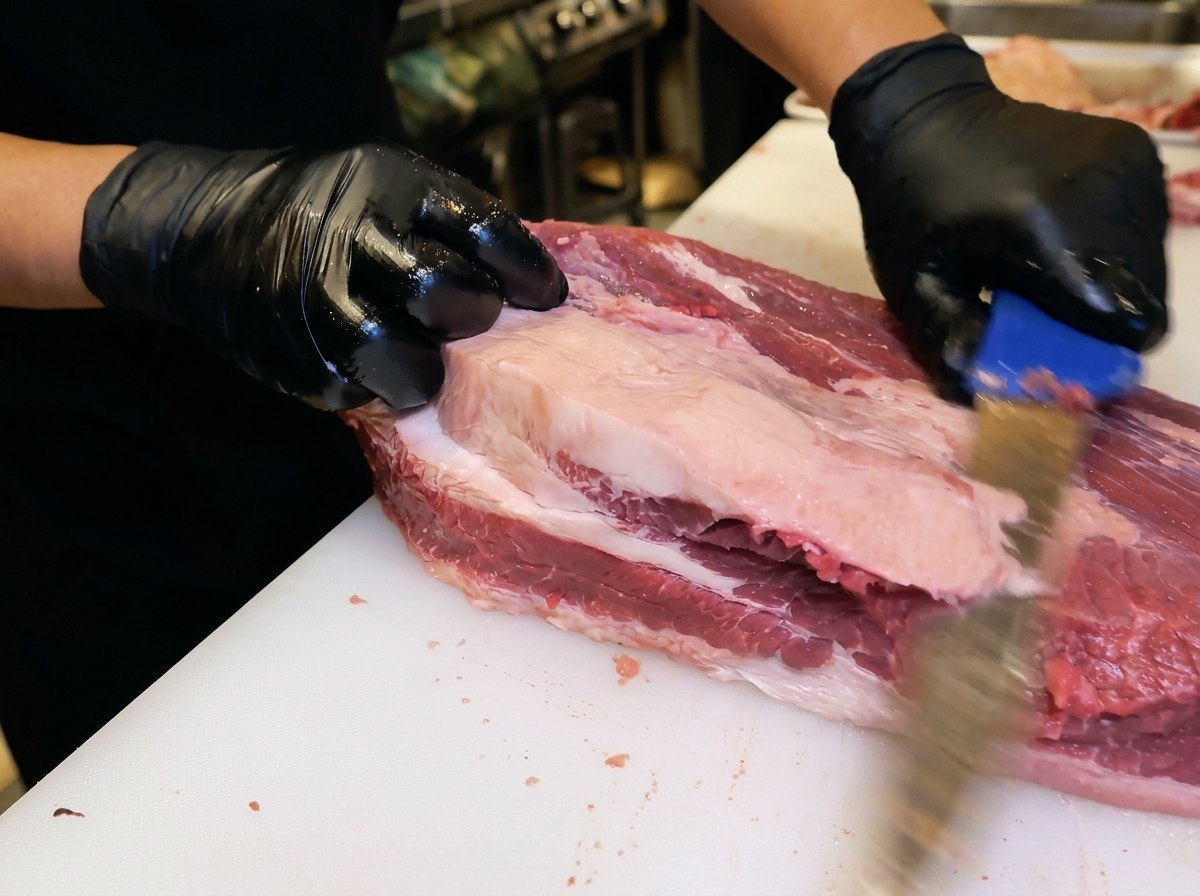
Begin by preparing the raw cuts of beef brisket and ribs. Using a sharp knife on a clean cutting board, carefully trim away the thick, hard layers of fat from the surface of the meat.
Tip: Leave a thin, even layer of fat on the meat to help baste it during the long smoking process and prevent it from drying out. - 3Load the smoker
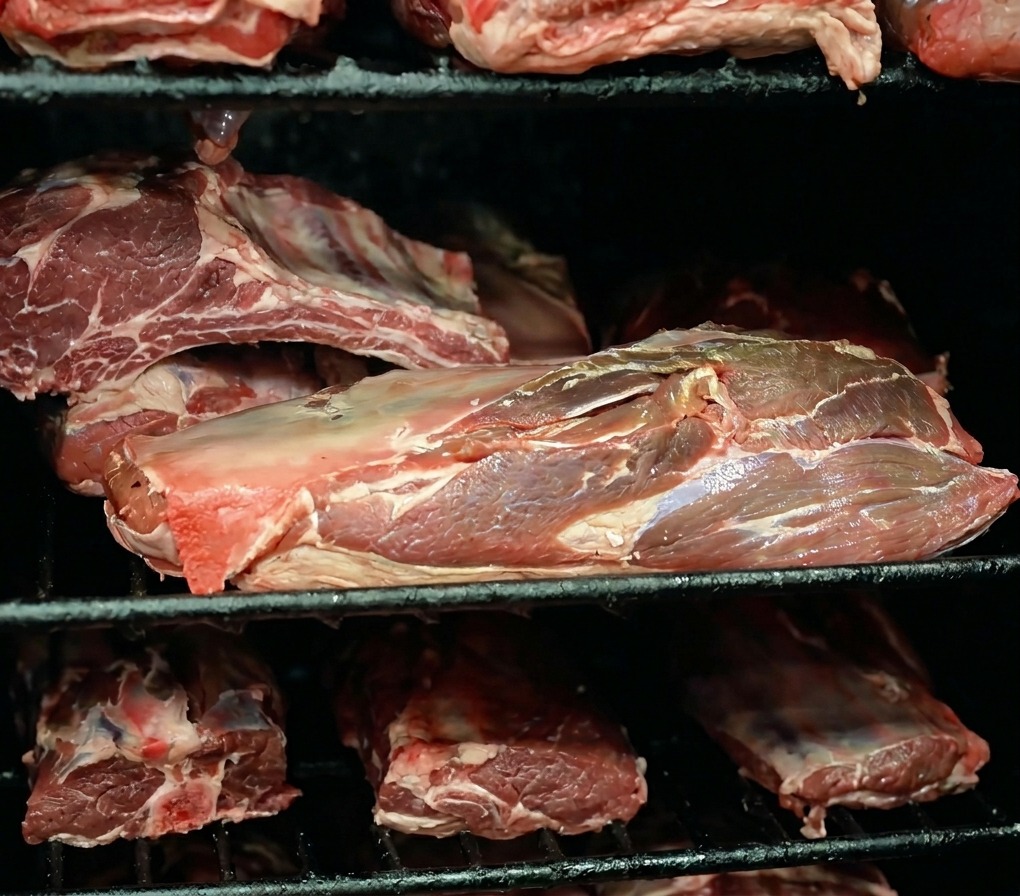
Transfer the whole, raw cuts of beef directly into the smoker, placing them evenly across the grates. Close the smoker and let the charcoal fire and oak wood slowly begin to infuse the meat with smoke.
Tip: There is no need for marination at this stage; the raw meat will absorb the pure, natural wood smoke beautifully. - 4Smoke the beef
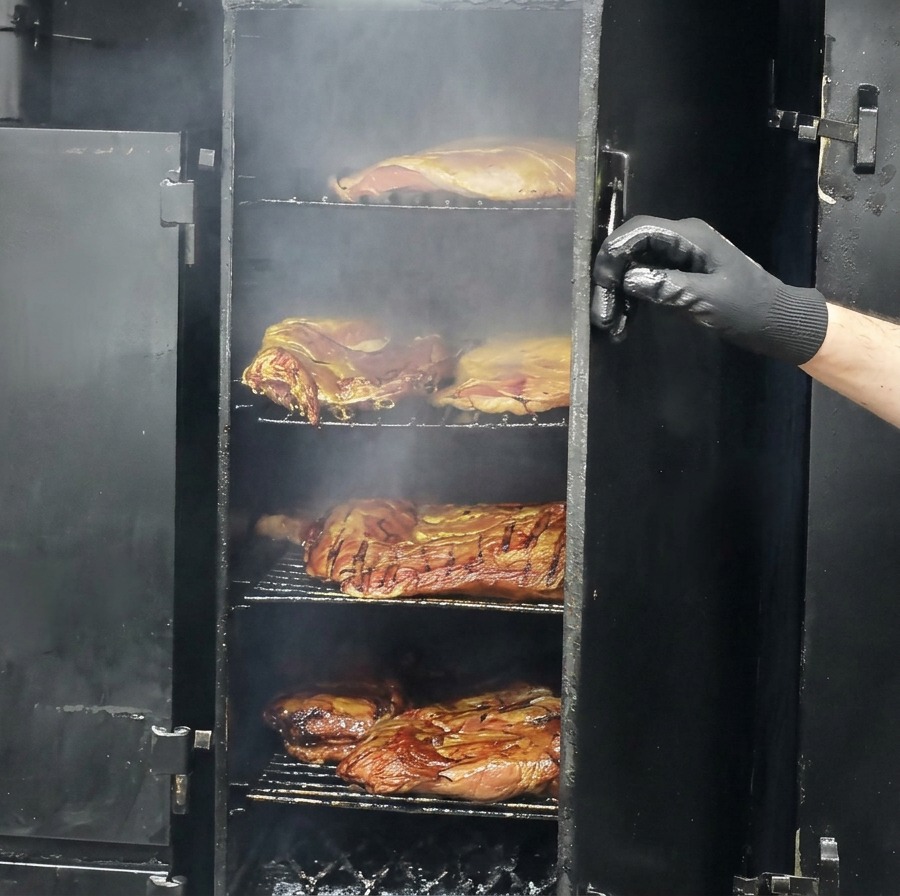
Let the beef slowly smoke over the fire. After roughly two hours, open the smoker to check on the meat. The surface should have developed a dark, crusty bark, which is the signature of authentic Texas-style barbecue.
Tip: This dark exterior is caramelized fat and spices, not burnt meat, and provides a crucial texture and flavor contrast. - 5Submerge in marinade
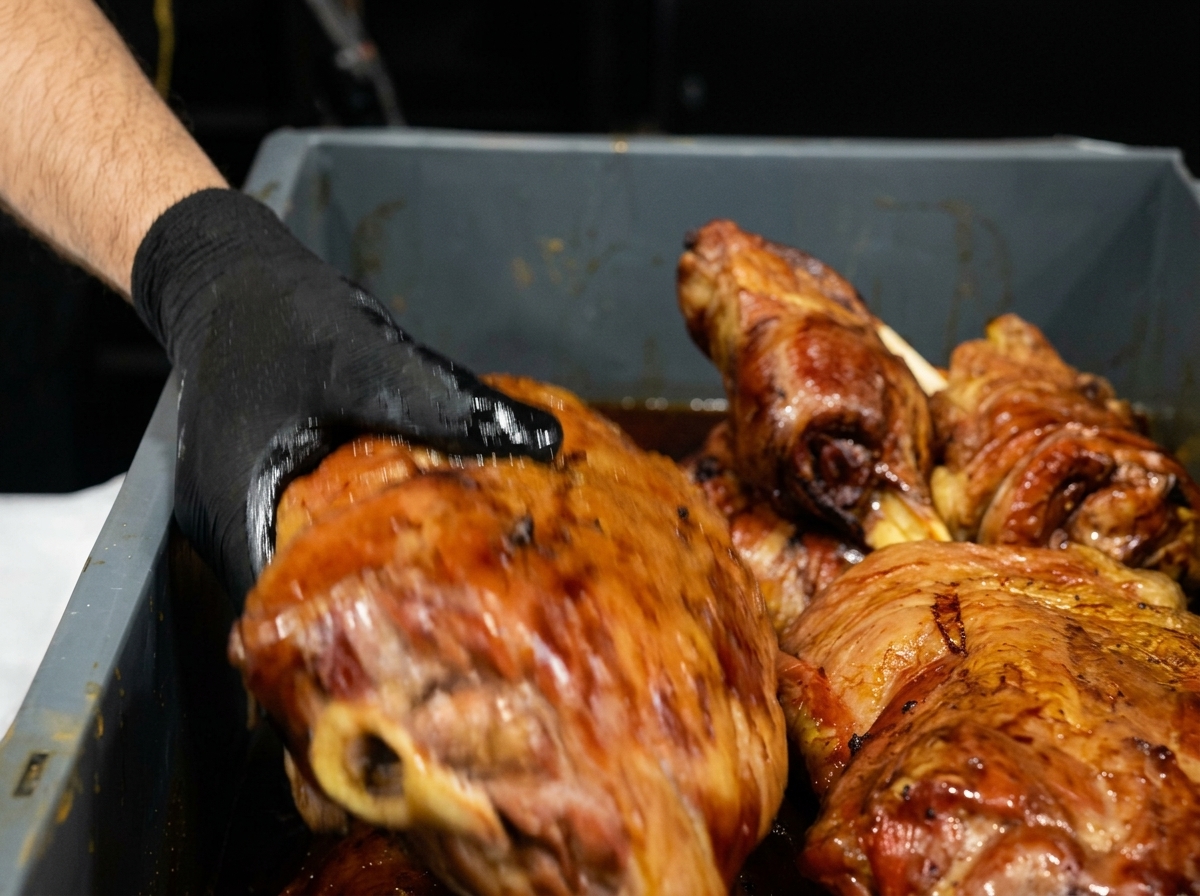
Take the hot, slow-smoked beef and submerge it fully into a marinade made of fruit juice, red wine, and spices. Allowing the meat to absorb this rich liquid helps it retain moisture and infuses it with complex flavors before it is wrapped in foil.
Tip: Do not let the meat cool down before submerging; the residual heat helps the meat draw in the cold marinade. - 6Wrap the meat
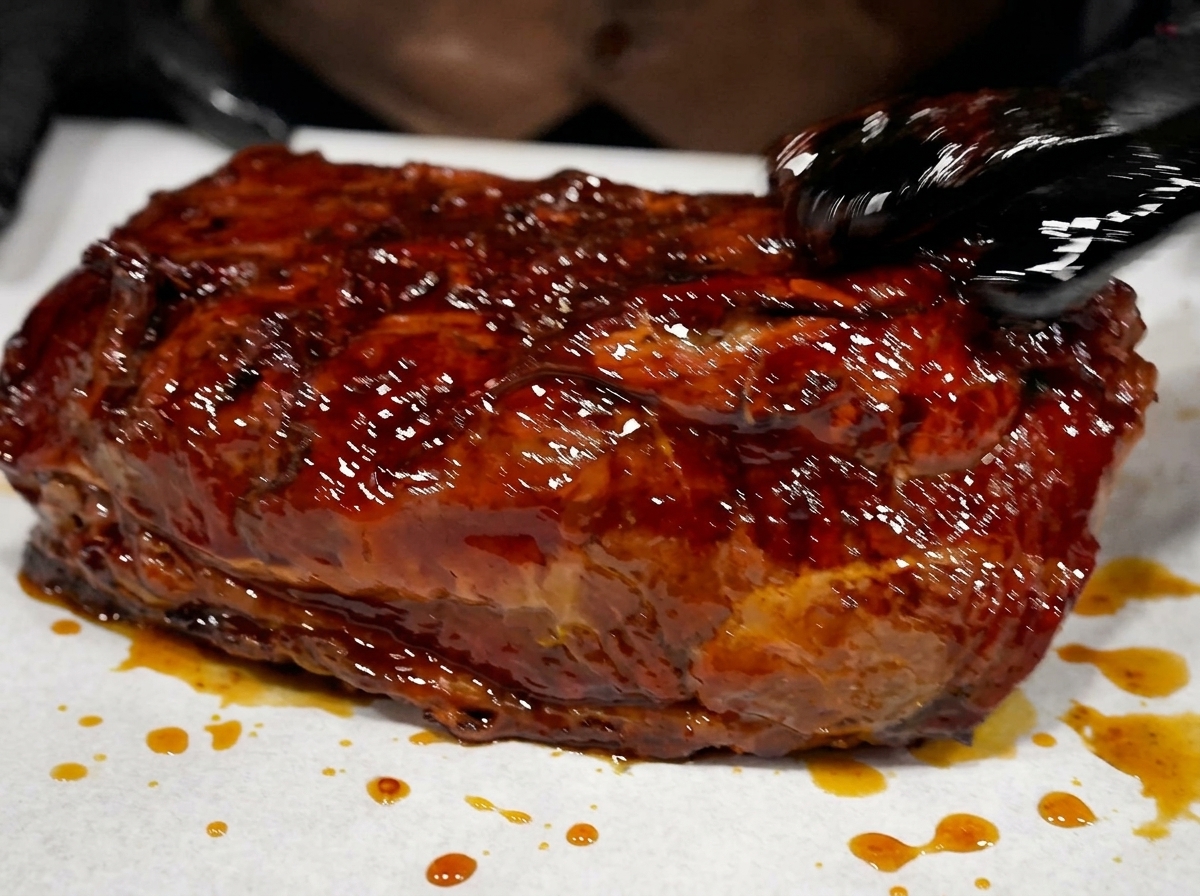
After the beef has fully absorbed the rich marinade, place it onto a large sheet of heavy-duty aluminum foil. Enclose the meat tightly and seal the edges securely. This wrapping technique will help steam the meat inside the smoker, breaking down the tough connective tissues until it becomes incredibly tender.
Tip: Wrapping helps push the meat past the stall phase in smoking by trapping heat and moisture. - 7Monitor the internal temperature
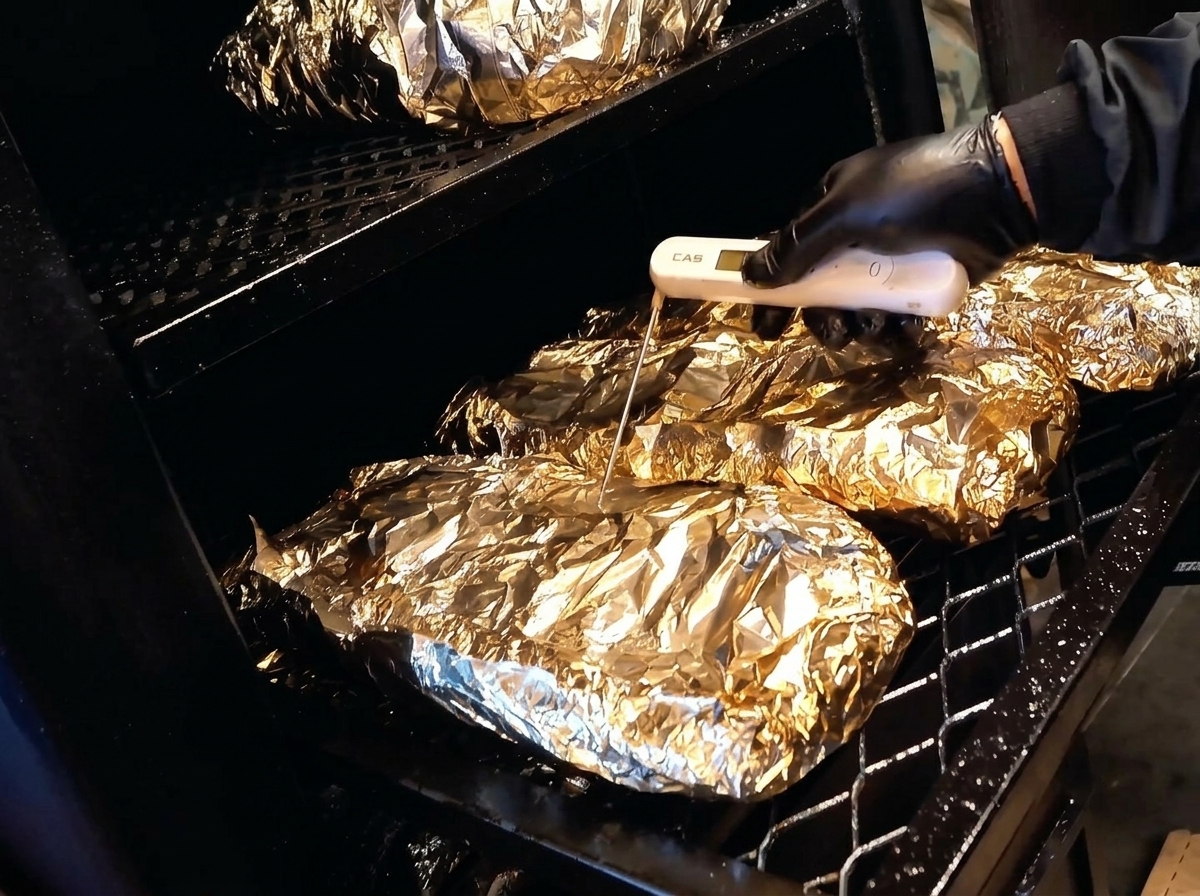
While the beef is wrapped in foil, insert a meat thermometer probe into the thickest part of the brisket. This ensures the meat reaches the target internal temperature for perfect tenderness without losing the pressure-cooker effect created by the aluminum wrap.
Tip: Keep the probe in place throughout the second half of the cook to avoid repeatedly opening the smoker and letting heat escape. - 8Unwrap the smoked beef
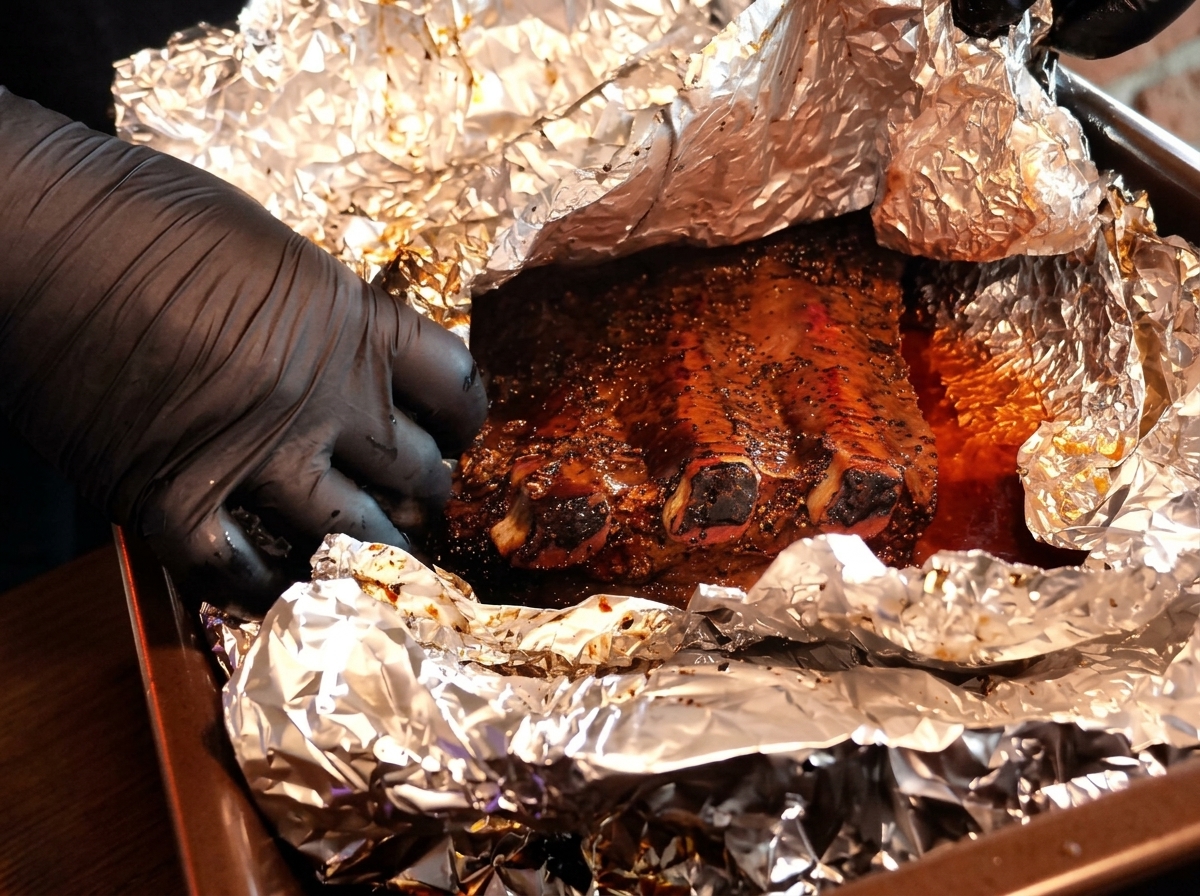
Remove the beef from the smoker and carefully tear open the aluminum foil. The sealed foil acts like a pressure cooker, breaking down tough connective tissues while preserving the dark, caramelized bark that is the signature of authentic Texas barbecue.
Tip: Open the foil slowly to avoid steam burns, and be careful not to spill the flavorful juices that have collected at the bottom. - 9Prepare the cheese base
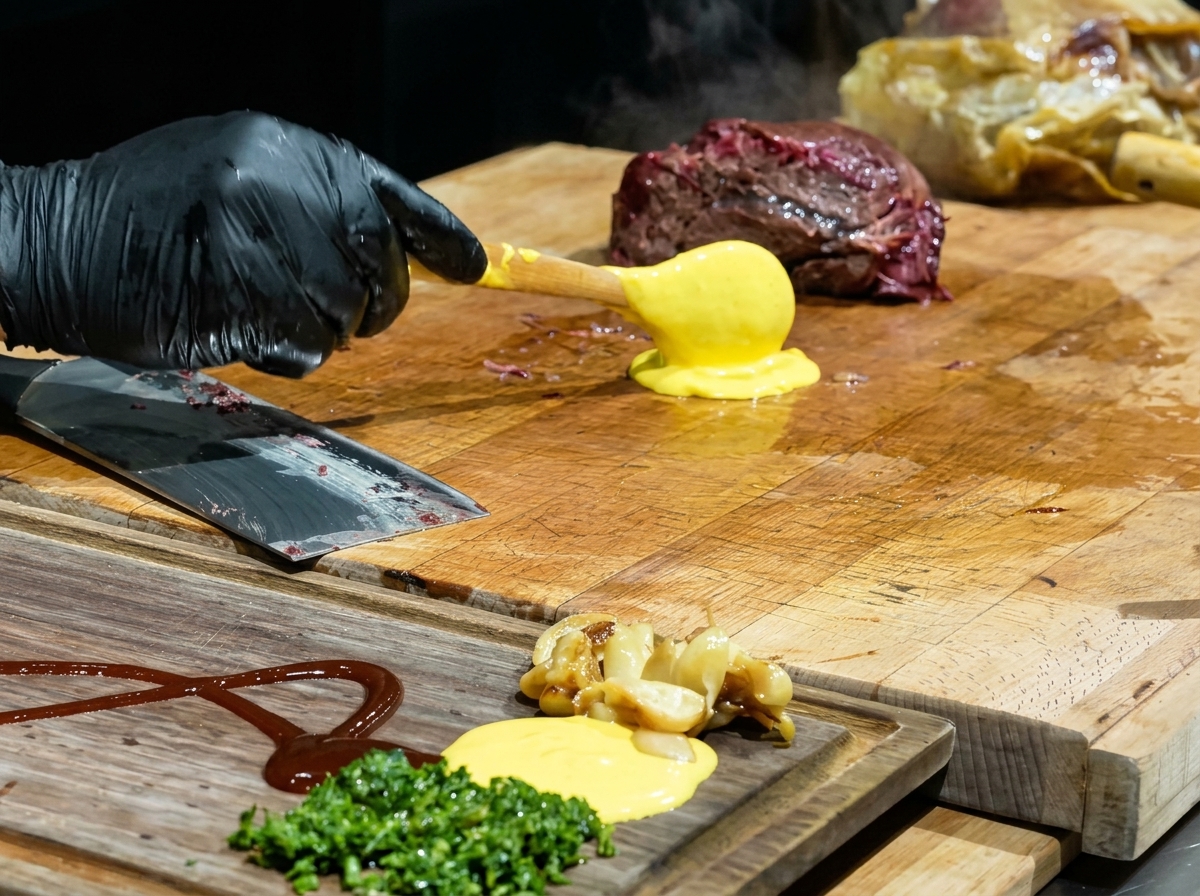
On a clean wooden cutting board, spread a generous layer of melted yellow cheese. This creates a rich, creamy base that will coat the underside of the smoked beef once it is sliced and shredded.
Tip: Ensure the cheese is warm and fluid so it spreads easily and adheres to the meat fibers immediately. - 10Add aromatics and parsley paste
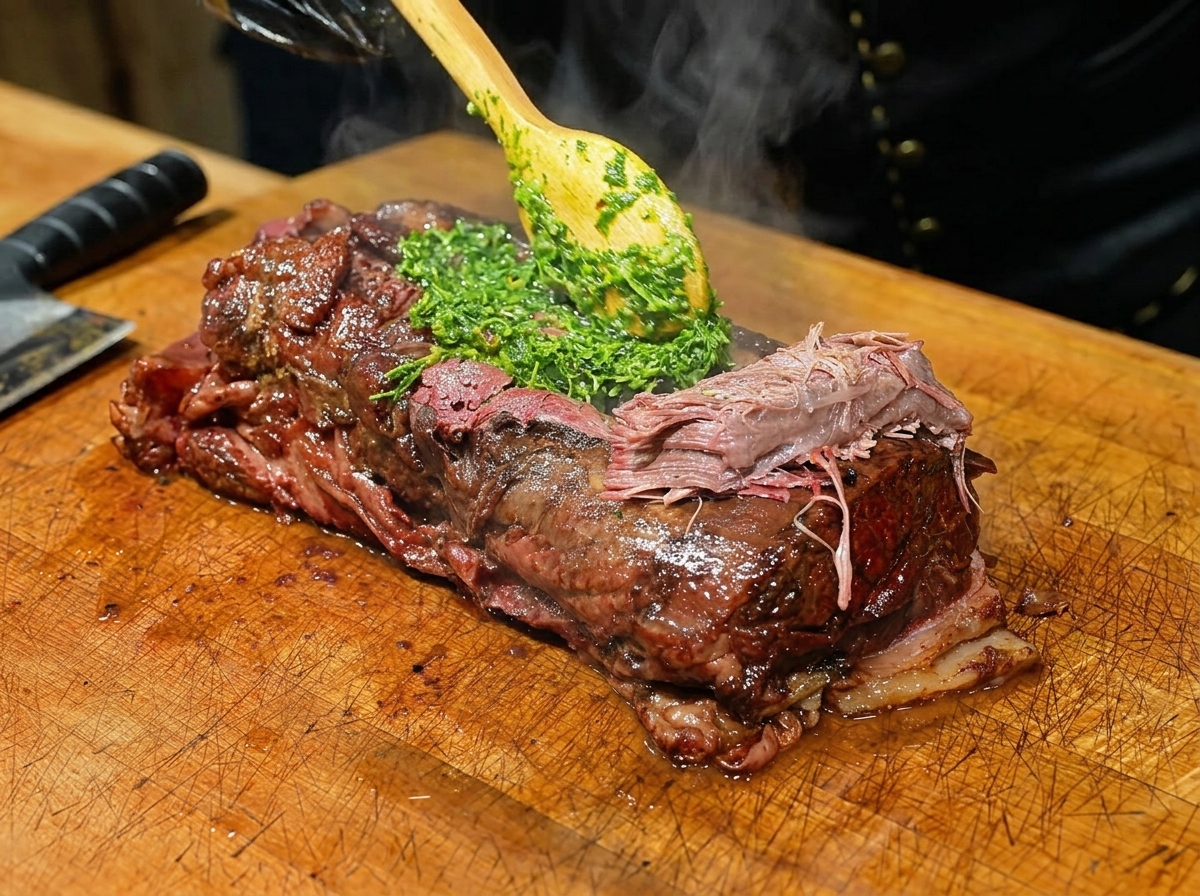
Place steamed, soft garlic cloves over the top of the smoked beef, then spread a vibrant green parsley paste over the garlic. These fresh aromatics balance the richness of the beef and cheese for a well-rounded flavor profile.
Tip: Gently press the garlic cloves before adding the paste to release their oils and ensure they blend into the meat as it falls apart. - 11Squeeze and mix
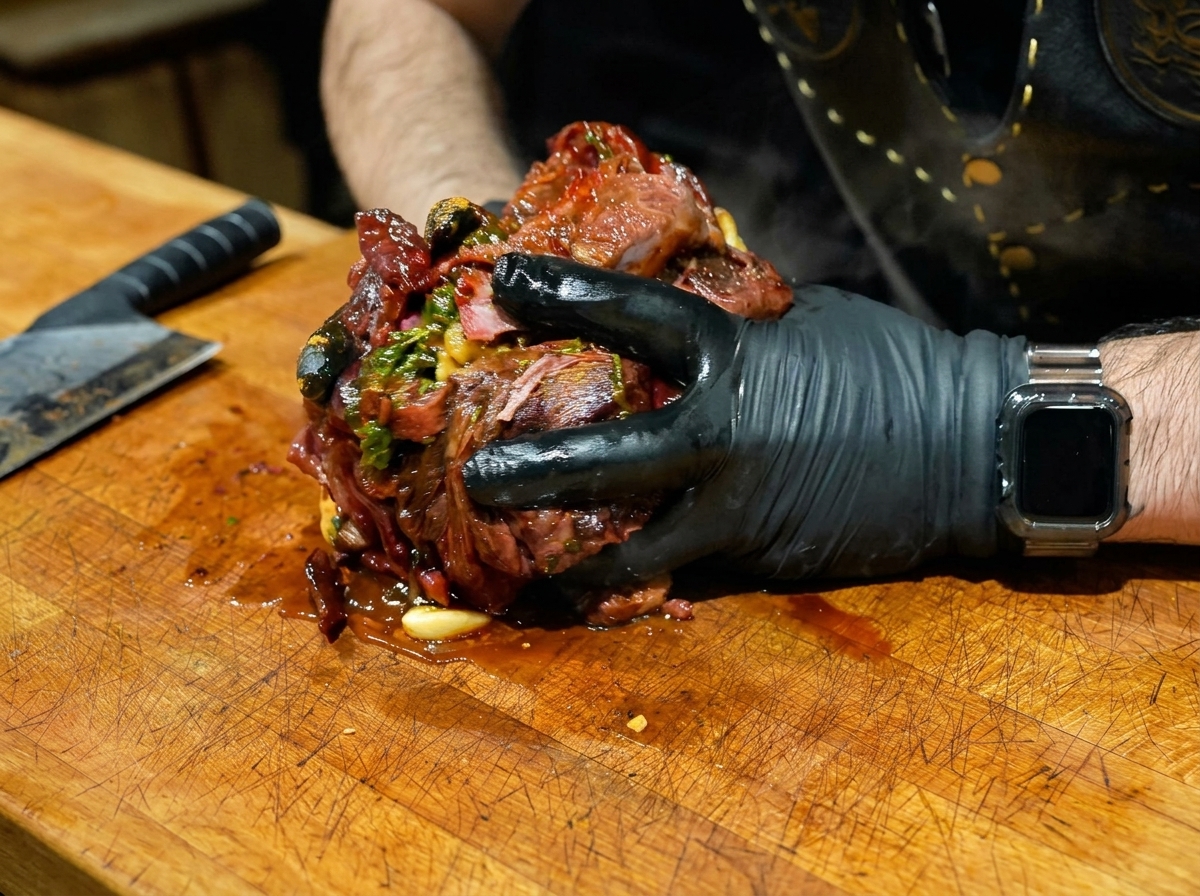
Using both hands, firmly squeeze and pull apart the tender beef. The meat will instantly yield and shred, allowing you to mix it thoroughly with the melted cheese, soft garlic, and parsley paste. This ensures every fiber of the meat is coated with savory, aromatic flavors.
Tip: Wear heat-resistant cotton gloves underneath your nitrile gloves to protect your hands, as the beef will be piping hot directly from the foil.