Black Garlic Oil Tonkotsu Ramen
Thick-Cut Chashu
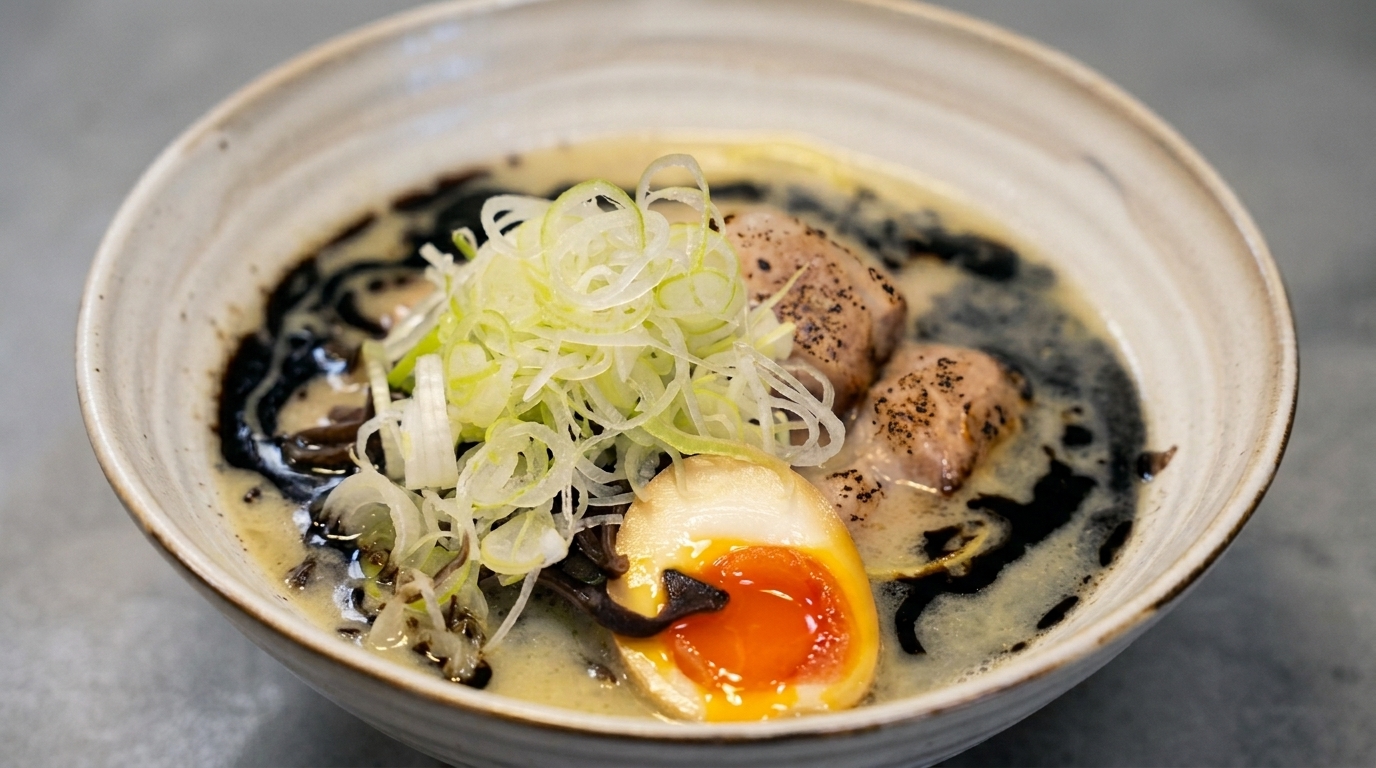
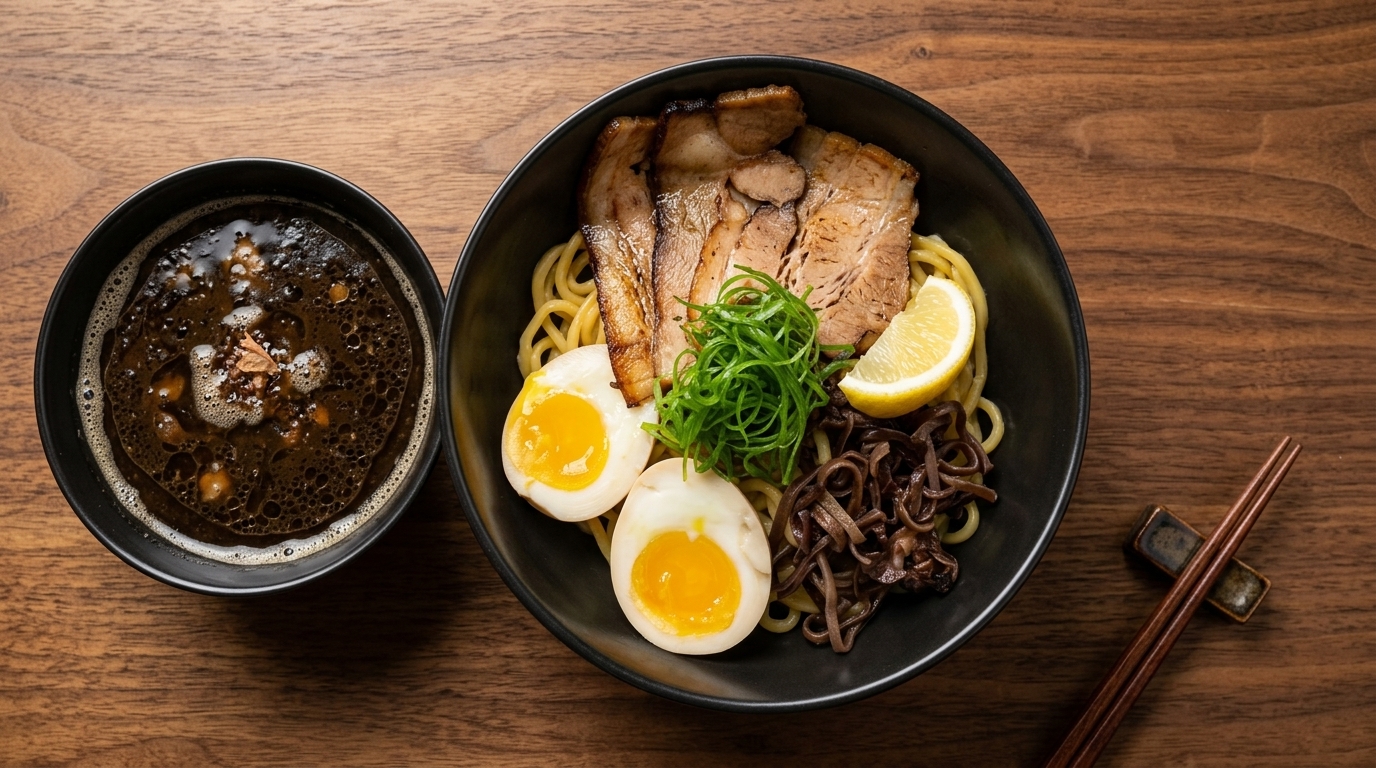
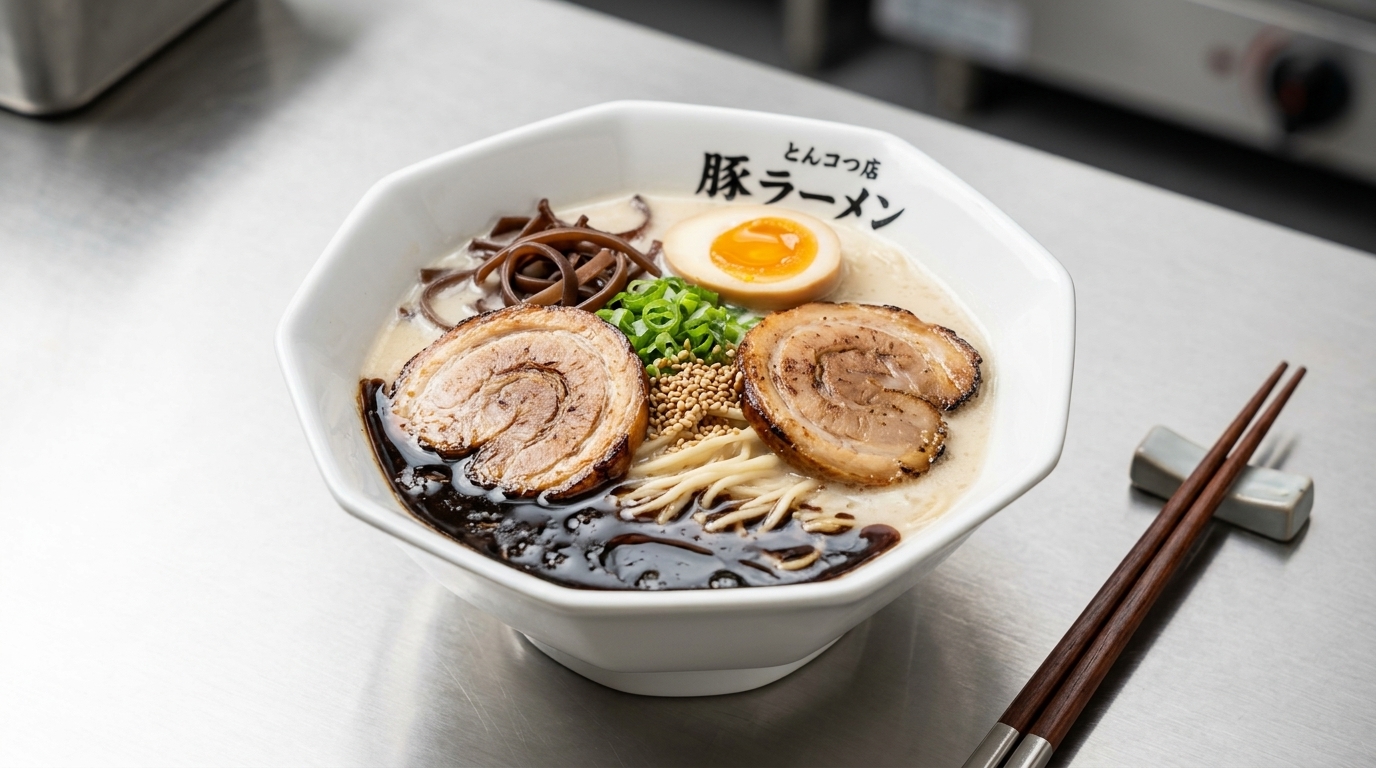
Experience authentic tonkotsu ramen enriched with roasted black garlic oil and topped with melt-in-your-mouth, flame-torched thick-cut chashu pork.
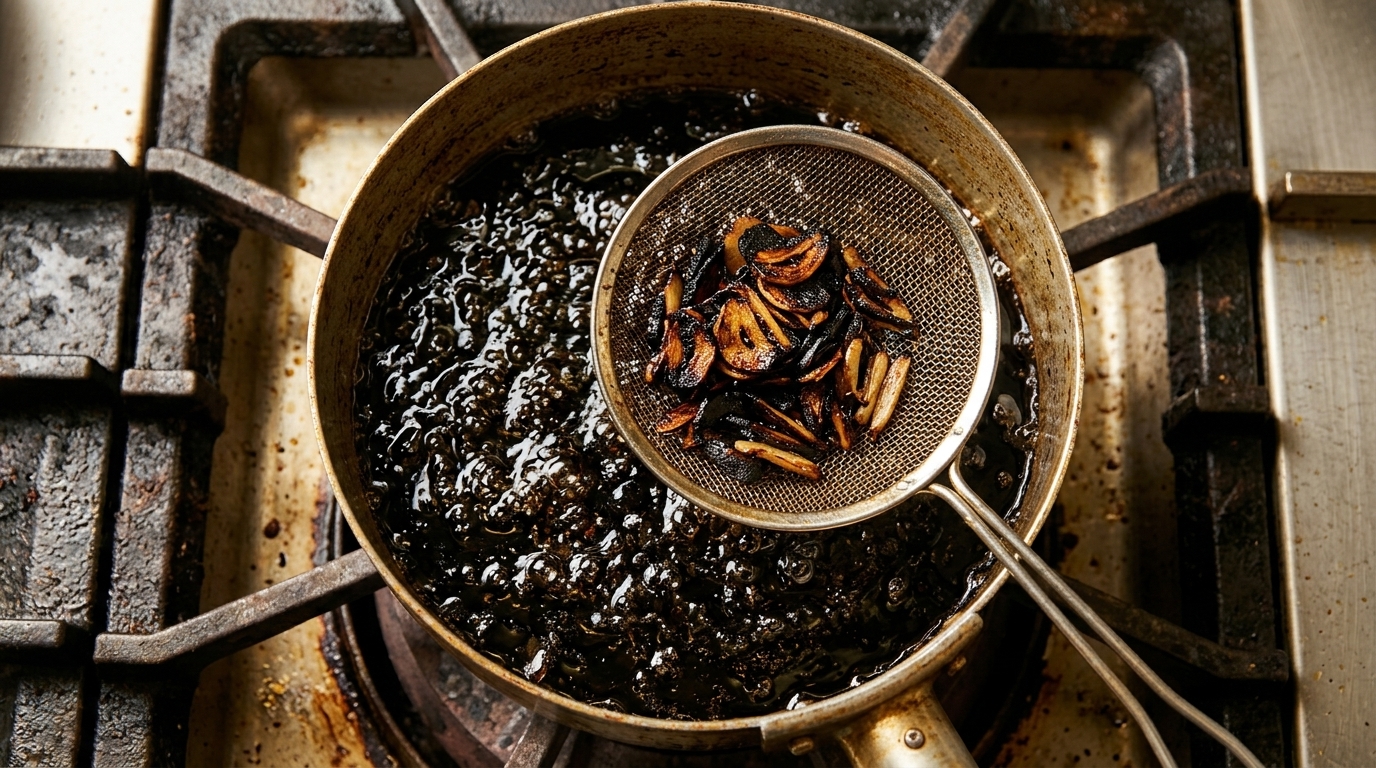
Ramen elevated by black garlic oil, or mayu, originates from the Kumamoto region of Japan. The deeply roasted garlic adds a striking dark color and a complex, earthy bitterness that perfectly cuts through the rich, creamy pork and chicken bone broth. Paired with thickly cut, blowtorched chashu and an array of colorful toppings, this bowl brings the intense, smoky atmosphere of a late-night Japanese ramen yatai right into your kitchen.
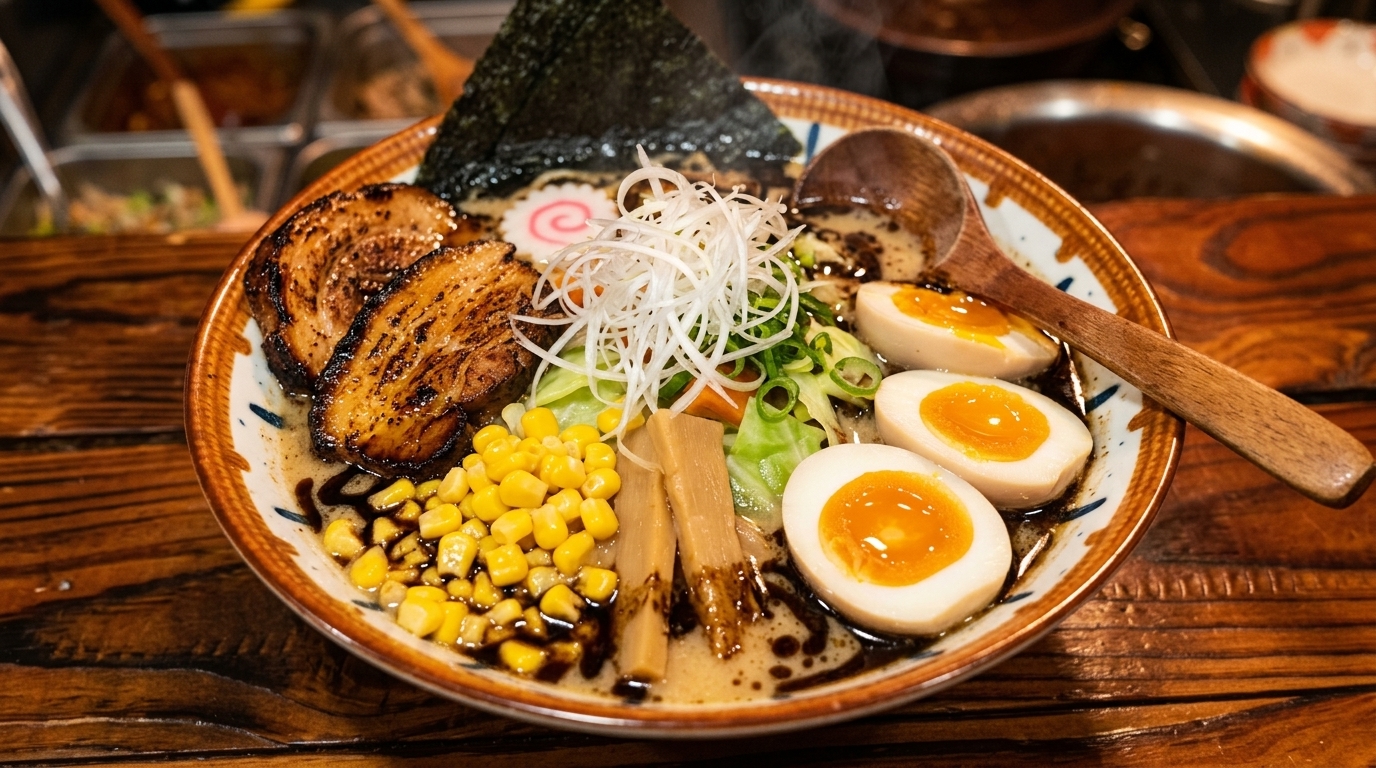
Ingredients
- 1 portion fresh ramen noodles
- 400 ml pork and chicken bone broth (tonkotsu)
- 2 thick slices chashu pork
- 2 tbsp soy sauce tare
- 1 tbsp scallion oil
- 1 tbsp black garlic oil (mayu)
- 1 whole soft-boiled egg
- 2 tbsp sweet corn kernels
- 3 slices seasoned bamboo shoots (menma)
- 2 slices narutomaki (fish cake)
- 1 piece crab stick
- 1 leaf blanched cabbage
- 1 sheet nori seaweed
- to garnish shredded scallions
Instructions
- 1Add scallion oil
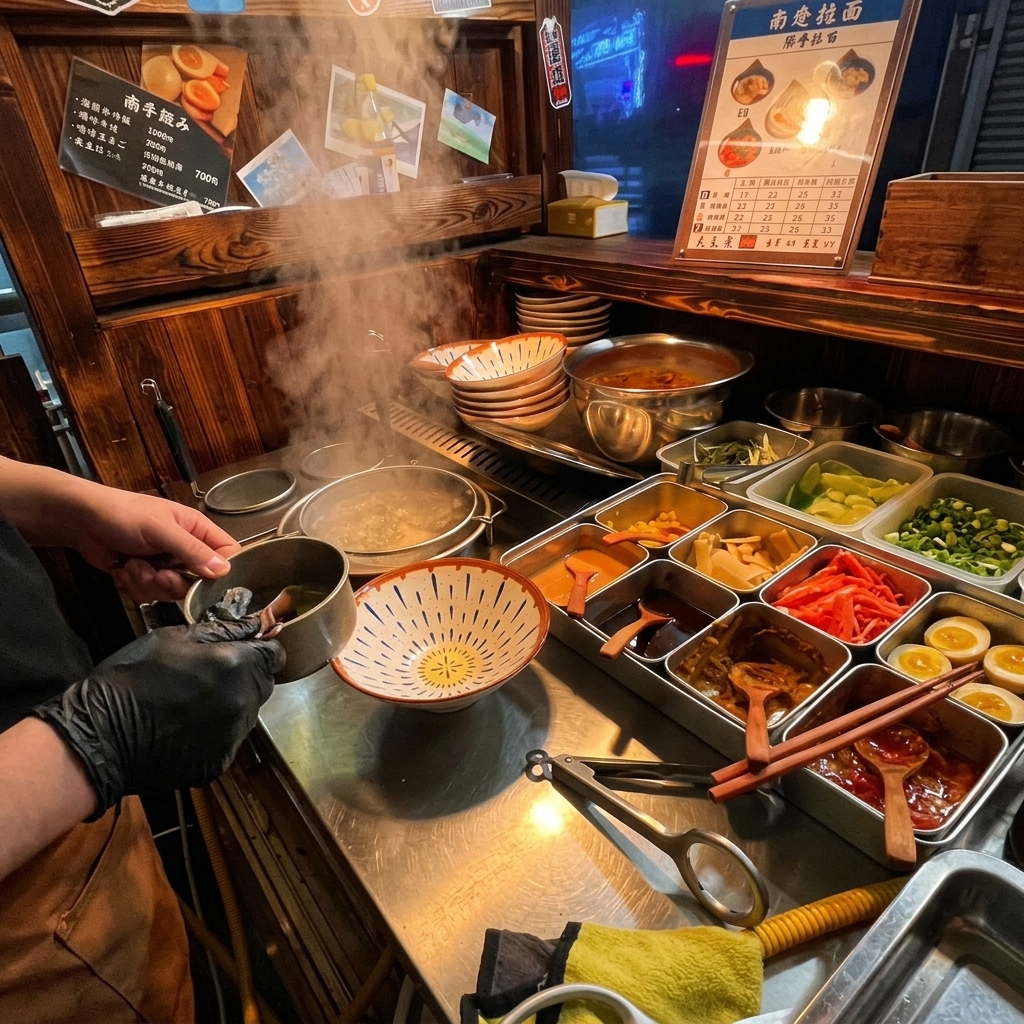
Begin building the flavor base of the ramen by pouring a small amount of clear scallion oil into the empty serving bowl. This aromatic oil will coat the noodles as they are added and provide a fragrant depth to the broth.
Tip: Warming up your serving bowl beforehand with hot water will keep the ramen soup piping hot for longer. - 2Add soy sauce tare
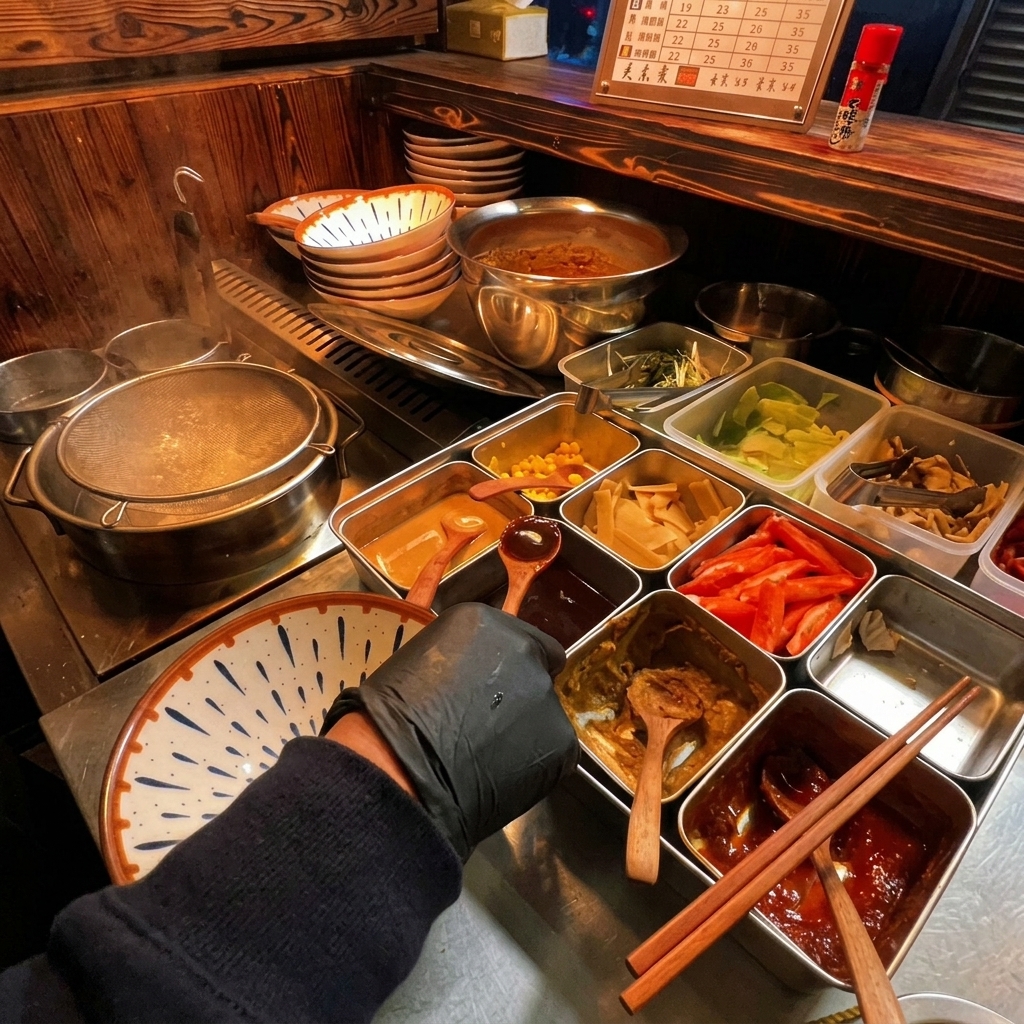
Spoon the prepared dark soy sauce mixture, also known as the tare, into the bowl with the scallion oil. This highly concentrated seasoning provides the salty, umami-rich flavor profile that defines the soups taste.
Tip: The ratio of tare to broth is crucial; start with a standard spoonful and adjust the amount for future bowls according to your preference for saltiness. - 3Boil the noodles
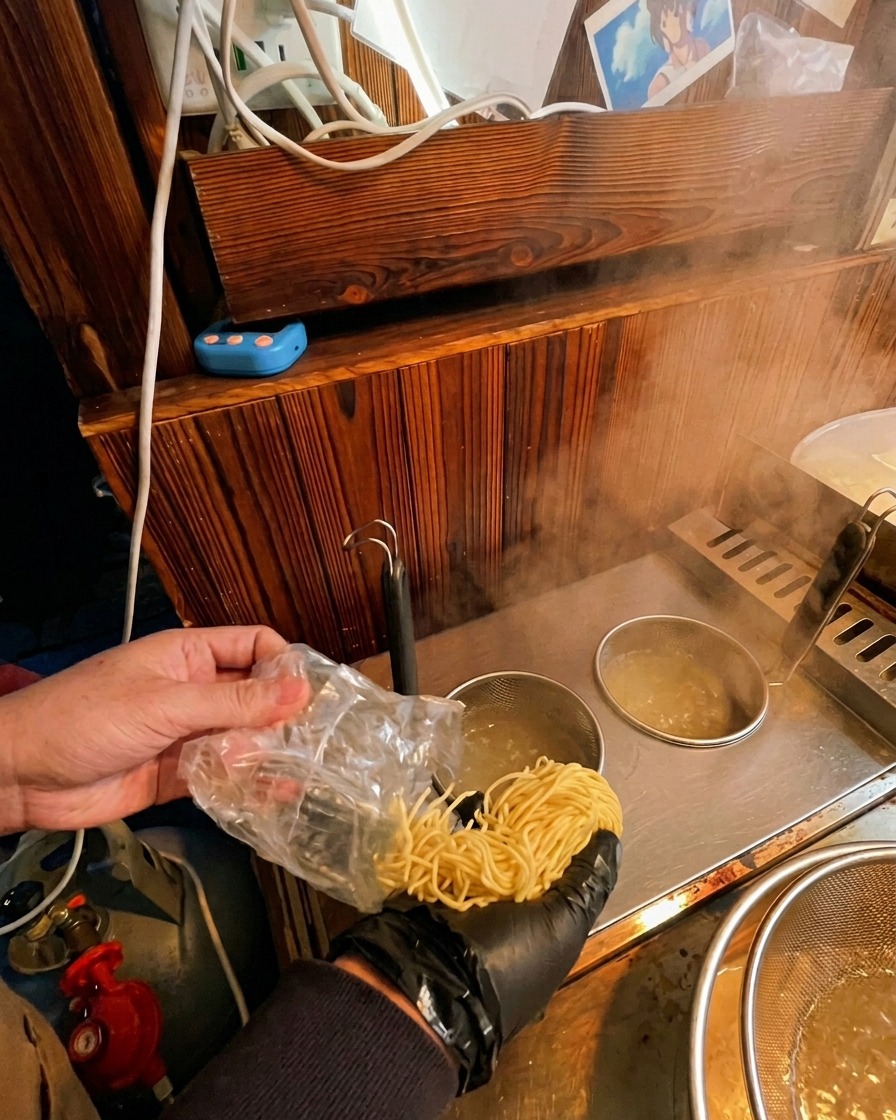
Carefully drop a portion of fresh, uncooked ramen noodles from their wrapper into a metal boiling basket submerged in vigorously boiling water. Set a timer for about two and a half minutes for a perfectly chewy texture.
Tip: Gently shake out any excess flour from the fresh noodles before dropping them into the pot to prevent the boiling water from becoming too starchy. - 4Pour and strain the broth
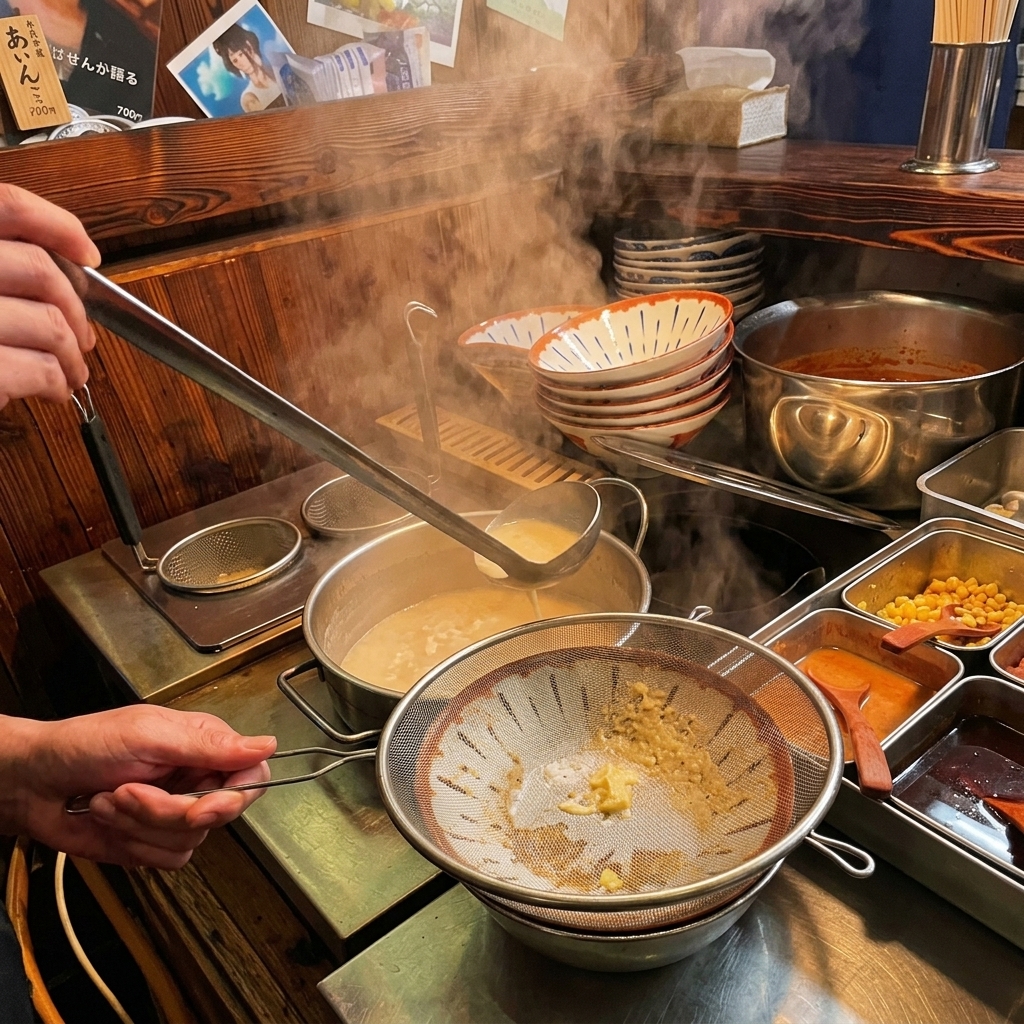
Ladle the hot, creamy pork and chicken bone broth into the prepared serving bowl containing the tare. Pour the broth through a fine mesh strainer to catch any small bone fragments or impurities, ensuring a smooth soup base.
Tip: Straining the broth yields a much cleaner mouthfeel and a more refined presentation, especially for rich tonkotsu-style soups. - 5Torch the chashu
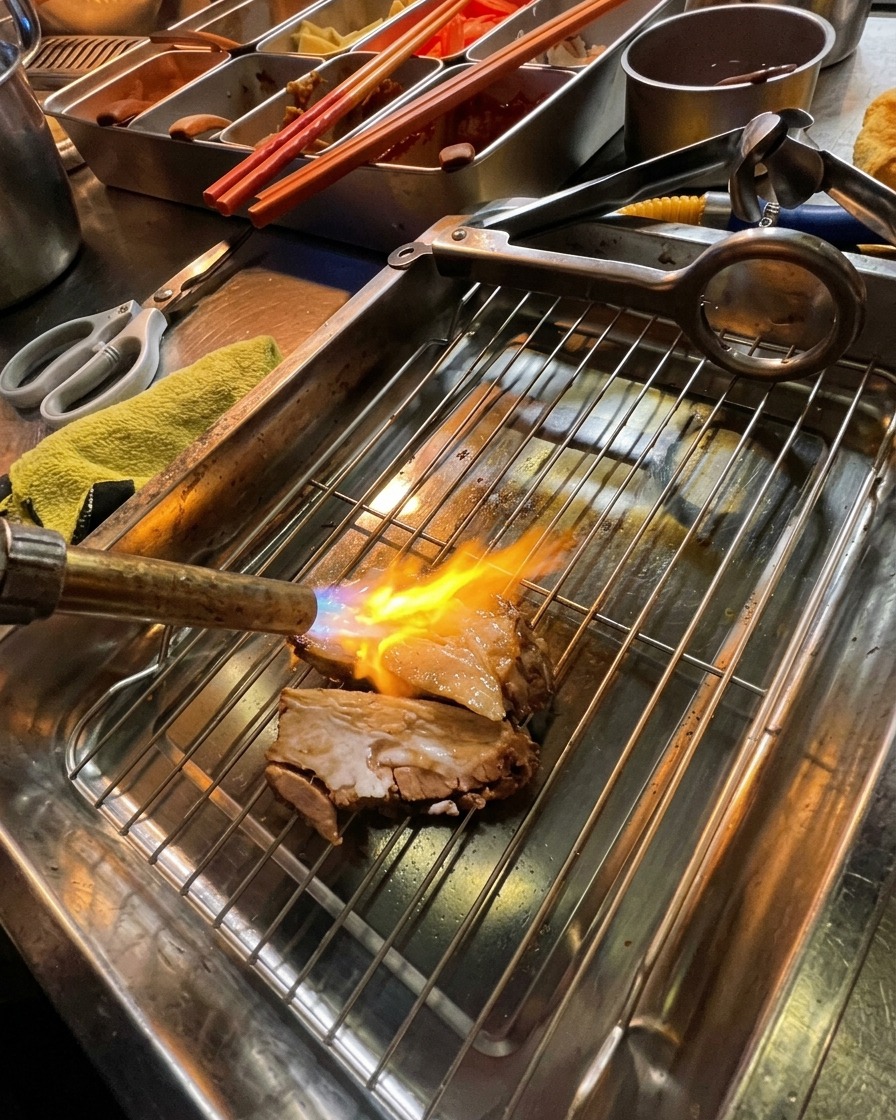
Place thick slices of cooked chashu pork onto a metal grate and use a blowtorch to heavily sear the meat. Torching the pork adds a delicious smoky, burnt aroma and slightly melts the fat for a perfect, tender bite.
Tip: Flip the pork slices over and briefly torch the other side to ensure the meat is evenly heated throughout before serving. - 6Stir the cooking noodles
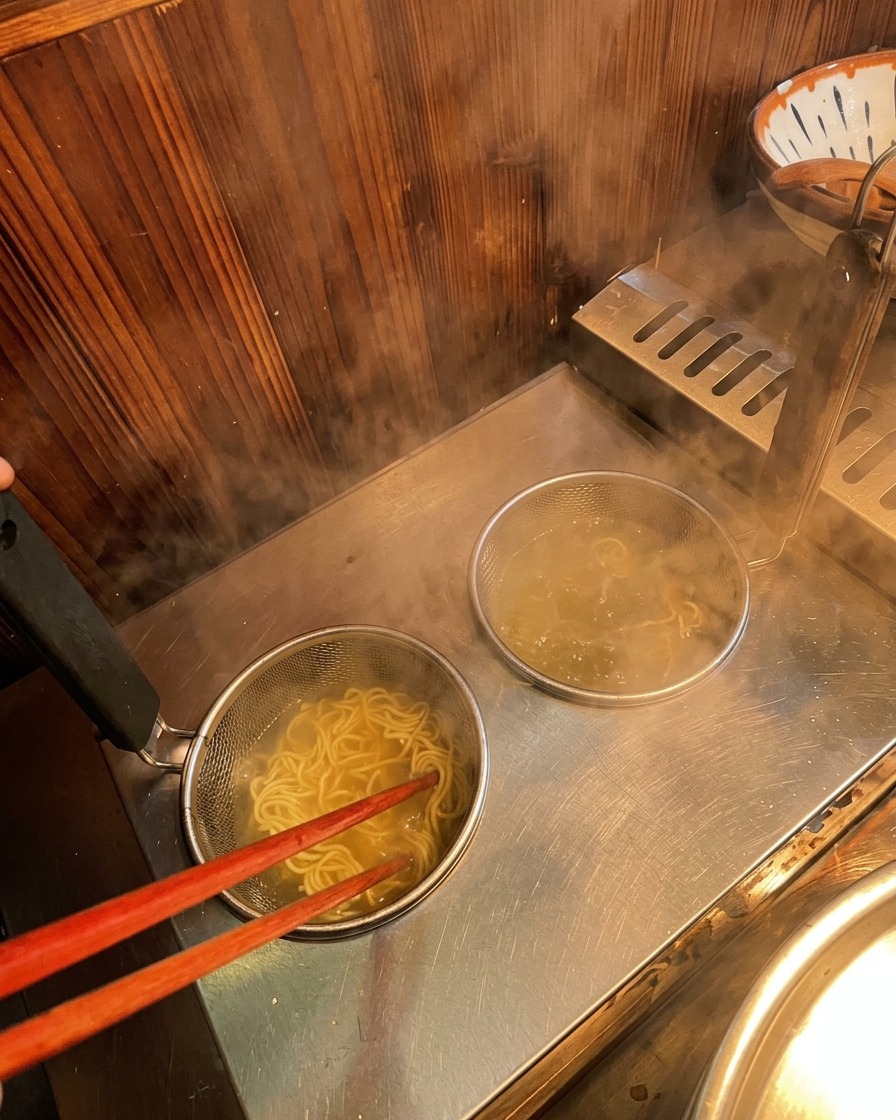
While the noodles boil, use a pair of chopsticks to gently stir them inside the basket. This crucial step prevents the noodles from sticking together and ensures they cook evenly in the boiling water.
Tip: Dont over-stir; just agitate the noodles enough to separate the individual strands right after adding them to the water. - 7Transfer noodles to broth
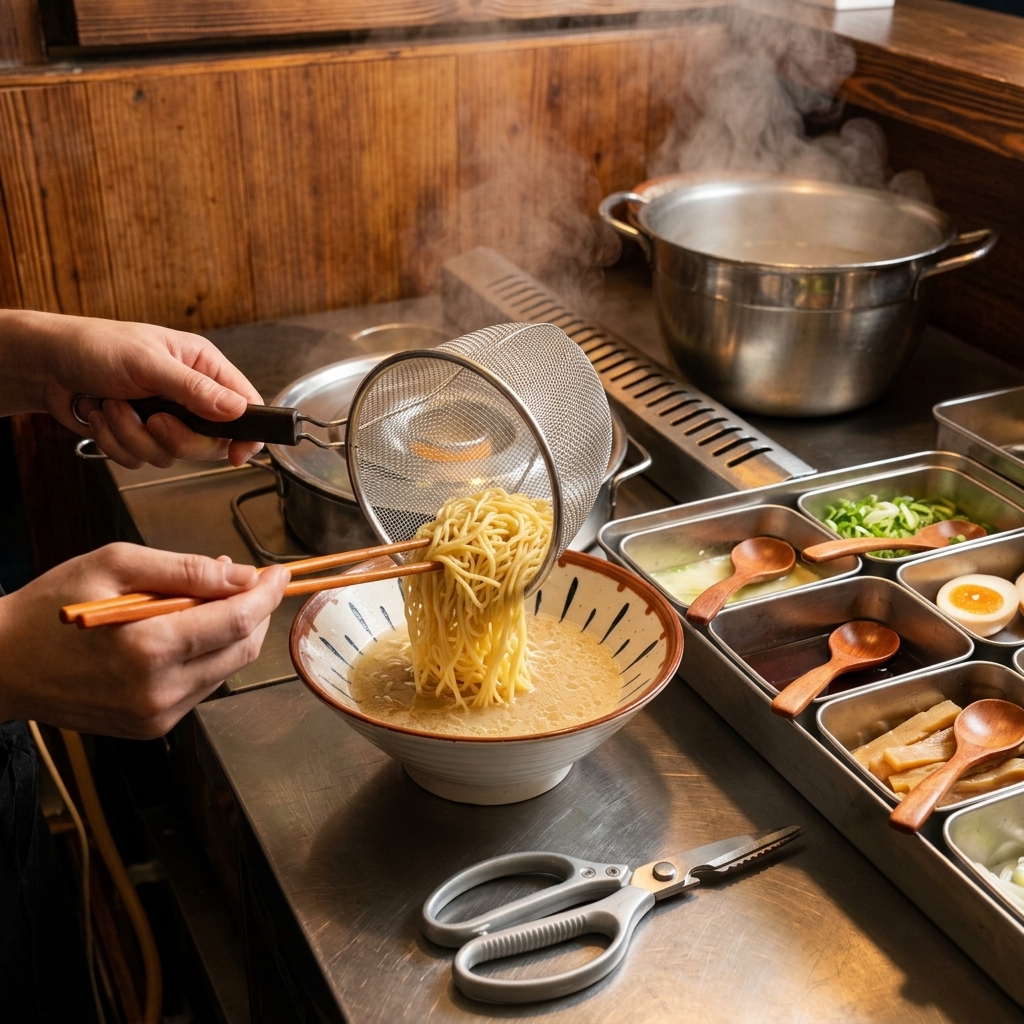
Once the ramen noodles have boiled for exactly two and a half minutes, lift the metal basket from the water and drain thoroughly. Carefully transfer the hot noodles directly into the ceramic bowl containing the seasoned broth.
Tip: Shake the noodle strainer firmly to remove as much excess cooking water as possible, ensuring your flavorful broth isnt diluted. - 8Add sweet corn
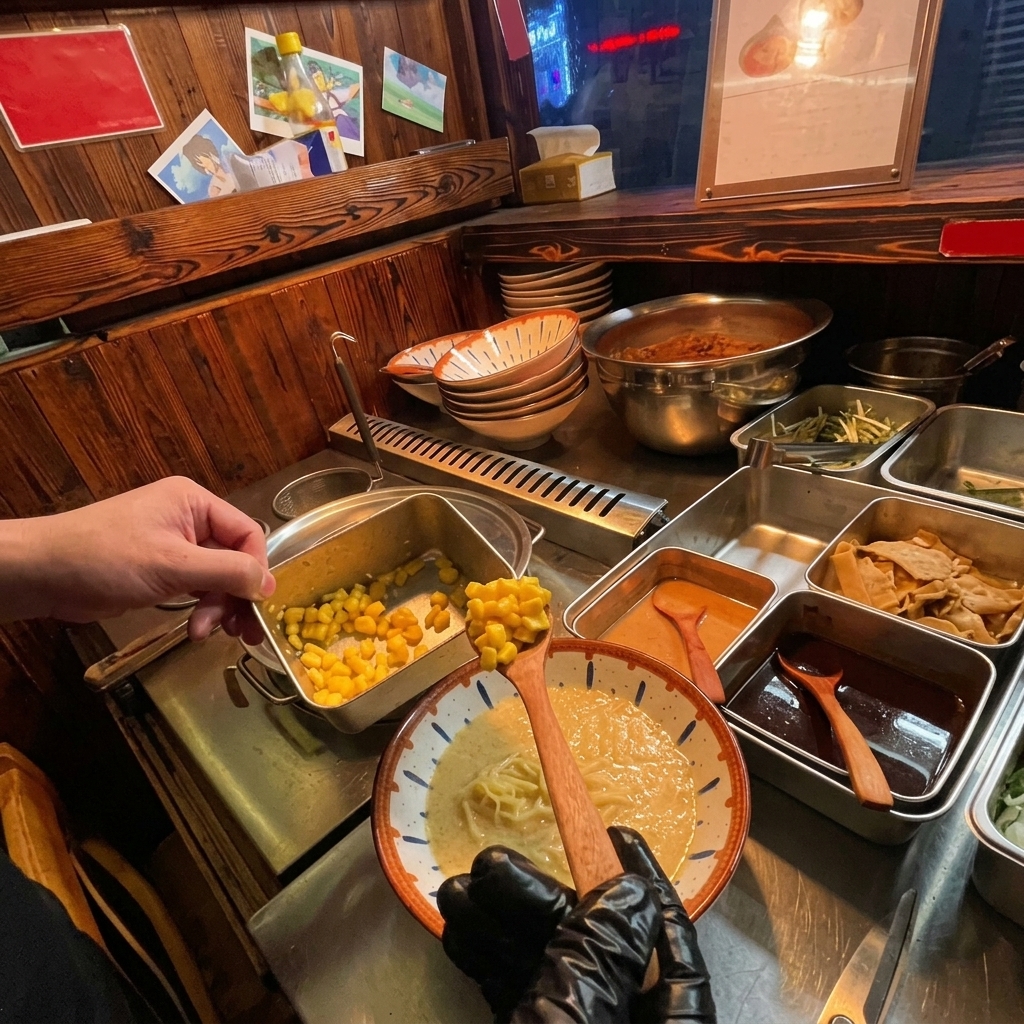
Begin assembling the ramen toppings by using a wooden spoon to place a generous scoop of bright yellow sweet corn kernels onto one side of the noodles. The natural sweetness of the corn pairs perfectly with the rich tonkotsu broth.
Tip: Keep the corn grouped tightly together near the edge of the bowl for a clean and traditional presentation. - 9Add bamboo shoots
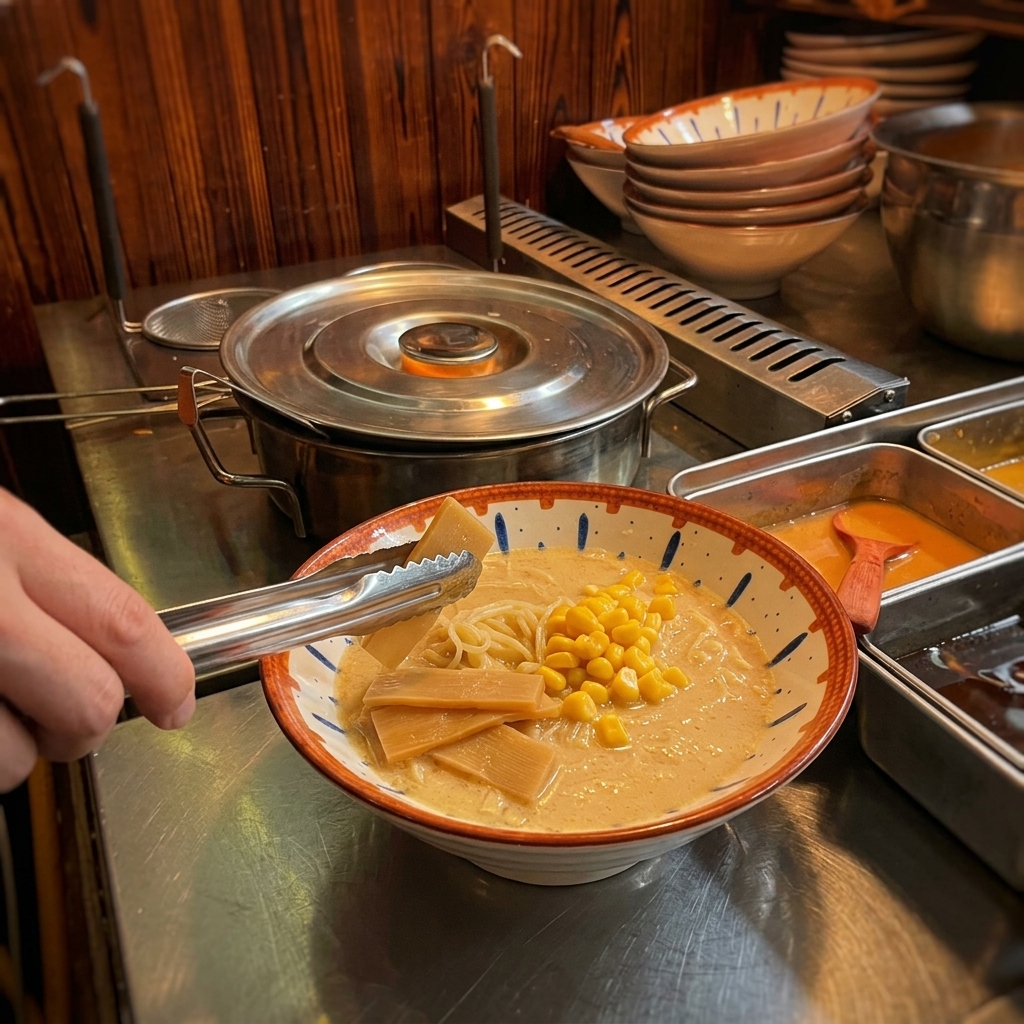
Using a pair of metal tongs, neatly arrange several slices of seasoned bamboo shoots (menma) next to the corn. The bamboo shoots add an essential crunchy texture and a slightly earthy, savory flavor to the dish.
Tip: Slightly submerge the bottom edges of the bamboo shoots into the hot broth so they begin to absorb the soups flavor. - 10Add the crab stick
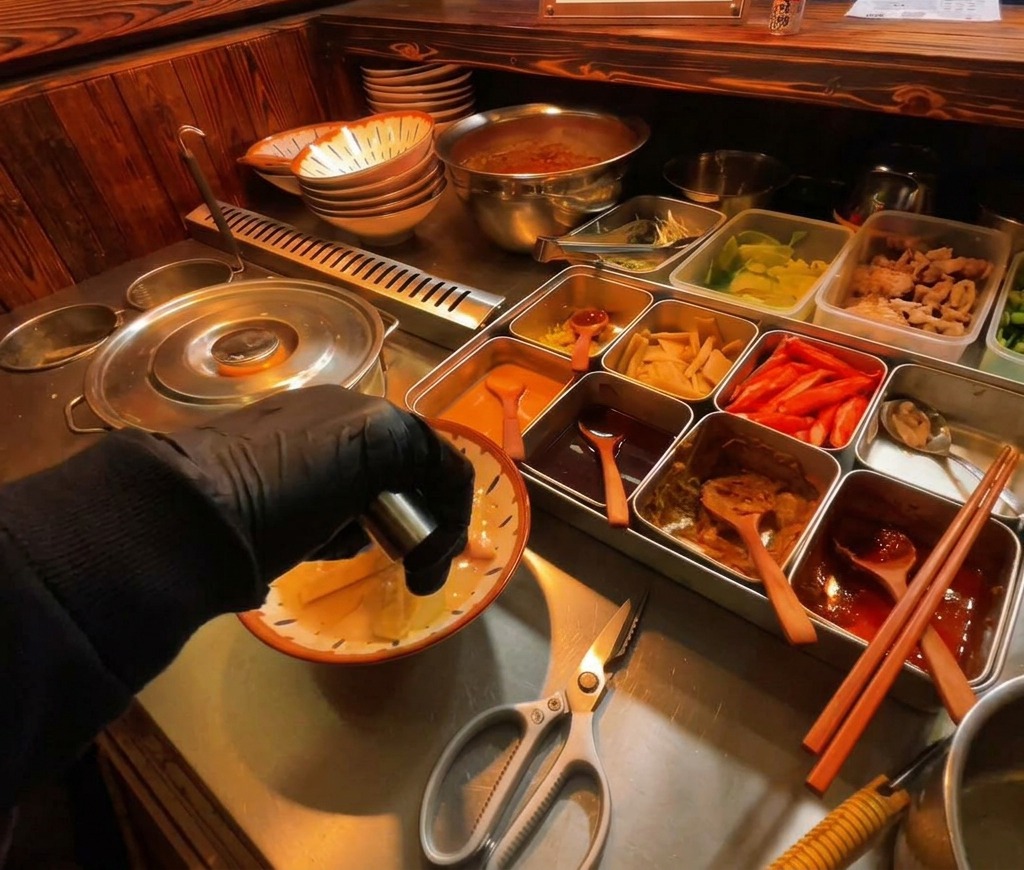
Use tongs to gently lay a piece of red and white crab stick into the bowl. This addition brings a subtle, delicate sweetness that contrasts beautifully with the savory, rich tonkotsu broth.
Tip: You can slightly shred the ends of the crab stick if you prefer it to mix more naturally with the noodles and broth. - 11Add the narutomaki
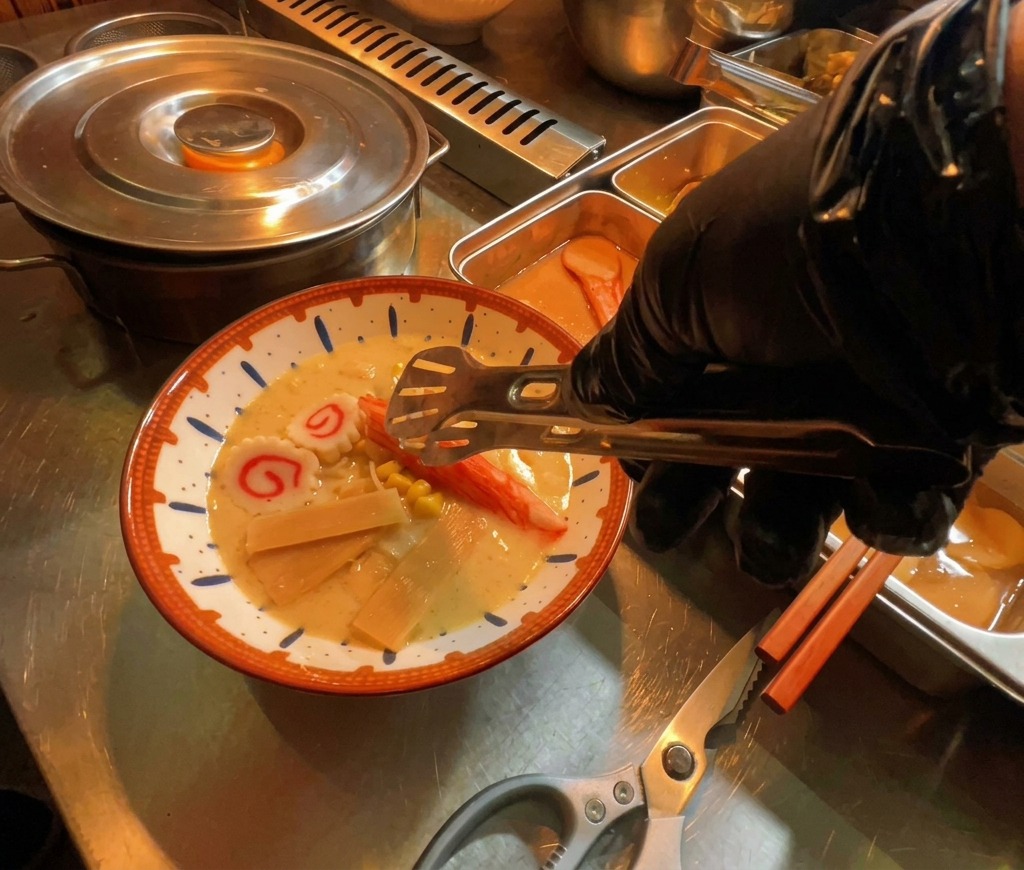
Place slices of narutomaki into the broth alongside the other toppings. This classic white fish cake with its distinct pink swirl adds a vibrant pop of color and an authentic visual touch to the ramen bowl.
Tip: Narutomaki is precooked, so it only needs to be briefly warmed by the hot broth before serving. - 12Add the cabbage leaf
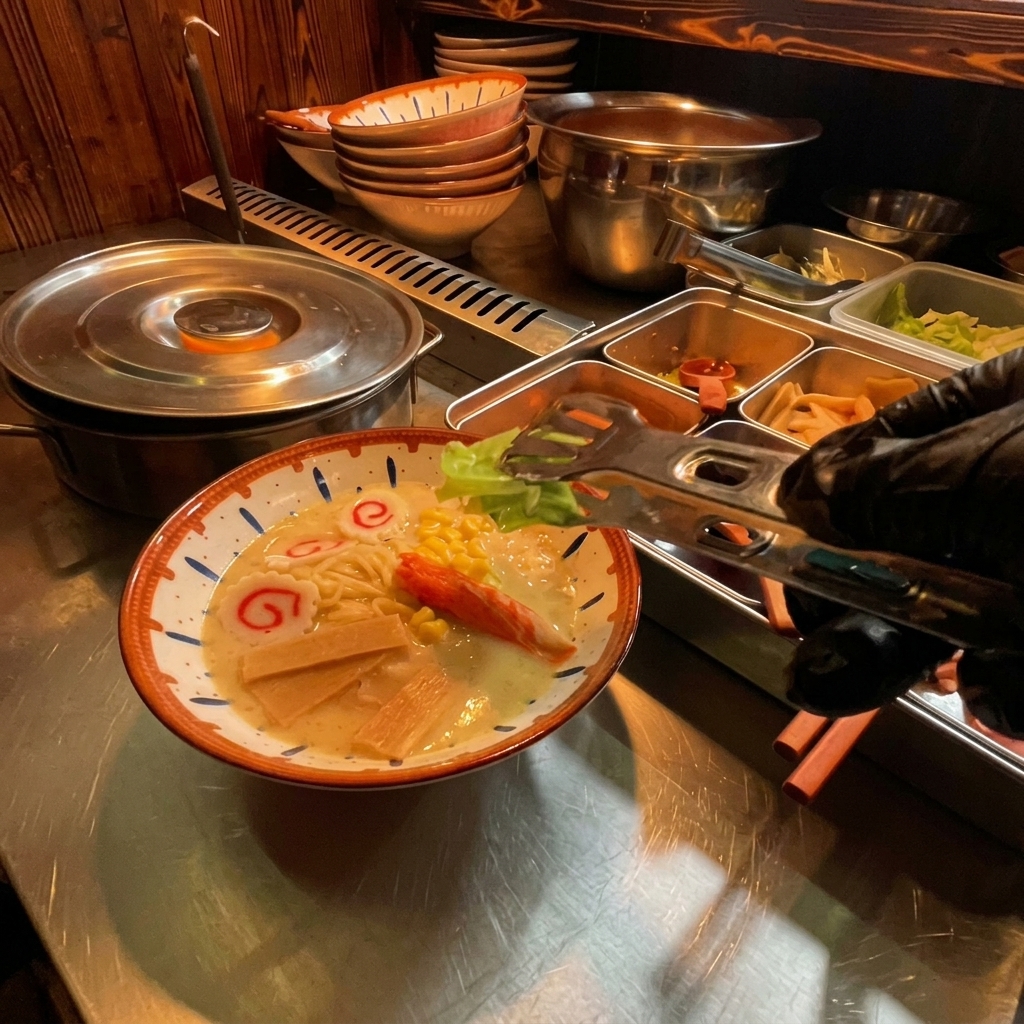
Use your tongs to gently lay a vibrant green, boiled cabbage leaf into the bowl alongside the other garnishes. The cabbage brings a fresh, mild sweetness and provides a beautiful pop of color to the final presentation.
Tip: Ensure the cabbage is lightly blanched rather than overcooked, so it retains its vibrant green hue and a slight crunch. - 13Arrange the torched chashu
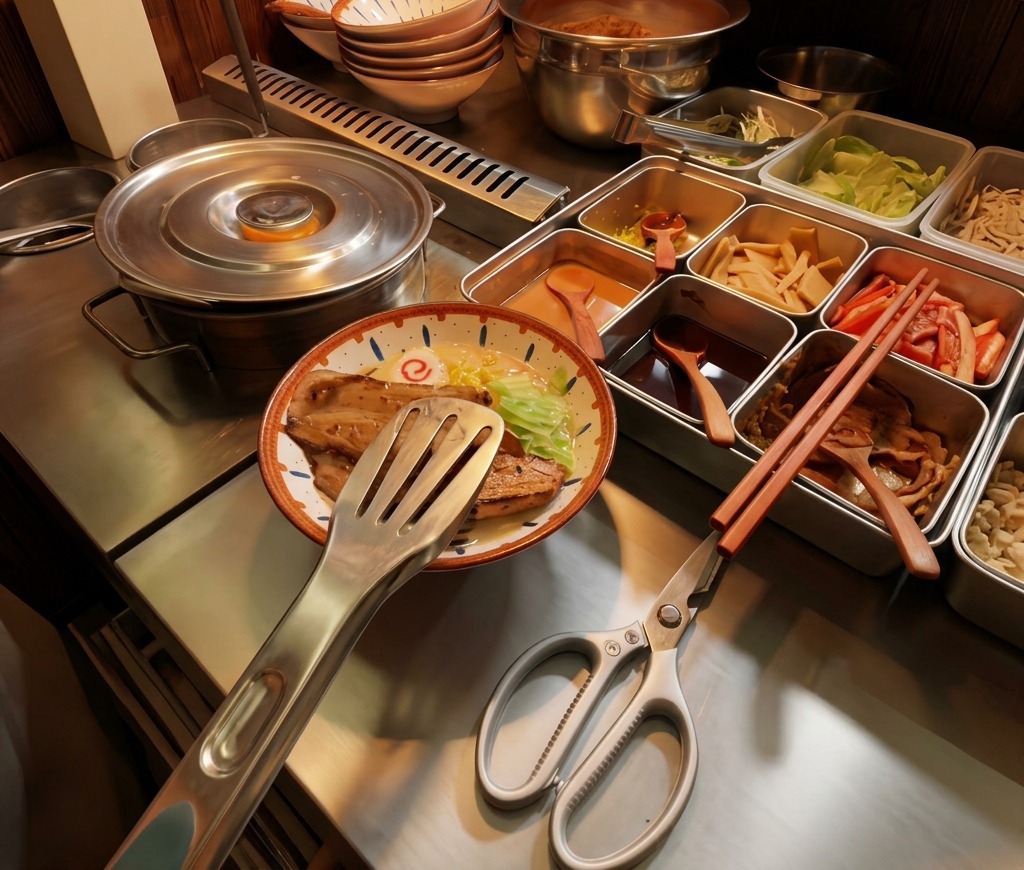
Carefully lay the thick-cut, torched chashu pork slices on top of the noodles. The deeply charred edges from the blowtorch will instantly impart a wonderful smoky aroma to the broth as it rests in the bowl.
Tip: Try to keep the chashu resting slightly above the noodles so it doesnt completely submerge and lose its crispy, torched texture. - 14Drizzle black garlic oil
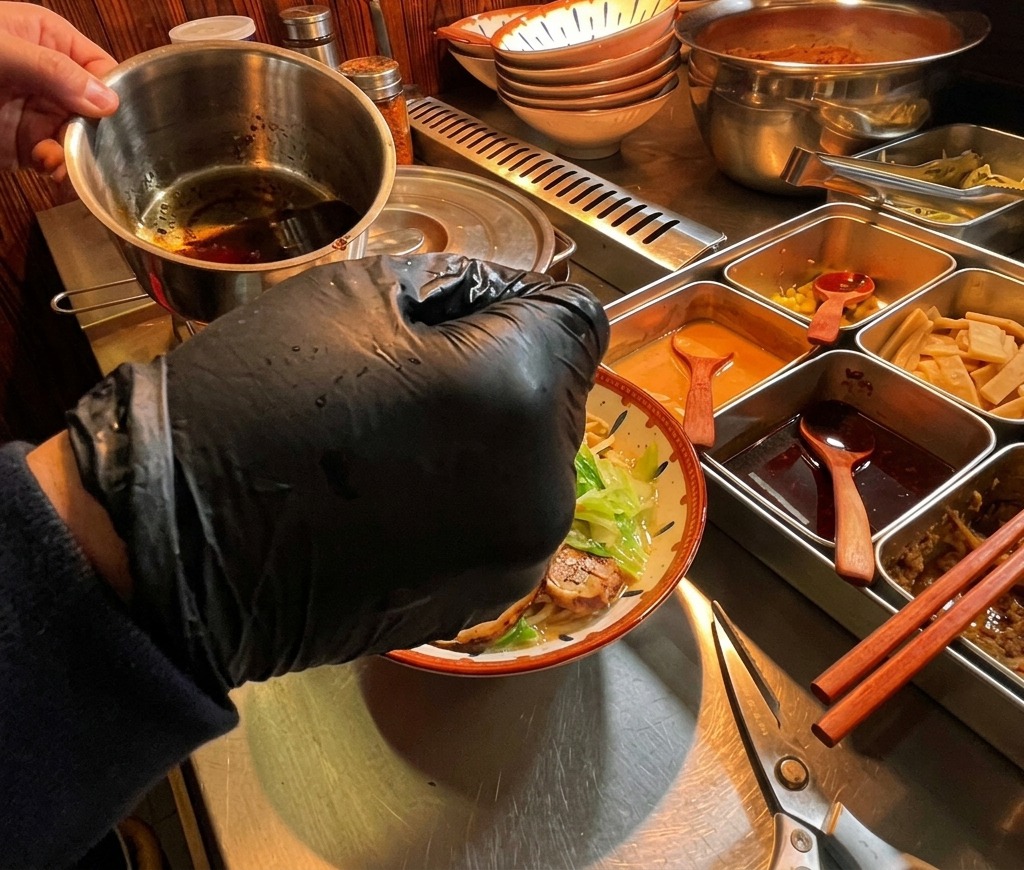
Pour the fragrant, viscous black garlic oil directly over the broth, noodles, and pork. This distinctive dark oil instantly elevates the dish, adding a deep, roasted garlic flavor that characterizes this specific style of ramen.
Tip: Black garlic oil is highly potent. Drizzle it evenly across the surface rather than pouring it all in one spot to ensure every spoonful has a balanced flavor. - 15Tuck in the nori seaweed
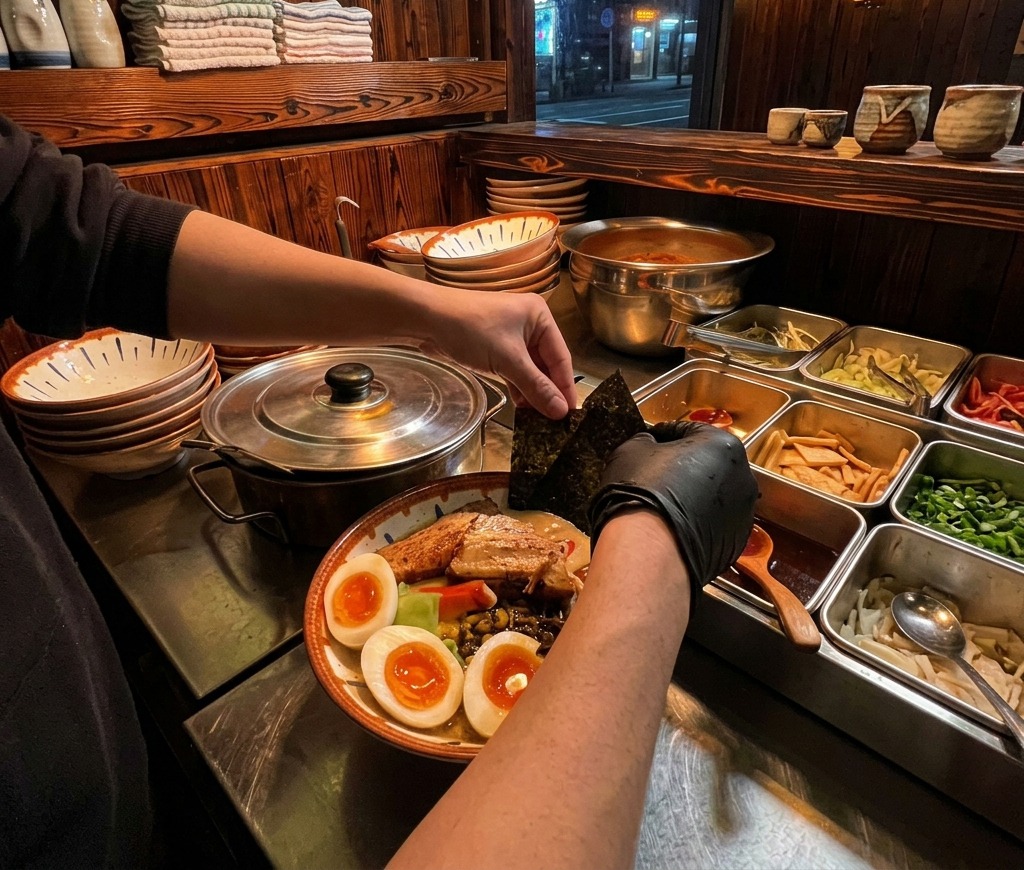
Take a square sheet of dark green nori seaweed and tuck it gently into the edge of the bowl, positioning it just behind the other toppings. The nori will soften slightly in the broth, adding a subtle ocean flavor to the rich soup.
Tip: Add the nori at the very last moment right before serving to keep it as crisp as possible.