Simple Tonkotsu Pork Belly Ramen
Learn how to make an incredibly simple and delicious tonkotsu-style pork belly ramen at home with a quick pan-fried chashu and rich dashi broth.
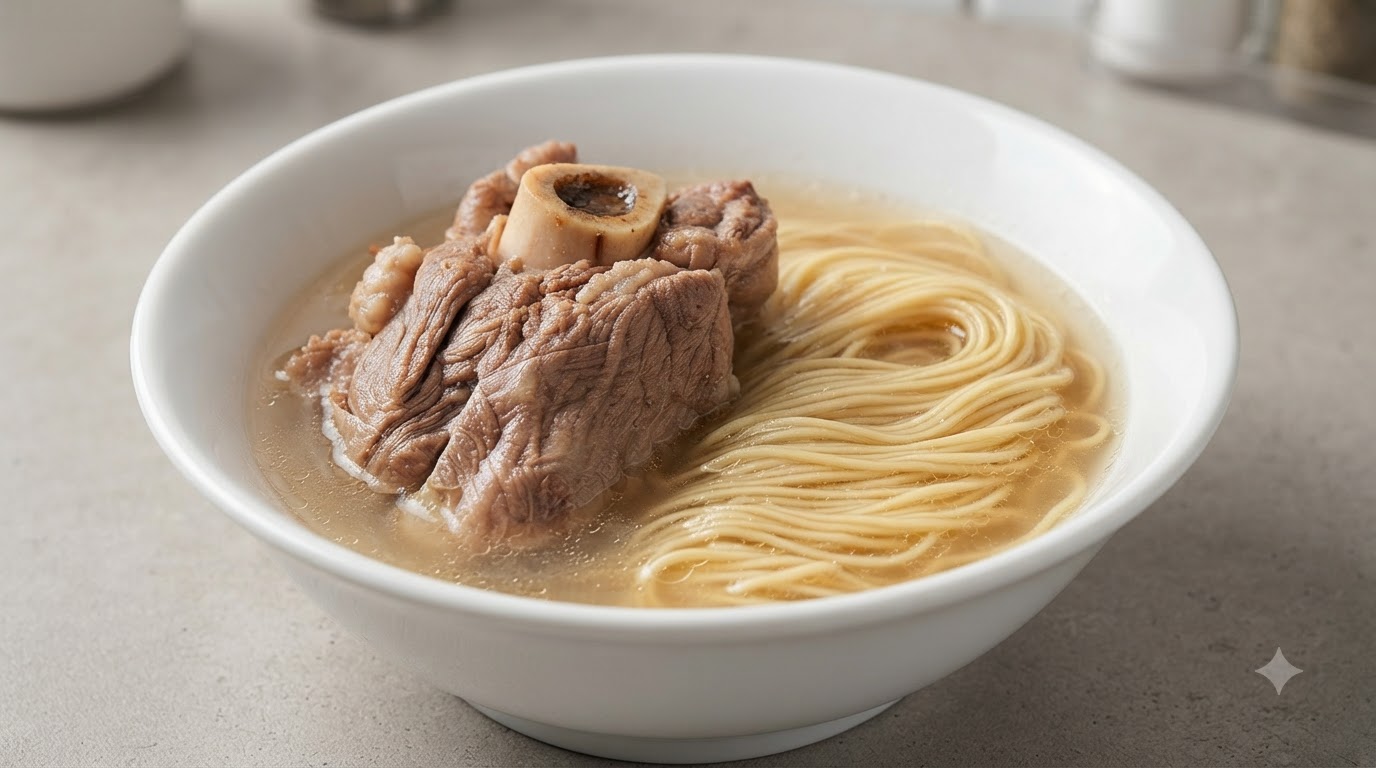
Tonkotsu ramen is traditionally celebrated for its rich, cloudy pork bone broth that requires hours of simmering. This simplified home-style version captures that deeply savory, comforting essence much faster by pan-frying pork belly slices to render rich fats directly into a quick dashi and soy-based soup base. Finished with tender ramen noodles and crisp green onions, it delivers restaurant-quality satisfaction with minimal effort.
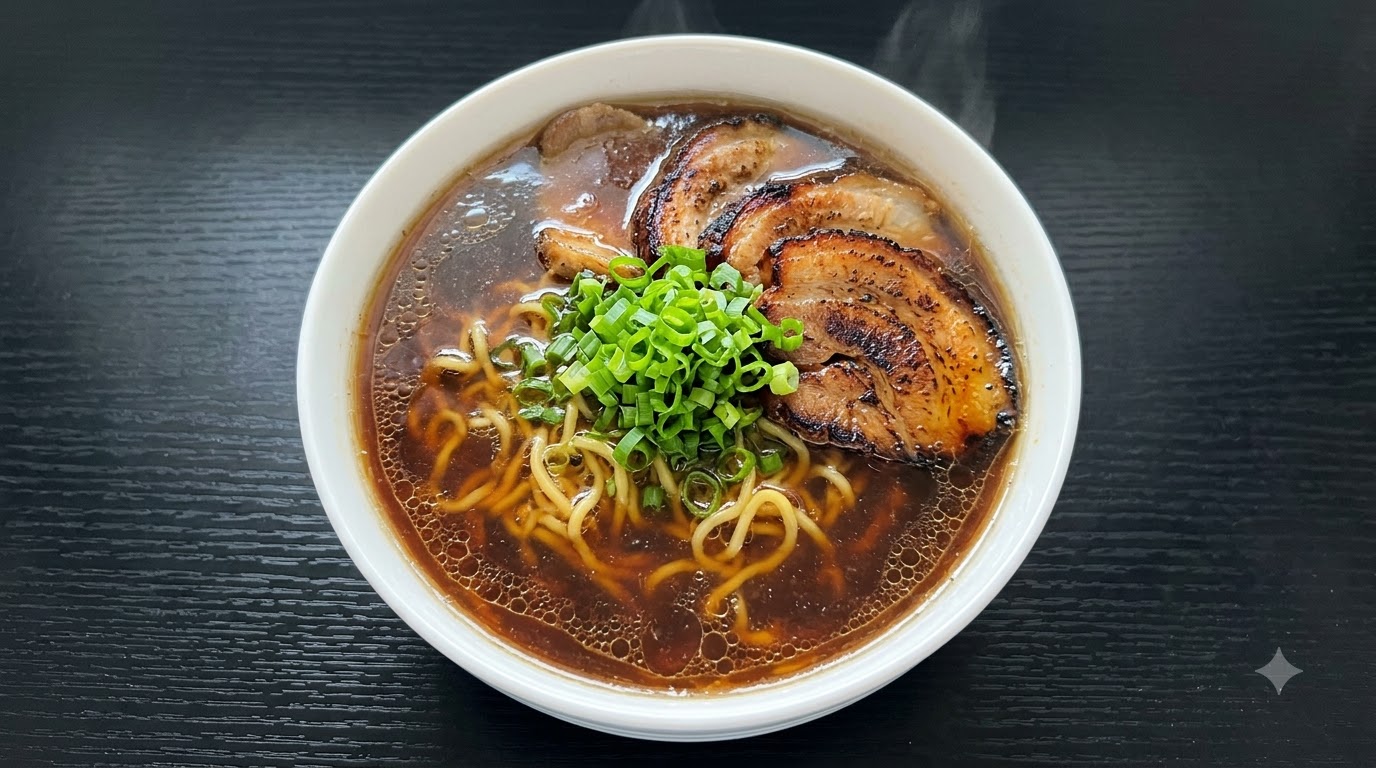
Ingredients
- 4 slices pork belly
- to taste salt
- to taste black pepper
- 300 ml water
- 1.5 tbsp light soy sauce
- 2 tsp white dashi broth
- 1 tbsp mirin
- 1 tbsp cooking sake
- 1 tsp garlic paste
- 1 tsp sesame oil
- 1 tsp white sugar
- 1 serving ramen noodles
- to taste green onions
- a dash MSG
Instructions
- 1Place Pork Belly in Pot
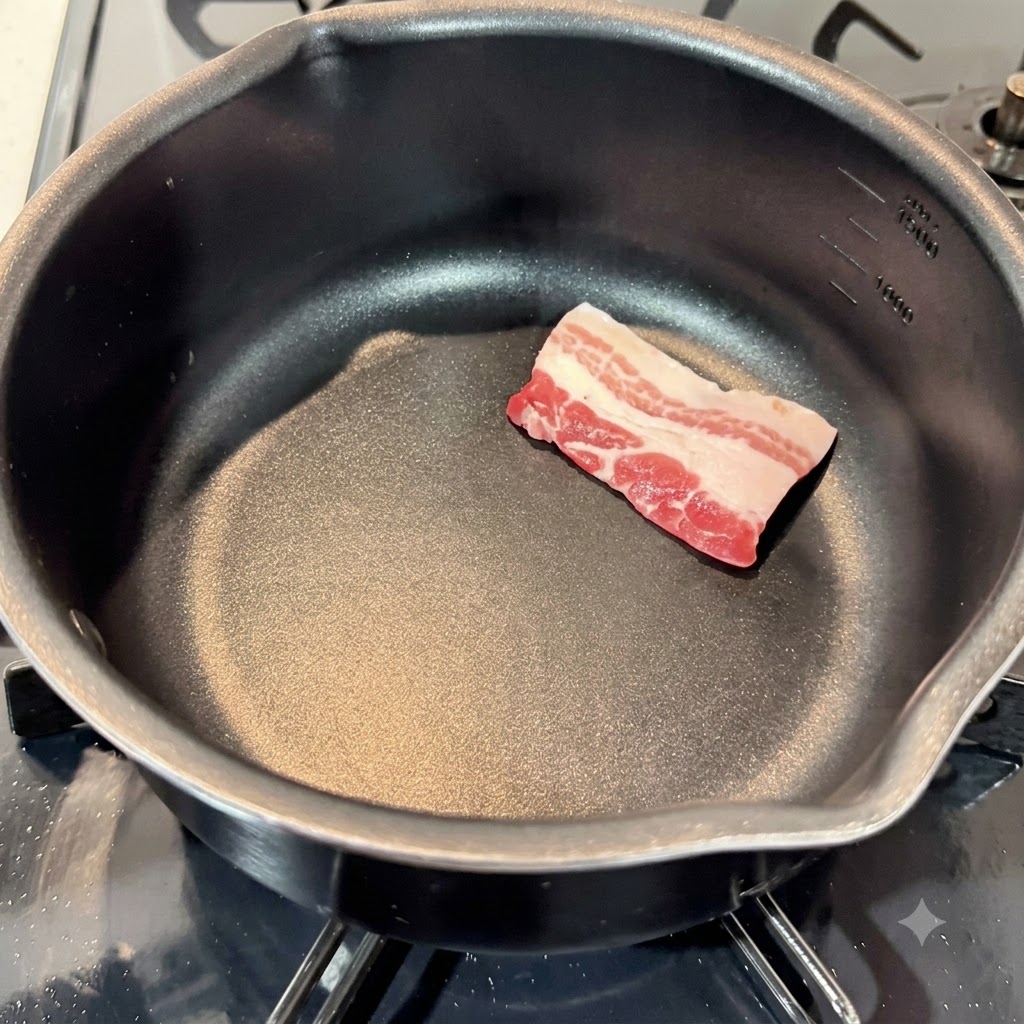
Take four slices of raw pork belly and place them directly into a pot to begin pan-frying.
Tip: Ensure the pot is clean and dry before adding the pork belly. - 2Season the Pork Belly
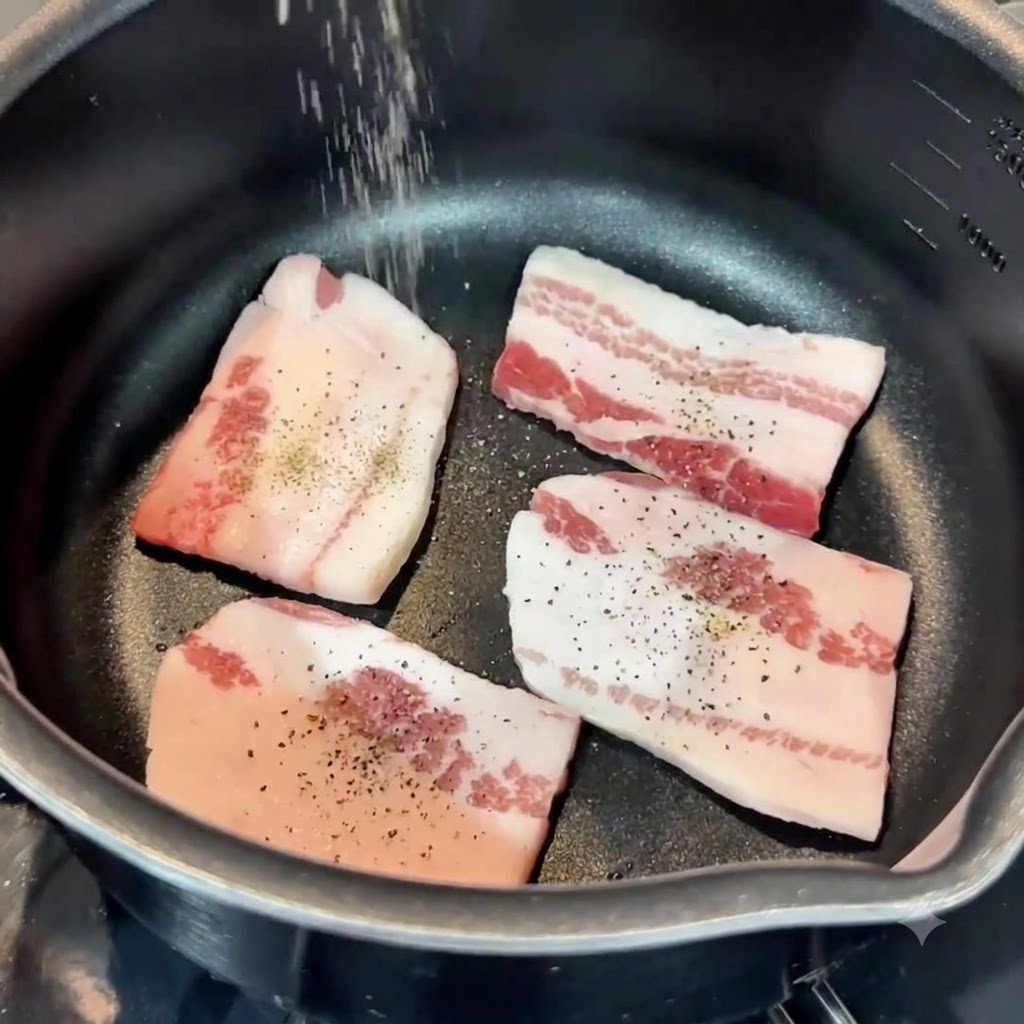
Sprinkle salt and black pepper onto just one side of the pork belly slices while they are in the pan.
Tip: Seasoning just one side is sufficient since the flavors will meld during cooking and simmering. - 3Flip and Brown the Pork Belly

Pan-fry the pork belly slices until they develop a nice charred aroma and brown on both sides. Use chopsticks to flip them over.
Tip: Do not worry if a lot of fat is rendered out during this process, as it adds rich flavor. - 4Turn Off Heat and Add Water
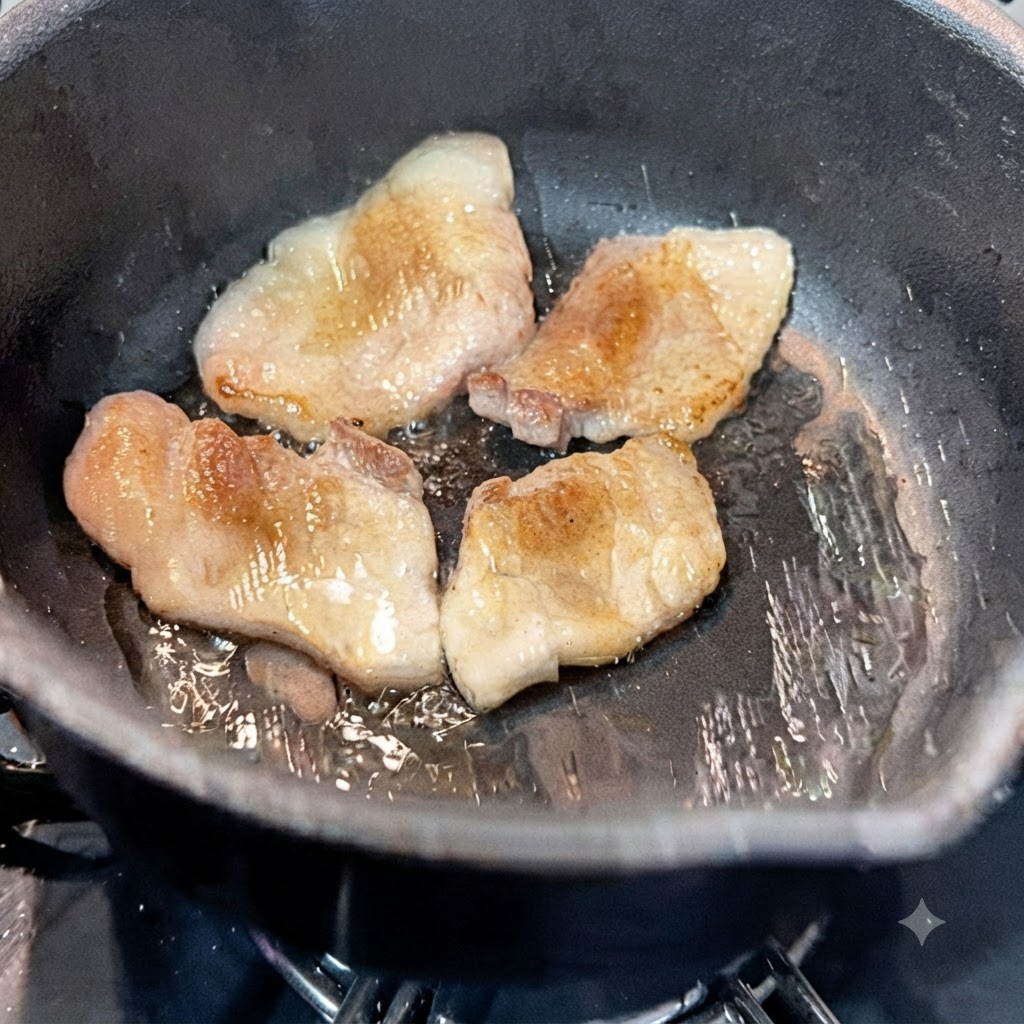
Turn off the heat after pan-frying the pork belly, then pour in 300cc of water into the pot.
Tip: Turning off the heat prevents severe splattering when the liquid meets the hot pan and rendered fat. - 5Add Soy Sauce and White Dashi
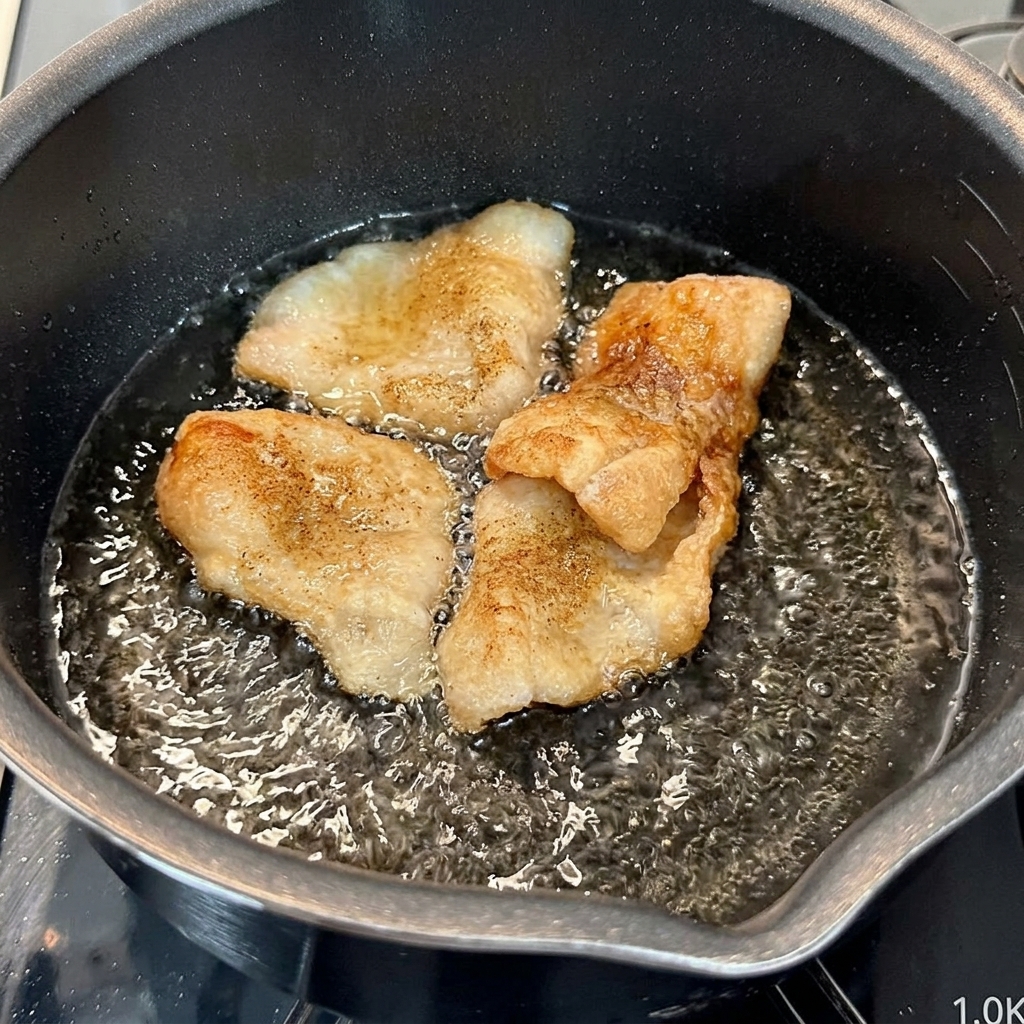
Pour 1.5 tablespoons of light soy sauce and 2 teaspoons of white dashi broth into the pot with the water and pork belly.
Tip: White dashi provides a clean, umami-rich Japanese soup foundation. - 6Pour Mirin and Sake
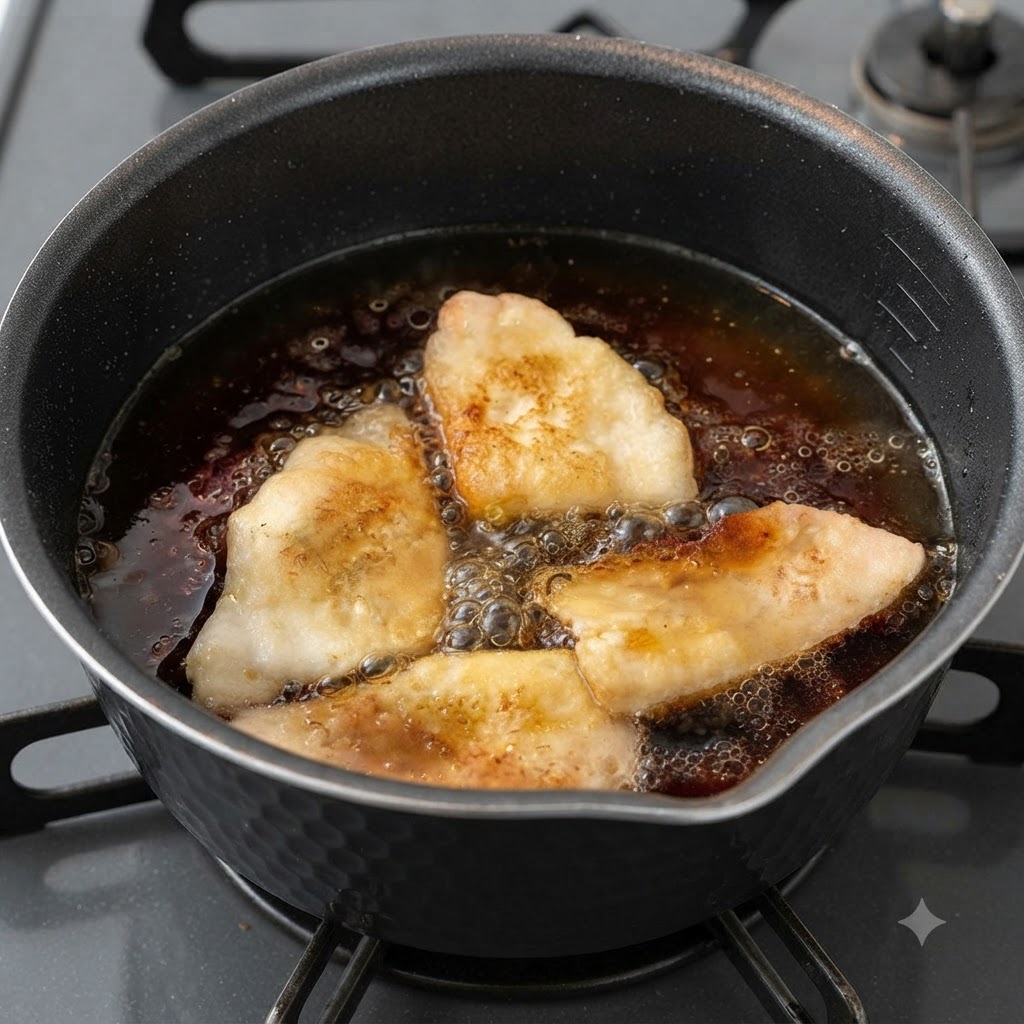
Add 1 tablespoon of mirin and 1 tablespoon of cooking sake into the simmering broth along with the other seasonings.
Tip: Simmer over low heat for 3 minutes afterward to complete the flavorful soup base. - 7Add Aromatics and Seasonings
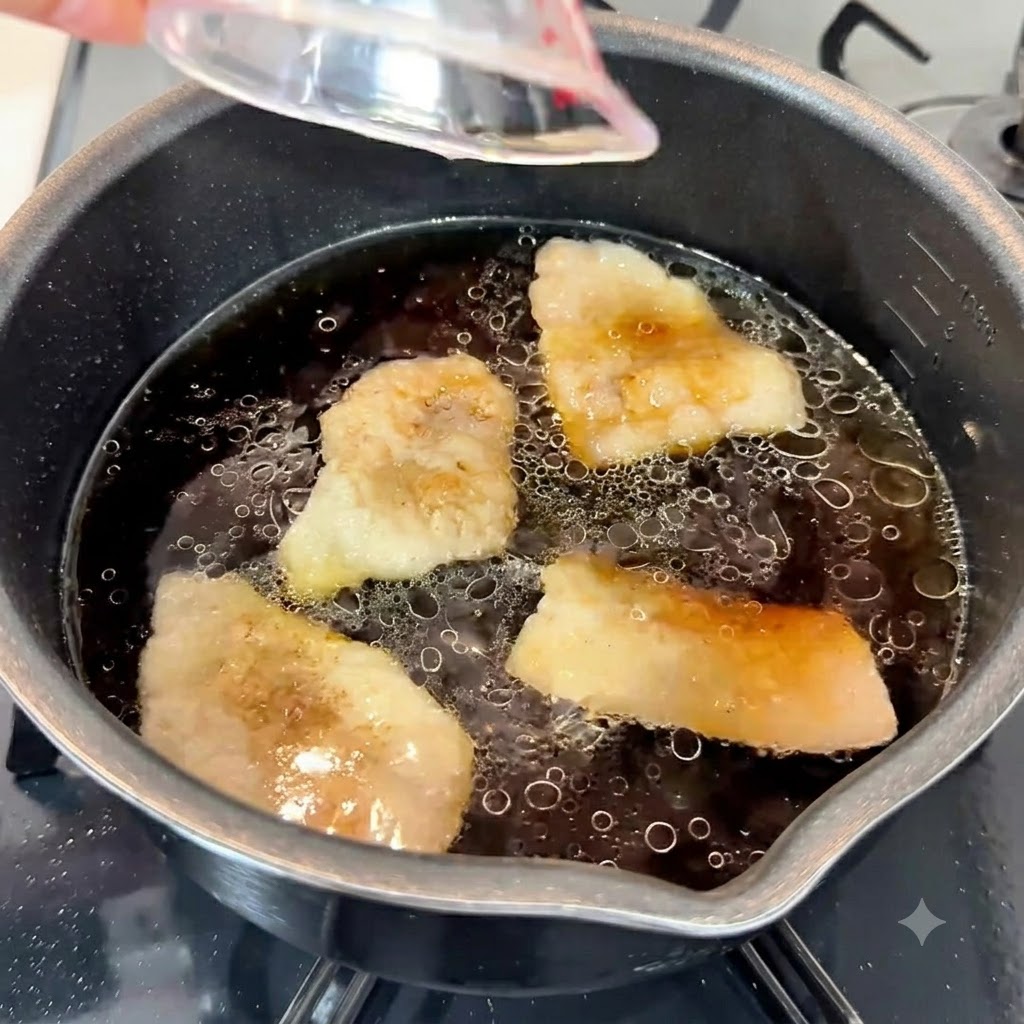
Turn off the heat and add garlic paste, sesame oil, and white sugar into the pot with the water, soy sauce, white dashi, mirin, and cooking sake to build a rich flavor base.
Tip: Simmer gently over low heat for about 3 minutes to let all the flavors meld together smoothly. - 8Combine Noodles and Pork Belly
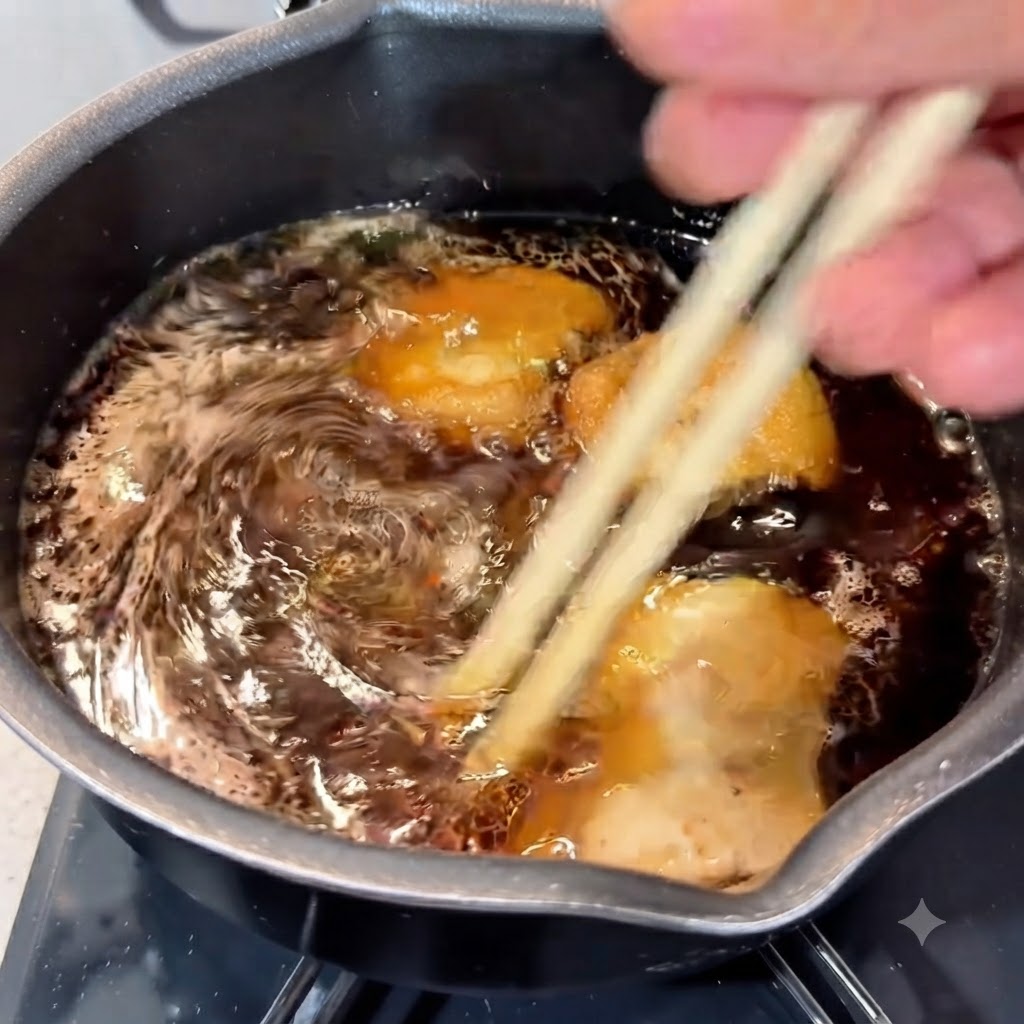
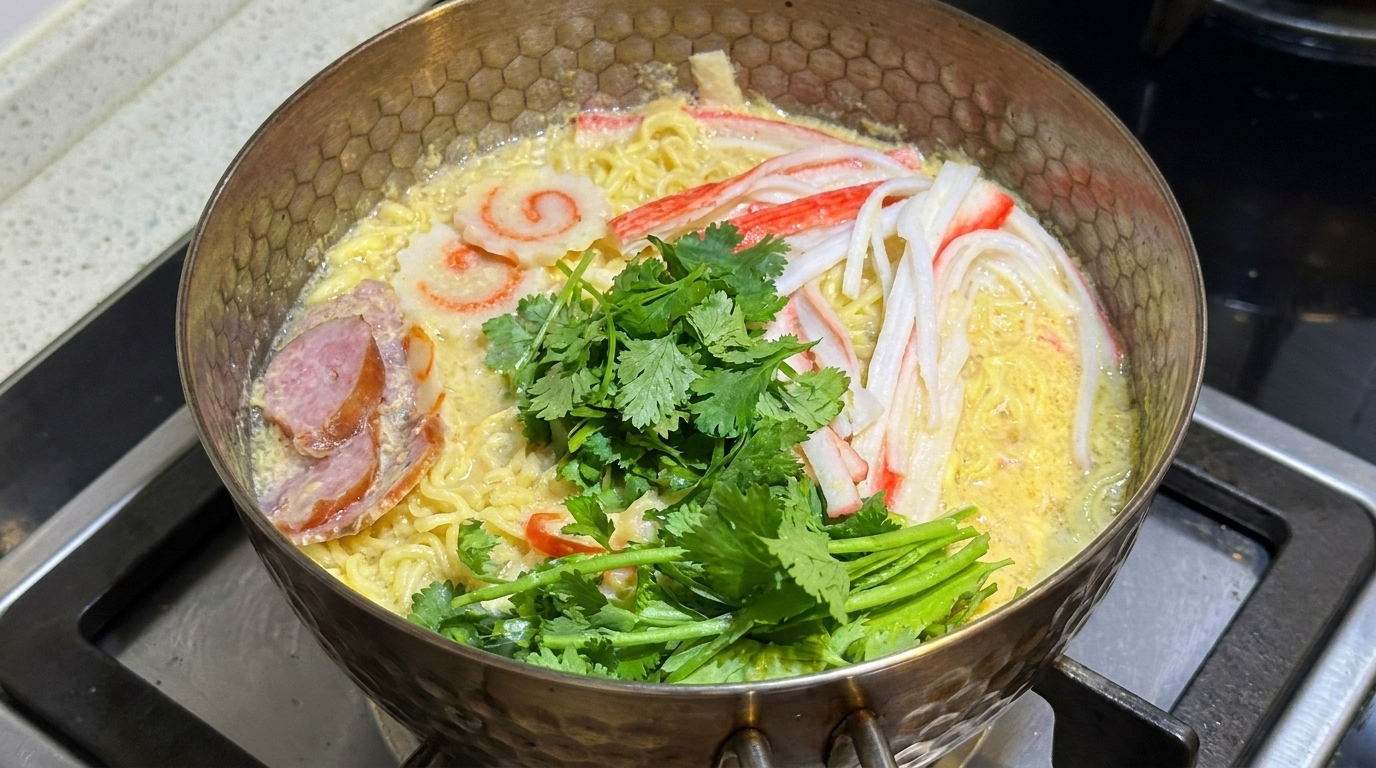
Add your favorite cooked ramen noodles directly into the simmering soup base along with the pan-fried pork belly pieces using chopsticks.
Tip: Ensure the noodles are thoroughly mixed into the broth so they absorb all the rich seasonings.