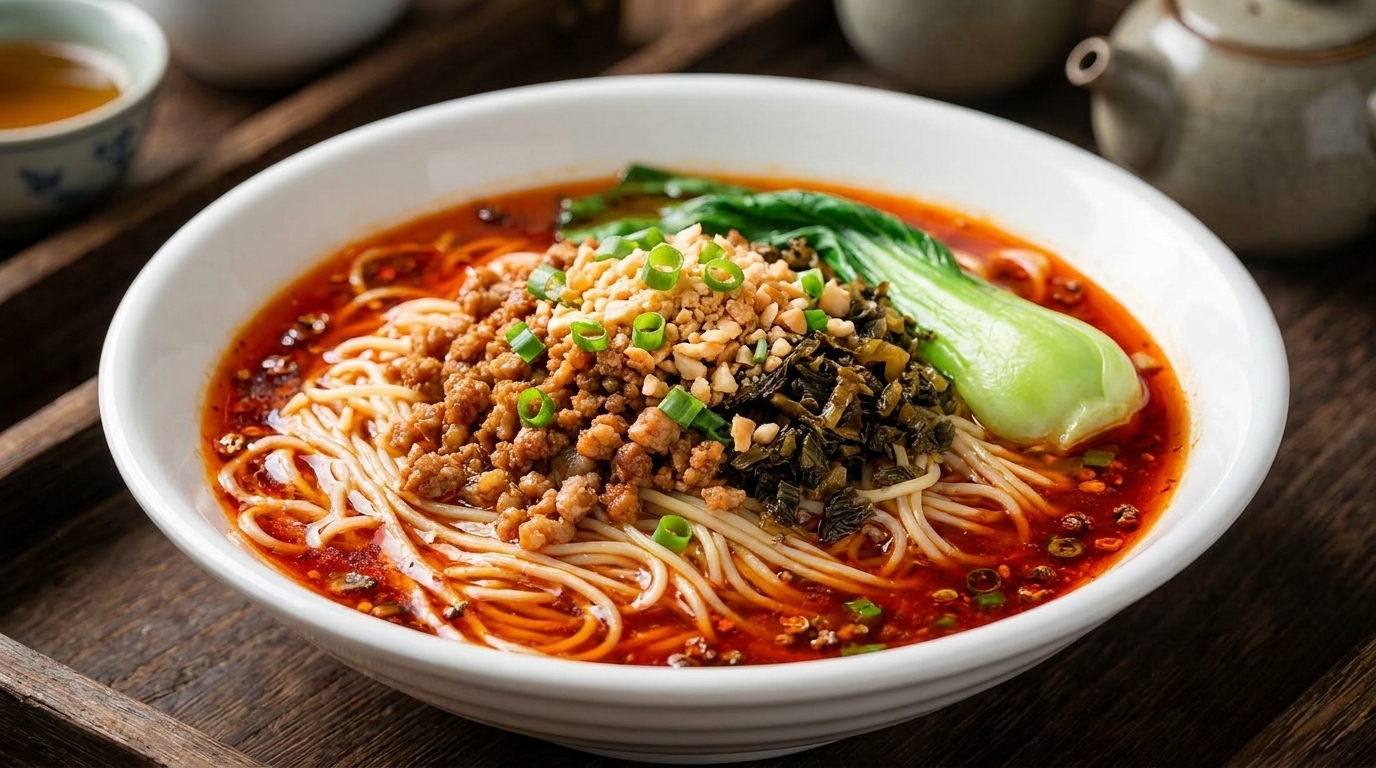
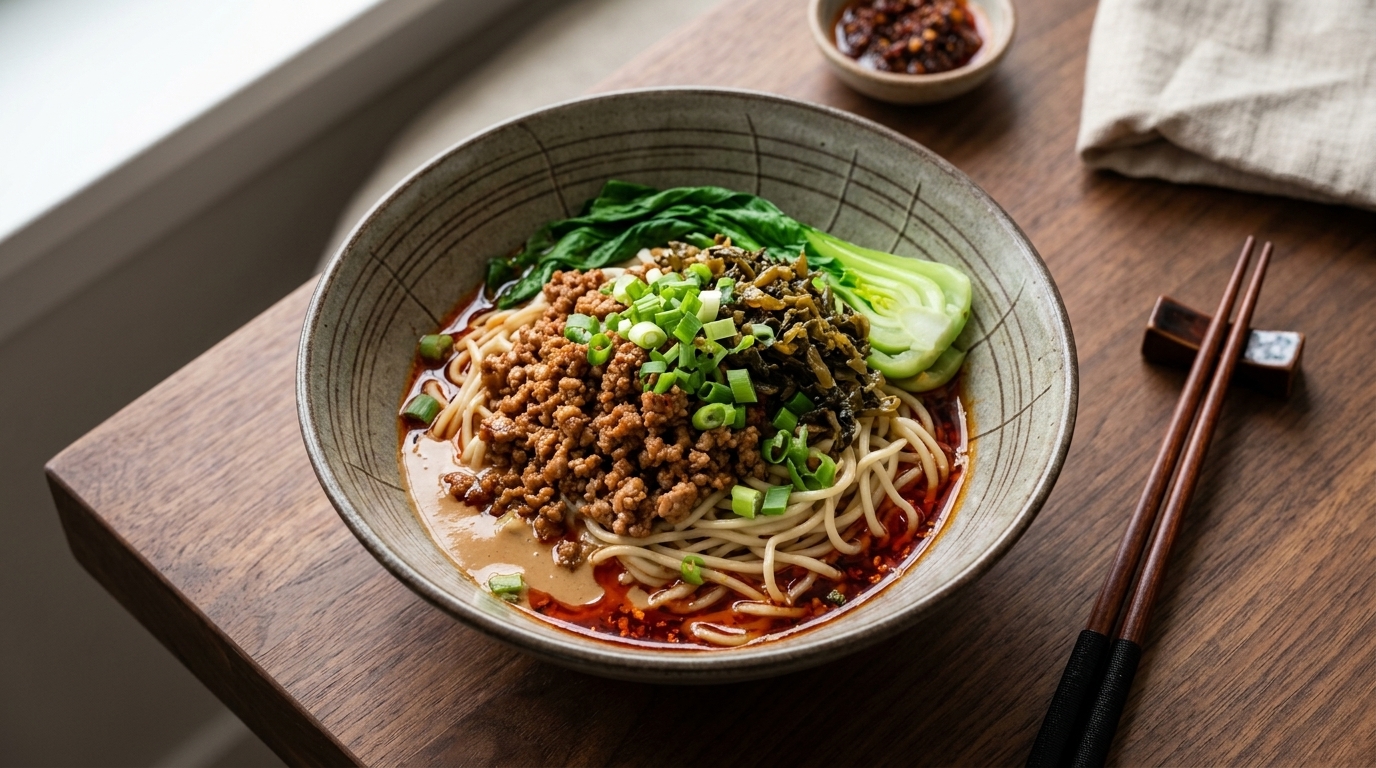
Authentic Sichuan Dandan Noodles (Dandanmian)
Experience the numbing heat of Sichuan with these iconic noodles—featuring a savory Yibin Yacai pork topping and a creamy, spice-laden sesame sauce base.
Dandan noodles are a cornerstone of Chengdu street food culture, originally named for the carrying poles called dan dan used by walking vendors. This dish is a masterclass in balance, pairing the intense ma-la heat of chili oil and Sichuan peppercorns with the nutty richness of toasted sesame paste.
Ingredients
- 250 g minced pork (60% lean, 40% fat)
- 400 g fresh thin wheat noodles
- 50 g Yibin Yacai (preserved sprout vegetables)
- 2 tbsp cooking oil
- 1 tbsp minced ginger
- 1 tbsp minced garlic
- 2 tbsp light soy sauce
- 1 tsp dark soy sauce or caramel color
- 1 tsp Sichuan peppercorn powder
- 1 tsp thirteen-spice powder
- 2 tbsp sesame paste
- 2-3 tbsp Sichuan chili oil
- 1 tsp vine pepper oil
- to taste chopped green onions
Instructions
- 1Start with the meat
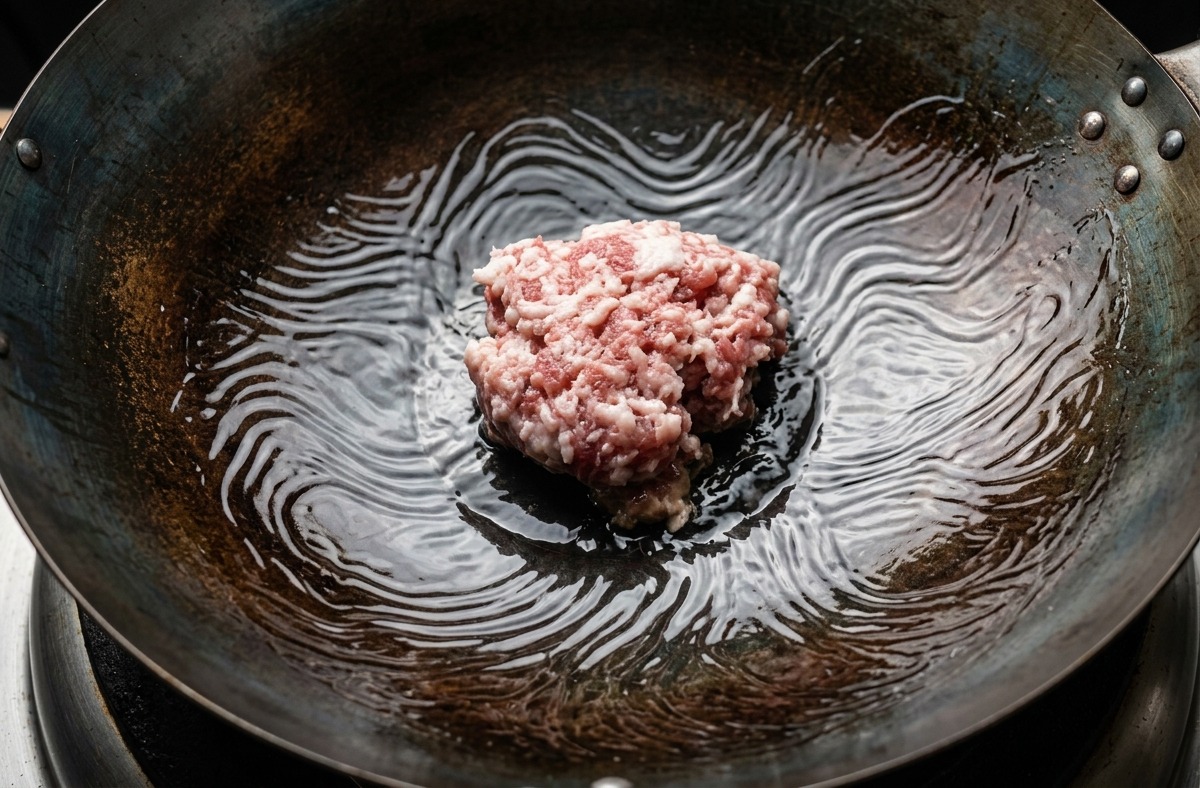
Place the minced pork into a wok containing a small amount of cold oil. For the most authentic flavor and texture, use meat with a 6:4 fat-to-lean ratio. Starting with cold oil helps the meat grains separate more easily and prevents them from clumping as the temperature rises.
Tip: A higher fat content ensures the meat topping remains moist and flavorful after it has been stir-fried until dry and fragrant. - 2Stir-fry until separated
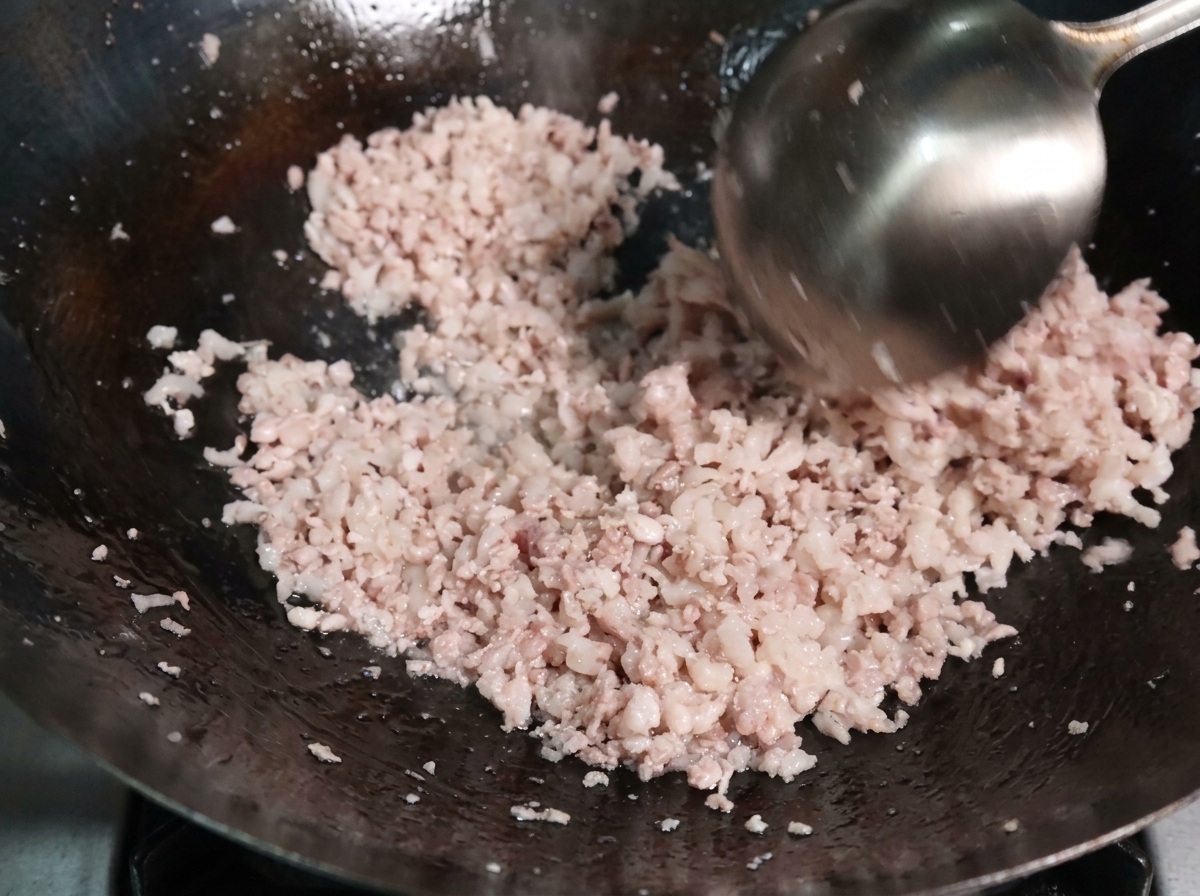
Increase the heat to high and begin stir-frying the pork immediately. Use a ladle or spatula to break the meat apart into distinct, individual grains. Continue this process until the meat is no longer raw and has completely separated into uniform particles.
Tip: Vigorous and constant stirring is necessary at this stage to achieve the signature granular texture required for Dandan noodles. - 3Add the aromatics
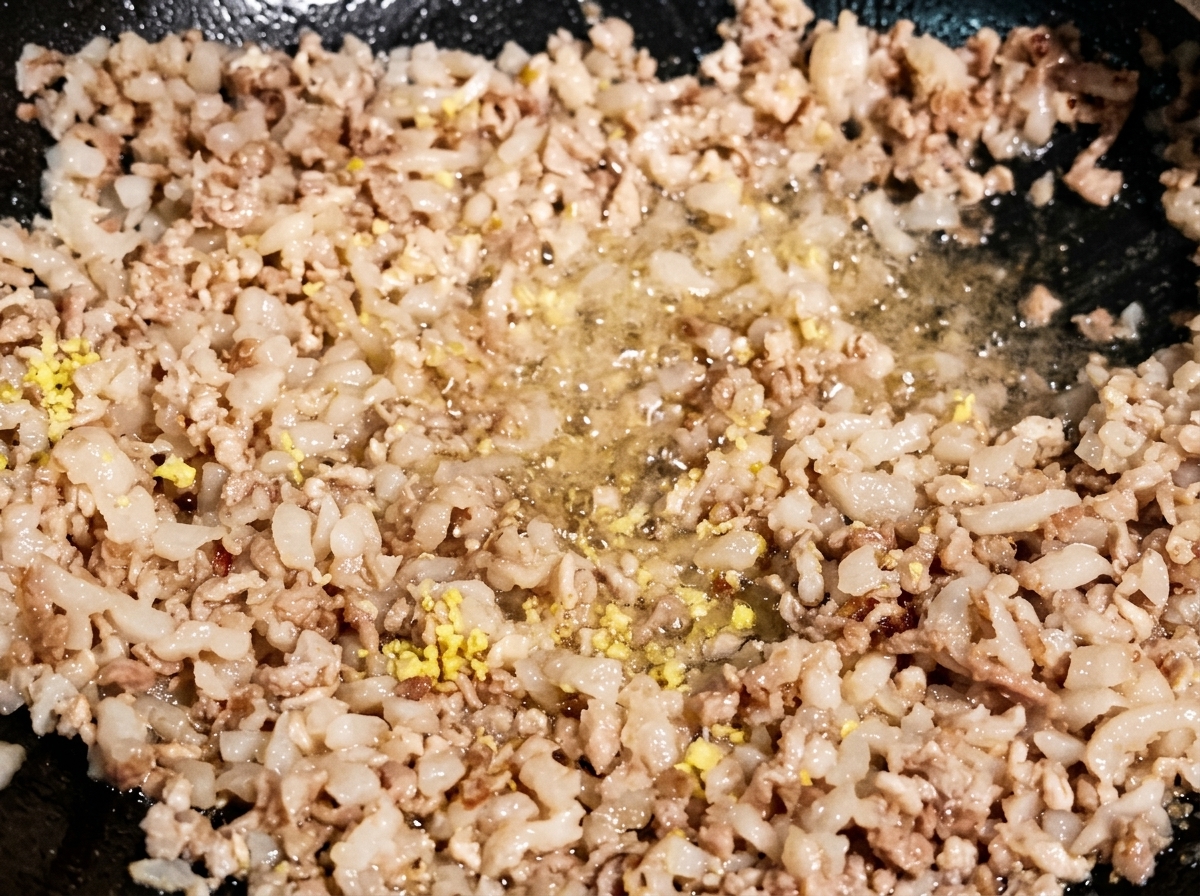
Once the minced meat has been stir-fried until the water has evaporated and the oil runs clear, add the minced ginger and garlic. Continue to stir-fry over medium-low heat until the aromatics are fragrant. This step infuses the meat with a foundational layer of flavor before adding the liquid seasonings.
Tip: Be careful not to burn the garlic; stir-fry just until you can smell its aroma to avoid any bitterness in the final topping. - 4Season with soy sauce
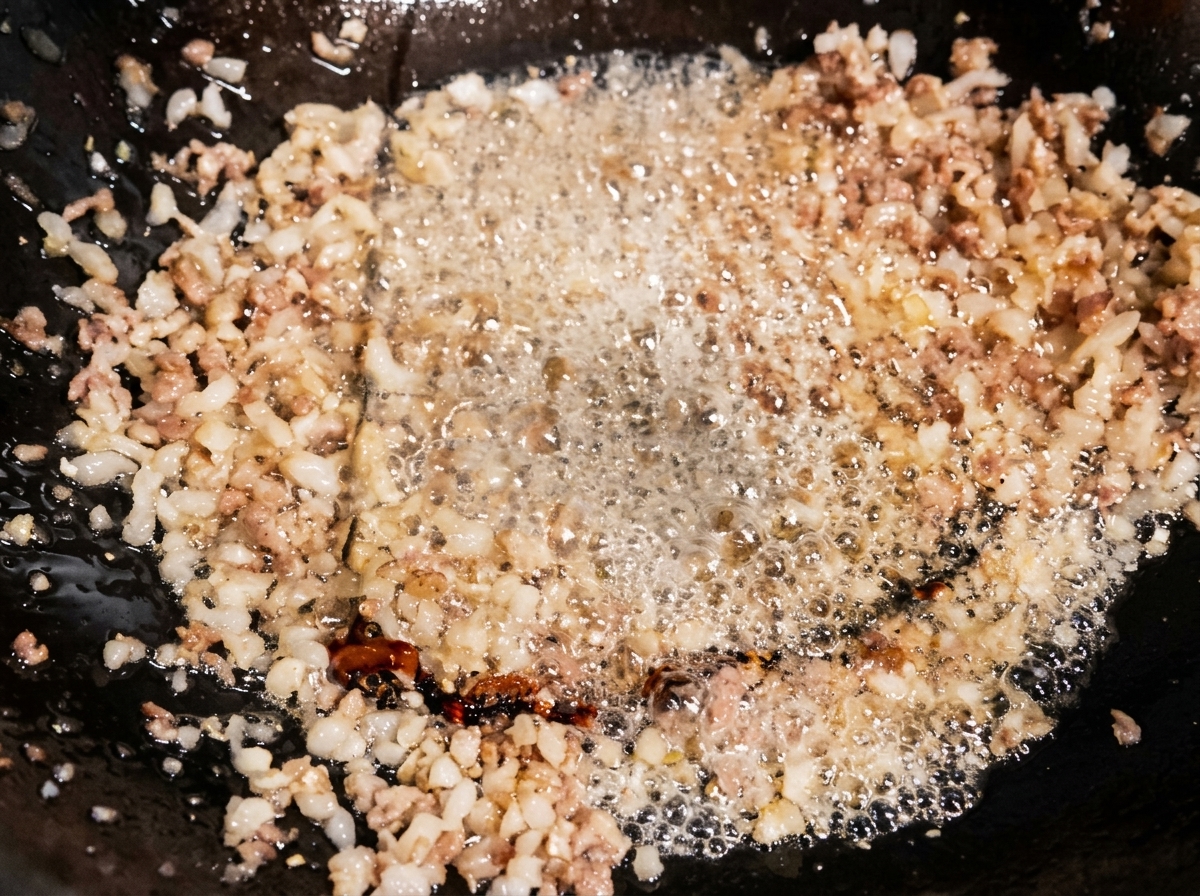
Once the aromatics have been added and the oil in the wok becomes clear, pour in the light soy sauce. Stir-fry quickly so the meat absorbs the savory seasoning evenly. This builds the initial layer of saltiness and gives the meat a light golden hue.
Tip: Wait until the water from the meat has evaporated completely before adding liquid seasonings to ensure they are absorbed effectively. - 5Enhance the color
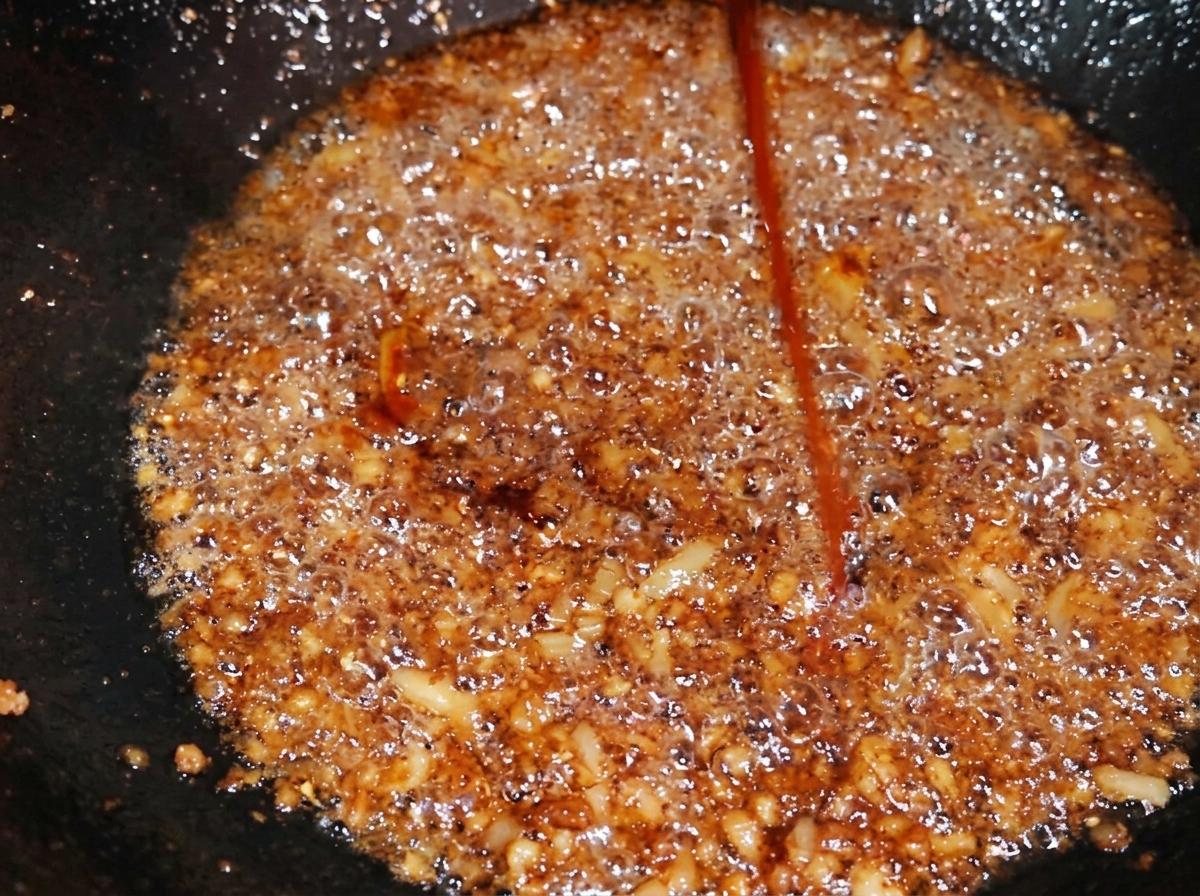
Drizzle a small amount of dark caramel-colored seasoning (such as dark soy sauce) into the wok. Stir-fry thoroughly until every grain of meat is evenly coated in a rich, dark mahogany color, which is a visual hallmark of a classic Dandan noodle topping.
Tip: Be conservative with the coloring; the goal is a beautiful, deep reddish-brown appearance without making the meat overly salty. - 6Add Yacai and finish
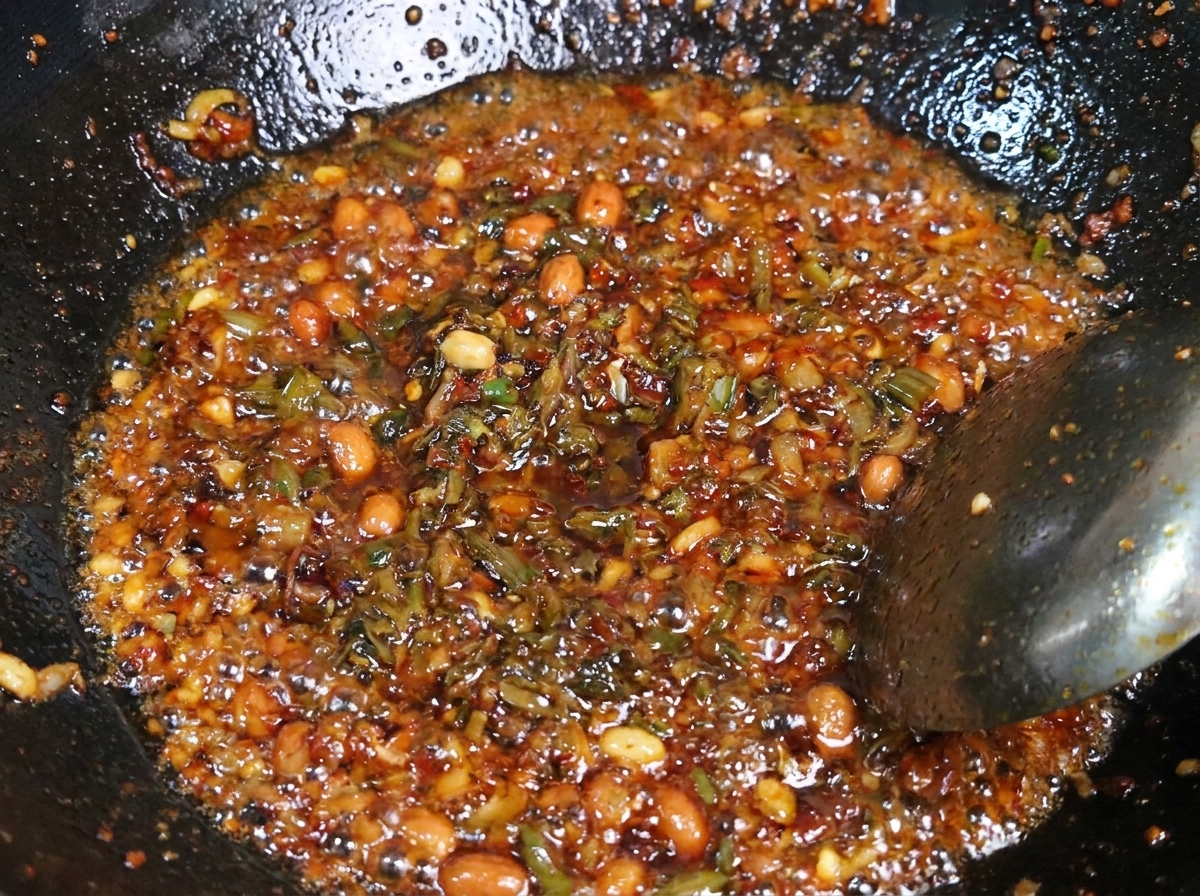
Add the Yibin sprout vegetables to the seasoned meat. Stir-fry the mixture until it becomes dry and highly fragrant, allowing the unique salty-sweet flavor of the fermented greens to meld with the pork. The final topping should be crispy enough to sprinkle easily.
Tip: If the Yacai is very salty, give it a quick rinse and squeeze it dry before adding it to the wok to control the final seasoning. - 7Season the meat topping
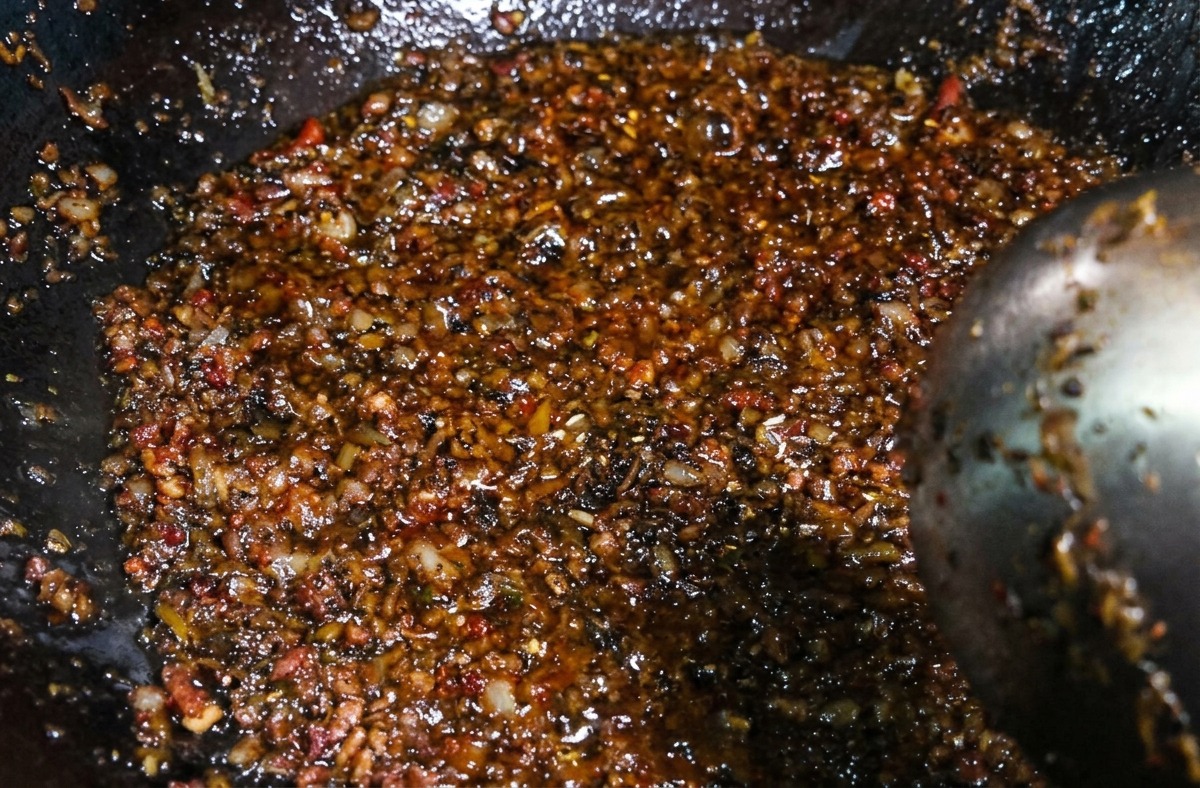
With the meat and sprout vegetables well-combined and fragrant, add the thirteen-spice powder and Sichuan peppercorn powder. Mix everything thoroughly to ensure the spices are evenly distributed, creating a savory, numbing topping with a beautiful dark hue.
Tip: The Sichuan peppercorn powder is key for the signature numbing sensation; adjust the amount to suit your spice tolerance. - 8Boil the noodles
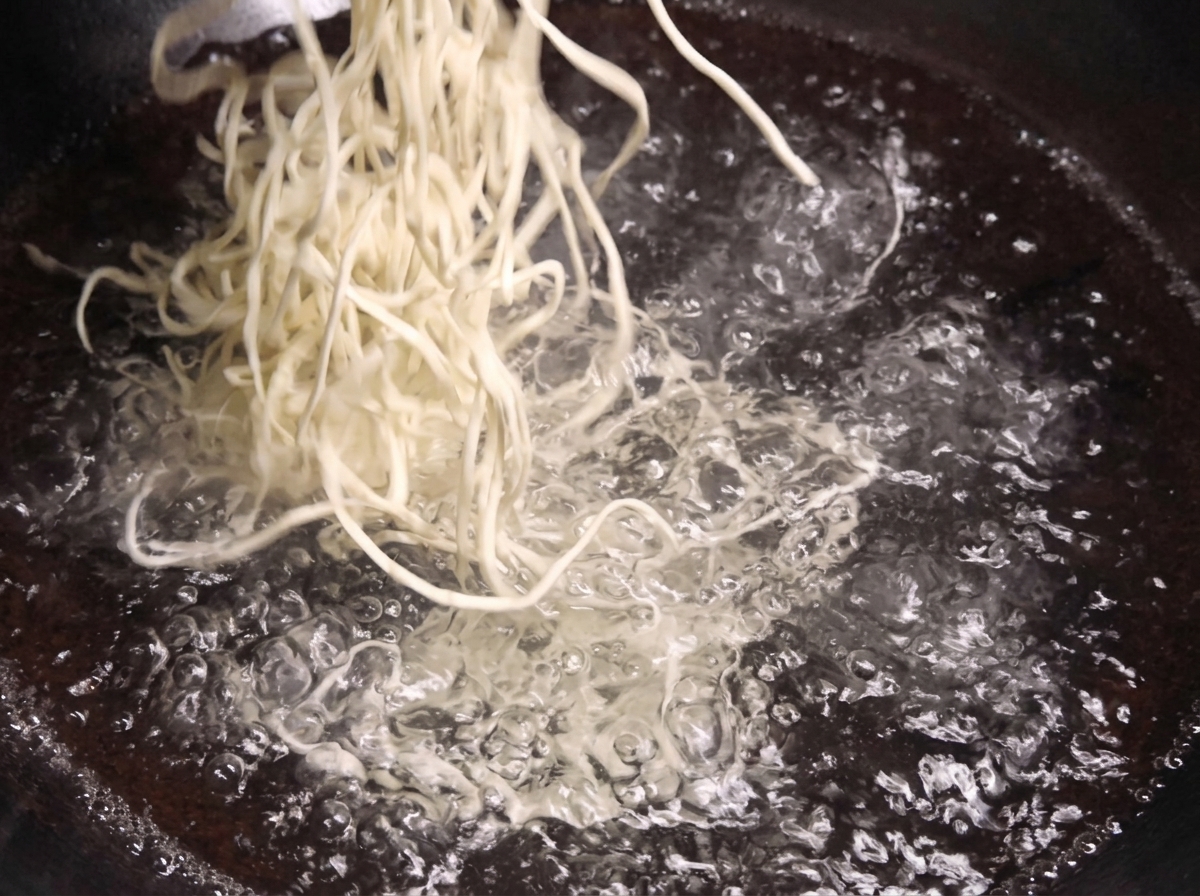
Bring a large pot of water to a rolling boil and carefully drop in the fresh noodles. Use chopsticks to gently stir and separate them immediately to prevent sticking. Cook the noodles until they reach your preferred level of doneness, typically just until tender but still firm.
Tip: Start with plenty of water in a large pot to give the noodles enough room to move around, which prevents them from becoming gummy. - 9Build the sauce foundation
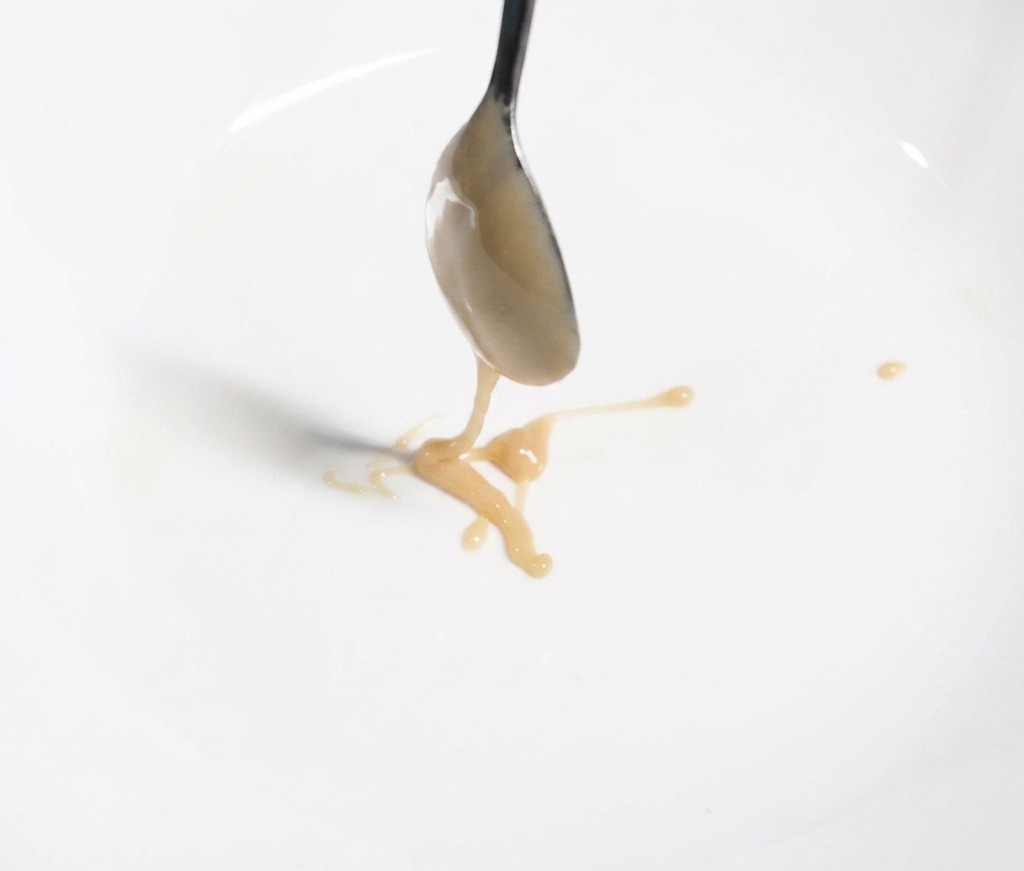
Begin preparing the complex sauce base in a white serving bowl while the noodles are boiling. Start by adding a dollop of smooth sesame paste. This creates a creamy foundation that will anchor the other seasonings and provide the characteristic rich texture of the noodle sauce.
Tip: If the sesame paste is too thick or has separated, stir it well in the jar until it reaches a smooth, pourable consistency before measuring it out. - 10Add the soulful chili oil
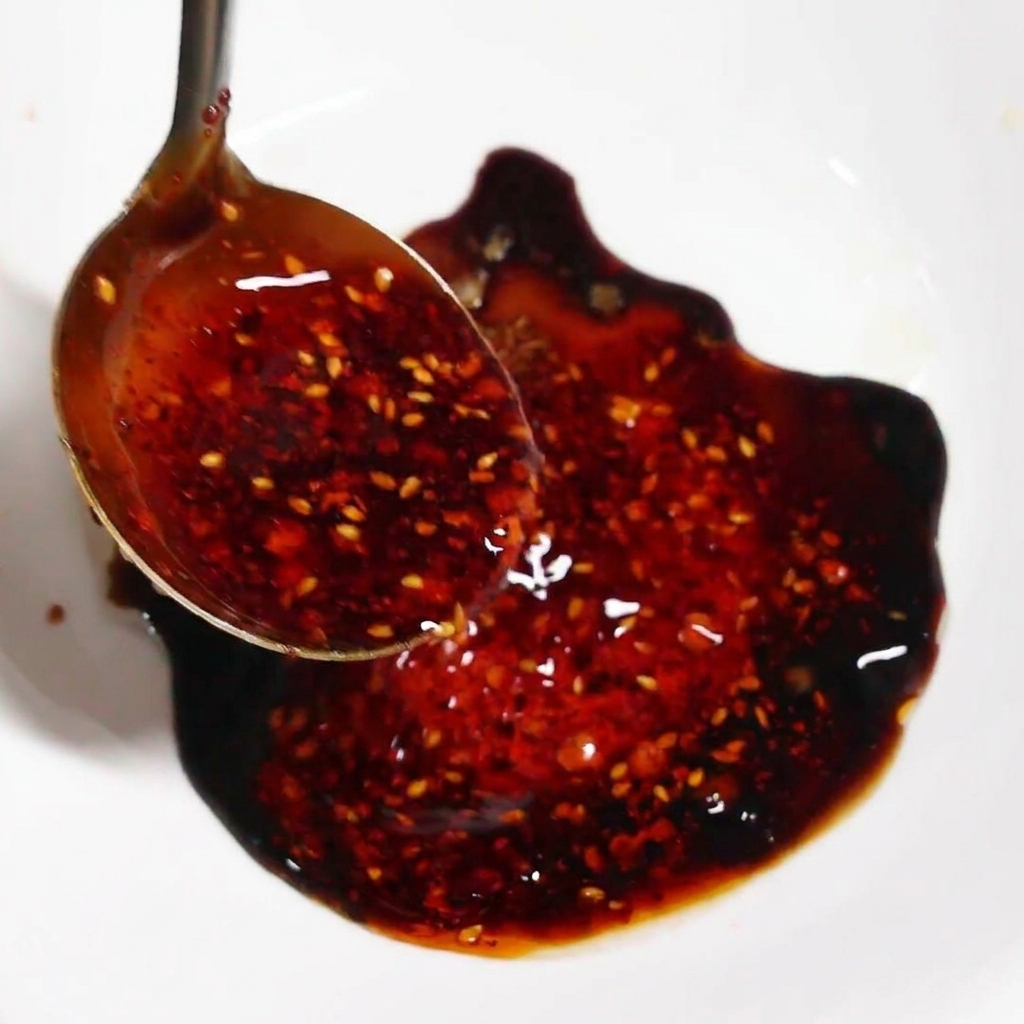
Complete the seasoning base in the bowl by adding a generous scoop of vibrant red chili oil. This addition provides the characteristic heat, rich aroma, and brilliant color that defines a bowl of authentic Dandan noodles.
Tip: If using homemade chili oil, try to include some of the toasted sediment at the bottom for extra texture and a deeper toasted flavor. - 11Assemble and Garnish
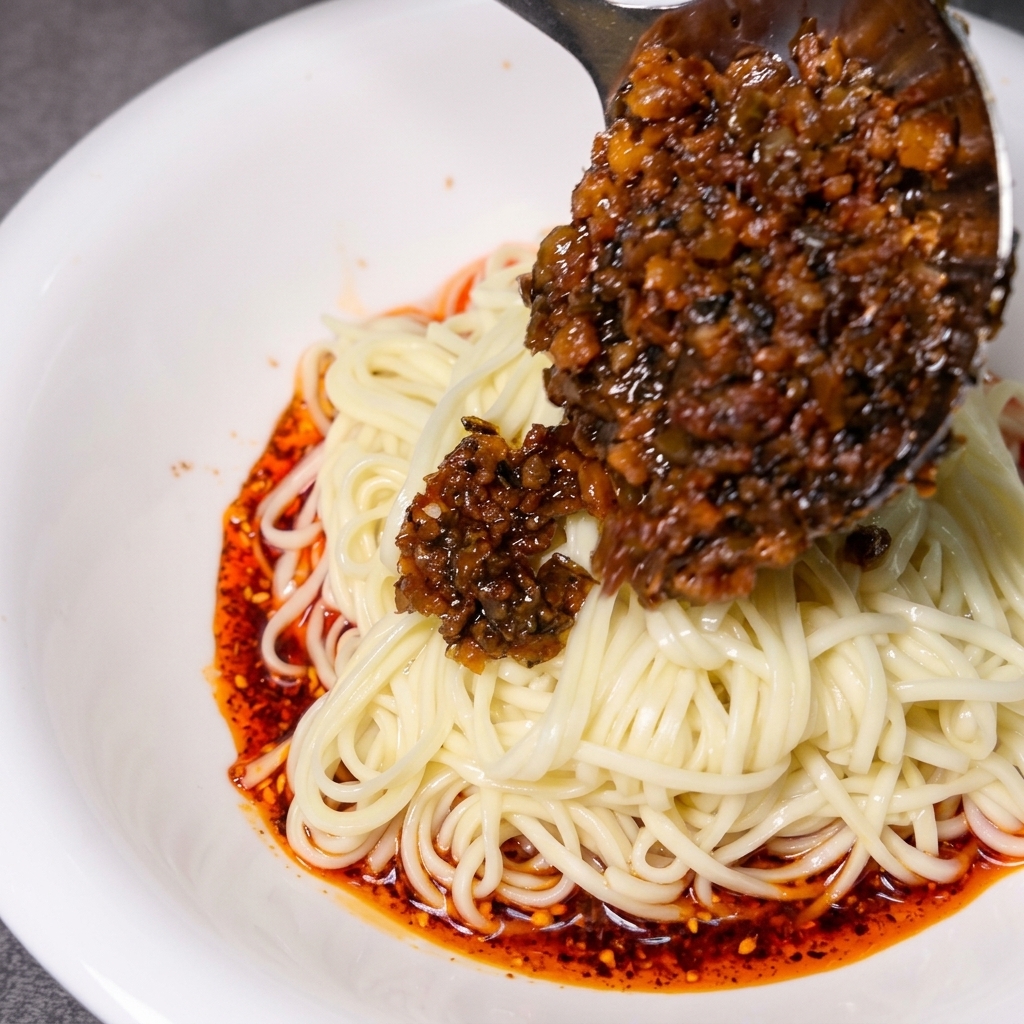
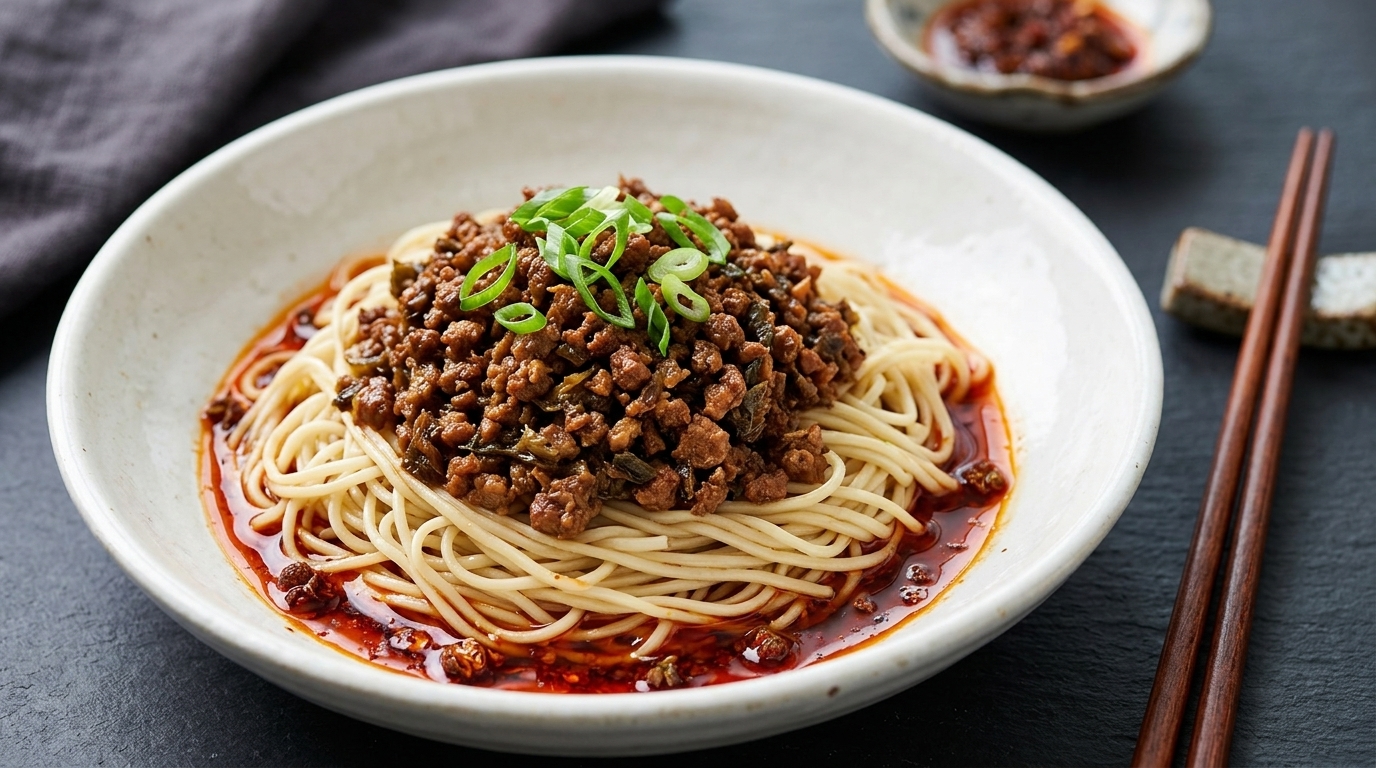
Once the cooked noodles are placed into the bowl with the prepared sauce, add a generous scoop of the stir-fried meat and sprout topping. Finish with a handful of freshly chopped green onions for a bright, aromatic contrast.
Tip: Do not stir the bowl before serving; the presentation of the meat topping over the white noodles and red oil is part of the traditional experience.