Authentic Sichuan Dandan Noodles (Dan Dan Mian)
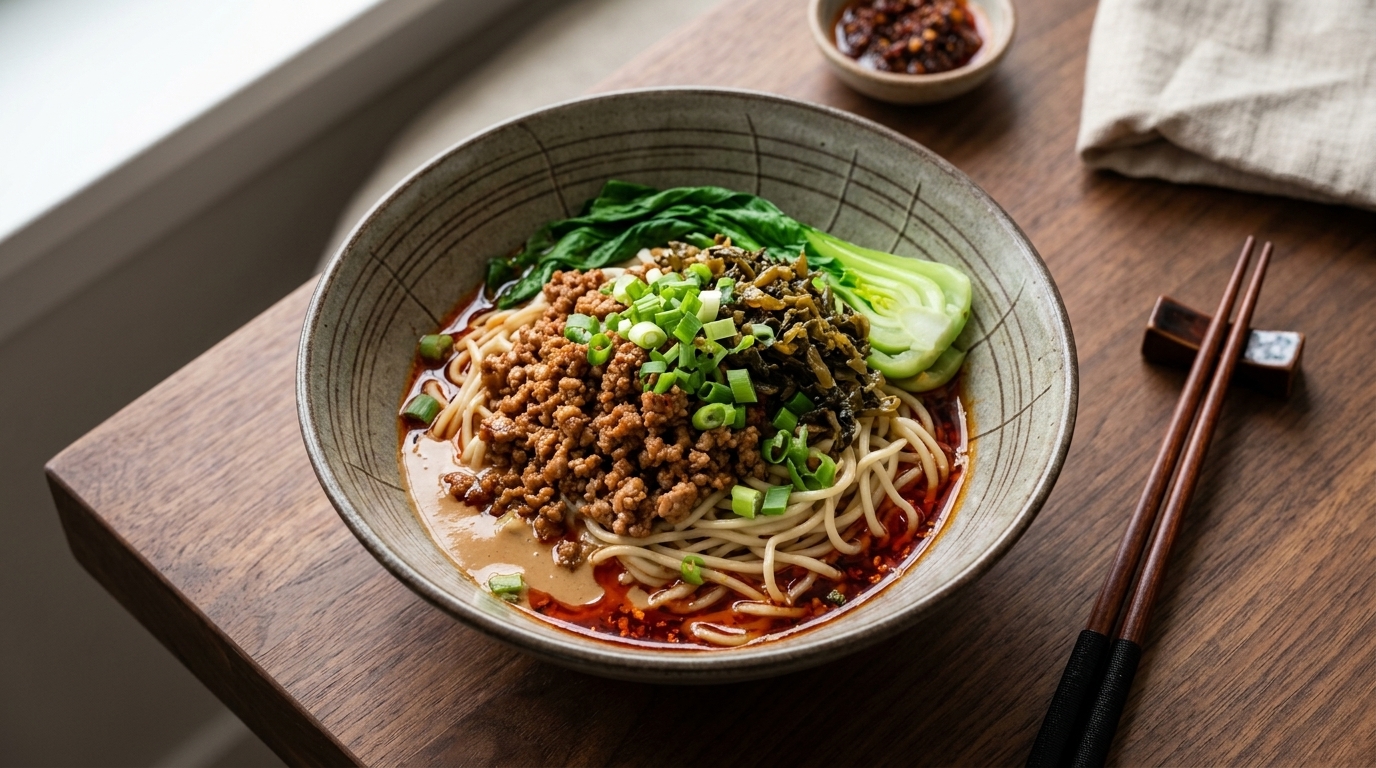
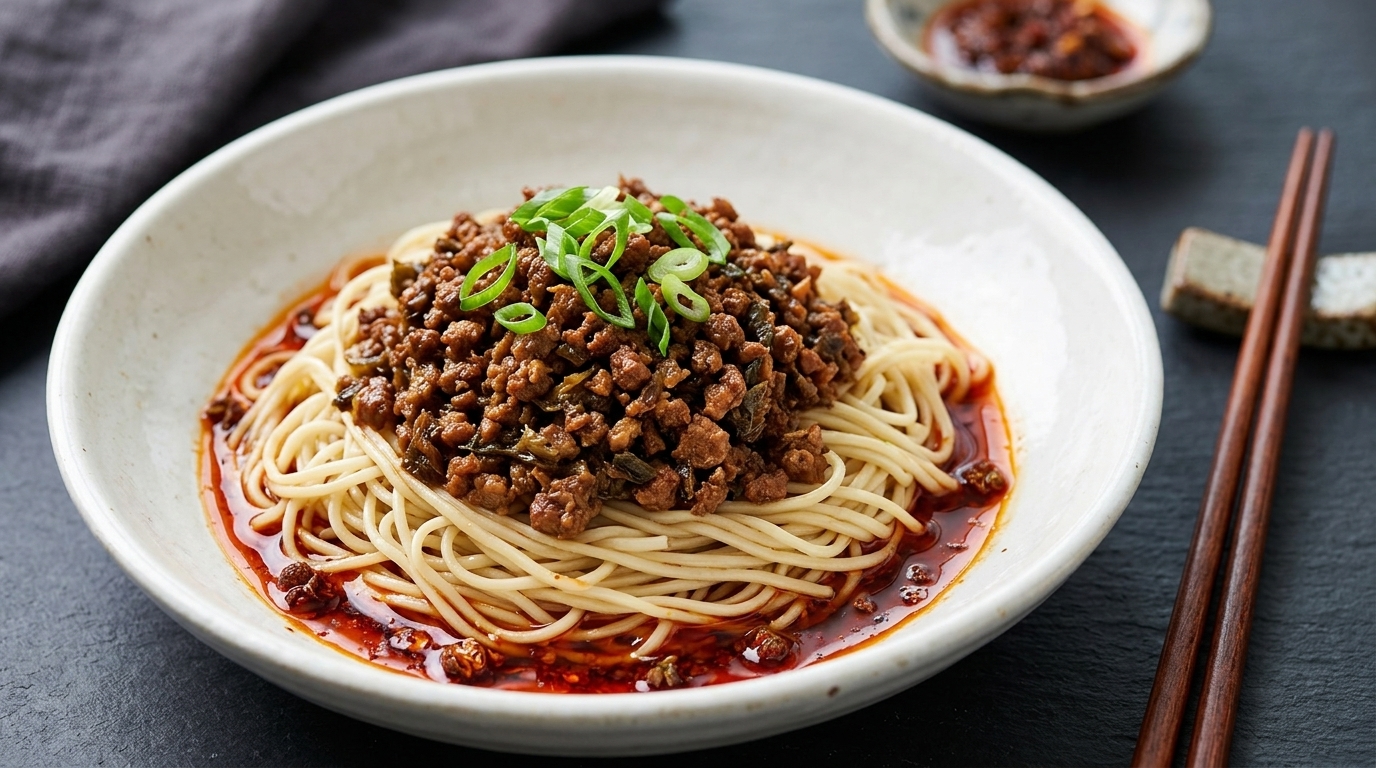
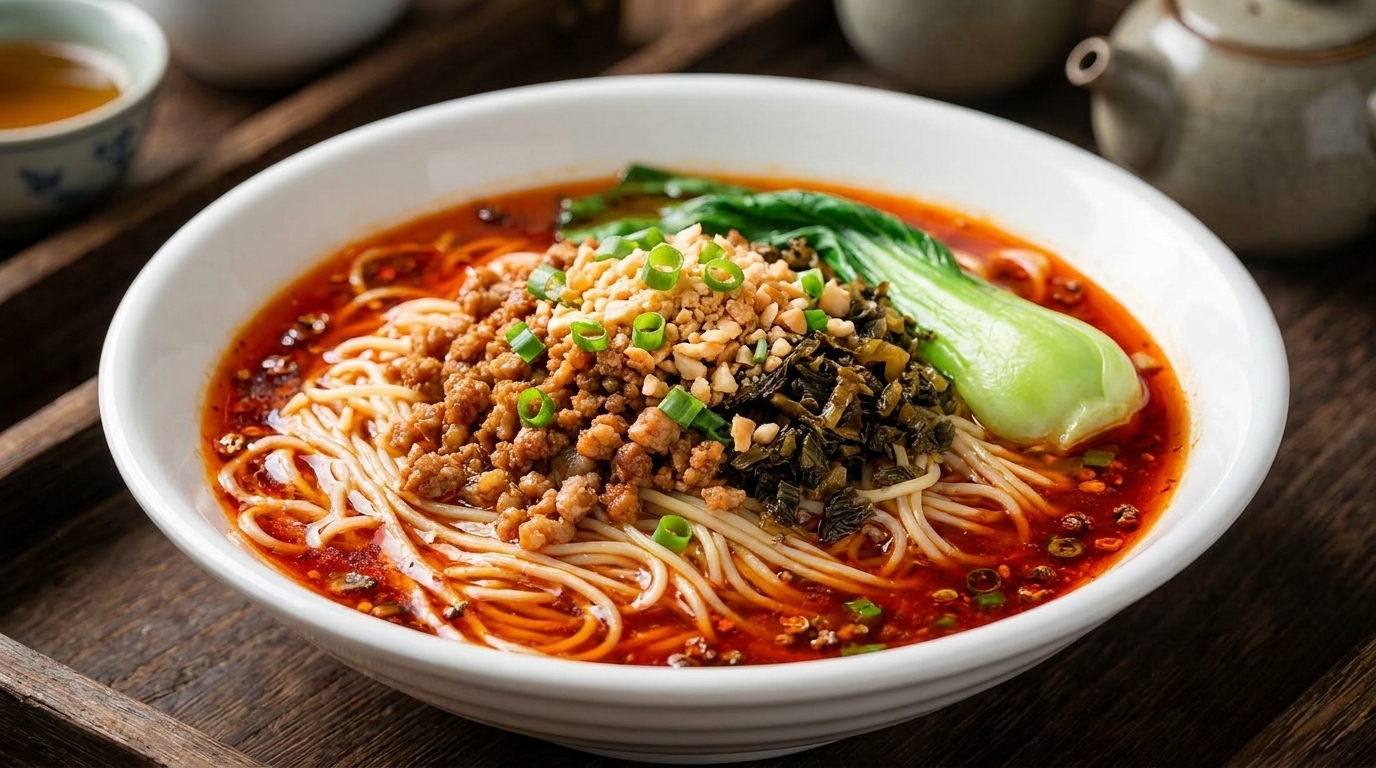
A fiery Sichuan classic featuring springy noodles in a rich chili-sesame broth, topped with savory hand-fried pork and punchy pickled mustard greens.
Dandan noodles originated as a portable street food in Sichuan, carried by vendors on a walking pole (dan dan). This home-style version captures the signature ma la profile using traditional ya cai and a deeply rendered pork fat base for a silky, rich mouthfeel.
Ingredients
- 250 g ground pork
- 100 g pickled mustard greens (ya cai)
- 300 g alkaline or handmade noodles
- 1 tbsp Chinese cooking wine
- 1 tsp dark soy sauce
- 1 packet Dandan noodle sauce
- 2 cloves garlic
- 2 stalks green onions
- 1 bunch bok choy or leafy greens
- 2 tbsp crushed peanuts
Instructions
- 1Start with ground pork
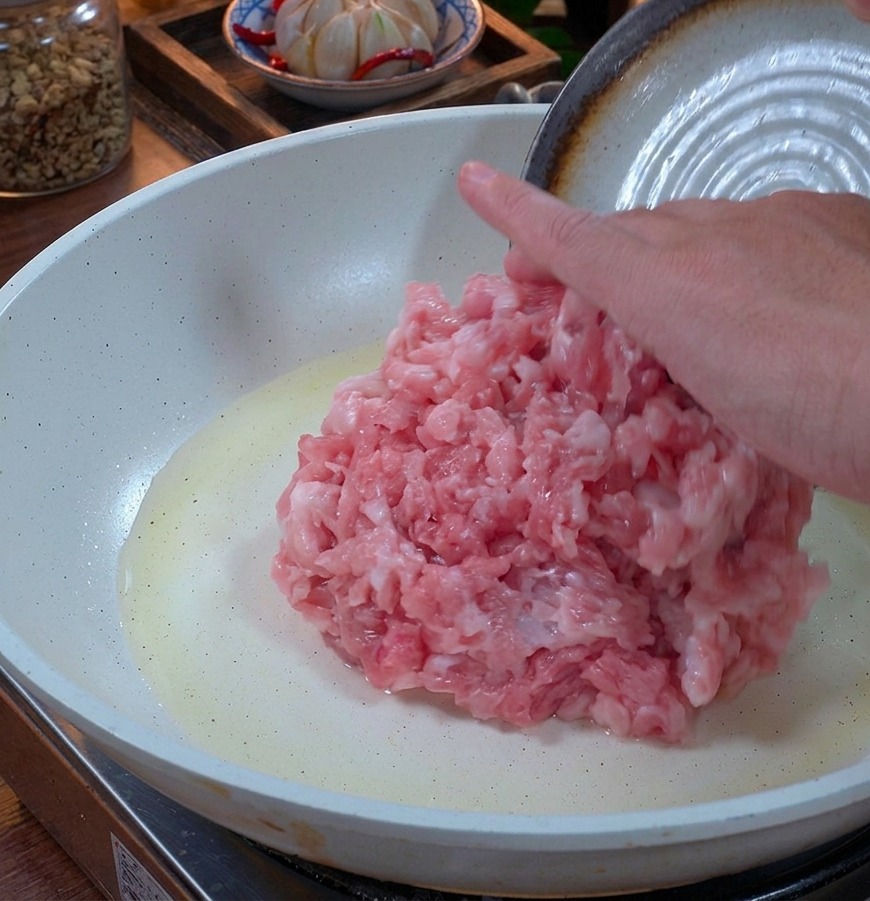
Heat a small amount of oil in a pan over medium heat. Add the raw ground pork, breaking it up slightly with a spatula as it hits the pan. The goal here is to begin cooking off the moisture before adding seasonings.
Tip: Dont overcrowd the pan; if making a large batch, cook the meat in stages to ensure it fries rather than steams. - 2Stir-fry to remove moisture
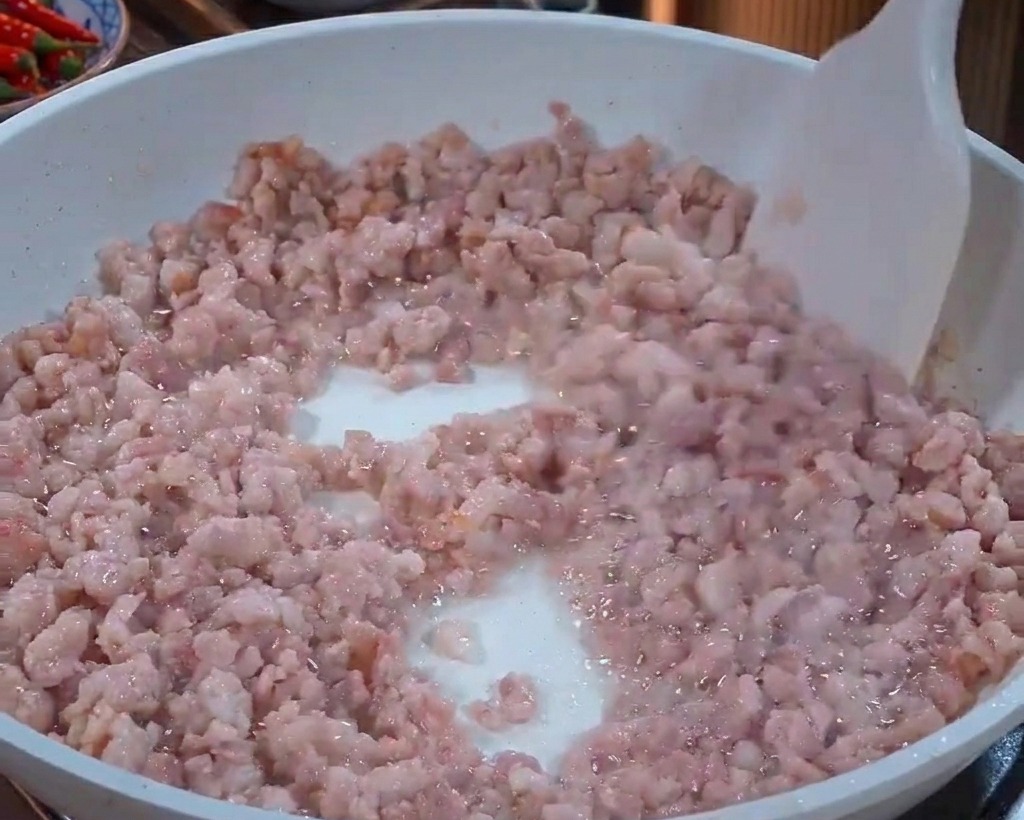
Stir-fry the pork over low to medium heat. Continue stirring until the meat loses its raw pink color and begins to turn opaque. This process helps evaporate any excess water from the meat for a better texture.
Tip: Using low heat at this stage prevents the meat from toughening up too quickly before the seasonings are added. - 3Deodorize with cooking wine
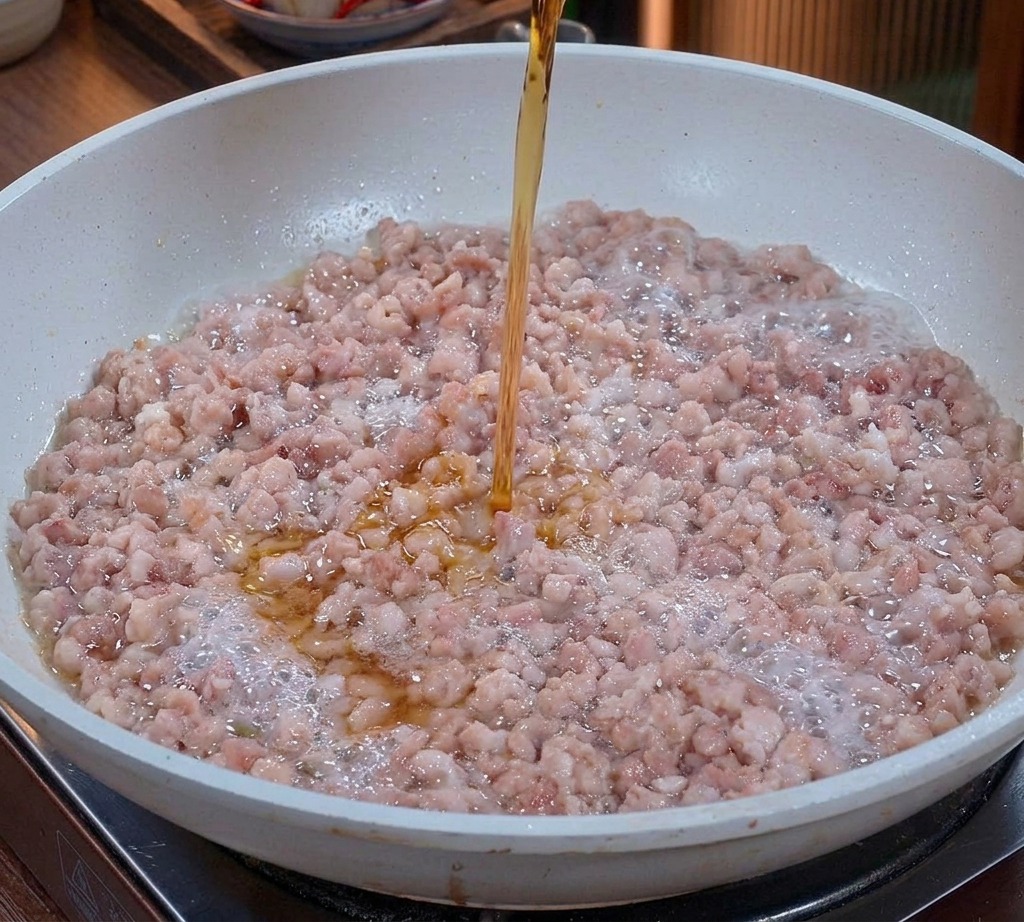
Pour a spoonful of cooking wine over the pork as it continues to cook. The alcohol will evaporate quickly, taking away any unwanted meaty odors and adding a subtle depth of flavor to the base.
Tip: If you dont have Chinese cooking wine, a dry sherry or even a splash of broth can work as a substitute. - 4Season and color with soy sauce
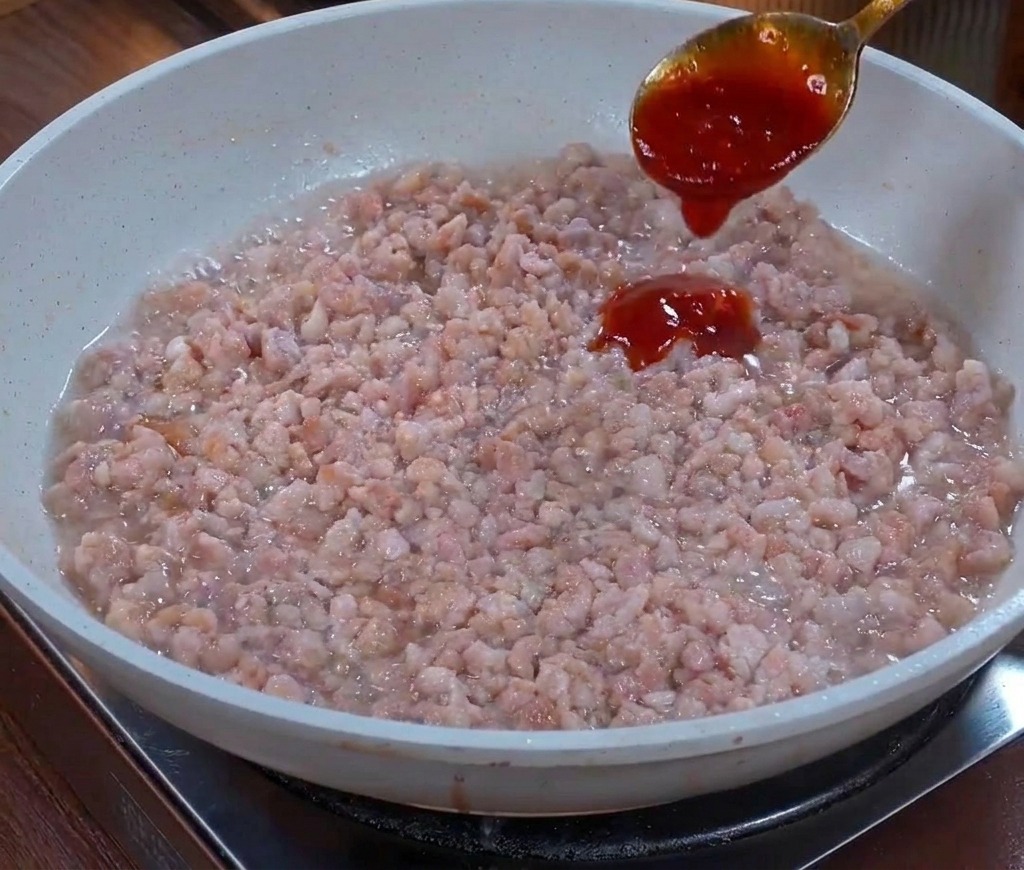
Add a spoonful of dark soy sauce to the meat. This not only seasons the pork with a rich, savory saltiness but also gives it the characteristic deep brown color seen in traditional Dandan noodles.
Tip: Dark soy sauce is thicker and less salty than light soy sauce, used primarily for its rich color and molasses-like undertone. - 5Render the fat
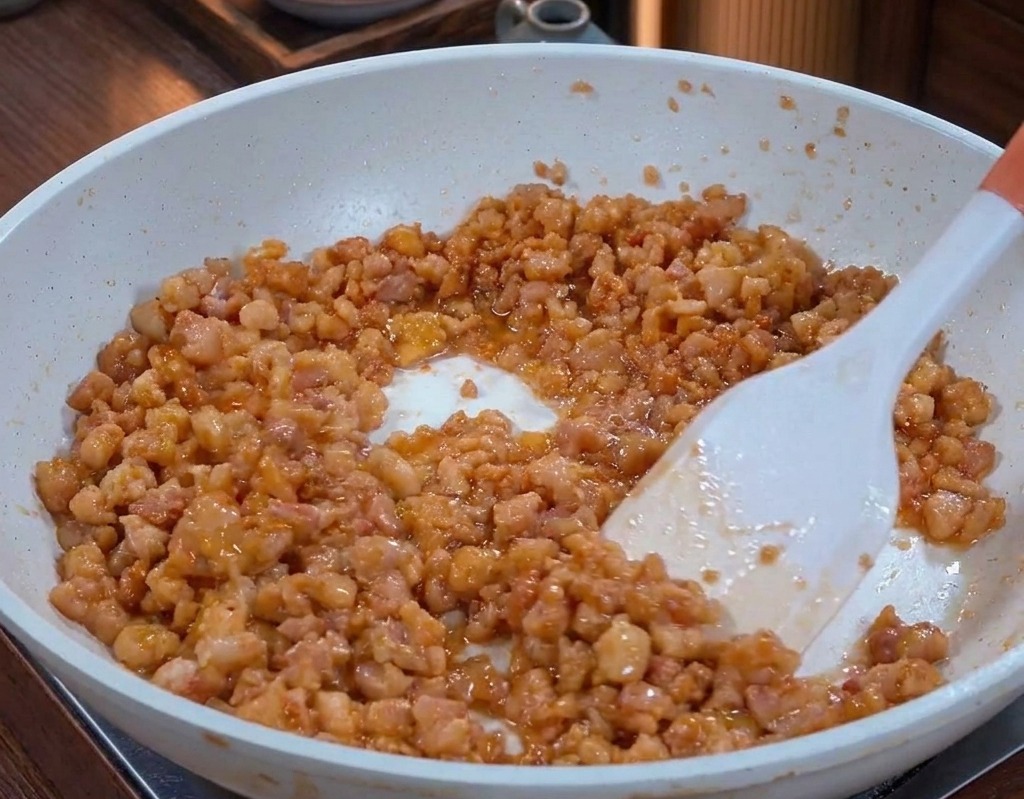
Continue stir-frying the seasoned pork until it is deeply browned and slightly crispy. You should see the fat separating and rendering out into the pan. Once the meat is fragrant and well-cooked, remove it from the pan and set it aside.
Tip: The rendered pork fat is liquid gold—keep it in the pan to cook your vegetables next for extra flavor. - 6Add the pickled mustard greens
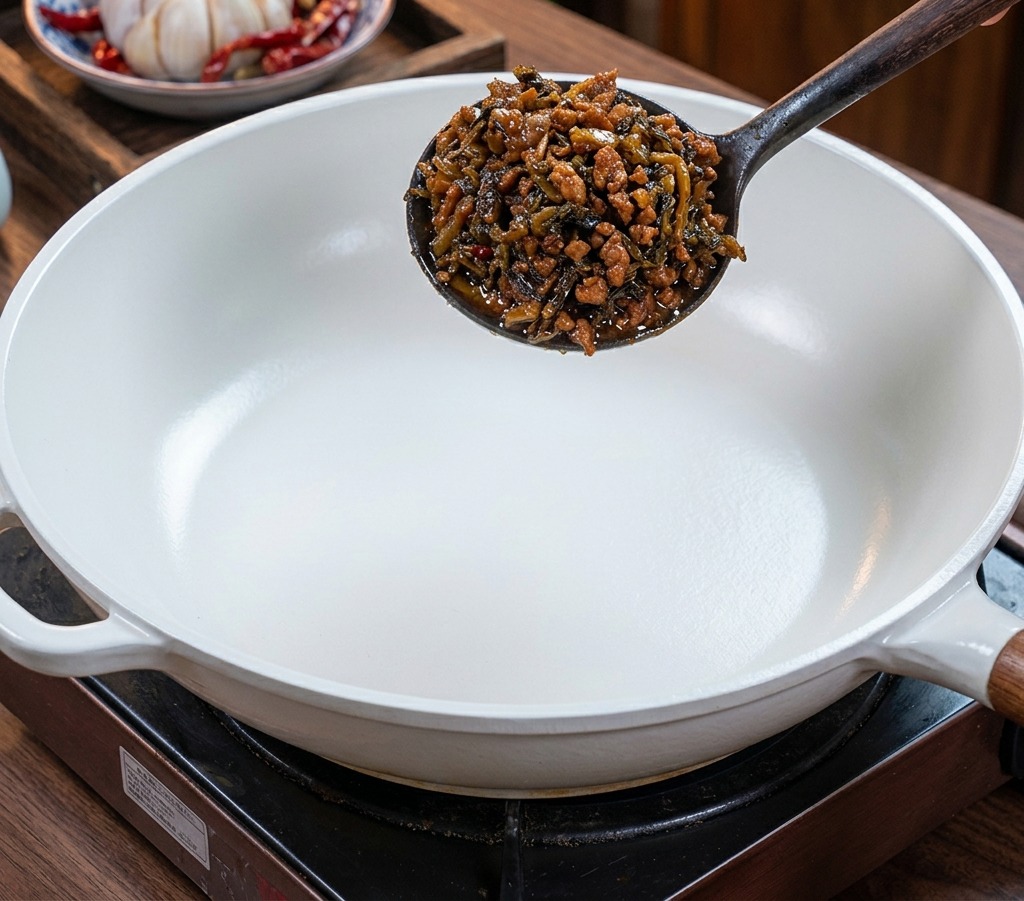
Place the chopped pickled mustard greens (ya cai) into a clean pan. Stir-frying these greens separately from the meat allows you to dry them out effectively and concentrate their unique, salty umami flavor, which is essential for an authentic Dandan noodle taste.
Tip: If your ya cai is very salty, you can give it a quick rinse and squeeze it dry before adding it to the pan to control the sodium level. - 7Stir-fry to dry the greens
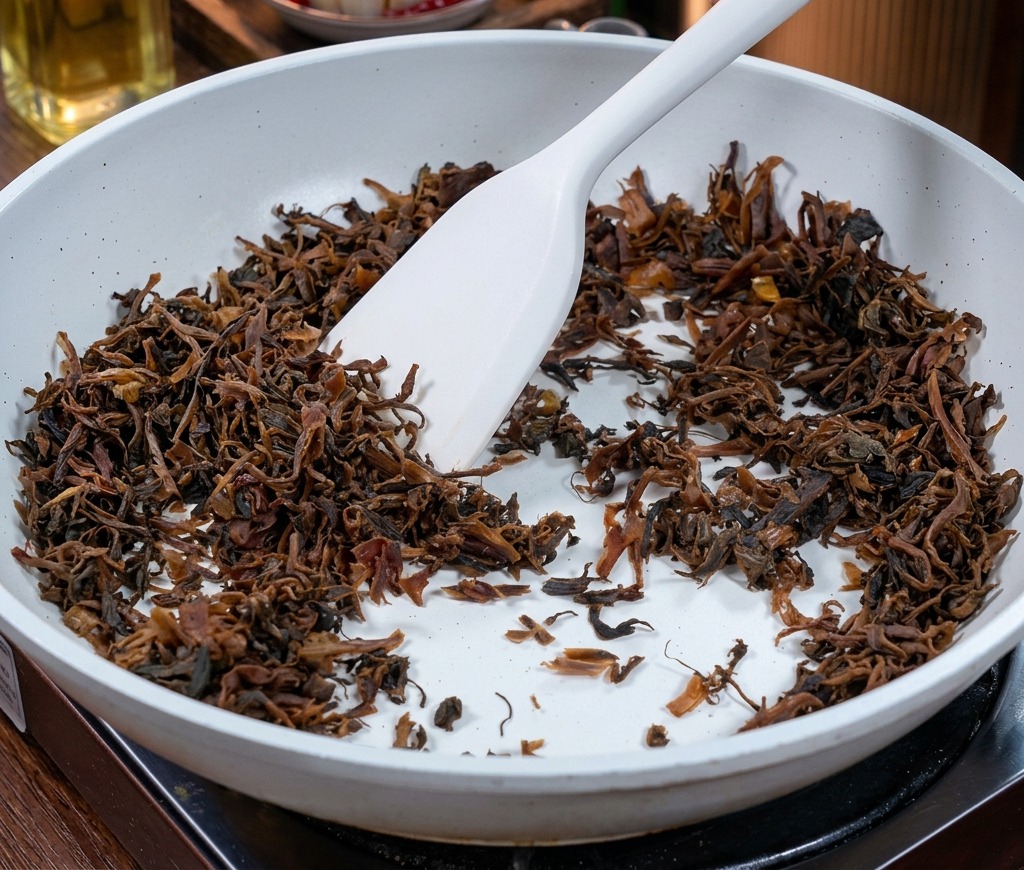
Sauté the mustard greens over low heat, stirring constantly. The goal is to evaporate any excess moisture, which helps the greens develop a fragrant, concentrated flavor and a slightly crisp texture that contrasts perfectly with the soft noodles.
Tip: Keep the heat low during this process; the small pieces of greens can burn quickly, which would introduce a bitter taste to the dish. - 8Infuse with rendered pork fat
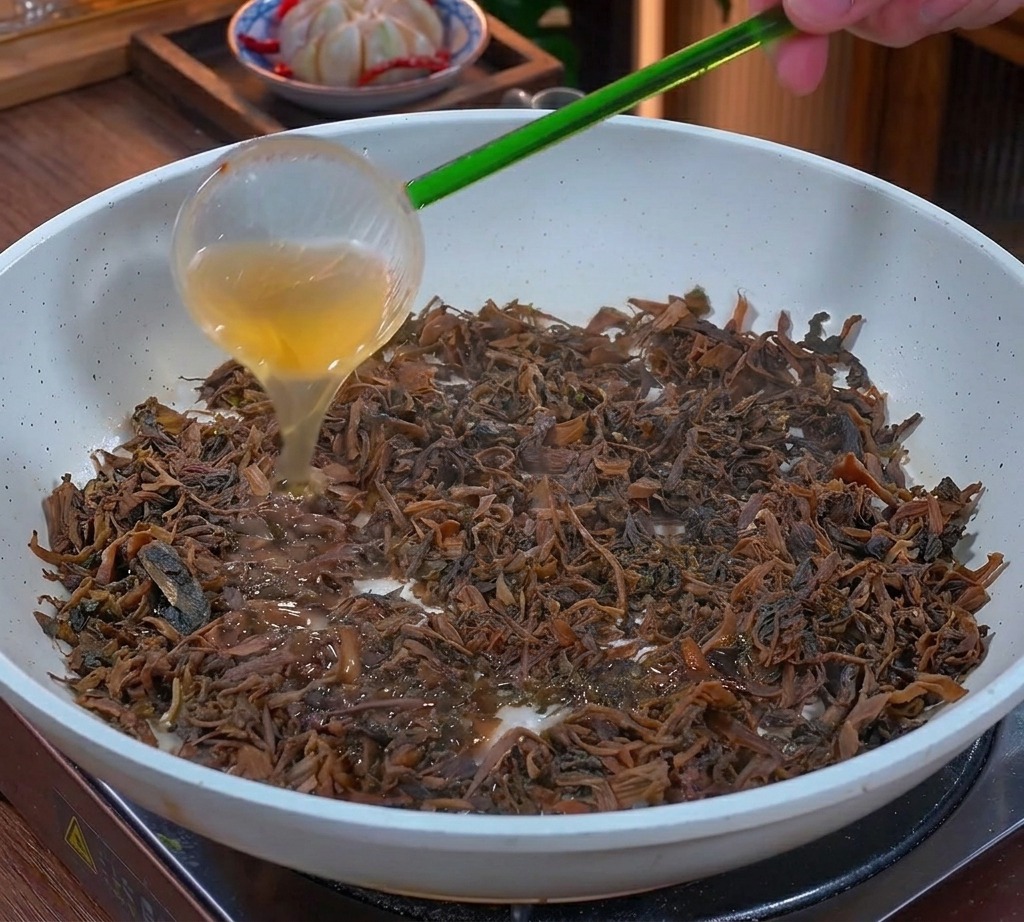
Once the mustard greens are fragrant and dry, add a ladle of the pork fat you rendered earlier from the ground pork. This fat adds a layer of richness and carries the savory pork flavor into the greens.
Tip: If you dont have enough rendered pork fat, you can substitute it with a neutral cooking oil, though the flavor will be less traditional. - 9Boil the noodles
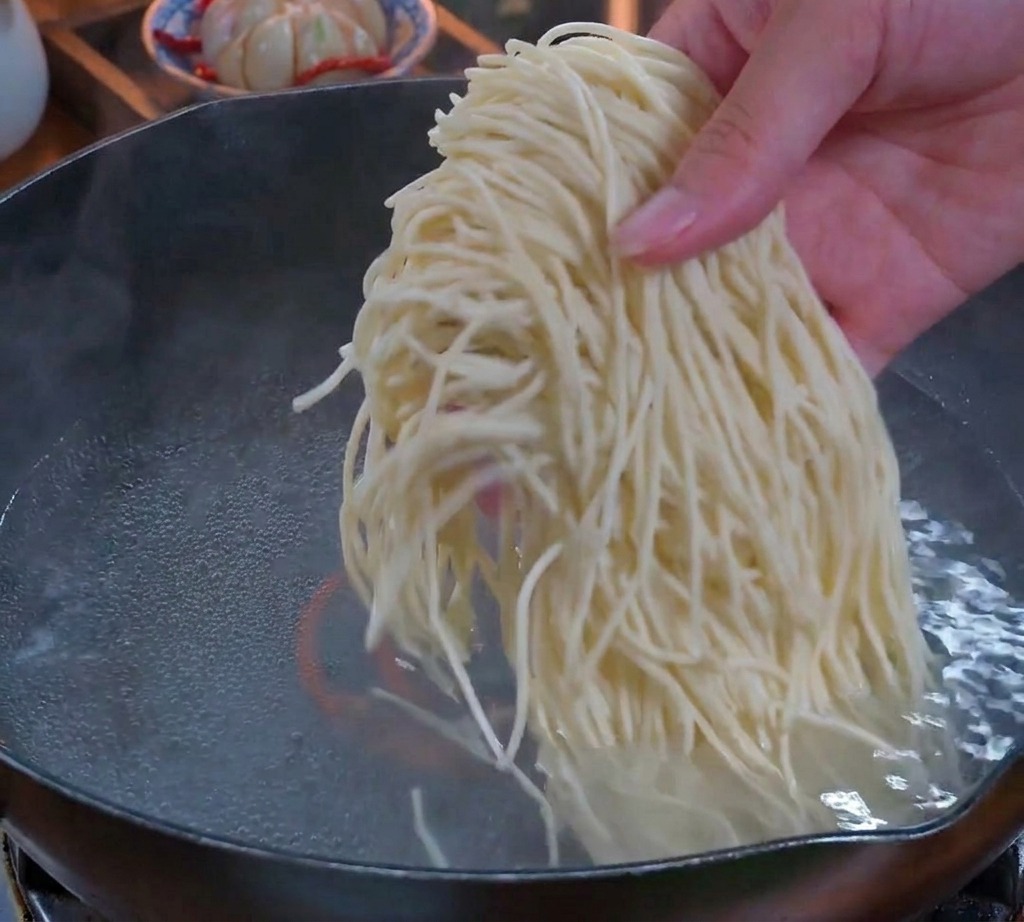
Bring a pot of water to a rolling boil and add the noodles. Thin alkaline noodles or fresh handmade noodles are the best choice for this recipe as they have a springy texture that pairs well with the spicy, oily sauce.
Tip: Gently shake the noodle bundles as you drop them in to ensure the strands separate and cook evenly without clumping. - 10Add green vegetables
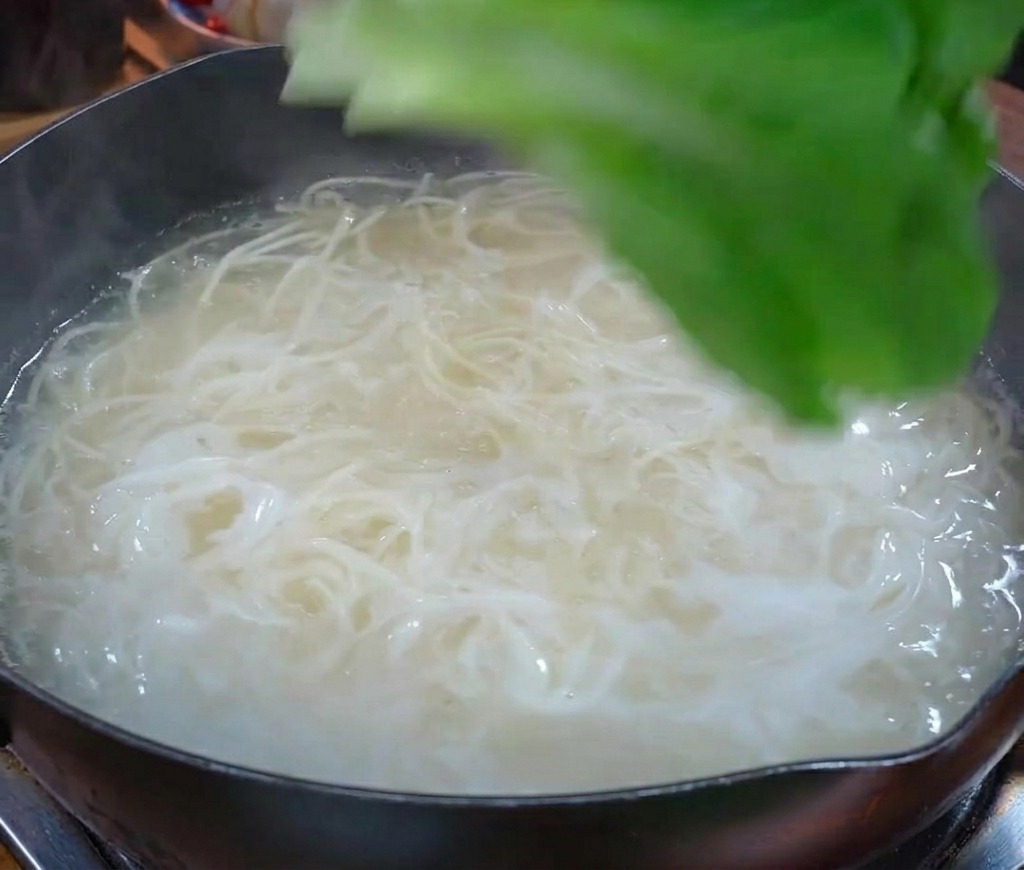
While the noodles are boiling, drop in a few pieces of fresh leafy green vegetables. They only need a brief blanching alongside the noodles to soften slightly while maintaining their vibrant color and crisp texture.
Tip: Bok choy, choy sum, or even spinach are traditional choices that provide a refreshing contrast to the spicy, rich broth. - 11Start the aromatic base
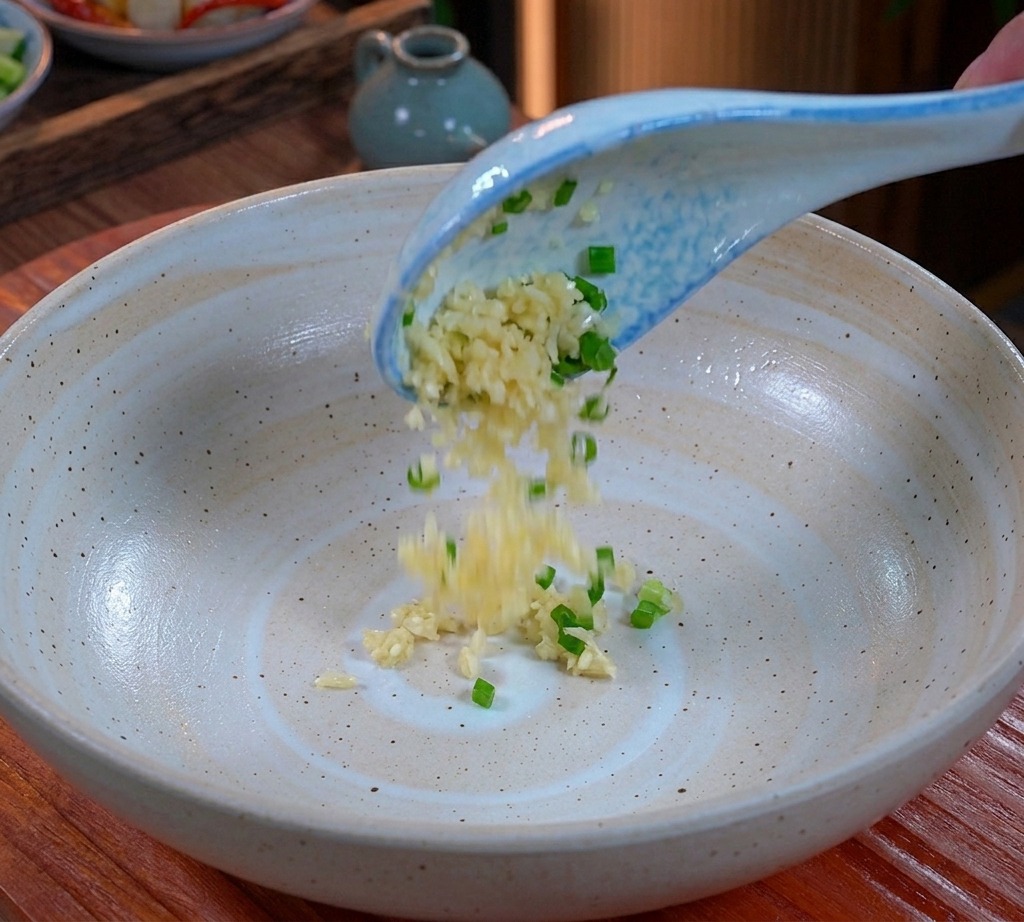
Place the minced garlic and chopped green onions into the bottom of your serving bowl. These raw aromatics will release their fragrance as soon as the hot liquids are added.
Tip: For the best flavor, use fresh garlic rather than the pre-minced jarred variety to ensure a sharp, clean aromatic profile. - 12Prepare the seasoning base
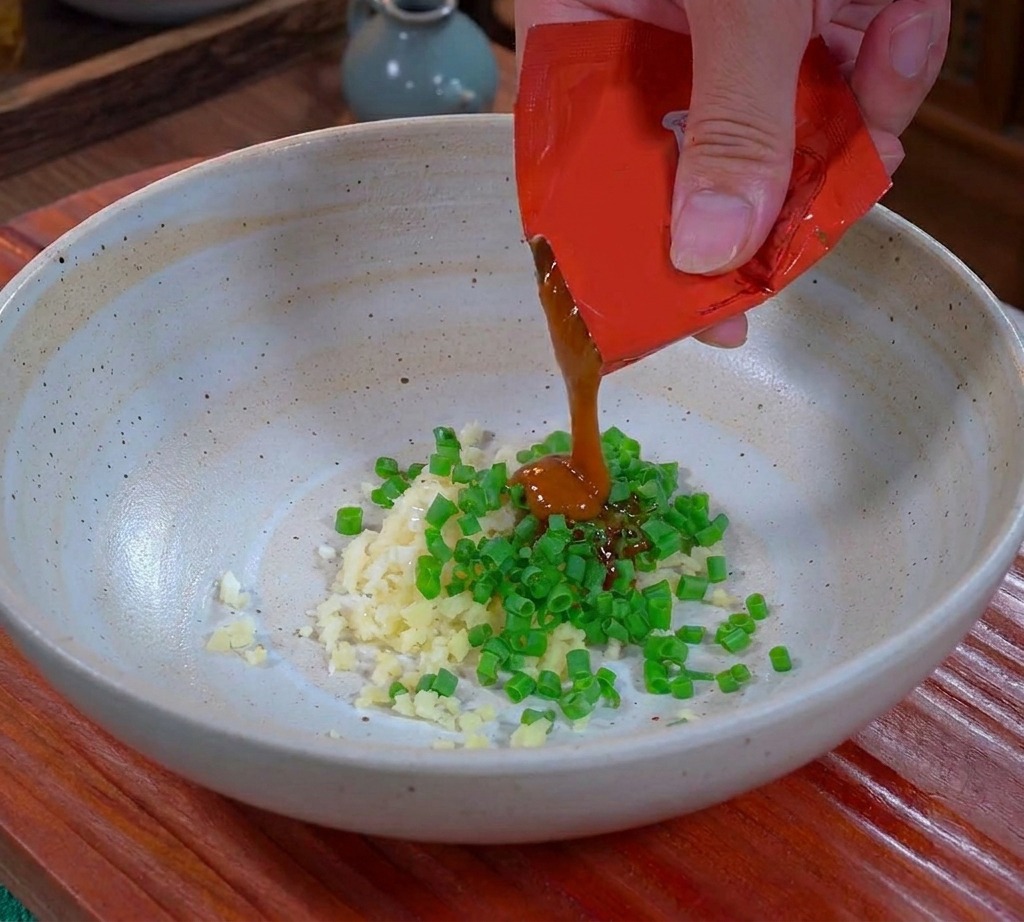
Squeeze the specialized Dandan noodle sauce packet into the bowl over the garlic and onions. This concentrated base provides the essential blend of chili oil and Sichuan peppercorns required for the authentic ma la flavor profile.
Tip: If you cannot find a premade packet you can recreate the base using sesame paste, soy sauce, and a generous amount of Sichuan chili oil - 13Add aromatic pork fat
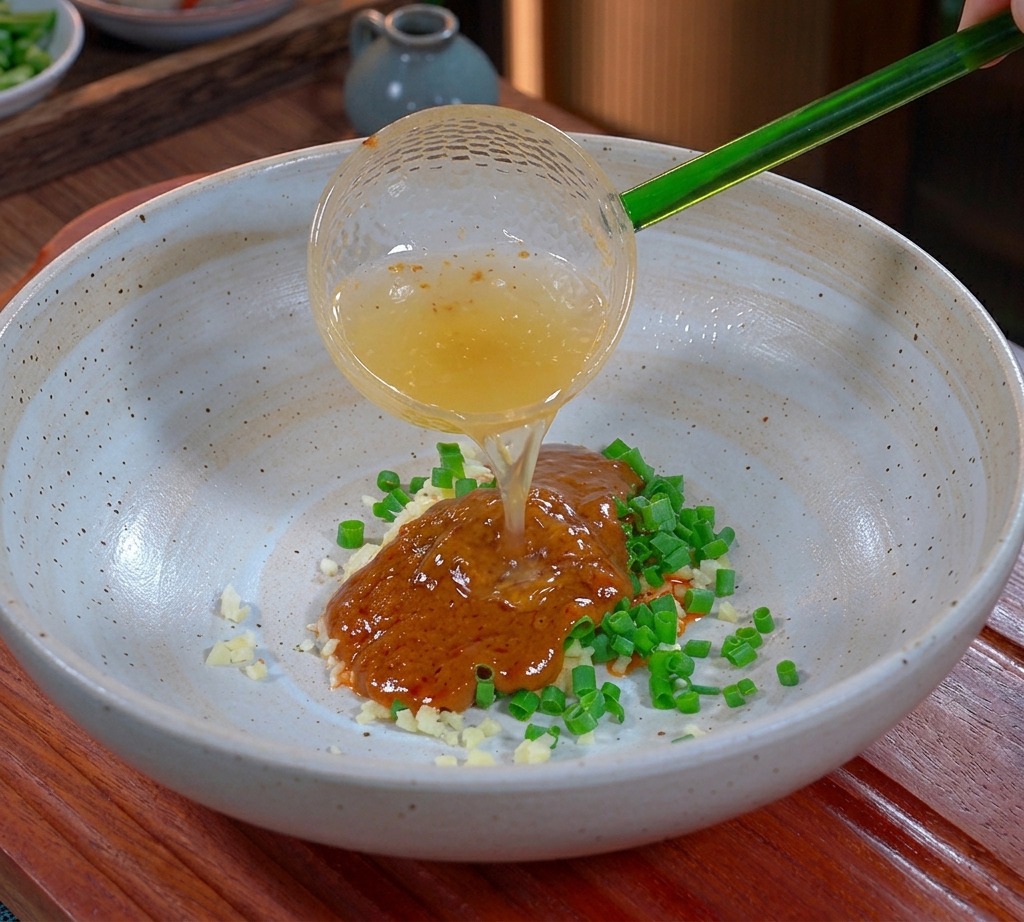
Add a spoonful of the rendered pork fat reserved from stir-frying the meat into the seasoning bowl. This fat is infused with the meats essence and is crucial for creating the rich, velvety texture characteristic of traditional Dandan noodles.
Tip: The pork fat acts as a flavor carrier, ensuring the spicy and savory notes of the sauce coat every strand of noodle. - 14Create the soup base
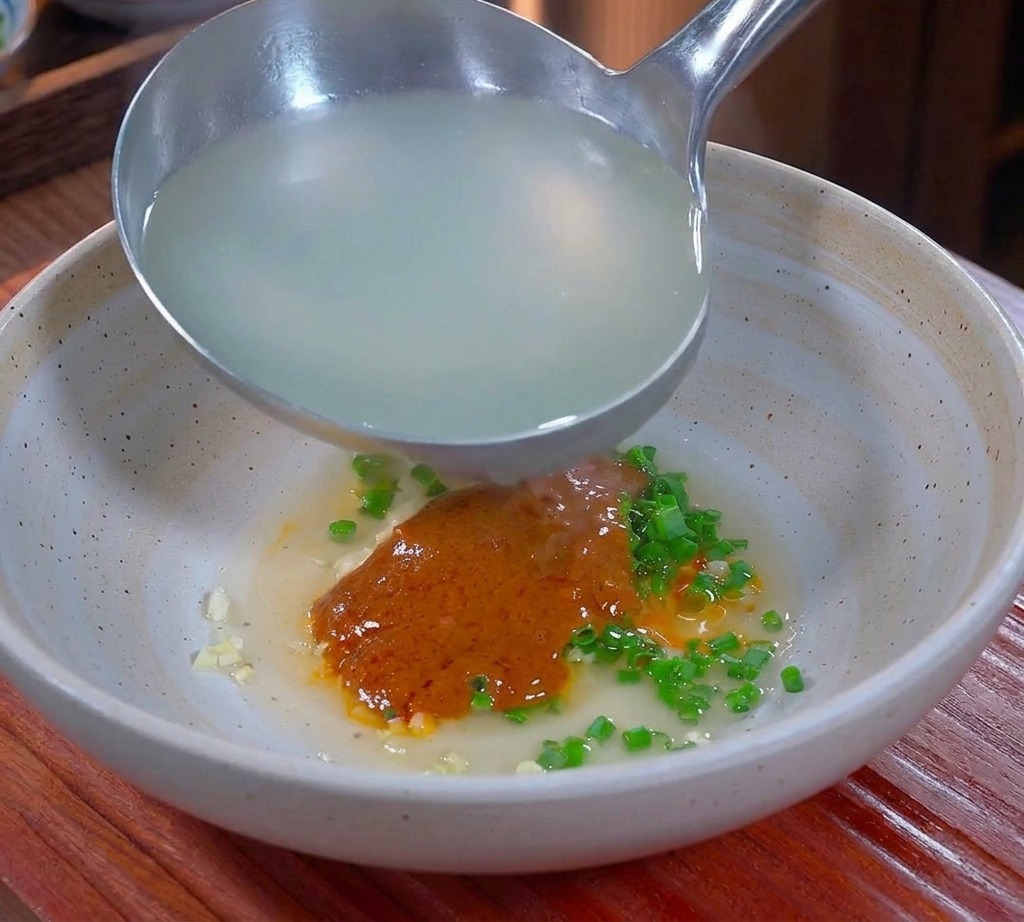
Pour a ladle of the hot, starchy noodle cooking water into the bowl. Stir gently to dissolve the thick sauce and rendered fat into a smooth, fragrant, and slightly thickened orange broth.
Tip: Using the noodle cooking water instead of plain water adds body to the soup and helps the sauce adhere better to the noodles. - 15Plate the noodles
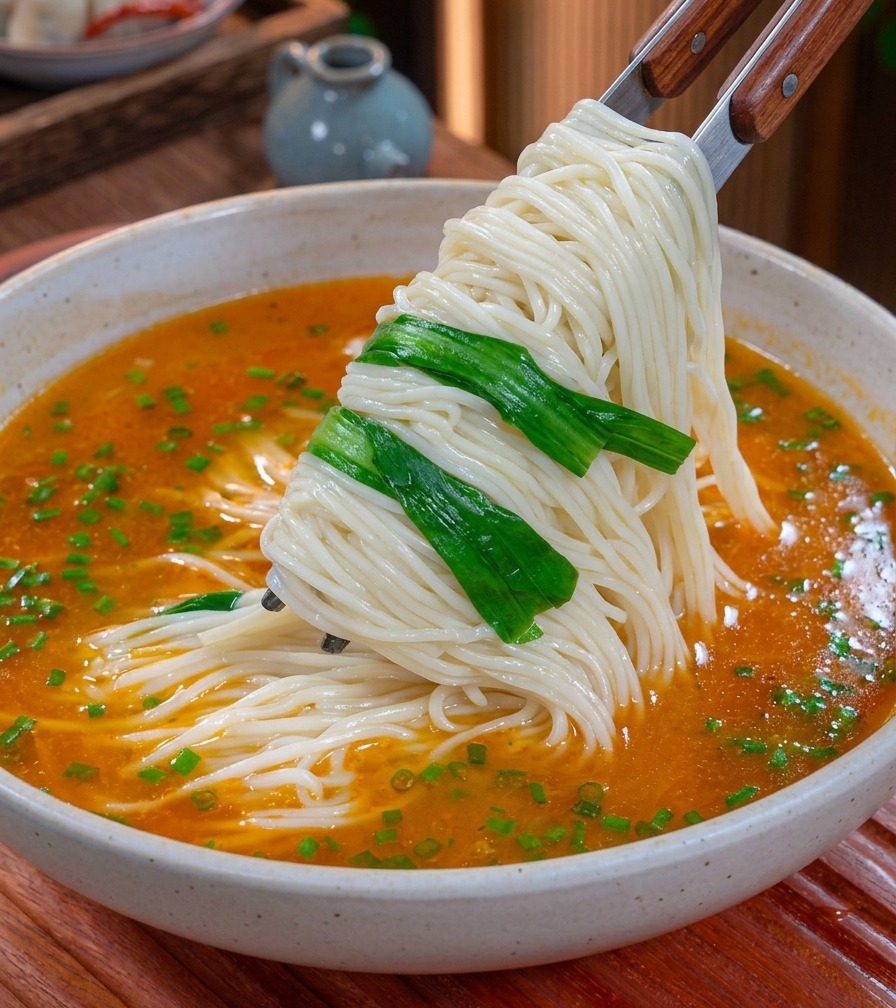
Once the noodles are tender and cooked through, use chopsticks or a strainer to lift them along with the greens out of the pot. Drain them slightly and place them neatly into the prepared soup bowl.
Tip: Serve immediately once assembled so the noodles dont over-absorb the broth and lose their texture. - 16Top with the savory minced meat
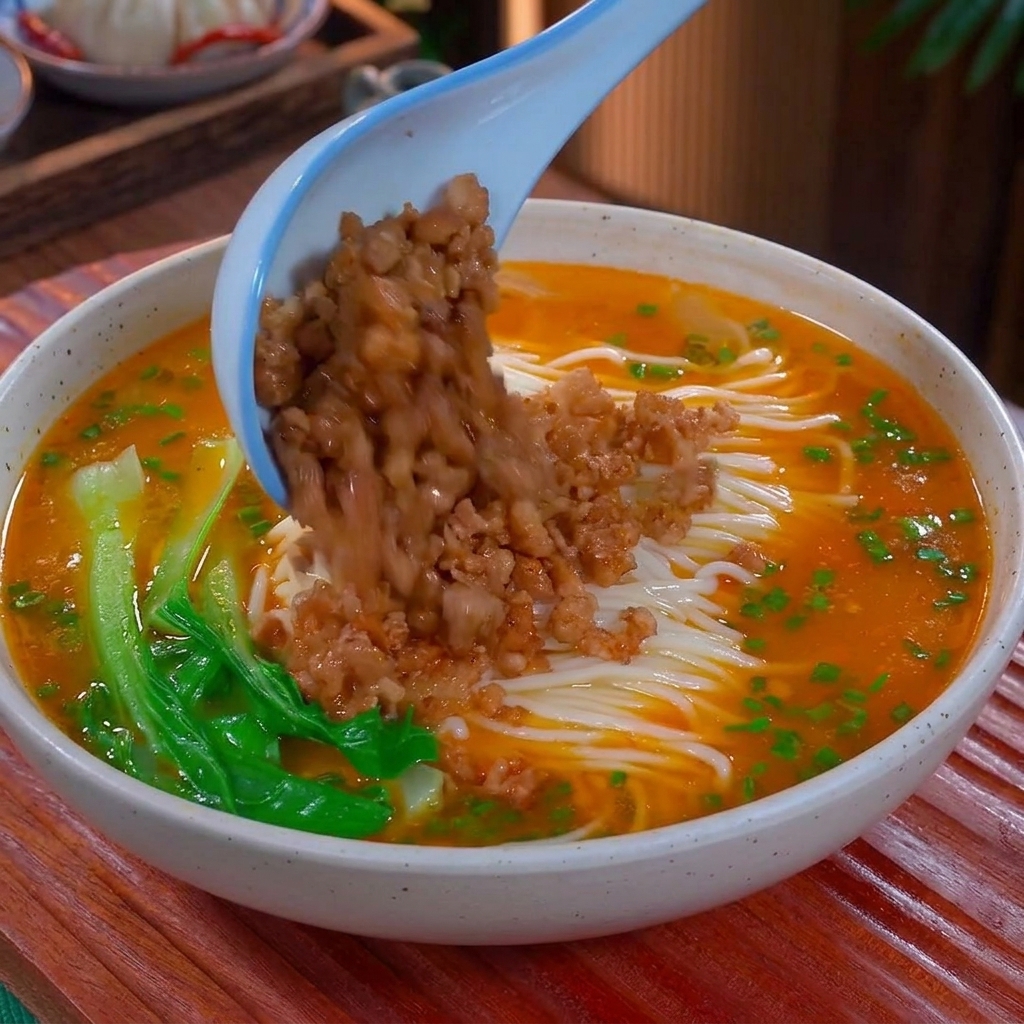
Spoon a generous portion of the savory pork topping over the noodles. Finish by garnishing with the prepared pickled mustard greens, a sprinkle of crushed peanuts, and extra fresh green onions for a complete, authentic presentation.
Tip: If you prefer a cleaner broth, place the meat gently to avoid splashing the spicy oil onto the sides of the bowl.