Authentic Spaghetti Aglio e Olio
Chili
Master the minimalist Italian classic—perfectly emulsified pasta water and olive oil infused with golden garlic, spicy chili, and fresh Italian parsley.
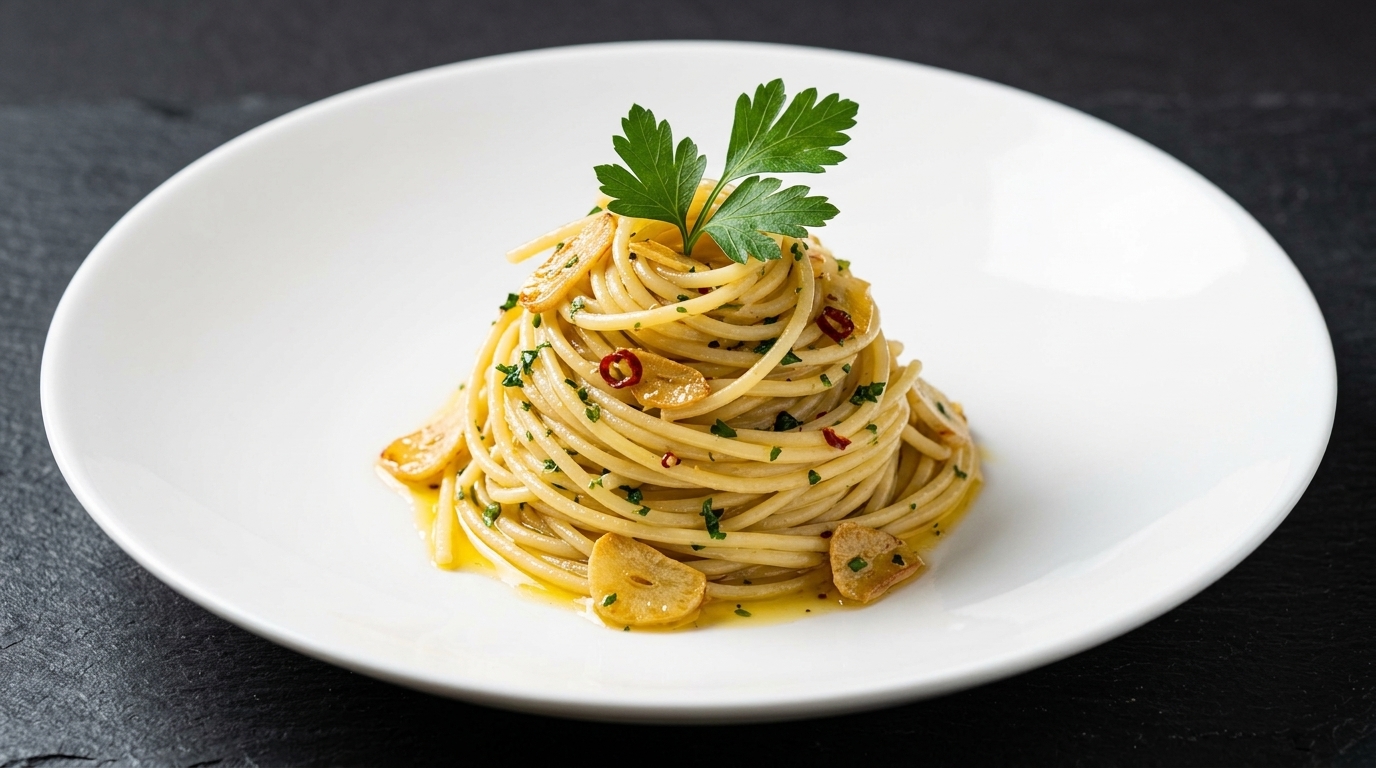
Hailing from Naples, Spaghetti Aglio e Olio is a masterclass in Italian simplicity. This version utilizes a specific parboiling technique and the mantecatura method, involving vigorous tossing of starch-rich pasta water and olive oil, to create a silky golden sauce that clings to every strand without the need for cream.
Ingredients
- 100 g spaghetti
- 1 head garlic
- 1 fresh red chili
- 1 bunch Italian parsley
- 4 tbsp extra virgin olive oil
- to taste sea salt
- to taste black pepper
Instructions
- 1Start boiling the pasta
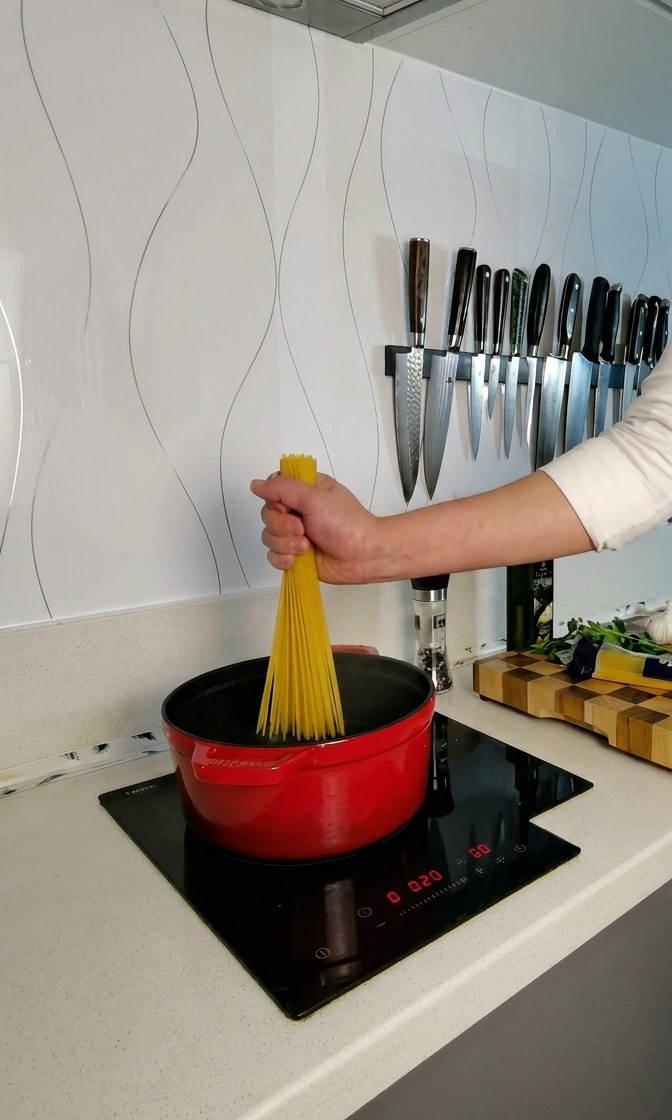
Take 100 grams of dry spaghetti and give it a reverse twist before placing it into a pot of boiling water. This technique helps the pasta spread out evenly as it softens. At this stage, do not add any salt to the water yet.
Tip: The reverse twist ensures the strands dont stick together immediately upon entering the water. - 2Parboil and reserve
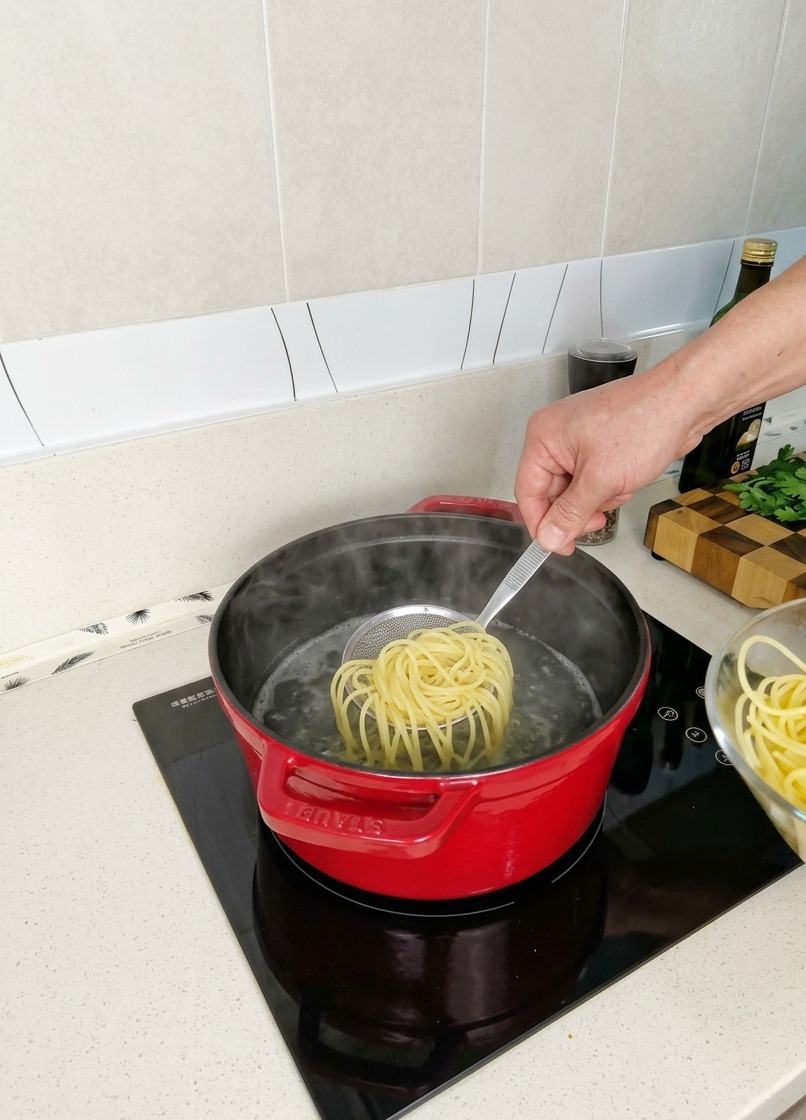
Boil the spaghetti for exactly three minutes. Use a slotted spoon or strainer to lift the parboiled pasta out of the pot and transfer it to a bowl. Make sure to reserve the starchy pasta water, as it is essential for the sauce later.
Tip: Parboiling for only three minutes keeps the pasta firm, allowing it to finish cooking in the sauce for better flavor absorption. - 3Peel garlic with the bowl method
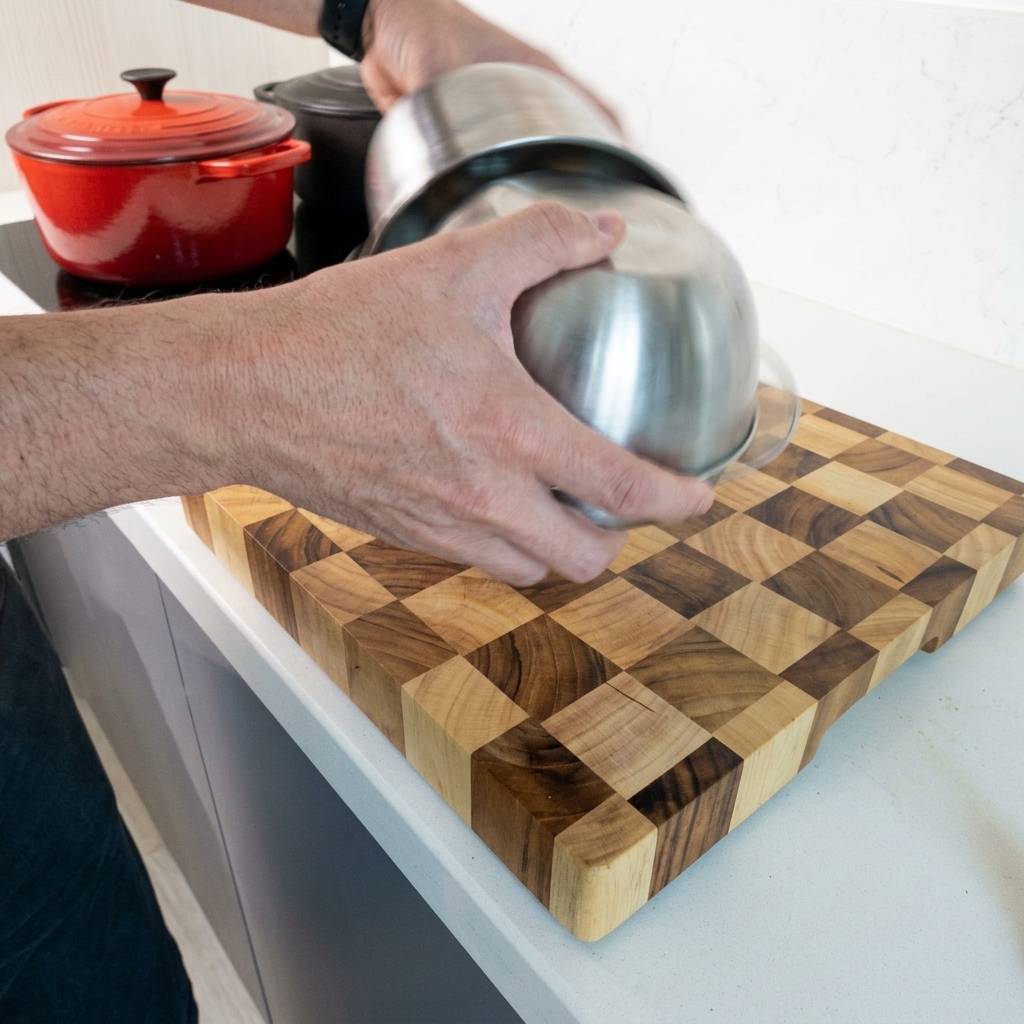
Break the garlic head into individual cloves and place them into a metal bowl. Cover with a second bowl of the same size and shake them together vigorously between 59 and 77 times. The friction against the metal and other cloves will cause the skins to fall off easily.
Tip: Ensure the bowls are held tightly together to prevent cloves from flying out; this is the fastest way to peel a large amount of garlic. - 4Slice the garlic thinly
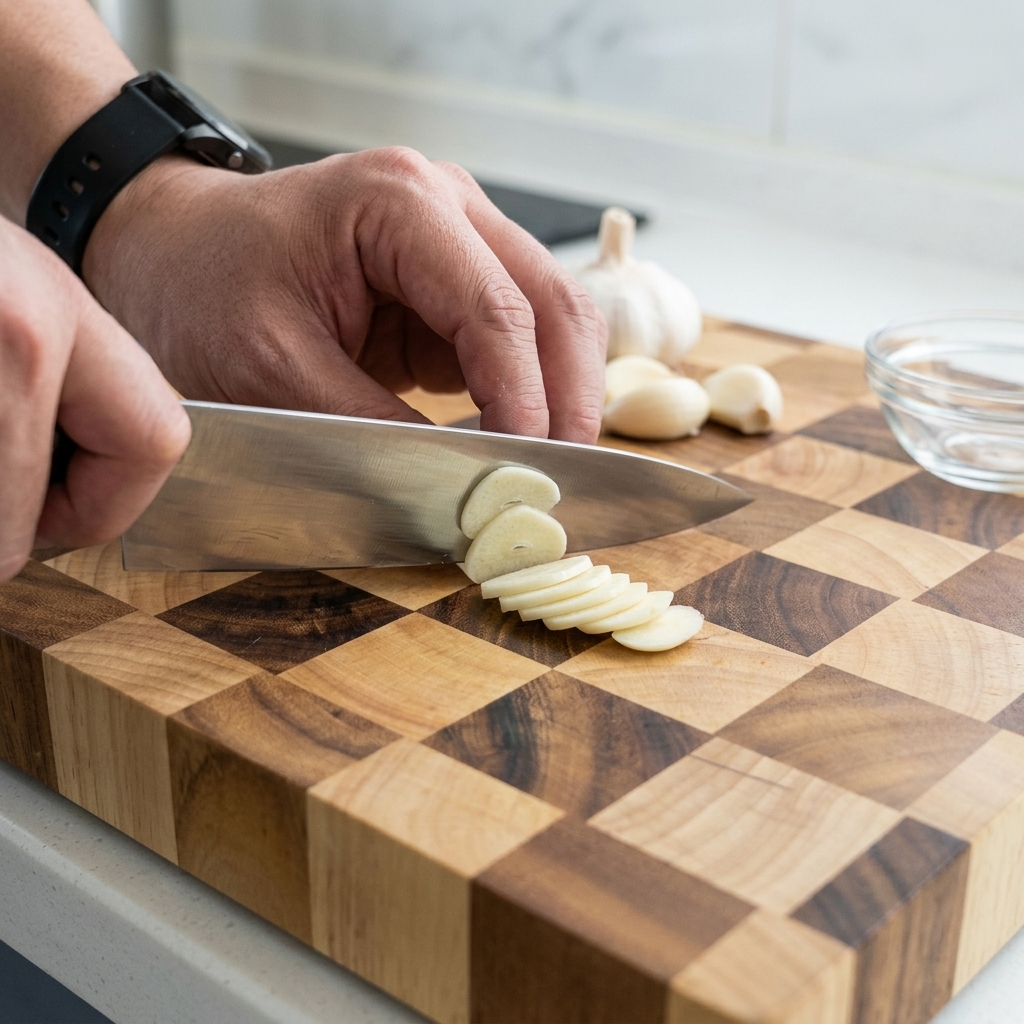
Take the peeled garlic cloves and place them on a cutting board. Using a sharp chefs knife, slice the garlic into very thin, even pieces. Consistent thickness ensures that all the garlic chips will brown at the same rate in the oil.
Tip: Thin slices provide more surface area for the oil to extract flavor compared to minced garlic, and they look beautiful in the final dish. - 5Prep the chili
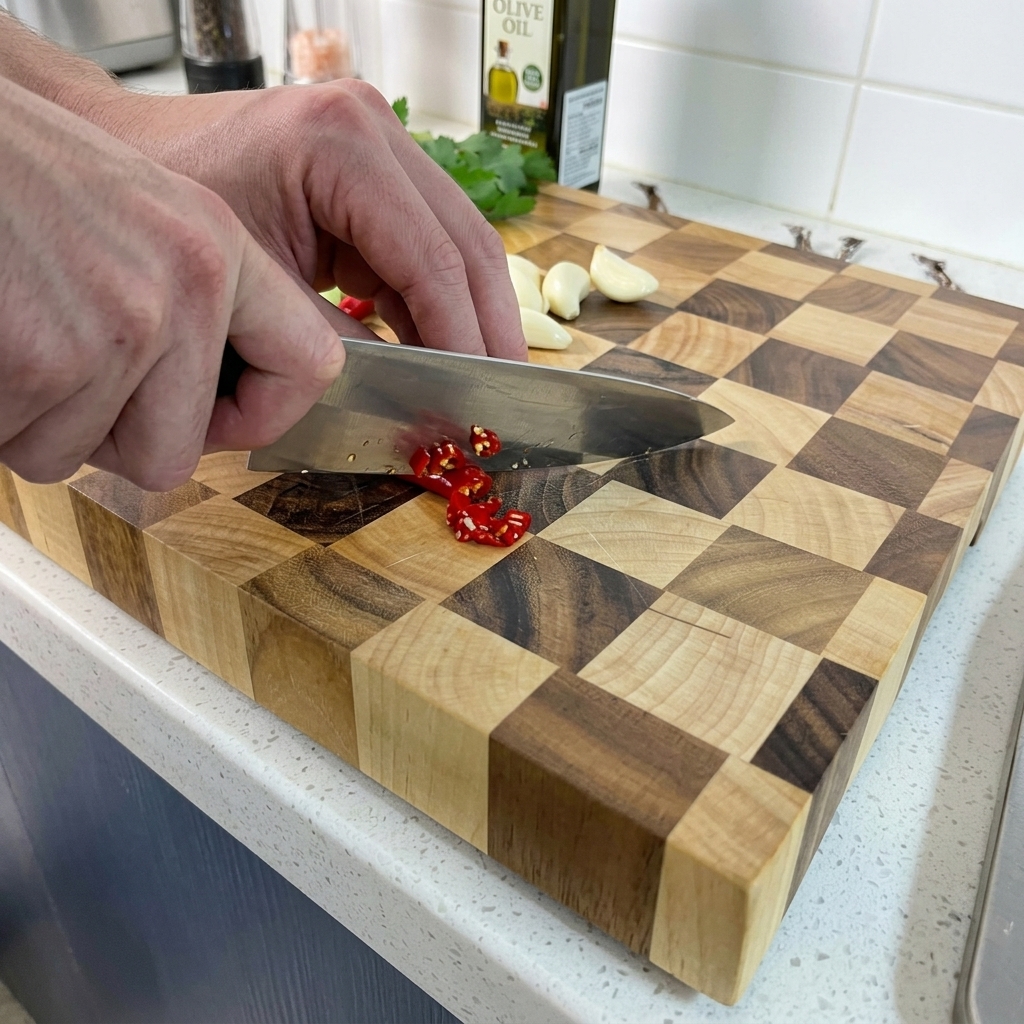
Take a fresh red chili, remove the seeds if you prefer a milder heat, and mince it into small pieces. The chili will provide the peperoncino element of the dish, adding a sharp contrast to the rich garlic oil.
Tip: Wash your hands immediately after handling the chili to avoid irritation to your eyes or skin. - 6Finely chop the parsley
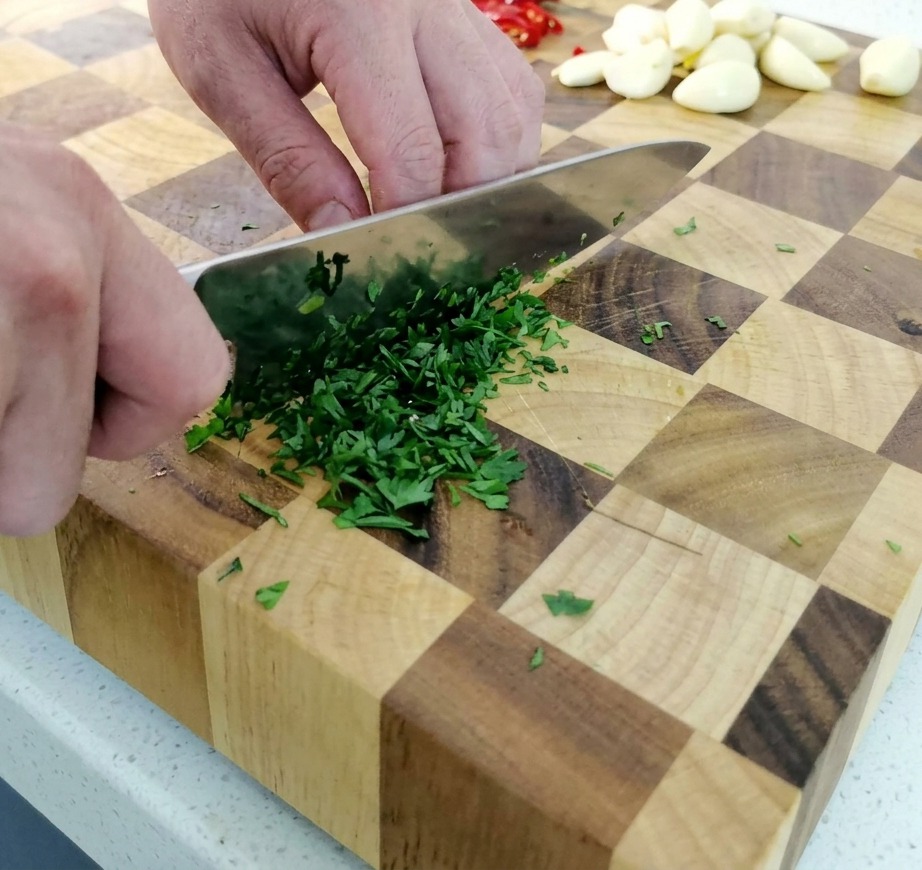
Gather the fresh Italian parsley and use a sharp chefs knife to finely chop the leaves. Aim for a consistent, fine mince to ensure the herbs flavor and vibrant color are evenly distributed throughout the pasta sauce during the final assembly.
Tip: Make sure the parsley is completely dry before chopping to prevent it from bruising or becoming soggy on the cutting board. - 7Sauté the garlic and aromatics
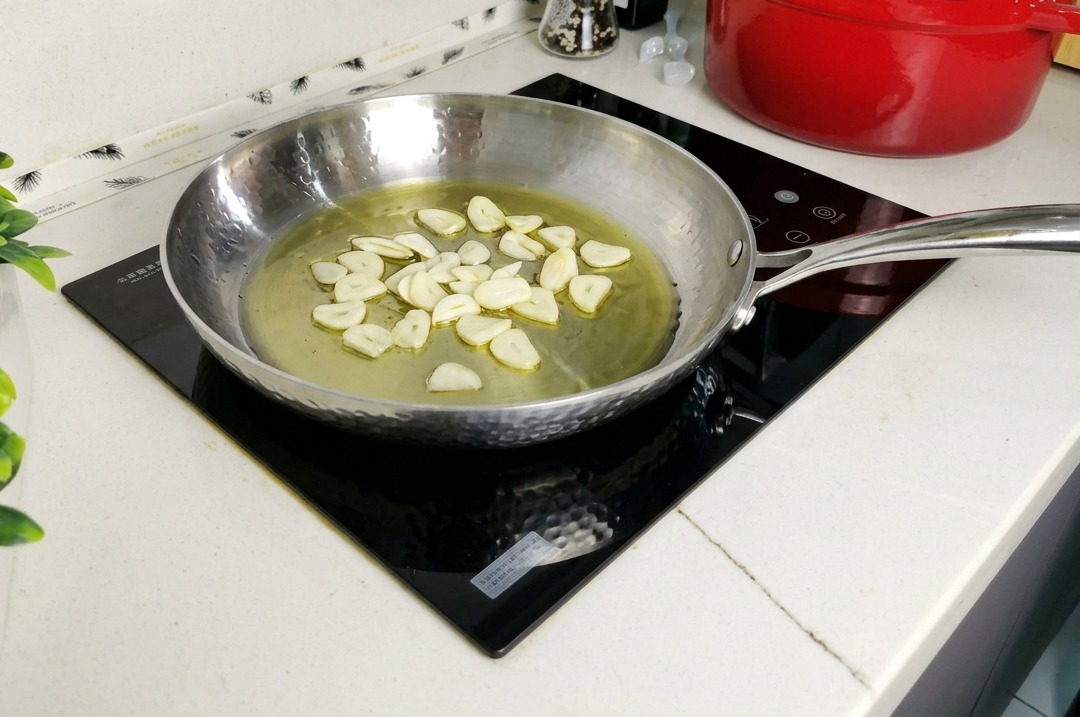
Place a stainless steel pan over medium-low heat and add a generous amount of olive oil. Add the thinly sliced garlic and the parsley stems to the pan. Sauté them gently, allowing the garlic to slowly infuse the oil with flavor. The stems provide a deep herbal base that enhances the overall aromatic profile of the oil.
Tip: Keep the heat low at this stage. Garlic can turn bitter very quickly if it burns, so you want to achieve a light golden color slowly. - 8Add the pasta water
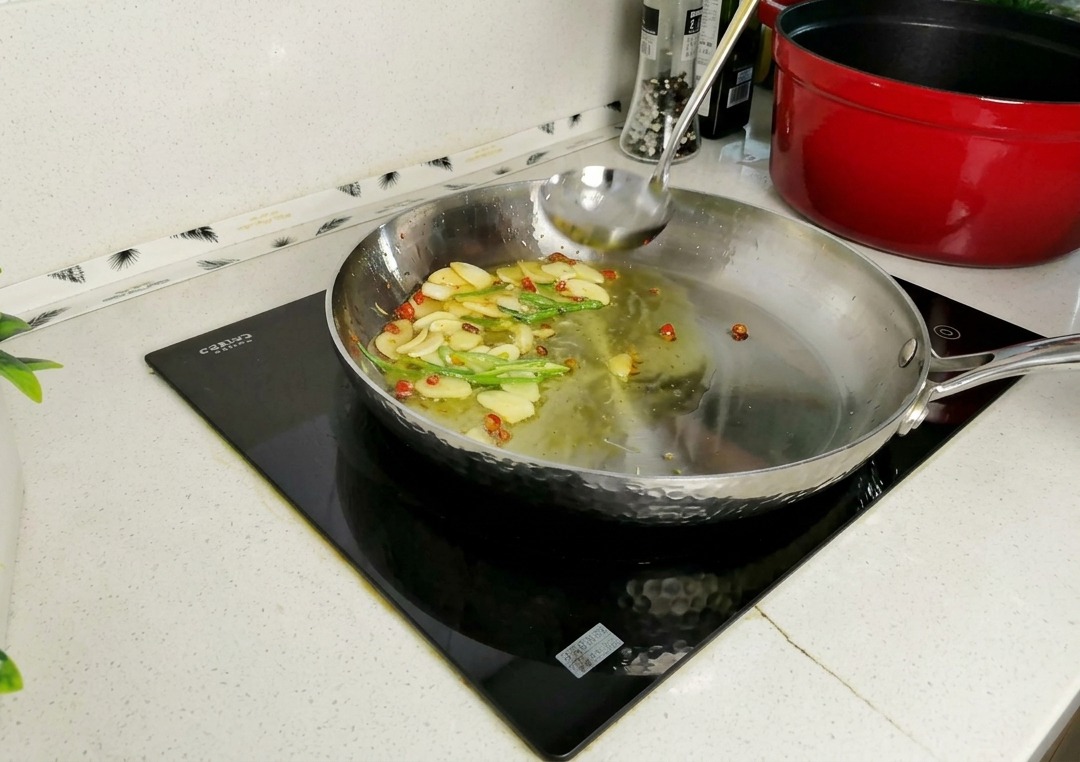
Once the garlic edges are colored and the chilies are fragrant, add three ladles of the reserved pasta water into the pan. This liquid serves as the foundation for the emulsified sauce and prevents the aromatics from overcooking.
Tip: The starch in the pasta water is essential for creating a creamy, cohesive sauce that clings perfectly to the noodles. - 9Incorporate the spaghetti
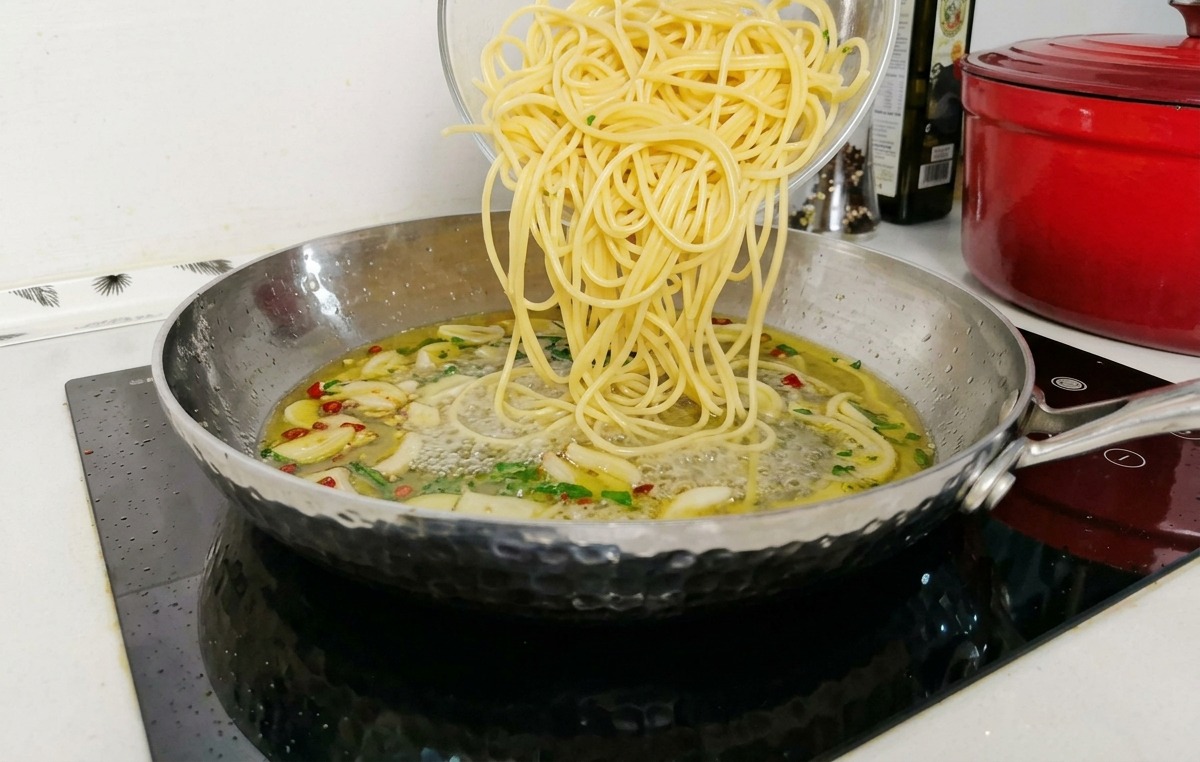
Carefully add the parboiled spaghetti into the shimmering pan containing the oil and pasta water base. The noodles will continue to cook in this flavorful liquid, absorbing the essence of the garlic and chili as the sauce reduces.
Tip: If the pan looks too dry at this stage, dont hesitate to add another small splash of pasta water to keep the noodles moving. - 10Season with pepper
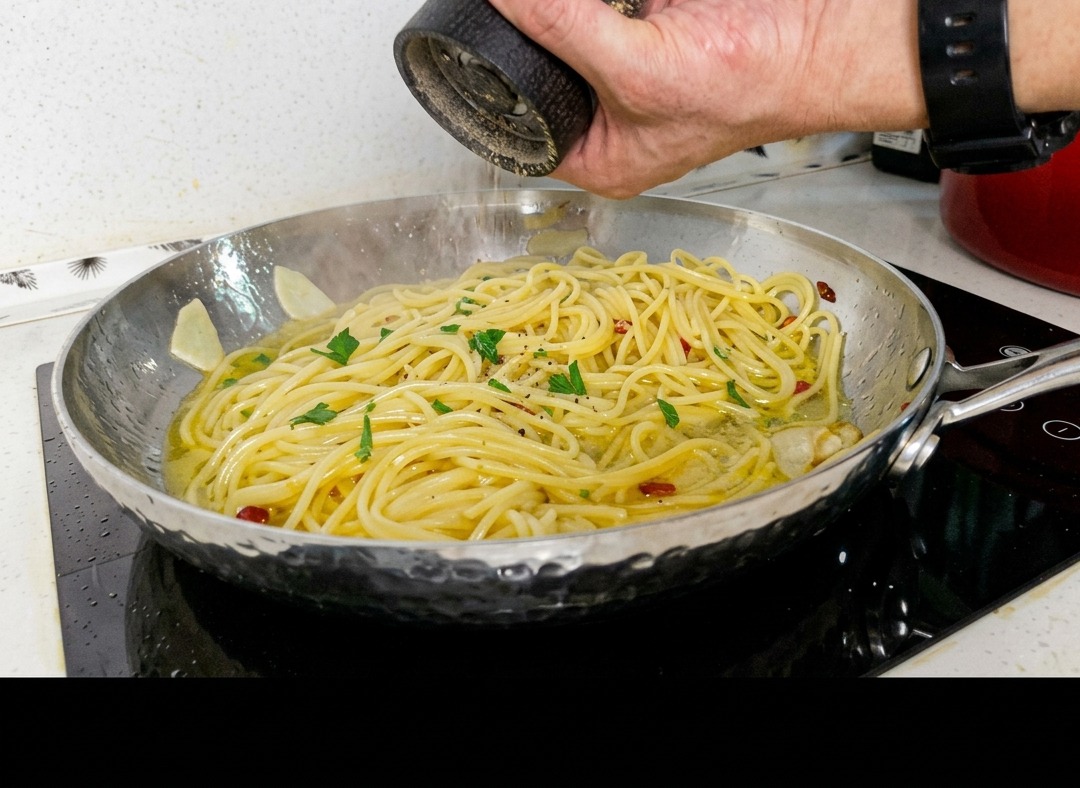
As the sauce begins to emulsify and coat the spaghetti, season the dish with a generous amount of freshly ground black pepper and sea salt. The pepper adds a sharp, aromatic finish that balances the richness of the olive oil and garlic.
Tip: Always use a high-quality pepper mill to grind the peppercorns fresh for the most vibrant flavor profile. - 11Add the chopped parsley
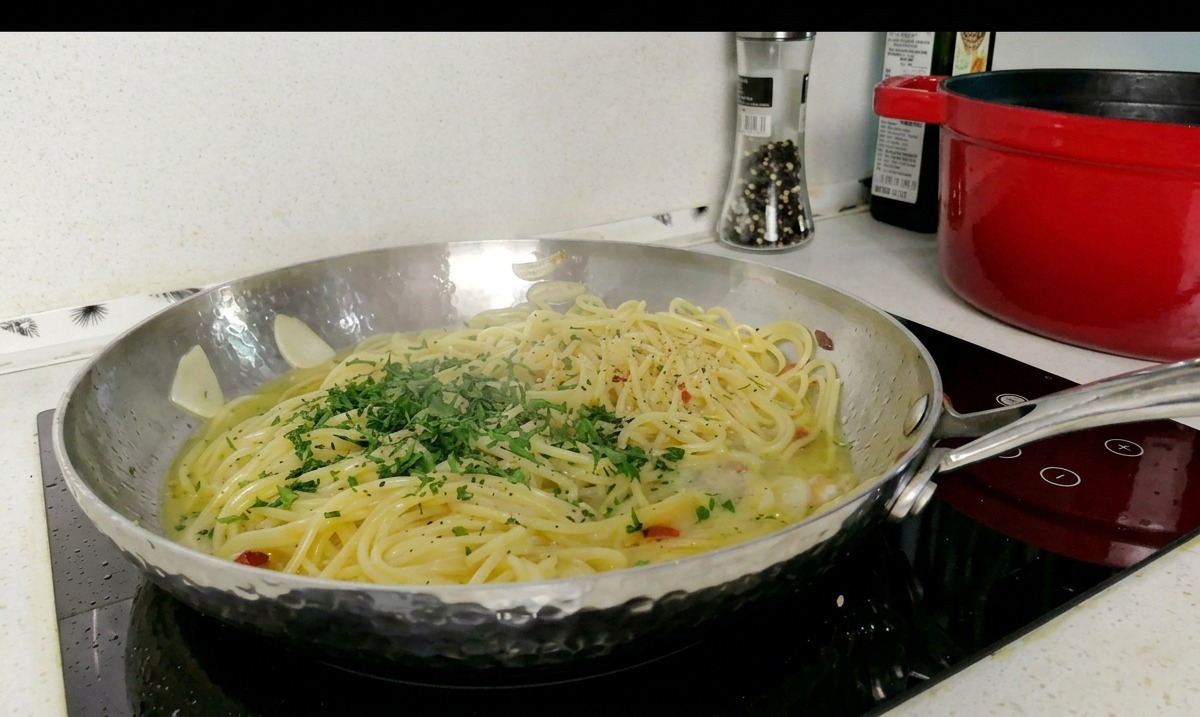
Add the finely chopped Italian parsley to the pan. Toss the noodles quickly over the heat to ensure the parsley is evenly distributed and the sauce emulsifies into a smooth, glossy coating that clings to every strand of pasta.
Tip: Add the parsley right at the end to maintain its bright green color and fresh, grassy flavor. - 12Emulsify the sauce
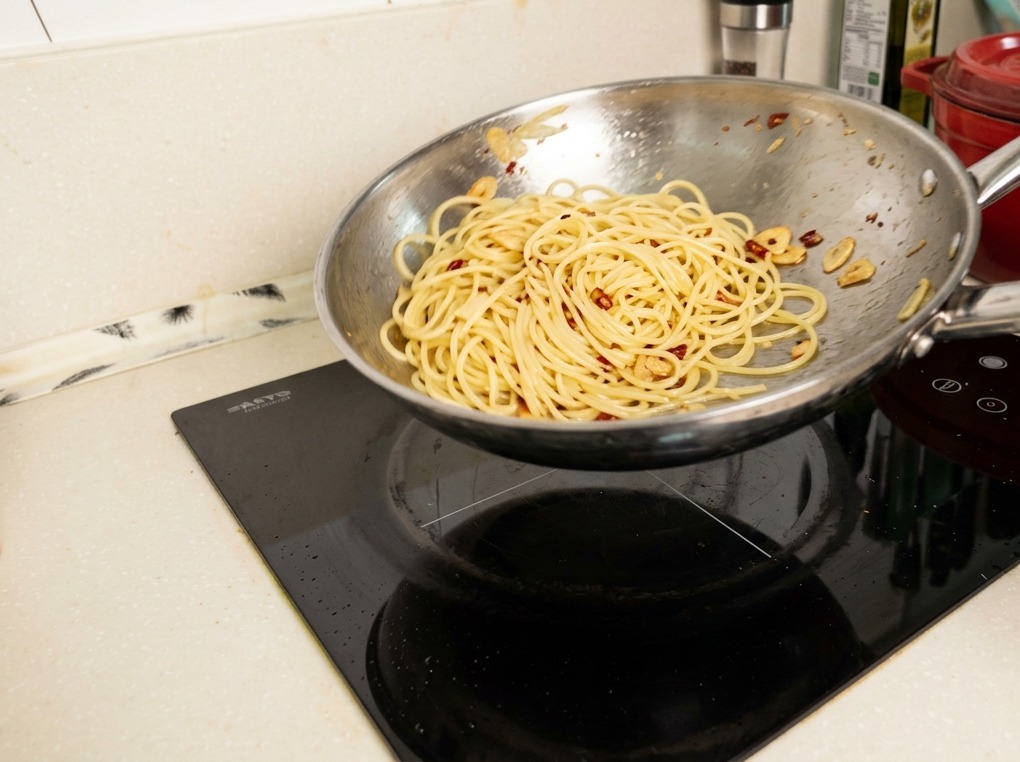
Increase the heat slightly and toss the pan vigorously while adding small splashes of the reserved pasta water. The agitation, combined with the starch from the water and the olive oil, creates a creamy, stable emulsion that clings perfectly to the spaghetti noodles.
Tip: The tossing motion is the secret to a perfect Aglio e Olio. It creates that signature silky texture rather than just having oily noodles sitting in water. - 13Plate the pasta
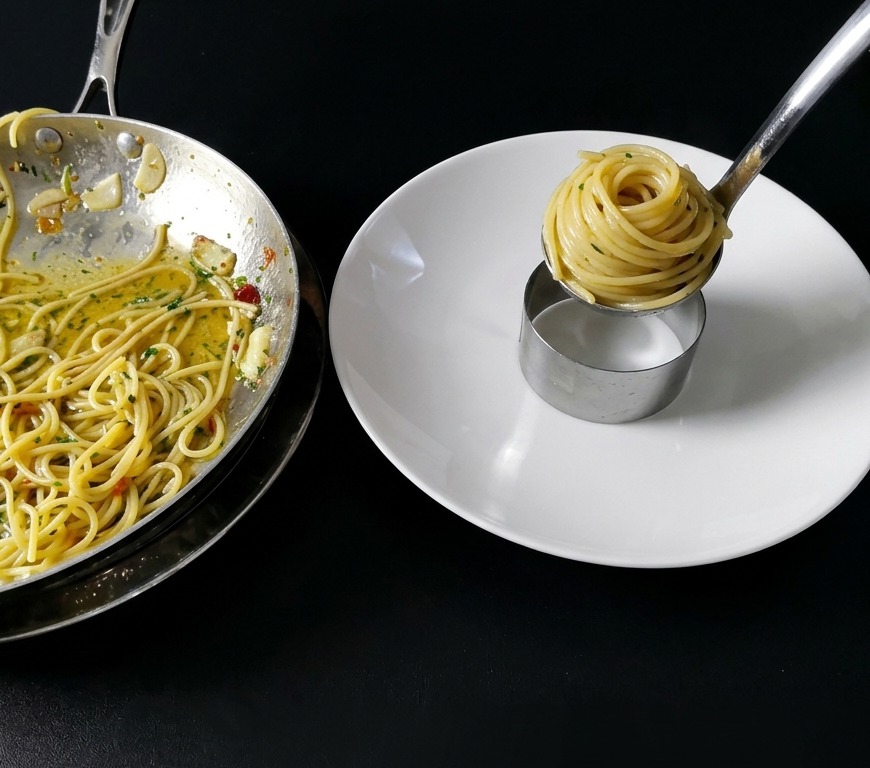
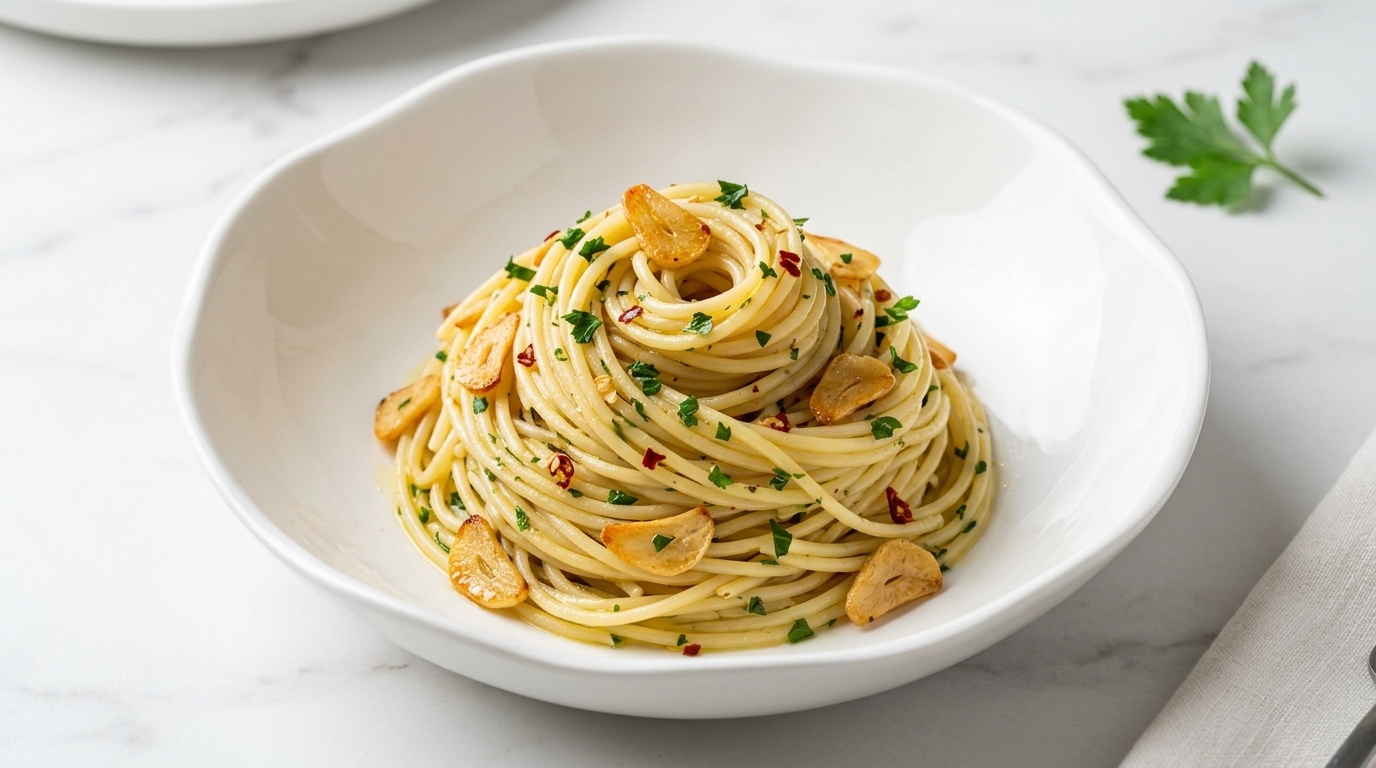
For a professional presentation, use tweezers to pick up a portion of the spaghetti and twirl it against a large spoon or ladle to create a tight nest. Place a metal ring mold in the center of a white plate and carefully lower the pasta nest into it. Once secured, remove the mold, pour the remaining emulsified sauce over the top, and garnish with a fresh sprig of parsley.
Tip: Using a mold keeps the pasta compact and elegant. Once you remove the mold, you can pour the remaining sauce over the top for extra flavor.