Honey-Glazed Roasted Char Siu Pork Ribs
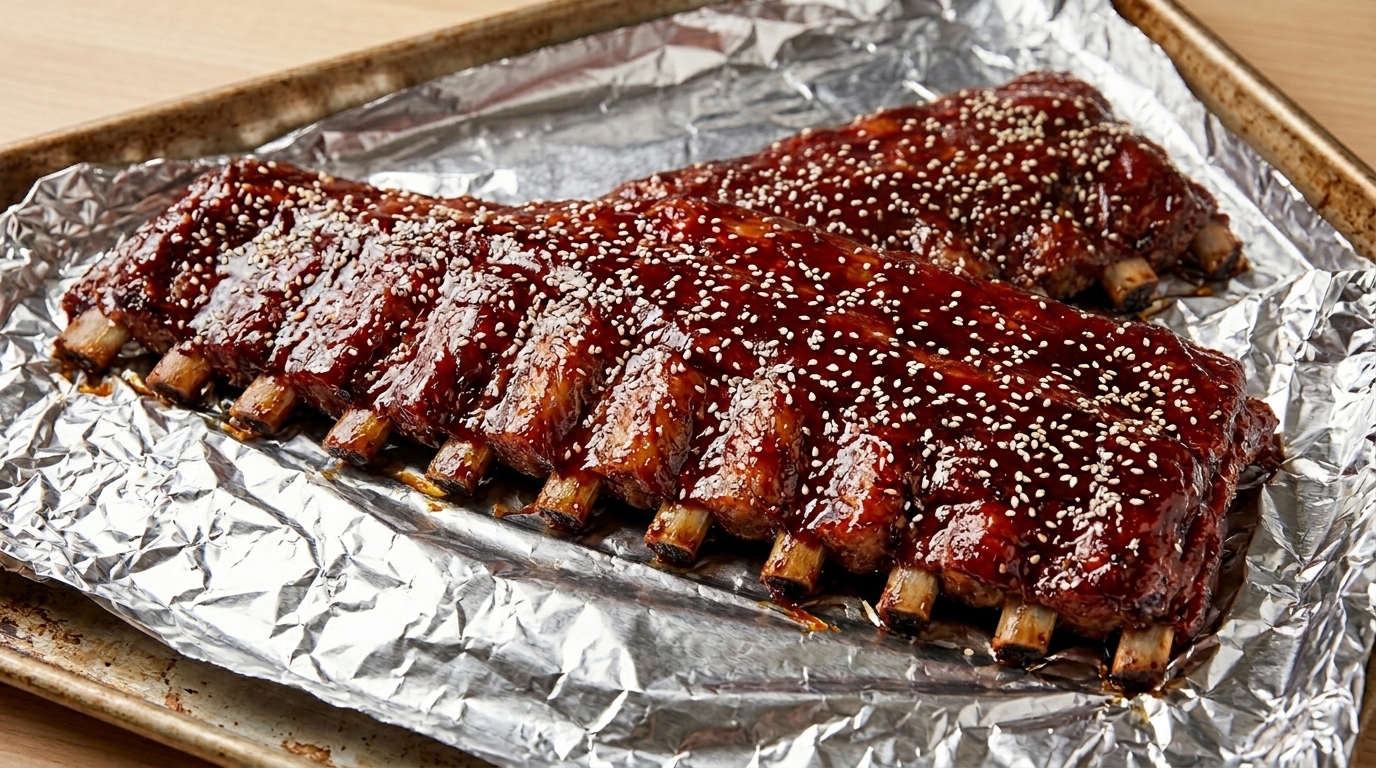
Fall-off-the-bone tender pork ribs with a sticky, mahogany-red glaze made from red fermented bean curd, chu hou paste, and layers of sweet honey.
These ribs are a celebration of Cantonese flavors, using the soul of char siu—red fermented bean curd—to achieve a deep umami profile and natural crimson color. Slow-roasted in foil to maintain moisture before a high-heat honey blast, they are a perfect centerpiece for family gatherings like the Mid-Autumn Festival.
Ingredients
- 1 rack pork ribs
- 3 tbsp red fermented bean curd liquid
- 1 tbsp chu hou paste
- 4 tbsp honey
- 3 cloves garlic
- to taste white sesame seeds
Instructions
- 1Prepare the pork ribs
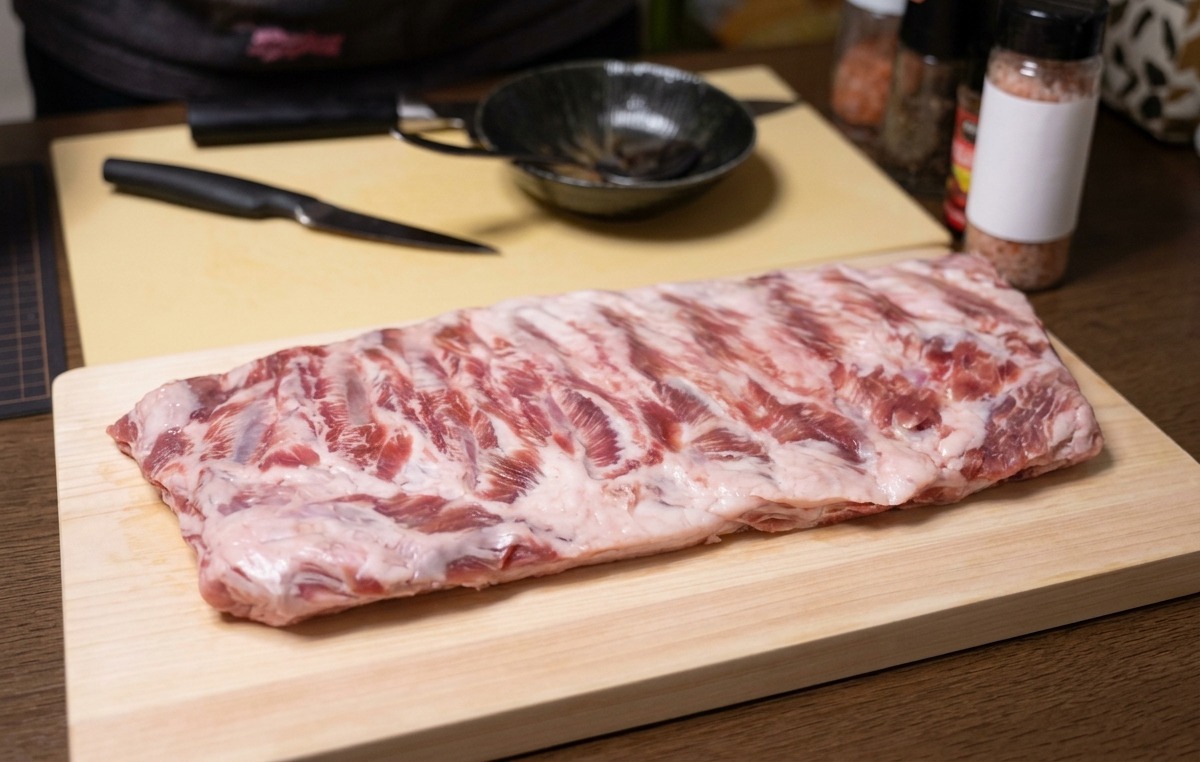
Start by preparing a fresh rack of pork ribs. Wash the meat thoroughly, pat it completely dry with paper towels, and place it on a clean cutting board. Use a sharp knife to carefully trim away any excess white fat from the surface.
Tip: Removing the excess fat ensures the marinade penetrates better and prevents the ribs from becoming too greasy during roasting. - 2Score the rib membrane
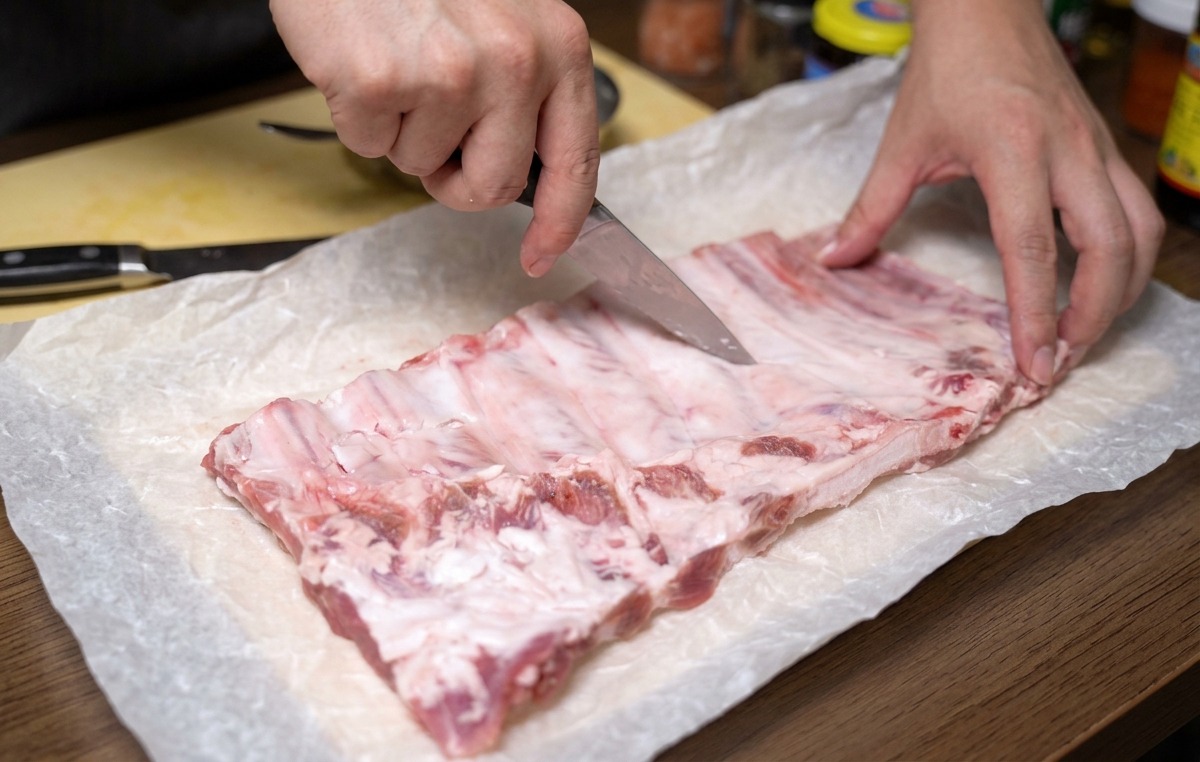
Lay the rack of pork ribs flat with the bone side facing up. Use a sharp knife to carefully score the white membrane along the back, making a couple of shallow cuts across the surface. This crucial step helps the marinade penetrate deeper into the meat and makes the ribs more tender when cooked.
Tip: You dont necessarily need to peel the entire membrane off for this recipe; simply scoring it is enough to let the rich flavors soak in. - 3Mince the garlic
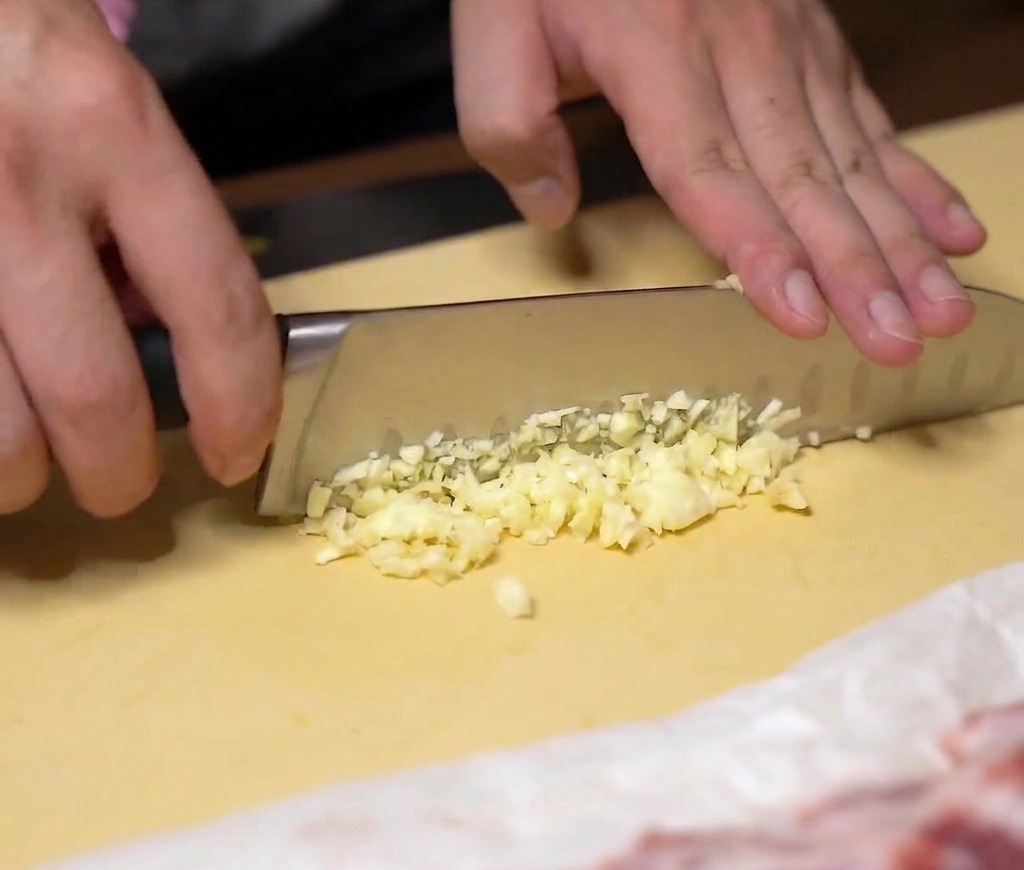
Peel and finely chop several cloves of fresh garlic on a cutting board. Mincing the garlic finely ensures it blends smoothly into the wet marinade and evenly distributes its pungent, aromatic flavor throughout the sauce.
Tip: Smashing the garlic cloves with the flat side of your knife before chopping makes peeling much easier and immediately releases the essential oils. - 4Start the marinade base
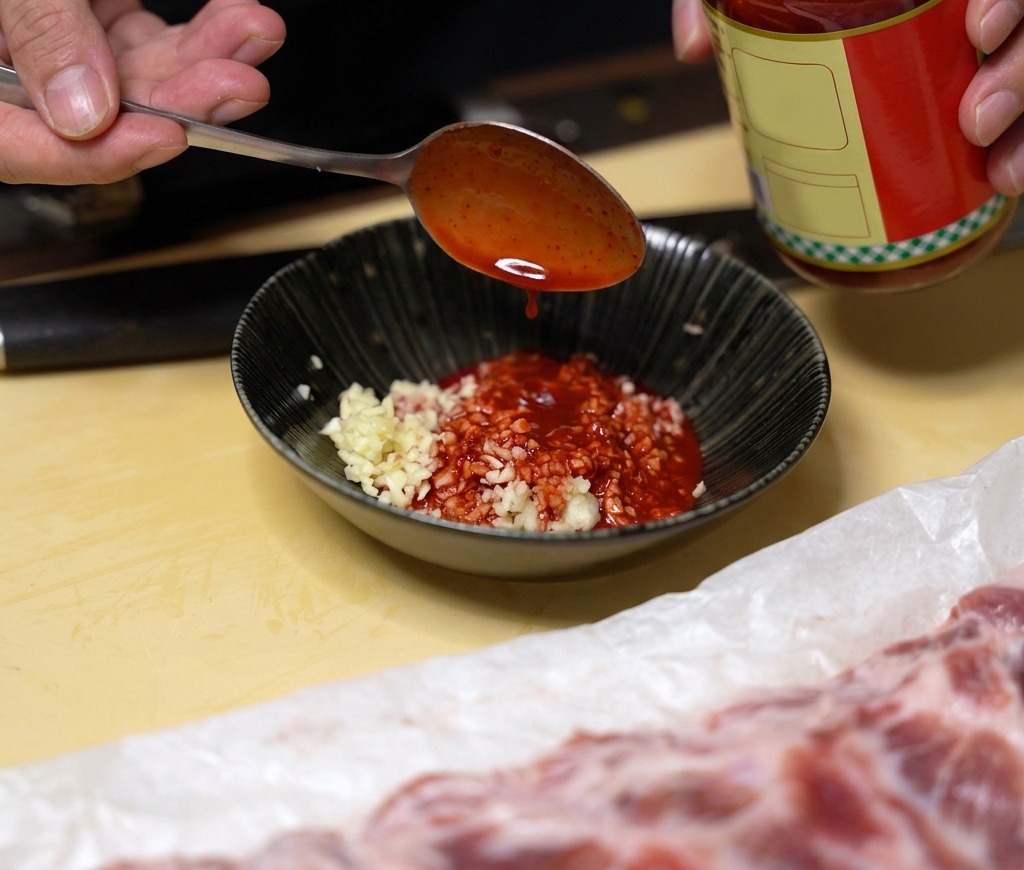
Transfer the freshly minced garlic into a mixing bowl. Add three spoonfuls of the liquid from red fermented bean curd. This distinctive ingredient provides a rich, savory umami depth and lends the classic, deep reddish hue characteristic of traditional char siu preparations.
Tip: If you are scooping out solid pieces of the fermented bean curd along with the liquid, be sure to mash them completely smooth before mixing. - 5Mix in chu hou paste
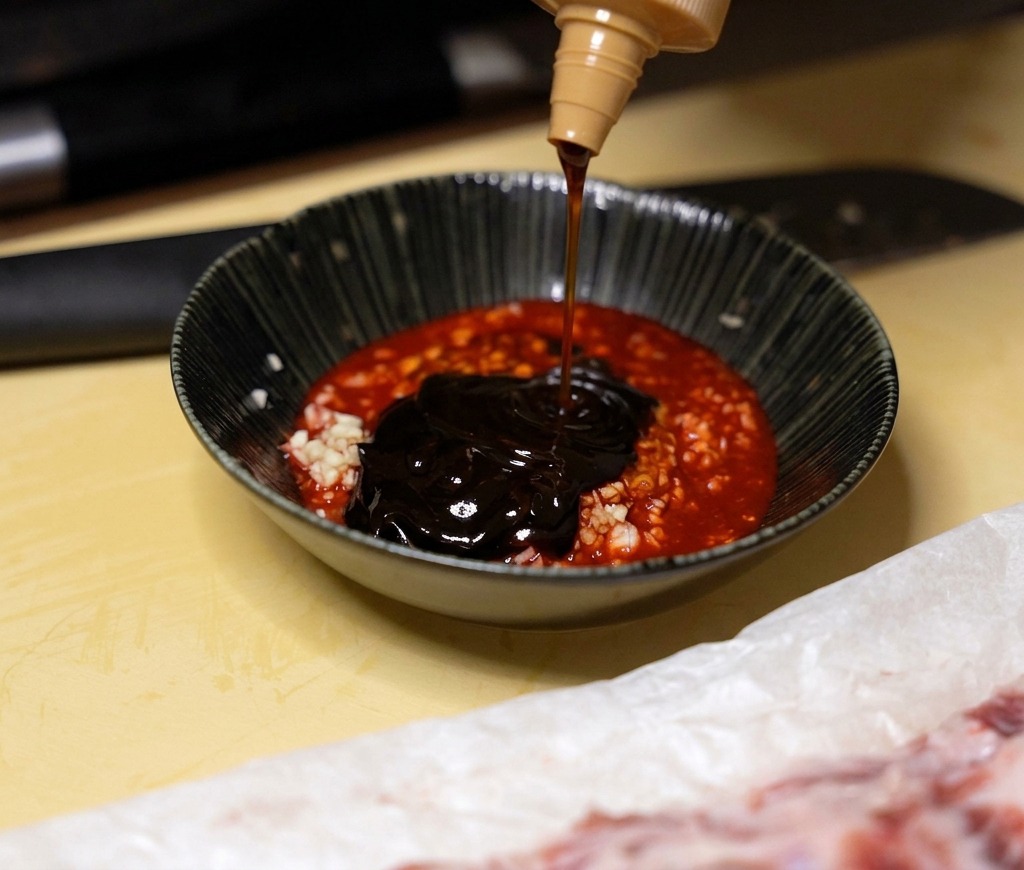
Squeeze one large spoonful of dark chu hou paste into the bowl with the garlic and bean curd liquid. At this stage, you will also want to add two spoons of honey to balance the deep, savory notes with a sticky sweetness. Stir everything thoroughly until completely combined.
Tip: Using ready-made commercial sauces like chu hou paste saves a lot of prep time while still giving your marinade an incredibly complex, authentic flavor profile. - 6Marinate the ribs
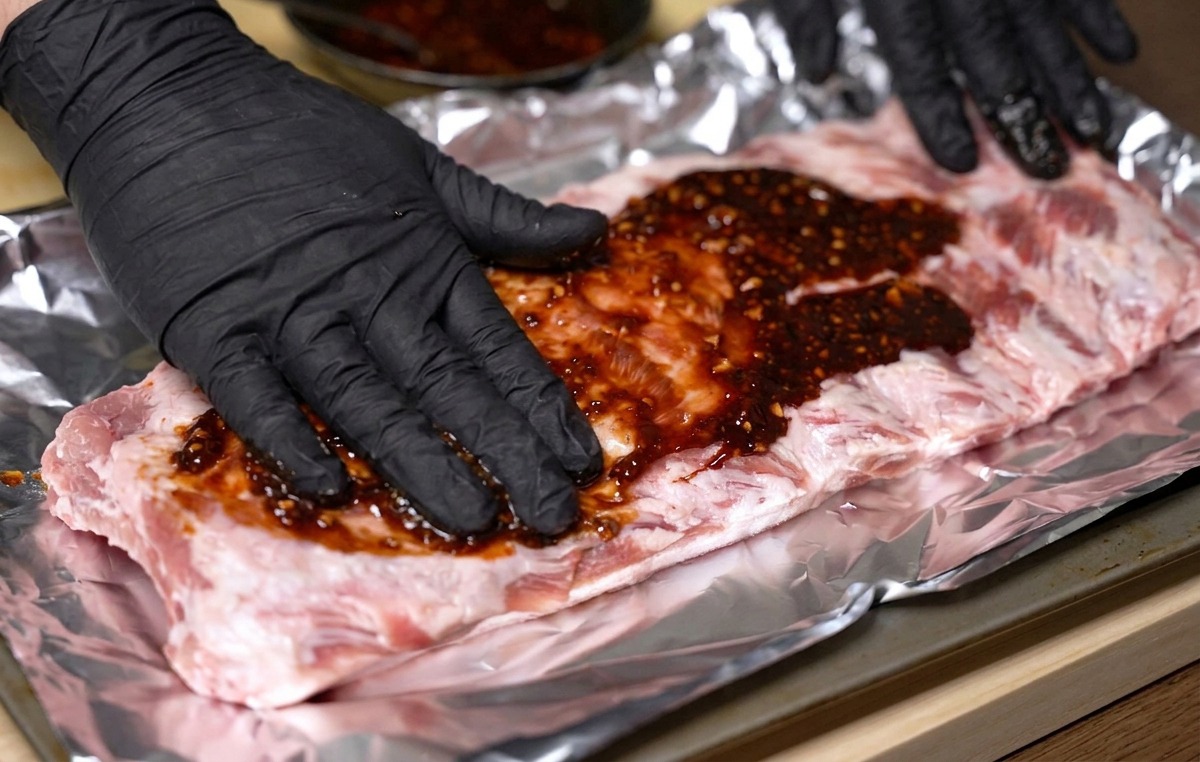
Place the prepared pork ribs into a large shallow dish. Pour the mixed char siu marinade over the meat and use your hands to massage it in thoroughly, ensuring every surface is evenly coated with the thick sauce.
Tip: Wearing food safe gloves while rubbing the meat will prevent your hands from getting stained by the red bean curd and sticky honey. - 7Wrap ribs in foil
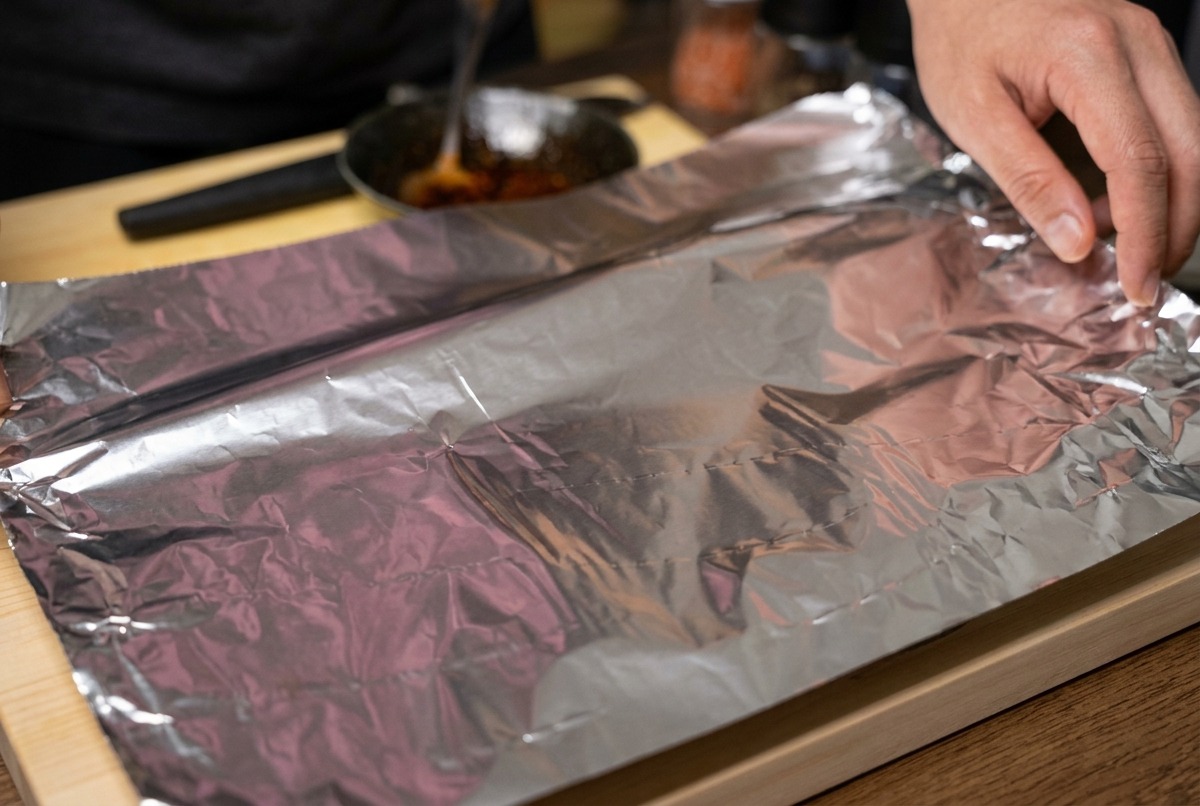
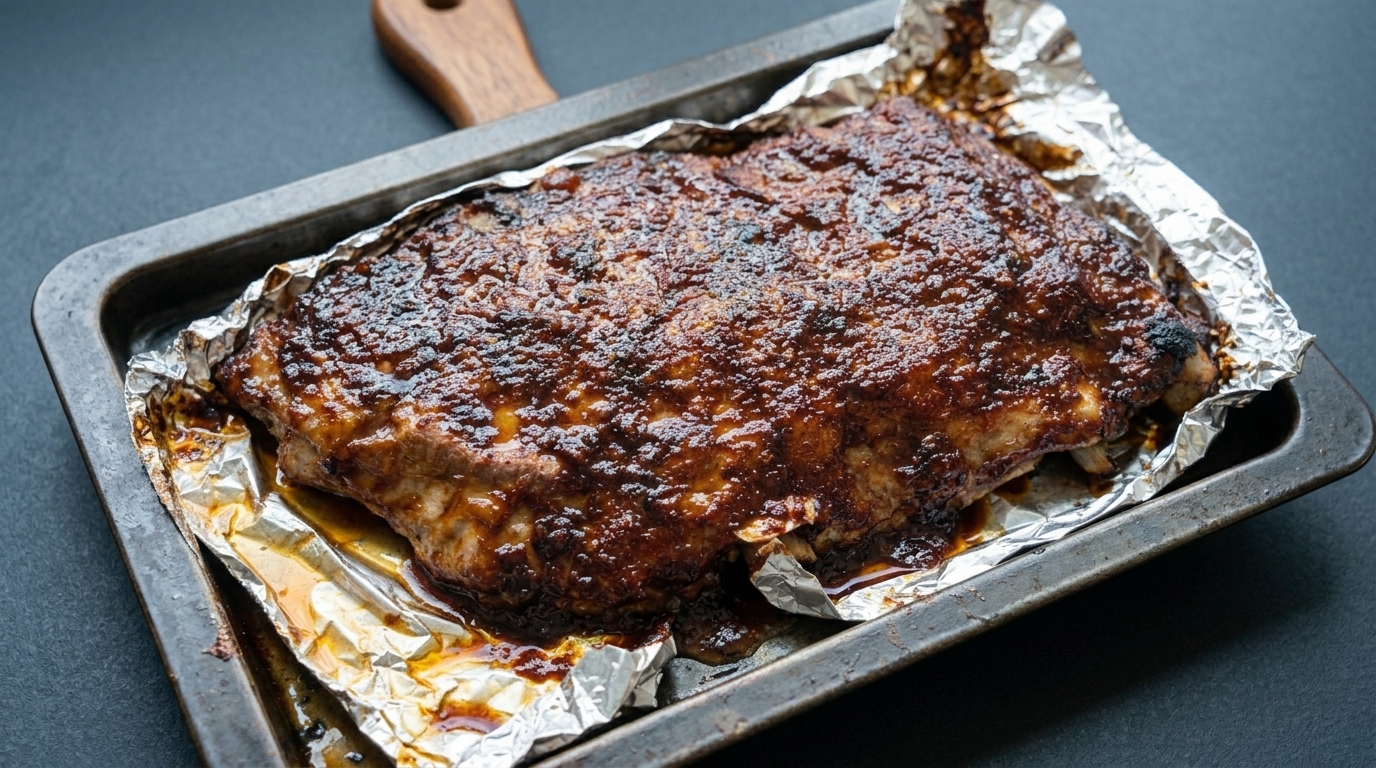
Tear off a large sheet of aluminum foil and carefully fold it over the marinated rack of ribs. Seal the edges tightly to create an enclosed packet. This technique traps the steam and moisture during the initial slow roast, ensuring the meat becomes perfectly tender and falls off the bone.
Tip: If you have time, let the ribs marinate in the foil packet for about an hour before baking for deeper flavor. - 8Slow roast in the oven
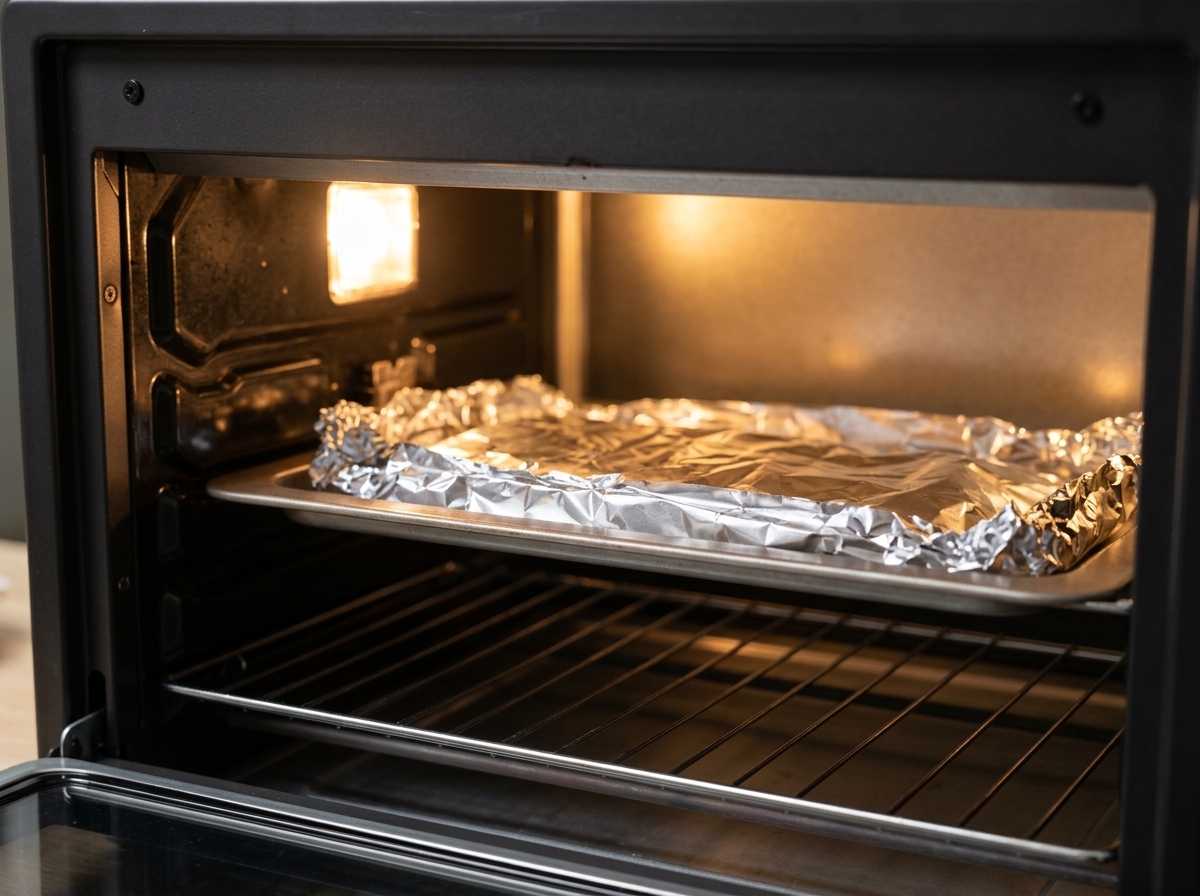
Place the baking tray with the tightly wrapped ribs into a preheated oven. Slow roast at 170°C for about 80 minutes. This low-temperature phase breaks down the connective tissues, making the meat incredibly tender while allowing the marinade to penetrate deeply.
Tip: Wrapping the ribs in foil traps the moisture, preventing the meat from drying out during the long roasting time. - 9Glaze with honey
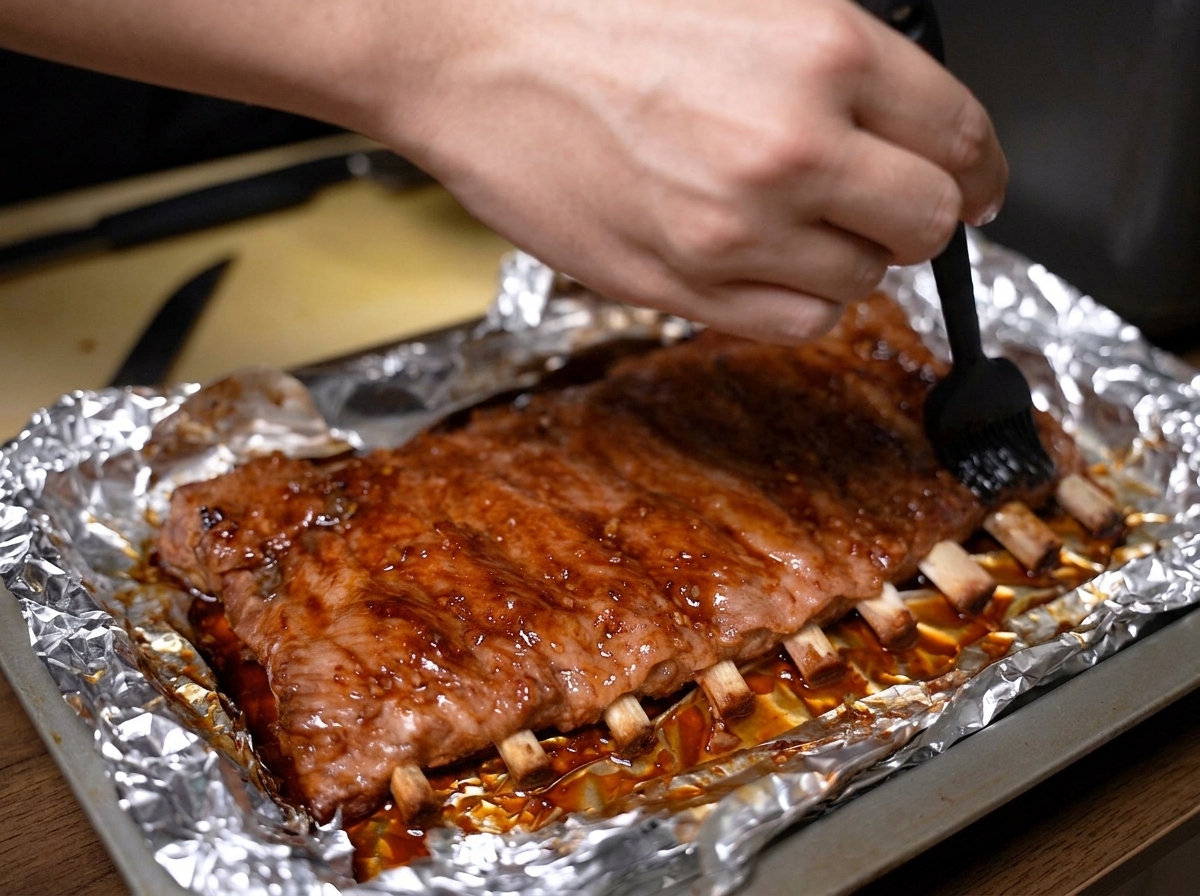
After the initial slow roast, carefully remove the ribs from the oven. Using a basting brush, evenly apply a generous layer of honey over the entire surface of the partially cooked pork ribs.
Tip: Warm the honey slightly before applying to make it much easier to brush a smooth and even layer over the warm meat. - 10High-heat caramelization
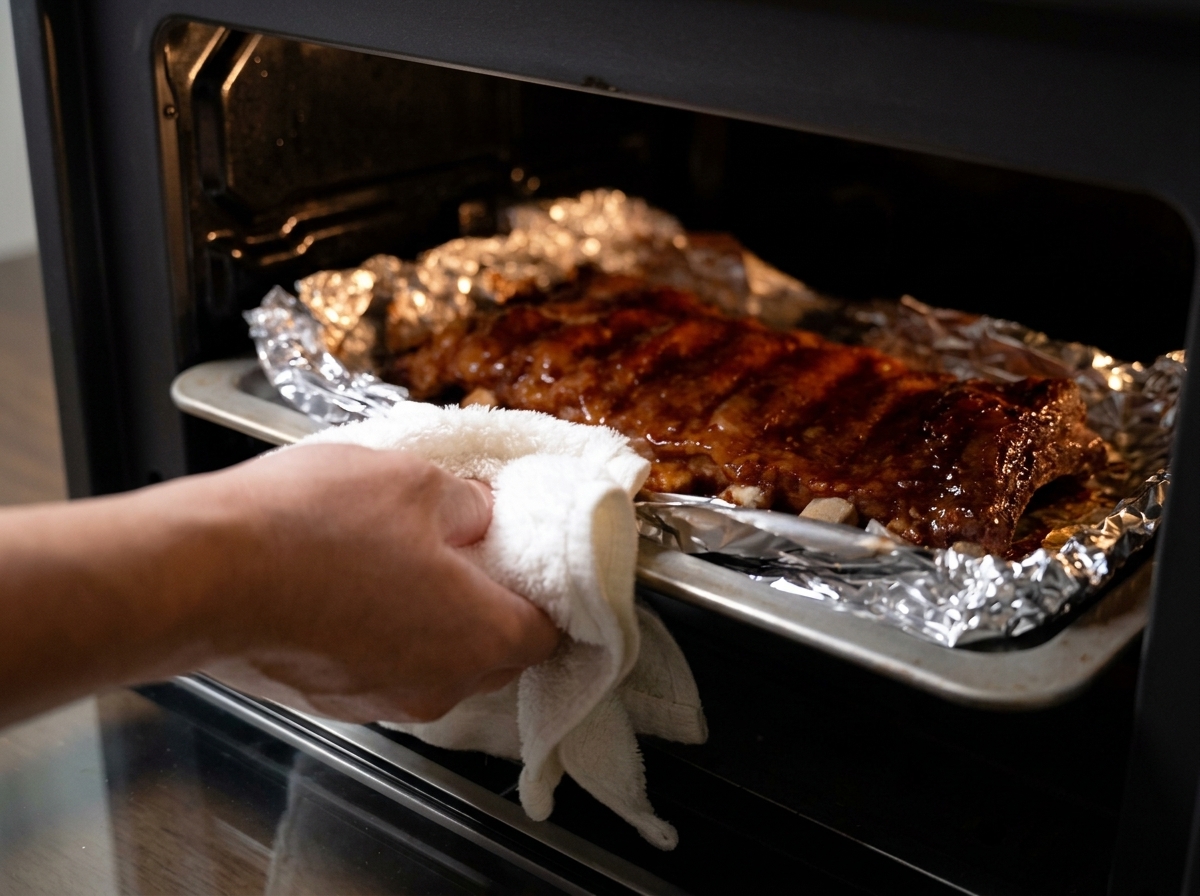
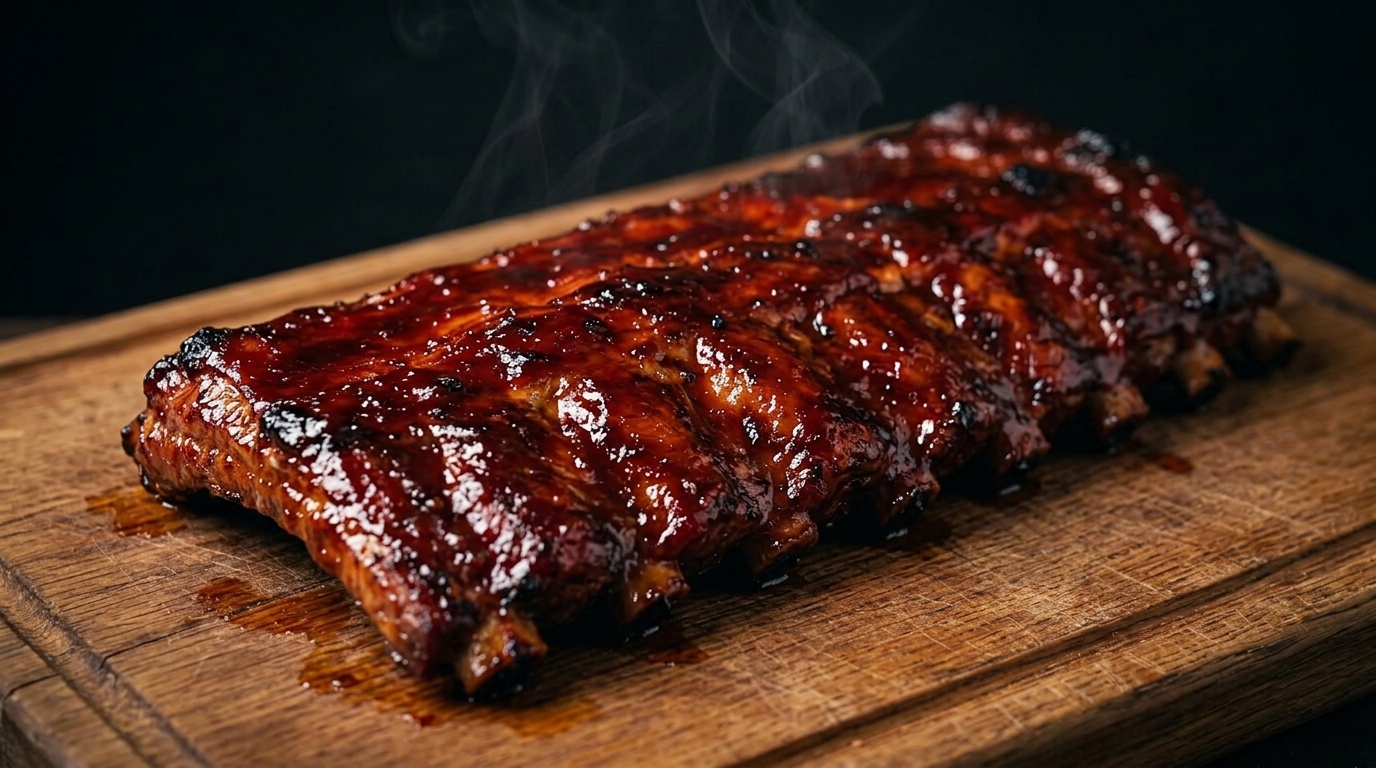
After the initial honey application, return the uncovered ribs to the oven. Increase the heat to 230°C and roast for 15 minutes. This intense heat transforms the honey and sauce into a bubbling, sticky, and slightly charred crust.
Tip: Keep a close eye on the ribs during this final high-heat roasting stage, as the sugar in the honey can burn quickly if left unattended. - 11Apply extra glaze
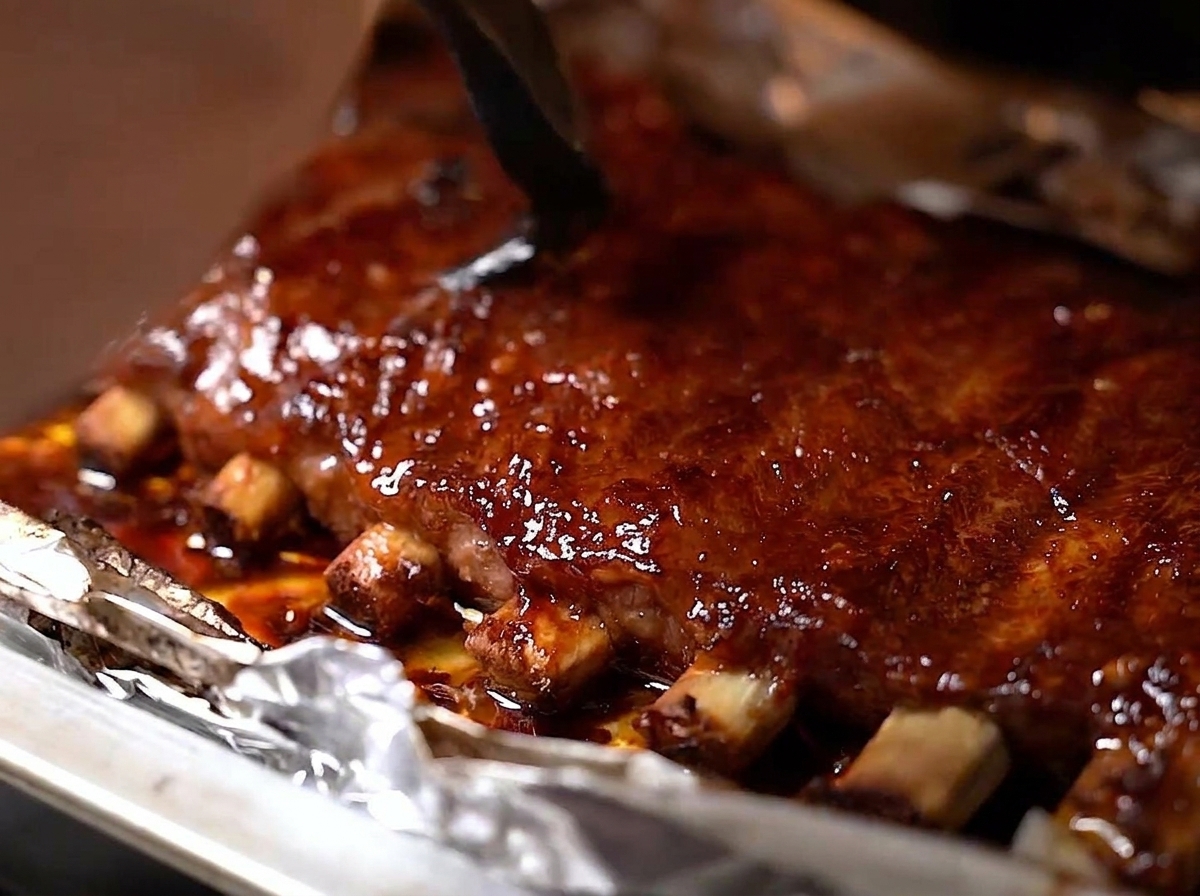
For an exceptionally glossy and flavorful finish, brush an additional layer of honey over the ribs every five minutes during the final high-heat roasting phase. This repeated glazing builds a thick, irresistible sticky coating and gives the char siu its signature deep, tempting color.
Tip: Using a silicone brush helps distribute the honey evenly across the hot surface without tearing the tender, slow-roasted meat. - 12Garnish with sesame seeds
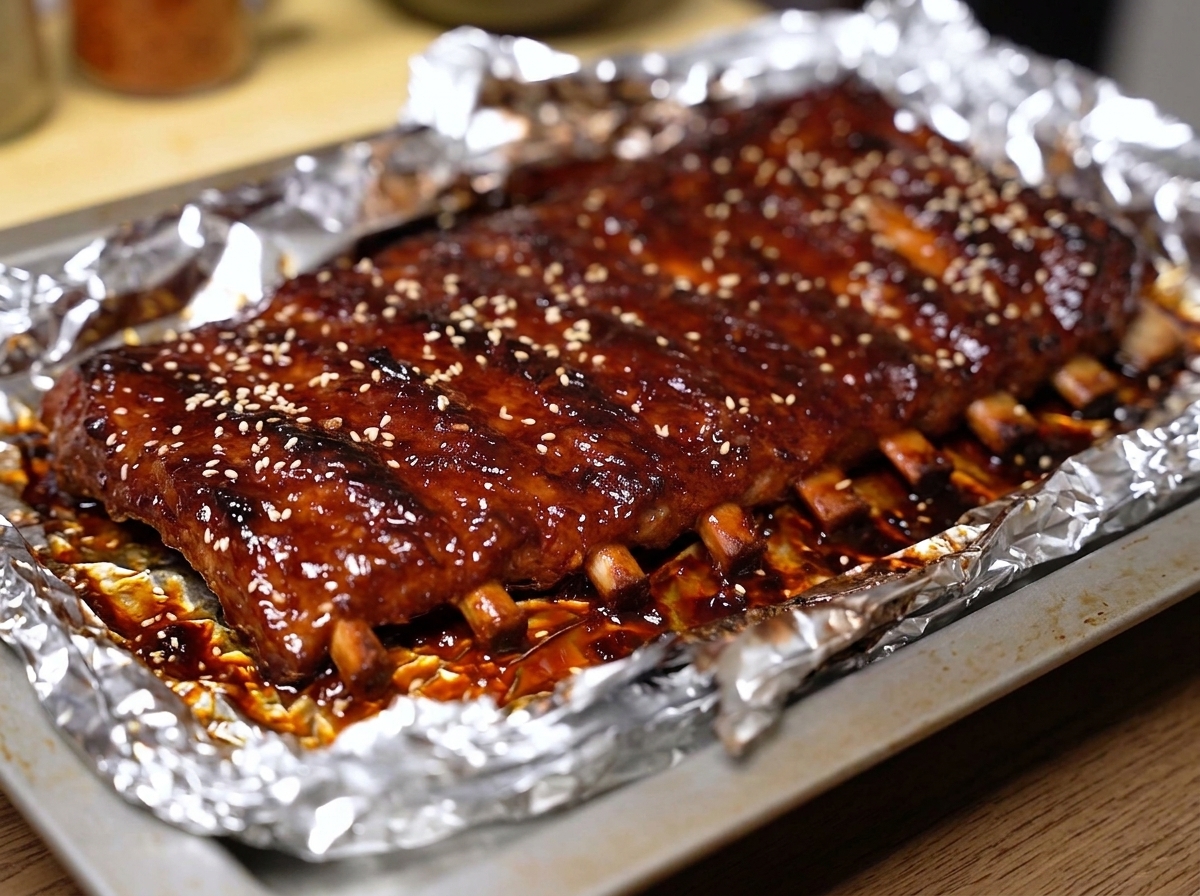
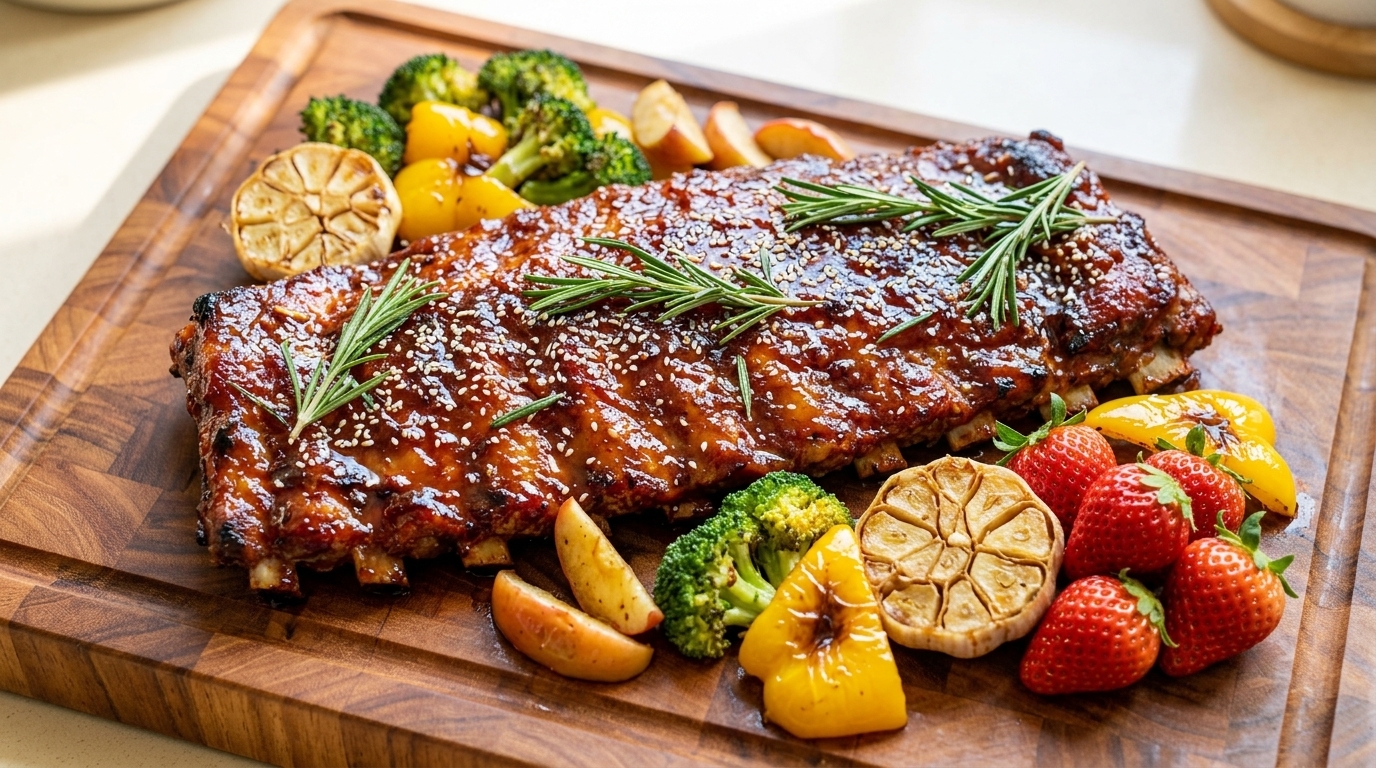
Once the ribs have achieved a beautiful, dark glossy color from the high-heat roasting and repeated honey glazing, remove them from the oven. Sprinkle white sesame seeds evenly over the sticky, caramelized surface for added visual appeal.
Tip: You can lightly toast the white sesame seeds in a dry pan beforehand to bring out more of their nutty aroma. - 13Slice and serve
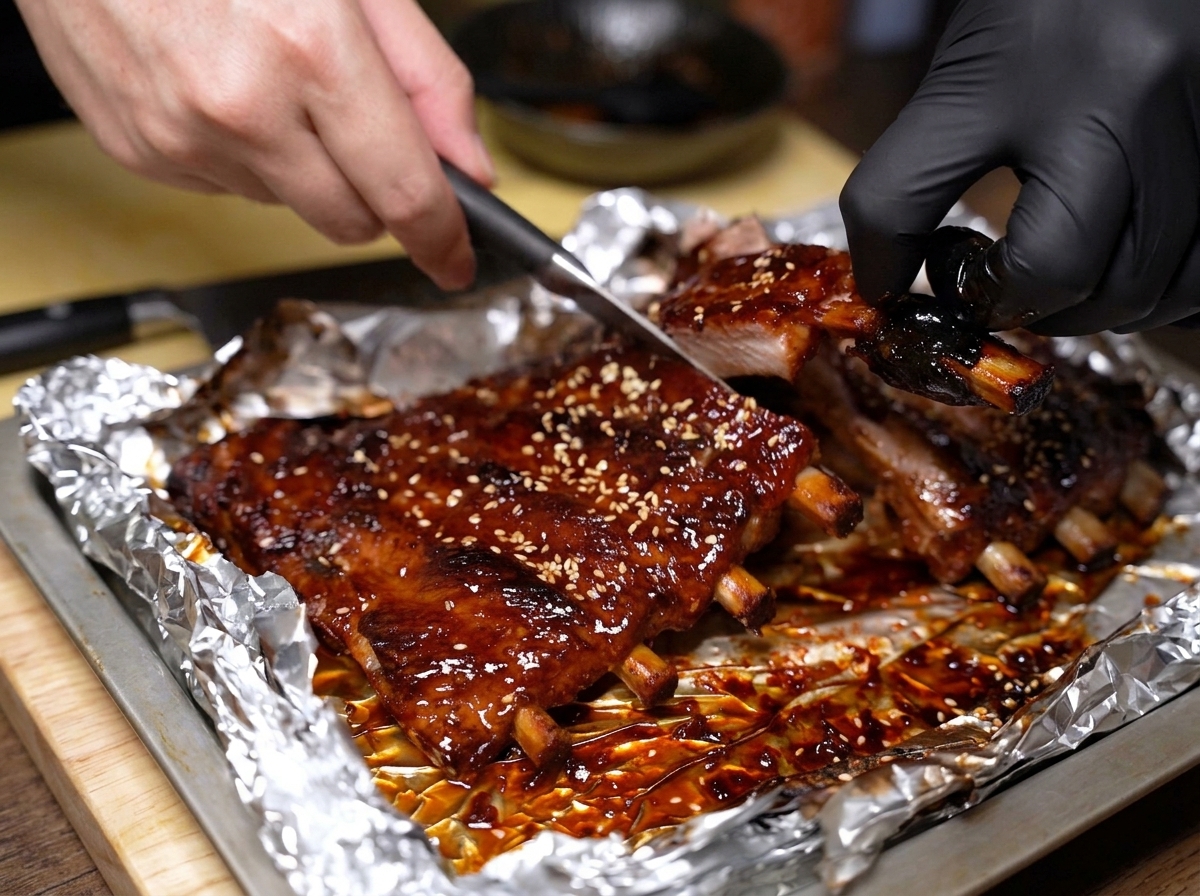
Using a sharp knife, carefully slice the finished rack into individual rib portions, cutting between the bones. The meat will be incredibly tender after the long, slow roast, making it easy to portion and share.
Tip: Let the ribs rest for a few minutes before slicing to allow the meats juices to redistribute and the sticky glaze to set slightly.