Texas-Style Smoked Beef Ribs (Dinosaur Ribs)
Master the ultimate Texas BBQ dinosaur ribs with this low-and-slow recipe. Experience a deep fruitwood smoke ring, peppery bark, and melt-in-your-mouth beef.
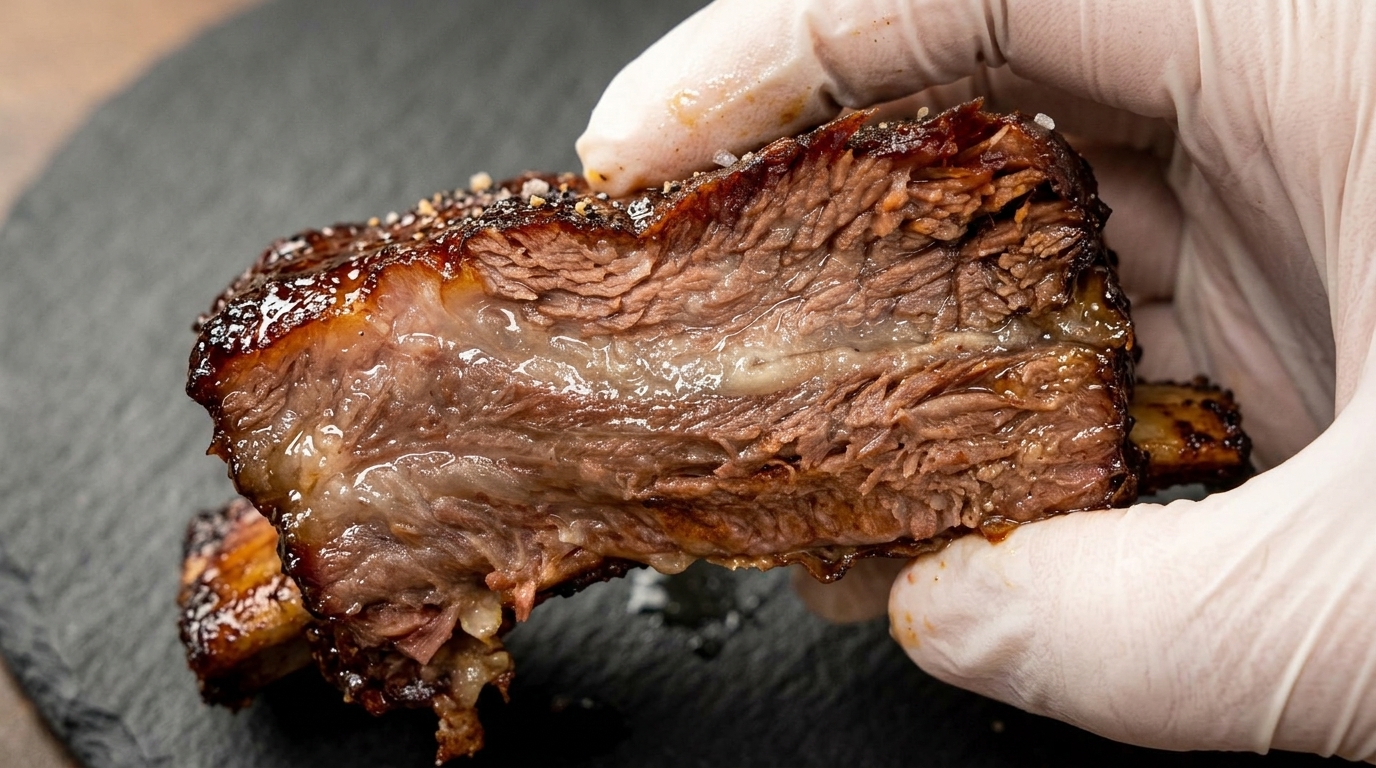
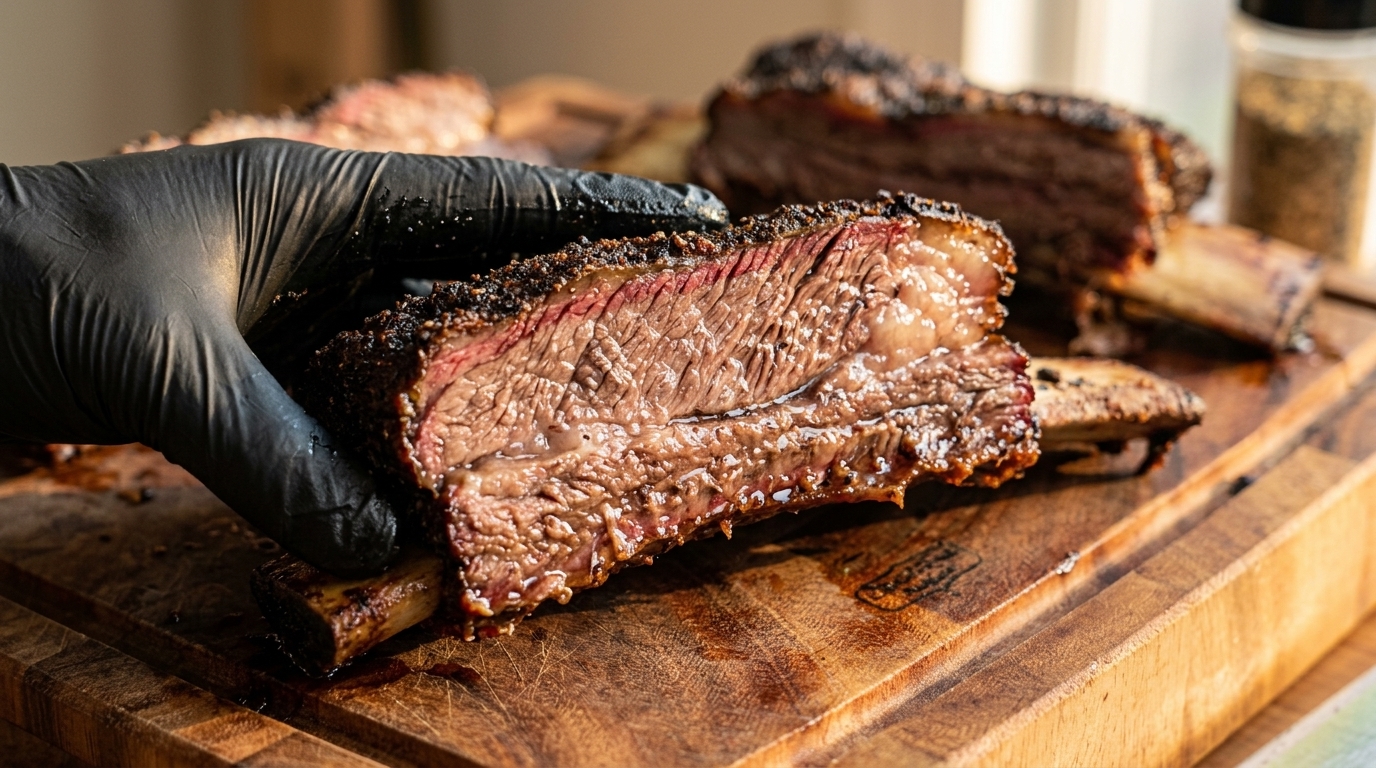
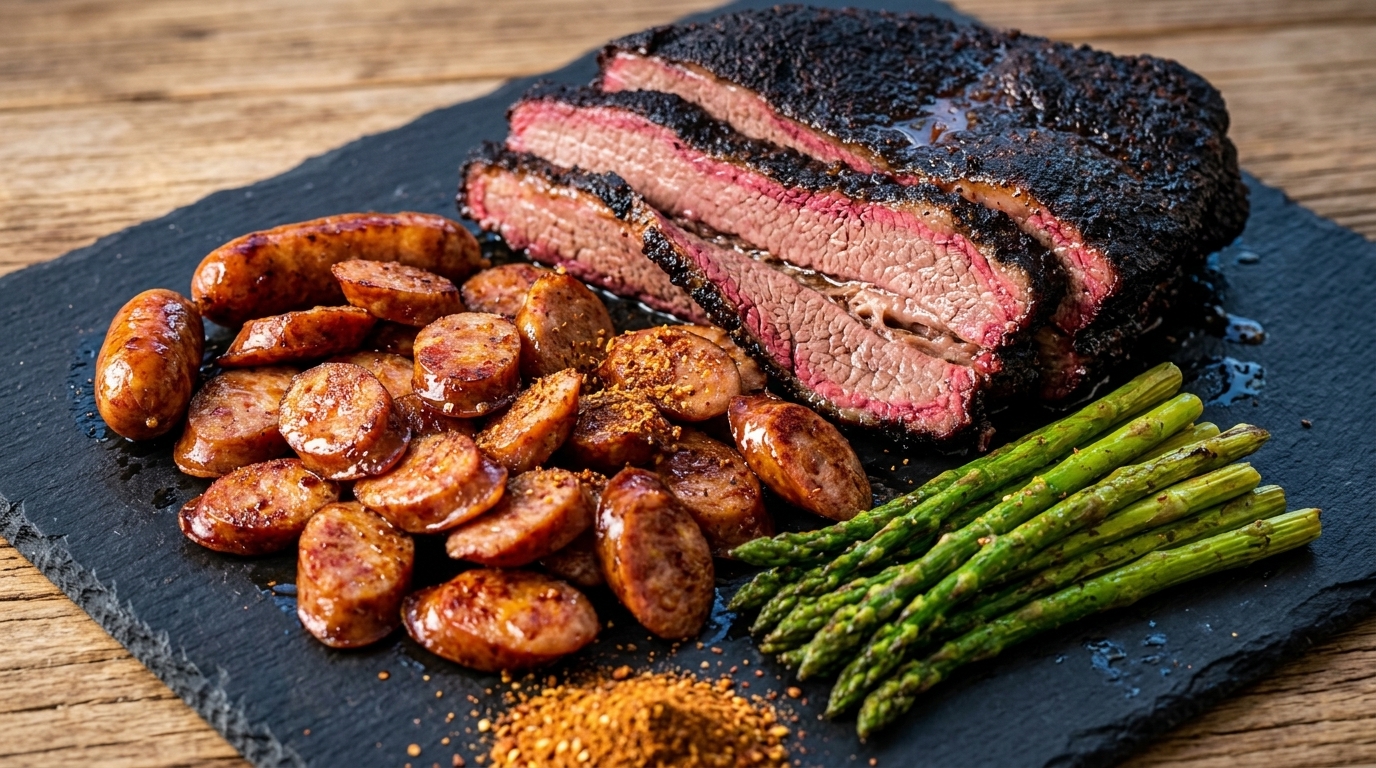
Smoked beef ribs, often affectionately called dinosaur ribs due to their massive size, are the crown jewel of Central Texas barbecue. Cooking them requires patience and respect for the process, relying on a simple Dalmatian rub of salt and pepper to let the rich, beefy flavor shine. Smoked low and slow over lychee or traditional fruitwood, the tough connective tissues break down over hours, yielding an incredibly tender bite encased in a striking, savory mahogany bark.
Ingredients
- 1 large rack beef short ribs (plate ribs or chuck ribs, 3-4 bones)
- 2 tbsp yellow mustard
- 14 cup coarse kosher salt
- 14 cup coarse black pepper
Instructions
- 1Prepare the beef ribs
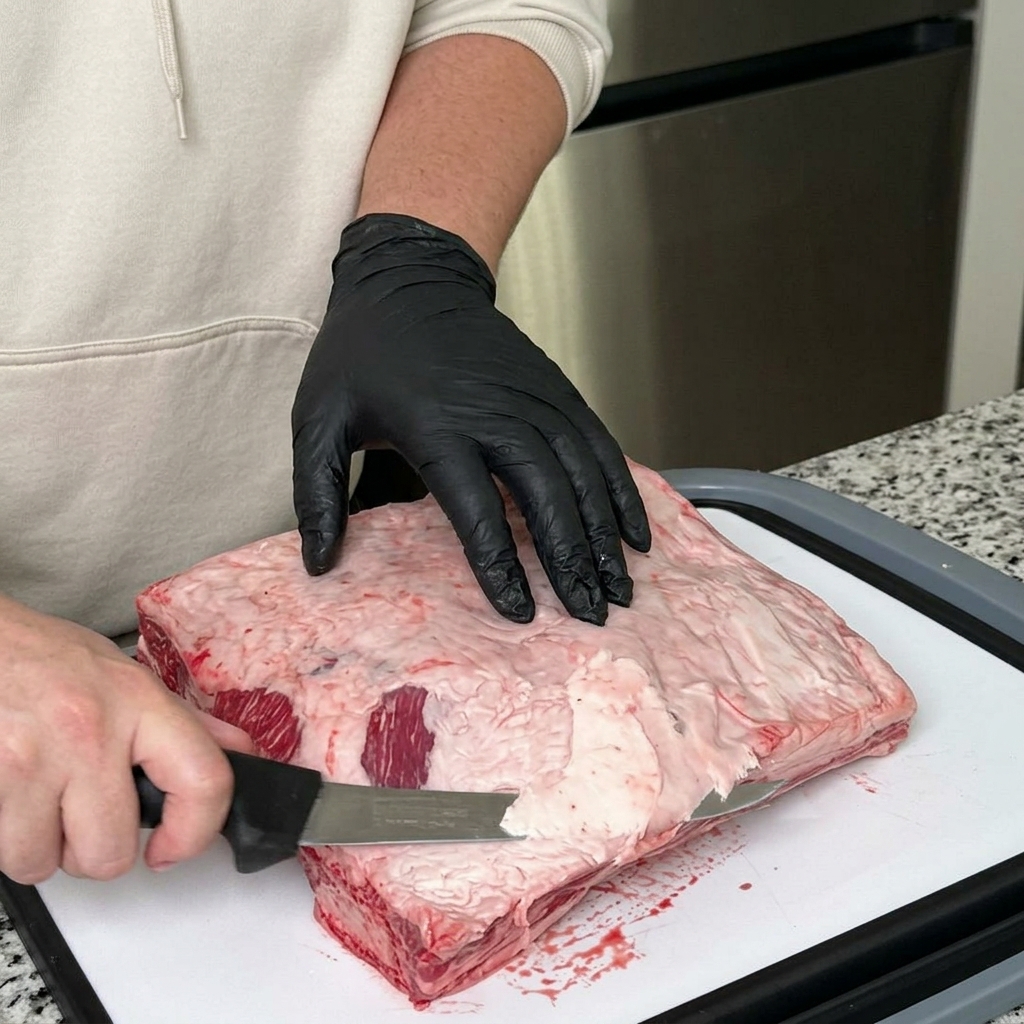
Begin by placing the large rack of raw beef ribs onto a sturdy cutting board. Use a sharp knife to carefully slice away any thick, excess fat from the edges to ensure even cooking and better smoke penetration later.
Tip: Keep the meat cold before trimming; cold fat is much firmer and easier to slice off cleanly than room temperature fat. - 2Trim the silver skin
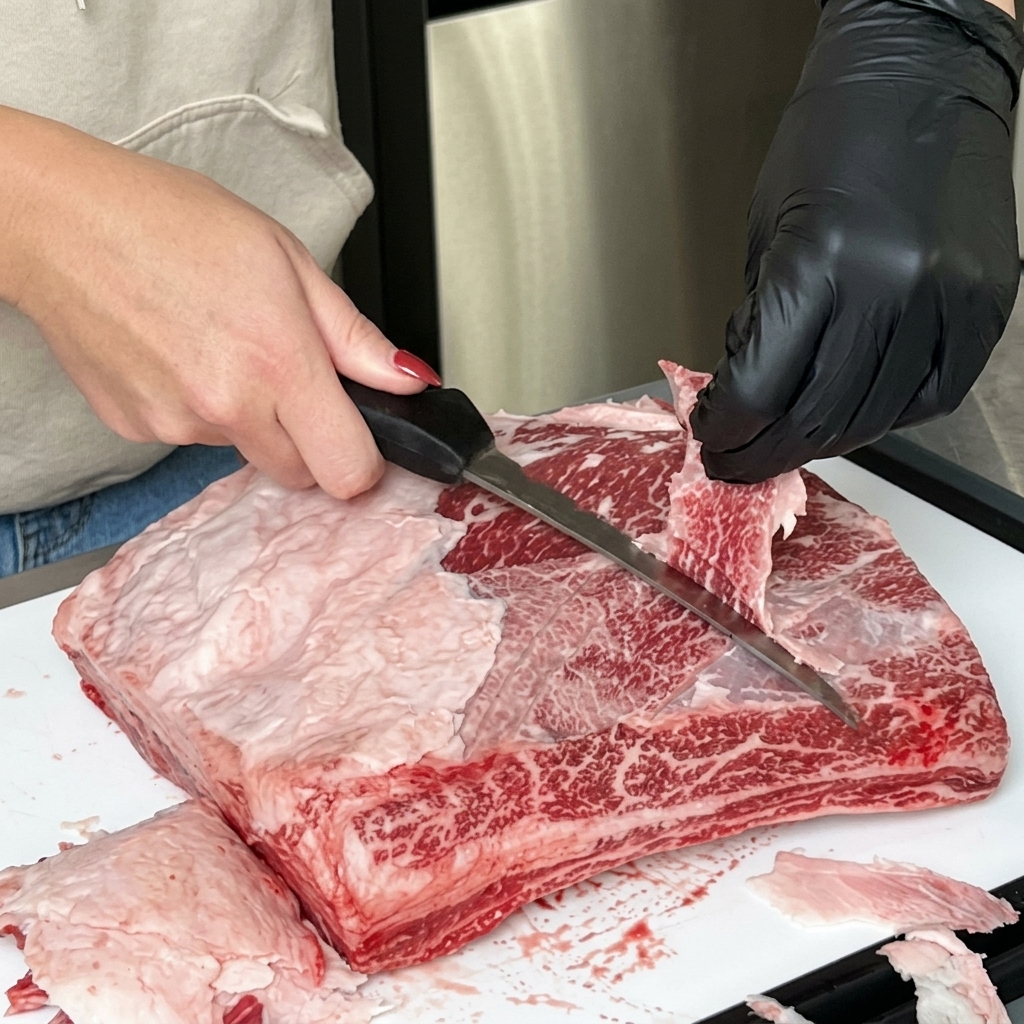
Continue preparing the ribs by removing the silver skin and the top layer of hard fat across the surface. Carefully slide your knife underneath the fascia to peel it back, as this tough connective tissue will not break down during smoking.
Tip: Removing the silver skin is crucial, as leaving it on prevents the rub and smoke flavor from properly reaching the meat. - 3Apply the mustard binder
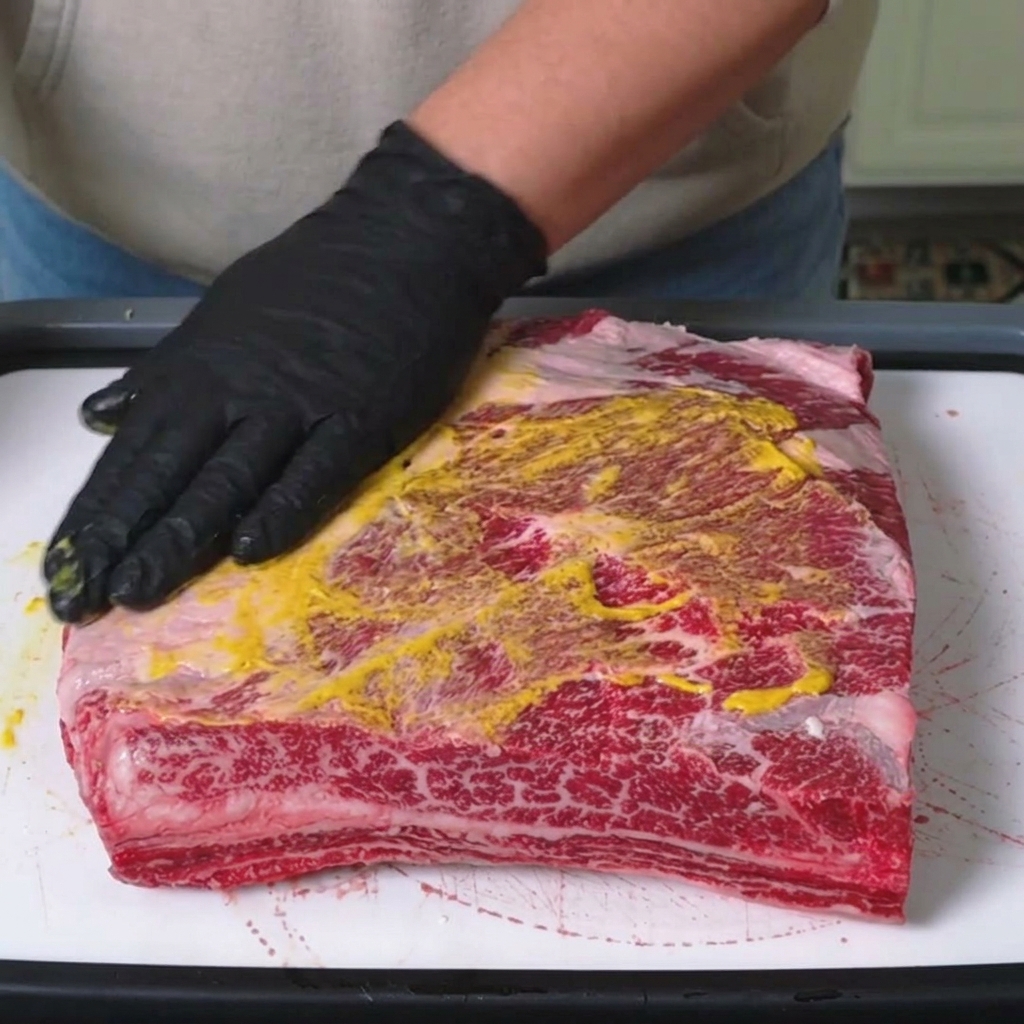
Spread a generous layer of yellow mustard evenly over the entire surface of the trimmed beef ribs. This acts as a binder, helping the dry rub stick securely to the meat without adding a strong mustard flavor to the final product.
Tip: You only need a thin, even coat of mustard. Too much can make the surface pasty and prevent a good bark from forming. - 4Season with salt and pepper
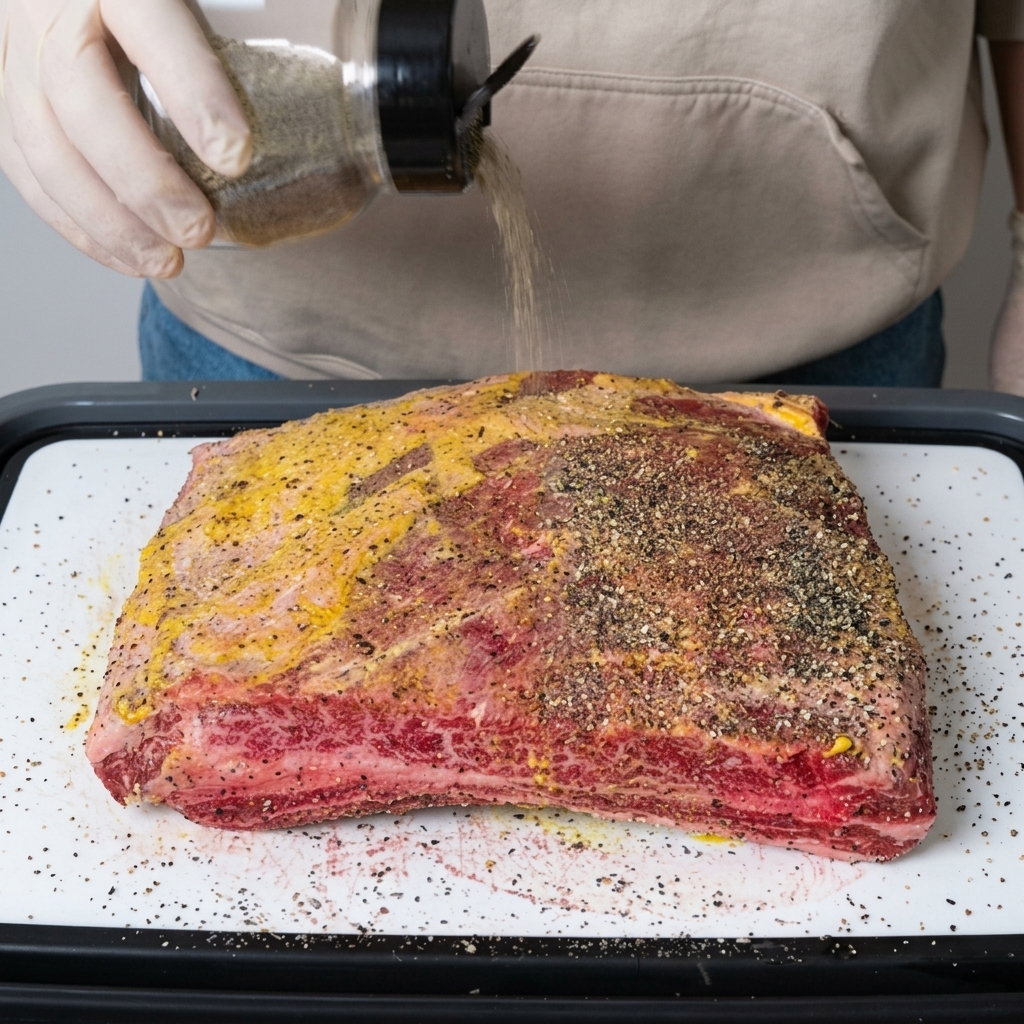
Generously season the mustard-coated ribs with a coarse mixture of salt and black pepper. Ensure you cover the top, bottom, and all sides for a well-rounded flavor and a beautiful, classic Texas-style bark.
Tip: Hold your shaker a few inches above the meat to allow the seasoning to fall evenly, preventing clumpy or overly salty spots. - 5Pat the seasoning
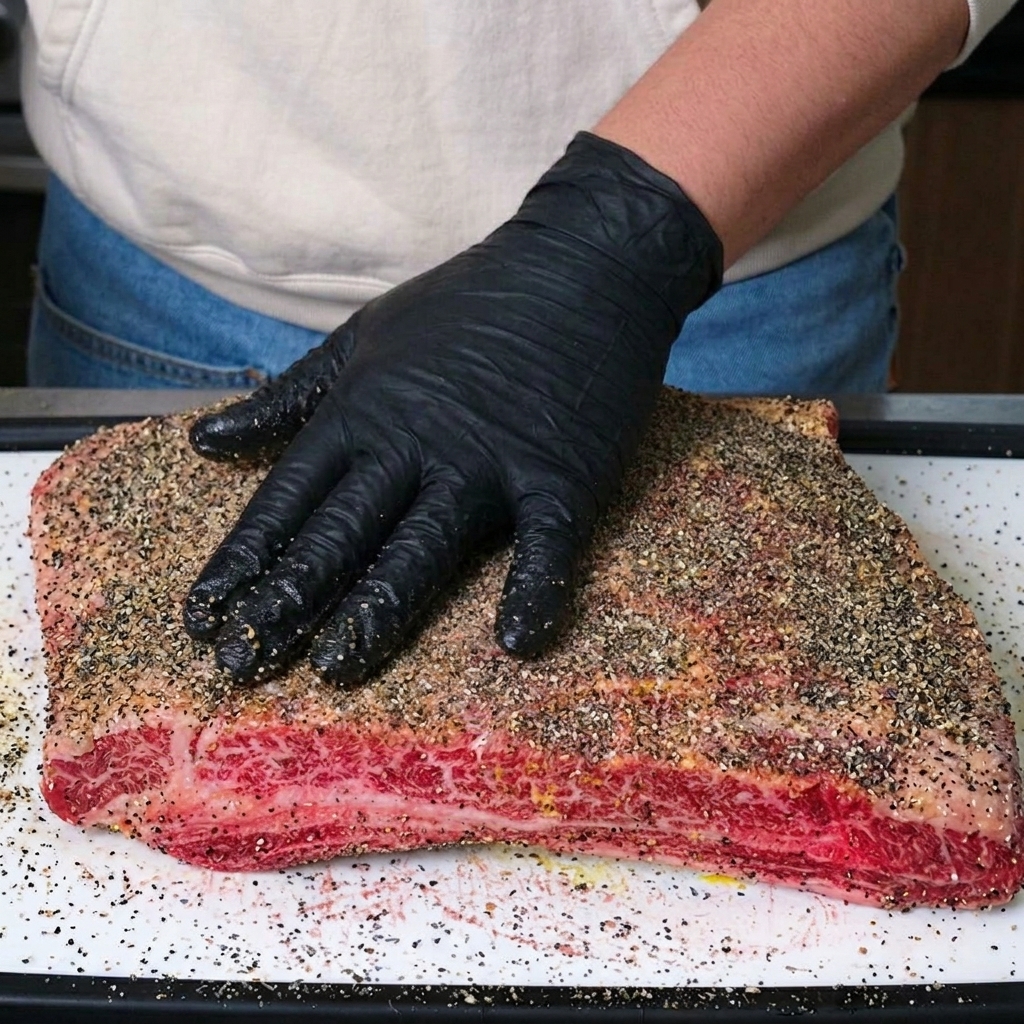
Using your hands, firmly pat the salt and pepper mixture down into the surface of the ribs to secure it against the binder. Make sure you press the seasoning in rather than rubbing it, which can cause the rub to clump and slide off.
Tip: Always pat, never rub! Rubbing will displace the mustard binder and result in an uneven crust. - 6Place the ribs in the smoker
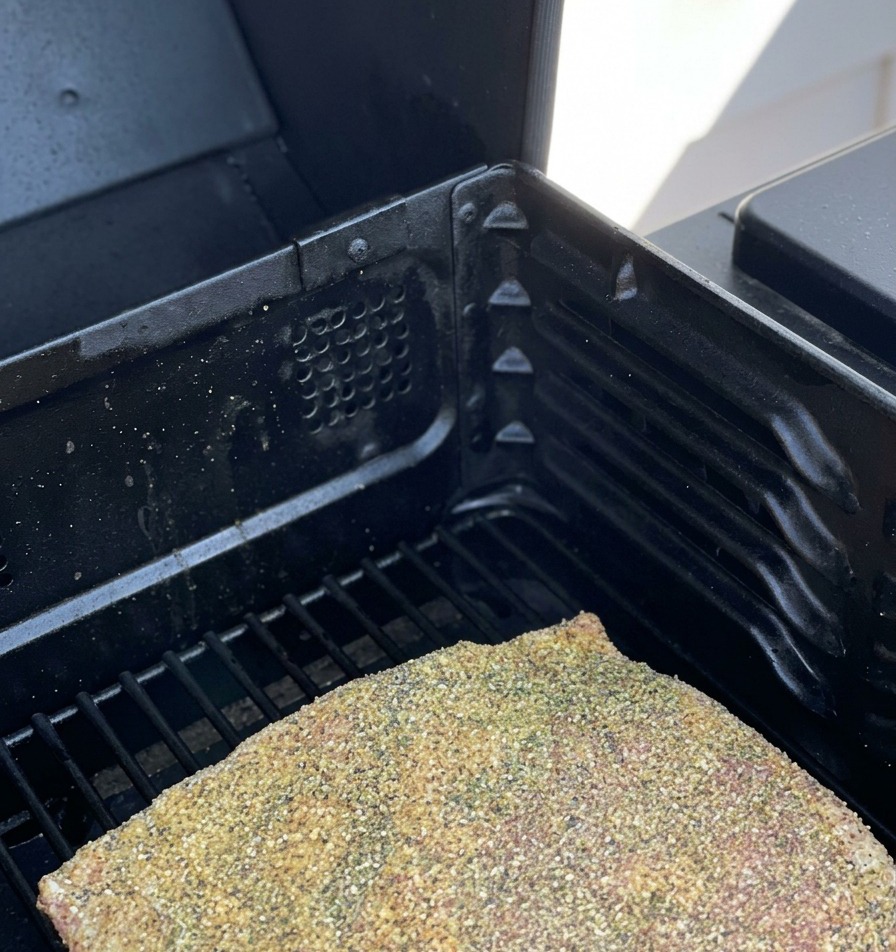
Place the seasoned raw beef ribs directly onto the metal grates of the smoker. Ensure your smoker is preheated to 135 degrees Celsius (275 degrees Fahrenheit) using lychee wood or your preferred fruitwood.
Tip: Position the ribs with the meat side up and the bone side down to protect the meat from direct heat. - 7Check the bark
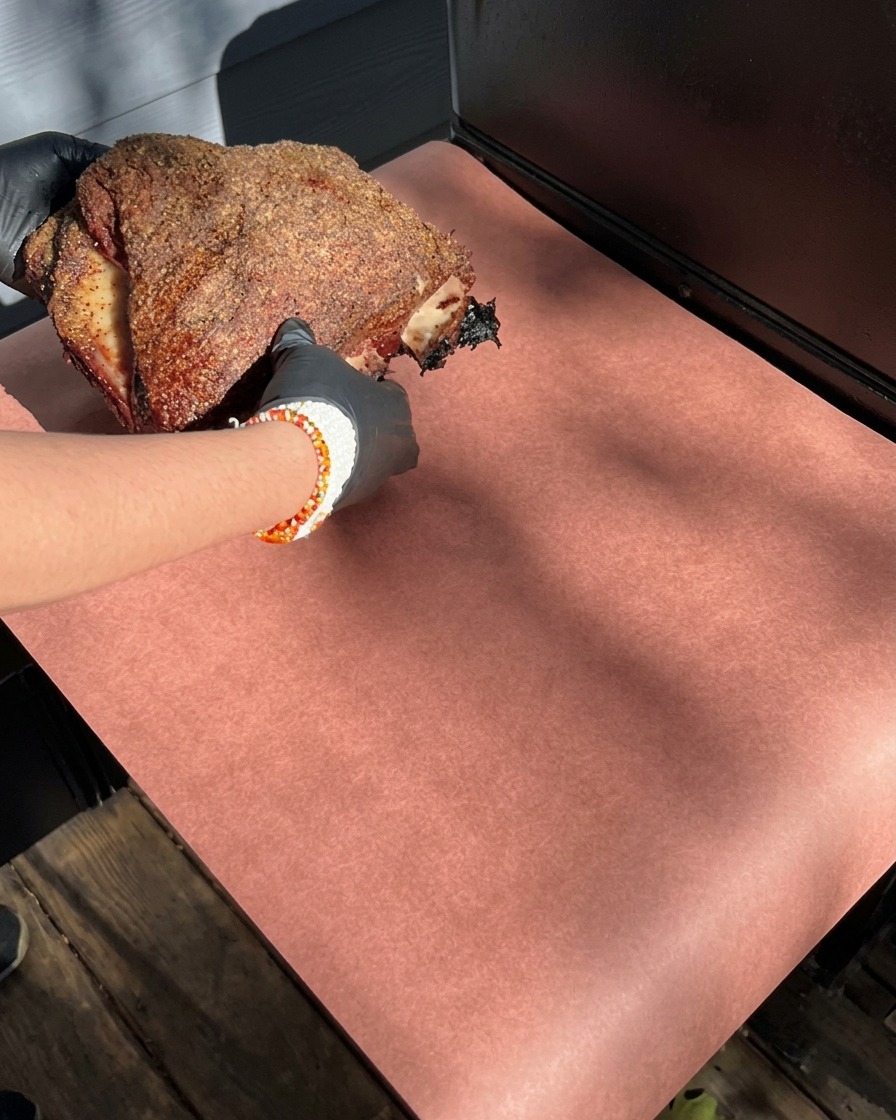
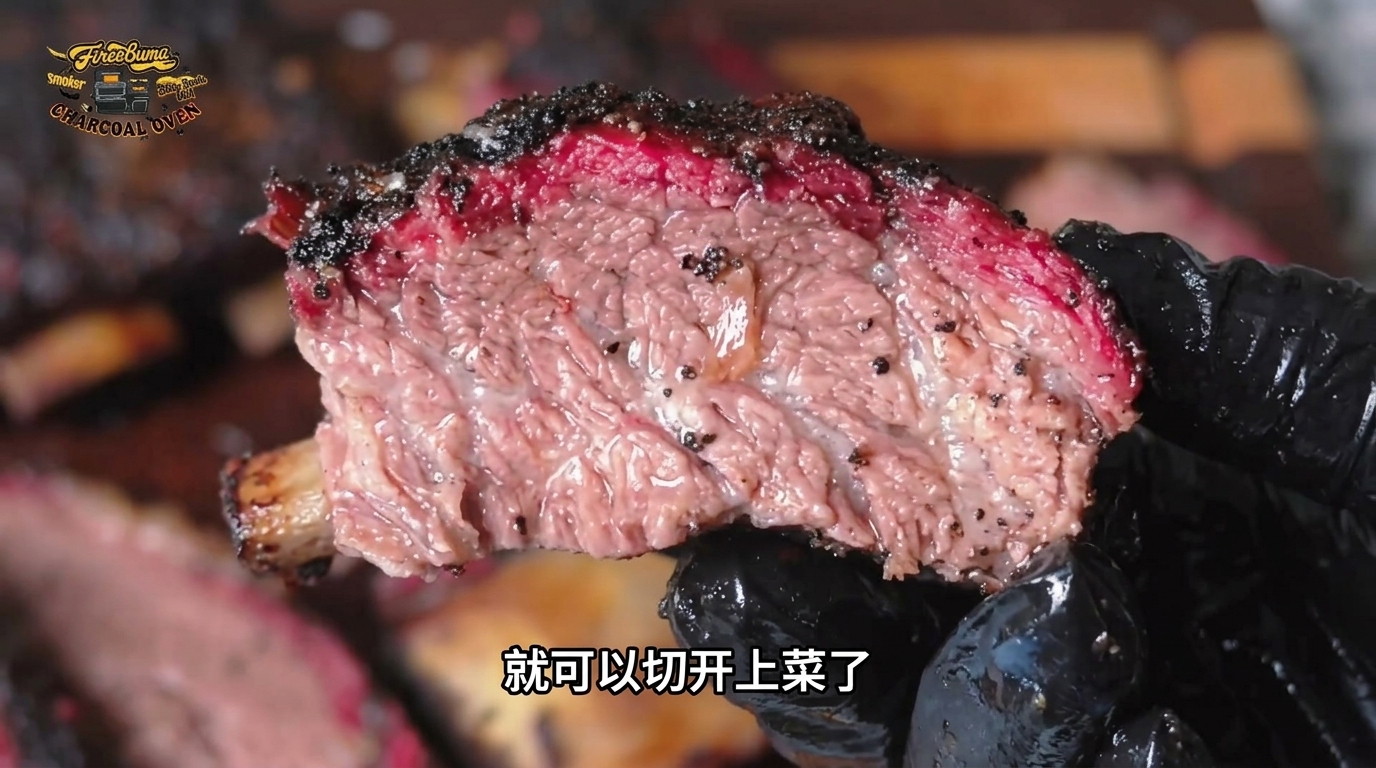
After about 5 hours of smoking, gently touch the surface of the ribs with a gloved hand. You are looking for a deep reddish-brown crust that is firmly set. Check the core temperature to ensure it has reached around 75 degrees Celsius (165 degrees Fahrenheit) before preparing to wrap.
Tip: Using uncoated pink or peach butcher paper is ideal for Texas-style BBQ; it lets the steam escape so your bark doesnt get soggy, while still protecting the meat from drying out. - 8Wrap in butcher paper
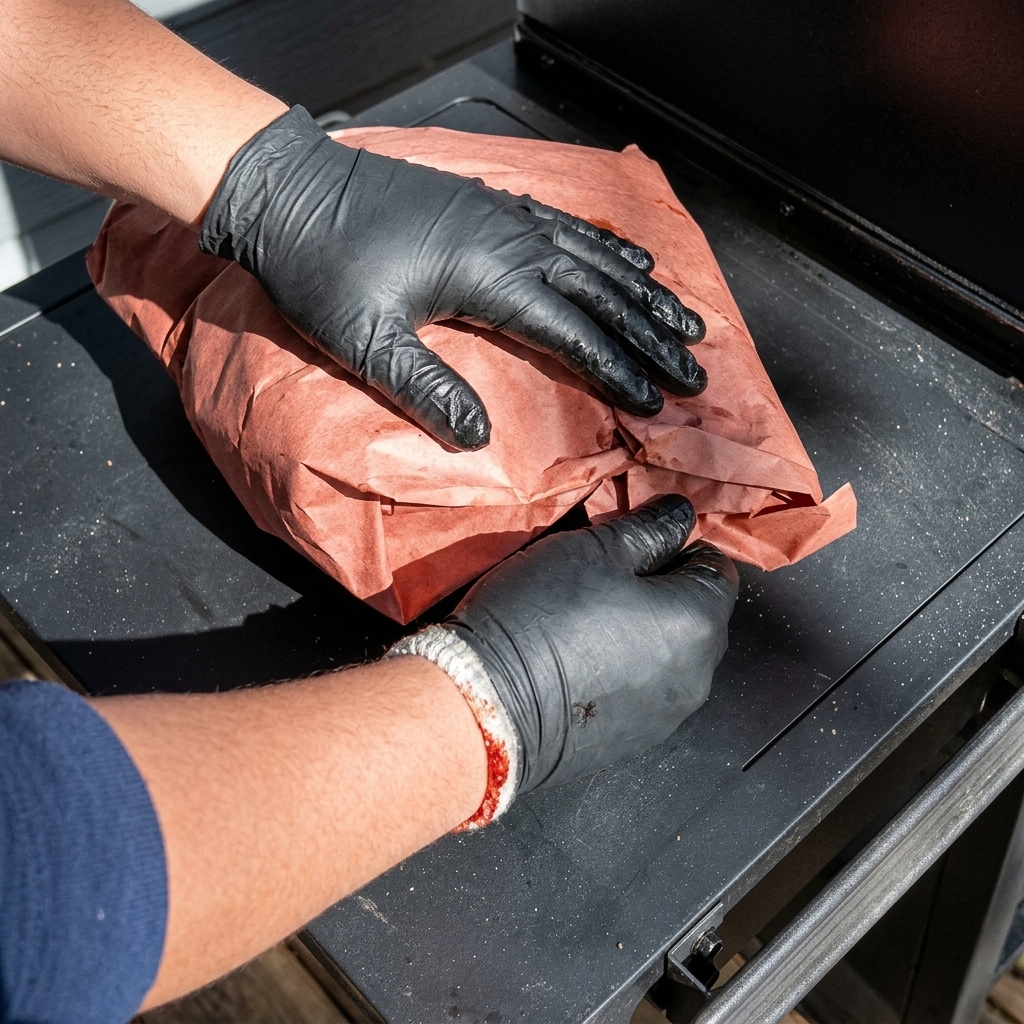
Transfer the ribs onto a large sheet of pink butcher paper. Wrap the meat tightly, folding the edges under to create a secure packet. This step retains crucial moisture and helps push through the temperature stall while still allowing the meat to breathe.
Tip: If you cannot find pink butcher paper, aluminum foil can be used, though it will soften the crust significantly more. - 9Finish smoking the ribs
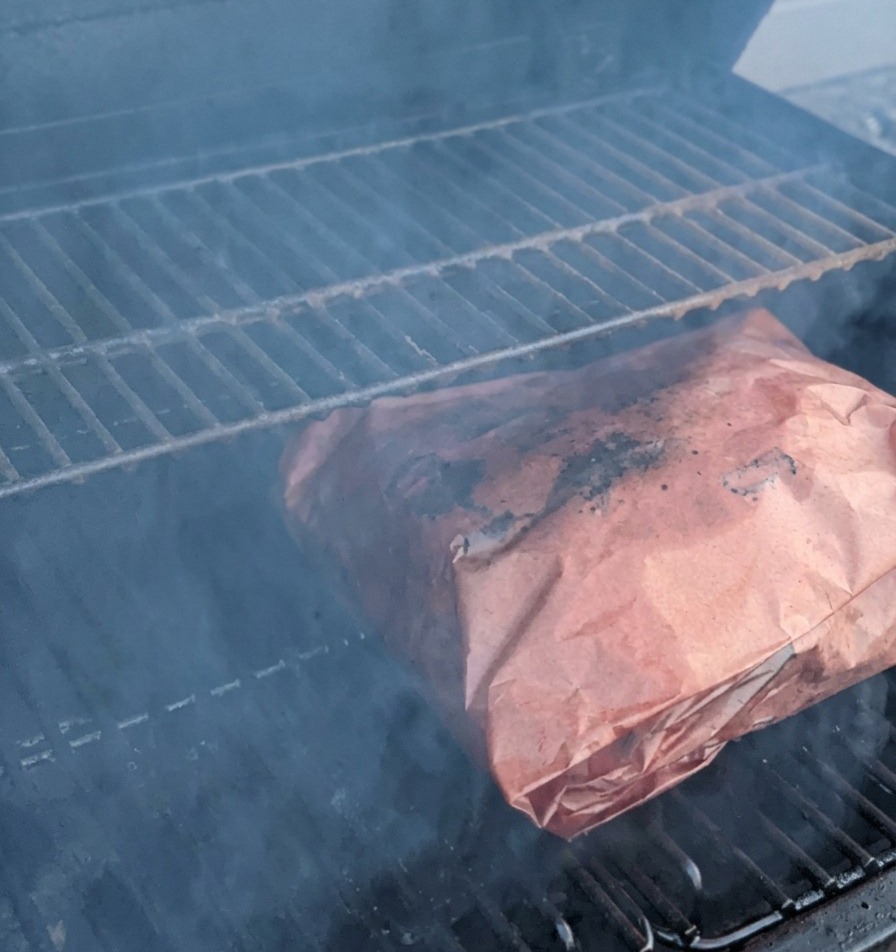
Place the securely wrapped beef ribs back onto the smoker grates. Continue to smoke and roast the meat at a constant temperature for about 3 more hours, or until the core temperature reaches 95 degrees Celsius (203 degrees Fahrenheit).
Tip: The fruitwood aroma will continue to penetrate the meat. After reaching the target temperature, remember to let the meat rest for an hour before slicing. - 10Slice and serve
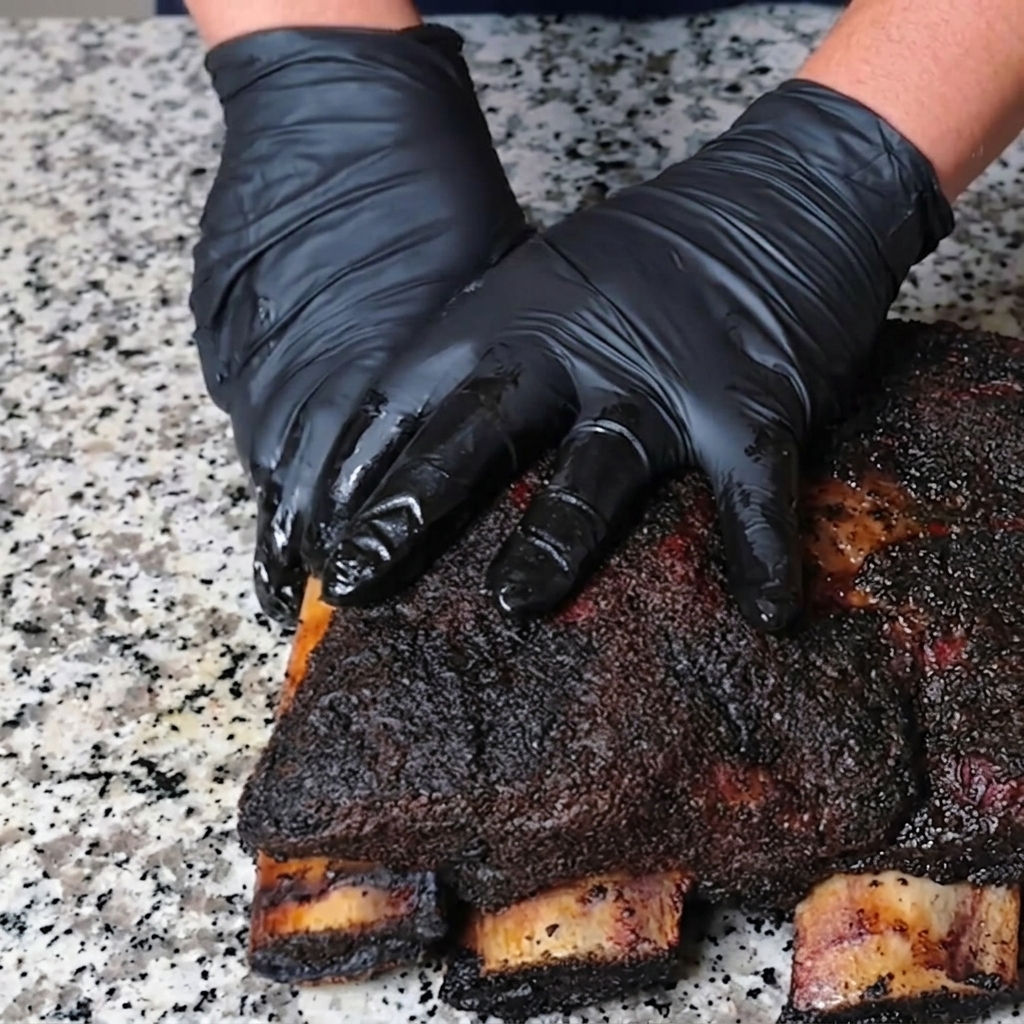
After the beef ribs have rested for a full hour, transfer them to a cutting board. Use a sharp knife to cut directly into the thick, dark bark of the meat, slicing between the bones. Notice the beautiful red smoke ring and incredibly juicy interior as you serve.
Tip: Always slice the meat just before serving to ensure it retains maximum moisture and heat.