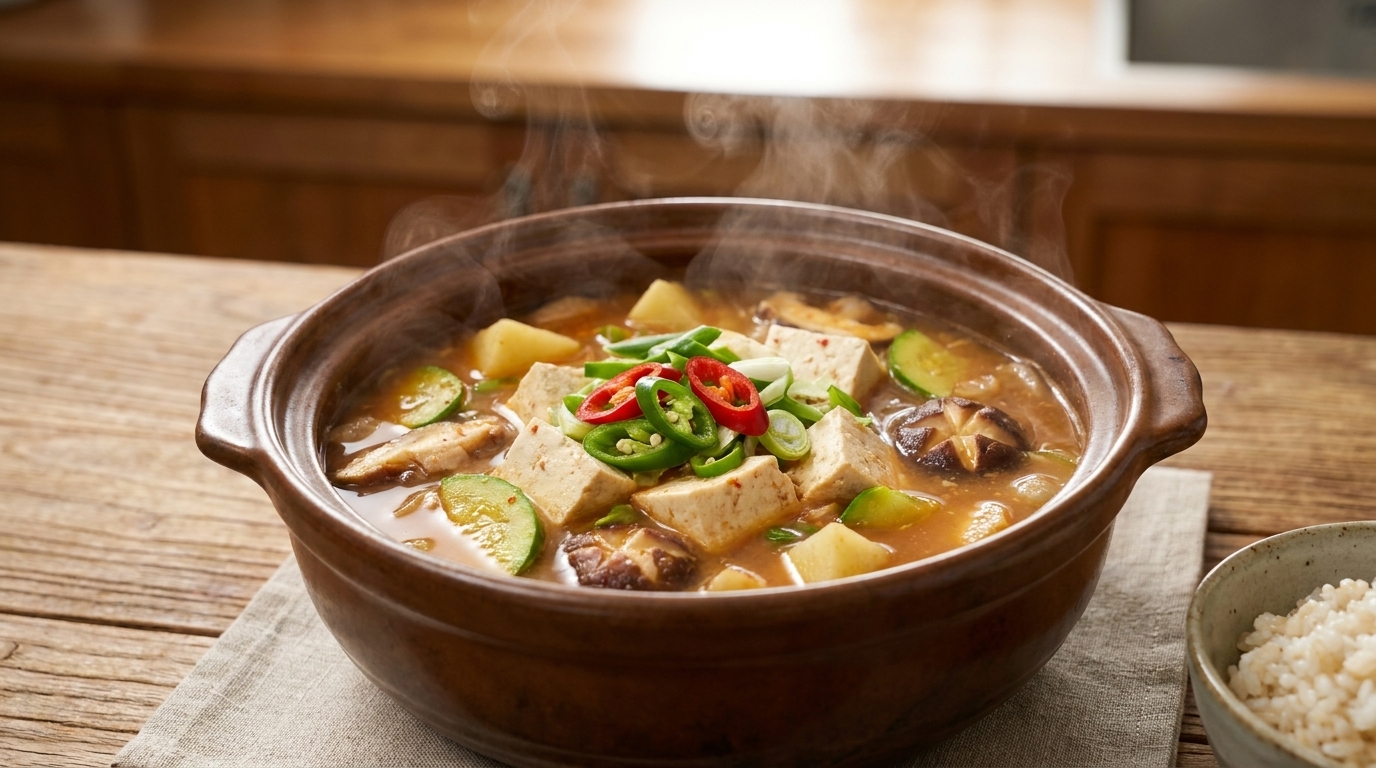
Authentic Korean Doenjang Jjigae (Soybean Paste Stew)
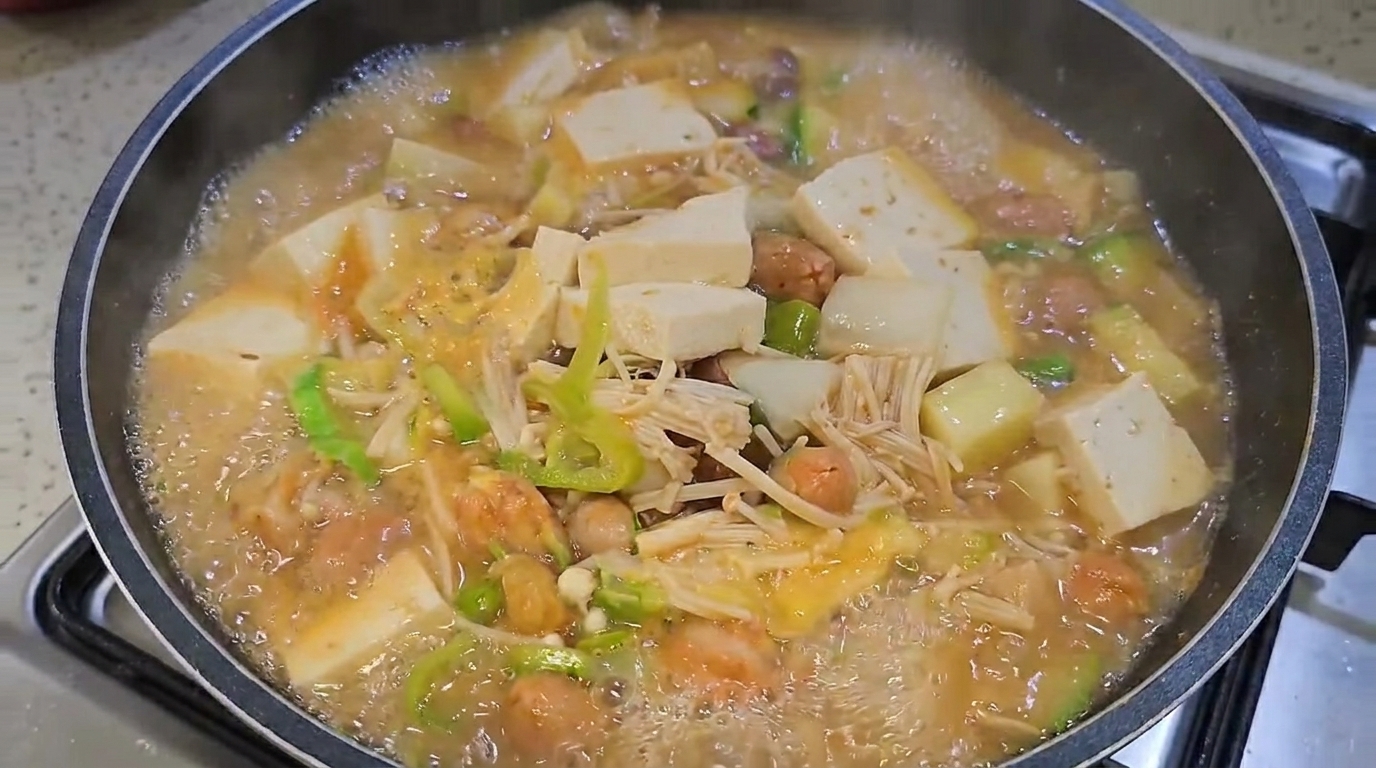
Experience the deep, earthy comfort of authentic Korean Doenjang Jjigae. This hearty stew features a savory seafood-based broth, tender tofu, and fresh garden vegetables.
Doenjang Jjigae is a staple of the Korean home kitchen, valued for its complex, umami-rich flavor and comforting warmth. While many versions use simple water, this authentic approach builds a foundational broth using dried anchovies, kelp, and dried pollack, resulting in a significantly more flavorful and nuanced stew. It is a quintessential dish that perfectly balances the pungency of fermented soybean paste with the clean, fresh taste of seasonal vegetables and seafood.
Ingredients
- 2 tbsp Korean soybean paste (doenjang)
- 1 handful dried silver anchovies
- 1 whole dried shiitake mushroom
- 1 piece dried kelp
- 1 whole dried pollack fish head
- 100 g sea squirts (or clams/beef)
- 1 medium potato
- 1/2 zucchini
- 1 bundle enoki mushrooms
- 1/4 onion
- 2 stalks scallions
- 1 clove garlic
- 1 tbsp chili powder
- 150 g firm tofu
- to taste green and red chili peppers
Instructions
- 1Prepare the base broth
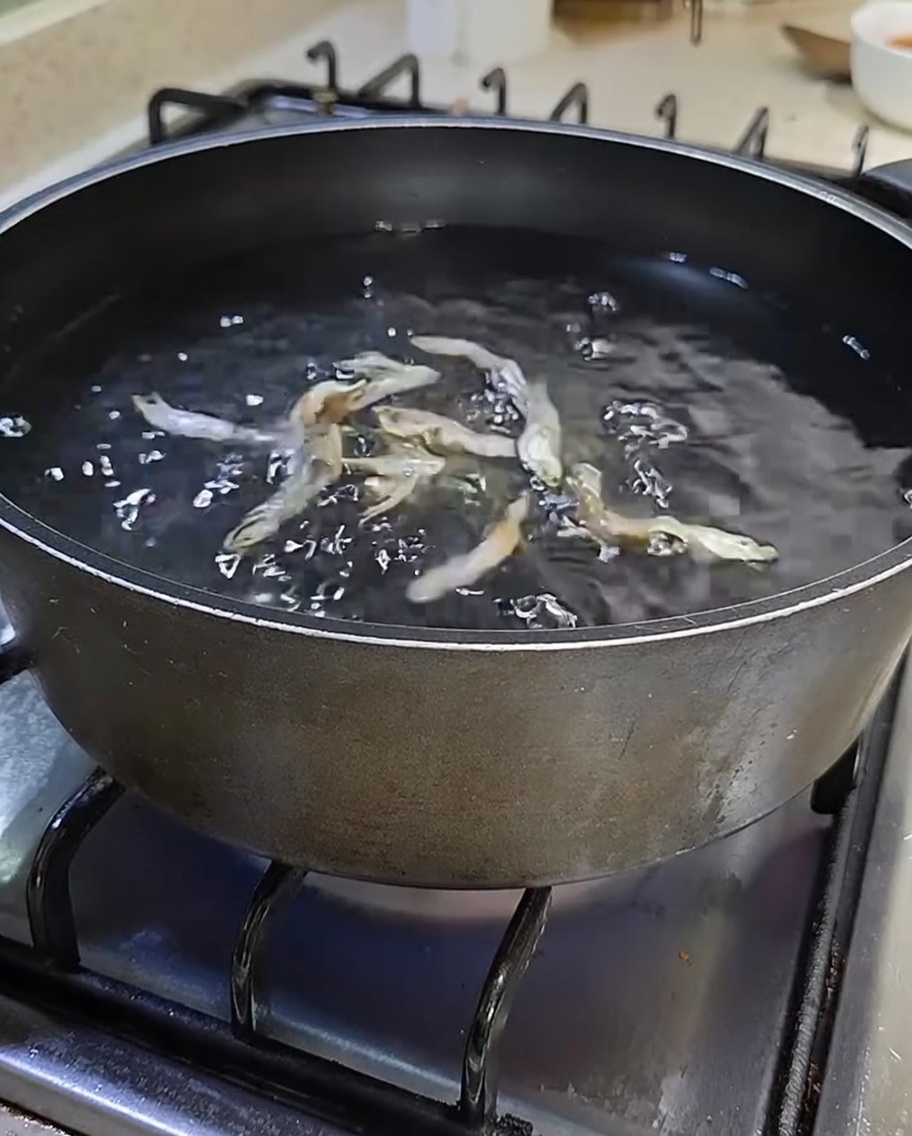
Begin by filling a pot with water and adding a handful of small dried silver anchovies. Bringing these to a boil creates a savory, umami-rich foundation for the Korean soybean paste stew.
Tip: Using small anchovies provides a clean, deep flavor without becoming overly fishy. - 2Add shiitake mushroom
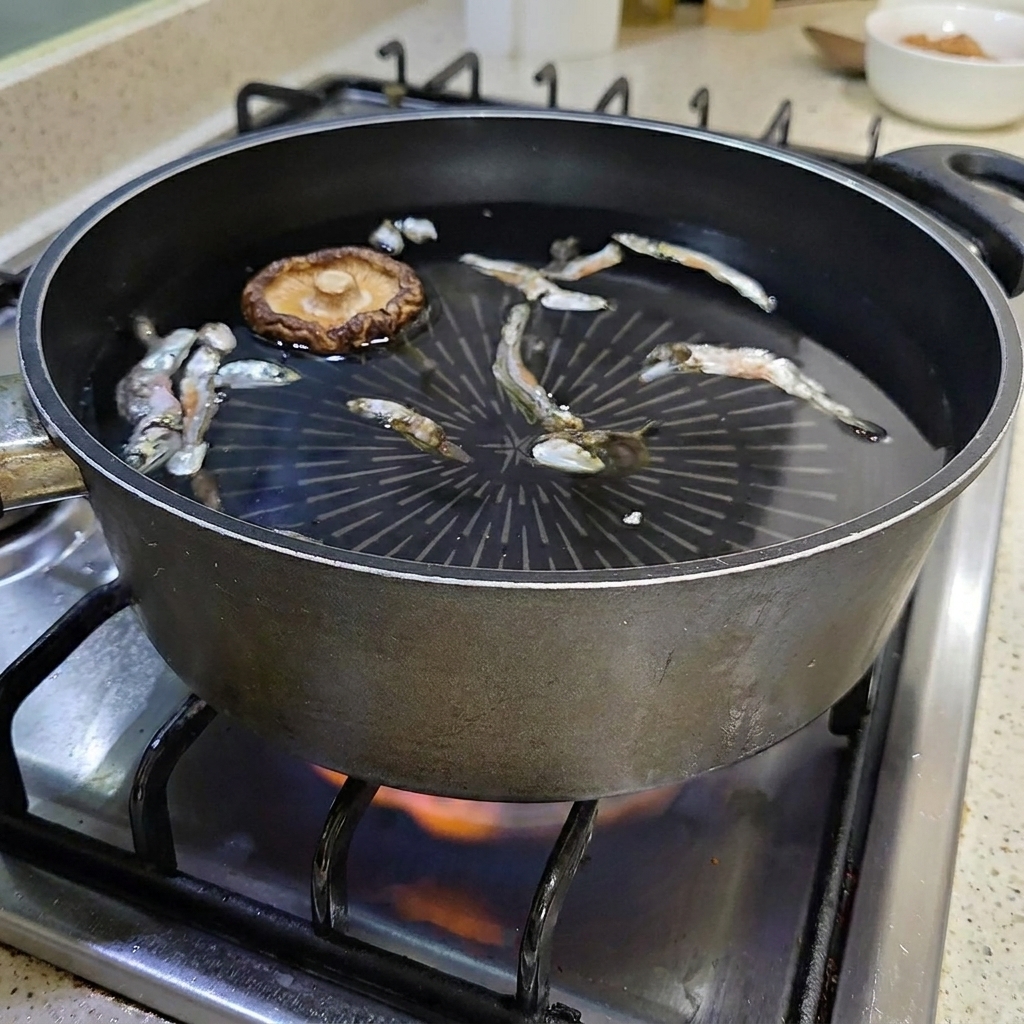
Add a whole dried shiitake mushroom into the pot with the anchovies. The mushroom will rehydrate while boiling, infusing the broth with earthy notes.
Tip: Leave the shiitake in the pot throughout the cooking process for added texture and flavor. - 3Add radish and scallions
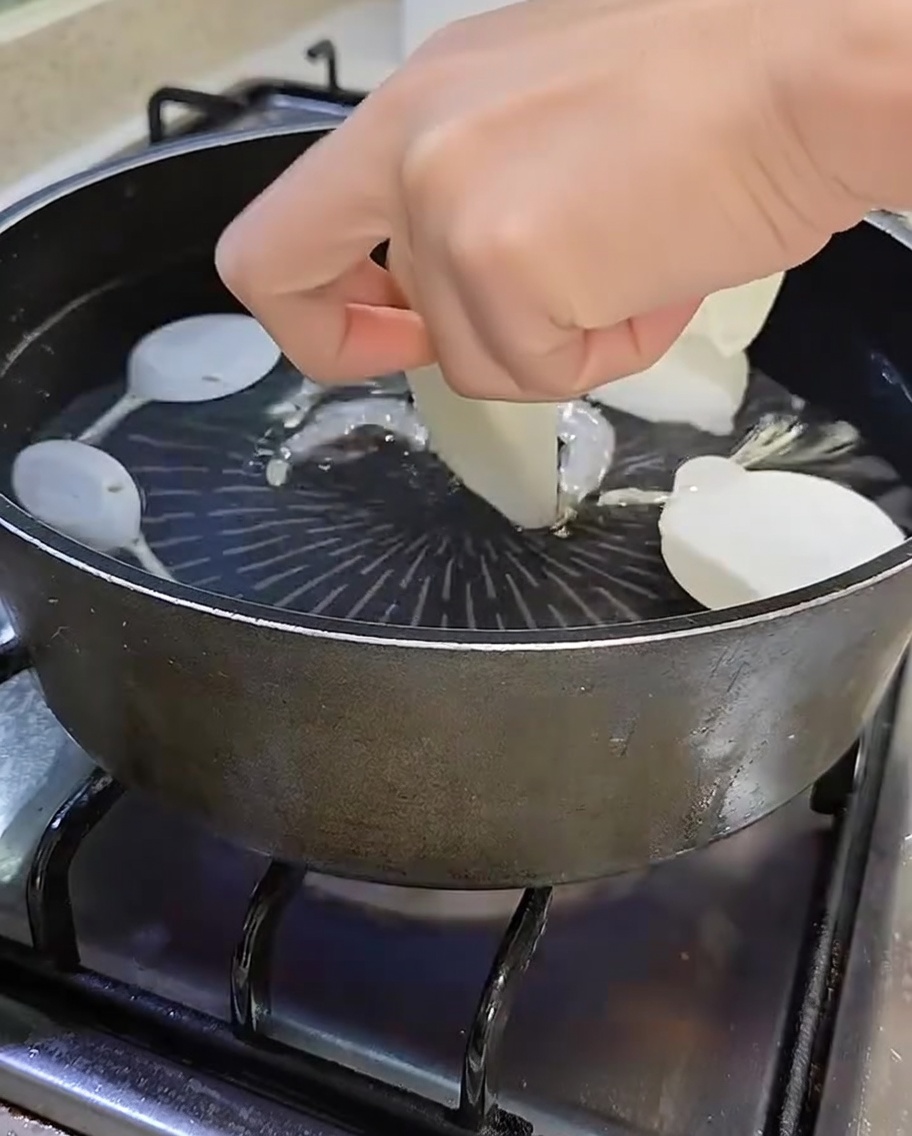
Incorporate sliced white radish and green scallion segments into the boiling broth. These aromatics add natural sweetness and freshness to the soup base.
Tip: Slice the radish thinly so it cooks evenly and releases its flavor quickly. - 4Add dried kelp
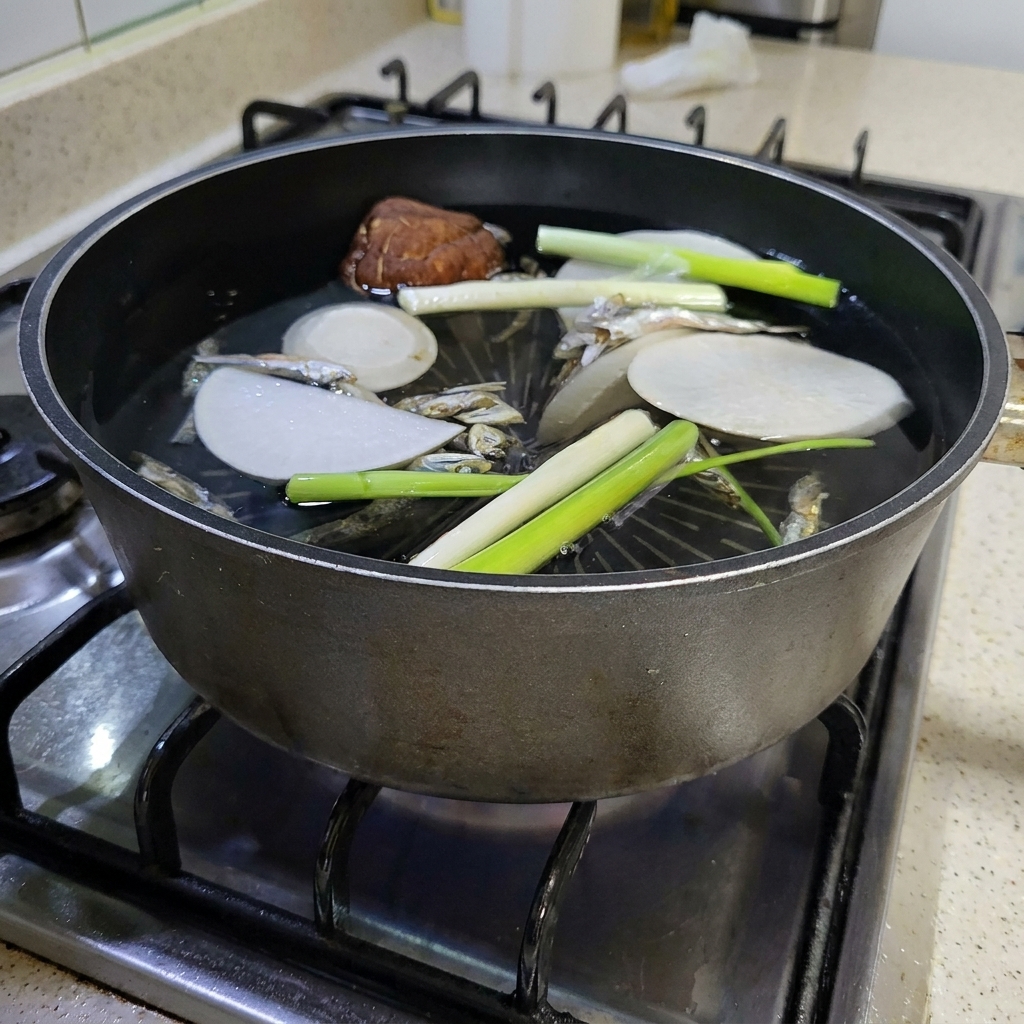
Once the broth reaches a boil, add a piece of dried kelp. Kelp is essential for building a deep, traditional Korean flavor profile.
Tip: Dont boil the kelp for too long; remove it after about seven minutes to prevent the broth from becoming slimy or bitter. - 5Add dried pollack head
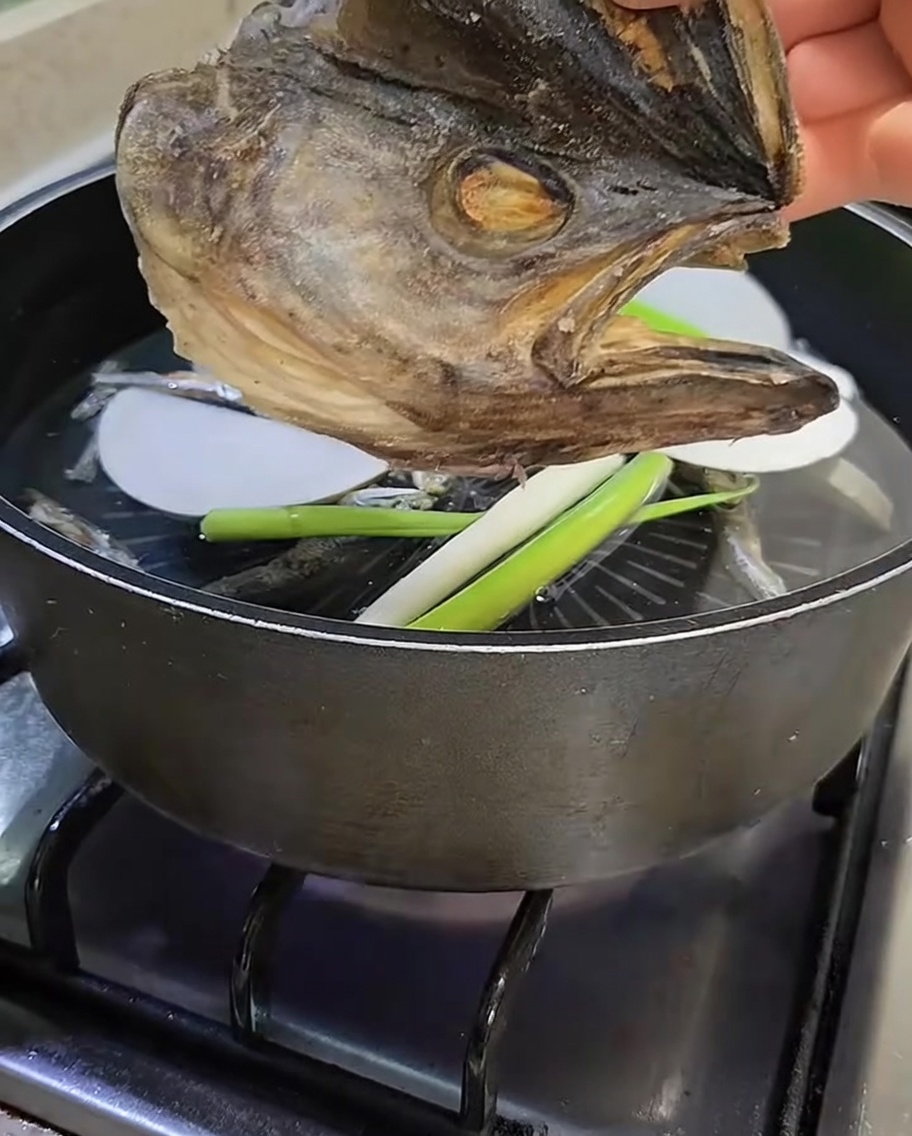
Add a dried pollack fish head to the pot. This ingredient adds an incredibly fresh and savory depth to the broth that plain water cannot provide.
Tip: If you dont have a pollack head, any leftover fish bones can serve as a substitute. - 6Remove the kelp
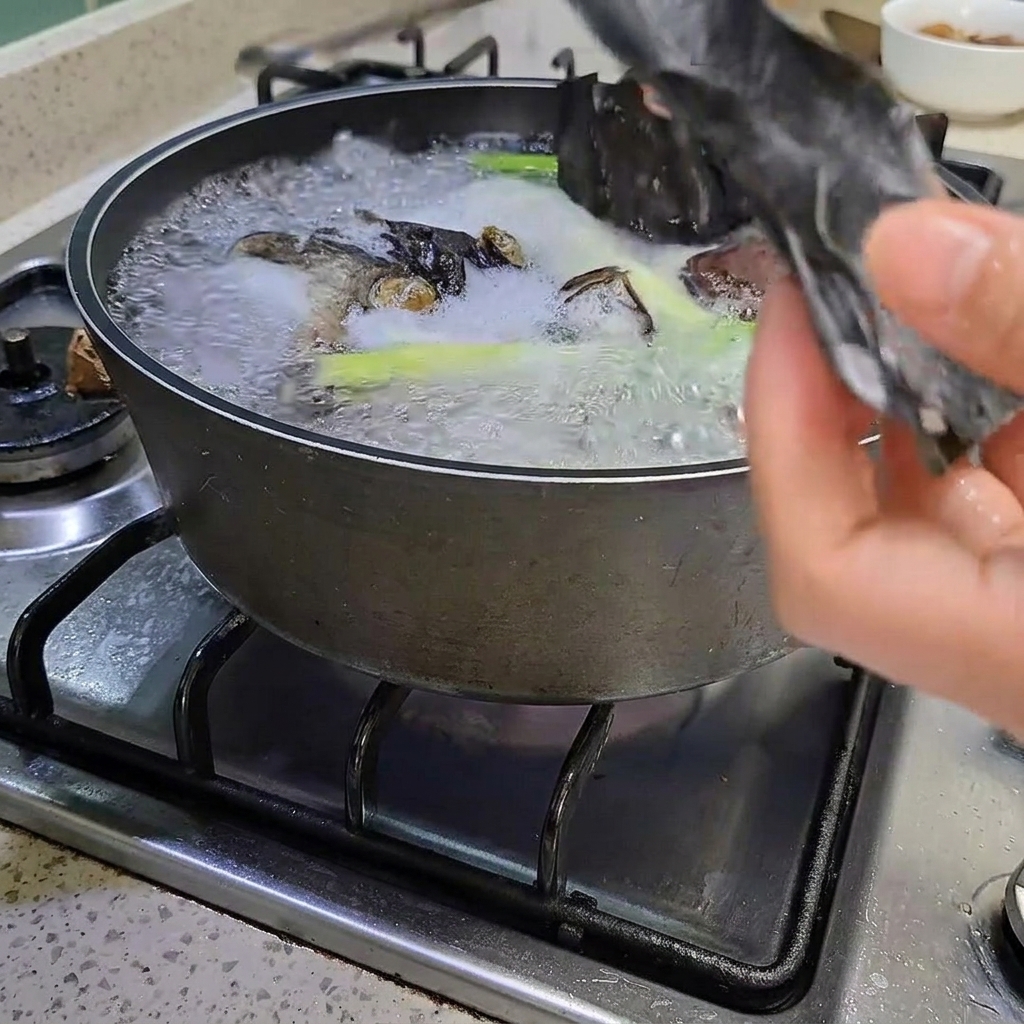
After about seven minutes of boiling, use tongs to remove the kelp from the pot. Discard it, as its purpose was to flavor the broth.
Tip: Skim off any foam that rises to the surface during this time to keep the broth clear. - 7Clarify the broth
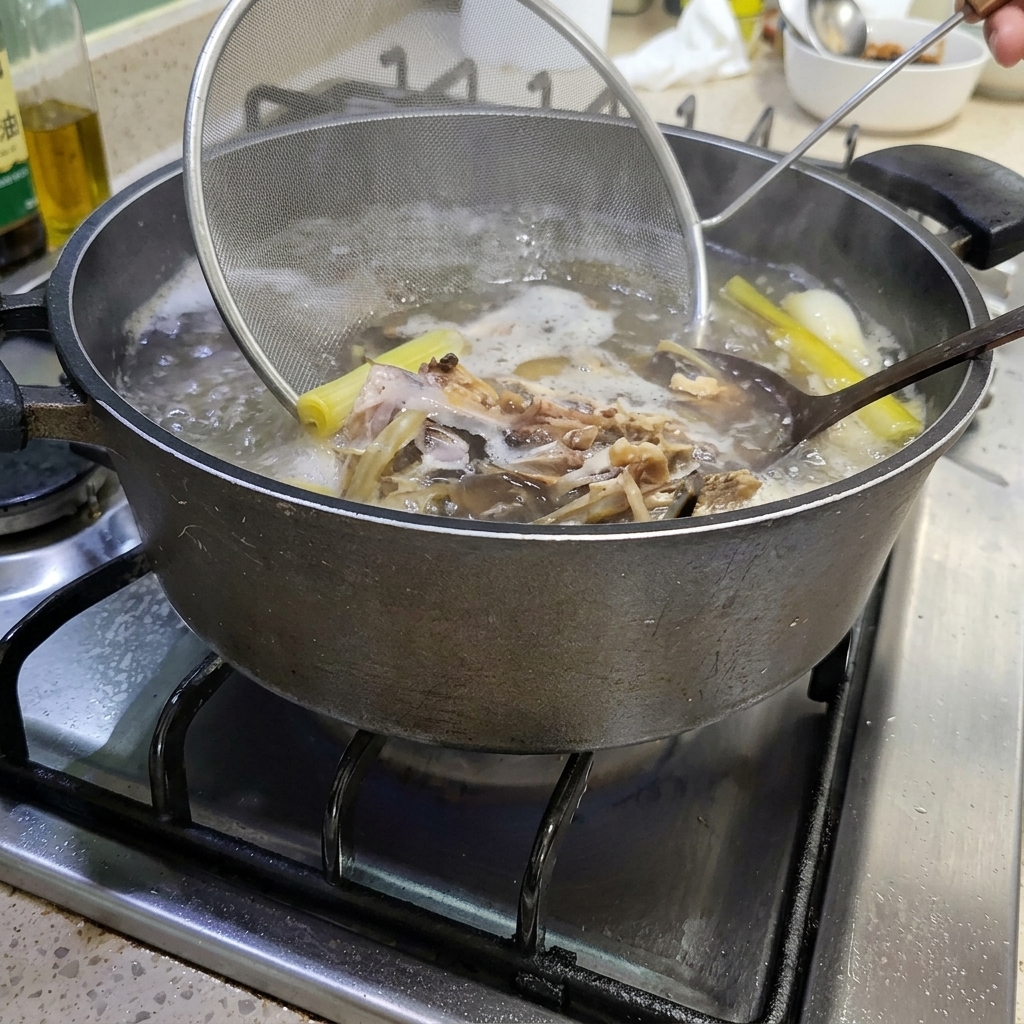
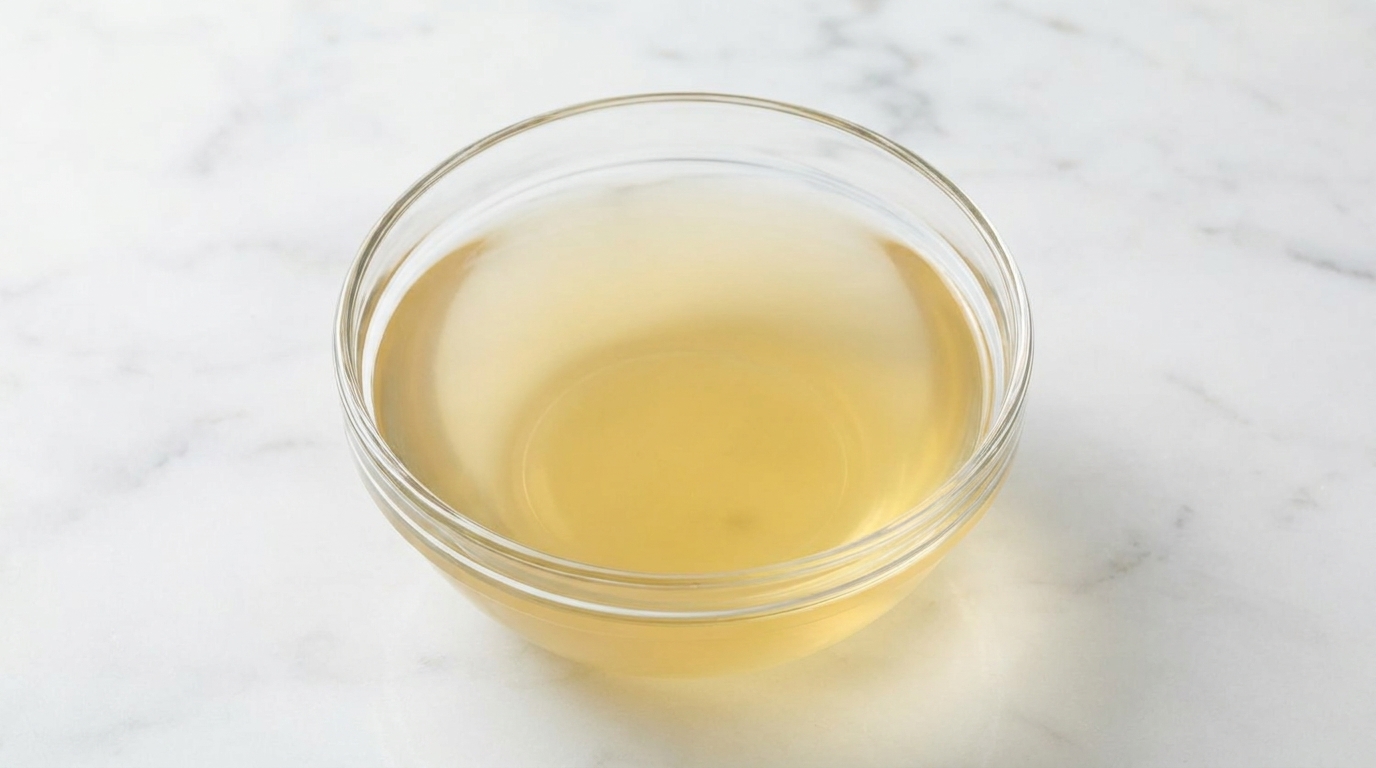
Use a wire mesh strainer to carefully remove all the solid ingredients—the anchovies, radish, scallions, shiitake, and dried pollack fish head—from the pot. This leaves you with a clean, amber-colored, and highly flavorful base broth ready for the next stage of the stew.
Tip: Be thorough when scooping out the solids to ensure the final stew has a clean texture, but you can leave the shiitake mushroom in the pot if you prefer. - 8Add soybean paste
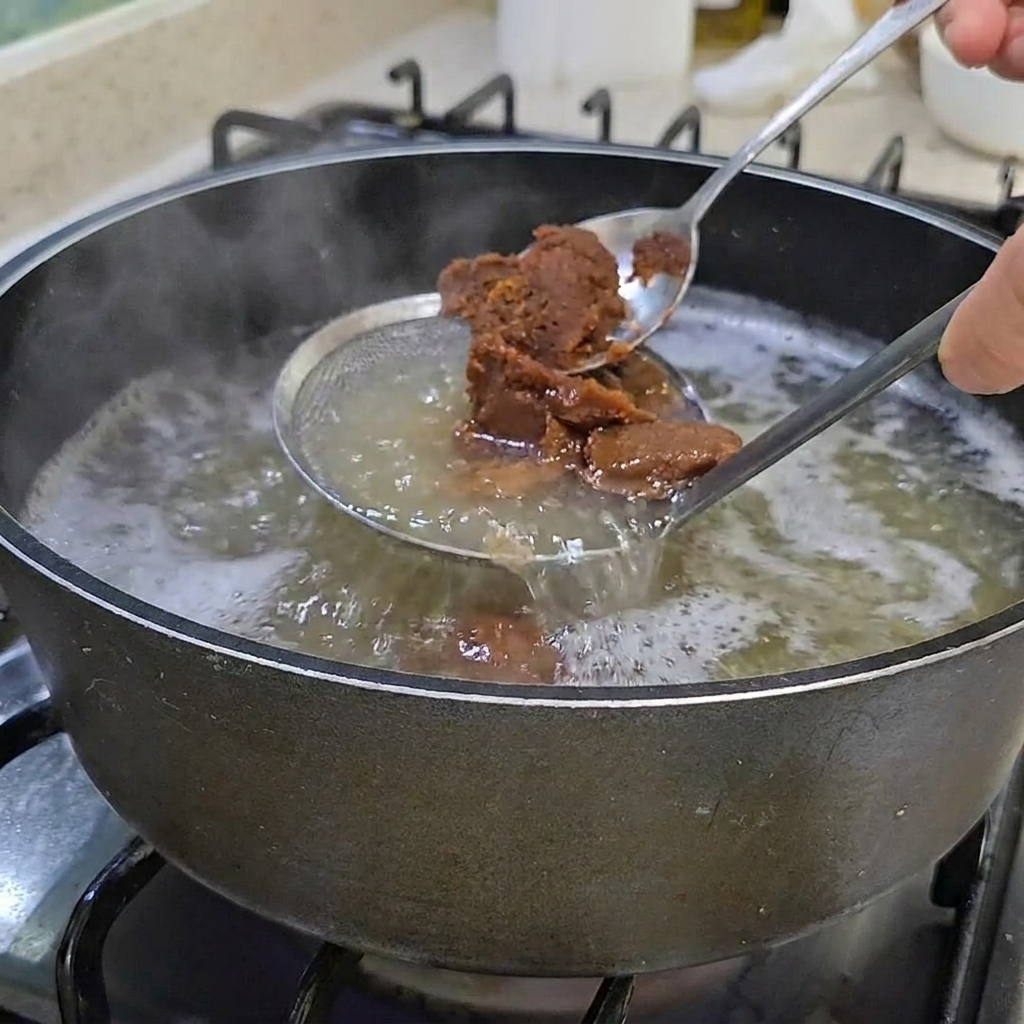
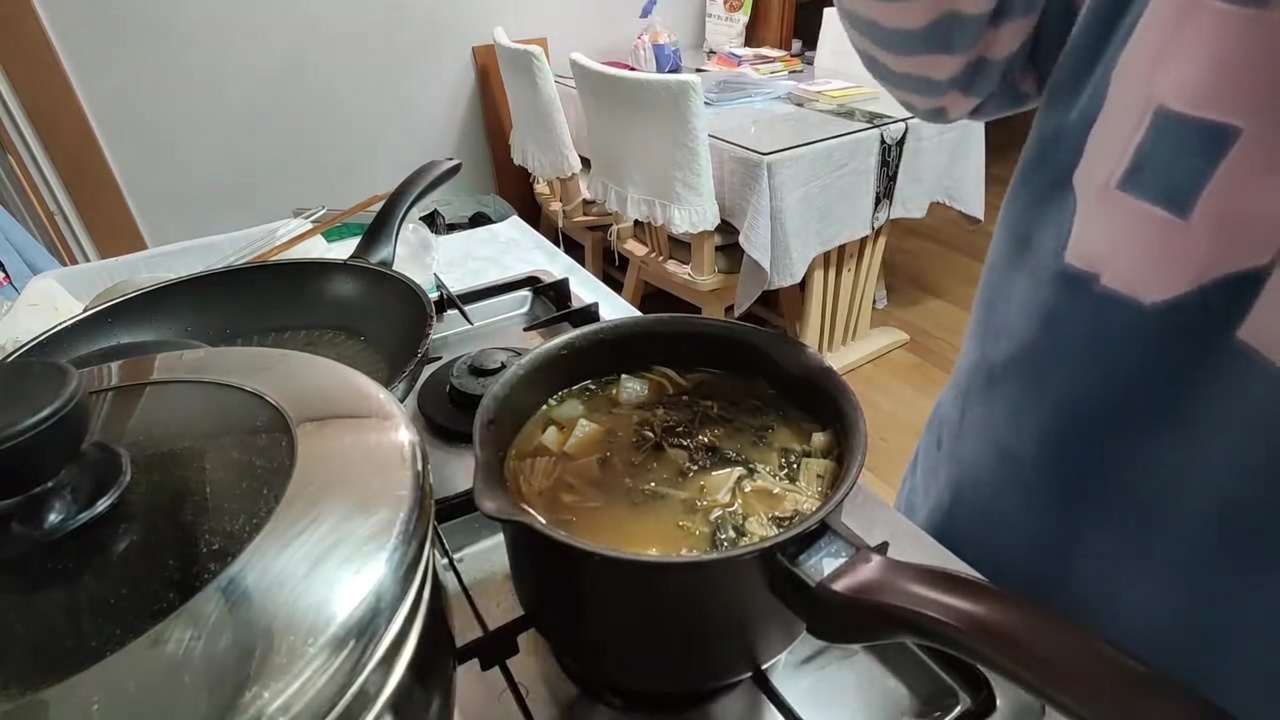
Place two large spoonfuls of Korean soybean paste (doenjang) into the boiling broth. Stir continuously with a spoon until the paste is completely dissolved and the broth takes on a rich, earthy color.
Tip: If you enjoy a stronger, deeper flavor, you can increase the amount of soybean paste to three spoonfuls based on your preference. - 9Add the seafood
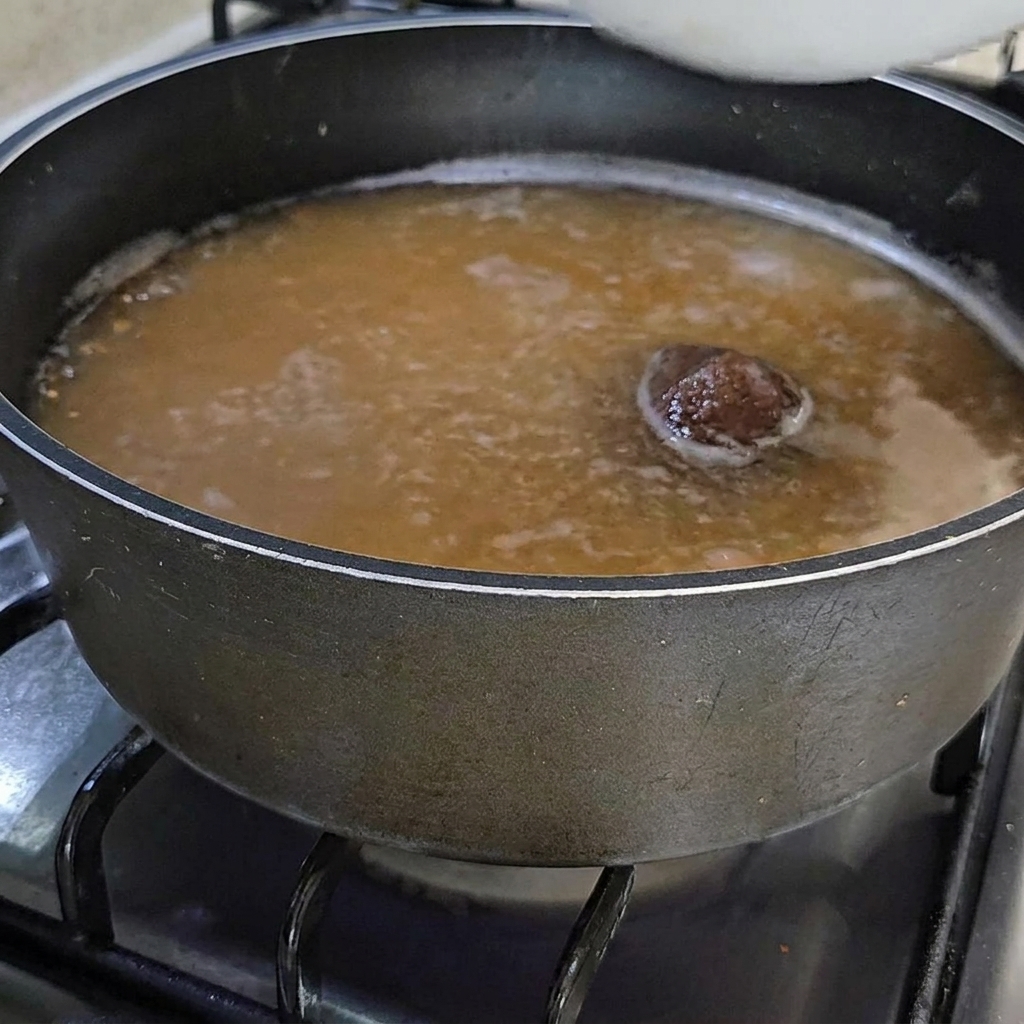
Gently pour the prepared sea squirts into the bubbling, seasoned broth. These provide a unique, fresh, and slightly briny flavor that distinguishes this stew from meat-based versions.
Tip: If sea squirts are unavailable, you can substitute them with fresh clams or beef, though sea squirts are highly recommended for the most authentic flavor. - 10Add potato cubes
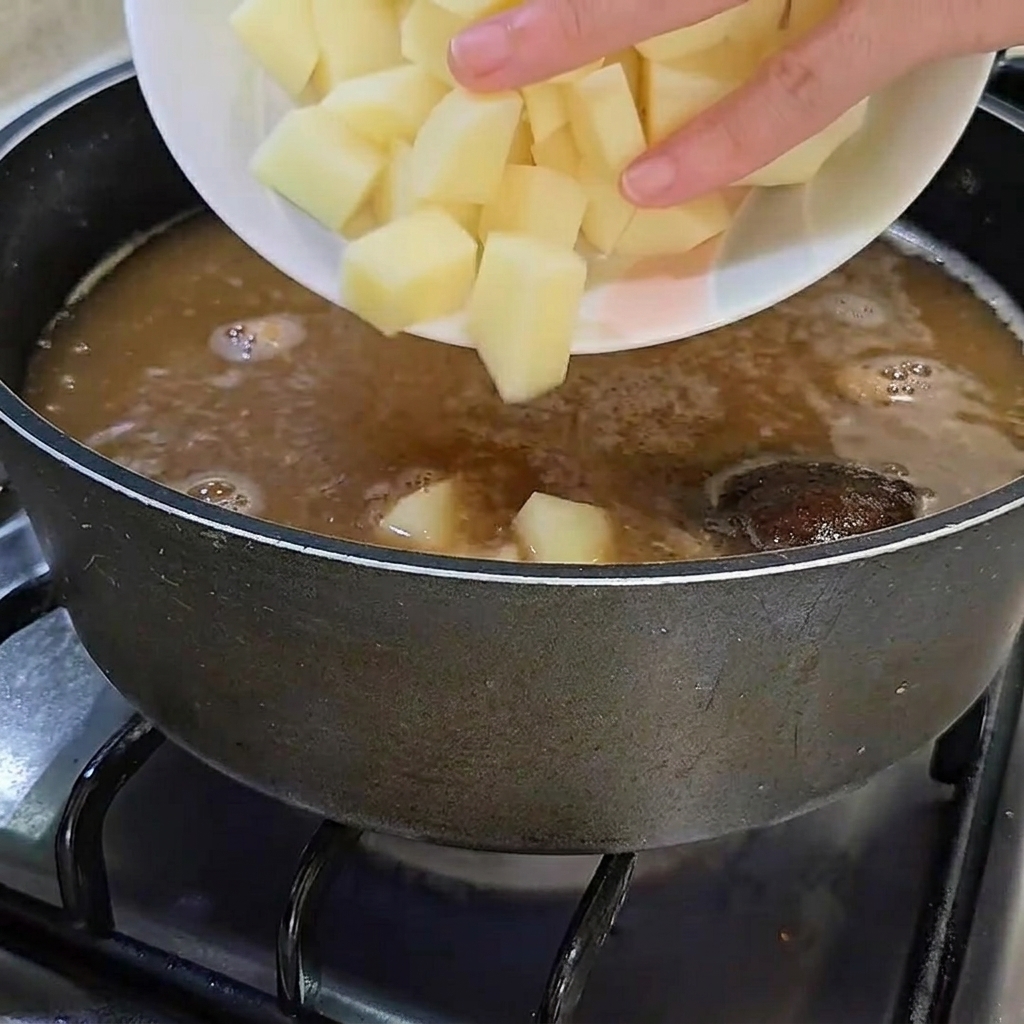
Add the cubed potatoes into the pot. Because potatoes take longer to cook than the other vegetables, it is important to add them early to ensure they become tender.
Tip: Cut the potatoes into uniform, bite-sized cubes so they cook evenly throughout the stew. - 11Add zucchini and mushrooms
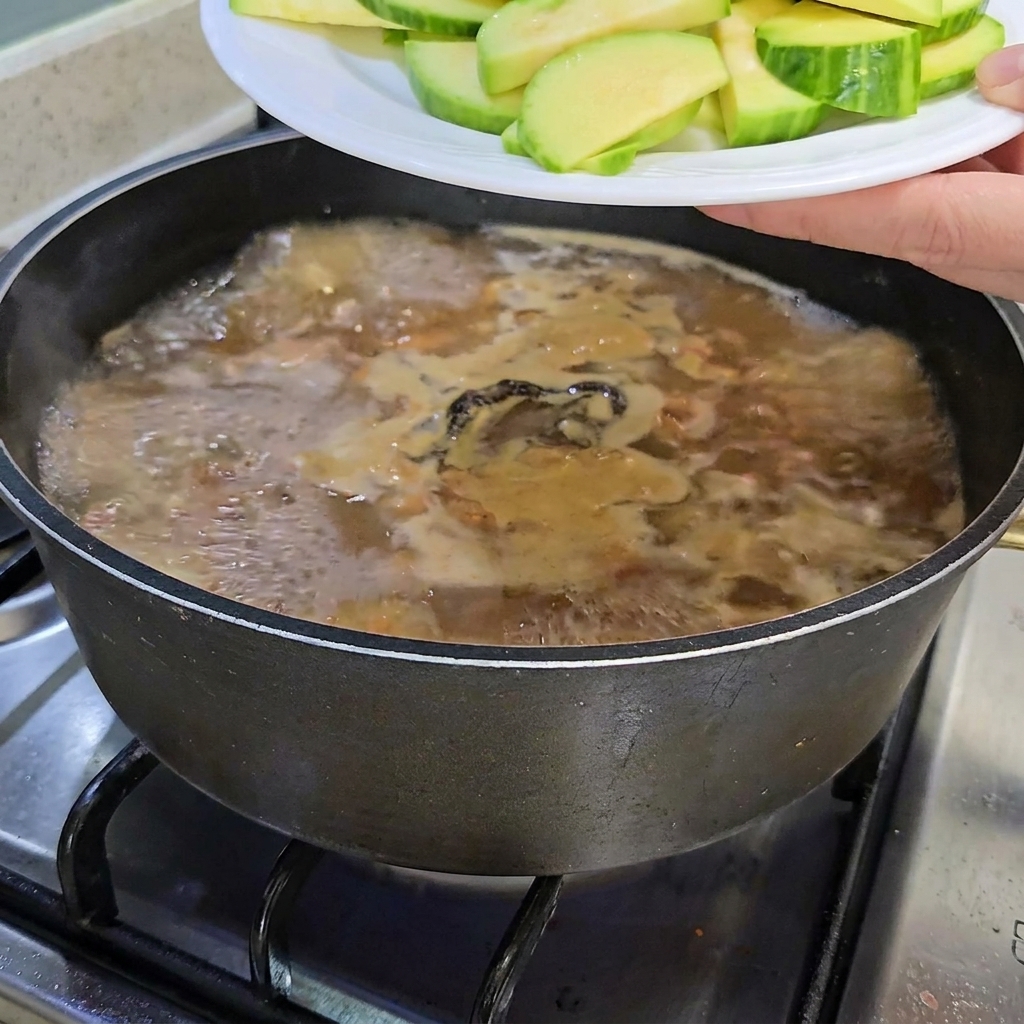
Add the sliced zucchini and a bundle of enoki mushrooms into the stew once the broth returns to a boil. These vegetables add sweetness and texture to the dish.
Tip: You can use other varieties of mushrooms like shiitake or button mushrooms if enoki are not available. - 12Add aromatics and finish
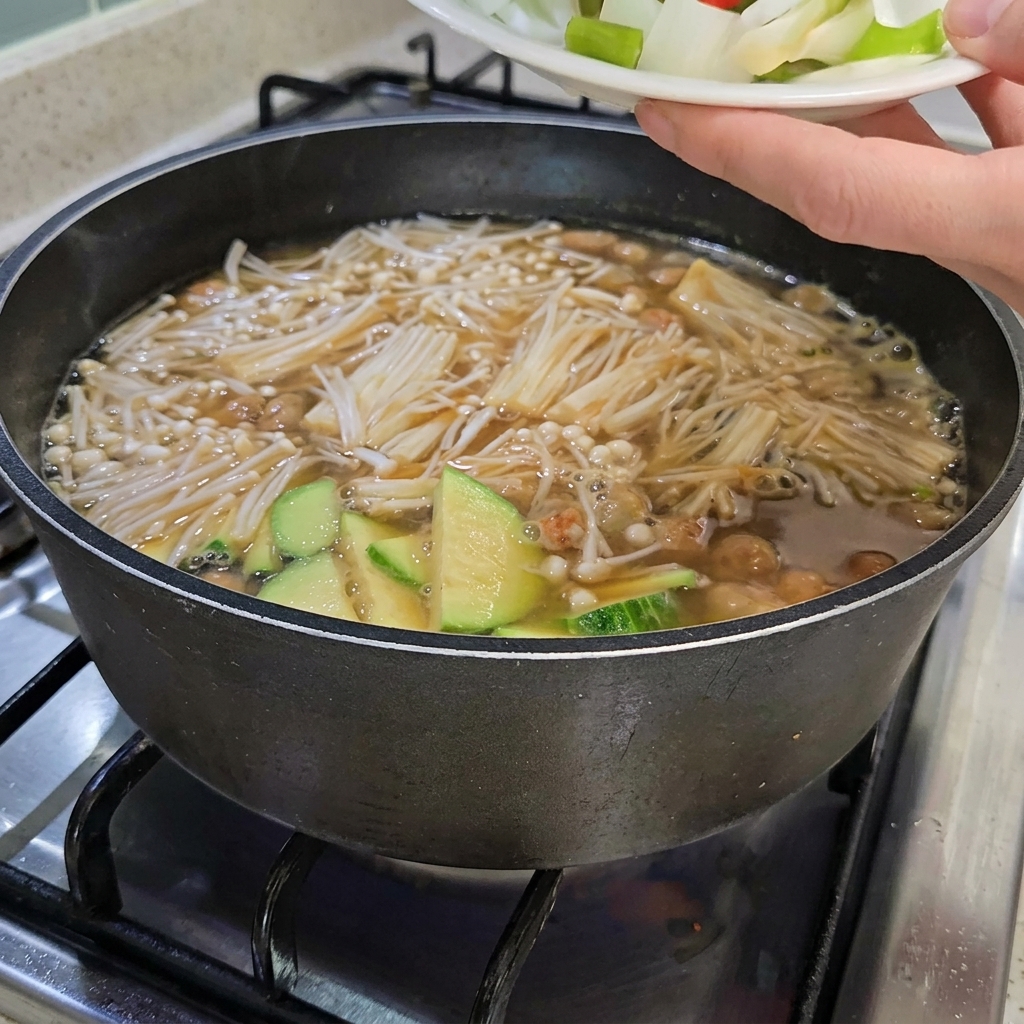
Add the chopped onions, green and red chili peppers, and scallions to the stew. These final aromatics provide a necessary brightness and a touch of heat to balance the deep flavor of the soybean paste.
Tip: Adjust the amount of chili peppers according to your personal preference for spice. - 13Add seasoning to the stew
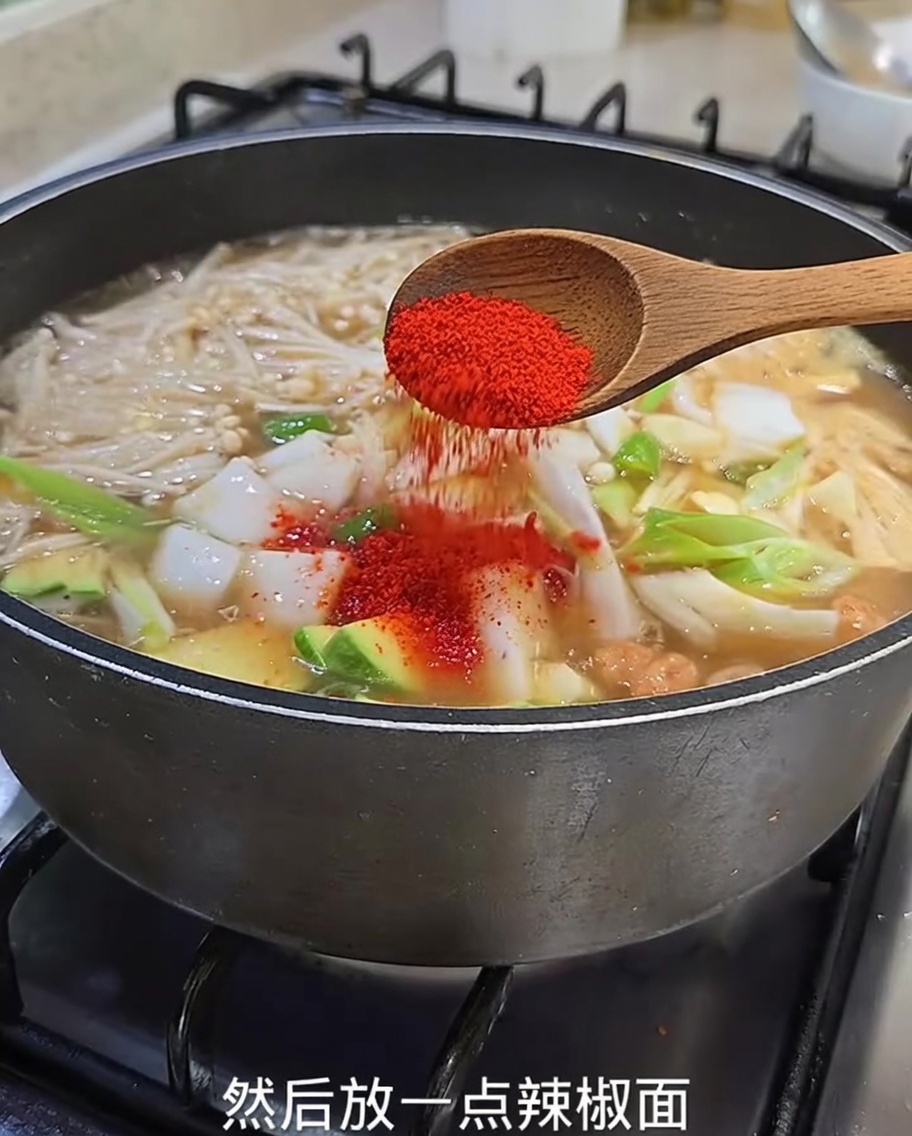
Continue layering flavors by sprinkling red chili powder over the vegetables in the boiling pot. This adds a subtle heat and enhances the vibrant color of the Doenjang Jjigae.
Tip: Adjust the amount of chili powder based on your preferred heat level. - 14Add tofu to the stew
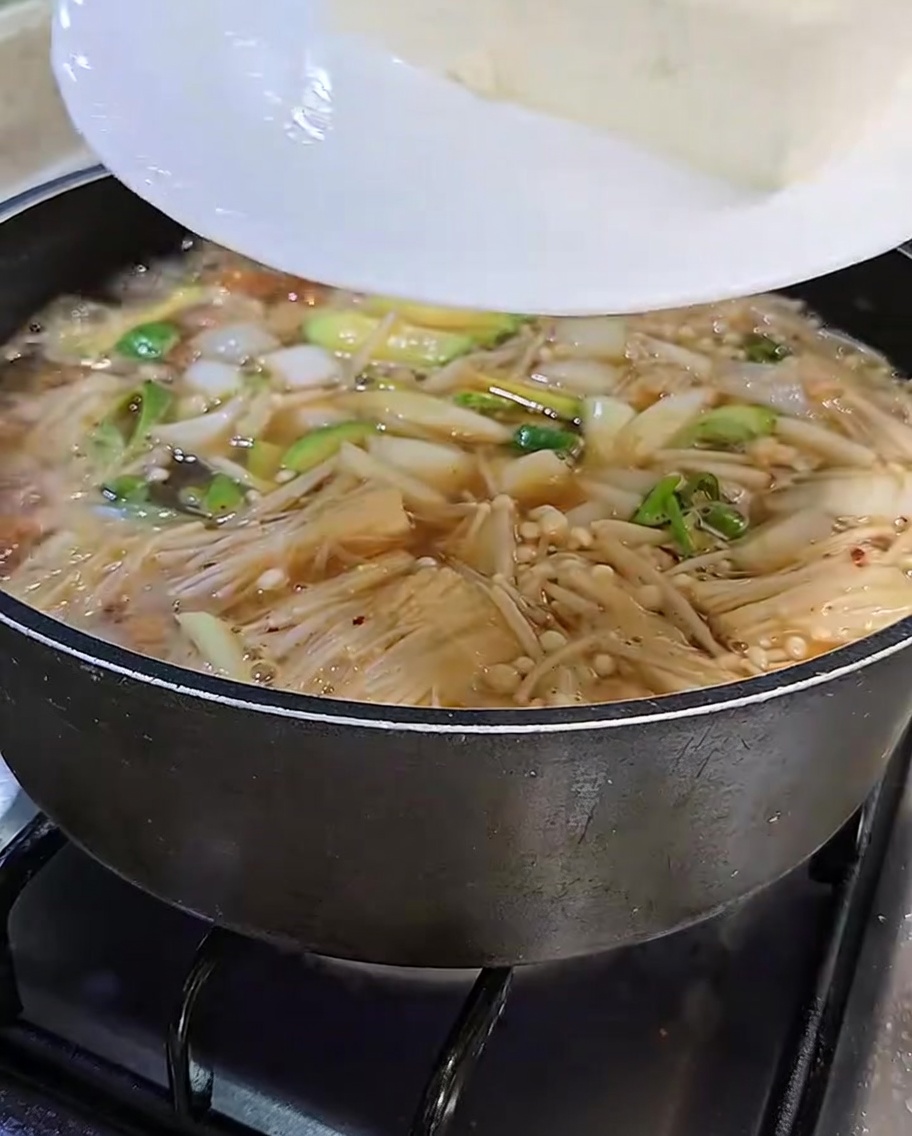
Gently slide the neatly sliced white tofu into the simmering stew. Tofu absorbs the flavors of the rich seafood and soybean paste broth, adding a soft, protein-rich texture to the dish.
Tip: Use firm or medium-firm tofu to ensure it holds its shape during the final simmer. - 15Skim the stew
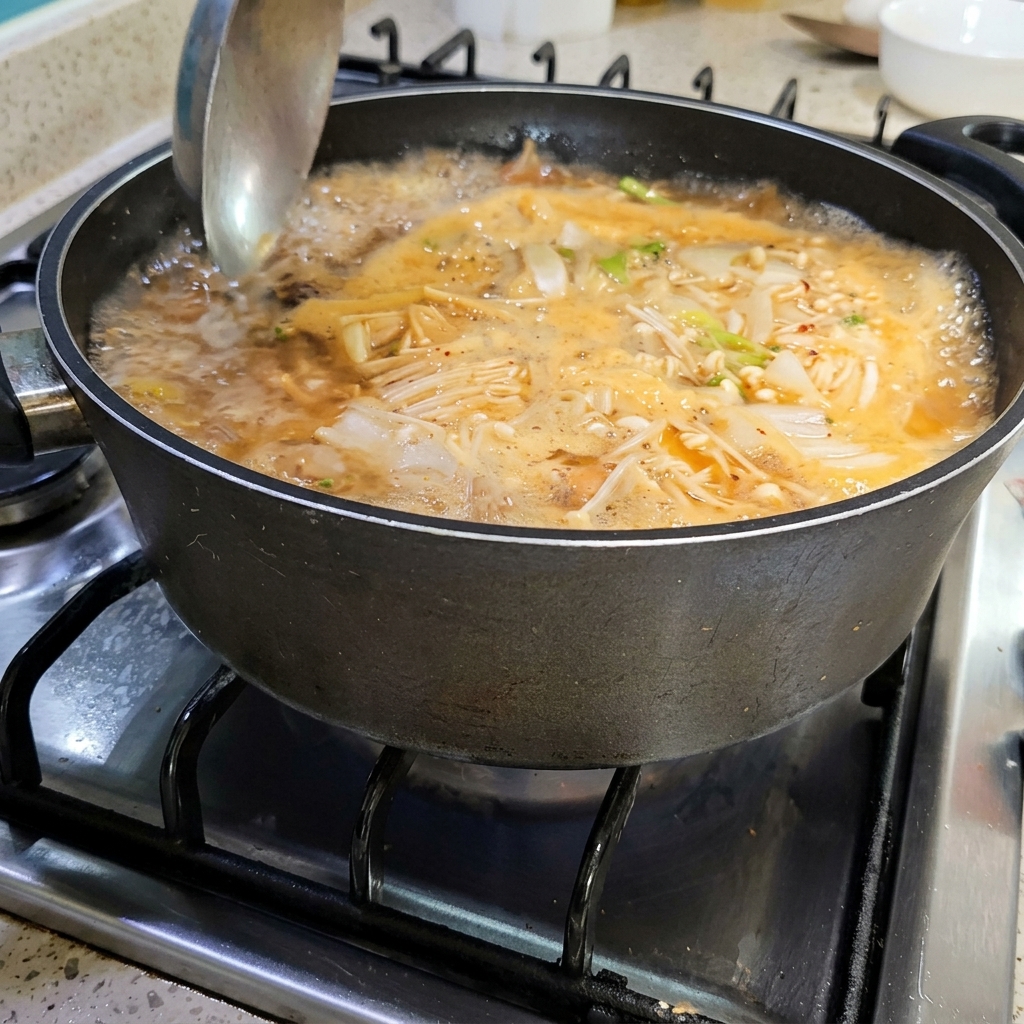
As the stew continues to simmer, use a ladle to skim off any floating foam or impurities from the surface. This ensures the final broth remains clear, clean, and perfectly flavored.
Tip: Skimming regularly during the final stage keeps the broth tasting fresh and prevents any bitter aftertaste.