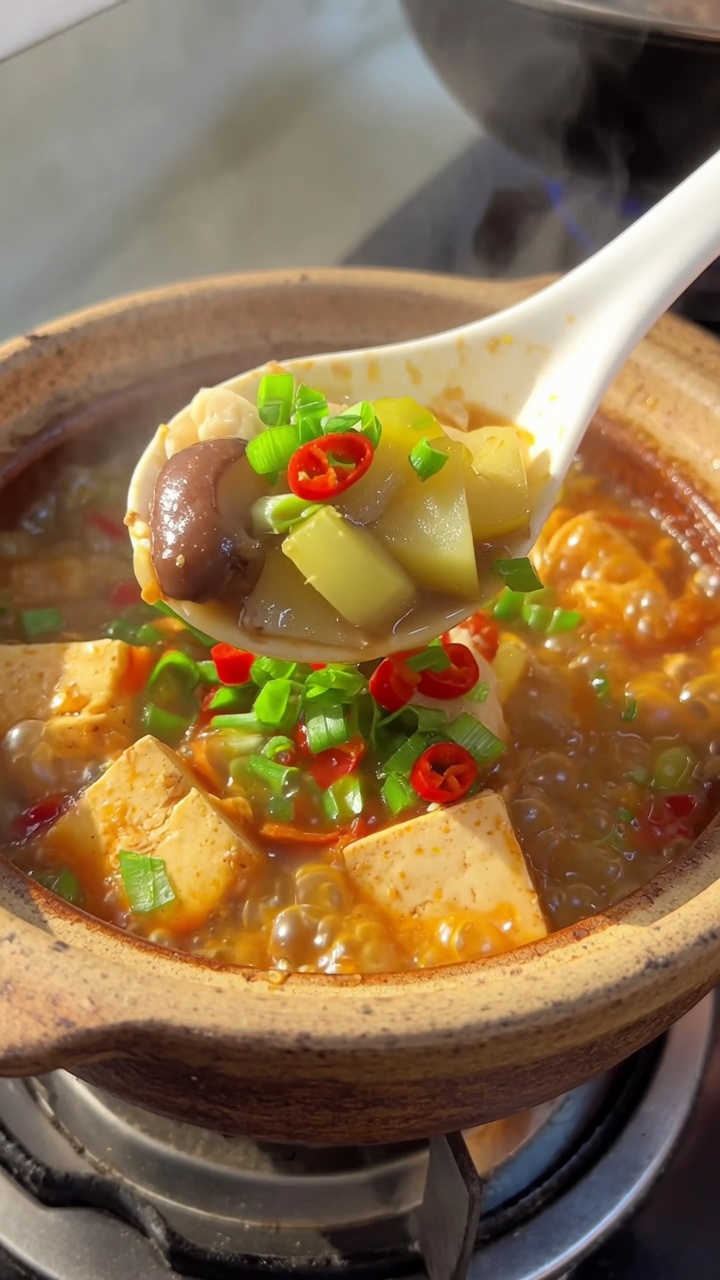
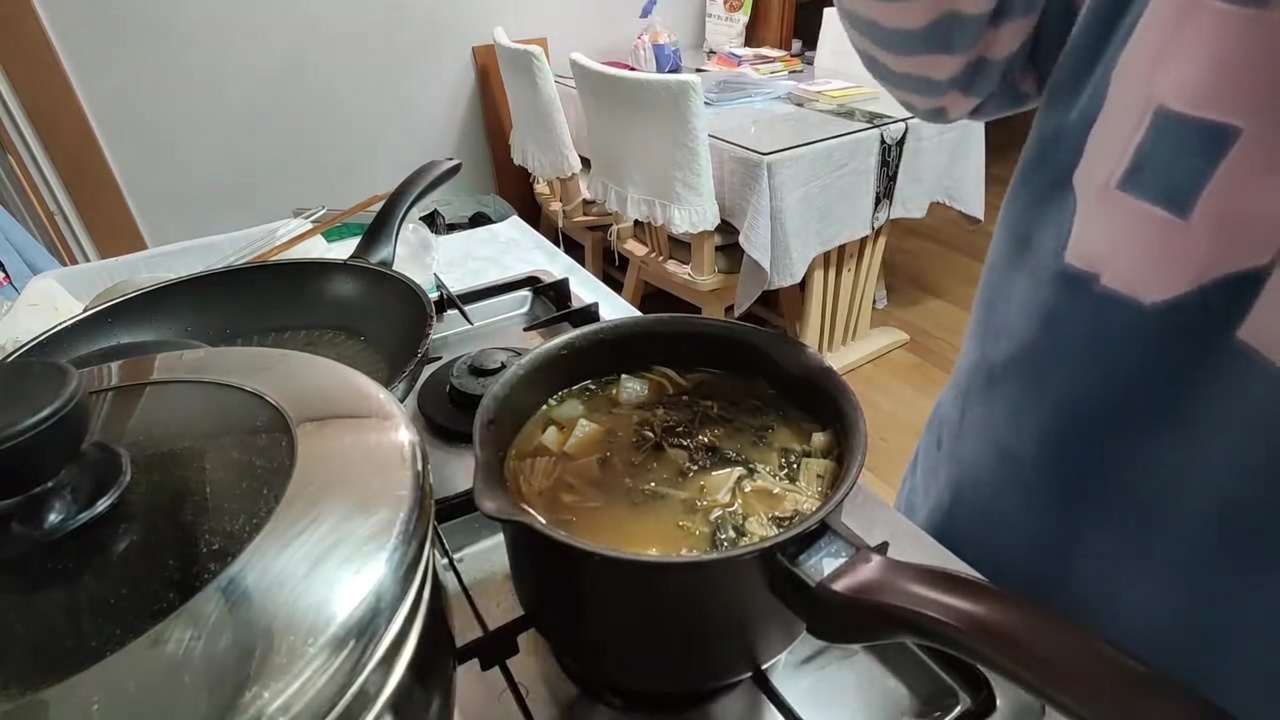
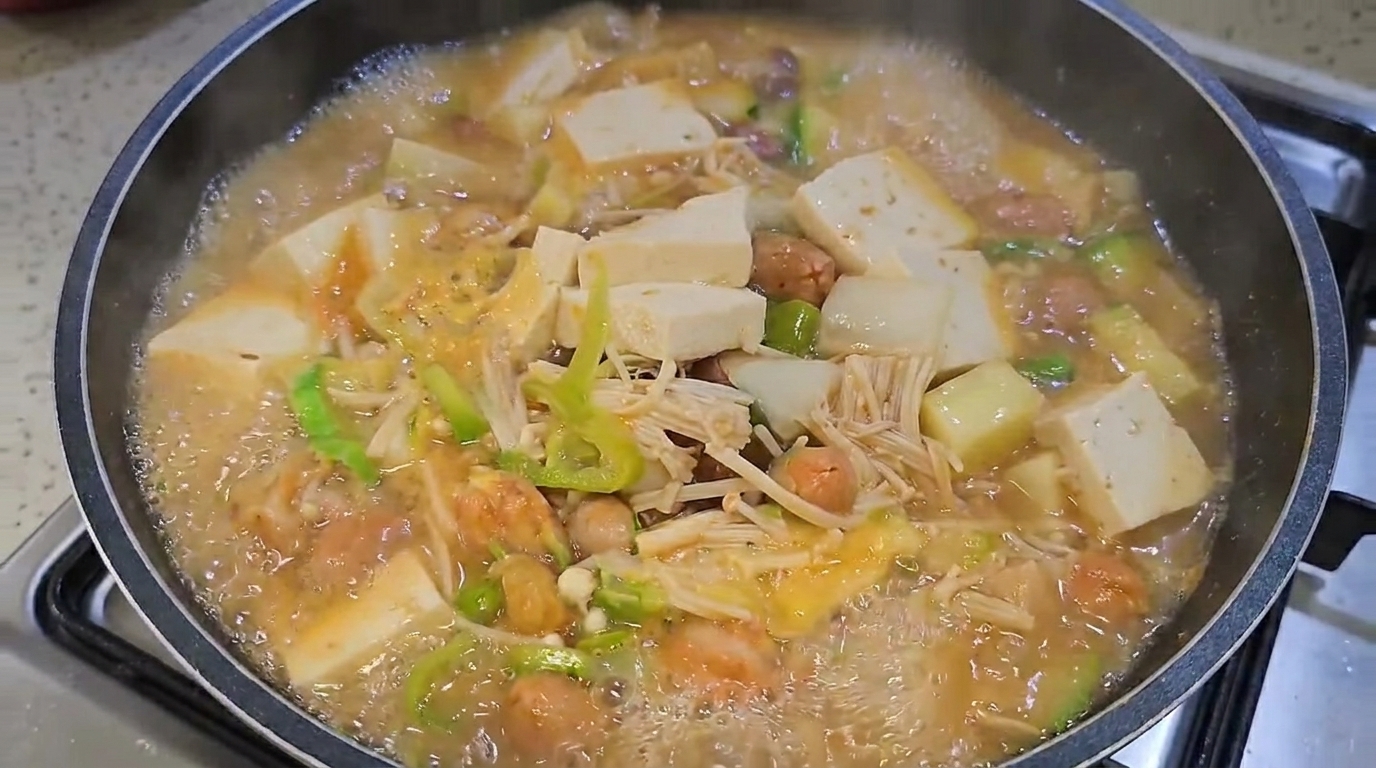
Traditional Korean Doenjang-jjigae (Soybean Paste Stew)
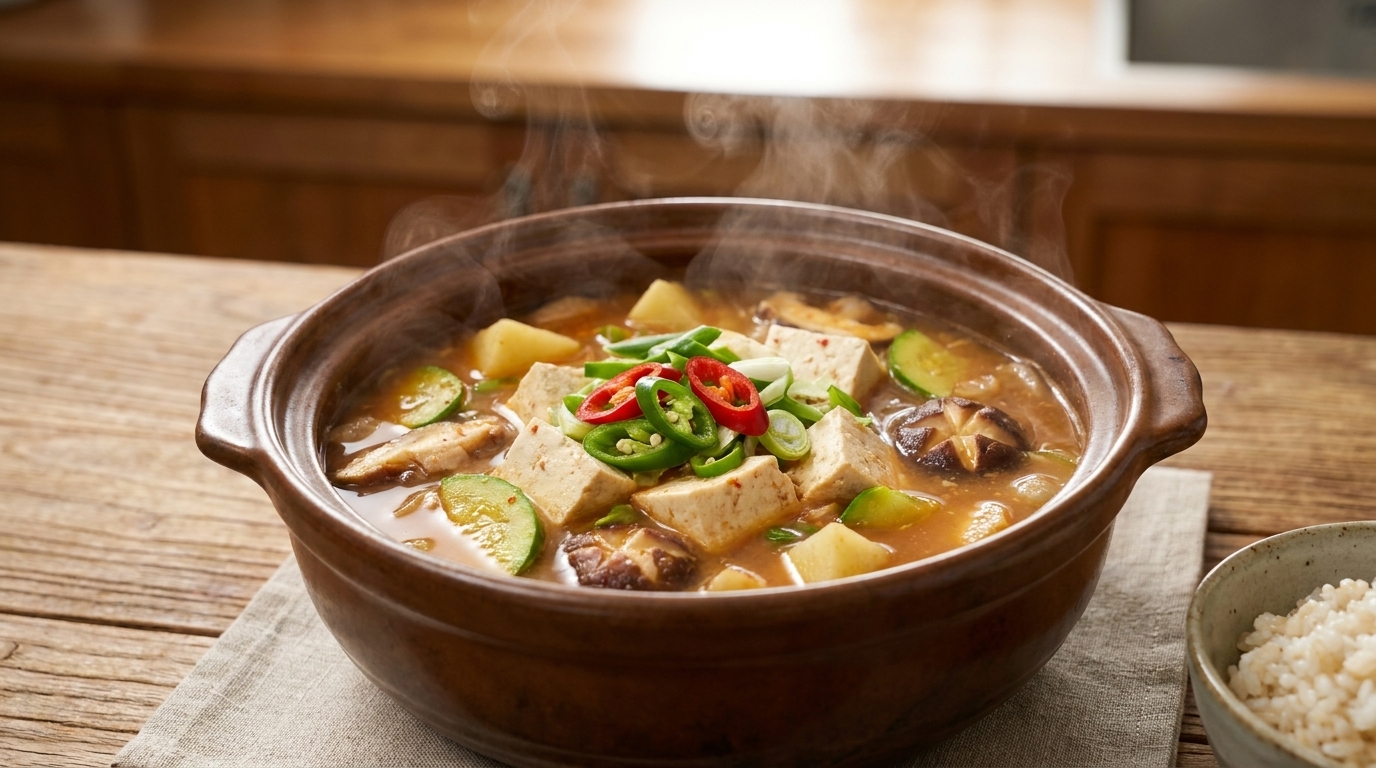
A hearty and comforting Korean staple, this soybean paste stew features tender tofu, earthy mushrooms, and vegetables simmered in a savory, umami-rich broth.
Doenjang-jjigae is a cornerstone of Korean home cooking, cherished for its deep, savory flavor and soul-warming properties. This stew relies on the quality of the doenjang, a fermented soybean paste that provides an intense umami base. It is a humble, healthy, and incredibly satisfying meal that is traditionally enjoyed bubbling hot, straight from the earthenware pot, and served alongside a bowl of steamed white rice.
Ingredients
- 1 tbsp Korean soybean paste (doenjang)
- 150 g firm tofu
- 1 medium potato
- 1/2 medium zucchini
- 3 shiitake mushrooms
- 1/4 onion
- 1 tbsp dried clams
- 1 tsp chili powder
- 1/2 tsp beef seasoning powder
- 2 cups water
- to taste baby bok choy
- to taste green chili slices
- to taste red chili slices
Instructions
- 1Prepare the potatoes
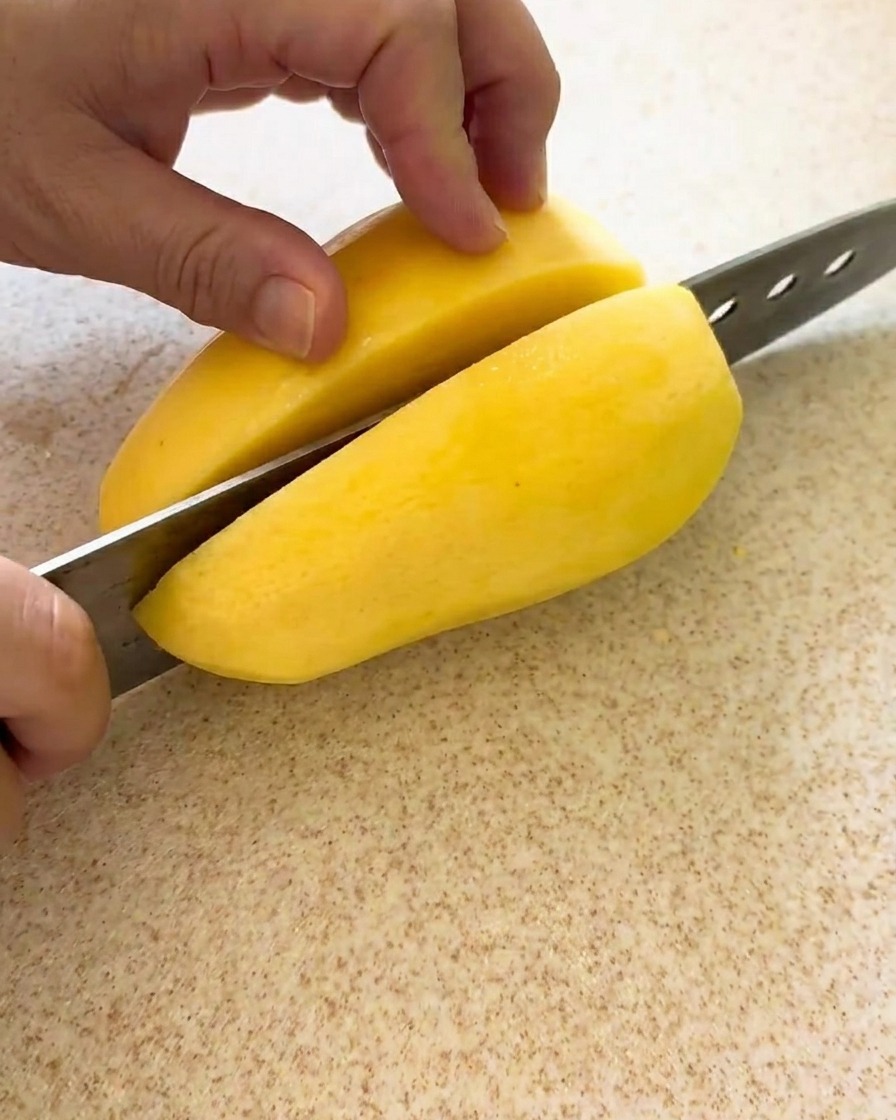
Take the potatoes and cut them into small, uniform cubes. Uniform sizing ensures they cook evenly when added to the stew, providing the right texture for the final dish.
Tip: If you are not cooking immediately, soak the cut potato cubes in water to prevent them from browning. - 2Slice the zucchini
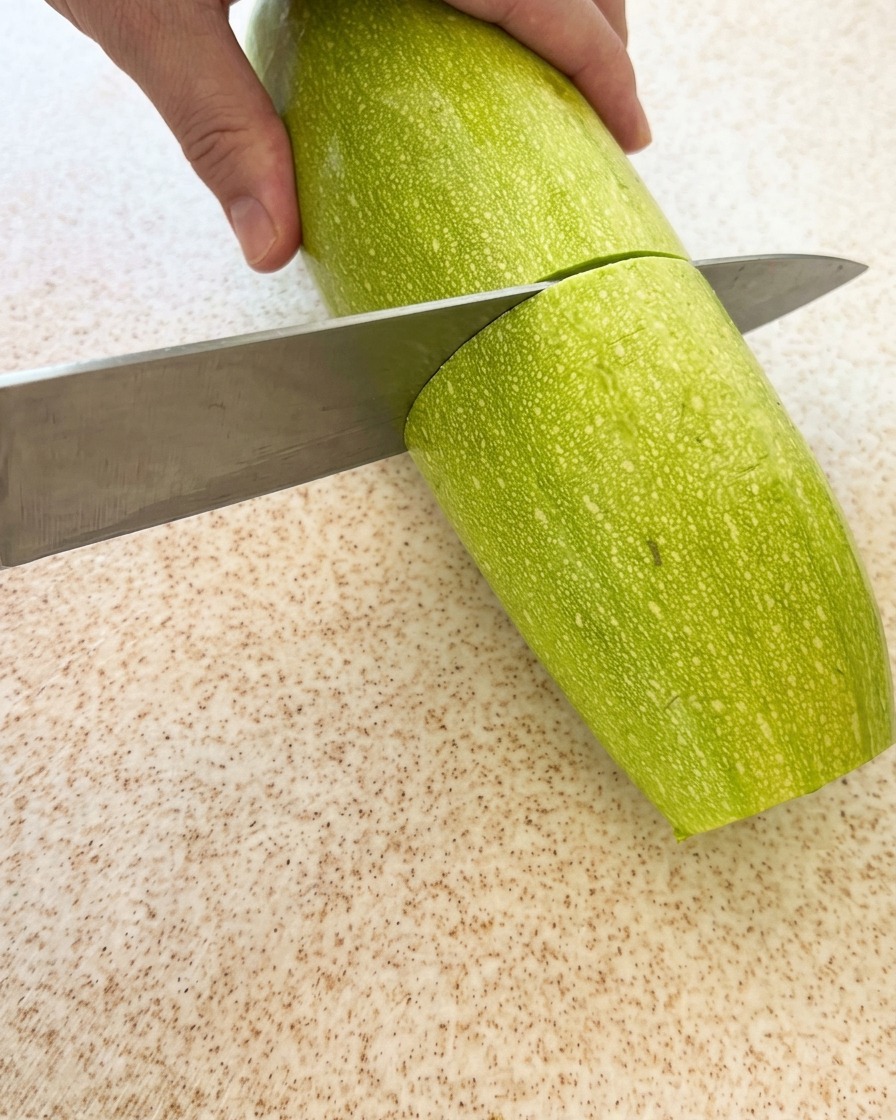
Slice the zucchini into pieces of a manageable size. Zucchini adds a soft texture and sweetness that balances the savory, salty notes of the soybean paste.
Tip: Try to keep the zucchini slices roughly the same size as the potatoes so they finish cooking at the same time. - 3Prepare shiitake mushrooms
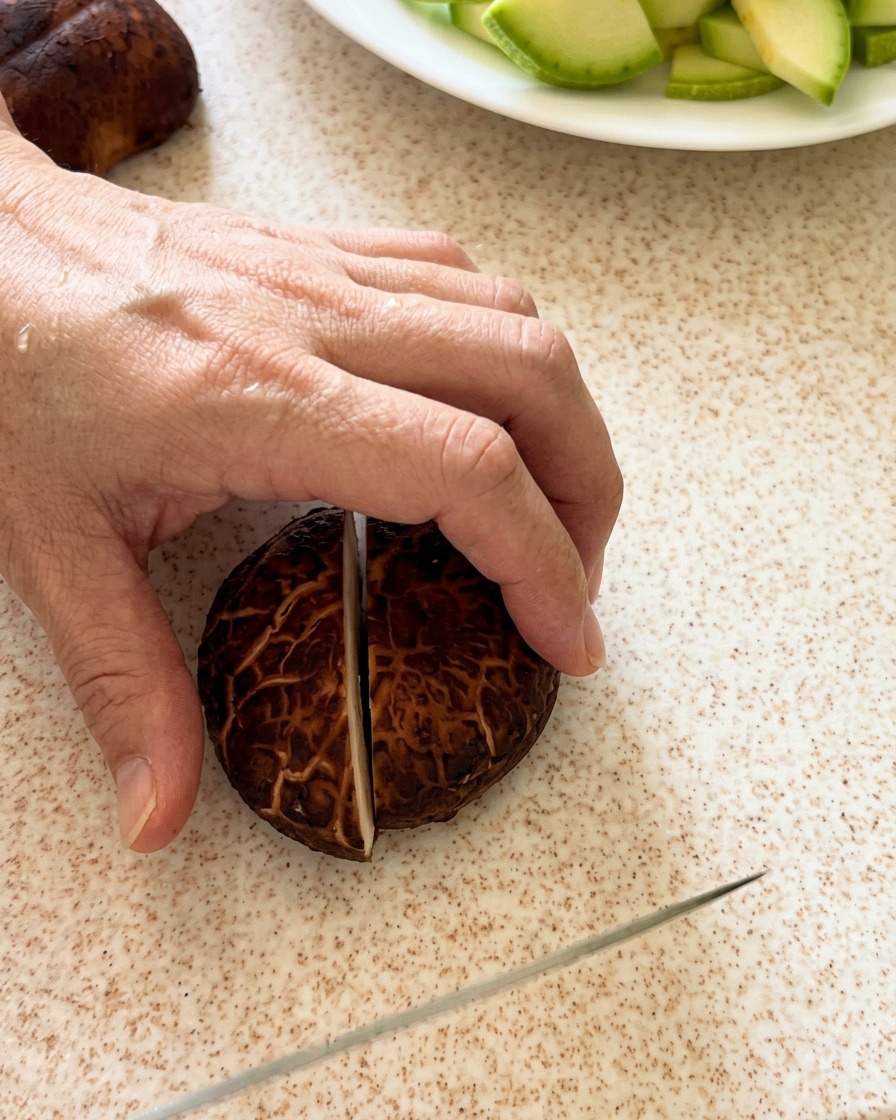
Slice the shiitake mushrooms into pieces. These mushrooms provide a deep, earthy umami flavor that is essential for a rich Korean soybean paste stew.
Tip: Wipe the mushrooms with a damp cloth instead of washing them to keep their texture firm and flavorful. - 4Cut the tofu
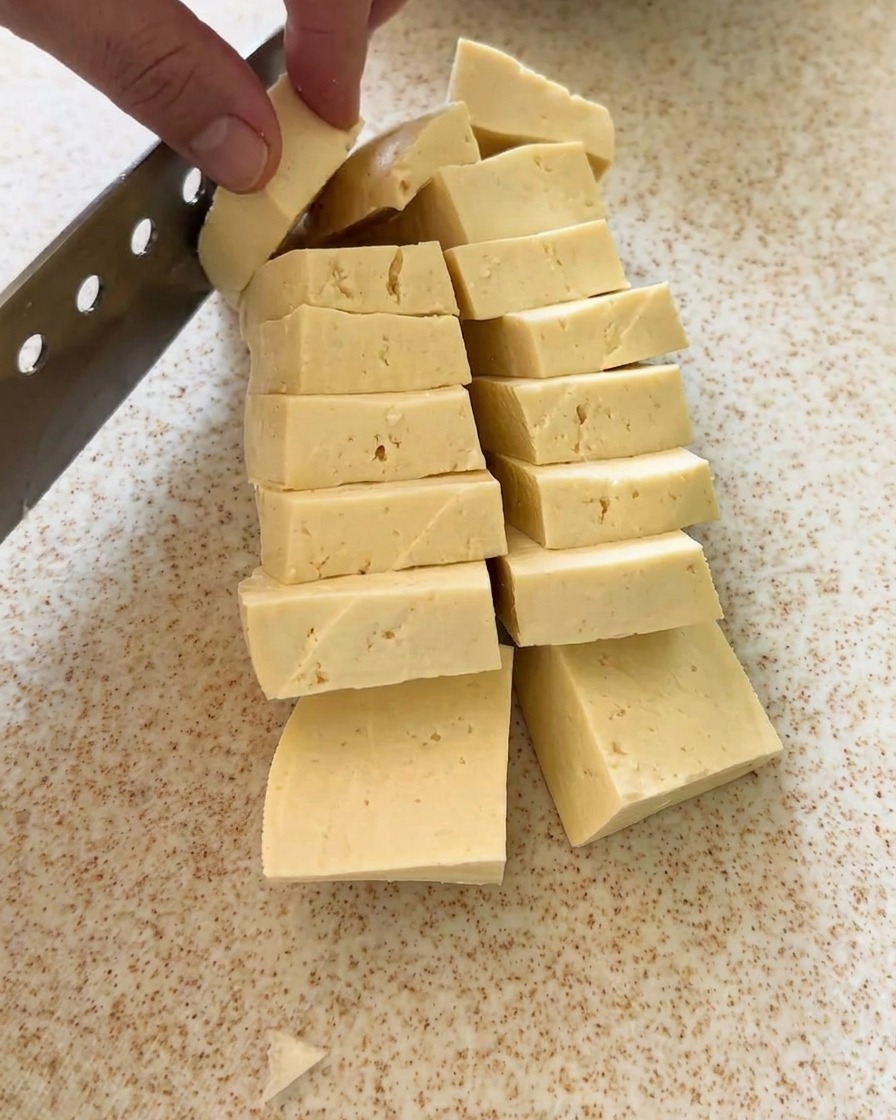
Carefully slice the block of tofu into uniform pieces. Tofu acts as a sponge in this dish, soaking up the flavorful broth as it simmers.
Tip: Use firm or extra-firm tofu so it holds its shape well during the simmering process. - 5Add vegetables to the pot
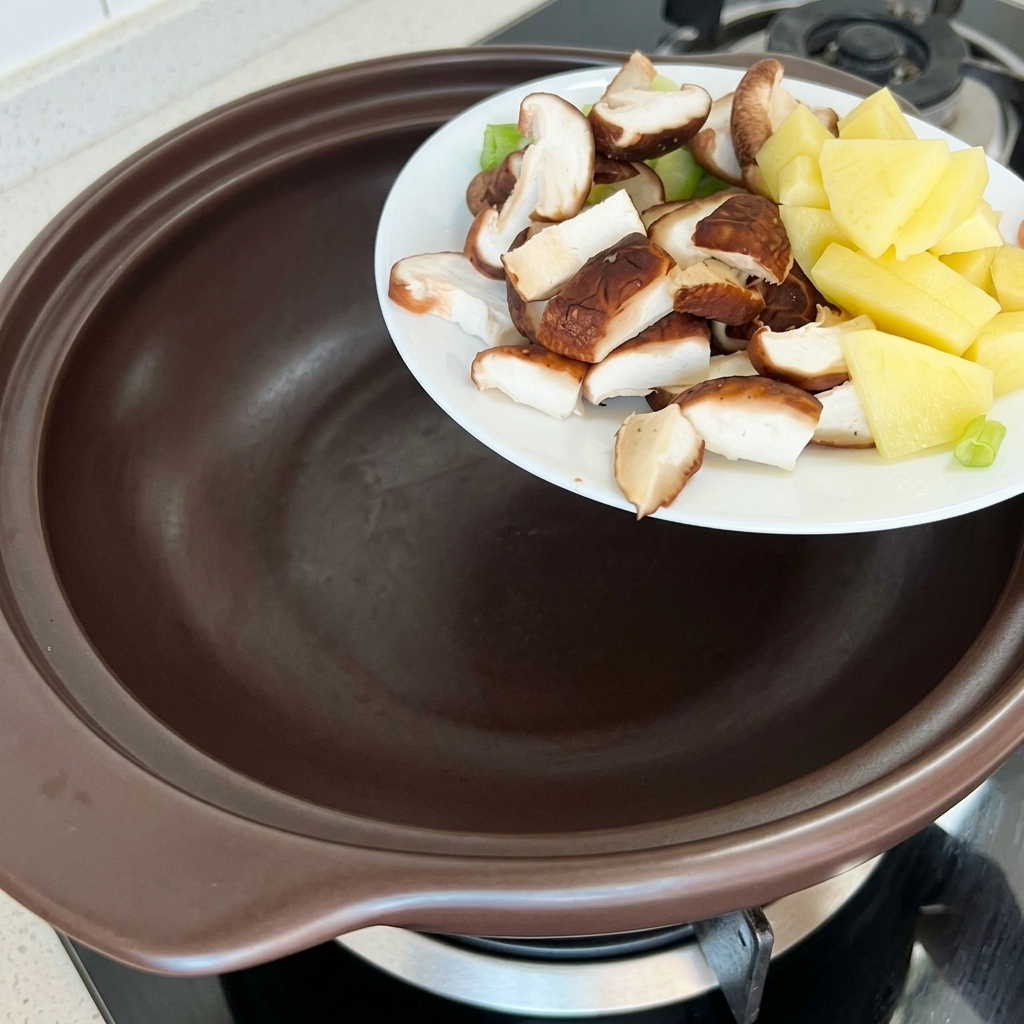
Transfer the chopped zucchini, potatoes, and shiitake mushrooms into your earthenware pot. These ingredients form the base of the hearty stew.
Tip: Using an earthenware pot helps maintain heat and keeps the stew warm for longer after cooking. - 6Add tofu and dried clams
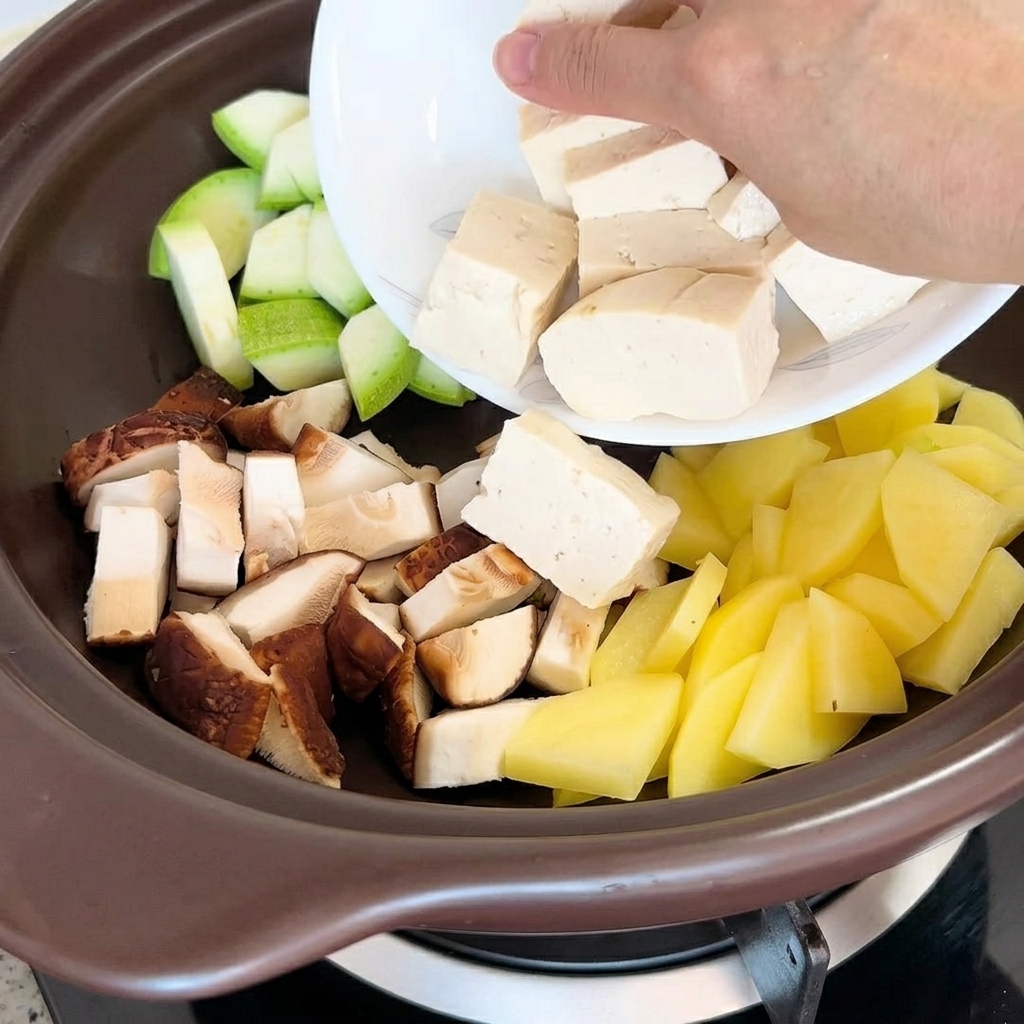
Gently add the sliced tofu and dried clams into the pot with the other vegetables. The dried clams add a subtle, savory seafood depth to the stew.
Tip: Add the ingredients carefully to avoid breaking the soft tofu pieces. - 7Add the soybean paste
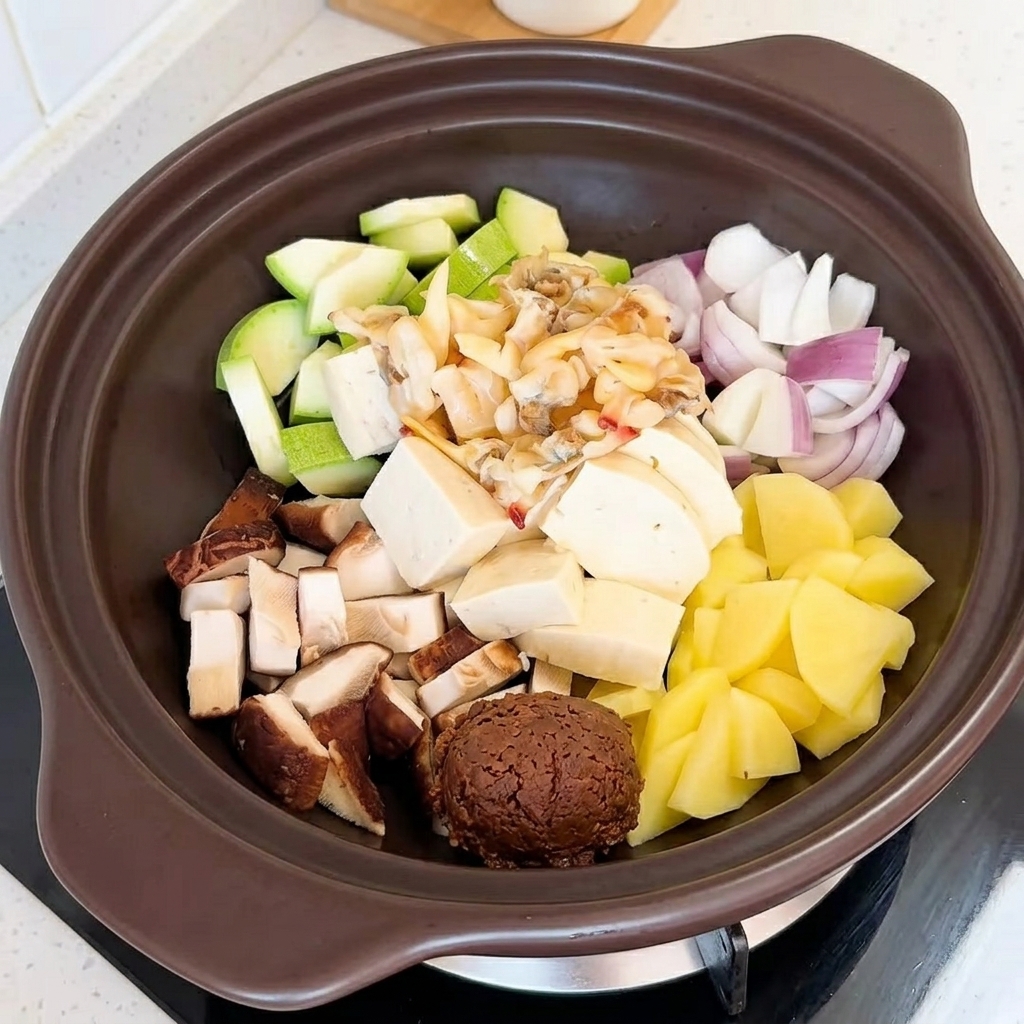
Add a spoonful of traditional Korean soybean paste to the pot with the prepared ingredients. This paste forms the savory, umami-rich base of the stew.
Tip: The soybean paste is already quite salty, so be mindful not to add extra salt during the seasoning phase. - 8Season the stew
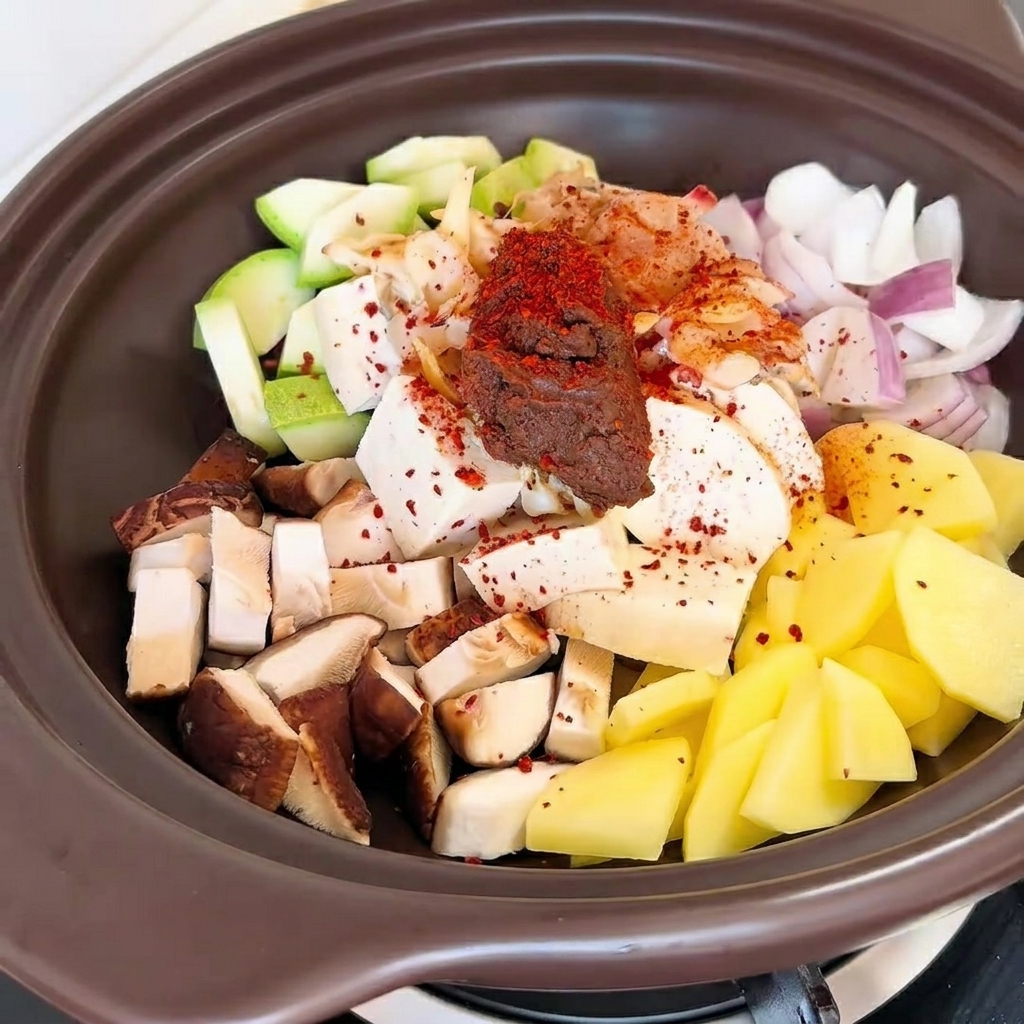
Sprinkle chili powder and beef seasoning powder over the soybean paste and other ingredients in the pot to enhance the flavor and color.
Tip: The beef seasoning powder adds a deeper savory note that complements the earthiness of the soybean paste. - 9Add water
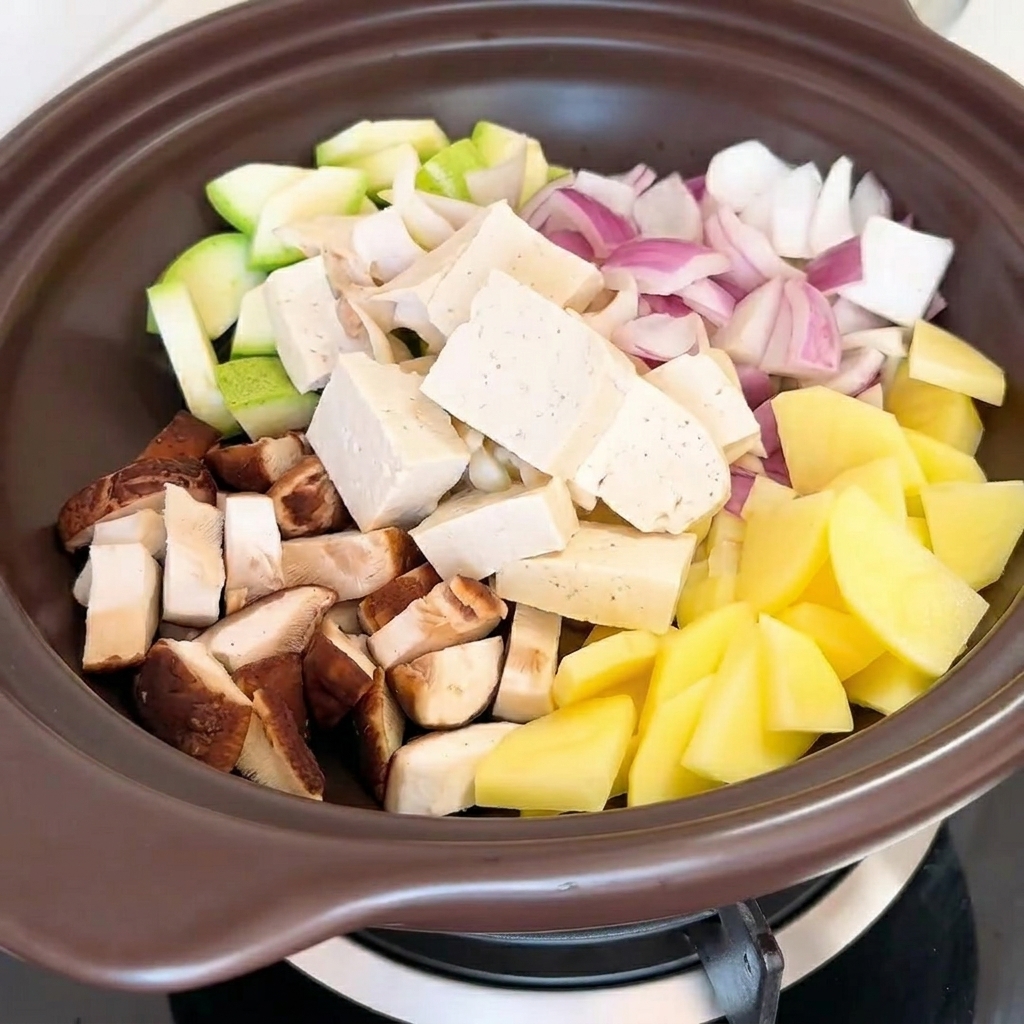
Pour a large cup of water into the pot over the seasoned ingredients. Ensure there is enough liquid to cover the contents so they can simmer and meld flavors properly.
Tip: Using a measured amount of water helps maintain the desired consistency of the stew broth. - 10Add final garnishes
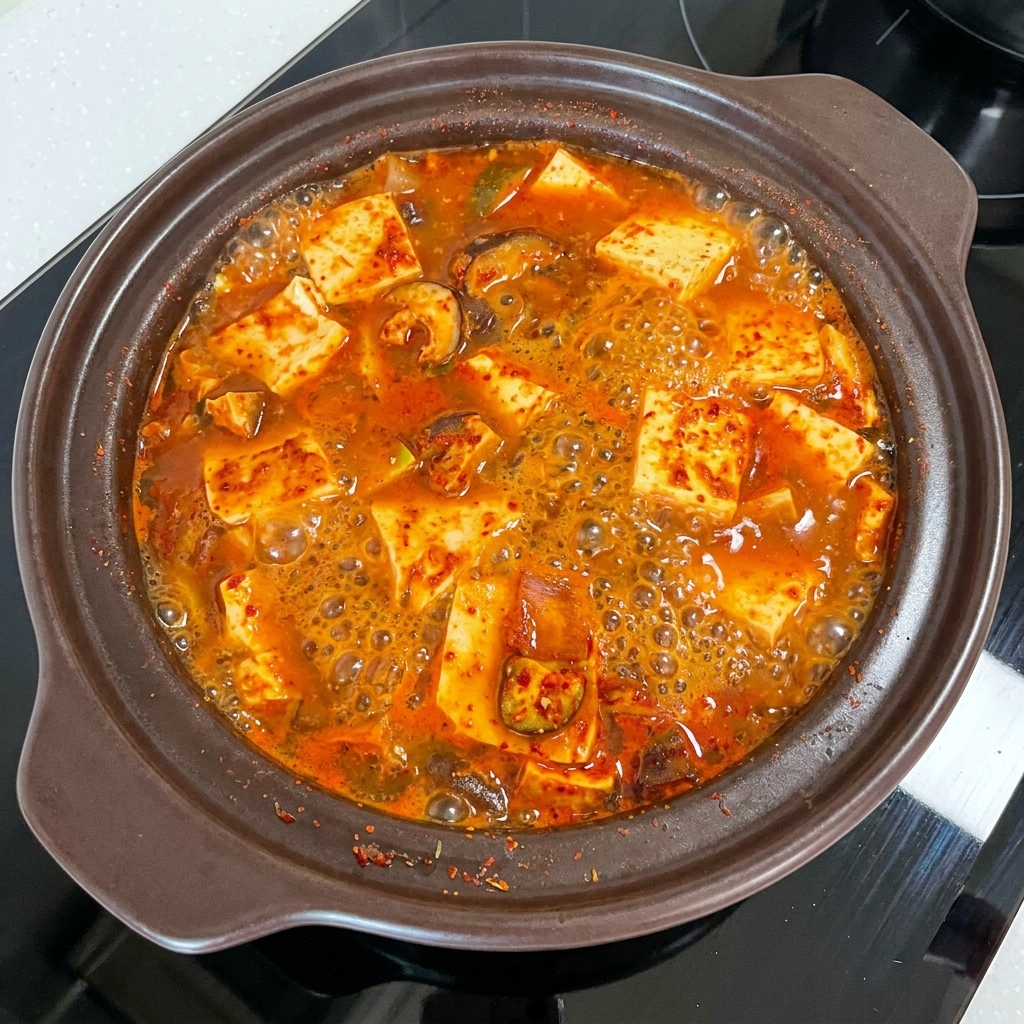
Add the fresh baby bok choy and sliced green and red chilies to the bubbling stew. Let it simmer for a short time longer to allow the greens to wilt and the chili flavor to infuse.
Tip: Adding the greens at the end keeps them bright and slightly crisp, providing a fresh texture to the hearty stew.