Authentic Korean Soybean Paste Stew (Doenjang Jjigae)
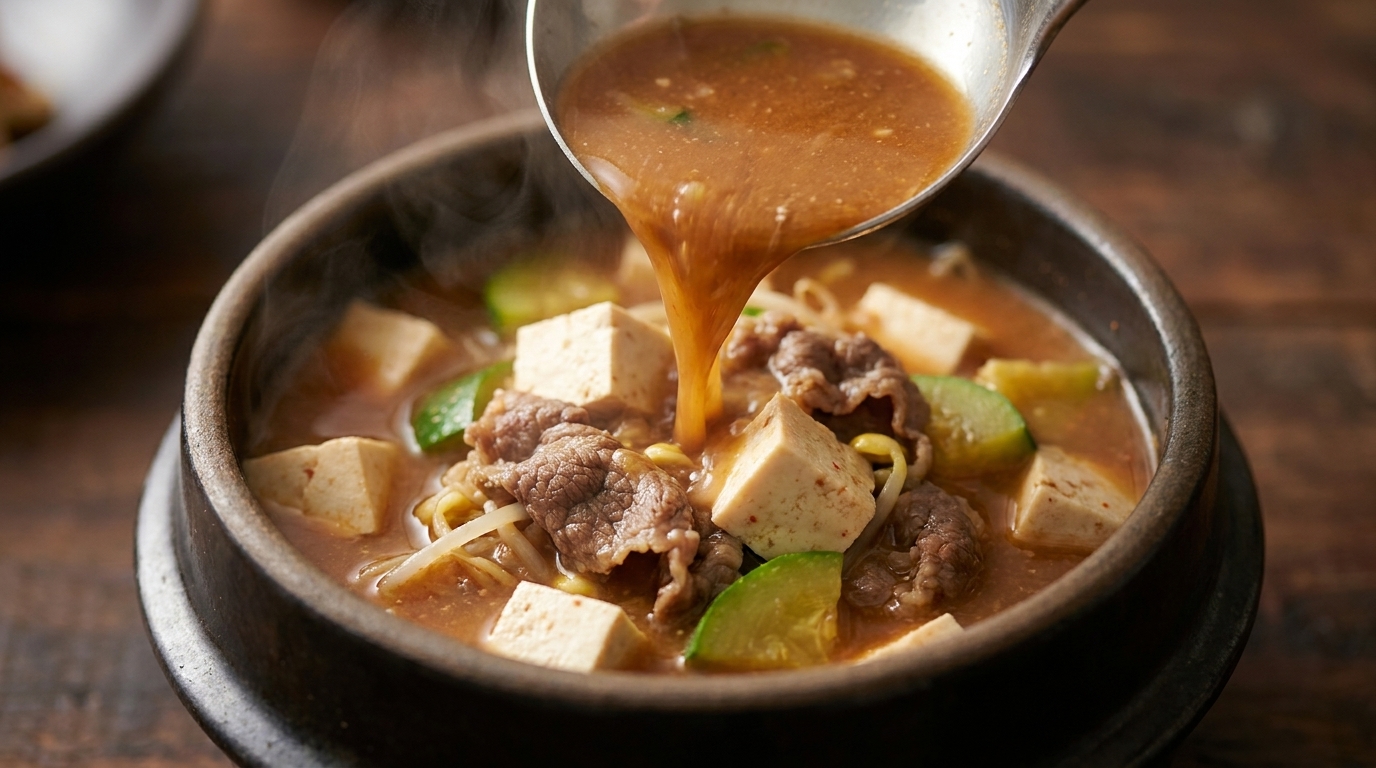
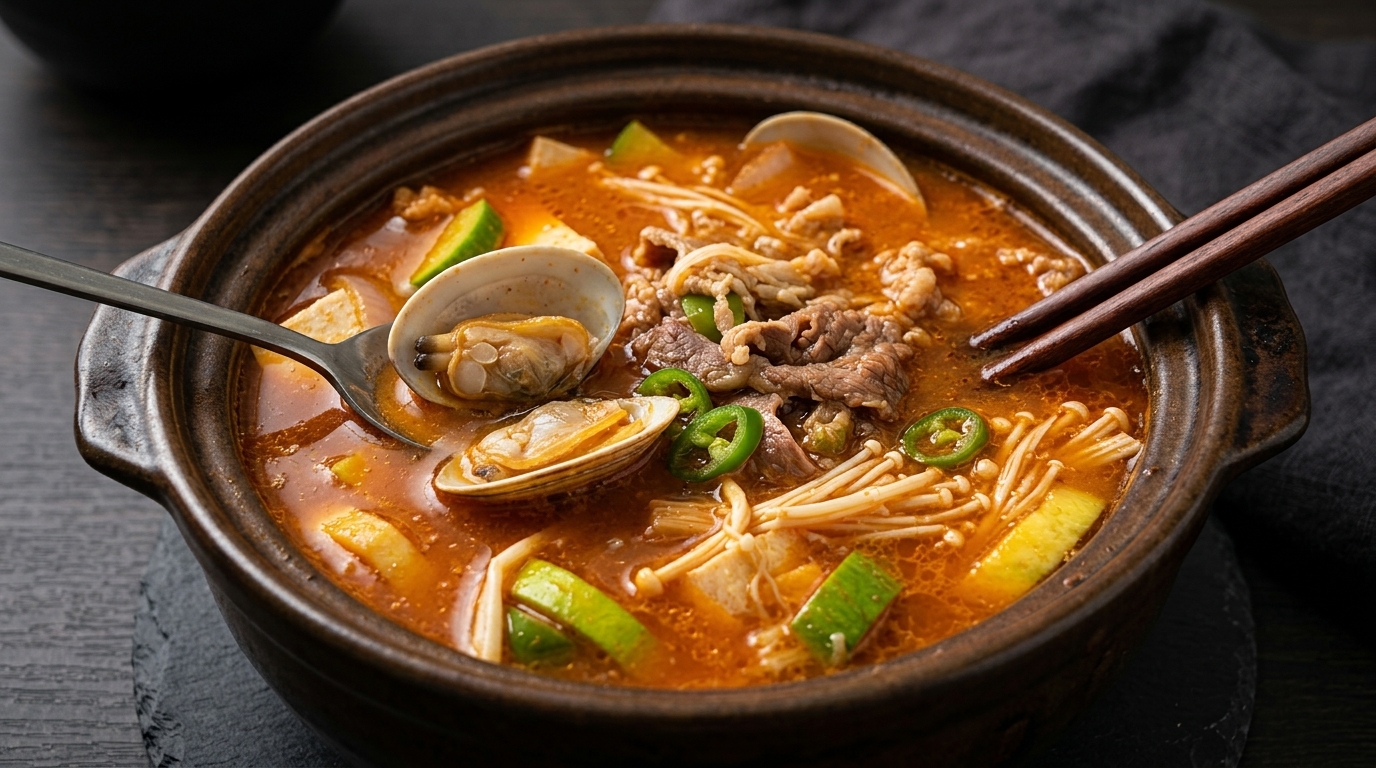
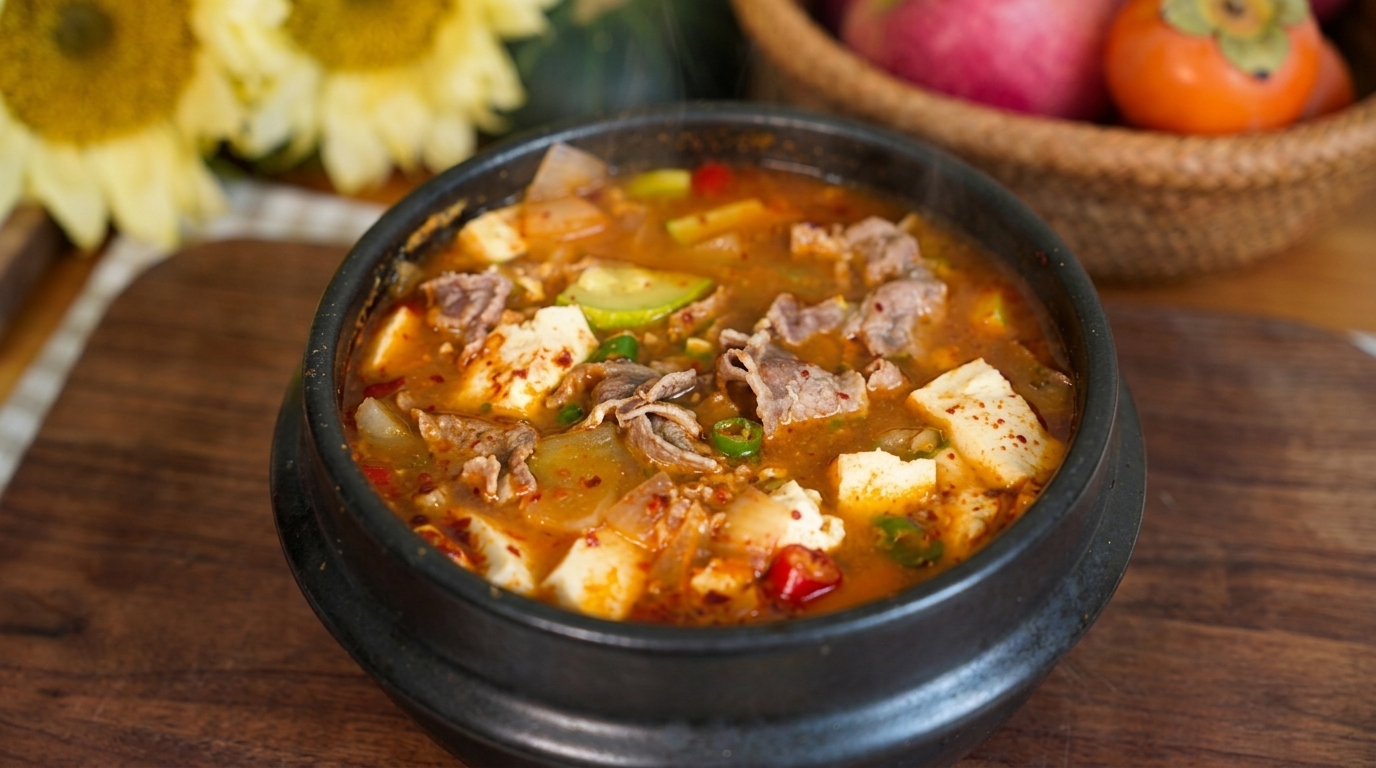
A comforting, deeply savory Korean soybean paste stew packed with tender beef, soft tofu, and fresh vegetables in a rich, umami-packed broth.
Doenjang Jjigae is one of Koreas most iconic and ubiquitous comfort foods, anchoring countless family meals and barbecue dinners alike. This classic stew relies on fermented soybean paste to build an instantly deep, complex umami flavor that perfectly complements earthy vegetables and tender proteins. Traditionally served bubbling hot straight from the stove, it is a nourishing staple that represents the heart of rustic Korean home cooking.
Ingredients
- 150 g sliced beef
- 2 tbsp Korean soybean paste (doenjang)
- 1 tbsp Korean chili paste (gochujang)
- 500 ml rice-washing water
- 1 medium potato
- 1/2 zucchini
- 200 g soft tofu
- 1 cup blanched bok choy
- 1 tsp beef seasoning powder (dashida)
- 2 bowls cooked rice
- 1 cup assorted bibimbap vegetables
- 2 whole eggs
- 1 tbsp Sprite
- 1 tsp white sesame seeds
- 1 tbsp sesame oil
- to taste sliced scallions
Instructions
- 1Stir-fry the beef
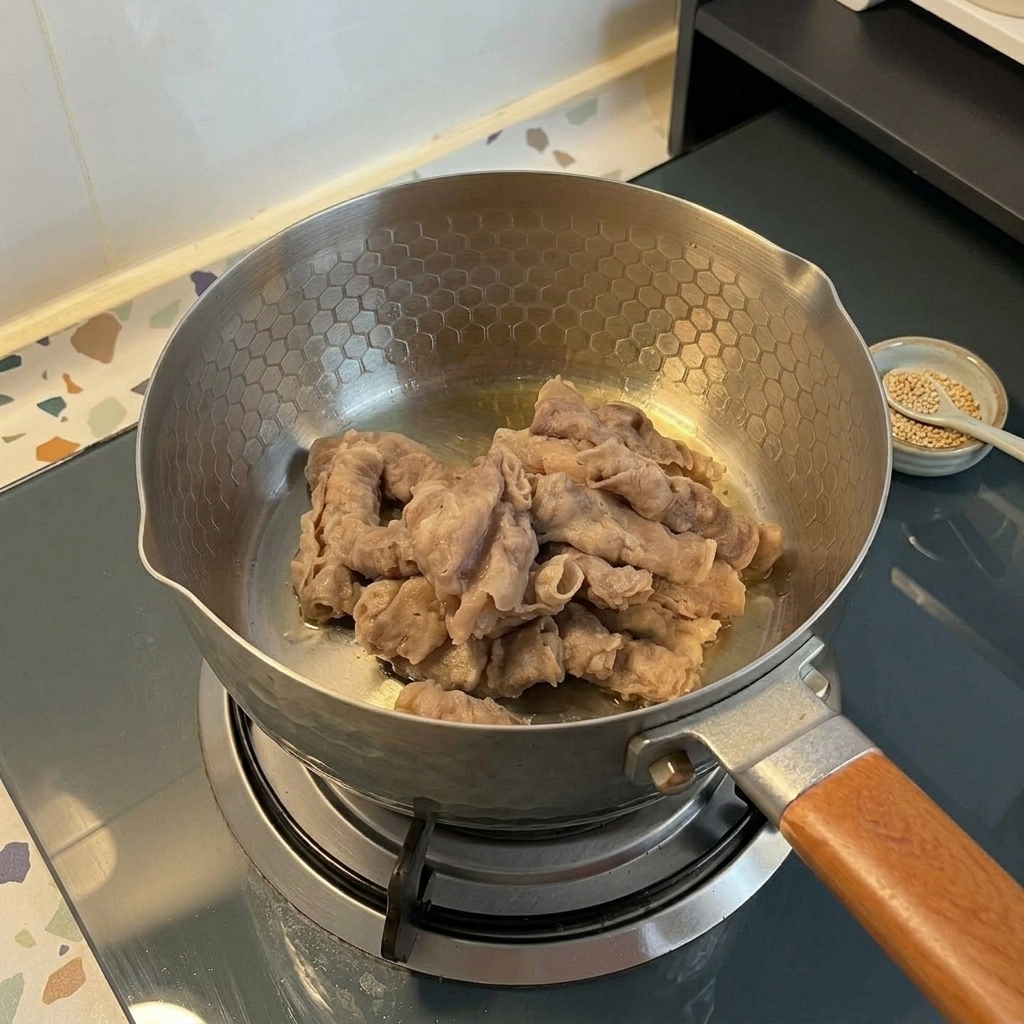
Place the sliced beef into a pot and stir-fry until it begins to brown and change color. This initial searing step helps render the fat and builds a rich, savory flavor base for the stew.
Tip: Keep the heat at medium-high to brown the beef quickly without boiling it in its own juices. - 2Pour in rice water
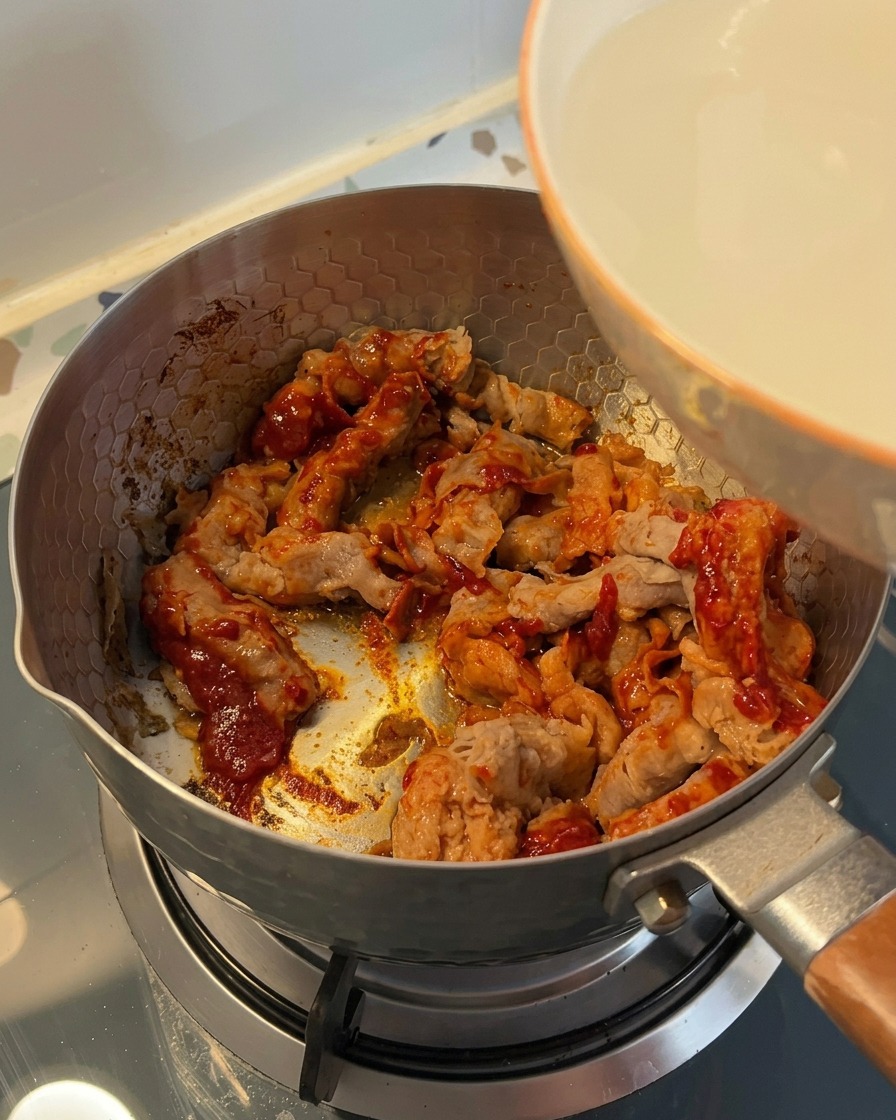
Pour a bowl of cloudy rice-washing water directly into the pot with the seasoned beef mixture. The starch in the rice water acts as a natural thickener, giving the broth a richer body and smoothing out the intense paste flavors.
Tip: Use the water from the second or third rinse of the rice for the cleanest taste and optimal starch content. - 3Skim the broth
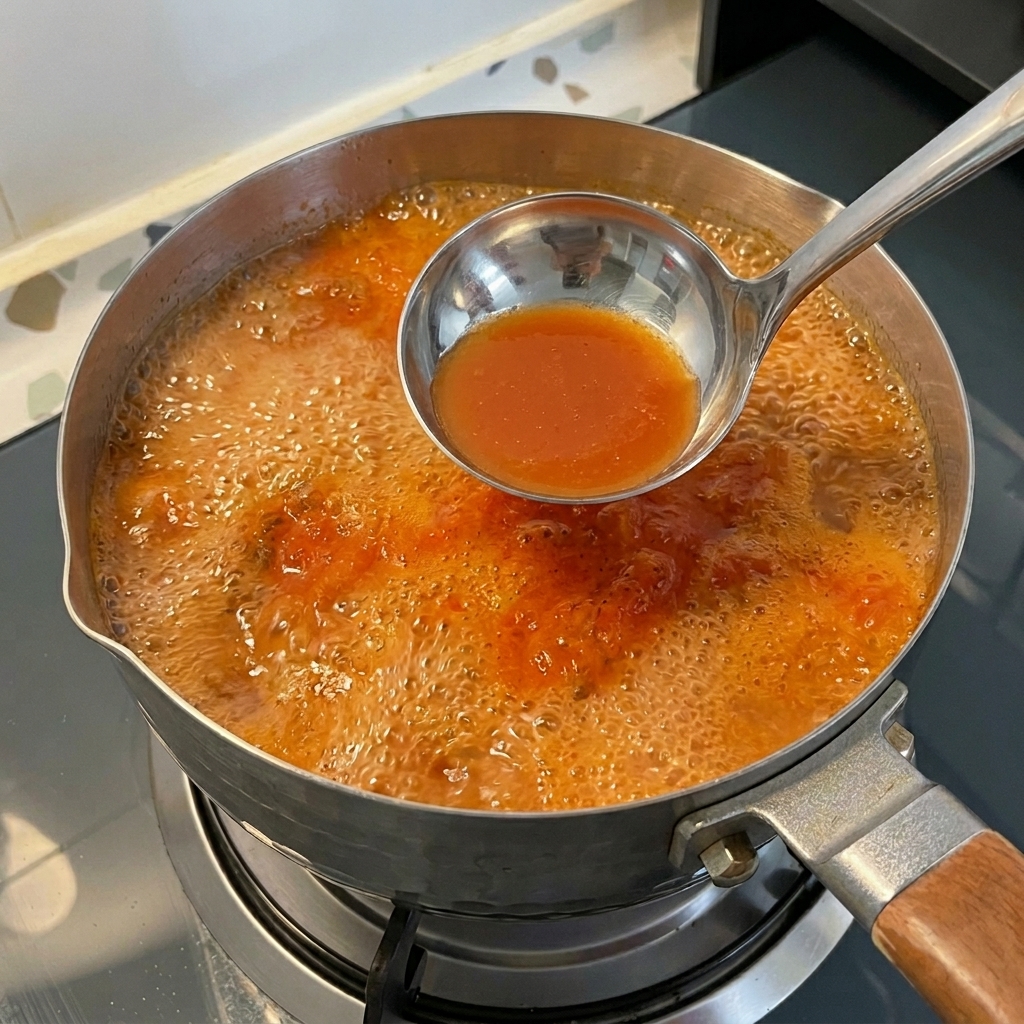
As the stew comes to a vigorous boil, use a ladle to carefully skim off the orange-red foam and impurities that float to the top. This ensures a clean, smooth, and refined soup base.
Tip: Keep a small bowl of water nearby to rinse the ladle between skims to make the process easier. - 4Add potatoes and zucchini
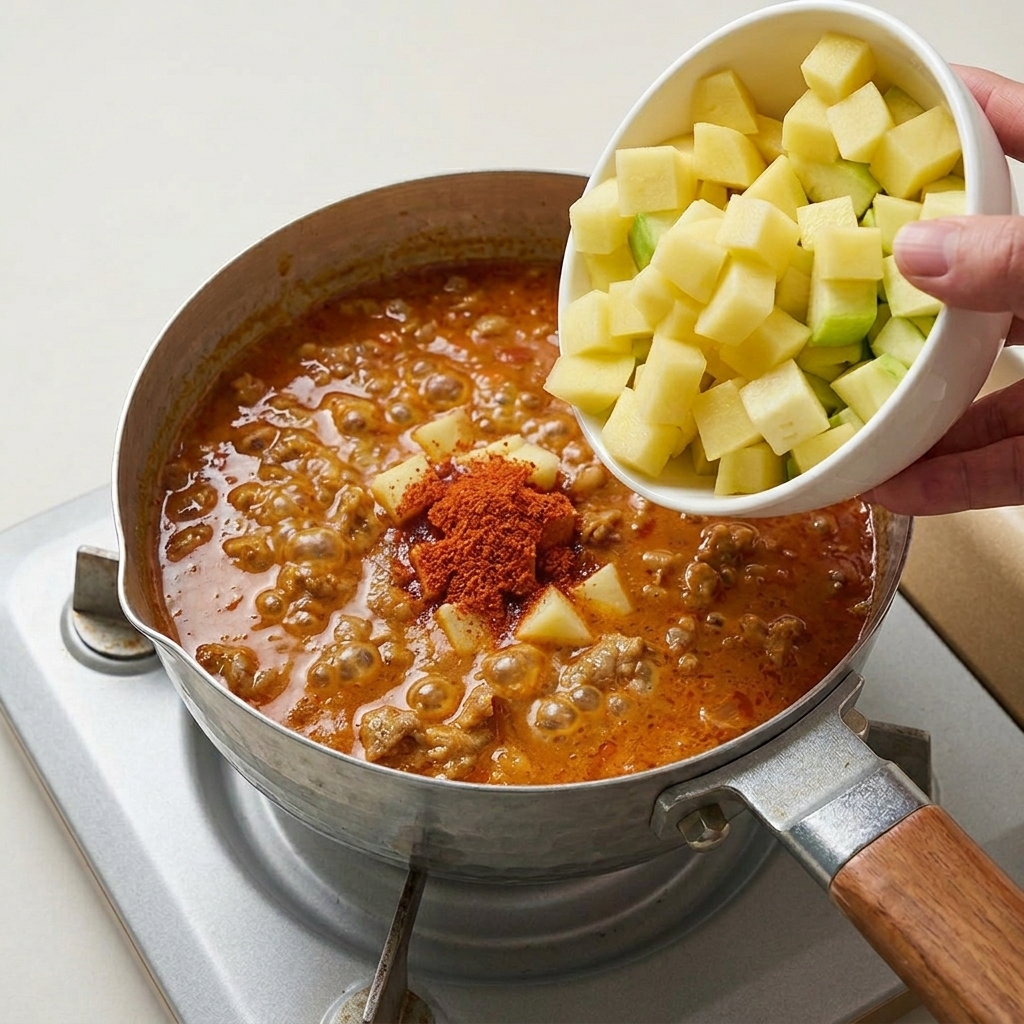
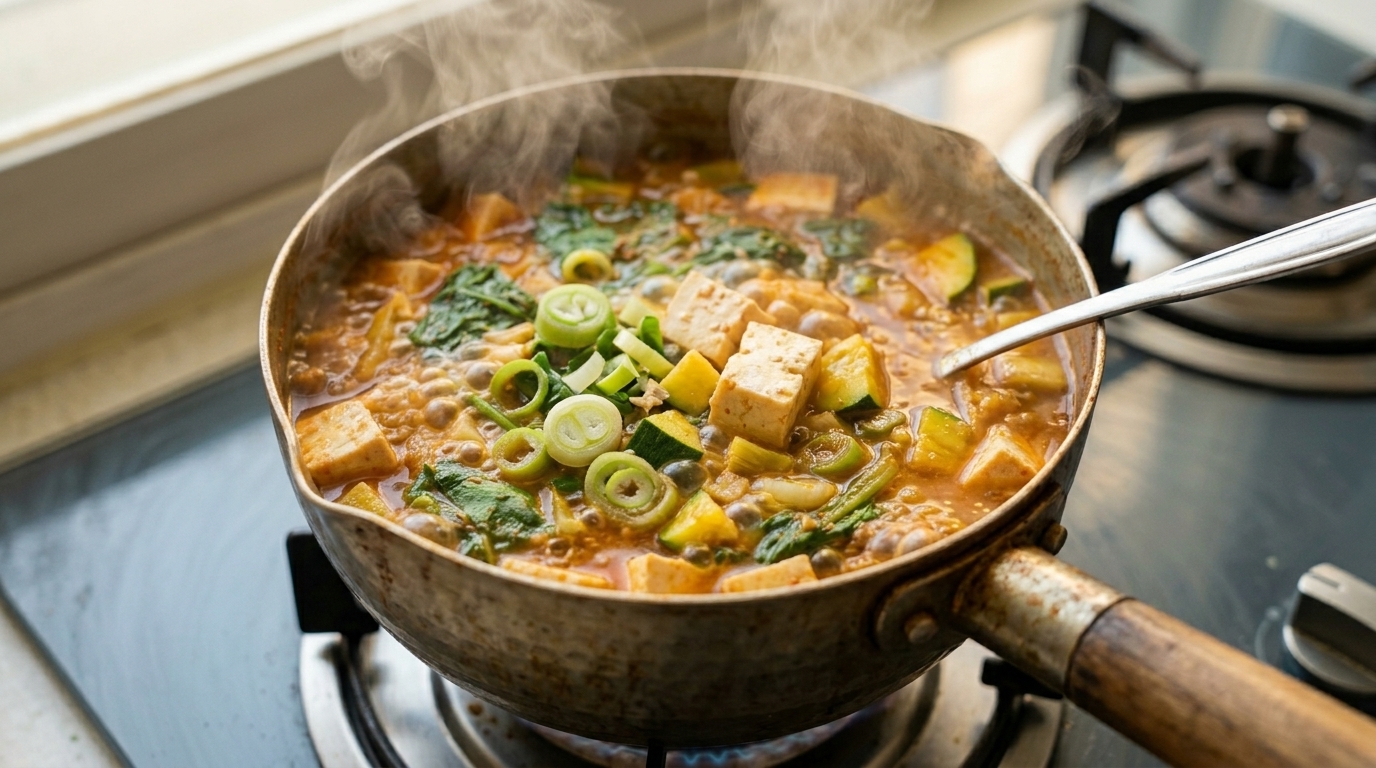
Add a bowl of finely diced raw potatoes and zucchini into the bubbling pot, along with a spoonful of chili powder. Let the vegetables simmer so they can soften and absorb the deep flavors of the broth.
Tip: Cut the vegetables into equal, bite-sized cubes so they cook at the same rate. - 5Add the soft tofu
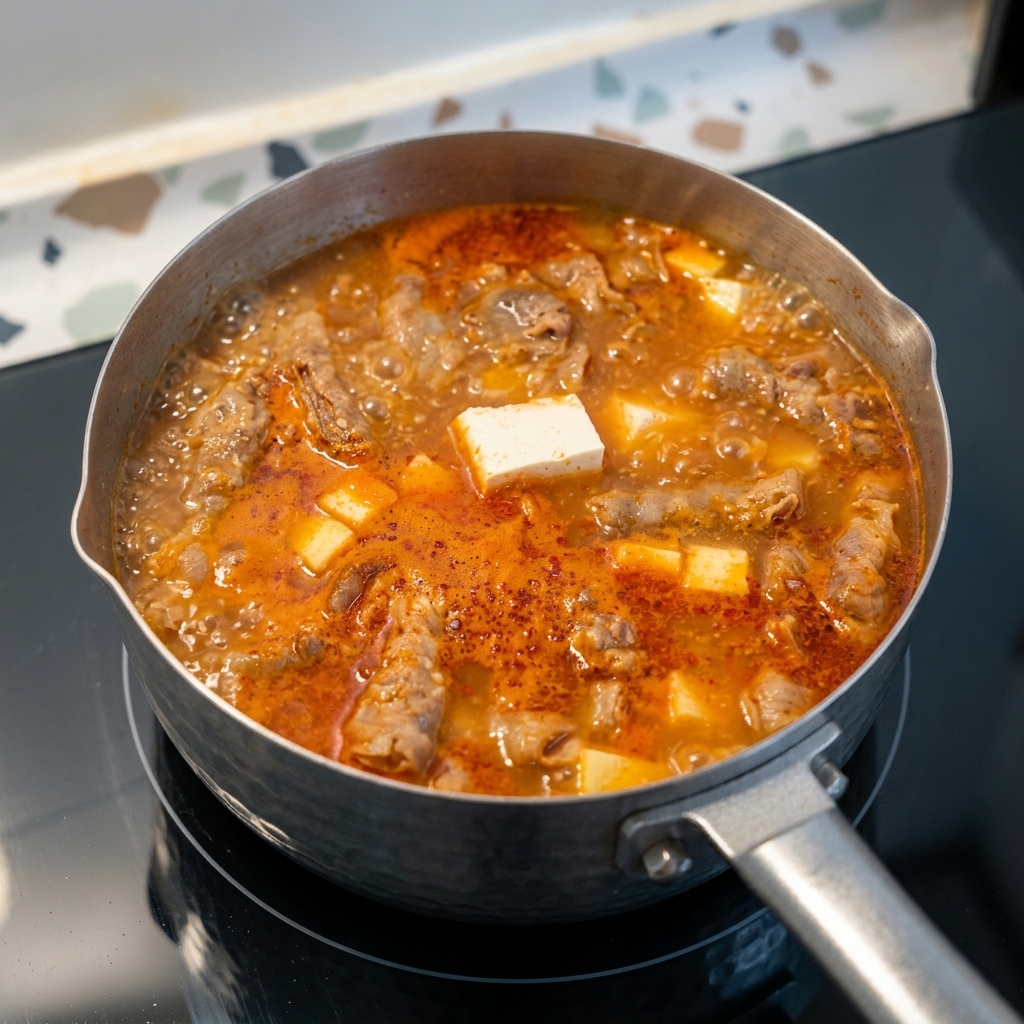
Carefully arrange fresh rectangular blocks of soft white tofu in the simmering stew broth. Allow them to cook gently in the bubbling liquid to soak up the savory, spicy flavors.
Tip: Do not stir too hard after adding the tofu to prevent the delicate blocks from breaking apart. - 6Mix in green vegetables
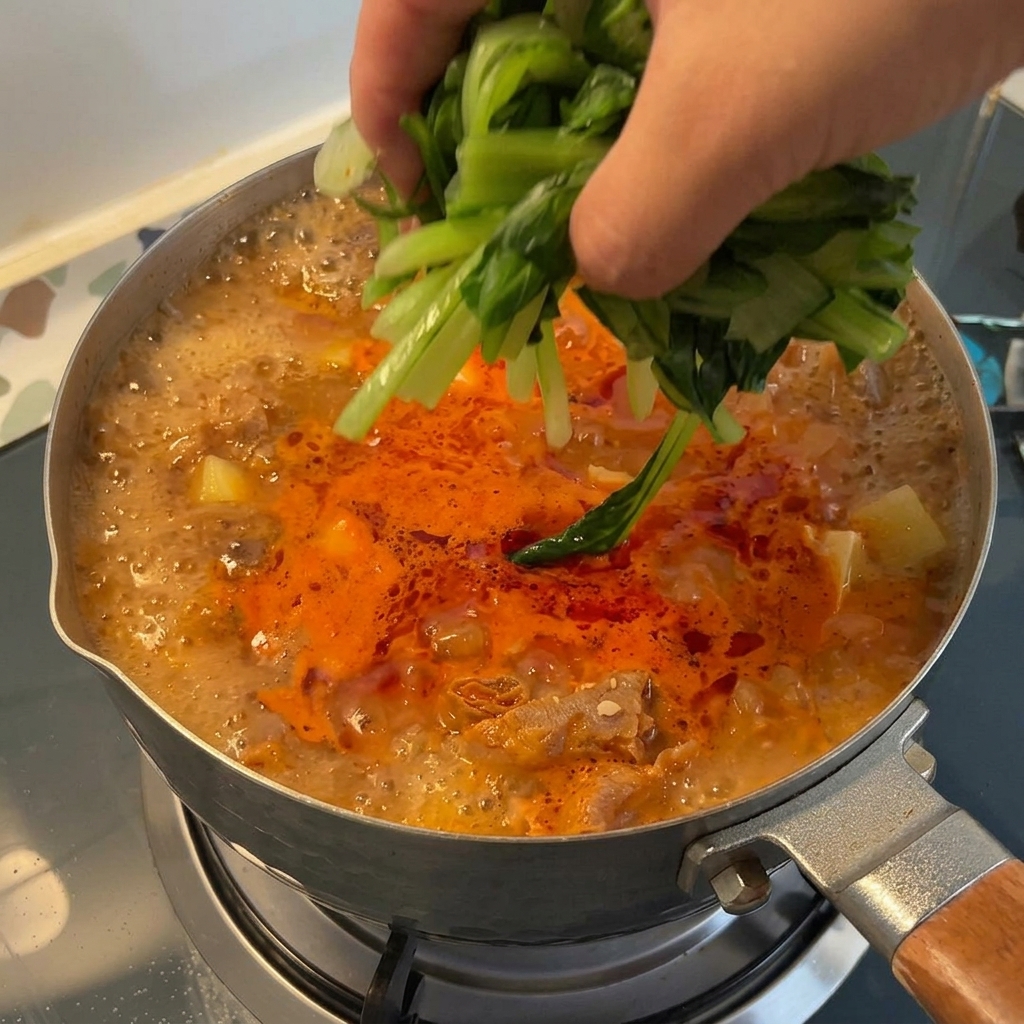
Add a handful of blanched bright green bok choy into the boiling pot. Submerge the greens into the broth to integrate them fully with the tofu and vegetables.
Tip: Since the greens are already blanched, add them right at the end to keep them vibrant and crisp. - 7Season the stew with beef powder
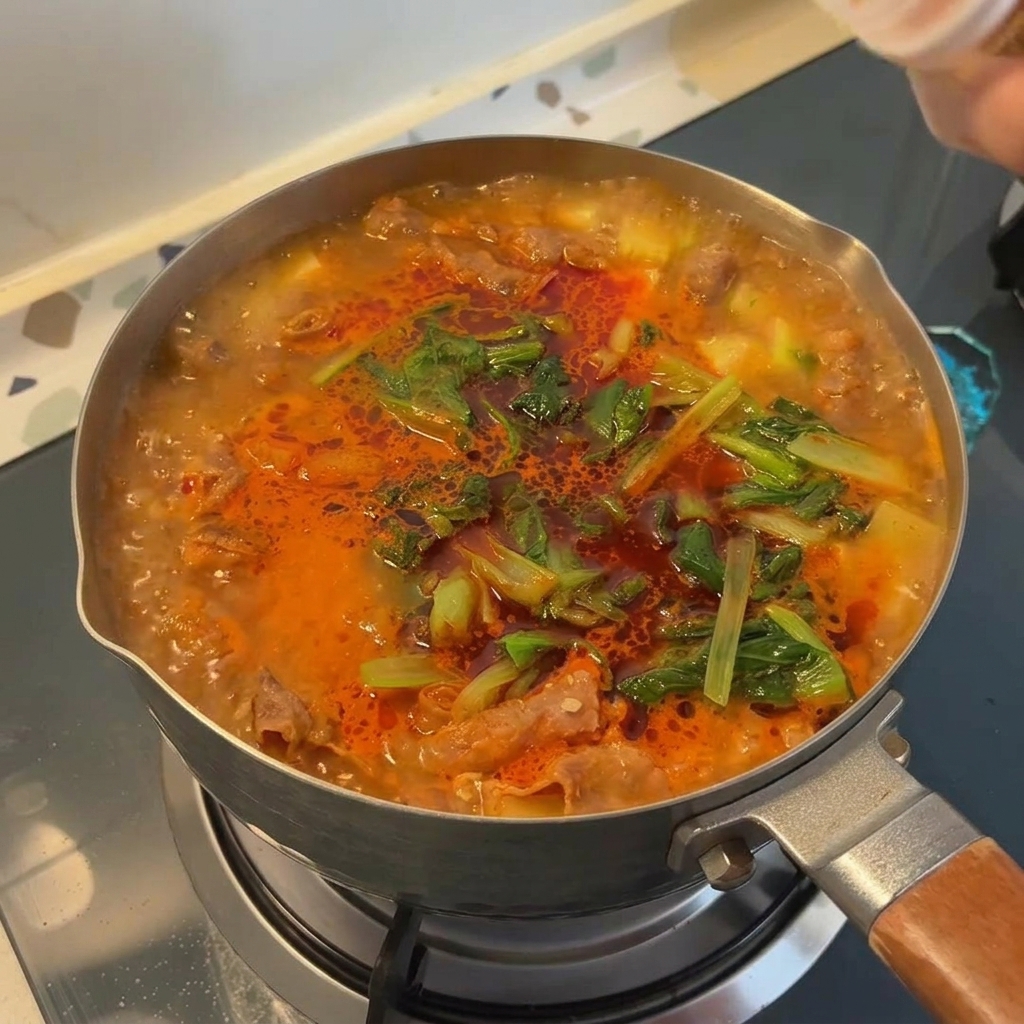
Sprinkle a generous spoonful of beef seasoning powder directly from the container into the bubbling stew. Stir the pot well to ensure the seasoning dissolves completely and enhances the savory depth of the broth.
Tip: Korean beef seasoning powder, known as Dashida, is the key to achieving a rich, restaurant-quality umami flavor in your soybean paste stew. - 8Stir in the seasonings
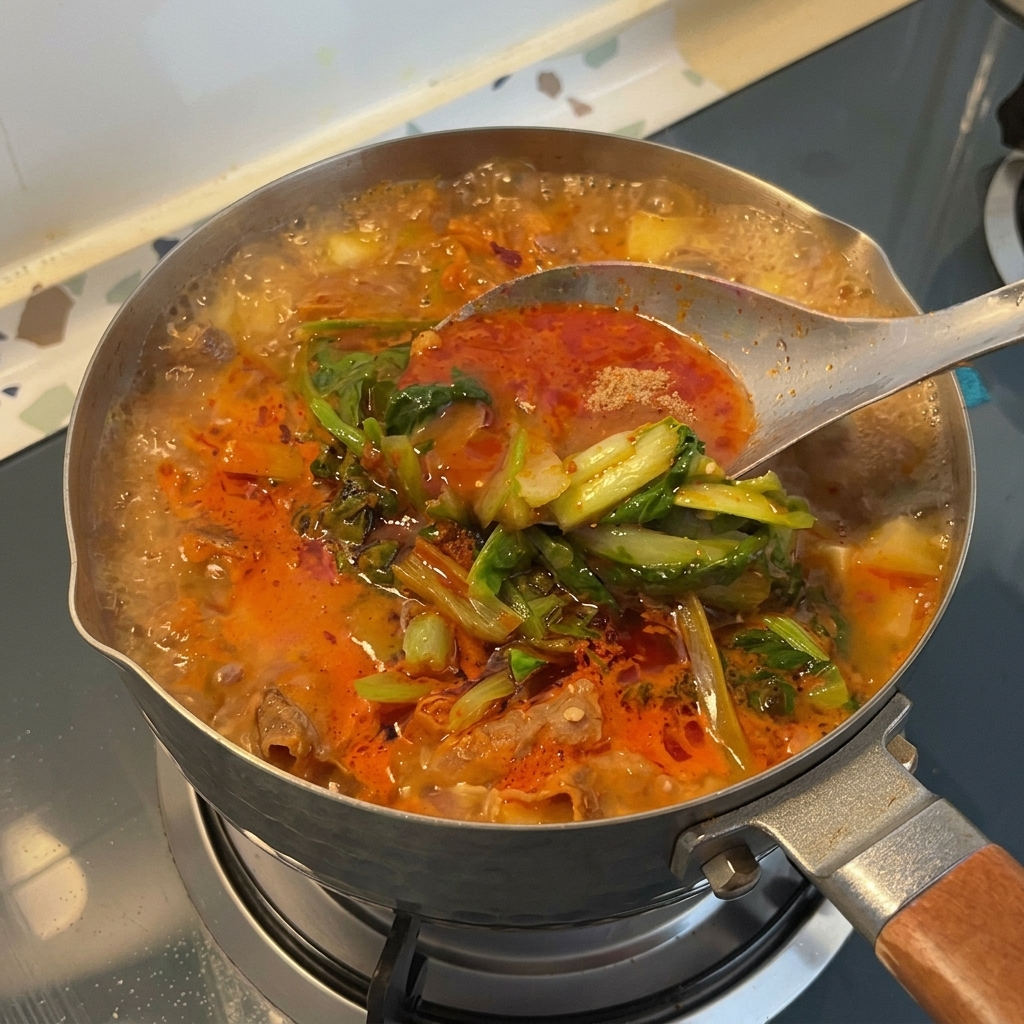
Use a large metal spoon to thoroughly stir the boiling stew. This helps dissolve the beef seasoning powder completely and evenly distributes all the rich flavors from the soybean paste throughout the meat and vegetables.
Tip: Stir gently near the surface to avoid breaking up the soft tofu blocks underneath. - 9Mix the bibimbap sauce
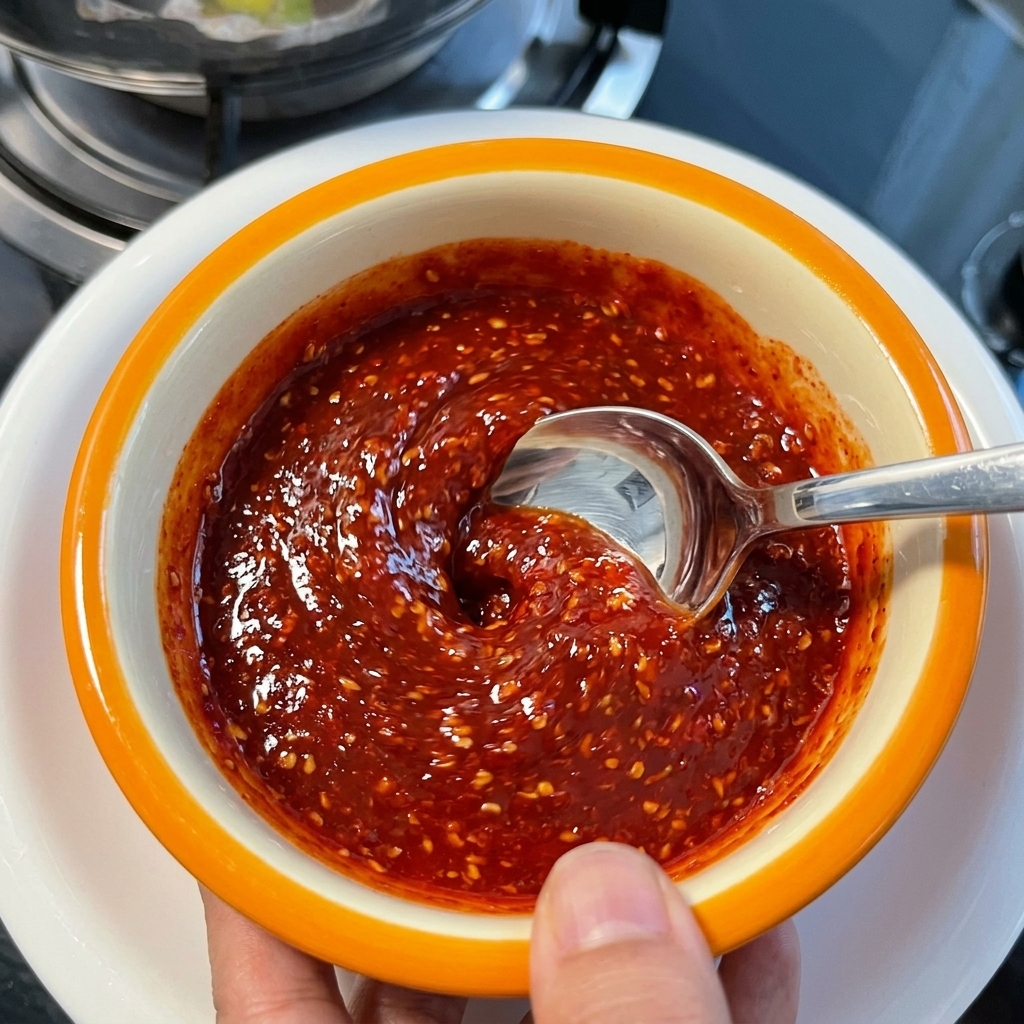
Combine the Korean chili paste, Sprite, and white sesame seeds in a small ceramic bowl. Stir the mixture thoroughly with a spoon until it forms a smooth, thick, and beautifully glossy sauce.
Tip: A splash of Sprite helps loosen up the dense chili paste while adding a balanced touch of sweetness. - 10Sauce the bibimbap bowl
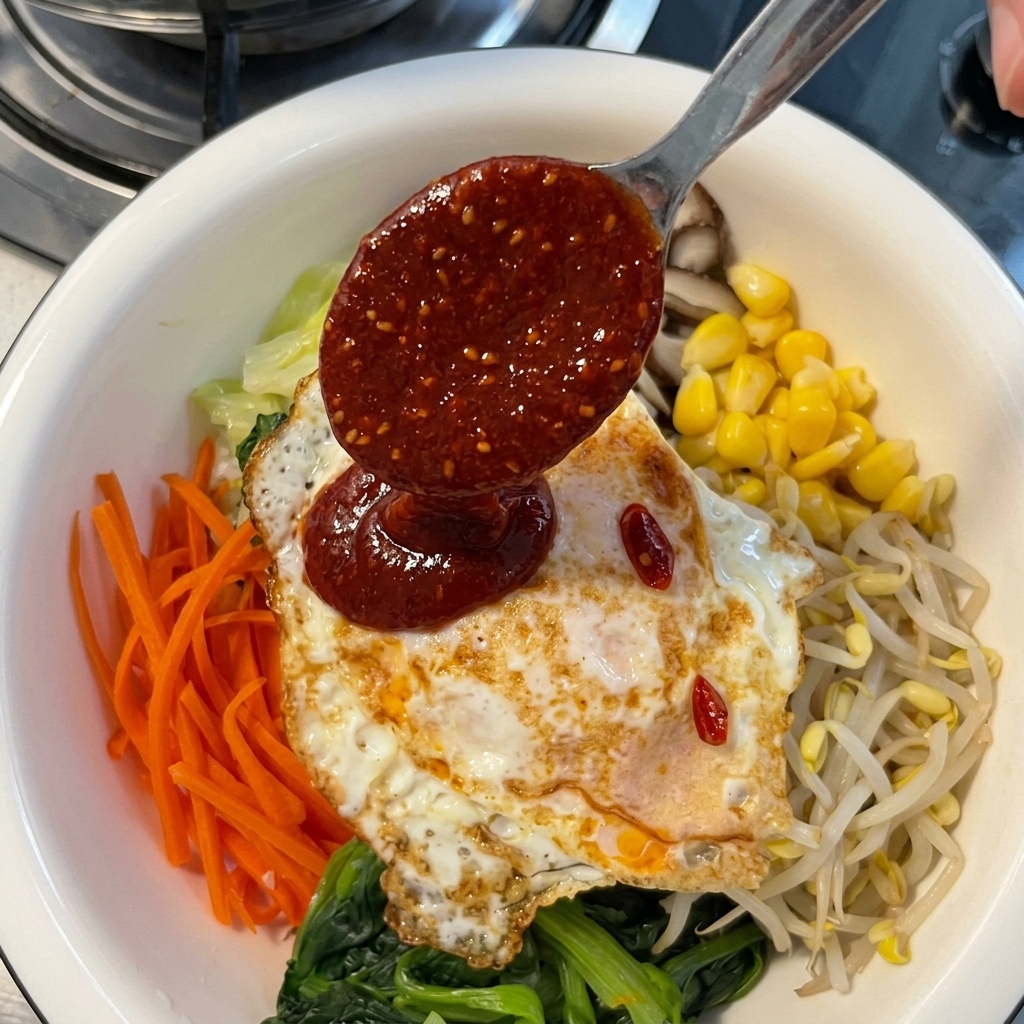
Use a spoon to carefully drizzle the freshly prepared red chili sauce directly over the fried egg and colorful layers of assorted vegetables in the bibimbap bowl.
Tip: Add the sauce gradually so you can customize the heat and sweetness to your personal taste preference.