Authentic Korean Soybean Paste Stew (Doenjang-jjigae)
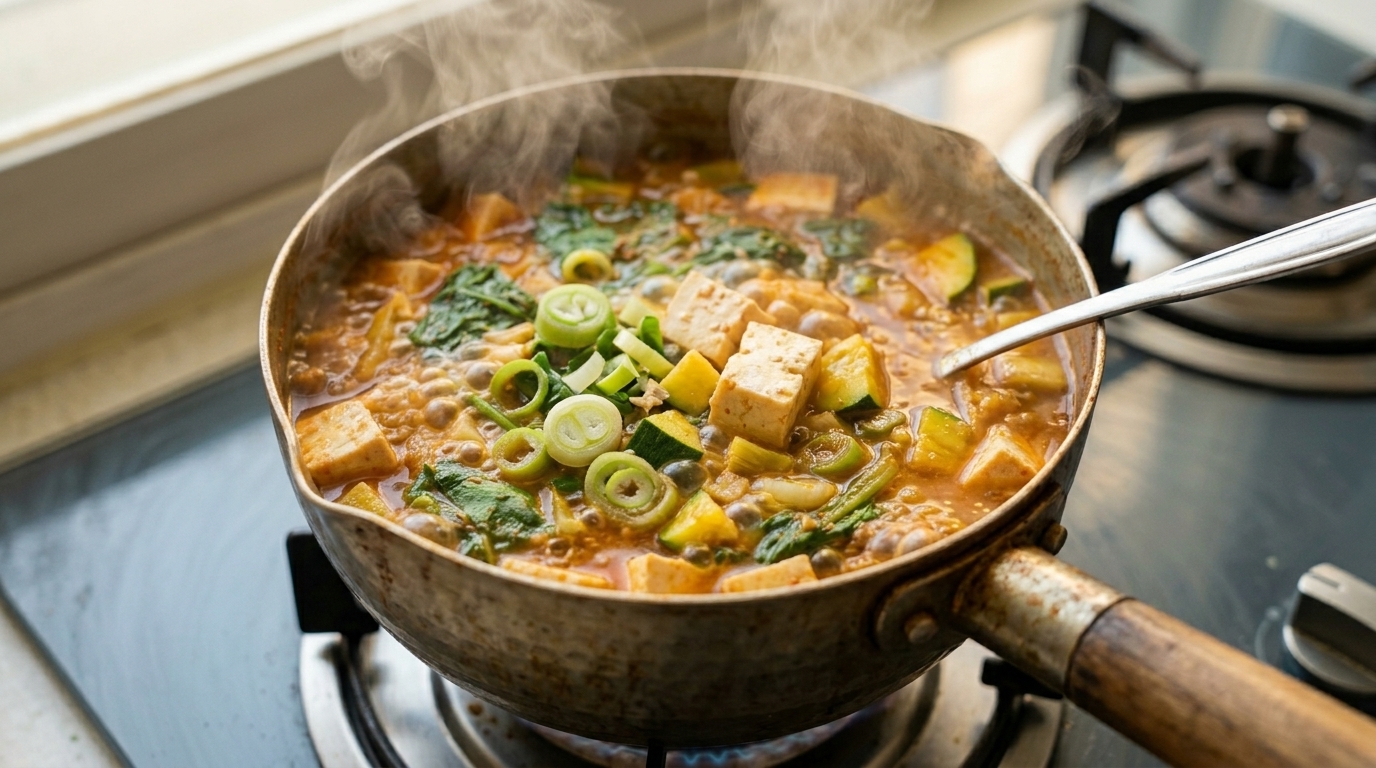
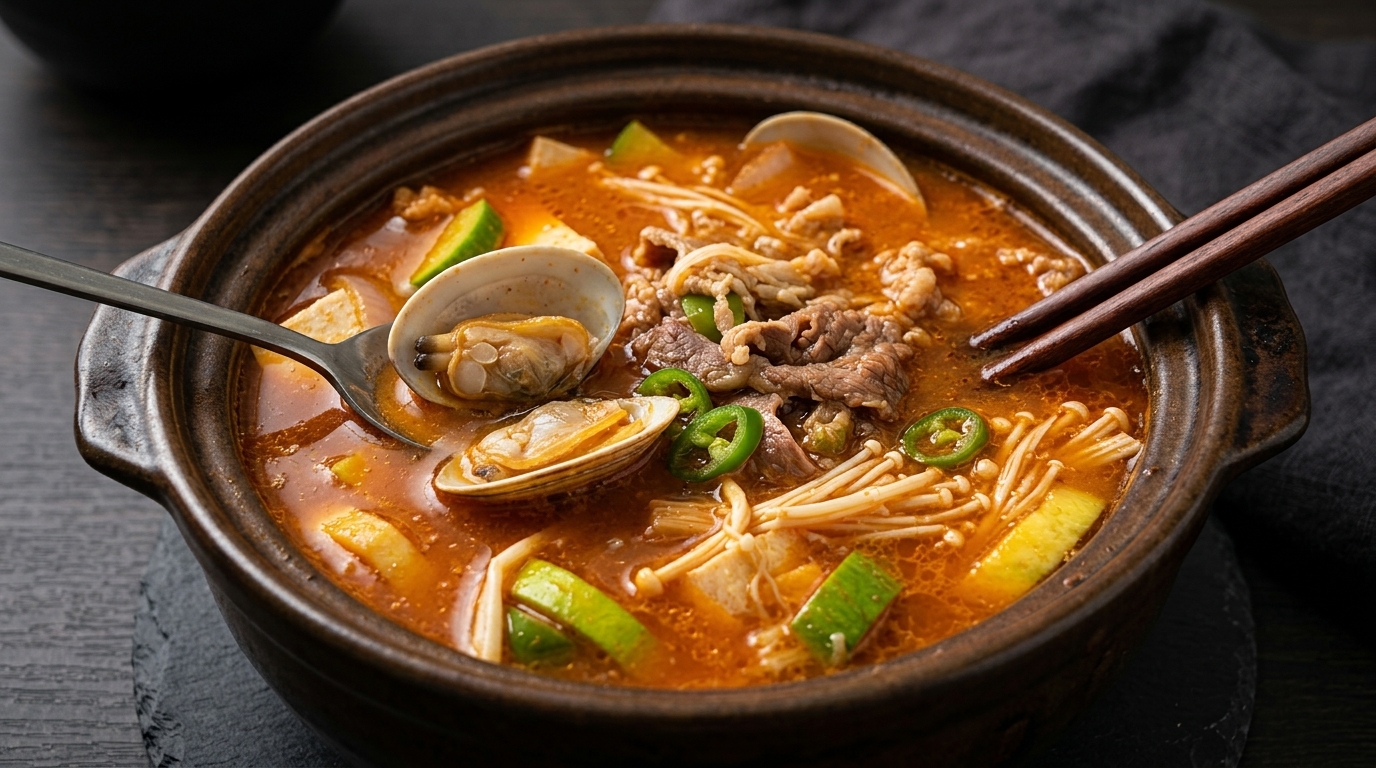
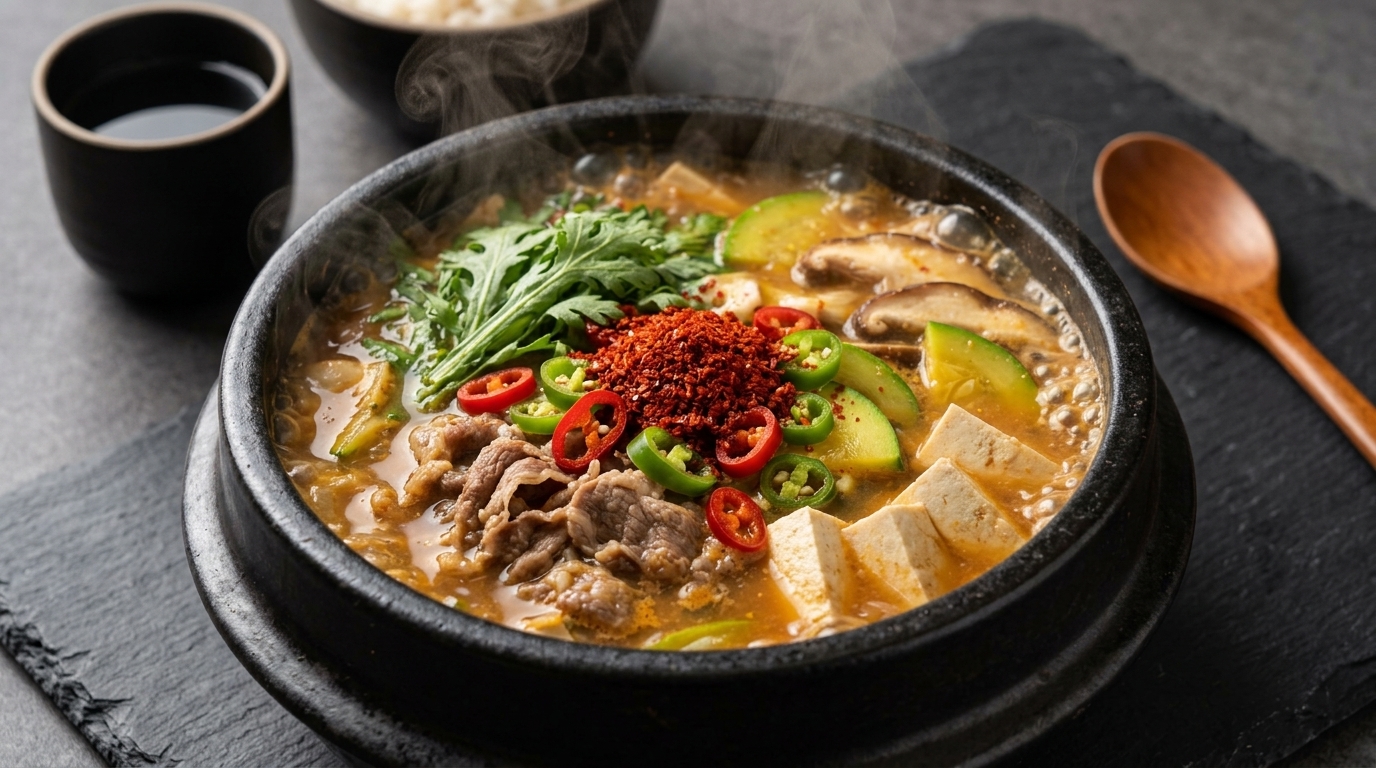
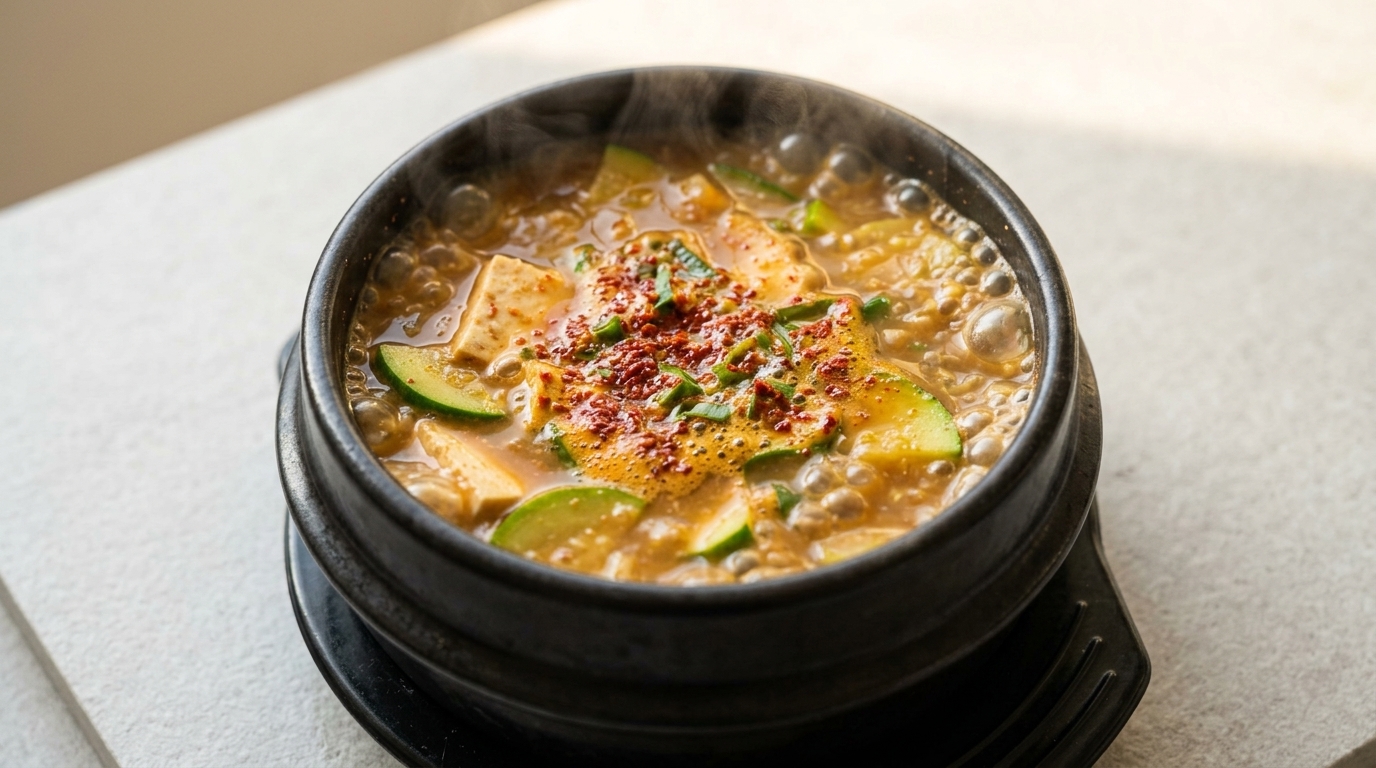
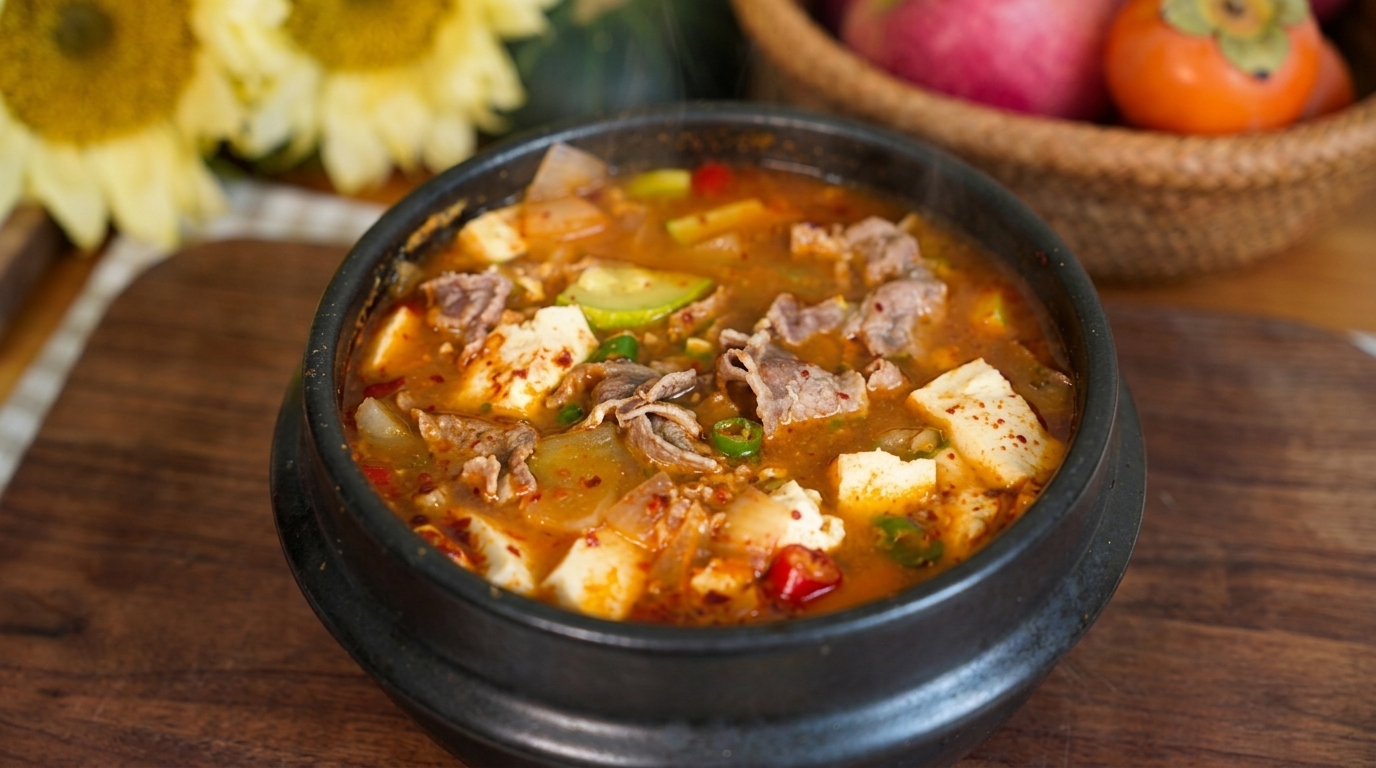
A rich and comforting Korean comfort classic featuring a deeply savory fermented soybean broth packed with tender zucchini, soft tofu, and melt-in-your-mouth fatty beef.
Doenjang-jjigae is a cornerstone of daily Korean dining, celebrated for its complex flavor achieved through aged fermented soybean paste. In this variation, the inclusion of thin slices of fatty beef imparts a luxurious, unctuous depth to the broth, perfectly balanced by the sharp heat of chili peppers and coarse chili powder.
Ingredients
- 2 tbsp Korean soybean paste (doenjang)
- 2 tbsp coarse Korean chili powder (gochugaru)
- 200 g thinly sliced fatty beef (such as brisket)
- 1/2 whole green zucchini
- 100 g white radish
- 1/2 whole onion
- 150 g tofu
- 1 whole green chili pepper
- 1 whole red chili pepper
- 600 ml water
Instructions
- 1Slice the zucchini
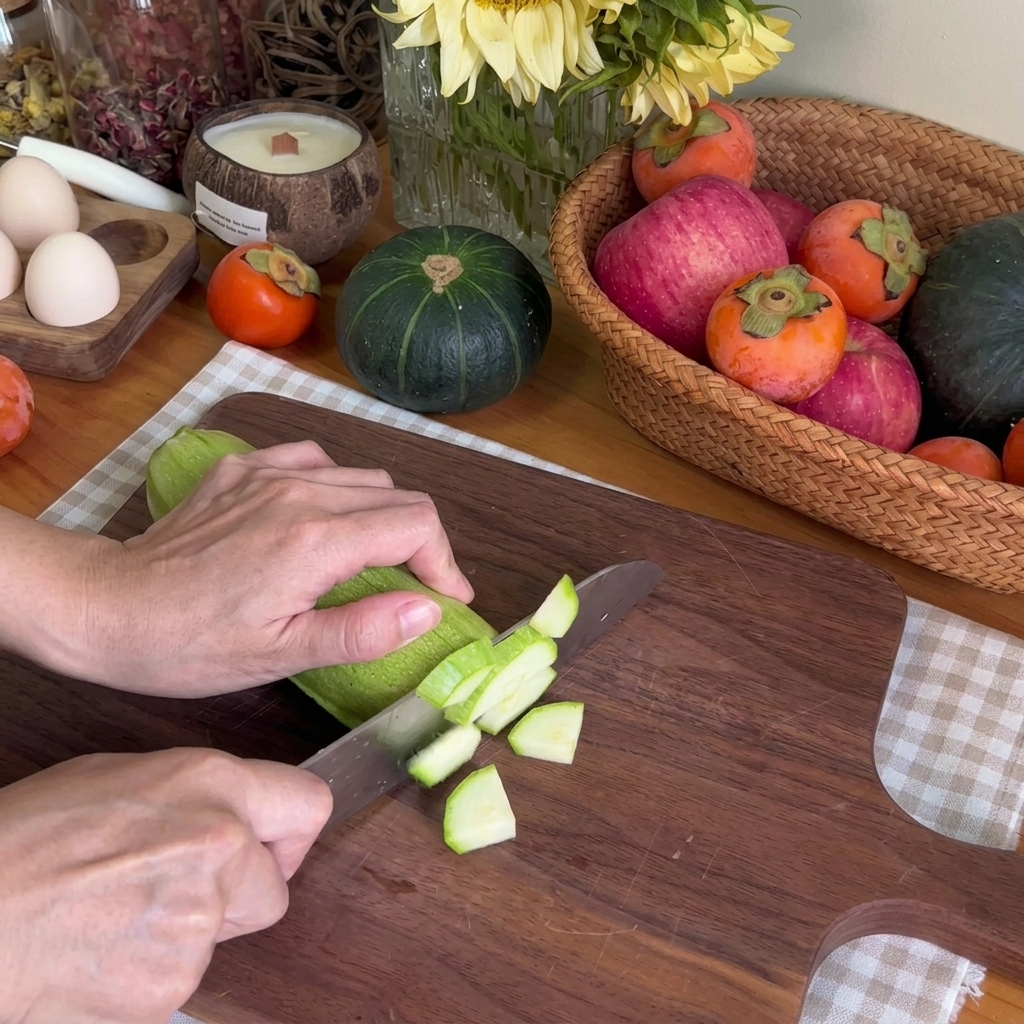
Place a fresh green zucchini on a wooden chopping board and use a sharp kitchen knife to slice it into small, bite-sized pieces. Uniformly sized pieces will ensure even cooking later in the hot stew.
Tip: Keep your fingers tucked in like a claw while holding the zucchini to ensure safe and precise chopping. - 2Measure and pour the water
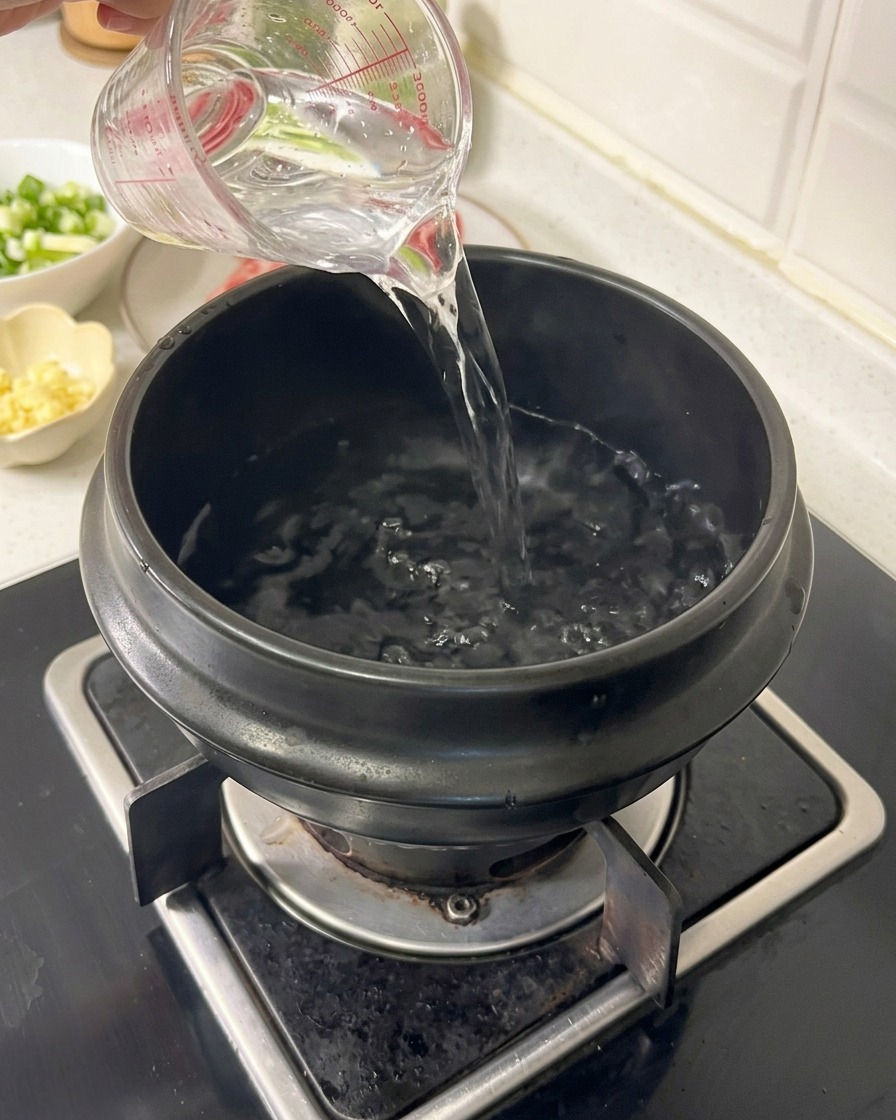
Measure out the required amount of water using a glass measuring cup, then pour it directly into a black earthenware pot placed securely on a gas stove burner.
Tip: Traditional Korean earthenware pots retain heat wonderfully, keeping the stew boiling hot even after being removed from the stove burner. - 3Dissolve the soybean paste
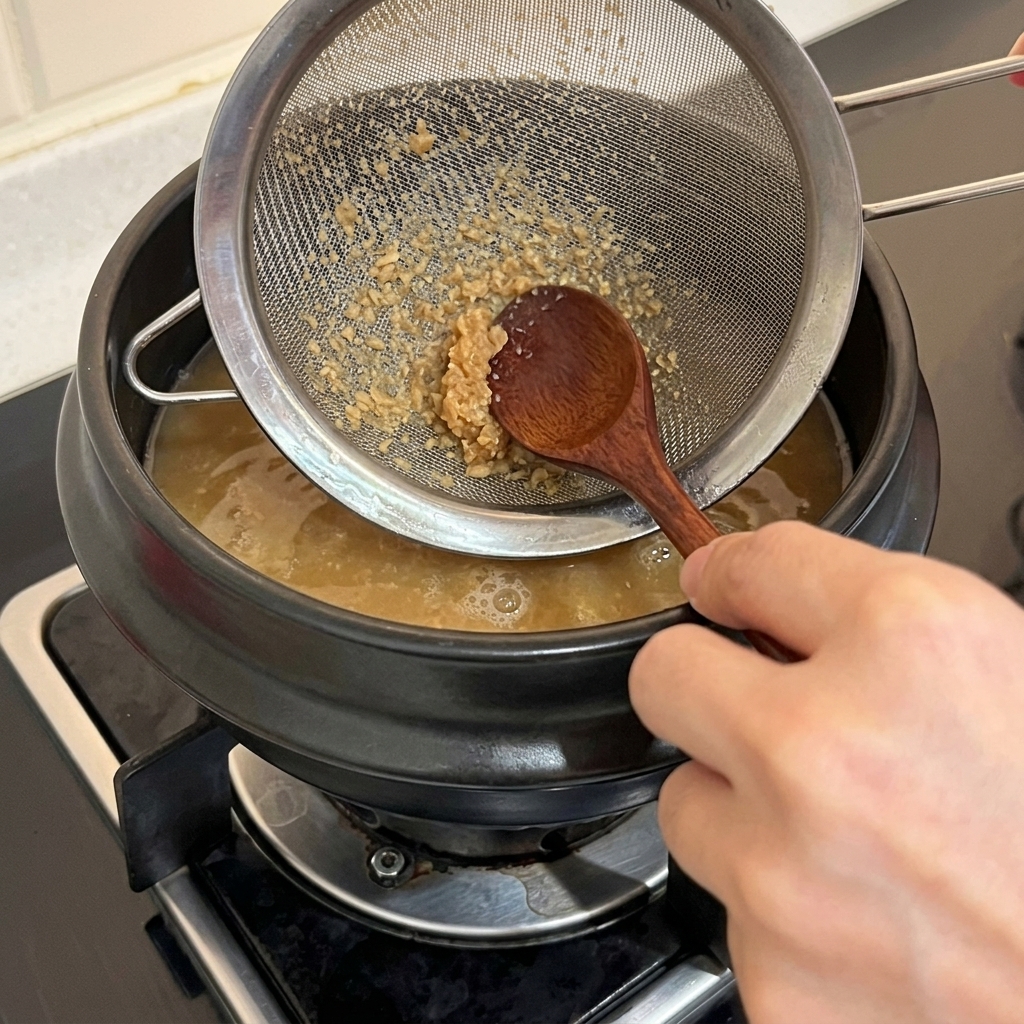
Add the Korean soybean paste into a fine-mesh metal strainer held over the pot. Use a wooden spoon to press and rub the paste through the strainer into the water, helping it dissolve smoothly into a uniform broth.
Tip: Straining the soybean paste removes coarse soybean fragments, resulting in a cleaner and smoother soup texture. - 4Add radish and zucchini
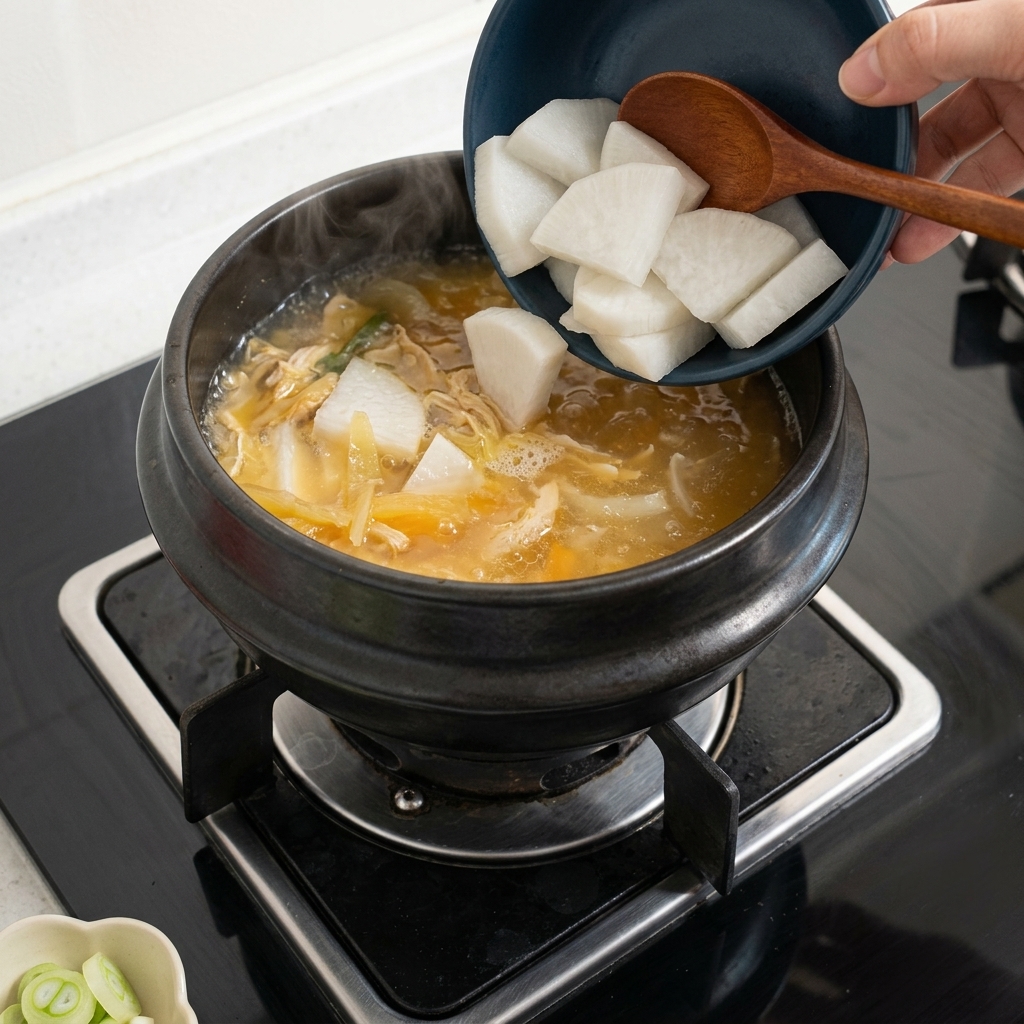
Carefully add the prepared raw white radish and zucchini slices into the simmering soybean broth. Let these hearty vegetables boil for about 5 minutes to release their natural sweetness and soften up.
Tip: Radish takes longer to cook than other vegetables, so adding it early allows it to become perfectly tender and absorb the savory broth flavors. - 5Incorporate the chili peppers
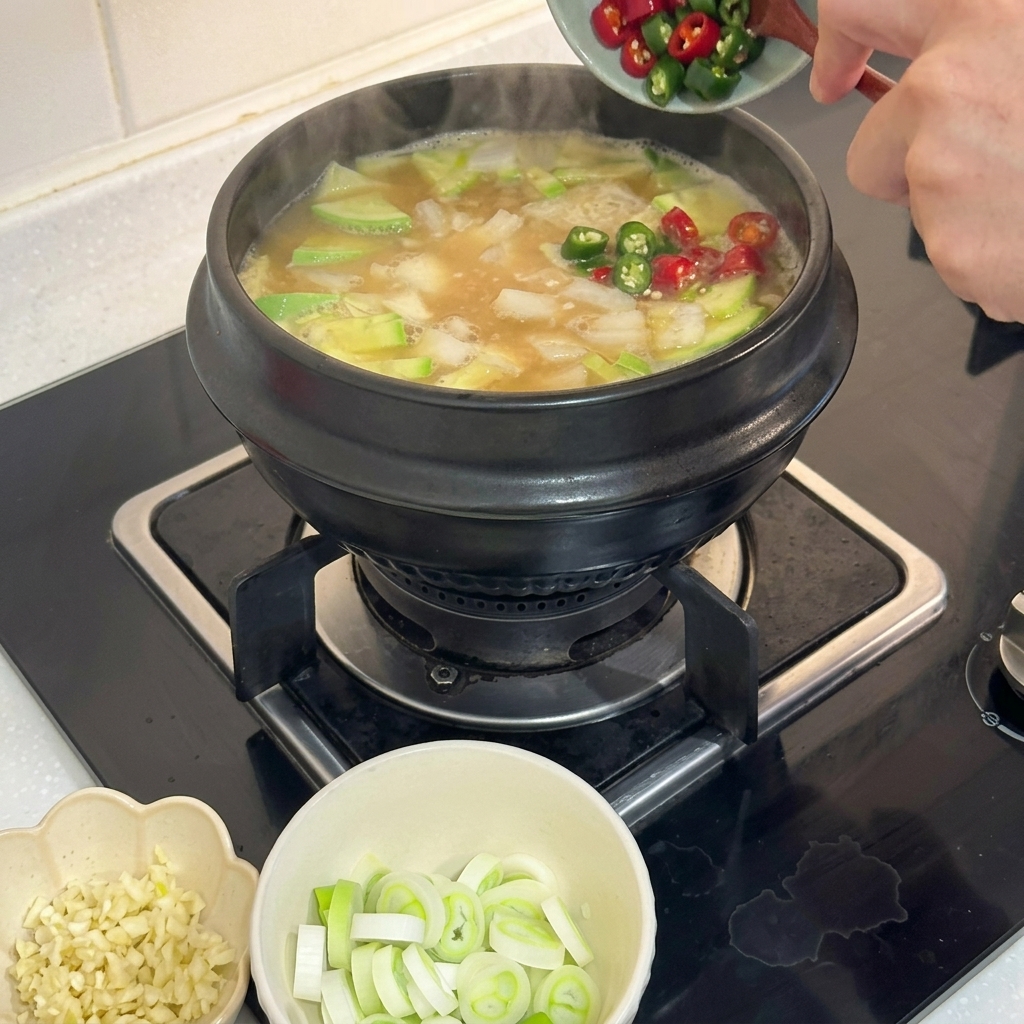
Pour the chopped red and green chili peppers from a small bowl into the boiling stew. This introduces a bright, sharp heat that cuts through the rich depth of the fermented soybean paste.
Tip: If you prefer a milder stew, remove the seeds from the chili peppers before chopping them. - 6Add the fatty beef
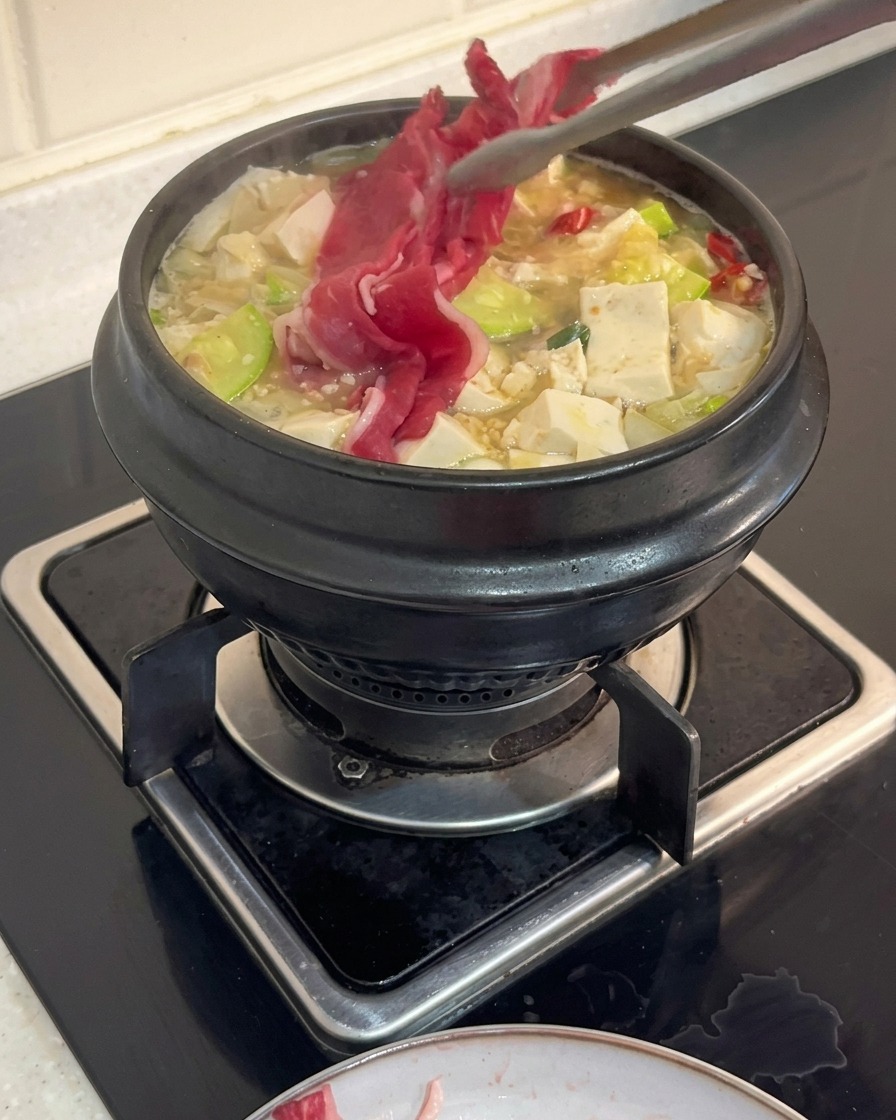
Use a pair of kitchen tongs to carefully lower thin slices of raw fatty beef into the bubbling stew alongside the tofu and vegetables. The marbled fat from the beef will melt into the soup, creating a rich and deeply savory flavor profile.
Tip: Thinly sliced fatty beef cooks incredibly fast, so spread the pieces out as you drop them into the boiling liquid to prevent them from clumping together. - 7Add the chili powder
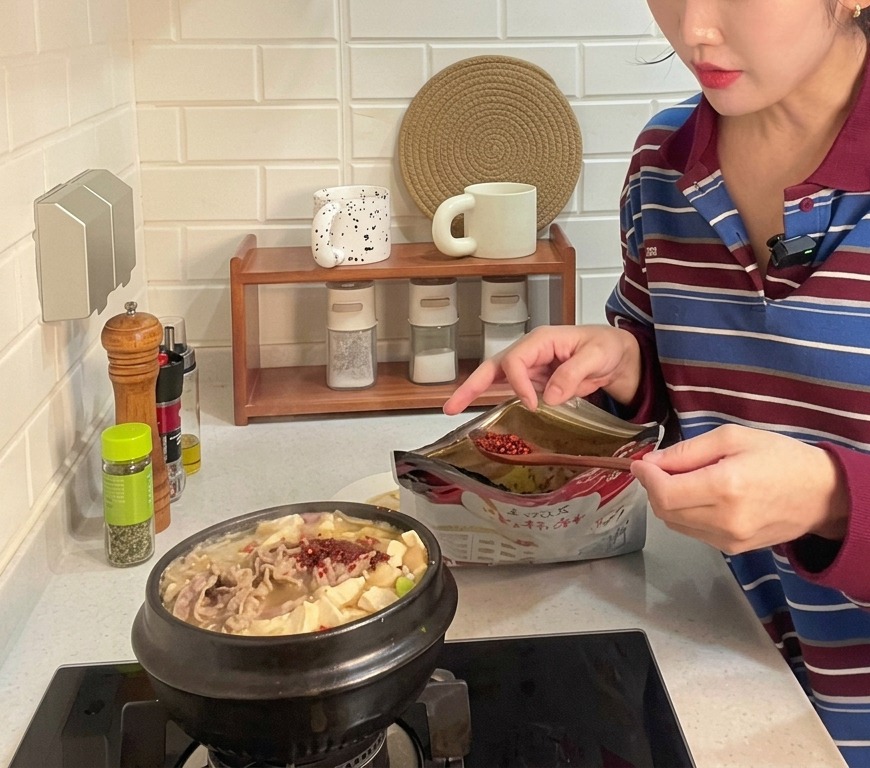
As a final touch to the stew, add two spoons of coarse red chili powder. This will give the broth a rich, vibrant color and introduce a subtle warmth that perfectly balances the savory depth of the soybean paste.
Tip: Using coarse chili powder provides a beautiful visual appearance and standard flavor without making the soup overly muddy.