Classic Korean Doenjang Jjigae (Soybean Paste Stew
Beef and Clams)
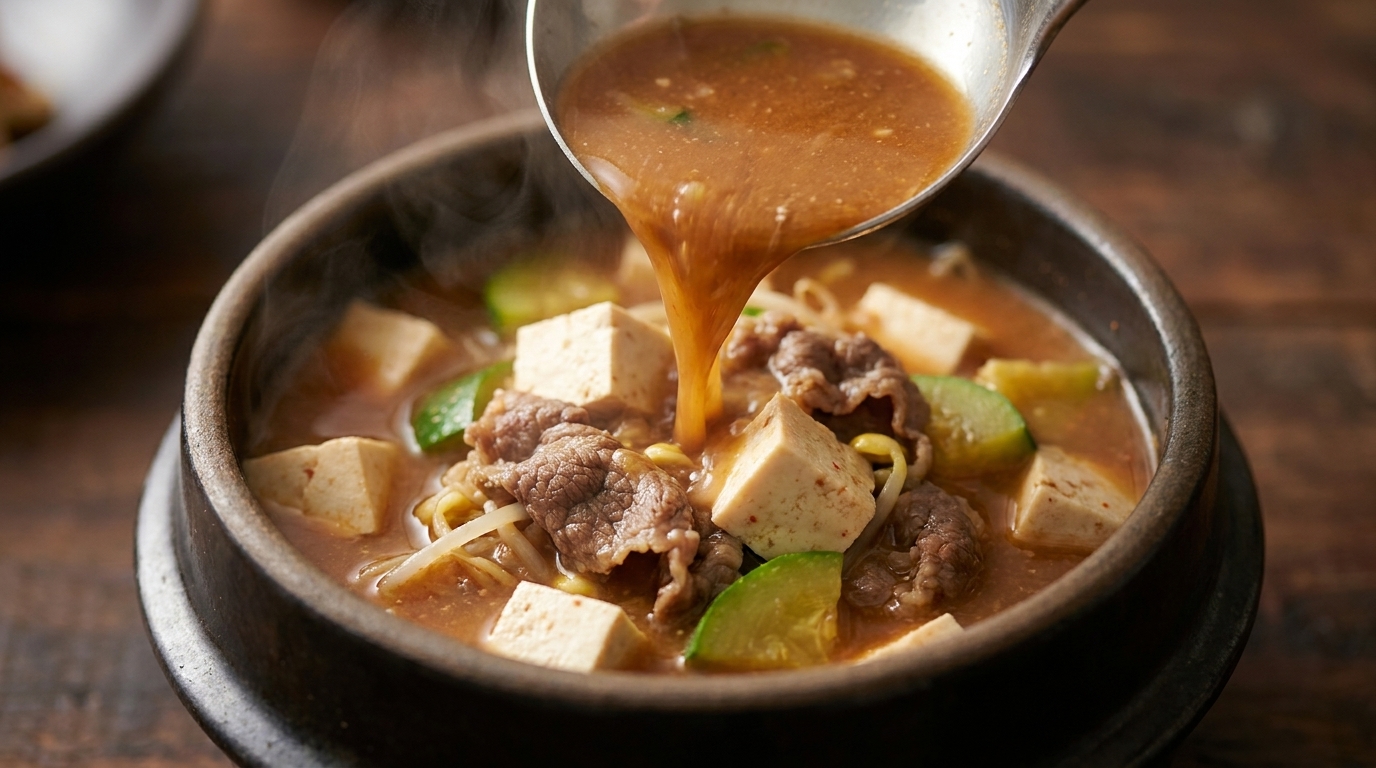
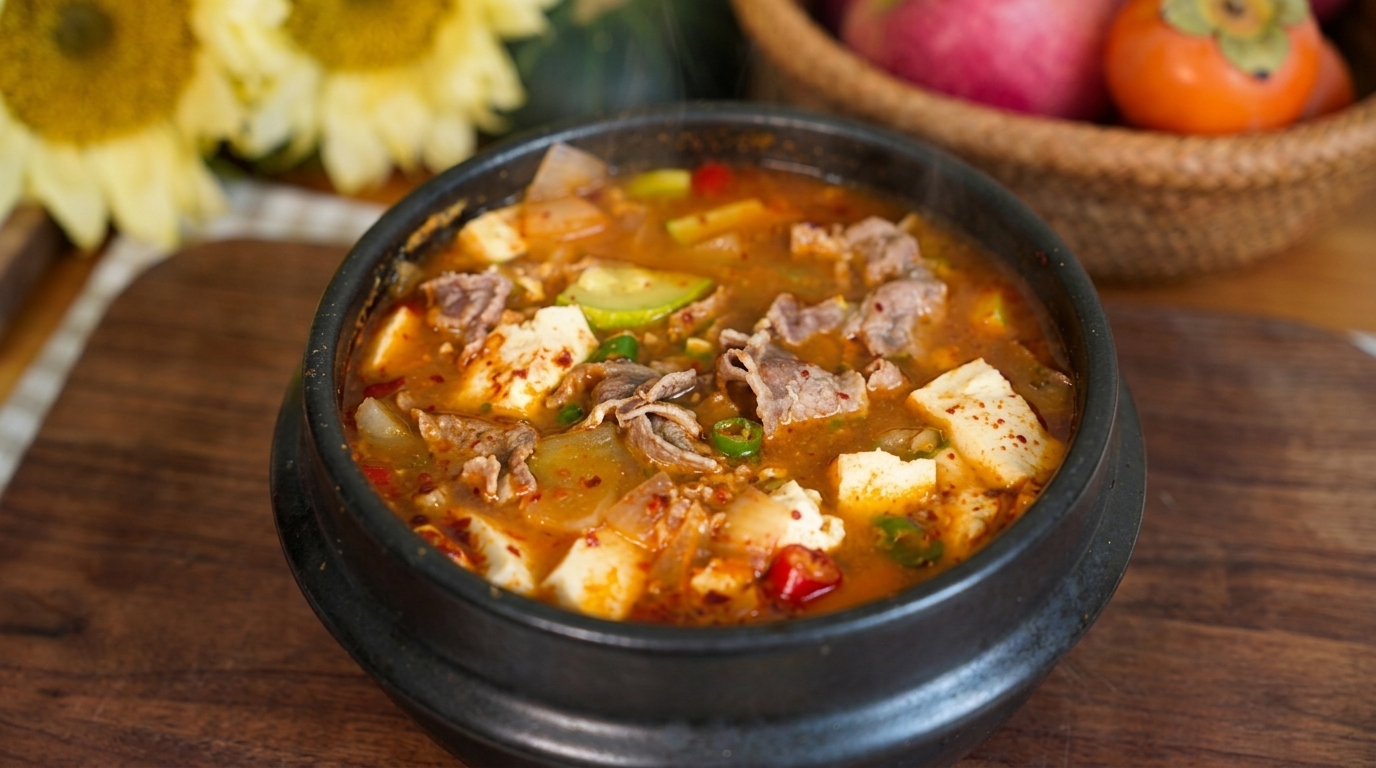
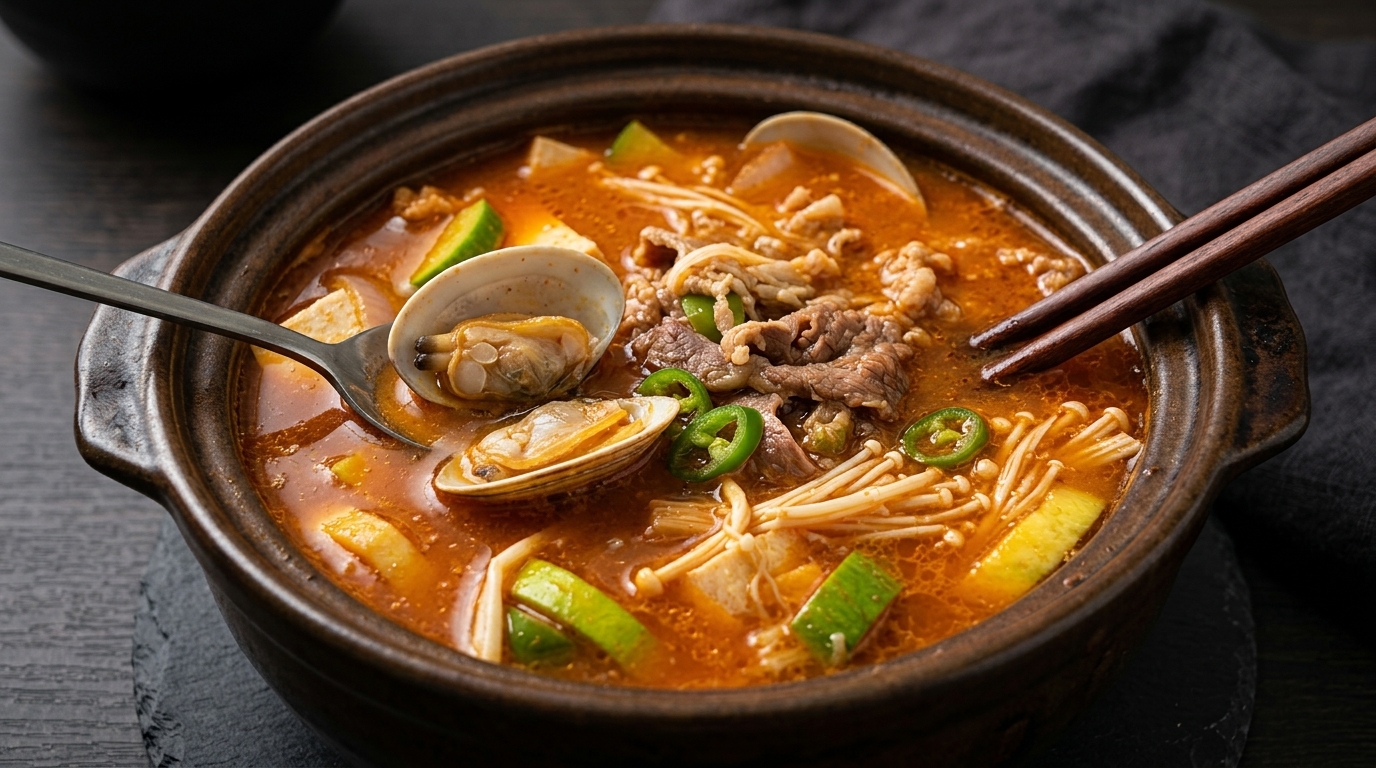
A deeply comforting Korean staple combining rich fermented soybean paste with a savory rice water broth, packed with tender beef, plump clams, tofu, and fresh zucchini.
Doenjang Jjigae is the quintessential Korean comfort food, anchoring everyday family meals. Unlike modern variations, this version pairs the earthy depth of traditional fermented soybean paste with the dual savory elements of marbled beef and ocean-fresh clams, creating an incredibly balanced surf-and-turf broth.
Ingredients
- 20 whole fresh clams
- 200 g sliced beef
- 200 g tofu
- 0.5 whole zucchini
- 1 small potato
- 1 small handful enoki mushrooms
- 0.25 whole red onion
- 3 tbsp Korean soybean paste (doenjang)
- 2 tbsp Korean chili paste (gochujang)
- 500 ml rice water
- 1 whole chili pepper
- to taste cooking oil
Instructions
- 1Purge the clams
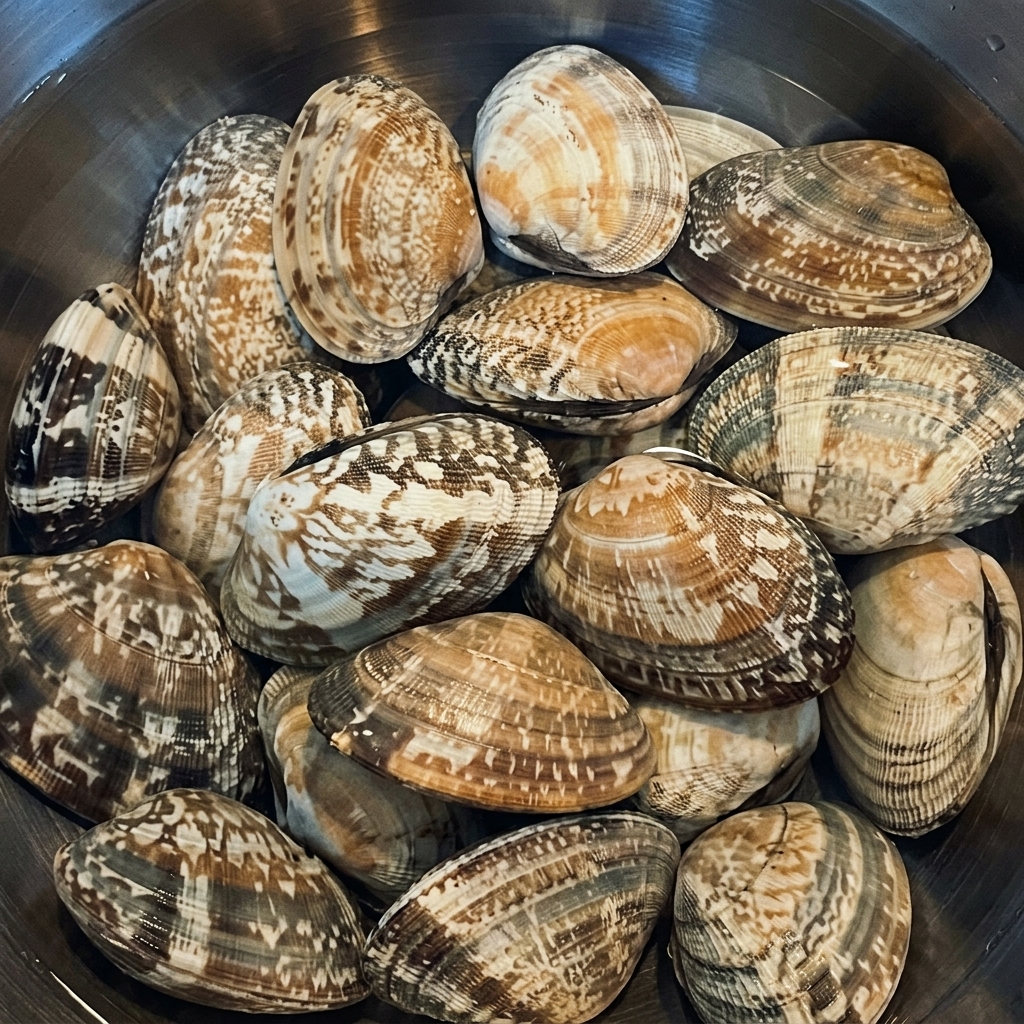
Place the fresh clams into a bowl of salted water and allow them to soak. This process encourages the clams to naturally spit out any trapped sand and impurities from inside their shells, ensuring a clean and pleasant texture in the final stew.
Tip: Keep the bowl in a cool, dark place during soaking to mimic the ocean floor, which helps the clams open up and purge sand more effectively. - 2Stir-fry the beef and onions
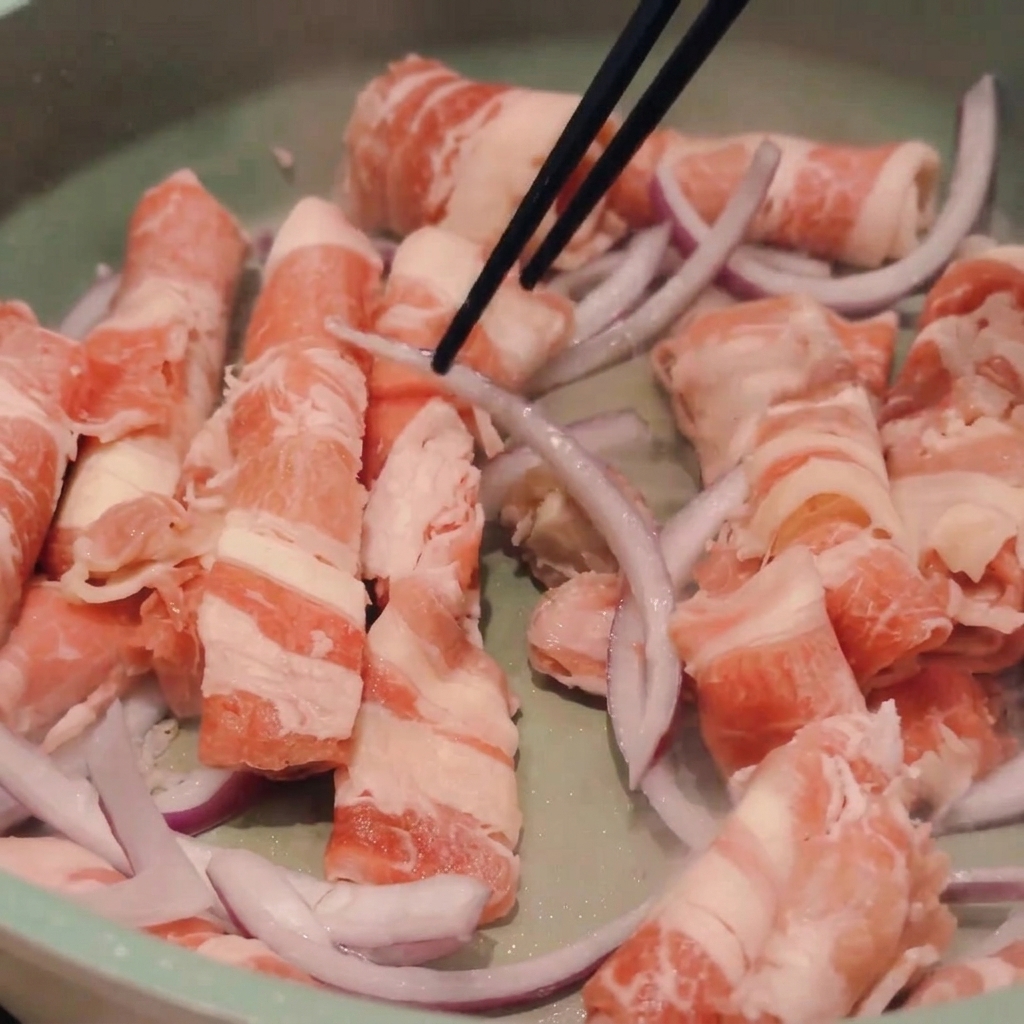
Spray a light coating of oil into your pot or pan. Add the red onion shreds and stir-fry until they become fragrant. Next, add the sliced beef and continue to stir-fry using chopsticks until the meat changes color from pink to brown. Once cooked, scoop the mixture out and set it aside.
Tip: Do not overcook the beef at this stage, as it will be added back into the stew later to finish cooking. - 3Add the rice water base
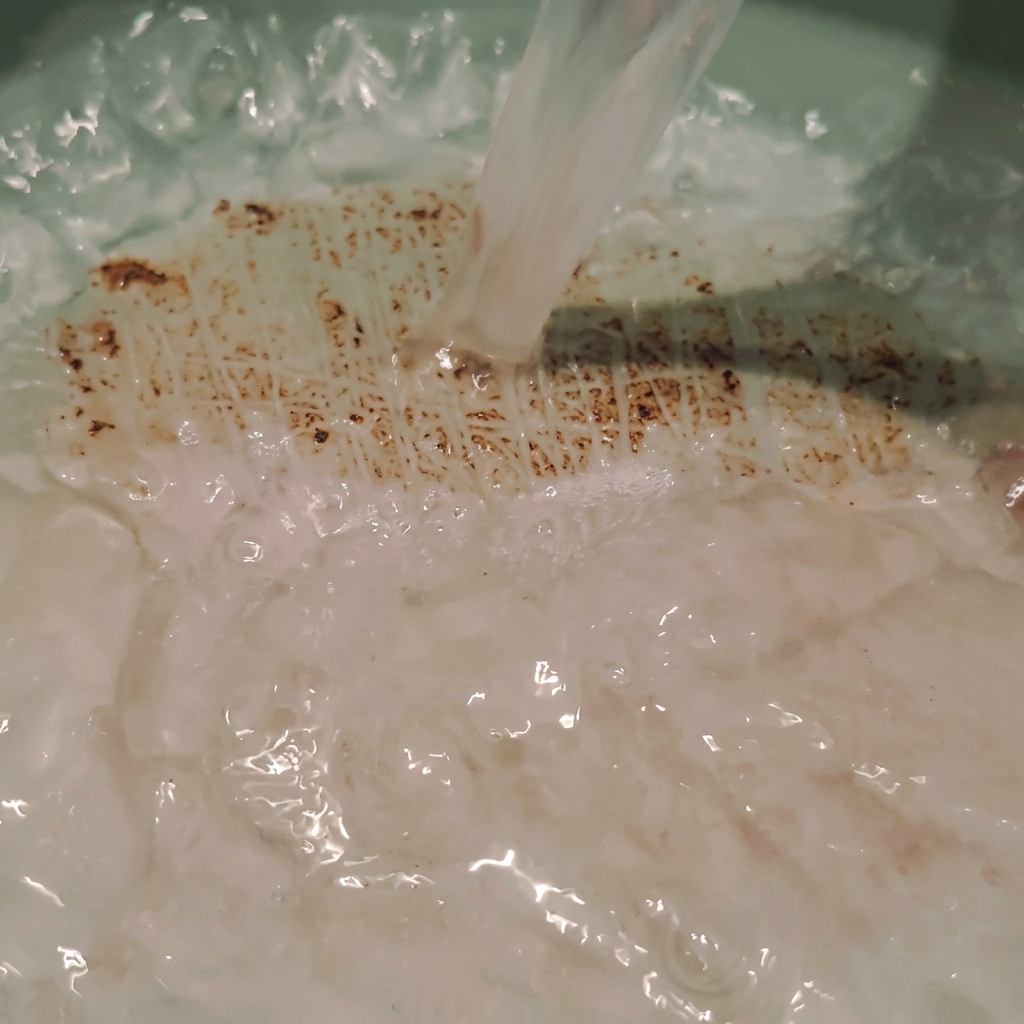
Pour 500ml of cloudy rice water into the pot to serve as the nutrient-rich liquid base for the stew. This traditional technique helps thicken the broth naturally and provides a subtle, rounded sweetness that balances the savory paste flavors.
Tip: Use the water from the second or third rinse of your rice to ensure it is clean yet starchy enough for the broth. - 4Dissolve the soybean paste
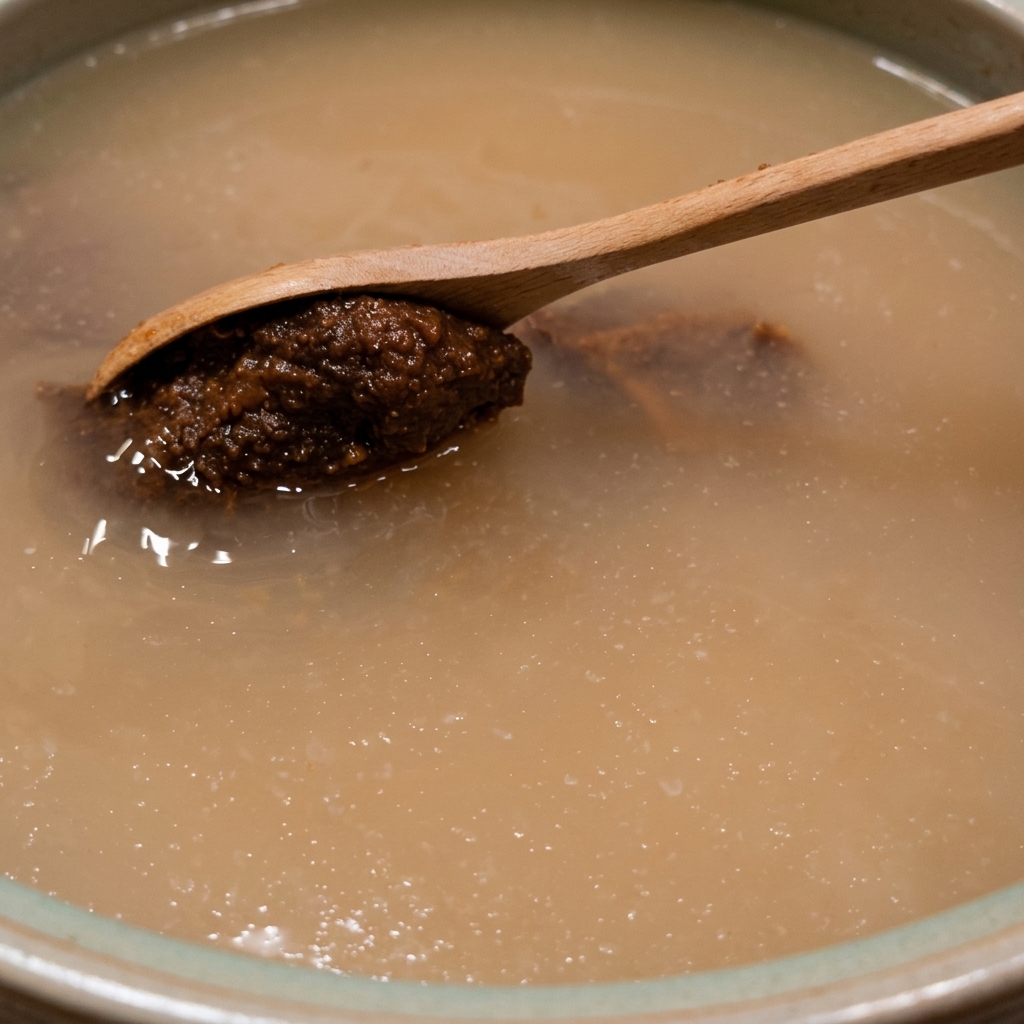
Add a generous scoop of dark Korean soybean paste into the pot of liquid using a wooden spoon. Stir the paste gently to ensure it completely dissolves into the water, creating a rich and savory foundation for the broth.
Tip: You can use a small mesh strainer immersed slightly in the broth to help mash and dissolve the paste evenly without leaving large clumps. - 5Simmer the potatoes
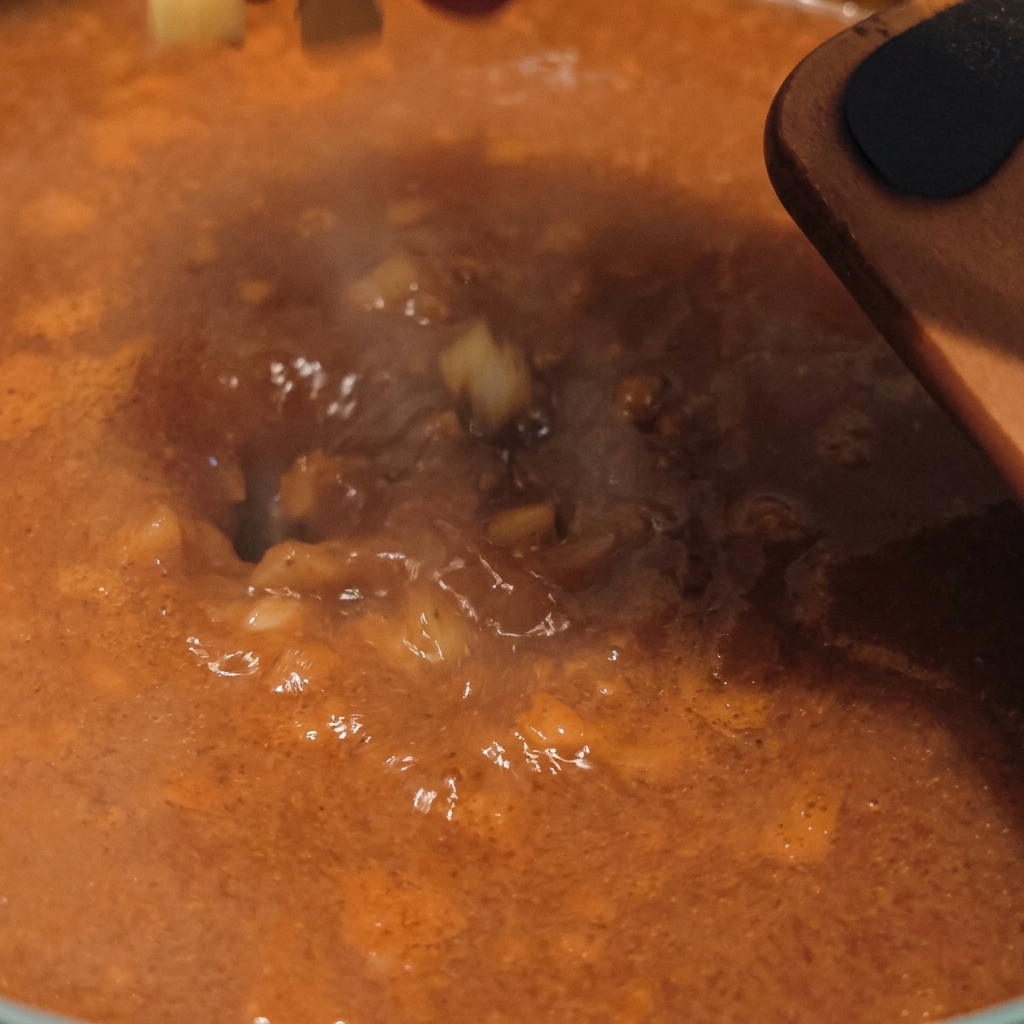
Carefully add the diced raw potatoes into the simmering orange soup base after dissolving the soybean and chili pastes. Cook the potatoes for about 3 minutes so they can begin to soften before adding the quicker-cooking vegetables.
Tip: Cut the potatoes into uniform, bite-sized cubes so they cook through evenly within the short simmering window. - 6Add the fresh vegetables
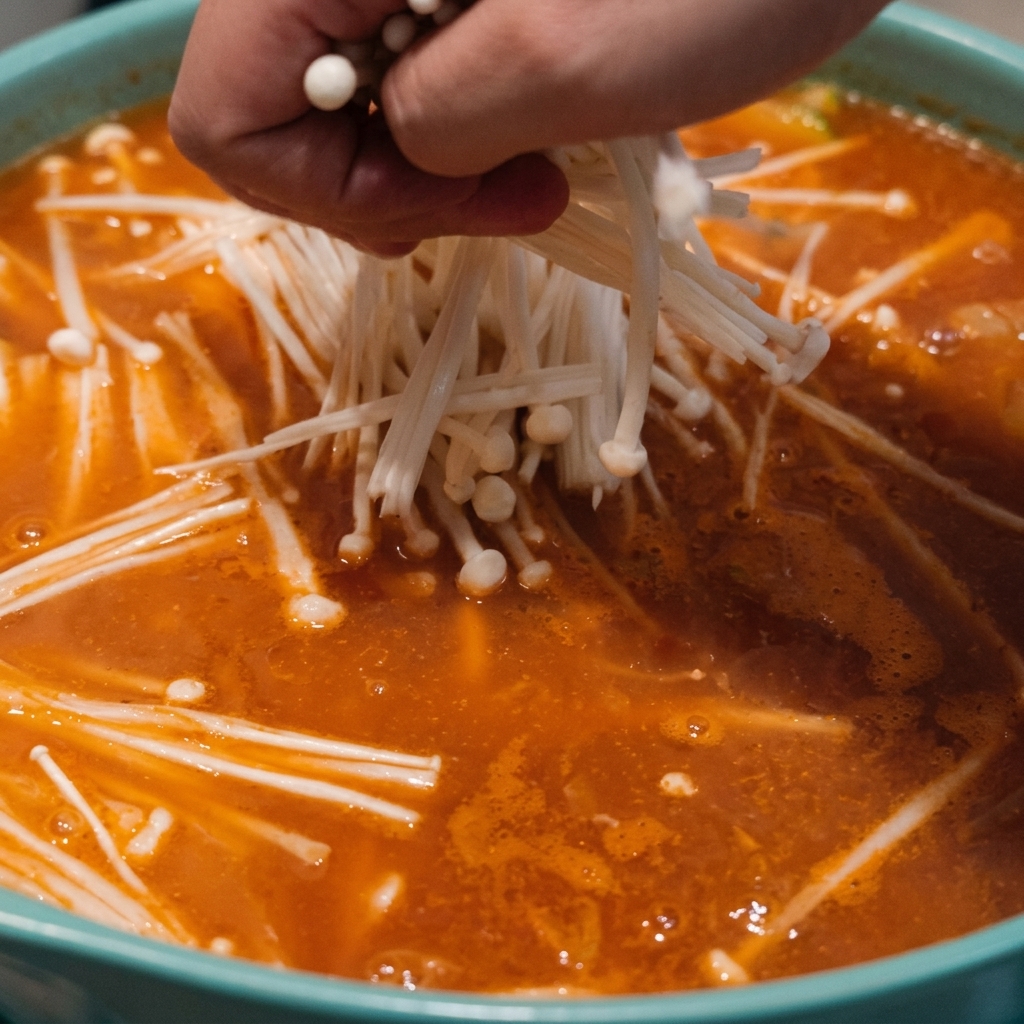
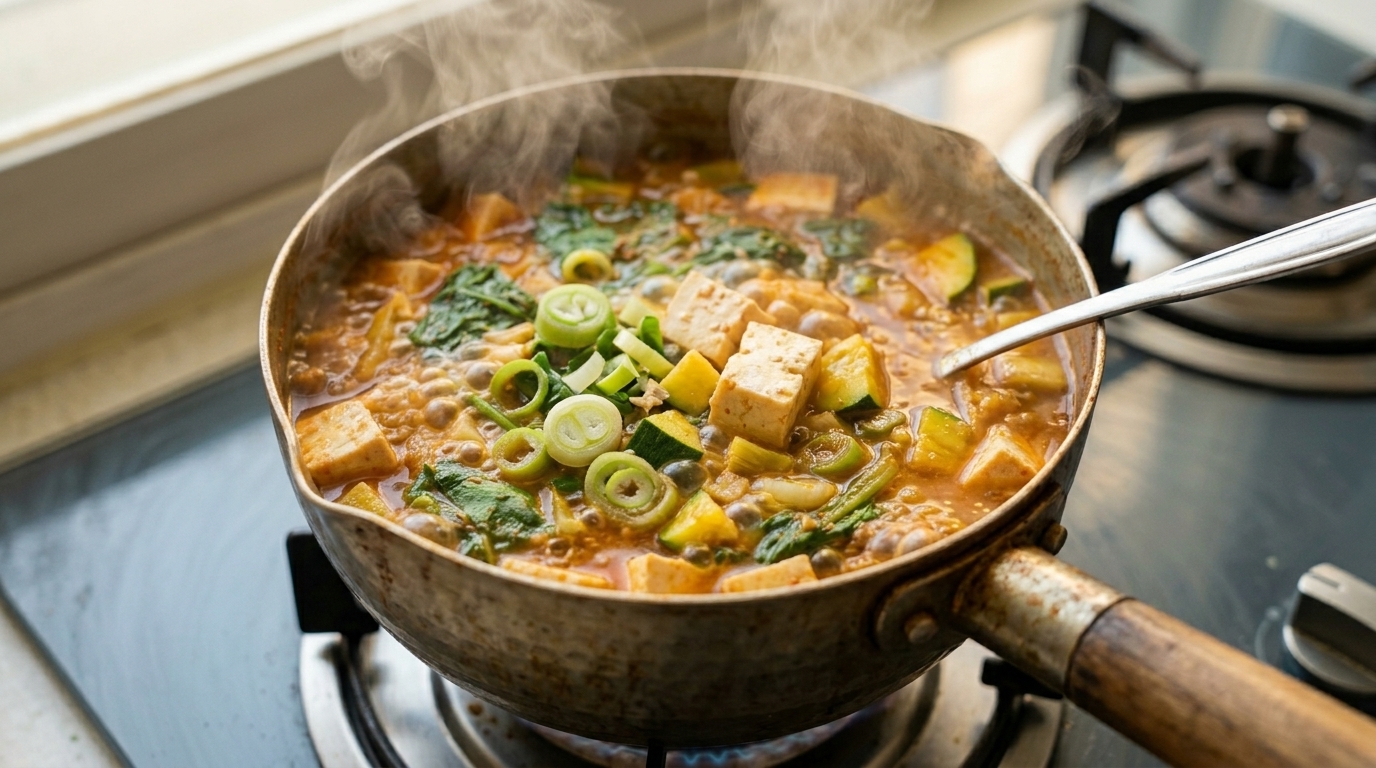
Carefully add a handful of fresh enoki mushrooms, along with sliced zucchini and tofu cubes, directly into the boiling orange broth. Submerge the ingredients evenly so they can cook through and absorb the savory flavors of the seasoned soup base.
Tip: Trim the bottom roots of the enoki mushrooms and gently pull them apart into smaller bundles before adding them to make the stew easier to serve. - 7Combine the proteins and seafood
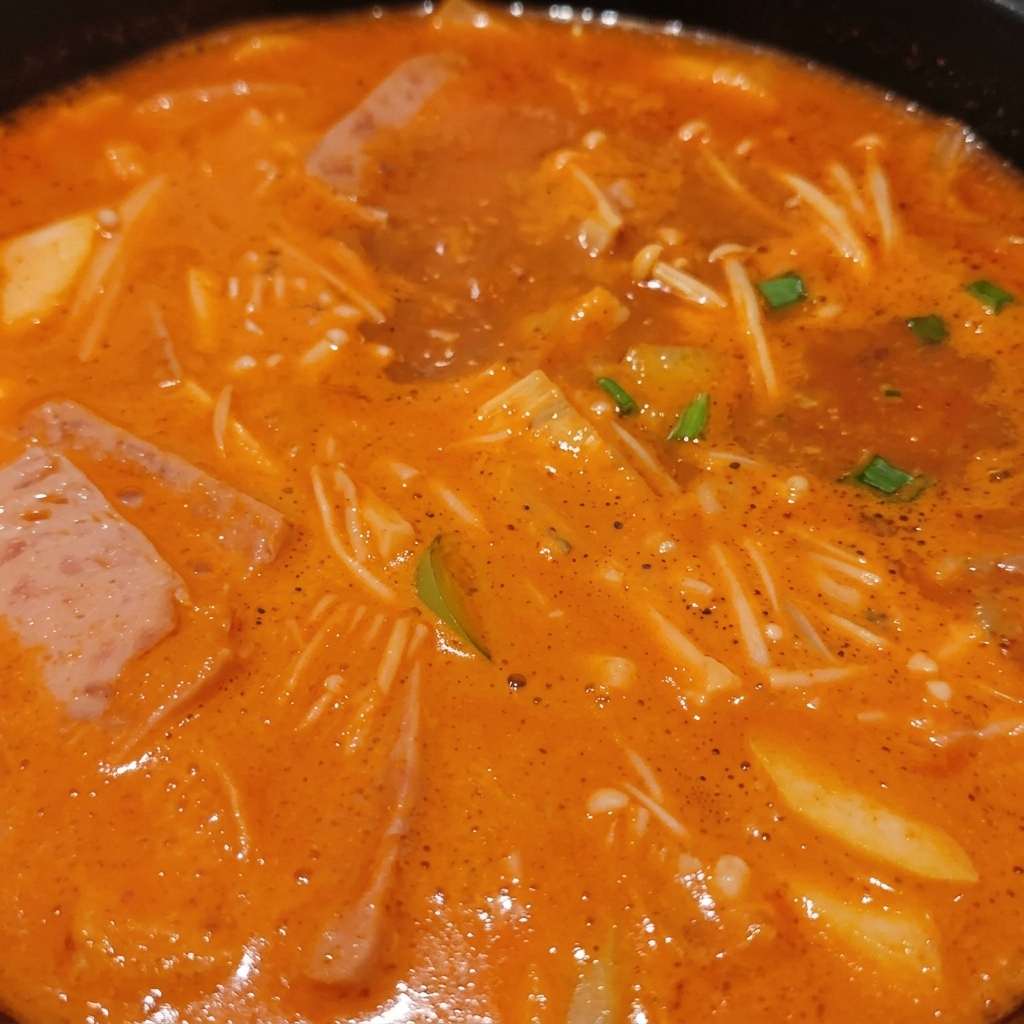
Introduce the fresh clams, previously stir-fried beef slices, and onions back into the boiling stew pot. Allow everything to boil together for an additional 5 minutes so the clams open up and release their sweet seafood flavor into the rich broth.
Tip: Discard any clams that do not open after the 5-minute boil, as they may not have been fresh or alive before cooking. - 8Garnish with green chili
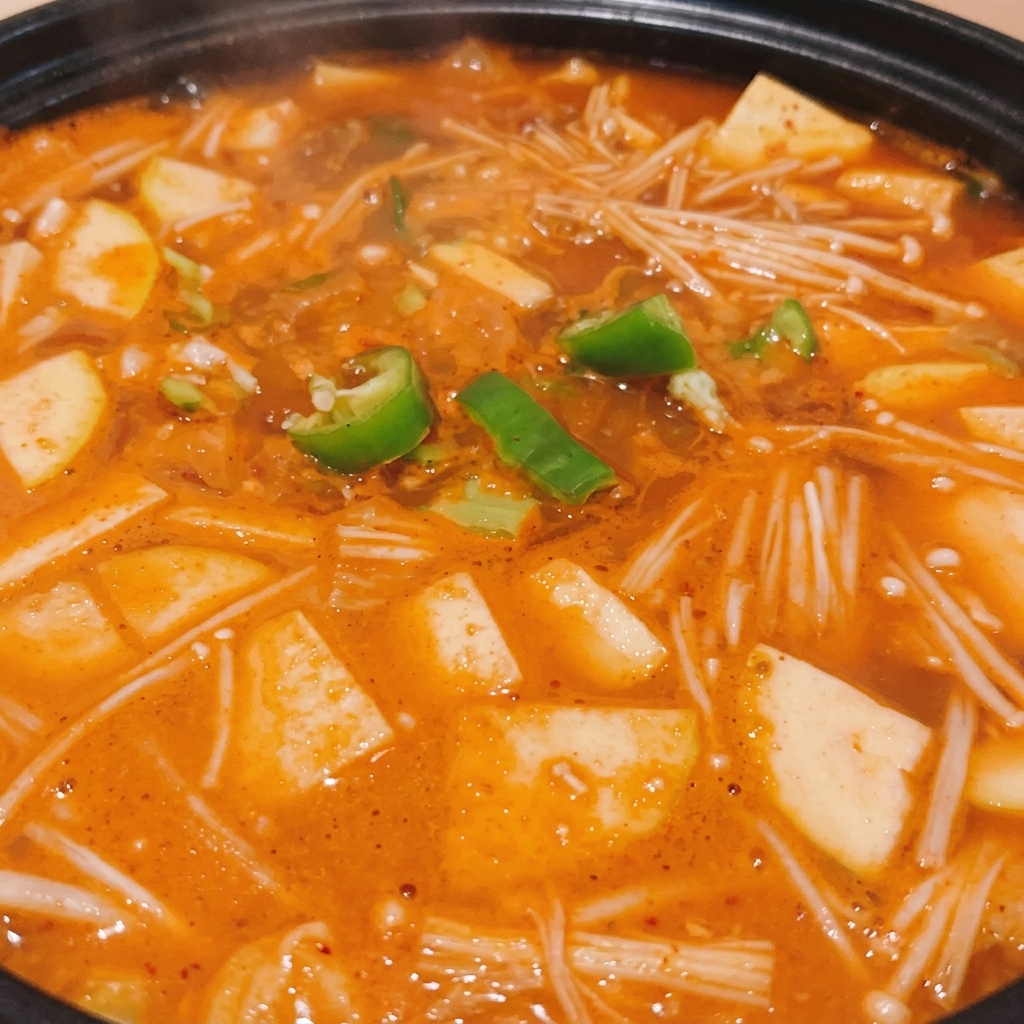
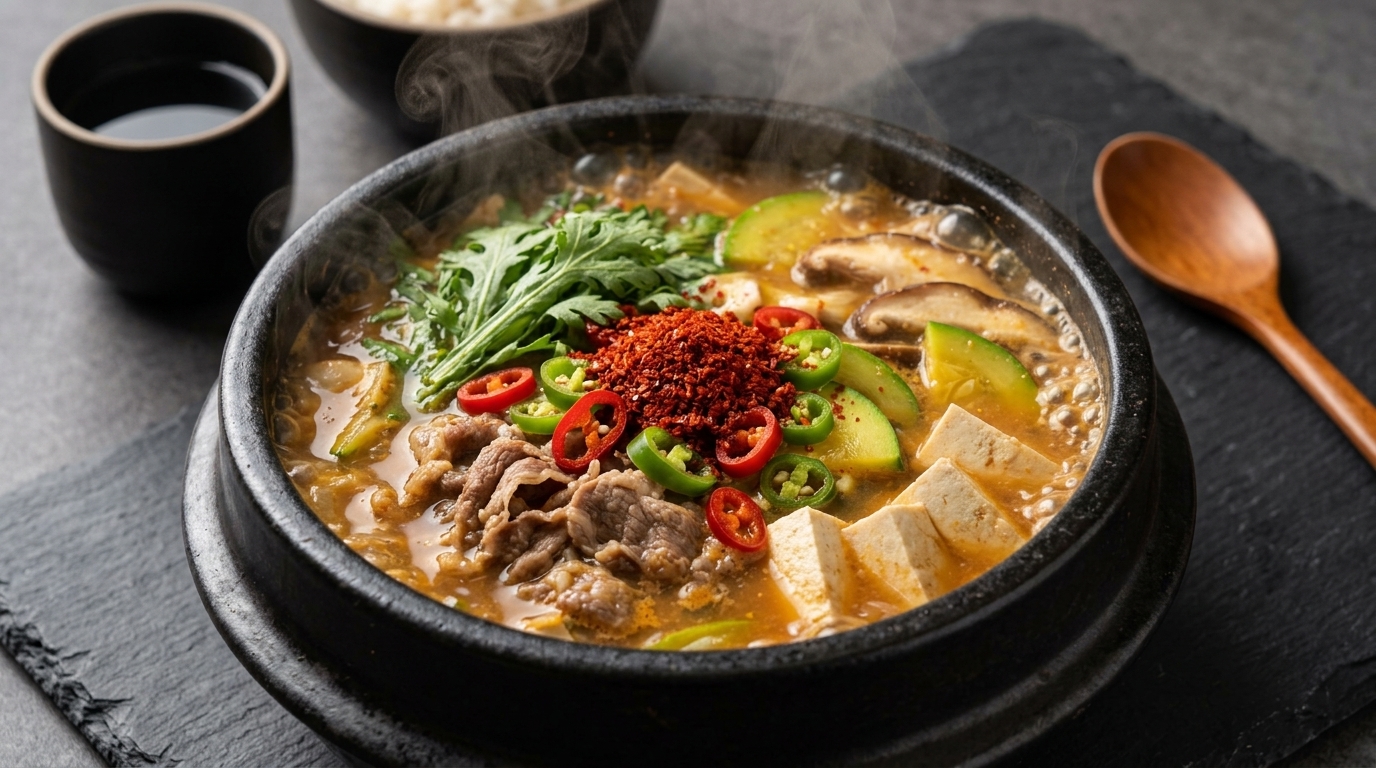
Just before taking the pot off the heat, sprinkle the freshly chopped green chili rings over the top of the boiling stew. This final addition infuses a bright, spicy aroma into the rich soybean broth.
Tip: For extra heat, leave the chili seeds in; remove them or omit the chilies entirely if you prefer a milder flavor.