Authentic Yanbian Soybean Paste Stew
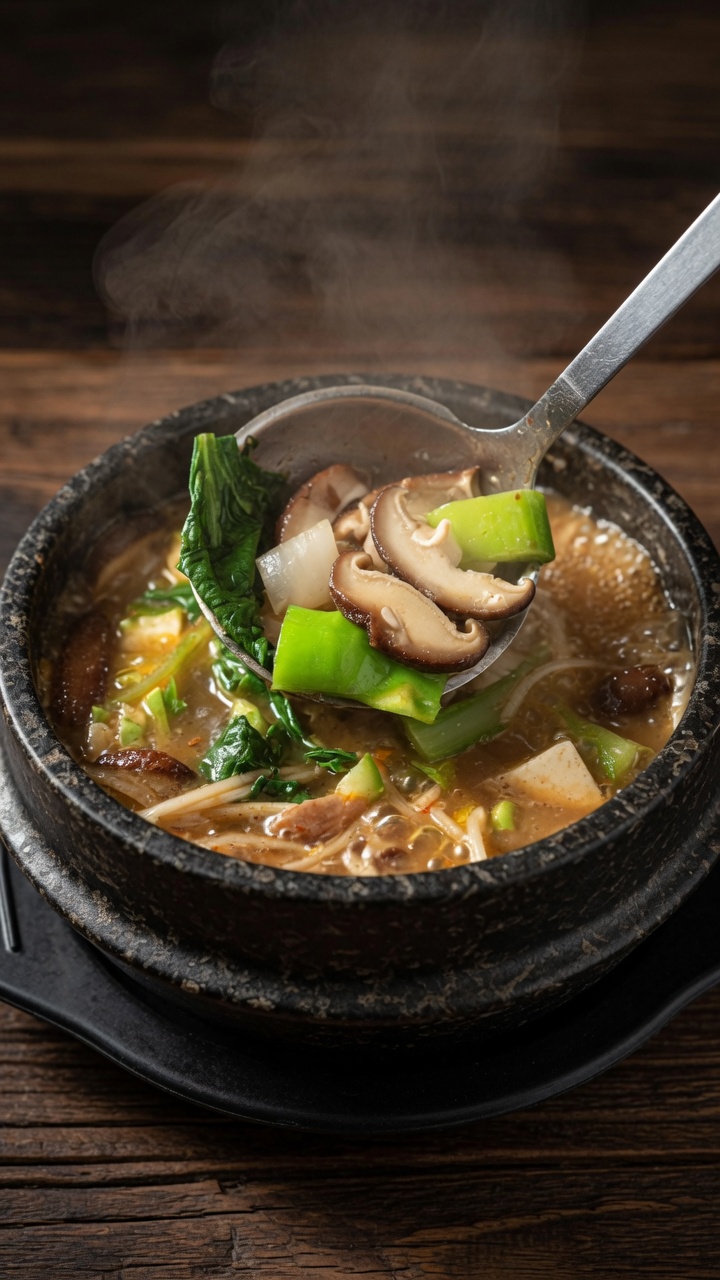
Experience the bold, savory flavors of Yanbian with this authentic soybean paste stew. Packed with fresh vegetables, silken tofu, and a rich, umami-filled broth.
Soybean paste stew is a foundational dish in the culinary landscape of the Yanbian Korean Autonomous Prefecture. This version captures the heart of home-style cooking, balancing the deep, earthy funk of aged soybean paste with the sweetness of fresh bok choy, mushrooms, and zucchini. It is a comforting, soul-warming meal that highlights the regions unique fusion of traditional Korean techniques and local ingredients.
Ingredients
- 100 g pork belly, sliced
- 1 potato, sliced
- 1/2 zucchini, sliced
- 2 shiitake mushrooms, sliced
- 1 cup soybean sprouts
- 2 heads baby bok choy, halved
- 1 block silken tofu
- 1/2 onion, cut into chunks
- 1 tbsp Yanbian soybean paste
- 1 tsp secret sauce
- 1 tsp Korean chili powder
- 1 tsp beef powder seasoning
- 1 tsp minced garlic
- 1 tbsp chopped green onion
- 1/4 tsp MSG
Instructions
- 1Prepare the potato

Take a peeled potato and slice it into slightly thick, even slices on a cutting board.
Tip: Keep the slices consistent in thickness so they cook evenly in the stew. - 2Prepare the zucchini
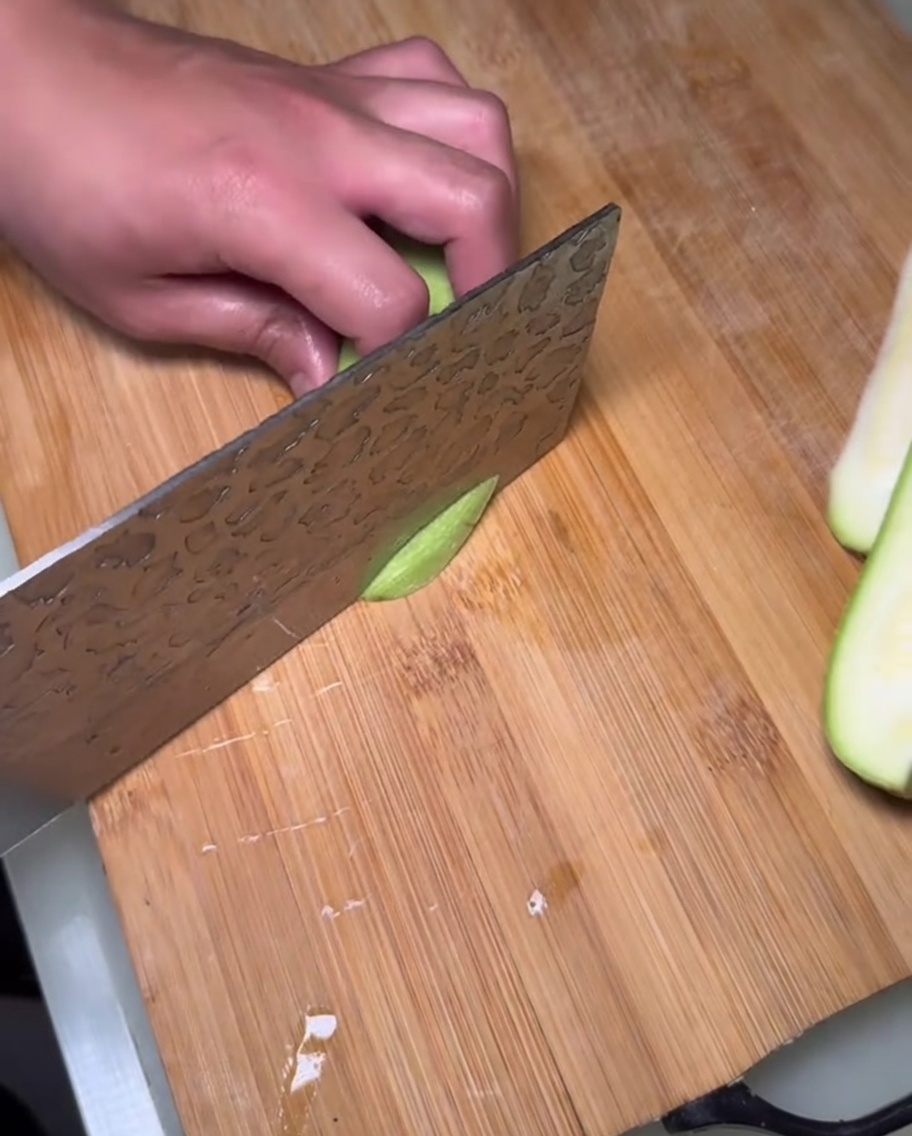
Take half a zucchini, split it down the middle, remove the seeds, and cut it into thick, bite-sized pieces.
Tip: Removing the seeds prevents the stew from becoming too watery during the cooking process. - 3Prepare the shiitake mushrooms
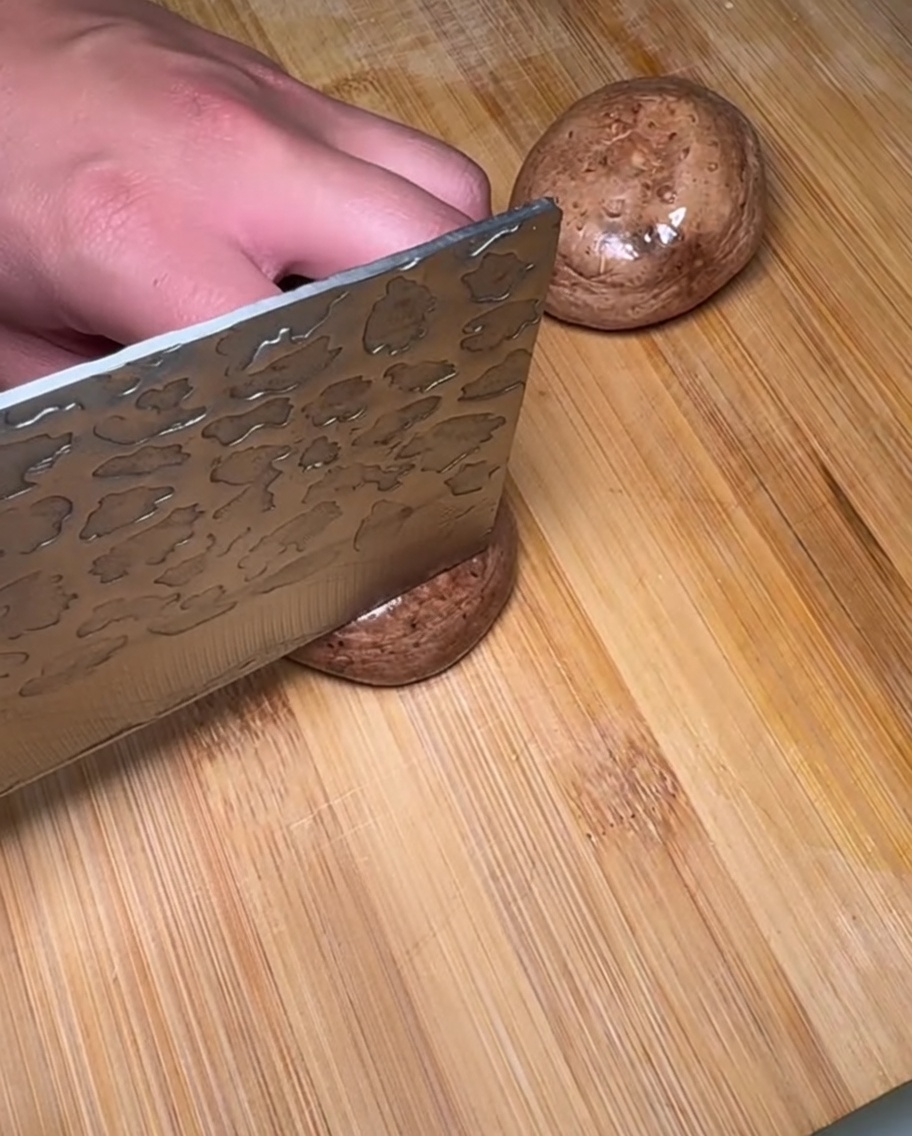
Take two fresh shiitake mushrooms and slice them into thin strips on your cutting board.
Tip: Shiitake mushrooms add a deep, savory umami flavor to the soybean paste stew. - 4Wash the soybean sprouts
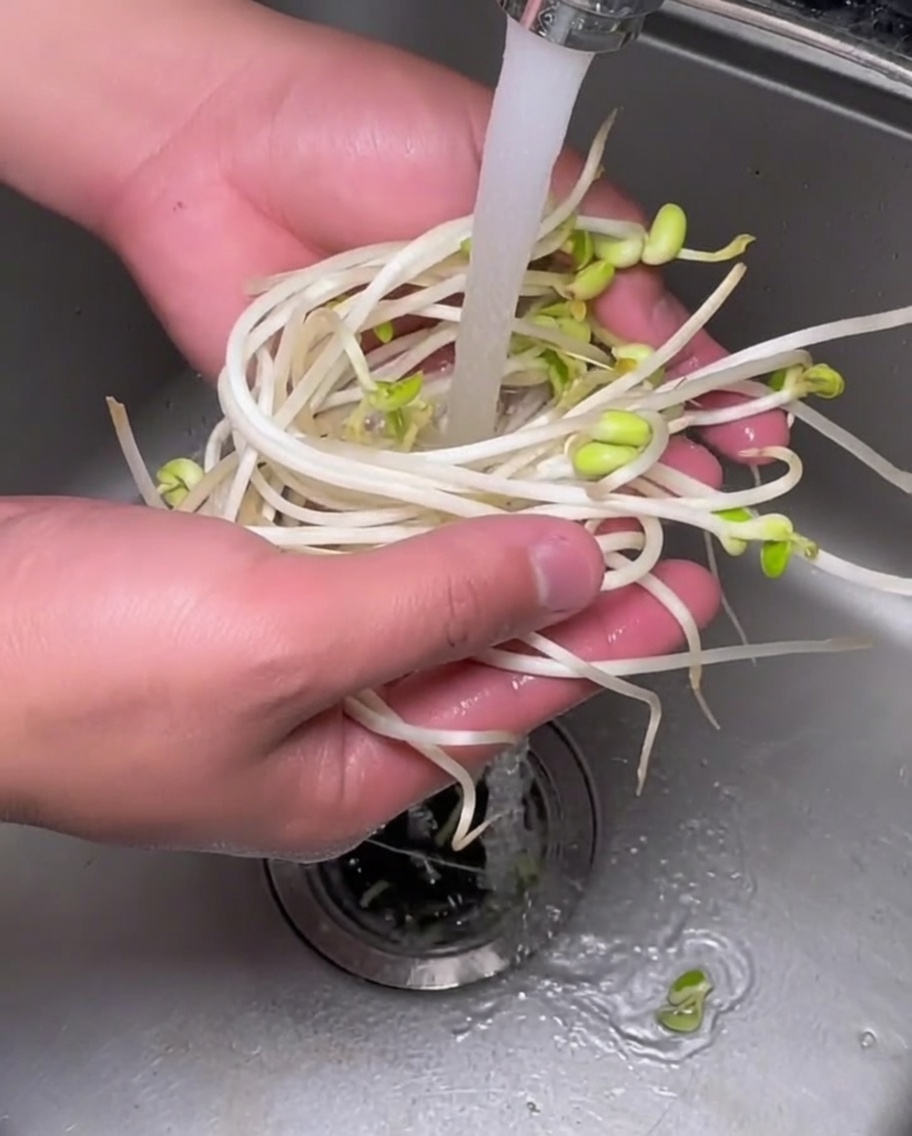
Take a small portion of soybean sprouts and wash them thoroughly under cold running water to ensure they are clean.
Tip: Drain the sprouts well after washing to avoid adding excess water to the stew. - 5Prepare the tofu
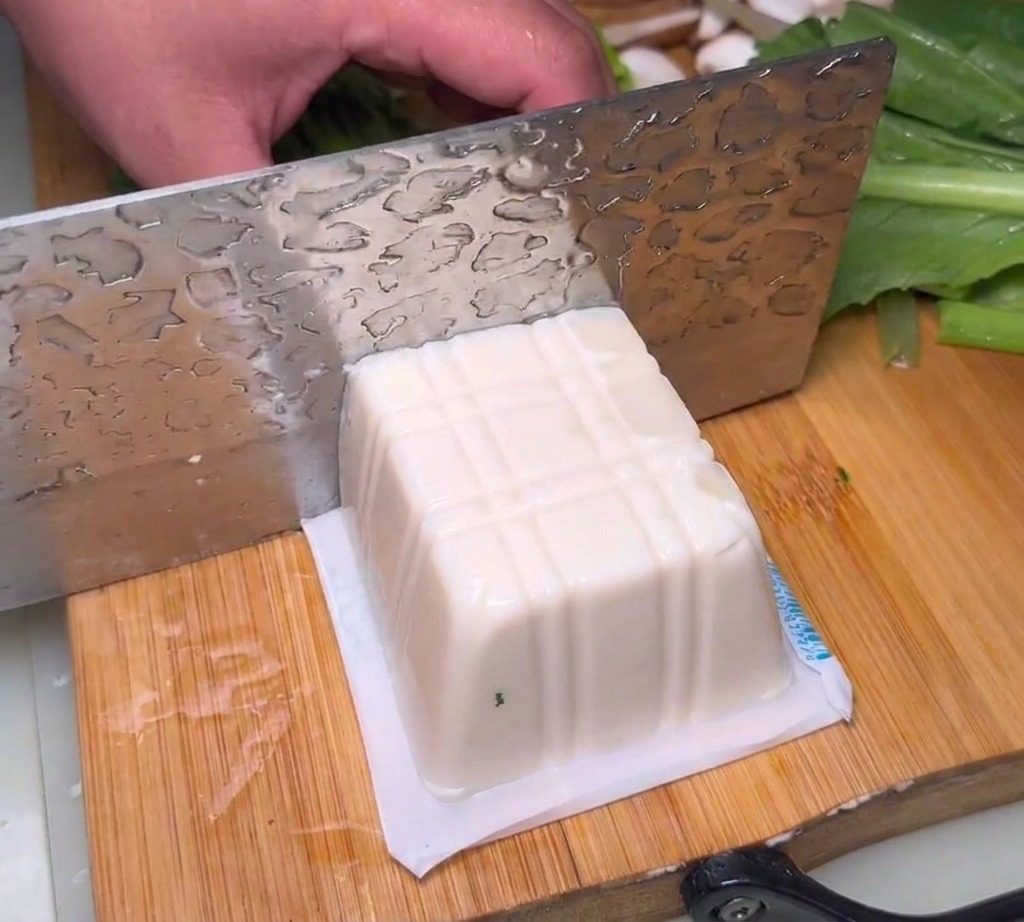
Cut a block of silken tofu into thick, manageable blocks or slices. Silken tofu is preferred for its tender, smooth texture.
Tip: Handle the tofu gently when cutting so it doesnt break apart before it hits the pot. - 6Start the stew base
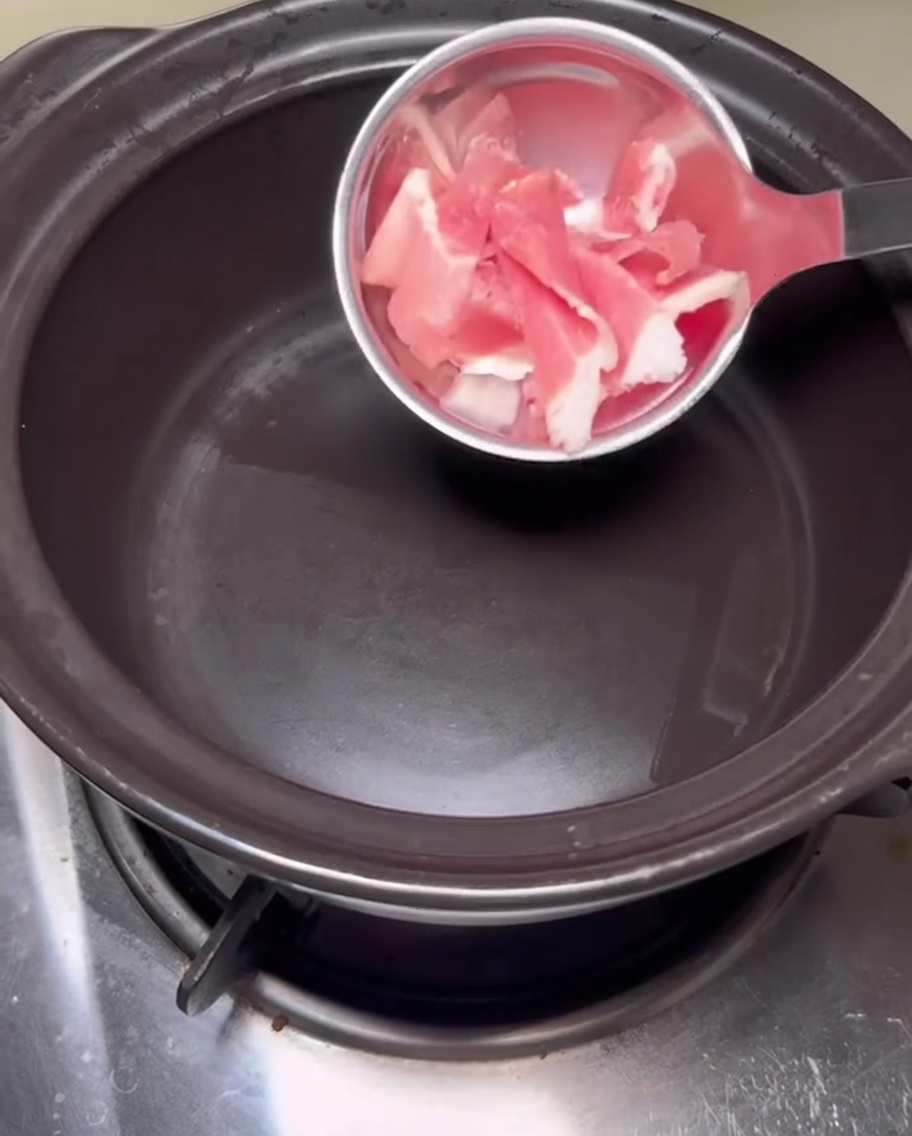
Place the sliced pork belly directly into an empty stone pot. Turn on the heat and lightly fry the meat until it starts to render its fat; it does not need to be fully cooked yet.
Tip: Using a stone pot retains heat exceptionally well and enhances the flavor of the stew. - 7Sear the pork belly
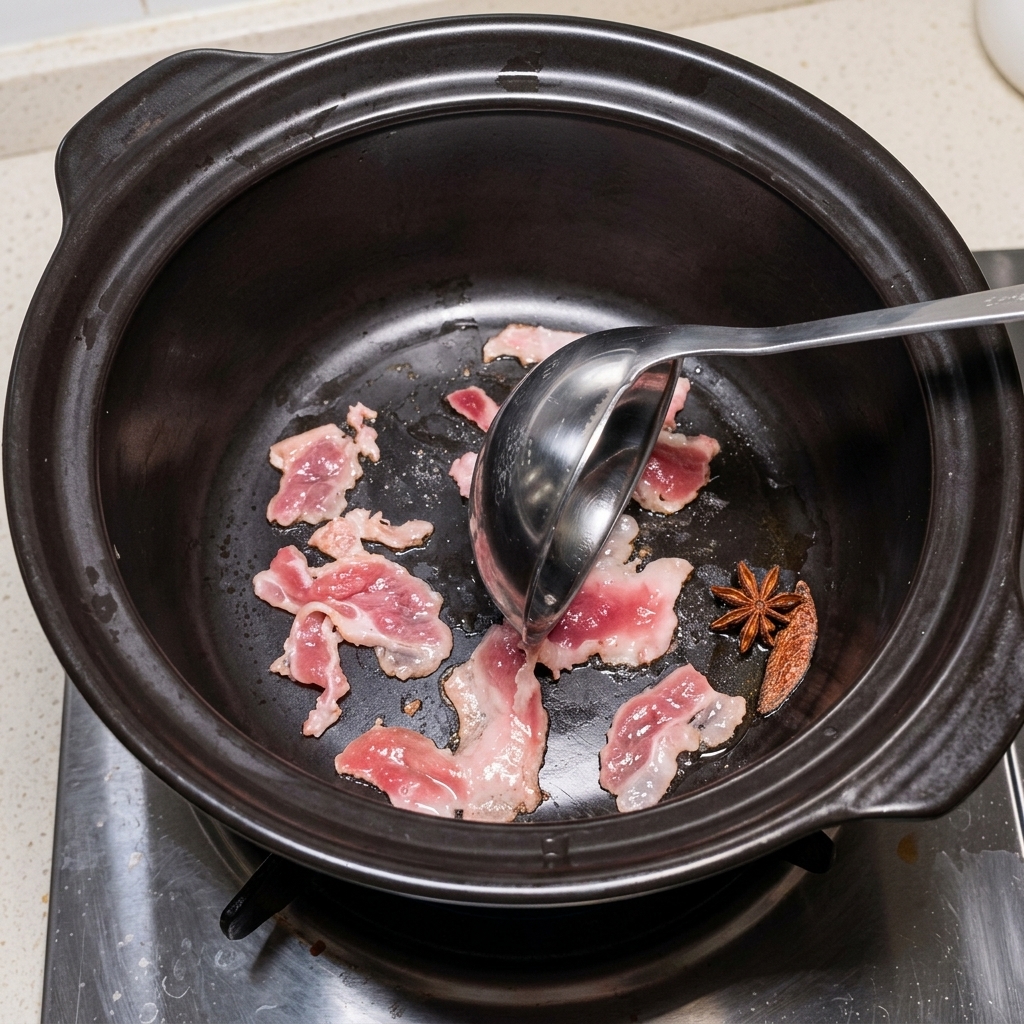
Place the sliced pork belly directly into the stone pot. Heat over medium heat and stir-fry until the meat is lightly browned. No oil is needed as the fat from the pork will render out.
Tip: Using a stone pot retains heat well, making it ideal for this stew. - 8Add water to the pot
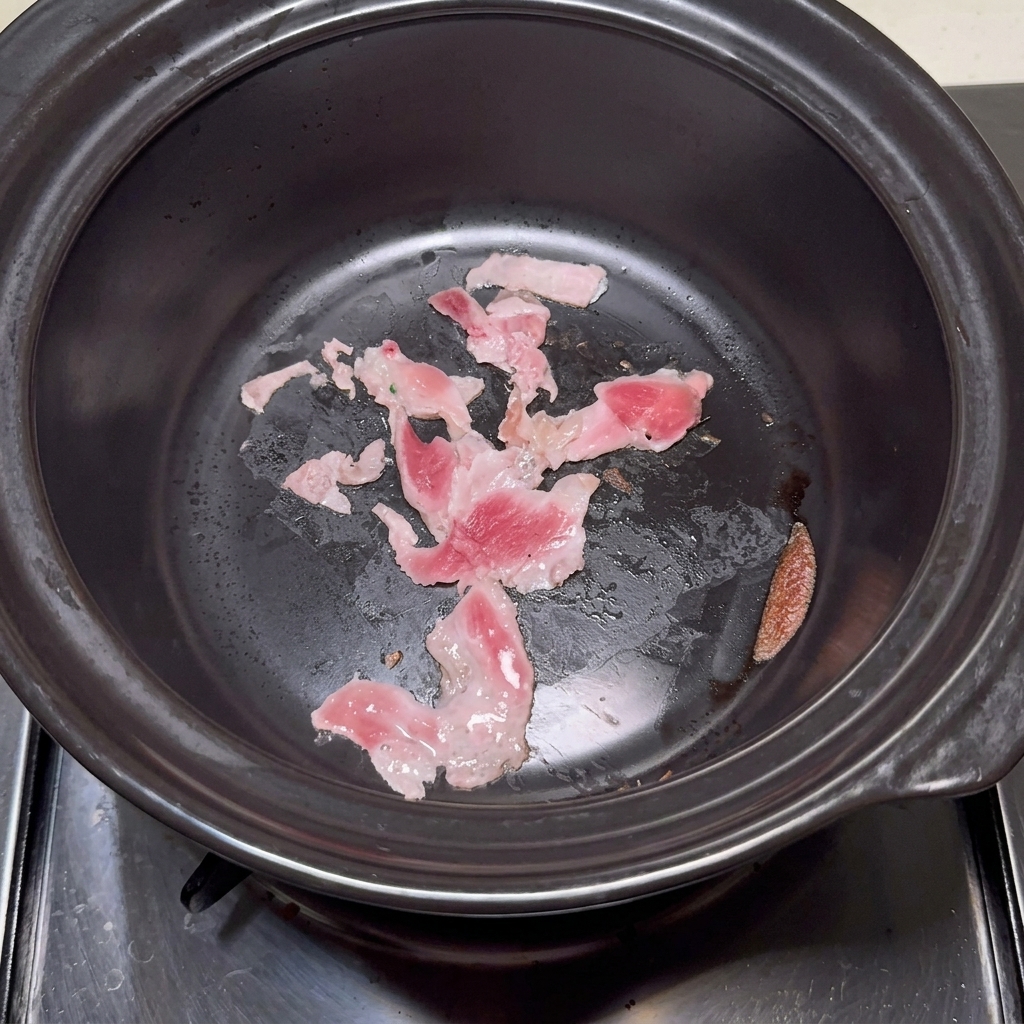
Once the pork belly is lightly fried, pour in clean water to create the base for your stew.
Tip: Ensure the water is clean to maintain a pure flavor for the soybean paste broth. - 9Add potatoes
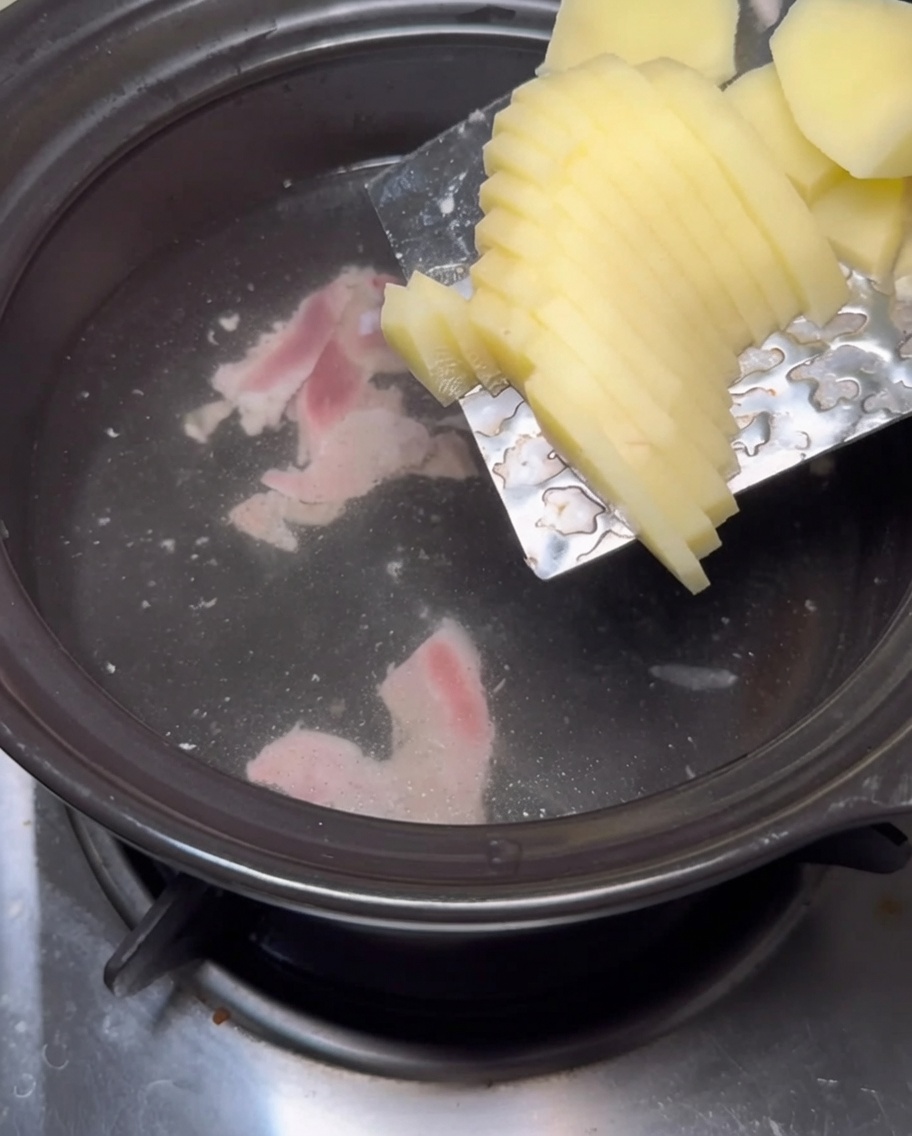
Add the thick potato slices into the pot. Potatoes take longer to cook, so adding them early ensures they soften properly.
Tip: Cut the potatoes into uniform, thick slices so they cook evenly without falling apart. - 10Add soybean paste

Stir a spoonful of high-quality soybean paste into the simmering water. The paste is the soul of this dish, so select an authentic brand for the best flavor.
Tip: Ensure the paste is fully dissolved in the broth for a rich, consistent flavor. - 11Add secret sauce

Add a spoonful of the familys secret sauce to the broth. This complements the soybean paste and enhances the overall depth of the stew.
Tip: Taste your broth after adding the sauce to adjust the seasoning to your preference. - 12Add soybean sprouts

Add the washed soybean sprouts into the broth to provide freshness and texture.
Tip: Wash the sprouts thoroughly under running water before adding them to the pot. - 13Add shiitake mushrooms
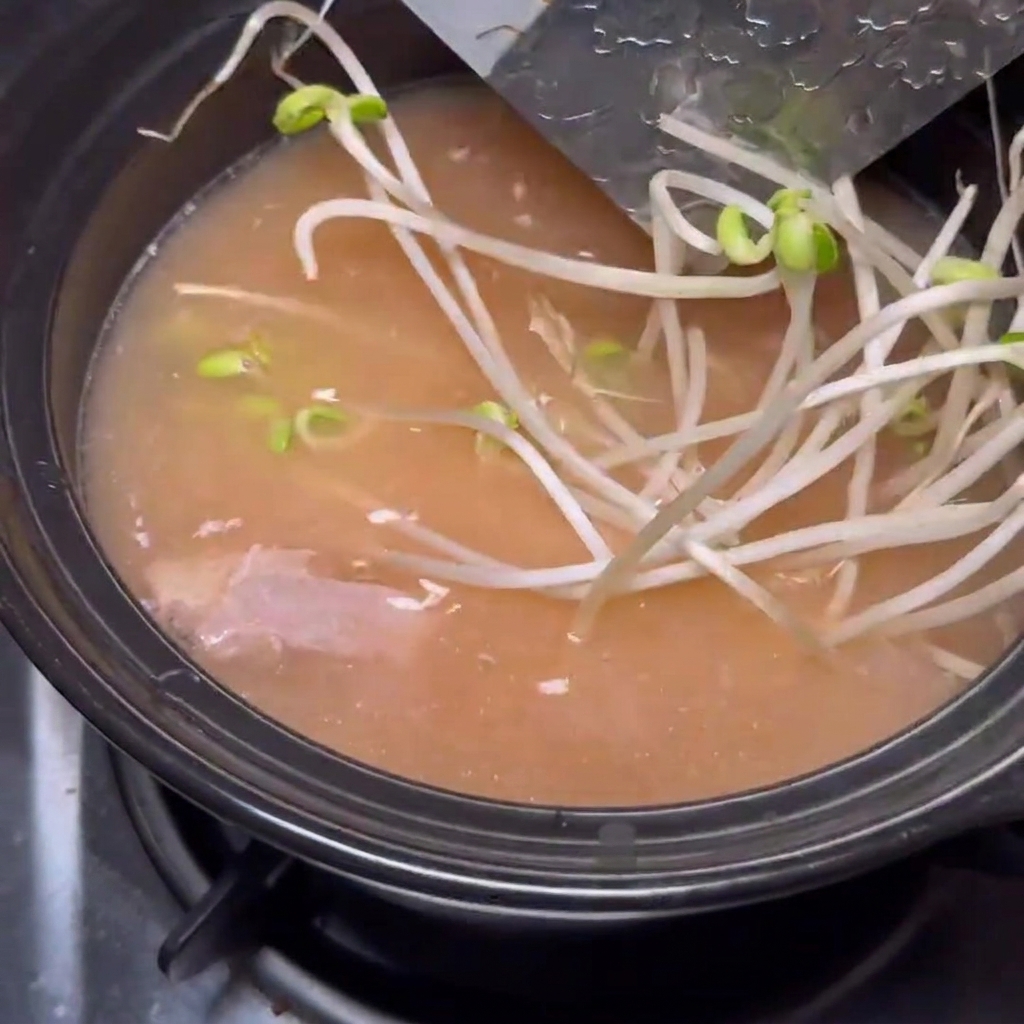
Add the prepared shiitake mushroom slices into the boiling stone pot with the soybean paste broth and other ingredients. The earthy flavor of the mushrooms will meld with the broth as it continues to simmer.
Tip: Ensure the mushrooms are sliced evenly so they cook at the same rate. - 14Season the stew
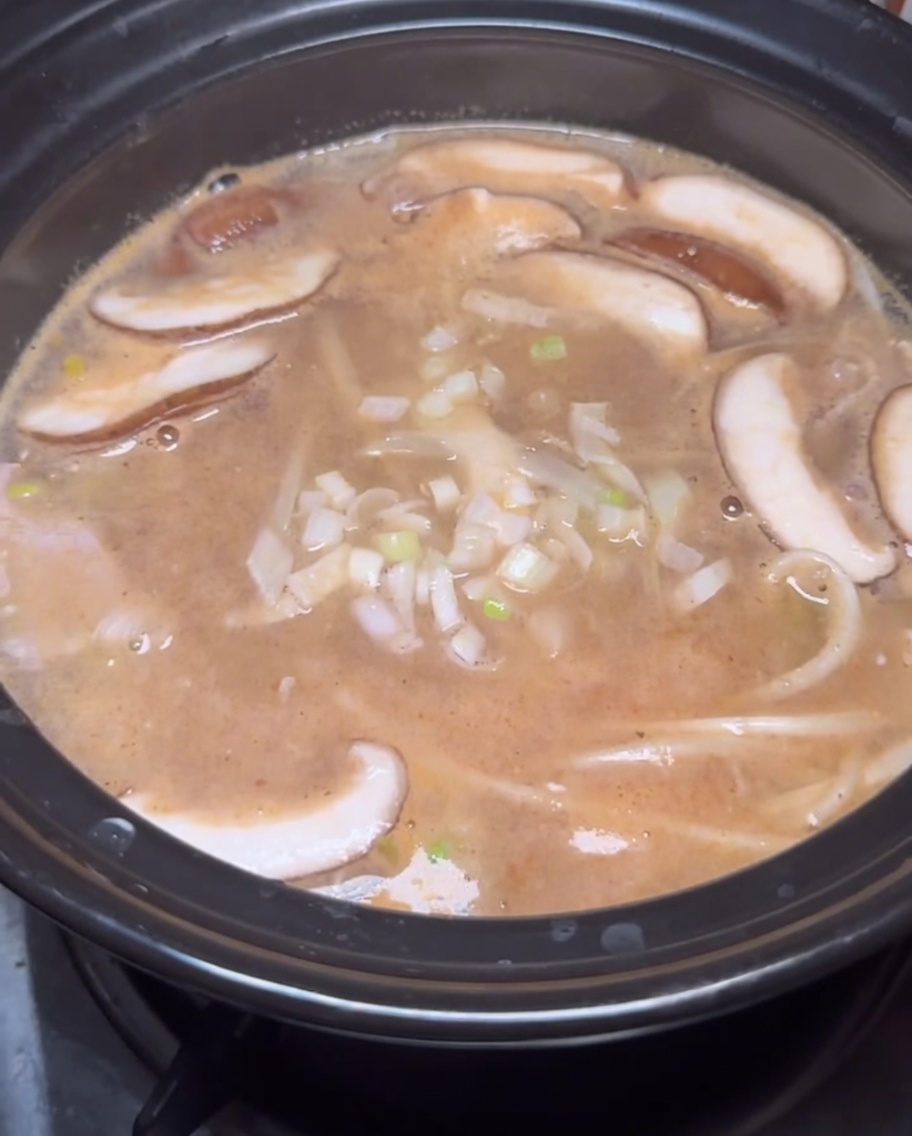
Add a spoonful of Korean chili powder, some beef powder seasoning, and a little minced garlic and green onion to the pot. These seasonings build the complex, spicy, and savory profile of the stew.
Tip: Adjust the amount of chili powder based on your preference for heat. - 15Add zucchini slices
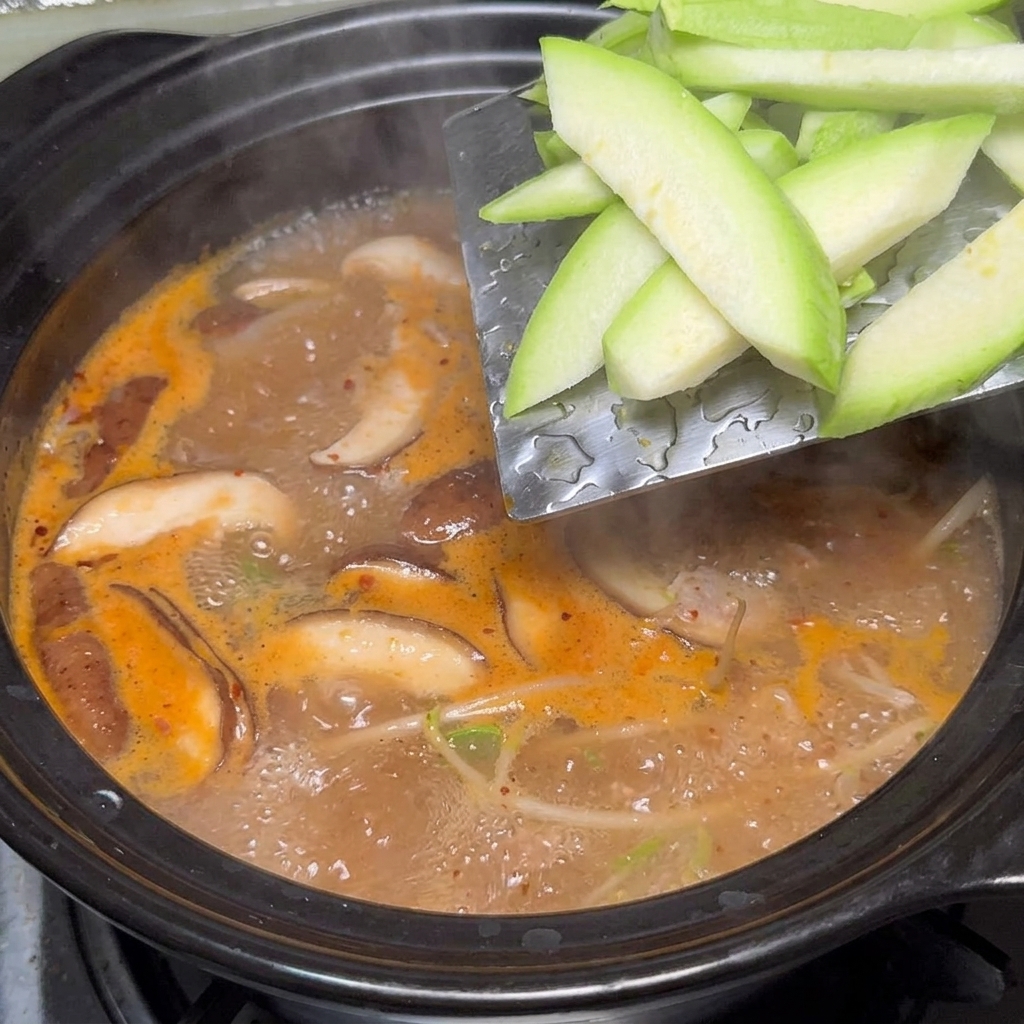
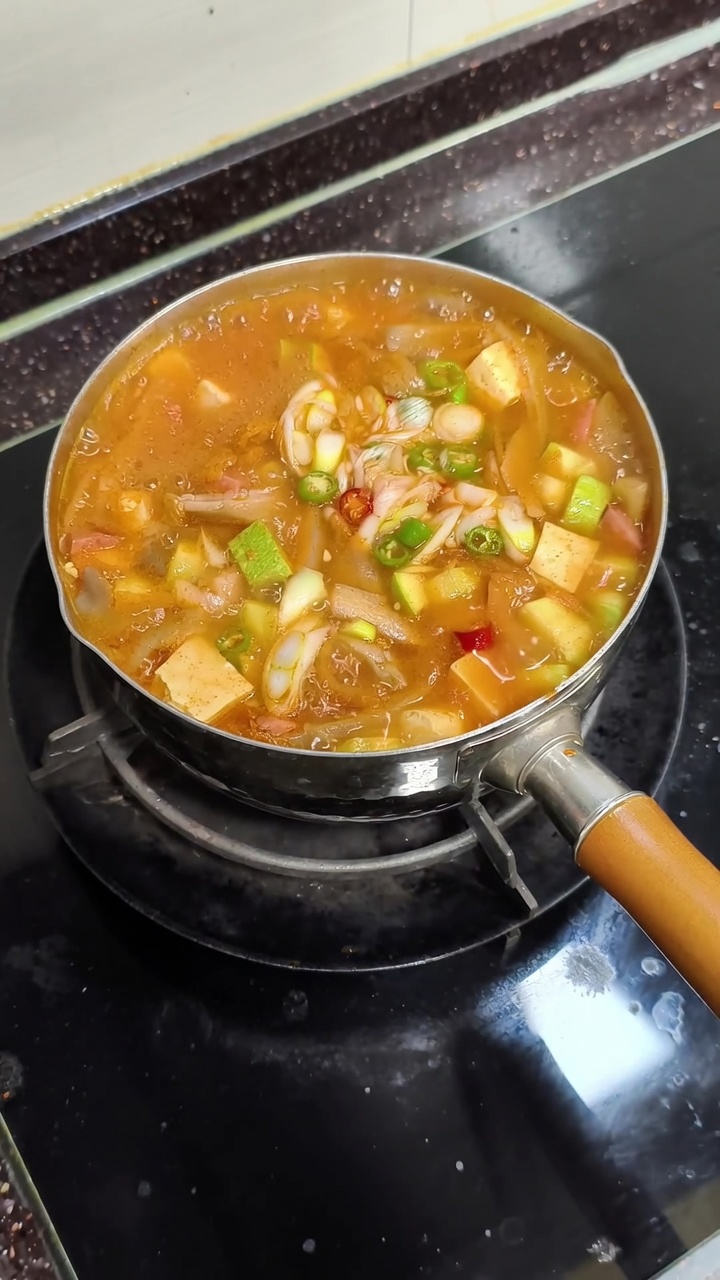
Carefully slide the thick slices of prepared zucchini into the boiling stew. The zucchini will absorb the savory broth while maintaining a nice texture.
Tip: Keep the zucchini slices thick so they dont turn mushy during the simmering process. - 16Add tofu blocks
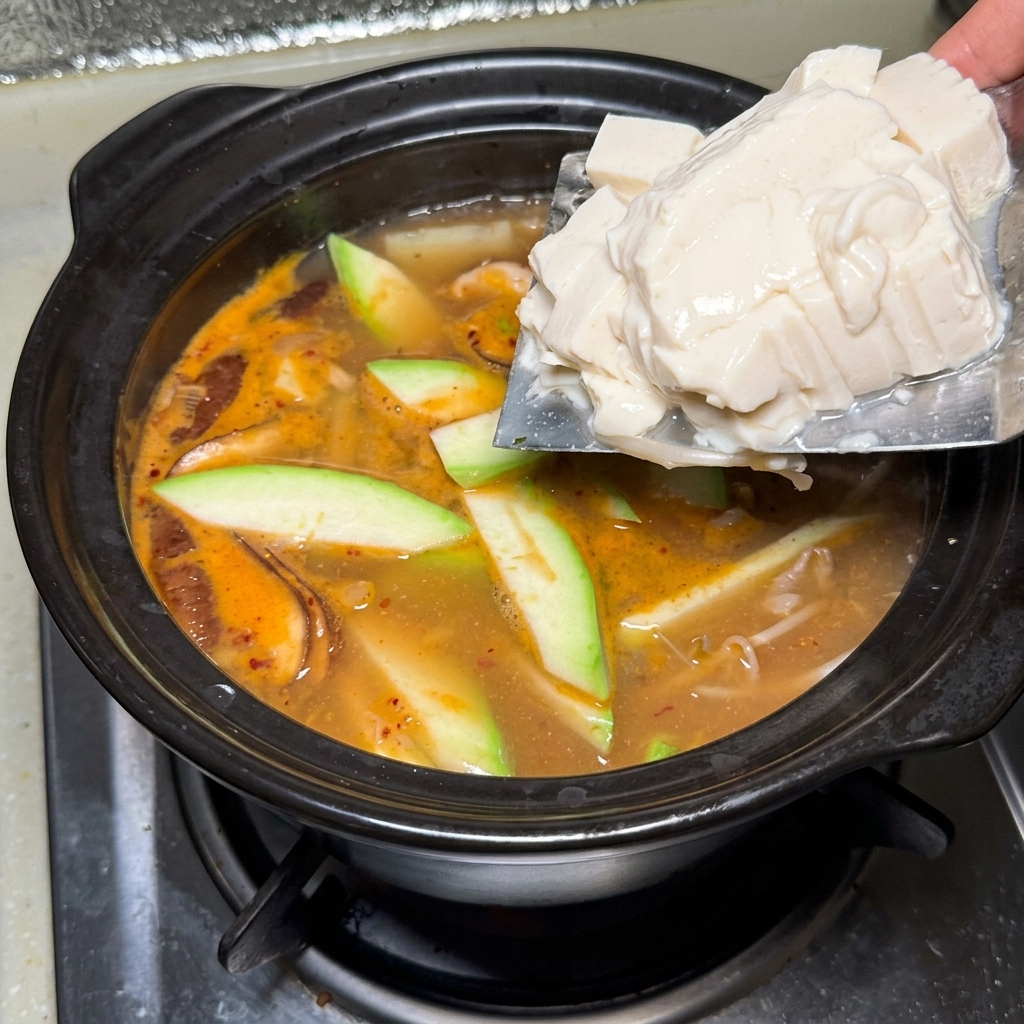
Gently slide the cut blocks of silken tofu into the pot. Silken tofu is ideal here as it provides a delicate, tender texture that complements the hearty stew.
Tip: Add the tofu gently to prevent it from breaking apart in the bubbling broth. - 17Add bok choy and onions
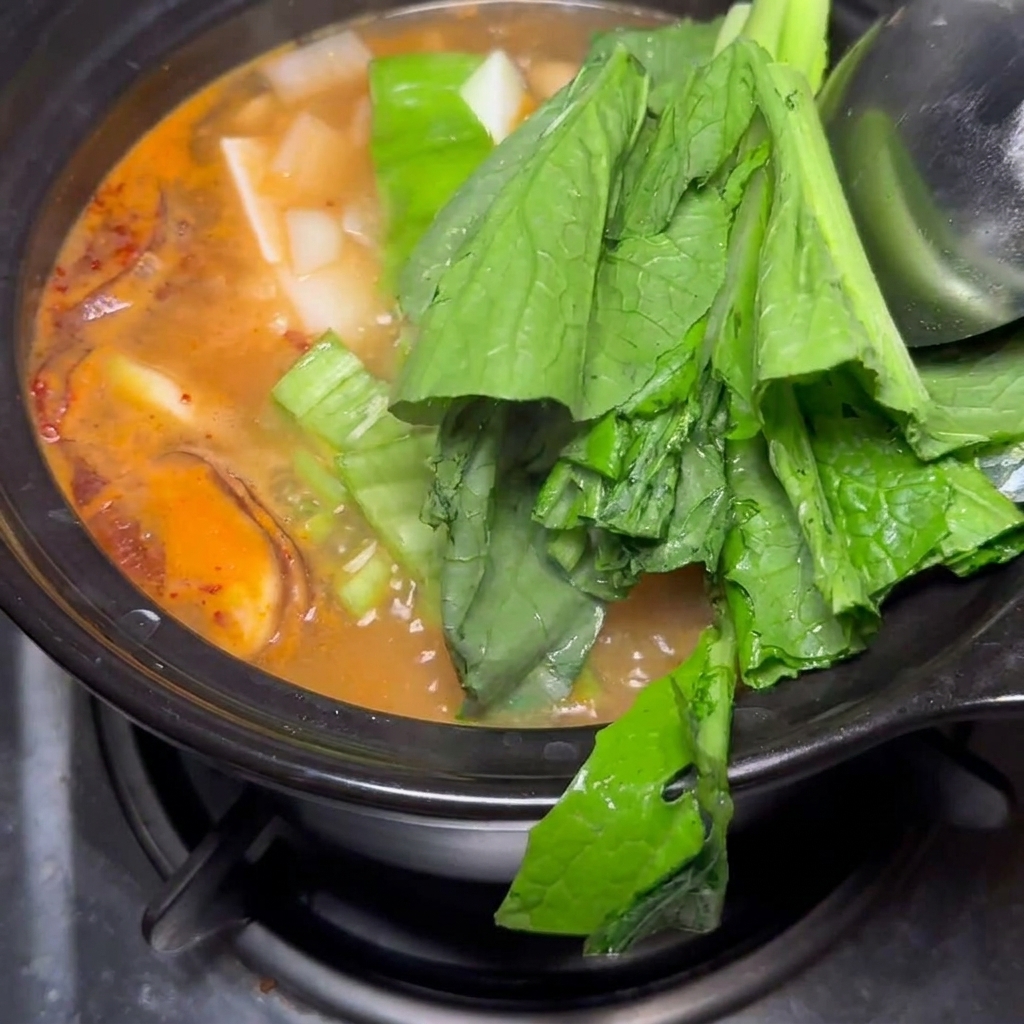
Finally, add the chopped baby bok choy and onion chunks to the pot. These vegetables add a fresh crunch and sweetness to finish the dish before serving.
Tip: Add the leafy greens last to ensure they stay vibrant and do not overcook.