Classic Korean Doenjang-jjigae (Soybean Paste Stew)
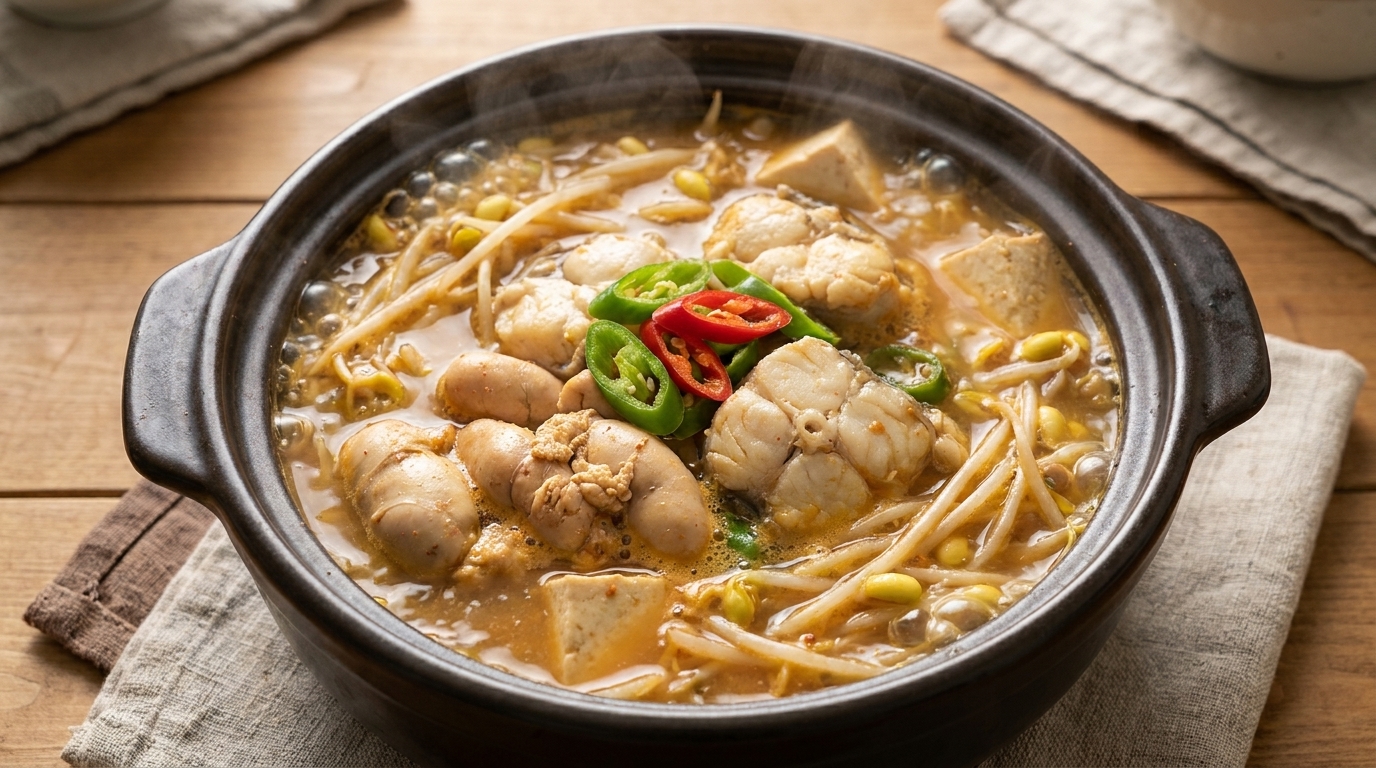
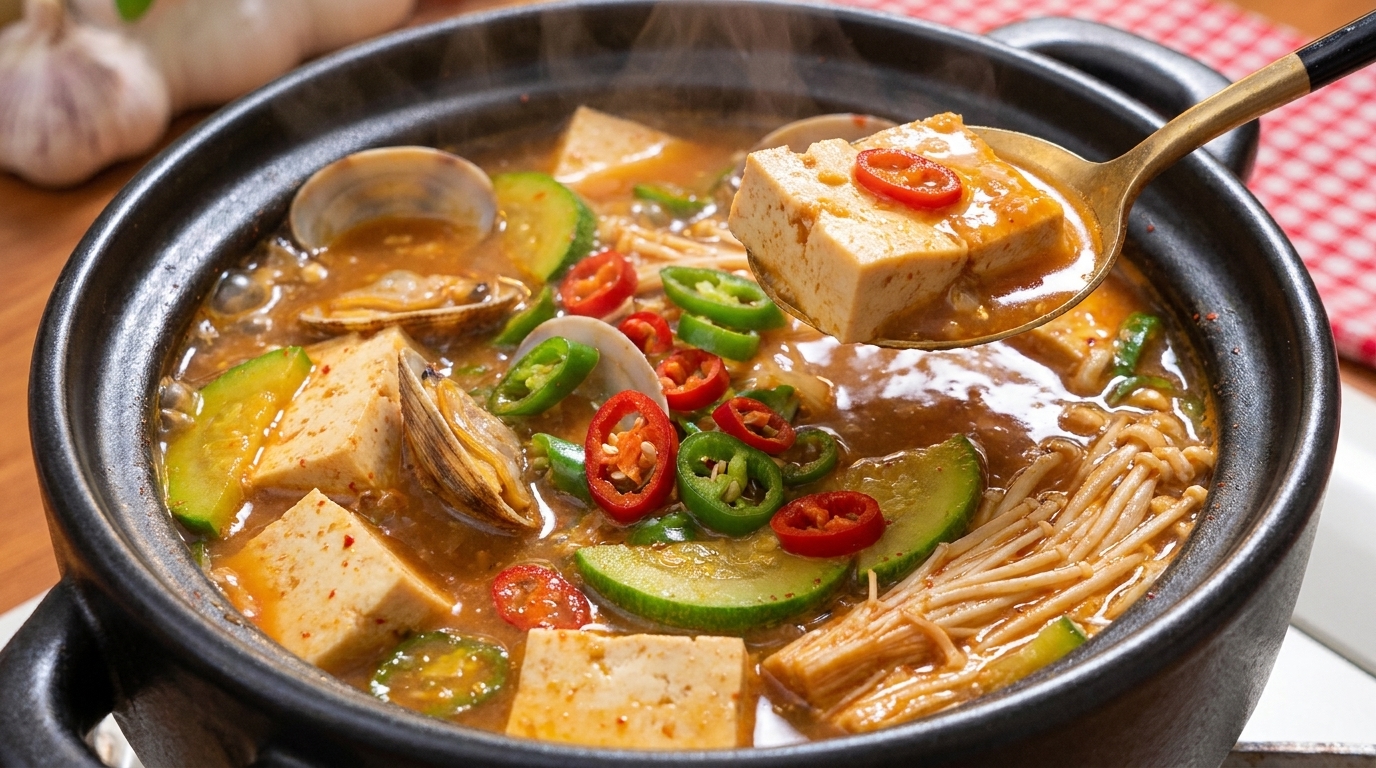
A soul-warming Korean staple, this rustic soybean paste stew combines fermented doenjang with tender tofu, fresh vegetables, and savory clams for deep umami flavor.
Doenjang-jjigae is perhaps the most quintessential home-cooked meal in Korea. Centered around doenjang, a pungent and earthy fermented soybean paste, this stew is prized for its ability to comfort the soul while providing a rich, savory depth that balances perfectly with fresh seasonal vegetables and seafood. Each household puts its own unique spin on this classic, making it a true reflection of traditional Korean culinary philosophy.
Ingredients
- 1 small zucchini, sliced
- 1 medium potato, sliced
- 3 shiitake mushrooms, sliced
- 1 handful enoki mushrooms
- 200 g fresh clams, cleaned
- 150 g firm tofu, sliced
- 2 tbsp Korean soybean paste (doenjang)
- 1 tbsp Korean red chili paste (gochujang)
- 1/2 tsp beef seasoning powder
- 500 ml rice water
- 1 tsp chili powder, optional
- 2 red and green chili peppers, sliced, for garnish
Instructions
- 1Prepare the vegetable base
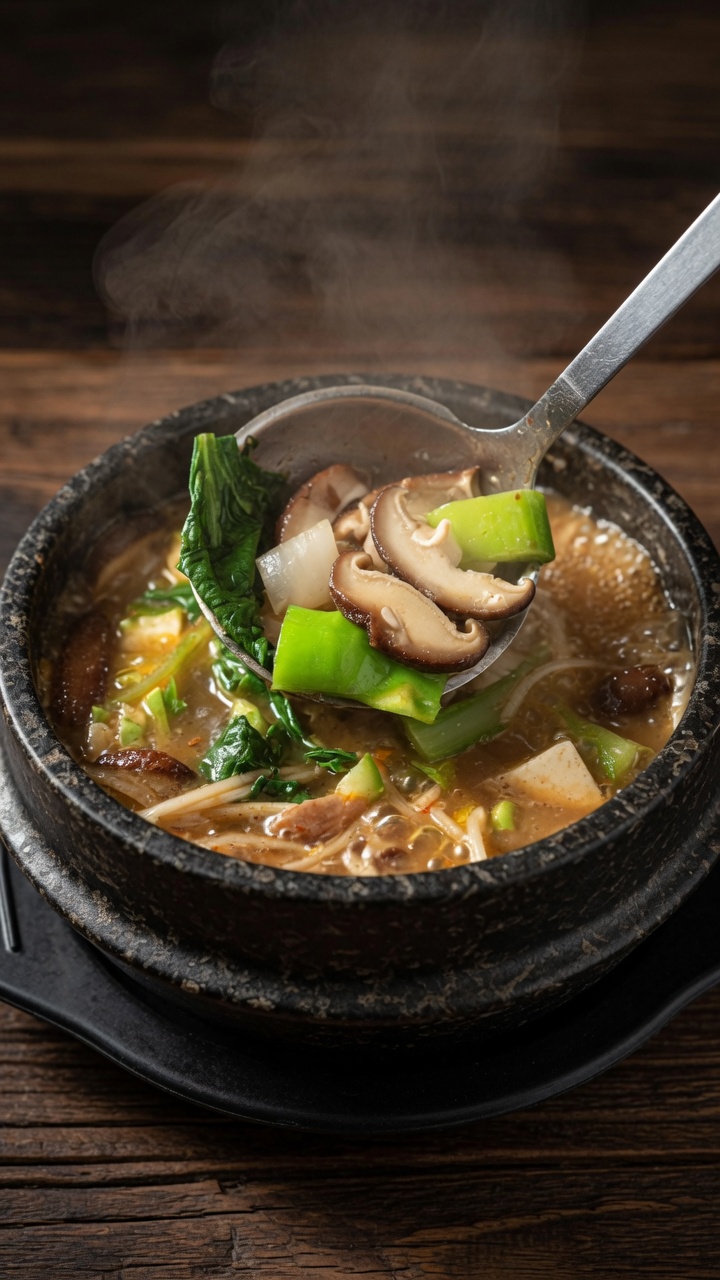
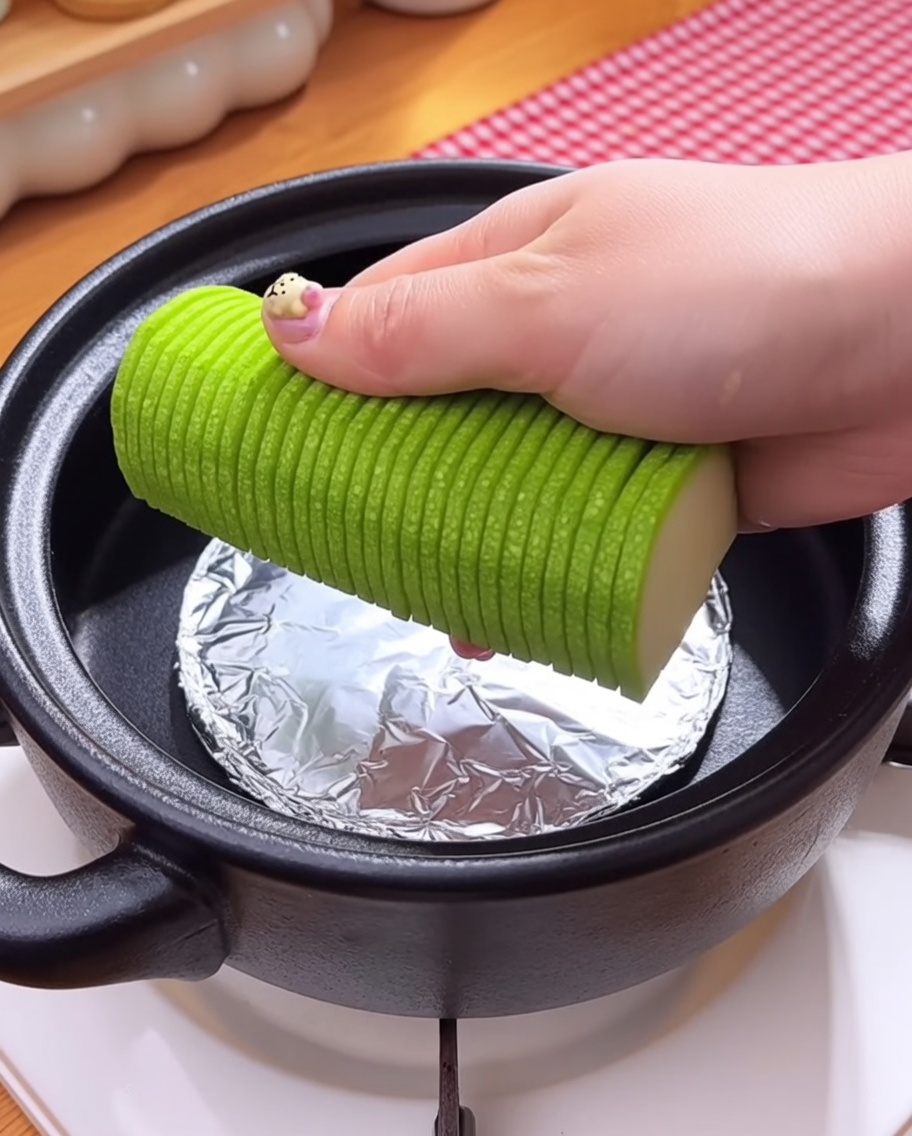
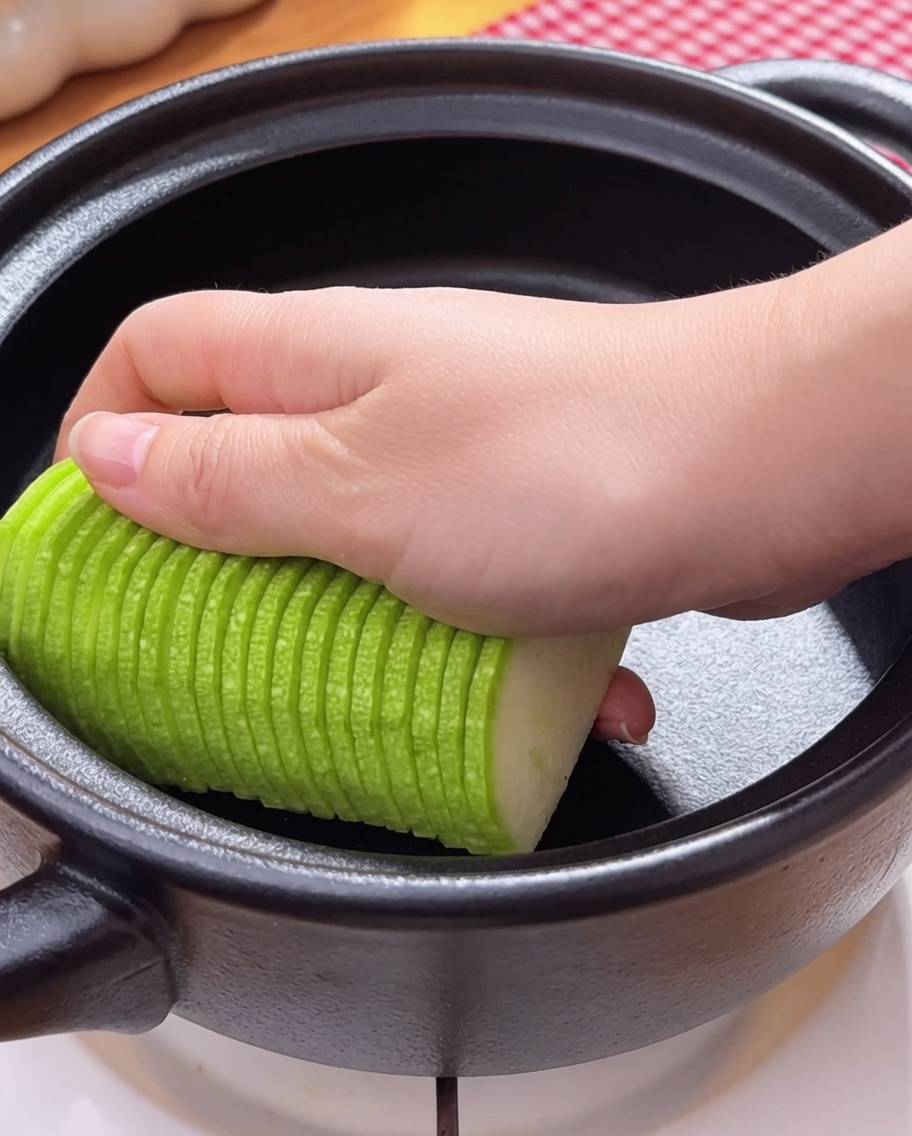
Begin by layering the thinly sliced zucchini, potato, and shiitake mushrooms into the bottom of a black earthenware pot. This forms the foundational layer that will infuse the stew with flavor as it cooks.
Tip: Uniformly slicing the vegetables ensures they cook evenly in the broth. - 2Add mushrooms and clams
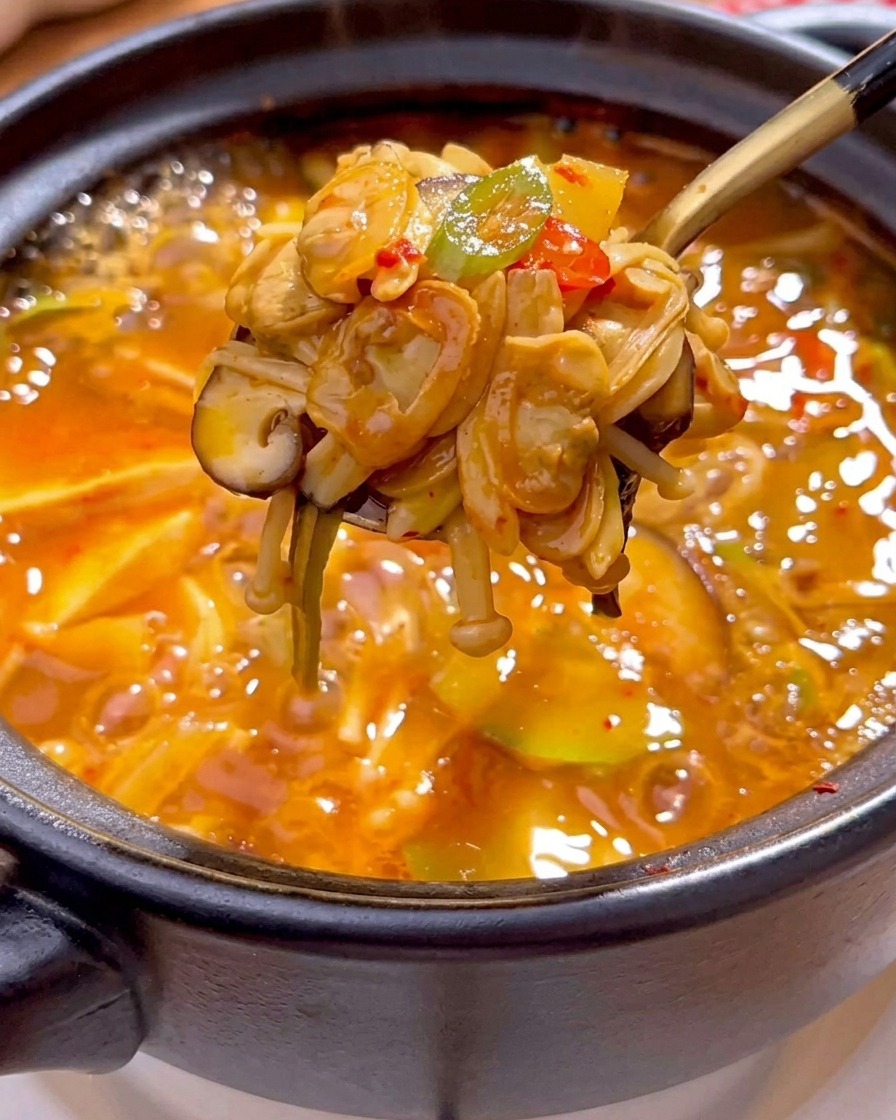
Place a handful of enoki mushrooms over the vegetable base, followed by a generous portion of cleaned, raw clams. These ingredients will contribute a delicate sweetness to the finished stew.
Tip: Make sure the clams are thoroughly cleaned and purged of sand before adding them to the pot. - 3Incorporate Korean soybean paste
Add a large, generous spoonful of Korean soybean paste (doenjang) directly onto the clams. This ingredient provides the essential deep, savory, and fermented flavor profile characteristic of Korean stews.
Tip: If the paste is very thick, you can dissolve it in a little bit of the rice water before adding to the pot to ensure it mixes well. - 4Season the stew
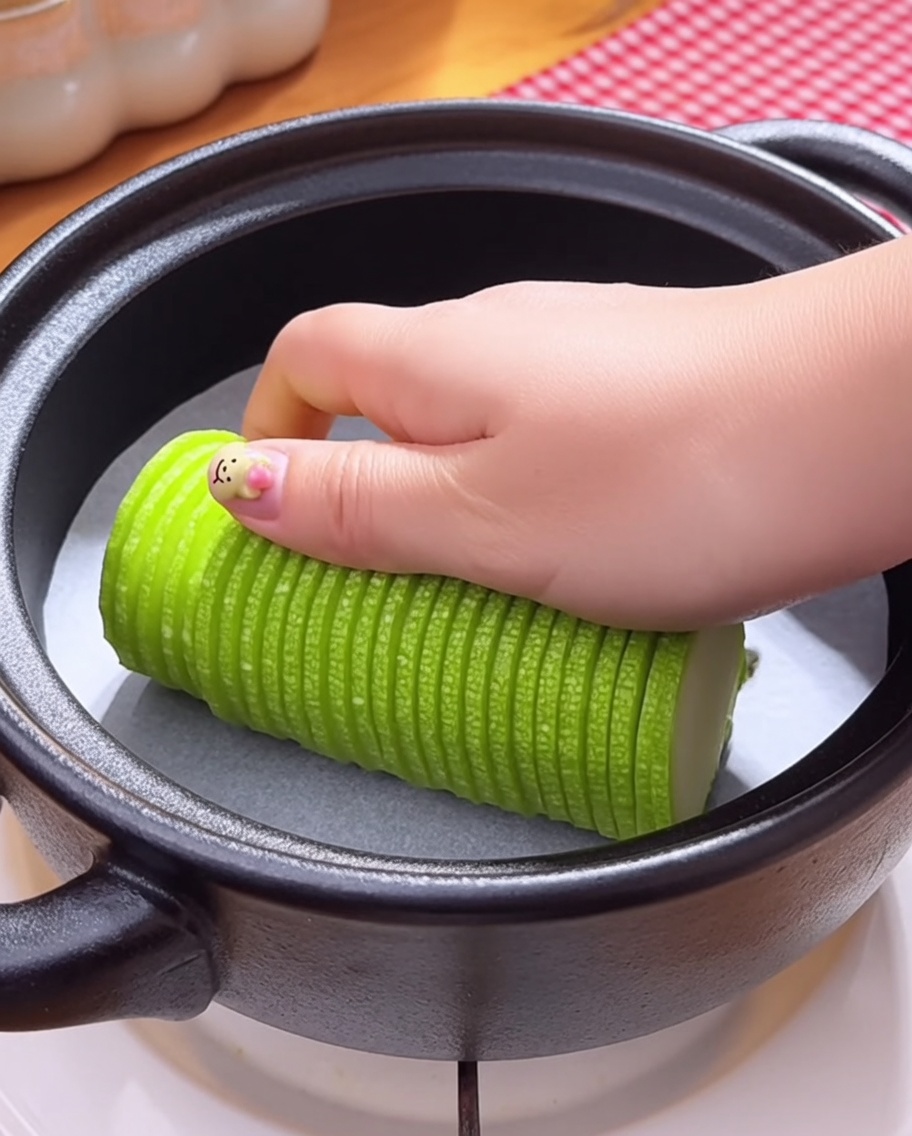
Add a spoonful of red chili paste (gochujang) to the pot for heat and color, and sprinkle in a dash of beef seasoning powder to enhance the umami richness of the broth.
Tip: Adjust the amount of chili paste based on your preferred heat level. - 5Add rice water and boil
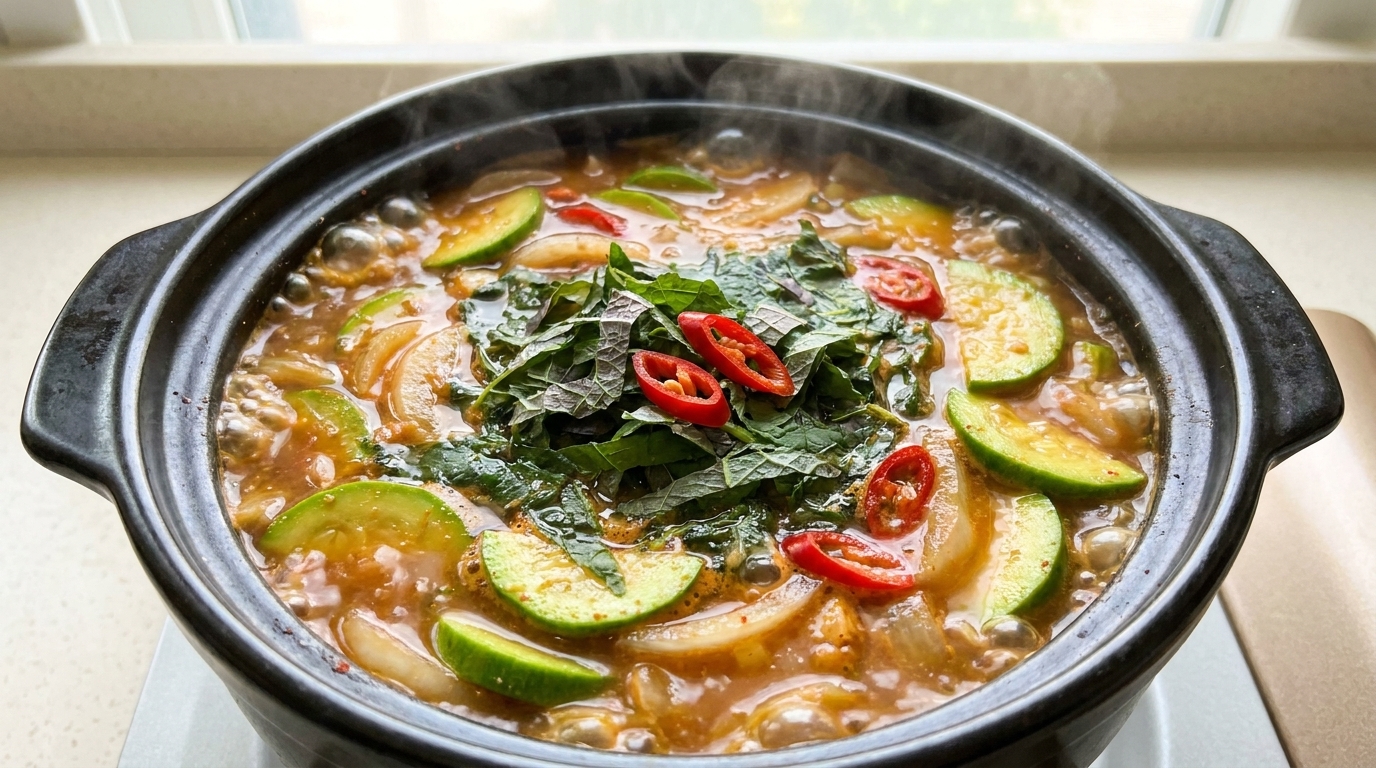
Pour in enough rice water to cover the ingredients, then place the lid on the pot and bring the mixture to a boil over medium-high heat. Using water from rinsing rice helps to thicken and flavor the stew base.
Tip: Rice water is the cloudy water saved from the first or second rinse of white rice. - 6Final garnish and finish
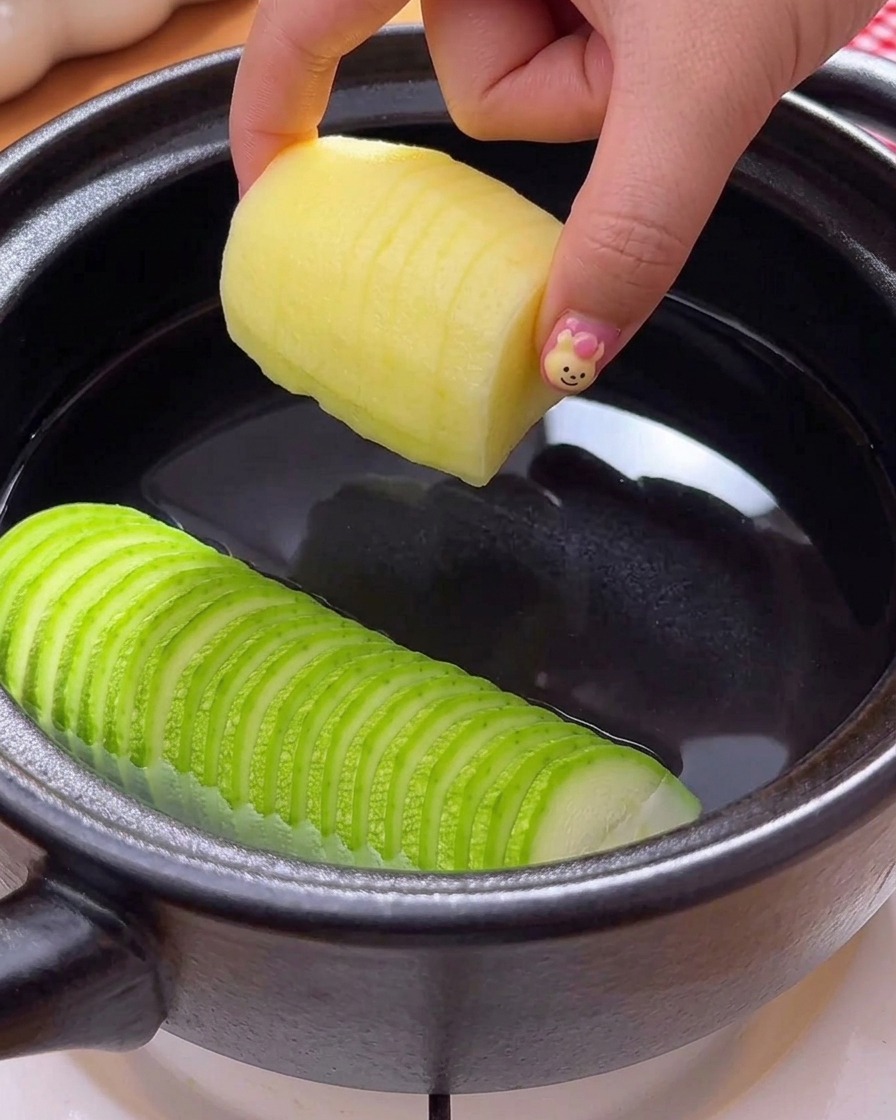
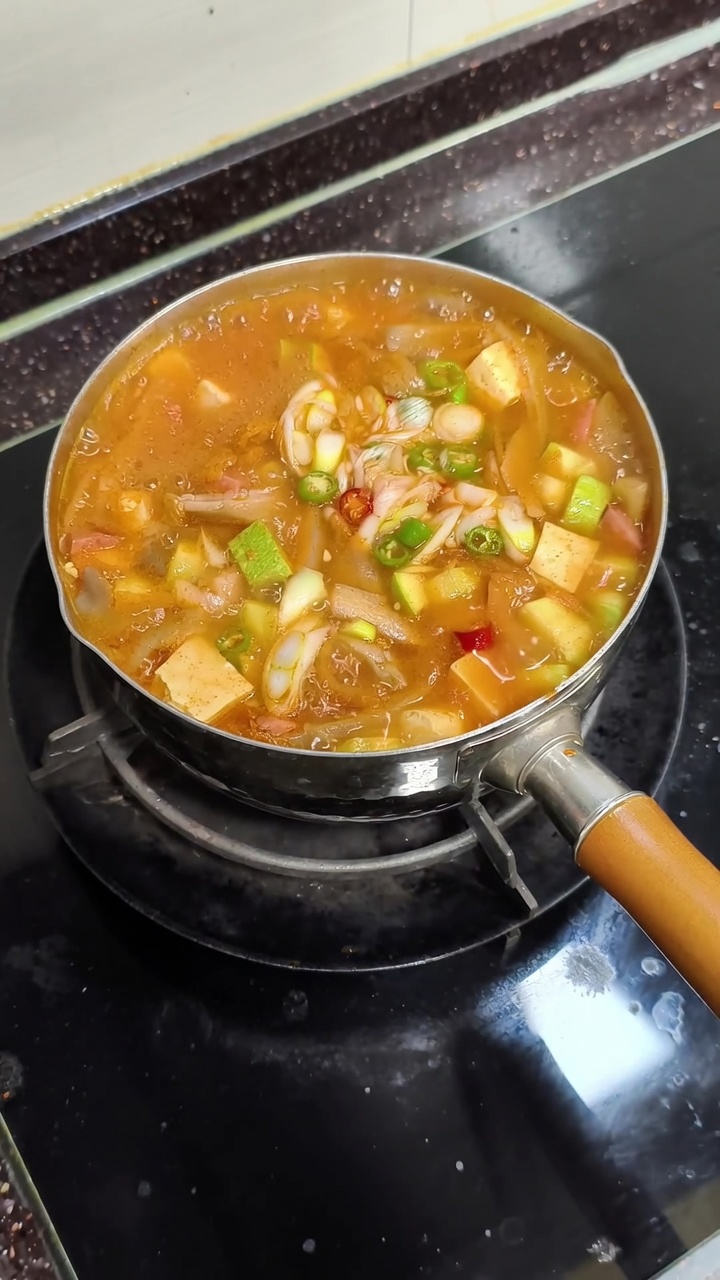
Once the stew is simmering, gently add slices of tofu, a sprinkle of chili powder for extra vibrancy, and the sliced red and green chili peppers. Let it cook briefly until the tofu is heated through.
Tip: Be careful not to stir the stew too vigorously once the tofu is added to keep the pieces intact.