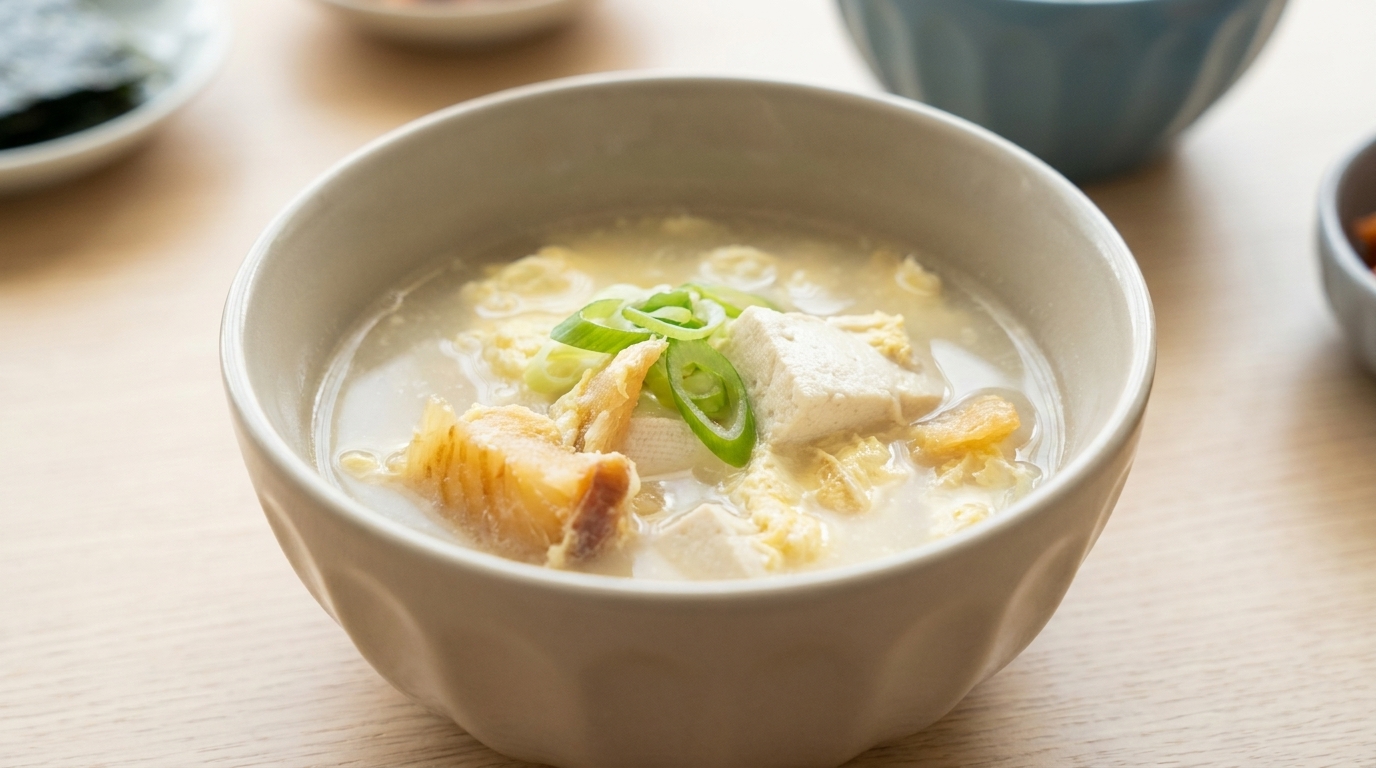
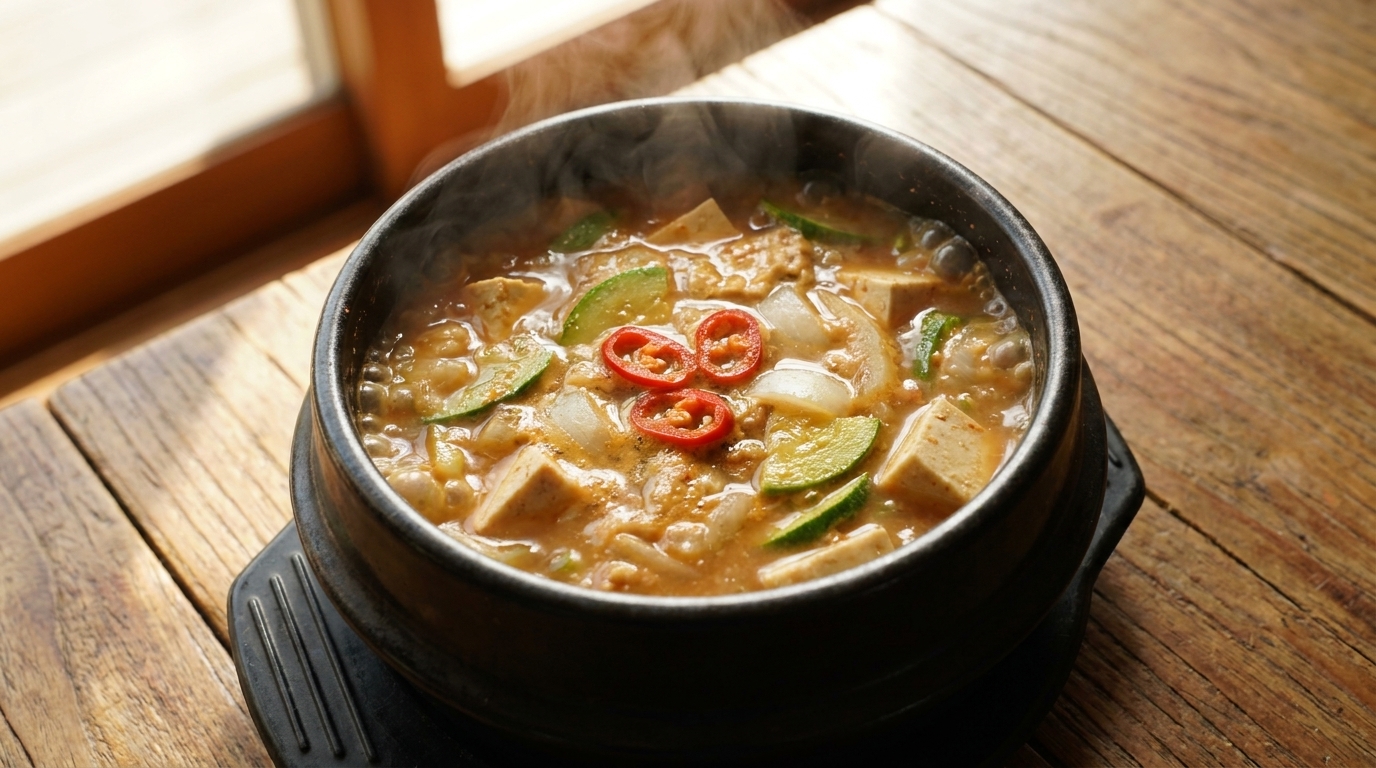
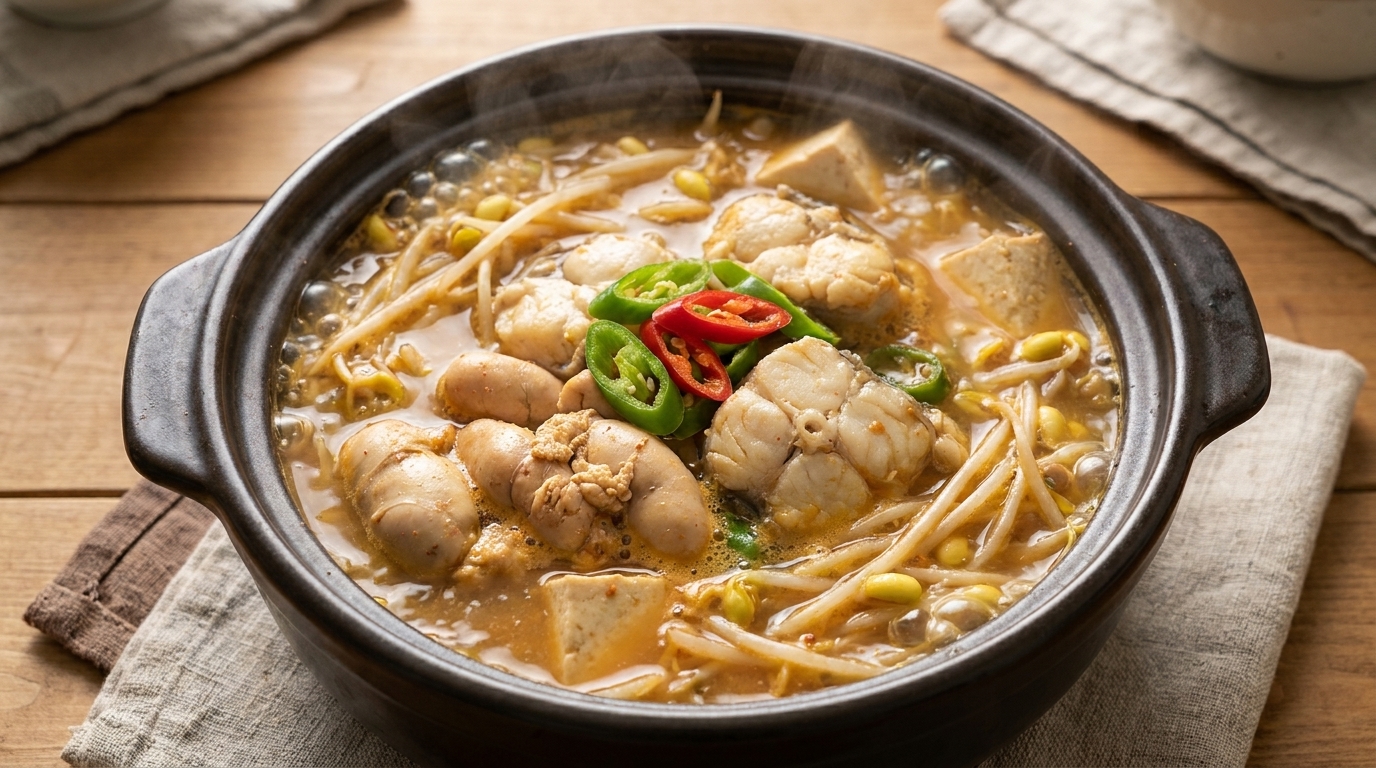
Authentic Korean Doenjang-jjigae (Soybean Paste Stew)
This comforting Korean soybean paste stew is built on a milky rice water broth, enriched with savory pork belly, and loaded with fresh vegetables and tofu. It is a quick, soul-warming classic perfect for any day of the week.
Doenjang-jjigae is a cornerstone of Korean home cooking, defined by its deeply savory and earthy fermented soybean paste broth. Using the third rinse of rice water is a traditional technique that lends a subtle, silky body to the stew, helping the robust flavors of the doenjang and gochujang harmonize beautifully with the fresh vegetables and rich pork.
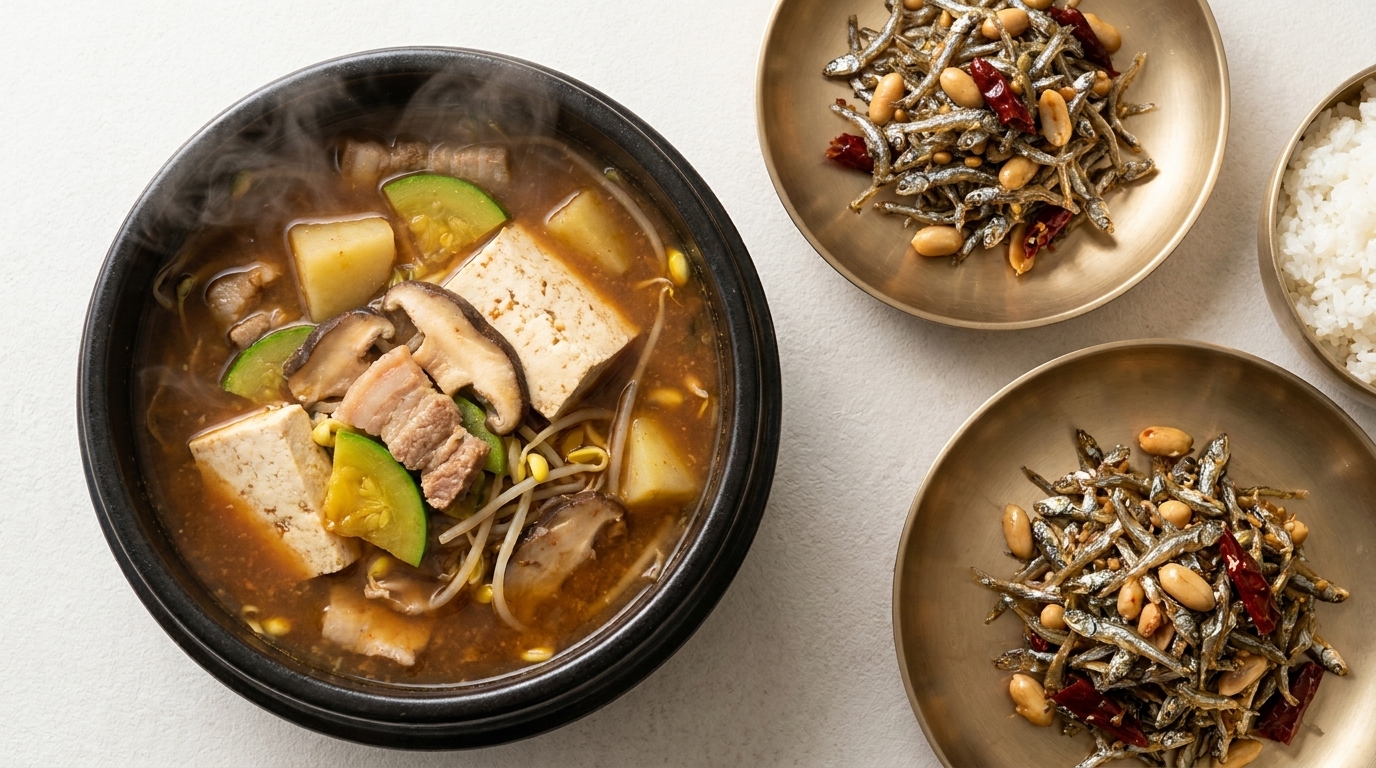
Ingredients
- 3 cups rice water (third rinse)
- 1 tbsp Korean soybean paste (doenjang)
- 1 tbsp Korean chili paste (gochujang)
- 10 slices pork belly
- 1 medium potato, cut into strips
- 3-4 shiitake mushrooms, sliced
- 1/2 block medium-firm tofu, sliced
- 1/2 cup Korean green squash (aehobak) or zucchini, sliced
- 1 handful soybean sprouts
- 2 tsp beef powder seasoning (dasida)
- to garnish green and red chili rings
Instructions
- 1Prepare the soup base

Pour the third rinse of rice water into your cooking pot to serve as the soup base. This starch-enriched water provides a mild, silky body that helps the flavors of the soybean and chili pastes integrate beautifully.
Tip: Using the third rinse of rice water is a classic Korean cooking technique that adds subtle body and depth to stews. - 2Season the broth

Add one spoonful of Korean soybean paste (doenjang) and one spoonful of Korean chili paste (gochujang) into the rice water. Stir until the pastes are fully dissolved and the liquid turns a rich, reddish-brown color.
Tip: Ensure the pastes are thoroughly dissolved in the water before adding ingredients to prevent clumps. - 3Add the pork belly
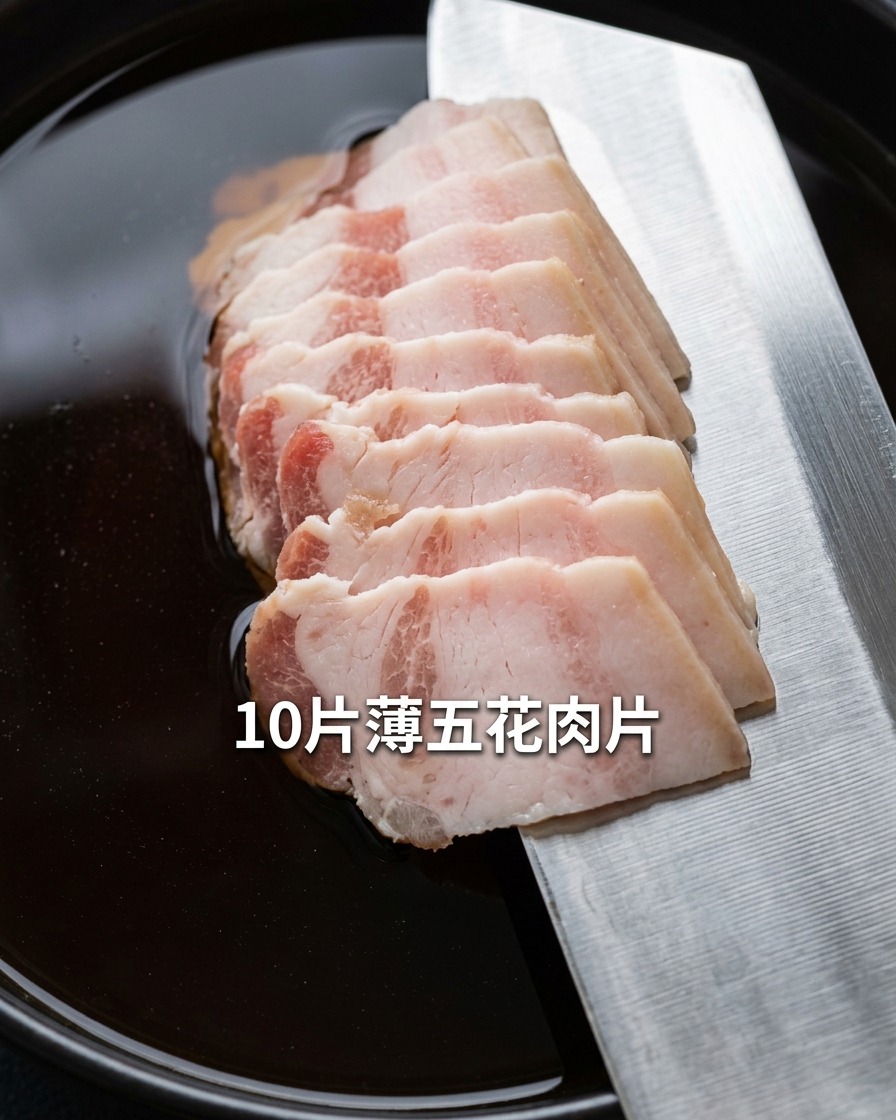
Add ten slices of pork belly into the seasoned broth. The fat from the pork belly will render as it cooks, enriching the stew and providing a savory, meaty foundation for the vegetables.
Tip: Using pork belly adds essential fat; feel free to adjust the number of slices based on your preference for richness. - 4Add potatoes

Gently add the potato strips into the pot. As the potatoes simmer, they will soften and release starch into the broth, which helps to thicken the stew and brings a hearty, comforting texture to the dish.
Tip: Cut the potatoes into uniform strips to ensure they cook evenly within the 6-minute window. - 5Add shiitake mushrooms
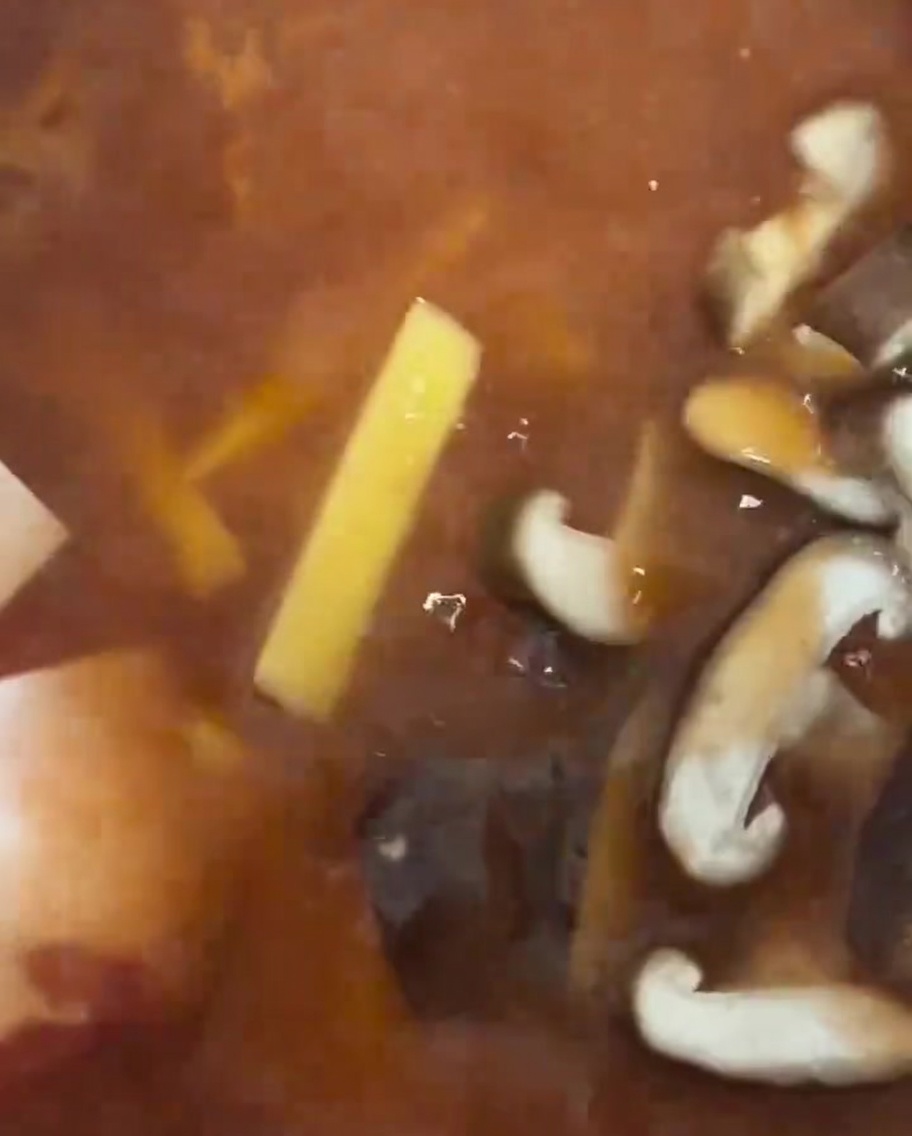
Add the sliced shiitake mushrooms to the pot. These mushrooms will soak up the savory, spicy broth while providing a firm, meaty texture that complements the tender pork belly.
Tip: Shiitake mushrooms add a significant umami boost to the soup; keep slices about a quarter-inch thick for the best texture. - 6Add tofu

Carefully place the slices of tofu into the pot. Tofu is a great final addition as it absorbs the flavors of the broth quickly without falling apart if handled gently during the remaining cook time.
Tip: Use firm or medium-firm tofu to ensure it holds its shape well throughout the cooking process. - 7Add sliced squash
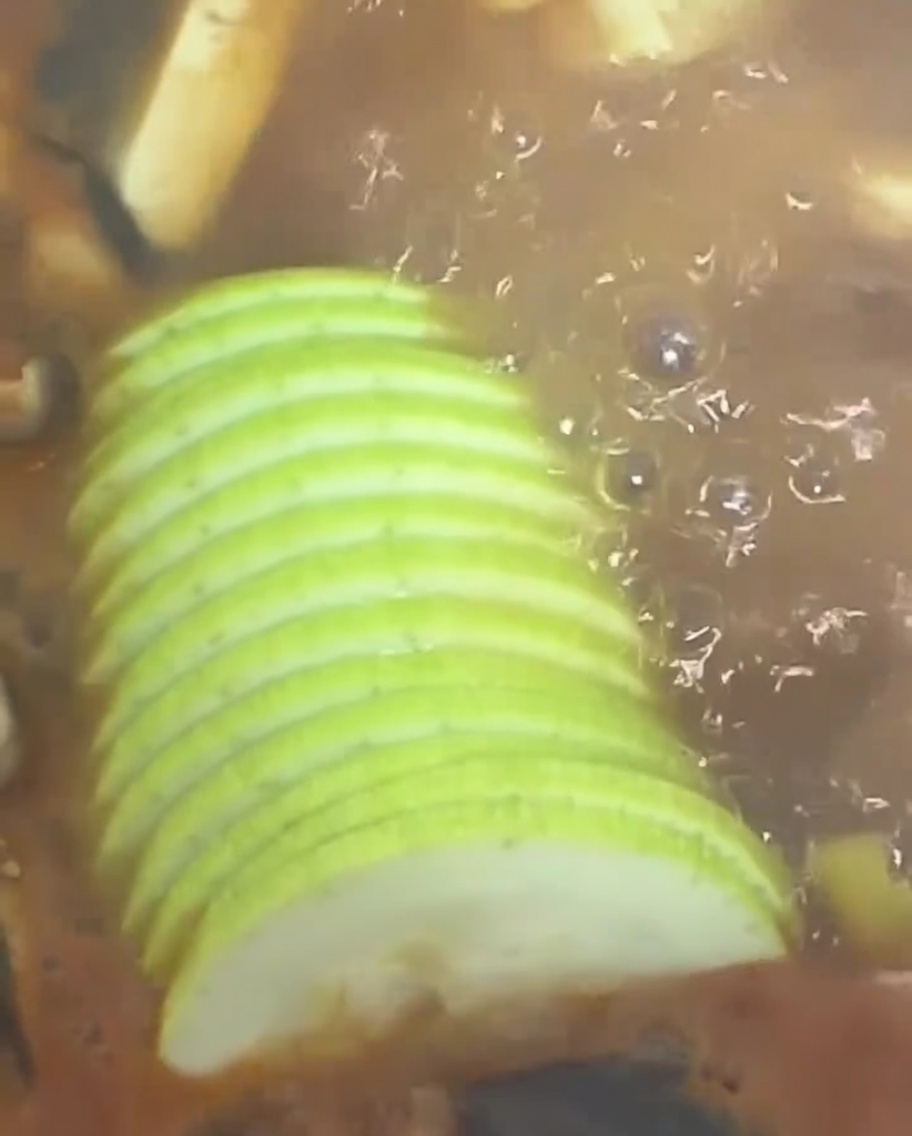
Once the broth is boiling, carefully add the sliced squash into the pot. This allows the squash to cook until tender, absorbing the flavors of the soybean and chili paste broth.
Tip: Do not stir too vigorously after adding the squash to keep the slices intact. - 8Add soybean sprouts
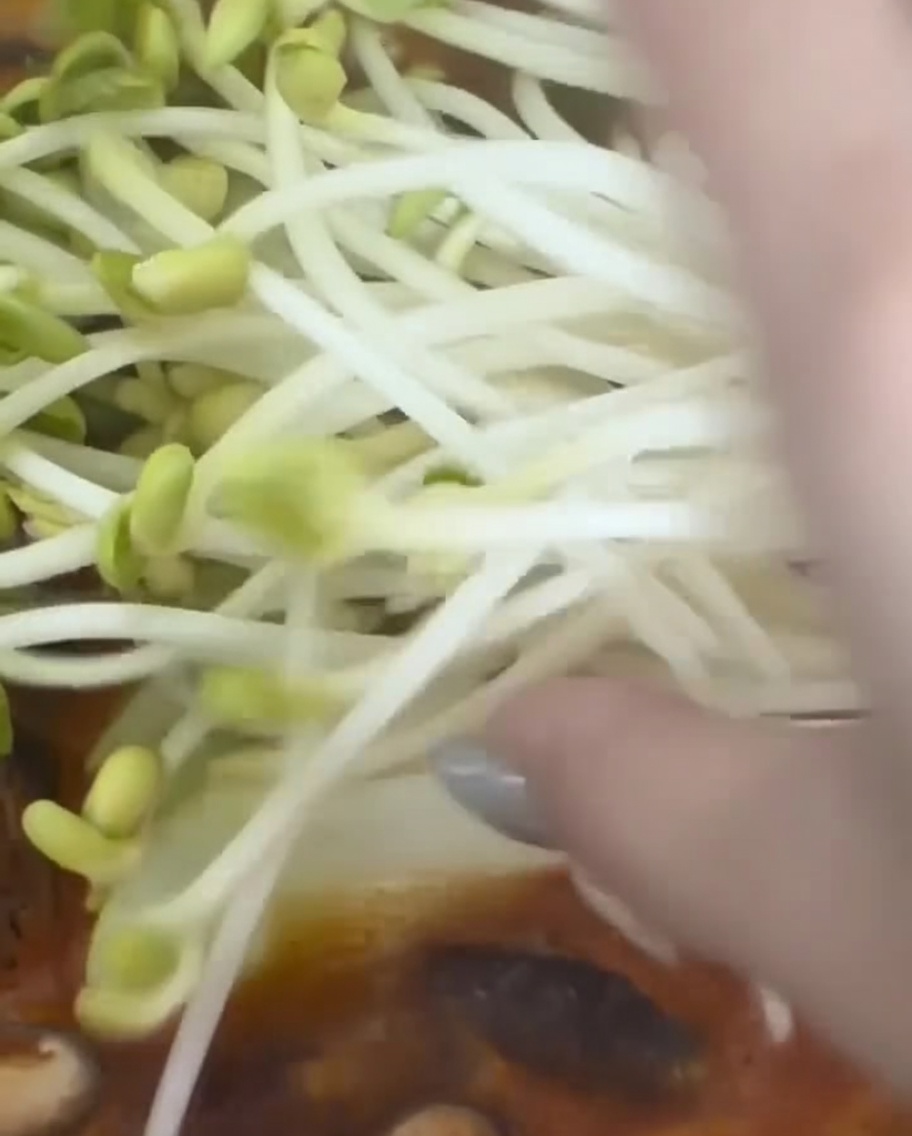
Follow the squash by adding fresh soybean sprouts to the boiling stew. These provide a crisp texture and a fresh, nutty flavor that balances the richness of the pork and soybean paste.
Tip: Ensure the sprouts are fully submerged in the broth to cook evenly. - 9Season with beef powder

Stir in two spoons of beef powder seasoning to enhance the depth of the broth. Adjust the amount according to your personal taste to achieve the desired level of savoriness.
Tip: Add the powder gradually and taste the broth before adding the full amount to avoid over-seasoning.