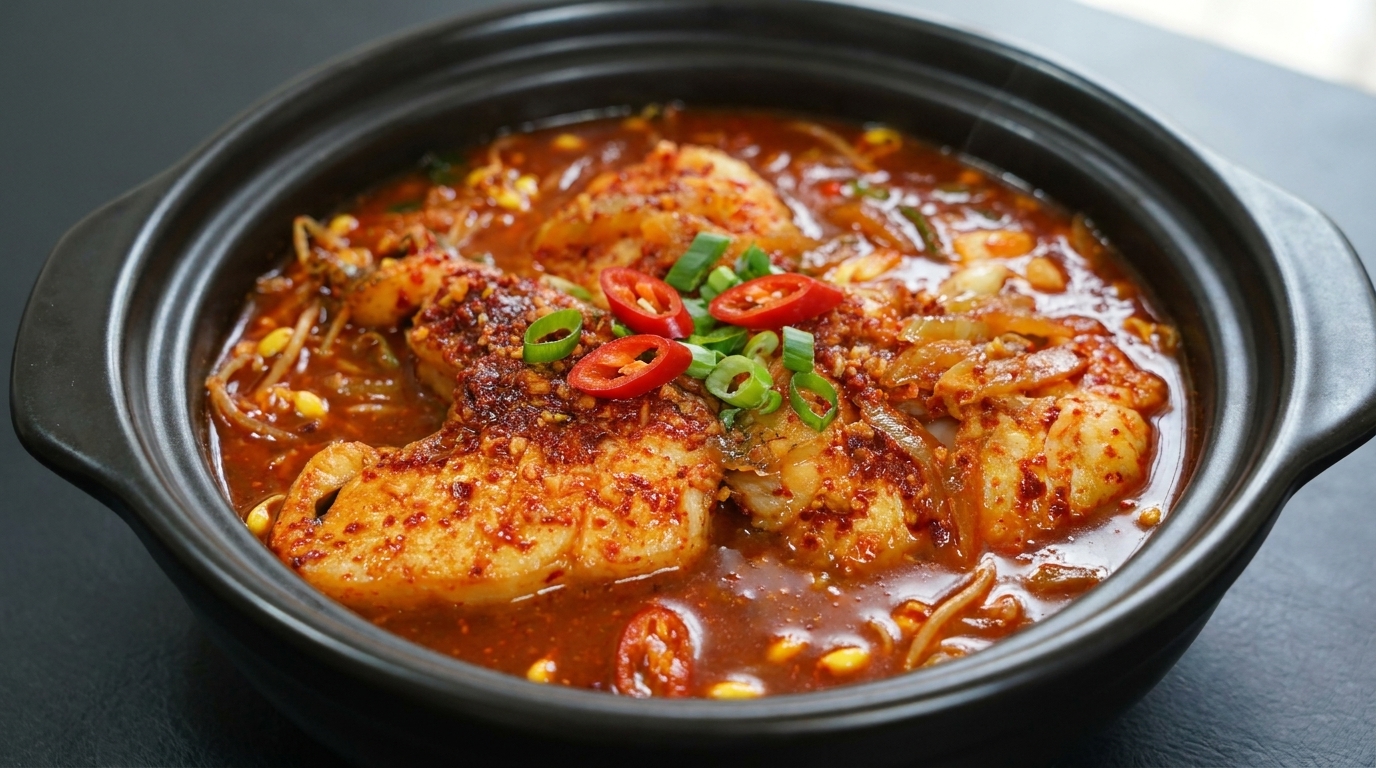
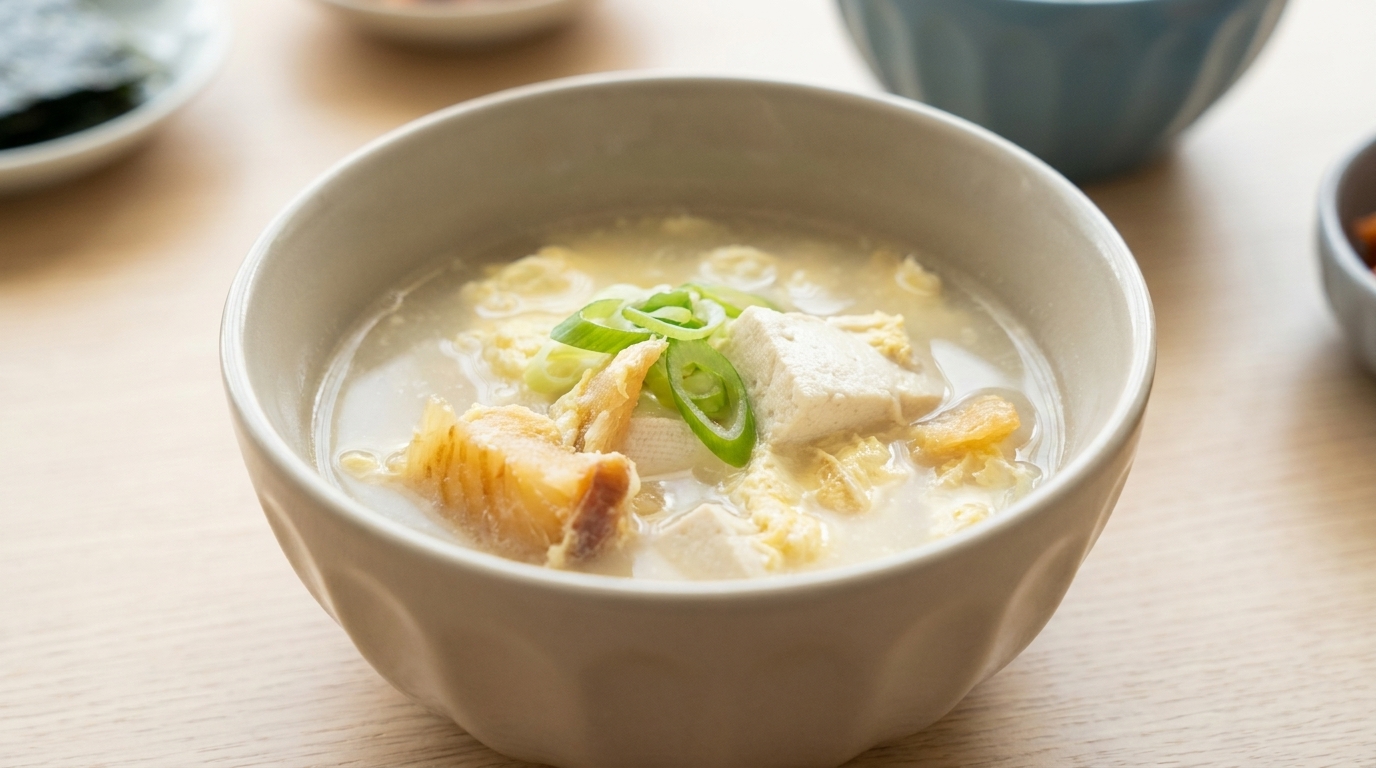
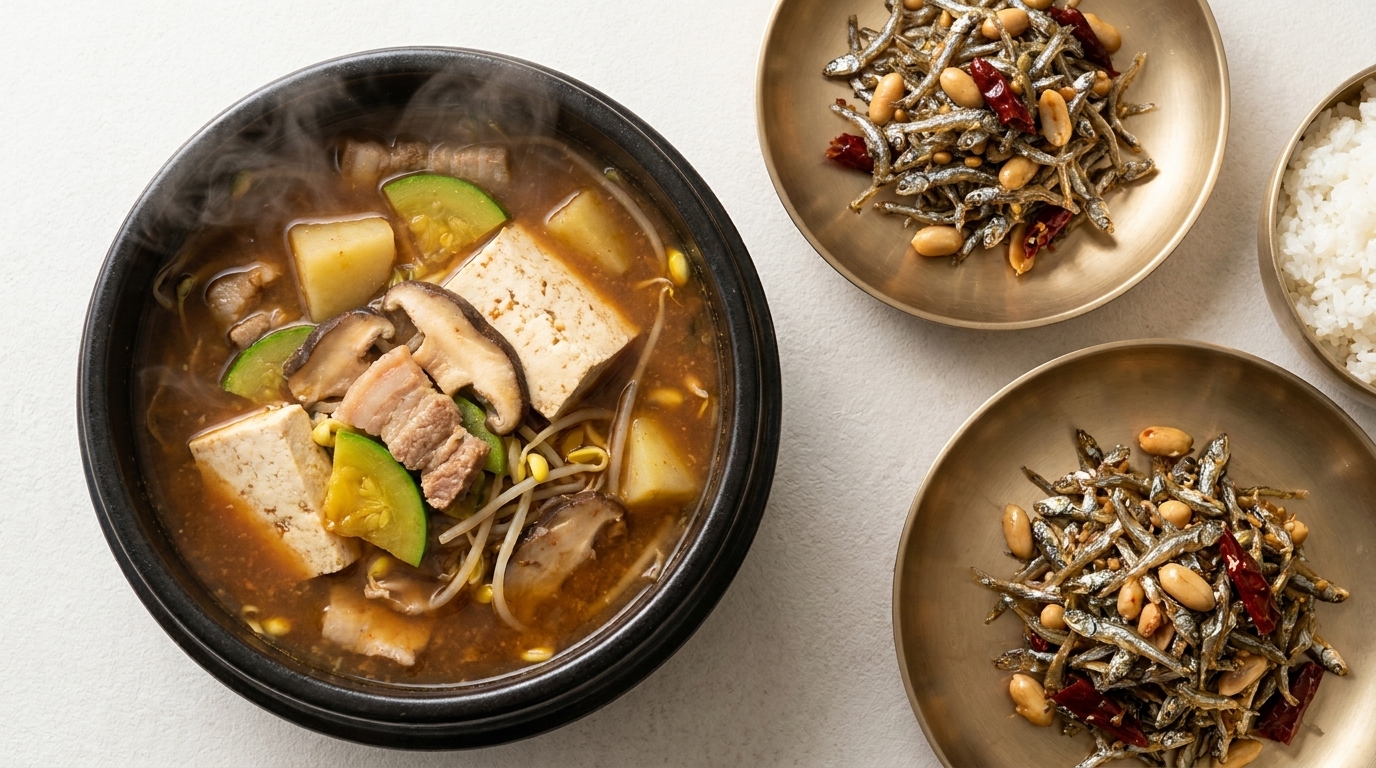
Authentic Korean Doenjang-jjigae (Soybean Paste Stew)
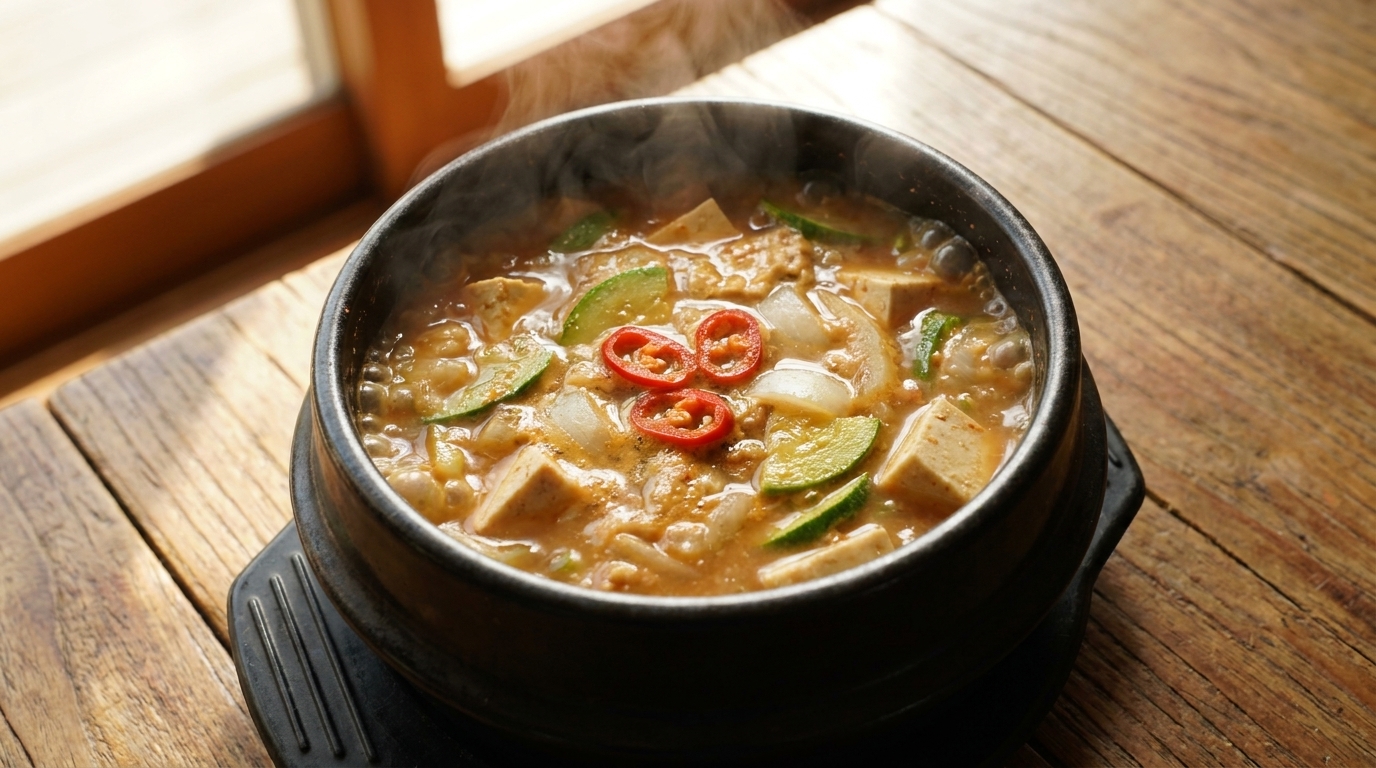
A quintessential Korean comfort food, this robust soybean paste stew features a deeply savory anchovy-kelp broth packed with fresh shrimp, tender zucchini, and silky tofu.
Doenjang-jjigae is a foundational staple in Korean home cooking, celebrated for its complex, earthy depth. The soul of the dish lies in its broth and the quality of the fermented soybean paste, creating a comforting, savory profile that pairs perfectly with a bowl of warm rice.
Ingredients
- 7 dried anchovies
- 1 piece dried kelp
- 4 fresh shrimp
- 1/2 onion
- 4 mushrooms
- 1/2 zucchini
- 2 tbsp Korean soybean paste (doenjang)
- 1 tbsp minced garlic
- 1/2 block tofu
- optional red chili slices
Instructions
- 1Prepare the anchovy broth
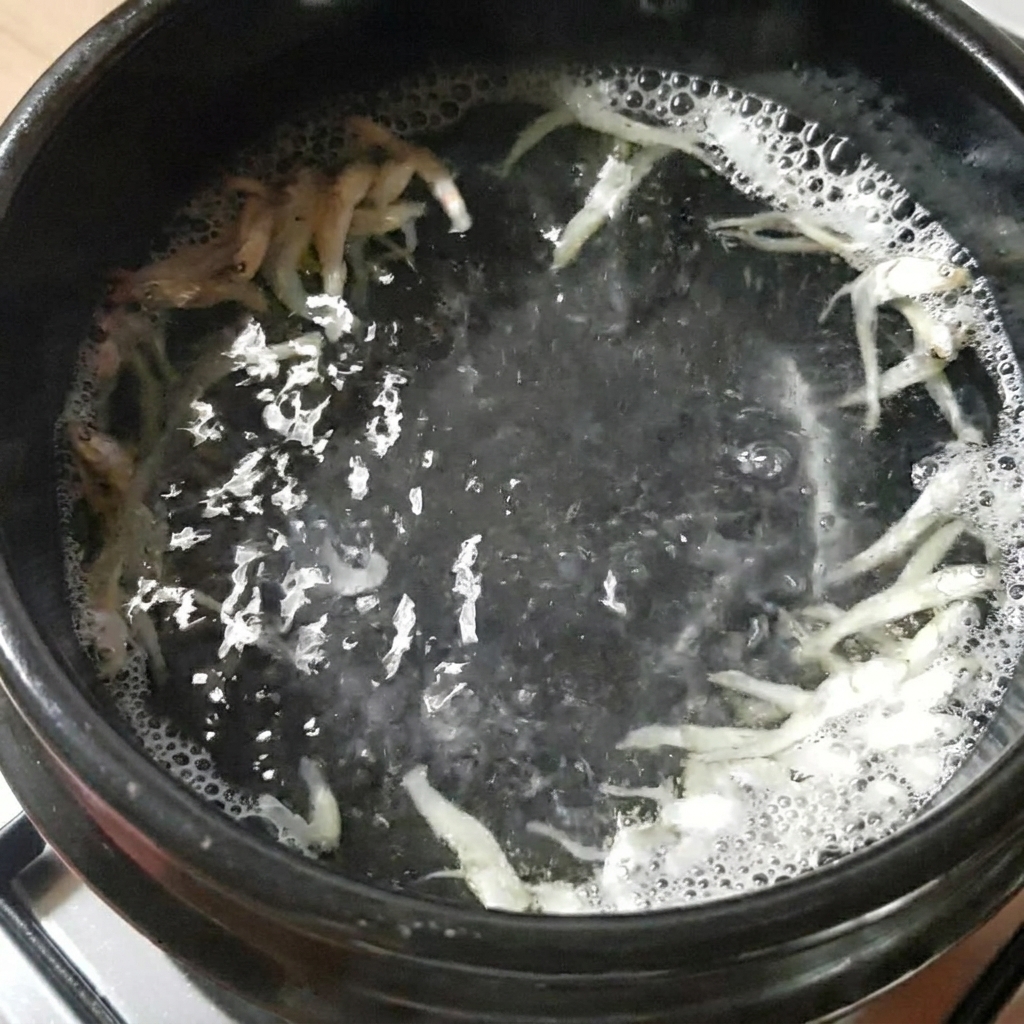
Place dried anchovies and dried kelp into a black stone pot filled with water. Bring the mixture to a boil and let it simmer for 10 minutes to extract the deep, savory flavors essential for the stew base, then remove the kelp.
Tip: Do not skip the kelp removal; boiling it too long can make the broth bitter. - 2Add fresh shrimp
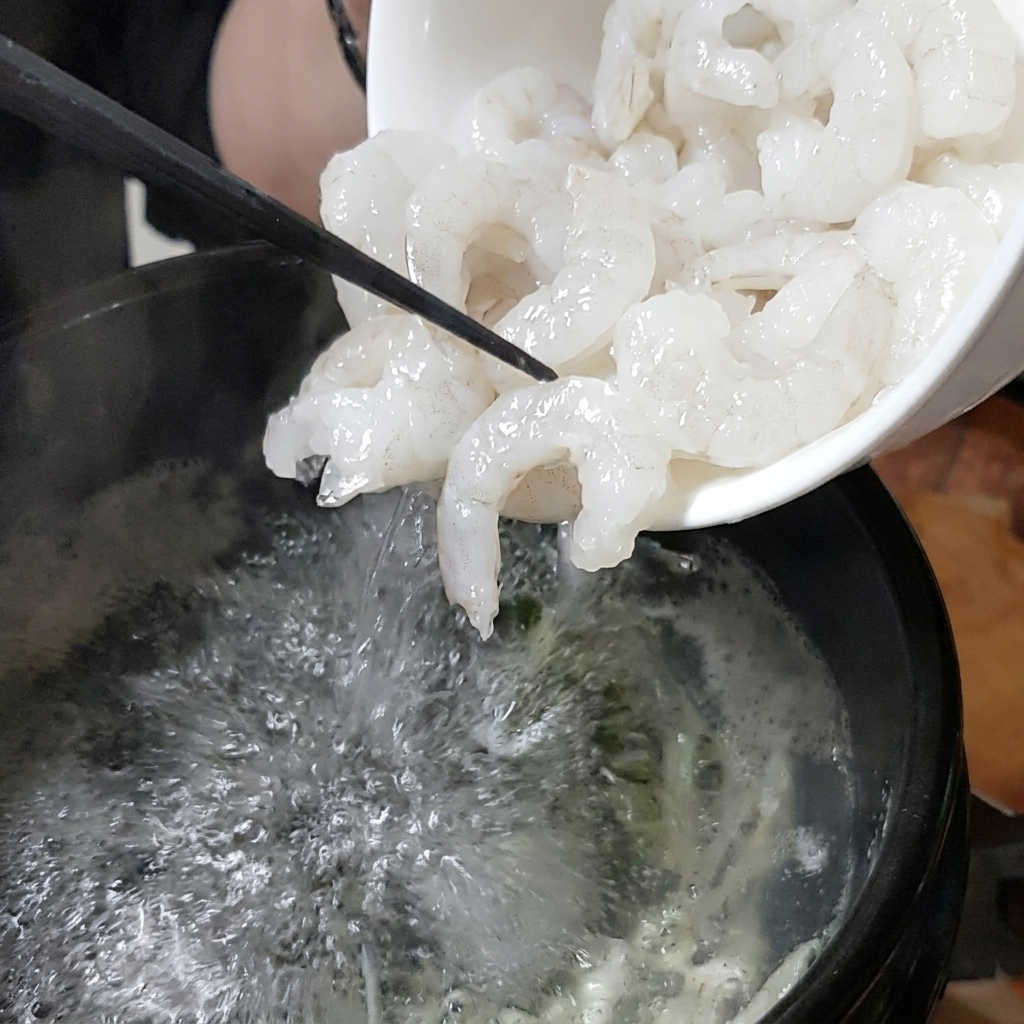
Once the broth has developed its base flavor, add fresh shrimp into the boiling liquid. This adds a delicate sweetness that balances the saltiness of the anchovies.
Tip: Use fresh, peeled shrimp for the best texture and flavor infusion. - 3Incorporate vegetables
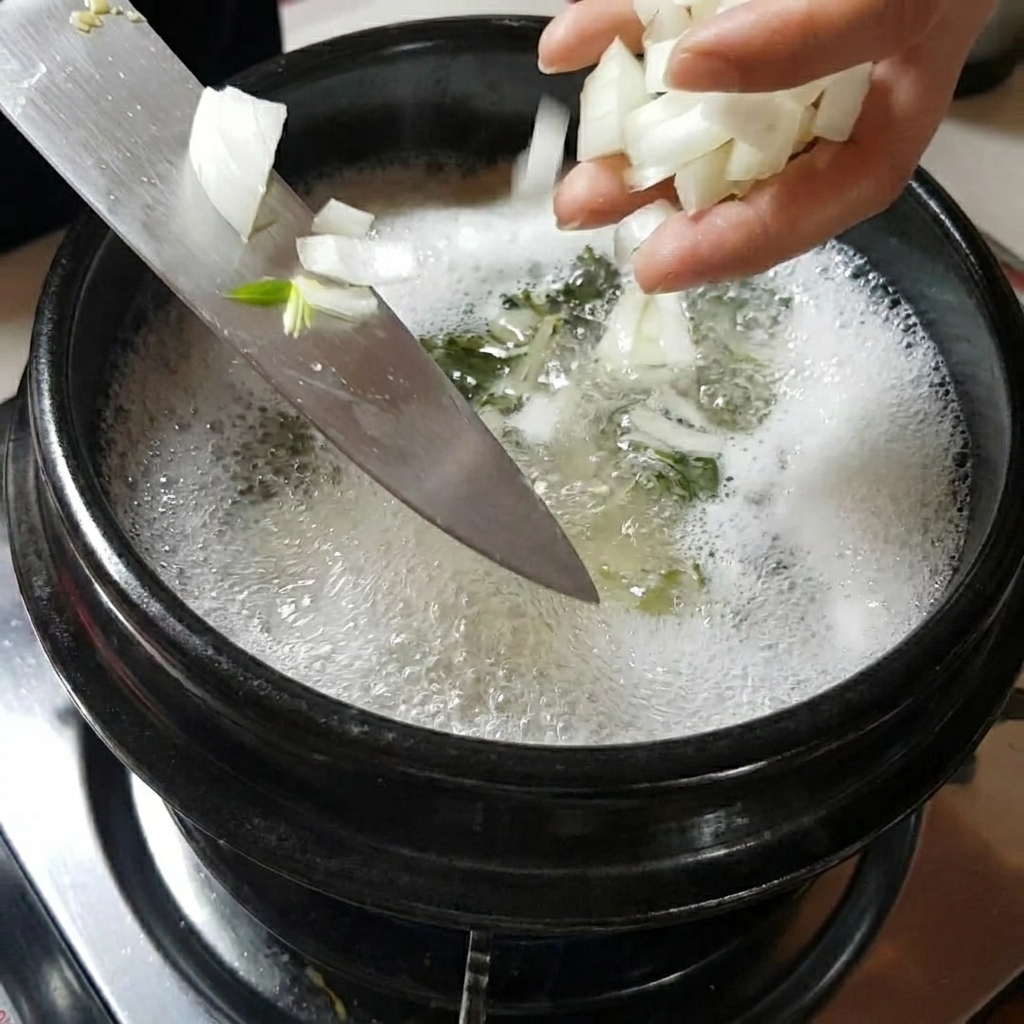
Add the sliced onions and mushrooms to the boiling broth. These ingredients will soften and release their umami flavors into the soup.
Tip: Slice your vegetables uniformly to ensure they cook at the same rate. - 4Add zucchini
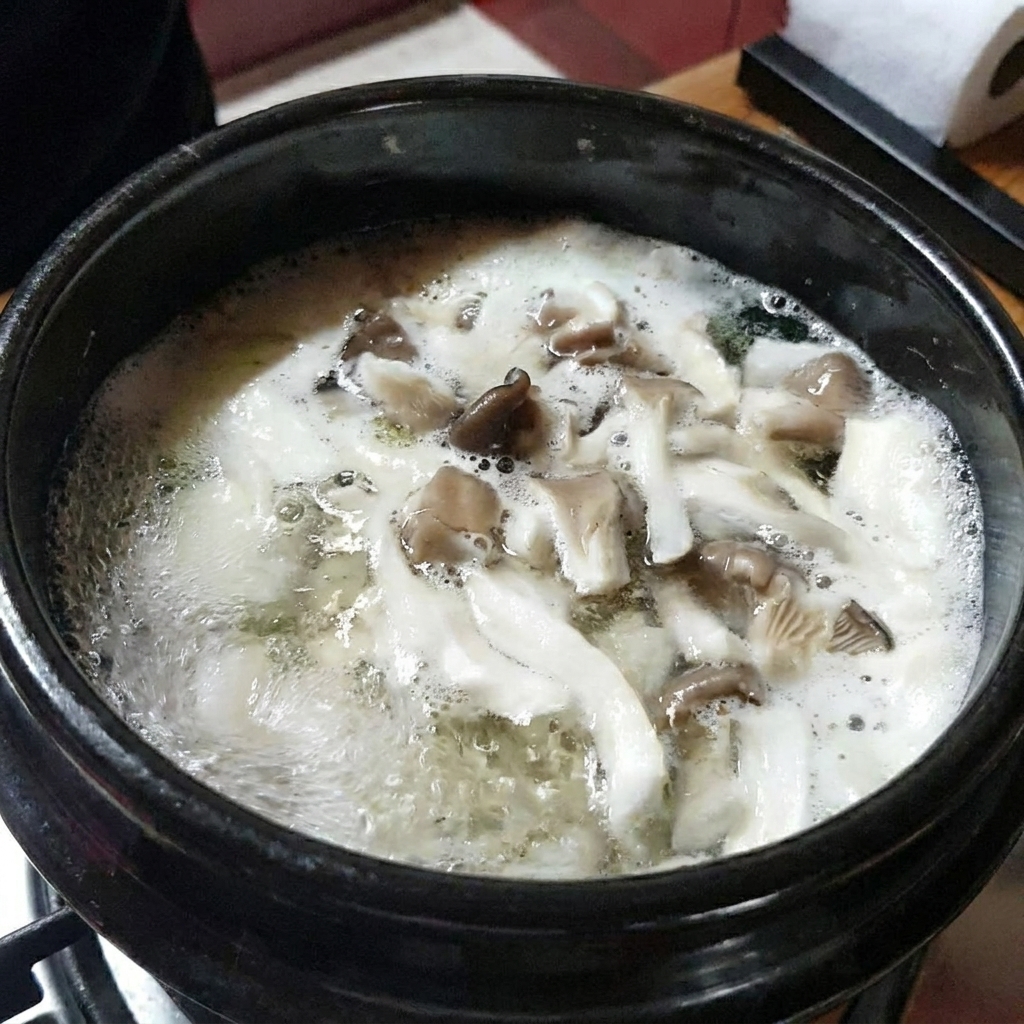
Gently add the sliced zucchini into the stew. Zucchini adds a pleasant texture and sweetness, making the broth even more hearty.
Tip: Be careful not to overcook the zucchini so it maintains a slight crunch. - 5Whisk in soybean paste
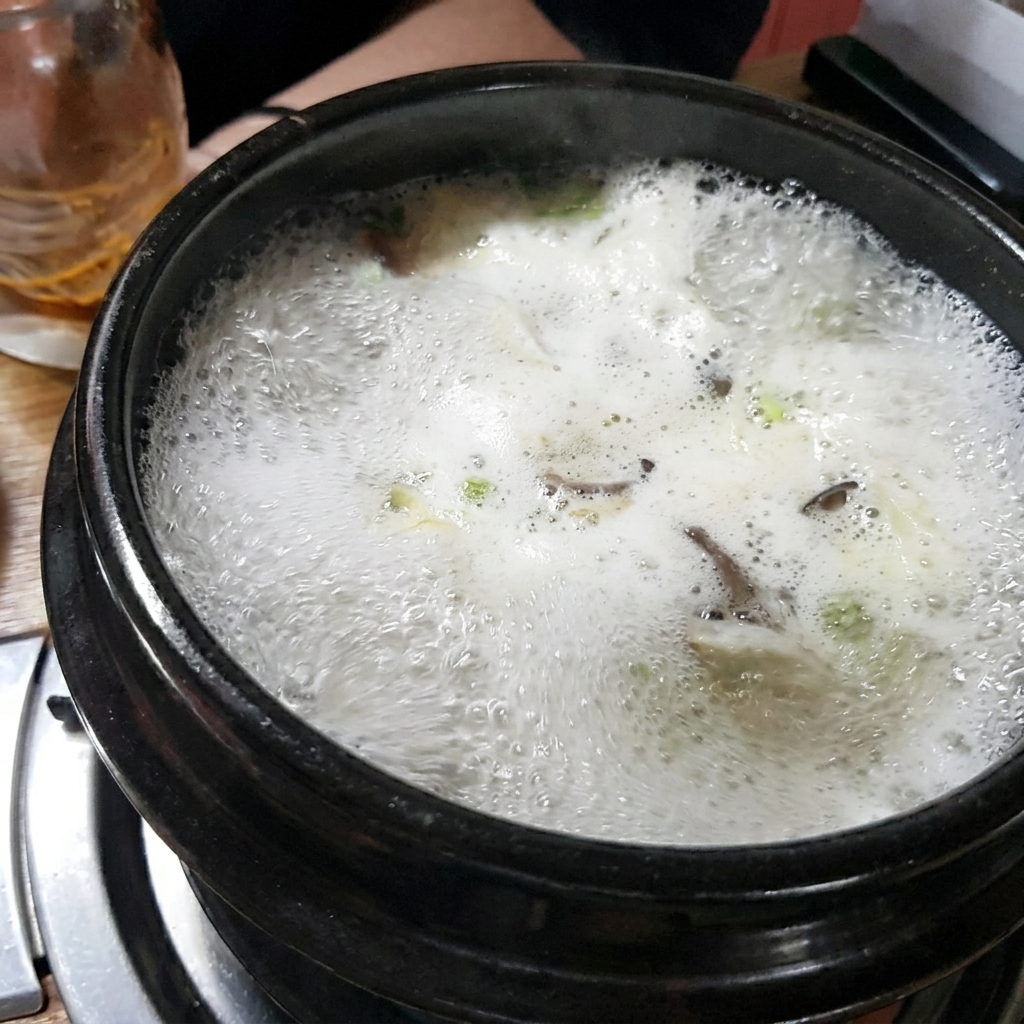
Add a generous spoonful of soybean paste (doenjang) into the broth. Use a spoon or ladle to thoroughly dissolve the paste into the liquid until the color becomes a rich brown.
Tip: Ensure the paste is fully incorporated for a smooth, consistent soup base. - 6Season with minced garlic
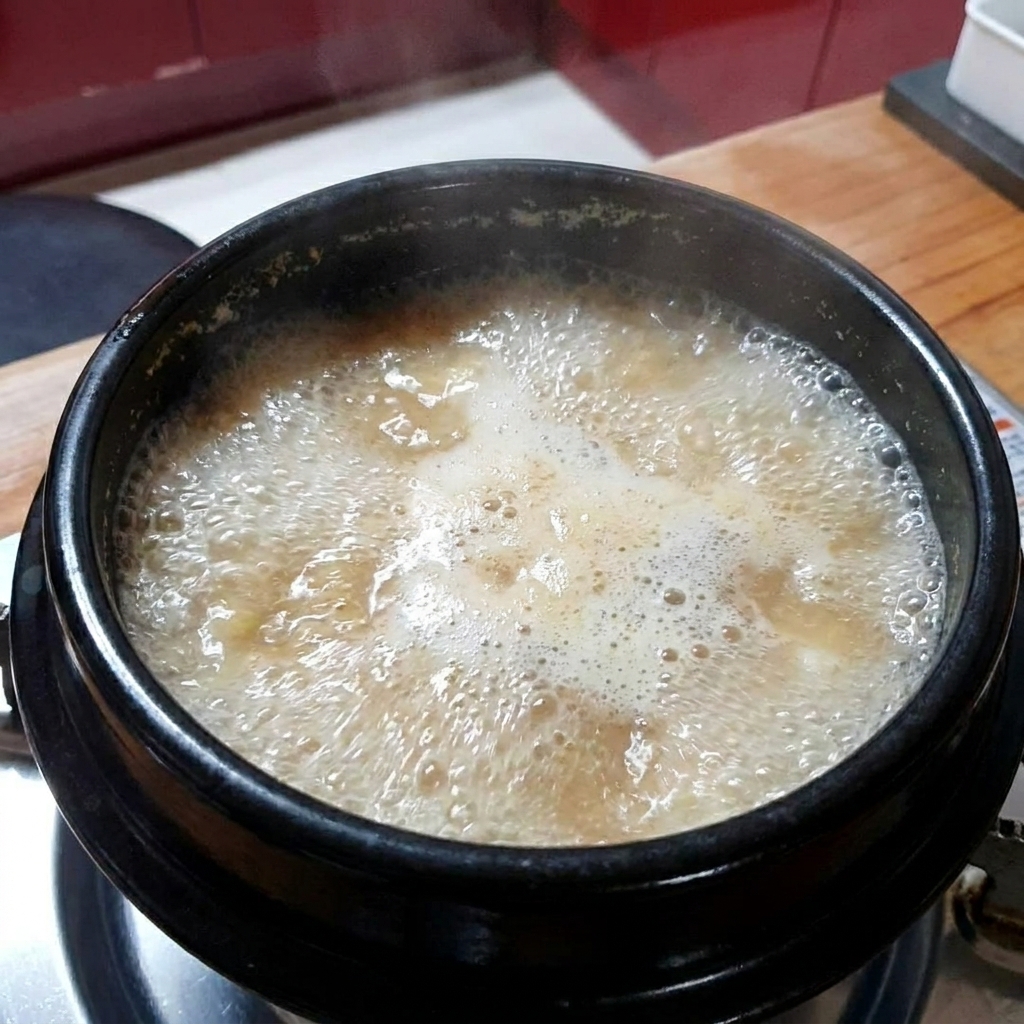
Finish the seasoning by adding minced garlic to the stew. This provides an aromatic punch that elevates the savory depth of the doenjang-jjigae.
Tip: Freshly minced garlic is preferred over pre-minced for better fragrance. - 7Add tofu to the stew
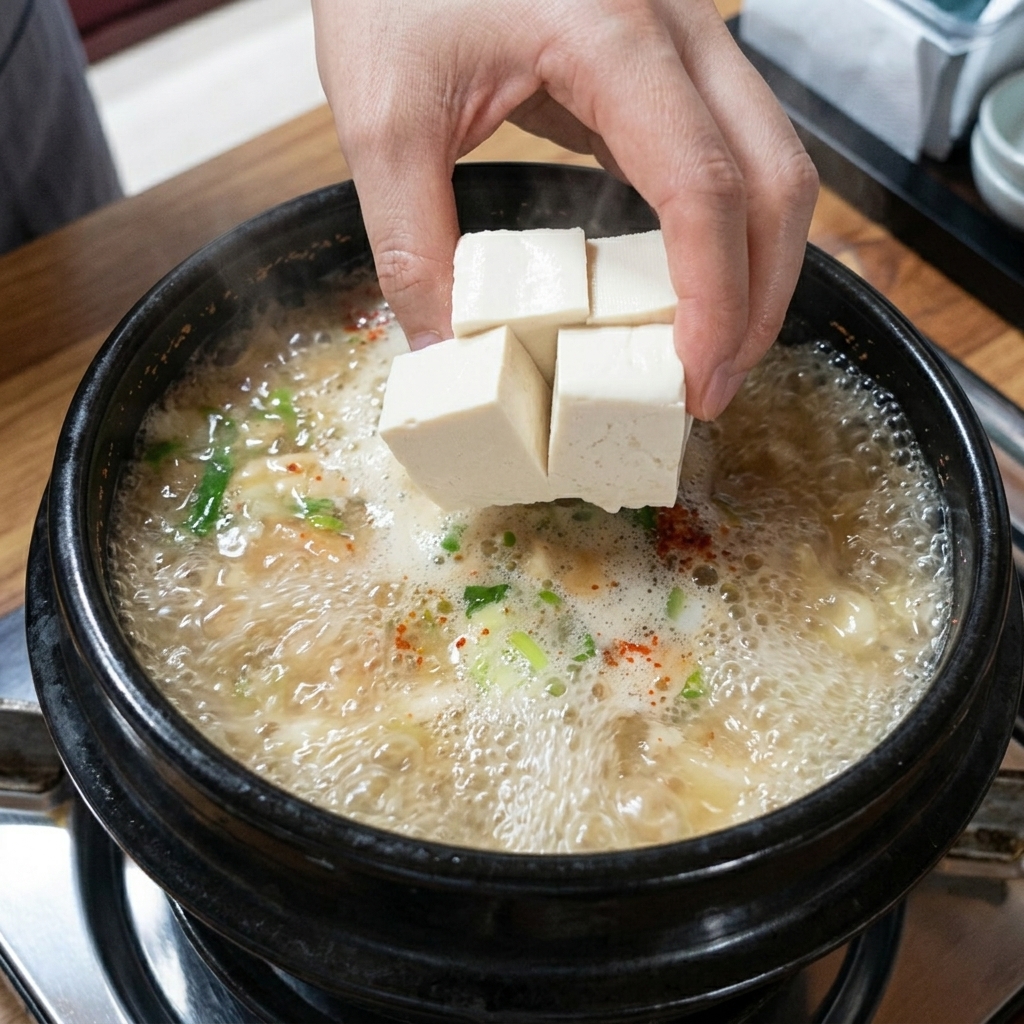
Gently place the sliced tofu cubes into the boiling doenjang-jjigae. This is one of the final steps before removing the pot from the heat, ensuring the tofu is warmed through without breaking apart.
Tip: Be careful when stirring after adding the tofu to keep the cubes intact.