Steamed Cured Pork Ribs
Fermented Black Beans and Chili
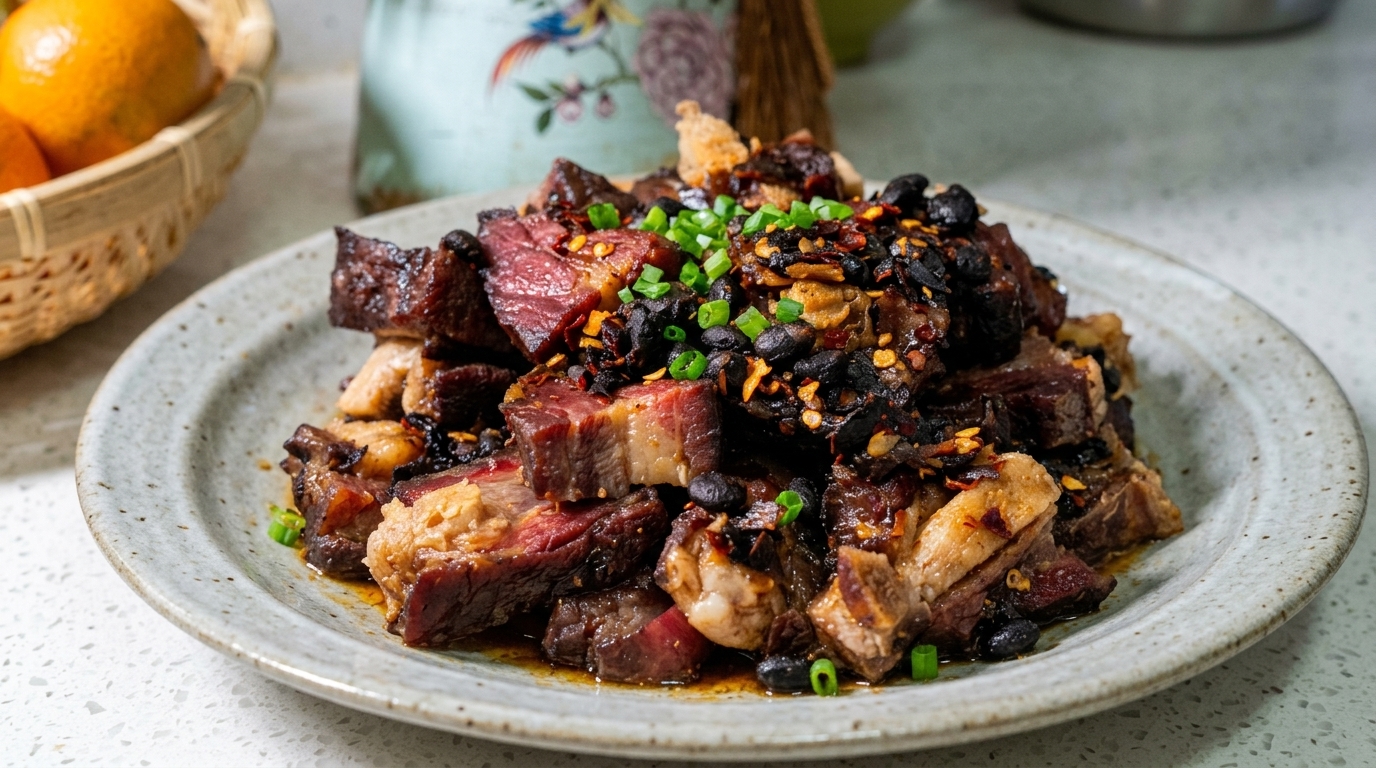
Tender cured pork ribs steamed to perfection with savory fermented black beans and spicy chili flakes. A deeply aromatic and rich classic.
Steamed cured pork ribs with fermented black beans is a beloved comfort dish in Hunan and Cantonese cuisine, celebrated for its intense depth of flavor. Curing the meat infuses it with a deep, savory saltiness, which is beautifully balanced by the earthy pungency of fermented black beans and a kick of dried chili. Traditionally steamed until the meat effortlessly pulls away from the bone, this dish is a quintessential showcase of rustic, soul-warming home cooking.
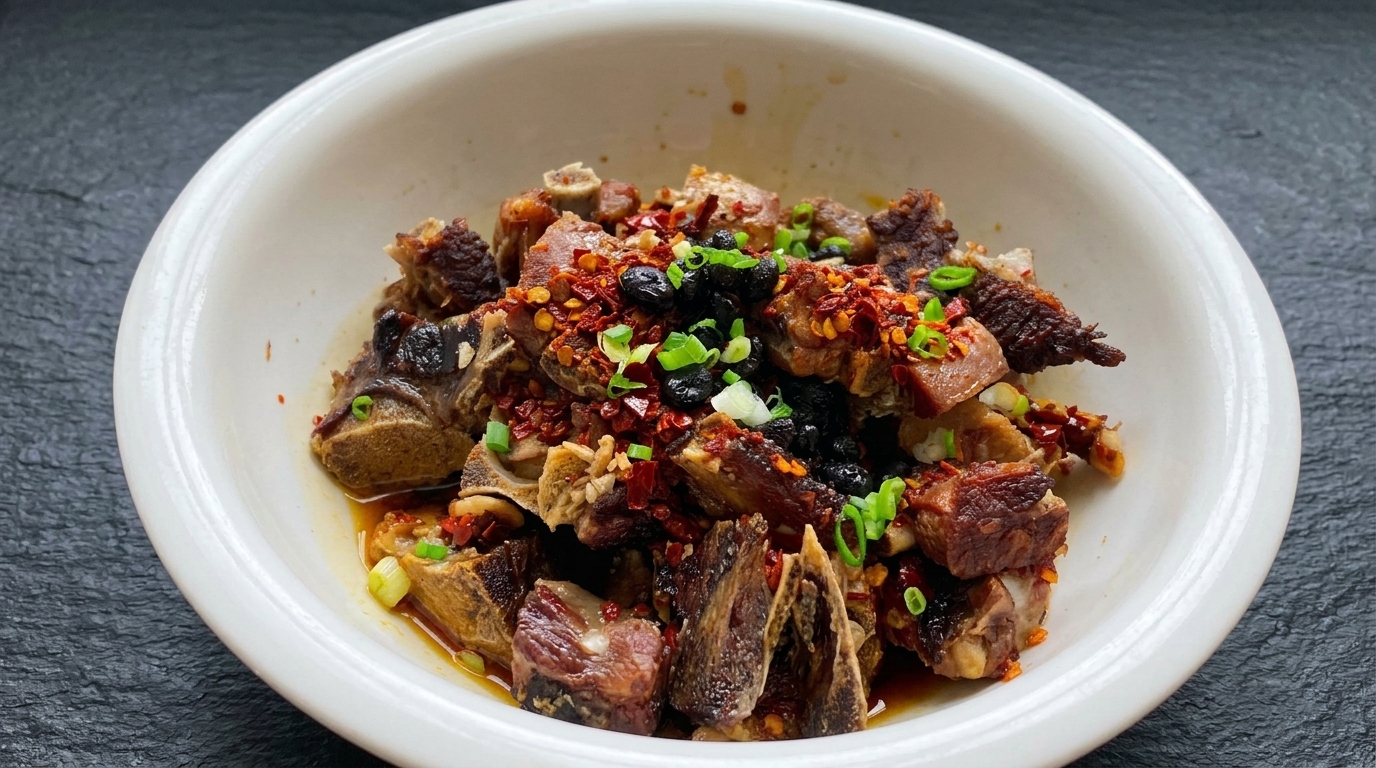
Ingredients
- 500 g cured pork ribs
- 2 stalks green onions
- 2 tbsp camellia oil
- 1 tbsp high-proof white liquor
- 0.5 tsp MSG
- 2 tbsp red dried chili flakes
- 18 grains Liuyang fermented black beans
- 1 tbsp soy sauce
- 2 tbsp water
- 1 tsp white vinegar
Instructions
- 1Chop the cured ribs
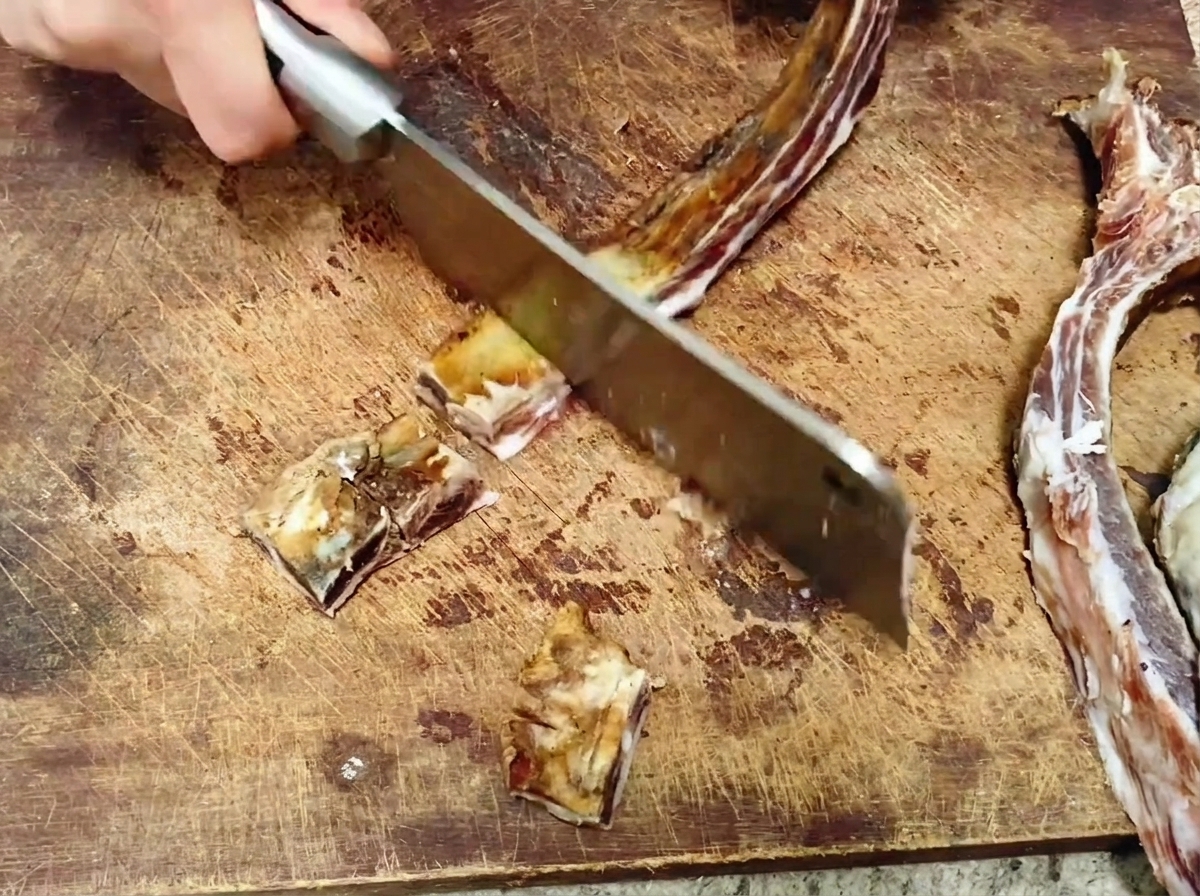
Use a heavy cleaver to chop the cured pork ribs into small, bite-sized chunks on a sturdy wooden cutting board.
Tip: Cured meats are quite tough; using a heavy cleaver and a thick cutting board will make chopping much easier. - 2Soak the cured ribs
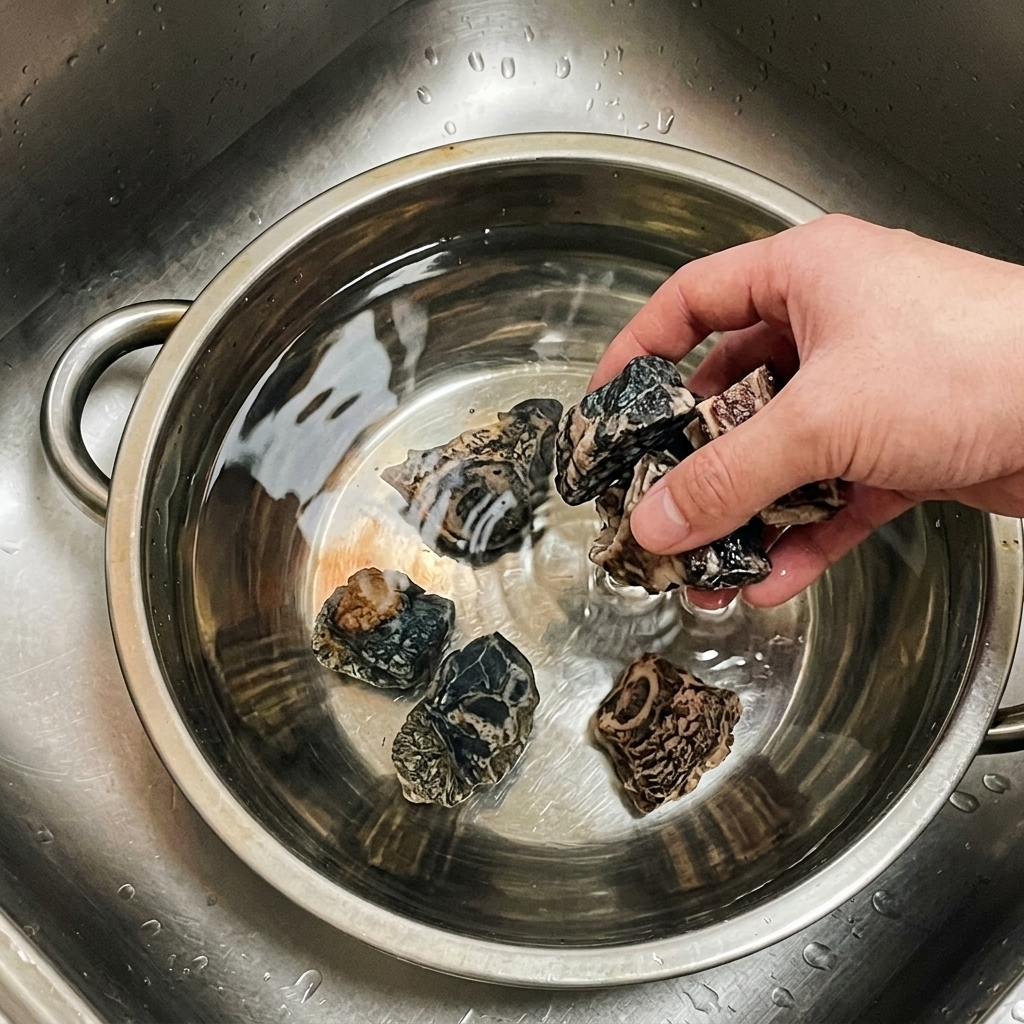
Place the chopped cured pork ribs into a large stainless steel bowl filled with clear cold water. Soak them for more than two hours to draw out the excess saltiness and rehydrate the meat.
Tip: Chopping the ribs before soaking allows the water to penetrate more effectively and remove more salt. - 3Chop the green onions
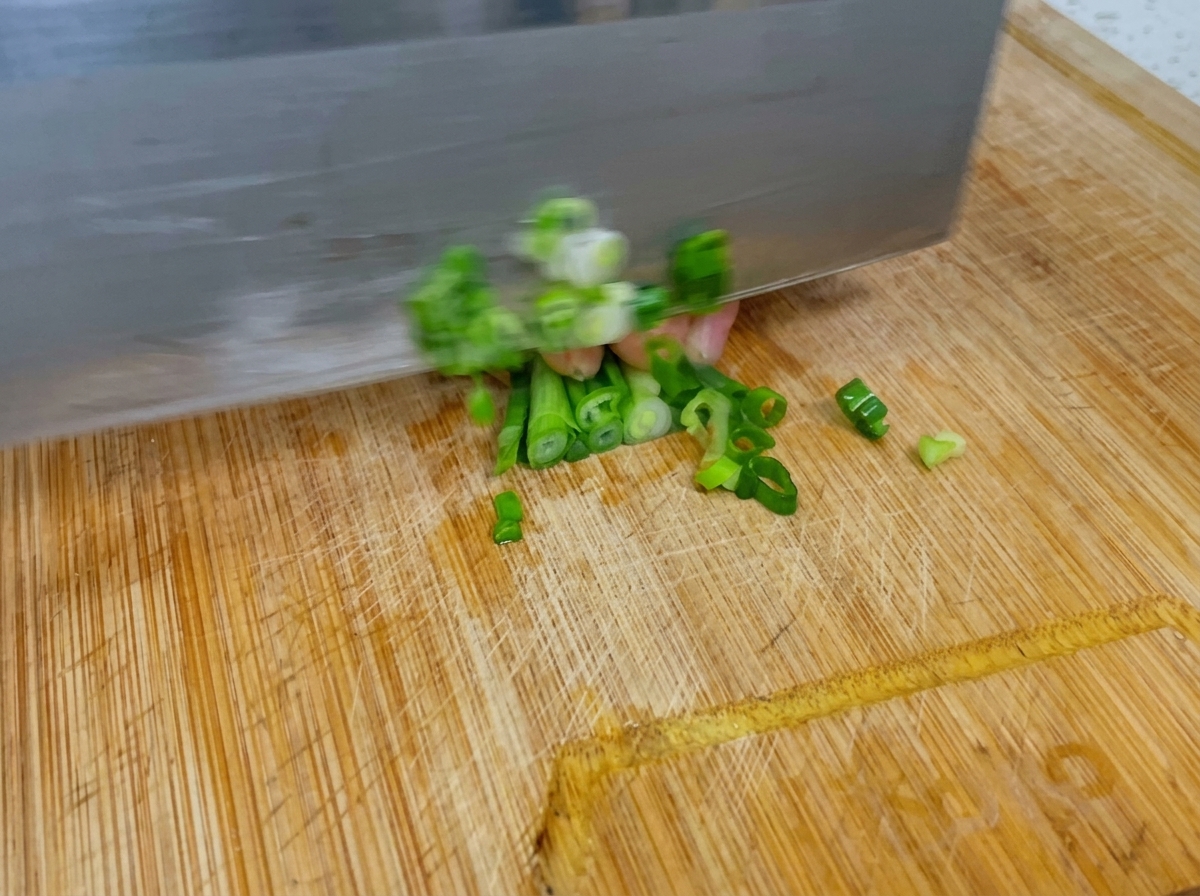
Finely chop fresh green onions on a cutting board. These will be used later as a fragrant garnish for the finished steamed ribs.
Tip: Ensure your knife is sharp to cleanly slice the green onions without bruising them. - 4Drain the soaked ribs
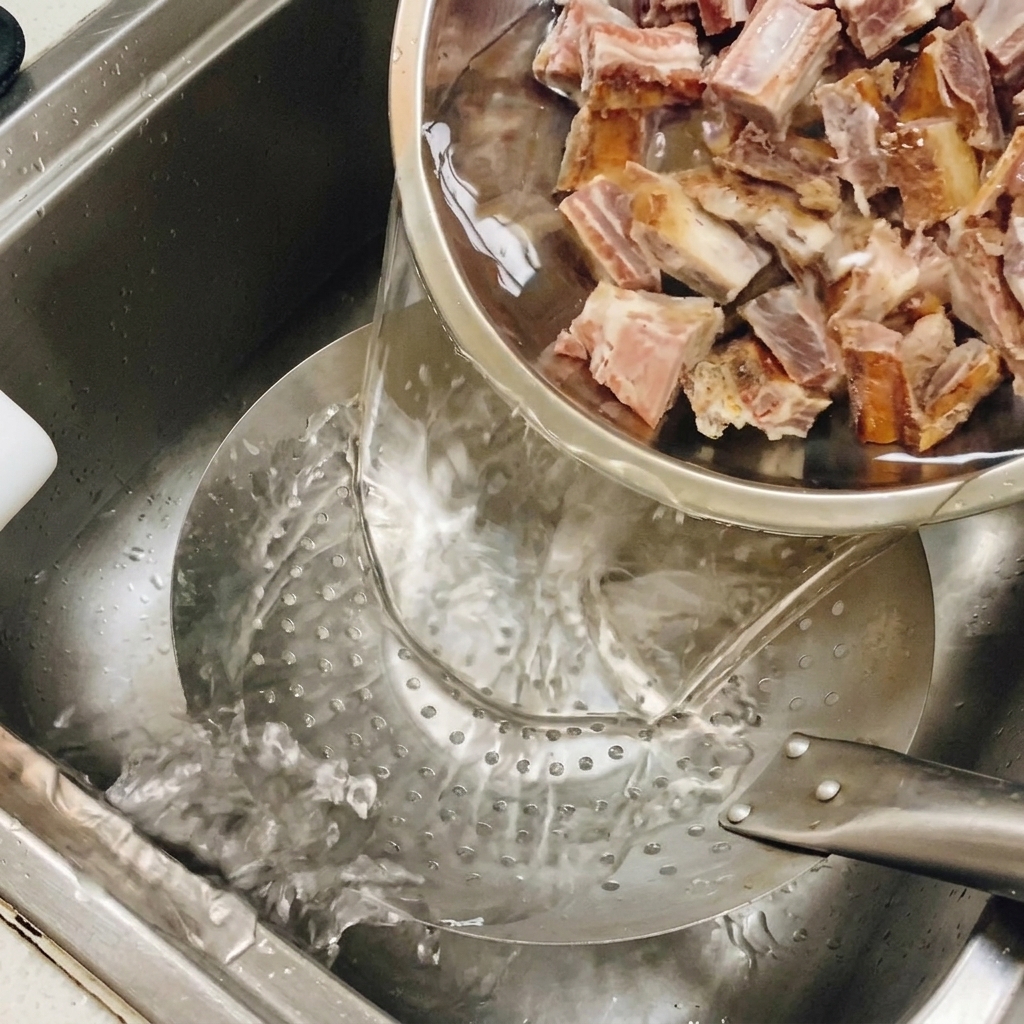
Once the ribs have finished soaking, pour them into a metal colander in the sink to drain away the salty soaking water completely.
Tip: Shaking the colander gently helps remove any remaining excess water caught between the meat pieces. - 5Blanch the ribs
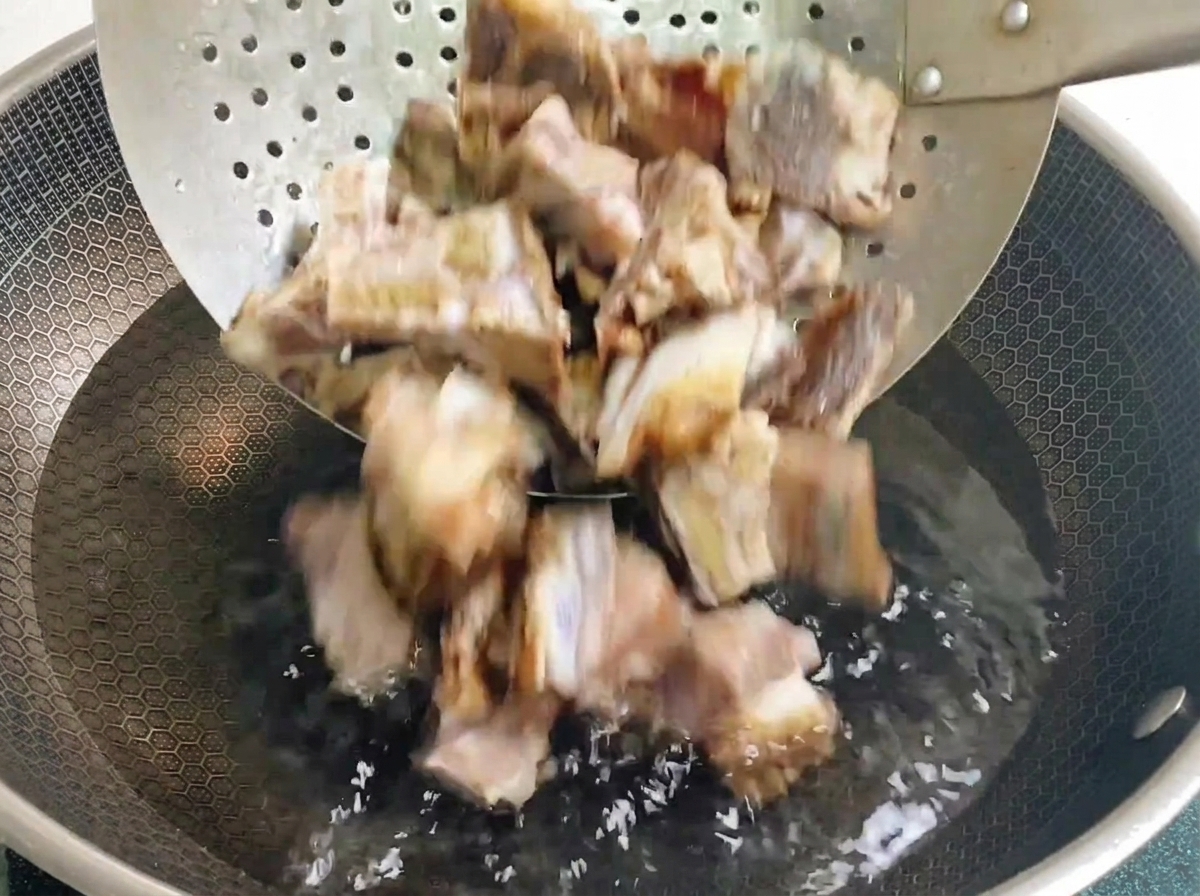
Transfer the soaked and drained pork ribs into a wok filled with cold water. Bring the water to a boil over high heat and let the ribs cook for two minutes to remove impurities and any lingering gamey odors.
Tip: Always start the blanching process with cold water rather than boiling water to gently extract the maximum amount of impurities from the bone and meat. - 6Scoop out the ribs
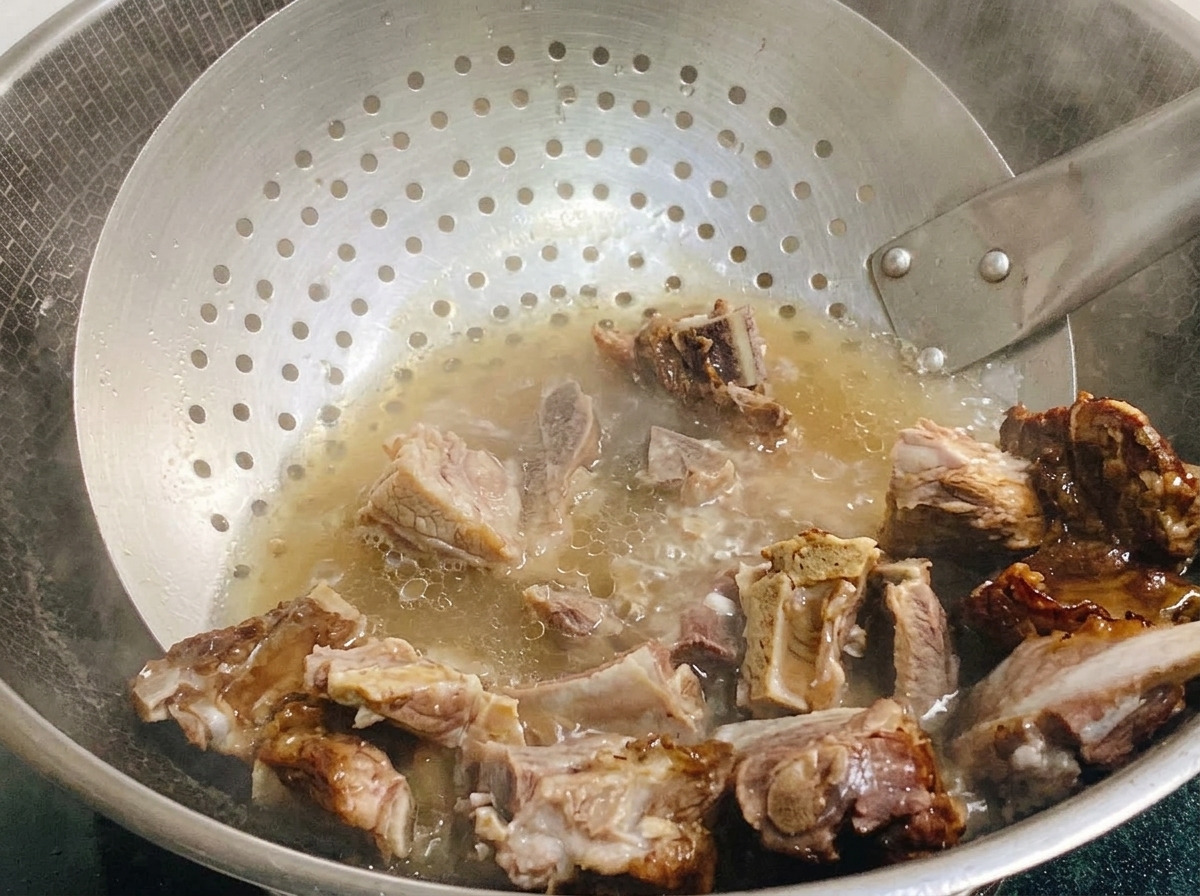
Once the ribs have blanched for two minutes, use a large metal skimmer spoon to carefully scoop them out of the boiling water and drain them thoroughly for the next step.
Tip: Blanching removes the gamey flavor and any remaining excess salt from the curing process. - 7Heat the cooking oil
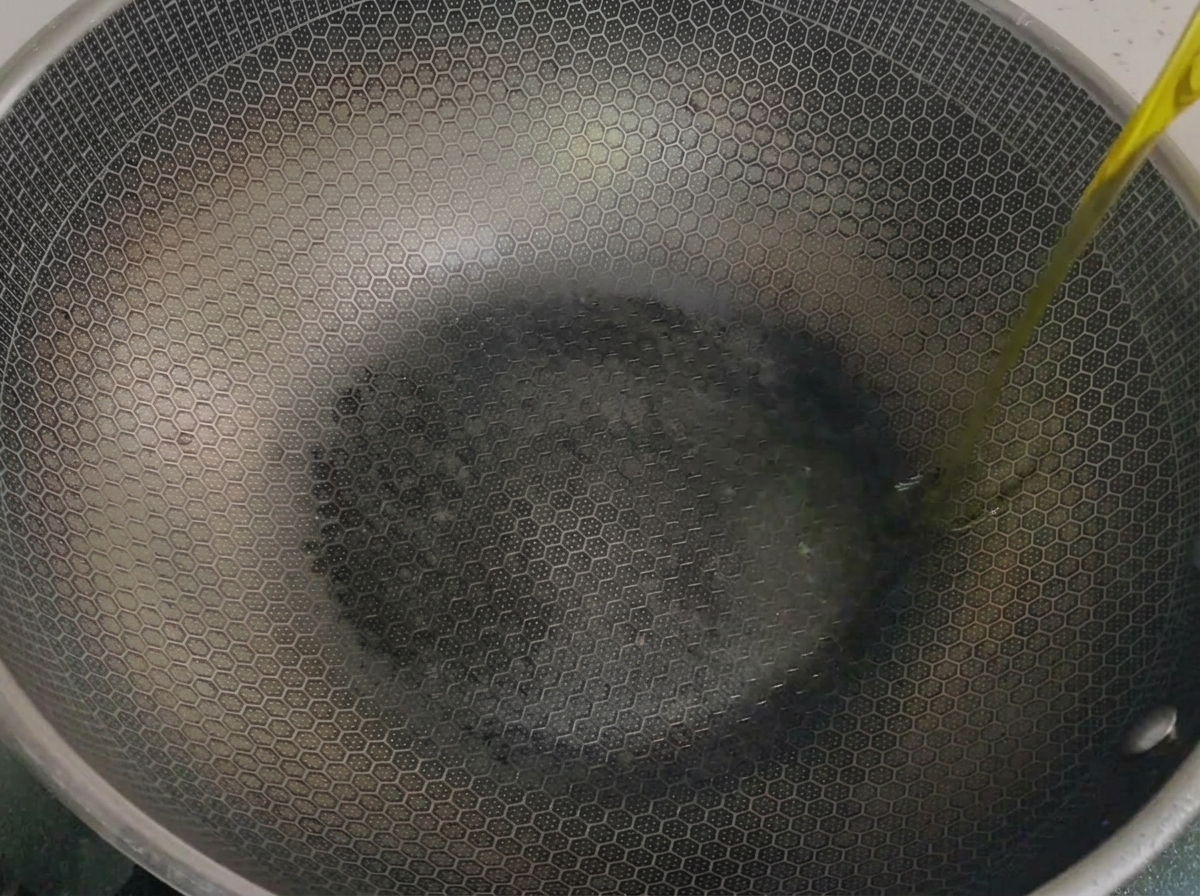
Heat a wok over the stove and pour in a layer of golden camellia oil. Swirl the wok gently to ensure the surface is evenly coated with the oil.
Tip: Swirling the oil to coat the sides of the wok helps prevent the ribs from sticking when you first add them. - 8Stir-fry the ribs
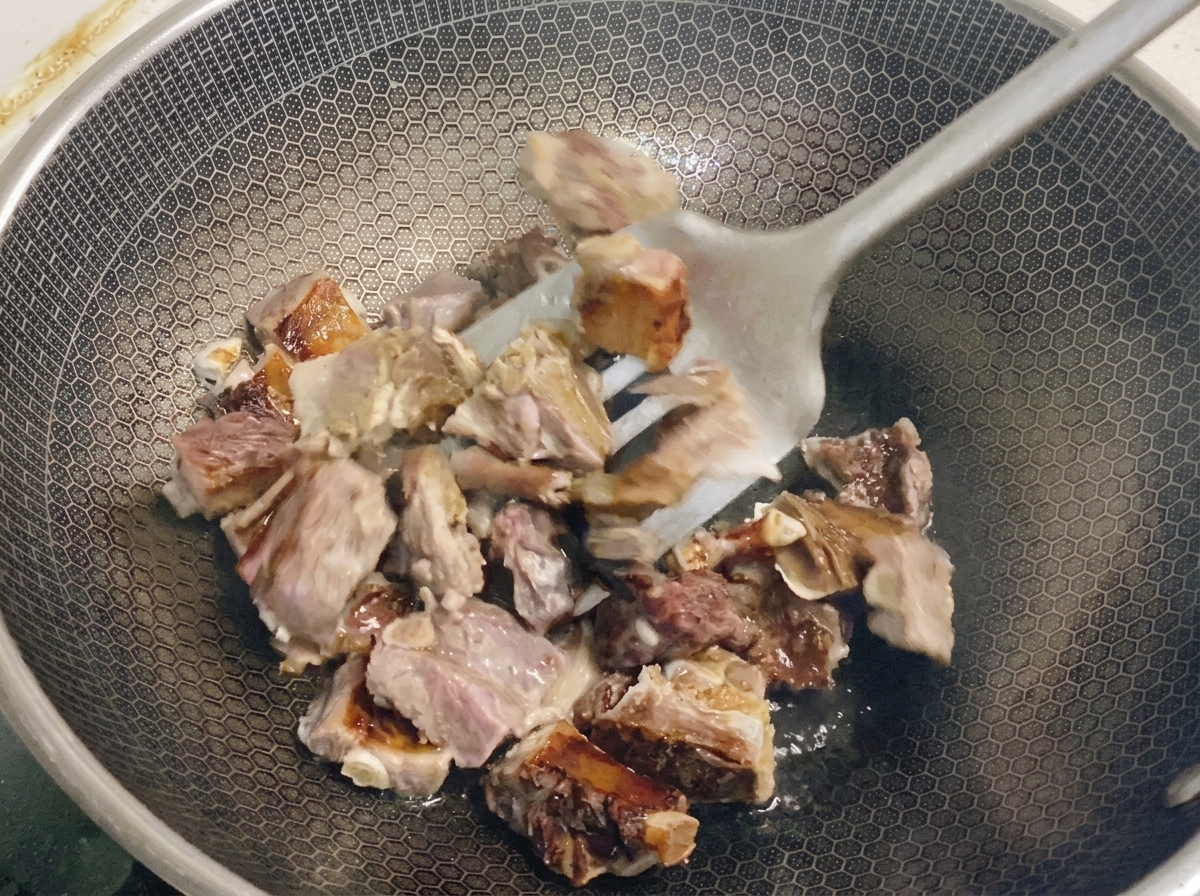
Once the oil is about 60% hot, add the blanched and drained ribs. Stir-fry them continuously with a spatula until they become fragrant and the surface fat begins to render slightly.
Tip: Be careful not to over-fry the ribs; they should be fragrant but not entirely dried out, as they still need to be steamed. - 9Add white liquor
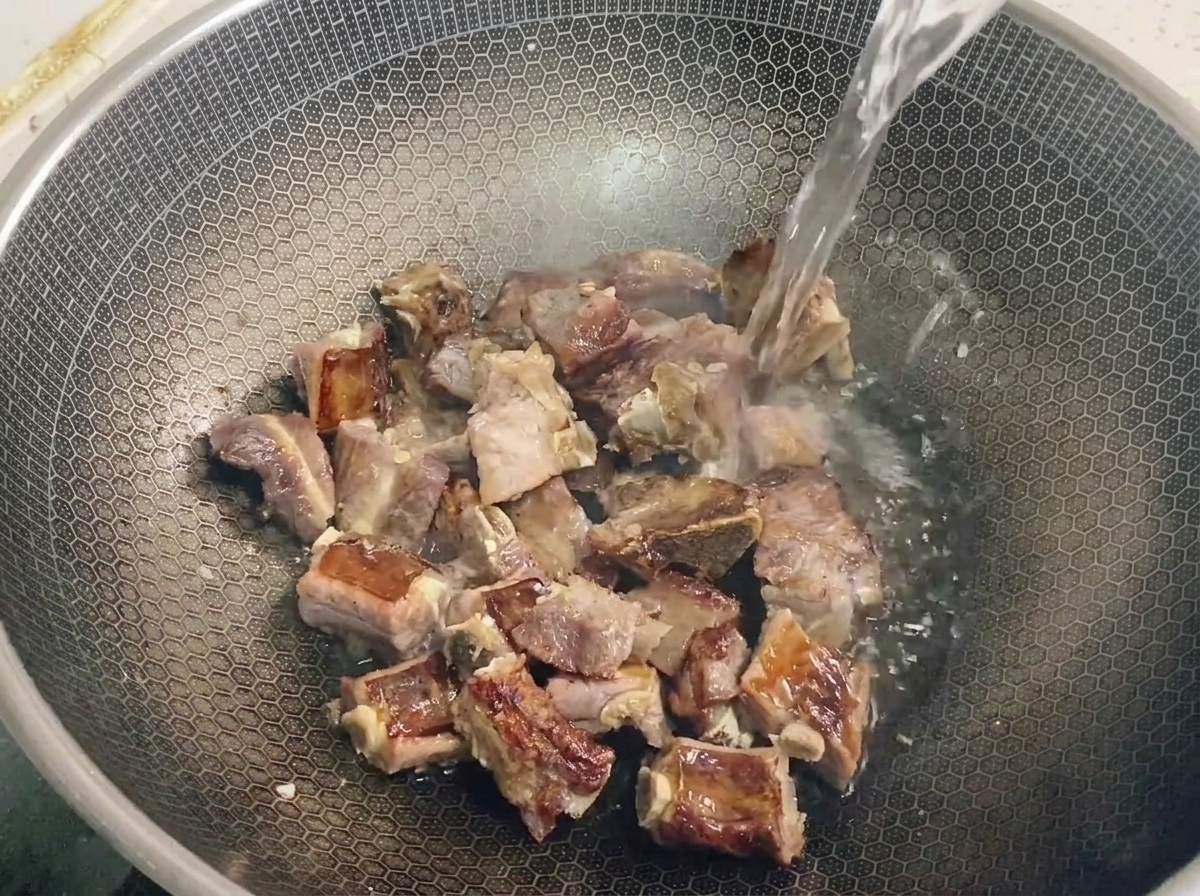
Splash a small amount of high-proof white liquor around the edges of the hot wok. This will deglaze the pan and further eliminate any unwanted odors from the pork.
Tip: Adding the liquor over high heat allows the alcohol to evaporate quickly, leaving behind a deep flavor without a harsh taste. - 10Transfer to a steaming bowl
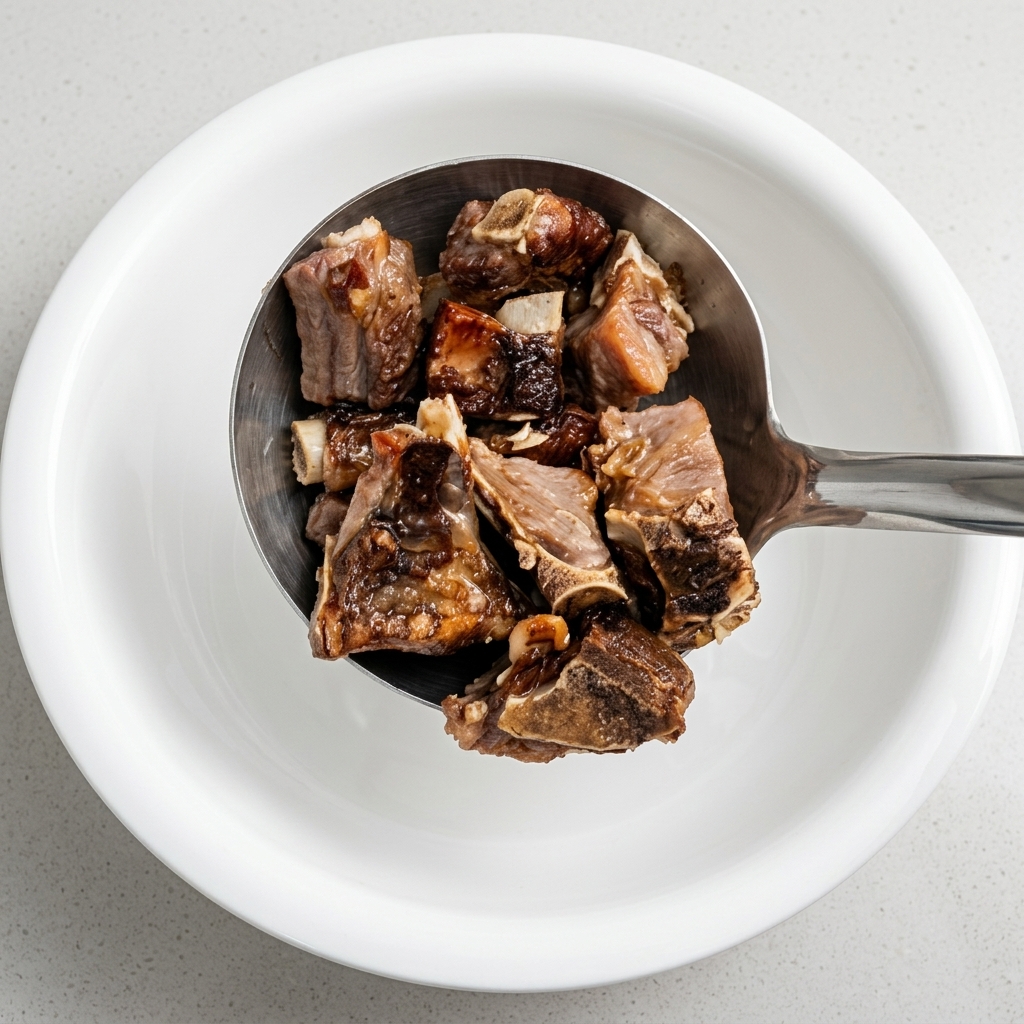
Once the ribs are properly stir-fried and fragrant, scoop them out of the wok using a slotted spoon or ladle. Transfer the hot ribs directly into a deep, heat-safe ceramic bowl to prepare them for steaming.
Tip: Leave the excess rendered fat and camellia oil in the wok for now, as you will pour some of it back over the ribs later. - 11Add red chili flakes
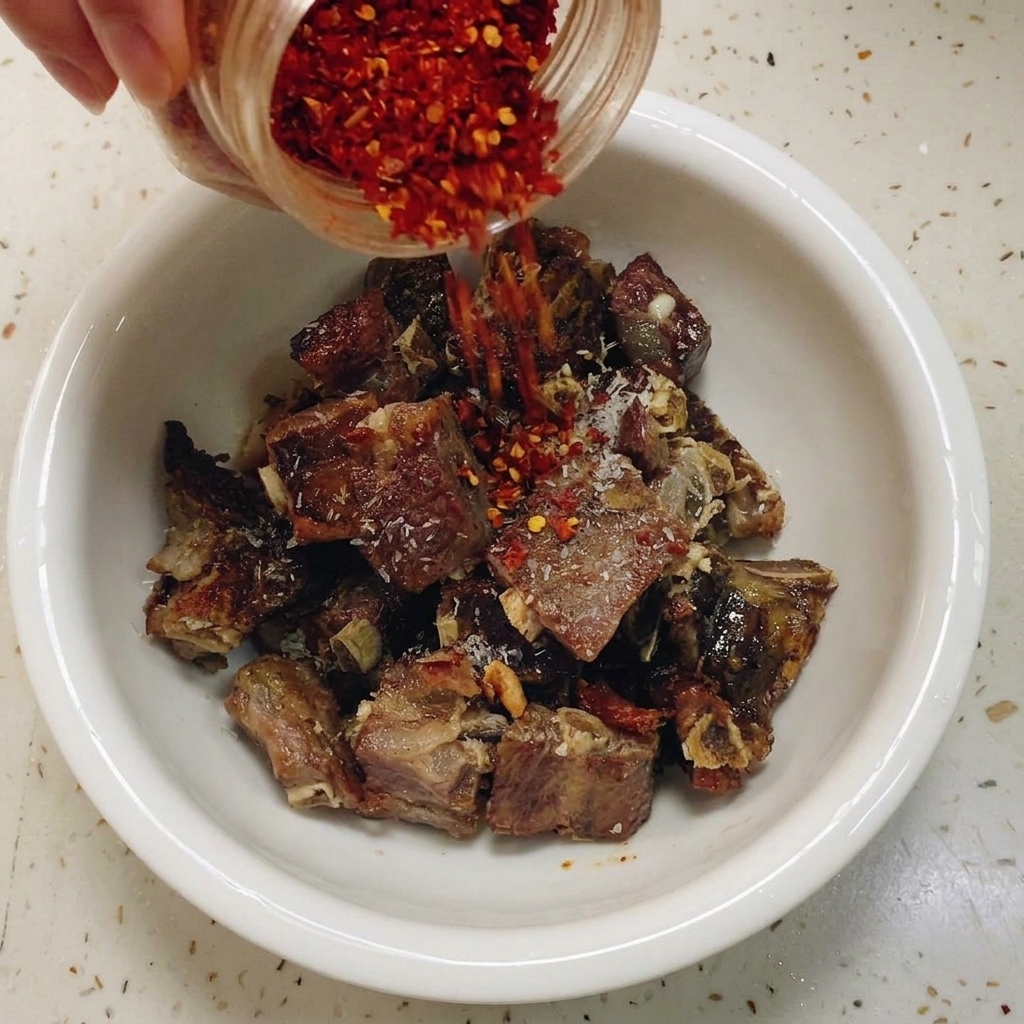
Pour the red dried chili flakes from a jar over the cured pork ribs in the white bowl. You can adjust the amount of chili flakes according to your personal preference for spiciness to give the ribs a vibrant color and a fiery flavor boost.
Tip: Cured pork ribs already contain a sufficient amount of salt, so there is no need to add extra salt when seasoning; focus on aromatic spices like chili flakes and a bit of MSG instead. - 12Add fermented black beans
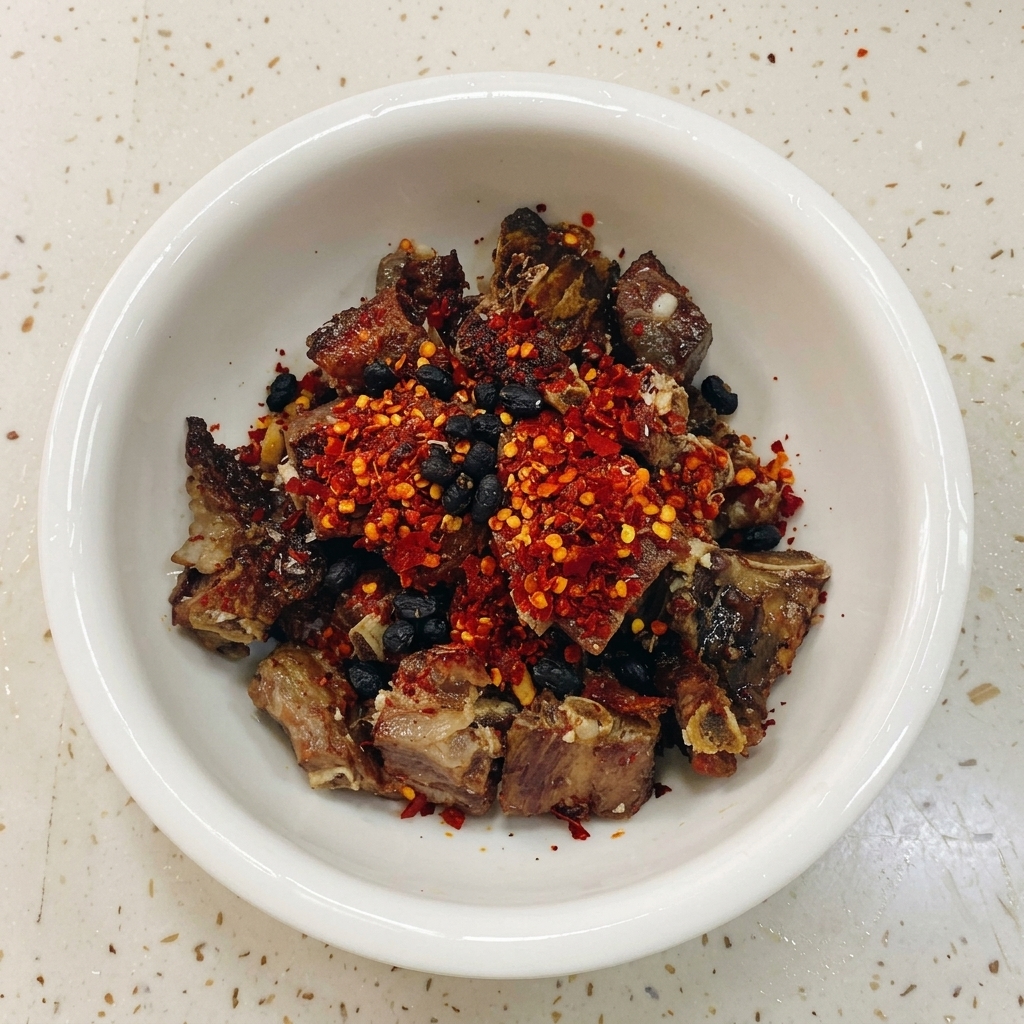
Add a pinch of MSG and about 18 grains of Liuyang fermented black beans directly on top of the chili-coated pork ribs in the bowl.
Tip: Do not add any additional salt, as cured pork ribs already contain a sufficient amount of salt from the curing process. - 13Add soy sauce mixture
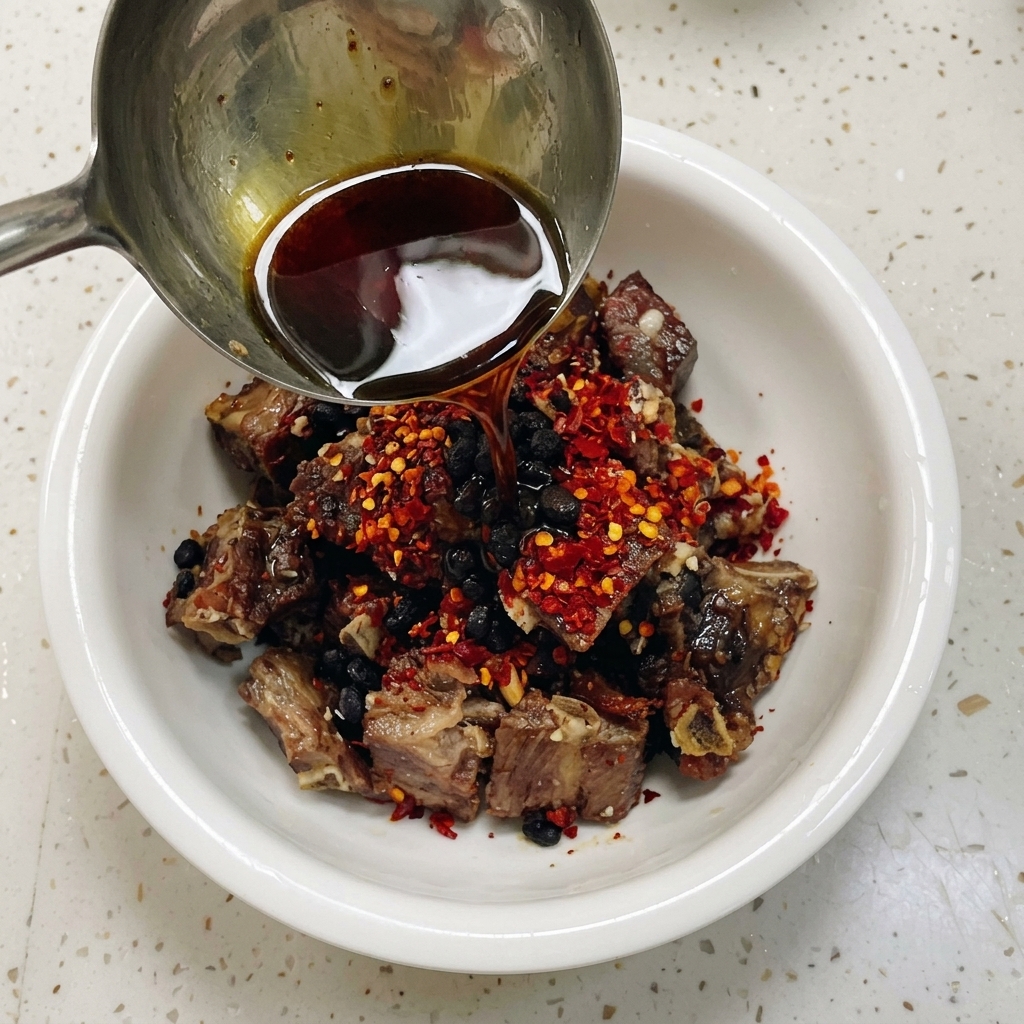
Combine a blend of soy sauce and water, then use a ladle to pour it evenly over the seasoned cured pork ribs in the white bowl. This liquid mixture ensures that the ribs remain moist and tender without drying out during the steaming process.
Tip: Do not add any additional salt to the ribs, as cured meat already contains a sufficient amount of saltiness from the curing process. - 14Pour back camellia oil
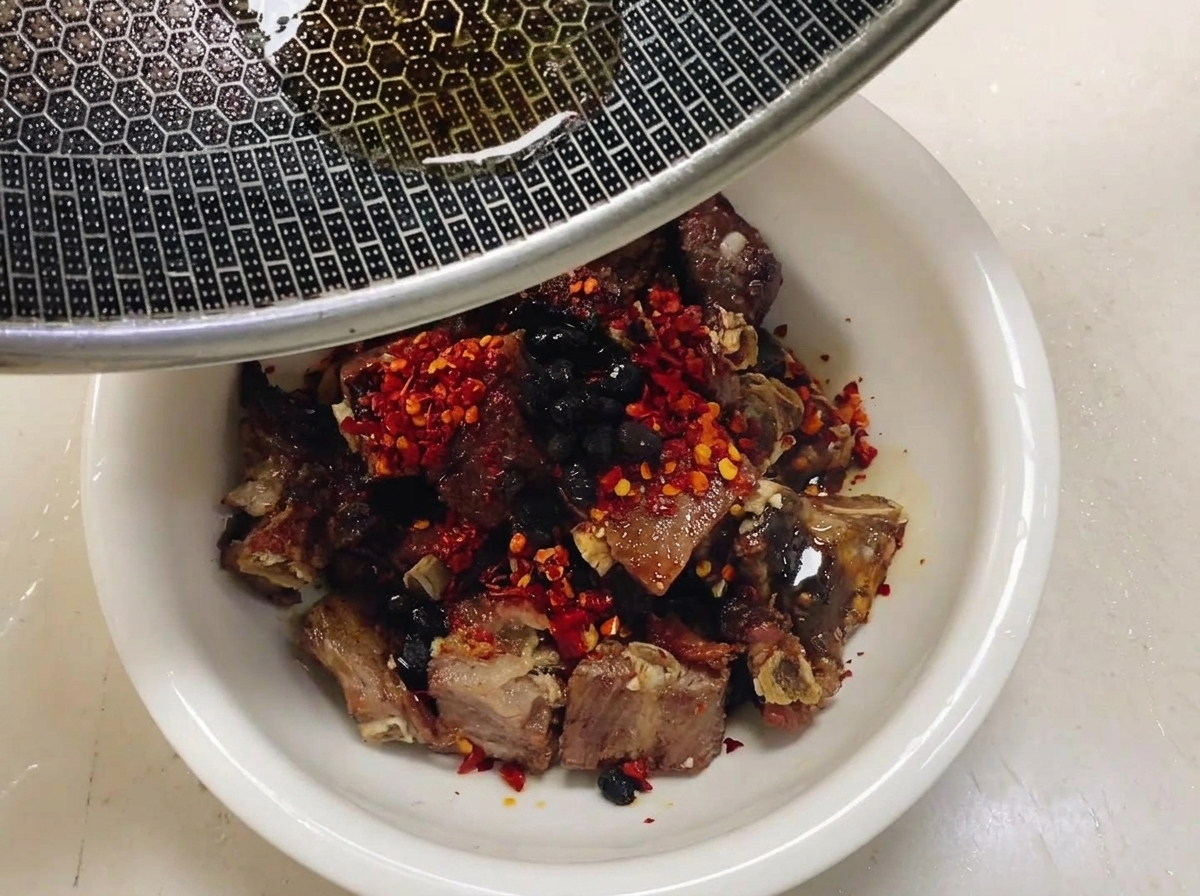
Carefully tip the wok to pour the remaining warm camellia oil used during stir-frying directly back into the white bowl over the pork ribs and seasonings. This incorporates the rendered fat and aromatics back into the dish for extra depth.
Tip: Swirling the oil around the wok beforehand helps collect any stray bits of flavor left behind from stir-frying the meat. - 15Splash with white vinegar
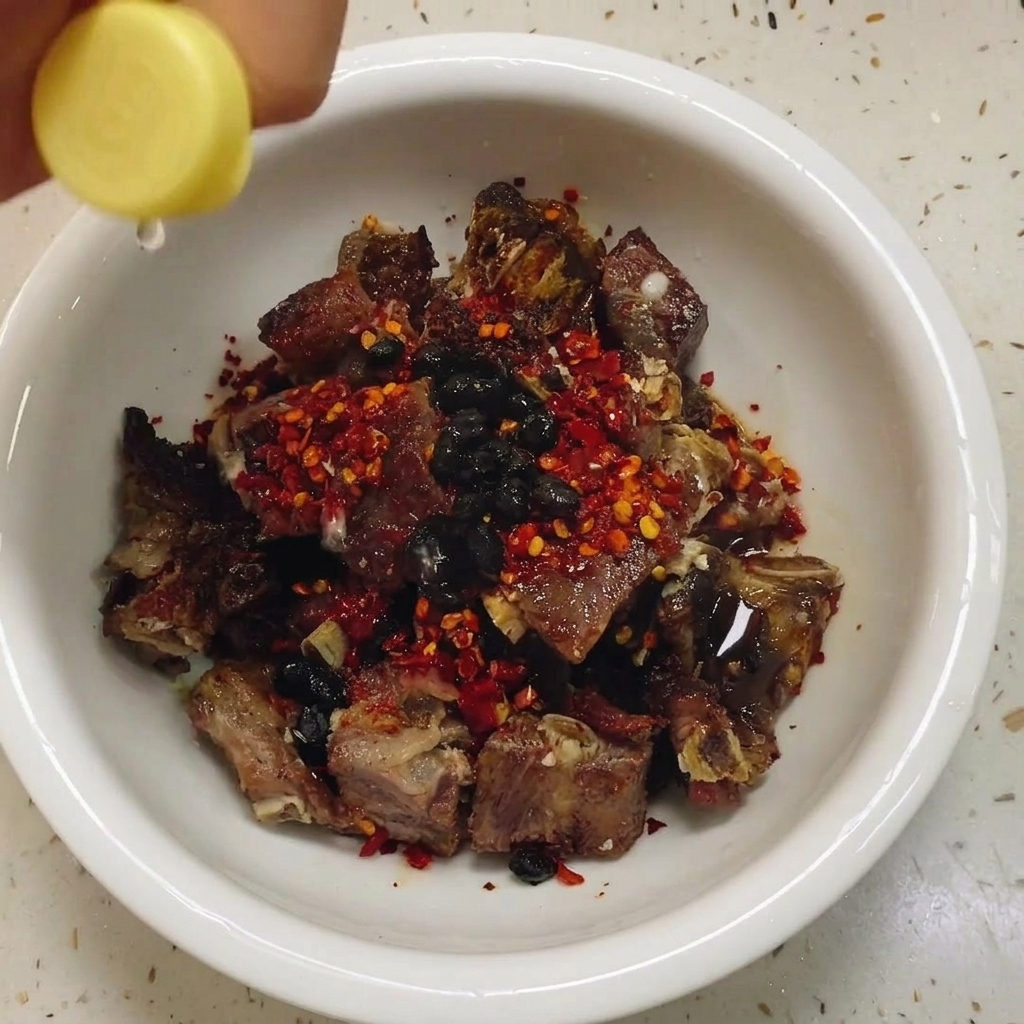
Pour a small splash of white vinegar from a bottle into the seasoned bowl of ribs. This subtle touch of acidity helps balance the rich, savory, and salty flavors of the cured meat and fermented black beans before the steaming process begins.
Tip: Be careful not to add too much vinegar; a small splash is all it takes to enhance the overall flavor profile without making the dish taste sour. - 16Place bowl in pressure cooker
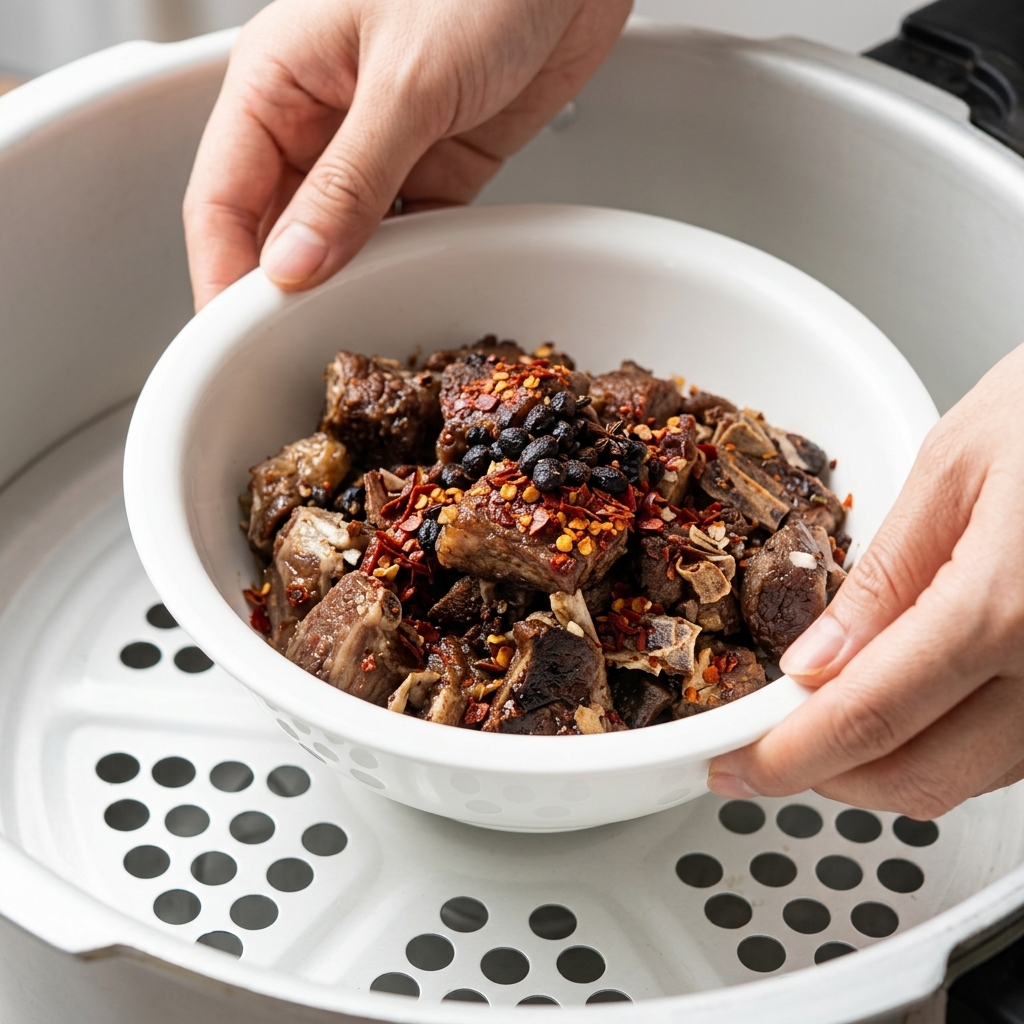
Using both hands, carefully lower the seasoned bowl into the pressure cooker. Steam over high heat for 30 minutes once it comes to pressure, then carefully remove the bowl and garnish with the chopped green onions before serving.
Tip: If you do not have a pressure cooker, you can use a regular steamer instead, but increase the steaming time to about one hour to ensure the ribs become fully tender.