Chinese Steamed Cured Pork Ribs
Fermented Black Beans
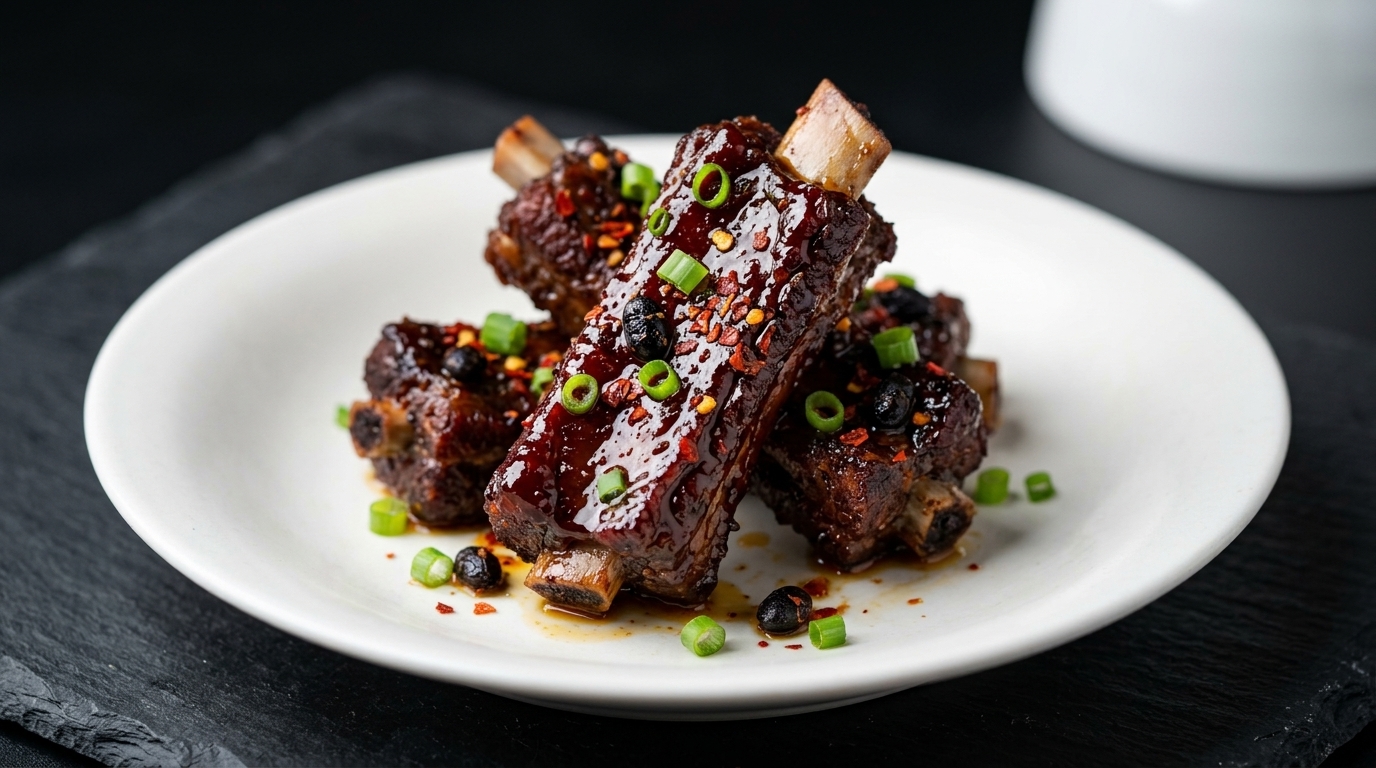
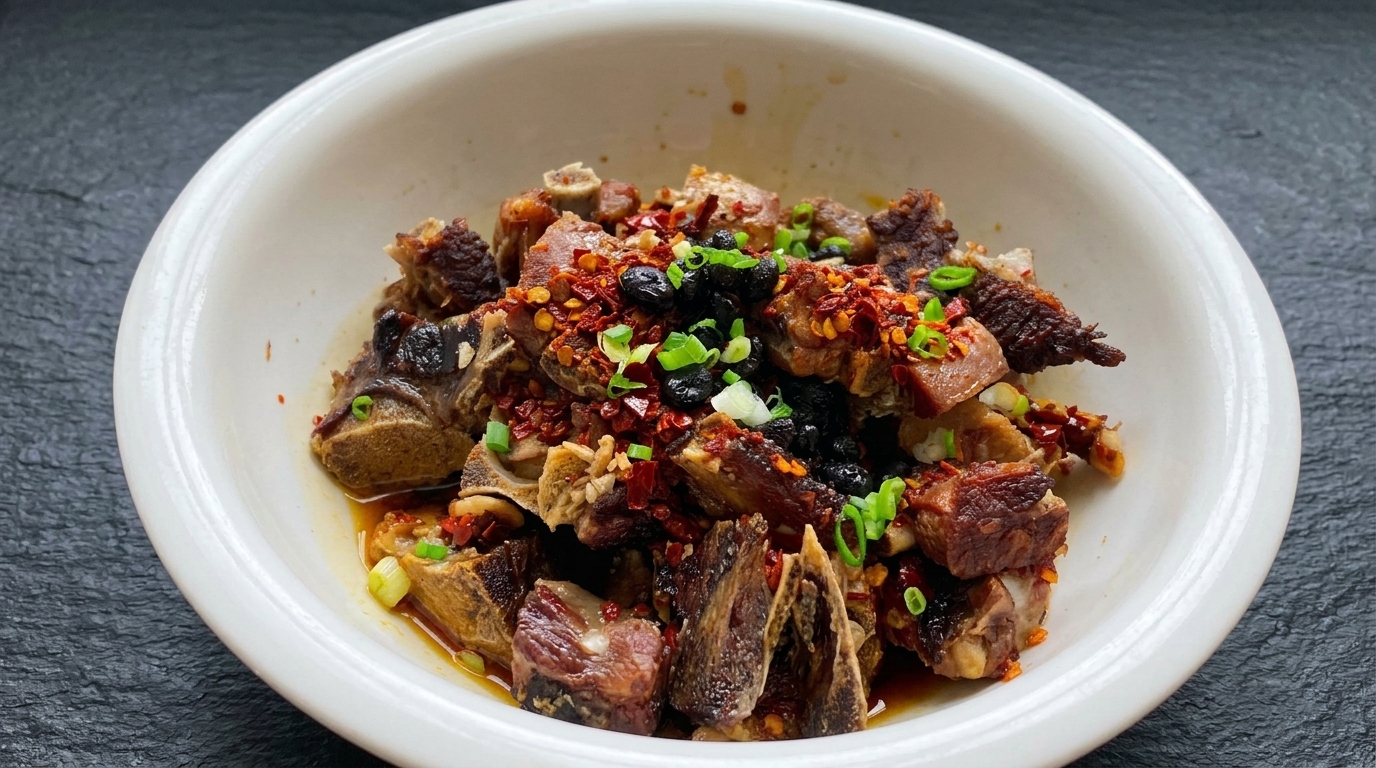
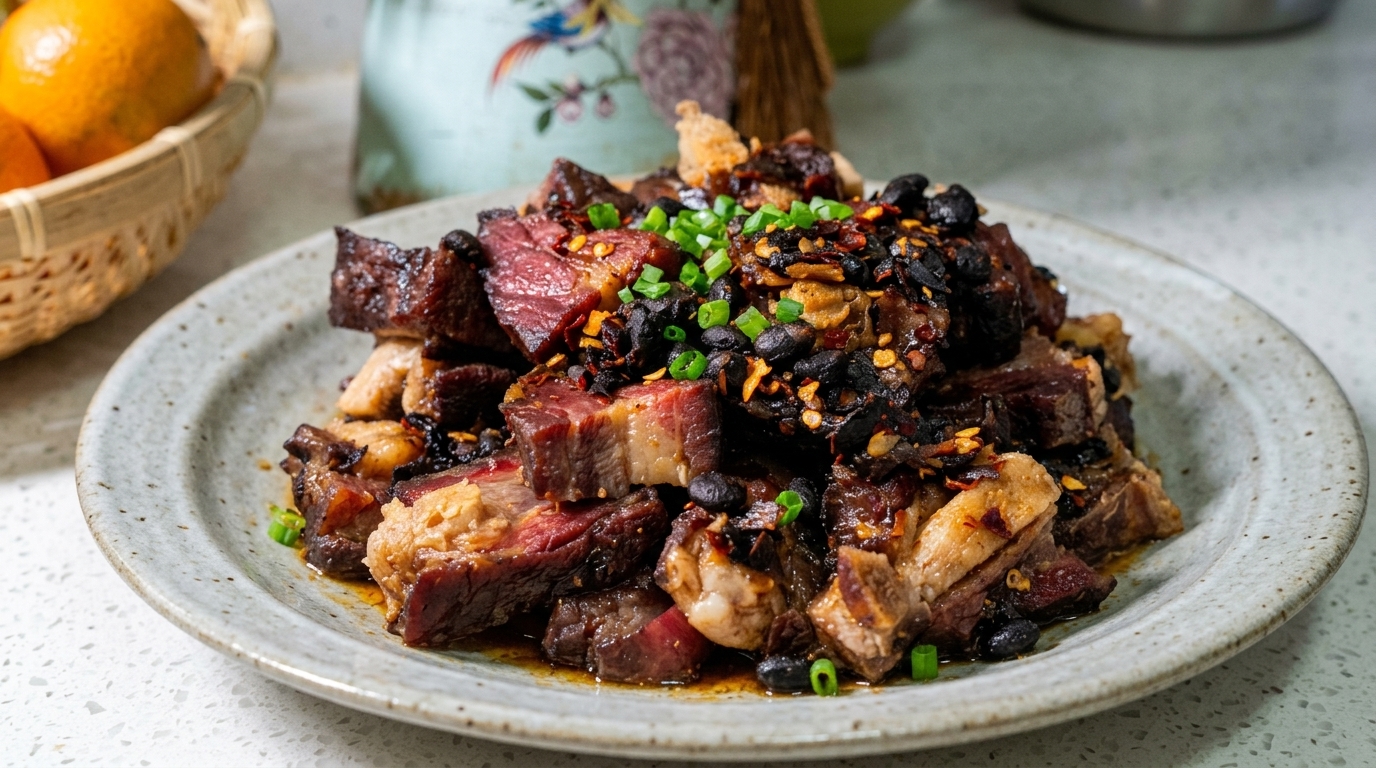
Savor these deeply savory Chinese cured pork ribs steamed with pungent fermented black beans and spicy chili flakes for an intensely aromatic, savory dish.
Steamed cured pork ribs are a beloved rustic dish traditionally enjoyed during winter months in regions like Hunan and Guangdong. Curing the meat infuses it with a deep, concentrated savoriness, which is beautifully balanced by the earthy umami of fermented black beans and a hint of fiery chili. When steamed, the rich oils render down, creating an incredibly tender texture and an aroma that fills the entire home.
Ingredients
- 500 g cured pork ribs
- 1 tbsp cooking oil
- 1 tbsp chili flakes
- 2 tbsp fermented black beans
- 1 tbsp soy sauce
- 2 stalks green onions
Instructions
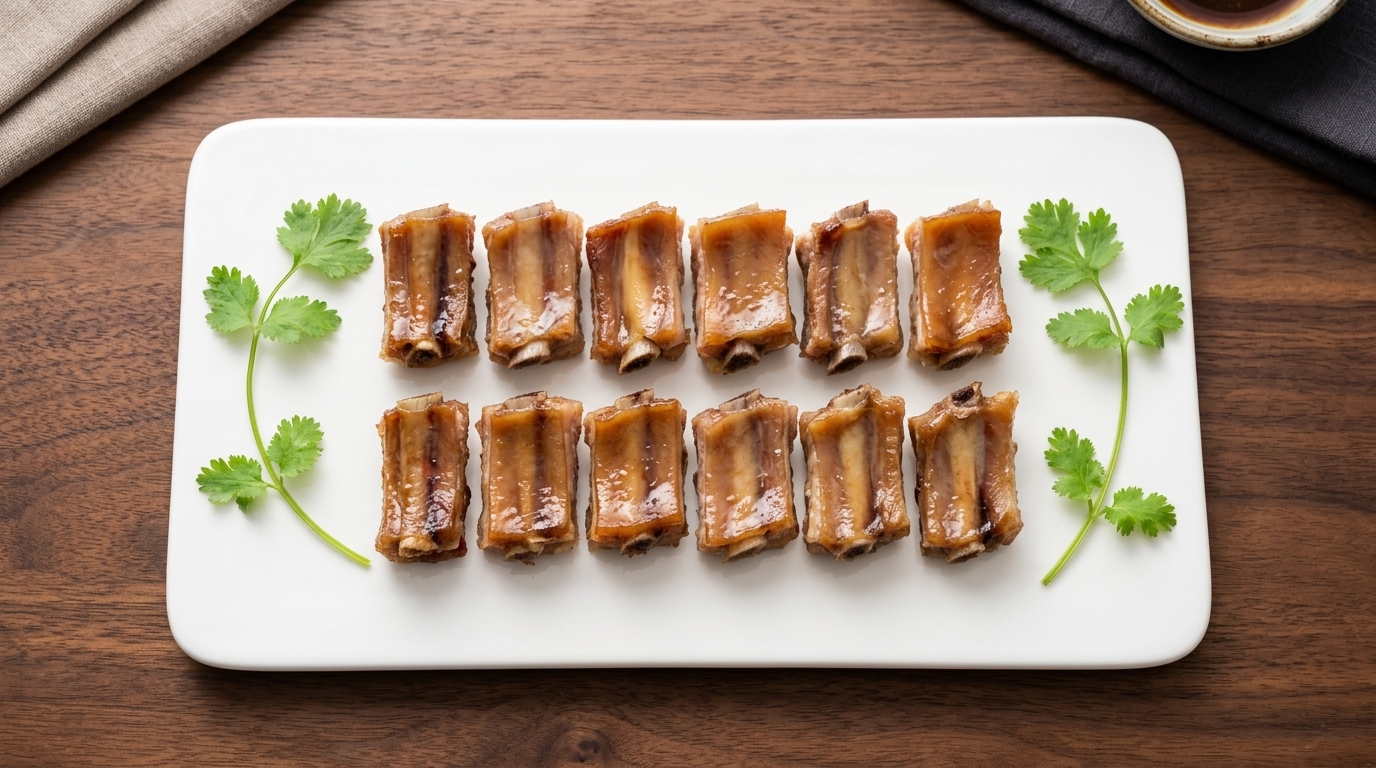
- 1Chop the cured pork ribs
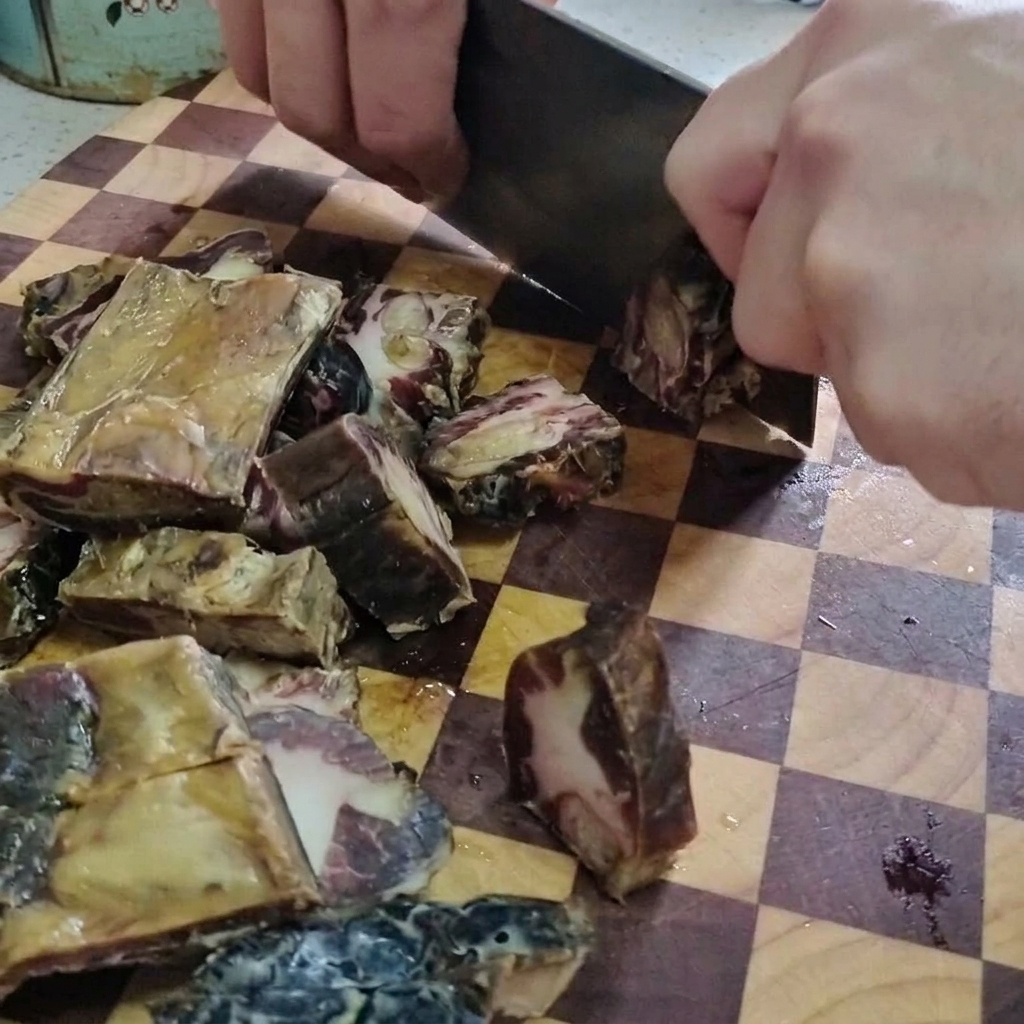
Place the cured pork ribs onto a sturdy cutting board. Use a sharp meat cleaver to carefully chop the ribs into small, bite-sized pieces to prepare them for boiling.
Tip: Ensure your cutting board is secure and use a firm, steady downward stroke to cut through the ribs cleanly. - 2Submerge the ribs in cold water
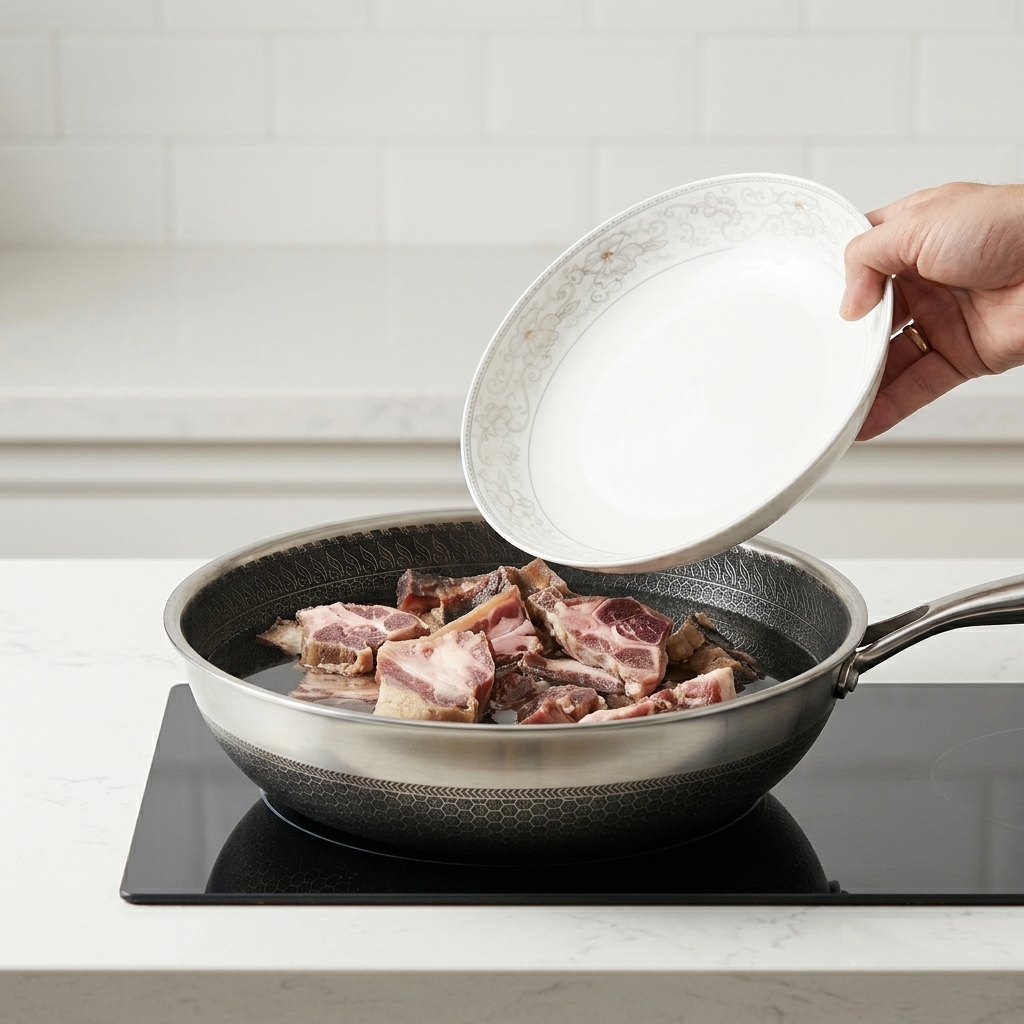
Transfer the chopped cured pork ribs from the plate into a wok filled with cold water. Ensure the ribs are completely submerged to help draw out excess salt and impurities during the boiling process.
Tip: Always start with cold water so that the meat heats up gradually, allowing impurities to release more effectively. - 3Boil and simmer the ribs
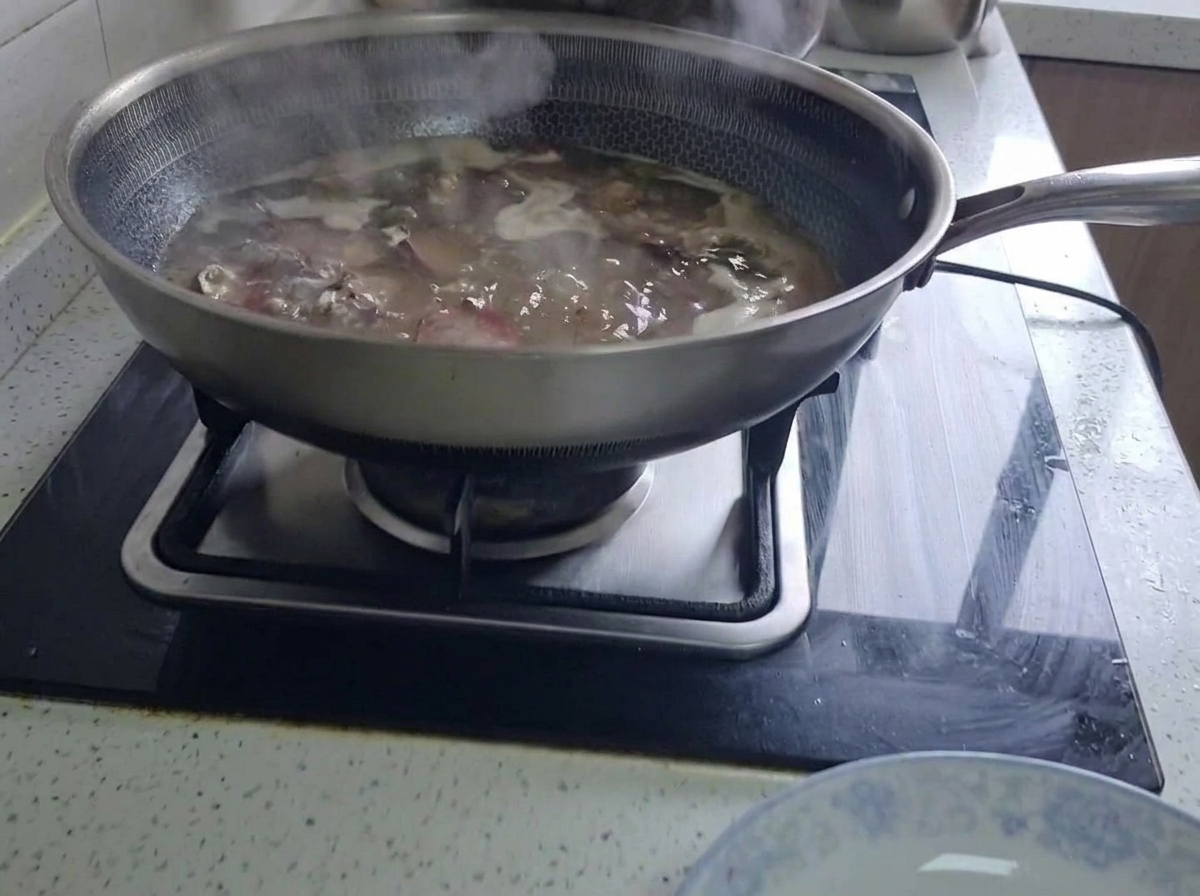
Bring the water to a boil over high heat, then let the ribs simmer for about twenty-five minutes to tenderize the meat and reduce excess saltiness.
Tip: Starting with cold water helps draw out impurities and excess salt from the cured ribs more effectively. - 4Drain the ribs
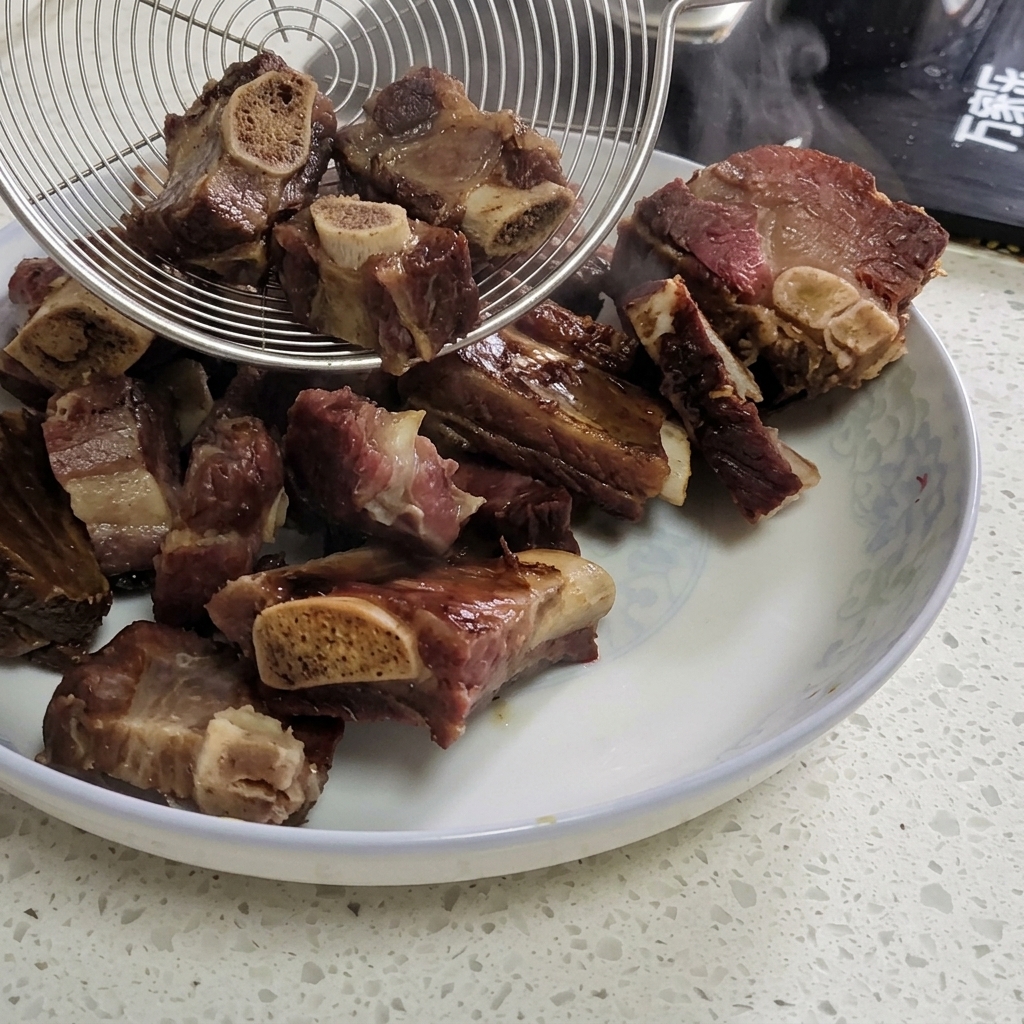
After simmering for twenty-five minutes, use a metal slotted spoon to carefully scoop the cured pork ribs out of the boiling water. Hold them over the wok briefly to drain any excess liquid before transferring them to a clean plate.
Tip: Ensure the ribs are well-drained so they can sear properly during the subsequent stir-frying step. - 5Add the ribs to hot oil
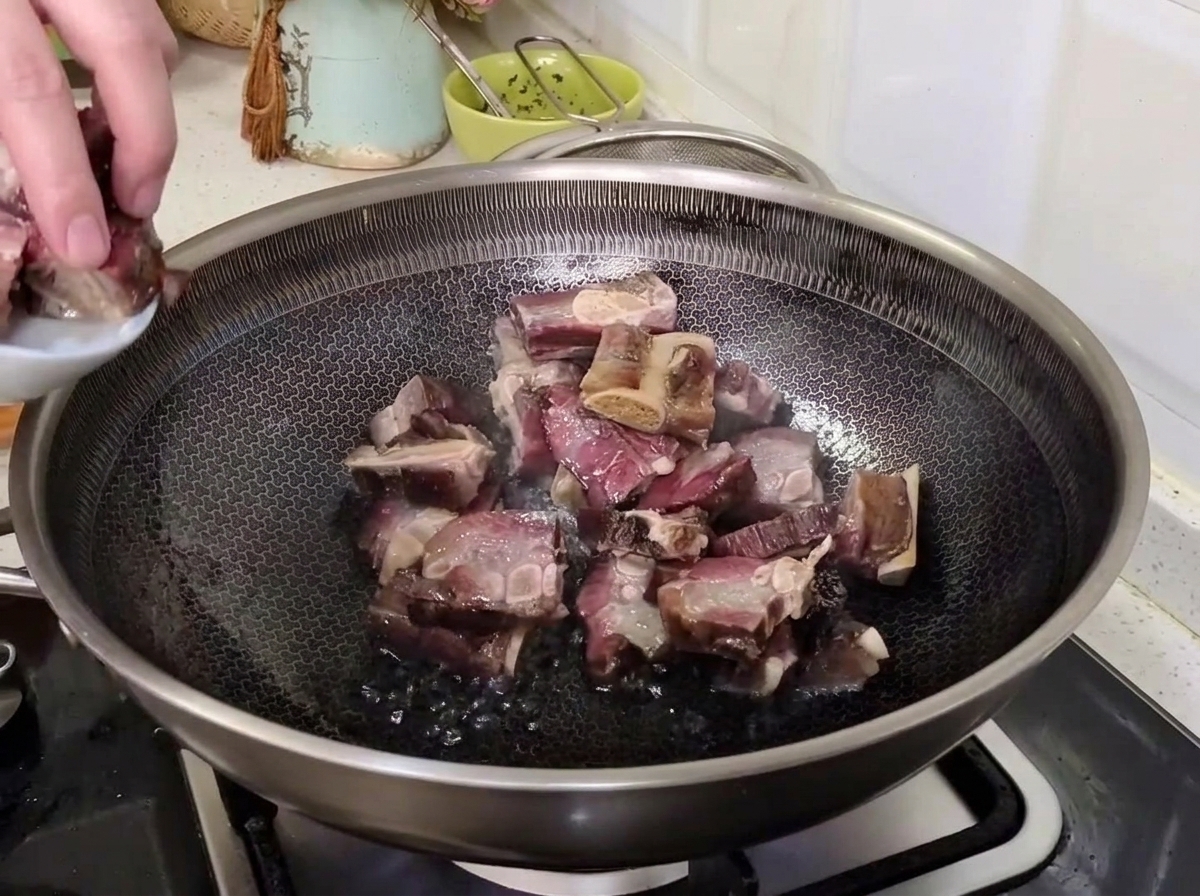
Heat a small amount of oil in a wok over medium-high heat. Carefully transfer the drained cured pork ribs into the hot wok to begin the stir-frying process.
Tip: Make sure the ribs are thoroughly drained before adding them to hot oil to minimize dangerous popping and splashing. - 6Remove the ribs from the wok
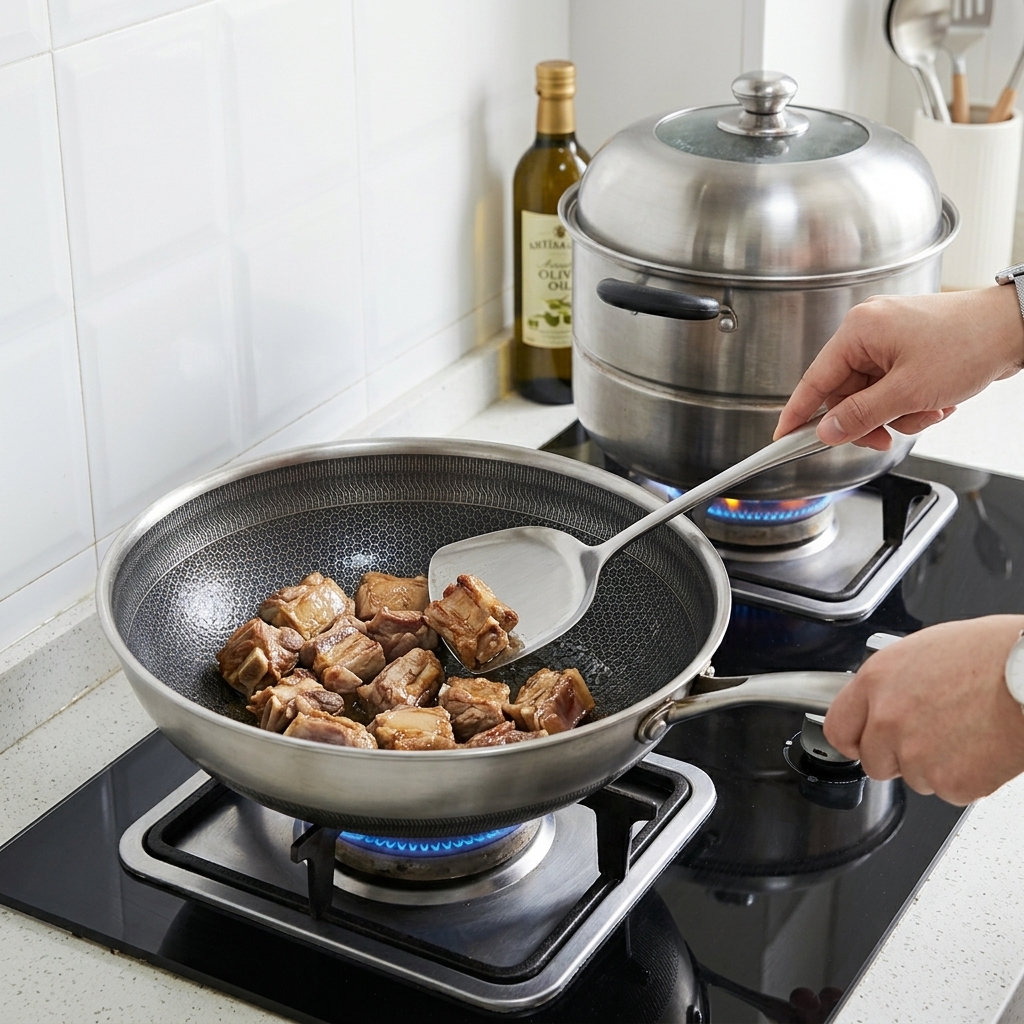
Stir-fry the pork ribs for about three minutes until fragrant. Use a metal spatula to scoop the stir-fried ribs out of the hot wok and place them back onto a plate to set aside.
Tip: Keep the ribs moving continuously while stir-frying to ensure they heat through evenly without burning. - 7Season with chili flakes
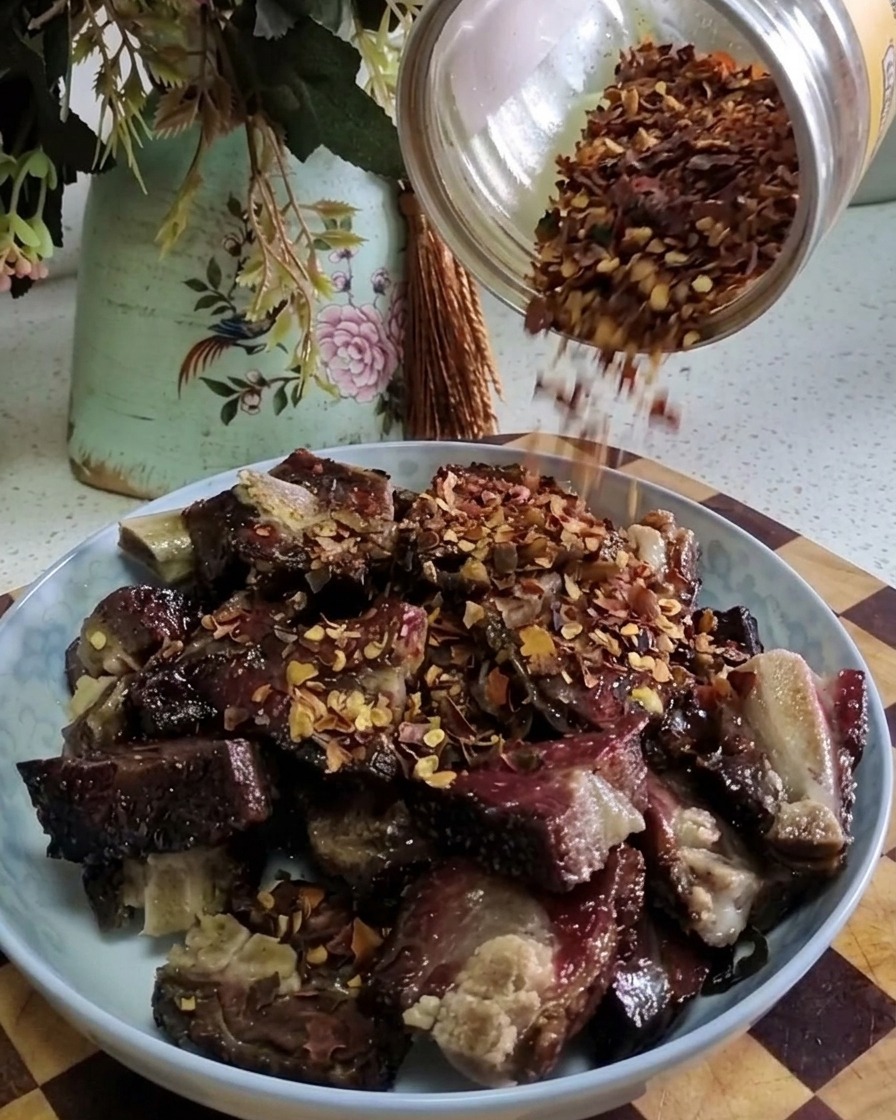
Once the cured pork ribs have been stir-fried and set aside on a plate, sprinkle dried chili flakes directly from a jar over the top. This adds a nice spicy kick and complements the savory profile of the meat.
Tip: Adjust the amount of chili flakes according to your personal spice preference. - 8Add fermented black beans
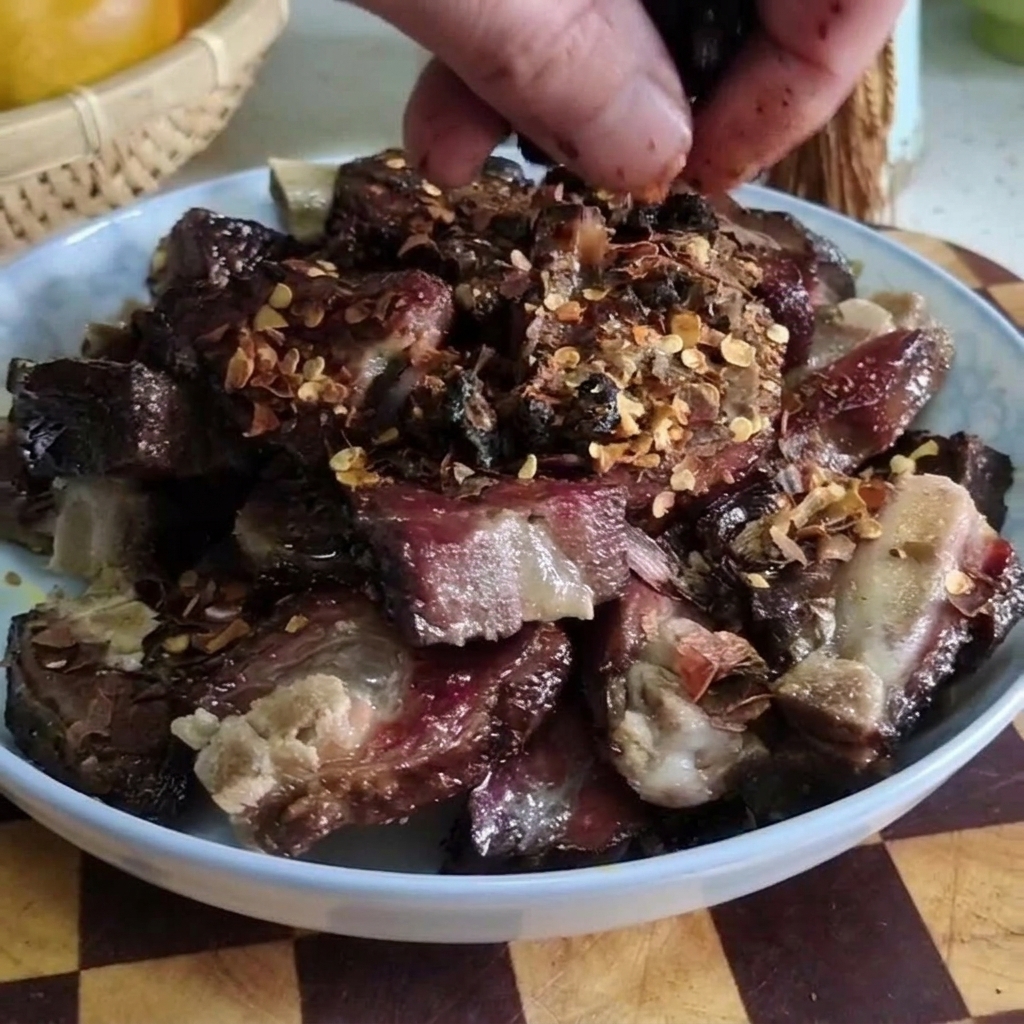
Sprinkle the fermented black beans evenly over the cured pork ribs. The black beans will infuse the meat with a deep, savory umami flavor during the steaming process.
Tip: You can lightly mash the black beans before adding them to release more of their aromatic oils and flavor. - 9Pour the soy sauce mixture
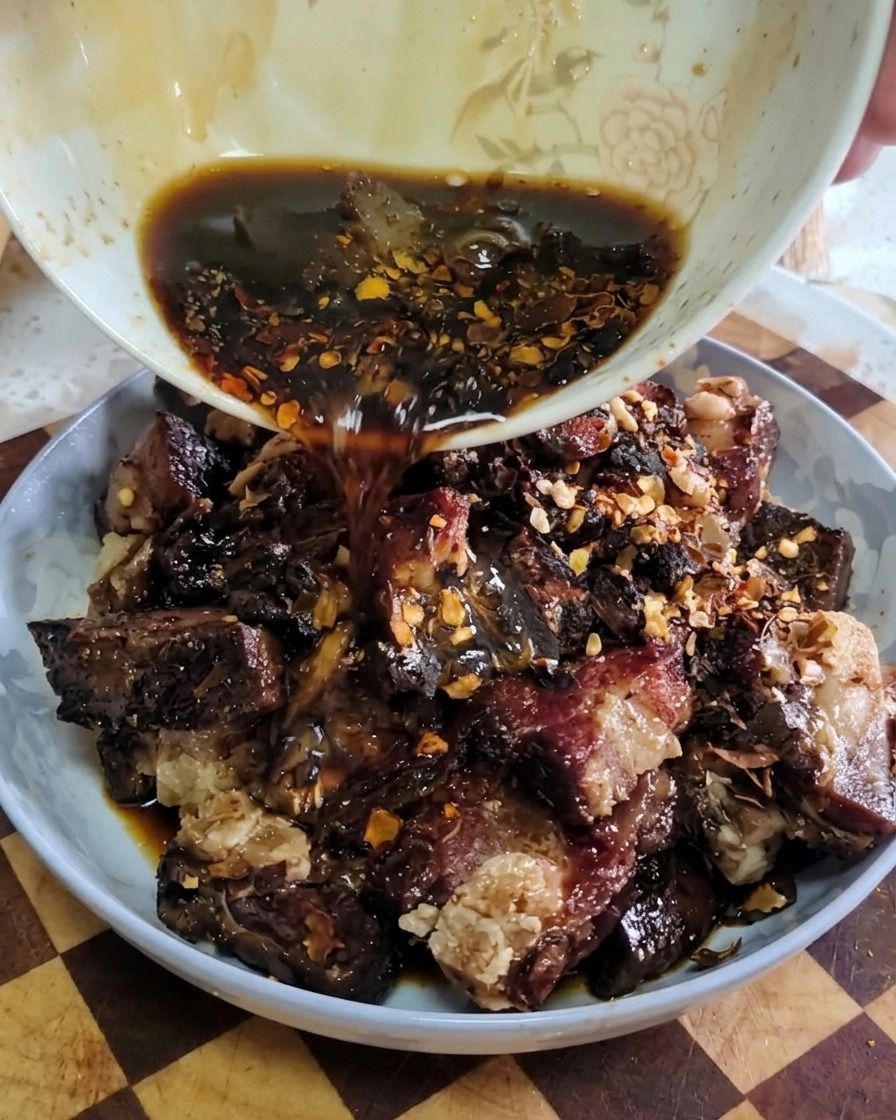
Combine soy sauce with an equal amount of water, then pour it over the seasoned pork ribs. Diluting the soy sauce prevents the dish from turning out too salty while ensuring the ribs stay moist.
Tip: Pour the liquid around the edges of the plate to avoid washing off the chili flakes and black beans on top. - 10Steam the ribs
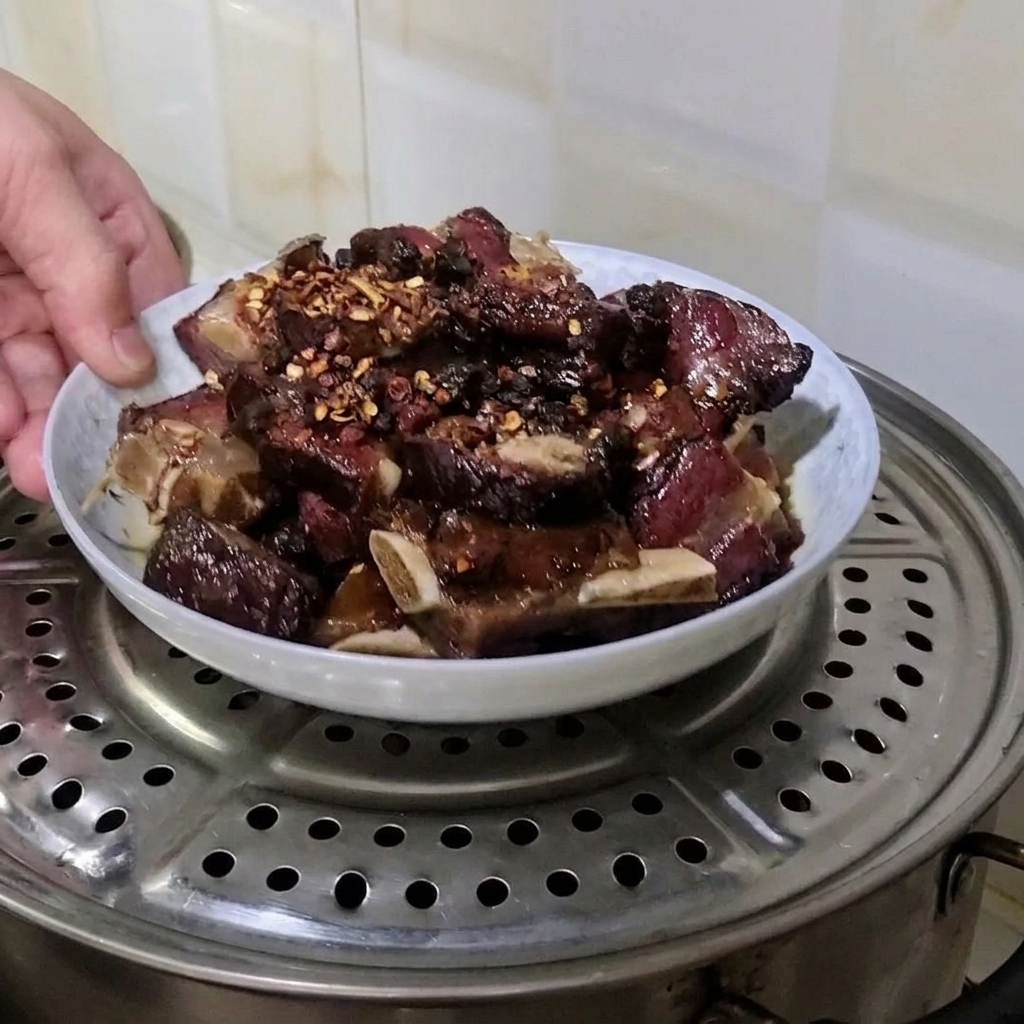
Carefully place the plate of seasoned cured pork ribs onto a metal steamer rack inside a preheated steamer pot. Secure the lid and steam the ribs over medium-high heat for one hour until tender and aromatic.
Tip: Make sure there is enough water in the bottom of the steamer to last for the full hour of cooking without drying out.