Classic Japanese Beef Bowl (Gyudon)
Onsen Egg
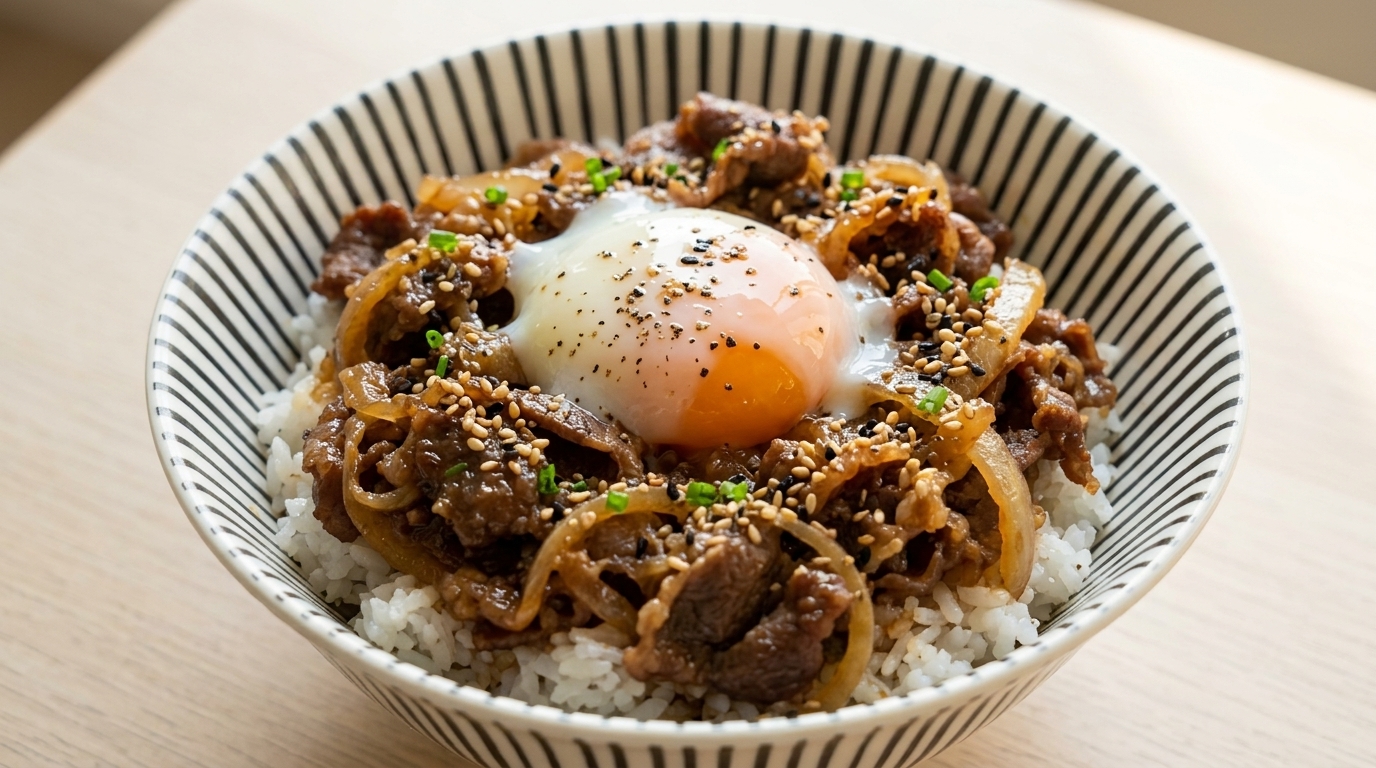
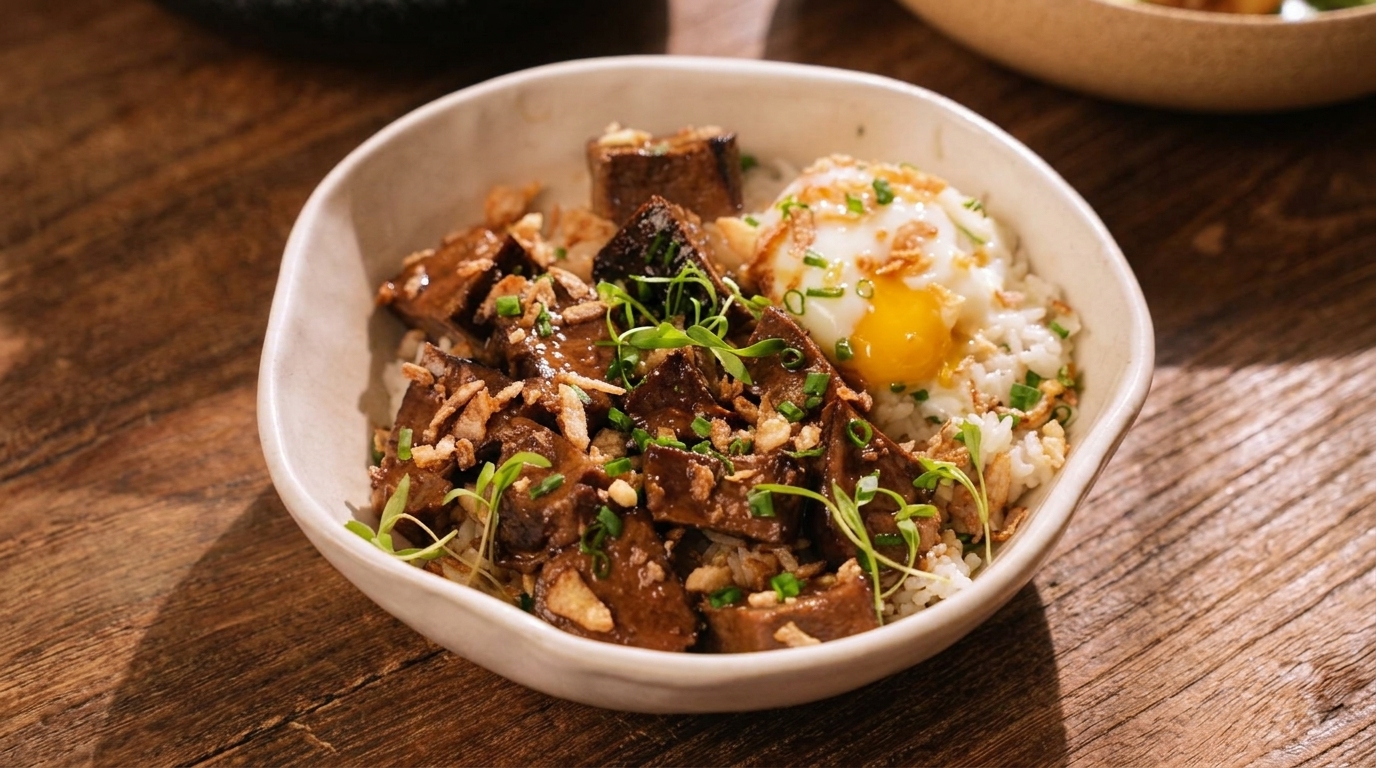
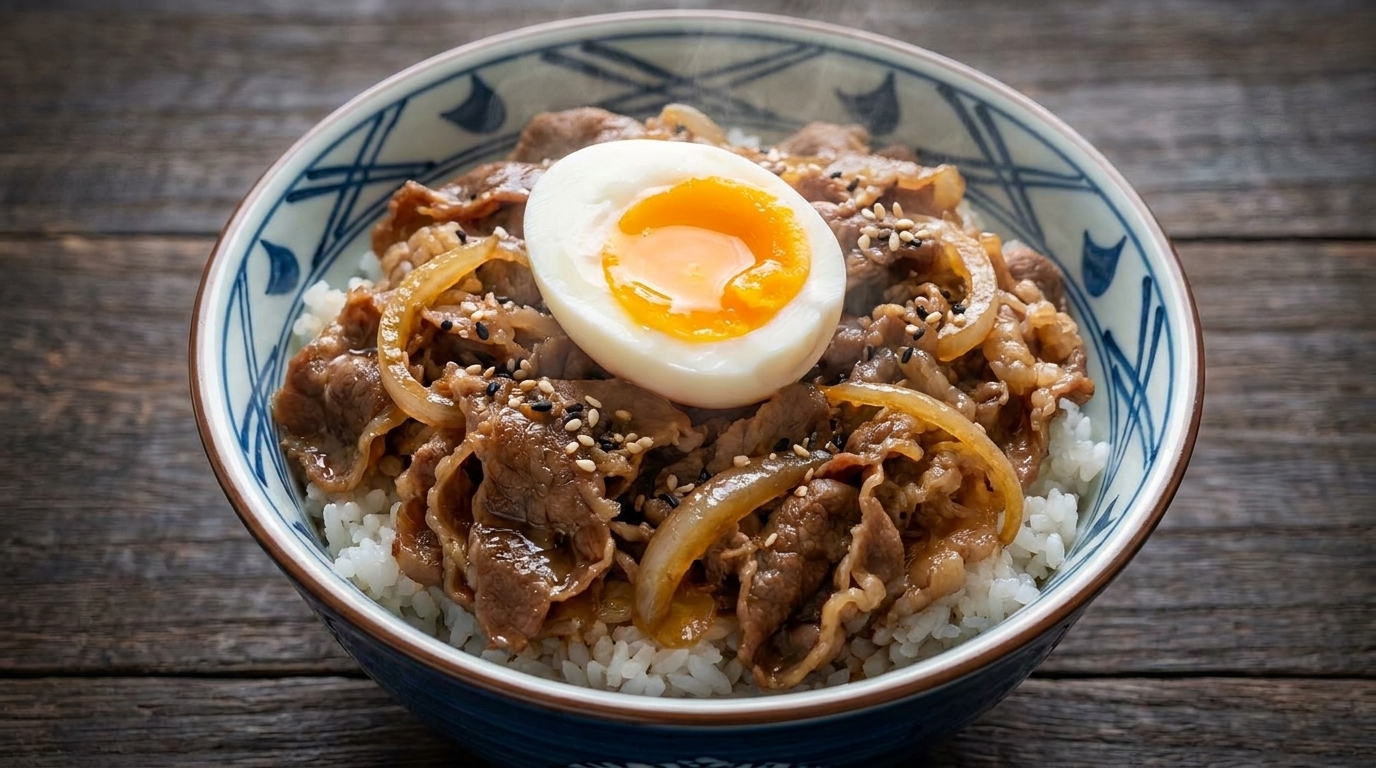
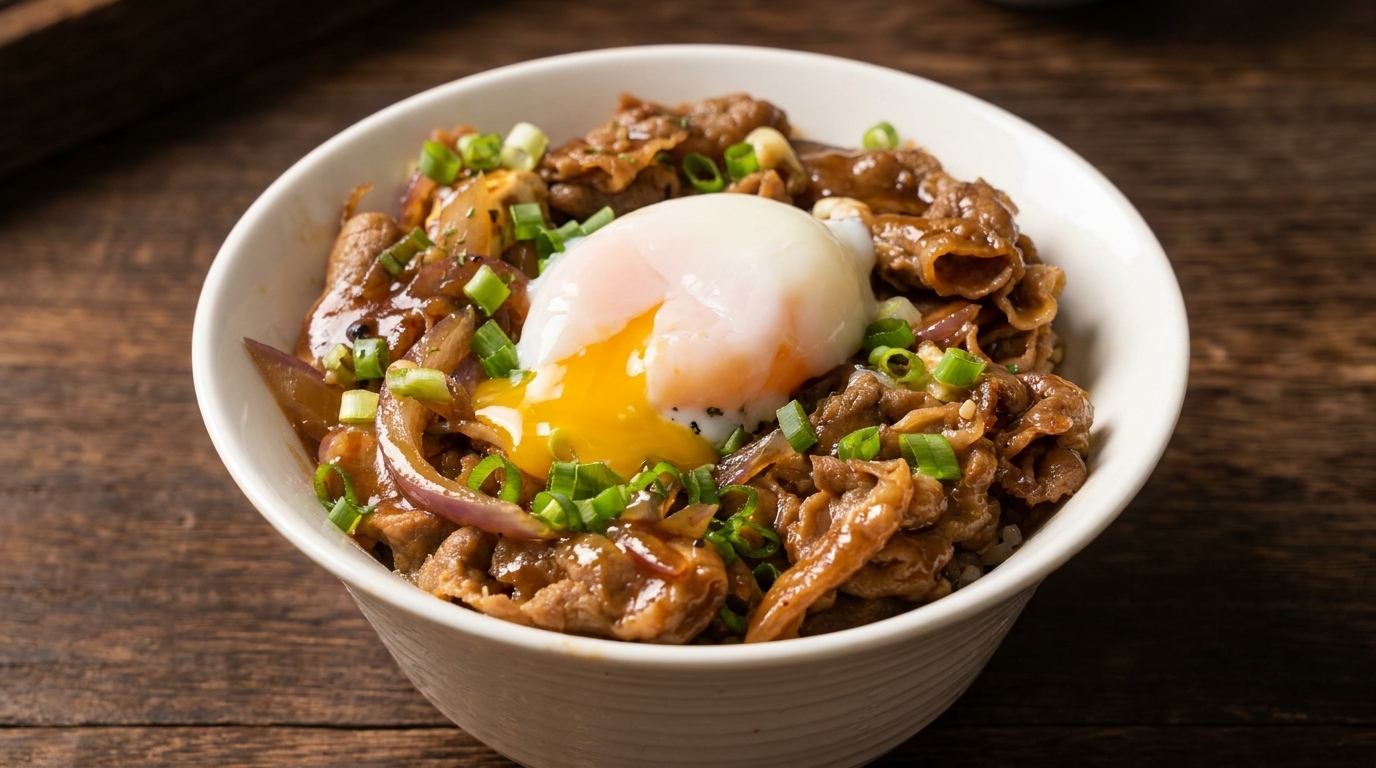
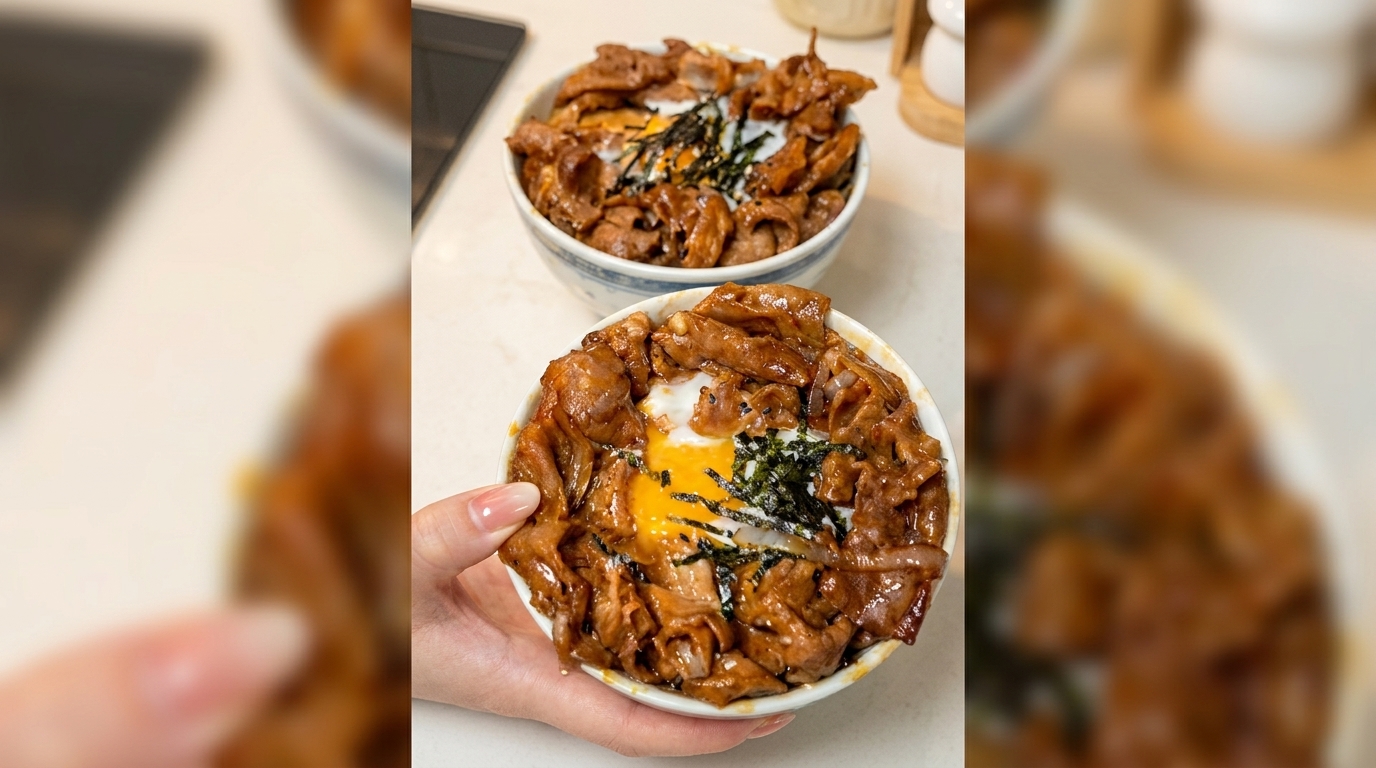
Experience the ultimate Japanese comfort food with tender beef and caramelized onions simmered in a sweet dashi-style glaze, topped with a silky, custard-like onsen egg.
Gyudon is a cornerstone of Japanese soul food, perfected in the bustling streets of Tokyo. This version elevates the humble beef bowl with a perfectly timed onsen egg, creating a rich, creamy sauce that melds with the savory soy and mirin-glazed beef. Its a masterclass in balancing salty, sweet, and umami flavors in a single bowl.
Ingredients
- 300 g thinly sliced beef (brisket or ribeye)
- 2 eggs
- 1 white onion
- 2 stalks green onions
- 20 g fresh ginger
- 2 tbsp cooking wine
- 1 tbsp cooking oil
- 2 tbsp light soy sauce
- 1 tbsp dark soy sauce
- 1 tbsp oyster sauce
- 2 tbsp mirin
- 1 tsp cornstarch
- 2 bowls steamed white rice
- optional shredded nori seaweed
- optional black sesame seeds
Instructions
- 1Start the soft-boiled eggs
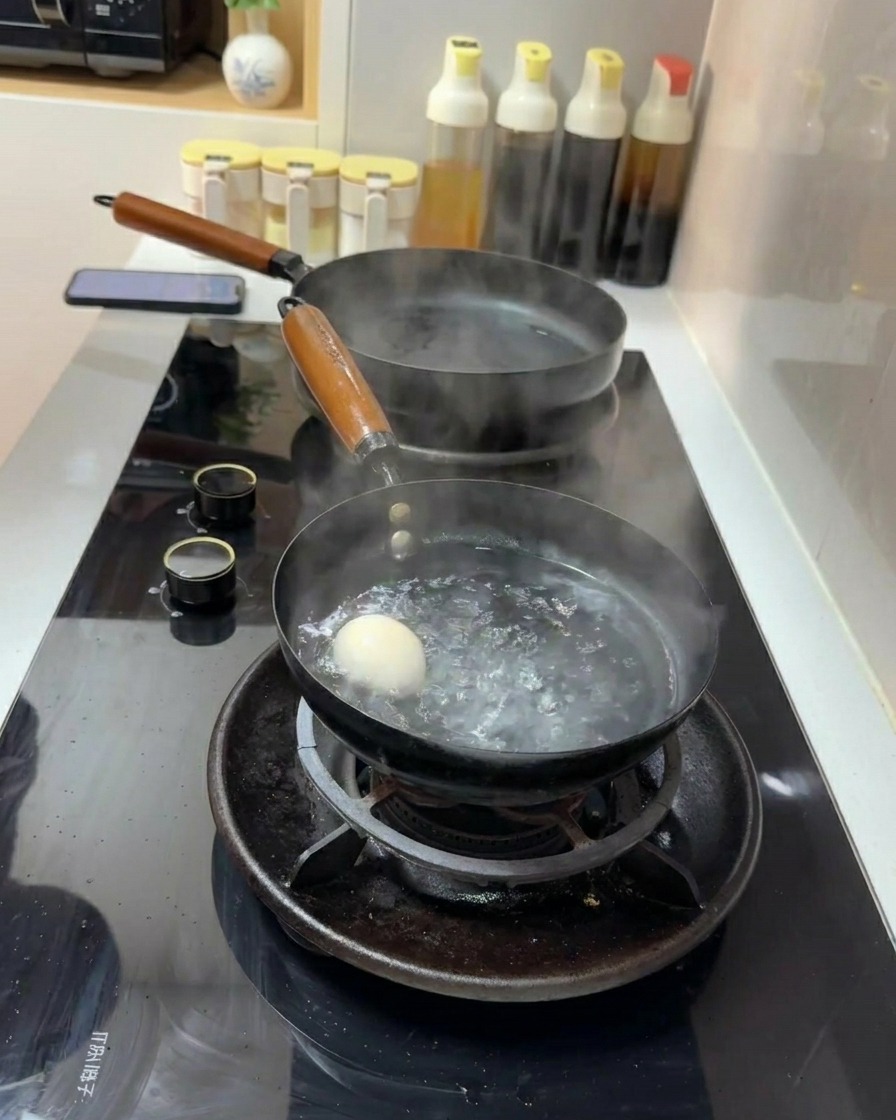
Carefully place the eggs into a pot of boiling water. Let them cook for exactly thirty seconds over heat. This initial burst of heat begins the cooking process before the transition to a gentle poaching temperature.
Tip: Use a slotted spoon to lower the eggs gently to prevent the shells from cracking against the bottom of the pot. - 2Adjust the water temperature
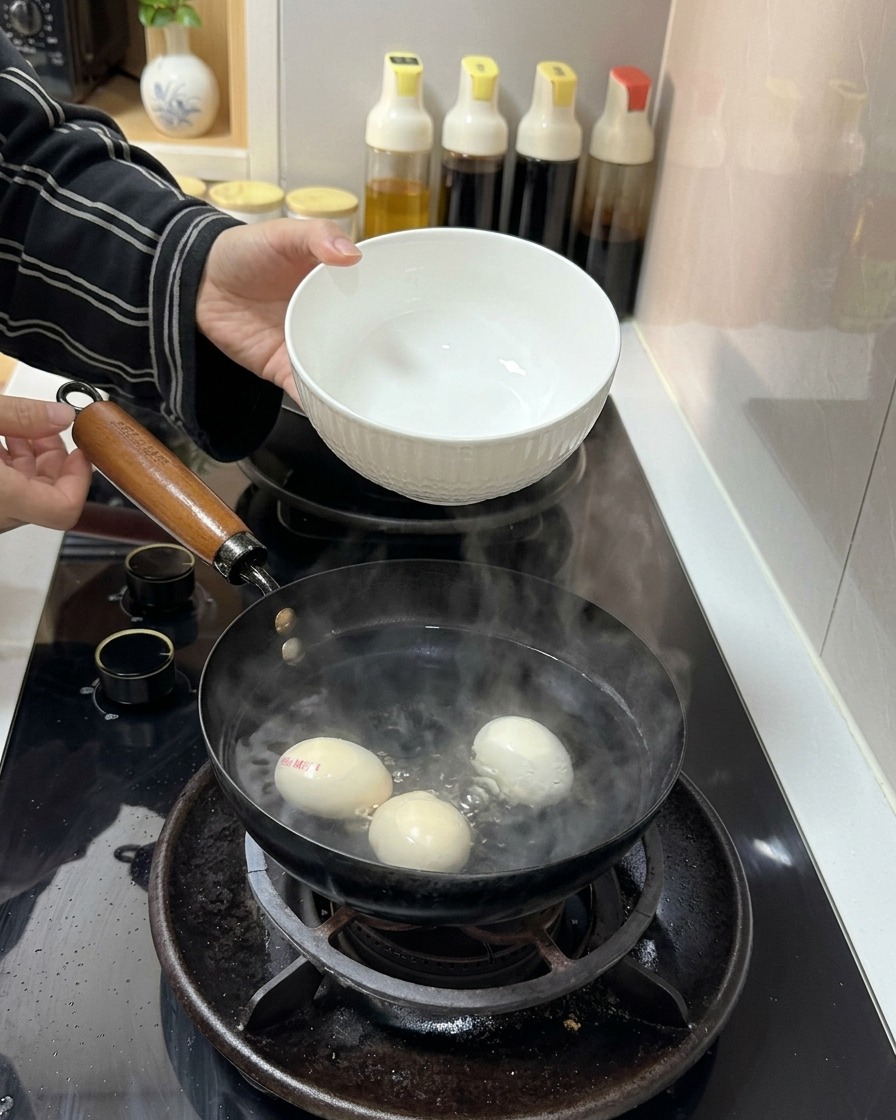
Turn off the heat and add cold water to the pot. Use a volume of cold water approximately one-third the amount of the hot water already in the pot. Cover with a lid and let the eggs sit in this tempered water for seven and a half minutes to achieve the perfect onsen-style consistency.
Tip: The ratio of cold to hot water is key to dropping the temperature just enough to cook the yolk without solidifying it completely. - 3Cool the eggs in an ice bath
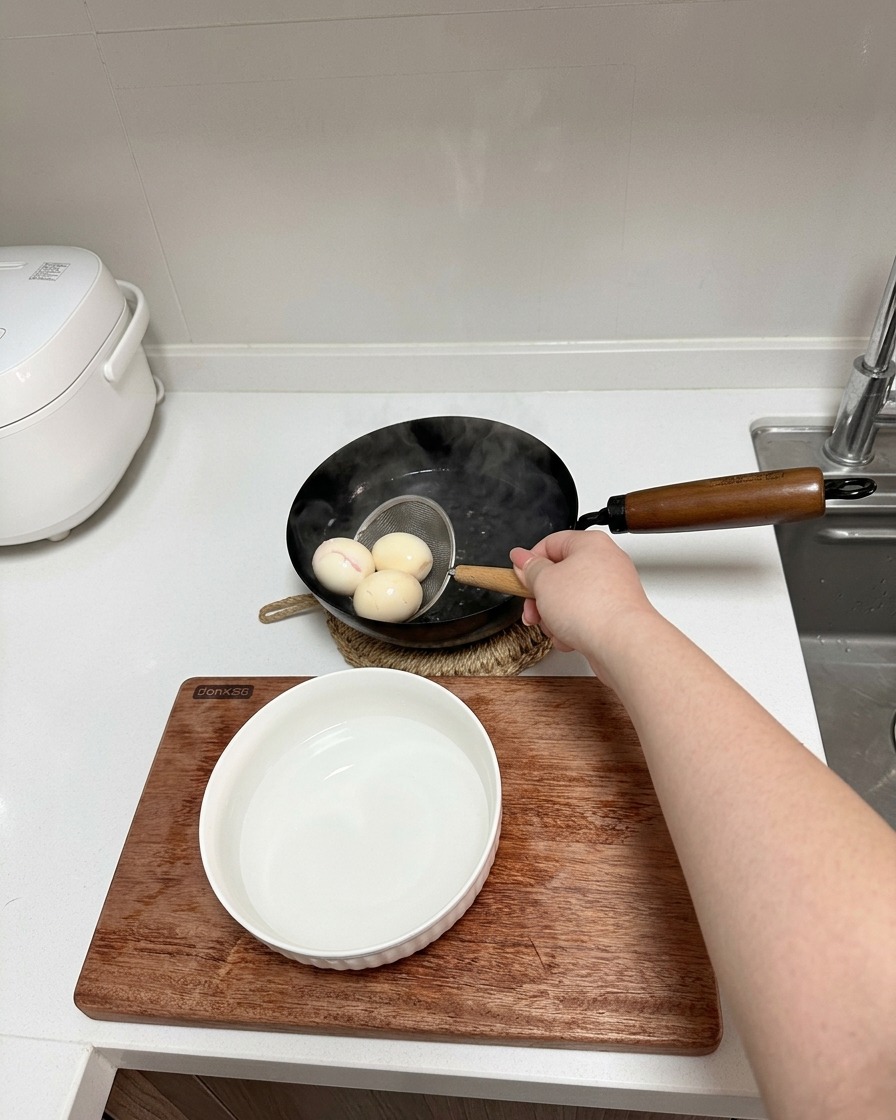
Once the time is up, immediately remove the eggs from the warm water using a strainer or slotted spoon. Transfer them into a bowl of cold water. This stops the cooking process instantly and makes the eggs easier to handle.
Tip: Leaving the eggs in the cold water for a few minutes ensures the residual heat doesnt continue to cook the delicate centers. - 4Prepare the blanching liquid
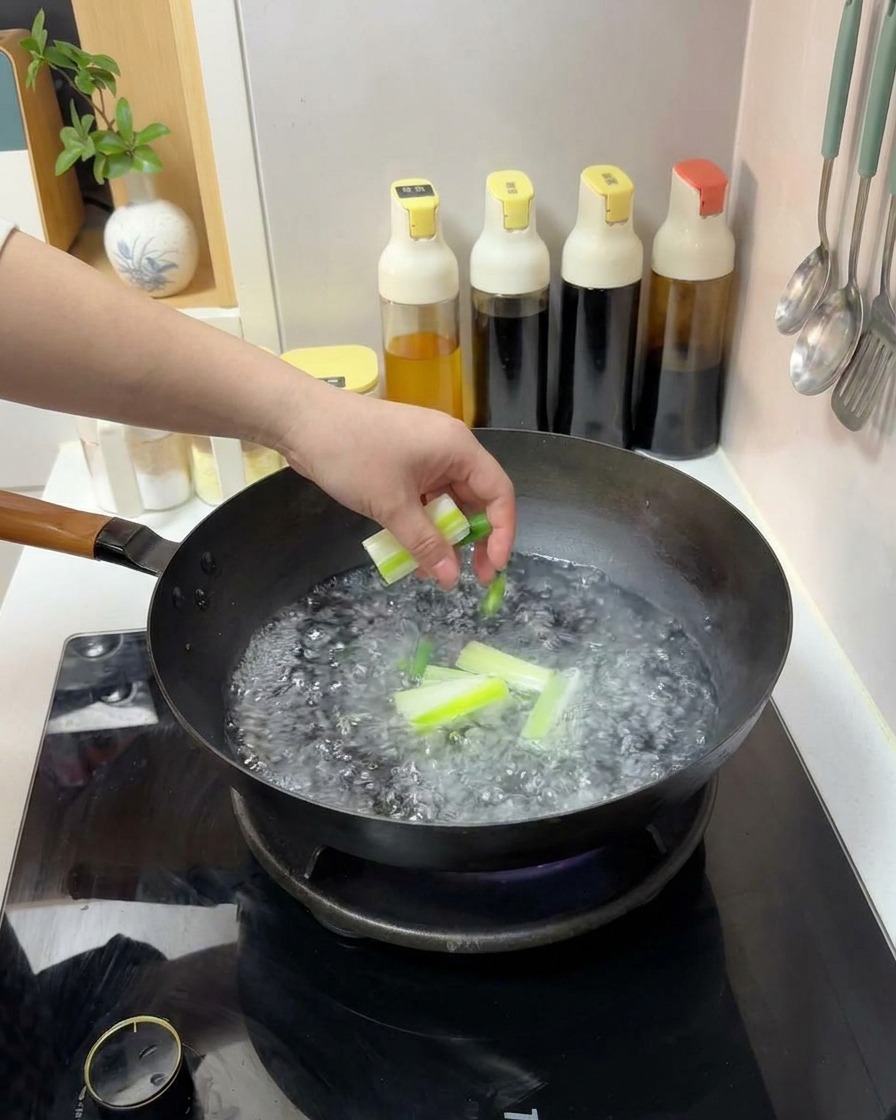
In a clean wok or large pan, bring a fresh batch of water to a boil. Add sliced green onions and pieces of ginger to the water. These aromatics will help infuse the beef with flavor and remove any unwanted gamey odors during the blanching process.
Tip: Smashing the ginger slightly before adding it helps release more of its aromatic oils into the water. - 5Add cooking wine for aroma
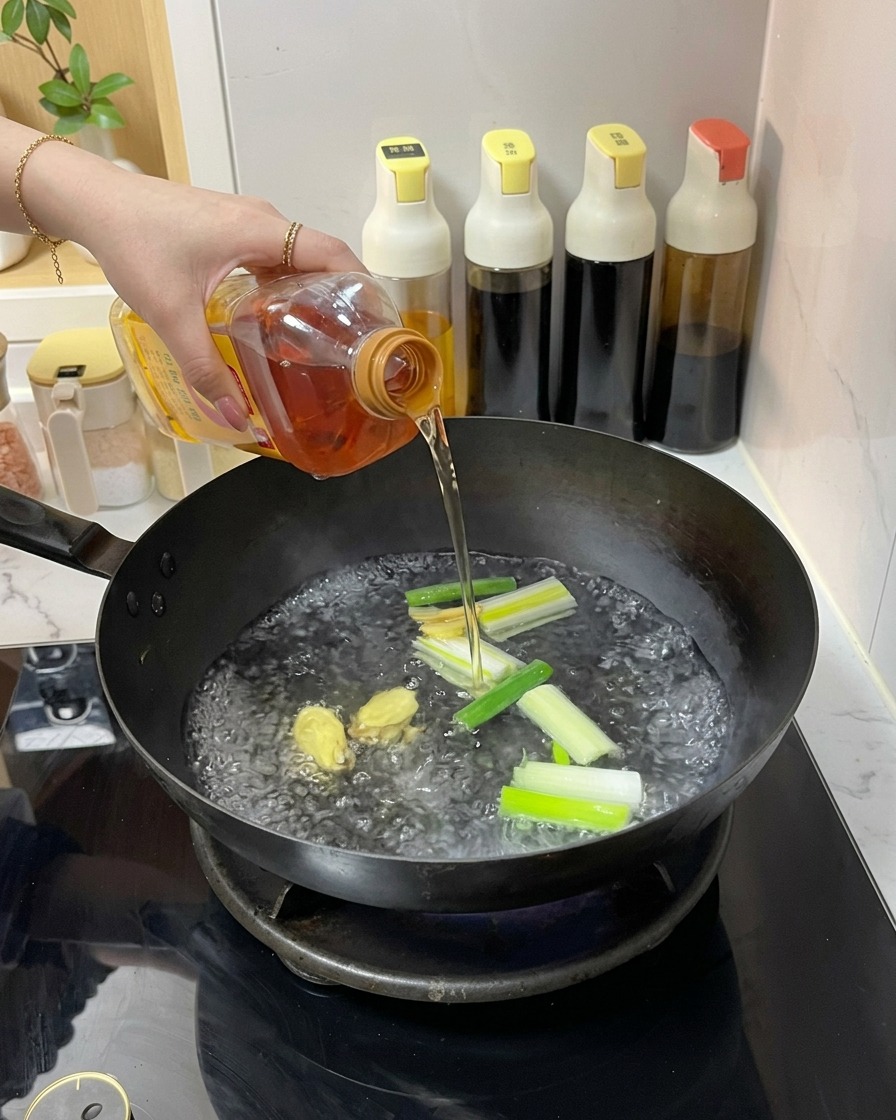
Pour a generous splash of cooking wine into the boiling water with the aromatics. This further prepares the water for the beef, ensuring the final dish has a clean, savory profile.
Tip: Shaoxing wine is a standard choice, but any dry rice wine works well for this step. - 6Blanch the beef slices
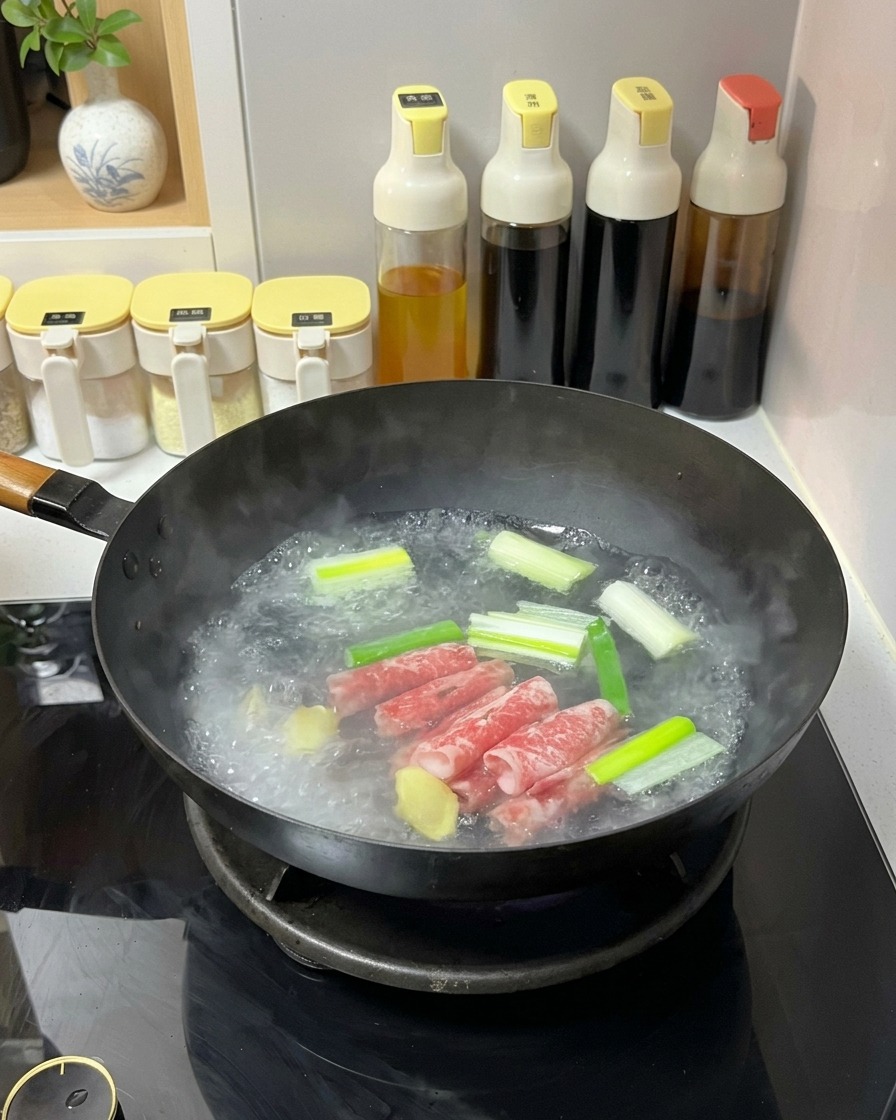
Add the thinly sliced raw beef to the boiling water. Stir briefly to ensure the slices are separated and cook evenly. Once the beef is just cooked through and no longer pink, quickly scoop it out and set it aside to prevent it from becoming tough.
Tip: Since the beef is very thin, it only needs a very short time in the water—usually less than a minute. - 7Remove the blanched beef
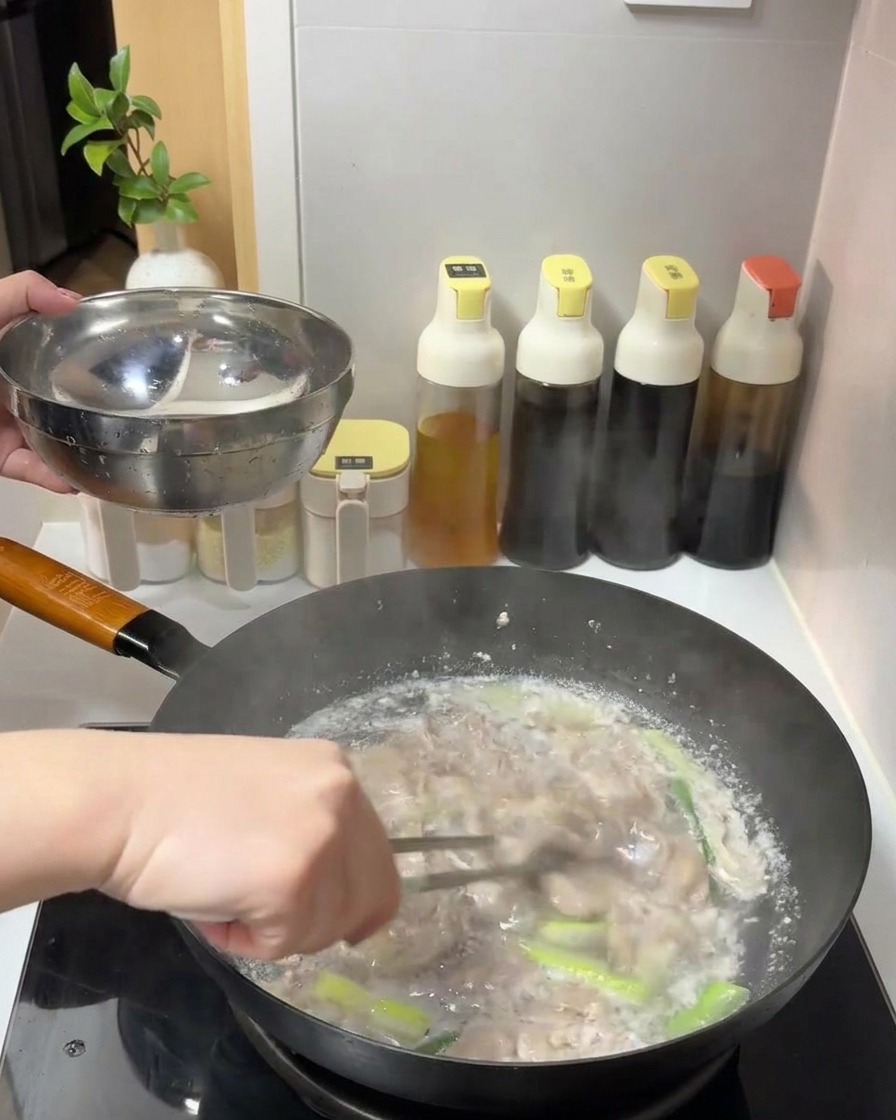
Once the beef slices are fully cooked through and have turned from pink to a greyish-brown color, use tongs or a slotted spoon to scoop them out of the boiling water. Set the meat aside in a bowl to drain while you prepare the next stage of the dish.
Tip: Do not overcook the beef during this stage; as soon as the raw color disappears, remove it so it remains tender for the stir-fry. - 8Heat the pan with oil
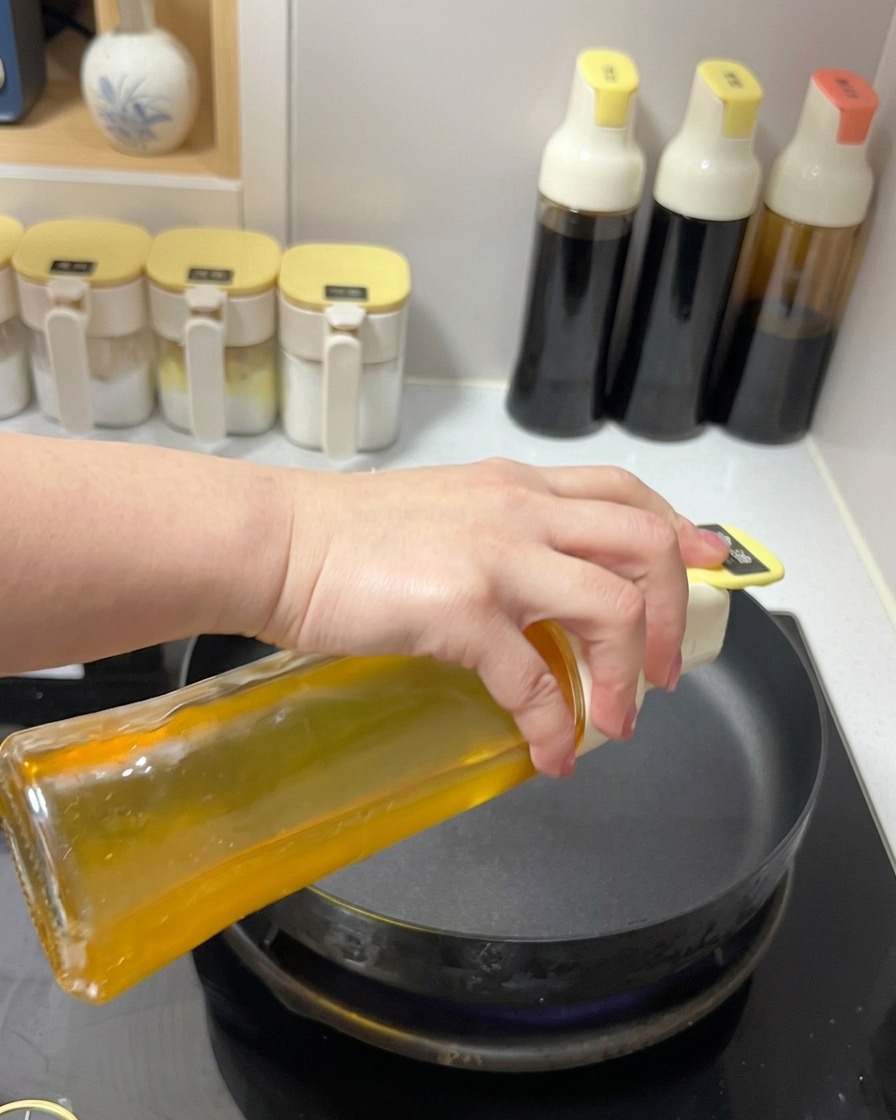
Place a clean frying pan over medium heat and pour in a small amount of cooking oil. Allow the oil to heat up until it shimmer slightly, which ensures the onions will sauté properly without sticking.
Tip: Wait until the pan is truly hot before adding the oil to create a more non-stick surface, even on standard pans. - 9Sauté the onions
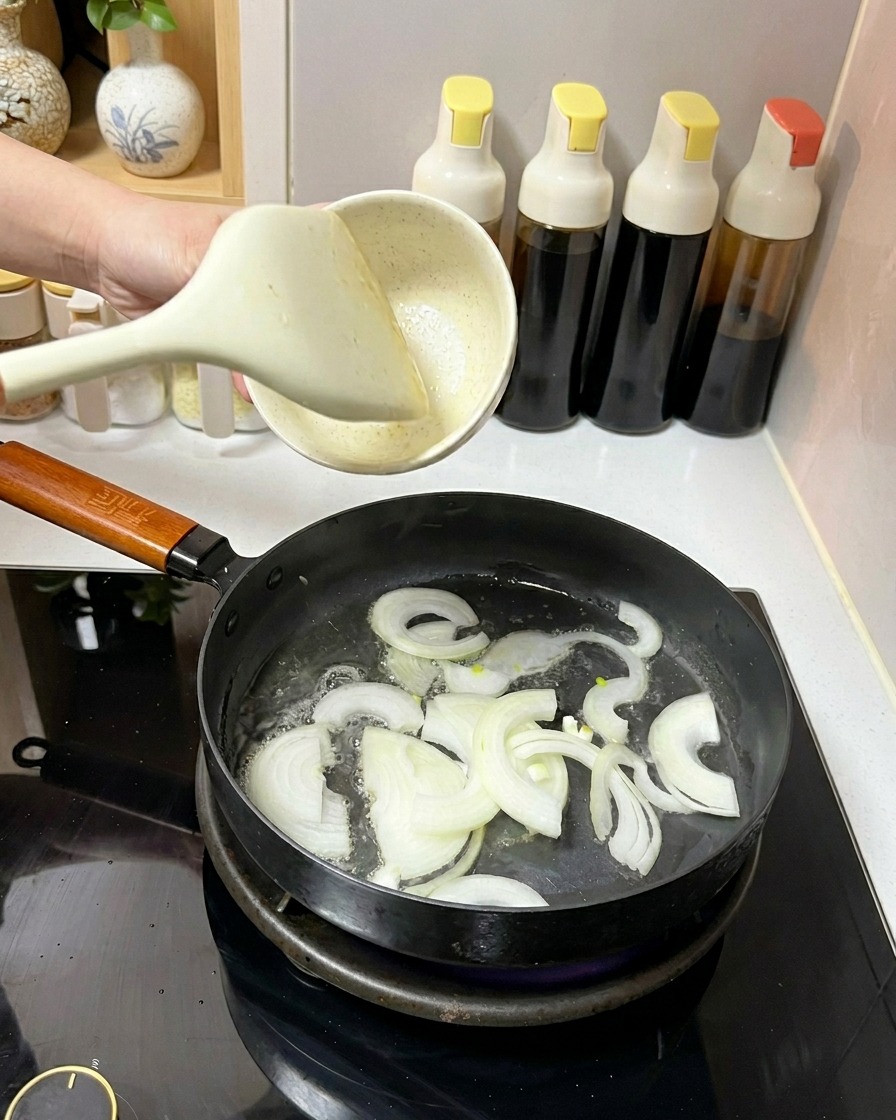
Add the sliced white onions to the hot oil. Stir-fry them constantly until they become soft, translucent, and start to develop a slight char or golden-brown color on the edges for extra sweetness.
Tip: If the onions are browning too quickly without softening, lower the heat slightly to allow them to caramelize properly. - 10Combine beef and onions
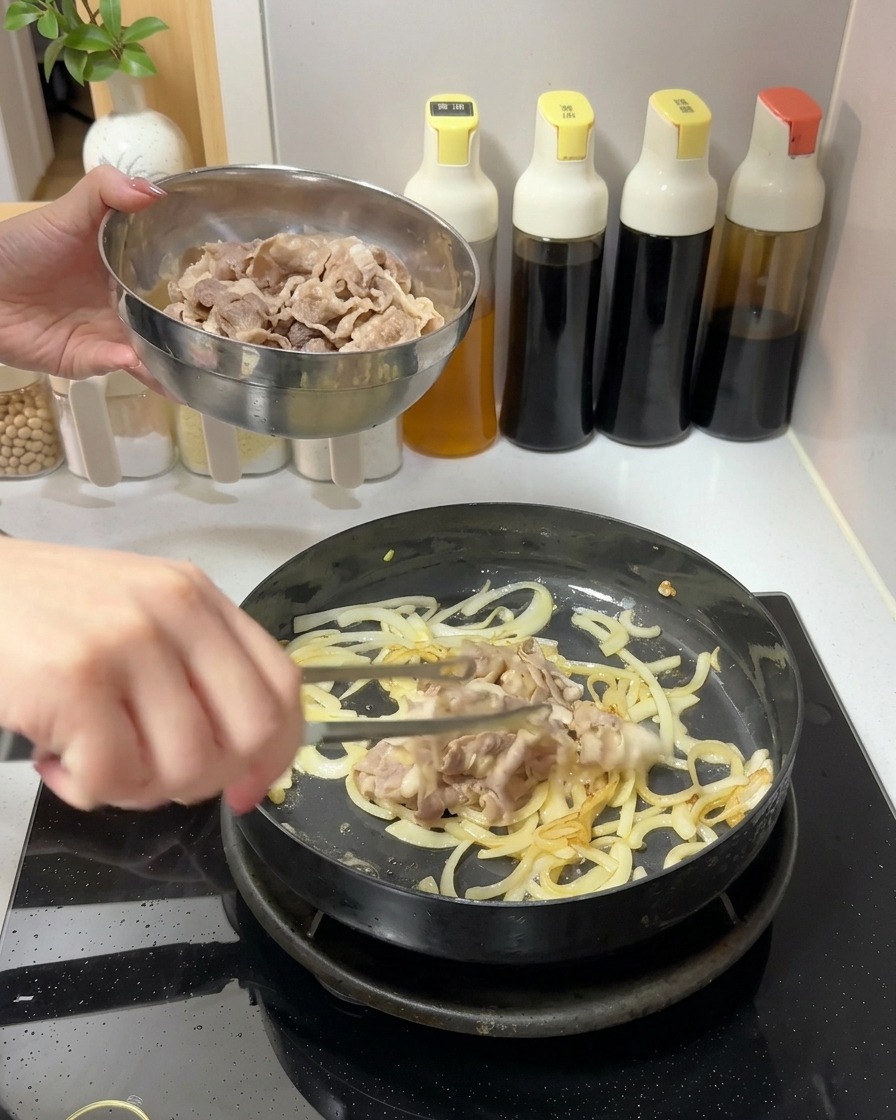
Transfer the previously blanched beef slices into the pan with the sautéed onions. Toss the two ingredients together briefly to ensure the beef is reheated and the flavors begin to meld.
Tip: Toss the beef quickly just to coat it with the onion oils; since it is already blanched, you want to avoid overcooking it before the sauce arrives. - 11Add the savory sauce
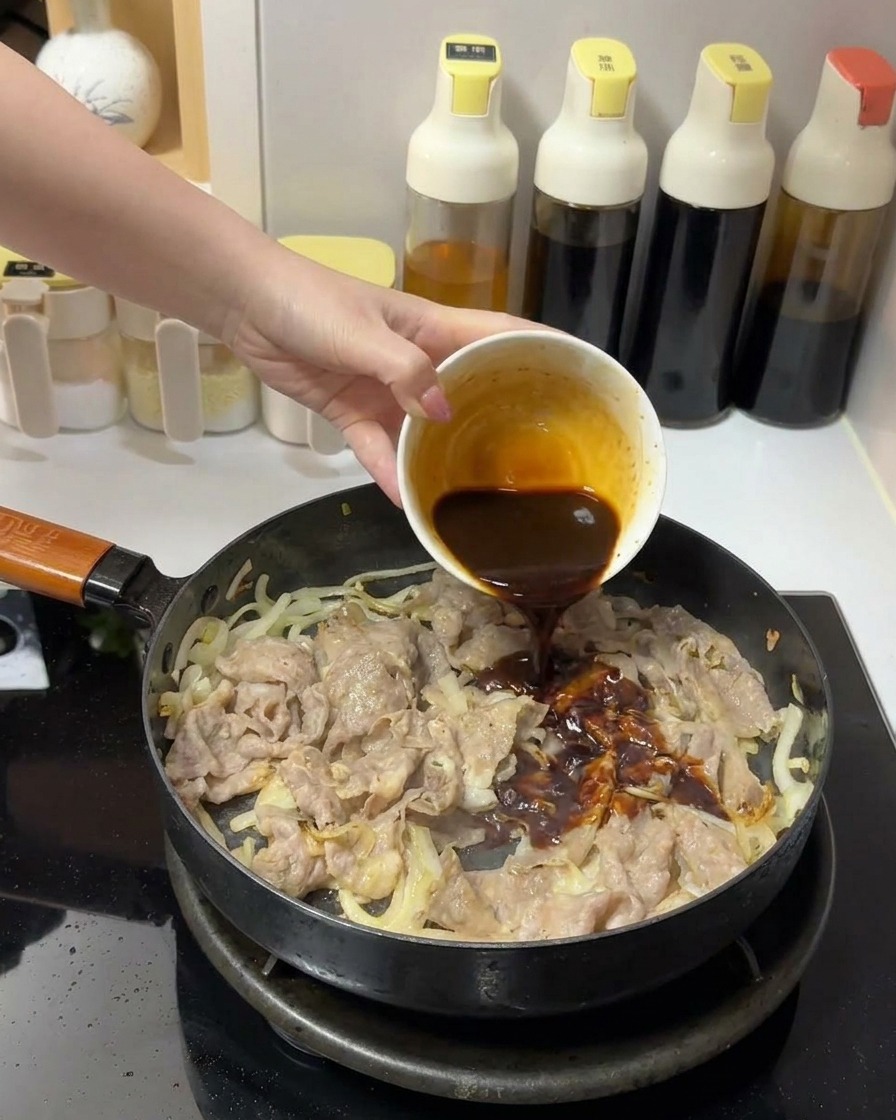
Pour the prepared seasoning sauce—made from light and dark soy sauce, oyster sauce, mirin, and starch—evenly over the beef and onion mixture in the pan.
Tip: Make sure to stir the sauce in its bowl right before pouring to ensure the starch hasnt settled at the bottom. - 12Stir-fry and thicken
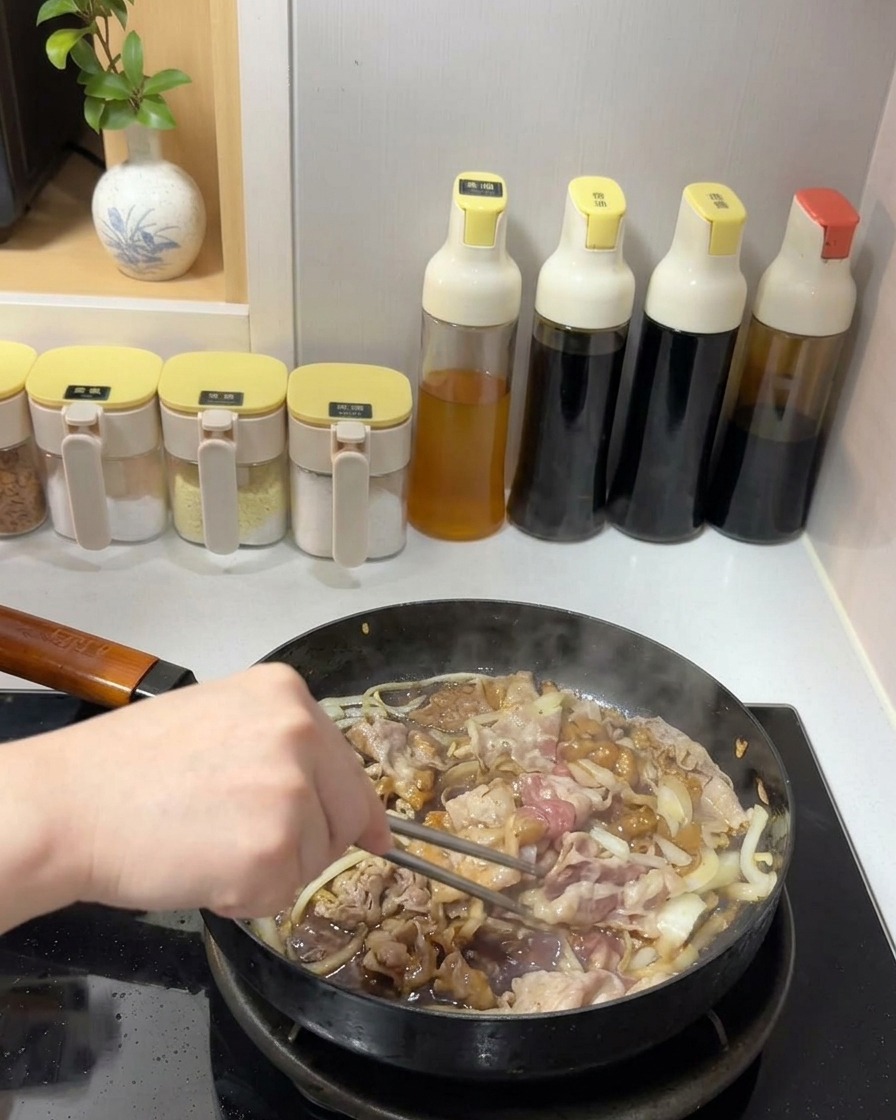
Stir-fry the mixture thoroughly so every slice of beef and onion is evenly coated in the dark sauce. Continue cooking for a few minutes until the sauce thickens and glazes the ingredients beautifully.
Tip: The starch in the sauce will thicken it quickly; if it becomes too thick, add a splash of water to reach your desired consistency. - 13Reduce the glaze
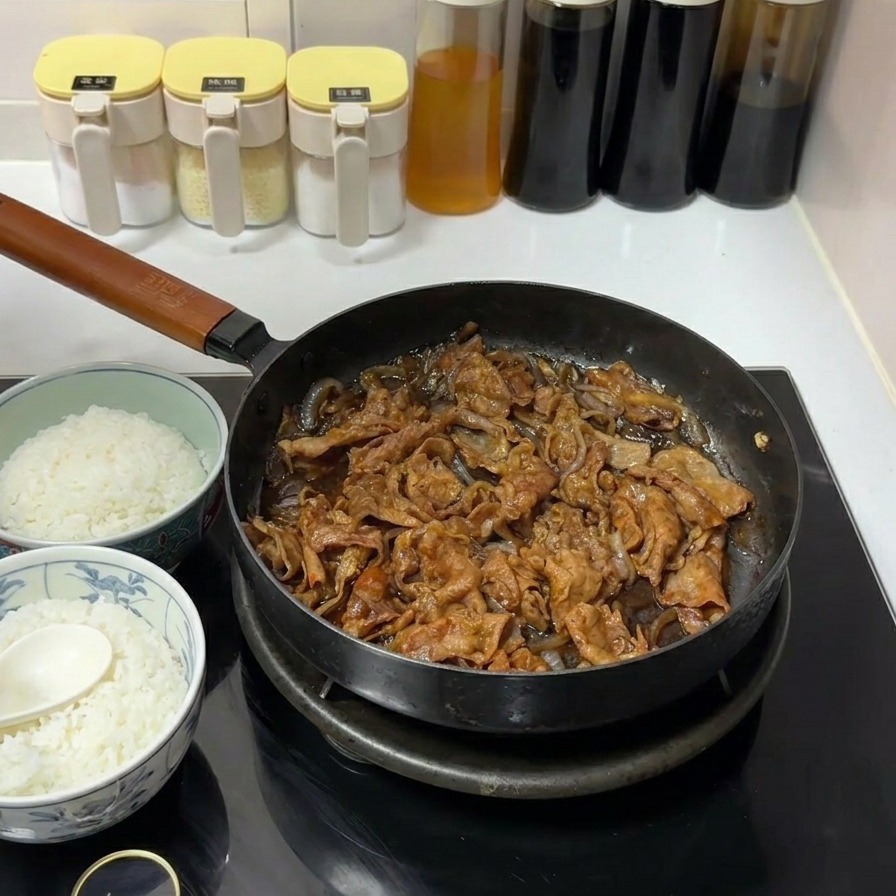
Simmer the mixture for a few minutes until the sauce reduces into a thick glaze that clings to the meat. This concentration of liquid ensures every bite is packed with savory and sweet flavor.
Tip: Keep the heat at medium to prevent the sauce from burning as it reduces. You want a thick consistency that clings to the beef. - 14Prepare the rice bed
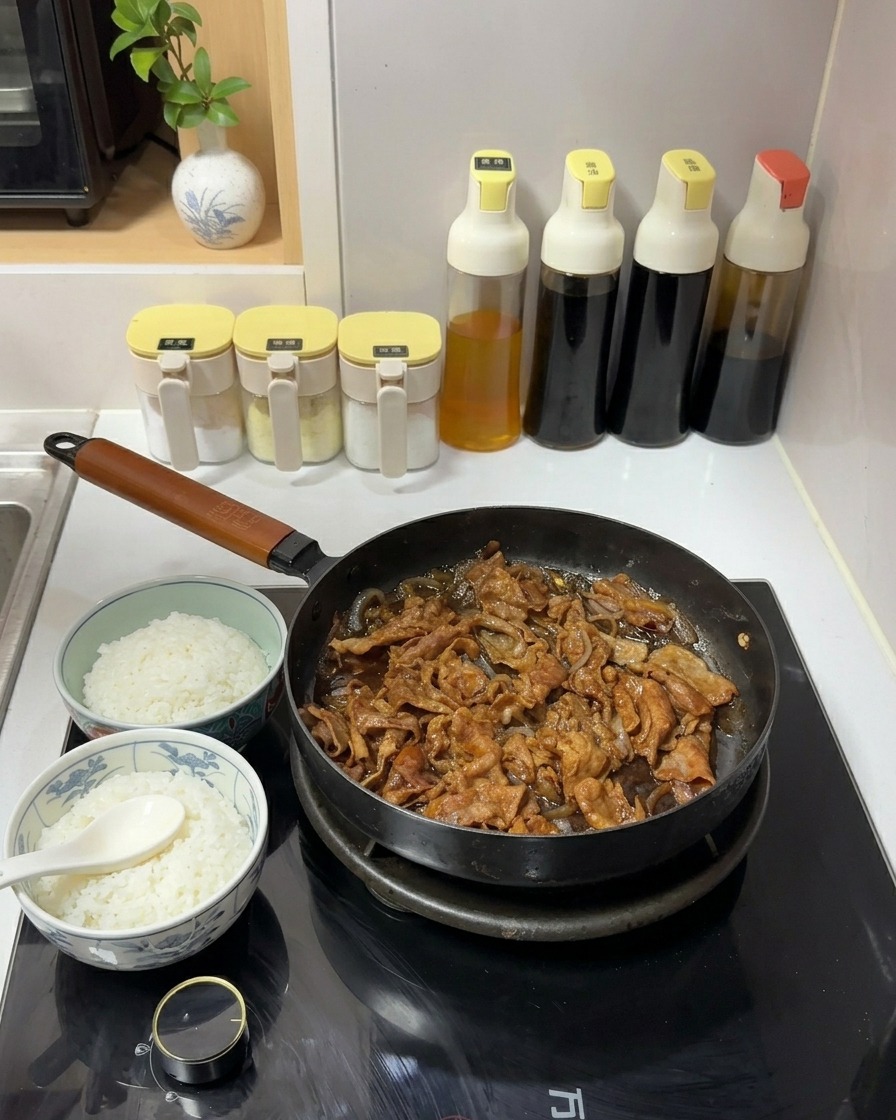
Prepare two bowls of hot, fluffy steamed white rice. Use a spoon to gently press a small well into the center of each bowl. This creates a stable space for the delicate onsen egg to sit in later.
Tip: Packing the rice slightly in the center prevents the egg from sliding to the side of the bowl during plating. - 15Plate the beef
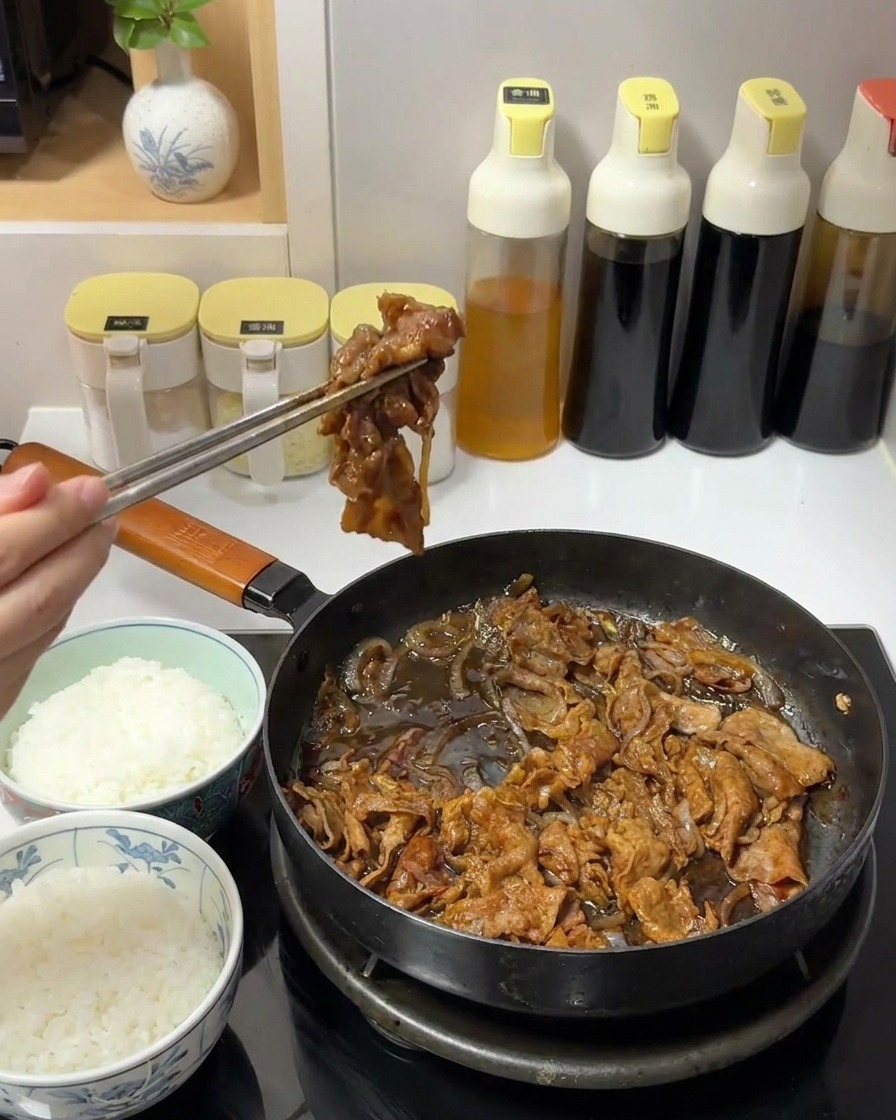
Using chopsticks or a spoon, carefully lift the glazed beef and onions from the pan and arrange them generously over the rice. Leave a small space in the center if you plan to add a soft-boiled egg later.
Tip: Arrange the beef in a ring shape to help support the onsen egg in the center. - 16Garnish and serve
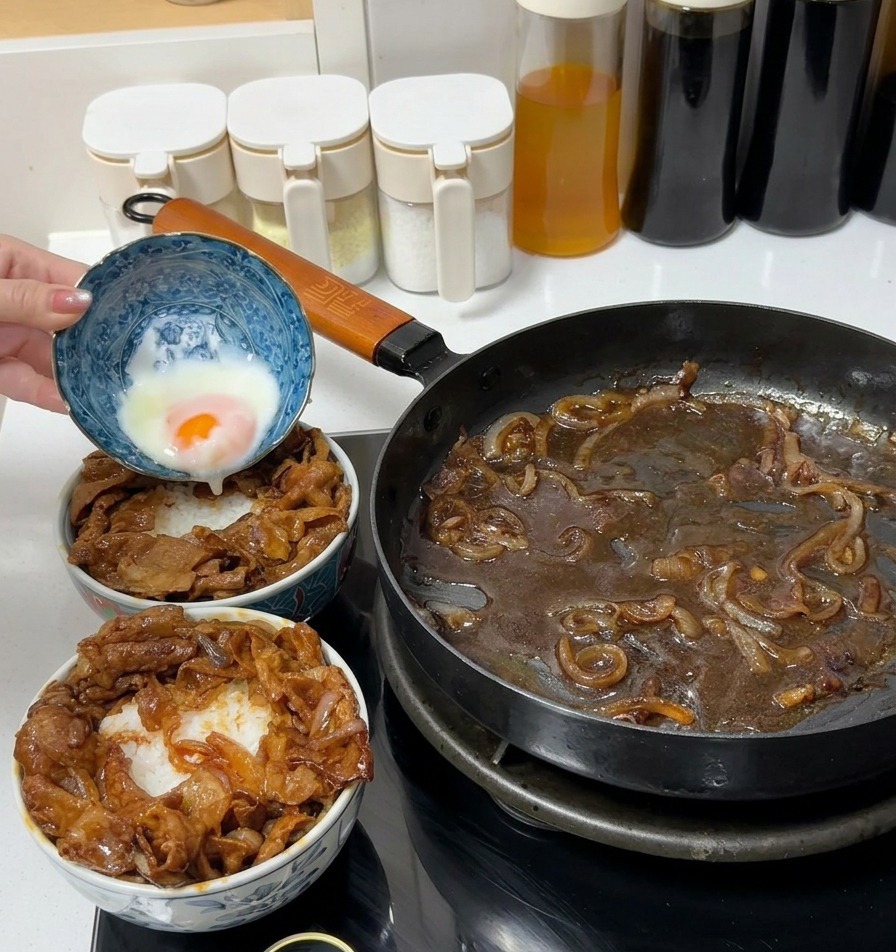
Carefully pour the prepared onsen egg over the center of the beef. Finish the dish by sprinkling shredded nori seaweed and black sesame seeds over the top for a professional touch and added texture.
Tip: Handle the onsen egg gently when pouring to ensure the delicate yolk remains intact for a better presentation.