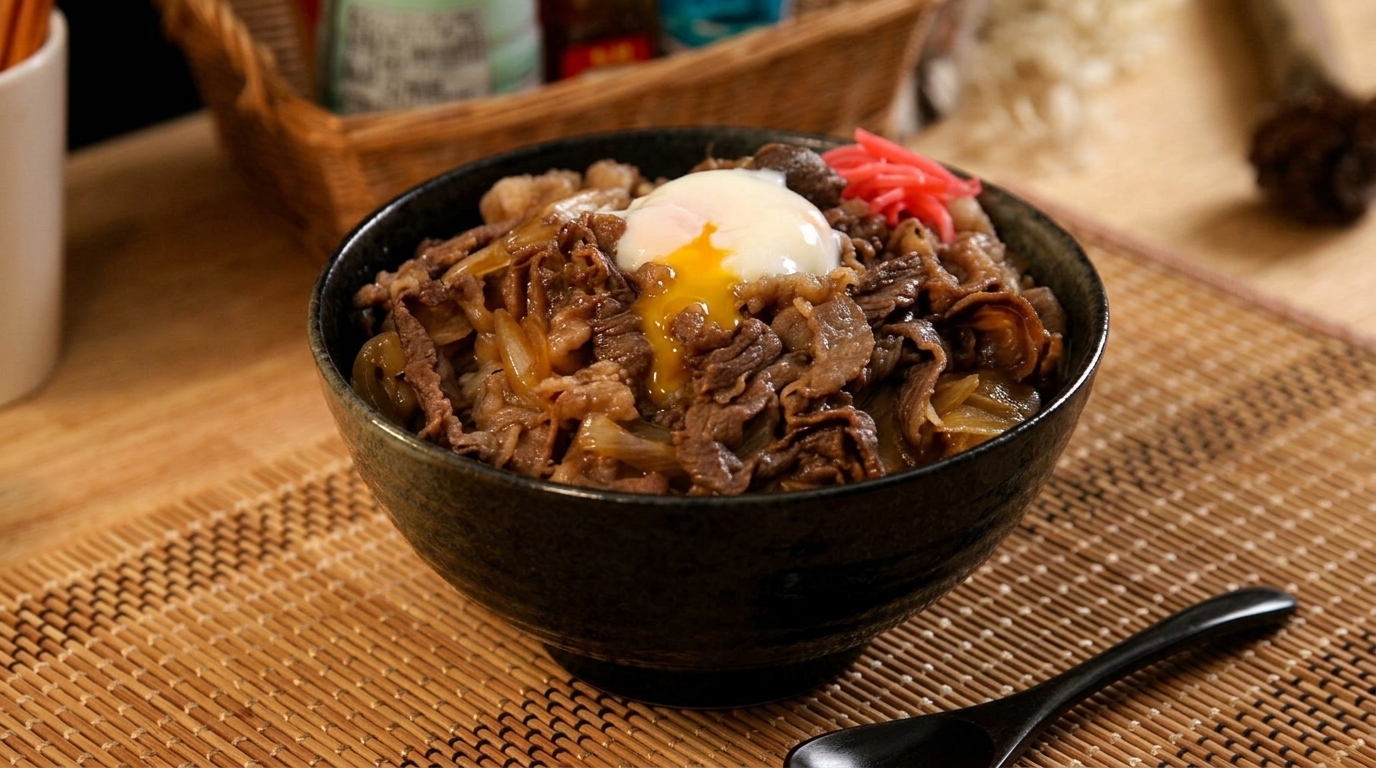
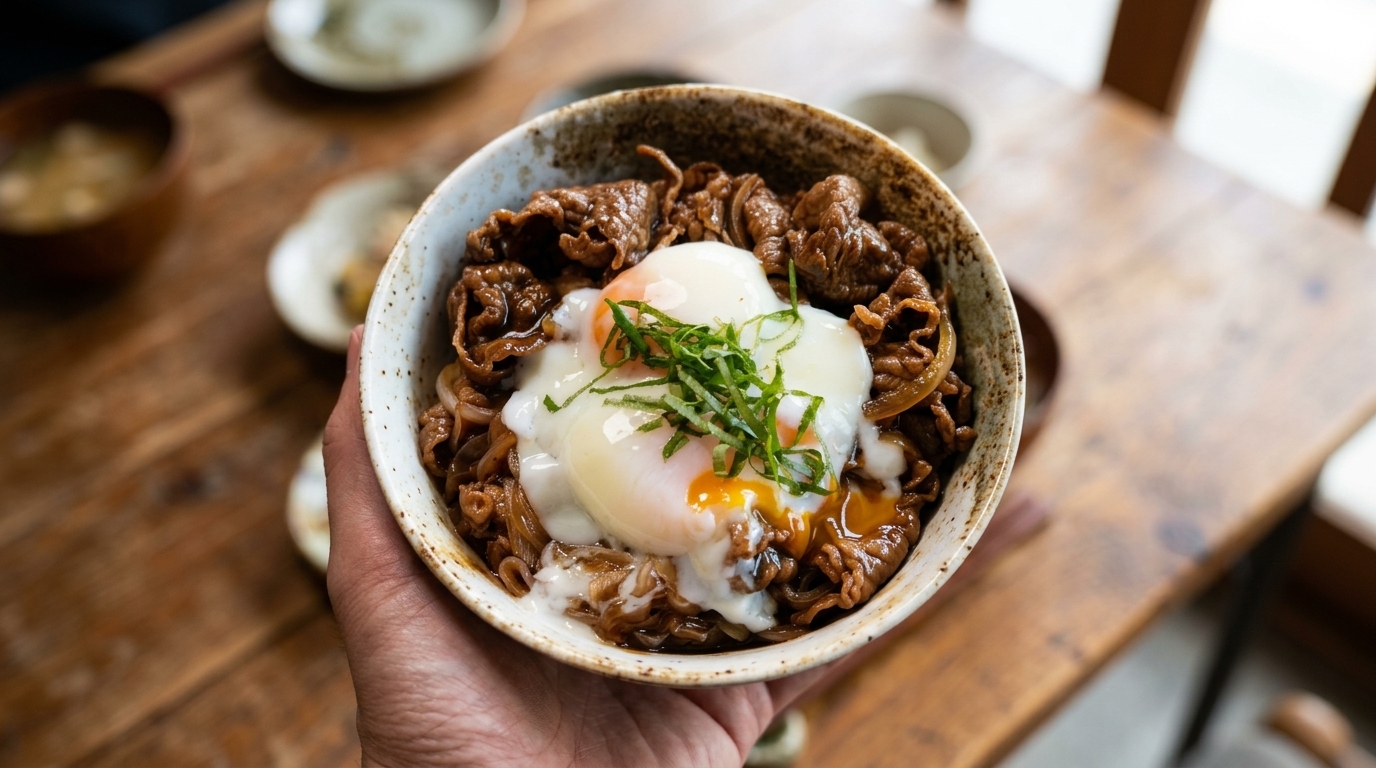
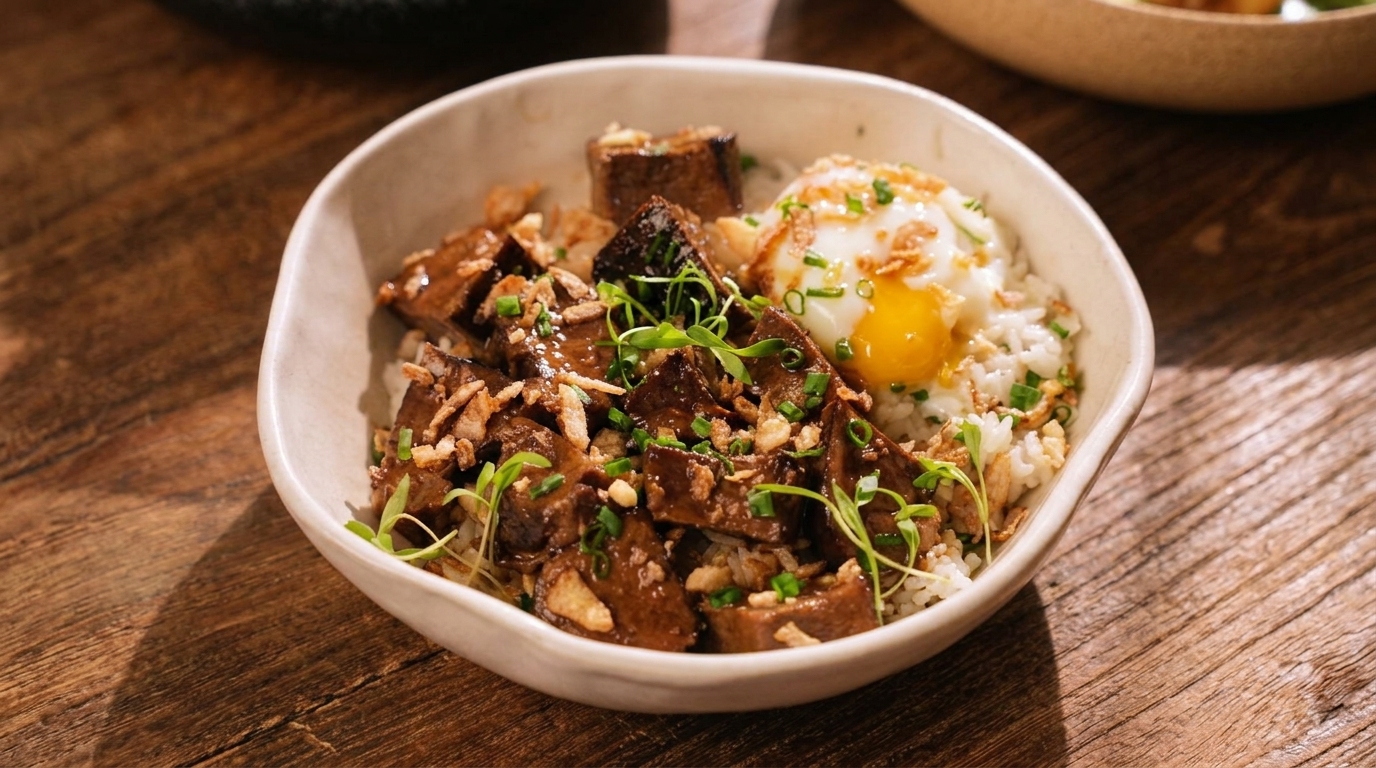
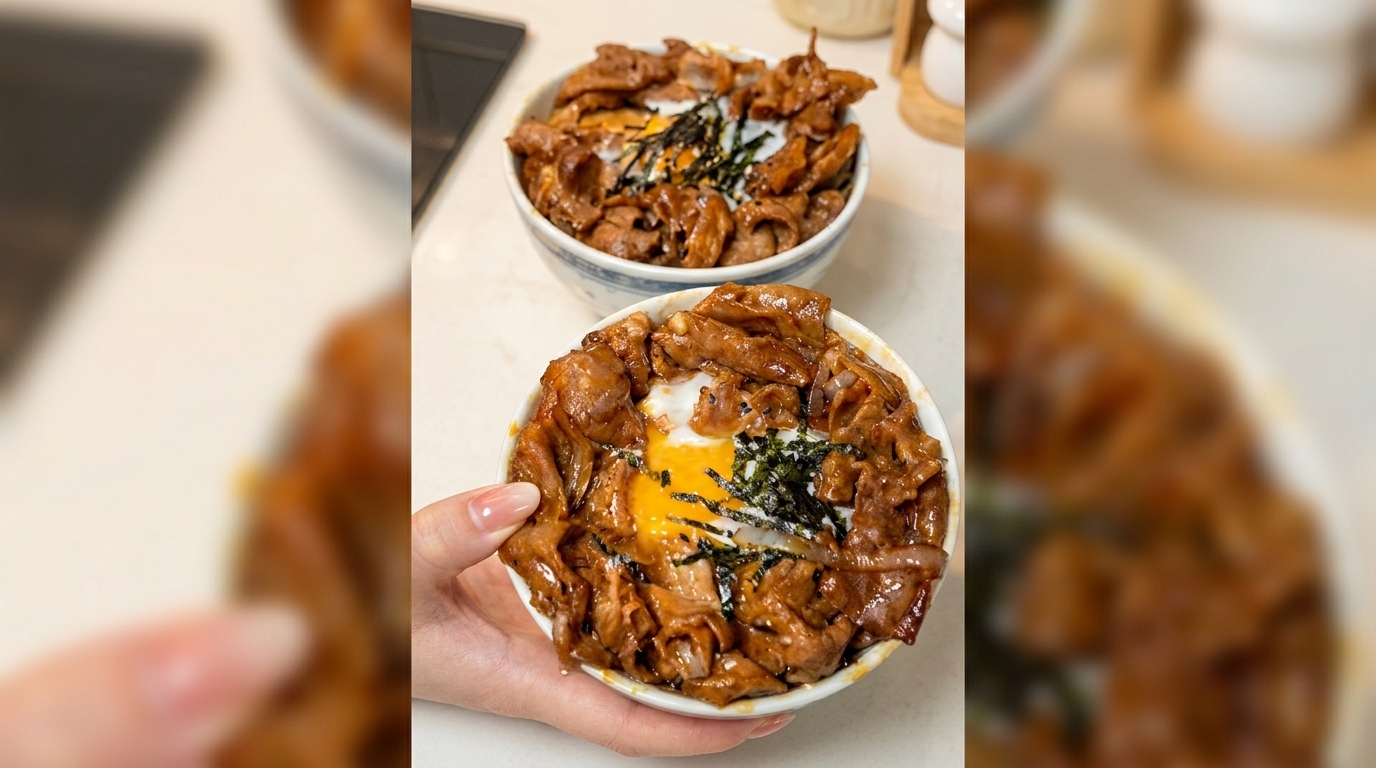
Easy Japanese Gyudon (Beef Bowl)
Perfect Onsen Egg
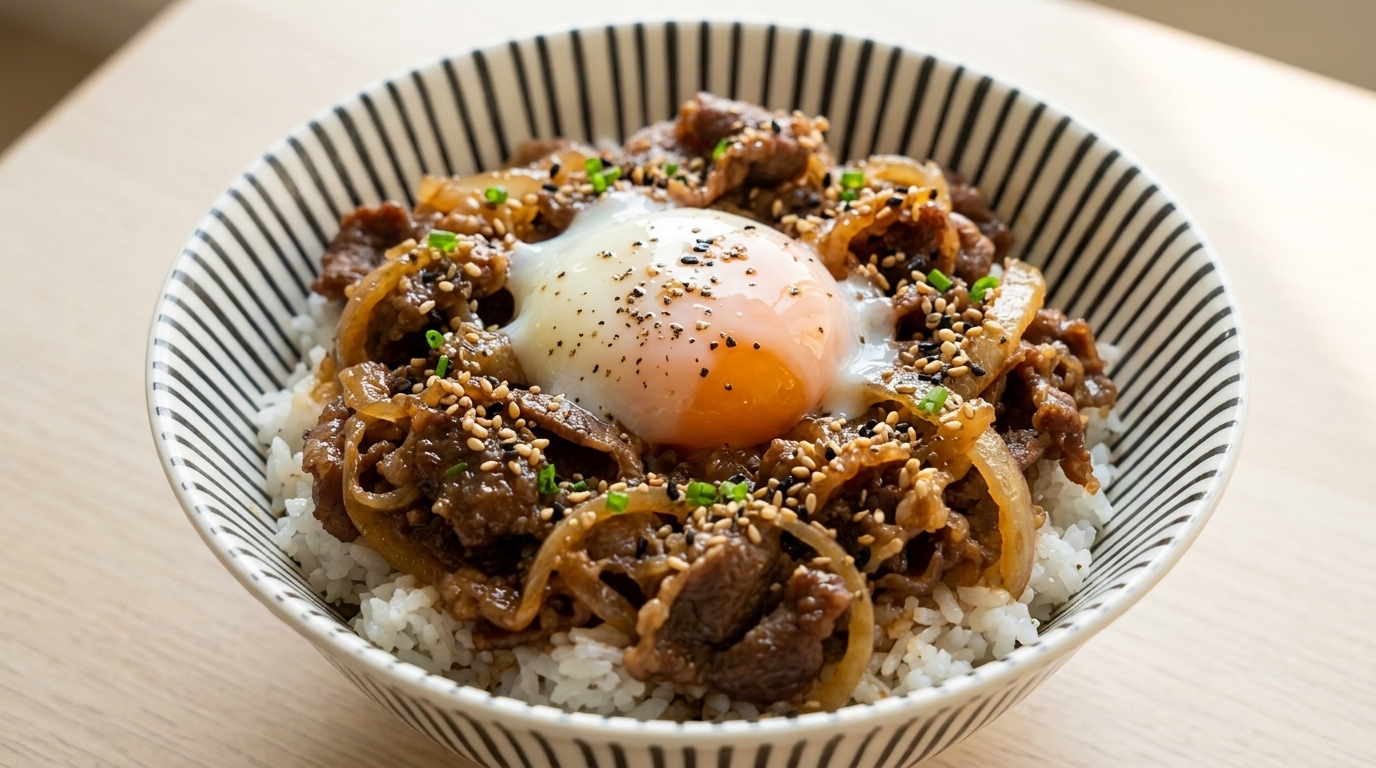
Master this comforting Japanese Gyudon at home. Tender fatty beef and sweet onions are simmered in a savory soy glaze and crowned with a velvety onsen egg.
Gyudon is the ultimate Japanese comfort food, beloved for its deep, savory-sweet flavors and incredibly fast cooking time. The magic lies in the balance of the simmering umami broth and the thinly sliced fatty beef that practically melts in your mouth. Crowning the dish with a slow-cooked onsen egg adds a remarkably rich, creamy texture that ties the whole bowl together effortlessly.
Ingredients
- 3 cups water (for steeping eggs)
- 2 large eggs
- 3 tbsp soy sauce
- 1 tsp dark soy sauce
- 1 tbsp cooking wine (sake or mirin)
- 1 tbsp sugar
- 2 cloves garlic, minced
- 1 tsp fresh ginger, minced
- 1 tbsp cooking oil
- 0.5 white onion, sliced
- 2 scallions, sliced
- 300 g thinly sliced fatty beef (sukiyaki cut)
- 2 bowls steamed white rice
- to taste toasted sesame seeds
- to taste black pepper
Instructions
- 1Boil the water
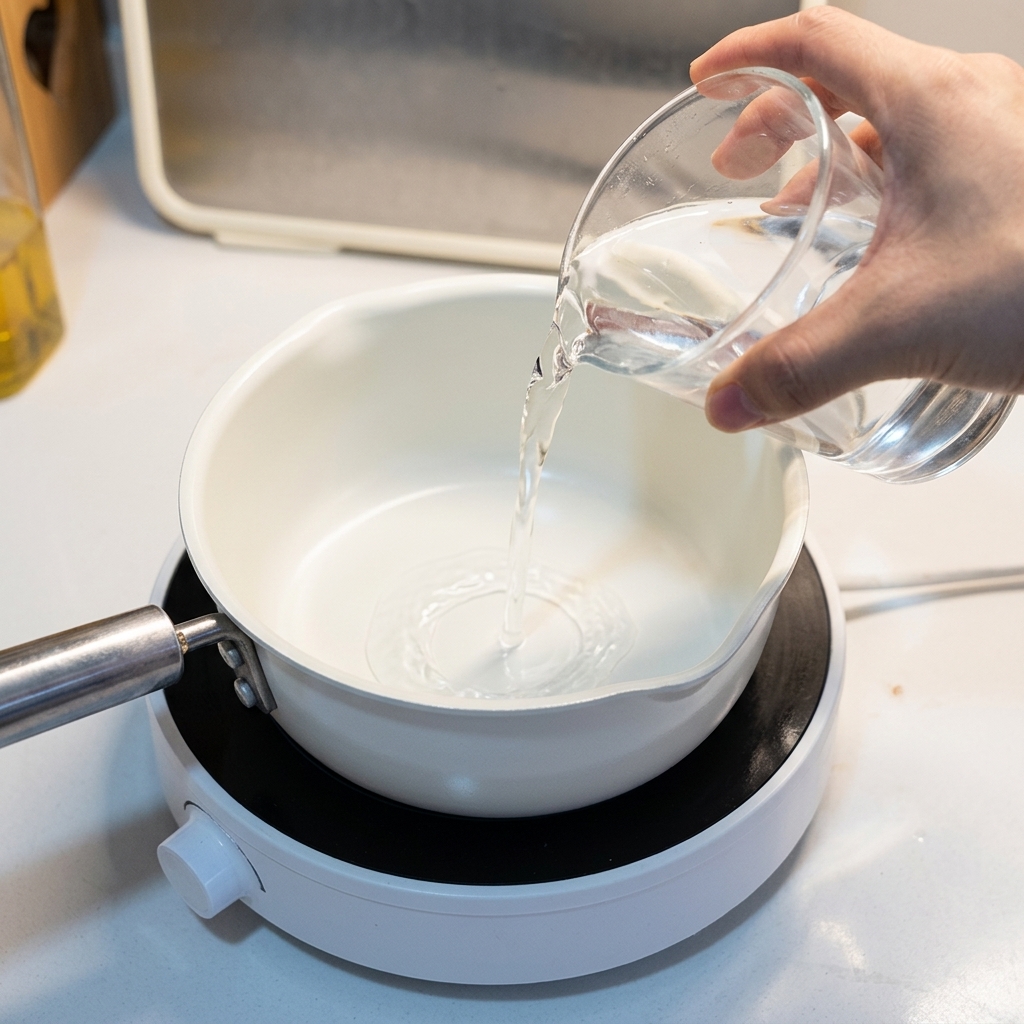
Start by pouring three cups of water from a measuring cup into a small pot. Place the pot on the stove and turn the heat to high. Bring the water to a full boil to prepare for cooking the eggs.
Tip: Using a pot with a thicker base helps retain heat after the stove is turned off, which is crucial for achieving perfect onsen eggs. - 2Steep the eggs
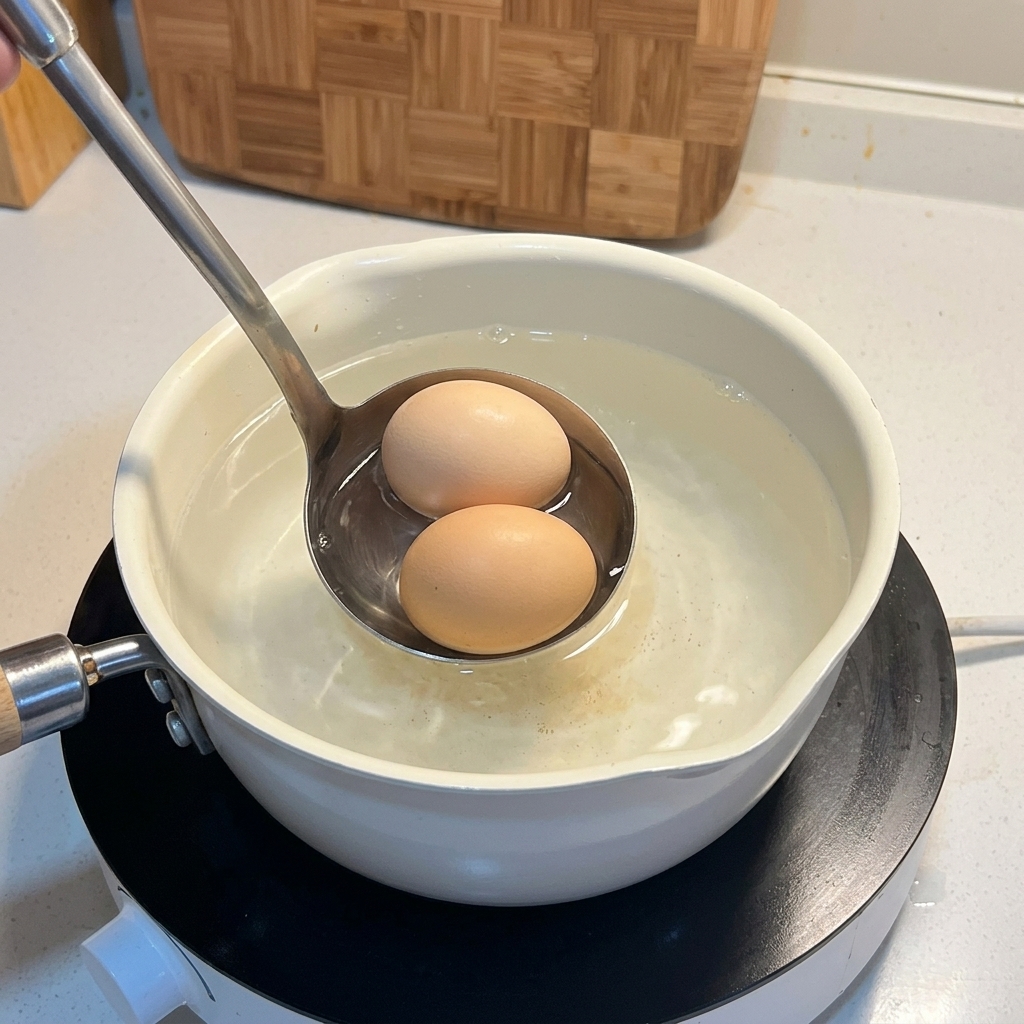
Once the water reaches a rolling boil, turn off the heat immediately. Use a ladle to carefully lower the unpeeled raw eggs into the hot water so they dont crack. Set a timer for exactly 15 minutes to let them steep.
Tip: Ensure the eggs are completely submerged in the hot water for even and consistent cooking. - 3Cool the eggs
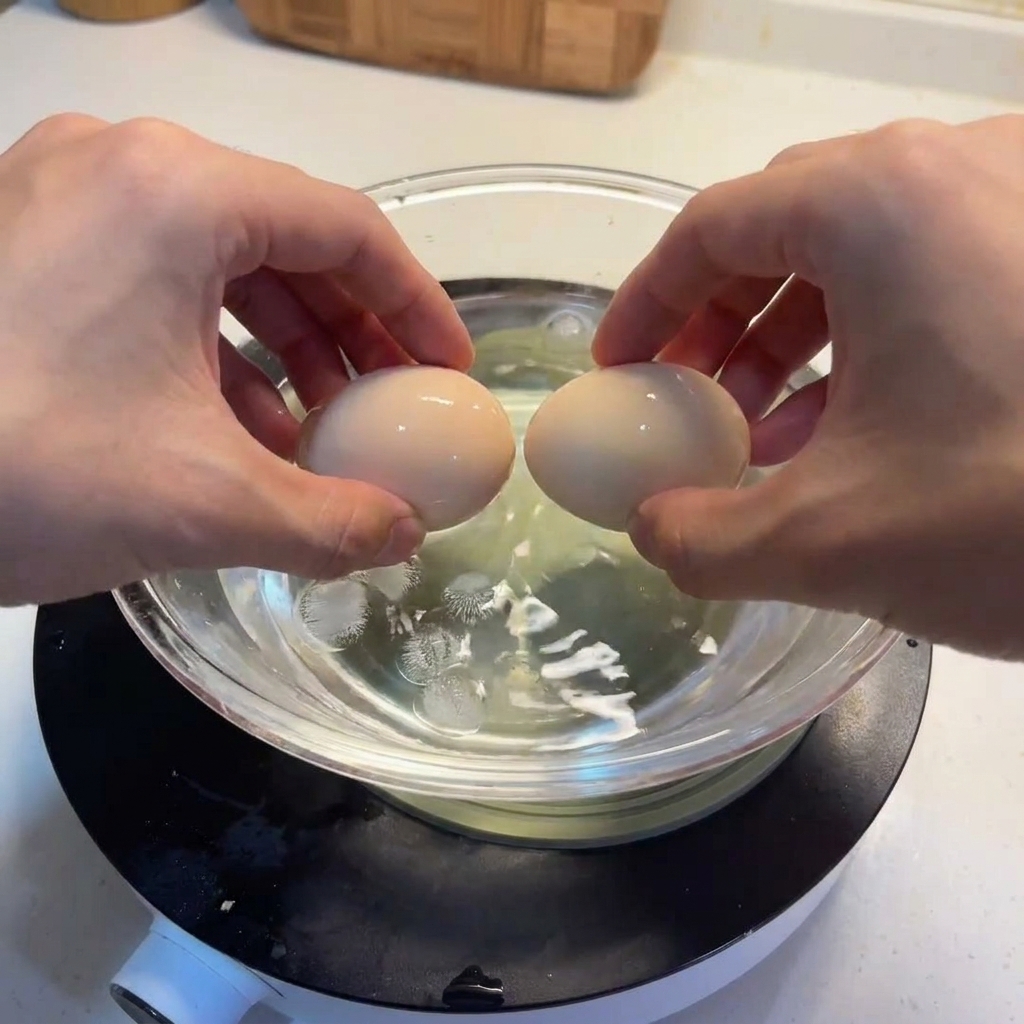
When the 15-minute timer goes off, promptly remove the eggs from the hot pot. Transfer them directly into a glass bowl filled with cold water and ice cubes. This stops the cooking process immediately and prevents overcooking.
Tip: Letting the eggs chill in the ice bath for a few minutes will also make them much easier to crack and serve later. - 4Prepare the sauce base
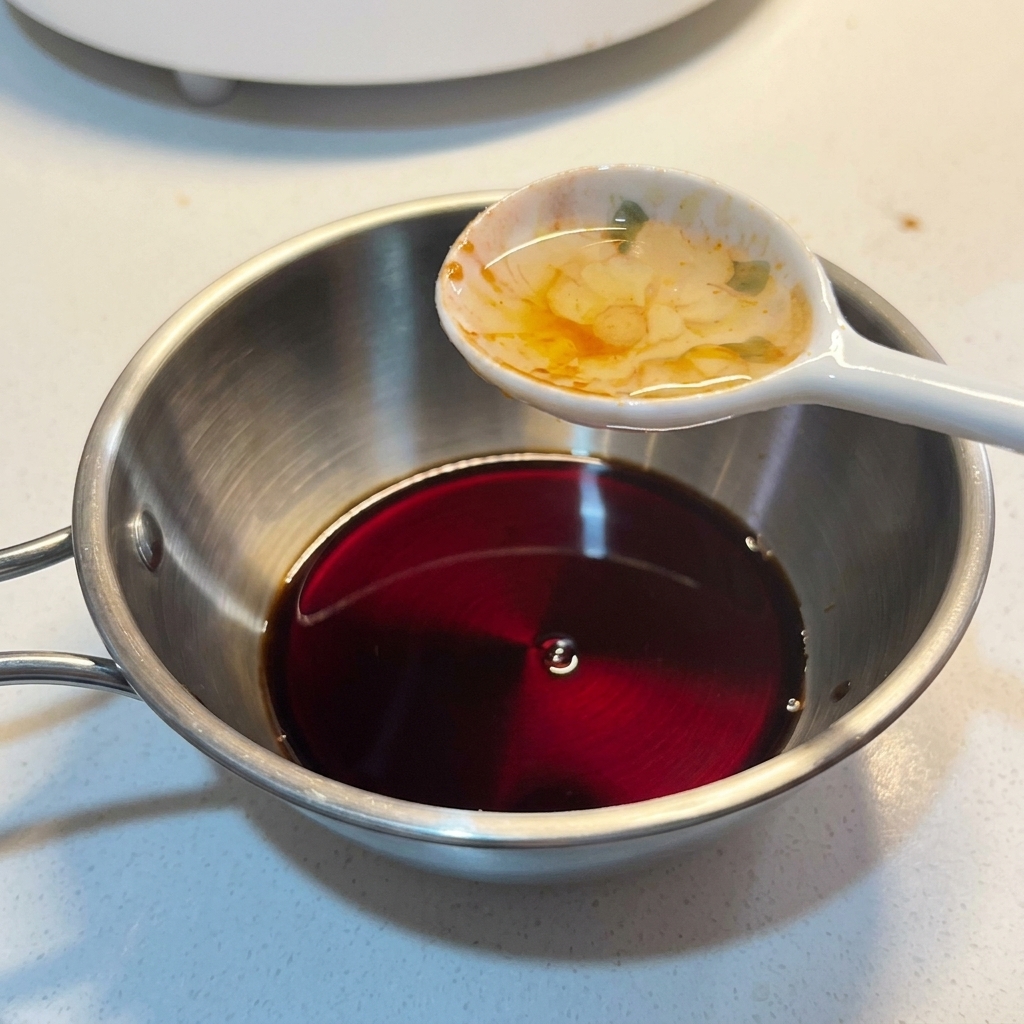
While the eggs are resting, start mixing the sauce base. In a small metal bowl, combine three tablespoons of regular soy sauce, a splash of dark soy sauce for color, a tablespoon of cooking wine, and a tablespoon of sugar. Stir well until the sugar begins to dissolve.
Tip: You can adjust the amount of sugar slightly based on how sweet you prefer your sauce to be. - 5Add garlic and ginger
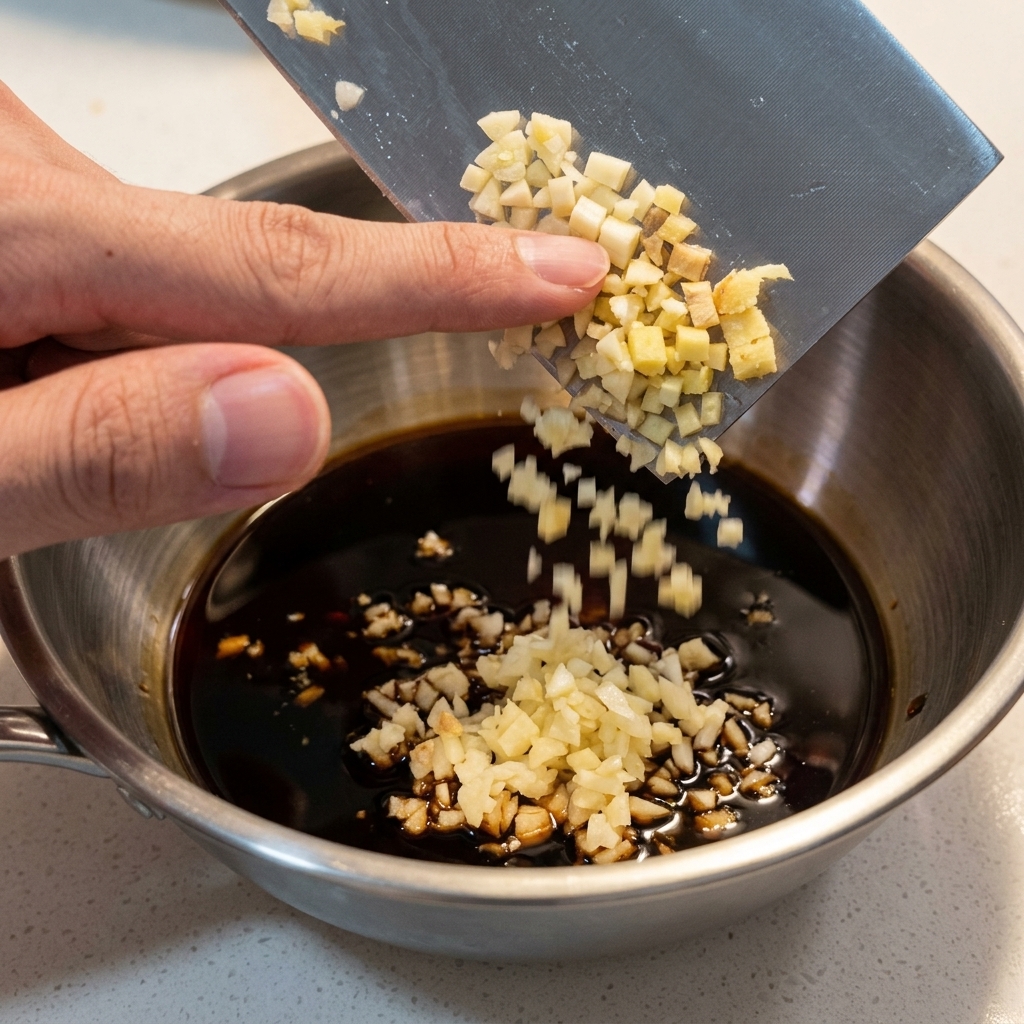
Finely mince some fresh garlic and ginger. Use a knife or cleaver to carefully slide the chopped aromatics directly into the bowl with the prepared soy sauce mixture. Give everything a quick mix so the flavors can combine.
Tip: Using freshly minced aromatics rather than pre-packaged powder will give the sauce a much brighter, more authentic flavor. - 6Stir-fry the aromatics
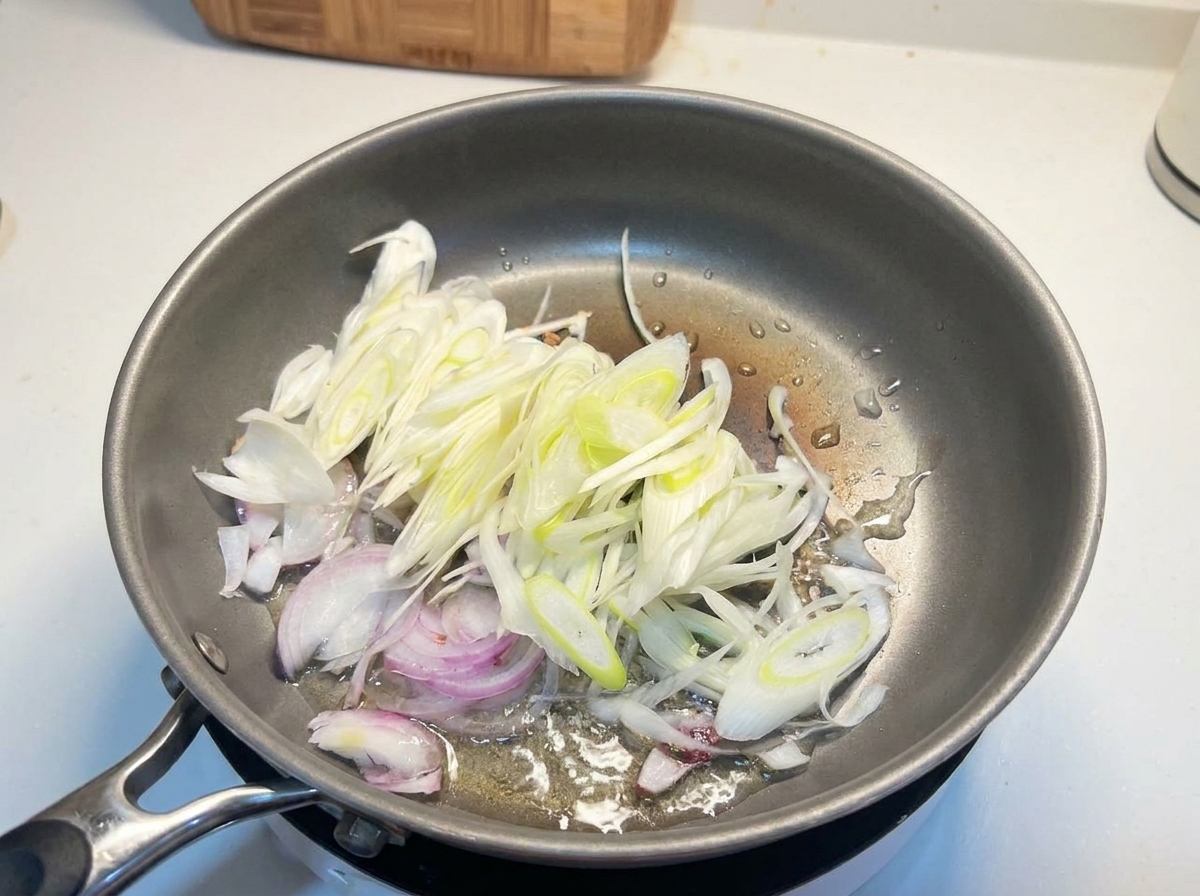
Heat a drizzle of cooking oil in a skillet over medium heat. Add the sliced white onions and scallions, stir-frying them gently until they begin to soften and release their fragrance into the oil.
Tip: Do not overcook the onions at this stage; they will continue to soften and absorb flavors once the beef and sauce are added. - 7Add the fatty beef
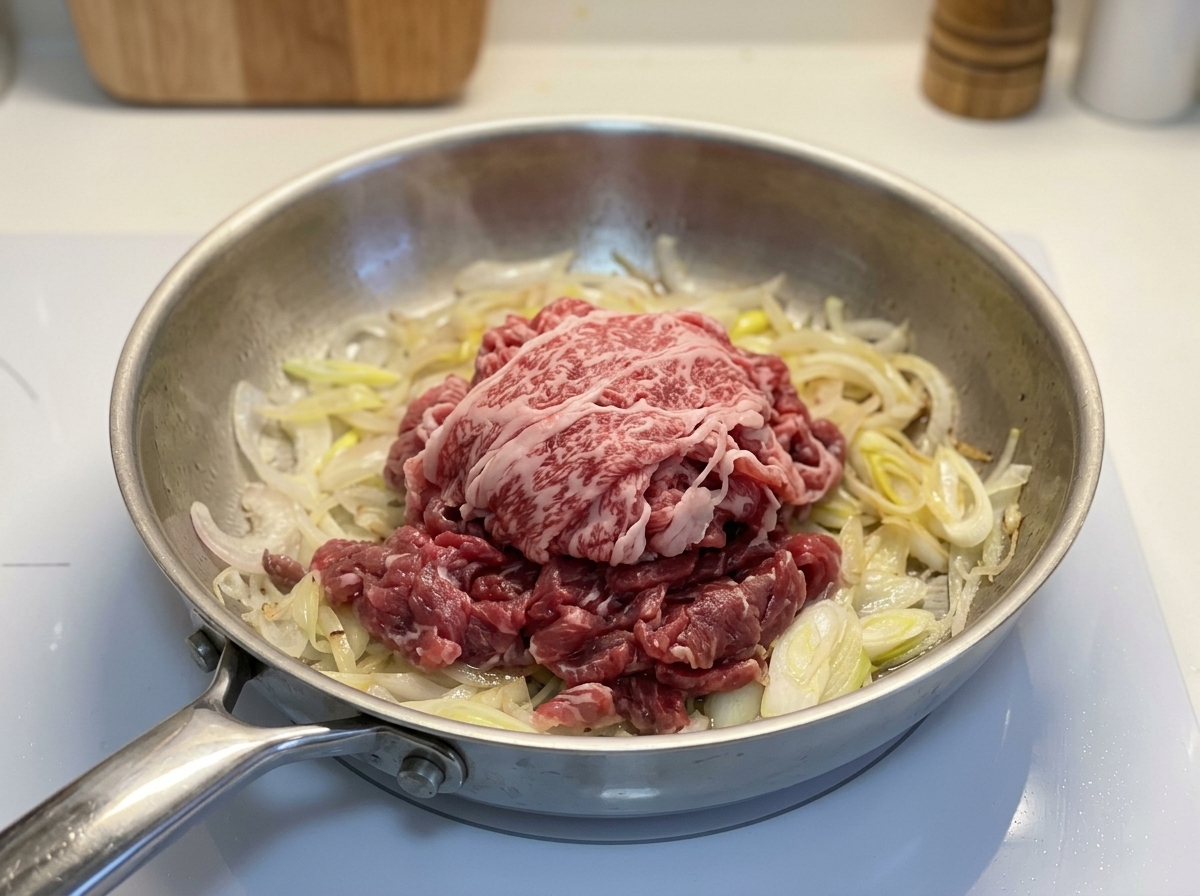
Once the aromatics have slightly softened and become fragrant, place the thinly sliced raw fatty beef directly into the center of the skillet over the cooked onions.
Tip: Using thinly sliced fatty beef ensures it cooks rapidly and remains tender while absorbing the savory sauce. - 8Pour in the sauce
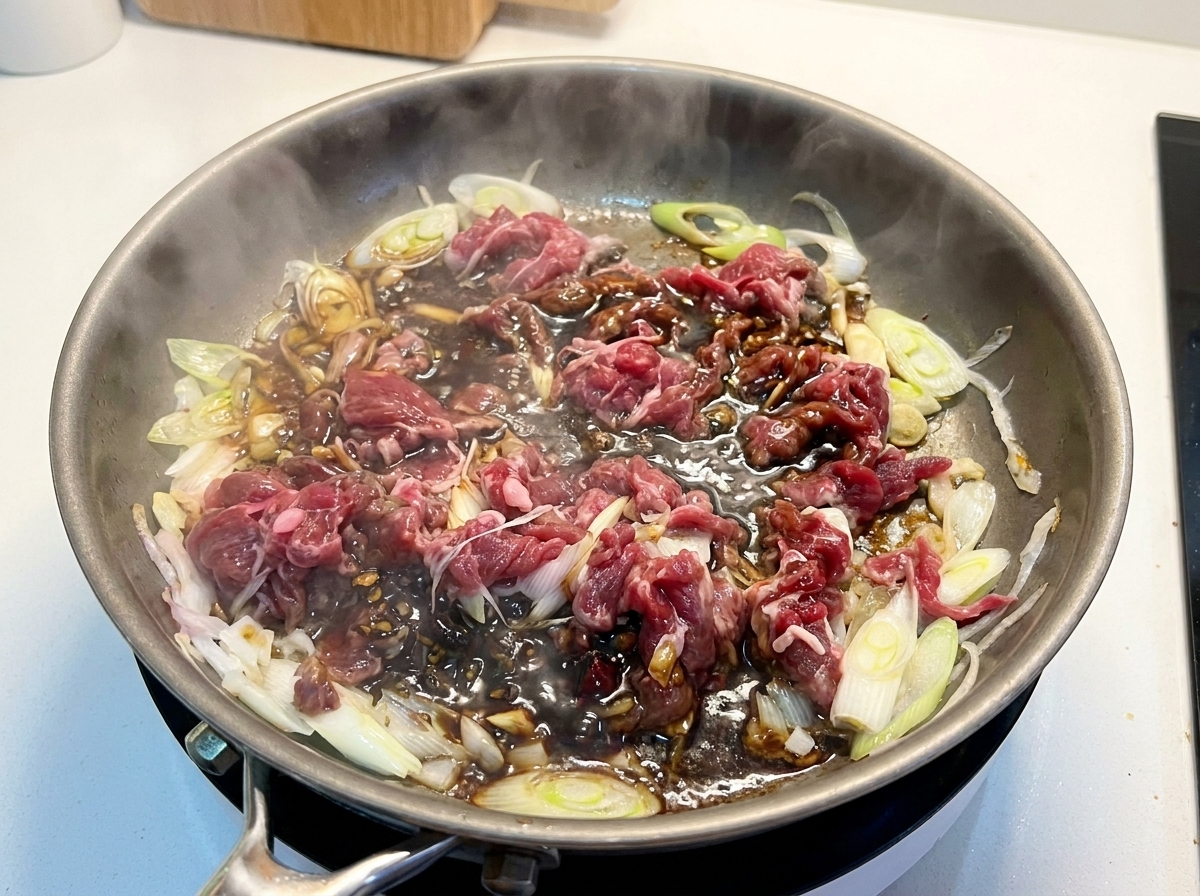
Pour your prepared dark sauce—a mix of soy sauce, dark soy sauce, cooking wine, sugar, minced garlic, and minced ginger—over the beef and onions in the pan. Let the liquid begin to bubble around the edges.
Tip: Ensure the sugar in your sauce mixture is thoroughly dissolved before adding it to the pan for an even glaze. - 9Simmer the beef
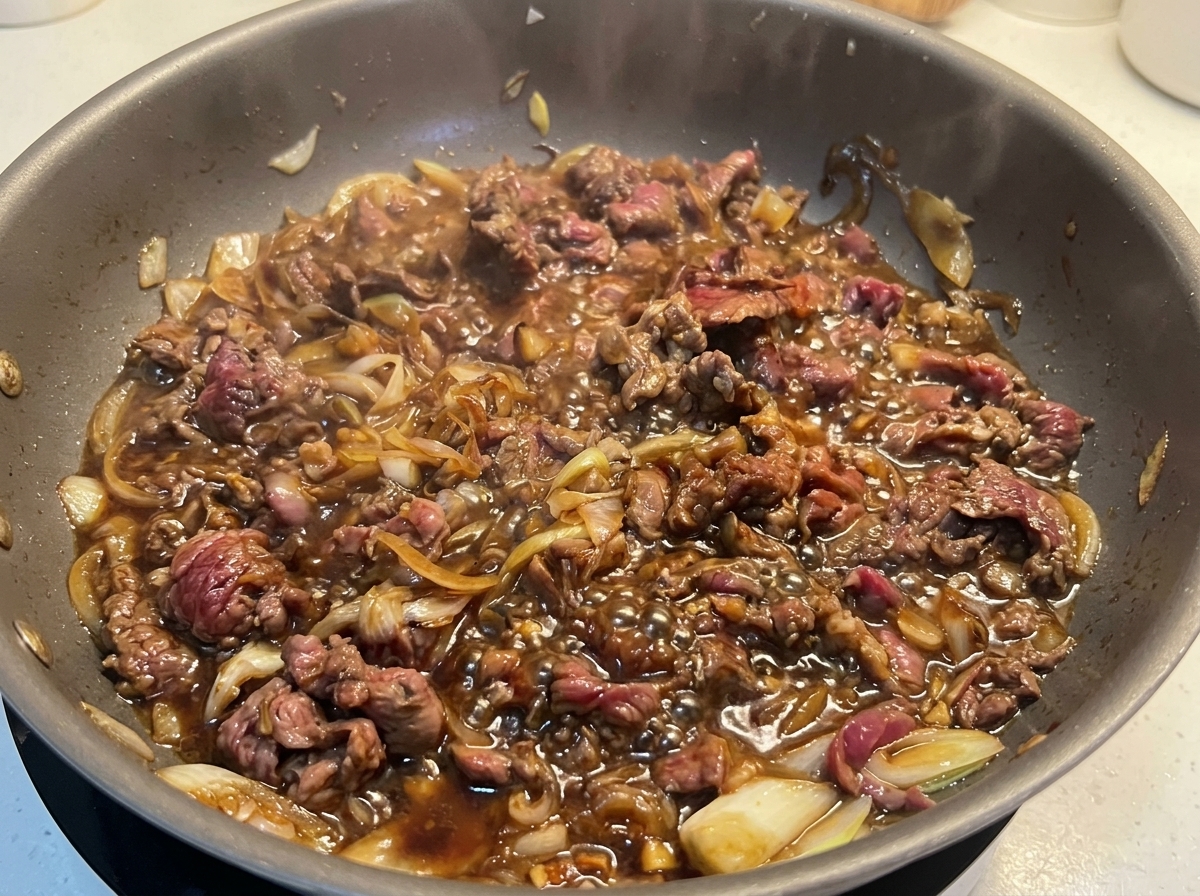
Stir everything together, allowing the thinly sliced beef to simmer vigorously in the bubbling dark sauce. Continue cooking just until the meat presents a fully browned color and the sauce coats the ingredients.
Tip: Fatty beef cooks very fast. Keep a close eye on it and remove it from the heat as soon as it browns so it doesnt become tough. - 10Serve over rice
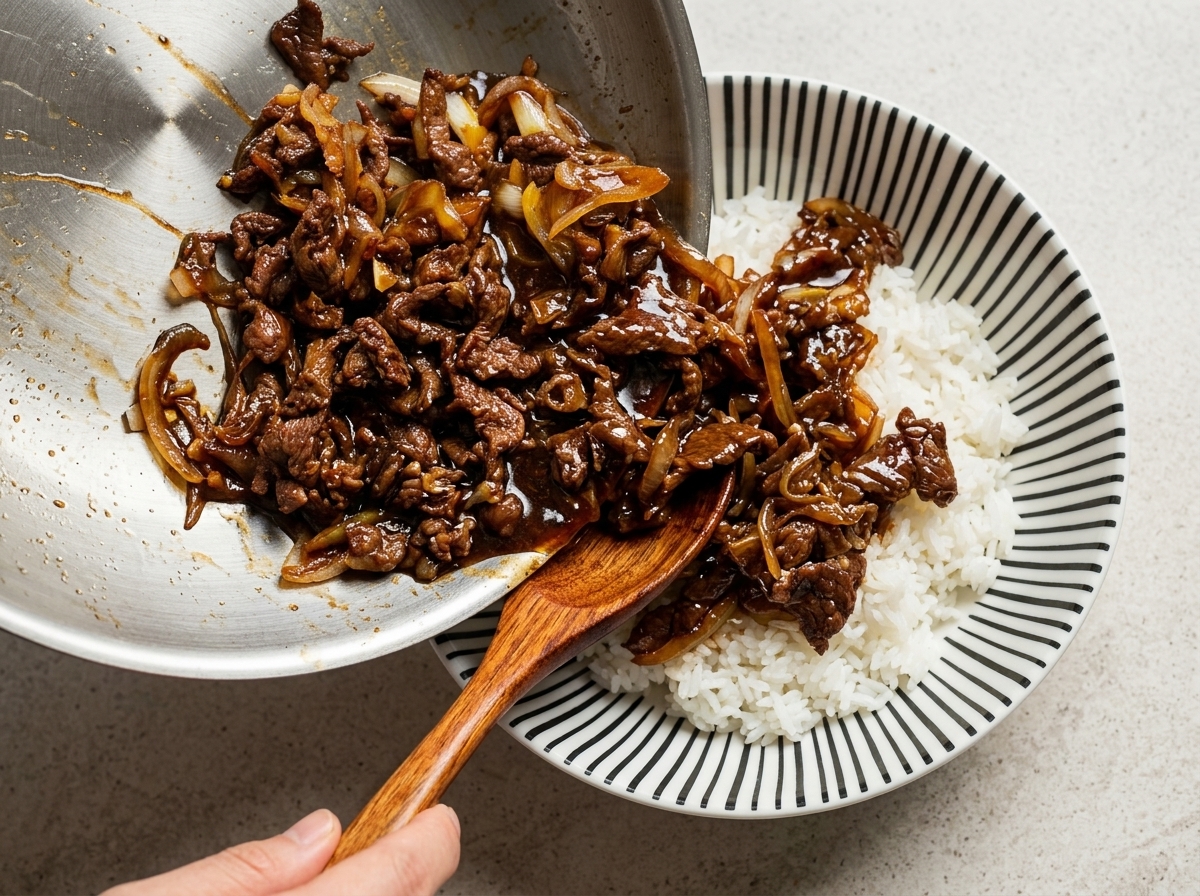
Prepare a bowl of steaming white rice. Using a wooden spatula, gently slide the freshly cooked beef, tender onions, and all of the rich, savory sauce directly from the skillet over the rice.
Tip: Pouring the extra sauce from the pan over the rice is highly recommended—it makes every bite moist and incredibly flavorful. - 11Top with an onsen egg
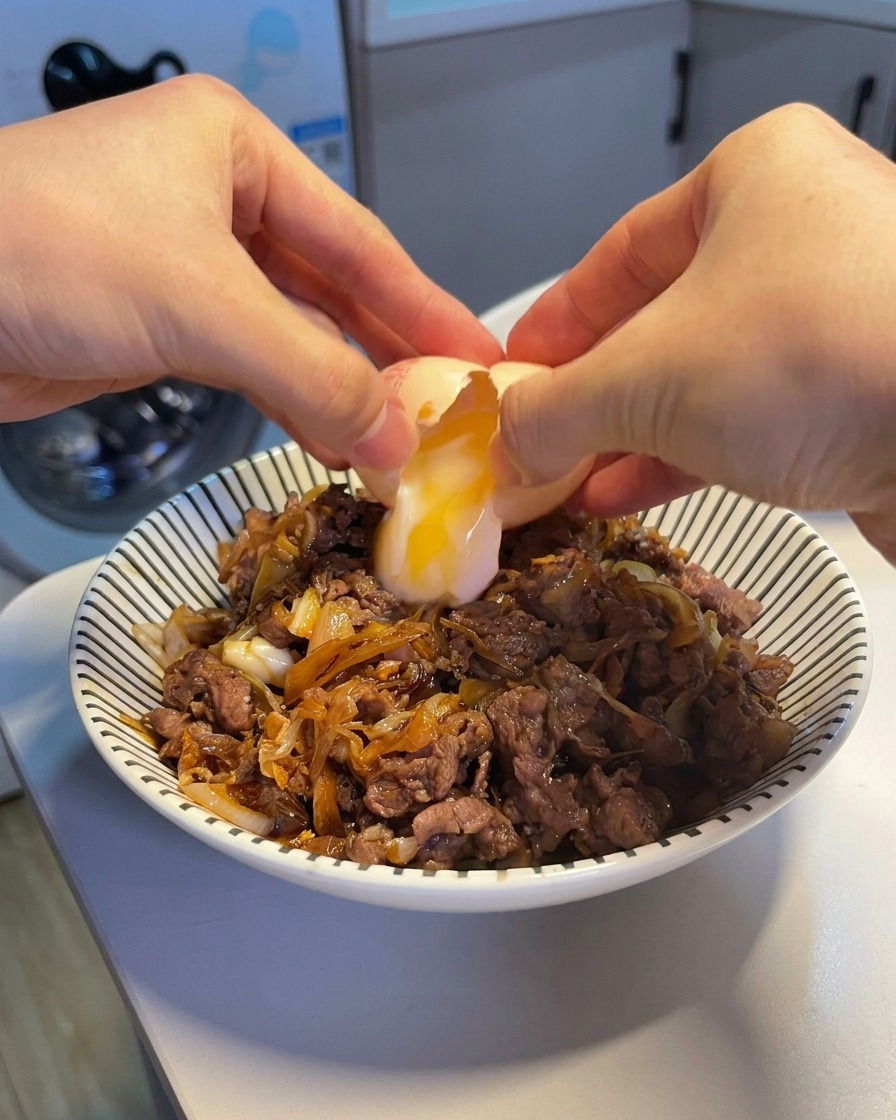
To finish the dish, carefully tap the shell of your prepared onsen egg with the back of a knife. Gently break it open over the center of the beef, letting the loose egg white and slightly runny yolk cascade over the meat.
Tip: If your egg turns out slightly more raw than you expected, dont worry! Mixing the runny yolk into the hot beef and rice creates a rich, creamy coating that elevates the entire bowl. - 12Garnish the beef bowl
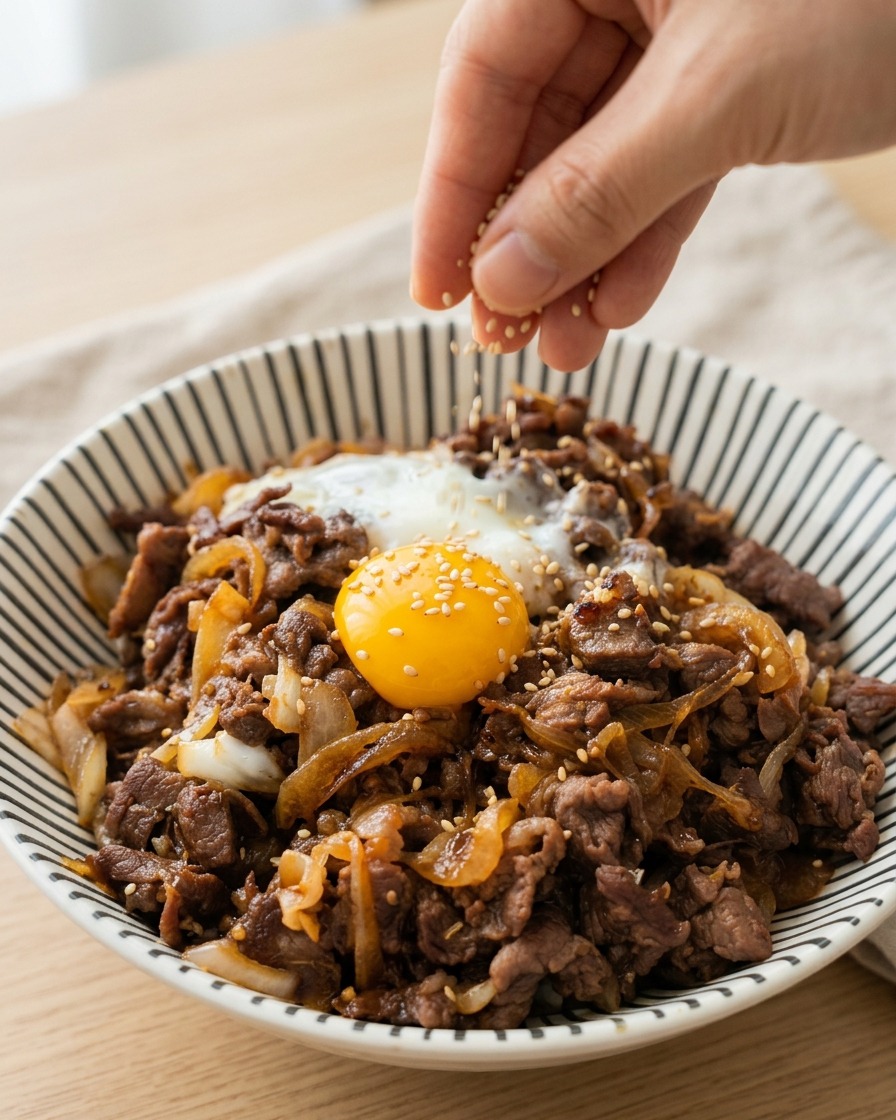
Add the final touches by sprinkling toasted sesame seeds and freshly ground black pepper over the savory beef and egg. This adds a subtle crunch and a wonderful aroma to the bowl. Serve the dish immediately while hot, mixing the rich egg yolk directly into the warm beef and rice before eating.
Tip: Toasted sesame seeds and freshly cracked black pepper cut through the richness of the beef fat and egg yolk perfectly, adding a robust finishing aroma.