Japanese Daikon Oroshi Beef Bowl (Gyudon)
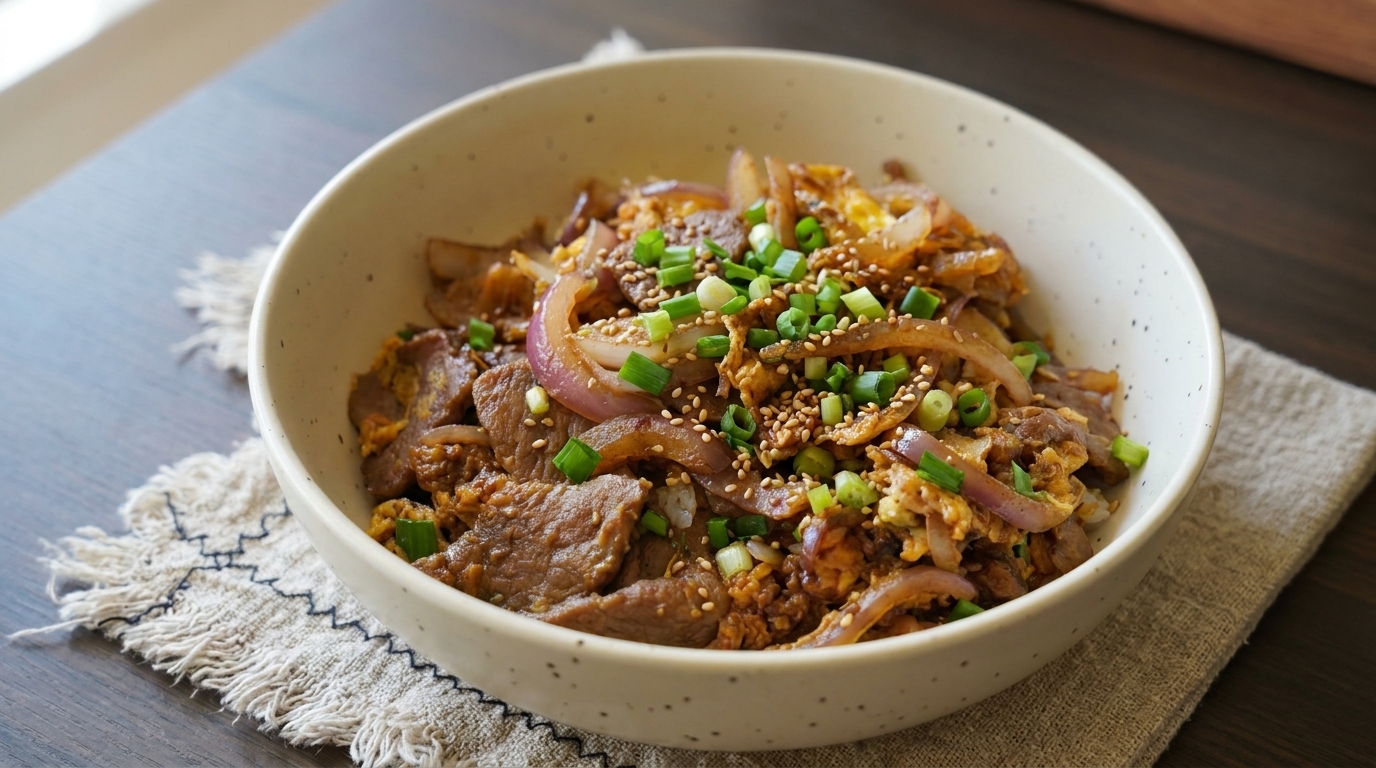
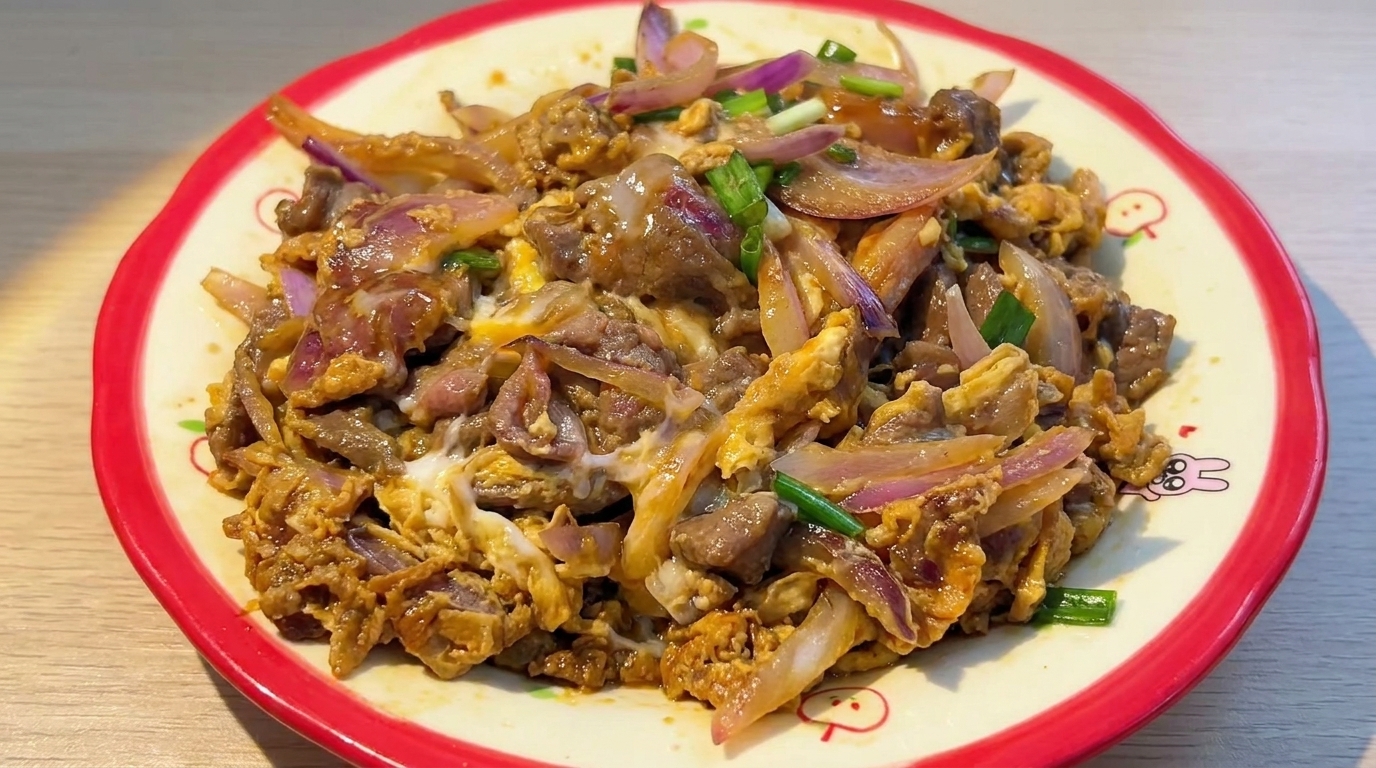
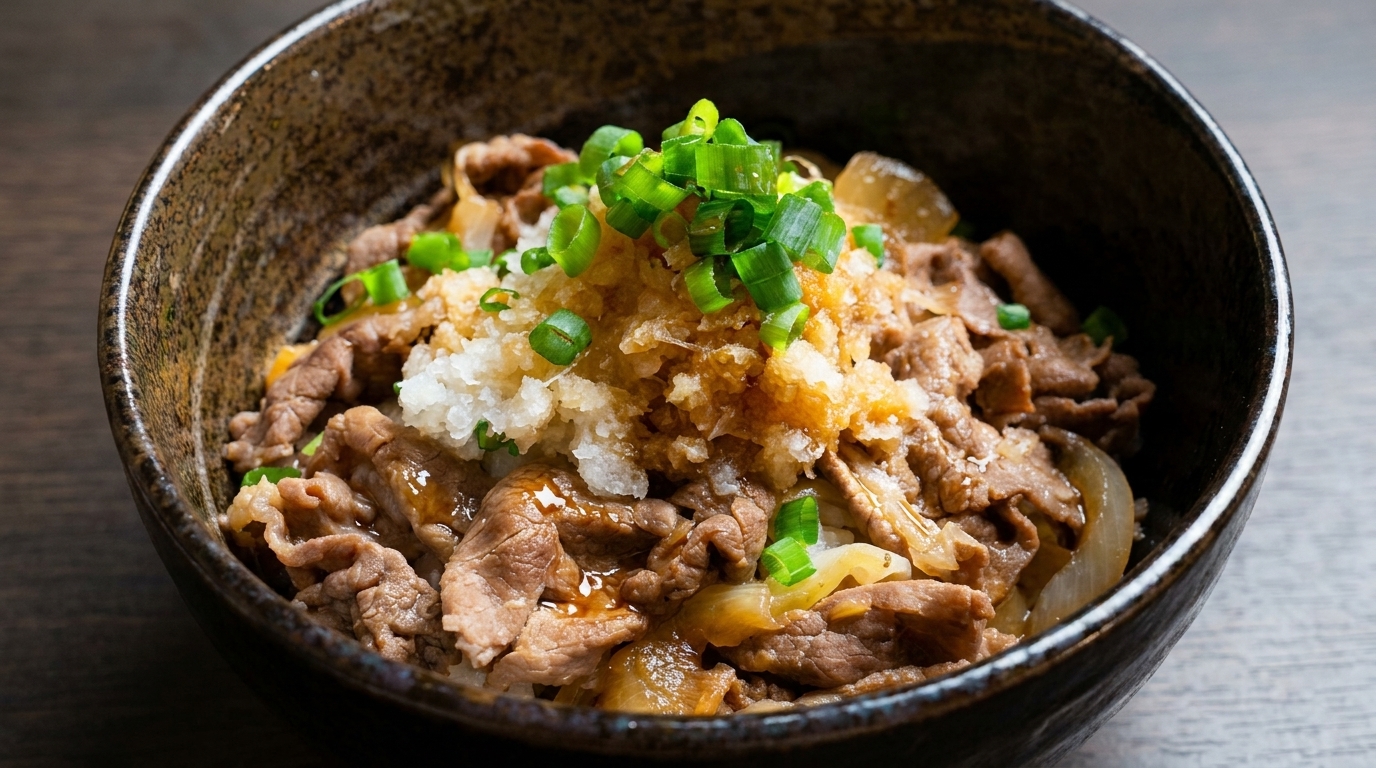
A refreshing summer twist on the classic Japanese beef bowl. Tender beef and sweet onions are simmered in savory dashi, then topped with cooling grated daikon.
This Japanese beef bowl, or gyudon, features a delightful contrast between savory simmered beef and the crisp, refreshing bite of grated daikon radish, known as daikon oroshi. It is a popular, light-yet-satisfying meal in Japan during the warmer months, as the daikon acts as a natural digestive aid. The addition of ponzu sauce brightens the rich, umami-packed broth, making it the perfect quick dinner for a busy summer day.
Ingredients
- 150 g thinly sliced beef
- 1/2 onion
- 5 cm daikon radish
- 70 ml water
- 1 tbsp soy sauce
- 1 tbsp cooking sake
- 1 tsp sugar
- 1/2 tsp Japanese dashi powder
- 1/2 tsp grated ginger
- 1 tbsp ponzu sauce
- to taste cooked white rice
- to taste chopped green onions
Instructions
- 1Slice the onion
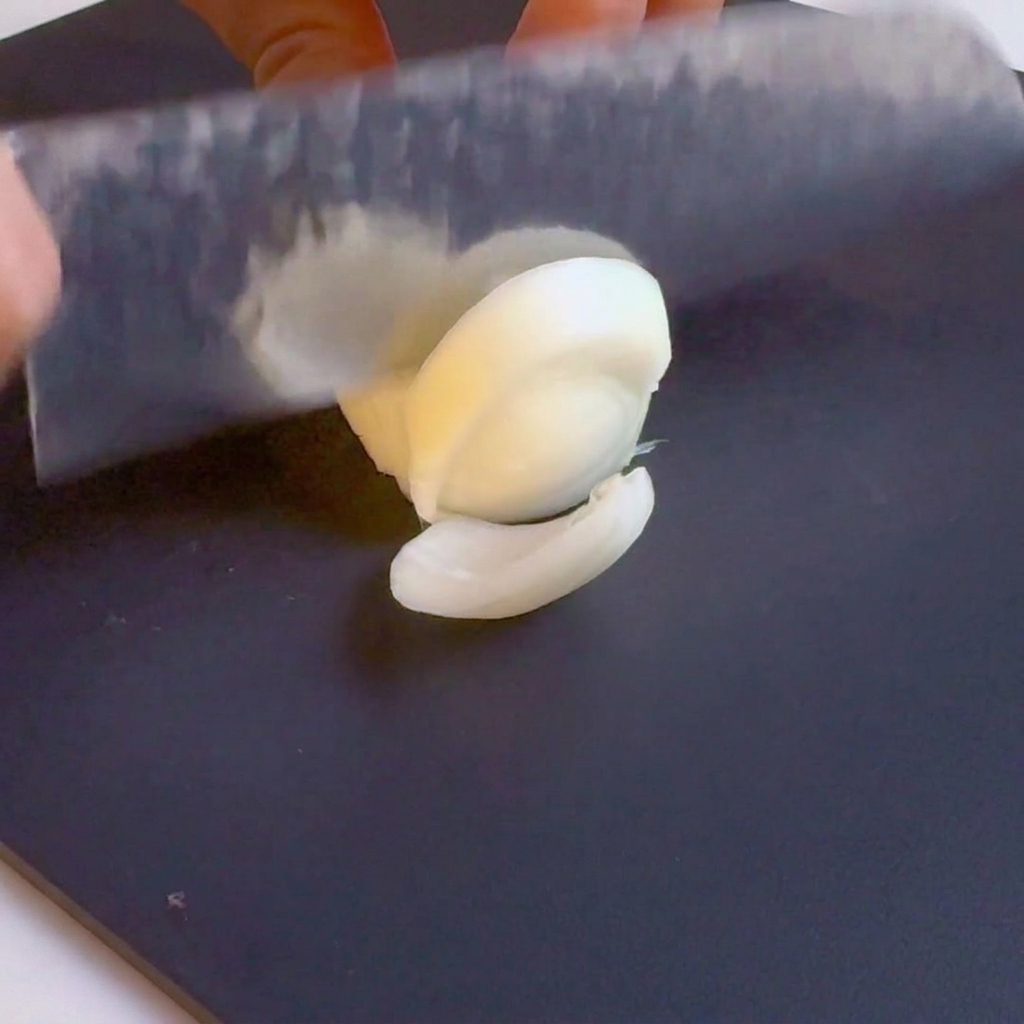
Begin by slicing the onion into thin, 5mm strips. Using a sharp knife and a stable cutting board will help ensure the slices are uniform for even cooking.
Tip: Uniform slices will cook evenly and absorb the sweet and savory sauce perfectly. - 2Grate the daikon

Peel the daikon radish and use a manual grater to grate it into a fine pulp. This grated radish will add a refreshing, cooling element to the finished dish.
Tip: Using a fine grater creates a snowy texture that is classic for this summer dish. - 3Squeeze the grated daikon

Take the grated daikon radish and gently squeeze it by hand to remove the excess water. Set the squeezed radish aside in a bowl to be used as a garnish later.
Tip: Do not squeeze the radish completely dry; leaving a little moisture ensures a pleasant, juicy texture. - 4Prepare the simmering sauce
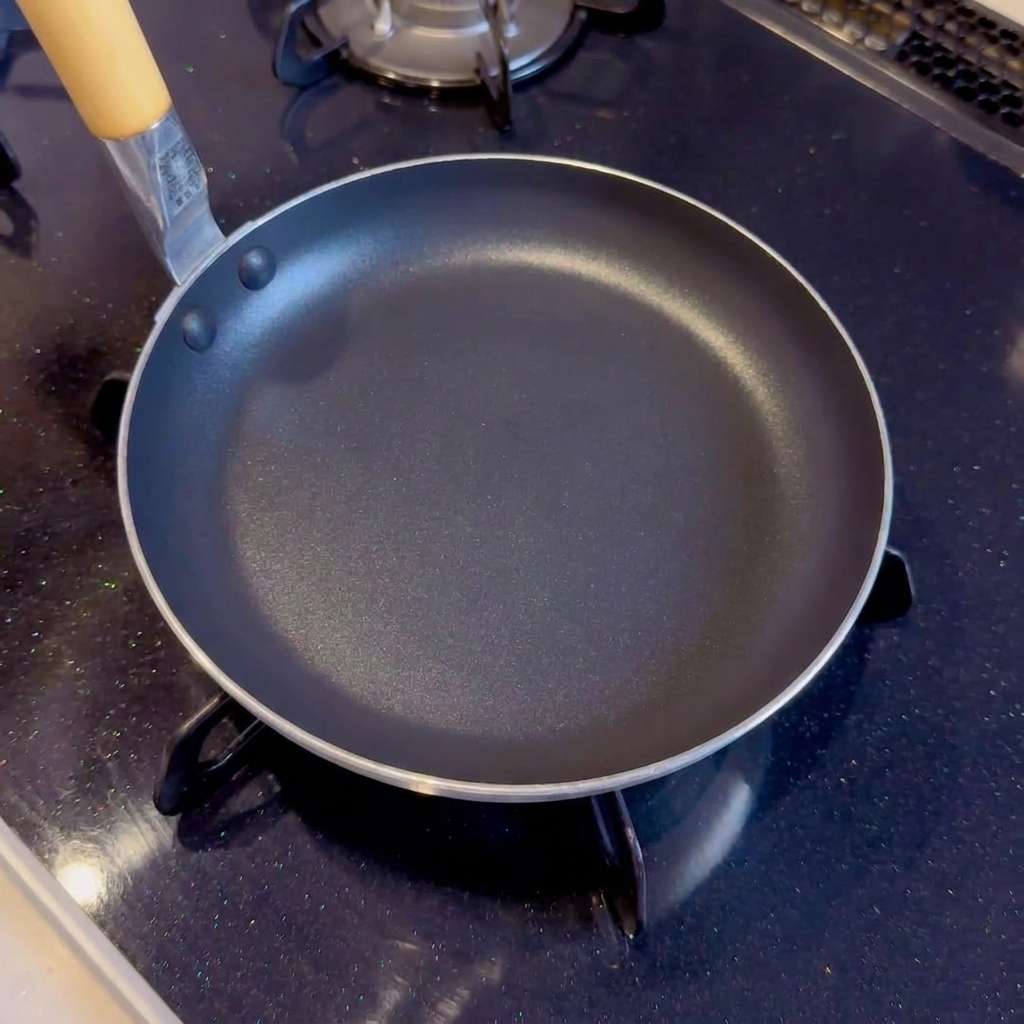
Combine 70ml of water, 1 tablespoon of soy sauce, 1 tablespoon of cooking sake, 1 teaspoon of sugar, half a teaspoon of Japanese dashi powder, and half a teaspoon of grated ginger in a pan. Place the pan over medium heat and bring the mixture to a gentle boil.
Tip: Using dashi powder is a quick way to add authentic umami depth to the sauce without needing to make stock from scratch. - 5Cook the onions
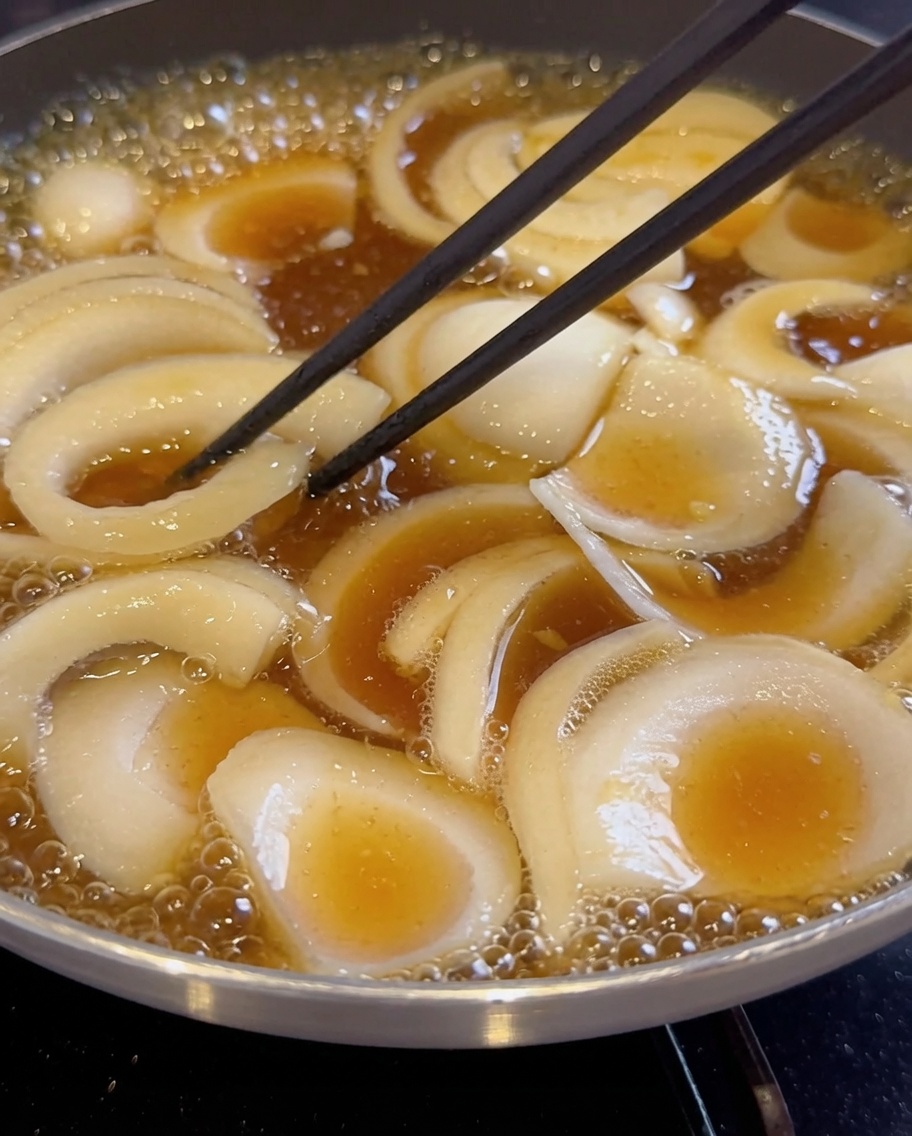
Once the sauce mixture of water, soy sauce, sake, sugar, dashi, and ginger is boiling over medium heat, add the sliced onions. Let them cook for about 2 minutes until they become tender.
Tip: Stir the onions occasionally so they are fully submerged and absorb the flavors of the broth. - 6Add the beef
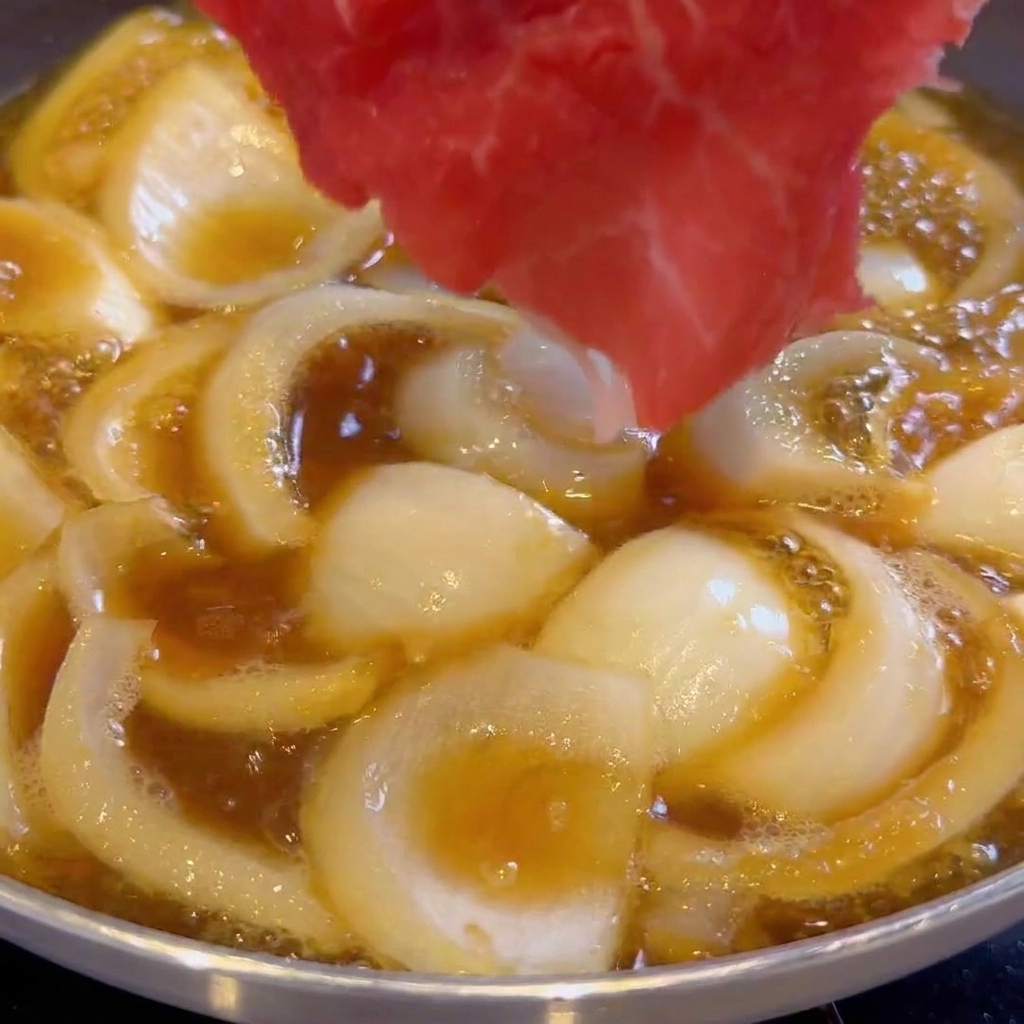
Gently lay the raw lean beef slices into the pan with the tender onions and simmering sauce. Spread them out evenly, then simmer on low heat for about 10 minutes, making sure to skim off any foam.
Tip: Spreading the beef slices prevents them from clumping and helps them cook evenly in the sauce.