Classic Homemade Tonkatsu (Deep-Fried Pork Cutlet)
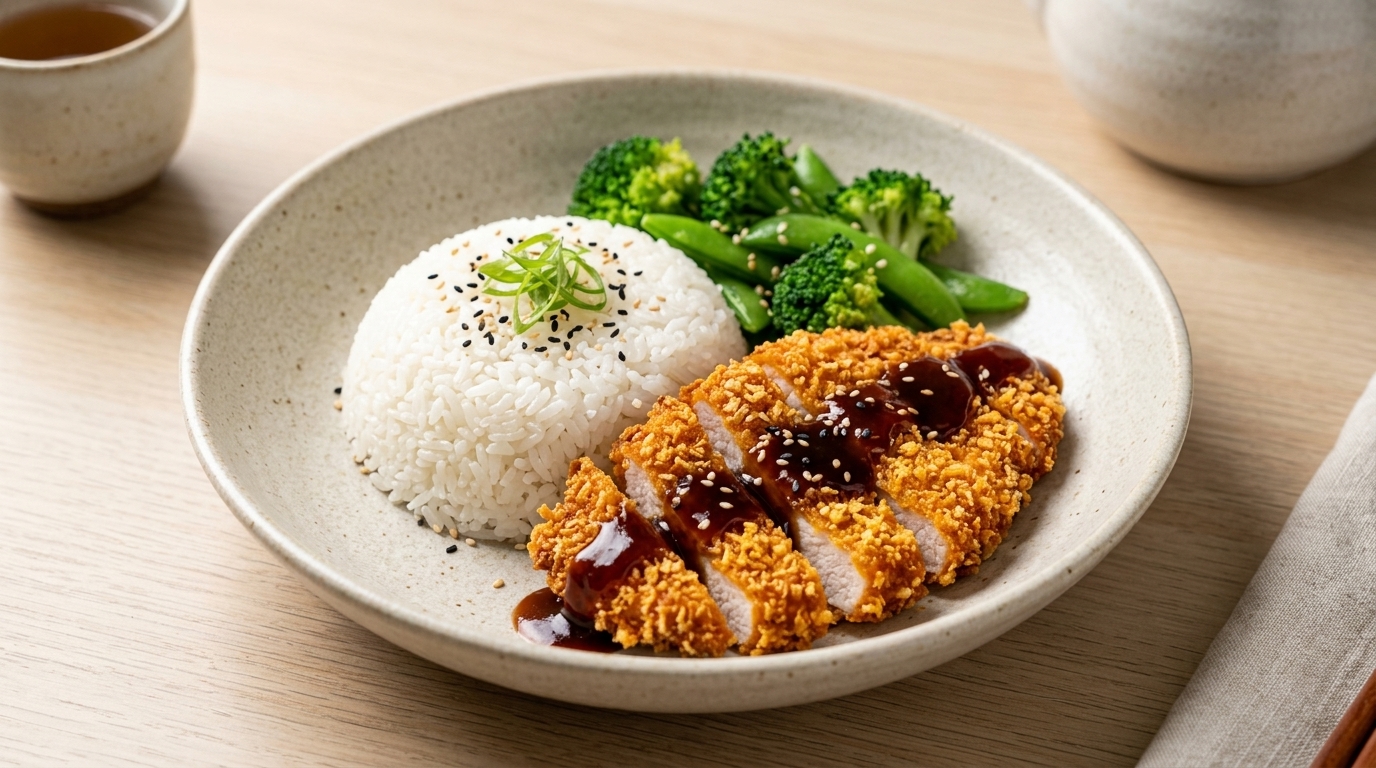
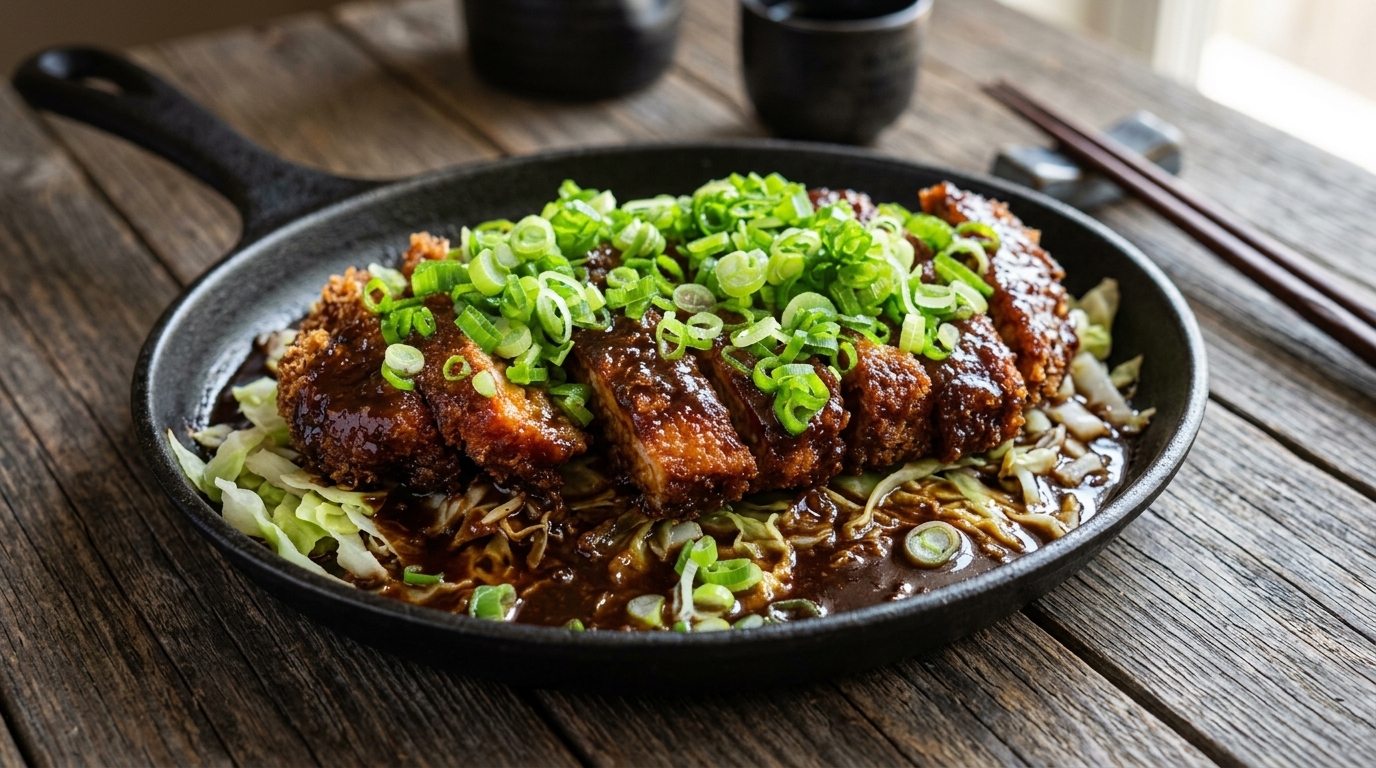
Master the art of crispy golden Japanese tonkatsu with a tender milk-marinated pork cutlet and a rich deeply savory homemade onion gravy.
Tonkatsu is a cornerstone of Japanese comfort food, evolving from Western-inspired culinary traditions into a beloved staple. The secret to an exceptionally juicy interior lies in a brief tenderizing milk marinade, balanced by a light crunchy panko crust and a smooth aromatic brown sauce.
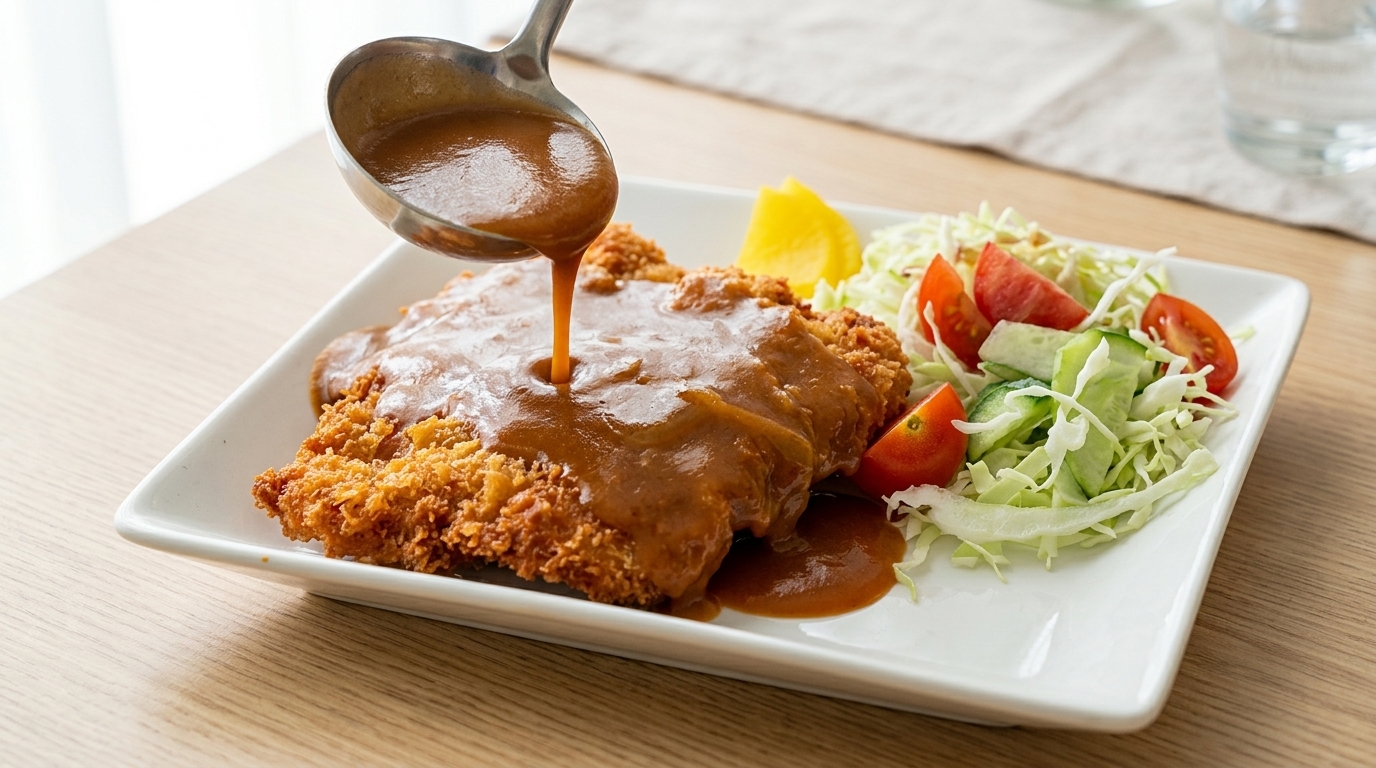
Ingredients
- 400 g pork loin cutlets
- 1 whole white onion
- 50 g butter
- 2 tbsp all-purpose flour
- 4 tbsp tonkatsu sauce
- 3 tbsp ketchup
- 2 tbsp steak sauce
- 1 tbsp soy sauce
- 1 tbsp white sugar
- 12 cup milk
- 2 cloves garlic, minced
- 2 large eggs
- 1 cup panko breadcrumbs
- 12 head green cabbage
- 500 ml cooking oil for frying
- to taste salt and black pepper
- optional cherry tomatoes and sliced cucumbers for garnish
Instructions
- 1Prep the aromatics
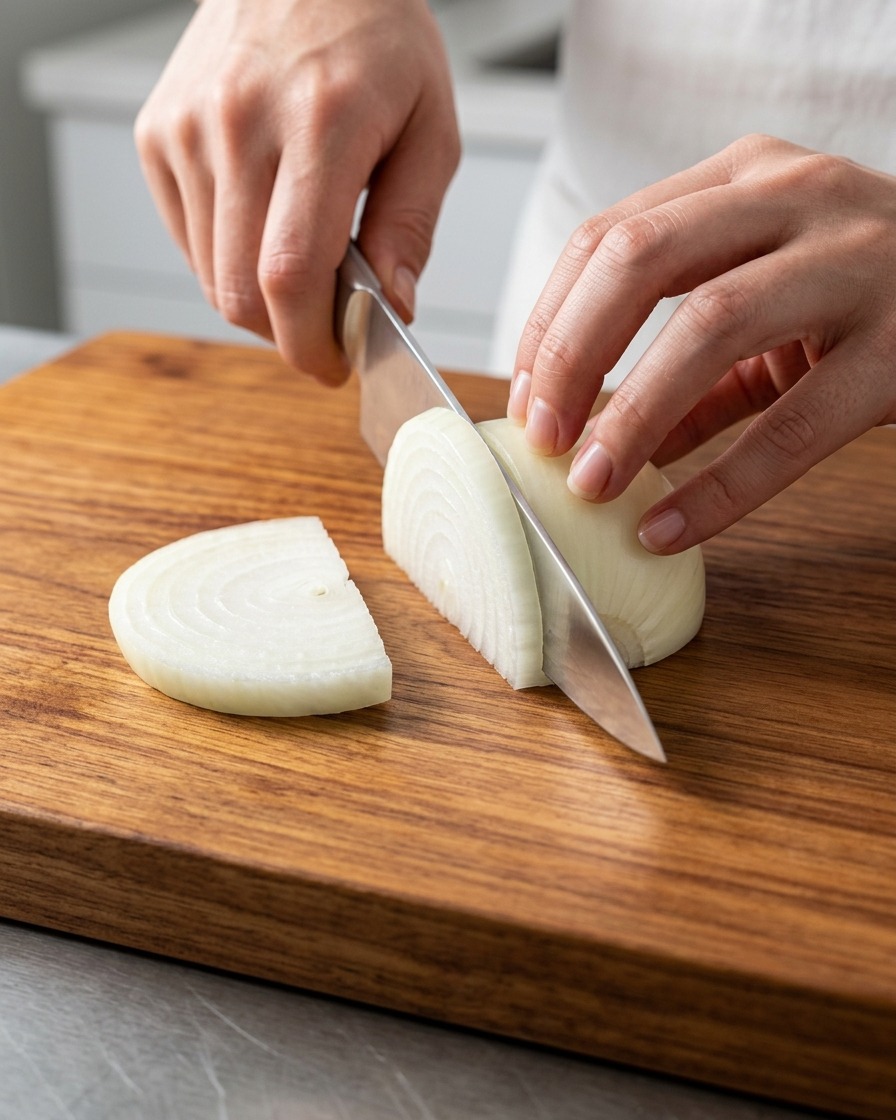
Begin by slicing a white onion into thin half-moons on a sturdy wooden cutting board. Using a sharp knife ensures clean cuts, which helps the onion soften and release its natural sweetness evenly during the sautéing process.
Tip: For the most uniform slices, cut the onion in half from root to stem first, then slice across the grain. - 2Sauté the onions and butter
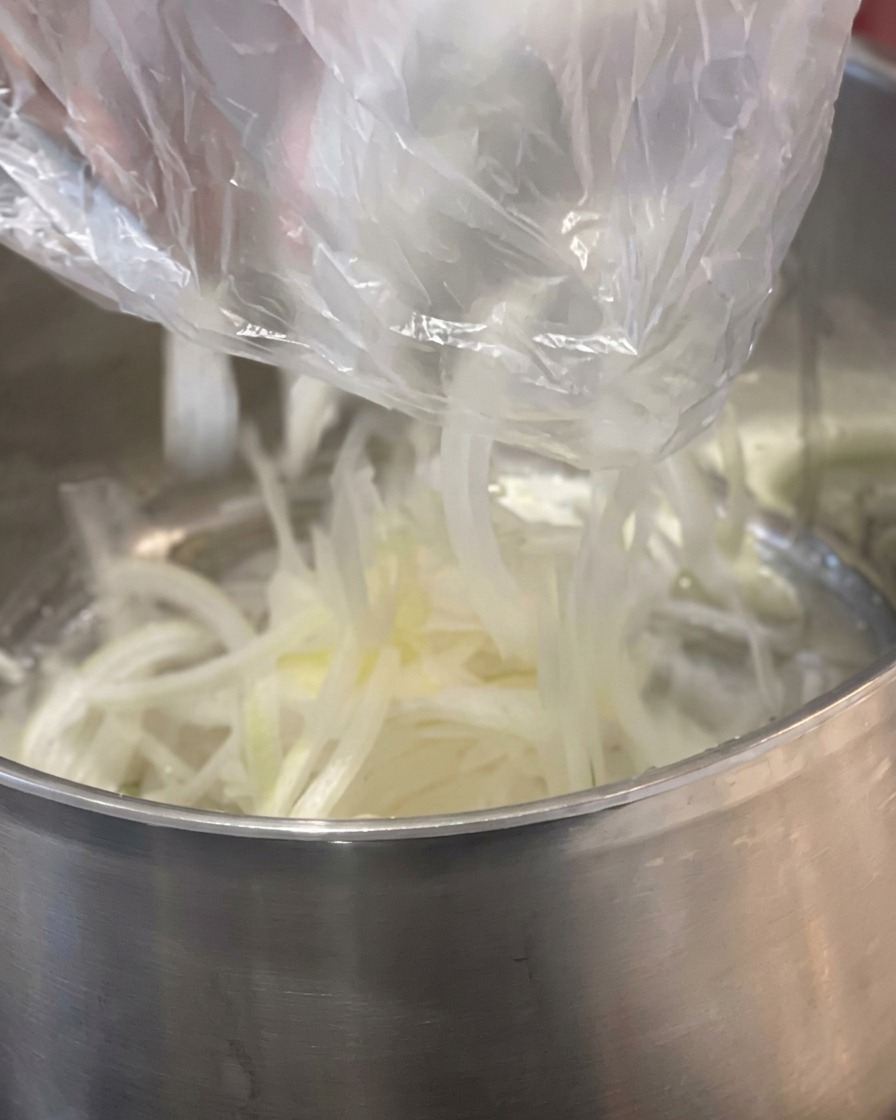
Place a whole block of butter into a metal pot and immediately add the sliced onions. It is perfectly fine to add the onions before the butter has fully melted; they will begin to soften as the butter liquefies and coats them.
Tip: Keep the heat at a medium level to prevent the butter from browning too quickly before the onions have a chance to soften. - 3Create the roux base
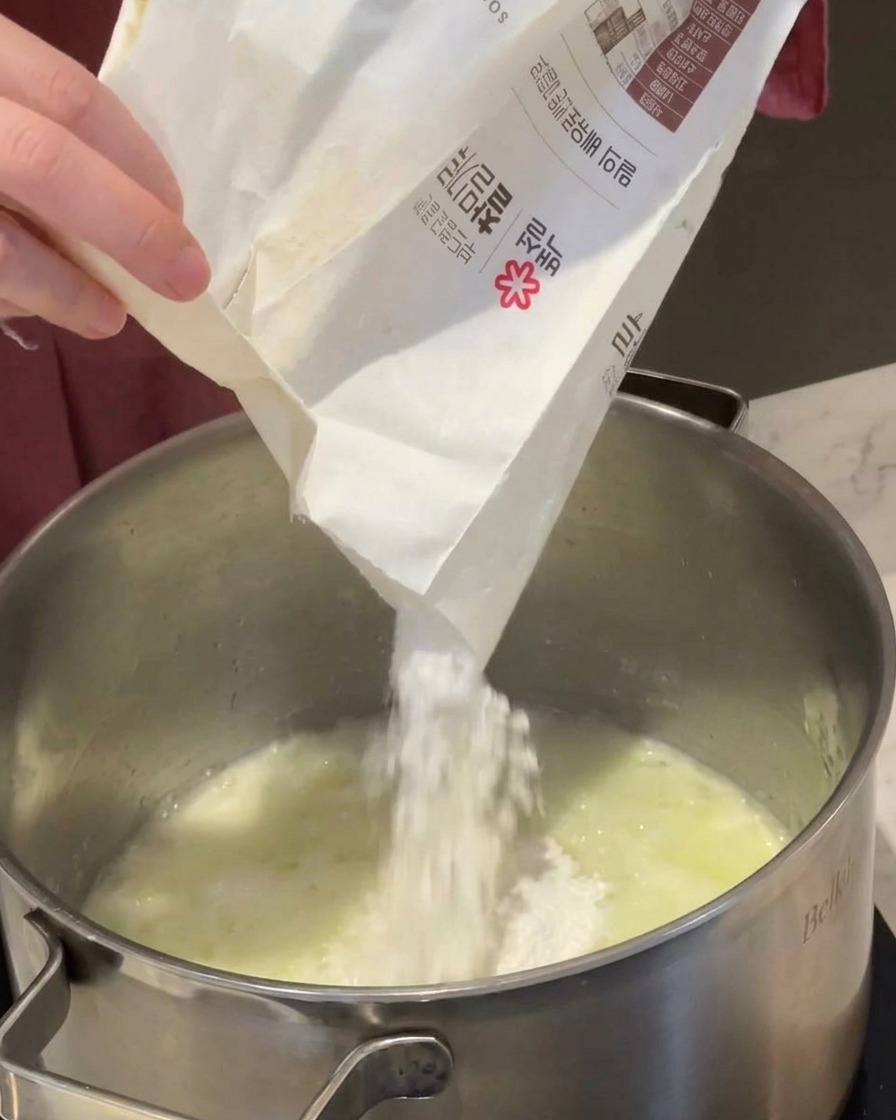
Once the butter is completely melted and the onions are translucent, pour in the white flour. Stir constantly to combine the flour with the butter and onions, creating a thick base that will thicken the tonkatsu sauce as it simmers.
Tip: Cook the flour for a minute or two while stirring to remove the raw flour taste before adding any liquids. - 4Add sauce seasonings
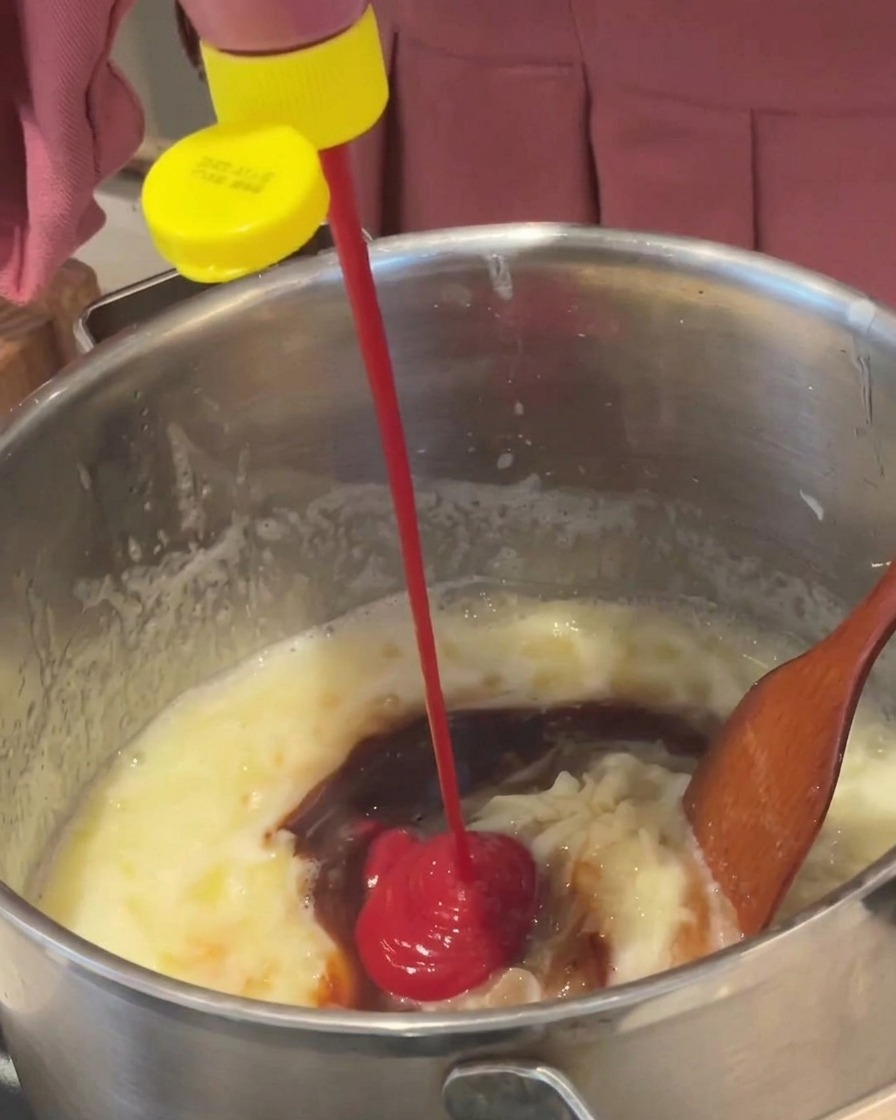
To build the flavor profile of the soul-infused sauce, squeeze ketchup into the simmering mixture. Follow this by adding the tonkatsu sauce, steak sauce, soy sauce, and sugar as described in the recipe to achieve a perfect balance of sweet and savory.
Tip: Stir well after adding each condiment to ensure a smooth glossy consistency without any lumps from the roux. - 5Tenderize the pork
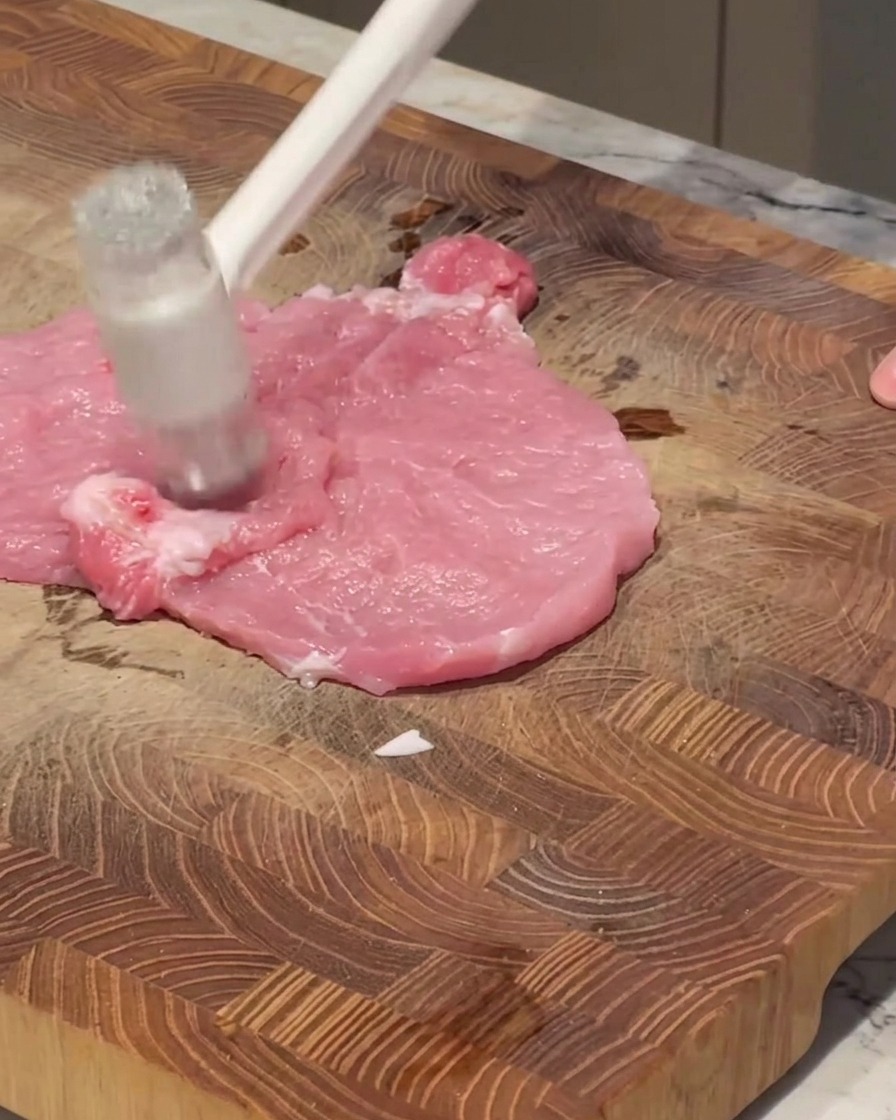
Use a meat mallet to pound the raw pork slices on a wooden board until they are thinner and larger in surface area. This physical tenderizing breaks down tough fibers, making the cutlet easier to eat and allowing the marinade to penetrate deeper.
Tip: Pound from the center outward to ensure the thickness of the meat remains even across the entire piece. - 6Season the meat
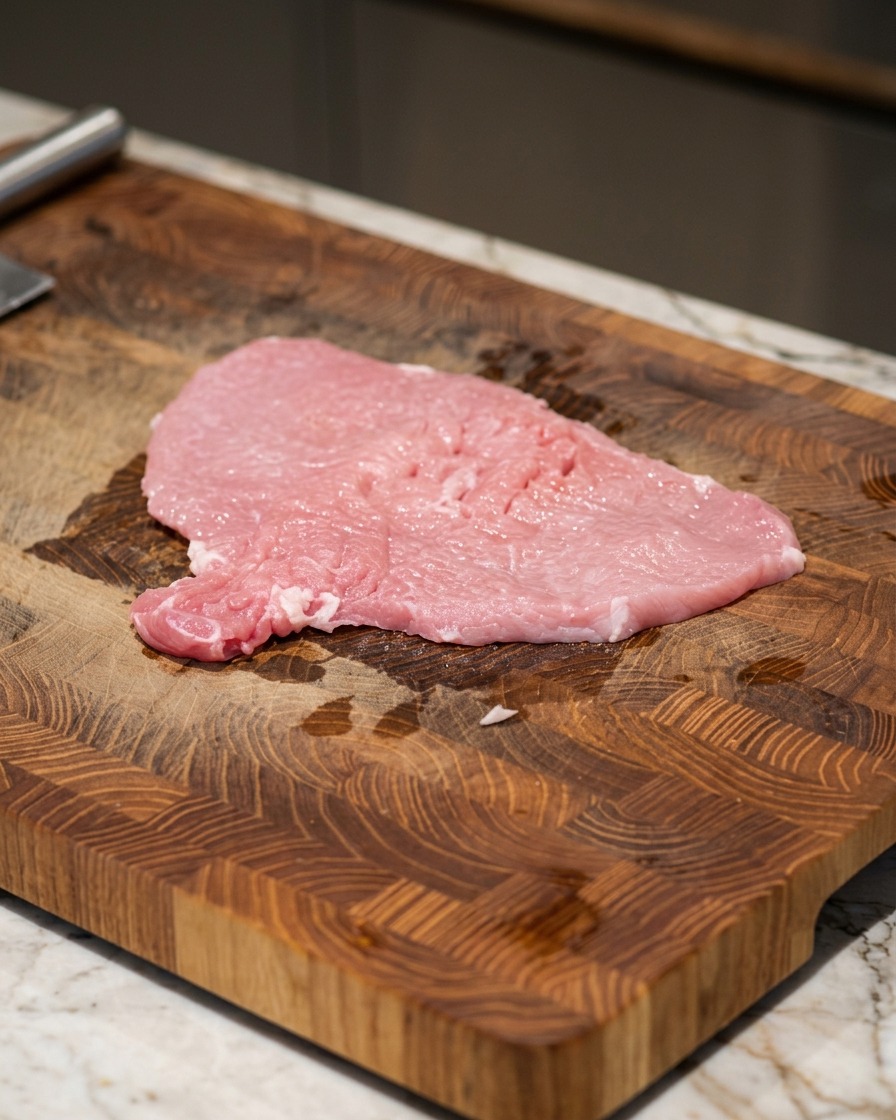
After tenderizing, season the surface of the raw pork generously with salt and black pepper. This initial seasoning is crucial for building flavor before the meat is soaked in the milk and garlic marinade.
Tip: Season from a slight height to get an even distribution of salt and pepper across the entire surface of the meat. - 7Season the milk marinade
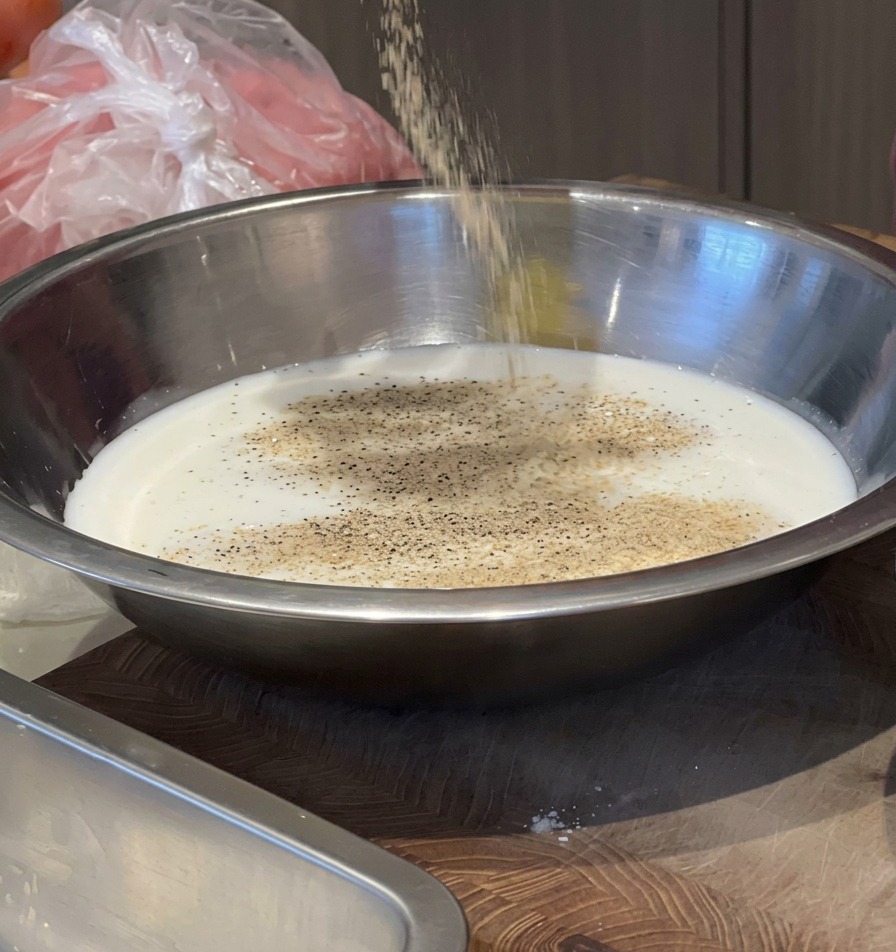
In a large metal bowl, combine milk with salt, pepper, and minced garlic. Stir the mixture thoroughly to ensure the seasonings are well-distributed, creating a flavorful liquid that will both tenderize the pork and remove any gamey odors.
Tip: Using milk as a marinade base helps break down the muscle fibers in the pork, resulting in a much more tender cutlet after frying. - 8Marinate the pork
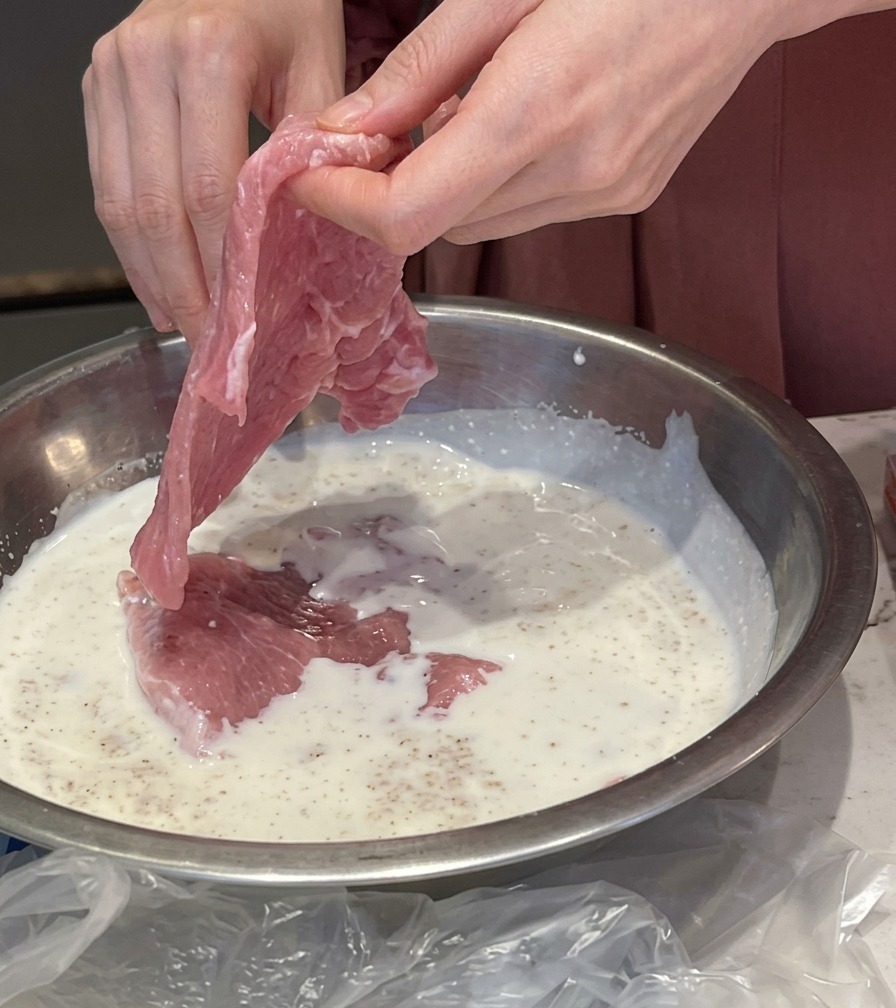
Submerge the pounded pork slices into the prepared milk marinade. Let them soak for approximately 5 minutes, allowing the liquid to penetrate the loosened meat fibers for maximum tenderness and flavor absorption.
Tip: Ensure every part of the meat is fully submerged; this short soak is the secret to a juicy interior that contrasts perfectly with the crispy crust. - 9Prepare the cabbage salad
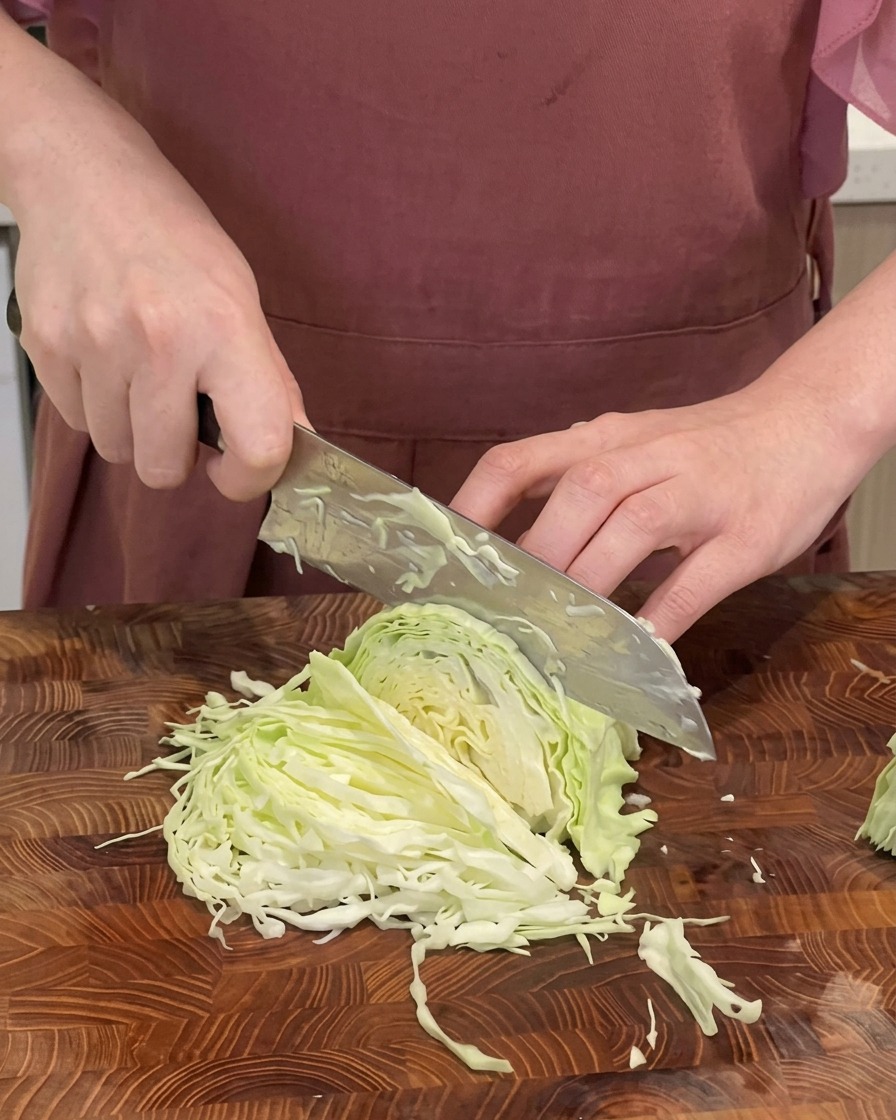
While the meat marinades, prepare the side salad by finely shredding a head of crisp green cabbage. Use a sharp chefs knife to create thin, uniform strips that will provide a refreshing, crunchy contrast to the rich fried pork.
Tip: For the crispest texture, you can soak the shredded cabbage in ice water for a few minutes, then drain it thoroughly before serving. - 10Coat the pork with flour
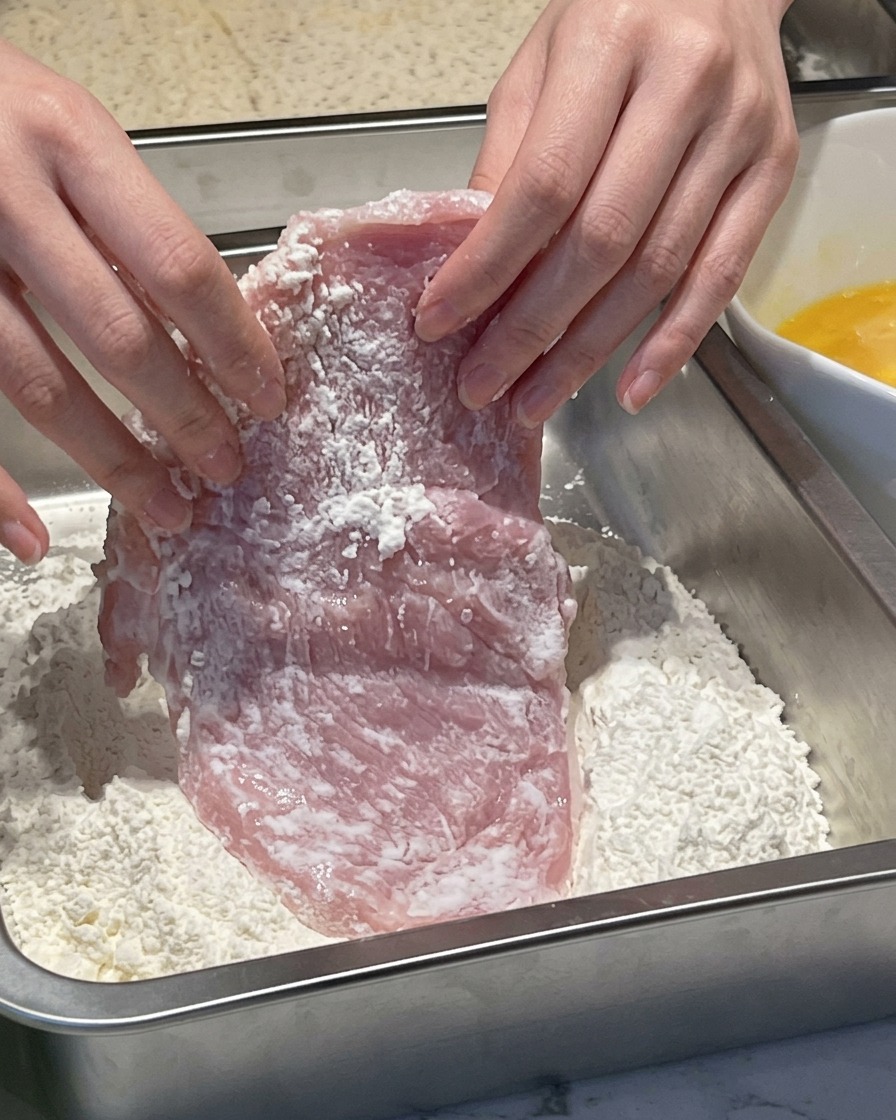
Remove the pork from the milk and press it firmly into a tray of all-purpose flour. Ensure both sides are completely and evenly coated, then gently shake off any excess flour to prevent the breading from becoming too thick or gummy.
Tip: The flour layer acts as a primer, helping the egg wash and breadcrumbs adhere better to the moist surface of the meat. - 11Apply the egg wash
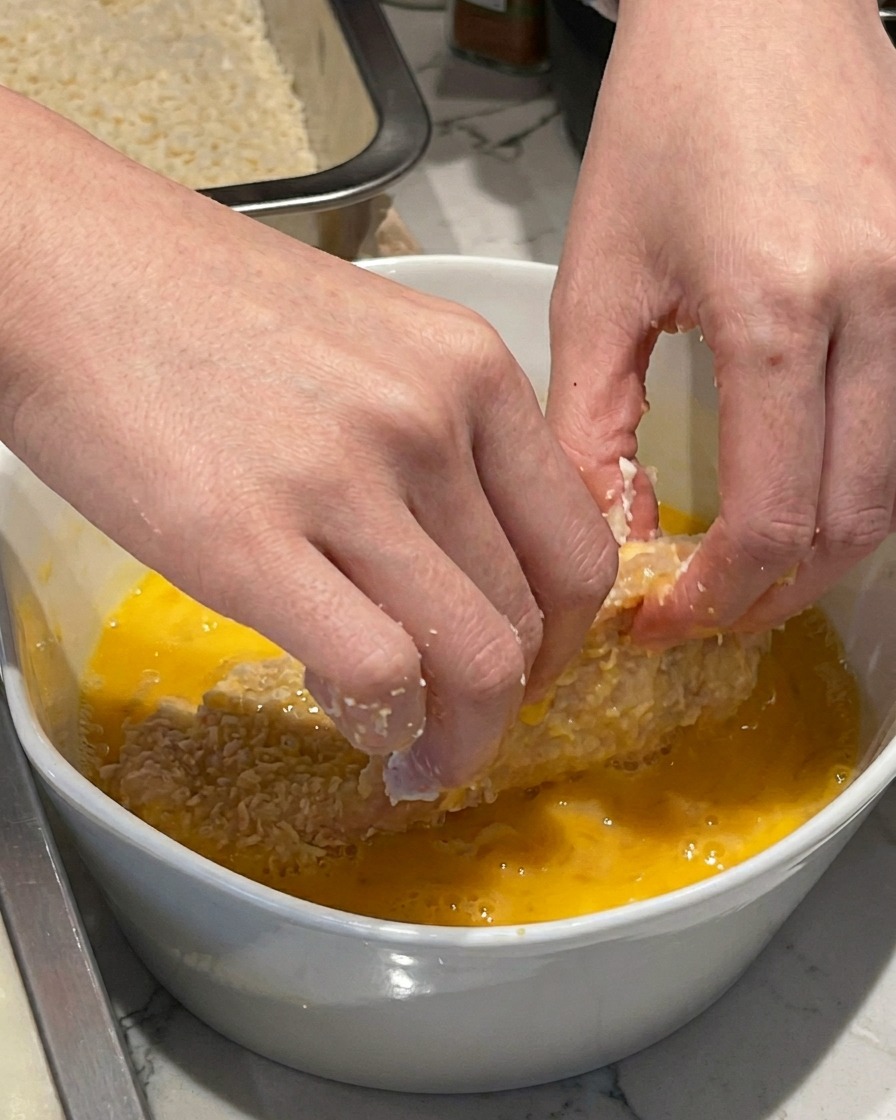
Transfer the floured pork slice into a bowl of whisked eggs seasoned with a pinch of salt. Turn the meat to coat it thoroughly in the liquid, which will serve as the glue for the final layer of breadcrumbs.
Tip: Let any heavy drips of egg fall back into the bowl before moving to the breadcrumbs to avoid clumping the dry ingredients. - 12Dredge in breadcrumbs
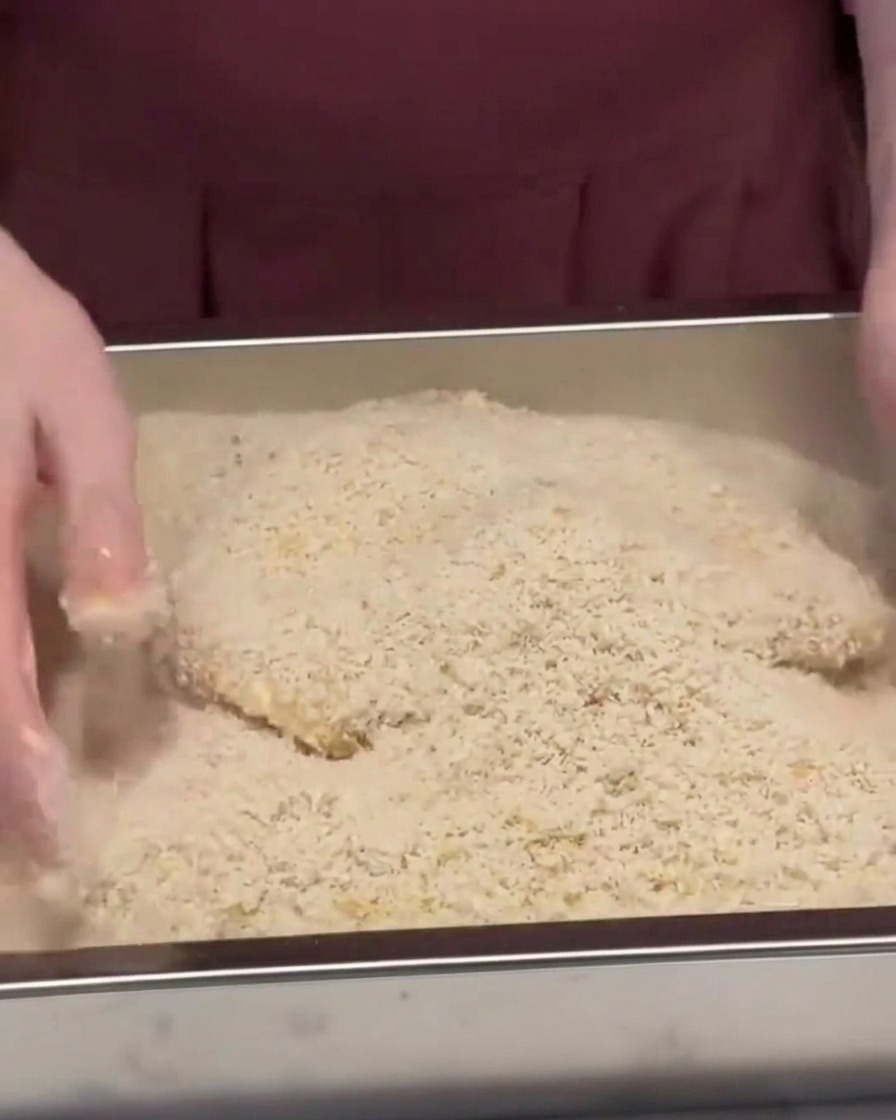
Lay the egg-coated pork in a tray of dry breadcrumbs and press down firmly to create a thick, even crust. Ensure the entire surface is covered, as this layer is responsible for the signature golden crunch of the tonkatsu.
Tip: Use one hand for wet ingredients and the other for dry to keep your fingers from becoming breaded along with the meat. - 13Start frying the pork
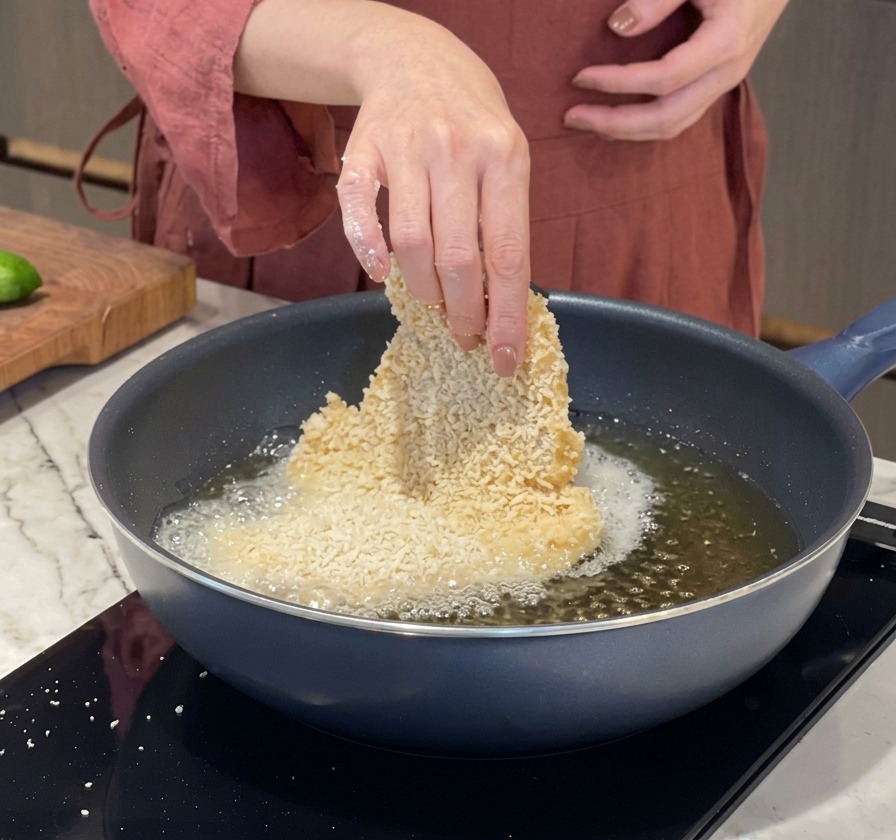
Carefully lower the breaded pork cutlet into a frying pan filled with hot bubbling oil. Lay the cutlet away from you to prevent any hot oil from splashing.
Tip: Make sure the oil is hot enough before adding the pork so the breading crisps up immediately without absorbing excess oil. - 14Fry until golden
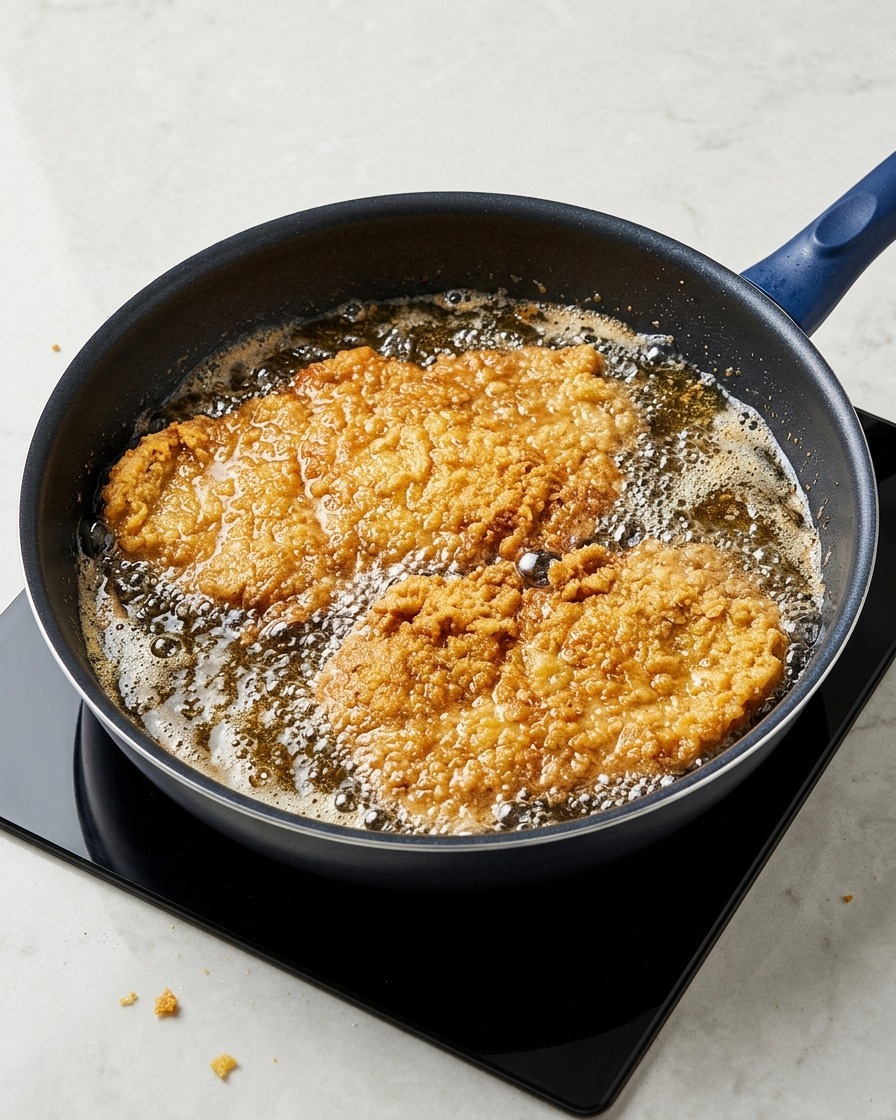
Continue frying the pork cutlets until the breadcrumb coating becomes deeply golden brown and perfectly crispy on both sides.
Tip: Maintain a steady, medium-high heat to ensure the inside cooks evenly without burning the outer crust. - 15Remove and drain
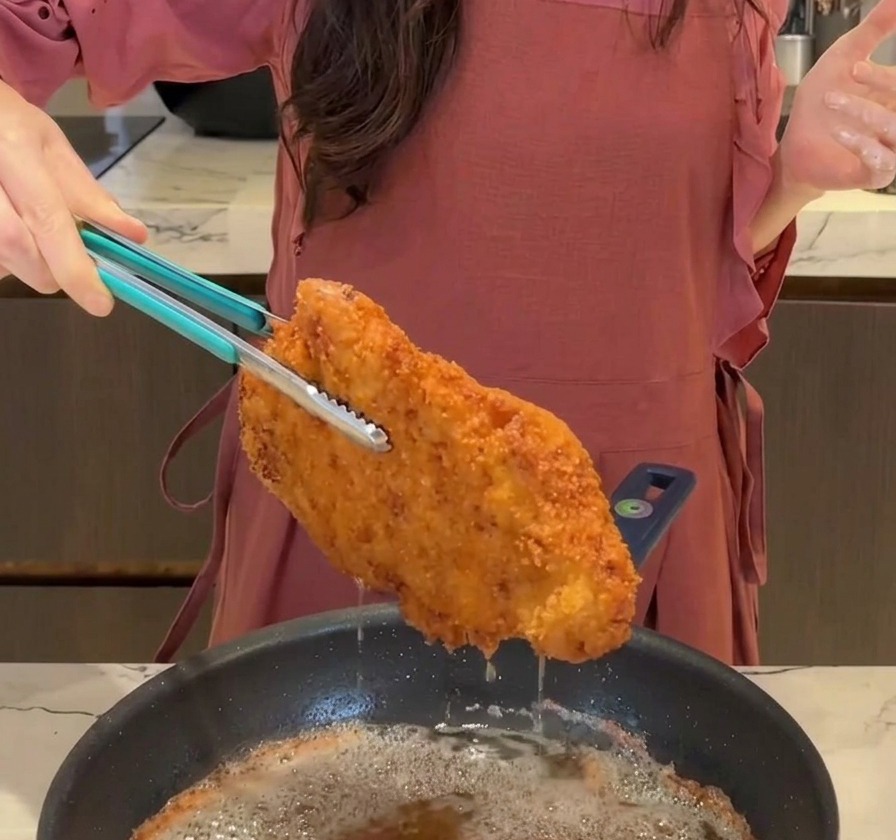
Once fully cooked and crispy, use tongs to lift the golden-brown pork cutlet out of the hot oil. Hold it over the pan for a few seconds to let the excess oil drip off.
Tip: Letting the excess oil drip off keeps the cutlet crispy and prevents it from becoming soggy when plated.