Savory Tuna Kimchi Stew (Chamchi Kimchi Jjigae)
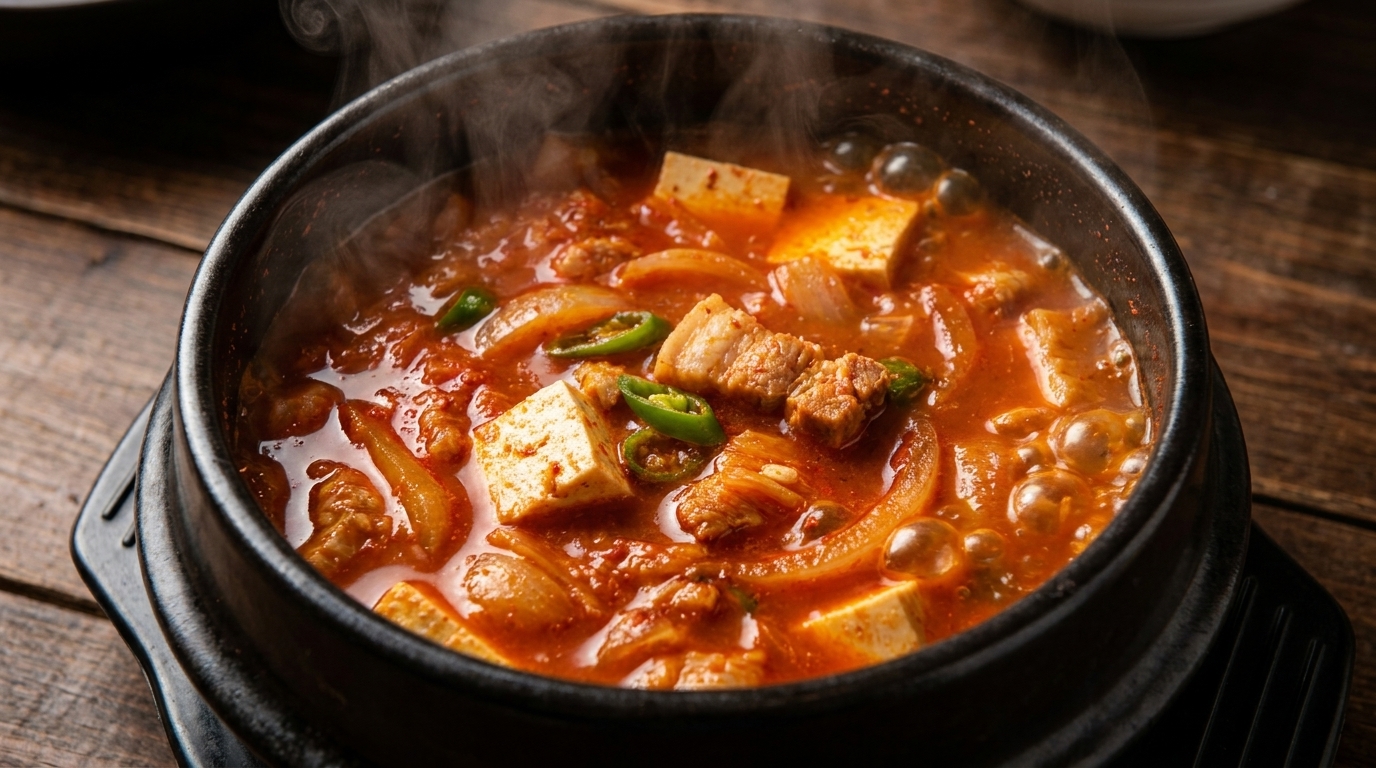
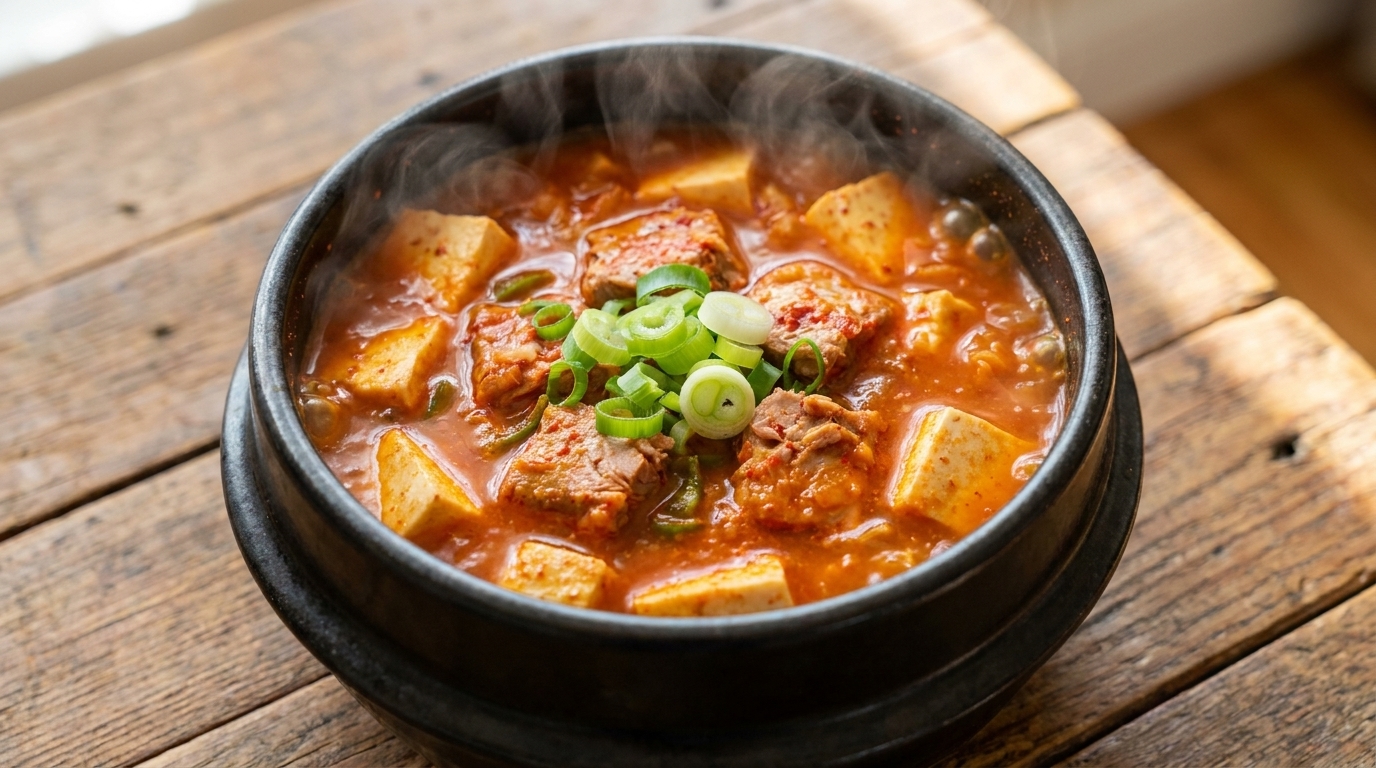
A comforting Korean staple featuring well-fermented kimchi and pantry-friendly canned tuna, simmered into a smoky, savory broth that is ready in minutes.
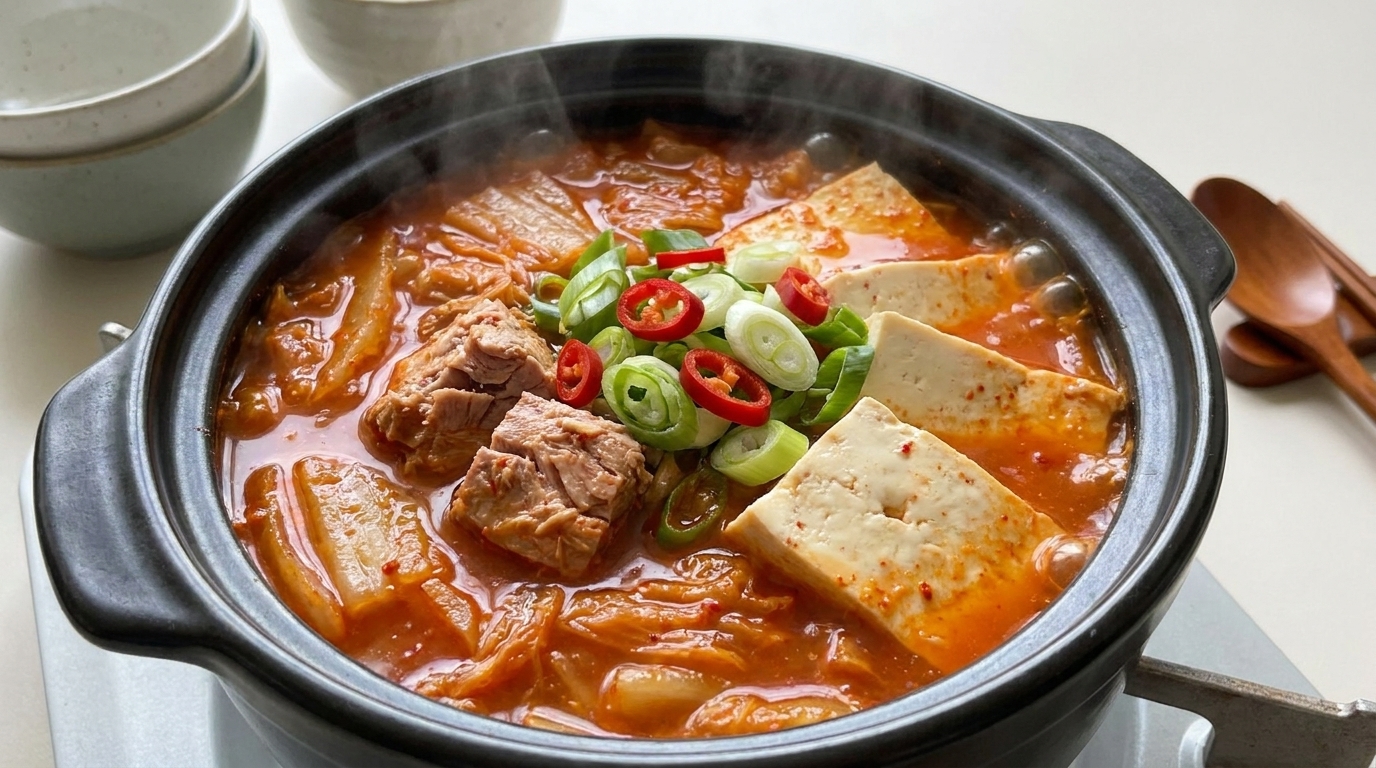
Tuna Kimchi Stew, or Chamchi Kimchi Jjigae, is the ultimate Korean comfort food. Loved for its simplicity and soul-warming heat, this dish transforms basic pantry staples into a deeply flavorful masterpiece often seen in Korean dramas. It is the perfect quick meal for when you want a high-protein, low-calorie dinner that does not sacrifice taste.
Ingredients
- 200 g cabbage kimchi
- 1 can canned tuna
- 200 g firm tofu
- 1 tbsp sesame oil
- 1 tbsp minced garlic
- 0.5 onion
- 1 tbsp gochugaru (Korean chili flakes)
- 1 tbsp fine chili powder
- 400 ml water
- 1 tsp salt
- 2 scallions
- 1 green pepper
Instructions
- 1Prepare the ingredients
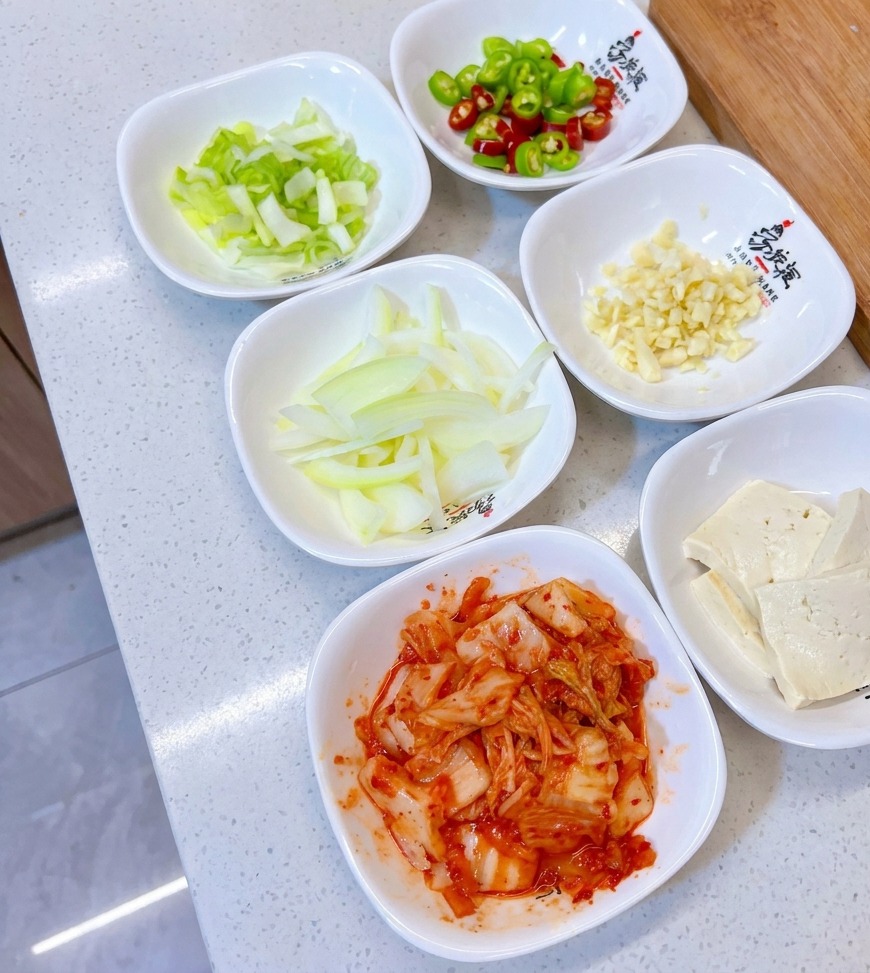
Gather and prepare your ingredients to ensure a smooth cooking process. You will need kimchi, sliced tofu, minced garlic, green peppers, onions, and scallions. Having everything chopped and portioned in bowls beforehand makes the assembly quick and easy.
Tip: Use well-fermented kimchi for the best depth of flavor and a slightly sour kick in the stew. - 2Heat the sesame oil
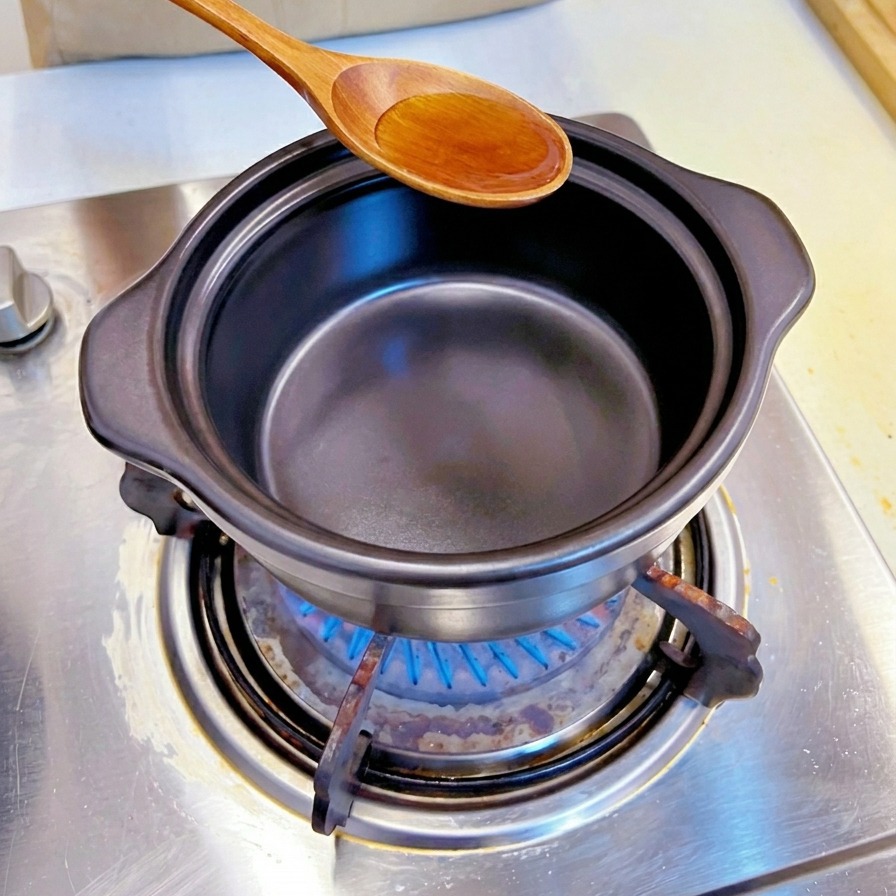
Place a heavy-bottomed pot or a traditional stone pot over medium heat. Add a generous spoonful of sesame oil and let it warm up. The sesame oil provides a rich, nutty base for the aromatics and kimchi.
Tip: Be careful not to overheat the sesame oil, as it has a lower smoke point than vegetable oil and can become bitter if burnt. - 3Sauté the garlic
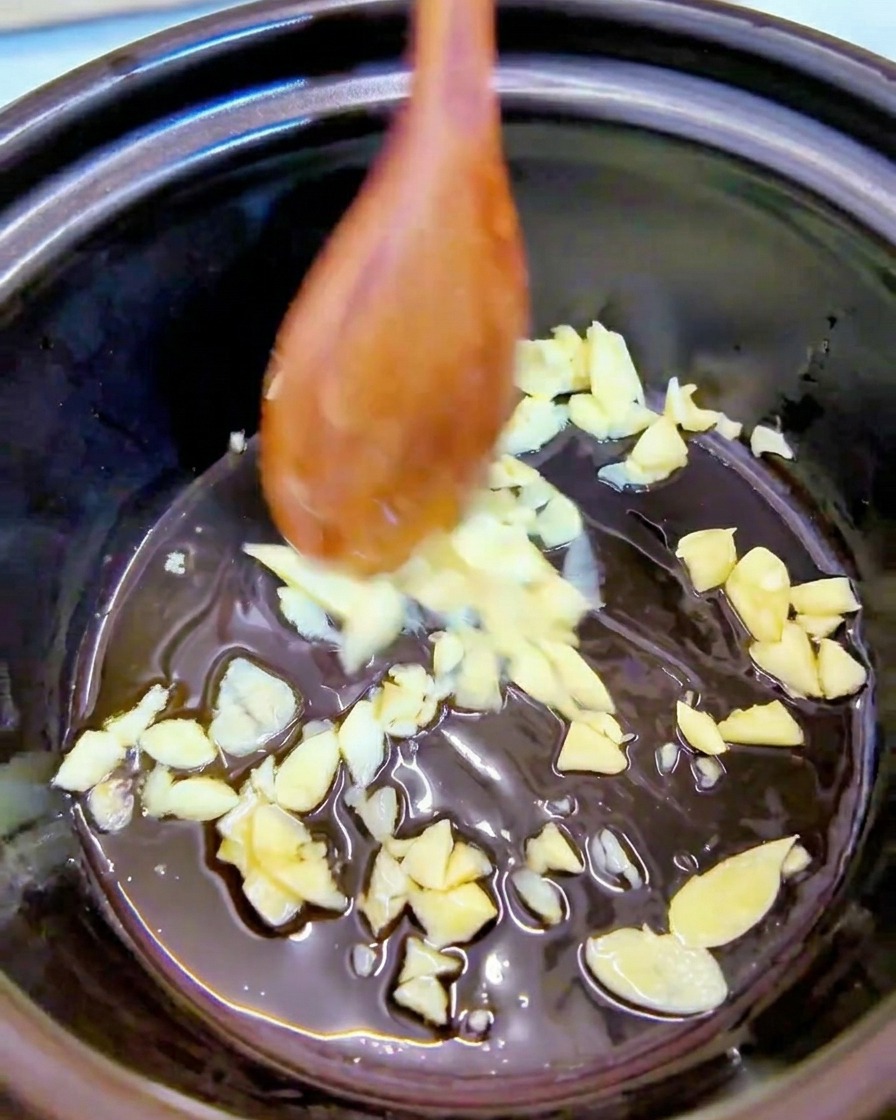
Add the minced garlic to the heated sesame oil. Sauté for about 30 seconds until the garlic becomes fragrant and turns a very light golden color. This infuses the oil with a savory aroma that will season the entire dish.
Tip: Keep the garlic moving to prevent it from browning too quickly or burning. - 4Add the kimchi
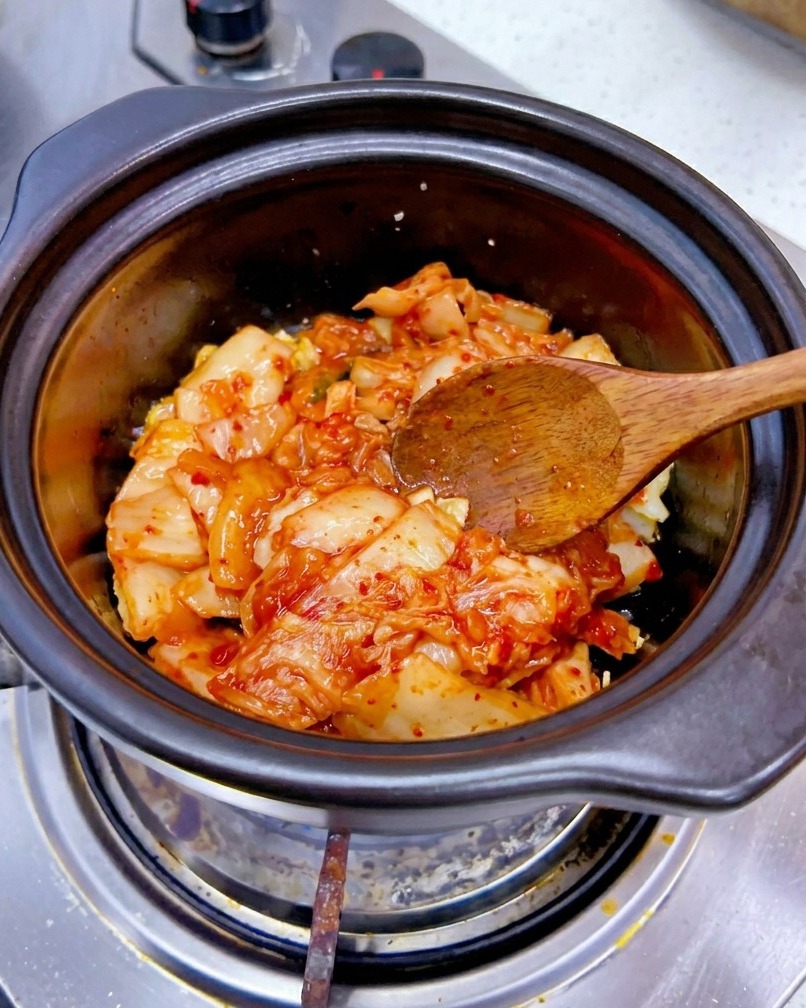
Once the garlic is fragrant, add the chopped kimchi into the pot. Stir-fry the kimchi with the garlic and oil for a few minutes. This step helps to mellow the acidity of the kimchi and deepens its flavor before adding any liquids.
Tip: If your kimchi is very sour, you can add a small pinch of sugar during this step to balance the acidity. - 5Pour in the tuna juice
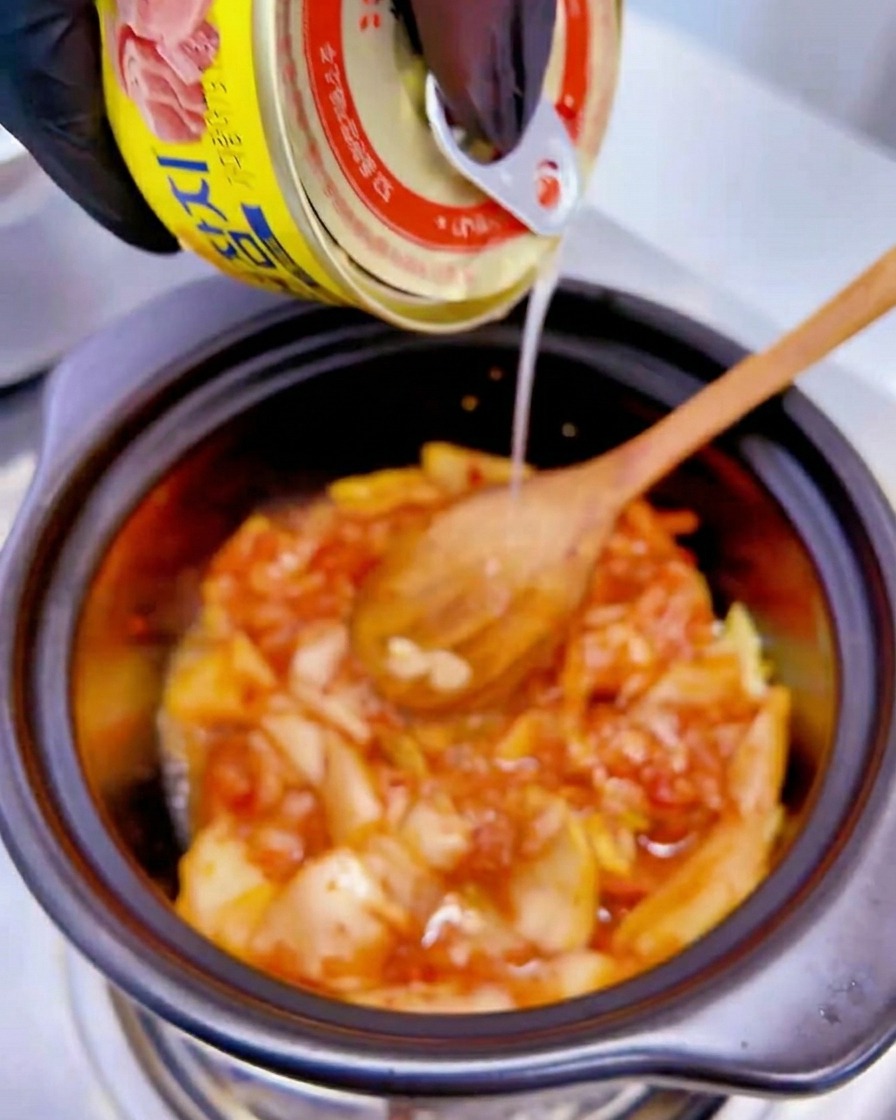
Open the can of tuna and carefully pour the juice or oil from the can into the pot with the kimchi. This liquid is packed with umami flavor and acts as a savory starter for the stew base. Save the tuna meat to add later.
Tip: Dont discard the tuna liquid! It contains a lot of the tunas natural flavor which makes the broth more intense. - 6Add the onions
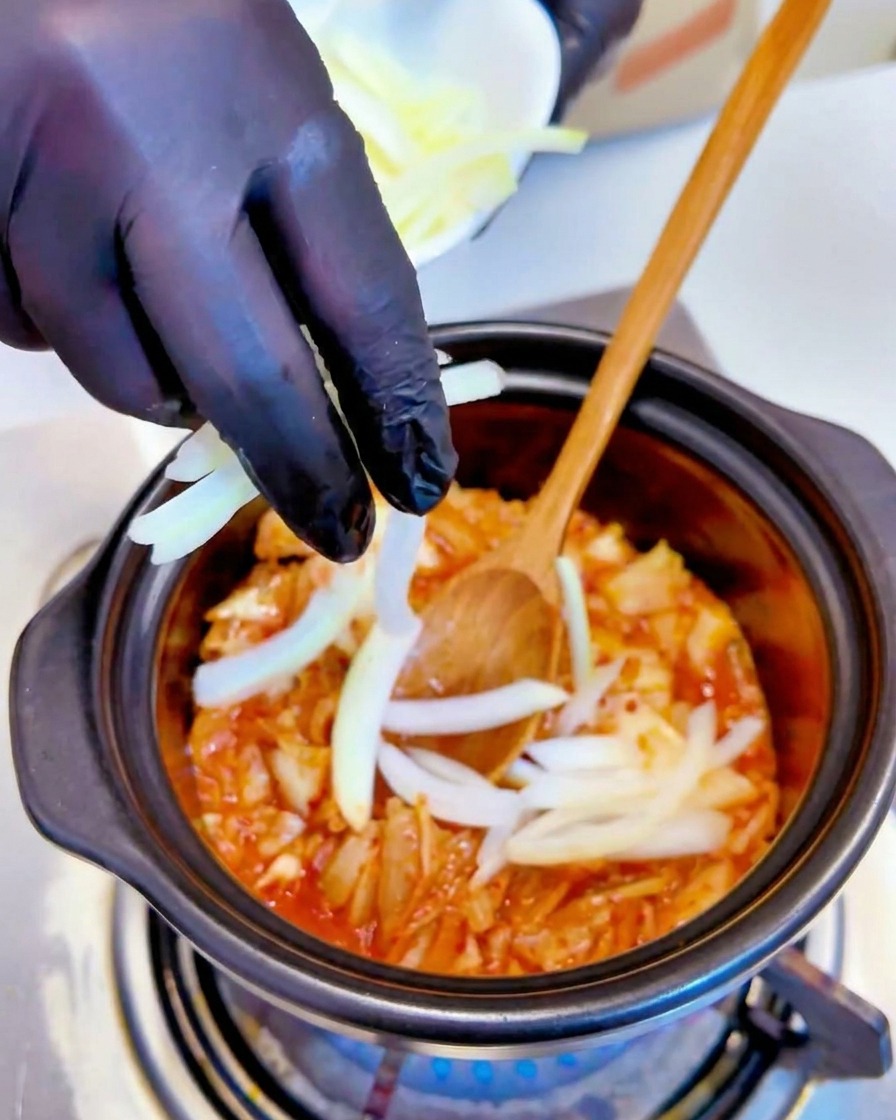
Add the sliced onions to the pot and stir them into the kimchi mixture. Sauté briefly until the onions begin to soften and become translucent, allowing them to absorb the flavors of the kimchi and garlic.
Tip: Cutting the onions into uniform slices ensures they cook evenly and integrate well with the texture of the kimchi. - 7Add red chili flakes
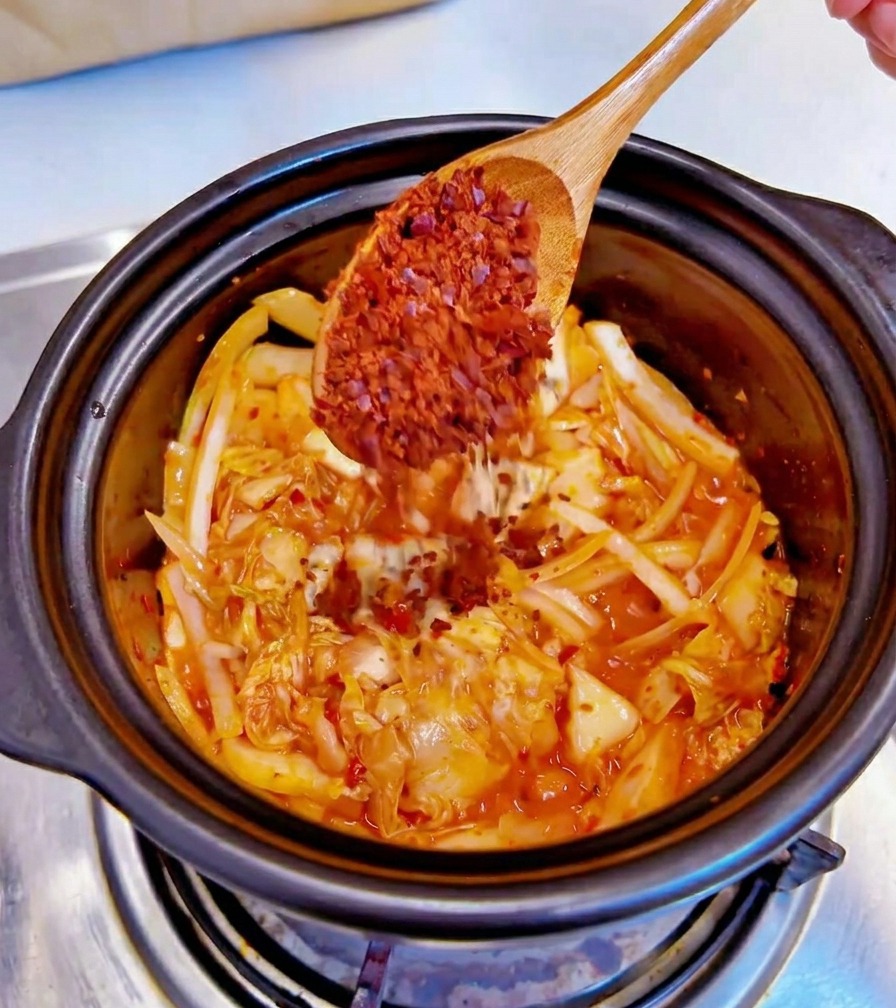
Add a spoonful of coarse red chili flakes (gochugaru) into the pot with the kimchi and onions. These flakes are essential for providing the smoky heat and vibrant red color characteristic of a traditional Korean stew.
Tip: Gochugaru varies in spice level, so adjust the amount based on your personal preference for heat. - 8Add fine chili powder
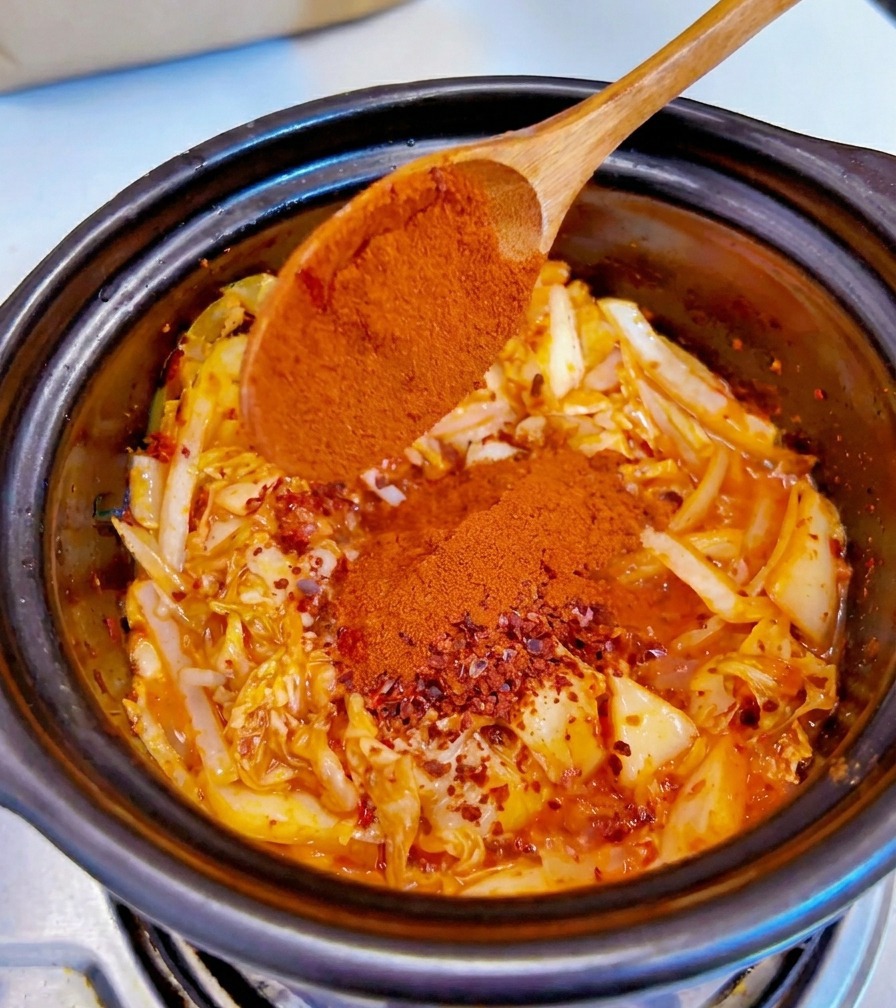
Add a spoonful of fine red chili powder to the mixture. Stir the contents thoroughly to ensure the powder and flakes are well incorporated with the kimchi, creating a rich and flavorful spice base.
Tip: Using a mix of coarse flakes and fine powder creates a more complex texture and a deeper red broth. - 9Pour in the water
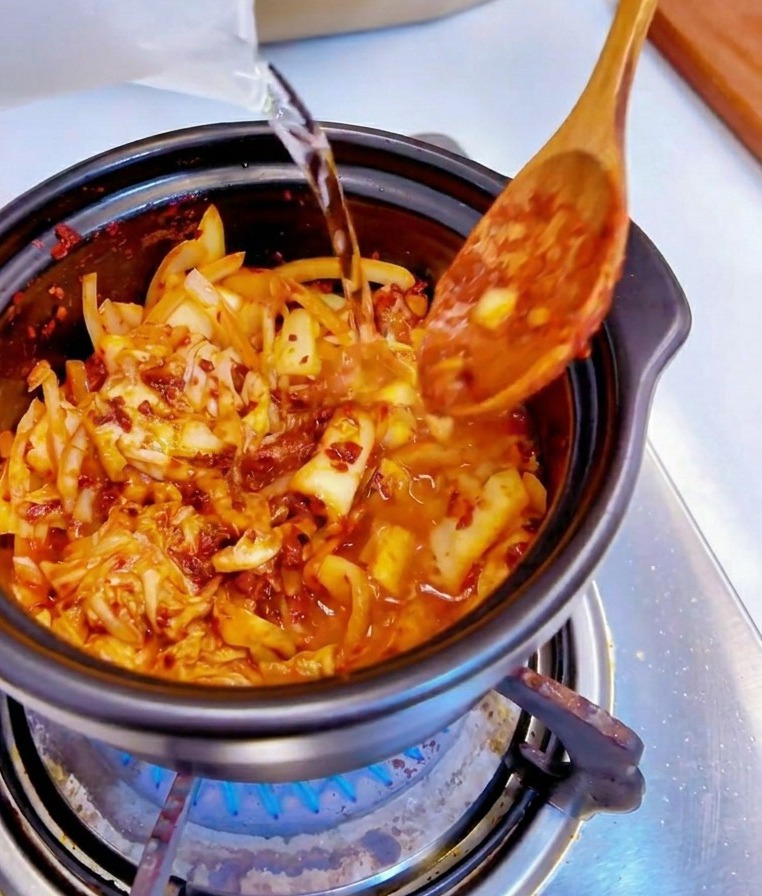
Pour approximately 400ml of fresh water into the pot. This liquid will combine with the kimchi juices and spices to form the savory broth of the stew.
Tip: For extra depth, you can substitute the water with rice water or a light dashi stock. - 10Add the tofu slices
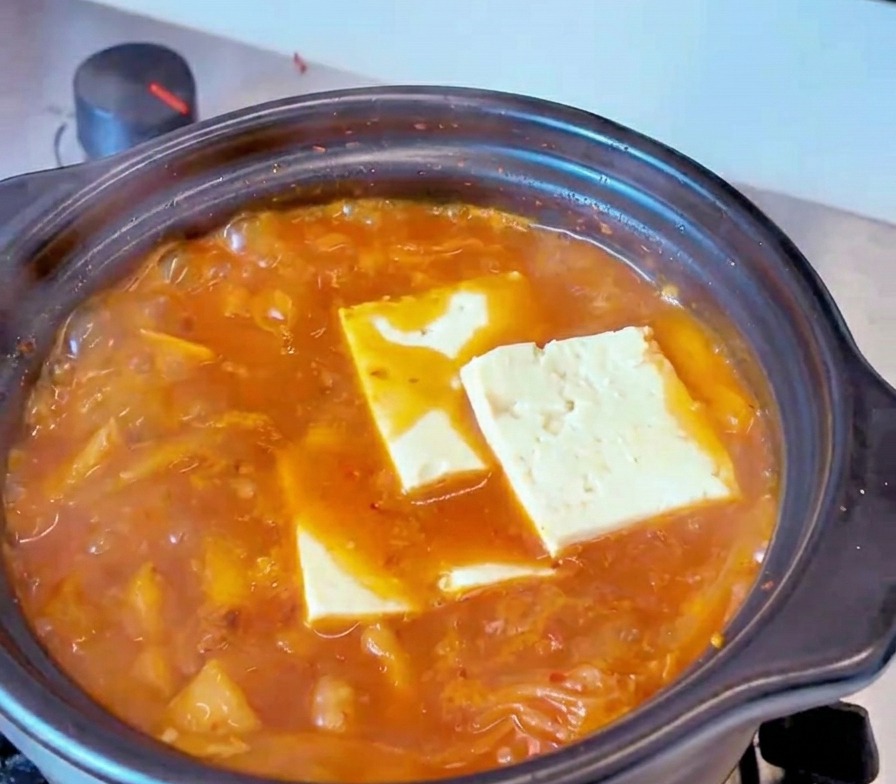
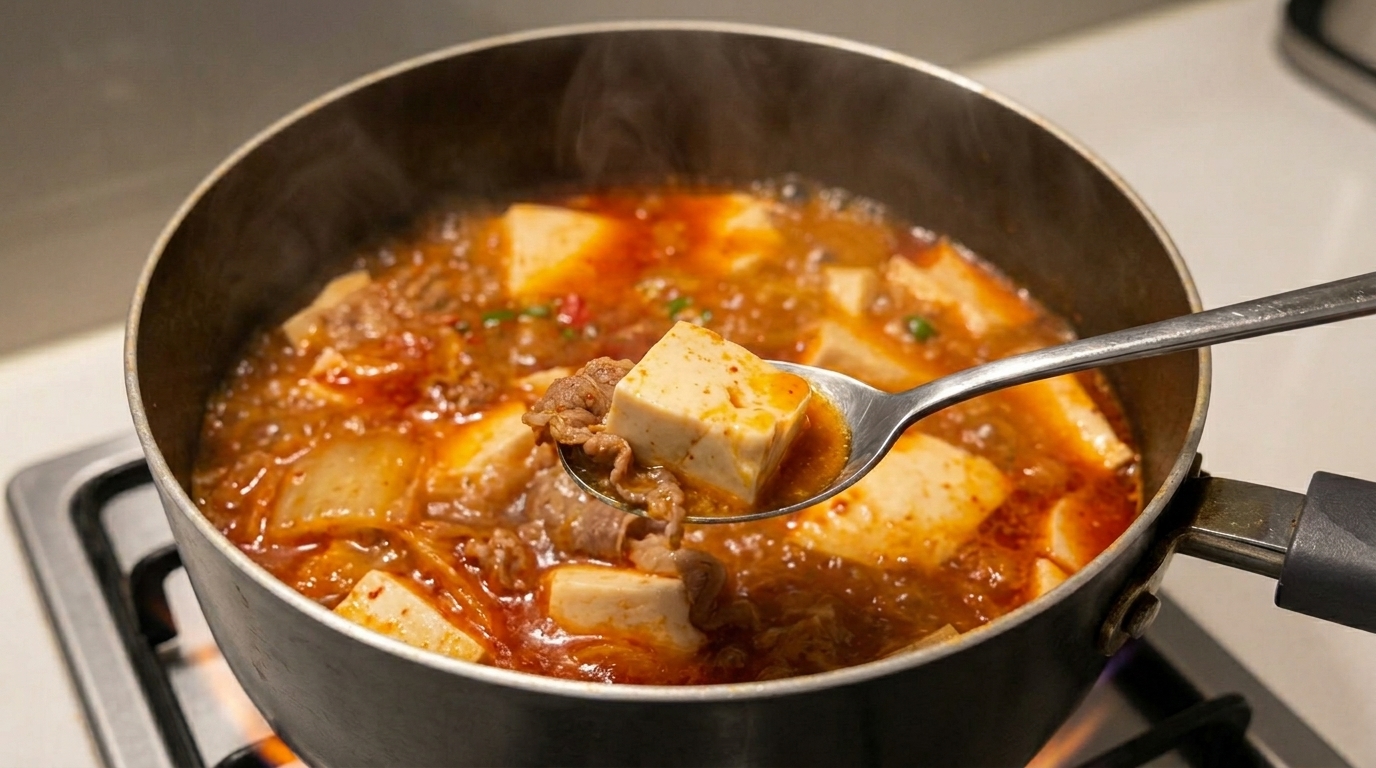
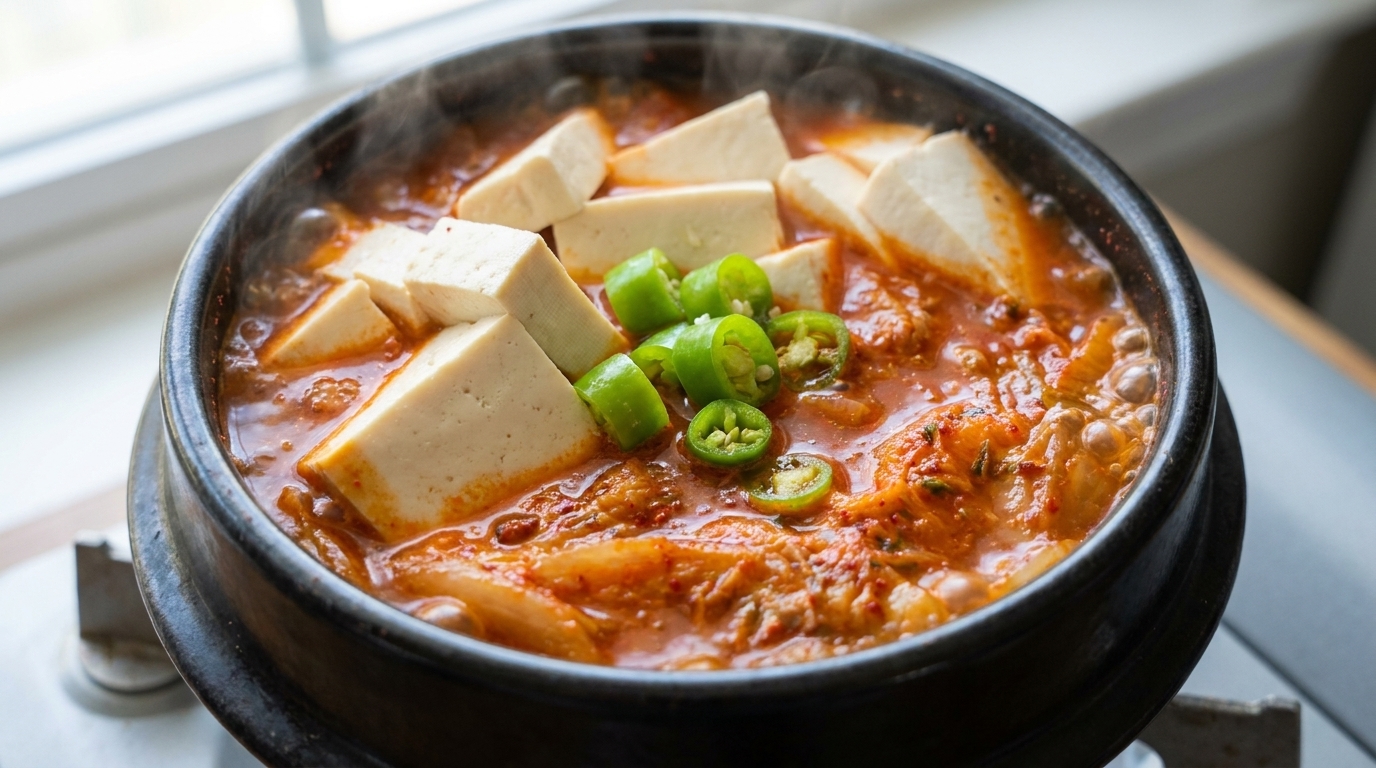
When the stew begins to boil, carefully add the slices of white tofu. Arrange them so they are partially submerged, allowing them to absorb the spicy flavors of the broth.
Tip: Use firm tofu to ensure the slices maintain their shape and dont crumble during the cooking process. - 11Add the canned tuna
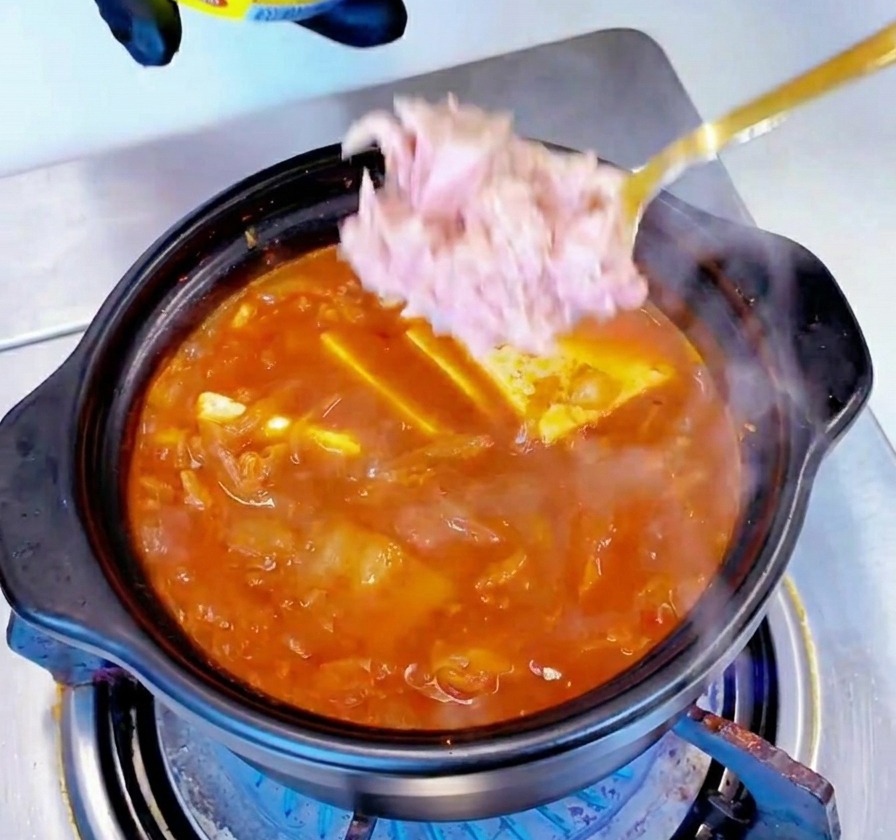
Add the chunks of canned tuna meat into the center of the pot. The tuna provides a lean protein source that pairs perfectly with the fermented taste of the kimchi.
Tip: Avoid over-stirring once the tuna is added if you prefer to have larger, intact chunks of fish in your stew. - 12Season with salt
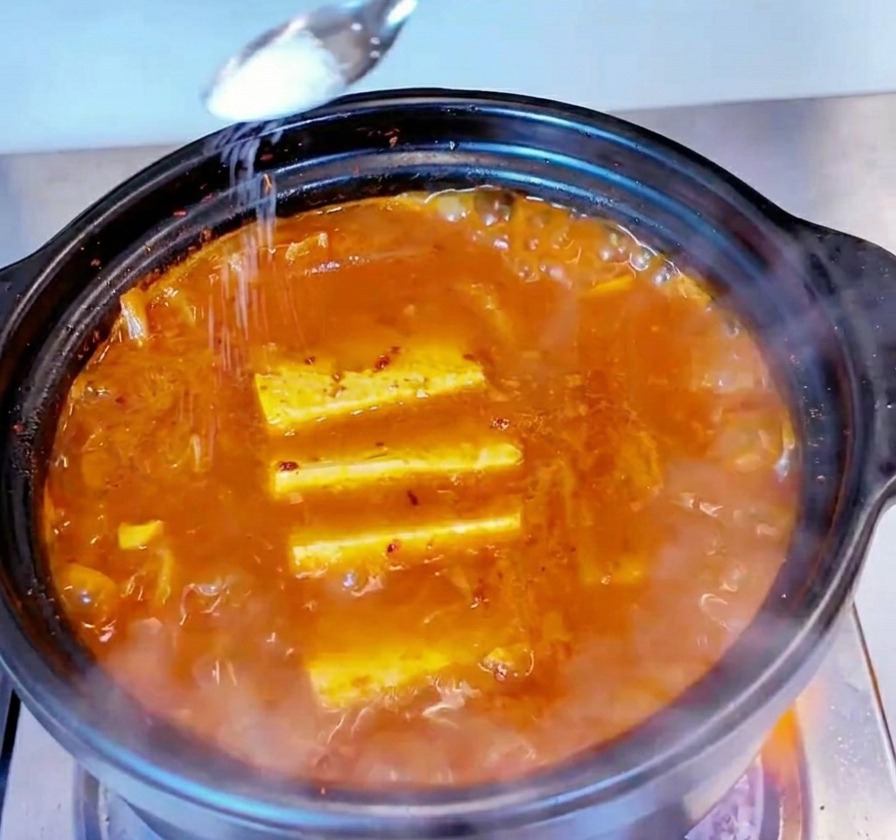
Sprinkle a small spoonful of salt over the boiling stew. This final seasoning step helps to balance the acidity of the kimchi and the heat of the chili flakes.
Tip: Taste the broth before adding salt, as both the kimchi and the canned tuna already contain significant sodium. - 13Finish with fresh garnishes
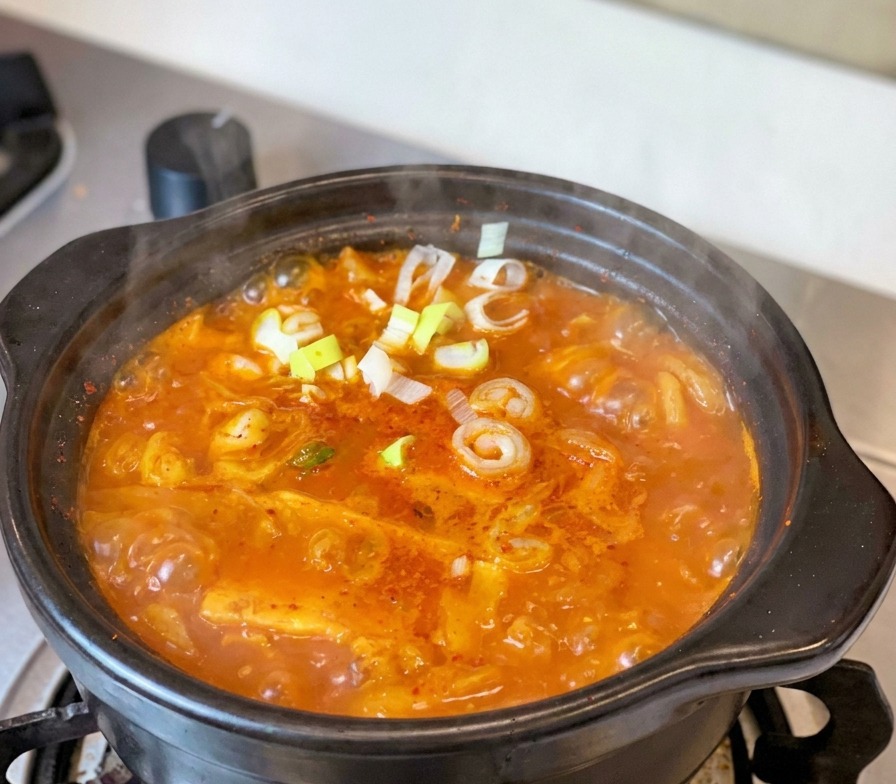
Once the stew has reached a vigorous boil and the flavors are fully incorporated, sprinkle the freshly chopped scallions and sliced green peppers over the top. The residual heat from the stew will slightly soften the greens while preserving their bright color and fresh, pungent aroma.
Tip: For the best presentation and flavor, add these fresh aromatics right before serving so they dont lose their crunch in the high heat.