Authentic Miso Ramen
Chashu and Soft-Boiled Egg
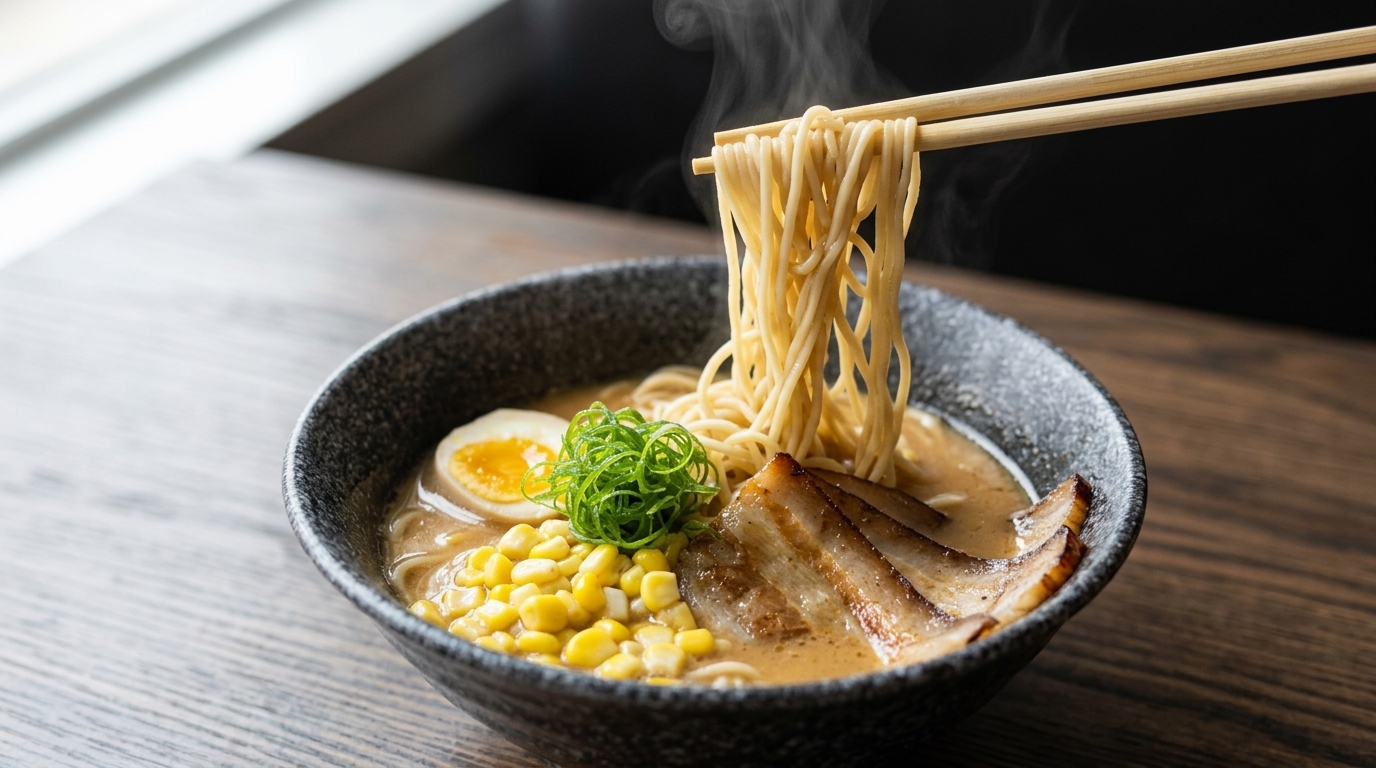
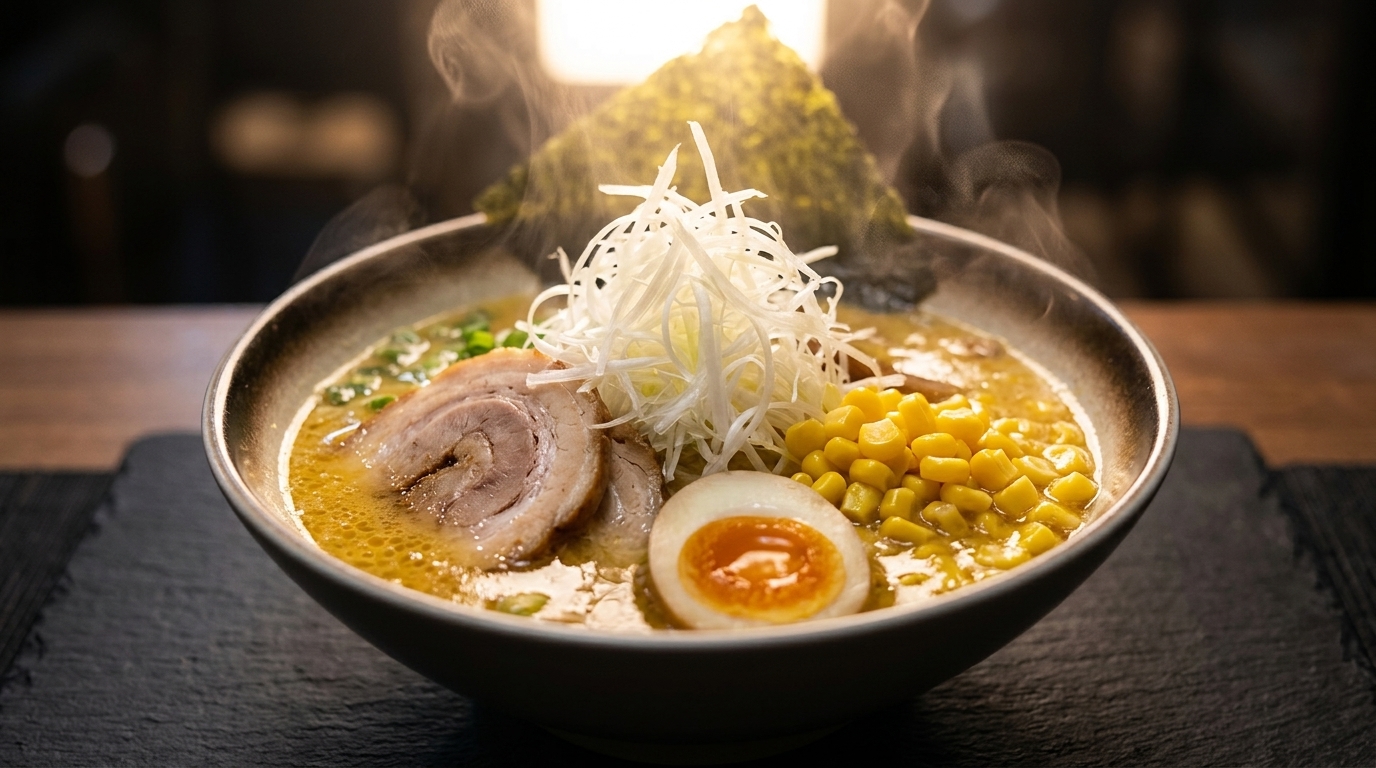
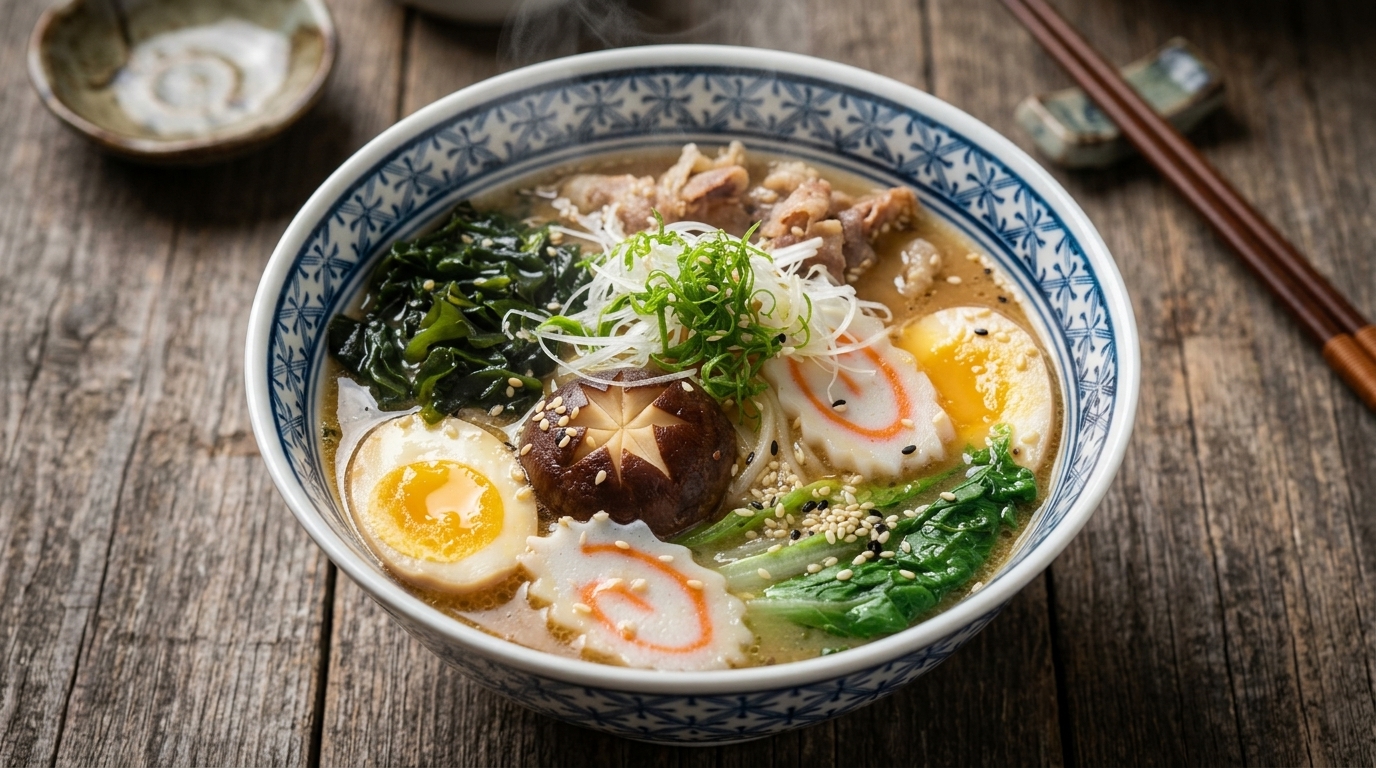
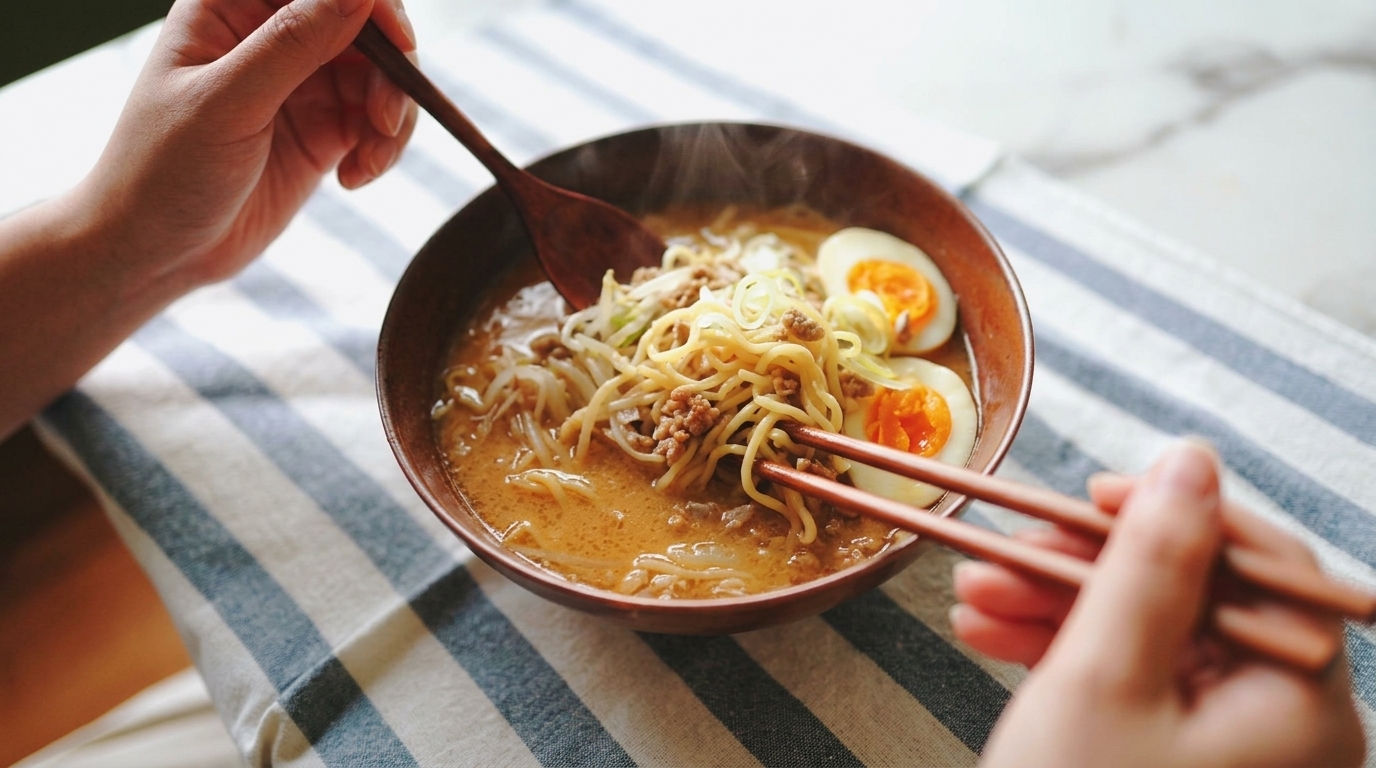
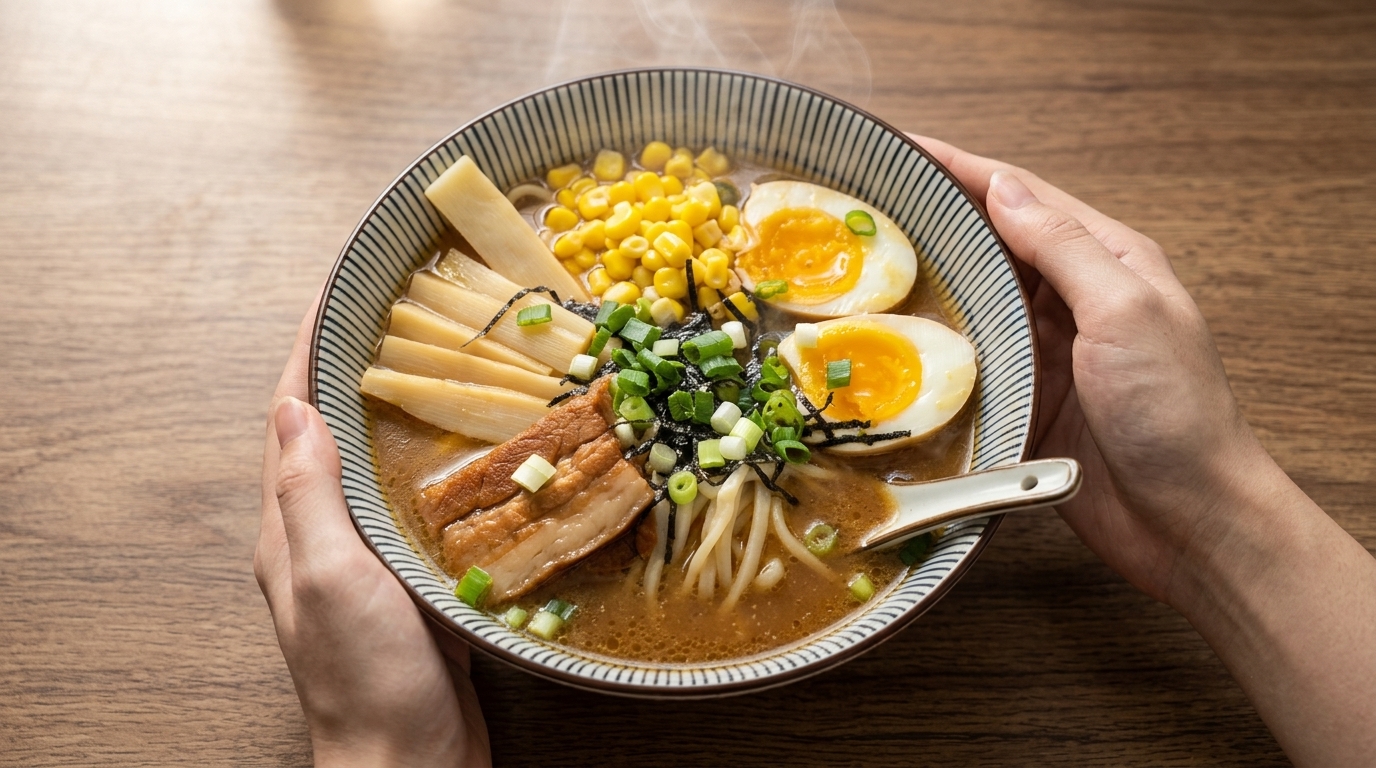
A soul-warming bowl of Japanese Miso Ramen featuring a rich fermented soybean broth, tender chashu pork, and a perfectly jammy soft-boiled egg.
Miso ramen originated in Hokkaido, where the cold climate demanded a hearty, savory broth. This version uses a concentrated miso base for a complex, umami-forward flavor profile that perfectly complements the chewy wheat noodles and savory toppings.
Ingredients
- 1 large egg
- 1 serving fresh ramen noodles
- 50 g miso ramen seasoning paste
- 360 ml boiling water
- 1 slice pre-packaged chashu pork
- 1 stalk green onion
- 1 tbsp sweet corn kernels
- 3-4 pieces bamboo shoots
- to taste shredded nori seaweed
Instructions
- 1Start the soft-boiled egg
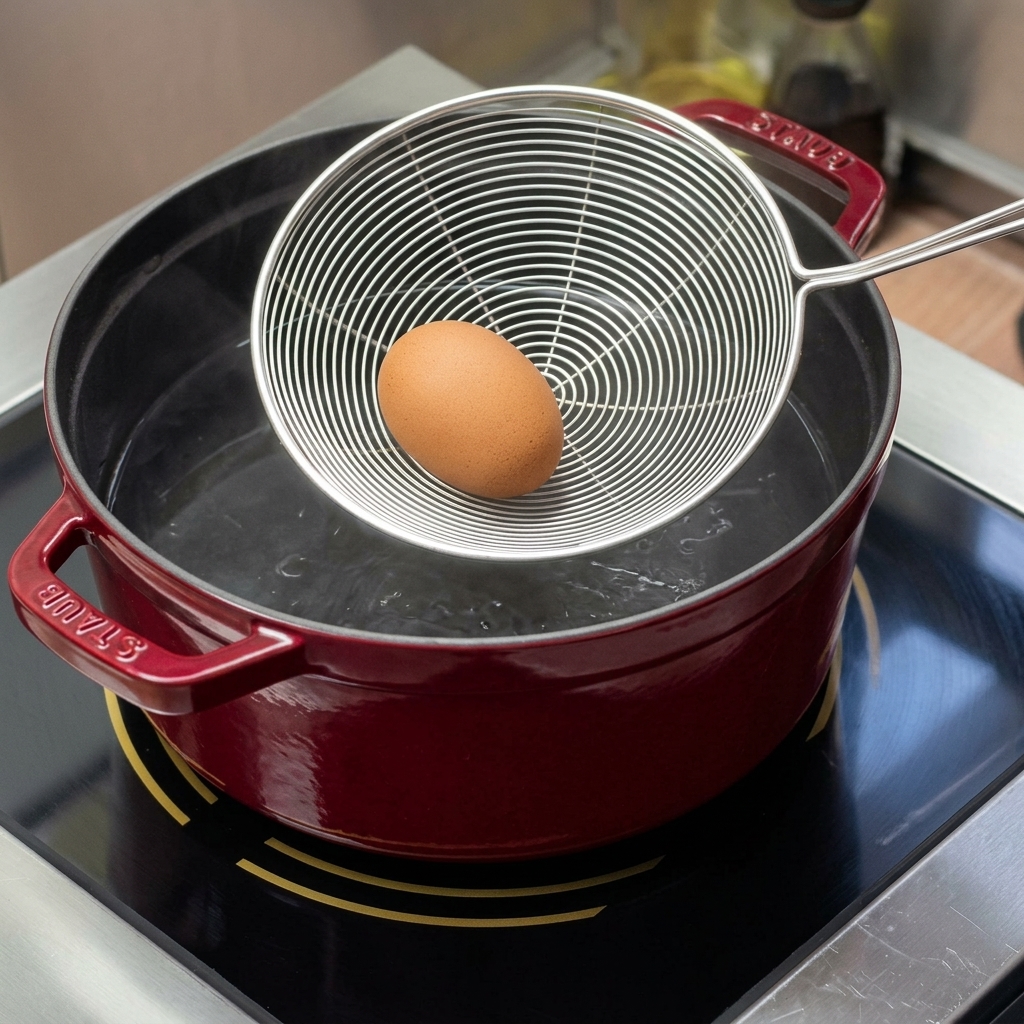
Gently lower a whole, room-temperature egg into a pot of boiling water using a wire strainer. Lowering the egg carefully prevents the shell from cracking against the bottom of the pot, ensuring a perfect soft-boiled result.
Tip: Starting with room-temperature eggs helps prevent the shells from cracking due to thermal shock when they hit the boiling water. - 2Prepare the garnish
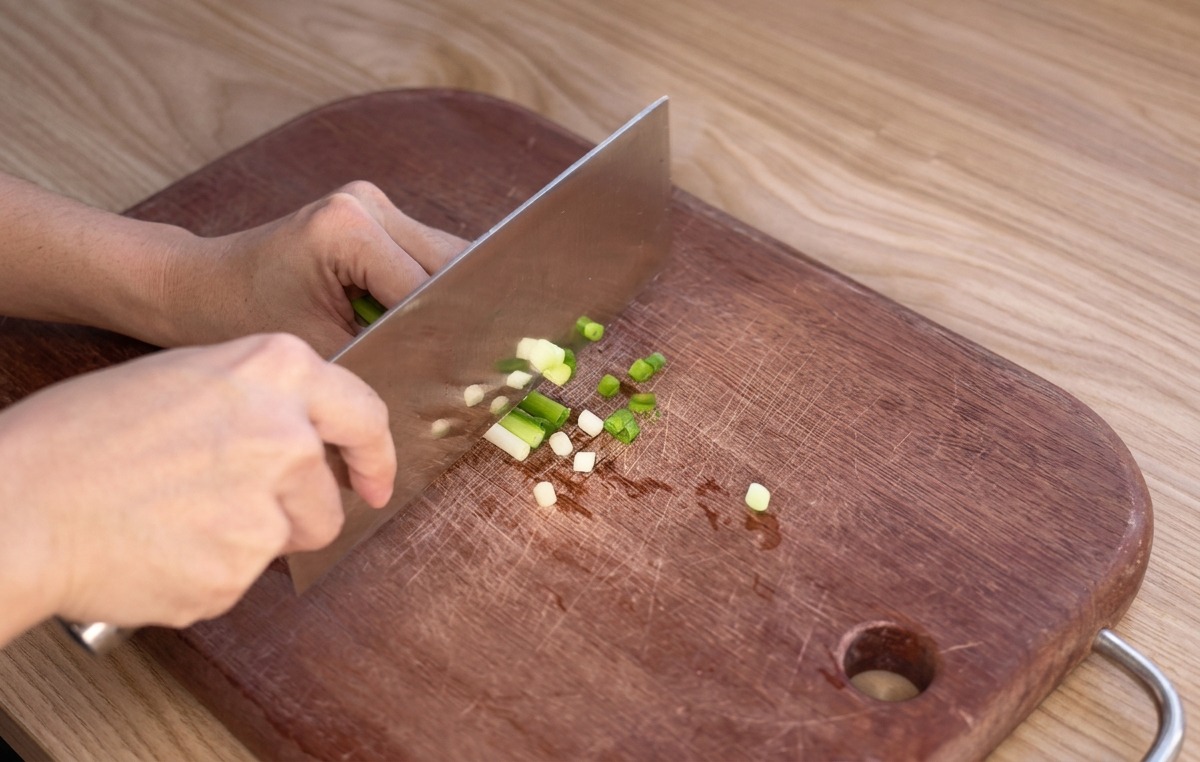
Finely chop fresh green onions on a wooden cutting board using a sharp cleaver. These will serve as a bright, aromatic garnish that adds a fresh bite to the rich miso ramen broth.
Tip: Angle your knife slightly while chopping to get elegant, bias-cut scallion rounds for a more professional presentation. - 3Shock the egg in ice water
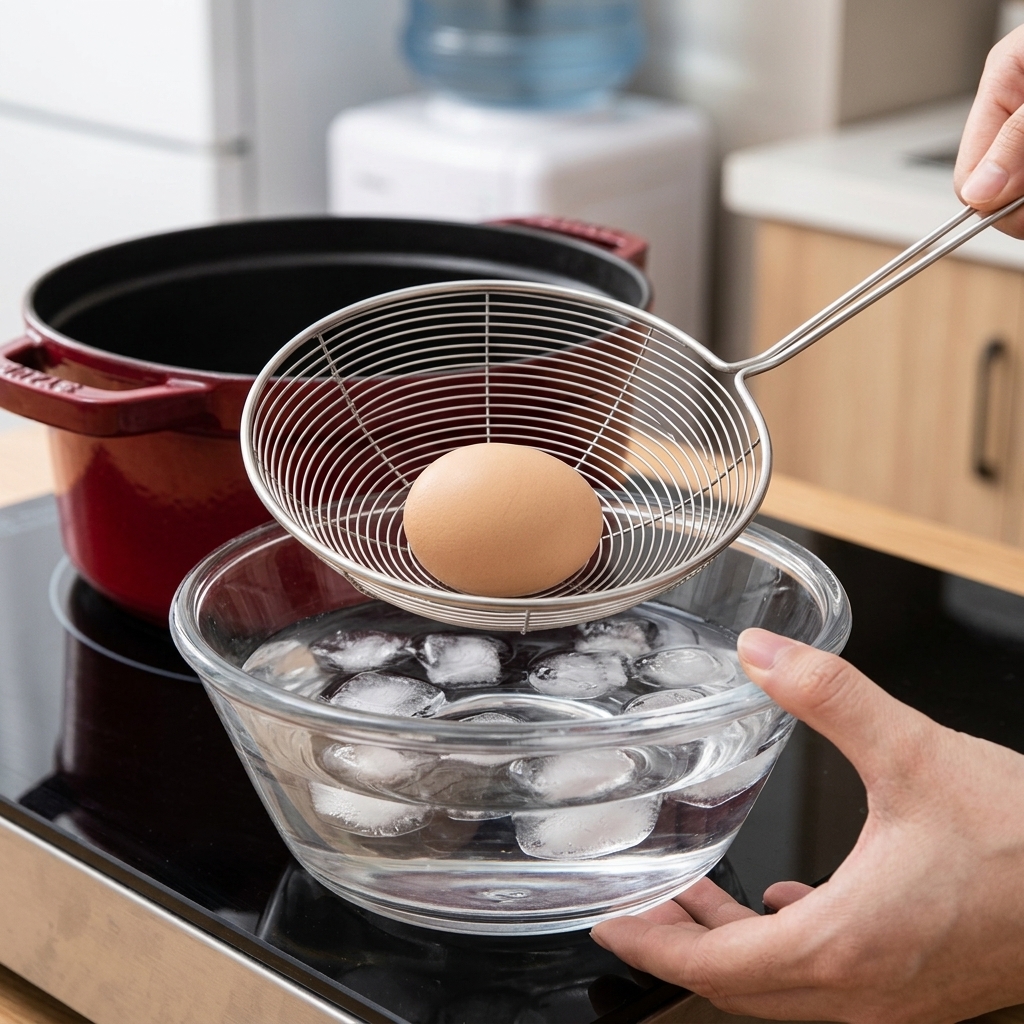
Immediately after the cooking time is up, use the strainer to transfer the hot egg into a bowl filled with ice and cold water. This shocking process stops the internal cooking immediately, keeping the yolk jammy and making the shell easier to peel.
Tip: Keep the egg in the ice bath for at least 3 to 5 minutes to ensure it is completely chilled through to the center. - 4Warm the chashu pork
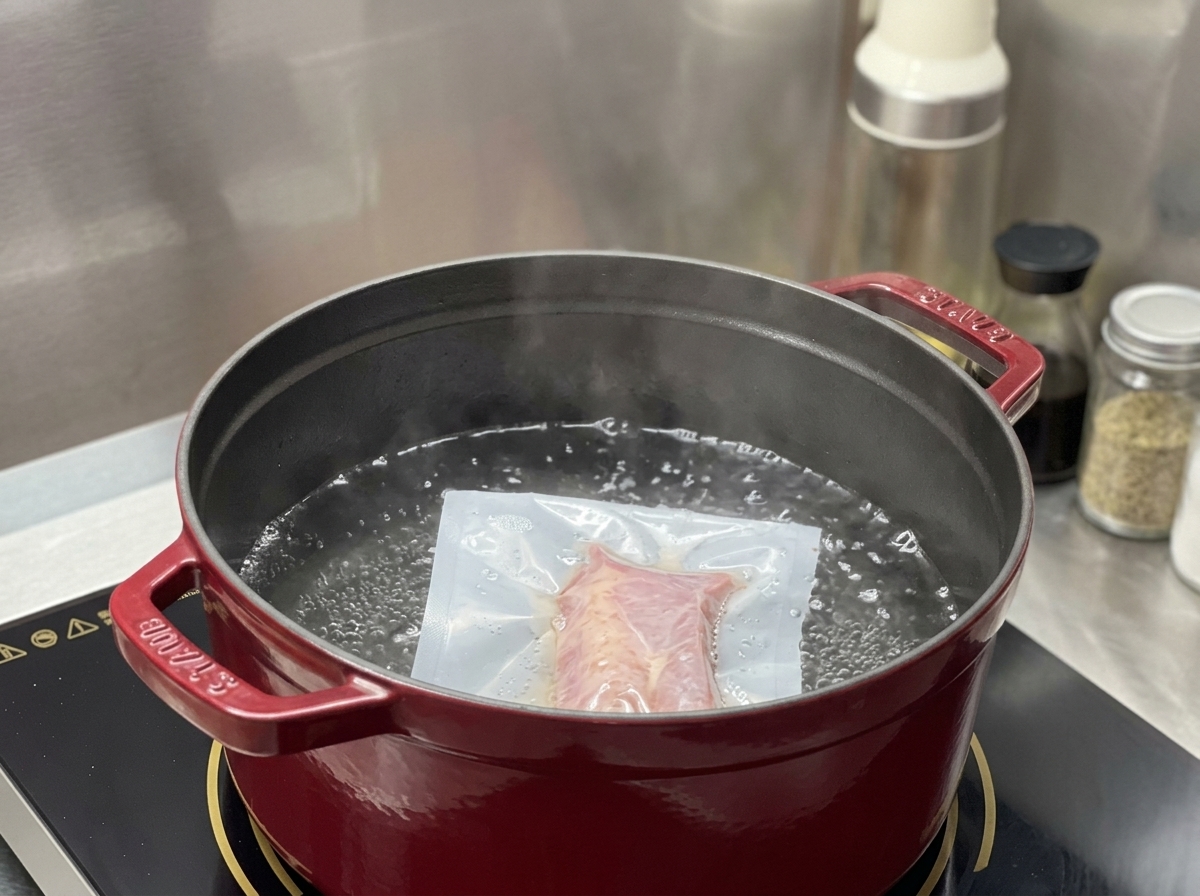
Place the sealed, pre-packaged chashu pork into the pot of hot water. This sous-vide style reheating method warms the pork gently and evenly, maintaining its tender texture without drying it out.
Tip: The water should be hot but not necessarily boiling; a gentle simmer is enough to reheat the pre-cooked meat safely. - 5Cook the ramen noodles
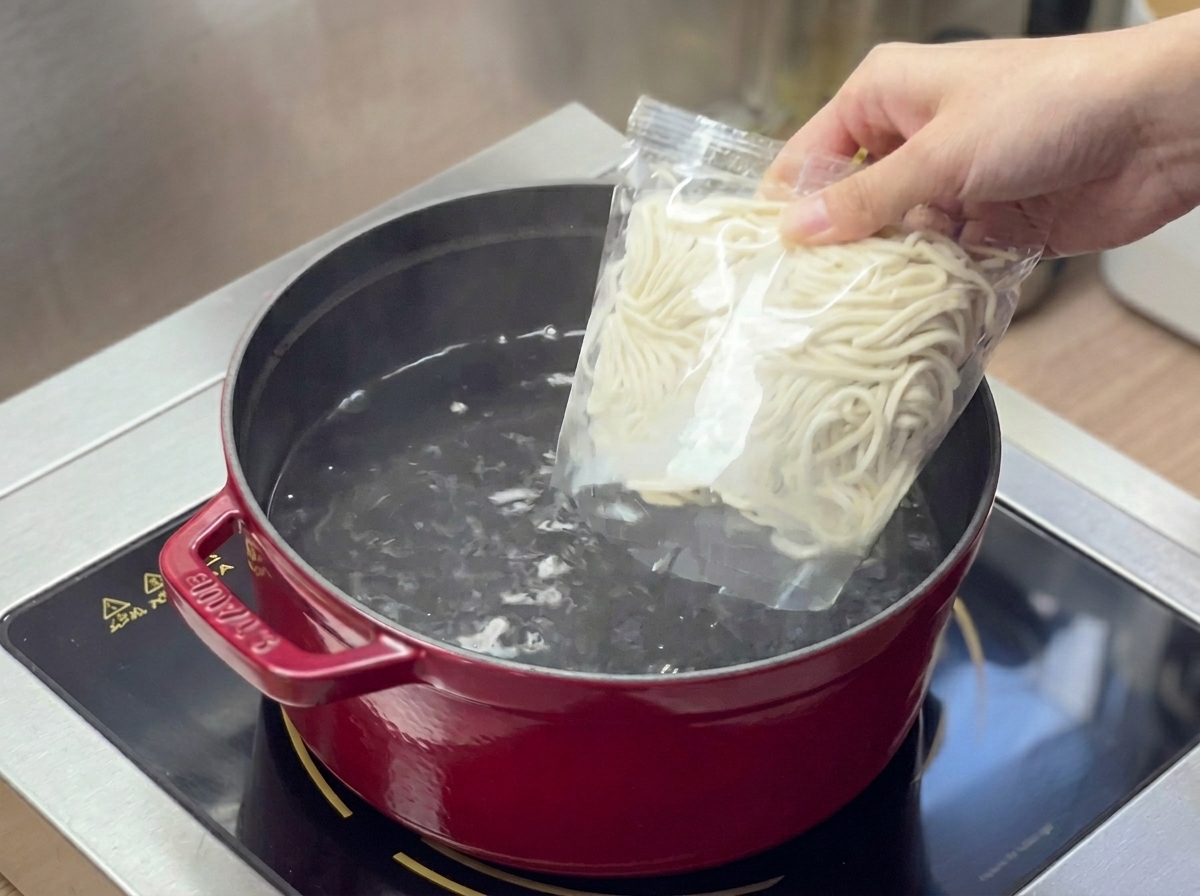
Bring a large pot of water to a rolling boil on the stove. Carefully open the package and add the fresh ramen noodles to the water. Boil the noodles until they are tender and cooked through, which will serve as the hearty base for your dish.
Tip: Stir the noodles occasionally while they cook to ensure they dont stick to each other or the bottom of the pot. - 6Add the miso seasoning
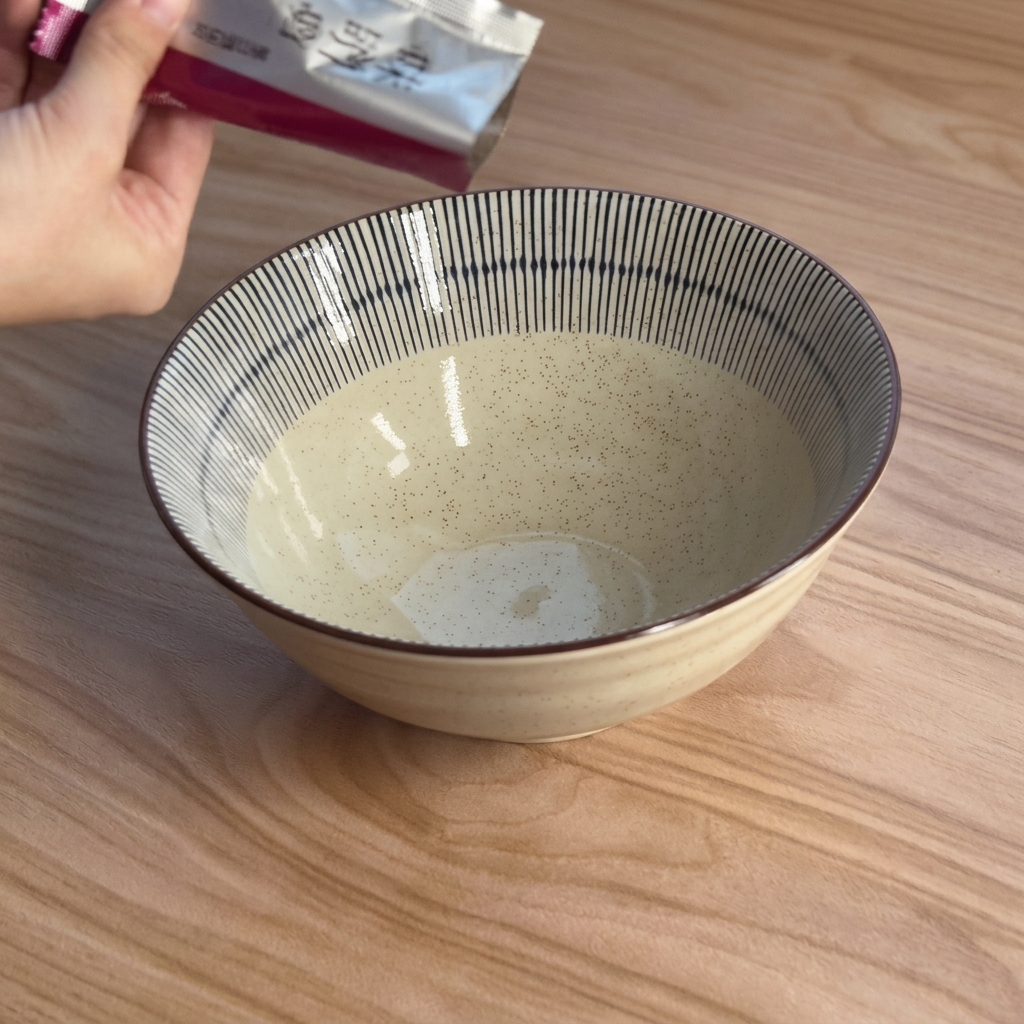
Squeeze the concentrated miso ramen seasoning from its silver packet into the bottom of a ceramic serving bowl. This paste contains the essential flavors, fats, and seasonings that form the heart of the ramen soup.
Tip: Use your fingers or a small spatula to squeeze the packet thoroughly to ensure no flavorful seasoning is left behind. - 7Create the soup broth
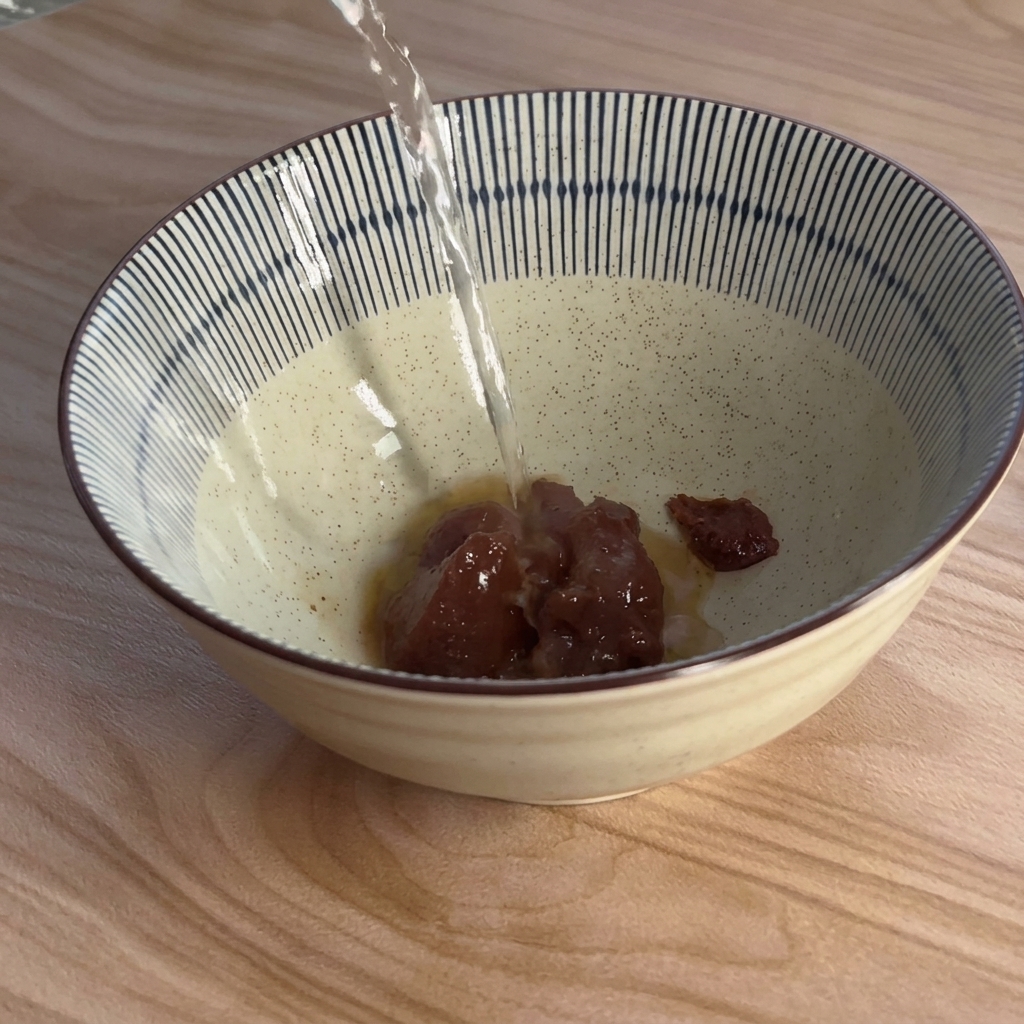
Place 50 grams of miso ramen seasoning paste into your serving bowl. Pour 360 grams of fresh boiling water directly over the paste. The heat from the water will help melt the seasoning into a rich, aromatic soup base.
Tip: For the best flavor, use a whisk or chopsticks to stir the water and paste together until the miso is completely dissolved. - 8Add noodles to the soup
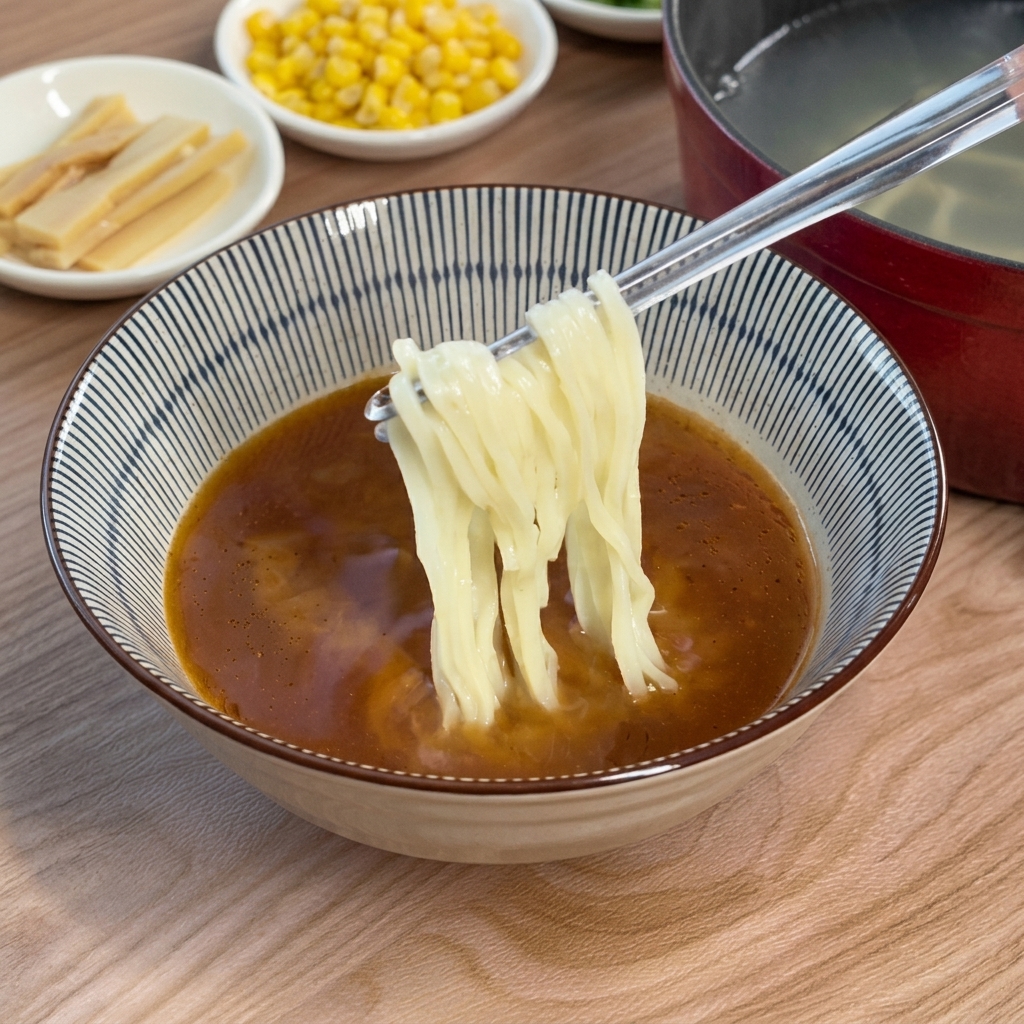
Once the ramen noodles are cooked and thoroughly drained, use chopsticks to lift them and transfer them into the bowl of prepared miso broth. Ensure the noodles are well-submerged so they can soak up the savory flavors of the soup.
Tip: Gently lift and fold the noodles once they are in the broth to ensure they are evenly distributed and not clumped together. - 9Add the soft-boiled egg
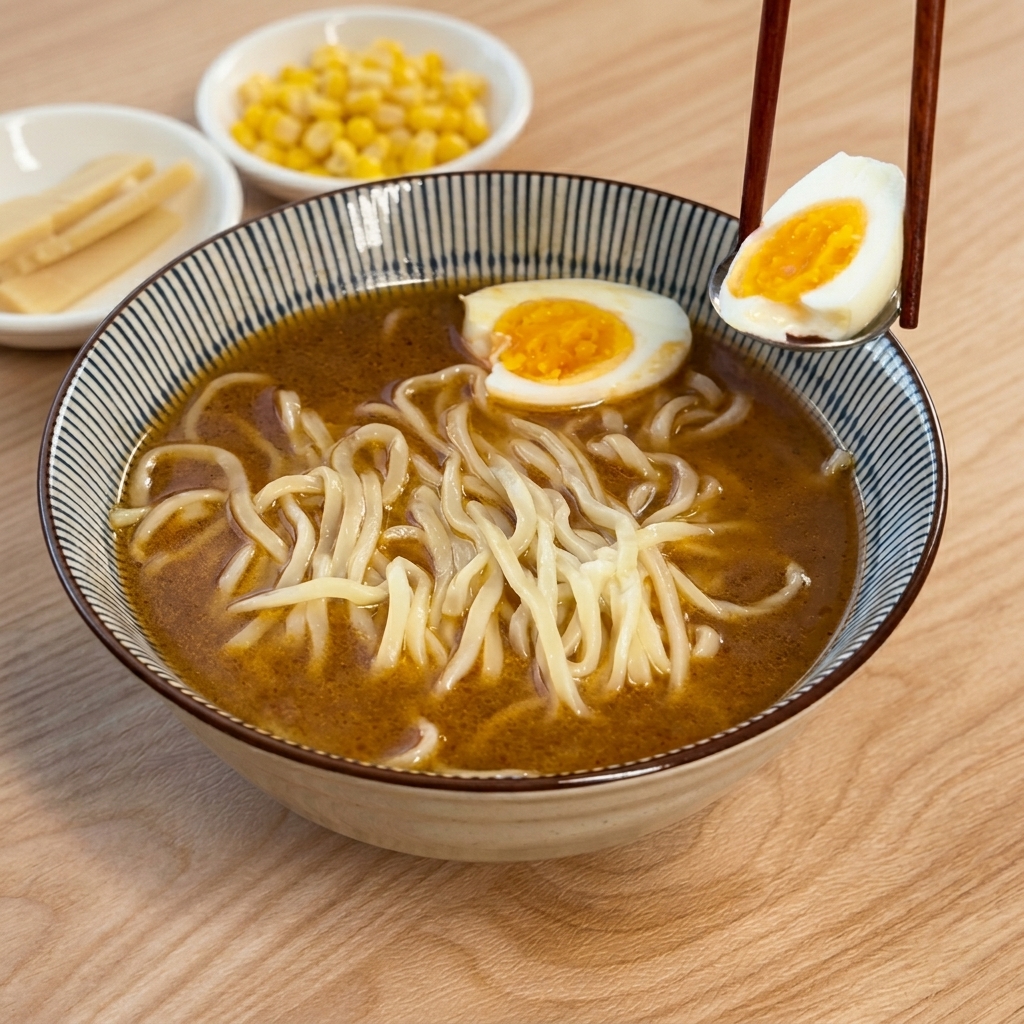
Take your soft-boiled egg, which was cooked for exactly 9 minutes and 12 seconds, and slice it in half. Carefully place the two halves onto the surface of the ramen. The creamy, jammy yolk adds a luxurious texture to the dish.
Tip: Use a very sharp knife or a clean piece of thread to cut the egg to ensure the yolk stays intact and looks beautiful. - 10Add the corn topping
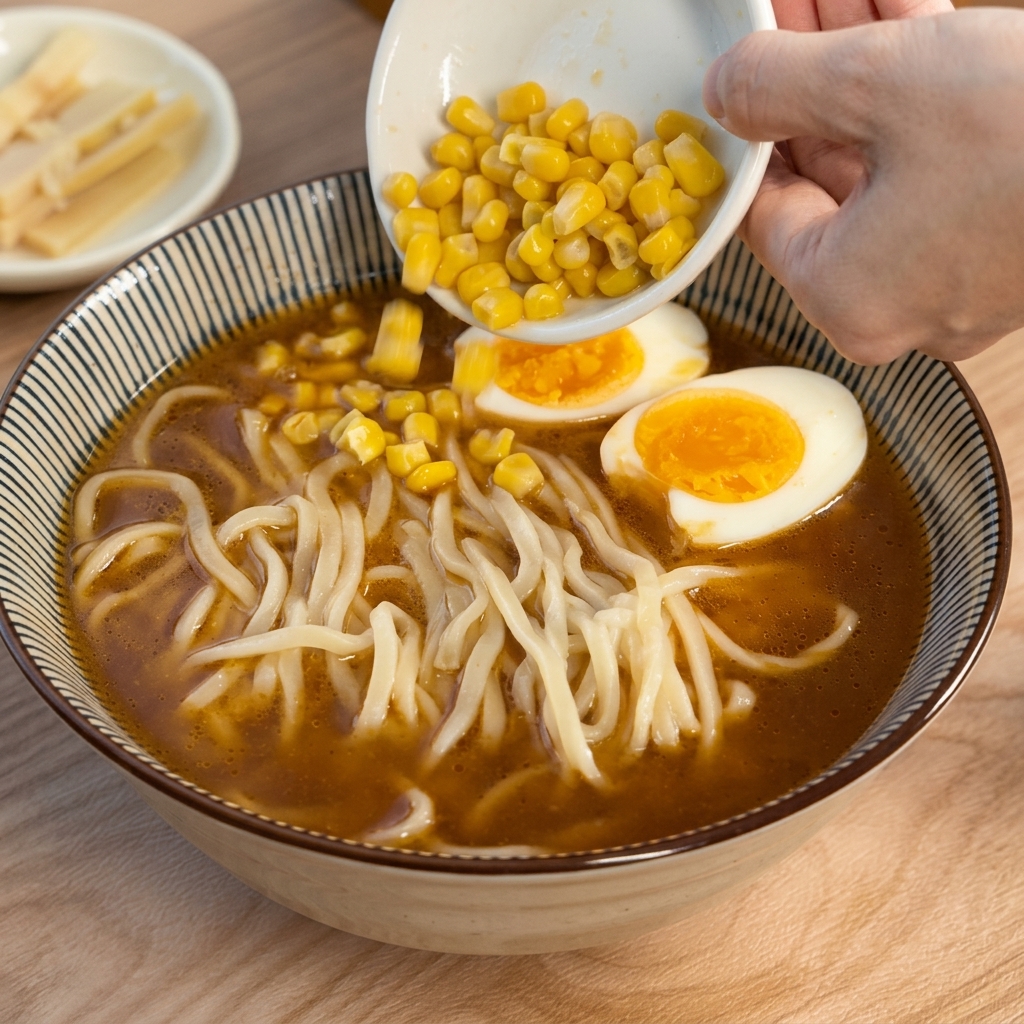
Take a portion of sweet yellow corn kernels and add them to the side of the ramen bowl. The corn provides a bright pop of color and a refreshing sweetness that balances the salty richness of the miso broth.
Tip: If using canned corn, make sure to drain it well before adding it to the soup to avoid diluting the broth. - 11Add bamboo and nori
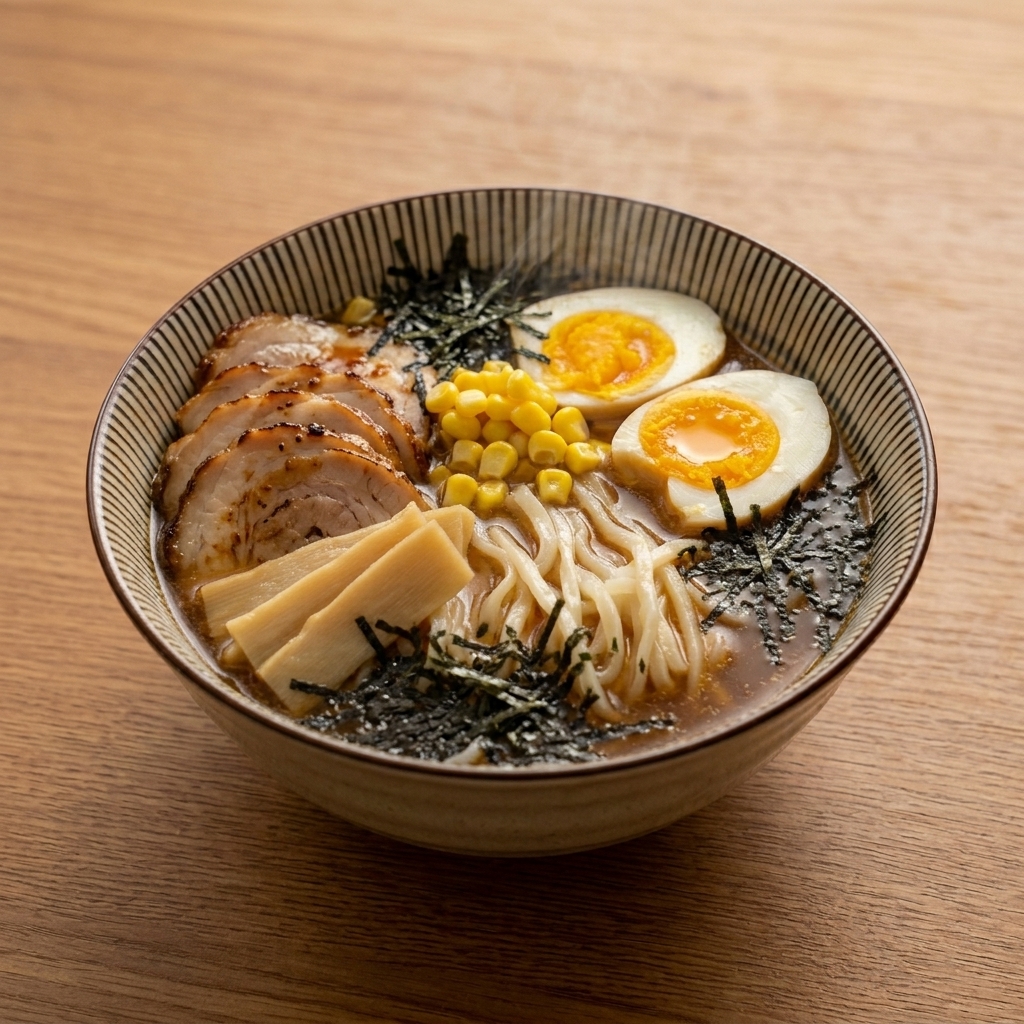
Arrange the sliced bamboo shoots neatly in the bowl and add a portion of shredded nori seaweed. These ingredients provide a traditional textural contrast and umami depth to the ramen.
Tip: Place the nori seaweed on the side of the bowl right before serving so it remains crisp and doesnt become soggy too quickly. - 12Add the chashu pork
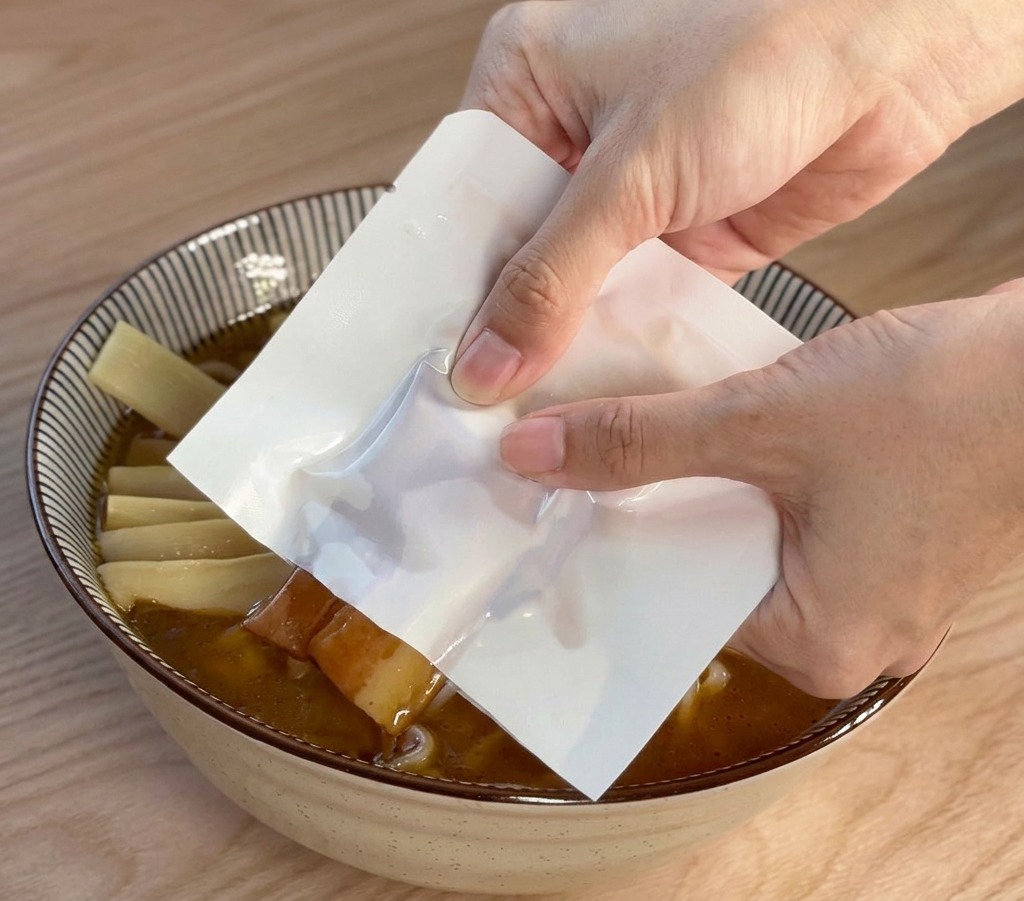
Gently place the warmed slice of chashu pork onto the noodles. If you are using pre-packaged chashu, you can carefully slide the meat out of its pouch and into the bowl, positioning it alongside the bamboo shoots and other prepared toppings.
Tip: Make sure the chashu is warmed through in hot water before opening the packet to ensure its ready to eat immediately. - 13Garnish with green onions
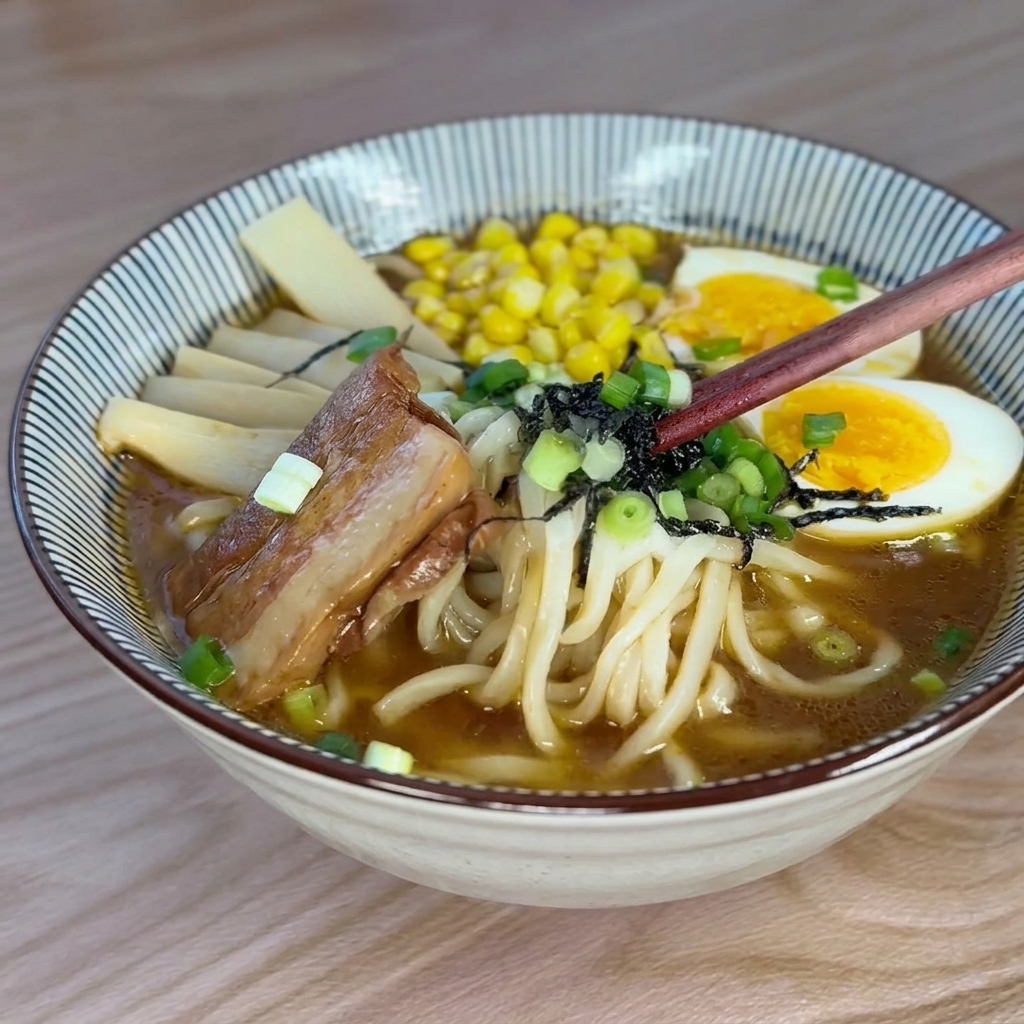
As a final touch, sprinkle the finely chopped green onions over the top of the ramen. These fresh aromatics provide a sharp, crisp contrast to the rich miso broth and savory toppings, completing the bowl for serving.
Tip: For the best presentation, use a mix of the white and green parts of the onion and slice them very thinly.