Prosciutto
Arugula Pizza (Pizza Prosciutto e Rucola)
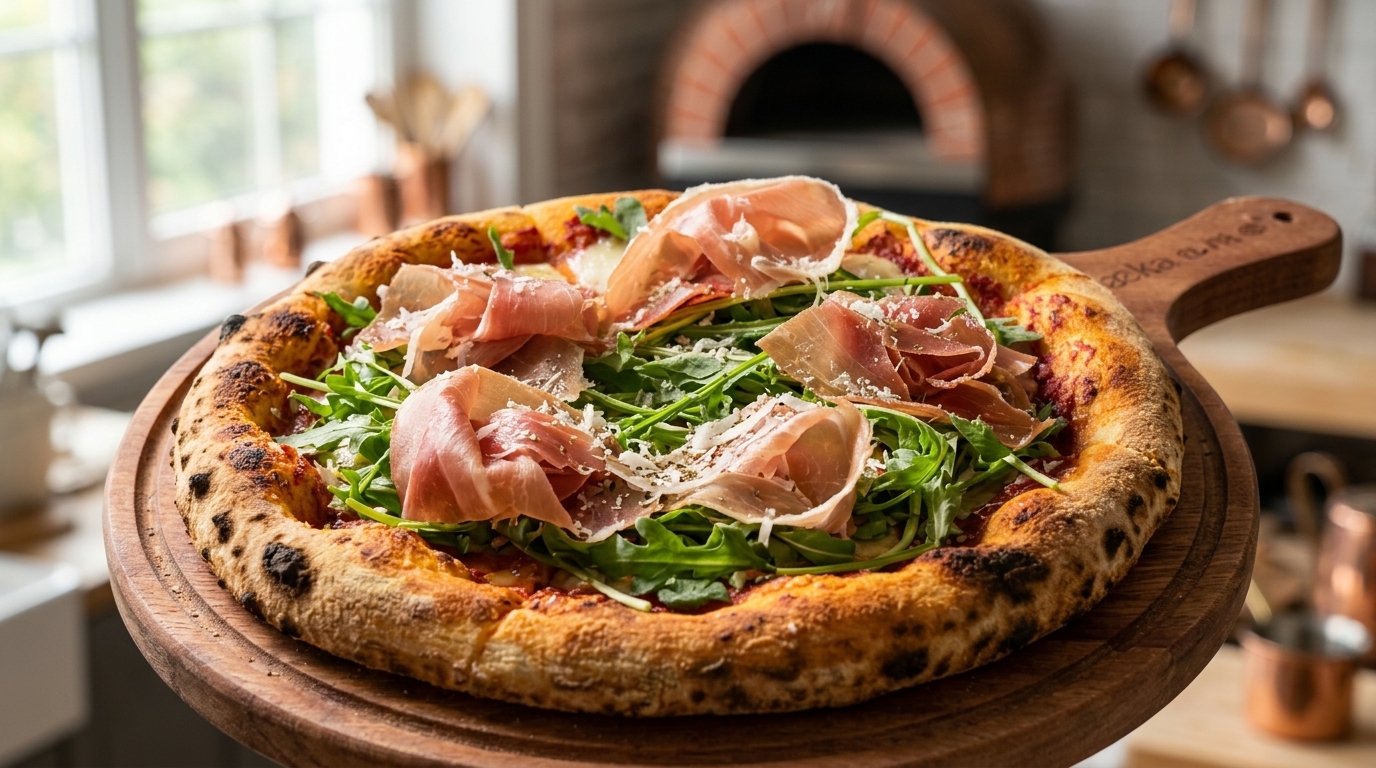
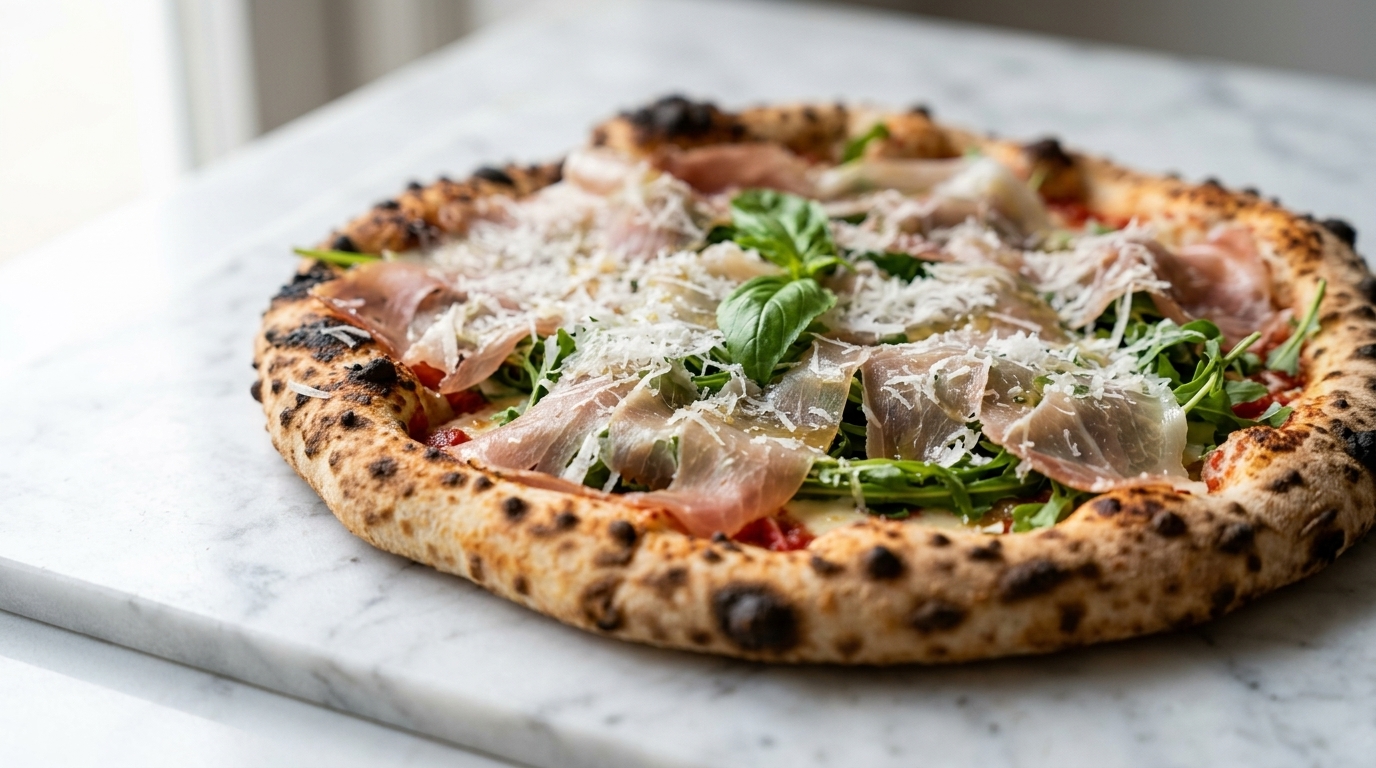
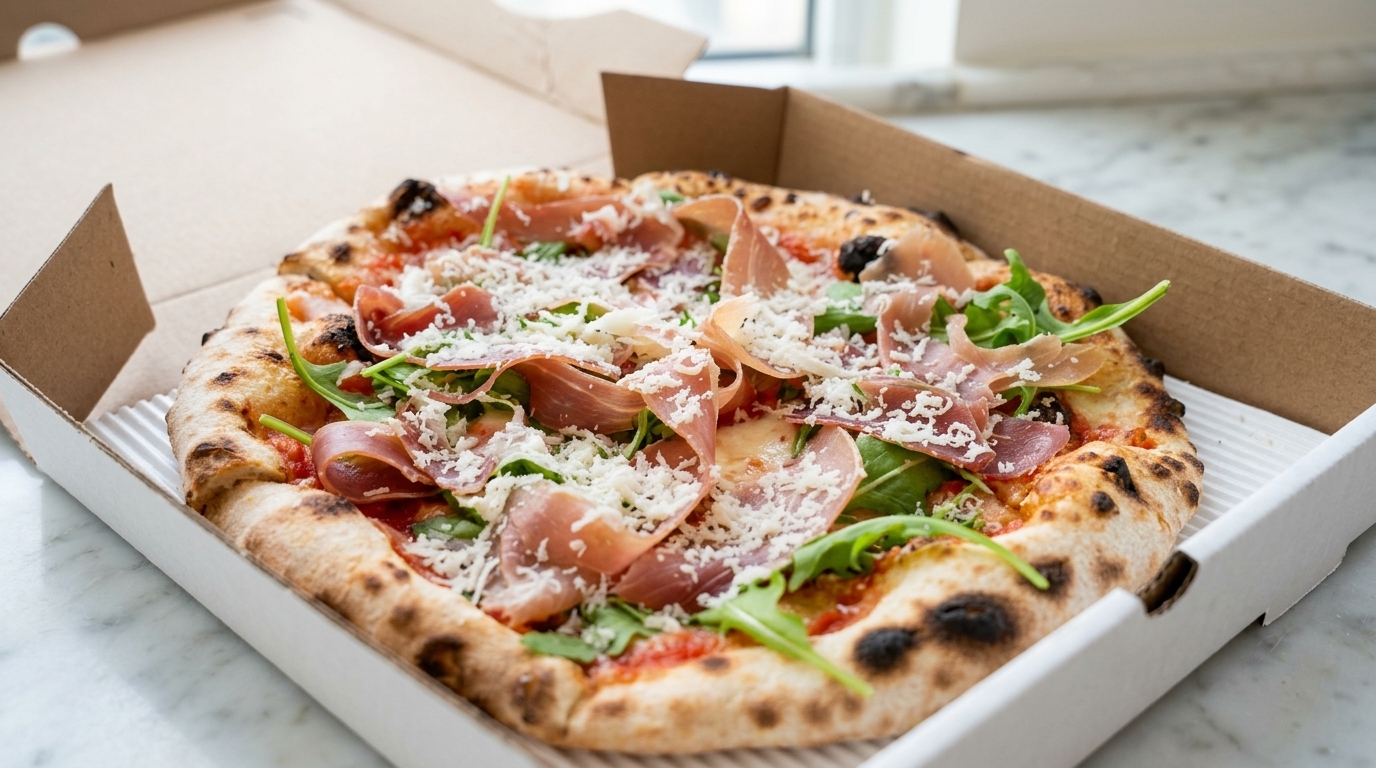
A masterclass in contrast featuring salty air dried prosciutto and peppery arugula crowning a charred Neapolitan crust finished with a flurry of sharp Parmesan shavings.
This celebrated staple of Italian Pizza Bianca or Pizza Rossa traditions favors fresh uncooked toppings added after the bake. This style preserves the delicate texture of the cured ham and the crisp bite of the greens against a blistered high heat crust. It is a sophisticated balance of warm savory base and cool fresh finish.
Ingredients
- 1 ball pizza dough (neapolitan style)
- 60 ml tomato sauce
- 80 g fresh mozzarella cheese
- 50 g fresh arugula
- 4–6 slices prosciutto di Parma
- 20 g Parmesan cheese
- to taste all-purpose flour (for dusting)
Instructions
- 1Transfer the dough to a floured surface
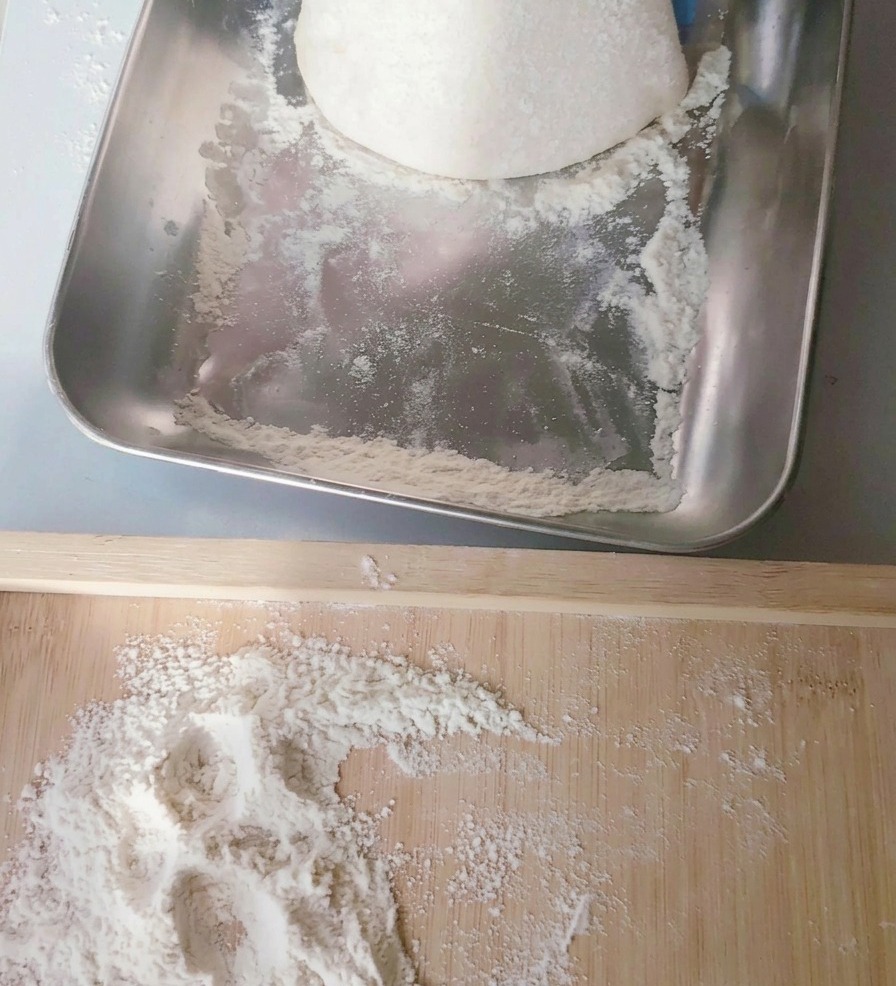
Lightly dust your wooden work surface with flour. Carefully move the fermented pizza dough ball from its metal proofing tray onto the board, ensuring it retains its round shape.
Tip: Be gentle when handling the dough at this stage to avoid deflating the air bubbles formed during proofing. - 2Flatten the dough into a disk
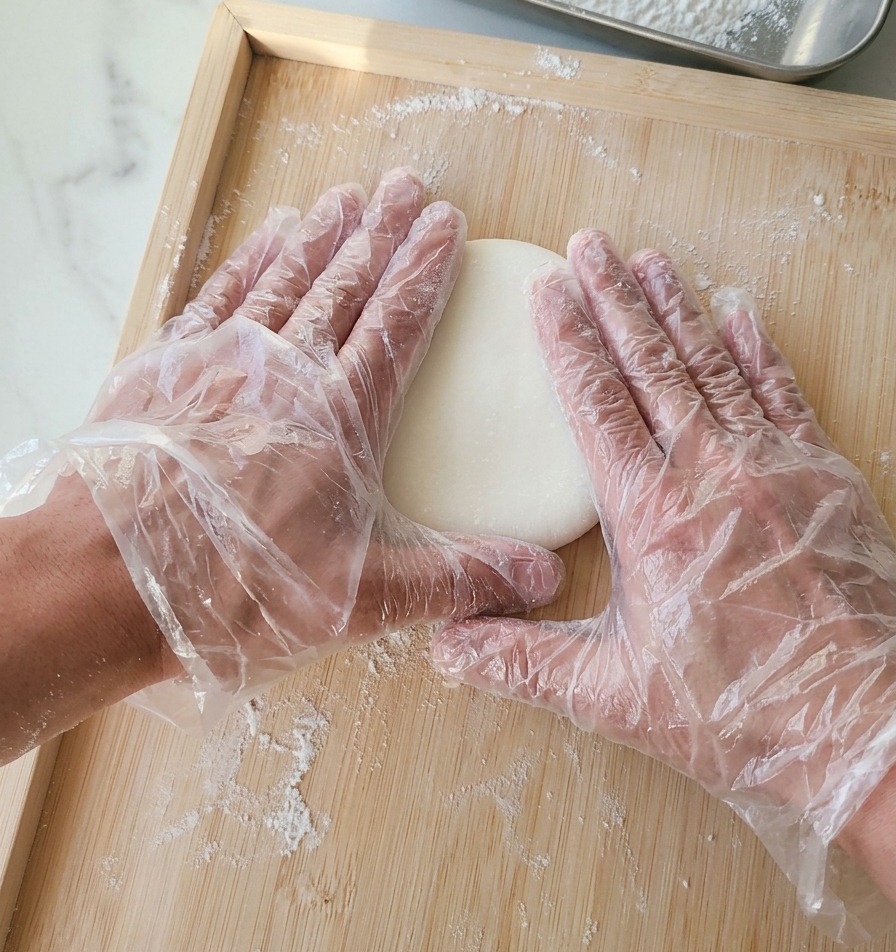
Using gloved hands, press down firmly on the center of the dough ball. Gently work your way outward to flatten it into an even disk, pushing the air toward the edges to create a puffy rim.
Tip: Starting from the center and pushing outward helps move air toward the rim, which creates a better crust texture. - 3Spread the tomato sauce
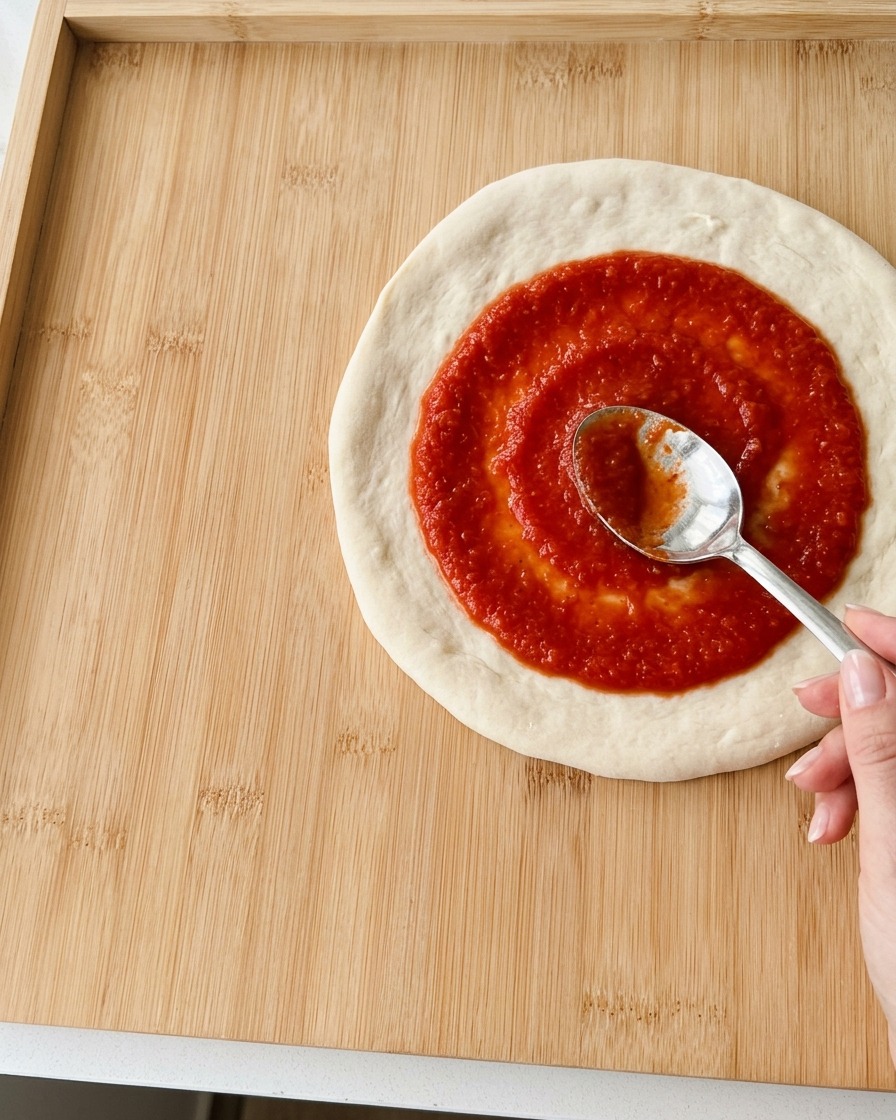
Place a spoonful of tomato sauce in the center of the stretched dough. Use the back of the spoon to spread the sauce in a circular motion, leaving a clean border for the crust.
Tip: Avoid over-saucing the pizza, as too much moisture can lead to a soggy crust once baked. - 4Top with mozzarella cheese
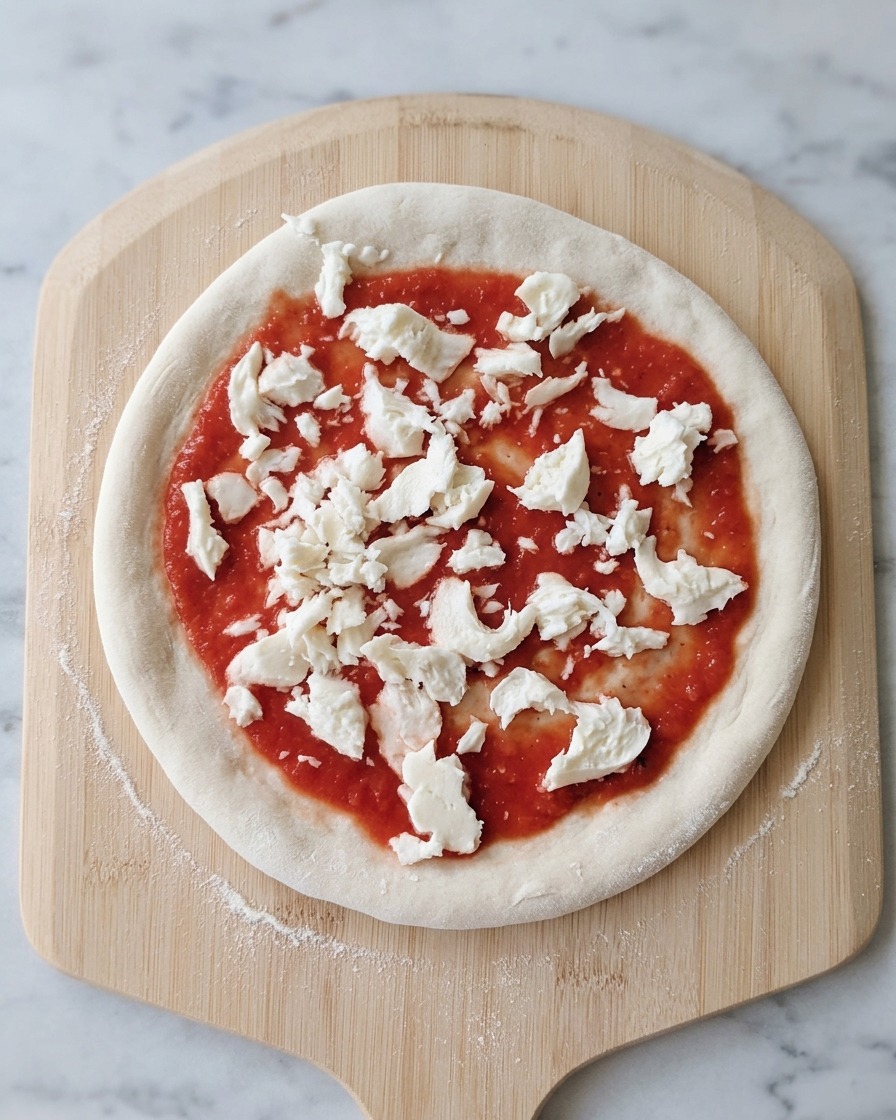
Tear or chop fresh mozzarella into chunks and scatter them evenly over the tomato sauce layer. Ensure the cheese is well-distributed for a consistent melt.
Tip: Fresh mozzarella releases moisture when cooking; pat it dry with a paper towel before adding it to the pizza for a crispier result. - 5Transfer to the pizza peel
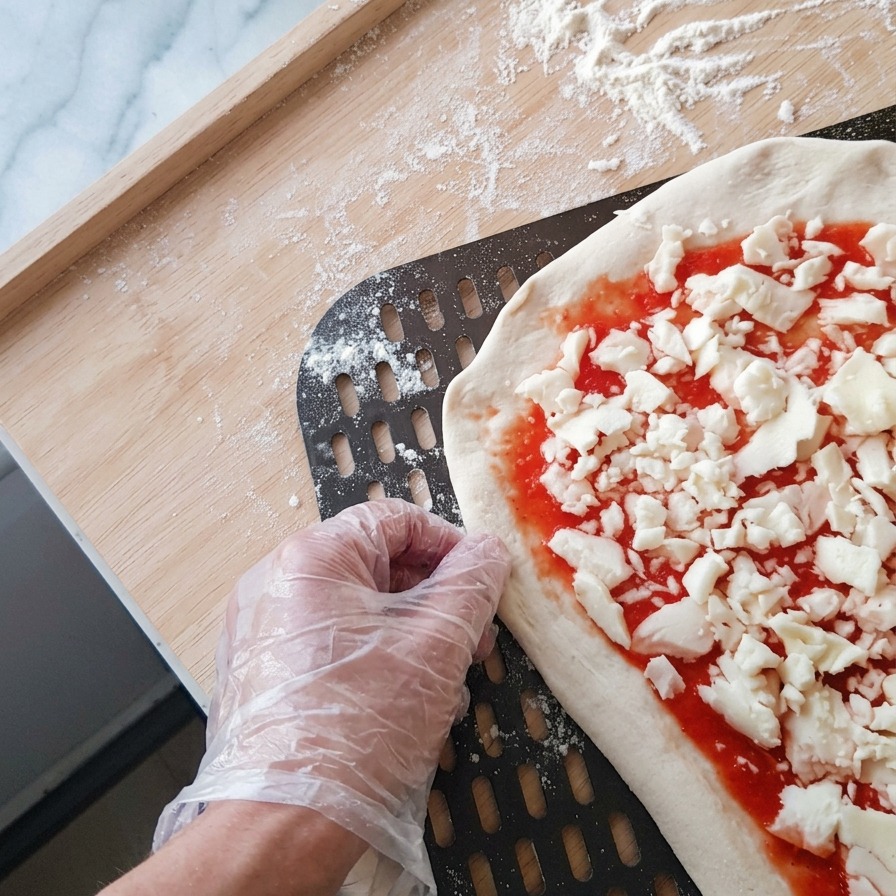
Carefully slide the topped pizza onto a perforated metal pizza peel. Give it a quick shake to ensure it is not sticking and gently pull the edges to maintain a round shape before it hits the oven.
Tip: A perforated peel allows excess flour to fall away preventing the bottom of the crust from tasting bitter or burnt. - 6Remove the pizza from the oven
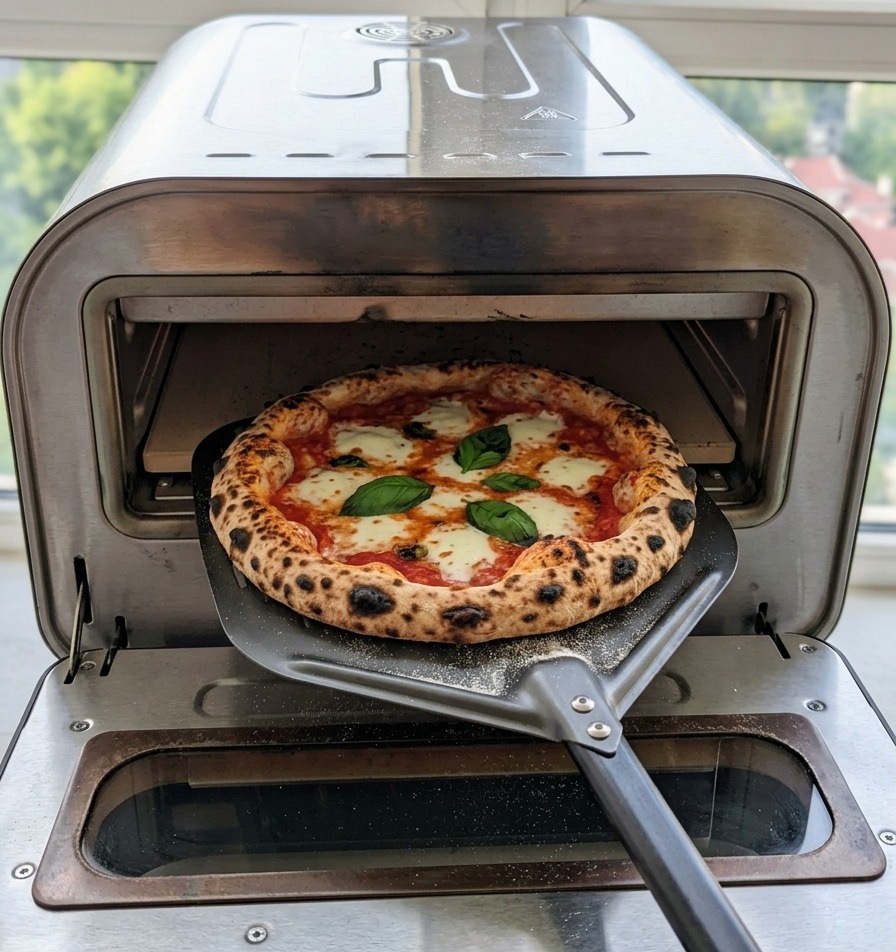
Once the crust is beautifully charred and the cheese is bubbling use a pizza peel to slide the pizza out of the oven. The high heat of the portable oven creates the signature leopard spotting on the rim indicating a perfectly cooked Neapolitan style base.
Tip: Keep a close eye on the crust during the final seconds; it can go from perfectly charred to burnt very quickly in these high temperature ovens. - 7Slice the pizza into wedges
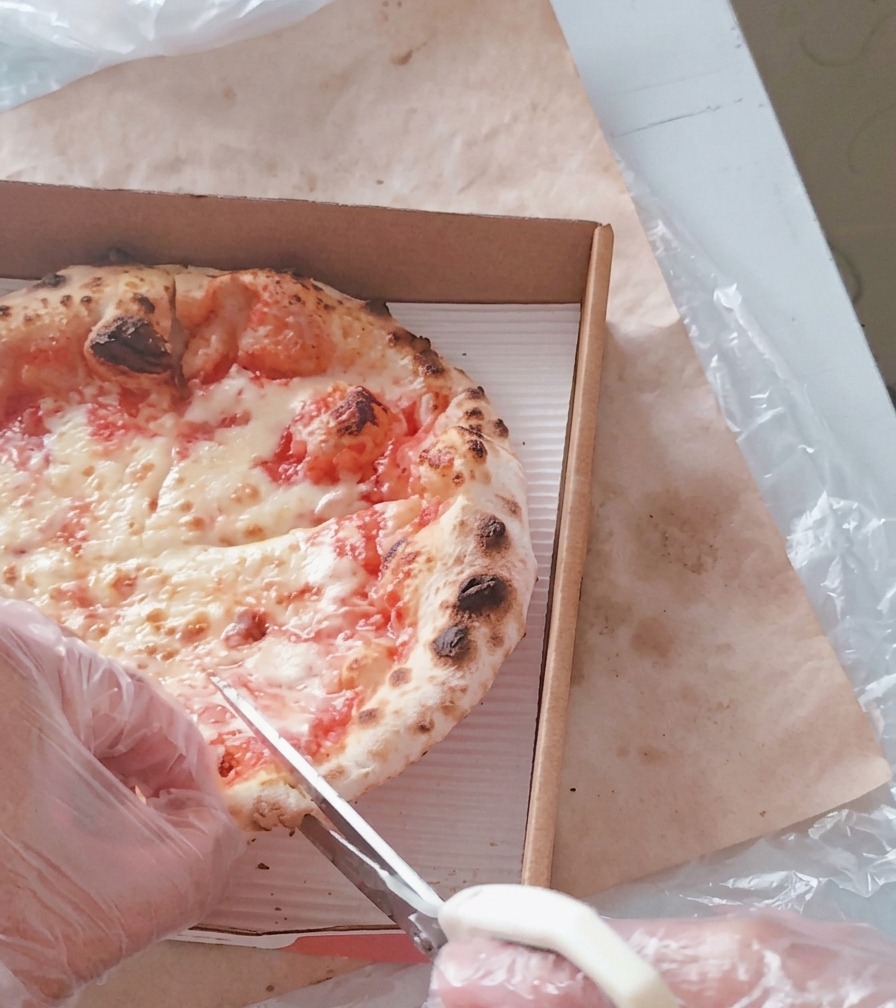
Transfer the hot pizza to a cardboard box or a cutting board. Use a pair of kitchen scissors or a pizza cutter to slice it into even wedges. Using scissors is a great way to cut through the airy crust without crushing the delicate structure of the dough.
Tip: Slicing while the pizza is in a box helps retain heat if you are not serving it immediately but cutting on a board prevents the bottom from getting soggy. - 8Add fresh arugula
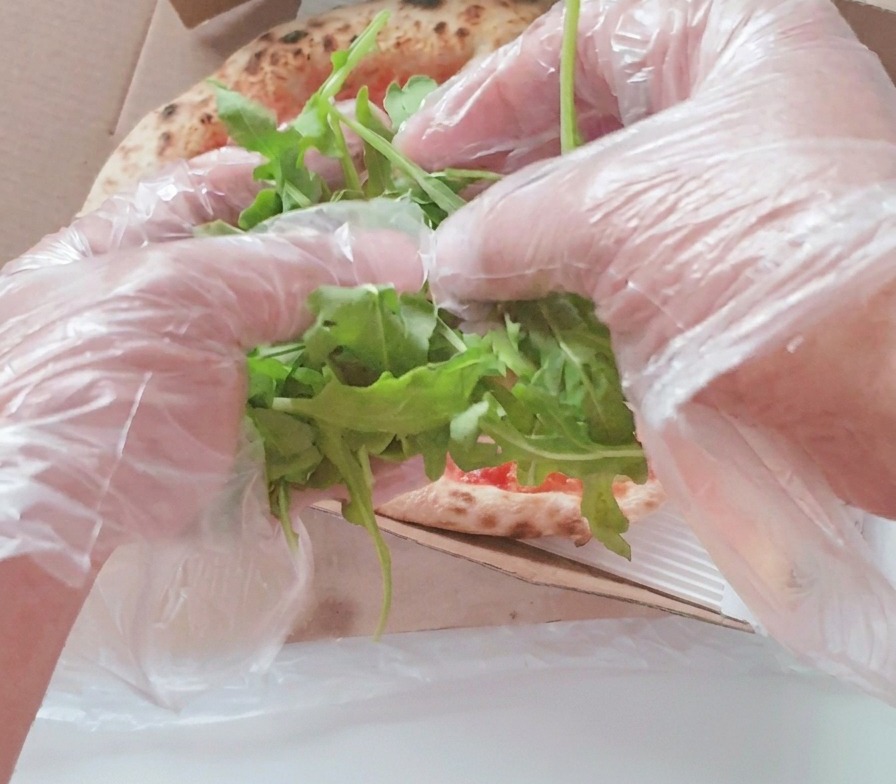
Take a generous handful of fresh arugula leaves and pile them onto the center of the sliced pizza. The residual heat from the crust will slightly soften the greens releasing their peppery aroma without wilting them completely.
Tip: Ensure the arugula is thoroughly dried after washing so it does not make the pizza crust soggy. - 9Layer the prosciutto
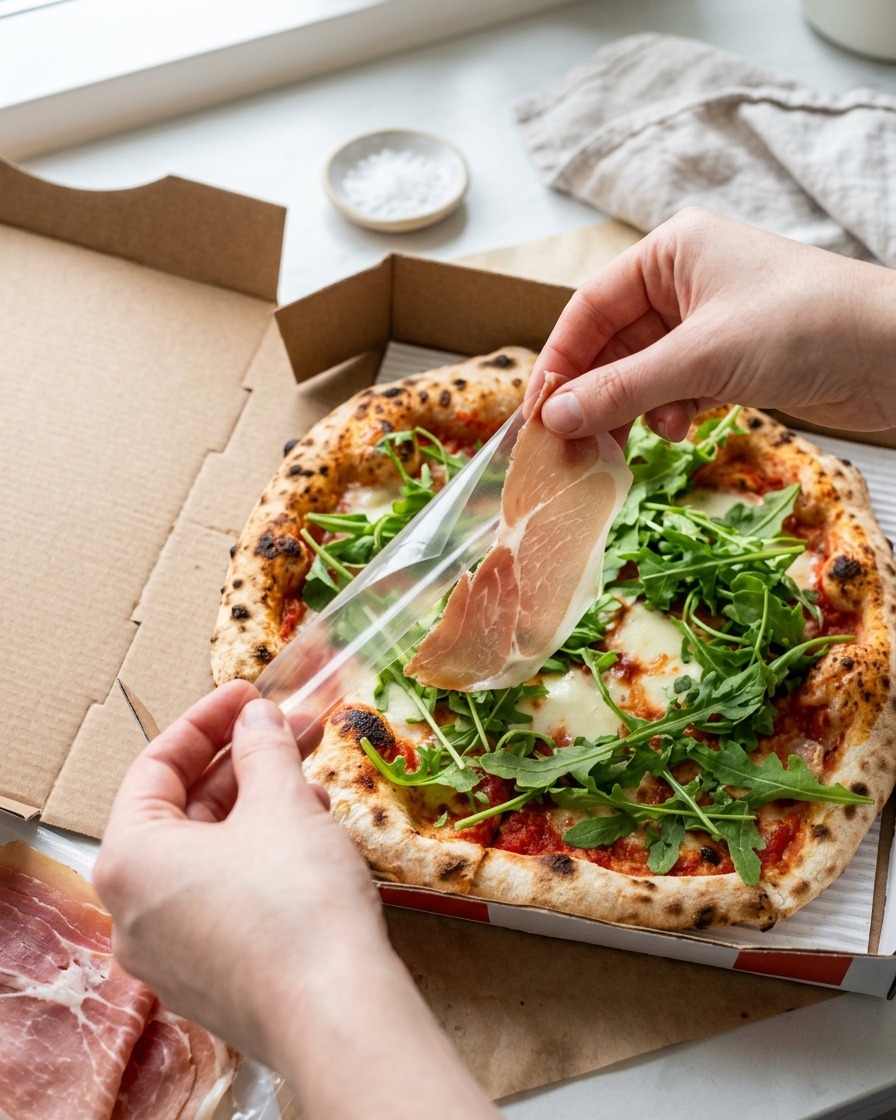
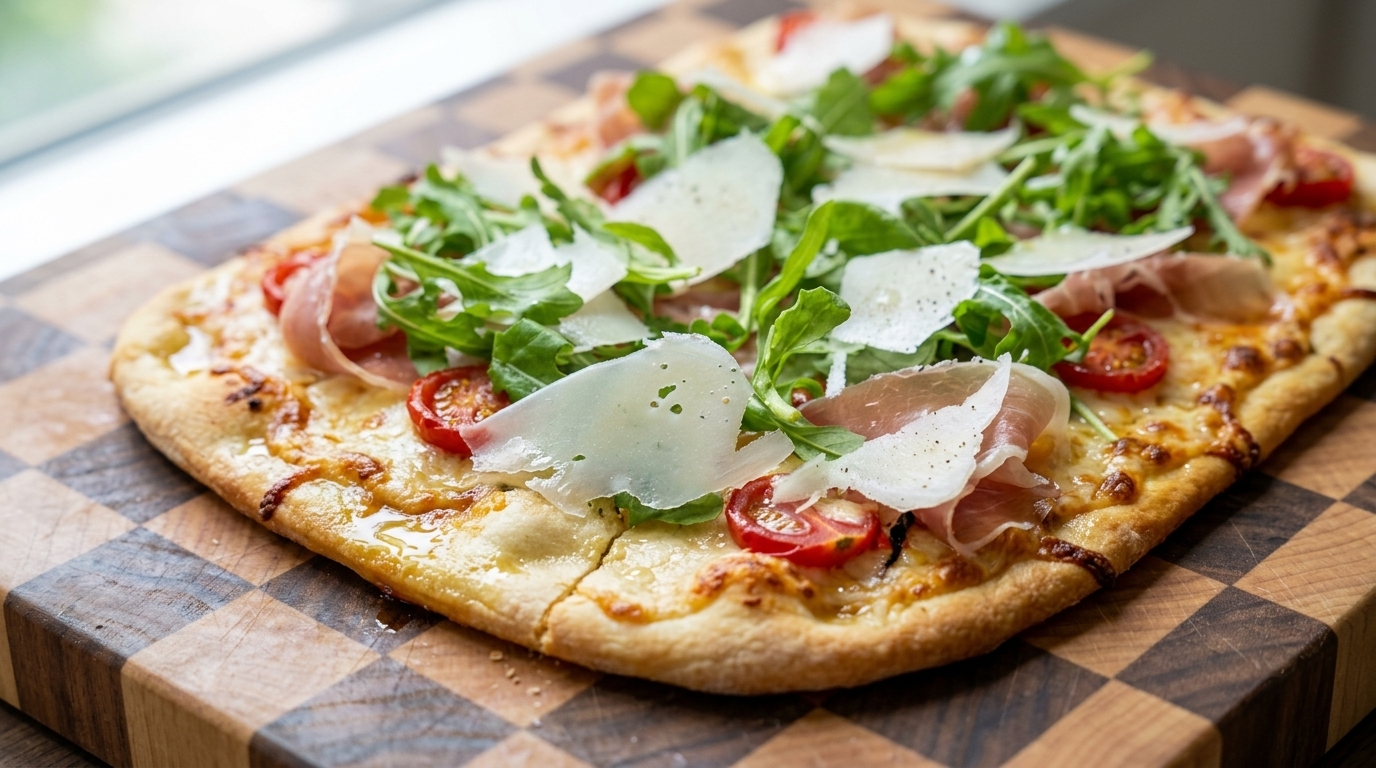
Drape thin, translucent slices of prosciutto ham over the bed of arugula. Finish by grating fresh Parmesan cheese over the entire pizza. The contrast between the salty meat, peppery greens, and warm crust is the hallmark of this dish.
Tip: Tear the prosciutto into smaller pieces if the slices are very large; this makes the pizza much easier to eat one wedge at a time.