Rich Japanese Shrimp Broth Ramen (Ebi Ramen)
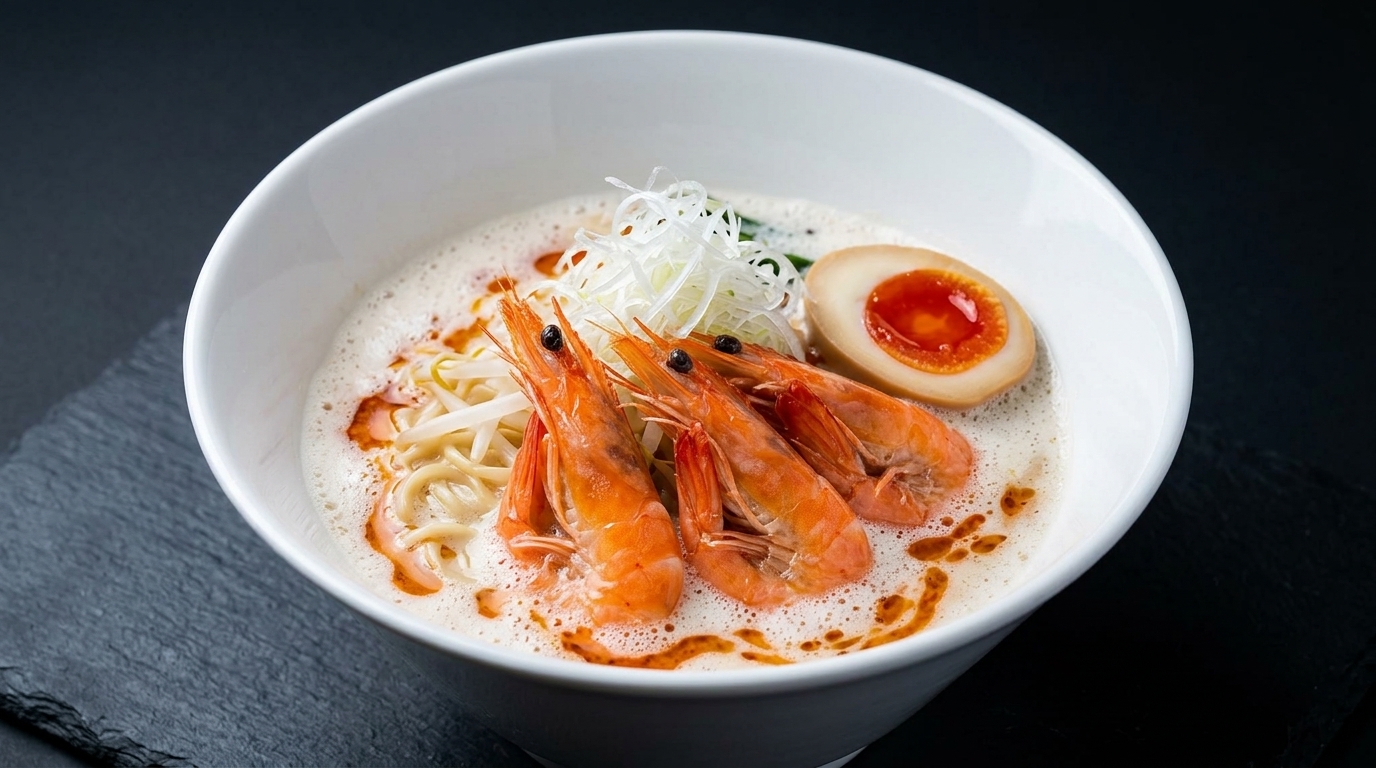
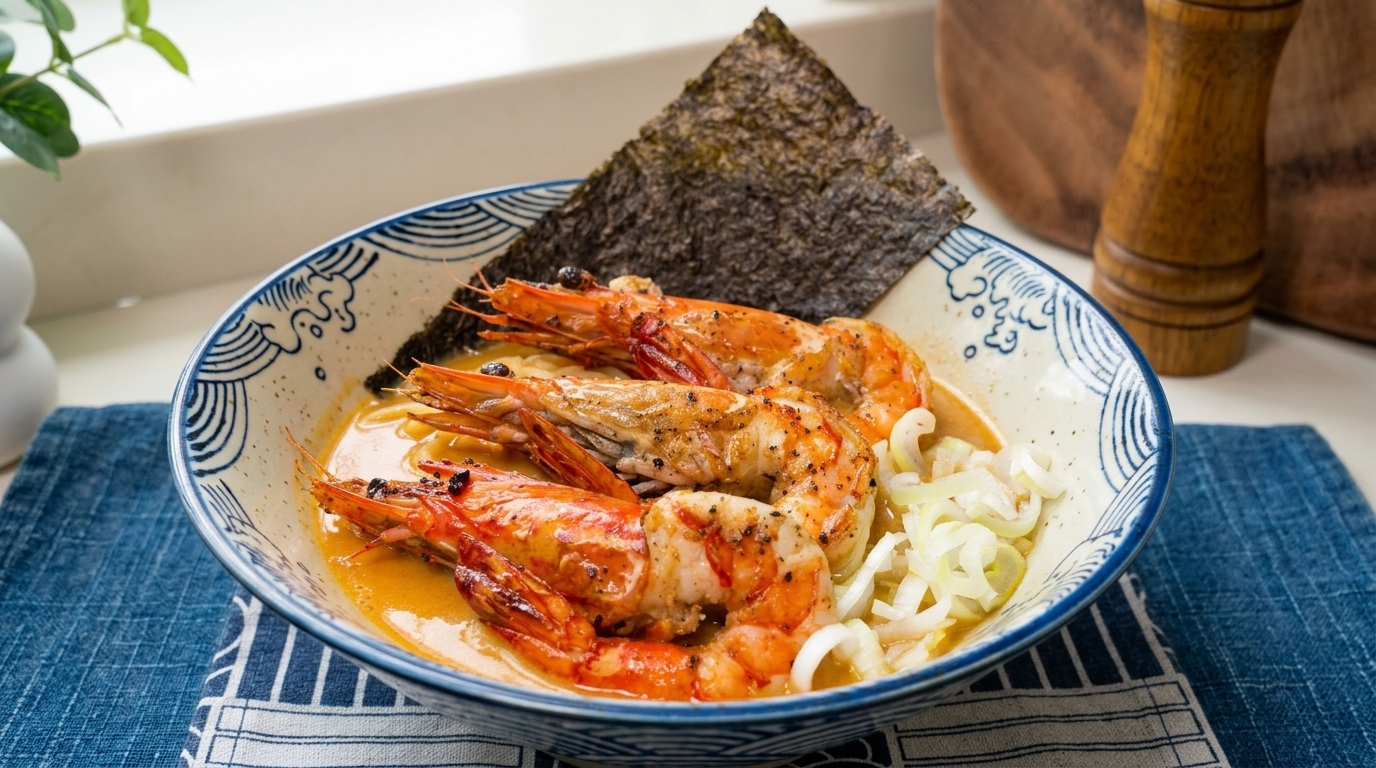
Experience an explosion of umami with this creamy Japanese shrimp ramen featuring a concentrated broth made from toasted shells and finished with butter seared black tiger shrimp.
Ebi ramen is a luxurious variation of the classic noodle soup, celebrated for its intense seafood essence. Unlike traditional pork-based tonkotsu, this version utilizes the tomalley found in shrimp heads to create a naturally thick, golden-orange broth. It is a masterclass in extracting maximum flavor from every part of the crustacean.
Ingredients
- 500 g black tiger shrimp (with heads and shells)
- 2 servings fresh ramen noodles
- 3 tbsp cooking oil
- 30 g unsalted butter
- 12 white onion, sliced
- 3 cloves garlic, sliced
- 800 ml water
- 1 sheet nori seaweed
- to taste sea salt and black pepper
- optional scallions, thinly sliced
Instructions
- 1Toast the shrimp shells
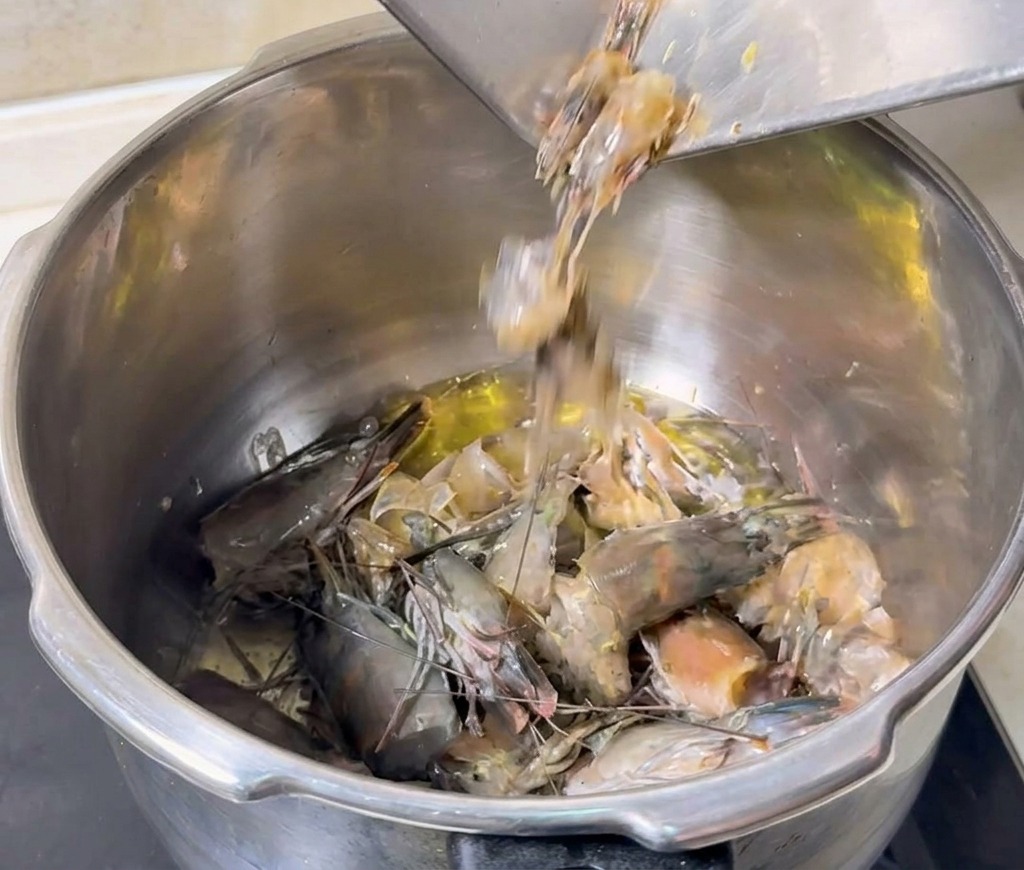
Heat oil in a pot and add the shrimp heads and shells. Stir fry over medium high heat until they turn a bright vibrant red. This caramelization is vital for a rich toasted seafood aroma.
Tip: Do not rush this step because the more the shells are toasted the deeper and more complex the final seafood flavor will be. - 2Extract the shrimp essence
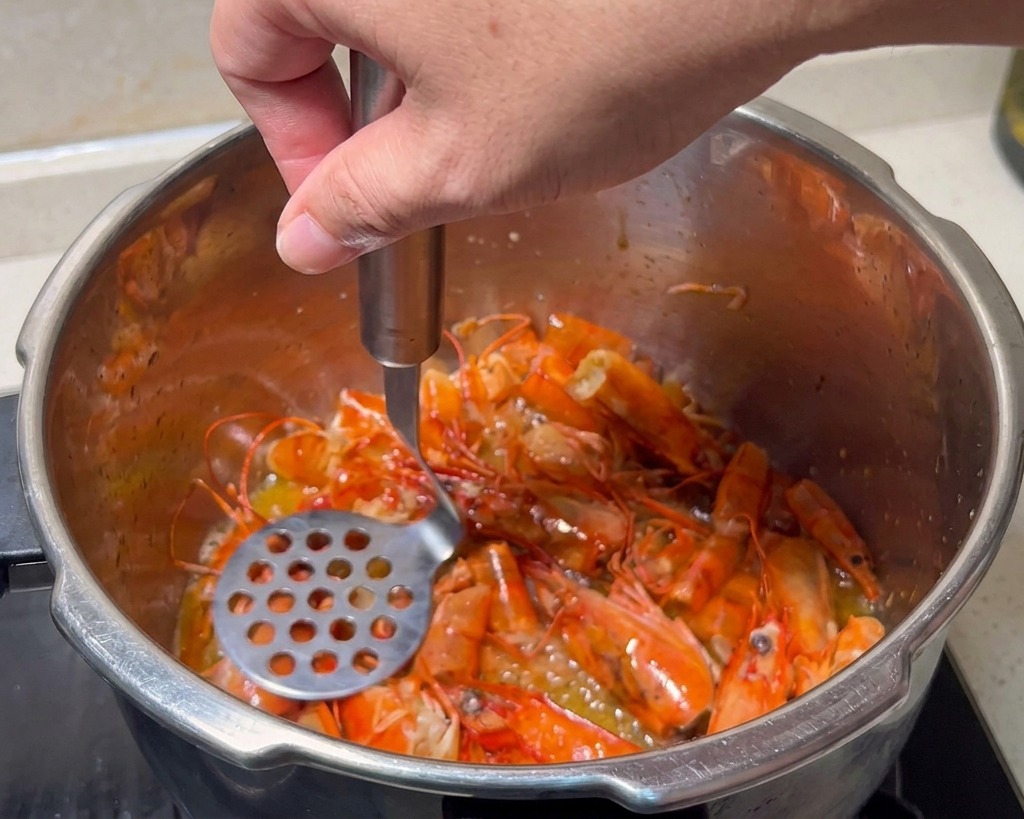
Once the shells have turned red use a metal masher to firmly crush the shrimp heads in the pot. This action expresses the concentrated juices and fat from the heads into the oil creating a rich and intensely flavored shrimp oil. Keep mashing until the oil is a deep orange color.
Tip: Apply firm pressure specifically to the heads as they contain the most flavorful tomalley which provides the rich miso taste. - 3Sauté the aromatics
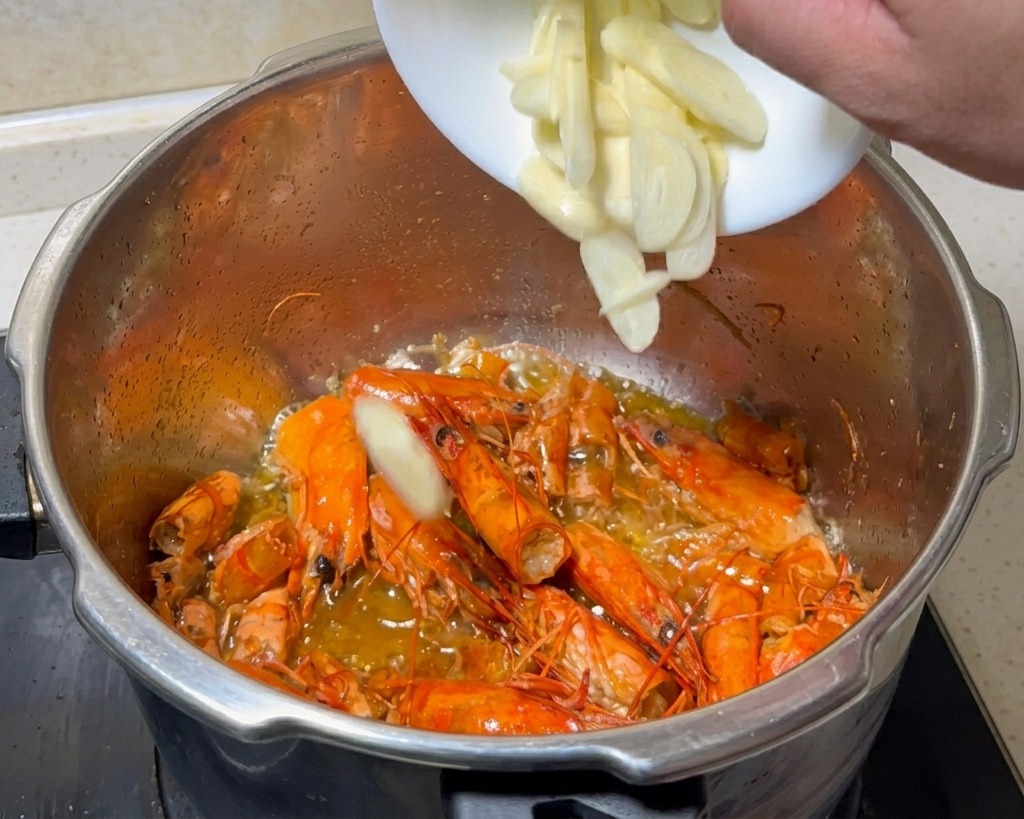
Add sliced garlic and white onions to the pot with the crushed shrimp shells. Sauté everything together in the shrimp-infused oil until the aromatics become soft and fragrant. The savory garlic and sweet onions provide a balanced aromatic foundation for the shrimp stock.
Tip: Keep the heat at medium to prevent the garlic from burning, which can introduce an unwanted bitter taste to the stock. - 4Add water for the stock
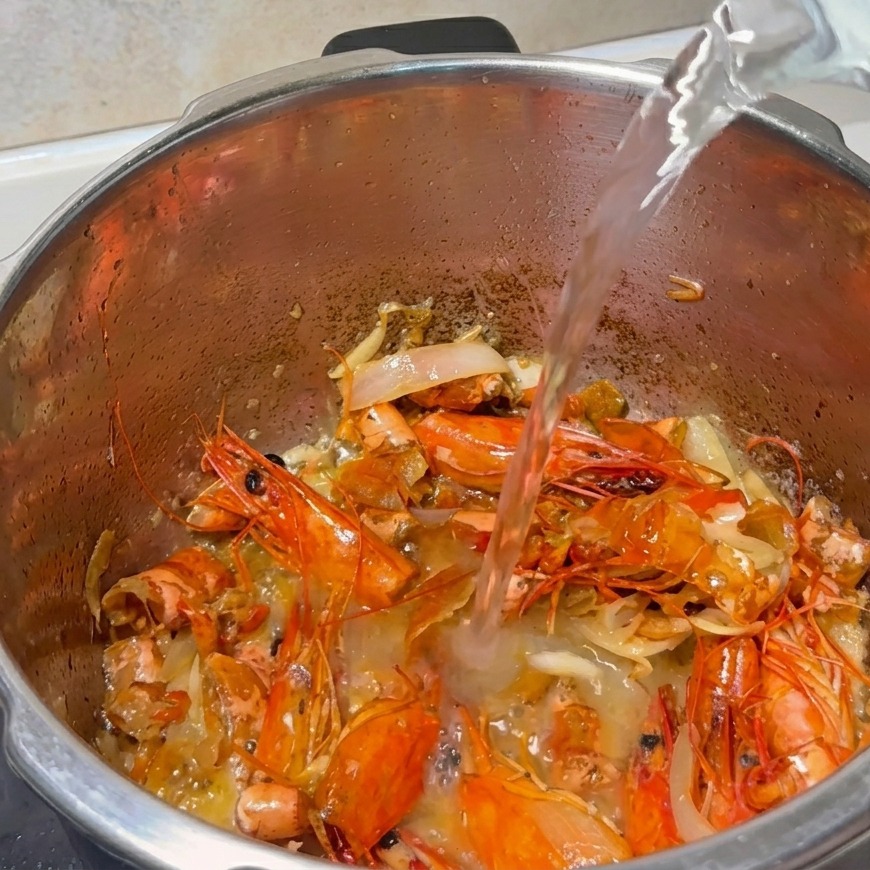
Pour clear water into the pot to cover the shrimp shells and aromatics. Bring the mixture to a simmer, allowing the water to extract the deep umami flavors from the toasted shells and the sweet notes from the onions and garlic.
Tip: Always start with cold water to allow the flavors to draw out gradually as the temperature rises. - 5Enrich the broth with butter
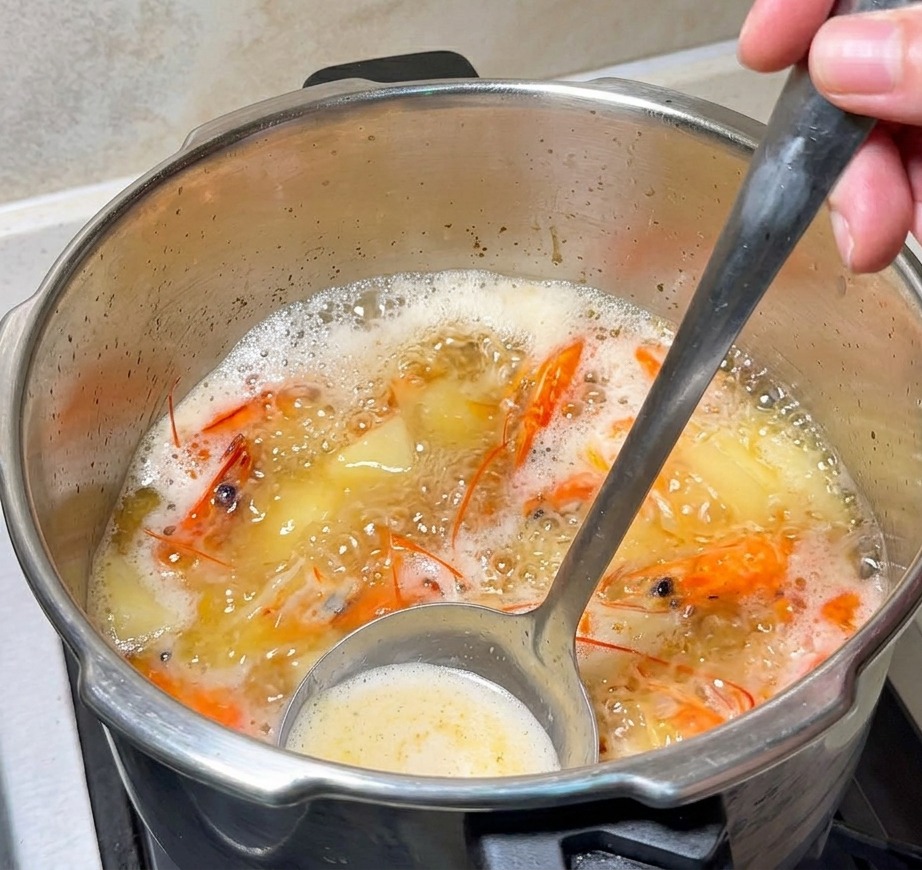
Add a piece of butter into the simmering broth and stir until it fully melts. The butter emulsifies with the shrimp oils, giving the broth a velvety, creamy texture and a rich mouthfeel. Let the mixture simmer on low heat to concentrate the flavors.
Tip: Simmering for at least 30 minutes allows the broth to thicken and develop a more robust, concentrated profile. - 6Blend the shrimp shells
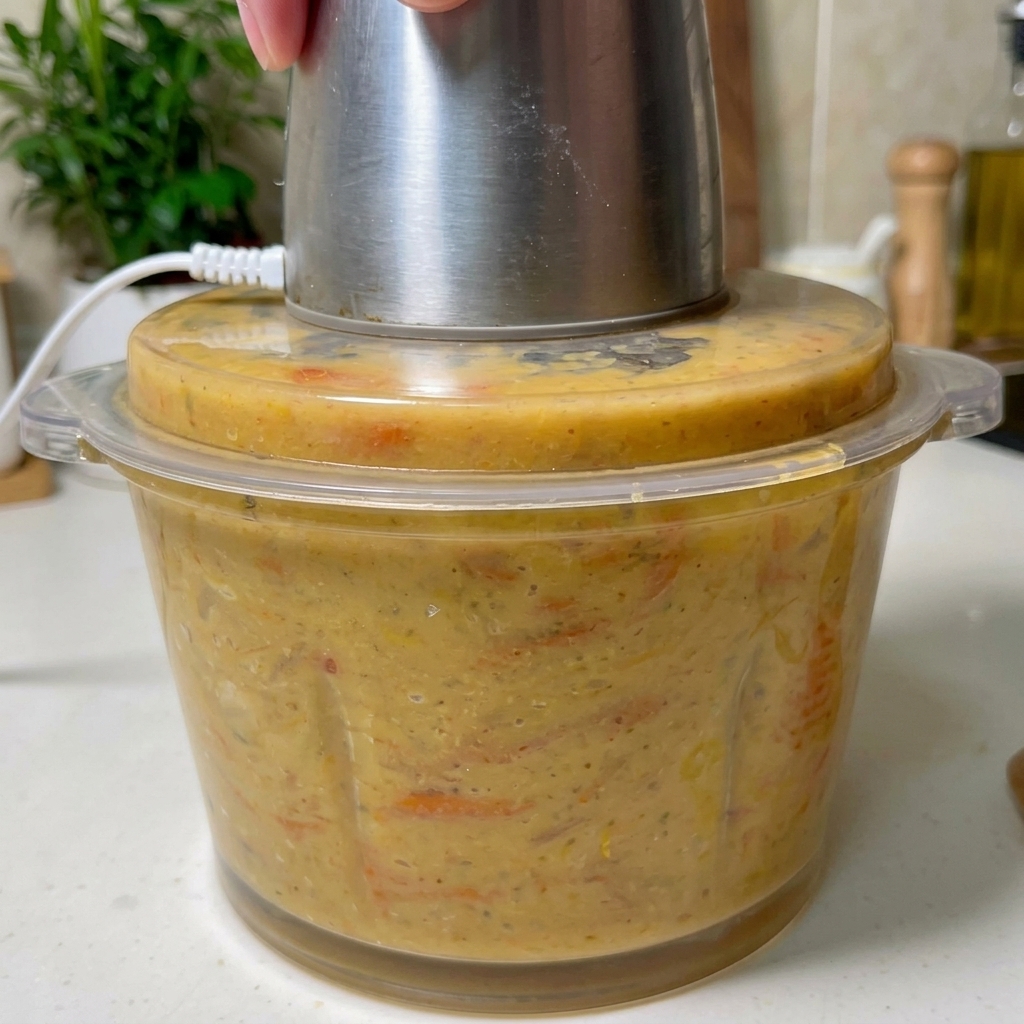
Transfer the simmered shrimp heads and shells into a blender or food processor along with a small amount of the cooking liquid. Pulse until the mixture is broken down into a thick, coarse paste. This process extracts every bit of deep, umami flavor from the shells to create a highly concentrated broth base.
Tip: Be careful when blending hot liquids; ensure the lid is secure and start at a low speed to avoid splashes. - 7Strain the concentrated broth
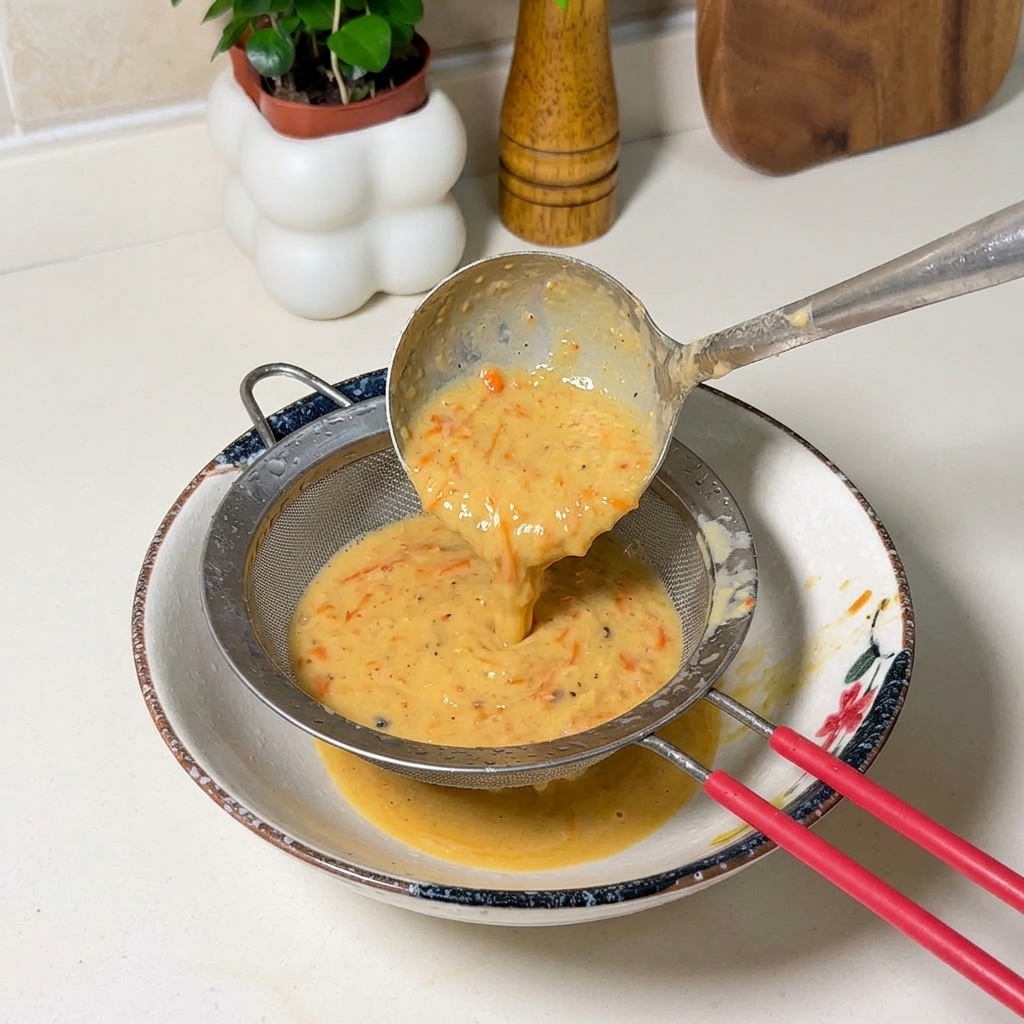
Pour the blended mixture through a fine mesh sieve into a clean bowl. Use a ladle or spoon to press down firmly on the solids squeezing out all the rich orange liquid while discarding the gritty shell remains. This results in a smooth velvety and intensely flavored shrimp essence.
Tip: Pressing firmly is key here because most of the flavor is trapped in the moisture of the blended solids. - 8Sear the tiger shrimp
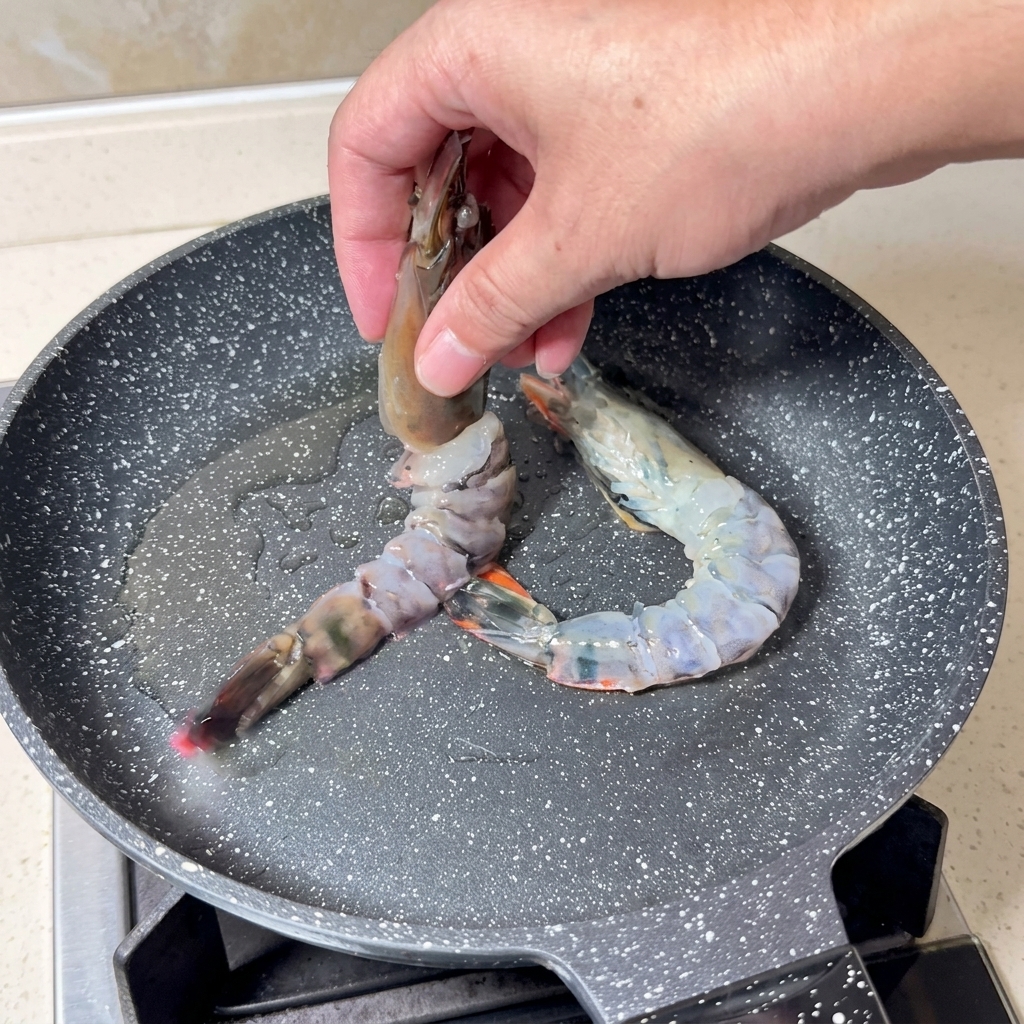
Heat a small amount of oil in a pan over medium-high heat. Place the seasoned, butterflied shrimp in the pan and sear until they are golden-brown and just opaque. This keeps them succulent while adding a smoky char.
Tip: Dont overcook the shrimp; they only need about 1-2 minutes per side until they turn opaque and firm. - 9Season the shrimp
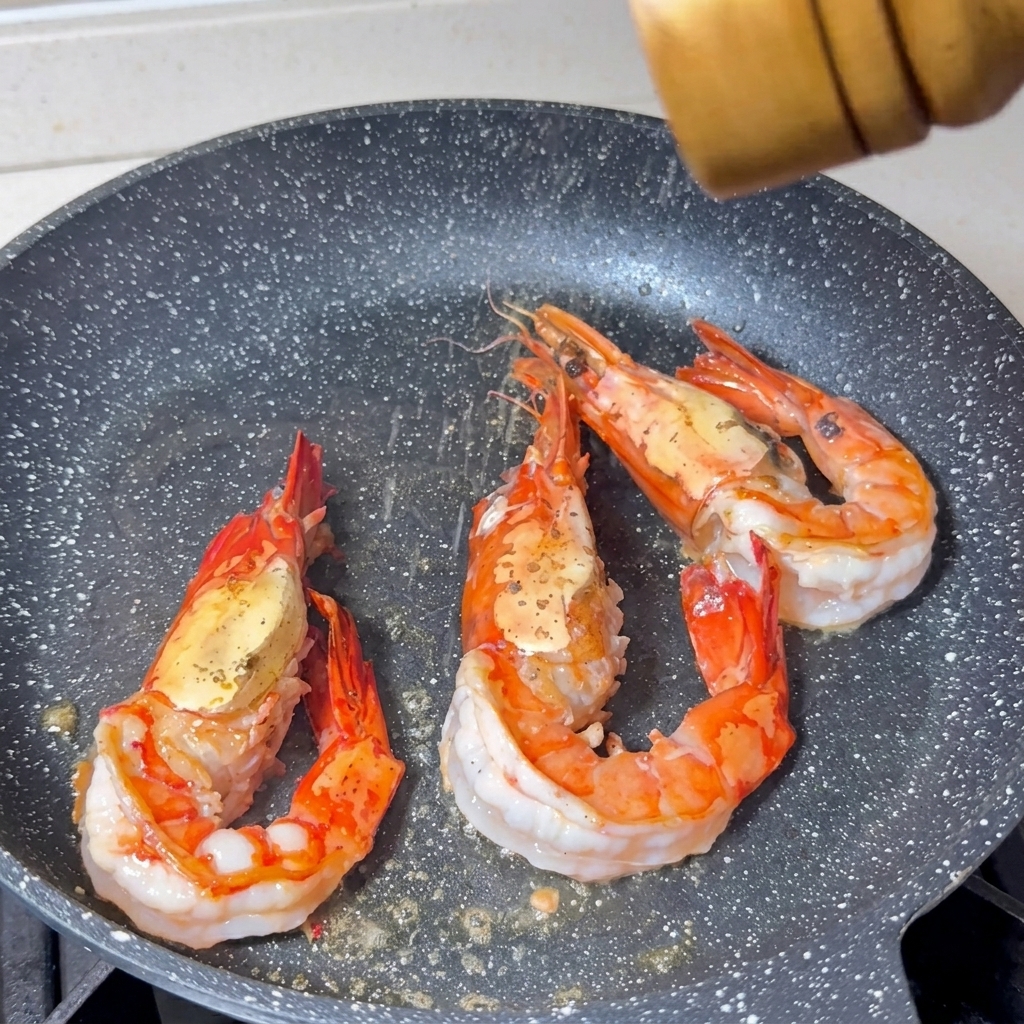
While the shrimp are searing, season them generously with a sprinkle of freshly cracked black pepper and sea salt. This simple seasoning enhances the natural sweetness of the seafood and complements the rich flavors of the upcoming broth.
Tip: Seasoning from a slight height ensures even coverage across all the shrimp in the pan. - 10Reheat and season the broth
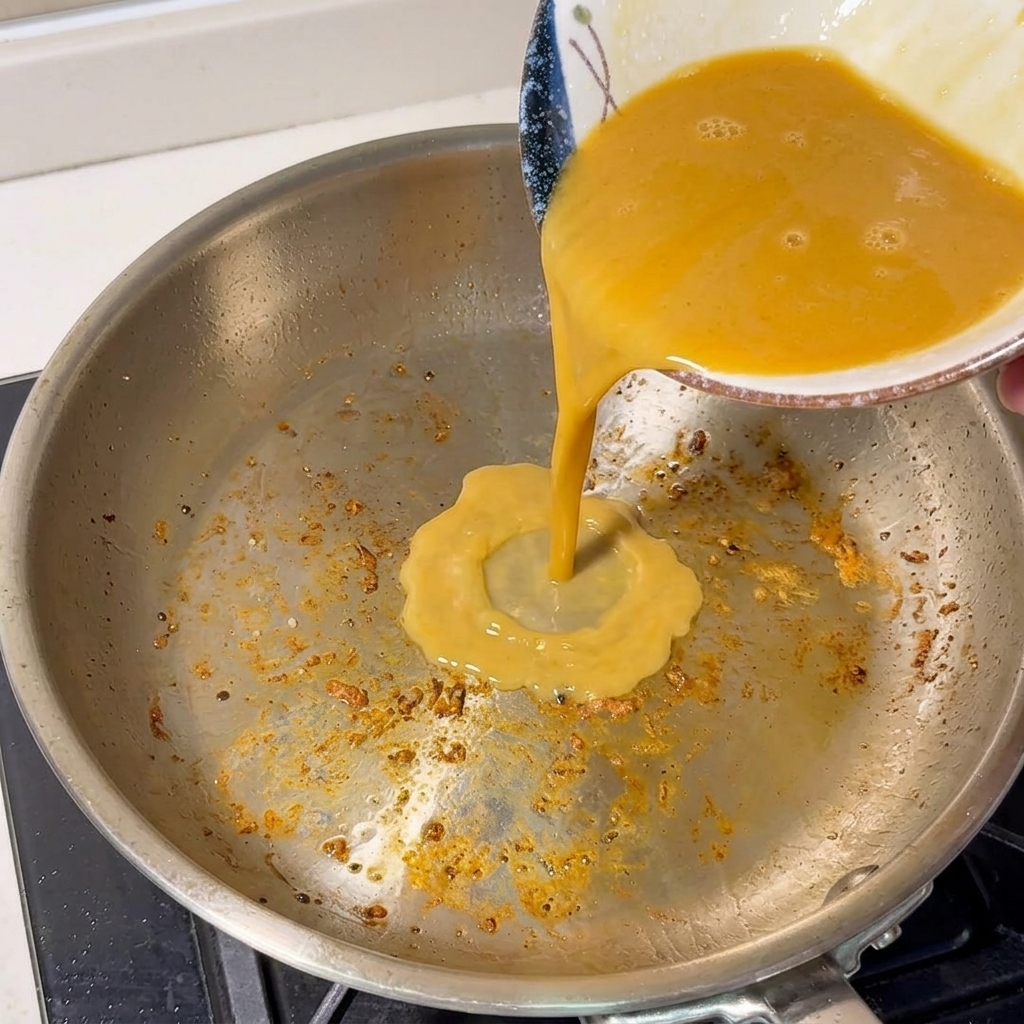
Pour the strained, concentrated shrimp broth back into a clean pan or pot. Bring it to a gentle simmer over medium heat and add a small spoonful of salt to taste. Ensure the broth is piping hot before serving to bring out the full aroma of the shrimp and butter.
Tip: Taste the broth before adding all the salt, as the shrimp shells and butter may already provide some salinity. - 11Prepare the ramen bowl
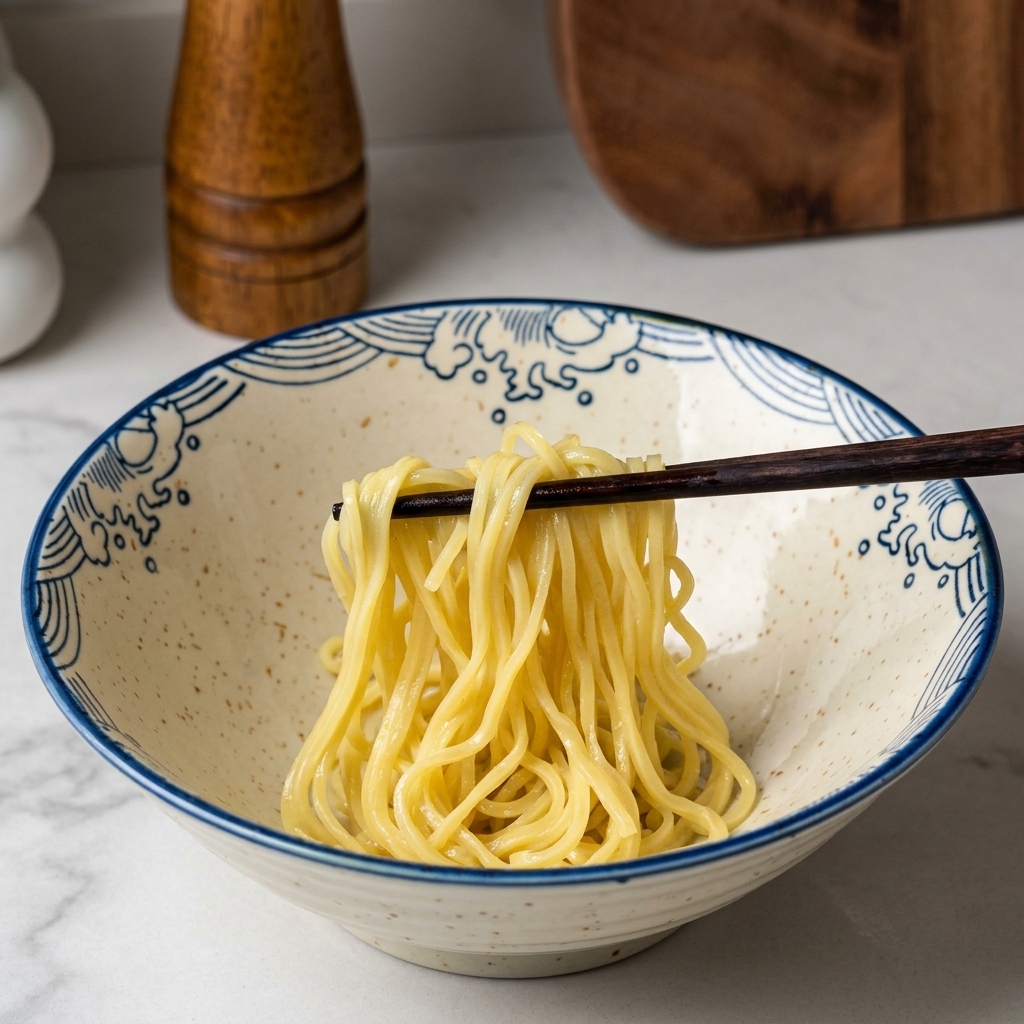
Cook your ramen noodles according to the package instructions until al dente. Drain them well and place a serving portion into a deep ramen bowl. Arrange the noodles neatly so they sit high in the bowl, ready to be submerged in the rich shrimp broth.
Tip: Shake the noodles well after draining to prevent excess water from diluting your concentrated broth. - 12Add the shrimp broth
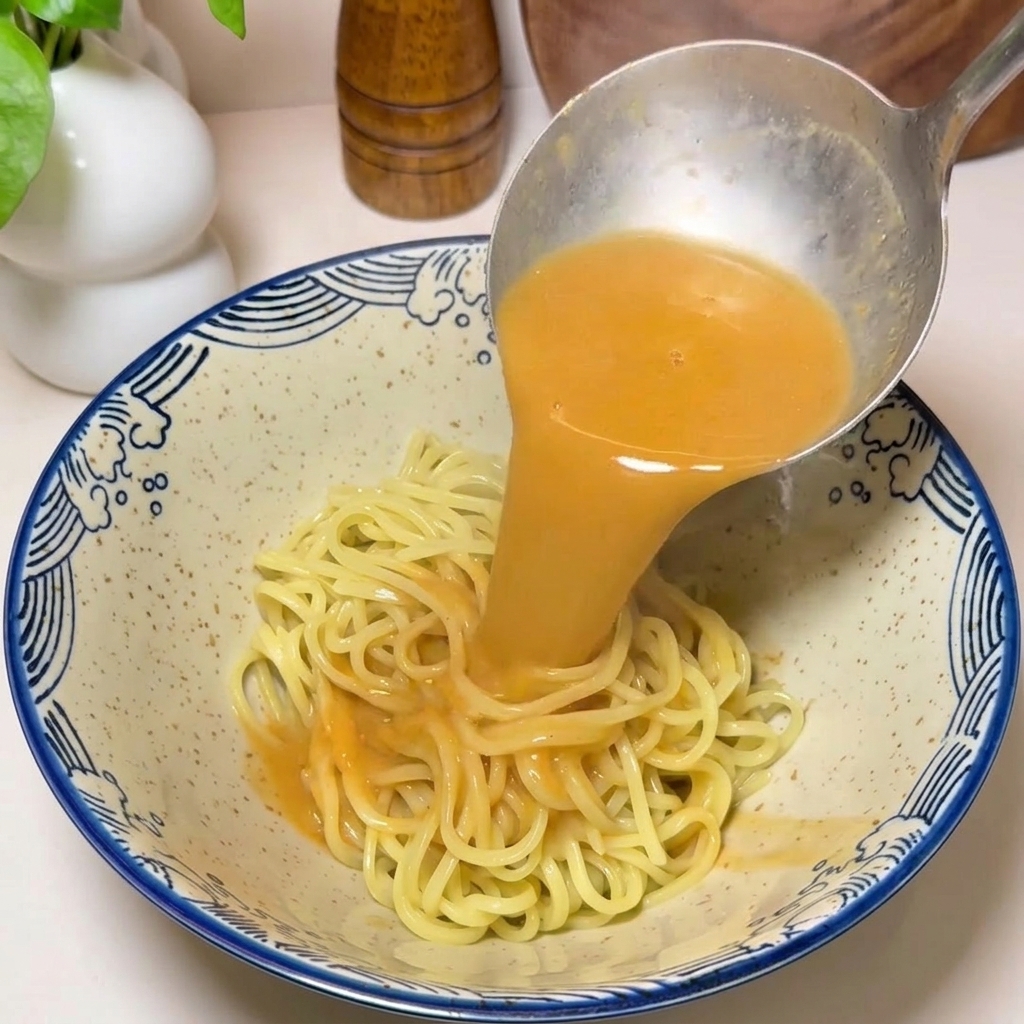
Pour the hot, concentrated shrimp broth directly over the cooked ramen noodles in your serving bowl. The broth should be thick, vibrant orange, and highly aromatic from the long simmering and blending process.
Tip: Make sure your noodles are well-drained before adding the broth to prevent diluting that intense shrimp flavor.