Creamy Mushroom
Bacon Carbonara
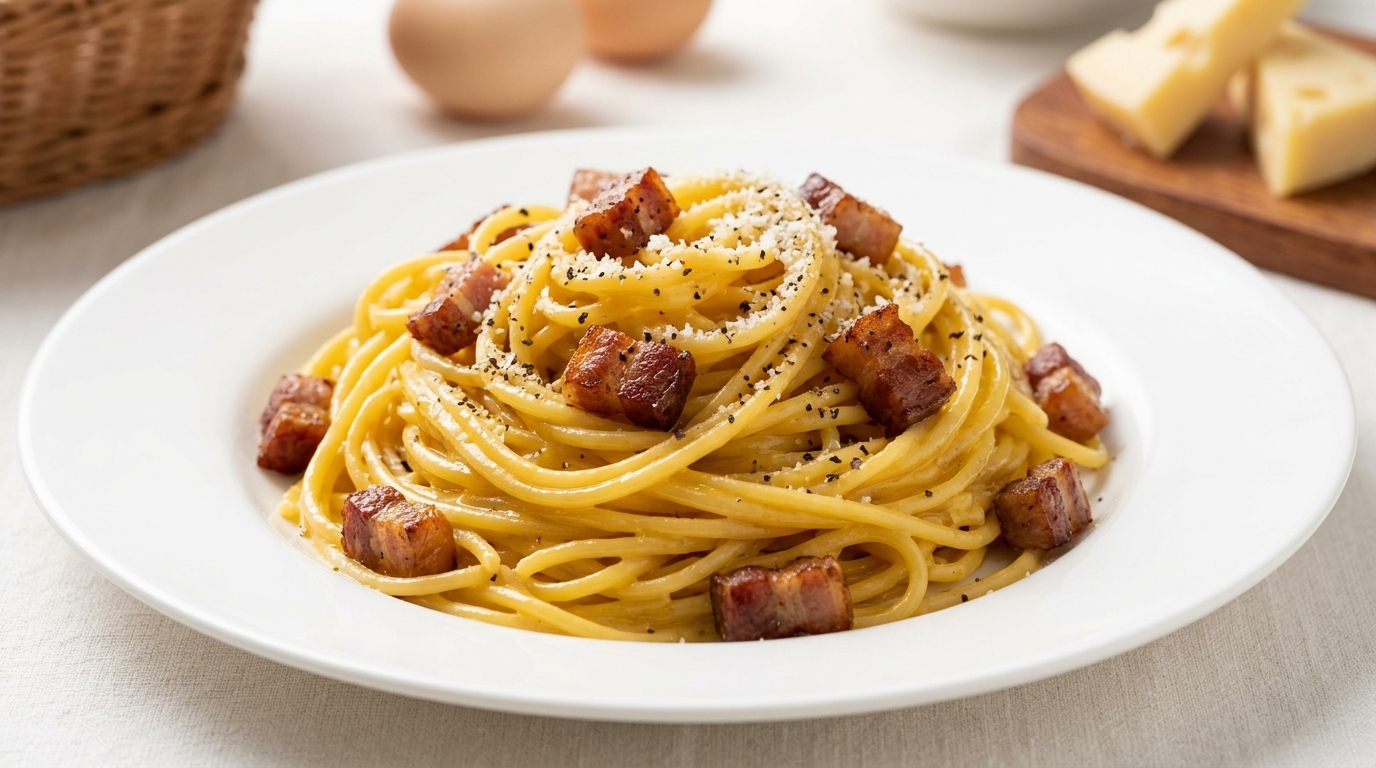
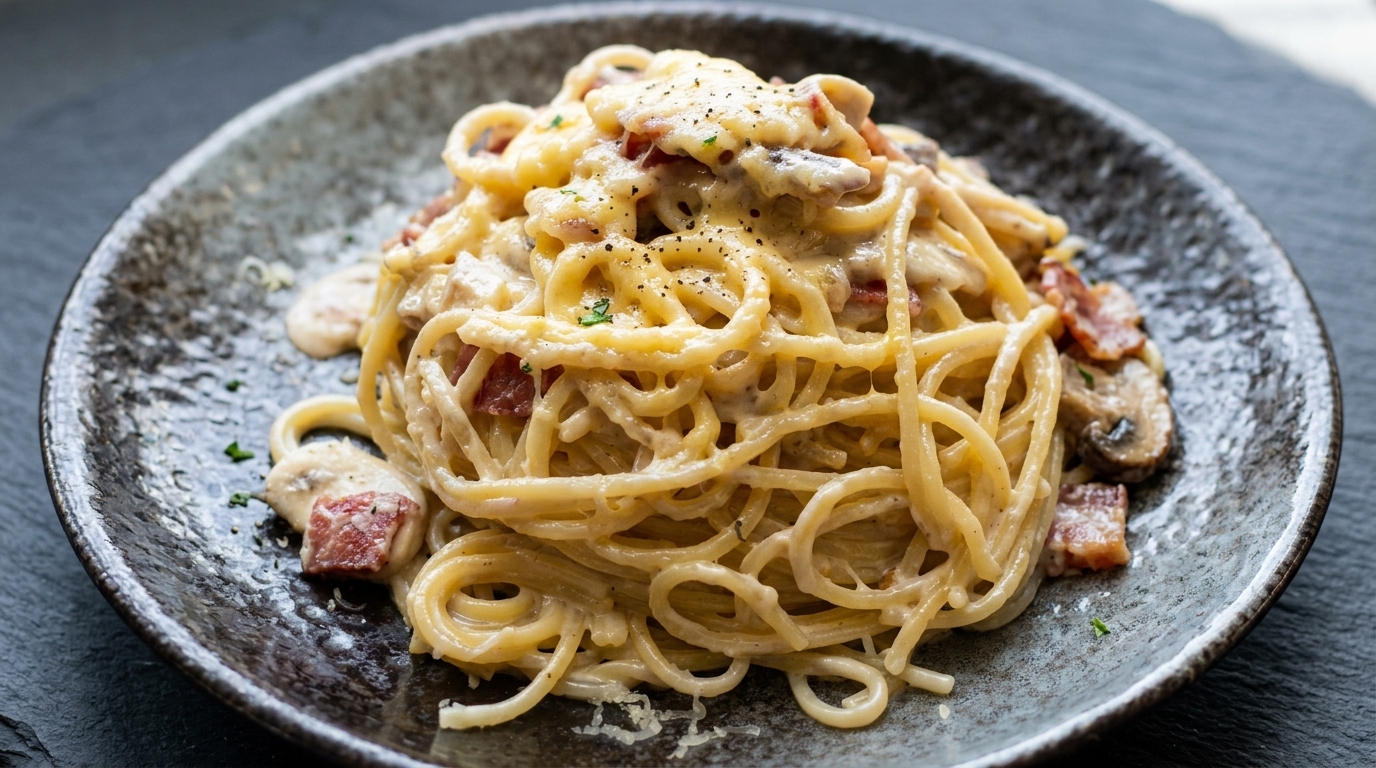
A rich and indulgent fusion twist on the classic Italian favorite. This creamy carbonara features earthy mushrooms, crispy French bacon, and a silky cheese and egg yolk sauce.
While traditional Roman carbonara relies solely on egg yolks, pecorino, and guanciale for its iconic texture, this comforting adaptation embraces a creamier, richer profile. By incorporating milk, a mix of hearty mushrooms, and a touch of savory chicken bouillon, the dish transforms into a deeply satisfying weeknight meal that beautifully marries Western technique with everyday accessibility.
Ingredients
- 200 g spaghetti
- 100 g white button mushrooms
- 100 g shiitake mushrooms
- 100 g French bacon
- 12 red onion
- 150 ml milk
- 1 egg yolk
- 50 g shredded cheese
- 1 tbsp olive oil
- 1 tbsp cooking oil
- 1 tsp chicken bouillon
- to taste salt
- to taste black pepper
- to taste white pepper
Instructions
- 1Slice the button mushrooms
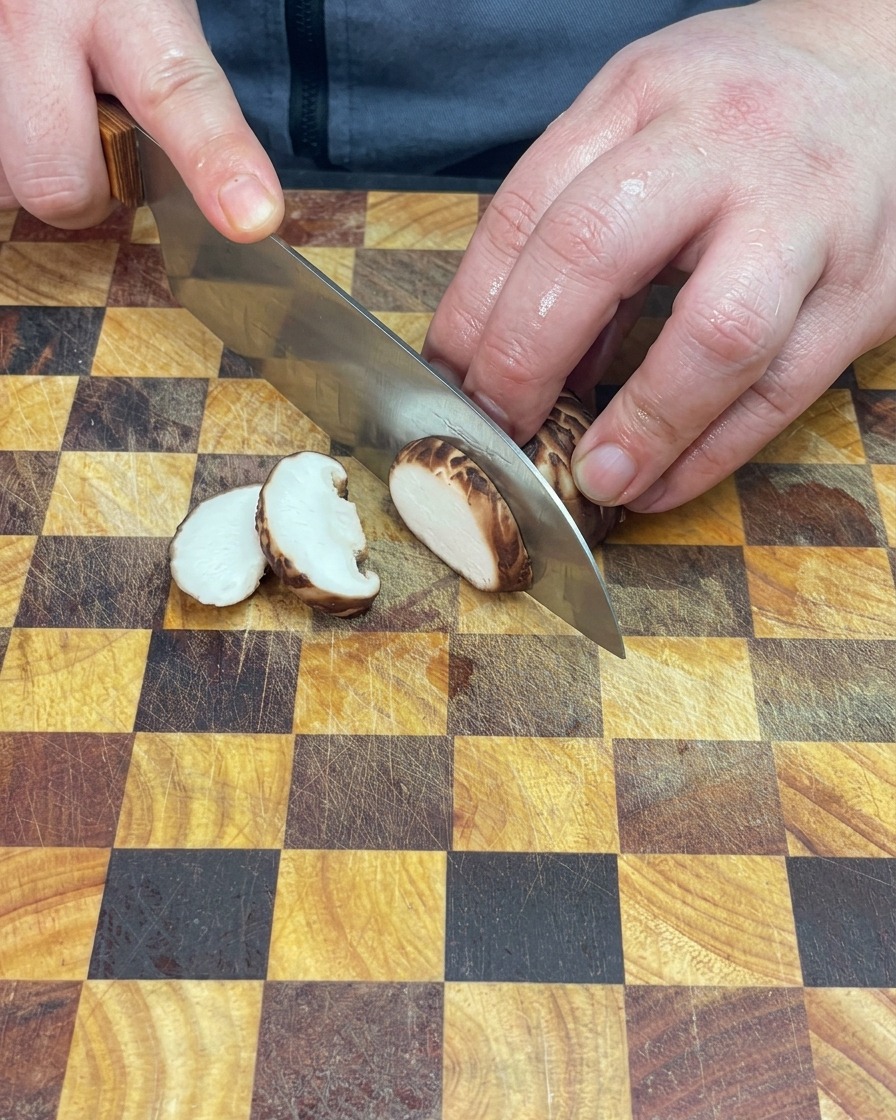
Begin preparing the fresh ingredients for the dish. Take the white button mushrooms and carefully slice them into even, bite-sized pieces on a wooden cutting board. Set them aside for sauteing later.
Tip: Wipe the mushrooms with a damp paper towel instead of rinsing them under water to prevent them from absorbing excess moisture and becoming soggy. - 2Dice the red onion
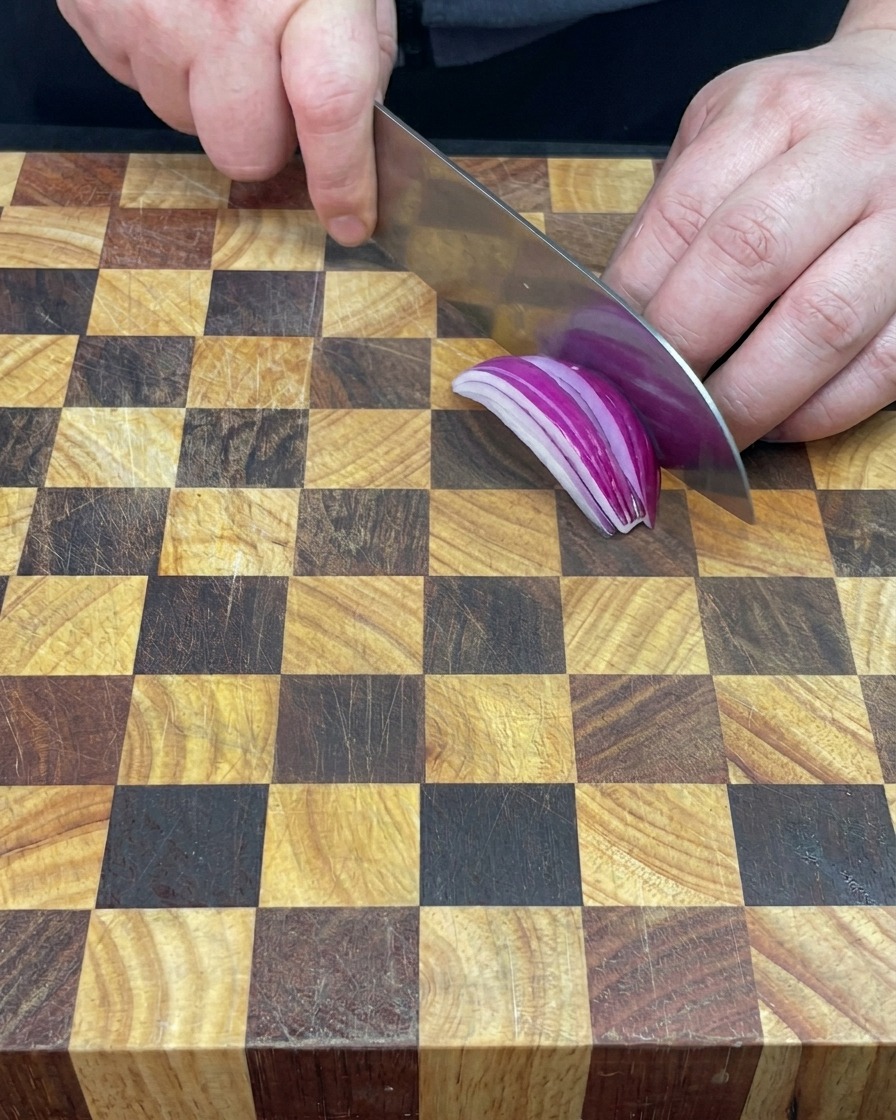
Take a peeled red onion and carefully dice it into uniform pieces. The vibrant red onion will provide a sharp, sweet aromatic base that builds the flavor profile of the creamy pasta sauce.
Tip: Keep the root end of the onion intact while making your initial cuts; this holds the layers together and makes dicing much easier and safer. - 3Dice the bacon
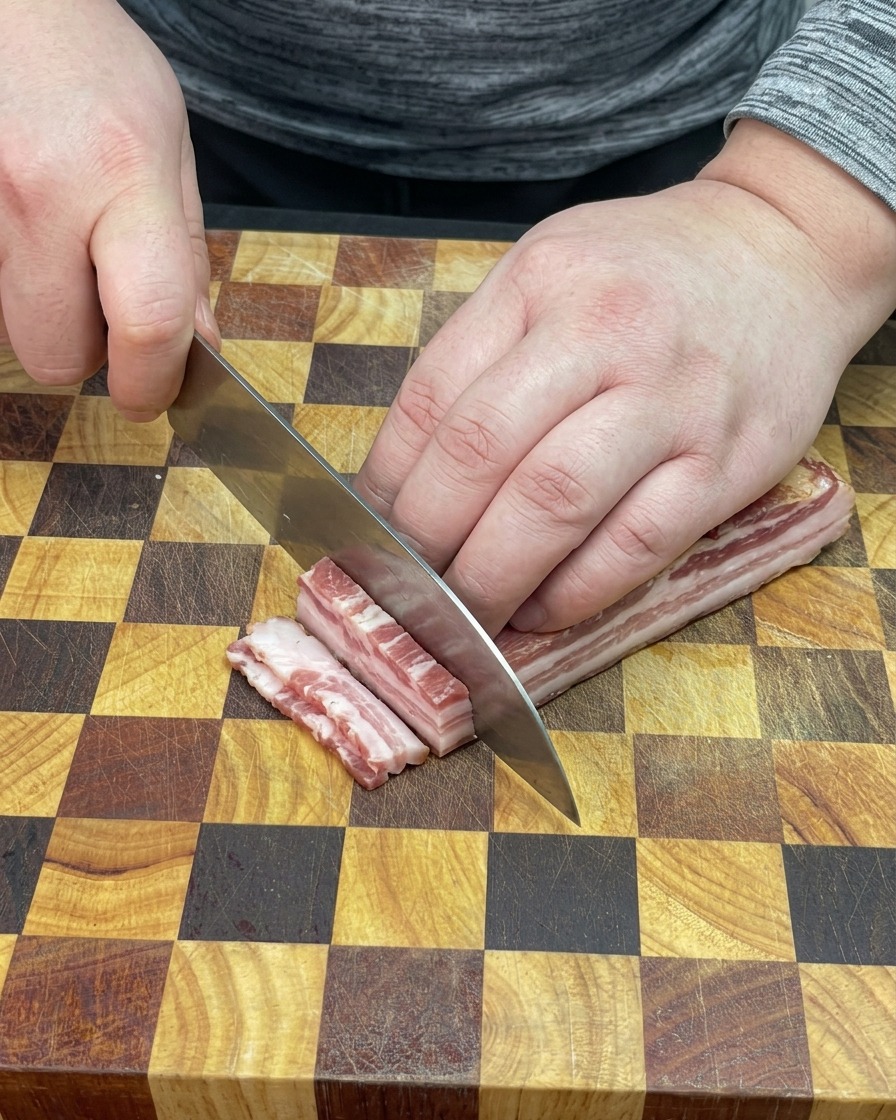
Stack the strips of raw French bacon and cut them into small, even dice. Dicing the bacon uniformly ensures that it will render its fat evenly in the pan and crisp up perfectly for the dish.
Tip: Place the bacon in the freezer for about 10 to 15 minutes before cutting. Firming up the fat makes it much easier to slice cleanly. - 4Prepare the pasta water
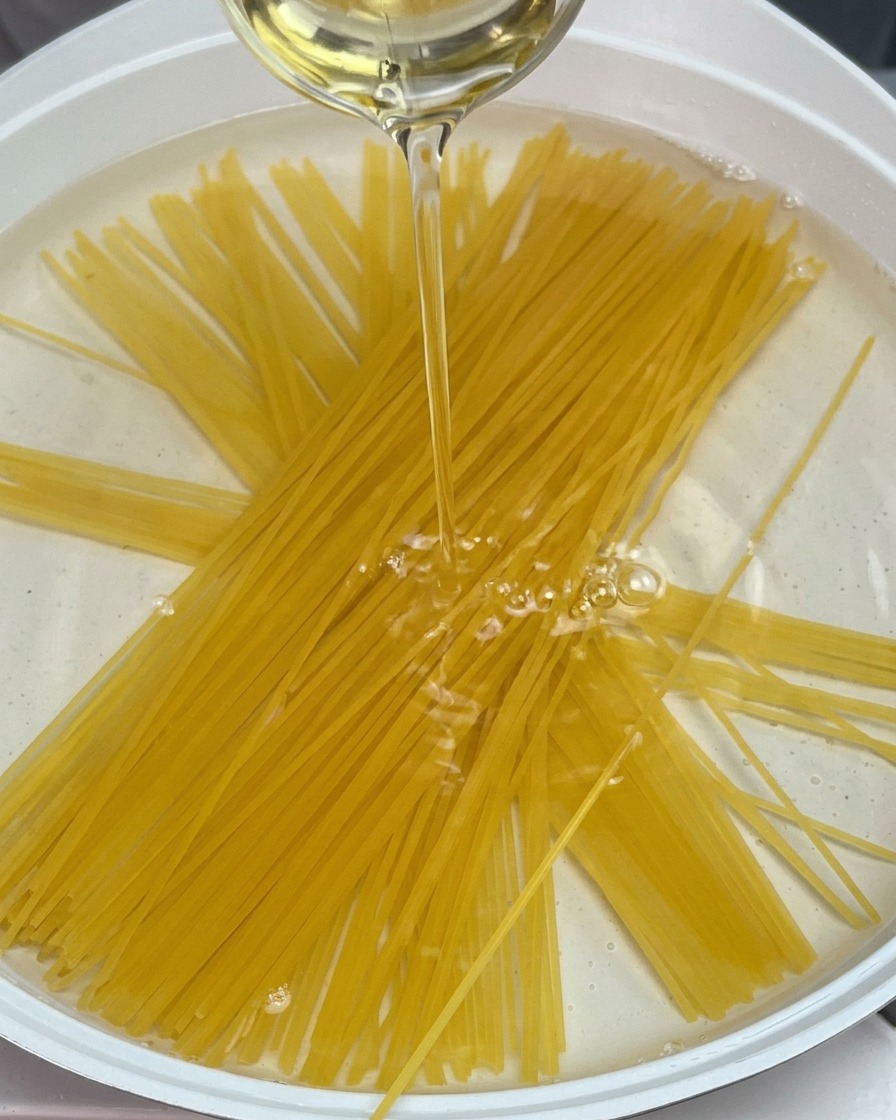
Bring a wide pot of water to a rolling boil, then drop in the dry spaghetti noodles. Add a generous pinch of salt to season the pasta from the inside out, and drizzle in a small amount of cooking oil.
Tip: Using a wide pot or deep pan allows the long spaghetti noodles to submerge completely and cook evenly from end to end right from the start. - 5Boil the spaghetti
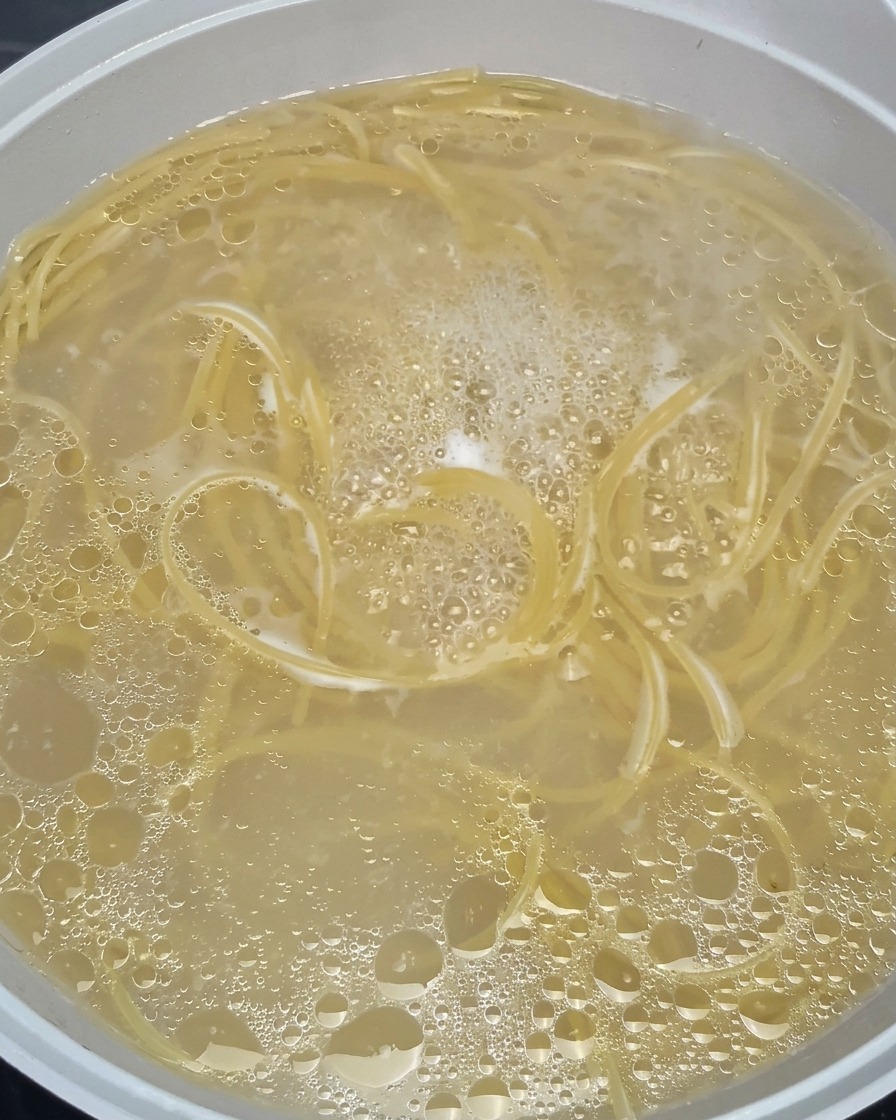
Cook the spaghetti in the vigorously boiling water for about 7 minutes, stirring occasionally to prevent the strands from sticking together. Once the pasta reaches a firm, al dente texture, it is ready to be removed.
Tip: Reserve a small amount of the starchy pasta cooking water before draining. It can be used later to adjust the thickness of your creamy sauce. - 6Drain the spaghetti
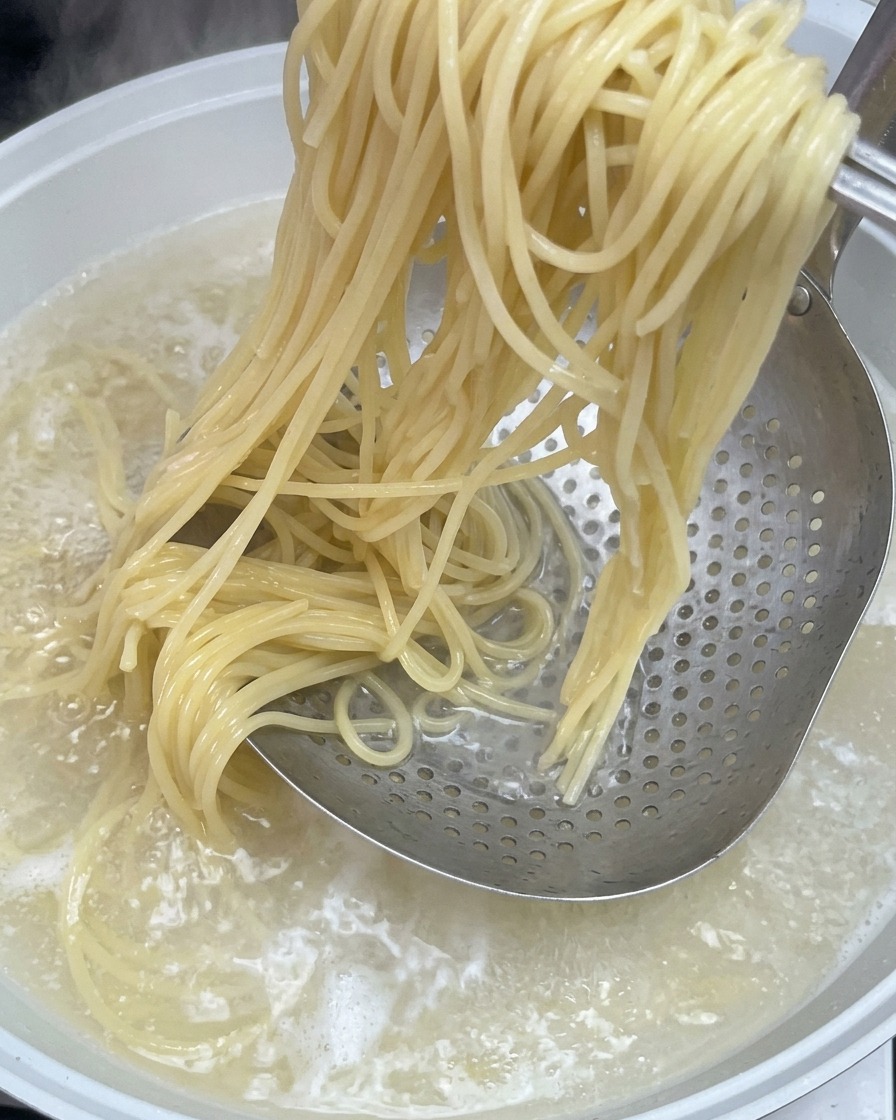
Once the spaghetti has boiled for about 7 minutes, use a slotted skimmer or tongs to carefully scoop the cooked pasta out of the boiling water. Transfer it to a clean bowl and set it aside for the next steps.
Tip: Do not discard the pasta water just yet; you may need a splash later to adjust the sauce consistency. - 7Toss with olive oil
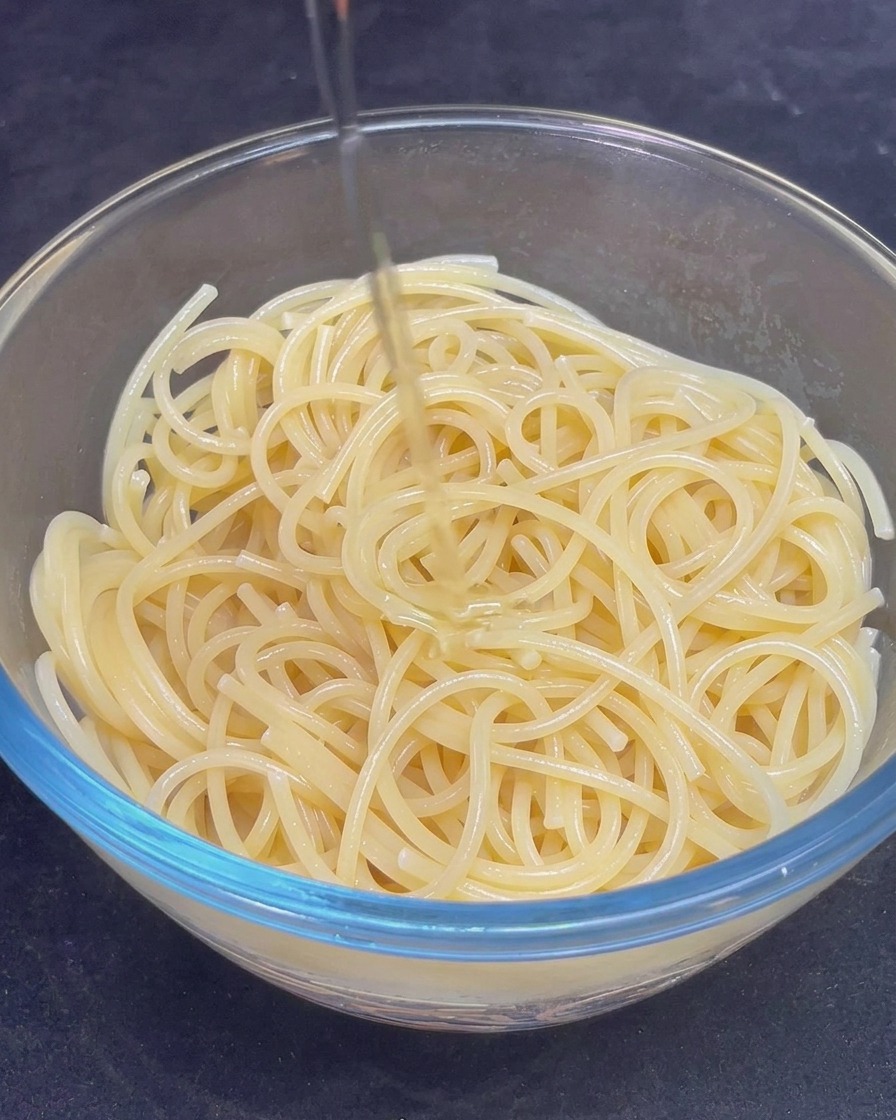
Drizzle a generous amount of clear olive oil over the warm, cooked spaghetti in the bowl. Toss the noodles gently to ensure they are evenly coated, which will prevent them from sticking together while you prepare the rest of the ingredients.
Tip: Tossing the pasta in olive oil not only prevents clumping but also adds a subtle layer of flavor to the dish. - 8Heat the pan
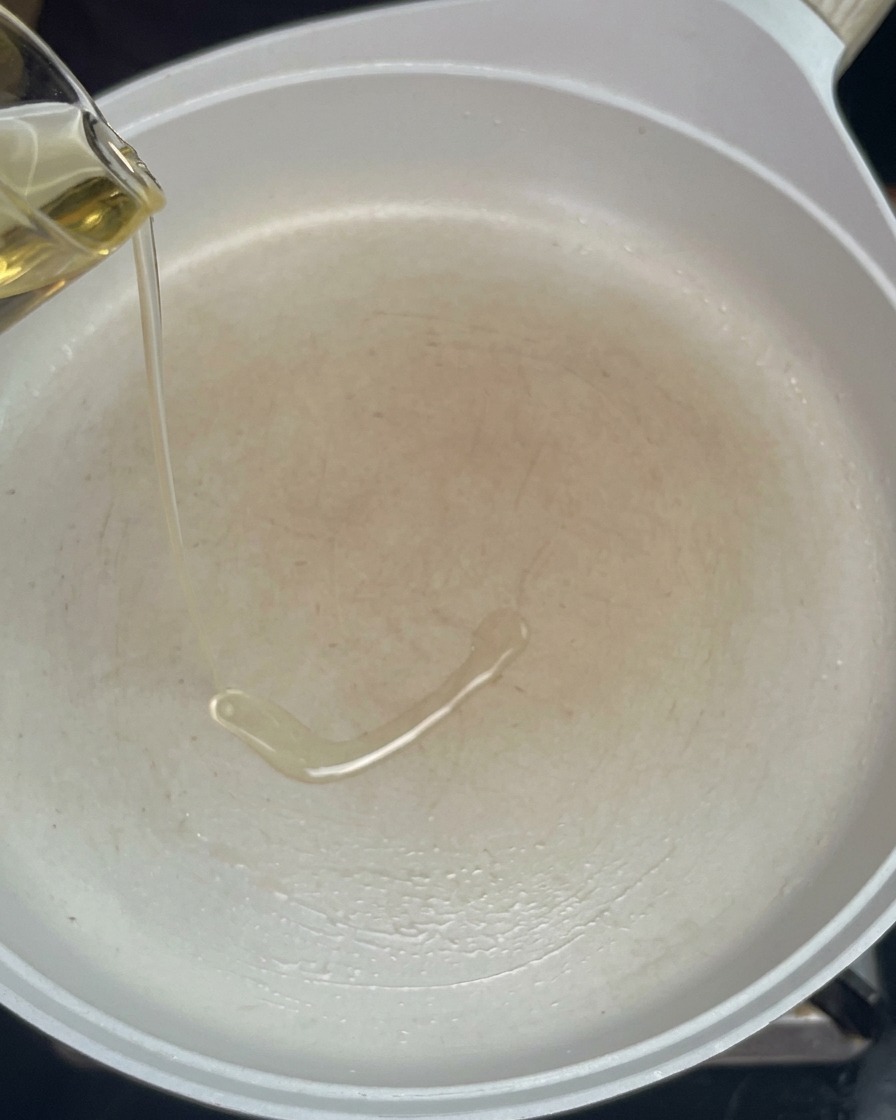
Place a large white pan or skillet over medium heat. Pour in a splash of cooking oil and allow it to heat up evenly across the surface of the pan before adding any ingredients.
Tip: Give the oil a moment to shimmer before adding your aromatics to ensure they start frying immediately rather than soaking up cold oil. - 9Sauté bacon and onions
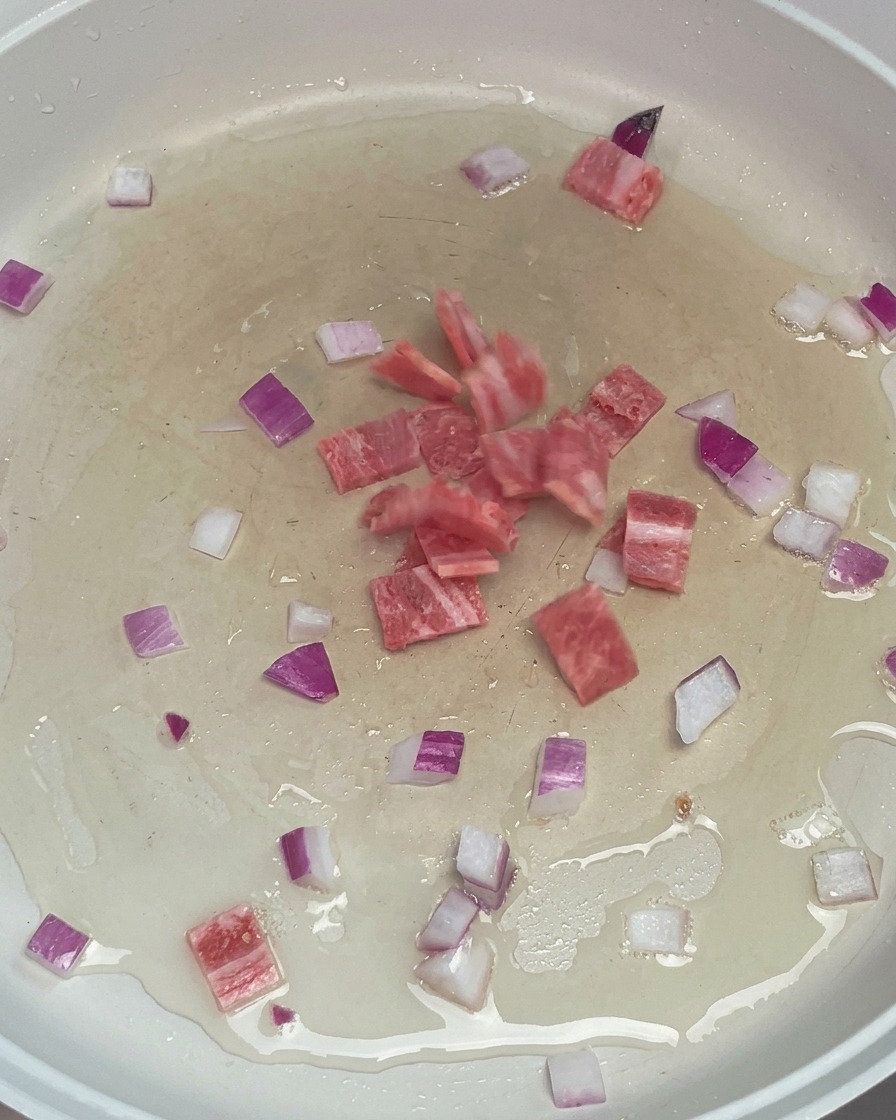
Add the diced French bacon and chopped red onions into the heated pan. Stir-fry them together in the hot oil until the onions begin to soften and become fragrant, and the bacon starts to render its fat and crisp up around the edges.
Tip: Render the bacon fat slowly to release maximum flavor without burning the delicate red onions. - 10Season with black pepper
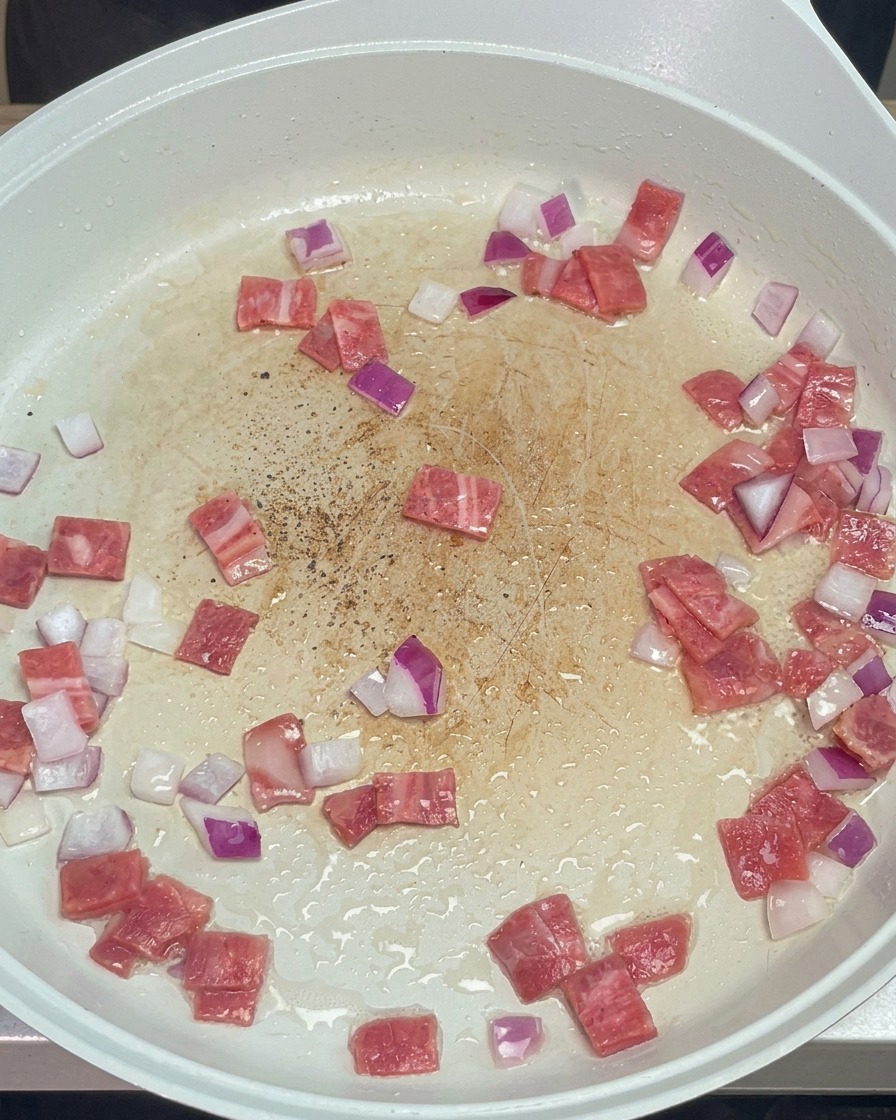
While the bacon and onions are sautéing, sprinkle in a generous pinch of freshly ground black pepper. Stir the mixture well to toast the pepper in the hot oil, which helps release its essential oils and deepens the flavor of the base.
Tip: Toasting the black pepper early in the cooking process amplifies its warm, spicy notes. - 11Add the mushrooms
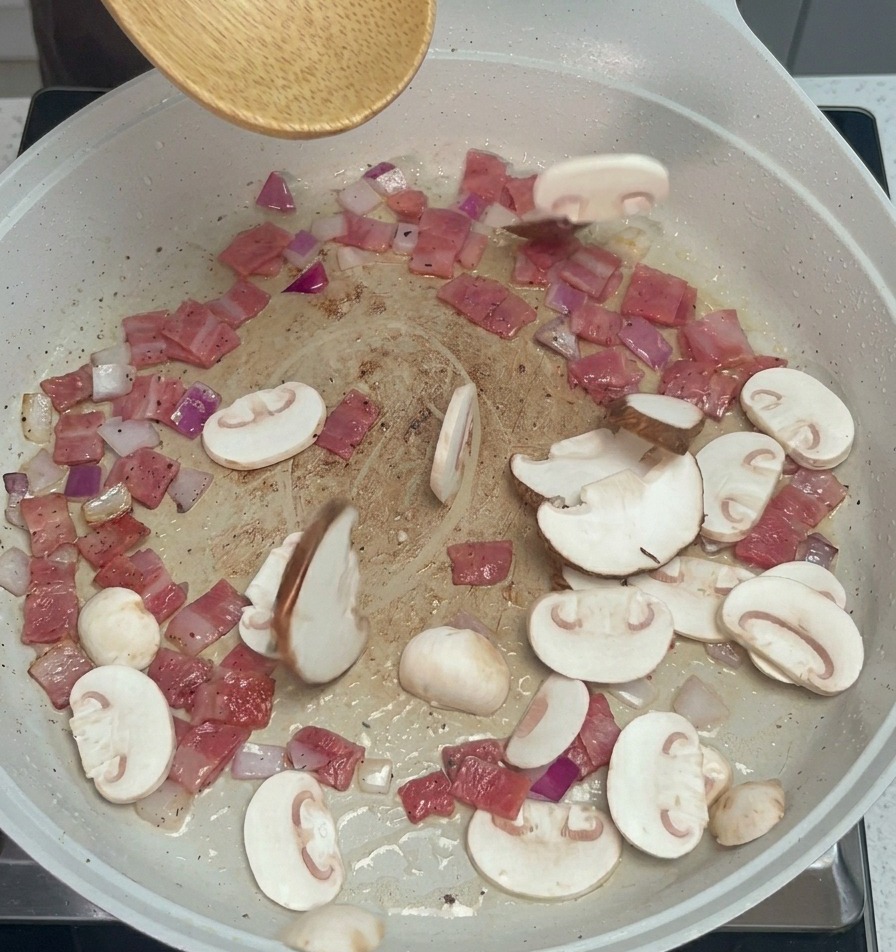
Drop the freshly sliced button and shiitake mushrooms into the pan with the bacon and onions. Toss everything together, allowing the mushrooms to absorb the flavorful bacon fat and aromatic oils as they begin to cook down and soften.
Tip: Avoid overcrowding the pan so the mushrooms can brown properly instead of steaming in their own juices. - 12Sauté the ingredients
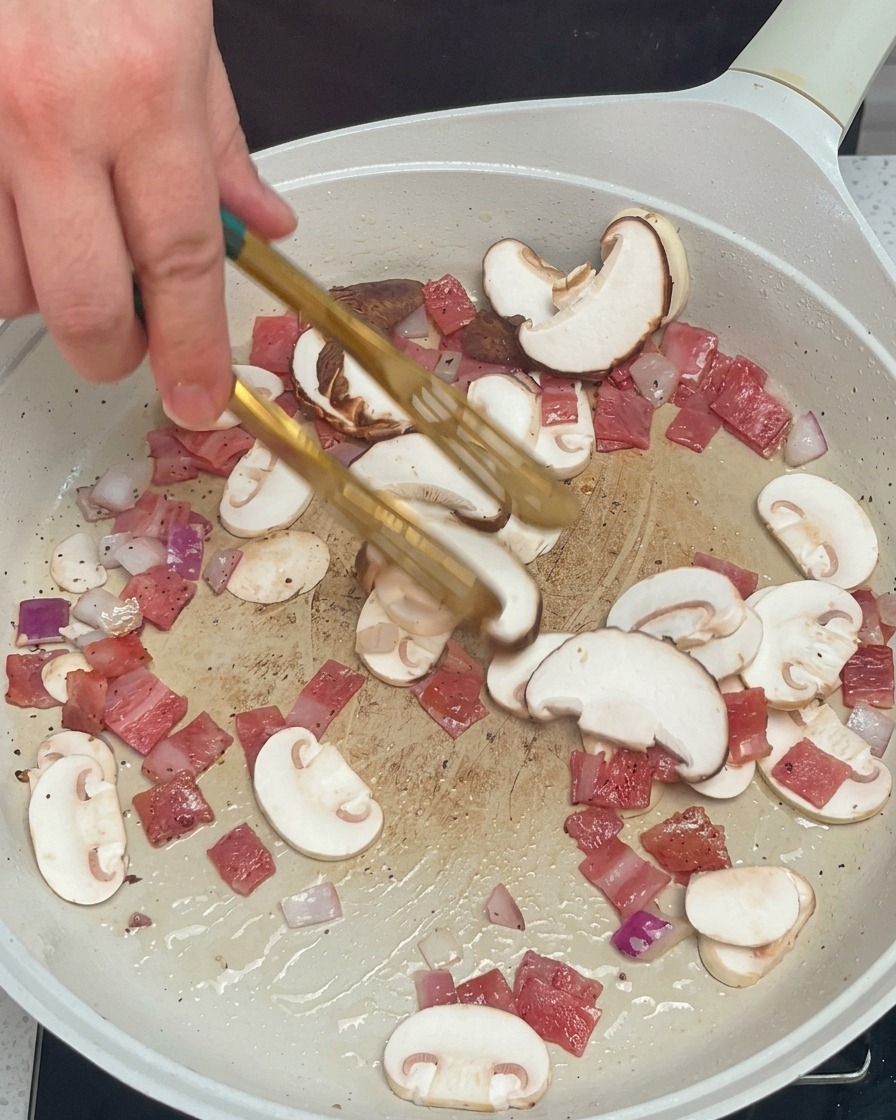
Use tongs to toss the sliced shiitake mushrooms, button mushrooms, diced bacon, and red onions together in the pan. Sauté the mixture evenly until the bacon fat is rendered and the mushrooms are tender.
Tip: Cook the bacon briefly before adding the other ingredients to render its fat, which adds a rich, savory flavor to the mushrooms and onions. - 13Pour in the milk
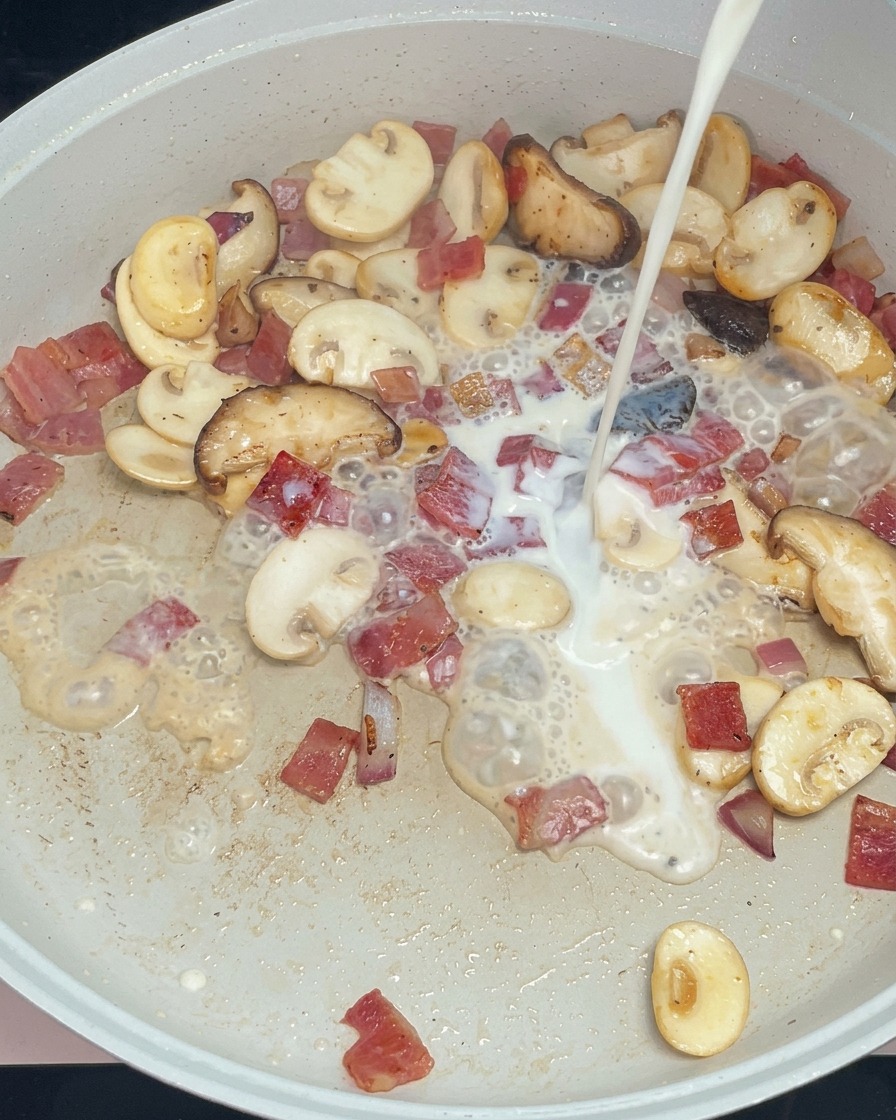
Pour milk directly into the pan over the sautéed mushrooms, bacon, and onions. Bring the liquid to a gentle simmer to create the creamy base for the pasta sauce.
Tip: For a richer and thicker sauce, you can substitute a portion of the milk with heavy cream. - 14Add the cooked spaghetti
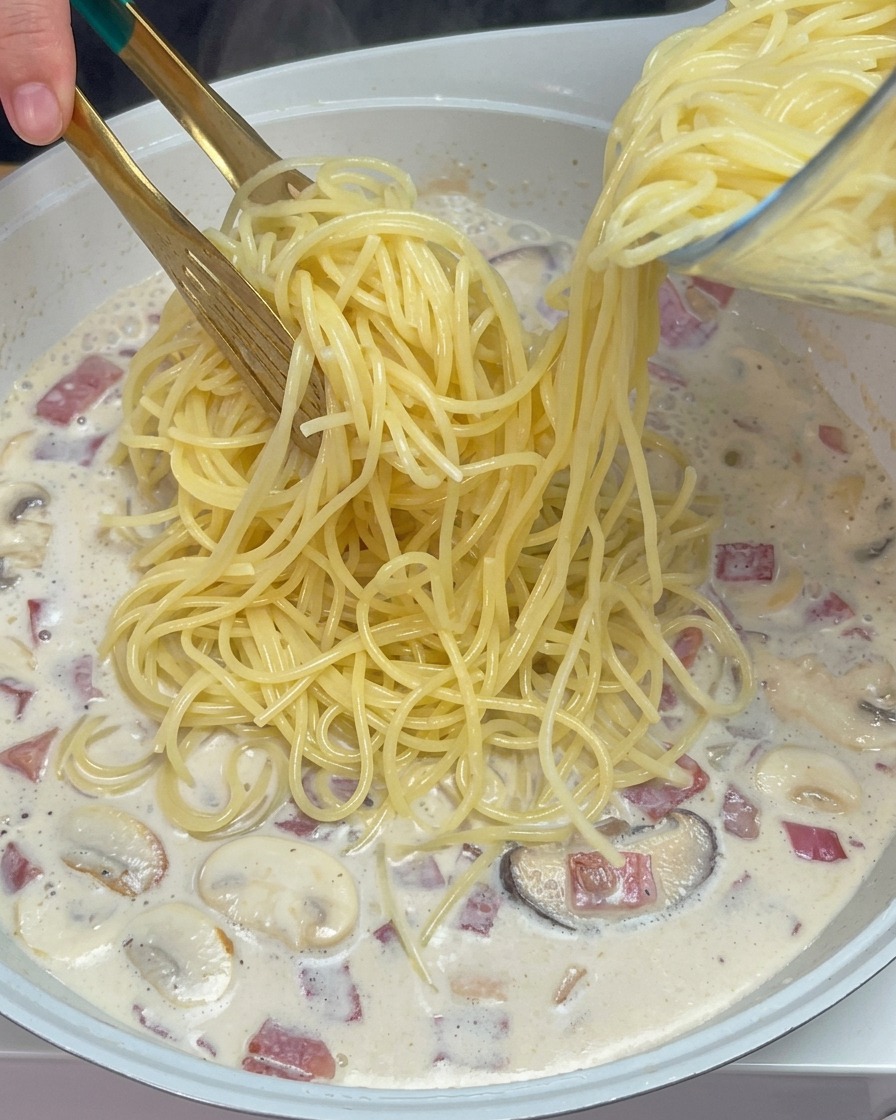
Transfer the pre-cooked spaghetti into the simmering milk mixture. Toss the pasta gently with tongs to ensure the noodles are evenly coated in the creamy sauce.
Tip: Adding a splash of reserved starchy pasta water can help the sauce emulsify and cling better to the noodles. - 15Season and finish the sauce
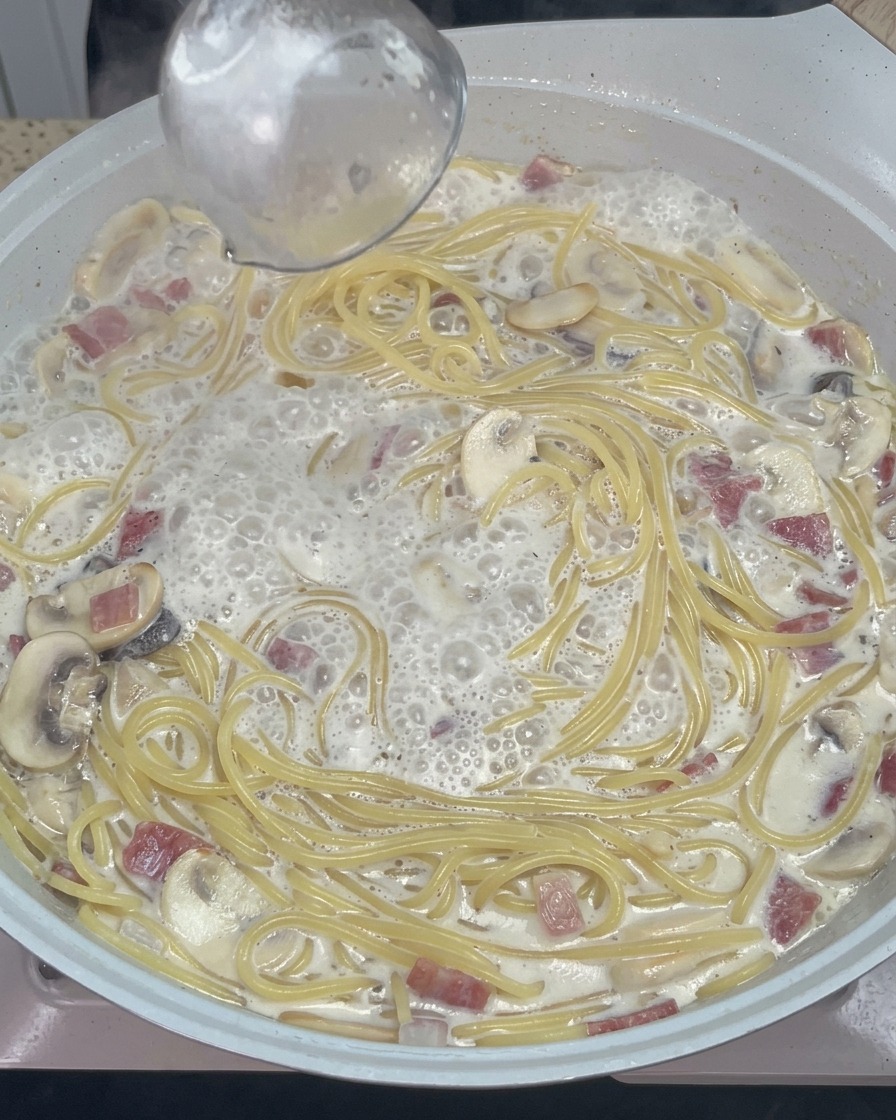
Add salt, white pepper, and chicken bouillon to the pan and stir well. Remove the pan from the heat completely, then quickly stir in the egg yolk and shredded cheese until the sauce becomes silky and coats the pasta.
Tip: Always remove the pan from the active heat before adding the egg yolk to ensure it creates a smooth creamy sauce rather than scrambled eggs.