Hot and Creamy Seafood Pasta (Gochujang Cream Sauce)
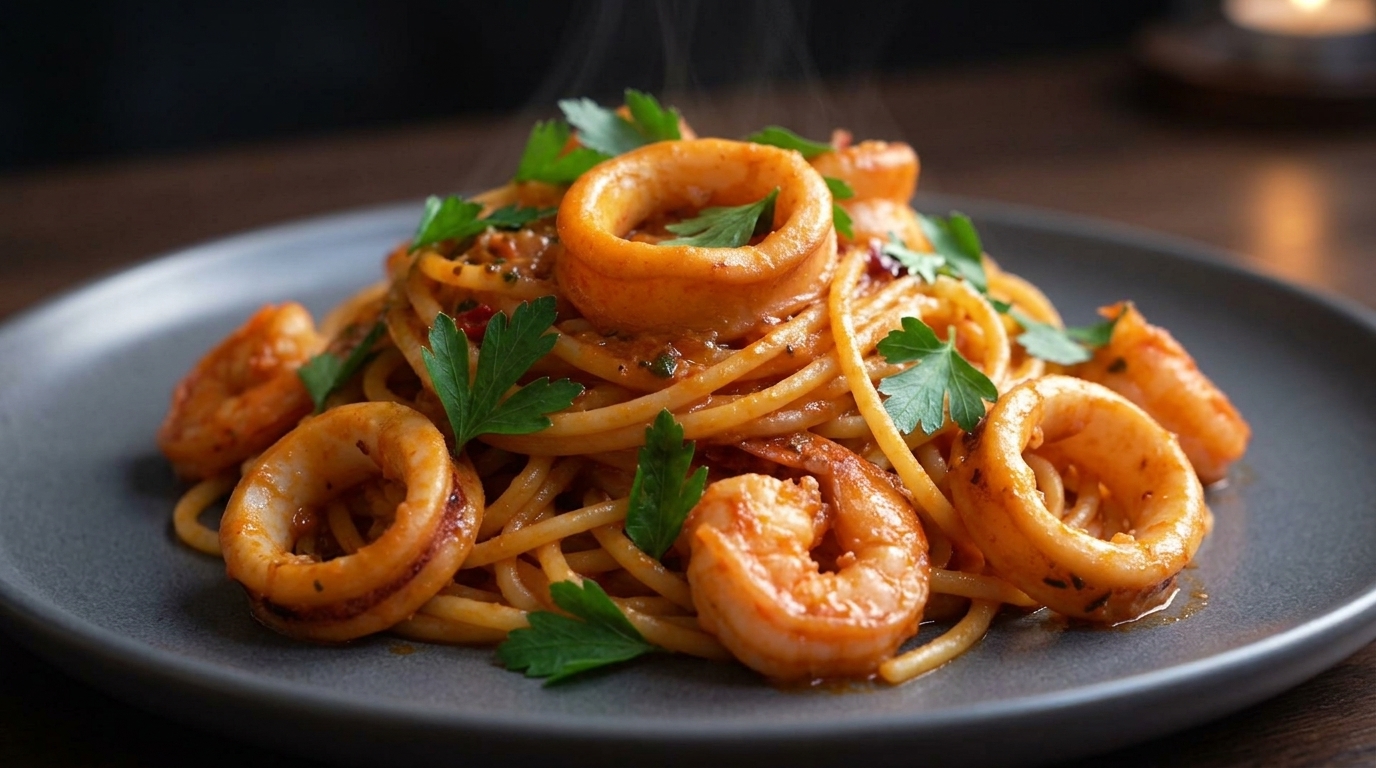
Elevate your pasta game with this Hot and Creamy Seafood Pasta. Featuring a luscious gochujang-infused cream sauce, tender tiger prawns, and fresh squid, it's an irresistible blend of spice and umami.
While traditional Italian seafood pastas often rely on white wine or tomato bases, this fusion dish introduces Korean chili paste (gochujang) for a vibrant, deeply savory twist. The secret to its profound flavor lies in rendering shrimp oil from the heads, creating a rich aromatic foundation that perfectly balances the creamy, spicy sauce without feeling heavy.
Ingredients
- 200 g dry spaghetti
- 8–10 whole tiger prawns (heads reserved)
- 1 whole squid
- 12 white onion
- 3 cloves garlic
- 3–4 dried red chilies
- 1 tbsp butter
- 1 tbsp vegetable oil
- 2 tbsp Korean chili paste (gochujang)
- 150 ml milk and heavy cream mixture (half-and-half)
- to taste salt
- to taste black pepper
- 1 tsp sugar
- optional fresh parsley
Instructions
- 1Prepare the shrimp
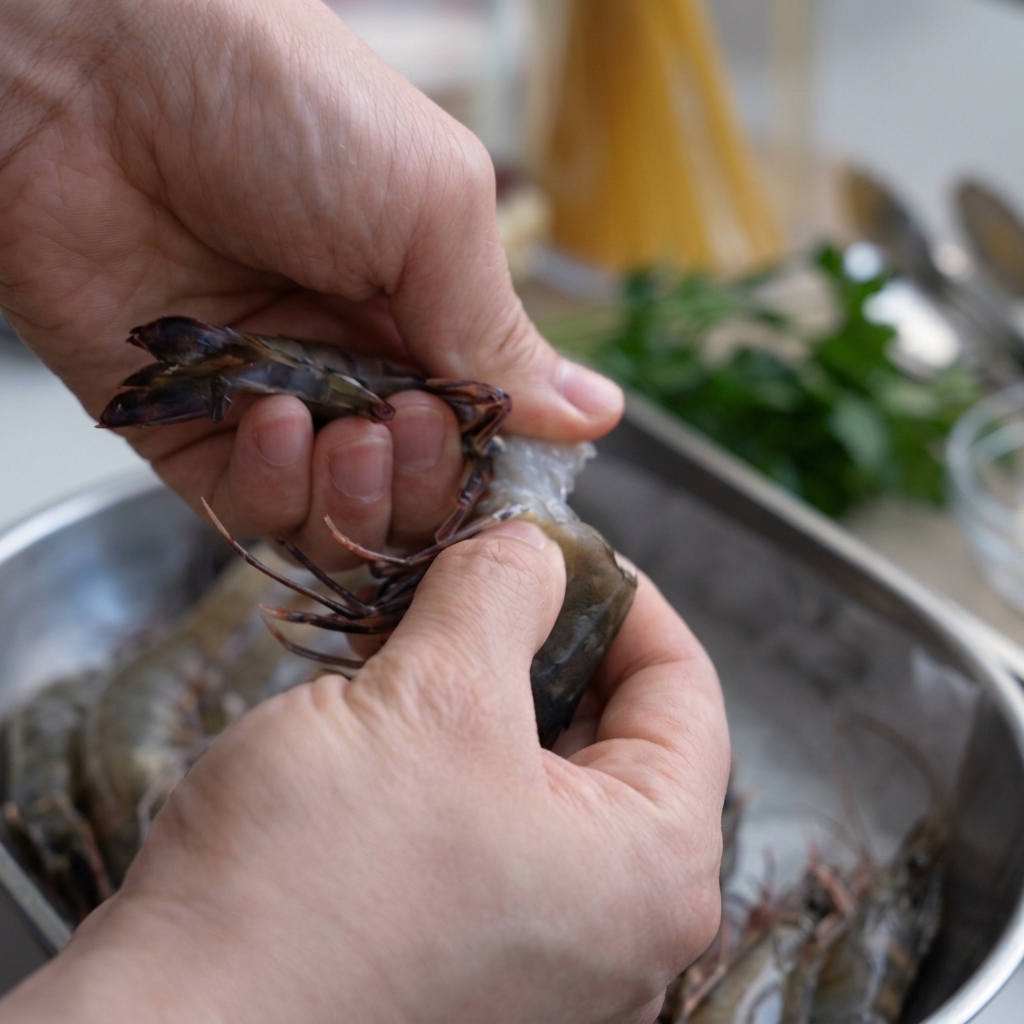
Start by peeling the raw tiger prawns. Carefully remove the shells, but make sure to reserve the shrimp heads. We will use them later to render out a flavorful shrimp oil that forms the base of the dish.
Tip: Dont throw away the shrimp heads! They contain the most flavor and are essential for a rich seafood pasta. - 2Devein the shrimp
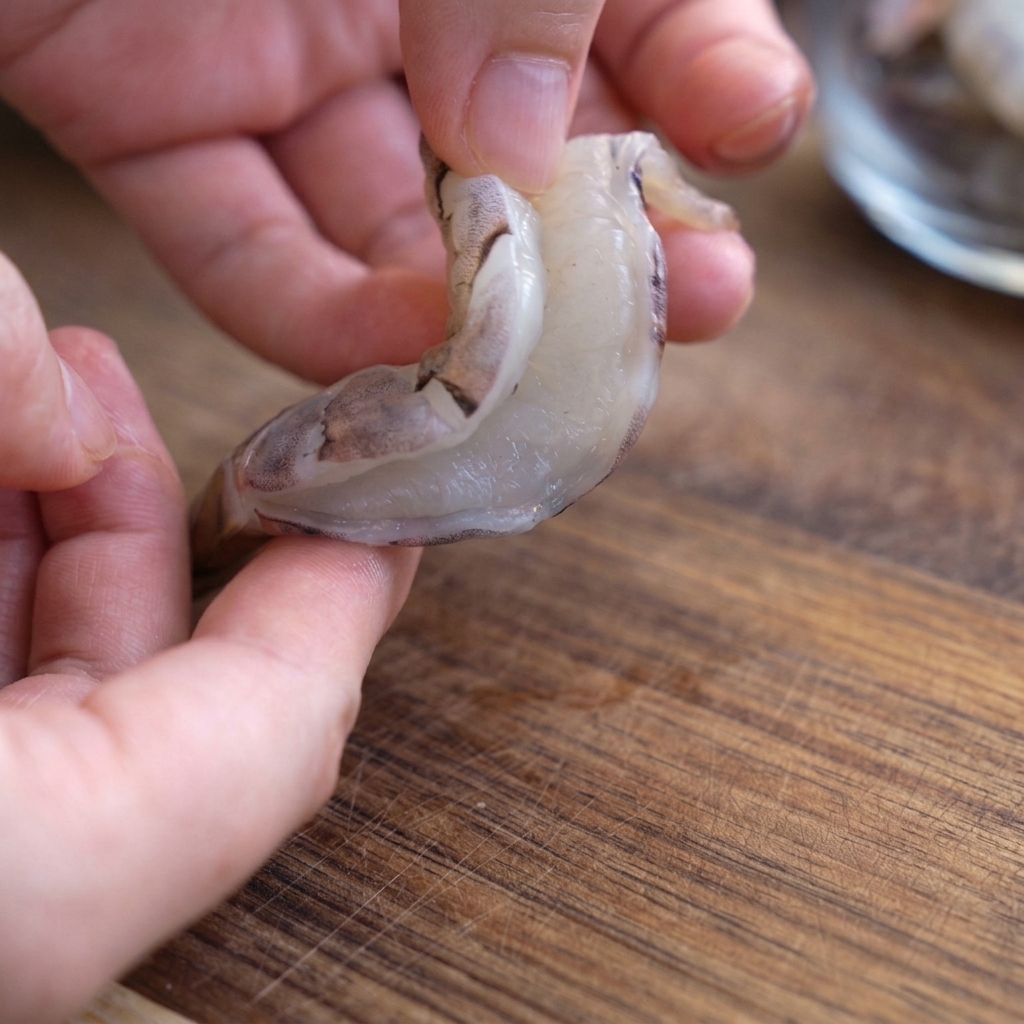
Once the shrimp are peeled, use a sharp knife to make a shallow slit down the back of each shrimp. Remove the dark vein to ensure the shrimp are clean and ready for cooking.
Tip: Deveining not only cleans the shrimp but also helps them curl up nicely and absorb more sauce during cooking. - 3Slice the squid
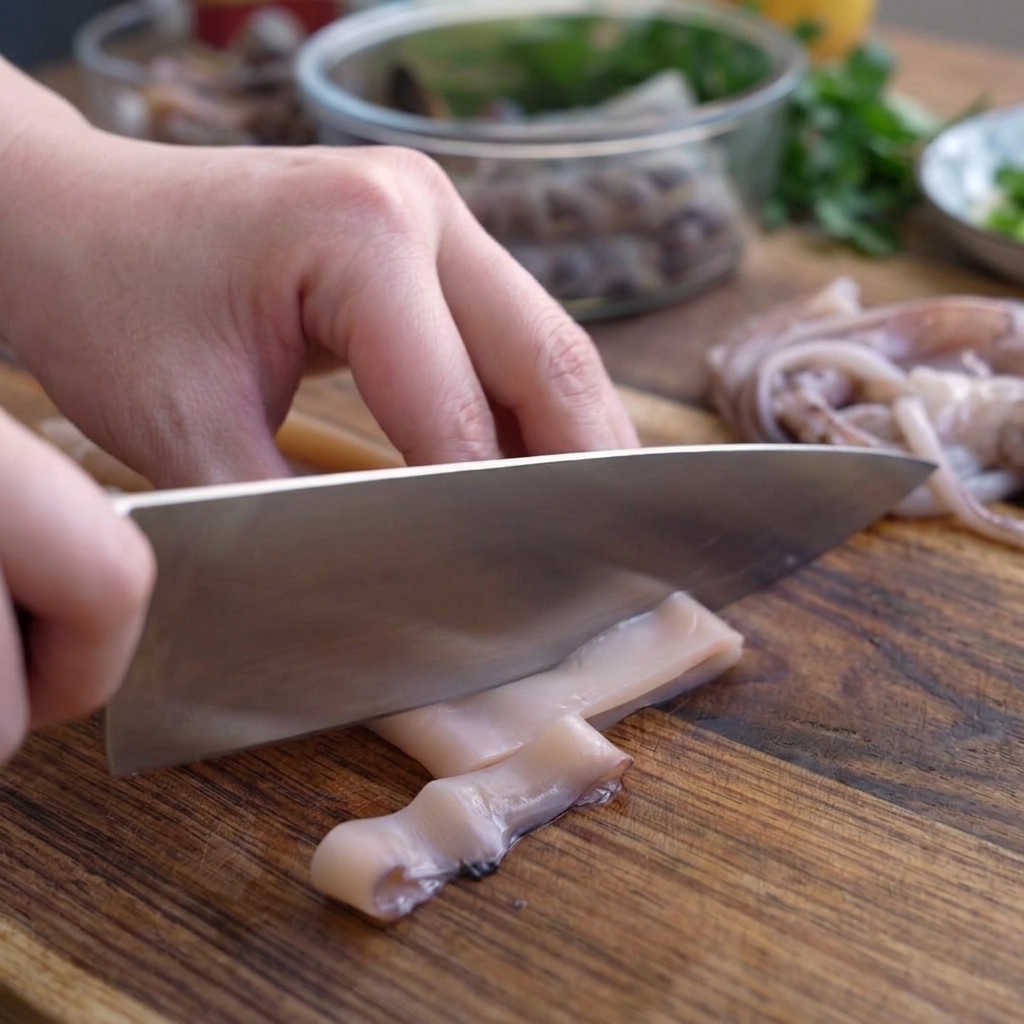
Prepare the squid by first tearing off the surface membrane to reduce its fishy odor. Then, place the cleaned squid tube on a wooden cutting board and slice it evenly into thin rings.
Tip: Ensure the squid rings are cut to a similar thickness so they cook evenly without becoming rubbery. - 4Slice the onion
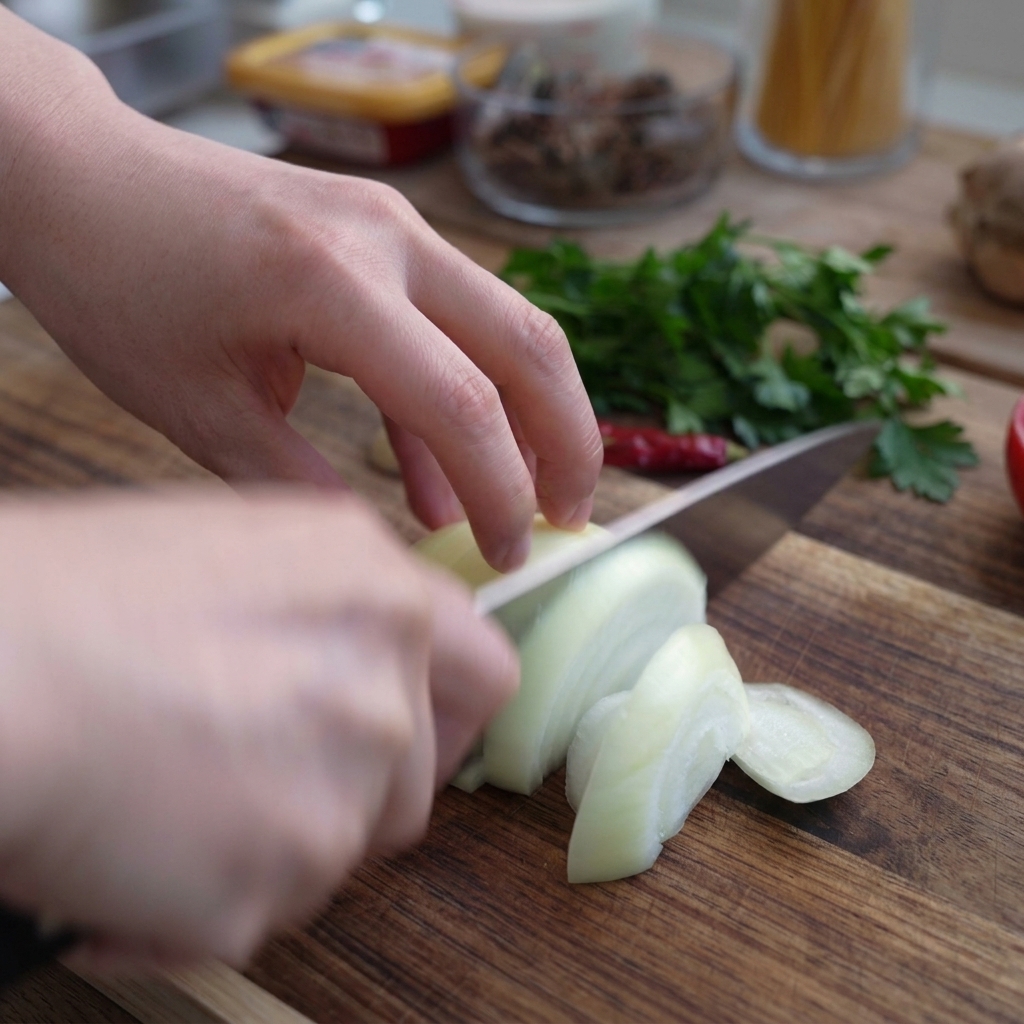
Take half of a white onion and slice it into even strips. The onion will provide a sweet, aromatic base that complements the seafood and balances the spicy heat of the sauce.
Tip: Cut the onion strips along the grain so they retain their shape slightly better when stir-fried. - 5Prepare the aromatics
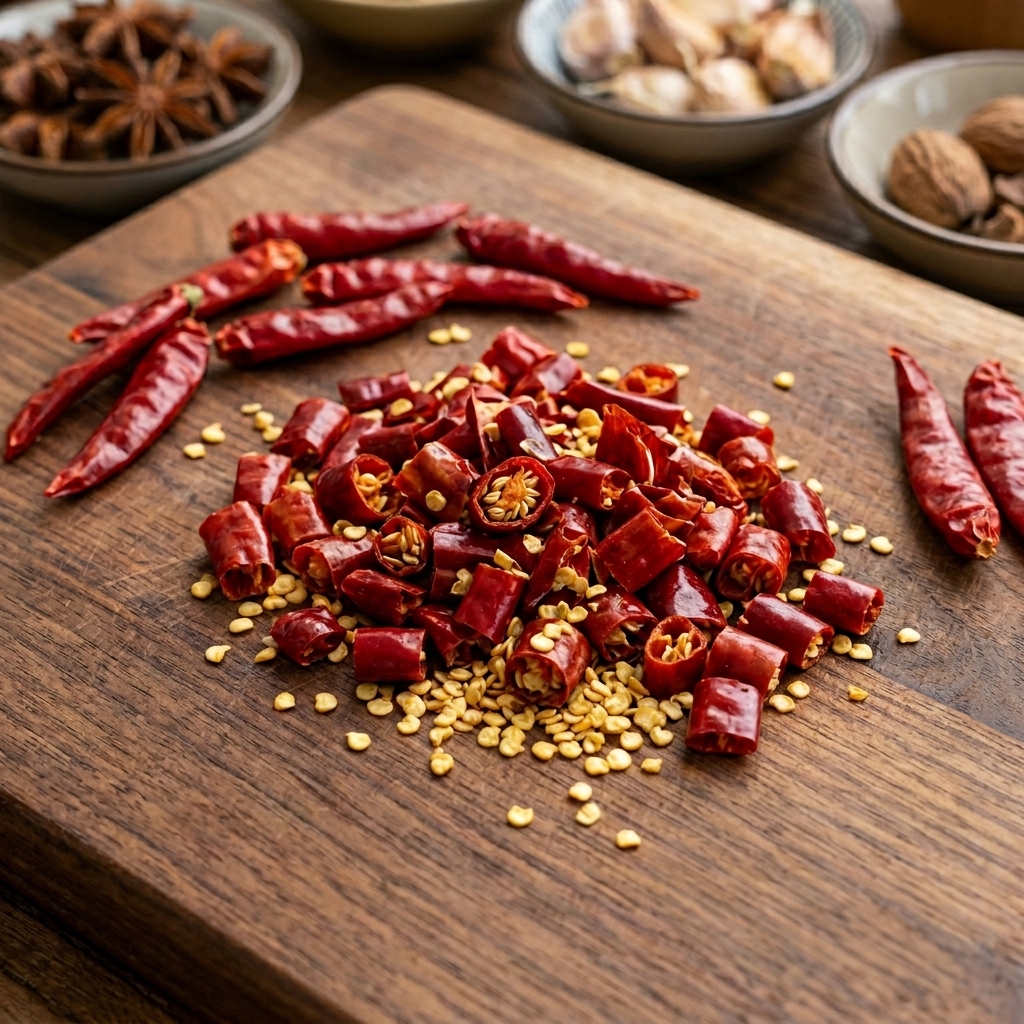
For a mild, aromatic heat, prepare some dried red chilies. Snip them into smaller pieces using scissors or a knife. Along with sliced garlic, these will be fried in butter to release their spicy fragrance into the oil.
Tip: If you prefer a milder dish, you can remove the seeds from the dried chilies before cooking. - 6Boil the pasta
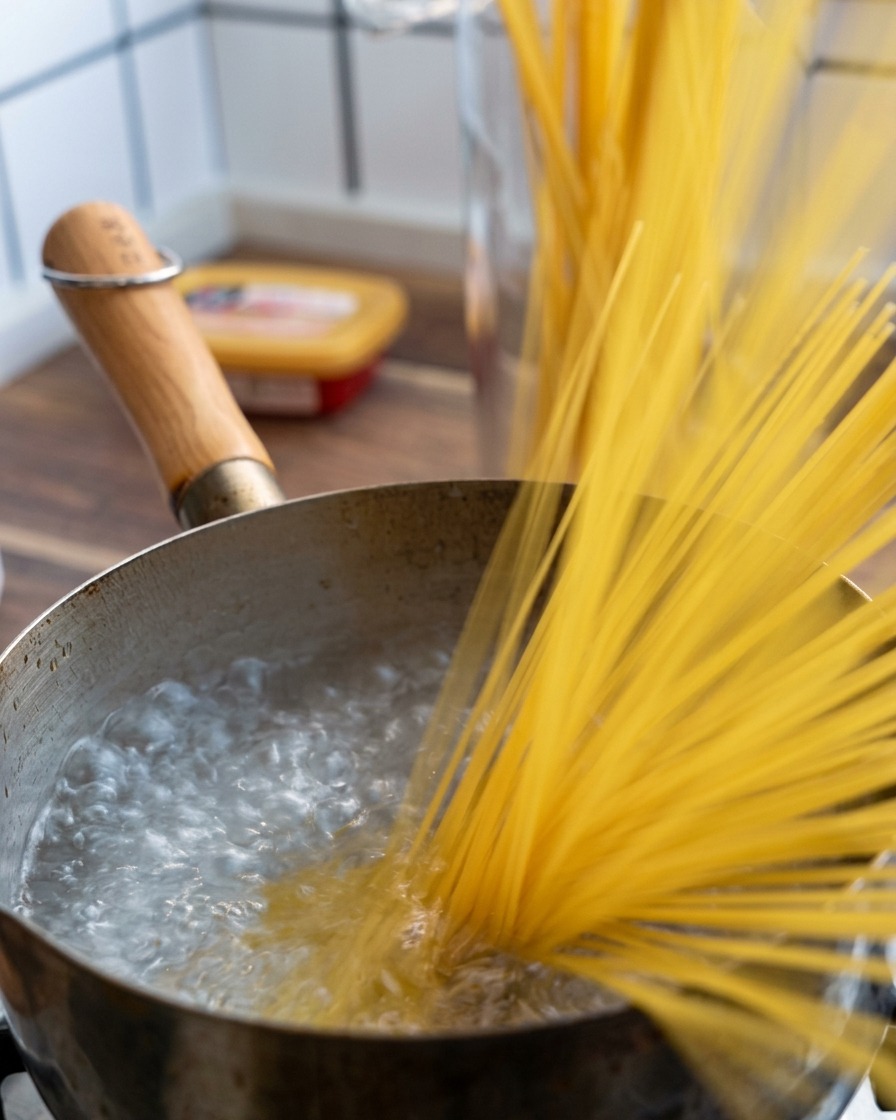
Since the seafood sauce cooks very quickly, start the pasta first. Bring a pot of water to a rolling boil, salt it generously, and add the dry spaghetti. Cook the pasta for about 9 to 10 minutes until al dente.
Tip: The pasta water should taste like the sea. Salting the water adequately is the only chance you get to season the pasta itself. - 7Melt butter with oil
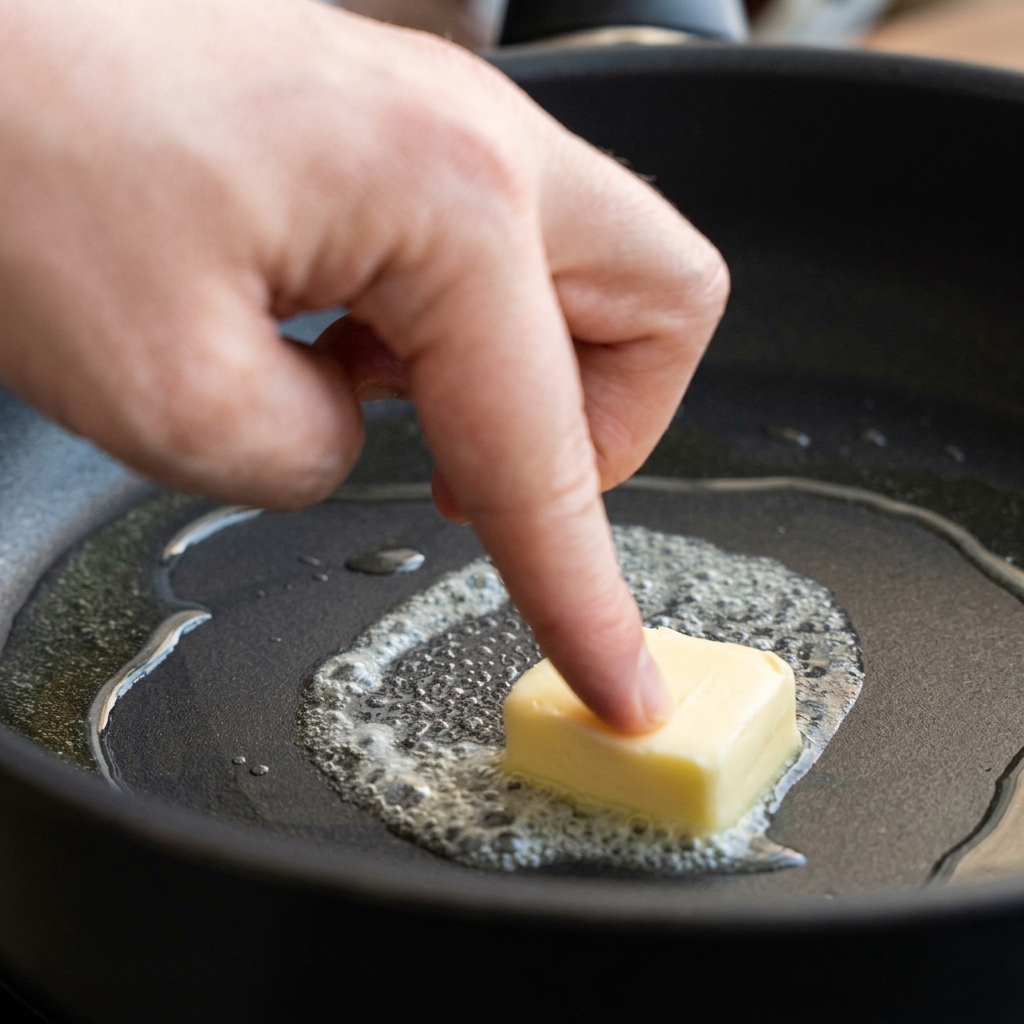
Heat a frying pan and add a small amount of vegetable oil along with a pat of butter. Keep the heat low as the butter melts, swirling it gently. Using a combination of oil and butter prevents the butter from burning quickly while still providing a rich aroma.
Tip: Butter burns very easily due to its milk solids. Keep the heat on low until it melts and begins to gently bubble. - 8Sauté the aromatics
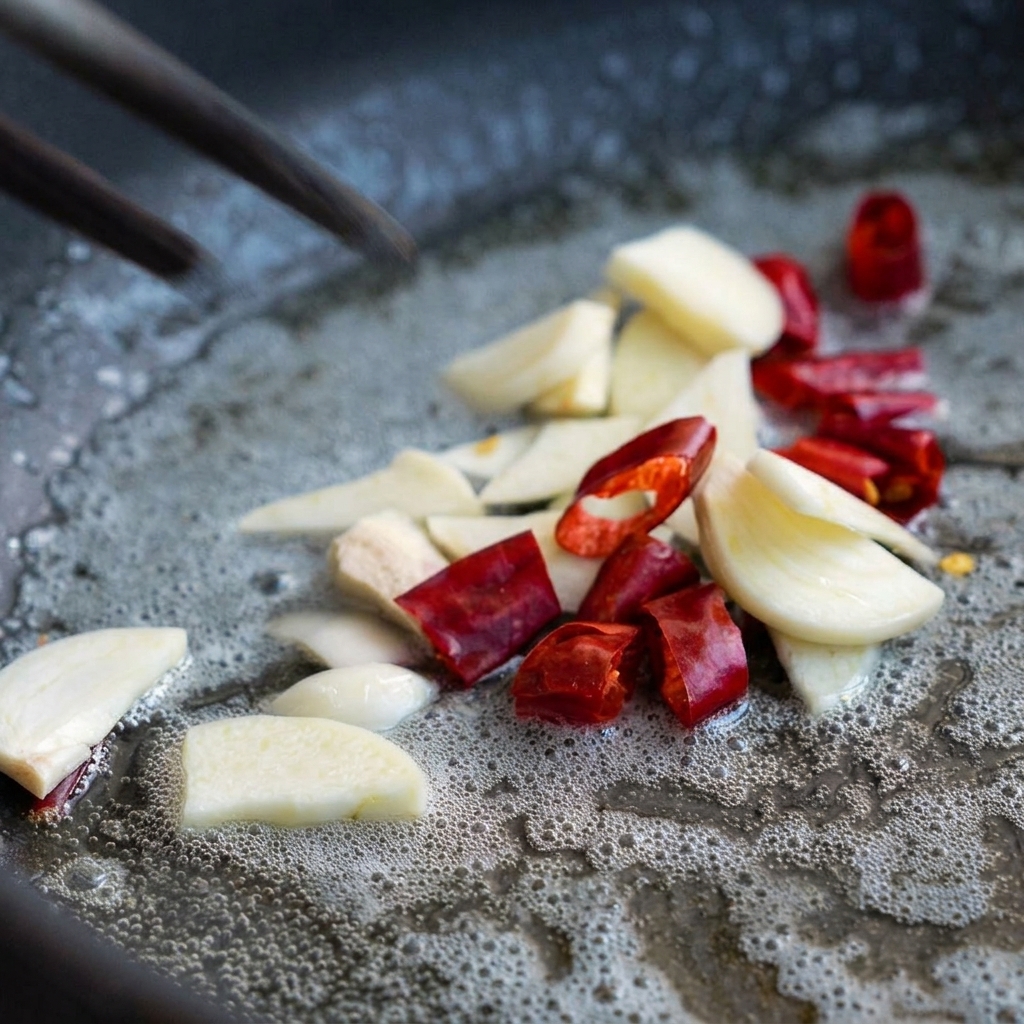
Add the sliced garlic and dried chilies to the melted butter in the pan. Sauté them over low heat until the garlic turns lightly golden and the oil is infused with the spicy, aromatic flavors. Be careful not to let the garlic brown too much, as it can turn bitter.
Tip: Stir continuously to ensure the garlic cooks evenly without catching on the pan. - 9Extract shrimp oil
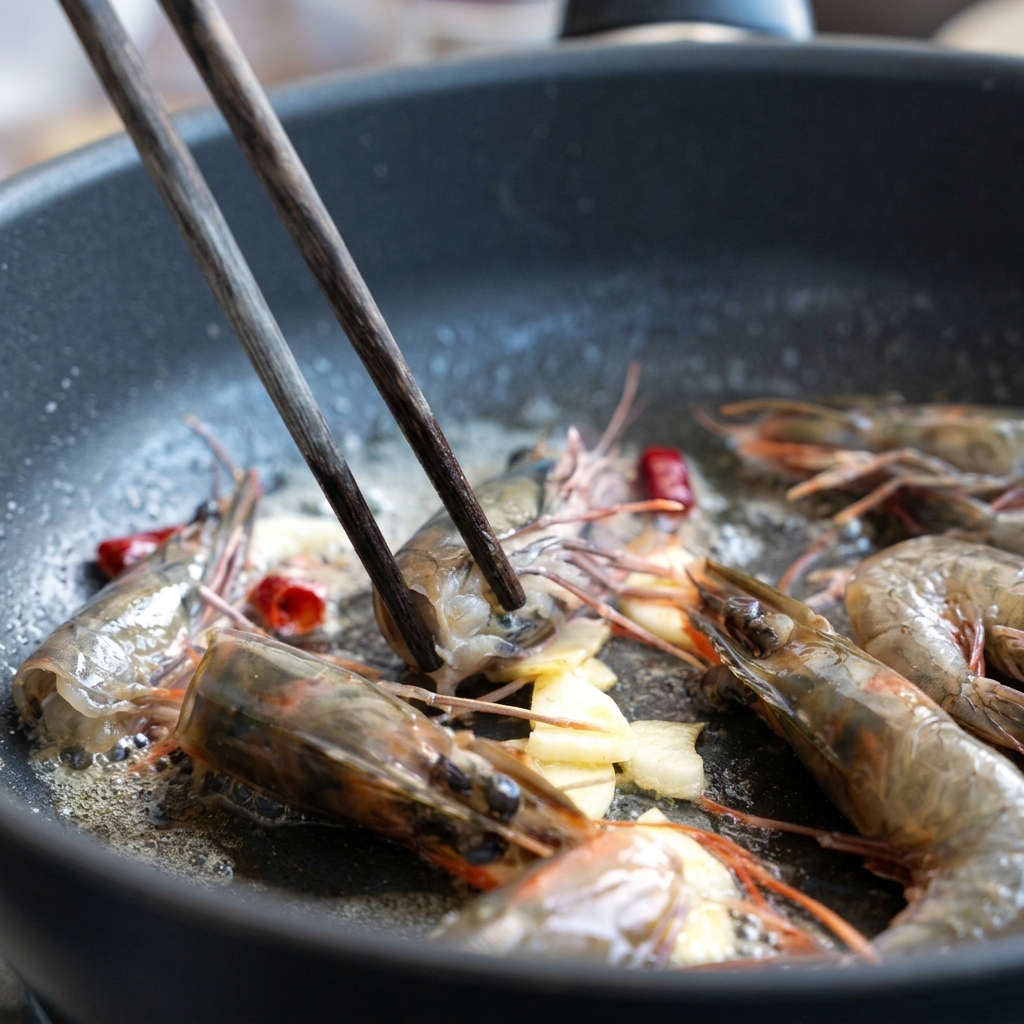
Place the reserved raw shrimp heads into the fragrant oil. Cook them gently, occasionally pressing down on the heads with your cooking utensil to release their juices into the fat. This step renders out the flavorful, brightly colored shrimp oil, which will become the umami base for the pasta sauce.
Tip: Frying shrimp heads creates a deep, complex flavor that elevates the dish far beyond using just the shrimp meat alone. - 10Sauté the onions
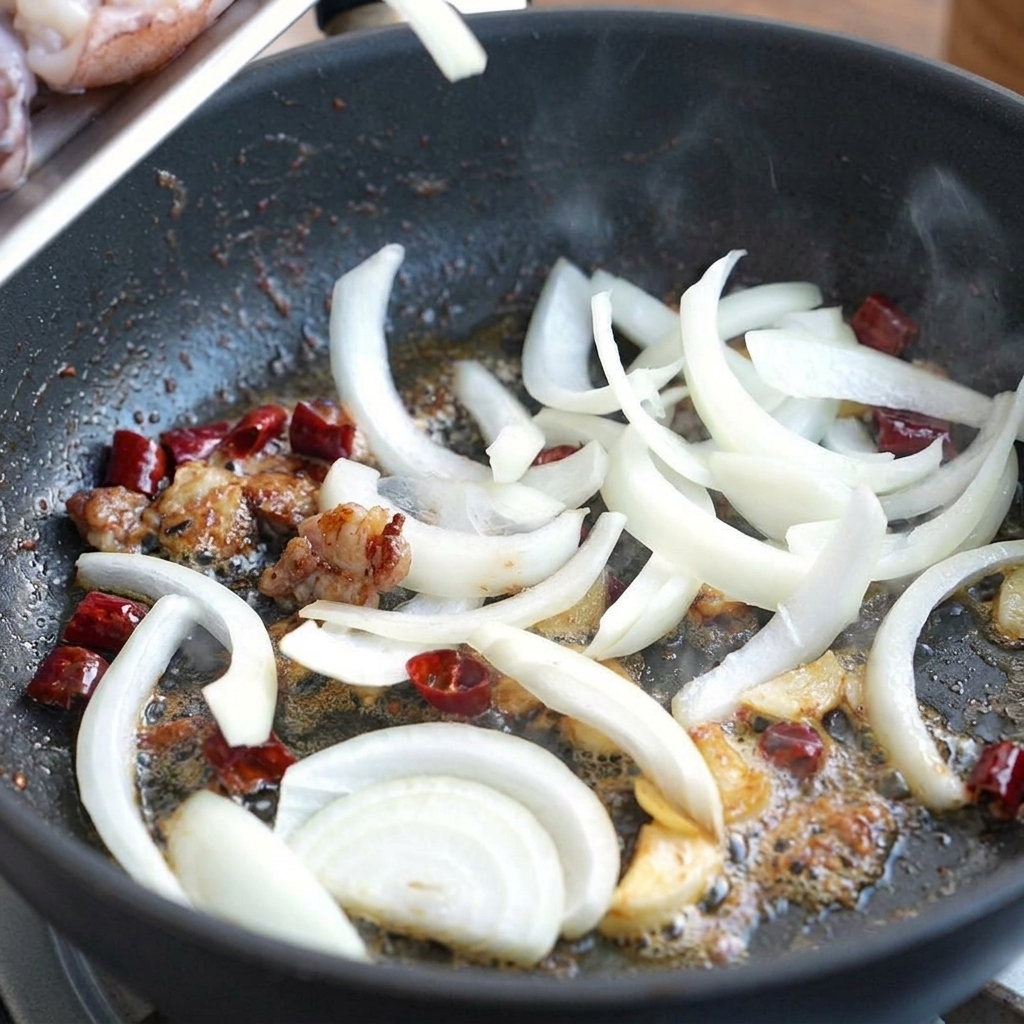
Remove the shrimp heads from the pan, leaving the flavored oil behind. Keep the heat on low and add the sliced white onions. Stir-fry until they begin to soften and become slightly translucent, absorbing the aromatic shrimp oil and chili flavors.
Tip: Leaving the heat low allows the onions to soften slowly and release their natural sweetness without burning. - 11Add the seafood
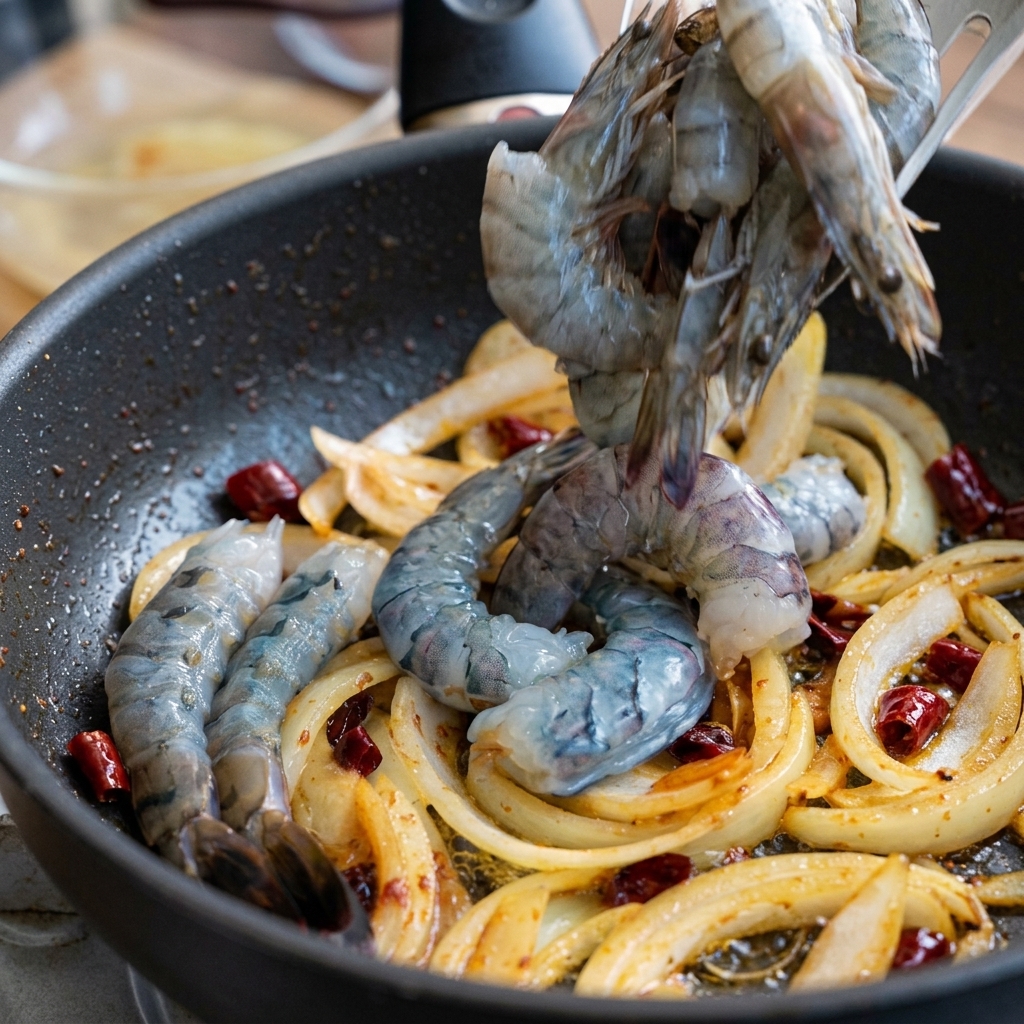
Turn the heat up to high and add the peeled raw shrimp and prepared squid rings into the pan with the sautéed onions. Adding cold ingredients will drop the temperature of the pan, so high heat is crucial here to prevent the seafood from stewing in its own juices.
Tip: Searing seafood quickly over high heat keeps it tender and locks in its natural moisture. - 12Stir-fry the seafood
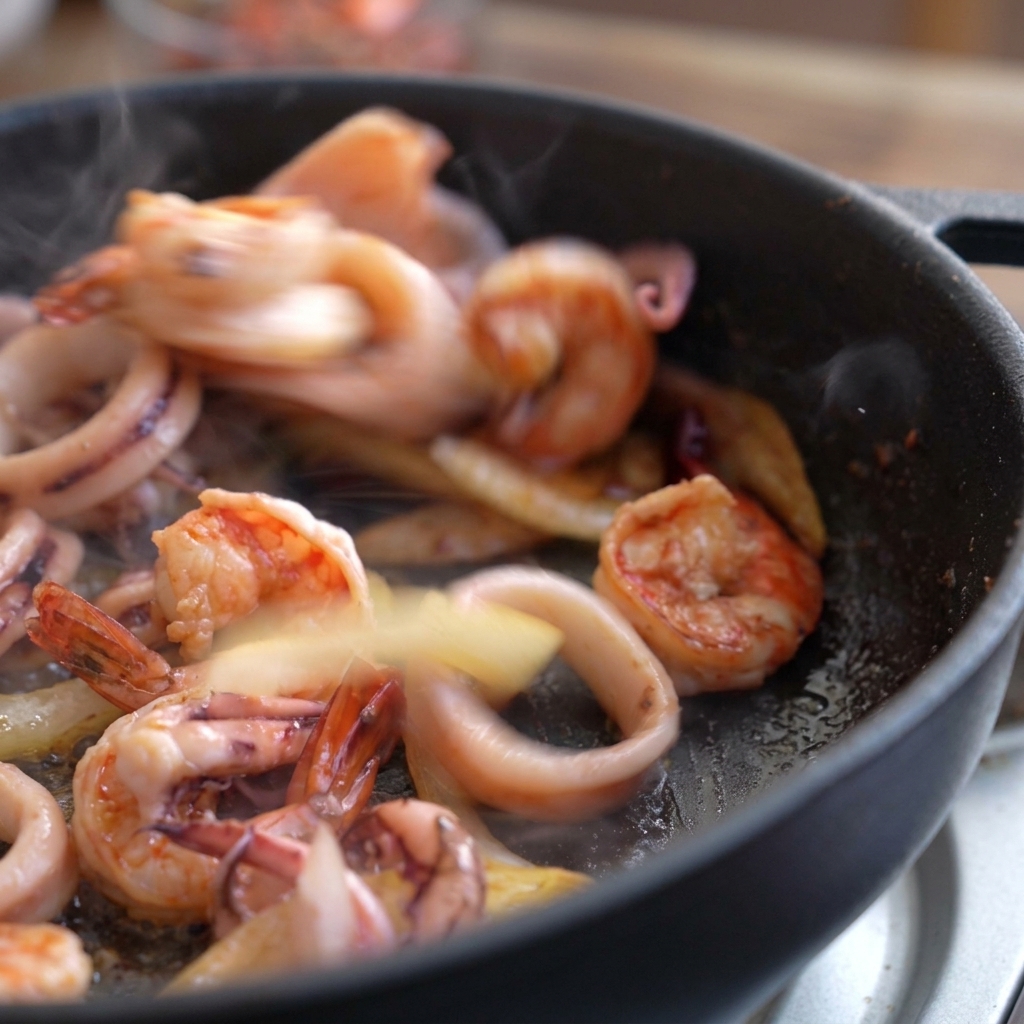
Quickly toss and stir-fry the shrimp and squid over the high heat. Cook just until the shrimp begins to curl and turn slightly pink on the surface, and the squid rings become opaque. Be careful not to fully cook them at this stage, as they will finish cooking in the sauce later.
Tip: Seafood cooks rapidly. Pull it slightly early if you are unsure, to avoid a tough, rubbery texture. - 13Add Korean chili paste
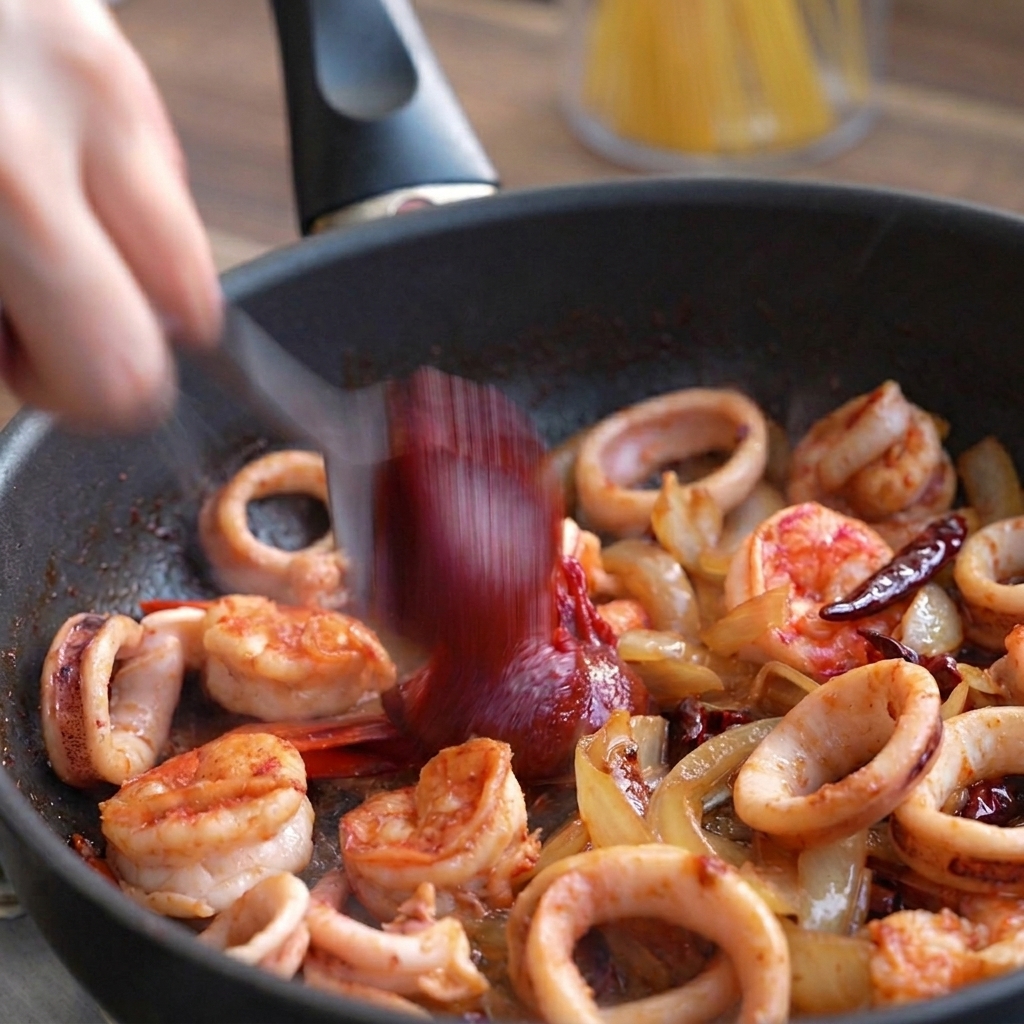
Once the shrimp lightly changes color, introduce the star ingredient: Korean chili paste. Drop about two spoonfuls directly onto the seafood. This paste gives the dish its signature vibrant color and spicy depth.
Tip: Sizzle the paste directly on the hot pan surface for a moment to bloom its full flavor. - 14Toss seafood in chili paste
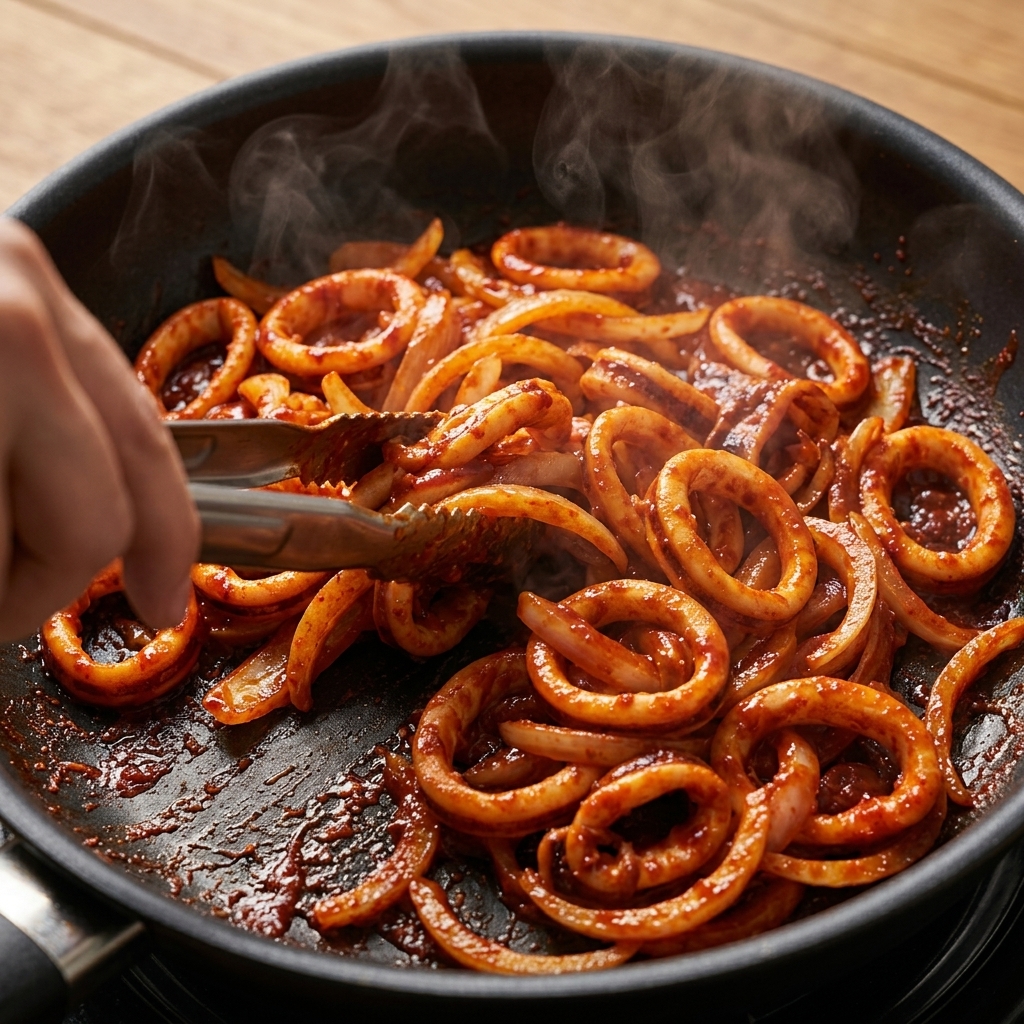
Toss the shrimp, squid, and onions vigorously to coat them evenly in the red chili paste. Stir-fry the mixture over elevated heat to unlock the aromatic, spicy flavor of the paste and allow it to cling tightly to the ingredients.
Tip: Continuous stirring is important here to prevent the chili paste from catching and burning on the bottom of the pan. - 15Pour in the creamy liquids
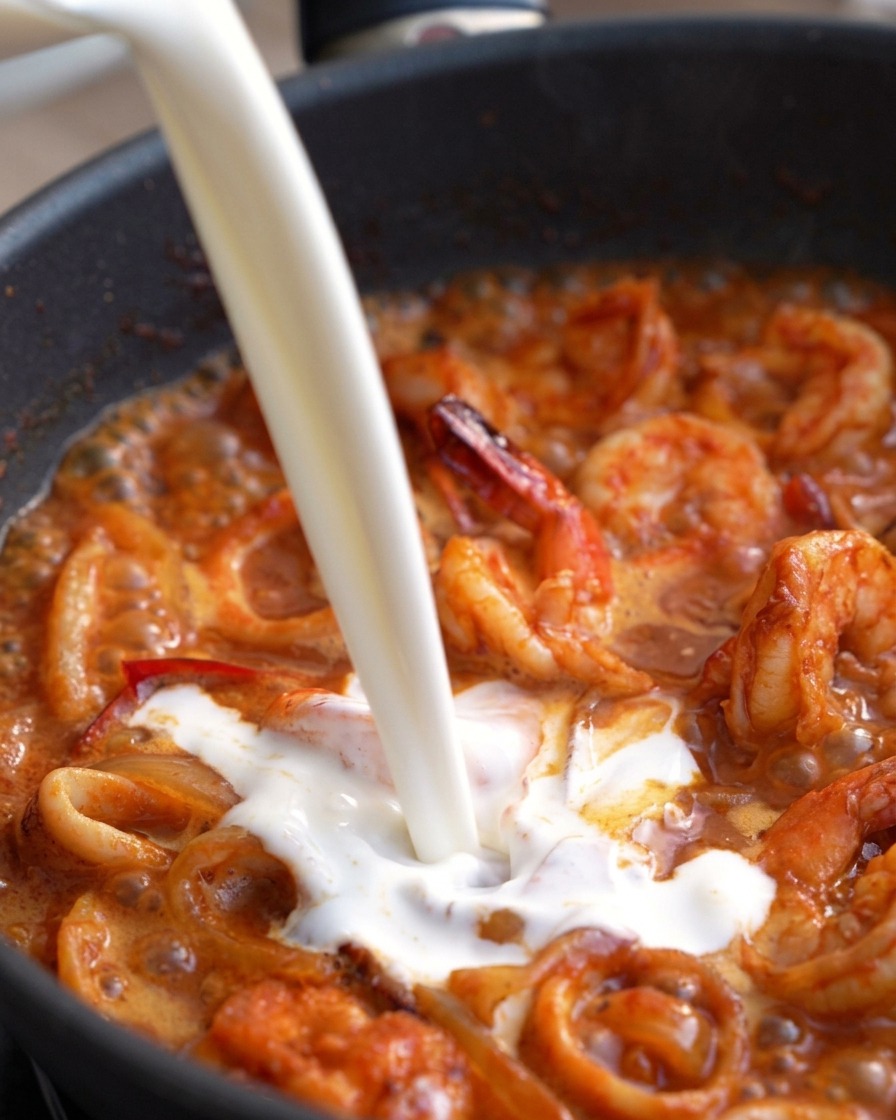
Pour a small amount of water into the pan, followed immediately by 150ml of a blended mixture of milk and cream. Combining milk with cream creates a luscious, velvety sauce that is noticeably lighter than using pure heavy cream.
Tip: Using room temperature milk and cream helps them incorporate smoothly into the hot pan without shocking the sauce. - 16Simmer sauce and toss pasta
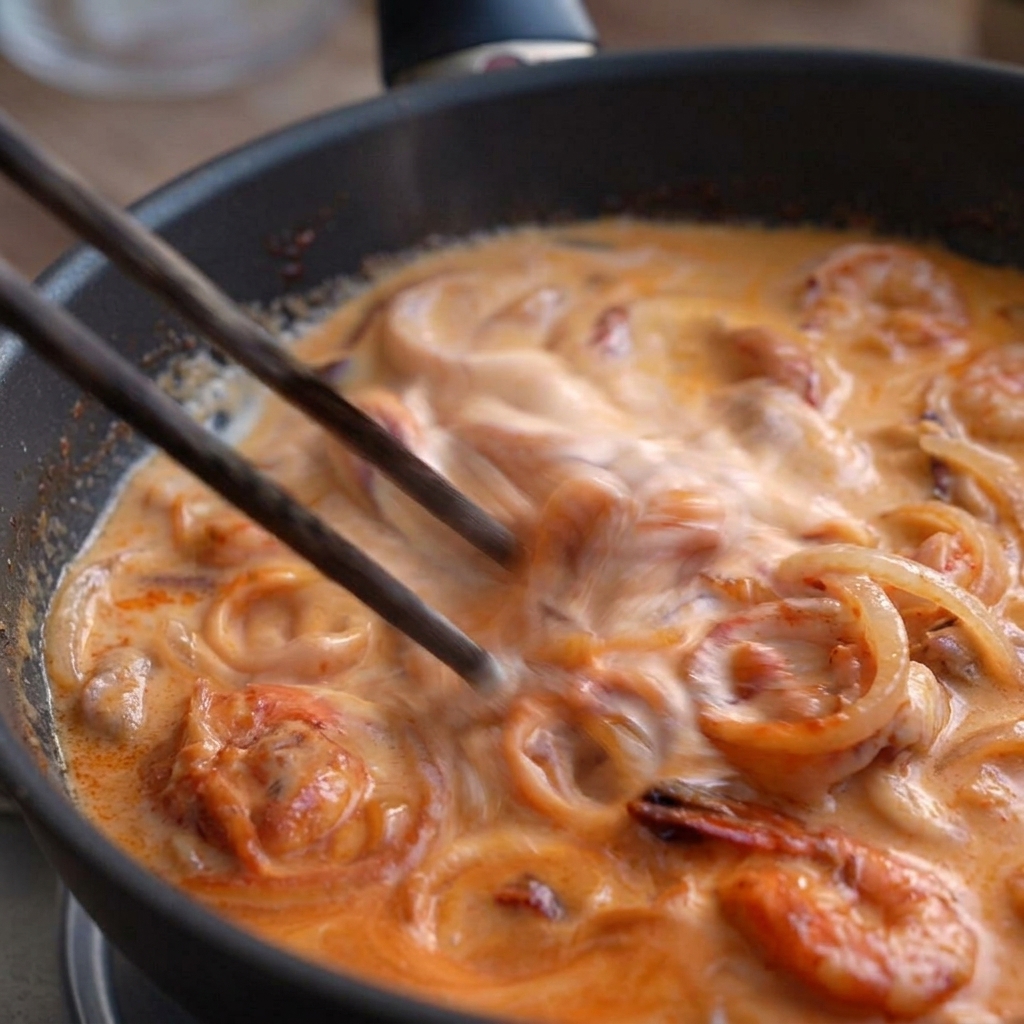
Gently stir the sauce as the milk and cream blend with the chili paste to form a vibrant reddish-orange color. Allow the mixture to simmer and reduce slightly until it reaches a rich coating consistency. Season with salt, black pepper, and a touch of sugar. Add the cooked pasta to the pan and toss everything together to combine.
Tip: Keep the simmer gentle to prevent the dairy from splitting, maintaining a smooth and cohesive sauce as you coat the noodles.