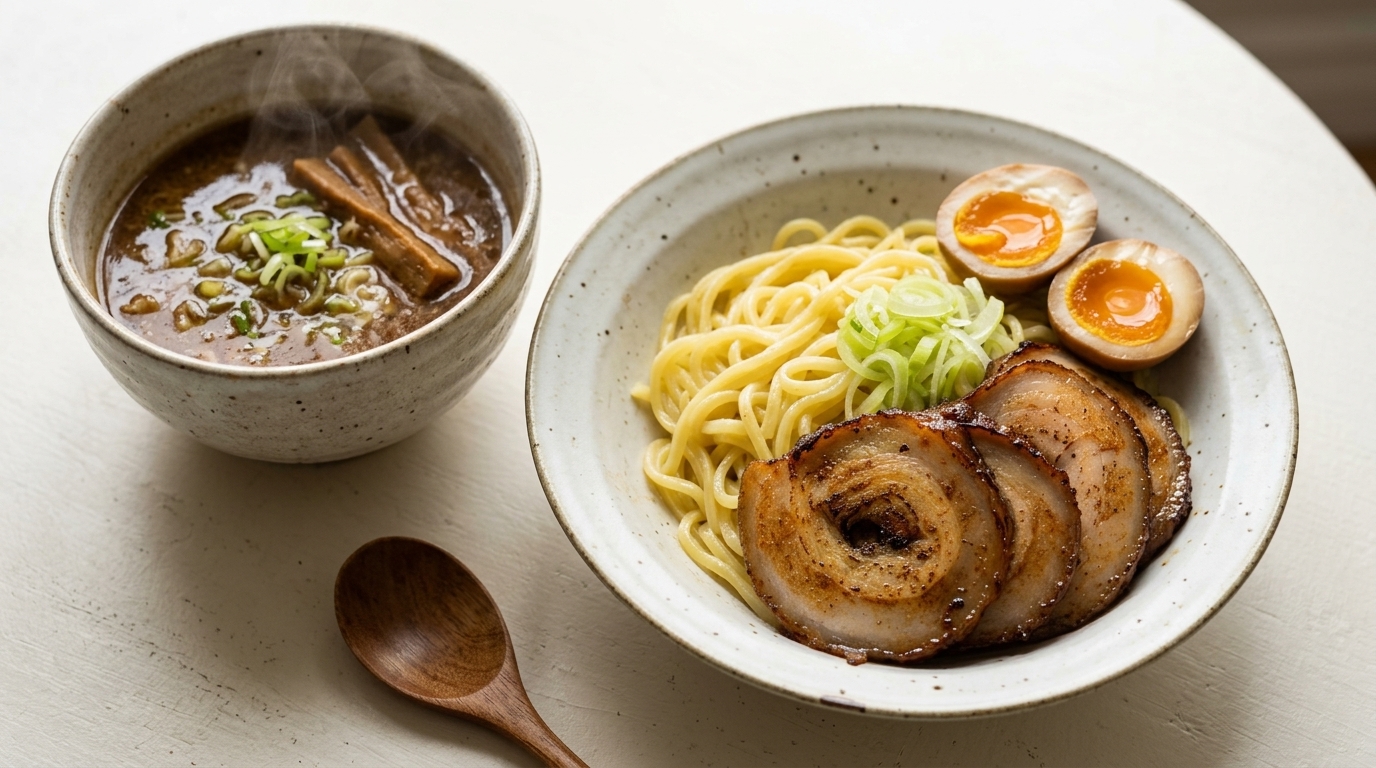
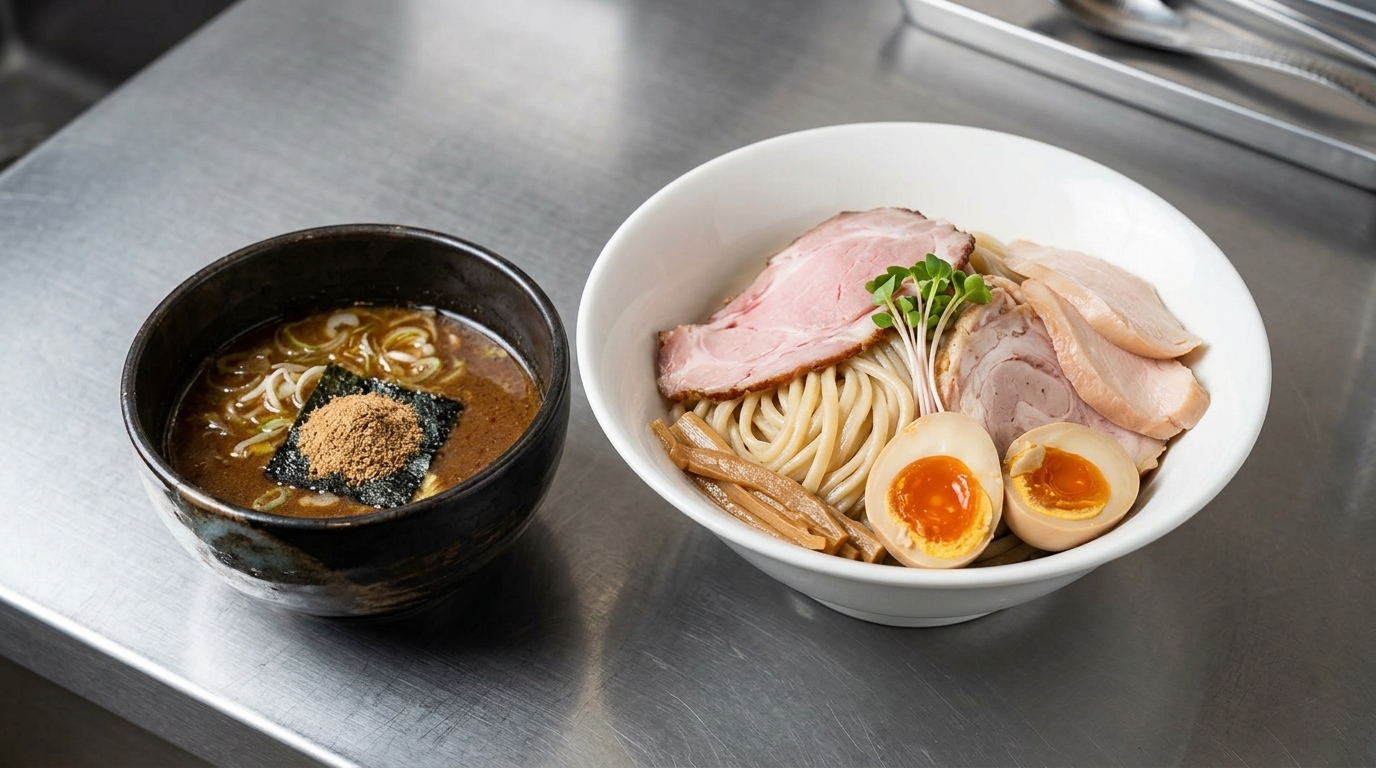
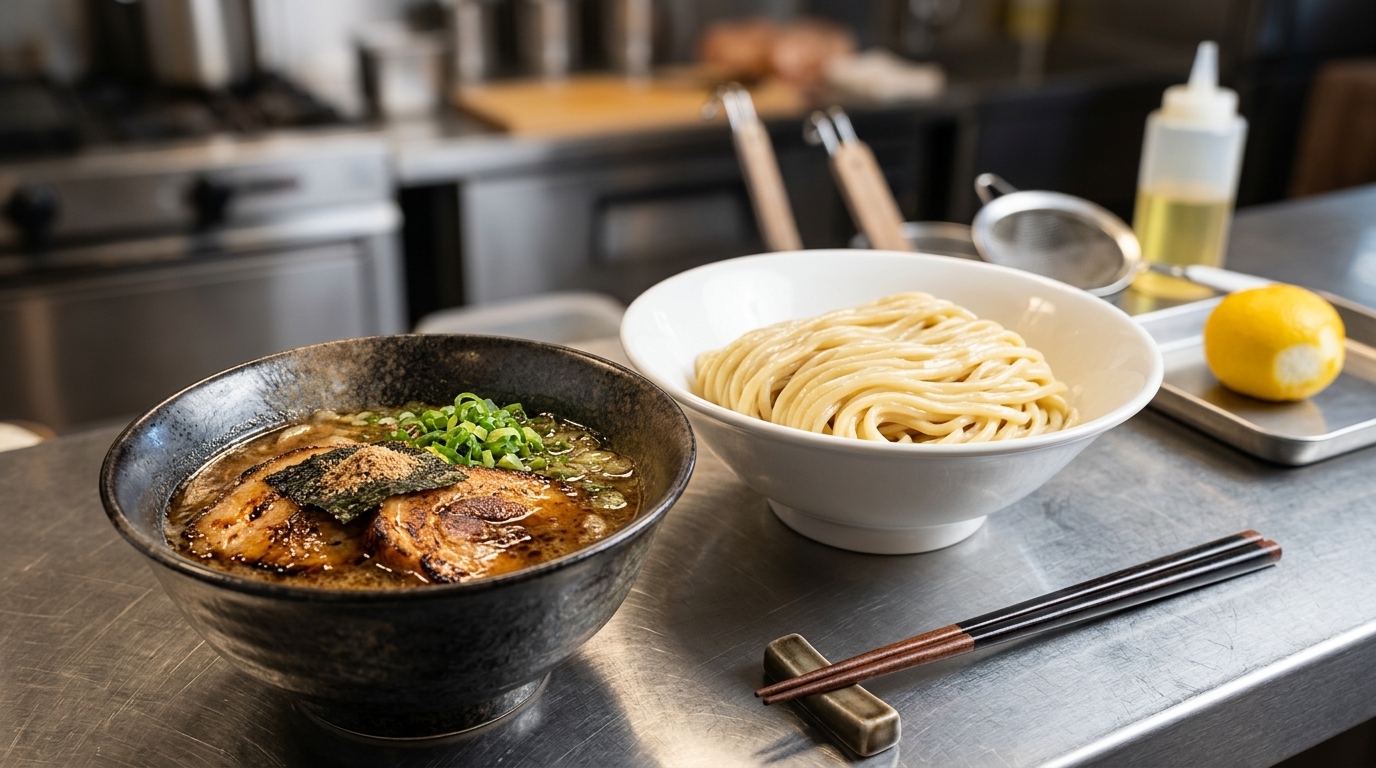
Authentic Tonkotsu Gyokai Tsukemen (Japanese Dipping Ramen)
Experience the ultimate umami bomb: a hyper-concentrated pork bone and seafood broth served alongside thick chewy noodles for the perfect dip and slurp experience.
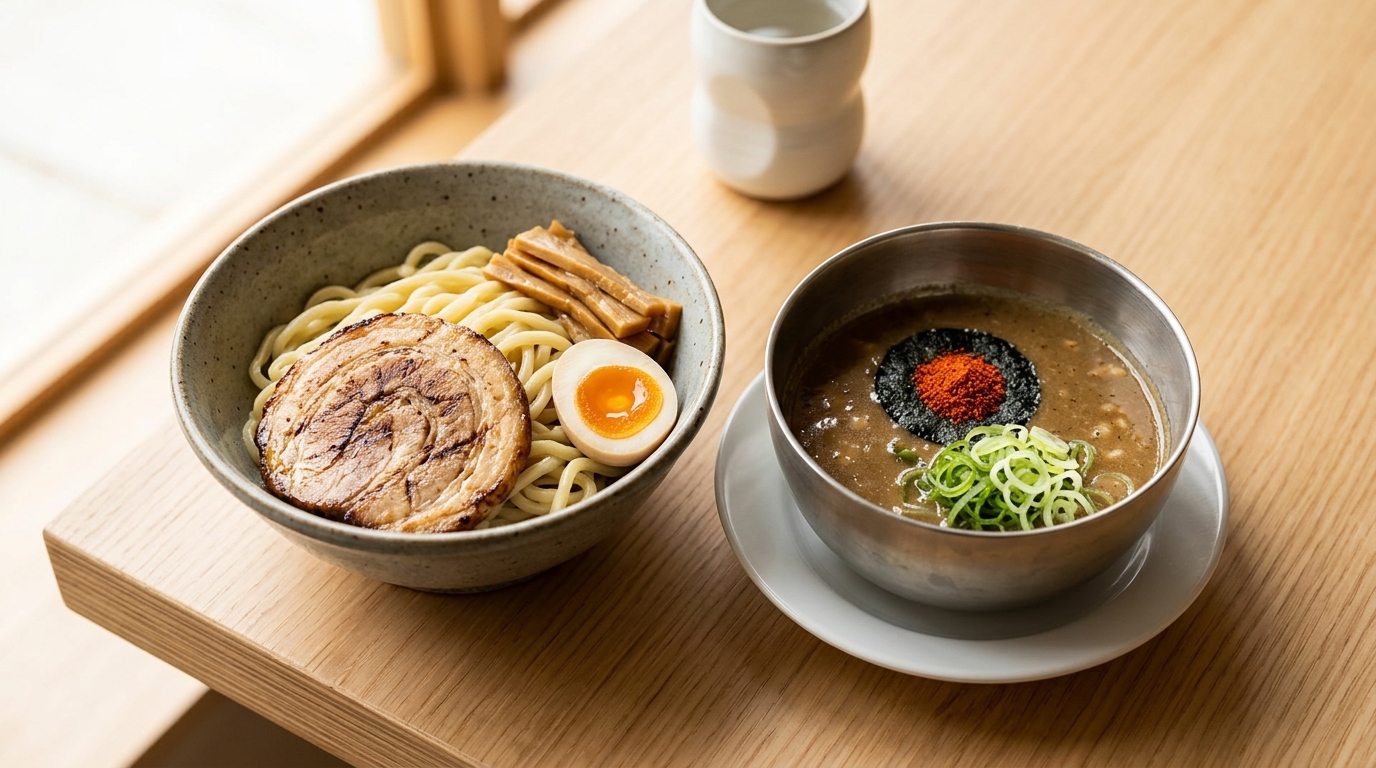
Tsukemen is a modern ramen masterpiece where the noodles and broth are served separately. This Gyokai version blends the creamy richness of 4-hour simmered Tonkotsu with the sharp salty punch of dried mackerel and sardines, a style perfected in the bustling noodle shops of Tokyo.
Ingredients
- 2 kg pork spine and leg bones
- 500 g pork back fat
- 100 ml chicken oil
- 100 g dried mackerel flakes (katsuobushi or sababushi)
- 50 g dried sardines (niboshi)
- 30 g dried shrimp
- 2 pieces kombu (dried kelp)
- 150 ml seafood soy sauce
- 50 ml fish sauce
- 2 large onions
- 1 bulb garlic
- 50 g ginger
- 1 cabbage core
- 400 g thick wavy ramen noodles
- optional chashu pork slices
- optional marinated soft-boiled egg
- to taste chopped green onions
- to taste chili powder
Instructions
- 1Clean the pork bones
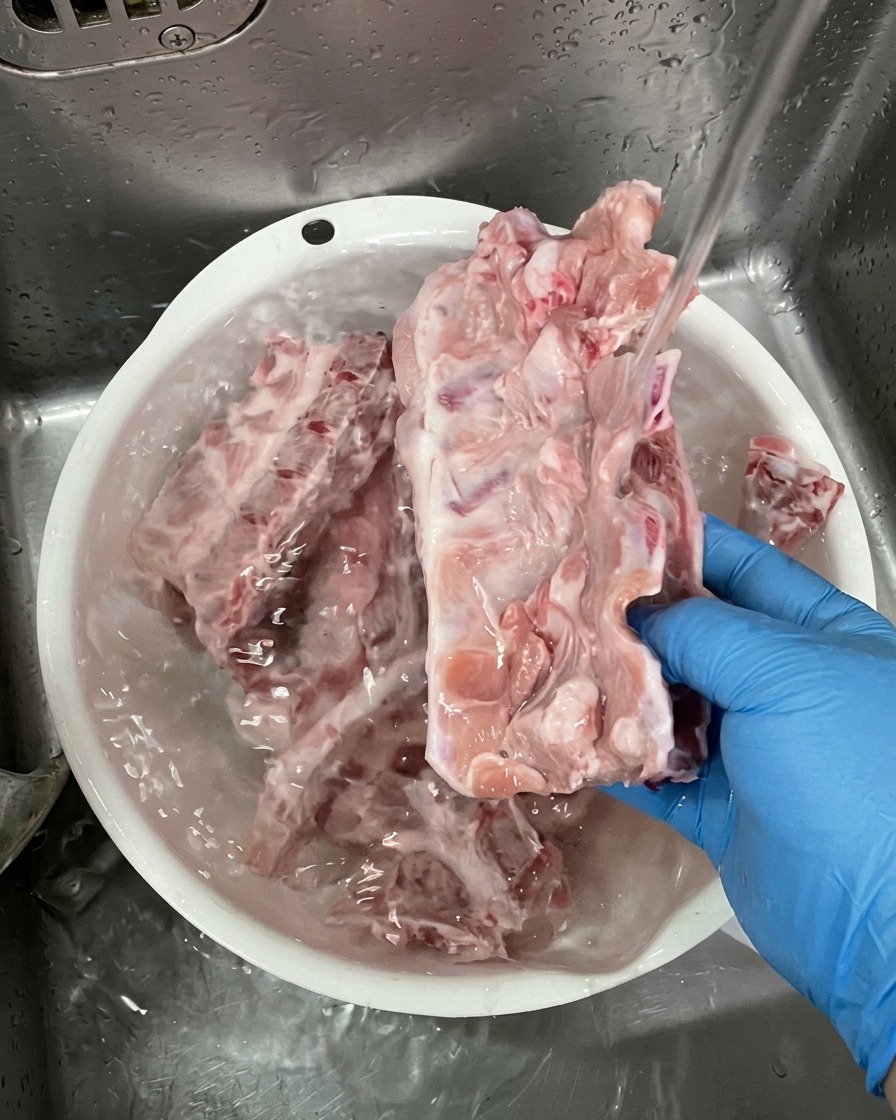
Begin by thoroughly washing raw pork spine and leg bones under cold running water in a large basin. Scrubbing away any loose marrow or blood ensures a clean, professional-grade base for the ramen broth without any unwanted odors.
Tip: Using cold water is essential here to keep the fats solid while you remove surface impurities. - 2Prepare the soup base
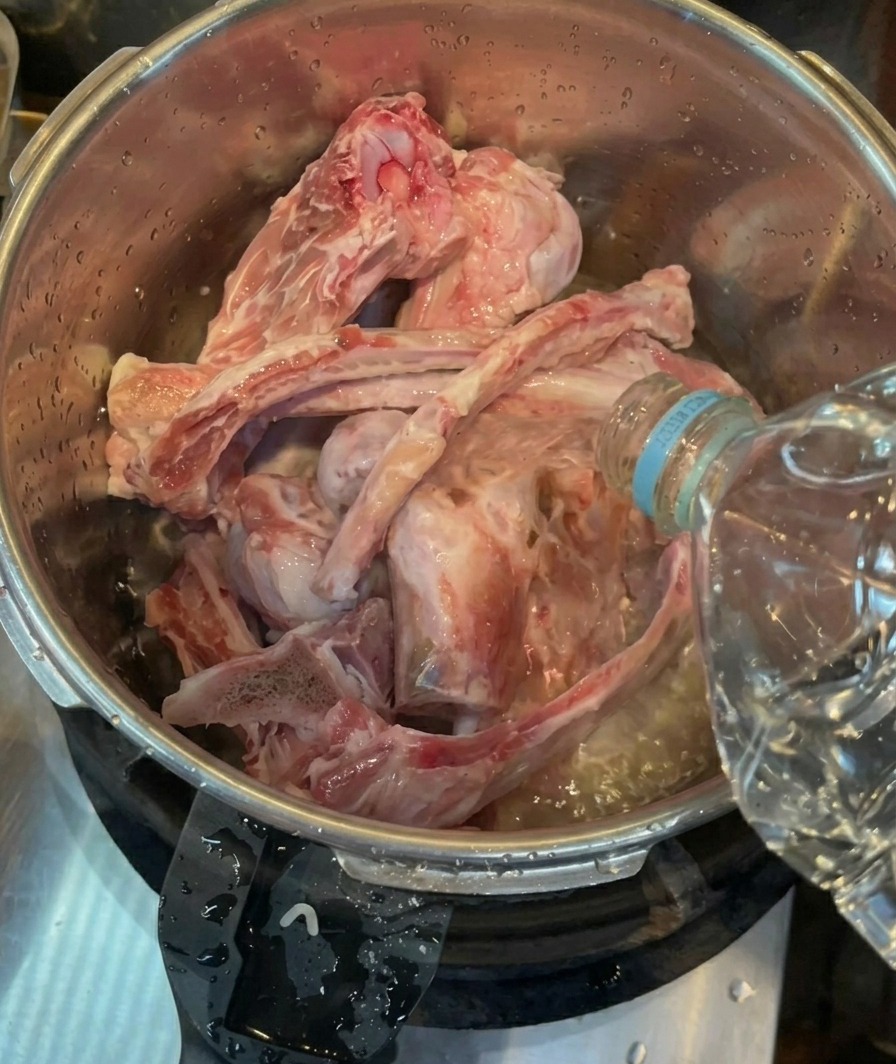
Transfer the cleaned pork bones into a large pressure cooker and cover them completely with bottled water. Using purified water is a professional touch that ensures the mineral content doesnt interfere with the pure, savory essence of the pork.
Tip: Starting with the right ratio of water to bone is key for achieving that signature thick Tonkotsu consistency. - 3Skim the impurities
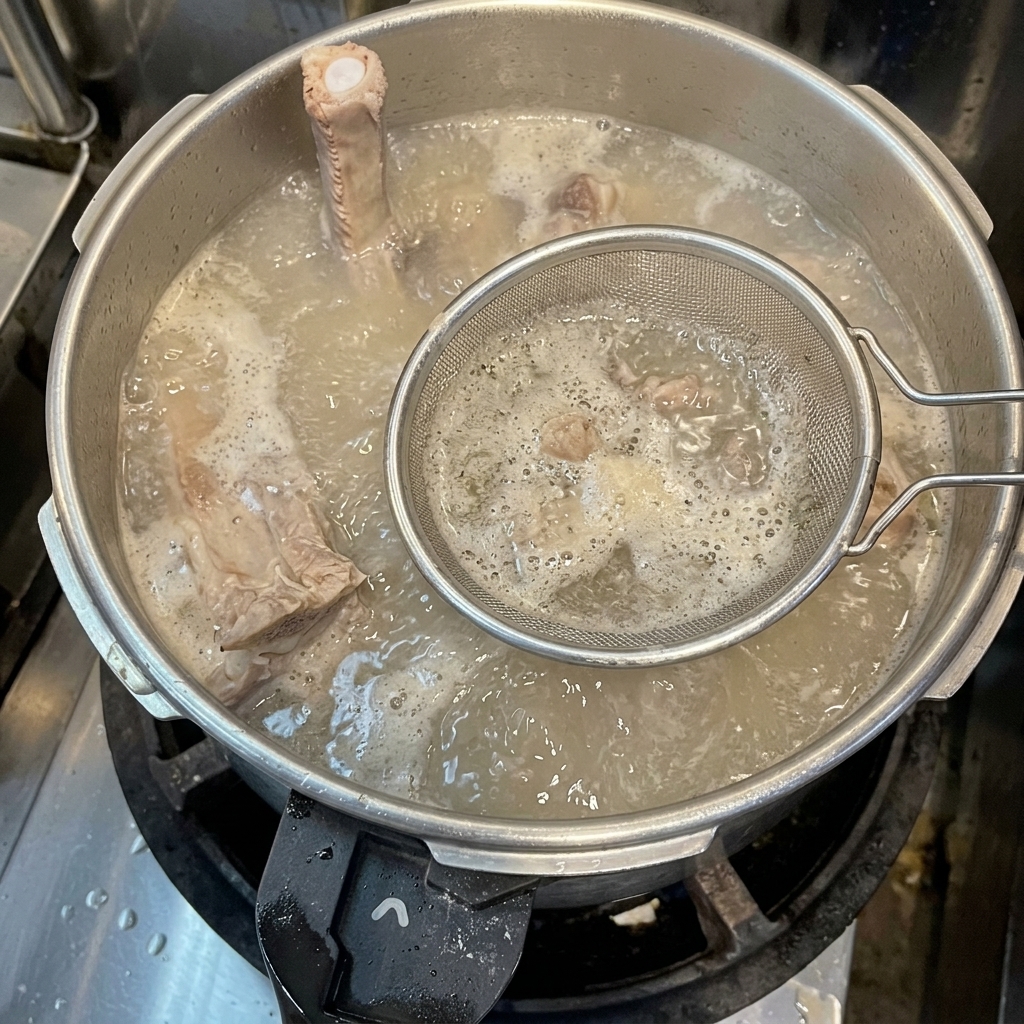
Bring the water to a vigorous boil. As the proteins break down, grey foam and scum will rise to the surface. Use a fine mesh strainer to carefully skim this off. This step is vital for producing a refined broth that is rich but not dirty in flavor.
Tip: Keep skimming until the surface bubbles remain white and clear of grey particles. - 4Add fats for richness
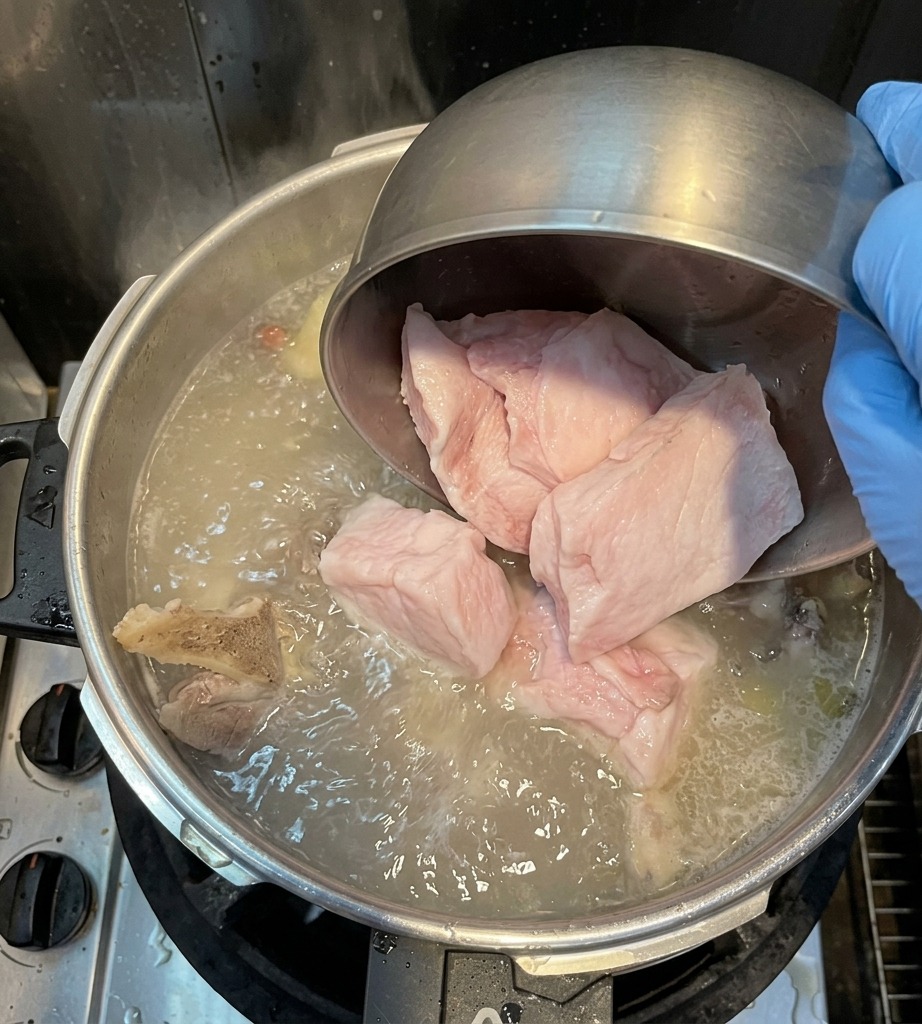
To achieve the decadent, creamy texture of a true Tonkotsu broth, add large pieces of raw pork back fat and yellow chicken oil into the boiling pot. These fats will emulsify during the long cooking process, creating a deeply satisfying mouthfeel.
Tip: High-quality chicken oil adds a subtle golden hue and a layer of savory aroma that pork fat alone cannot provide. - 5Infuse aromatic vegetables
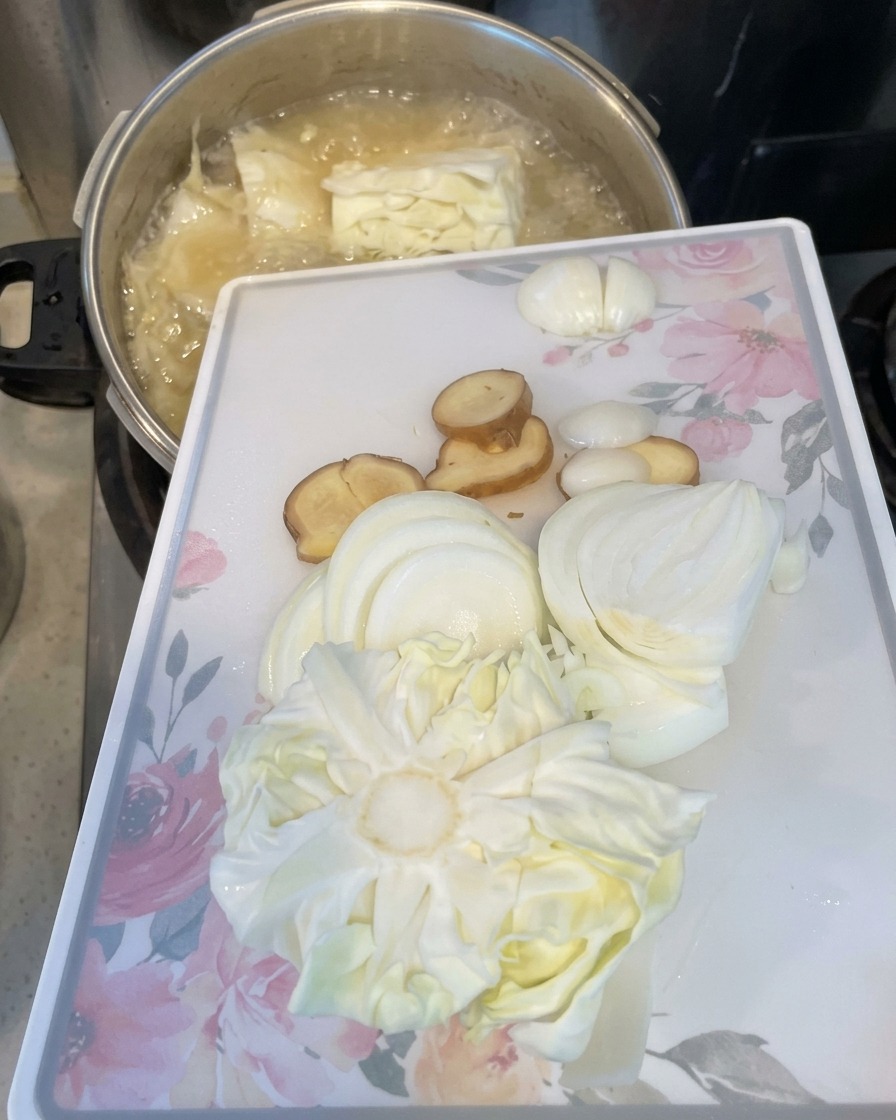
Introduce sliced onions, whole garlic cloves, ginger slices, and cabbage cores into the bubbling soup base. These aromatics provide a natural sweetness and aromatic complexity that balances the heavy richness of the meat and marrow.
Tip: Using cabbage cores is a pro-secret; they provide an intense vegetal sweetness that softens the pungency of the garlic and ginger. - 6Build the Gyokai umami
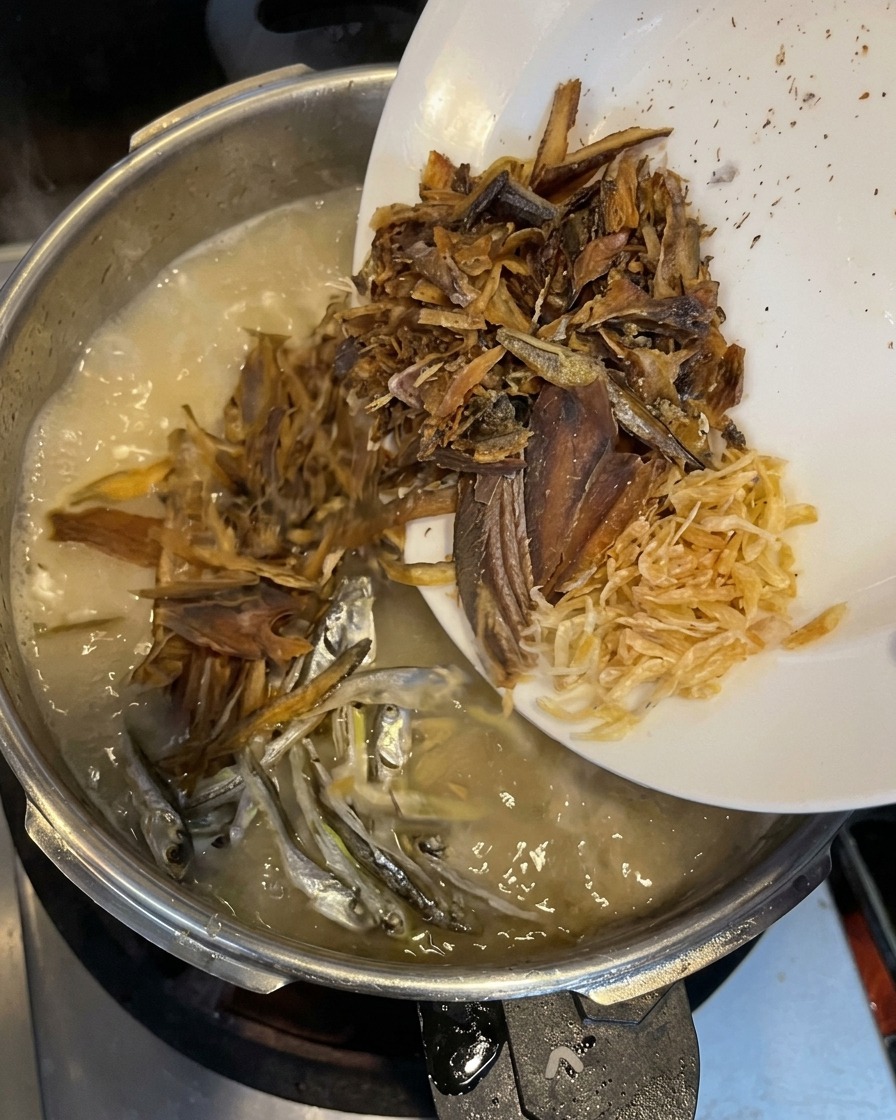
The Gyokai element of this ramen comes from the sea. Add dried mackerel flakes, whole dried sardines, and small dried shrimp to the pot. This combination creates an umami bomb that characterizes the intense, complex flavor of authentic Tsukemen broth.
Tip: Do not stir too vigorously after adding the dried fish to prevent the broth from becoming overly cloudy or gritty. - 7Simmer with aromatics
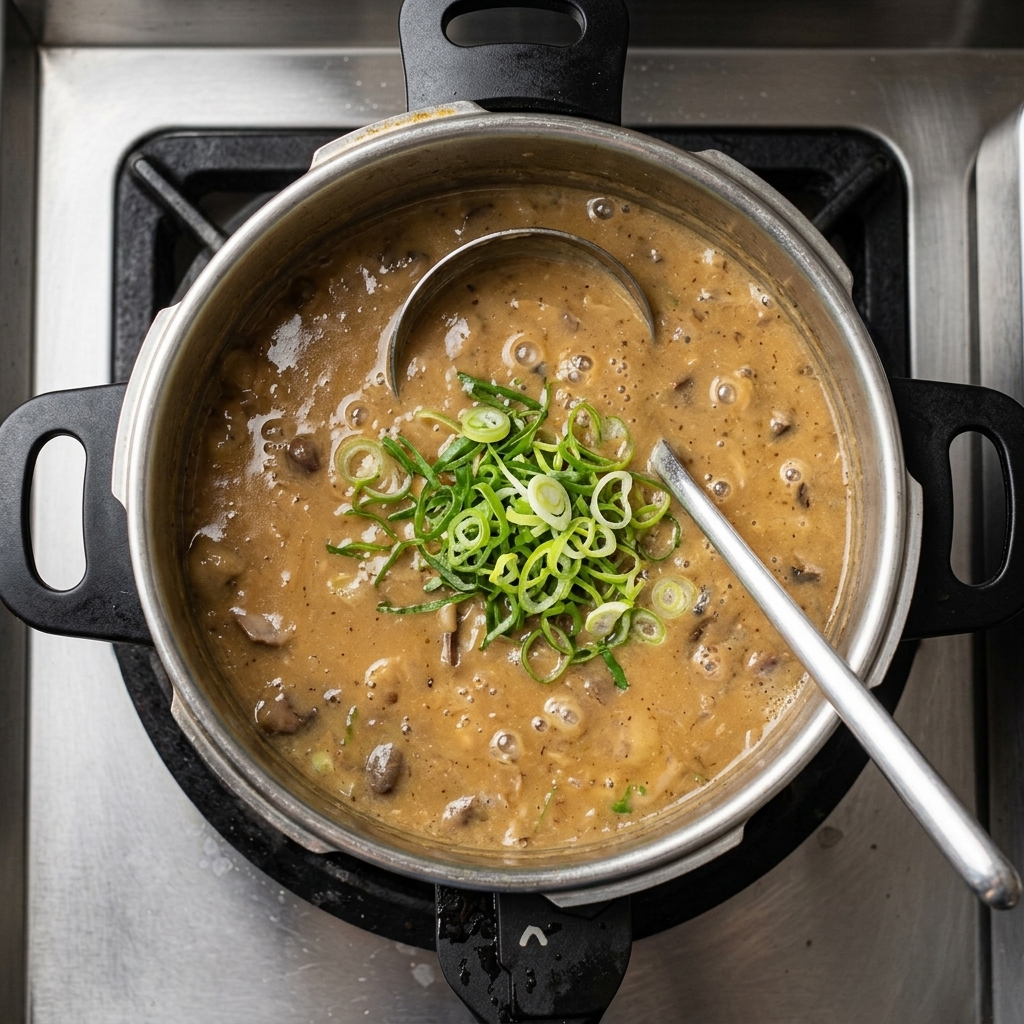
Add a generous amount of freshly chopped green onions to the simmering pot. This late addition infuses the thick Tonkotsu broth with a bright, onion fragrance that cuts through the richness of the pork fats without losing the vegetables subtle sweetness.
Tip: Dont overcook the onions; adding them at the final simmering stage ensures they provide flavor without turning the broth bitter. - 8Strain the broth
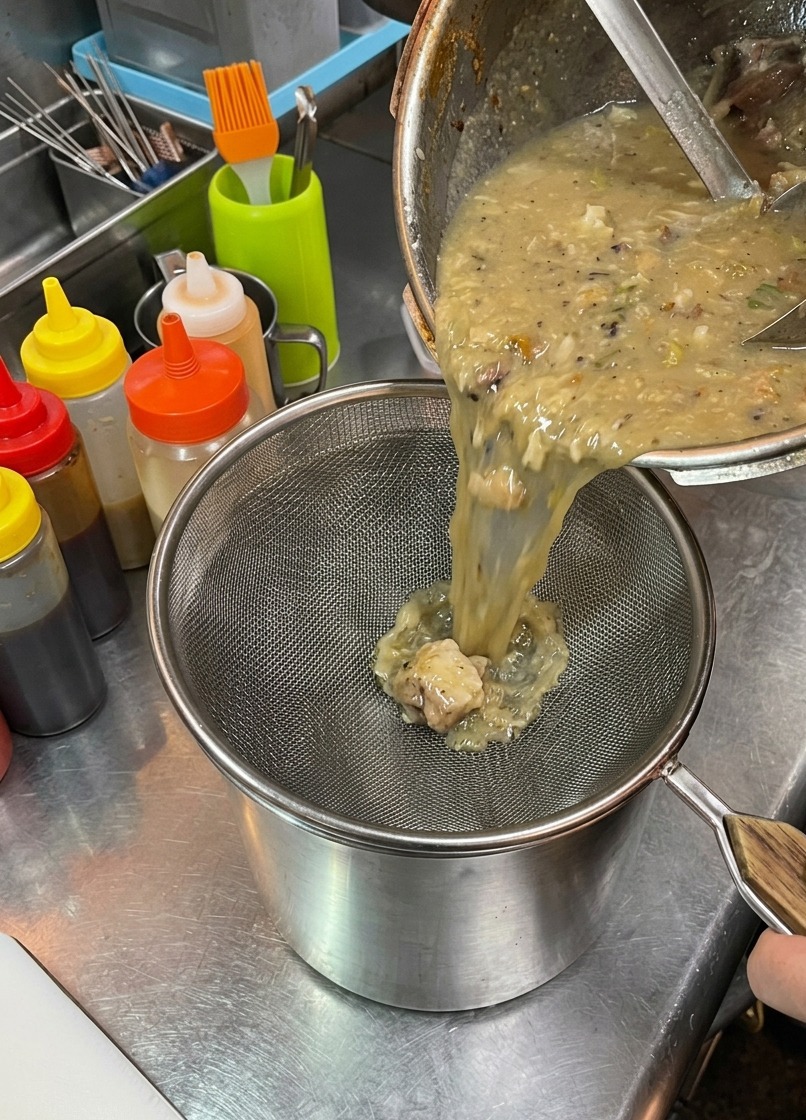
Carefully pour the chunky soup through a fine-mesh metal strainer into a clean stainless steel container. This process removes all the spent aromatics, bone fragments, and softened meat solids, leaving behind only the concentrated liquid essence.
Tip: Press down gently on the solids in the strainer with a ladle to extract every last drop of flavorful collagen and oil. - 9Check broth consistency
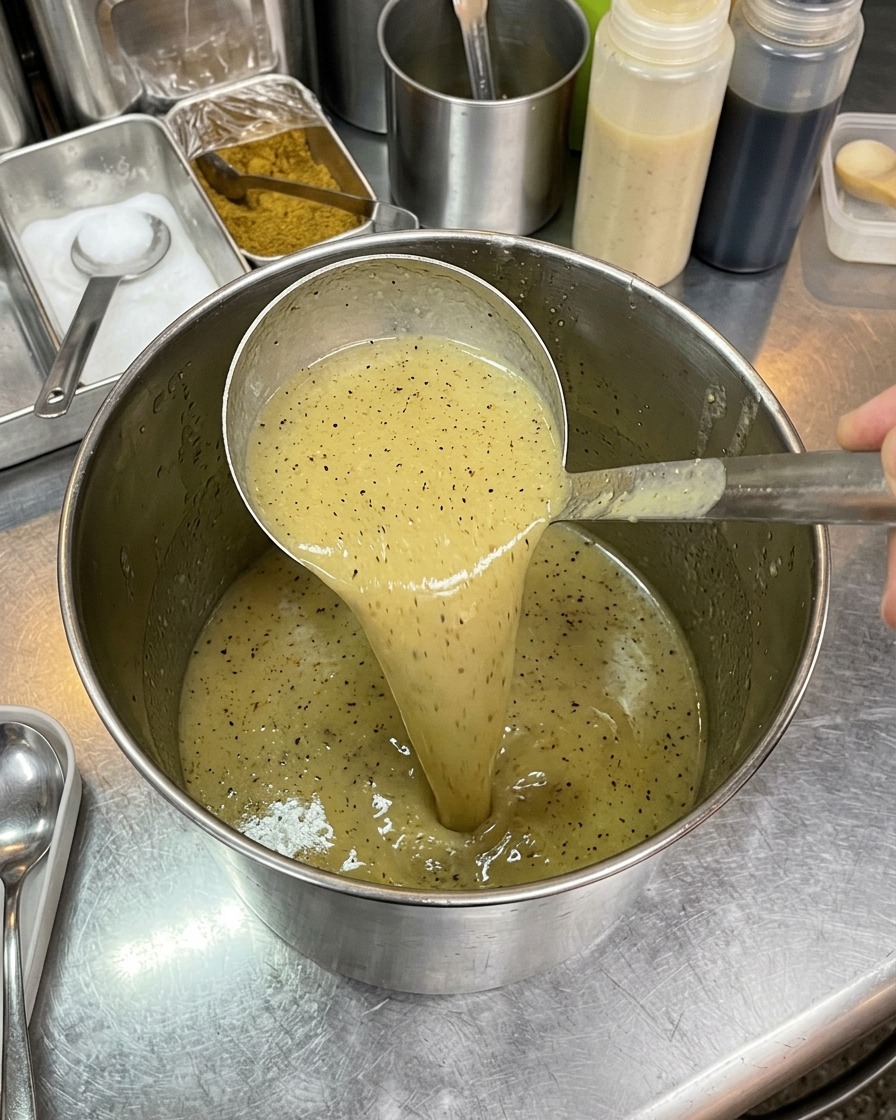
Observe the final texture of the strained broth. It should be highly emulsified, thick, and a light brown color with visible specks of seasoning. This velvety consistency is the hallmark of a high-quality Tonkotsu Gyokai base that will cling perfectly to the dipping noodles.
Tip: If the broth is too thin, simmer it down further; if its too thick, you can adjust with a small amount of dashi stock. - 10Prepare the seafood tare
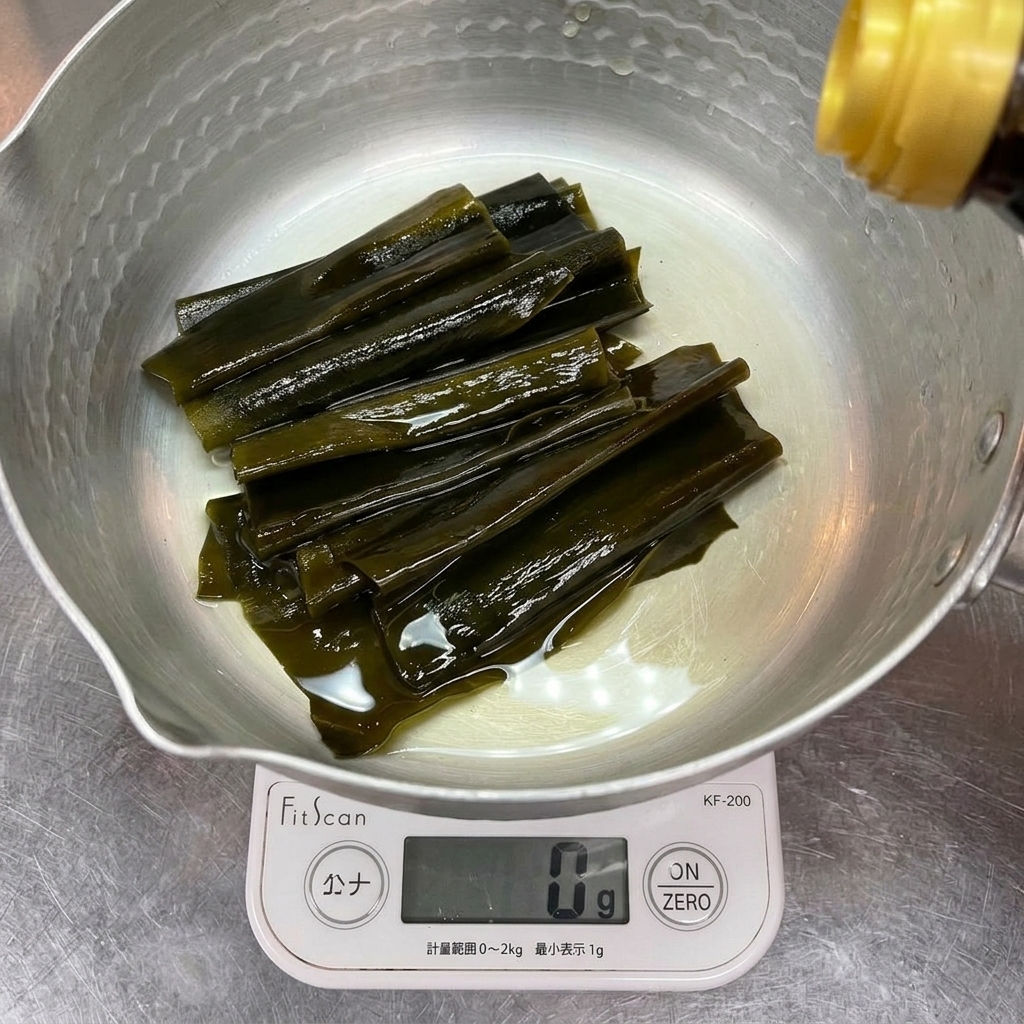
In a small pot, combine rehydrated kombu (kelp) strips with high-quality seafood soy sauce and fish sauce. This mixture forms the tare or seasoning base, providing the intense umami and salty depth that characterizes the Gyokai (seafood) part of the broth.
Tip: Using a digital scale ensures the ratio of soy to kelp is perfectly balanced for a consistent shop-quality taste. - 11Prepare the dipping bowl
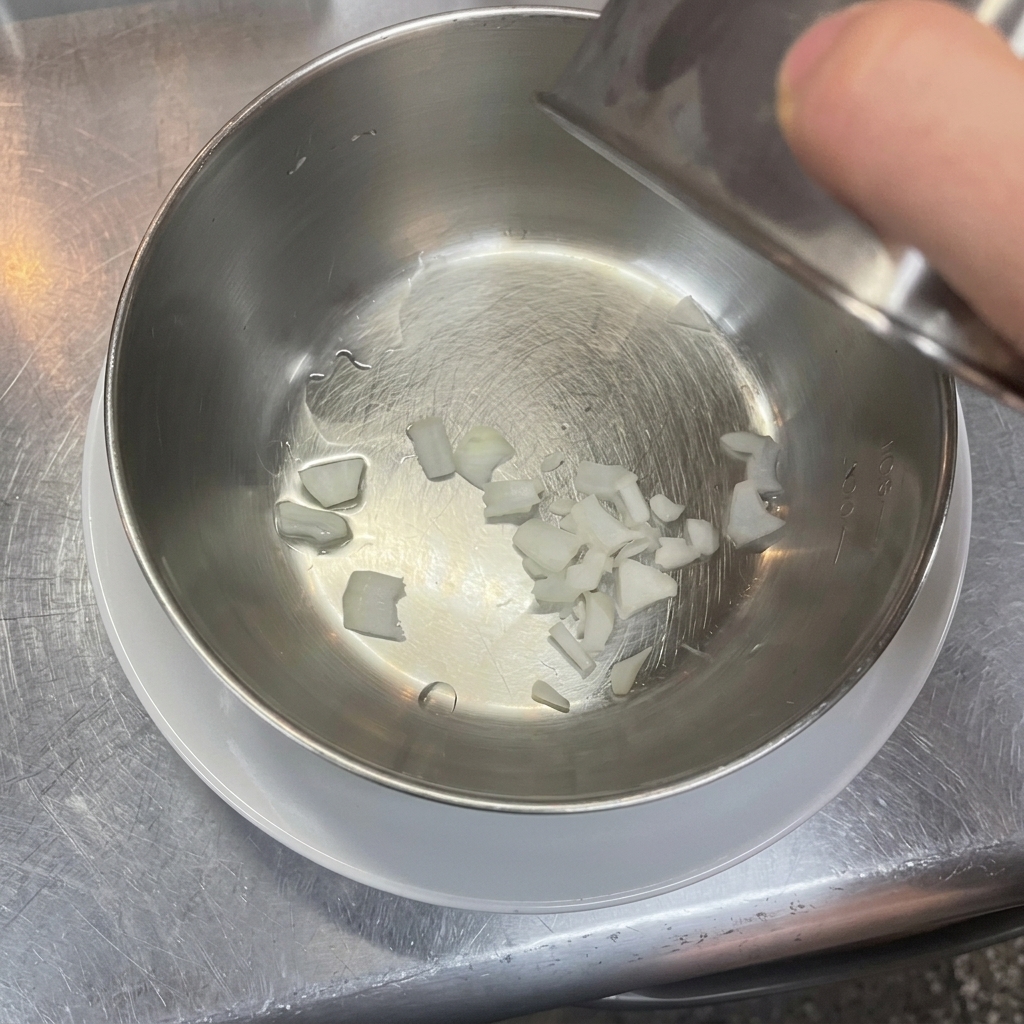
Place finely diced white onions and a spoonful of fish powder into the serving bowl. The raw onions provide a sharp, crisp texture that cuts through the intense richness of the broth added later.
Tip: Dicing the onions finely helps them distribute evenly throughout the thick dipping sauce. - 12Finish and emulsify
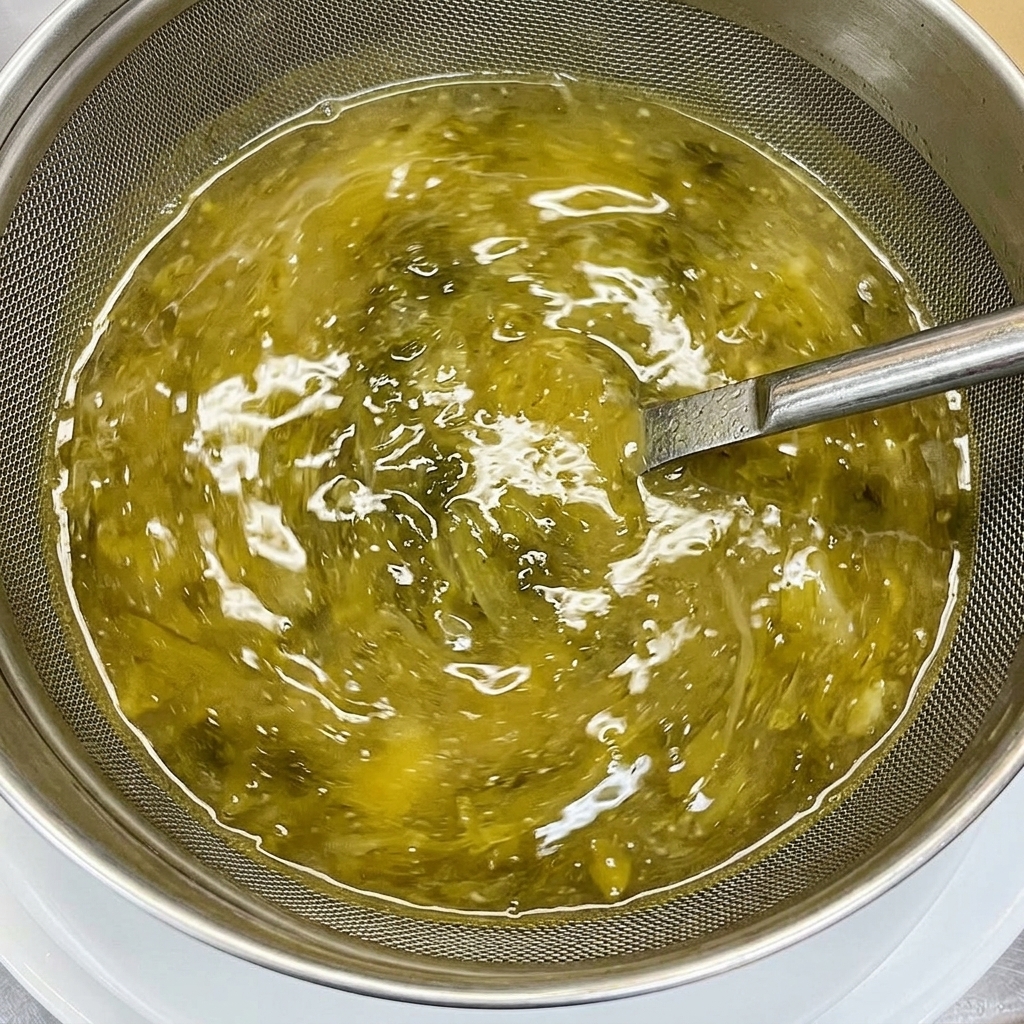
Pour the hot, concentrated Tonkotsu broth over the prepared tare and aromatics. Whisk vigorously to emulsify the fats with the seafood seasoning, creating a thick, unified sauce that perfectly coats every strand of noodle.
Tip: The broth must be piping hot when poured to help the fish powder bloom and release its full aroma.