Rich Gyokai Tsukemen (Seafood
Pork Dipping Ramen)
Master the ultimate dipping ramen with a velvet thick tonkotsu broth, concentrated seafood umami, and chilled hand pressed noodles for a perfect al dente bite.
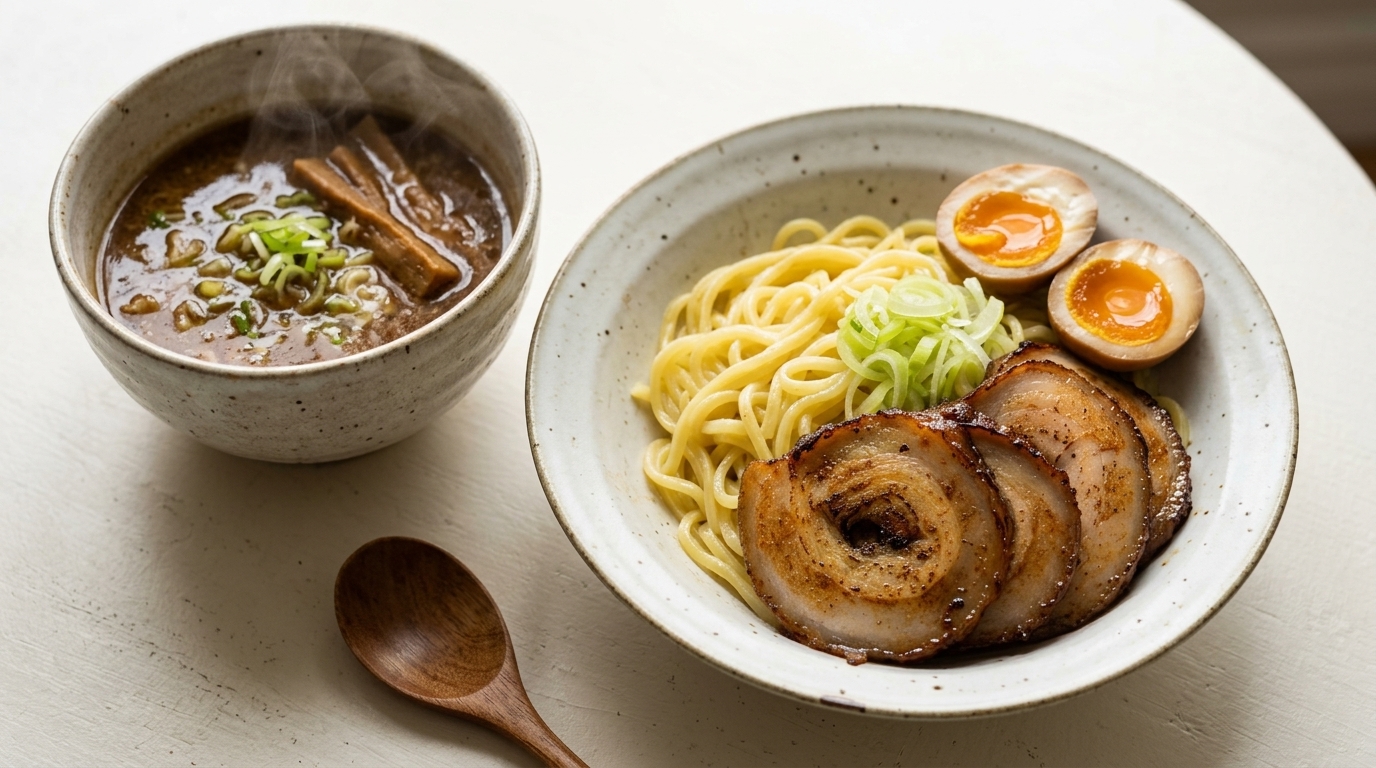
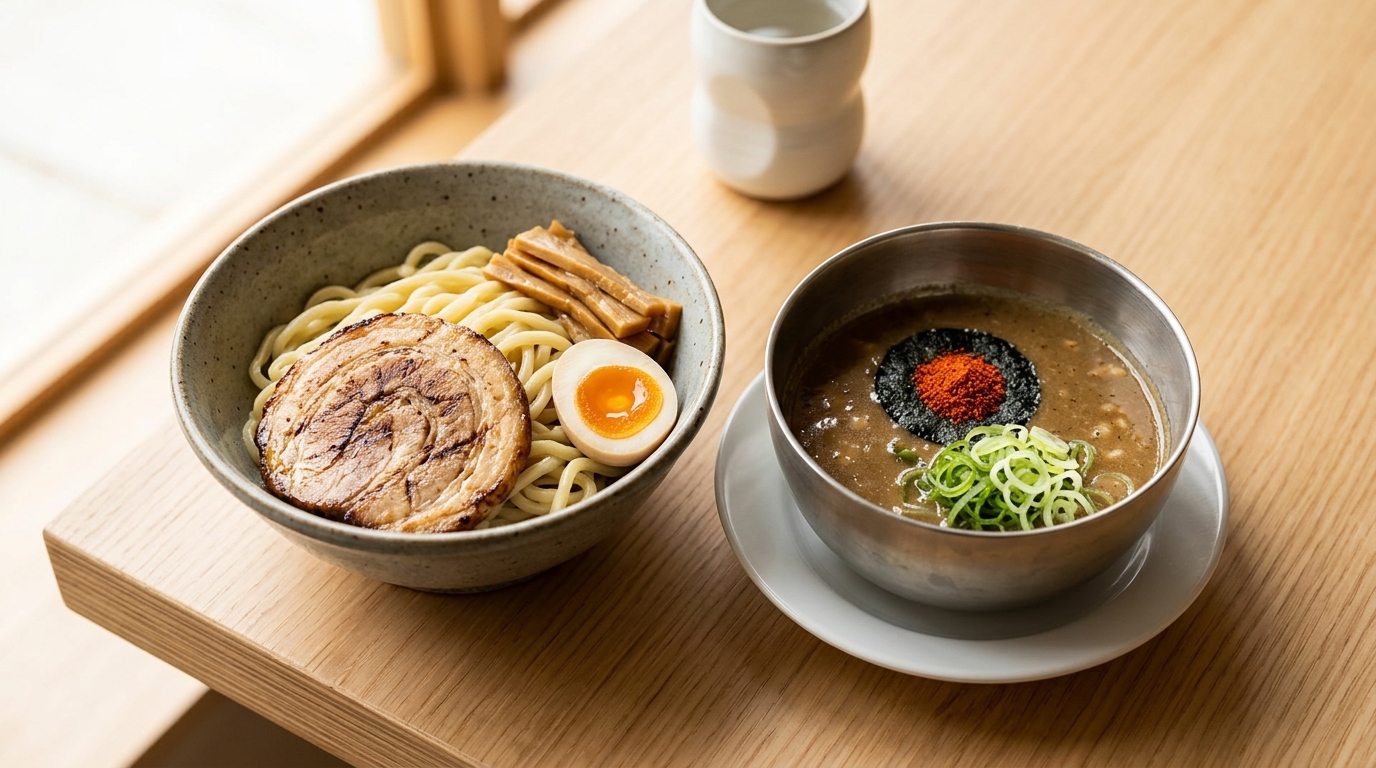
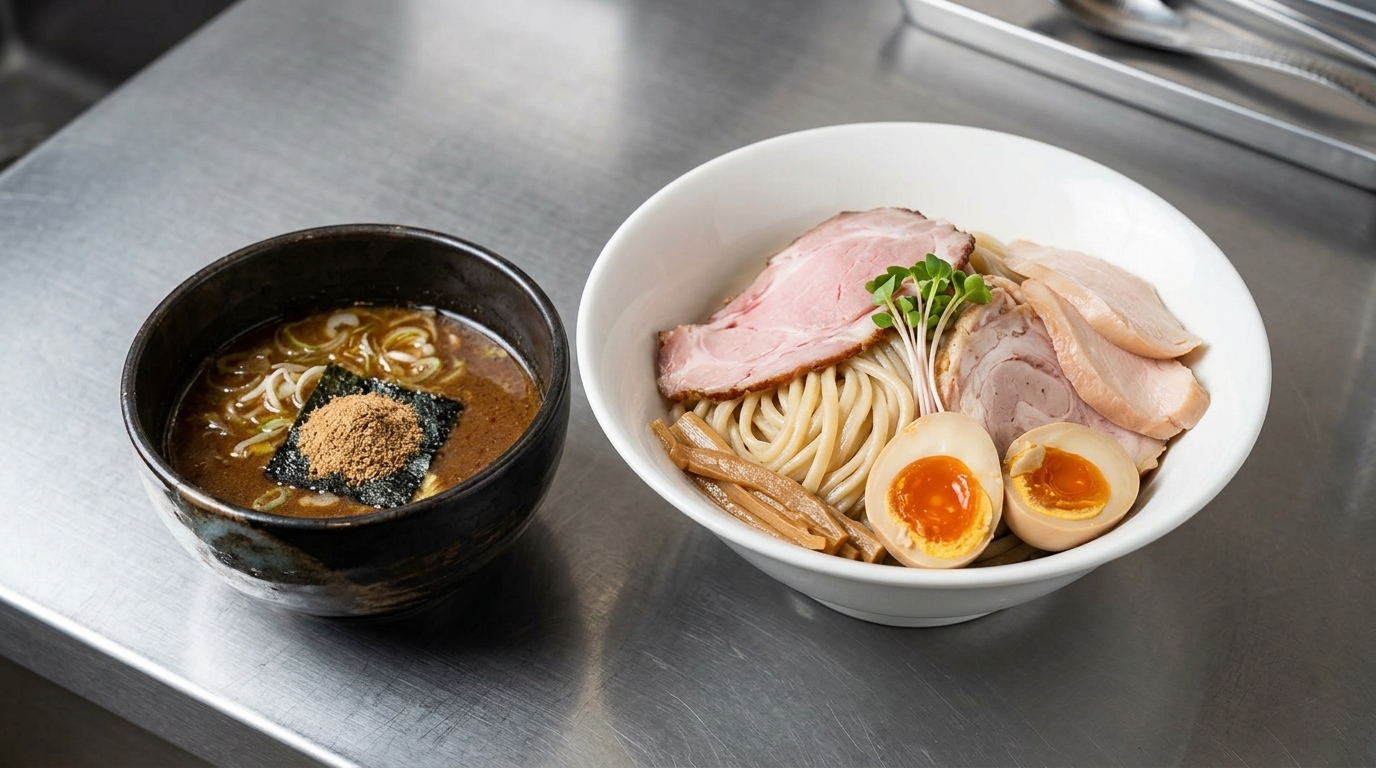
Tsukemen is a modern ramen evolution where cold, chewy noodles are dipped into a hyper concentrated, lukewarm broth. This Gyokai version blends the creamy richness of slow simmered pork bones with a powerful punch of dried fish powders, a signature style popularized by elite Tokyo ramen shops.
Ingredients
- 2 kg pork marrow bones
- 1 kg chicken carcasses
- 500 g thick-cut ramen noodles
- 4 slices pork chashu
- 2 slices steamed chicken breast
- 2 ajitama (marinated soft-boiled eggs)
- 50 g dried niboshi (sardines) or katsuobushi (bonito flakes)
- 2 tbsp gyokai (fish) powder
- 100 g menma (bamboo shoots)
- 2 sheets nori seaweed
- to taste chopped green onions
Instructions
- 1Strain the pork bone broth
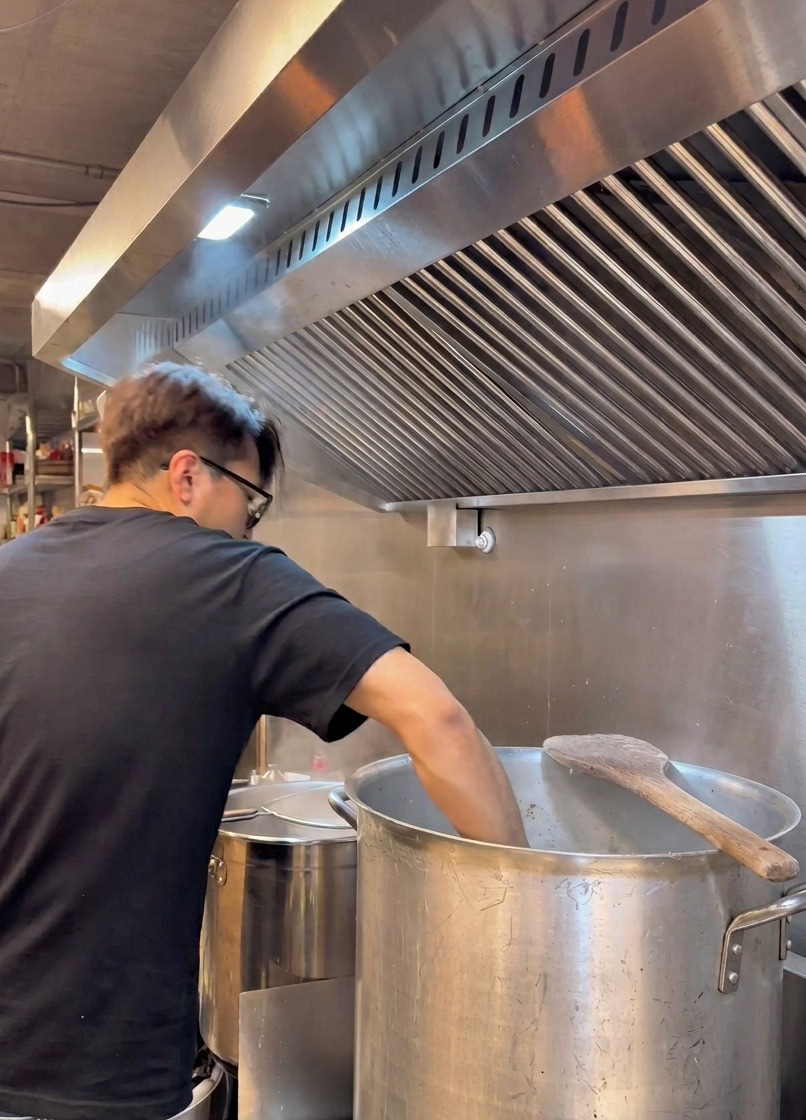
Begin by straining the thick, creamy tonkotsu pork bone broth through a fine-mesh sieve into a clean metal pot. This process removes any solid bone fragments or sediment, ensuring a silky-smooth texture for the concentrated soup base.
Tip: For the smoothest consistency, use a chinois or a double-layered fine mesh to catch even the smallest particles. - 2Transfer the broth
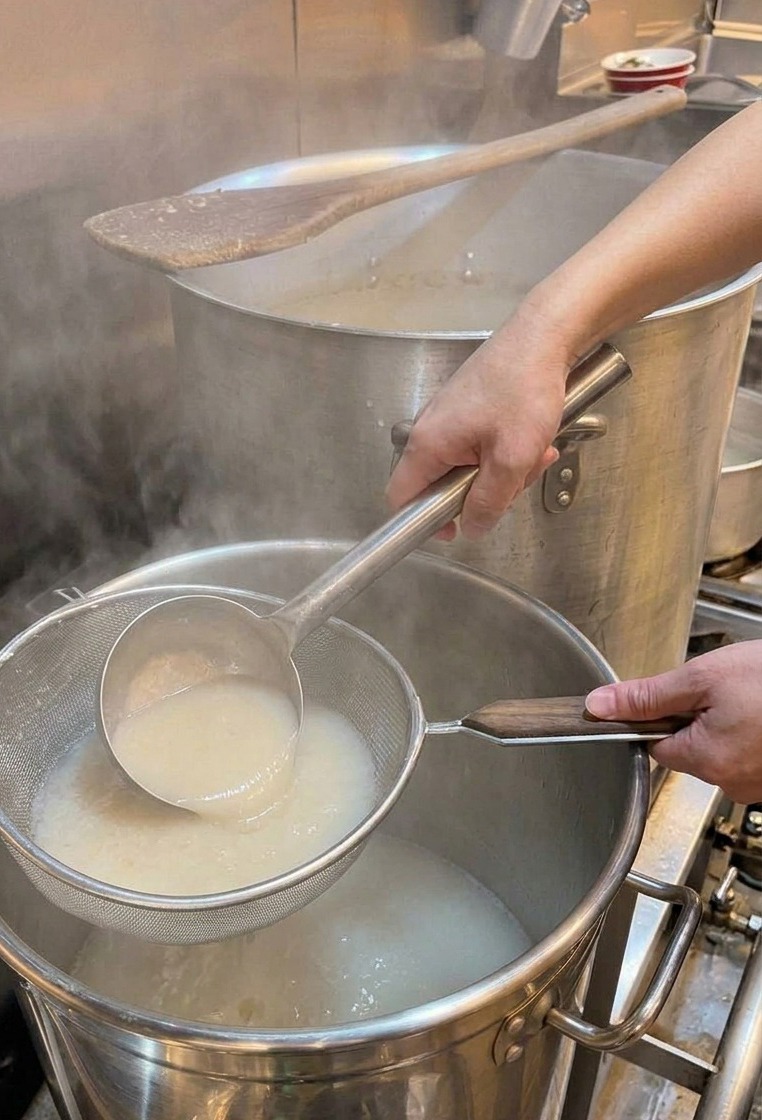
Ladle the freshly strained, frothy white tonkotsu broth from the large stockpot into a smaller stainless steel saucepan. This allows for better control over the final seasoning and temperature before serving each individual portion of Tsukemen.
Tip: Moving the broth to a smaller pot makes it easier to whisk in seafood powders or extra fats without overcooking the entire main batch. - 3Prepare the soup base
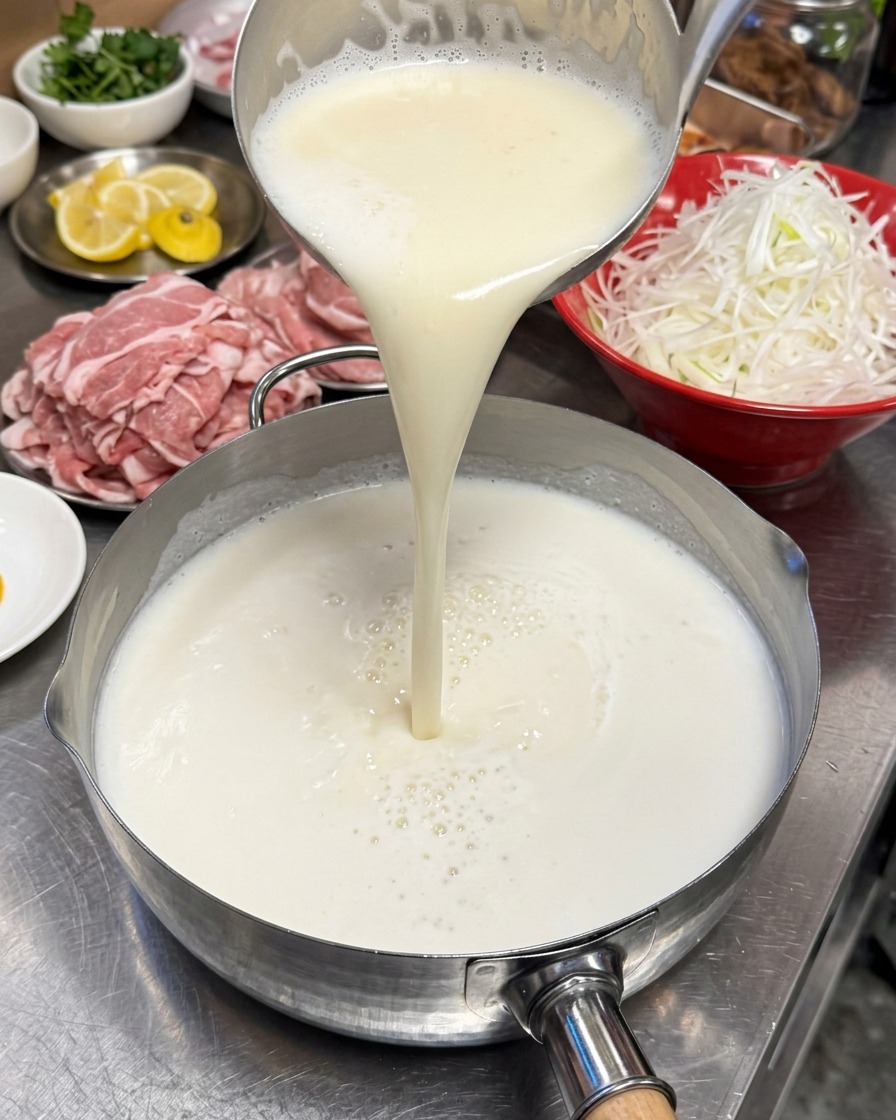
Carefully pour the concentrated creamy white broth into the pot. The goal is to create a consistent and rich soup base that will cling perfectly to the thick Tsukemen noodles, ensuring every bite is packed with savory tonkotsu flavor.
Tip: If the broth looks too thin, continue to reduce it over medium heat until it reaches a velvety, coat-the-spoon consistency. - 4Incorporate the seafood aromatics
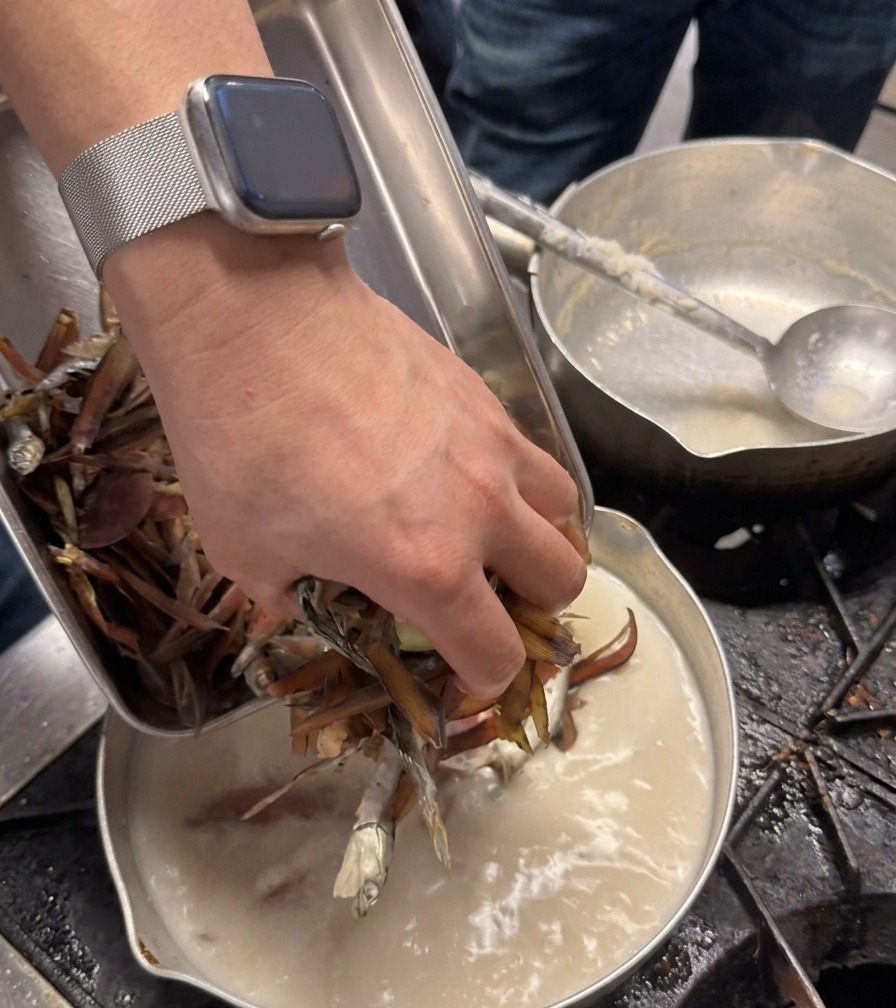
Add the prepared niboshi or dried fish aromatics into the simmering broth. These ingredients are essential for the Gyokai element, providing a deep, smoky contrast to the creamy tonkotsu base.
Tip: Dont boil the broth too aggressively after adding these ingredients; a gentle simmer prevents the delicate seafood flavors from becoming overly bitter. - 5Plate the noodles
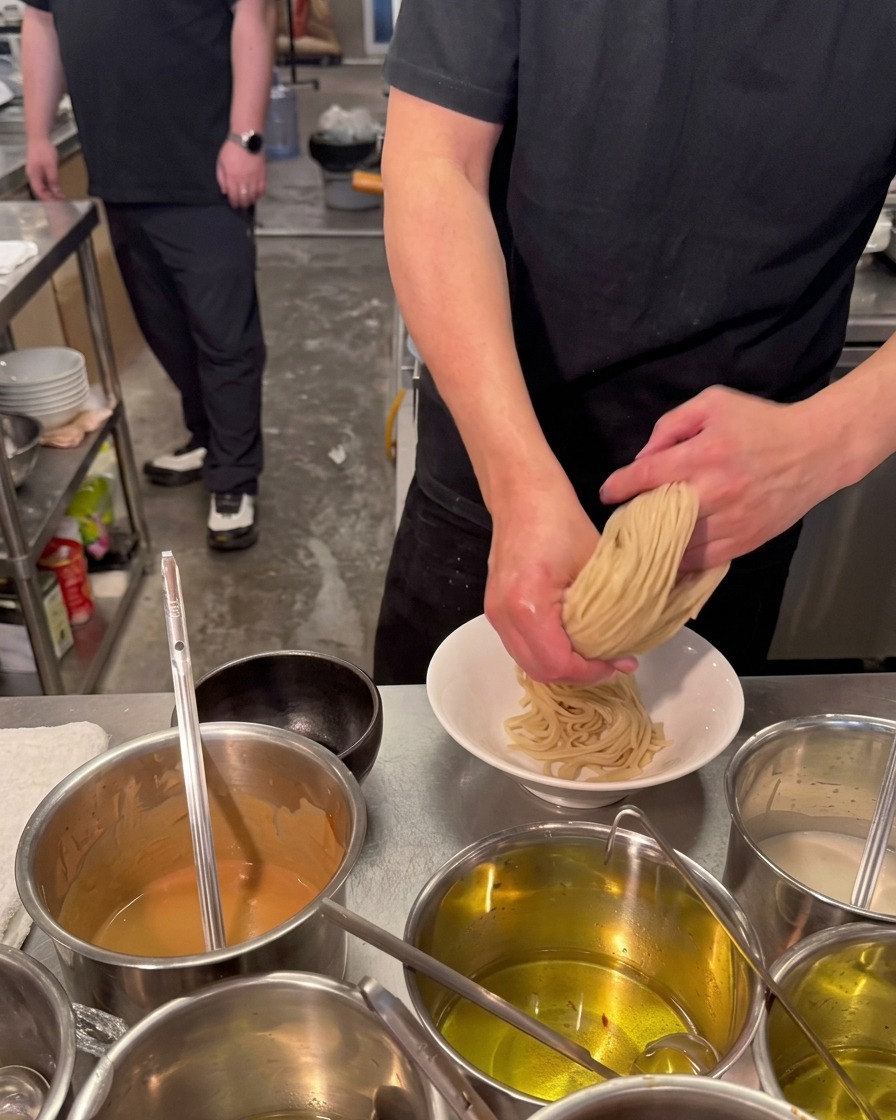
Take a portion of the cooked, thick Tsukemen noodles and use your hands to gently press and fold them into the serving bowl. This traditional technique creates a neat, organized presentation that makes it easier for the diner to pick up the noodles with chopsticks.
Tip: Rinse the noodles thoroughly in cold water before plating to remove excess starch and stop the cooking process, ensuring a firm al dente bite. - 6Add the protein toppings
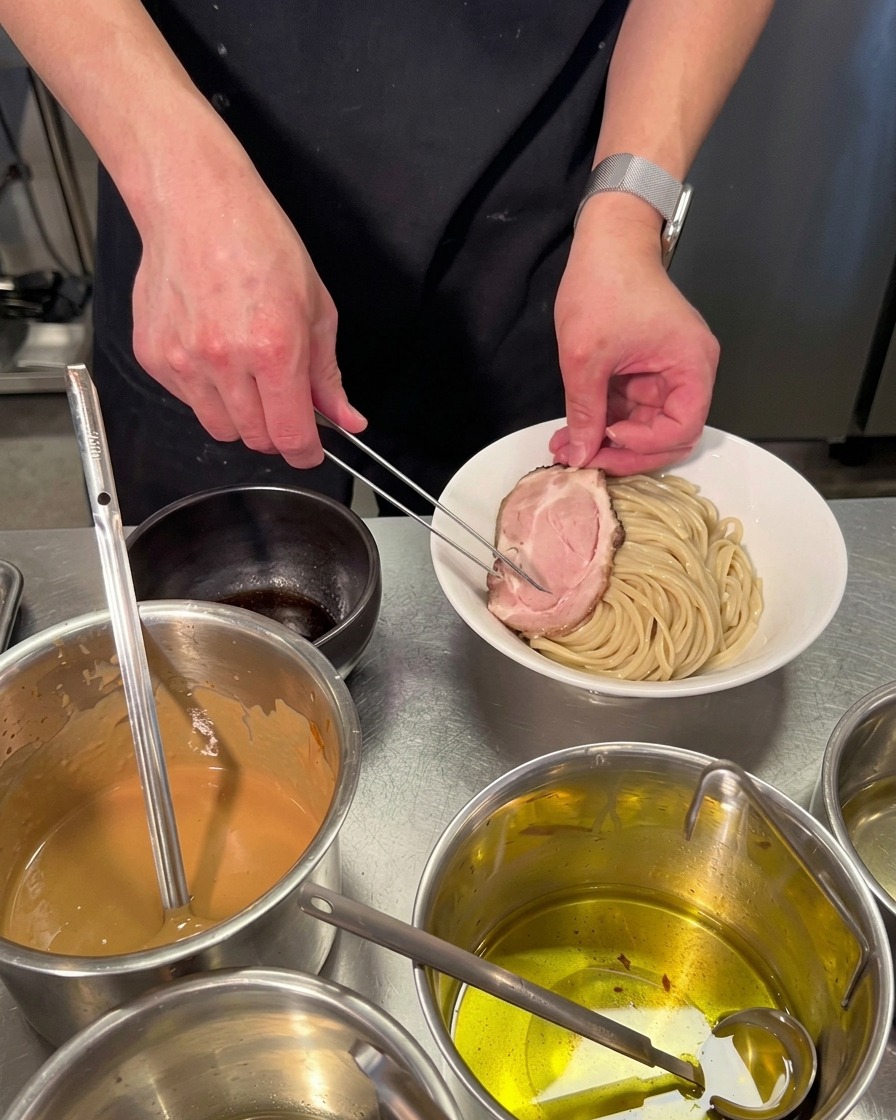
Using culinary tweezers, carefully place a slice of tender roasted chashu pork and a piece of steamed chicken breast onto the bed of noodles. Arranging the proteins side-by-side provides a beautiful visual contrast and a variety of textures for the meal.
Tip: Place the toppings on the side of the noodle mound rather than the center to keep the presentation clean and accessible. - 7Arrange the toppings
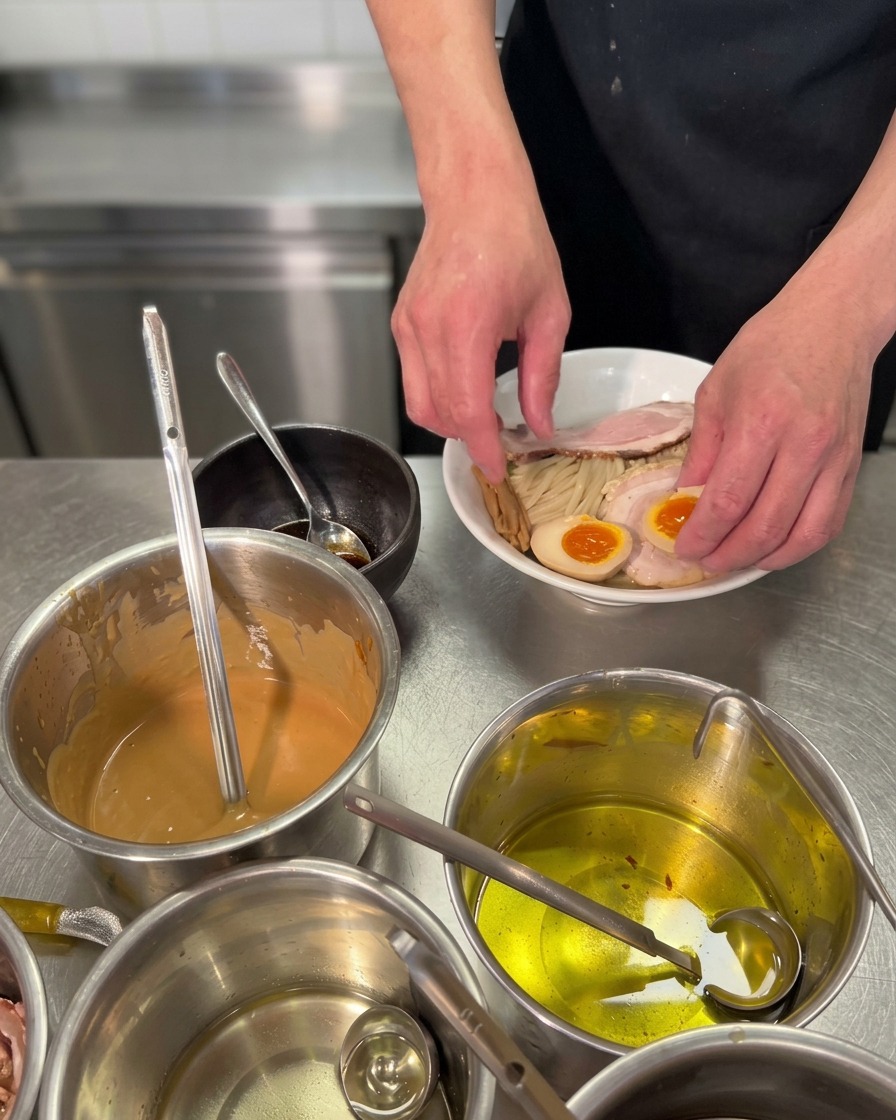
Place the soft-boiled ajitama halves and menma bamboo shoots alongside the proteins. Add a garnish of fresh green sprouts. This careful arrangement ensures every bite has a balance of textures and visual appeal.
Tip: When placing the egg, keep the yolk facing up to showcase the custard-like consistency of the soft-boiled center. - 8Serve the dipping sauce
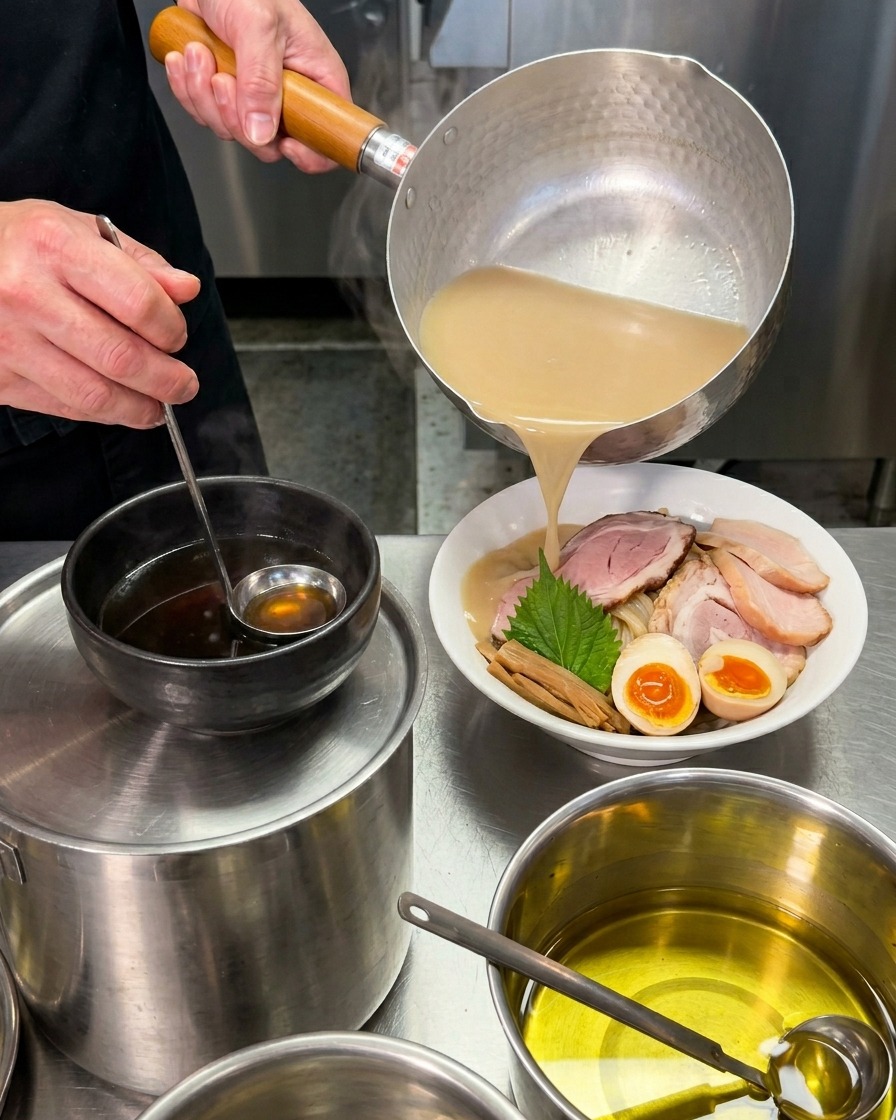
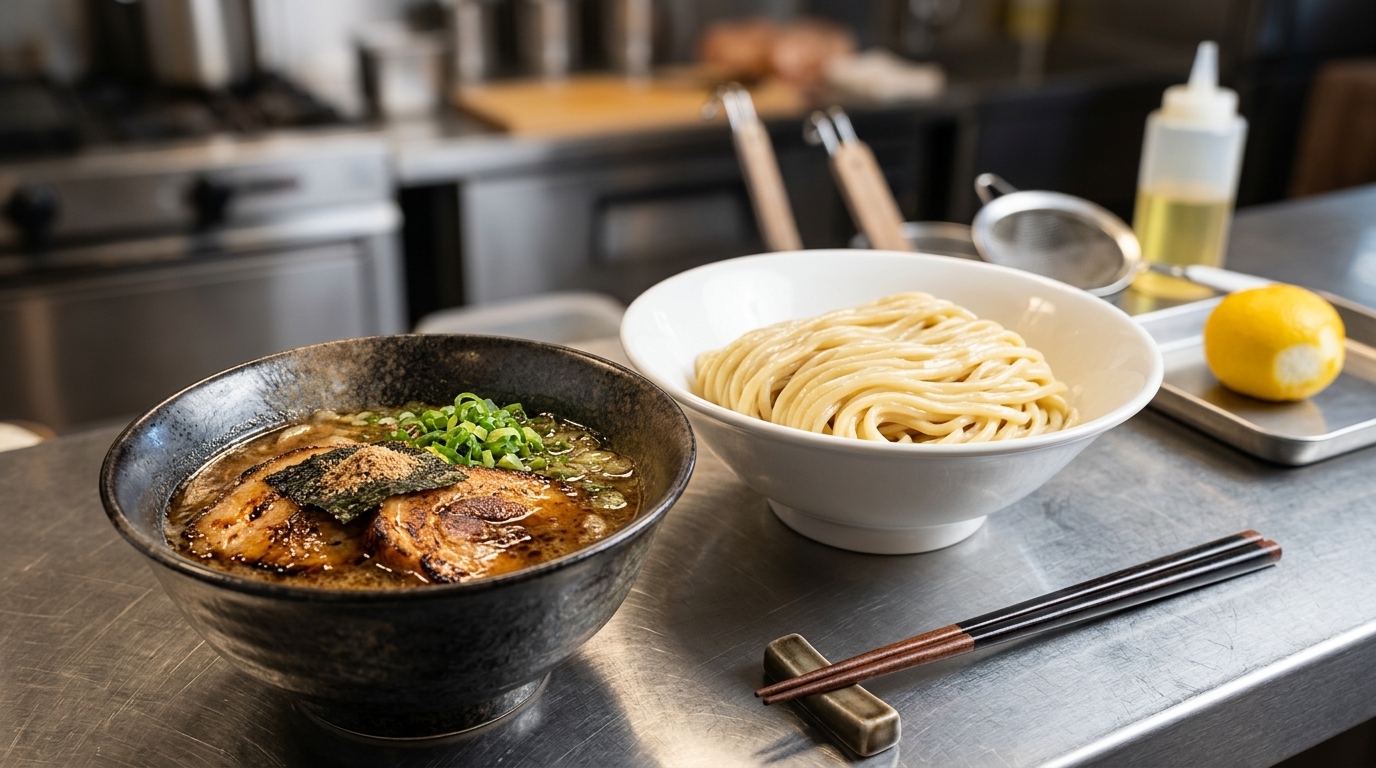
Ladle the hot, concentrated soup base into a small black ceramic bowl. The sauce should be thick enough to cling to the noodles when dipped, providing a punch of savory umami in every mouthful.
Tip: Warm the serving bowl with hot water before pouring in the sauce to help maintain the temperature of the concentrated broth. - 9Add the final umami boost
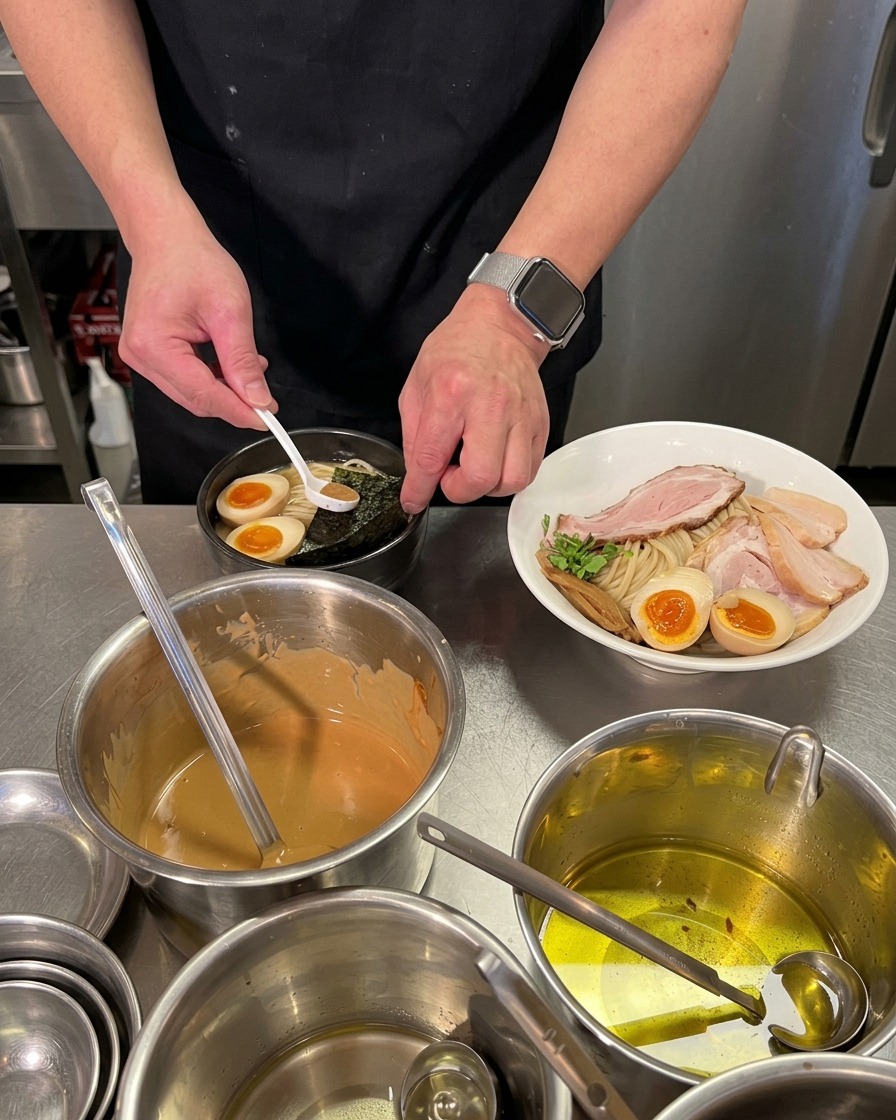
Finish the dipping sauce by adding a small spoonful of fine brown fish powder and a garnish of freshly chopped green onions. The fish powder intensifies the Gyokai seafood profile, while the onions provide a bright, sharp contrast to the rich fat.
Tip: Wait until just before serving to add the fish powder so the aroma remains fresh and potent for the diner.